




Abstract
This paper presents an exploratory study about the experiences of 25 inter-faith chaplains in five Canadian provinces. It utilizes a focus groups methodology. The goal of this qualitative research was to highlight the voices of the chaplains. Hence, the focus groups explored the unique and challenging experiences of chaplains’ work in Canadian prisons. Data from all seven focus groups indicated that despite multiple challenges and obstacles, the correctional chaplains remain dedicated to their work and are committed to making a positive impact on their prisoners. Based on the data provided by the chaplains about the intrinsic rewards and various challenges they face in their day-to-day work, the paper makes several research and policy recommendations. The objective of such recommendations is to maximize the role that religion and/or spirituality could play in prisoners’ positive adaptation, and eventual criminal desistance in a context of confinement characterized by loss of personal autonomy and self-identity.
Introduction
The social science secularization thesis which argues that the emergence of modern socio-cultural and technological forces results in diminishing the role of religion in society has not materialized. Religion remains a core component of many societal institutions in most of the world. In 2019, Statistics Canada reports that over two-thirds (68%) of the population reported a religious affiliation and that over half (54%) noted that religion was important or somewhat important to them. The central role of religion in prisons has not been the attention of academics and researchers studying prison and rehabilitation despite evidence which suggests that religion and spirituality appear beneficial for prisoners both in terms of adaptation and rehabilitation (Duwe & King, 2013; Stringer, 2009). Religiosity is reported to modify both verbal and physical conflict and help model prosocial behavior (Clear & Sumter, 2002; Kelly et al., 2015; Schaefer et al., 2016; Stansfield et al., 2017). However, little scholarly attention has been paid to those who are the care takers of religion and spirituality in prisons, prison chaplains.
The research on chaplaincy in Canadian provincial prisons are about the system generally. This research explores issues such as the impact of prison systems on Muslim chaplaincy (Beckford & Cairns, 2015); how the chaplains’ commitment to their mission has compelled them to treat all prisoners with compassion and dignity in the hope of their eventual rehabilitation (James, 1990); the increased challenges on prison chaplaincy work in view of the Harper’s government 2012 deficit-reduction action plan (DRAP), which privatized the part-time chaplains who mostly serve prisoners belonging to minority faiths (Abdulkadir & Long, 2021), the crisis of diversity in Canadian corrections (West, 1968), and the disappearing community chaplaincy.
The systematic research on the human experiences and encounters of prison chaplains in Canada is sparse. Even the book by Stoesz (2010) with a title such as Glimpses of Grace: Reflections of a Prison Chaplain, gives a meagre account of such experiences. This paper provides a more in-depth insight of provincial prisons chaplains in their own voice. It is a part of a larger study which aims to reach a larger number of provincial prison chaplains in Canada.
Prison Chaplaincy in Canada
Previous research on the religious services in Canadian prisons is limited but sheds some light regarding the challenges and strengths of the prison chaplaincy system (Akca et al, 2020). Two evaluation studies were conducted on the religious services in federal prisons in 2002 and 2019. Though the first review found positive outcomes regarding the availability of religious services (Correctional Service of Canada, 2007) it also found that the availability of religious services was inconsistent across different facilities due to the dependence on part-time (contract) or volunteer chaplains for non-Christian faiths.
Since the initial review in 2002, the correctional population of Canada has become more religiously diverse. The proportion of Christian prisoners (Catholic and Protestant) decreased from 50.8% to 44.4% between 2012 and 2017, while there was an increase in the proportion of prisoners identifying themselves as Muslims (from 5.0% to 5.9% for the same 5-year period) and Indigenous spirituality (from 4.8% to 5.2%, for the same 5-year period; Public Safety Canada, 2011/2017). This change can be partially attributed to the rapidly increasing population of ethnic minorities in Canada. There are serious concerns regarding the overrepresentation of ethnic minorities in prisons (Douyon, 2016; Office of the Correctional Investigator, 2018).
The second evaluation of the prison chaplaincy services was conducted by Crossing et al. (2019) through surveys and interviews with facility staff, prisoners, and stakeholders. The findings indicated that the prisoners are satisfied with chaplaincy services and religious accommodation process. However, they reported that the availability of chaplains prior to their release was limited. The findings also revealed that prisoners need more information and access to faith-specific services, programs, and religious leaders. The evaluation also found that religious services created a positive impact by providing the tools for prisoners to manage their emotions, engage in social activities, and deepen their religious understanding.
Through interviews with Muslim prison chaplains conducted between 2010 and 2012, Beckford and Cairns (2015) compared the prison chaplaincy systems of Britain and Canada. They found that the contract-for-service model in Canada resulted in inconsistencies in training and recruitment of chaplains and lack of clarity in the roles and responsibilities of the chaplains. The Muslim chaplains who were interviewed expressed their feelings of exclusion from the corporate activities of prisons, being stereotyped amongst staff and prisoners, the paucity of training for new chaplains, the lack of diversity in the administration of chaplaincy services, and the absence of a professional association for Muslim chaplains. Muslim chaplains mentioned that Friday prayers, one of the religious pillars of Islam that should be performed congregationally led by an Imam, did not take place often due to the lack of staff and/or space (Beckford & Cairns, 2015).
In keeping with the internal review in 2002 and Beckford and Cairns’ (2015) findings, Crossing et al.’s (2019) evaluation also found that service delivery models are not consistent across Canada. There are three different service delivery models adopted in the federal and provincial/territorial facilities: (a) government employee model that employs both full and part-time chaplains, (b) a volunteer-based model or a private contract model, and (c) a mixed model made up of some variation of the other two types (Crossing et al., 2019). Another important challenge highlighted in the 2019 evaluation was the lack of specialized knowledge on the needs of those with mental health issues and diverse needs of ethnocultural and LGBTQ2 prisoners.
The frequent changes and the complexity of the regulatory framework related to chaplaincy services impede correctional staff’s understanding of their roles and responsibilities in the delivery of religious services (Beckford & Cairns, 2015). The most recent changes which privatized the chaplaincy system of Canadian corrections did not resolve the issue. The private companies contracted by the government continued to hire contract chaplains, but religious leaders from different faiths have increasingly complained about the lack of chaplains in prisons to meet the spiritual needs for the number of prisoners (CBC News, 2017). Since the changes, the number of complaints filed to the Office of the Correctional Investigator and Canadian Human Rights Commission about religious accommodation such as diets (e.g., kosher, halal, etc.), access to chaplains, and religious materials has critically increased (Office of the Correctional Investigator, 2018).
While there has been scholarly (Coward, 1999) and public (Bramadat, 2008) interest and discussion regarding religion for a long time in Canada there has been little discussion as it relates to minority religions in corrections. The meta-analyses and systematic reviews of the literature have shown that there are very few studies that examined the impact of faith-based interventions in prisons and those that were conducted are inconclusive or methodologically weak (Power et al., 2014). Moreover, studies predominantly focus on interventions based on Christianity. For instance, a systematic review indicated that there are only two published papers that are directly addressing Muslims in Canadian prisons for the years between 2009 and 2015 (Zaidi & Ammar, 2016). Both papers are about radicalization of Muslim prisoners in prison but did not address everyday lives and needs of Muslims in prison. Recently, Abdulkadir and Long (2021) interviewed 10 minority faith chaplains serving in federal correctional institutions after the privatization chaplaincy services. The participants discussed their concerns about the increasing bureaucracy after privatization which reduced the quality of spiritual care services and resources for chaplains. They also complained about the increasing emotional exhaustion and frustration among minority faith chaplains serving in federal prisons.
Canadian population parameters are highly dynamic, and the attributes of the prison population represent the rapidly changing and growing diversity of the country. An updated and comprehensive look at the Canadian prison chaplaincy is overdue. In addition to the changes in the prison and population dynamics, there has been recent developments in the working conditions of prison chaplains. The first labor agreement between prison chaplains and the contracted private company, Bridges of Canada, a subsidiary of U.S.-based Bridges International, was signed in February 2021 (National Post, 2021). This is an important development for the chaplains and religious services in Canadian prisons. The agreement included major wage and pension increases, extended health-care benefits for full-time staff, protections around hours of work, anti-harassment guidelines, and anti-discrimination provisions. These recent developments in working conditions of prison chaplains, the increasing diversity of prison population, and the COVID-19 pandemic restrictions need to be investigated through research to identify their impact on the spiritual care service delivery. The current study explores the impacts of these recent changes to inform the evidence-based policies for effective and efficient spiritual care services in Canadian prisons.
Methods
We conducted seven focus groups with 25 chaplains working at correctional facilities in 5 different Canadian provinces. To reach the participants, we first compiled a list of chaplains and their email addresses by calling their institutions. We sent an invitation email to each of the chaplains, and we included all those who responded positively to our request. The sessions were conducted on an online meeting platform and with the consent of all the participants the sessions were recorded. The discussions were moderated by one of the research team members. The moderator asked open-ended questions to initiate the discussion, however the discussions were essentially led by the participants. Moderators ensured that all the research questions were addressed at each focus groups session, hence, they probed participants when needed. Focus group sessions lasted 1 hour on average.
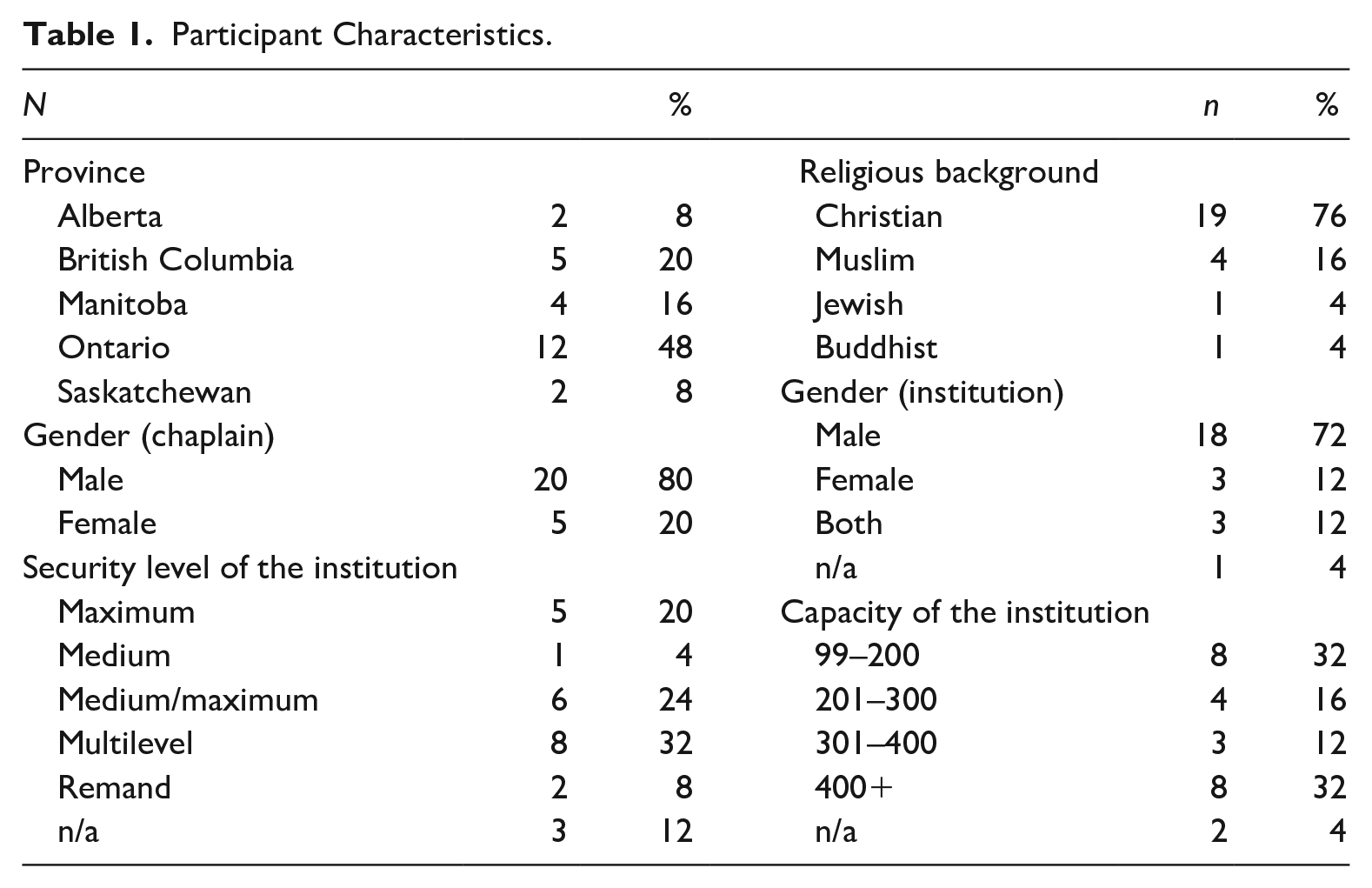
The number of chaplains in the focus groups ranged from three to five. Participants were from five different Canadian provinces, with nearly half being from Ontario (see Table 1). Participants were from four different religious backgrounds, with most of them belonging to the Christian faith (76%) and the remaining participants were of Muslim faith (16%), Jewish faith (4%), and Buddha-dharma (4%). Eighty percent of the participants were male and 72% of the participants were serving at male-only institutions. The security level of the institutions where the participants worked varied between a maximum (20%), a medium (4%), a medium/maximum (24%), and multilevel (32%). Eight percent were detention/remand facilities. The capacity of the institutions where the participants worked also varied. Nearly one-third of the participants work at an institution, which houses more than 400 prisoners (see Table 1).
Participant Characteristics.
Data Analysis
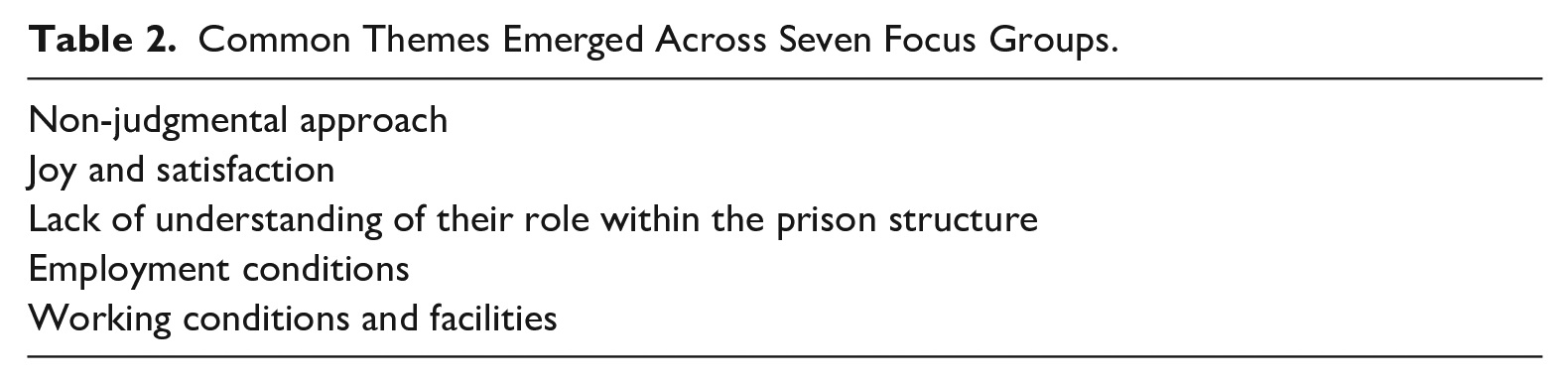
After transcribing the recordings of the 1-hour sessions verbatim, we conducted a thematic analysis. Each member of the research team identified their own interpretation of emergent common themes in discussions regarding four research questions: the chaplains view of their job description, the benefits of working as a chaplain, the impacts of their service on the prisoners, and the challenges of their work. In consecutive meetings, we discussed our emergent themes and identified the most common themes as noted below (see Table 2).
Common Themes Emerged Across Seven Focus Groups.
The consistency in understanding the focus group narrative (i.e., intersubjectivity) makes the data presented more reliable. Additionally, the data presented seems to be valid because the participants were often answering the next question on the moderators list before it was posed. This make it reasonably certain that the participants were addressing the research questions very closely.
The following section on findings elaborates on the emerging common themes from the focus groups with chaplains working in provincial correction facilities in Canada.
Findings
Non-judgmental Approach
Prison chaplains frequently mentioned that a unique aspect of their job is their non-judgmental approach to their clients. They feel that their clients are eager to talk to them and voluntarily participate in the spiritual sessions because the chaplains have no specific agenda when communicating with the clients. They consider some of the factors that make their approach non-judgmental and unique within the correctional system. This includes their acceptance of the clients regardless of what they did before incarceration, their good listening abilities, and their compassionate and genuine approach.
Nobody chooses to be an addict, nobody chooses to spend time in jail, these are things that happened because early childhood trauma has never been dealt with, and so many other contributing factors. And you know, to think of people, you know not to judge them, but to be fully present to them, I think that’s what we offer as chaplains.
This approach helps to create a more humanizing context within the facilities where they work. For instance, their unique approach helps defuse the tension and anxiety that are frequently witnessed between prisoners and those between staff and prisoners.
A chaplain has the ability to calm the facility when tension is developing. We have an ability to be that outside person, even though we’re a part of the system. . .. I think we do contribute to the safety and security. I think we do make our correctional officers’ jobs easier when we can have that kind of a role.
Compassionate care and hope are dimensions of the non-judgmental approach according to the chaplains.
Showing compassion that they won’t receive a lot of otherwise. . ., you know, to impact them by showing them genuine compassion saying: you know what, this is bad, but this isn’t the end of your story, you know you’ve really screwed up, you know you’ve really made some poor decisions but there is hope.
Another impact of such a non-judgmental approach the chaplains reported was the willingness and voluntariness of their clients to participate in programs and services offered by them.
They don’t have to attend a program, it’s not where they’re going to see the social worker or the addictions counselor or the programs or anything else. Chaplains are just special; they provide the support and don’t expect anything in return, they just give themselves and walk alongside the inmates, regardless of where they are on the religious spectrum. And that’s such a gift to the inmates and I guess it’s a gift to us too.
Several prison chaplains noted that accepting their clients regardless of what they did before being imprisoned gives the clients the hope for change. Overall, the chaplains in the focus group agreed that compassionate care and hope are the major contributions that “chaplaincy brings to the table” in the correctional system.
Joy and Satisfaction
One of the benefits of working as a prison chaplain that was highlighted often by the participants was the joy and satisfaction they felt when doing their job. Being able to help someone in a desperate situation and seeing their clients change through their help and guidance were some of the main reasons behind the chaplains’ job satisfaction. Prison chaplains expressed the fact that they enjoyed witnessing their clients’ “healing journey” and the continuous effect of their service even after their clients are released from prison. These experiences also kept them humble and reminded them of “the things that they were grateful for.” Some prison chaplains mentioned that they consider their service to people to be a kind of service or worship to God, noting that they “deliver the message from God” to those individuals.
[There is] satisfaction and the gratefulness in my heart that I’m actually able to help someone. Many of them, [are] depressed, many of them [are] suicidal sometimes and to just spend time with them and to bring them to the place where they can know they are loved, that their lives matter, that they have hope, and there’s a future for them.
The prison chaplains also indicated that their job provides many learning opportunities for their own self-development and “spiritual growth.” One example of such opportunities they noted was about how working in a prison environment with their clients helped them change their perspectives about the meaning of incarceration.
I’m the one who is learning. When I meet these inmates, I learn a lot from them. And I realized one important thing that no one is sent to be there [in prison]. And many times, I always questioned myself how it will be if it’s me there [in prison]. What will happen? I have no answer to this.
Lack of Understanding of Their Role Within the Prison Structure
Many of the prison chaplains complained about what they felt was a lack of understanding of their role in the correctional system and being undervalued as a prison chaplain. One participant defined prison chaplaincy as “a faith-based service within a secular institution,” which creates some unique challenges. There was a belief amongst the participants that part of the problem was that there is a lack of agreement among the stakeholders regarding the role of prison chaplains. Additionally, they felt that prison chaplaincy was not recognized as a profession unto itself. Some argued that their contribution to the correctional services is under-valued, and they are under-utilized in the system because of the difficulties in measuring the impact of the work they do, the lack of evidence on the outcomes of their services, and non-existence of minimum service standards.
Over the 10 years that I’ve worked here, I would say, justifying the worth or the value of the chaplaincy rule is a huge challenge. Making sure that you provide value not only to the residents, but to the staff; so that there is some sense that chaplaincy can help with the same concerns that correctional staff would have; so, towards the safety and security of the facility; that we have a role in that.
The diminishing recognition of the power of religion and spirituality in general was another factor mentioned by the prison chaplains that contributes to the lack of understanding their role in the correctional system.
I just realized that we’re living in a world where the spiritual is all more and more played down to a point that maybe it’s not even recognized in a way, and I’m just worried that down the line that the need for that might be seen as not so important as other things.
According to the prison chaplains in this study, the increasing emphasis put on evidence-based programming in evaluating criminal justice policies combined with the difficulty of observing the outcomes of religious services in the short term contribute to the decreasing recognition of the value of chaplaincy.
As chaplains, you know, when we were effective in what we do, we won’t really see it, because the person doesn’t come back to our center. . .how do you equate that to the evidence-based [requirement], you know. People are only looking at that [i.e., evidence-based result], you know that one plus one equals two formula.
Employment Conditions
A common challenge mentioned by the participants was the low ratio of chaplains to prisoners. In most cases, the institutions rely on part-time or volunteer chaplains to meet the needs of the prisoners.
I am dealing with 400 people and here we have one and a half chaplains serving the institution. And I have to deal with at least 400 people. It’s not possible. Even when I just try to meet with them, like for just two minutes in a month, it’s not possible.
The difficulty of finding and retaining “good volunteers” was a common challenge across different faith groups and provinces. Some participants pointed to the fact that there has been a diminishing interest and support from communities in terms of providing volunteers and materials for religious services in prisons especially since the COVID 19 pandemic began in March 2020.
Because of Covid the people that used to come from the outside, to help stopped getting access and a lot of their permits in the meantime were expiring. To get them up and running again to come back and do the programming that they did before. . .we’re three chaplains and we’ve nearly 500 inmates.
Environmental Working Conditions and Facilities
Prison chaplains from several provinces complained about their difficult working conditions. Many shared their experiences with the restrictions and institutional policies that hindered their access to prisoners including frequent lockdowns, enhanced security codes, and the pandemic restrictions. These factors reduced their ability to implement proper spiritual programs and meet the prisoners regularly. Even when they have the chance to meet their clients, they had difficulties in finding a private place to speak and worship with their clients.
When it comes to challenges, the big one for me, number one is getting guys out of secure areas where other people can see them and hear them into a nice safe place where there’s no listening ears. The person can then participate in a group service or one-on-one service.
Many of the prison chaplains indicated that the operational methods of the correctional facilities where they work hinder their ability to access their clients in a timely and effective manner.
It is almost like a military barracks which was in back 16th, but the main building, the lock in and the lockouts are difficult. Very difficult because they have to come on time and sometimes if you may have a code and we’re dealing with medical appointments and programs, and so we have to work all around that and sometimes we don’t get to see the guys on that day or whenever everything piles up.
The need for renovating the facilities was highlighted by the prison chaplains as the buildings that were built decades ago are not appropriate for providing proper programming for their clients.
These facilities, including the one I worked at were made with an older mentality of being built, you know 50 years ago with. You know, lots of bars and cells and very limited access to anything that would be programming, so the facilities themselves, I would say, would be the second most difficult thing that at least in my world that I have to overcome.
Discussion
This paper presented the perspectives of chaplains serving in Canadian prisons from five provinces to better understand their status within correctional institutions and their impacts on prisoners. The emerging themes from the focus group discussions shed light on what prison chaplains saw as important issues within the Canadian prison chaplaincy provincial system.
Clear and Sumter’s (2002) study found a significant relationship between a higher prisoner religiosity and better psychological adjustment through a survey administered to prisoners. The findings in this current research sheds light on those who deliver religious services and suggests that chaplains see part of their role as mitigating the pains of imprisonment experienced by many incarcerated individuals in the Canadian correctional system by providing non-judgmental, compassionate care and hope to the prisoners. Prison chaplains also see their non-judgmental approach as playing a role in reducing the tension in the correctional facilities where they work. Such an approach might reduce the adversities and challenges that people experience during and after incarceration.
This finding supports Ellis’ (2021) porous institutions paradigm and adds a dimension to Goffman’s (1961) notion of prisons as total institutions. The porous institutions paradigm suggests that religion plays a key role in the porosity of prisons. According to Goffman (1961) one of the hallmarks of “total institutions” are that barriers are placed between prisoners and the outside world that mean a curtailment of self, and a separation which lasts around the clock and may continue for years. Visitation rights are first withheld ensuring a deep initial break from prisoners’ communities. With their unique and non-judgmental standpoint, chaplains can open the boundaries of the total institution and connect prisoners to the outside world on daily basis through the provision of religious programs and services, by arranging visits of volunteer chaplains from their own communities, and helping prisoners obtain the materials needed to practice their faith. It is important to keep in mind that porosity does not mean weakening the control of the prison walls. As described through the analogy of “pre-defined holes in a membrane for air or liquid to penetrate” (Ellis, 2021, p. 194), religious services allow the basic spiritual needs of prisoners to permeate prisons through a regulated and systematic chaplaincy system.
The chaplains participating in the study cited the willingness of prisoners to engage in programs and services they organize because of their non-judgmental approach. Previous research has explored the resistance to correctional programming and the reasons why prisoners are hesitant to partake in treatment programs. These reasons include concerns regarding the effectiveness of treatment, stigma, lack of motivation, lack of programs, and the belief that their tenure in the facility may be too short to participate (Meyer et al., 2014). However, attending rehabilitative programs, according to the United Nations Office of Drugs and Crime (UNODC, 2021), are the most cost-effective ways of preventing re-offending, with significant benefits not only for the individuals concerned, but also for public safety more broadly. While prisons are required to meet a prisoner’s religious needs because of legal statutes and policy (e.g., the Canadian Charter of Rights and Freedoms and the Corrections and Conditional Release Act), religious programs fall within the rehabilitative programming classification. Hence, chaplaincy is poised to play a crucial role in increasing the willingness of prisoners to participate in rehabilitative programs in prison through the development of rapport with prisoners, facilitated by the chaplain’s non-judgmental approach. Additionally, it is important to recognize the importance of prisoners choosing to manage the inevitable pains of imprisonment with a cohesive collegial, pro-social response rather than one that could be violent, destructive or otherwise problematic.
Despite the potential of prison chaplains to improve correctional services, the value and meaning of their roles still need to be adequately understood and appreciated. Sykes (1958) described the prison as a place where there is a concentration of power into the hands of a ruling few, and notes that there is a wide gulf between the rulers and the ruled. Goffman (1961) describes prisons and other total institutions as housing the managed and the managers. Perhaps it is the ambiguity of chaplain’s role in the world of the incarcerated and their keepers that may create a certain type of tension.
Participants explained this lack of understanding through the difficulties in the measurement of their impact and the diminishing recognition of the power of spirituality. The lack of scientific research on the impact of religious services particularly in the Canadian context might be one of the reasons behind this lack of understanding. There is an irony in this given the inexorable link that was forged between religion and prisons at the inception of penitentiary and the ensuing long history they share.
While some pioneers have mixed the study of chaplaincy and prison adjustment (Ammar, 2015; Beckford, 2012, 2013; Clear et al. 2000; Clear & Sumter, 2002; Pepinsky, 1991; Spalek & Lambert, 2008), much of the published research comes from Europe. Across Europe, a predominant sense is that chaplaincy activities contribute positively to rehabilitation (Becci & Dubler, 2017). DiPietro and Dickinson (2021) suggested that the study of religion has yet to gain widespread attention in the field of criminology because of two reasons. First, the positivistic origins of the criminology discipline and the emphasis on scientific rationality led the criminologists to see religion as subjective and potentially at odds with scientific inquiry. Therefore, the impact of religious services on prisoners has not received the same level of attention as other sociological and psychological factors. Second, they posit that the marginalization of religion in criminological research may also be due to the ambiguity of the findings of previous research. Both quantitative and qualitative research has been limited and inconclusive in terms of exploring the impact of religious services on prisoners. More research including randomized control trials and systematic reviews that will assess their impact on the prisoners and the correctional system is needed.
The lack of minimum service standards for measuring the effectiveness of religious services in prisons contributes to the undervaluation of prison chaplaincy. While existing literature tends to emphasize the anticipated tangible effects of religious services, such as lowered recidivism and misconduct rates, our participants have shed light on the less immediately observable spiritual impact and transformative potential of these services. Moreover, given that many of the clients they serve are released and do not return to the same facility, accurately measuring the long-term impact of these services poses a considerable challenge.
The participating prison chaplains engaged in a dialogue regarding an imperative challenge, namely the declining appreciation for the role of spirituality in contemporary times, as evidenced by its manifestation in professions such as prison chaplaincy. It was noted that dispensing spiritual services within a secular establishment presents formidable difficulties during a period of waning religious fervor. This underscores the prevalent inadequacy in comprehending the significance of prison chaplaincy within the correctional system. In line with our finding, Aldridge (2006) discussed the unique challenges that health-care chaplains face in fitting into a “secular culture which increasingly strives for excellence and accountability” while trying to maintain their unique approaches (p. 19).
The intrinsic motivation of chaplains towards their occupation and the satisfaction they derive from observing the rehabilitative process of their clients are invaluable assets for the correctional system. In a recent study conducted by Ignatsson and Odiņa (2021) regarding the well-being and job satisfaction of prison chaplains, six Eurasian chaplains were interviewed. Consistent with our findings, they discovered that, despite the challenges of working in a correctional facility, chaplains “maintain their love and compassion for people, and belief in the moral right for the second chance,” which in turn, contributes to their job satisfaction (p. 353). In a similar vein, an earlier survey study of 232 American prison chaplains showed that the chaplains were very satisfied or somewhat satisfied with their jobs (Sundt & Cullen, 2007). Moreover, compared with other correctional staff, prison chaplains feel more positively about their work. The job satisfaction and intrinsic motivation of chaplains to help their clients are promising, yet many in our study have expressed being overworked and under-appreciated.
Another significant challenge expressed by the chaplains was the hiring practices for prison chaplains in Canada. Approximately a third of the individuals we interviewed in the focus groups are employed in institutions housing many prisoners (a 400 prisoner-capacity). These prison chaplains work either independently or alongside a single colleague. Furthermore, this ratio of chaplain to prisoner is compounded by the increasing challenge of locating and retaining competent volunteers as well as the dwindling assistance from certain communities concerning the provision of volunteers and resources since the onset of the pandemic. The provision of adequate spiritual programs and services is also impeded by persistent challenges related to the layout and structure of prison facilities. Some facilities are structured in a way that impedes private worship and speech with prisoners and makes it difficult to access prisoners. While this is a macro-level problem, it is nevertheless hindering the prison chaplains’ ability to provide proper programming. Addressing these challenges—including the macro level ones such as renovating structures—is crucial to ensure that chaplains can effectively carry out their duties and provide support to prisoners.
Conclusion
Correctional systems across the world are continually at odds with the question of “what works” and clear answers do not seem to be forthcoming in the near future. Given their special standing, prison chaplains have the potential to contribute to prison adjustment and rehabilitation. In the Canadian context, prison chaplains have specific challenges that await solutions. The current research brings the voices of prisons chaplains to the forefront with the aim of emphasizing their vital role in contributing to rehabilitation and punitive future policies. More research is needed to explore the role of religion in prison and the role of prison chaplains. Issues such as the experiences of incarcerated individuals with prison chaplains both during and after their incarceration, correctional staff and administration’s perspective on prison chaplain role in prisons, and community organizations that support the prison chaplaincy system through volunteer chaplains and religious materials are ripe areas for future research. Additionally, identifying evidence-based performance measures and key indicators that are not tedious and useful in assessing and developing further prison chaplains are essential for prison chaplains’ roles to contribute to rehabilitation efforts within correctional institutions.
This study encompasses only chaplains stationed in provincial prisons throughout Canada. As a result, our findings solely reflect the viewpoints of provincial chaplains, as well as the concerns exclusive to provincial penitentiaries. For future research, it would be prudent to engage federal chaplains and investigate their perspectives on present-day issues within the Canadian prison chaplaincy. Moreover, a significant proportion of our study’s participants were of the Christian faith, while participation from minority religions was either scarce or non-existent. Therefore, in forthcoming research, it would be beneficial to obtain a more diverse sample to gain a better understanding of prison chaplaincy in a multicultural country such as Canada. Finally, the research methodology used in this study, focus groups, provides exploratory results that are valid for further investigation of a larger number of participants to make it more generalizable.
The value and meaning of chaplain’s roles are not adequately understood and appreciated by either staff within correctional institutions or the larger academic community and though there are questions around the measurement of the impacts of religiosity. The intangible part of chaplain’s work and of religion may never be measurable or knowable to a degree that would satisfy social science researchers. We argue that the work of chaplains in humanizing the prison environment, their ability to alleviate tension and anxiety, their provision of compassionate care and fleeting hope, and the potential of faith-based interventions in changing prisoners’ behaviors are all crucial and valuable components of the experience of incarceration that should not be overlooked or dismissed.
Footnotes
Declaration of Conflicting Interests
The author(s) declared no potential conflicts of interest with respect to the research, authorship, and/or publication of this article.
Funding
The author(s) disclosed receipt of the following financial support for the research, authorship, and/or publication of this article: This article draws on research supported by the Social Sciences and Humanities Research Council.
