




Abstract
The exogenous shock of COVID-19 strongly challenged Greek retail, especially in small and micro-sized enterprises (SMiEs). In particular, the decline of customer visits in physical retail stores caused by lockdowns and other restrictive measures led to a business threatening reduction of sales. As a result, adjusting business model elements became one of the first priorities for Greek business owners. This paper focuses on the effects of the COVID-19 pandemic on business model elements of Greek SMiE retailers. To investigate this impact, eight expert interviews with Greek SMiE retailers were conducted. Results show that the pandemic situation directly and indirectly affected most of the business model elements of Greek SMiE retailers. Naturally, each studied company displayed unique characteristics as well as different needs and priorities, which facilitated the specific changes in their business model in order to become profitable. However, especially opportunities offered by digital technologies, such as web shops, online advertising, and online customer engagement, were most frequently mentioned to influence business model elements. Thus, this research contributes to the existing body of knowledge in the field of business models and information systems, by providing a business owner perspective on how business model elements were adjusted to the circumstances of the COVID-19 pandemic.
Keywords
Introduction
The COVID-19 pandemic had a profound impact on global economies, significantly affecting small, medium, and micro enterprises (SMEs), especially in the retail sector (Maital and Barzani, 2020; Sudan, 2020). For these retailers, adapting their business models and embracing digital technologies became crucial for survival. As such, in the retail world new technologies began to be adopted very fast, even for companies that did not have a technological background (Priyono et al., 2020). As digital technology became integral to daily life during the pandemic, its influence on society and individuals’ lives grew significantly, as evidenced by tools like the EU COVID certificate (Sarma et al., 2021).
In European countries, lockdown measures led to a sharp decline in customer visits to physical stores, resulting in decreased in-person sales (Mandviwalla and Flanagan, 2021). As a result, retailers faced the challenge of ensuring safety and protection for employees and customers, which included implementing social distancing, hygiene protocols, and other precautionary measures (Brandtner et al., 2021a). These changes necessitated significant adjustments in distribution, delivery, communication, and sales channels, prompting many companies to rethink and innovate their business models.
As such, during the pandemic, traditional retailers increasingly shifted to digital business models to maintain market share and compete effectively (Mostaghel et al., 2022; Palmié et al., 2022). The rise of digitalization and online retailing was notable, with concepts like Zero Inventory Stores gaining traction, offering lower operating costs by focusing solely on online operations.
Despite the growing importance of digital business models, there is a notable gap in research on business model elements specific to small and micro-sized enterprises (SMiEs) within the European retail sector, particularly in Greece. While some studies have explored business models in the SME retail industry in other European countries (e.g., Haas, 2019; Pucihar et al., 2019; Sund et al., 2021), the Greek SMiE retail industry remains under-researched. This is surprising given that SMiEs constitute the majority of businesses in Greece (European Commission, 2021). Furthermore, there is a lack of studies examining the impact of the COVID-19 pandemic on the business model elements of SME retailers (Ritter and Pedersen, 2020). Also, a review of the existing literature reveals that both theoretical and empirical research on business models in the retail industry is limited, highlighting a significant deficiency in the discussion and analysis of this topic (Haas, 2019; Sorescu et al., 2011).
Thus, to illuminate this understudied topic, this paper aims to answer the following research question: “How did the COVID-19 pandemic influence the business model elements of Greek micro and small retailers, particularly in their adoption of digital technologies?”
This research is crucial because it addresses a significant gap in understanding how SMiEs in the Greek retail sector navigated the unprecedented challenges posed by the COVID-19 pandemic. As SMiEs form the backbone of the Greek economy, insights into the changes to their business model elements and the rapid shift towards digitalization can provide valuable lessons for resilience and innovation in times of crisis. Furthermore, with the growing importance of digital technologies in the retail industry, understanding the specific strategies and challenges faced by SMiEs in this context is essential for general managers, policymakers, and researchers. It can advise future support measures, enhance the theoretical framework around business model innovation, and offer practical guidance for similar enterprises facing disruptive changes. As such, this study not only contributes to the limited literature on Greek SMiEs but also broadens the global discourse on the impact of pandemics on business model dynamics.
This paper is structured as follows: Following this introduction, a literature review of previous papers dealing with the impact of the COVID-19 pandemic on business model elements in Greece is provided. After that a background section clarifies the terms Business Model and Business Model Elements. Also, it provides an overview about the state of SME retail companies in Europe in general and in Greece in particular. Next, the research methodology is presented and followed by results of the research. Following on, the next section provides a detailed analysis and discussion of the results. Closing, the last section provides a conclusion, points out implications of this study, and highlights avenues for future research.
Literature review
To obtain an overview of the current state of the effects of the COVID-19 pandemic on business model elements in Greek SMiEs, a structured literature review following the guidelines outlined by Brocke et al. (2009) was conducted. Following the taxonomy of Cooper (1988), the literature review emphasizes research outcomes and practical applications, with the goal of providing valuable insights into how business model elements changed in this context. The objective is to identify the key issues discussed in the literature to offer a thorough understanding of the topic. The authors maintain a neutral perspective, aiming to present an unbiased overview of the impact of COVID-19 on SMiEs retailers’ business model elements. This literature review is intended for scholars specializing in retail studies and practitioners looking to deepen their understanding of business model elements in the SMiEs retail sector. The authors strive for an exhaustive coverage, highlighting the majority of available literature on the effect of COVID-19 on business model elements in Greek SMiEs retail. The Scopus database was chosen for this review due to its extensive coverage, being the largest existing multidisciplinary database (Carrera-Rivera et al., 2022). The following search string was used for the review: TITLE-ABS (greek OR greece ) AND COVID* AND retail
The review was conducted in August 2024 resulting in 15 publications. From those only three fell into the category of Business and Management. The first describing effective marketing strategies for global FMCG brands during COVID-19 (Niros et al., 2022), the second did a PEST analysis of the E-commerce Industry in Greece (Deirmentzoglou and Deirmentzoglou, 2022), and the last the impact of telecommuting on work–family conflict and attitudes among Greek employees (Varotsis, 2022). This review made it obvious that currently they are no publications investigating the impact of the COVID-19 pandemic on the business model elements of Greek retailers. As such, there is a significant research gap in understanding how Greek micro and small retailers have specifically adjusted their business models in response to the pandemic.
The paper seeks to fill this gap by examining the critical changes in business model elements, among Greek micro and small retailers. By focusing on this underrepresented group, the aim is to shed light on the unique challenges and opportunities they faced during the pandemic. In doing so, the paper contributes to the existing literature by offering valuable insights into the resilience and adaptability of small retailers in a crisis context.
Background
This section lays the foundation for understanding the business model elements analyzed in this study by defining key concepts and providing conceptual clarity. Given the unique context of Greek SMiEs during the COVID-19 pandemic, it is essential to employ a structured framework for examining how their business models were adapted. To achieve this, a review of previous literature was conducted to highlight the most prominent characteristics of business models (see also Section “Business model”) and their respective business model elements (see also Section “Business model elements”). Additionally, the review includes an overview of the current state of European SME retail, with a specific focus on Greek SME retail (see also Section “SMEs in Europe and Greece”). Consequently, the definitions and business model elements presented below serve as the basis for framing the conducted expert interviews (see also Section “Research methodology”) and guiding the analysis of the findings (see also Section “Results”).
Business model
To examining how the COVID-19 pandemic influenced Greek SMiEs, particularly through digital adoption, the business model concept provides a crucial lens for understanding how a firm creates, delivers, and captures value under crisis conditions. However, the term business model lacks a unique definition among academics because of the interdisciplinary nature that characterizes this concept (Afuah, 2019; Gibe and Kalling, 2019; Kotarba, 2018; Loonam et al., 2018; Verhoef et al., 2021).
Despite the definitional diversity, prior research generally converges on the idea that business models explain how organizations realize value creation (Hedman and Kalling, 2003; Zott et al., 2011). Zott et al. (2011), note that authors variously present the business model as a statement, representation, architecture, or framework, sometimes leaving it undefined altogether. Historically, Hedman and Kalling (2003) observed three primary focuses in the literature from the 1970s to 2000: generic business models, strategic business models, and e-business models, often grounded in perspectives such as industrial organization, resource-based views, and process/activity design.
Subsequent research distinguishes two major approaches to the business model concept (Demil and Lecocq, 2010; Foss and Saebi, 2018). The static approach highlights core components that enable value creation (Brandtner and Freudenthaler-Mayrhofer, 2020). By contrast, the transformational approach focuses on business model innovation, in particular, how companies adapt, change, and renew these components (Demil and Lecocq, 2010; Foss and Saebi, 2018). While both angles might have been relevant for Greek SMiEs during COVID-19, this study focuses on the later as the ability to innovate, particularly through digital channels, became essential in navigating lockdowns and sustaining revenue (Priyono et al., 2020).
As Wirtz (2019) indicates, the evolution of the business model concept aligns with three research streams: (1) information technology, examining how technology supports or disrupts business processes, (2) organizational theory, focusing on structure and architecture, and (3) strategic management, linking the business model to a firm’s competitive positioning. Taking into consideration Afuah and Tucci (2003), who characterize a business model as a system through which a company generates revenue, and Jocevski (2020) who emphasizes that retail business models must consider not only what is offered to customers but also how it is delivered, as well as the pandemic’s role in accelerating digital transformation, this study primarily situates within the information technology stream, exploring how Greek SMiE retailers leveraged digital tools to adapt elements of their models while (or thus) remaining profitable.
In line with Teece and Linden (2017), it can be argued that the ultimate scope in making business is to follow the path to profitability. In addition, it can be argued, agreeing with Kraus et al. (2020), that technology and business ideas only have an economic value when they are commercialized through the business model of a company. For this reason, this paper follows the characterization of Afuah and Tucci (2003) and defines the term business model as the system by which a company makes money. As such, in this paper the term business model is understood as a system that consists of business model elements, which must innovate to each fulfill the goal of making a company profitable, especially under crisis conditions such as COVID-19.
Accordingly, and in line with the research question, examining specific business model elements is essential to understanding how Greek SMiEs navigated the pandemic through digital adaptation. The following section introduces these elements (see also Section “Business model elements”).
Business model elements
Although business model elements appear under different labels across various studies (e.g., Afuah, 2019; Afuah and Tucci 2003; Chesbrough and Rosenbloom, 2002; (Morris et al., 2005); Osterwalder and Pigneur, 2010), they have common or similar characteristics and share core concepts such as customer value, market segmentation, and revenue generation (Afuah, 2019). For Greek SMiE retailers, whose viability often depends on tight margins and limited resources, the crisis introduced by COVID-19 forced rapid shifts in these areas.
Consequently, and as stated in Section “Business model”, this paper adopts the business model framework proposed by Afuah and Tucci (2003), shown in Figure 1. In addition to the reasons mentioned in the Section “Business model”, this specific framework was adopted as it is a generic business model, easily understandable, and it is open for business innovations. This business model was initially designed for companies who plan to make use of modern technologies (e.g., the internet). As such, the elements of the business model are proposed for companies that want to utilize the power of the internet such as start-up ventures, bricks-and-mortar retailers, consulting companies, and investment bankers (Afuah and Tucci, 2003). However, most of the internet businesses described above share common business practices with both traditional (e.g., bricks-and-mortar companies) and modern digital retail businesses. As the focus of this paper is the retail industry and even though Afuah and Tucci (2003) propose a general framework of business model elements, there was an effort to adjust the explanation of the business model elements to fit the specific context of the retail industry. Thus, in the following subsection, introduce the specific business model elements proposed by Afuah and Tucci (2003) and examine how each could help to illuminate pandemic-driven adjustments of Greek SMiE retailers. Business Model Elements adopted from Afuah and Tucci (2003).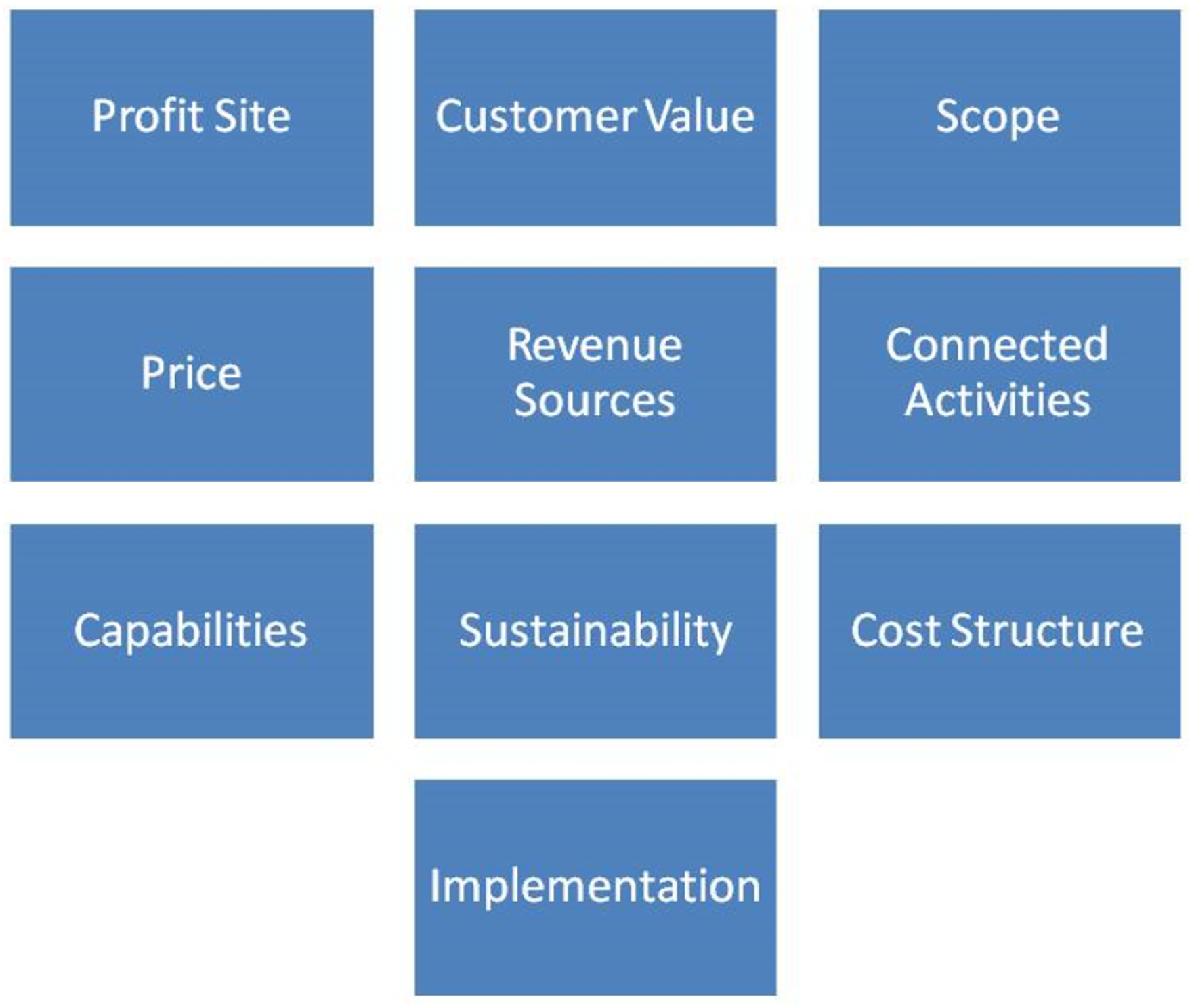
Profit site
The corporate profit site includes the physical store(s) or retail spaces where customers can physically see and buy products, as well as digital store(s), e-shops, or e-commerce platforms. These two types of profit sites differ significantly in terms of processes, operations, and required resources. For example, digital stores rely on internet service providers, web hosting, developers, and digital payment solutions, whereas physical stores operate under fixed opening hours and require in-person customer interactions.
Given that the COVID-19 pandemic severely disrupted physical retail operations, this element is critical to the research as it allows us to examine how Greek SMiE retailers adapted their profit site (e.g., by transitioning to digital platforms, integrating hybrid models, and maintaining traditional storefronts), to sustain business viability during and after lockdowns. Understanding these adaptations provides insights into the role of digital adoption in business model resilience.
Customer value
Customer value refers to a company’s ability to provide value to its customers, or its value architecture. Zott and Amit (2013) emphasize that the value a company creates for customers has a significant impact on its performance. Firms can differentiate their offerings through after-sales service, warranties, product quality, features, and other unique attributes (Afuah and Tucci, 2003). Customer value can be understood as the “distinctive” element that gives customers a reason to choose one company over another (Afuah and Tucci, 2003). Jocevski (2020) introduces the concept of co-creation of value, where both clients and partners contribute to a firm’s value creation.
The COVID-19 pandemic reshaped consumer expectations, forcing businesses to find new ways to deliver value, particularly through digital means. Examining this element is essential to the research, as it highlights how Greek SMiE retailers could have leveraged, for example, digital tools (online customer support, virtual consultations, and improved e-commerce experiences), to maintain customer trust and engagement despite physical restrictions.
Scope
The element of scope refers to the market segments or geographic areas that a firm targets (Afuah and Tucci, 2003). A local retail store, for example, typically serves a local market, whereas an online shop may target domestic or international customers. Similarly, a retailer specializing in children’s and baby products primarily targets families with newborns and young children.
In scope of the research, understanding how the pandemic influenced market scope is important, as SMiEs had to reassess their customer reach due to lockdowns and shifts in consumer behavior. Many businesses expanded their digital presence, targeting broader geographical markets, while others refined their focus on niche segments. Analyzing this element sheds light on how digitalization enabled retailers to access new customer bases.
Price
The element of price refers to the pricing strategy or system a firm follows (Afuah and Tucci, 2003; Zott et al., 2011). In retail, businesses may adopt a low-margin strategy to attract a large market share, maintain fixed pricing to ensure stability, or implement flexible pricing models, such as discounts, auctions, or personalized bargaining.
During the COVID-19 pandemic, many retailers faced declining demand, supply chain disruptions, and shifting consumer priorities, all of which impacted pricing strategies. Thus, examining this element illuminates how Greek SMiE retailers adjusted their pricing (e.g., discounts, value-based pricing, and digital pricing models) to sustain profitability while adapting to economic uncertainty.
Revenue sources
Revenue sources refer to the ways a company generates income (Afuah and Tucci, 2003). Traditionally, retailers earn revenue through direct product sales. However, some expand their income streams by offering additional services, such as installation, maintenance, or customized solutions. For instance, an air conditioner retailer may provide professional installation as an additional paid service.
The pandemic disrupted traditional revenue streams, pushing many retailers to explore alternative income sources (e.g., online sales, subscription models, and digital service offerings). Investigating this element allows us to understand how Greek SMiE retailers diversified their revenue strategies in response to the crisis and how digital channels contributed to sustaining financial stability.
Connected activities
Connected activities refer to the operations that enhance or diminish the value a company provides to customers (Osterwalder and Pigneur, 2002; Teece, 2018; Zott and Amit, 2013). According to Afuah and Tucci (2003), these activities should align with a company’s value proposition and strengthen competitive positioning. For example, maintaining an adequate stock of products ensures timely delivery, reinforcing customer satisfaction, whereas delays in product availability may weaken trust and loyalty.
For Greek SMiEs retailers, the COVID-19 pandemic disrupted key connected activities (e.g., inventory management, supply chain coordination, and customer service operations). Many retailers faced logistical bottlenecks, shortages, and delays, which weakened their ability to meet customer expectations. At the same time, businesses that effectively adapted, for example, by integrating digital logistics solutions or improving communication with suppliers, may have mitigated these challenges and reinforced their market position. Understanding how these disruptions and adjustments have impacted the operational efficiency of Greek SMiE retailers is critical to assessing their overall resilience.
Capabilities
Capabilities refer to the corporate resources, competencies, and the competitive advantage that a company has (Afuah and Tucci, 2003). A corporate competency is generated by the firm’s ability to turn resources such as tangible, intangible, and human into customer value and corporate profit. Firm resources such as corporate patents and copyrights, the brand reputation, the relationships with customers, the suppliers, and the synergies with companies that possibly exist are difficult to be copied and/or imitated by competitors. The same applies to brand reputation, since it takes time and effort for a company to build a strong brand name, competitors cannot imitate this process. Additionally, human resources, organizational routines, managerial skills, corporate knowledge, and experience contribute to the firm’s capabilities and cannot be imitated (Teece and Linden, 2017; Zott et al., 2011).
The pandemic tested the resilience of Greek SMiEs, requiring them to leverage their existing capabilities or develop new ones to navigate the crisis. For example, businesses with strong digital competencies or established online sales channels may have adapted more easily to lockdowns, whereas those reliant on in-person transactions likely faced greater challenges. Additionally, retailers with strong supplier relationships may have been better positioned to manage supply chain disruptions. The extent to which these capabilities influenced business continuity and adaptation strategies is essential for understanding how Greek SMiE retailers endured the economic impact of the pandemic.
Sustainability
Sustainability issues are of high importance to be addressed, since the competitive landscape changes constantly (Gibe and Kalling, 2019; Zott and Amit, 2013). The evaluation and monitoring of the market can provide retailers new ideas for the creation of a sustainable strategy. Afuah and Tucci (2003) suggest three types of strategies that firms can follow to remain sustainable. (1) Block strategy can be used when a firm has unique dynamic capabilities and takes the opportunity to block the competitive companies to penetrate the market. (2) Run strategy can be used in times where a startup company introduces a new innovative product in the market, and it is difficult to be followed by competitors. (3) Team-up strategy refers to the cooperation and collaboration of similar companies in the market, to gain a sustainable position.
During the pandemic, retailers had to rapidly adapt to new consumer behaviors and market conditions. Investigating sustainability strategies provides insights into how Greek SMiE retailers ensured survival (e.g., by shifting to digital sales, improving customer engagement, and forming strategic partnerships).
Cost structure
Cost structure plays a crucial role in determining a firm’s profitability (Afuah and Tucci, 2003; Gibe and Kalling, 2019; Zott and Amit, 2013). Businesses incur both fixed costs (e.g., rent and salaries) and variable costs (e.g., raw materials and logistics). Managing these costs efficiently is key to sustaining operations.
COVID-19 likely forced many retailers to rethink their cost structures due to fluctuating revenue streams and economic constraints. Businesses may have sought ways to reduce fixed costs, such as renegotiating rental agreements or reducing staff hours, while others may have optimized variable costs by adjusting supply chain strategies or sourcing alternative suppliers. At the same time, digital adoption may have also introduced new costs (e.g., investments in e-commerce platforms and online marketing). Understanding these financial adjustments helps illustrate how Greek SMiE retailers responded to the economic pressures of the pandemic.
Implementation
Implementation refers to the process of executing a business model, aligning strategy, structure, systems, and human resources (Afuah and Tucci, 2003). Organizational structures, such as functional, project-based, organic, and mechanistic models, influence how companies operate and adapt to change. Corporate systems, decision-making processes, and employee expertise also play a crucial role in successful implementation (Afuah, 2019; Gibe and Kalling, 2019).
During the COVID-19 pandemic, Greek SMiEs may have had to rapidly implement new strategies to ensure business continuity. Lockdowns and restrictions likely forced retailers to adjust their organizational structures, shift to digital operations, or introduce remote work solutions. Additionally, businesses may have needed to train employees in digital tools, restructure internal workflows, or modify their decision-making processes to accommodate the fast-changing environment. Examining these adjustments provides insights into how Greek SMiE retailers navigated uncertainty and maintained operational efficiency during the crisis.
SMEs in Europe and Greece
According to the Commission Recommendation of 6 May 2003 (EUR-LEX - 32003H0361, 2003), micro, small, and medium-sized enterprises are those that employ fewer than 250 persons, their turnover is less than 50 million Euros, and/or their annual balance sheet total is not exceeding 43 million Euros. More analytically, medium-sized enterprises are defined as those enterprises that employ 50 to 249 persons, and their annual turnover does not exceed 50 million Euros and/or their annual balance sheet total does not exceed 43 million Euros. Small-sized enterprises are defined as those that employ 10 to 49 persons and their annual turnover and/or their annual balance sheet total does not exceed 10 million Euros. Micro enterprises are those that employ up to 9 persons and their annual turnover and/or their annual balance sheet total does not exceed 2 million Euros. Furthermore, according to the Annual Report on European SMEs of 2018–2019 (European Commission, 2019a) the total number of European SME population is more than 25 million (25.032.008) of which 93% are micro ones (23.323.938) with an employment share of 29.7%, (43.527.668). Small enterprises population is the 5.9% (1.472.402) of total with an employment number of 20.1% (29.541.260). Medium-sized enterprises have a share of 0.9% (233.668) with a total employment number of 16.8% (24.670.024). Large enterprises are 0.2% (47.299) with a total employment share of 33.4% (49.045.644).
In Greece, SMEs have the highest share of 99.9% in Europe according to the SME Fact Sheet 2021 - Greece, of the European Commission (2021, July). Thus, they can be characterized as the backbone of the Greek economy. In turn, their employment share is 83%, which is much higher than the European average, meaning that they contribute significantly to the Greek employment rate. In addition, Greek SME productivity, which is defined as the value added per person employed, is significant with a share of 56.7% in the Greek economy in relation to large enterprises which have 43.3%. Regarding the entrepreneurial activity in Greece, the SME Fact Sheet 2021 - Greece, of the European Commission, indicates that it is growing and getting close to the European average. There is also a significant start-up culture in the Greek business sector, with an increasing number of new start-ups and the existing phenomenon that many Greek start-ups have been acquired by international companies.
However, there are many key challenges for SMEs in Greece. The internationalization of Greek SMEs remains low since only 5.3% perform exports and only 6.3% perform imports of intra-EU goods. Some important challenges are the difficulties on access to finance and the high cost of finance, the low levels of digitalization, the low levels of digital maturity, and the fast changes on legislation which act as a brake for business development. Another important evidence according to SBA Fact Sheet 2019 (European Commission, 2019b) is that the wholesale sector, the retail sector, and the manufacturing sector generate almost half of all Greek SMEs’ value added. More specifically, the wholesale and retail trade sectors are the largest ones and show an increasing trend.
Additionally, the SME Fact Sheet 2021 - Greece indicates that there is a significant room for improvement regarding the use of digital technologies for Greek SMEs since only 9% have adopted e-invoicing and only 11% utilize their websites or web applications for sales, which is very low in relation with other European countries (SME Fact Sheet 2021 - Greece, 2021). The evidence from the SBA Fact Sheet 2019 (European Commission, 2019b) and the SME Fact Sheet 2021 - Greece (European Commission, 2021) shows that the performance on digital initiatives is low. Additionally, the Greek Government launched several relief measures to reduce the negative effects of COVID-19 pandemic, which includes financial employment support, loan support, interest rate subsidies, and refundable advance payments for SMEs.
Research methodology
This paper aims to provide further insights on how business model elements in Greek SMiE retailers were affected during the COVID-19 pandemic. As the analysis of such knowledge is strongly depending on implicit insights and requires extensive understanding of business models in Greek SMiEs, the method of expert interviews was selected as the most appropriate approach for data collection.
As such, business model adjustments often involve tacit knowledge and complex decision-making processes that cannot be effectively captured through standardized quantitative methods. Unlike surveys, qualitative interviews allow for the exploration of emerging themes, clarification of ambiguous responses, and the uncovering of insights that are not easily quantifiable. In this regard, the flexibility of expert interviews makes them particularly valuable for examining the dynamic nature of business model adjustments during crises.
In addition, the expert interview was chosen since research on the effects of business model elements is an unexplored and understudied phenomenon in the context of COVID-19 pandemic in Greece. In this regard, expert interviews are particularly useful in contexts, where the goal of analysis is to gather insides and uncover hidden or implicit knowledge that would hardly be detectable with quantitative means only (Audenhove and Donders, 2019; Brandtner et al., 2021b; Brandtner and Mates, 2021; Döringer, 2020).
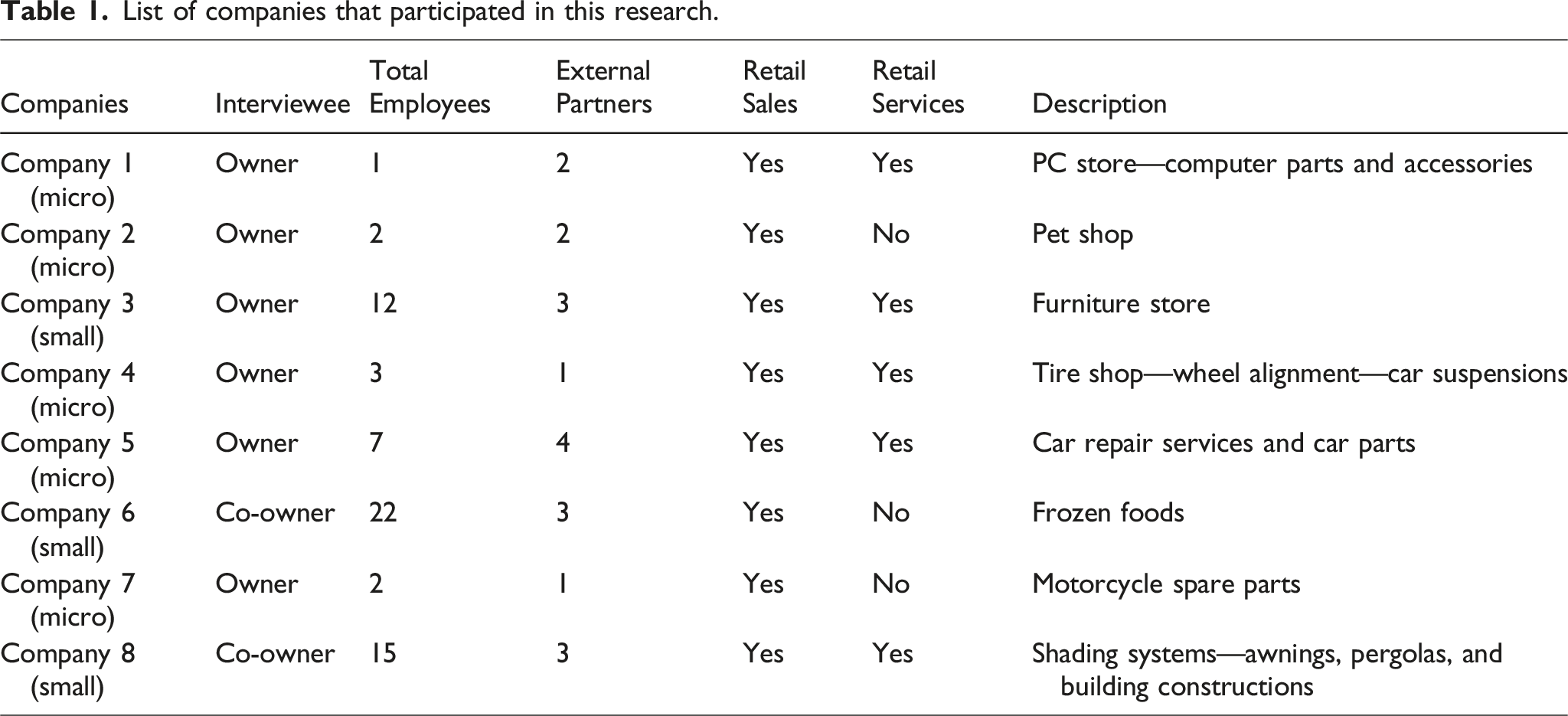
Therefore, eight expert interviews with Greek SMiE retailers were conducted between October and December of 2020. Data were collected through face-to-face semi-structured interviews with business owners in the headquarter of each company. Business owners of retail SMiEs were selected as “experts.” It must be noted that this terminology does not imply that all interviewees are experts in a conventional sense, but rather that they possess valuable firsthand knowledge about their businesses and the challenges they faced during the pandemic. This is especially true in micro and small enterprises as owners typically act as primary decision-makers, playing a crucial role in strategic and operational decisions, and they are the ones deciding about the corporate business model (ElNaggar and ElSayed, 2023). This unique position provided valuable insights into the practical challenges and adaptations made during the crisis in the SMiEs sector. In addition, this unique position also helped to maintain internal validity, as owners’ insights directly reflect the strategic decisions and adaptations made during the crisis.
The interviews lasted between 50 and 80 minutes, conducted in Greek, with each session transcribed and subsequently translated into English. A semi-structured interview format was employed to ensure a reliable, consistent, yet flexible approach, allowing interviewees to share their experiences in depth. The interview questions covered topics such as the use of digital technologies, business model elements, maturity status on e-business, SWOT analysis, and PESTLE analysis. A detailed list of questions can be found in the Appendix.
Participants were selected based on the EU definition of small and micro enterprises, specifically focusing on businesses from the Attica suburb. This area is a diverse economic hub surrounding Athens, characterized by a mix of urban and semi-urban environments, offering a wide range of retail activities. The region is known for its dynamic market conditions and varied consumer demographics, making it an ideal setting for studying the impact of digital transformation on small and micro enterprises. The chosen enterprises must fit the EU criteria, for SMiEs (less than 50 employees and a turnover of less than €10 million). Additionally, participants had to be willing to share their experiences and insights, ensuring a cooperative and informative interview process. To ensure validity, only participants who were representative of the local retail environment and had firsthand knowledge of the impacts of the pandemic were selected.
The analysis involved summarizing the statements of the experts corresponding to the respective business model elements. This method helped in organizing the data into coherent themes, making it easier to identify patterns and insights relevant to the study’s objectives.
For this study, these business model elements were not only used to structure the expert interviews but also to organize the data analysis and findings. The interview questions were specifically designed to elicit insights related to these elements, ensuring a comprehensive exploration of the adjustments made by Greek SMiE retailers during the pandemic. By anchoring the study in this structured framework, the aim is to provide both clarity and relevance, avoiding overgeneralized or decontextualized discussions. This approach ensures that the literature review and conceptual discussions directly inform the qualitative analysis, addressing the research question with precision and focus.
To ensure the reliability and validity of the data, several strategies were employed. Firstly, a consistent interview guide to maintain uniformity across interviews was used. Secondly, the translations of the transcripts were carefully reviewed by other researchers to ensure accuracy and preserve the original meaning. This process helped to confirm the accuracy and credibility of the data.
The qualitative research adheres to the interpretive paradigm, emphasizing the subjective worldviews, perceptions, and understandings of individuals (Creswell and Creswell, 2018; Myers and Avison, 2002). The analysis and discussion are structured around the elements of the business model as outlined by Afuah and Tucci (2003). Following Yin’s (2011) recommendations, findings were correlated with existing literature and theoretical concepts to leverage the strengths of qualitative inquiry, which are rooted in learning from field evidence and data. Additionally, the commonalities and differences observed across the retail companies studied are reported and discussed.
List of companies that participated in this research.
Results
Business model elements per company.
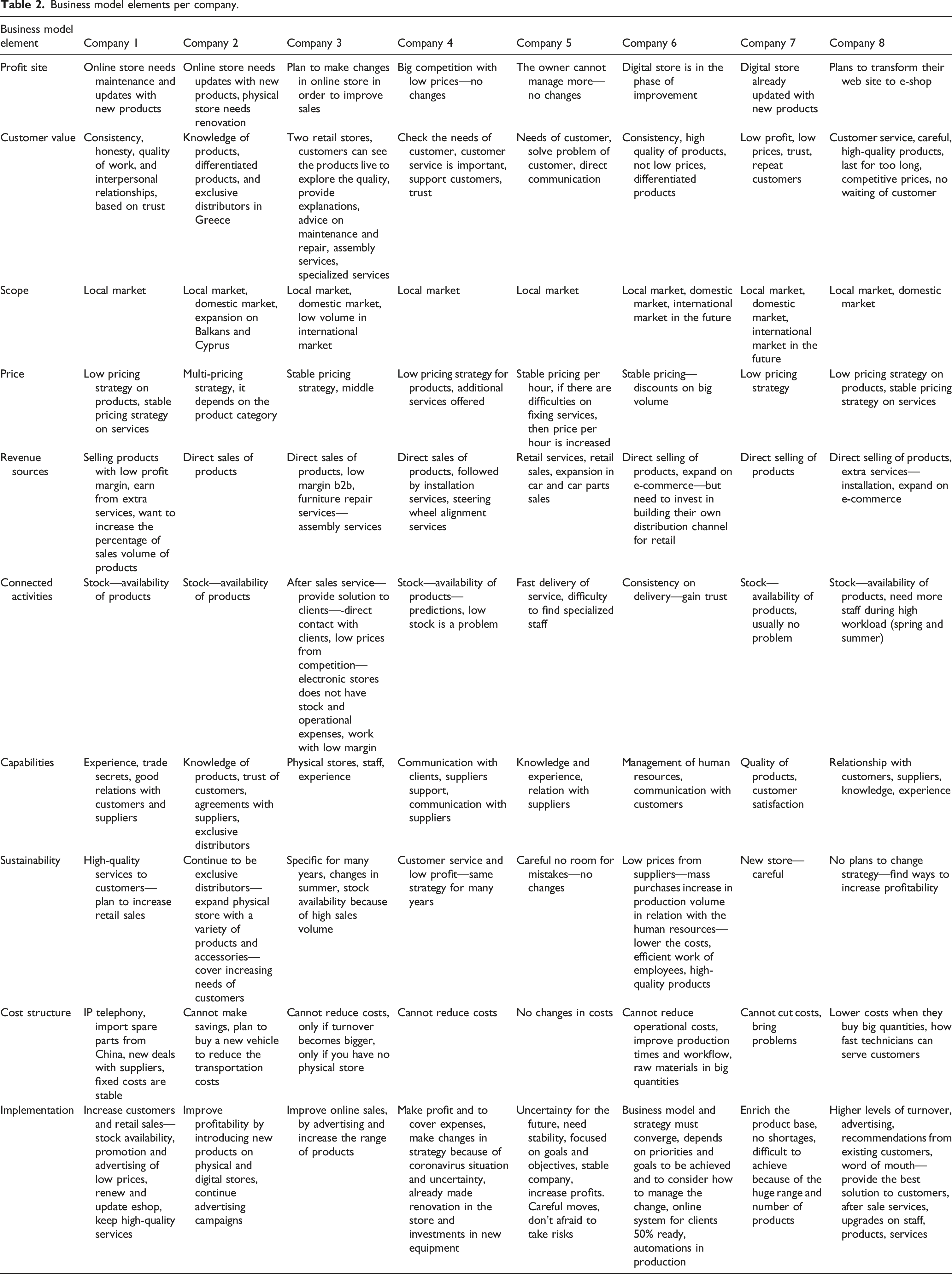
COVID-19 had a huge impact on the business model elements in all studied companies. However, there were commonalities and differences across studied retail companies, which determine the unique needs and characteristics of each company in doing business.
As such, the profit site of most of the studied retail companies showed a shift from their physical stores to their digital stores (companies 1, 2, 3, 6, 7, and 8). Most of the studied companies showed to focus on online sales, updating their digital stores with new products to increase sales, and to expand their customer base. To illustrate, the owner of company 8 highlighted a plan to transform the companies’ purely informative website to a digital store in order to provide to their clients the opportunity to place orders online. In contrast, company 4 had no changes in the profit site because during this period competition was focused on low prices, reducing the profit rate. Moreover, the business owner of company 5 stated that the company cannot manage additional activities and therefore the company will not make changes on the profit site.
Studied companies showed a customer-centric approach and therefore the element of customer value was focused on the needs of their customers, better service, additional interpersonal relationships, more customer trust, and an intended direct customer contact. Although the studied companies belonged to various retail branches, they tried to keep providing high product quality and customer services, aiming at an improvement on their firm’s performance.
The element of the business scope reveals the efforts of retail companies to cover the needs of the local market. However, more than half of studied companies (companies 2, 3, 6, 7, and 8) showed a willingness to expand their sales beyond the local market to the domestic and the international market by utilizing online sales.
The new conditions generated due to the pandemic affected the pricing strategy of the companies. Therefore, retailers either tried to keep their prices low (companies 1, 4, 7, and 8) or to keep them stable (companies 3, 6, and 8). In exceptional cases (company 2), it was reported that multi-pricing strategies were applied for products that have high profit rates and for services (company 5) that are especially difficult to fulfill.
The element of revenue sources, in terms of direct selling of products to end customers, remained unaffected. The same applied for retailers that provide additional services such as repair services, assembly services, and installation services. However, efforts to optimize revenue are dependent on the nature of the business. To optimize their revenue, among others, the following paths were suggested: expanding in new markets, making new investments in distribution channels, and improving online sales.
Regarding the connected activities, the most important concern for most of the studied companies was their stock and the availability of products (1, 2, 3, 4, 7, and 8), as well as the delivery to end customers (companies 5 and 6). Also, there was a report from the owner of company 3 that after sales service is of high importance. Additionally, the owner referred to the existence of Zero Inventory Stores, that are electronic stores that do not have stock, they have low operating costs, and they business with low margins, which causes competitive tendencies in the market. Furthermore, for companies that provide retail services (e.g., 5 and 8) finding qualified staff constitutes a major concern.
The most common corporate capabilities that contribute to the success of their companies was related to the following categories: Their knowledge and experience (companies 1, 2, 3, 5, and 8), their relations with customers (companies 1, 2, 5, 6, 7, and 8), and their relations with suppliers (companies 1, 2, 5, 6, and 8). Moreover, for company 3 the existence of two physical stores is also a necessity for their success. Additionally, for the owner of company 2, the exclusive distribution of products constitutes a strong capability for their success. However, for the business owners of company 3 and company 6, human resources are equally important for their success and since COVID-19 caused difficulties in finding qualified staff, this limited their corporate capabilities.
The element of sustainability was of high importance for all studied companies since it is closely related for their survival and success. However, the results show that each retail company chose a different strategy to remain sustainable. More analytically, company 1 is focused on providing high-quality services to customers and at the same time there are plans to increase the retail sales volume. Company 2 is focused to continue the exclusive distribution of products and to expand their physical store with a variety of products and accessories to cover the increasing needs of customers. Company 3 followed a specific sustainability strategy for many years, with changes during the summer period in stock availability because of the high sales volume. Company 4 continues the same strategy for many years focused on customer service and low profit margin. Company 5 does not intend to make changes since it cannot afford business threatening mistakes. Company 6 will be based on three main pillars. First, they plan to acquire low prices from supplies with mass purchases. Second, they plan to increase production volume in relation to their human resources to lower costs, through efficient work. Third, they plan to provide high-quality products to their customers. For company 7, since it is a recently founded business, there is a need to proceed carefully. Company 8 has no plans to change the current strategy; however, there is a need to find ways to increase profitability.
The element of the cost structure was viewed differently across studied companies. Regarding fixed costs, most of the retail companies cannot minimize them (companies 1, 3, 4, 5, and 7). However, for variable costs there were efforts to minimize them by either finding new suppliers with cheaper prices (company 1) or by bulk purchases with discount prices applied (company 8). However, for company 6 improving the production times and the workflow can also be a significant factor in reducing the cost of the final product. For instance, the use of automatized production can improve the production efficiency. The same applies for company 8, in regard to the costs of technical staff in serving customers faster.
The implementation of the business model outlines the next steps each company plans to take to adapt to the new reality. Company 1 aims to increase customer numbers, sales, and stock availability through online promotions and store updates while maintaining high-quality service. Company 2 prioritizes profitability by introducing new products in both physical and digital stores and continuing advertising campaigns. Company 3 focuses on expanding online sales through marketing efforts and increasing product variety. Company 4 seeks to ensure profitability and cover expenses, adjusting its strategy due to market uncertainty. Despite recent store renovations and equipment investments, results were lower than expected due to COVID-19. Company 5 emphasizes stability, focusing on business goals and profitability amid future uncertainties. Company 6 aims to align its business model with strategic goals, enhance automation, and finalize an online ordering system. Company 7 plans to expand its product base to prevent shortages, though managing a wide product range remains challenging. Company 8 intends to increase turnover through online advertising, customer referrals, and word of mouth while improving customer service, after-sales support, staffing, and technological advancements in home automation.
In summary, Greek SMiE retailers adapted to the COVID-19 pandemic through digital transformation, customer-centric strategies, and operational adjustments. Most shifted towards online sales, expanded market reach, and optimized revenue through new distribution channels. Pricing strategies varied, with some lowering prices to stay competitive while others maintained stability. Supply chain concerns, staff shortages, and cost management were key challenges, prompting efforts to improve efficiency and reduce variable costs. Businesses prioritized sustainability through service quality, product diversification, and digital marketing, while future strategies focused on enhancing online presence, optimizing stock management, and stabilizing operations amid market uncertainty.
Discussion
The observed results point to significant shifts across multiple business model elements that collectively shape how Greek SMiE retailers navigated pandemic-induced challenges. Below, key insights are synthesized by examining each business model element in relation to empirical observations and existing research, leading to an analysis of the primary barriers and enablers for digital adoption in this context.
Profit site
The findings indicate that the pandemic catalyzed a pronounced transition from physical stores to digital platforms, underscoring the importance of robust online infrastructures for SMiE survival. This shift aligns with Mandviwalla and Flanagan (2021) and Sarma et al. (2021), who note that brick-and-mortar sales were minimal due to lockdowns, prompting retailers to use digital channels to sustain revenues. In practical terms, this transition suggests that investments in e-commerce systems are no longer optional but central to competitive strategy in SMiE retail.
Customer value
The pandemic heightened consumers’ demand for personalized service and high-quality offerings, reinforcing the role of trust and direct communication in maintaining customer relationships. Consistent with Palmié et al. (2022), digitalization did not eliminate the importance of personal contact; instead, SMiEs leveraged online interactions to complement in-person touchpoints. This dual approach suggests that future SMiE resilience hinges on finding the right balance between digital convenience and personalized engagement, a dynamic that enhances customer loyalty and brand differentiation.
Scope
Many SMiEs expanded their scope beyond local boundaries by embracing e-commerce, thus tapping into domestic and even international markets. This confirms Afuah and Tucci’s (2003) argument that pursuing new market segments can enhance profitability. Practically, these findings reveal an unused potential among smaller retailers. Once equipped with suitable digital tools, they can break geographic constraints, diversify revenue streams, and smooth out demand fluctuations caused by local economic or crises in general.
Price
The observed retailers adopted varied pricing strategies to navigate fluctuating market conditions. While some businesses maintained stable or lower prices to attract cost-conscious consumers, others implemented dynamic pricing models based on product demand and availability. This adaptability in pricing helped Greek SMiE retailers navigate fluctuating market conditions, demonstrating the need for agile pricing strategies in the SMiE market due to the general decline in demand (Mandviwalla and Flanagan, 2021). Thus, from a managerial standpoint, real-time price adjustments and inventory-linked promotions emerge as crucial tactics, especially when consumer demand proved unpredictable. Such agility underscores how digital platforms enable more data-driven pricing practices and could contribute to better margin management.
Revenue sources
Although direct sales remained the main revenue source, the pandemic underscored the growing relevance of supplementary services (e.g., repairs and installations). Aligned with Palmié et al. (2022), the results highlight the accelerating shift toward digital commerce as a sustainable revenue channel, which can also spur secondary income streams (e.g., consulting and subscription-based models). This trend implies that SMiEs must continually explore new service lines and leverage technology to retain customers in increasingly competitive digital marketplaces.
Connected activities
Inventory management and timely delivery emerged as critical connected activities for SMiEs, as pandemic-related disruptions severely strained supply chains. While technology’s direct impact on these processes appeared limited, particularly given the small scale and traditional operations of many SMiEs, COVID-19 substantially elevated uncertainties in logistics and workforce availability. In line with Bell et al., (2020), this highlights the need for efficient digital solutions and robust supply chain management systems in SMiE retail Bell et al. (2020). Hence, from a managerial point of view, the capacity to digitally track inventory and partner with efficient courier services could become a differentiator for businesses capable of meeting shifting consumer expectations in situations like COVID-19.
Capabilities
The SMiE retailers in this study navigated the pandemic by leveraging their deep knowledge, experience, and strong relationships with customers and suppliers. Ritter and Pedersen (2020) argue that these are the areas most affected by the shift to digital operations initiated by COVID-19. Thus, it can be argued that the adoption of digital tools and platforms (e.g., e-commerce platforms, social media marketing, and omnichannel customer service) is a significant capability that can differentiate more resilient businesses from others, emphasizing the importance of digital literacy and customer engagement in sustaining competitive advantage for SMiE retailers.
Sustainability
SMiE retailers employed diverse strategies to ensure sustainability, ranging from maintaining high-quality services to optimizing costs. This highlights the importance of flexibility and innovation in adapting to rapidly changing market conditions in SMiE retail. However, no direct link between digital transformation and sustainability was identified. Instead, technology influenced sustainability indirectly through business model adjustments and the adoption of more efficient operational strategies (e.g., reduced in-store overhead and optimized supply chains). As Afuah and Tucci (2003) note, “block, run, and team-up” approaches can help firms sustain competitive positions. In the context of Greek SMiE retailers, teaming up with local logistics providers or tech firms might thus be a particularly relevant strategy.
Cost structure
While fixed costs remained largely unchanged, the observed SMiEs worked to reduce variable costs via bulk purchasing, process optimization, and in some cases, automation. Although the observations did not indicate that technology directly lowered fixed costs, it could be argued that digital tools enabled operational efficiencies (e.g., streamlined product listings and automated marketing) and thus indirectly mitigate cost pressures. This would necessitate the need for cost-management strategies that consider investments into digital infrastructure, ensuring that technology adoption translates into tangible financial benefits.
Implementation
The implementation of business model changes varied widely among companies, reflecting their unique challenges and goals. Common strategies included expanding digital marketing efforts, enhancing online sales capabilities, and adapting to new customer service expectations. Digital platforms played a central role in these implementations, enabling retailers to remain competitive and responsive to market changes and thus pointing to the critical role of technology in driving business innovation and growth in Greek SMiE retail. In summary, the implementation stage was heavily influenced by technology during COVID-19. This is also in line with previous research, which states that COVID-19 lead to big disruptions in business and society (Maital and Barzani, 2020; Priyono et al., 2020; Sarma et al., 2021; Sudan, 2020).
Barriers and enablers to digital adoption
Barriers and enablers for digital adoption among Greek SMiE retailers.
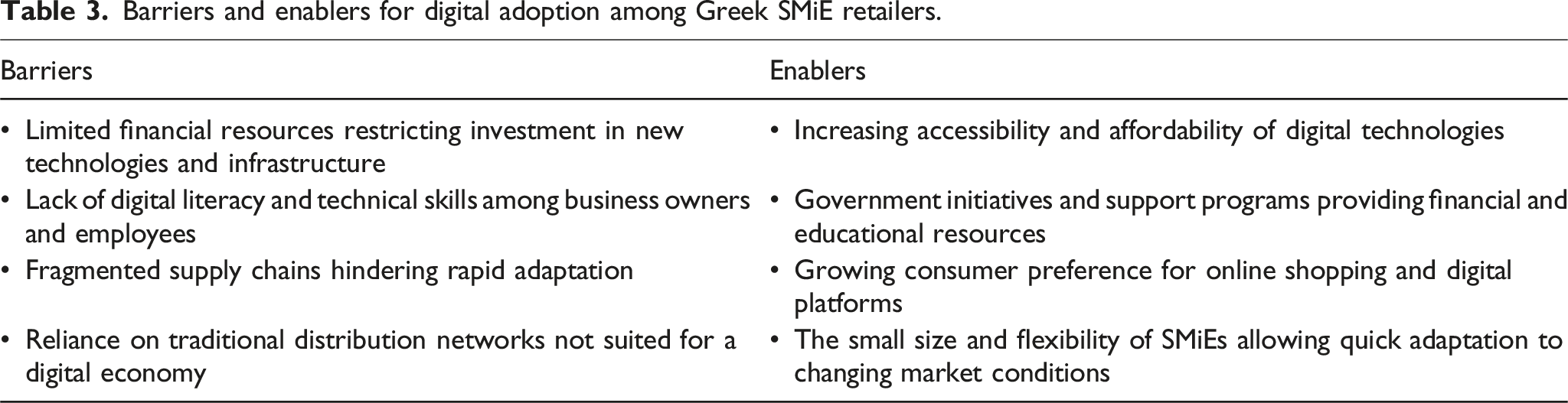
As such, barriers include limited financial resources, which restrict the ability of these businesses to invest in new technologies and infrastructure. Additionally, a lack of digital literacy and technical skills among business owners and employees can hinder the effective implementation and utilization of digital tools. The fragmented nature of supply chains and the reliance on traditional distribution networks also pose significant challenges, as they may not support the rapid adaptation required in a digital economy.
Conversely, several enablers facilitate the adoption of these strategies. The increasing accessibility and affordability of digital technologies provide an opportunity for even the smallest retailers to establish an online presence. Furthermore, government initiatives and support programs aimed at digital transformation can play a crucial role in providing the necessary financial and educational resources. The growing consumer preference for online shopping and the use of digital platforms create a market-driven incentive for retailers to enhance their digital capabilities. Additionally, the relatively small size and flexibility of SMiEs allow them to adapt more quickly to changing market conditions compared to larger enterprises.
Overall, the successful adoption of digital technologies among Greek SMiE retailers hinges on navigating these barriers and leveraging the available enablers. Future policies and support mechanisms should focus on addressing these challenges to ensure that SMiEs can fully capitalize on the opportunities presented by digital technologies by integrating digital tools into their business models, ultimately reinforcing their resilience and competitiveness in a post-pandemic retail landscape.
Conclusion, implications, and future research
This study explored the impact of the COVID-19 pandemic on the business model elements of Greek micro and small retailers, with a particular focus on their adoption of digital technologies. The findings reveal significant transformations across various business model elements, illustrating how these businesses navigated the challenges posed by the pandemic.
Thus, in regard to the proposed research question (“How did the COVID-19 pandemic influence the business model elements of Greek micro and small retailers, particularly in their adoption of digital technologies?”), it can be summarized that the COVID-19 pandemic significantly influenced the business model elements of Greek SMiE retailers, primarily by accelerating the adoption of digital technologies. Retailers adapted by enhancing their online presence, leveraging digital marketing, and exploring new revenue streams through digital channels. These adaptations were crucial in mitigating the impact of the pandemic, demonstrating the importance of digital transformation in fostering resilience and ensuring business continuity. For the retail industry in general, this highlights the imperative for businesses to integrate digital strategies into their core operations to stay competitive in an increasingly digitalized market landscape.
The findings from this research provide crucial insights for managers of SMiEs, emphasizing the importance of embracing digital technologies to enhance customer engagement, streamline operations, and diversify revenue streams. As such, SMiEs managers should prioritize investments in digital infrastructure and skills development to remain competitive. The findings also highlight the need for agile pricing and inventory management strategies, which can help businesses better respond to market fluctuations and supply chain disruptions. Additionally, the focus on customer value through personalized services can significantly strengthen customer loyalty and trust, offering a competitive edge in the digital marketplace.
This research contributes to the academic understanding of business model innovation in response to unprecedented crises, such as the COVID-19 pandemic. It expands the literature on business model elements in the retail sector, particularly within the context of SMiEs. By analyzing changes in business model elements of SMiEs during COVID-19 in Greece, the study provides a comprehensive analysis that can serve as a foundation for future research. As such, the application of the business model elements framework (as explained in the sections “Business model” and “Business model elements”) offers a replicable structure for examining similar challenges in other economies and cultural contexts. By focusing on the changes in business model elements, this study provides a roadmap for future research to explore how businesses in different regions respond to crises. Moreover, the use of this framework ensures that the findings are not limited to the specific context of Greek SMiEs but can be extended to understand broader patterns of resilience and adaptation in small businesses globally. The theoretical framework also underscores the importance of digital transformation as a cross-cutting theme that influences multiple business model elements. Thus, future research can build on this framework to investigate the interplay between digitalization and business model innovation in diverse economic and cultural settings.
The main contribution of this paper is to provide further insights and to extend the existing knowledge on how the business model elements were affected during the COVID-19 pandemic in Greek SMiE retailers. The multiple perspectives of business owners provide an improved empirical understanding on how the business model elements are affected in unusual and unexpected situations in the retail market, such as the COVID-19 pandemic, which acted as a trigger in changing their business model in order to adjust to the new retail market conditions. Furthermore, this paper provides a theoretical contribution to the retail business model literature by utilizing the business model proposed by Afuah and Tucci (2003), originally designed for companies seeking to leverage the power of the internet, and applying it to SMiE retailers aiming to overcome the challenges of the COVID-19 pandemic through digital technology adoption. Moreover, this paper can be useful for academics, practitioners, and business owners, in terms of better understanding the business model elements and how they can be studied and applied in real-world situations in retail companies.
This research has certain limitations that may affect the generalizability of the results. Firstly, the study focuses on a limited number of companies from a specific retail area, the Attica Suburb, which has distinct retail culture characteristics. While this narrow geographic scope may limit broader applicability, it provides a detailed and nuanced understanding of the local market dynamics, offering valuable insights into similar contexts. Additionally, the study is based solely on the perceptions of SMiEs owners, excluding employees, suppliers, external partners, and customers. While these perspectives could have provided a more comprehensive view, the focus on owners is particularly relevant as they are the primary decision-makers and have a holistic understanding of the business operations and strategic challenges faced during the pandemic. Another limitation is the absence of medium-sized enterprises from the sample, which might have enriched the research findings by providing a comparative perspective across different business sizes. However, the concentration on micro and small enterprises allows for an in-depth exploration of the specific challenges and adaptations unique to these businesses, which are often overlooked in broader studies. Lastly, the study is limited to for-profit enterprises. Although including non-profit organizations could have offered additional insights, the focus on for-profit SMiEs ensures a more targeted analysis of business model adaptations in a commercial context, which was the primary aim of the research. Overall, while these limitations should be considered when interpreting the results, the methodological rigor and specific focus of the study provide valuable insights into the changes in business model elements of Greek SMiEs during the COVID-19 pandemic.
Despite these limitations, the findings offer valuable contributions to the understanding of SMiE adaptations in the retail sector during the COVID-19 pandemic, providing a basis for future research in broader contexts. As such, future research in the SMEs retail industry is proposed to be conducted in other European countries that have different structure, culture, and had different regulations during the COVID-19 pandemic. Additionally, future research in the retail SMEs industry could be performed in other emergency situations in the economy, society, and the business sector in order to gain further insights on how the retail industry reacts in such unusual and unexpected situations.
Supplemental Material
Supplemental Material - The effects of COVID-19 pandemic on business model elements—Insights from Greek micro and small retailers
Supplemental Material for The effects of COVID-19 pandemic on business model elements—Insights from Greek micro and small retailers by Ioannis Allagiannis, Robert Zimmermann, Soumitra Chowdhury, Patrick Brandtner, and Andreas Auinger in Journal of General Management.
Footnotes
Acknowledgments
This project has received funding from the European Union’s Horizon 2020 research and innovation program under the Marie Skłodowska-Curie grant agreement No. 765395 and is sponsored by the Government of Upper Austria as part of the excellence network for logistics Logistikum.Retail.
Declaration of conflicting interests
The author(s) declared no potential conflicts of interest with respect to the research, authorship, and/or publication of this article.
Funding
The author(s) disclosed receipt of the following financial support for the research, authorship, and/or publication of this article: this work was supported by the H2020 Marie Sklodowska-Curie Actions; 765395 and Government of Upper Austria as part of the excellence network for logistics, Logistikum.Retail.

Supplemental Material
Supplemental material for this article is available online.
References
Supplementary Material
Please find the following supplemental material available below.
For Open Access articles published under a Creative Commons License, all supplemental material carries the same license as the article it is associated with.
For non-Open Access articles published, all supplemental material carries a non-exclusive license, and permission requests for re-use of supplemental material or any part of supplemental material shall be sent directly to the copyright owner as specified in the copyright notice associated with the article.
