




Abstract
A pivotal characteristic of leaders is their ability to assist employees in recognizing, harnessing, and cultivating their strengths. This study explores the hypothesis that strengths-based leadership fosters employees’ personal initiative (PI). Grounded in self-determination theory (SDT), it is posited that strengths-based leadership indirectly bolsters employees’ PI by enhancing their competence perceptions. The study further argues that with the increase in remote work opportunities in the aftermath of the COVID-19 pandemic, it is imperative to consider whether teleworking influences the relationships among strengths-based leadership, employees’ perceived competence, and employees’ PI. A two-wave, web-based questionnaire was utilized to collect data from 626 employees in the public sector in Norway. Multiple regressions and the PROCESS macro were used to test the hypotheses. The results corroborate a mediation model in which strengths-based leadership amplifies employees’ PI by increasing their perceived competence. The results supported the hypothesis that remote working moderates the positive association between strengths-based leadership and employees’ perceptions of competence, whereas a moderated mediation model, with the number of hours working remotely as the moderator, did not. This study contributes to research on strengths-based leadership by offering a deeper understanding of the mechanisms that drive proactive employee behavior within the framework of self-determination theory. As such, this study also contributes to self-determination theory and the literature on PI by examining how context and leadership influence the satisfaction of employees’ needs and foster proactivity. The study further provides insight into the implications of the increase in home office use in the post pandemic workforce.
Introduction
In the landscape of modern organizational behavior, leadership styles and their impact on employee performance have been extensively examined, revealing that the ways in which leaders interact with their subordinates can significantly influence various outcomes (Bass and Riggio, 2006; Dulebohn et al., 2012; Wang et al., 2011). One emerging leadership approach, strengths-based leadership, posits that by focusing on and leveraging employees’ inherent strengths, organizations can increase employee productivity, improve employee engagement, and help employees achieve a better sense of overall well-being (e.g., Ding et al., 2020; Ding and Quan, 2021; Ding and Yu, 2021a; Wang et al., 2023). However, the unprecedented surge in remote work following the outbreak of the COVID-19 pandemic has transformed the traditional workspace, raising questions about how such leadership styles translate into remote work contexts (Brynjolfsson et al., 2020). This shift necessitates a closer look at how strengths-based leadership is perceived and its efficacy in influencing employee initiative in the realm of remote work. In this study, the aim was to deepen the understanding of the positive associations between strengths-based leadership and employee proactivity by investigating the mediating role of employees’ perceived competence and considering the moderating role of remote work, utilizing a two-wave lagged design. This study provides a deeper understanding of the mechanisms that drive proactive employee behavior within the context of remote work.
Individuals’ strengths are described as “ways of behaving, thinking, or feeling that one is naturally inclined toward, finds enjoyment in, and which enable optimal functioning” (Quinlan et al., 2012, p.1146). Building on this notion, strengths-based leadership focuses on the extent to which supervisors encourage employees to tap into and utilize these inherent strengths in the workplace and support employees’ efforts in doing so (Matsuo, 2022; van Woerkom et al., 2016a; Wang et al., 2023). While there is evidence linking strengths-based leadership to positive outcomes, such as optimal performance and proactive behaviors (e.g., Ding et al., 2020; Ding and Quan, 2021; Wang et al., 2023), there is still a need to delve deeper into the underlying mechanisms and conditions that shape these relationships (Wang et al., 2023). This study focuses on the association between strengths-based leadership and proactive behavior known as “personal initiative” (PI). PI is characterized by self-driven, proactive, and sustained work behaviors (Frese et al., 1997). It is particularly vital in dynamic environments characterized by unforeseen change and has been associated with significant organizational outcomes such as commitment and performance (Baer and Frese, 2003; Fay et al., 2004; Thomas et al., 2010). Although most organizational researchers agree that both individual and environmental factors influence behavior within organizations, prior studies on PI have been fragmented, focusing either on individual factors, such as proactive personality, or on organizational factors such as leadership, work design, and climate (cf. Hong et al., 2016). This study aims to address this issue by integrating the role of individual factors (perceived competence) and contextual factors (strengths-based leadership and work context) in predicting PI.
PI is a crucial employee behavior for achieving positive organizational outcomes in today’s volatile work environment. One plausible mechanism linking strengths-based leadership with employees’ PI is employees’ perceived competence. According to self-determination theory (SDT) (Ryan and Deci, 2017; Vansteenkiste et al., 2020), humans flourish when three basic psychological needs are satisfied: autonomy, relatedness, and perceived competence. The perception of competence is referred to as a sense of effectiveness and mastery (Vansteenkiste et al., 2020). In this study, it is argued that employees’ perceptions of competence mediate the relationship between strengths-based leadership and employee PI because leaders focusing on employee strengths provide employees with support that is free from degrading evaluations and focuses on their positive efficacy, which is vital for experiencing competence (Deci and Ryan, 2000). Furthermore, the very nature of strengths-based leadership provides opportunities for employees to use and extend their skills (e.g., Wang et al., 2023), which are also prerequisites for perceived competence (Ryan and Deci, 2017; Vallerand and Reid, 1984; Vansteenkiste et al., 2020). In addition, a greater perception of competence not only bolsters employees’ confidence and proactivity (Peterson and Seligman, 2004; Van Woerkom et al., 2016b; Wang et al., 2023) but has also been identified in previous research as a key individual driver of PI (Parker et al., 2010). In this paper, it is therefore argued that strengths-based leadership is essential for employees’ PI because it increases their perceptions of competence.
Strengths-based leadership and employees’ perceptions of competence in predicting PI may be even more important with more work being done remotely. Remote work typically refers to any type of work that is performed outside an organization’s office but is still linked to the organization (cf. Charalampous et al., 2019). Specifically, remote work can be defined as “work being completed anywhere and at any time regardless of location and to the widening use of technology to aid flexible working practices” (Grant et al., 2013, p.529). “Working from home” or “home office” are also terms frequently used to refer to remote work; therefore, these three terms are used interchangeably in this paper. The COVID-19 pandemic heavily influenced the social context of work, as many organizations were forced to either discourage or forbid nonessential employees from physically coming to the office (Chong et al., 2020; Guyot and Sawhill, 2020). This led to an exponential increase in employees engaging in remote work (Chong et al., 2020). Remote work (or working from home) is a trend that has seemed to continue in the post-pandemic phase, and scholars predict that employees will work from home approximately 20% of the time in the future (Yang et al., 2022). Nevertheless, there is limited knowledge about how resources in the working environment (such as strengths-based leadership) transfer to a remote context (Brynjolfsson et al., 2020), which is puzzling, as the social context within which leadership is exercised plays a crucial role in determining a leader’s effectiveness (Oc, 2018). The physical environment of the workplace constitutes a significant element of this social context, rendering remote working a particularly influential situational factor. This mode of work significantly shapes the way employees perceive and interpret the practices of their leaders (e.g., Varma et al., 2022). In this study, it is therefore argued that leadership that capitalizes on employees’ strengths becomes increasingly critical as the number of hours employees work from home increases. Working remotely can hinder the dynamics of social interactions with colleagues and leaders, characterized by a scarcity of daily face-to-face engagement and delayed response times for feedback (cf. Charalampous et al., 2018; Nakrošienė et al., 2019; Varma et al., 2022). Given this lack of feedback when working from home, employees working remotely may suffer from less perceived competence than that of employees working in traditional offices (Ryan and Deci, 2017; Vallerand and Reid, 1984). However, research has consistently shown that having supportive leaders is important for people who work from home (cf. Charalampous et al., 2018; Nyberg et al., 2021; Varma et al., 2022). As strengths-based leadership is particularly focused on building employees’ perceptions of competence, it becomes even more important for employees working remotely because naturally occurring positive and affirming feedback is limited in this setting (cf. Charalampous et al., 2018; Nakrošienė et al., 2019), which is crucial for perceptions of competence and, in turn, PI. Therefore, working from home may be a situational factor that amplifies the implications of strengths-based leadership for employees’ perceptions of competence and PI.
In summary, this study aims to make four contributions to the literature. First, it contributes to the literature on strengths-based leadership by investigating the underlying mechanisms that explain how and when strengths-based leadership and PI are related, thereby providing a clearer picture of why strengths-based leadership has positive consequences for employees (cf. Ding et al., 2020; Ding and Quan, 2021; Ding and Yu, 2021a; Wang et al., 2023). Furthermore, it contributes to the literature on strengths-based leadership by utilizing a two-wave research design, as most of the related previous research has been based on cross-sectional data (Wang et al., 2023). Second, this study responds to recent calls to integrate individual and contextual factors in research on PI (Hong et al., 2016) by examining both perceived competence, as an individual factor, and strengths-based leadership and work context, as contextual factors, in predicting PI. Third, it contributes to the literature on remote work, which consistently finds both negative and positive consequences of working from home (Charalampous et al., 2019; Chong et al., 2020; Vleeshouwers et al., 2022). This study helps clarify what type of leadership support is particularly important for employees working from home, thus providing insights into how traditional positive organizational factors translate into the context of remote work. Finally, this study seeks to contribute to SDT (Deci and Ryan, 2000) by addressing calls for further research on need-supportive contexts (Ryan and Deci, 2017; Vansteenkiste et al., 2020). Specifically, it explores strengths-based leadership as a need-supportive resource, particularly within the unique challenges and opportunities of remote work settings. This focus provides new insights into how leadership behaviors can fulfill employees’ psychological needs and foster well-being and performance in modern work environments. For practical purposes, the results of this study may guide leaders and reveal how they can help their employees maintain PI while working from home despite the challenges remote work poses to perceptions of competence and proactivity. This provides valuable insights for leaders and organizations navigating the shift to remote work, demonstrating that strengths-based leadership remains a robust tool for fostering PI, regardless of the context of remote work. This further highlights the importance of leadership development programs focused on employee strengths to sustain high levels of perceived competence in flexible work arrangements.
Theoretical background and hypotheses
Pathways and conditions underlying strengths-based leadership
Influence of strengths-based leadership on PI
Strengths-based leadership originates from positive psychology and describes leaders who understand that every employee brings a distinct set of strengths to the table. By capitalizing on these strengths rather than focusing on mitigating weaknesses, leaders employing this strategy can facilitate higher levels of productivity in their workforce (Bakker et al., 2023; Wang et al., 2023). Leaders who adopt a strengths-based approach deemphasize employee weaknesses by task assignment according to individual employee strengths. Furthermore, they foster collaboration between team members with complementary talent, further maximizing the utilization of each member’s specific strengths (Linley, 2008; Wang et al., 2023). Although there are several similarities between strengths-based leadership and other positive leadership styles, such as transformational leadership, humble leadership, and authentic leadership, Ding et al. (2020) revealed the discriminant validity of strengths-based leadership relative to these leadership constructs. For example, strengths-based leadership differs from leader-member exchange leadership (LMX) in that strengths-based leaders do not differentiate subordinate roles, which is a key tenet in the LMX theory (Ding et al., 2020). While transformational leaders generally consider employees’ needs (Bass and Bass, 2008) and authentic and humble leaders recognize and value both strengths and weaknesses (Owens and Hekman, 2012; Walumbwa et al., 2008), strengths-based leaders actively help employees identify, develop, and leverage their strengths (Wang et al., 2023). Other leadership styles, such as empowering leadership (Sims et al., 2009) and servant leadership (Greenleaf, 1998), also emphasize employee growth and development but do not specifically focus on whether this growth should come from addressing weaknesses or building on strengths (Wang and Ding, 2023; Wang et al., 2023).
Previous research on strengths-based leadership has consistently shown that strengths-based leadership is positively associated with enhanced employee well-being, creativity, psychological health, overall job performance, and reduced emotional exhaustion (Burkus, 2011; Ding et al., 2020; Ding and Yu, 2020, 2021b, 2022; Wang et al., 2023). Moreover, recent empirical studies have identified self-efficacy and psychological well-being as key mediators in the relationship between strengths-based leadership and innovative behavior (Ding and Quan, 2021; Ding and Yu, 2021a). Preliminary evidence also suggests that work-related well-being and the quality of supervisor–subordinate relationships, particularly within the cultural context of guanxi, may mediate the positive effects of strengths-based leadership on innovative behavior (Ding and Yu, 2020). In summary, this body of research highlights the essential role of strengths-based leadership in cultivating a supportive and high-performing work environment. The present study furthers these studies by examining strengths-based leadership’s implications for PI in complex circumstances. By helping employees make the most of their abilities, strengths-based leaders may increase employees’ initiative. For example, in a series of two studies by Vinarski-Peretz et al. (2011), positive work relationships manifested as positive regard, mutuality and relational vitality (Dutton and Ragins, 2009), which are typically present in strengths-based leadership, were found to foster work engagement and proactive behaviors among employees.
When people engage in self-starting and proactive behaviors to overcome barriers to goals, they exhibit PI (Frese et al., 1996). Self-starting behaviors are demonstrated when an individual chooses to engage in a task without external pressure, role requirements, or instructions (Frese and Fay, 2001). Such proactive behaviors involve persistence and a long-term focus without postponing what needs to be done (Frese and Fay, 2001). For example, an employee who has high PI typically initiates exploration of relevant information to reach a goal, including reflecting and discussing with colleagues, trying out different solutions and working to implement them, and then continuing these behaviors (Zappalà et al., 2021). These are particularly important behaviors in increasingly dynamic and unpredictable workplaces because they reflect employees’ abilities to adjust positively to such environments (Chiaburu and Carpenter, 2013).
Past research has identified both contextual and individual antecedents, such as HRM systems, climate for initiative, and the need for achievement (e.g., Frese and Fay, 2001; Hong et al., 2016; Wihler et al., 2017). For example, Wikhamn and Selart (2019) reported a positive relationship between psychological empowerment and PI. Past research has, however, demonstrated inconclusive findings concerning the link between leadership and PI (Parker et al., 2010). For example, Parker et al. (2006) reported that supportive leadership does not make a unique contribution to predicting employees’ proactive behaviors. More recent research, however, has shown that empowering leadership positively predicts PI (Hong et al., 2016). Consequently, there may be other variables at play that explain the relationship between leader behaviors and PI. The current study posits that employees who receive leader support to leverage their strengths, in turn, increase their PI. This argument aligns with recent studies that have emphasized the important role of leadership in enabling employees to exploit their strengths to increase productivity, proactivity, and overall well-being (Ding et al., 2020; Ding and Quan, 2021; Ding and Yu, 2021a; Wang et al., 2023). The following hypothesis is therefore proposed:
Strengths-based leadership is positively associated with PI.
Strengths-based leadership, perceived competence, and PI
In this study, it is anticipated that the influence of strengths-based leadership on PI can be partially attributed to employees’ perceived competence. According to SDT (Ryan and Deci, 2017; Vansteenkiste et al., 2020), employees’ perceptions of competence depend on opportunities for them to use and extend their skills (Vansteenkiste et al., 2020) and the availability of social-contextual events, such as positive feedback and positive communication (Perry et al., 2018). By helping employees identify and develop their strengths, leaders simultaneously increase their employees’ ability to use these strengths effectively, which in turn satisfies employees’ need to feel competent (Ding and Yu, 2021a). Specifically, supervisors who focus on employees’ strengths may provide efficacy-supporting feedback and refrain from demoralizing evaluations. According to SDT, these factors play crucial roles in satisfying an individual’s need to feel competent (Deci and Ryan, 2000; Ryan and Deci, 2017; Vallerand and Reid, 1984; Vansteenkiste et al., 2020). Practicing strengths-based leadership may serve as an important signal to employees that they are valued and that they possess unique qualities as human beings, both of which help fulfill the need to feel competent (Deci and Ryan, 2008). For example, early studies have shown that positive performance feedback increases individuals’ perceptions of competence, whereas negative performance feedback diminishes it (cf., Deci and Ryan, 2000). Furthermore, Coatsworth and Conroy (2009) reported that coaches’ process-focused praise predicted the satisfaction of youths’ need to feel competent, which in turn increased their self-esteem. Thus, when leaders support their employees in using their strengths, these employees feel more competent (Peterson and Seligman, 2004; van Woerkom et al., 2016b).
In turn, the relationship between strengths-based leadership and employees’ heightened sense of competence may lead to an increase in proactive behaviors (i.e., PI) among employees. According to SDT, need fulfillment fosters persistence and proactive work behaviors (Deci and Ryan, 2000; Hetzner et al., 2012). In particular, satisfying the need for competence has been related to effectively coping with job demands and maintaining proactive behaviors, such as PI (Meyers et al., 2020; Peterson and Seligman, 2004). For example, Parker and Collins (2010) reported that performance-oriented employees are less likely to engage in proactive behaviors because of unfavorable judgments of their competence. Proactivity requires individuals to feel that they are capable of successfully attaining the goals they have set for themselves; thus, individuals whose need for competence is fulfilled are more proactive, which is indeed supported by Chen et al. (2021). Furthermore, research indicates that experiencing low levels of competence may encourage employees to actively seek out tasks that increase their sense of competence (Fay and Sonnentag, 2012). This may be especially important in the remote working context, where achieving a sense of competence is more difficult due to a lack of social context and where the significance of negative communication is emphasized (e.g., Cramton, 2001). Thus, once one’s needs, such as feeling competent, are satisfied, people achieve optimal performance (Deci and Ryan, 2000; Meyers et al., 2020; van Woerkom et al., 2016a), thus allowing employees to adapt to complex and changing environments (Deci and Ryan, 2000; Van Den Broeck et al., 2010). Since PI may be influenced by additional factors, such as HRM systems and the need for achievement (e.g., Hong et al., 2016; Wihler et al., 2017), employees’ perceived competence may only partially mediate the relationship between strengths-based leadership and employee PI. Moreover, strengths-based leadership may directly encourage PI by creating an environment that values and supports proactive behavior, regardless of perceived competence. This suggests that while perceived competence is an important mediator, it does not necessarily fully explain the relationship. Therefore, the following is hypothesized:
Employee perceptions of competence partially mediate the relationship between strengths-based leadership and employee PI.
The moderating role of remote work
Leadership effectiveness has been shown to be contingent on work characteristics (Wang and Cheng, 2010). One important work characteristic is the physical location where employees perform their work. Remote work has been offered to employees for several decades to help enhance employee work–life balance while improving performance, and both the US Congress and the European Union have provided institutional support for remote work (Avery and Zabel, 2001; Van der Lippe and Lippényi, 2020). Before the onset of the COVID-19 pandemic, remote working arrangements were a fast-growing practice enabled by a surge in the use of and access to technology. Extensive research has focused on remote work’s influence on employee performance and well-being (Charalampous et al., 2019; Van der Lippe and Lippényi, 2020), revealing inconclusive evidence indicating both positive (e.g., increased autonomy and job satisfaction) and negative outcomes (e.g., social and professional isolation and overwork) (cf. Charalampous et al., 2019). Thus, remote work is an essential work characteristic that plays an important role in employees’ working context, which has implications for leadership effectiveness and employee experiences and behaviors (Nyberg et al., 2021).
According to the definition of strengths-based leadership (Ding et al., 2020), strengths-based leaders influence employees primarily by encouraging the identification, development, and utilization of both their own strengths and those of their employees (Wang and Ding, 2023). Previous research has shown that supervisor support is crucial for employees working from home, leading to improved performance and well-being despite the absence of workplace resources (e.g., Chong et al., 2020; Nyberg et al., 2021). The more employees work remotely, the more strongly they might depend on strengths-based leadership to sustain their sense of competence. In remote work settings, employees often have reduced access to key drivers of perceived competence, such as immediate feedback, social support, and guidance, which typically occur more naturally in an in-person work environment (Morrison-Smith and Ruiz, 2020; Perry et al., 2018). In a traditional office setting, employees receive numerous subtle cues about their performance and competence from their surroundings, such as face-to-face feedback, peer interactions, and immediate task-related guidance. In remote settings, these cues are significantly reduced or delayed (Charalampous et al., 2019; Morrison-Smith and Ruiz, 2020; Yang et al., 2022). As a result, employees might increasingly rely on the competence-boosting behaviors of a strengths-based leader—such as positive reinforcement, strengths identification, and task alignment—making the relationship between leadership and perceived competence stronger as remote work hours increase. Remote work can also lead to a sense of isolation, where employees may feel disconnected from their team and less confident in their abilities due to the lack of direct interactions (Charalampous et al., 2019; Viererbl et al., 2022). Strengths-based leadership, with its focus on recognizing and affirming employees’ strengths, can mitigate these feelings of isolation by helping employees feel more competent and valued, even in a remote context; this is supported by previous research showing that when employees use their strengths, they experience greater work performance and greater perceptions of competence (Ding and Quan, 2021; Dubreuil et al., 2014; Wang et al., 2023).
Therefore, it is reasonable to hypothesize the following:
The positive relationship between strengths-based leadership and perceptions of competence is moderated by remote working hours such that the relationship is stronger when remote working hours are high (vs. low). The claims above suggest an integrative framework where employees’ perceptions of competence mediate the relationship between strengths-based leadership and PI, with the relationship between strengths-based leadership and employees’ perceptions of competence being strengthened by the number of hours worked from home. In addition, remote work hours positively moderate the mediating effect of perceived competence on the link between strengths-based leadership and PI. PI is particularly important in dynamic and unpredictable workplaces, as it reflects employees’ ability to adapt positively to changing environments (Chiaburu and Carpenter, 2013). During the COVID-19 pandemic, the need for PI became even more critical, as employees had to adjust and develop new skills to manage their work outside the traditional office setting (e.g., Chong et al., 2020). The social context, such as that created by remote work, plays a key role in influencing employees’ decisions to demonstrate PI (Cai et al., 2019). Positive workplace interactions, for example, have been shown to increase both individual and team proactivity, as employees exchange resources, gather information, and adjust their behavior on the basis of feedback (Cai et al., 2019; Liu et al., 2015; Tucker et al., 2008). Remote work, however, may limit employees’ PI by reducing perceptions of competence due to lessened opportunities for feedback, coaching, and encouragement, such as interactions with colleagues and supervisors (Bailey and Kurland, 2002; Chiniara and Bentein, 2016; O'Neill et al., 2009; Sewell and Taskin, 2015; Perry et al., 2018). This effect was prevalent during the pandemic, alongside increased procrastination (e.g., Meyer et al., 2021; Wang et al., 2021). Consequently, the need for competence is more challenging to fulfill in remote work settings, potentially leading to negative outcomes for PI, as lower perceptions of competence can result in feelings of ineffectiveness or helplessness (Vansteenkiste et al., 2020). Given that positive leadership communication is linked to better perceptions of performance (cf. Morrison-Smith and Ruiz, 2020), strengths-based leaders may help employees overcome the barriers of remote work, maintaining their proactivity and PI. Based on this reasoning, the following hypothesis is proposed:
The indirect relationship between strengths-based leadership and PI via perceptions of competence is moderated by remote working hours such that the indirect relationship is stronger when remote working hours are high (vs. low). The conceptual model is shown in Figure 1.
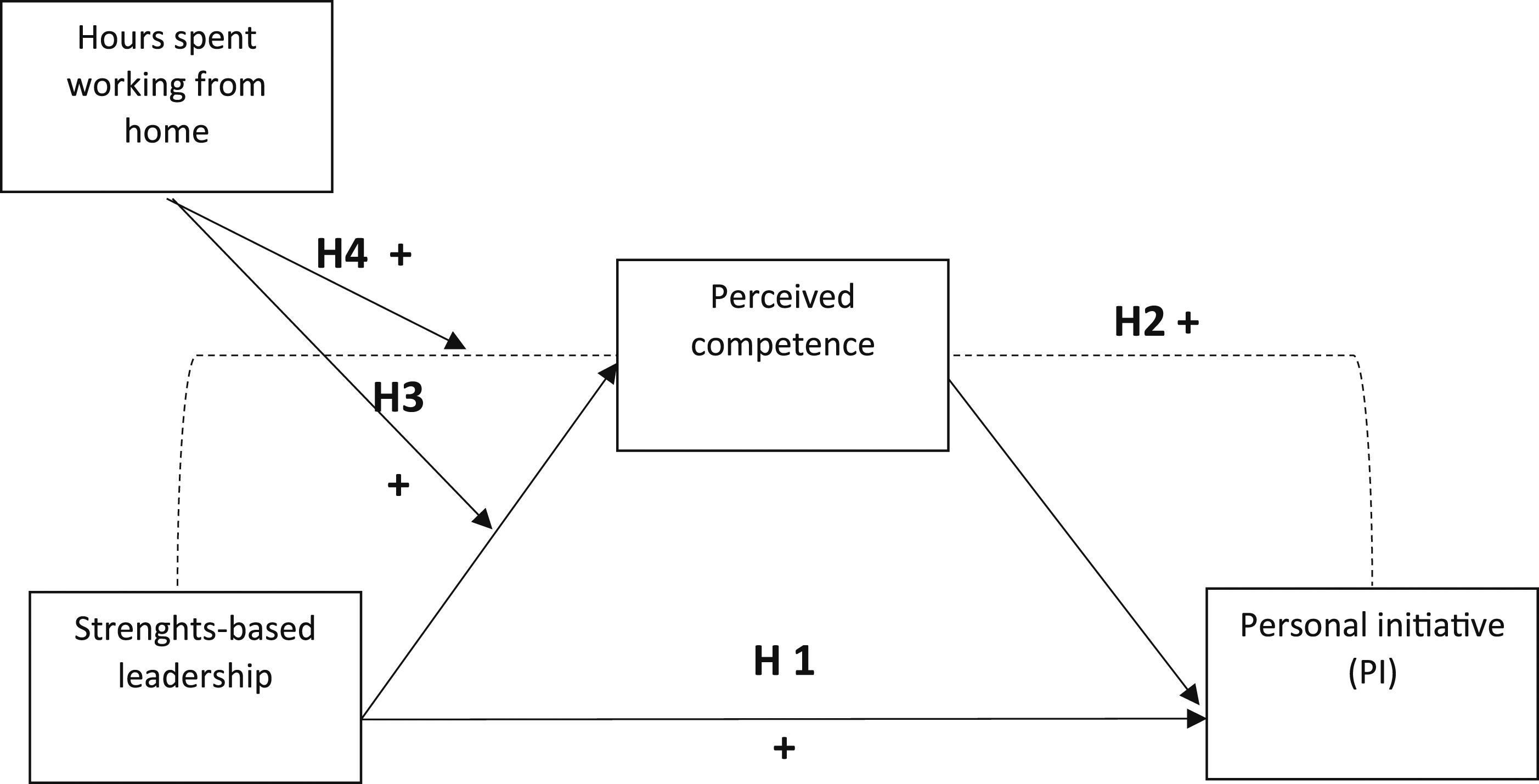
Conceptual model of the suggested moderated mediation. Note: the dotted line indicates the indirect relationship between strengths-based leadership and PI.
Methods
Study context
The data for this study were collected in Norway between November and December 2020, a period marked by several national restrictions. For example, nonessential employees—such as those in business sectors and administrative roles—were prohibited from accessing offices, working exclusively from home. In contrast, essential employees, including those in healthcare, social services, police, and fire departments, were required to continue their duties, either fully onsite or with arrangements allowing partial remote work. Additionally, and indirectly related to this study, children in kindergarten, primary school, and secondary school were allowed to return to school during this period, which enabled employees with children younger than 16 years to work some hours from their home office without the need to simultaneously care for their children. Moreover, social gatherings were restricted by earlier closing hours for bars and restaurants, and strict restrictions were applied regarding how many guests could be entertained in private homes. This context presents a unique opportunity to examine this study’s hypotheses, as it includes both a rise in employees working from home and those operating in traditional office environments. Consequently, the context of this study allowed for the exploration of how increased remote working hours influence the proposed mediation model, thereby deepening our understanding of its implications.
Sample and procedure
A two-wave, web-based questionnaire was used to test the hypotheses and reduce the potential influence of common-method variance on the results (Podsakoff et al., 2012). To distinguish the dependent variable from the independent variables, the predictor, mediator, and moderator were measured at Time 1, and the dependent variable was measured at Time 2 (Podsakoff et al., 2003). A two-week time lag was specified between the first and second waves. Although a temporal separation of three weeks is recommended to decrease respondents’ ability to recall previously provided answers, it is difficult to determine the appropriate time lag for studying any given relationship (Podsakoff et al., 2003). Therefore, to decrease the likelihood of respondent attrition, the time lag was shortened to two weeks.
Descriptive statistics, correlations, and scale reliabilities.
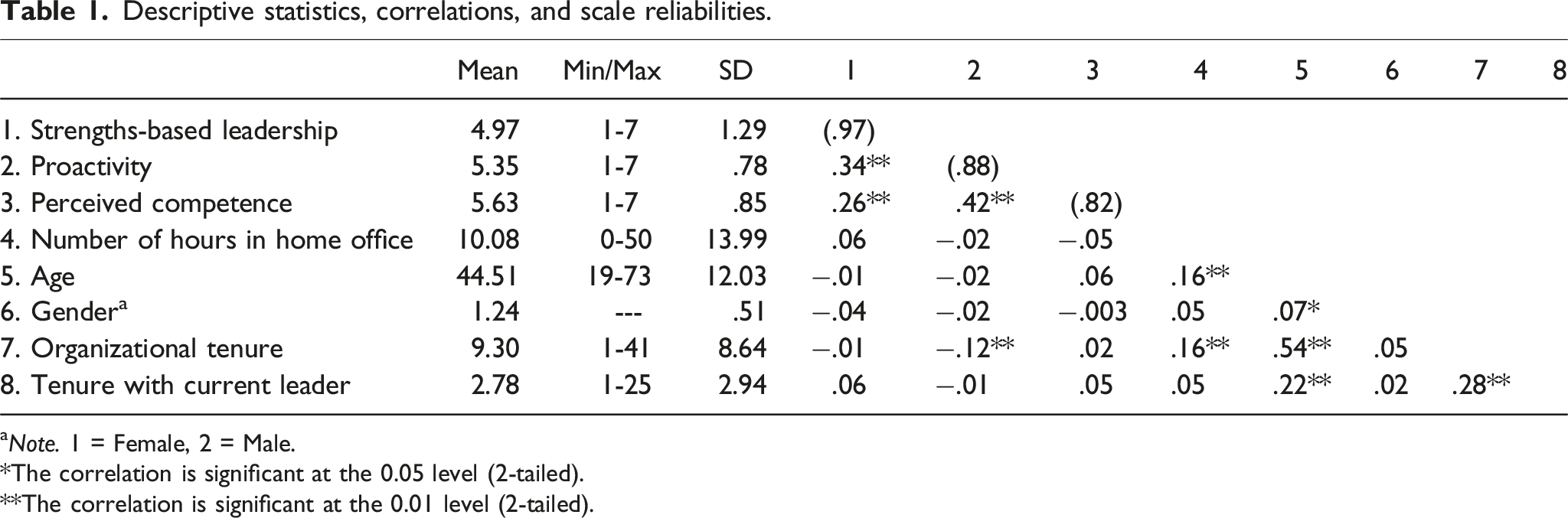
aNote. 1 = Female, 2 = Male.
*The correlation is significant at the 0.05 level (2-tailed).
**The correlation is significant at the 0.01 level (2-tailed).
Measures
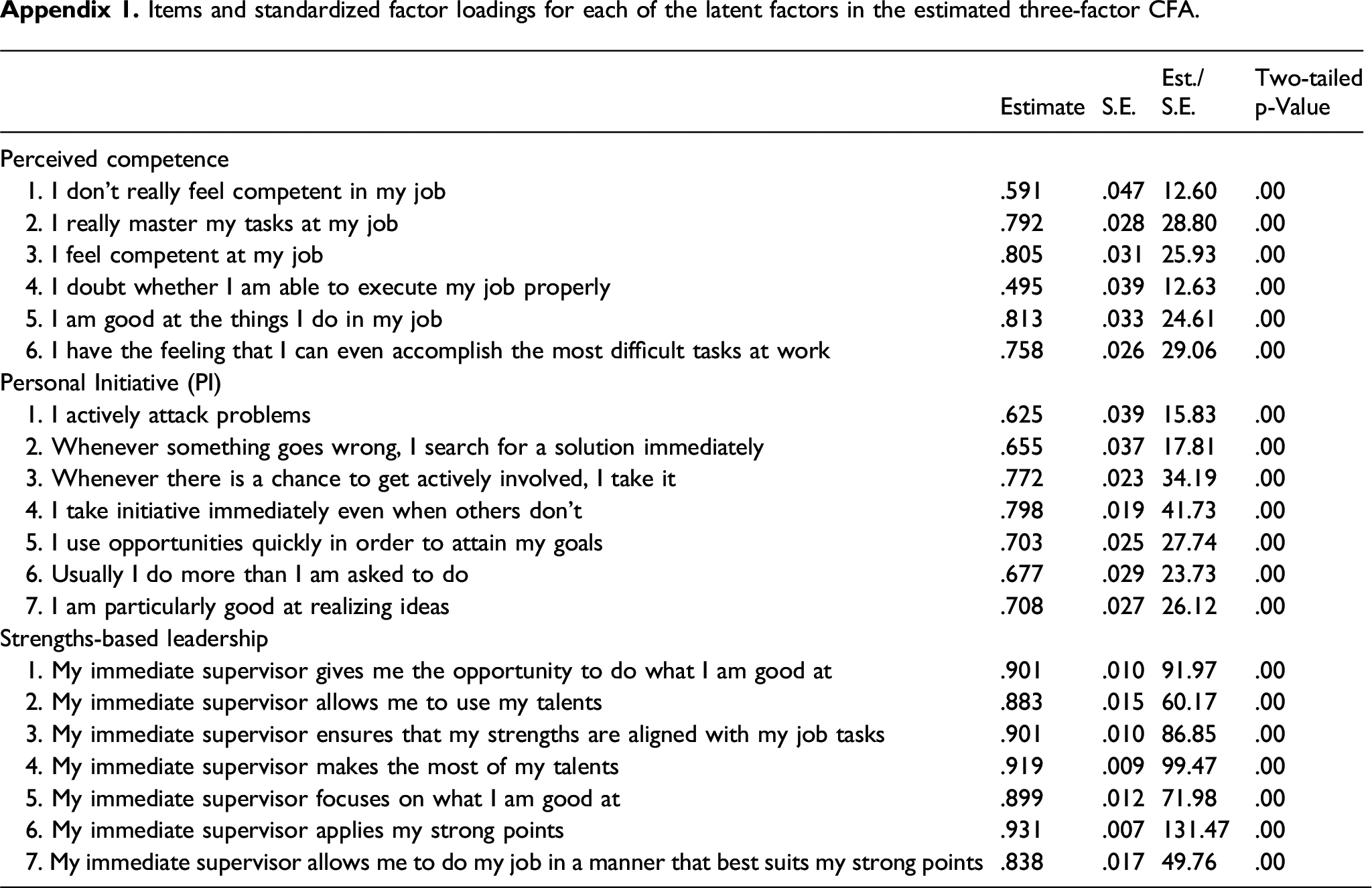
Detailed versions of all the study measures are included in Appendix 1 for reference.
PI
PI was measured using the seven-item scale developed by Frese et al. (1997), with response options ranging from 1 (completely disagree) to 7 (completely agree). Example items include “I actively attack problems” and “Whenever something goes wrong, I search for a solution immediately.” The Cronbach’s α for PI was .88.
Perceived competence
Perceived competence was measured using six items from the need satisfaction at work scale developed by Van Den Broeck et al. (2010). Example items include “I don’t really feel competent in my job” and “I doubt whether I am able to execute my job properly.” The response options ranged from 1 (completely disagree) to 7 (completely agree), and the scale’s Cronbach’s α was .82.
Remote work hours
Remote working hours were measured by asking the participants how many hours per week they spent working from home during the months when COVID-19 restrictions were in place.
Strengths-based leadership
A seven-item scale was adapted from van Woerkom et al., (2016a) to measure strengths-based leadership. Originally designed to assess perceived organizational support for employees to use their strengths, the scale’s wording was modified from “this organization” to “my direct supervisor” to shift the focus to leader support. Item examples include “my direct supervisor gives me the opportunity to do what I am good at” and “my direct supervisor focuses on what I am good at”. The response options ranged from 1(completely disagree) to 7 (completely agree).” The Cronbach’s alpha for strengths-based leadership was .97.
Control variables
Organizational tenure, number of years worked with the current leader (leader tenure), age, and gender were controlled for in the analysis. Prior research on telecommuting suggests that gender is positively related to the frequency of telecommuting; specifically, women are more likely to telecommute because of family and caregiving obligations (Allen et al., 2015; Gajendran and Harrison, 2007). Additionally, a meta-analysis on proactivity in organizations revealed that age and tenure are associated with PI (Thomas et al., 2010), and previous studies have shown that gender is correlated with PI (e.g., Bolino and Turnley, 2005).
Analytical strategy
Before testing the hypotheses, an MIMIC model in Mplus with the MLMV estimator was used. Because the proposed relationships may be influenced by situational factors and do not vary independently of such factors, endogeneity may be a threat to the data (Antonakis et al., 2010). The recommended initial step in managing potential sources of variation in the dependent variables is to eliminate this variation from the error term. Thus, control variables (organizational tenure, number of years worked with current leader, age, and gender) were added when testing whether the three-factor model fit the data. Since the moderating variable, remote work, is not a latent variable, a regression analysis with strengths-based leadership and perceived competence as latent variables was performed. Three competing MIMIC models were developed, testing a one factor solution (all variables loading on one factor); a two-factor solution (PI loading on one factor, the remaining variables considered as one factor); and a three-factor solution (PI, perceived competence, and strengths-based leadership loading on three separate latent factors). Chi-square and CFI change statistics were consulted, as were CFI, TLI, SRMR, and RMSEA, to ascertain model fit.
To test the hypotheses, an extension of the Preacher et al. (2007) PROCESS macro created by Hayes (2013) for SPSS was used. PROCESS is a path analysis modeling tool that uses ordinary least squares (OLS) and logistic regression for observed variable analysis. It allows for the testing of direct and indirect effects in single- and multiple-mediator models, the analysis of two- and three-way interactions in moderation models, and the assessment of conditional indirect effects in moderated mediation models with one or more mediators or moderators (cf. Hayes, 2013). Two different PROCESS models were used to test the study’s hypotheses. To test the hypotheses involving direct and indirect effects only (Hypotheses 1 and 2), PROCESS Model 4 (mediation analysis) 1 was used, with 5000 bootstrap intervals. For the moderation hypothesis and the moderated mediation hypothesis (Hypotheses 3 and 4), PROCESS Model 7 (moderated mediation) 1 was applied, with 5000 bootstrap intervals. The mediator (perceived competence) and the independent variable (strengths-based leadership) were mean-centered, as recommended by Dawson (2014). Age, gender, organizational tenure, and number of years worked with current leader, were controlled for. To further investigate the nature of the proposed interaction, the Johnson–Neyman option in PROCESS was applied. This technique allows for finding the value of the moderator variable for which the ratio of the conditional influence on its standard error is equal to the critical t score. The Johnson–Neyman technique allows for the identification of specific points within the range of the moderator variable where the predictor’s effect on the outcome transitions from statistically significant to nonsignificant. To further examine the hypothesized moderation (Hypothesis 3), the MD2C graphing template for PROCESS, developed by (Dragt, 2017), was utilized. Simple slopes at high, medium, and low (+ 1 SD, mean, - 1 SD) scores for perceived competence were plotted.
Results
Fit indices and MIMIC results.
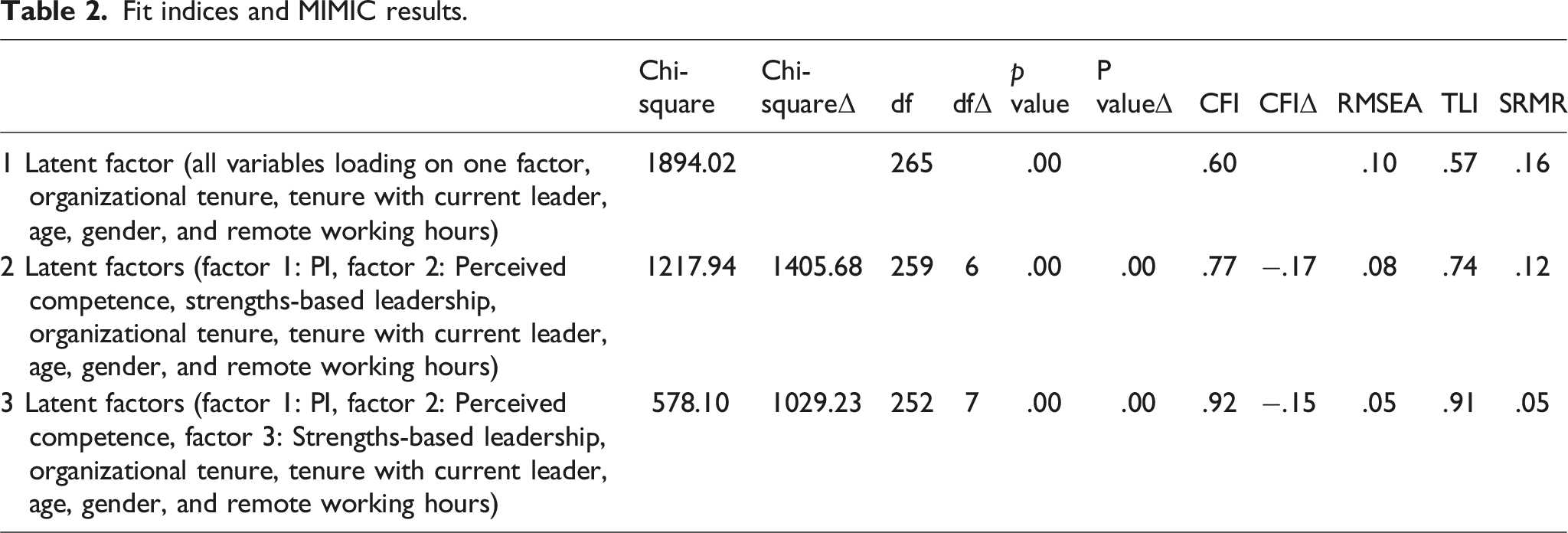
The one-factor (RMSEA = .10, CFI = .60, TLI = 57, SRMR = .16, chi-square [265] = 1894.02, p < .001) and two-factor (RMSEA = .08, CFI = .77, TLI = .74, SRMR = .12, chi-square [259] = 1217.94, p < .001) models both yielded an inferior fit. Change in the CFI score was also evaluated. A CFI change smaller than or equal to −0.01 indicates invariance between the two models being compared, and the null hypothesis of invariance cannot be rejected (Cheung and Rensvold, 2002). The change in the CFI of the three-factor solution (−0.15; Table 2) indicates that the null hypothesis of invariance can be rejected and that the three-factor solution is a superior fit to the two-factor solution (Cheung and Rensvold, 2002).
The correlation matrix revealed significant relationships between employees’ perceived competence and PI (r = .42, p < .01) and between employees’ perceived competence and strengths-based leadership (r =.26, p < .01). Remote work hours were significantly correlated with age (r =.17, p < .01) and organizational tenure (r = .16, p < .01), but gender and leader tenure were not correlated with any of the predictor variables (Table 1).
Hypothesis testing
Mediation and moderated mediation results.
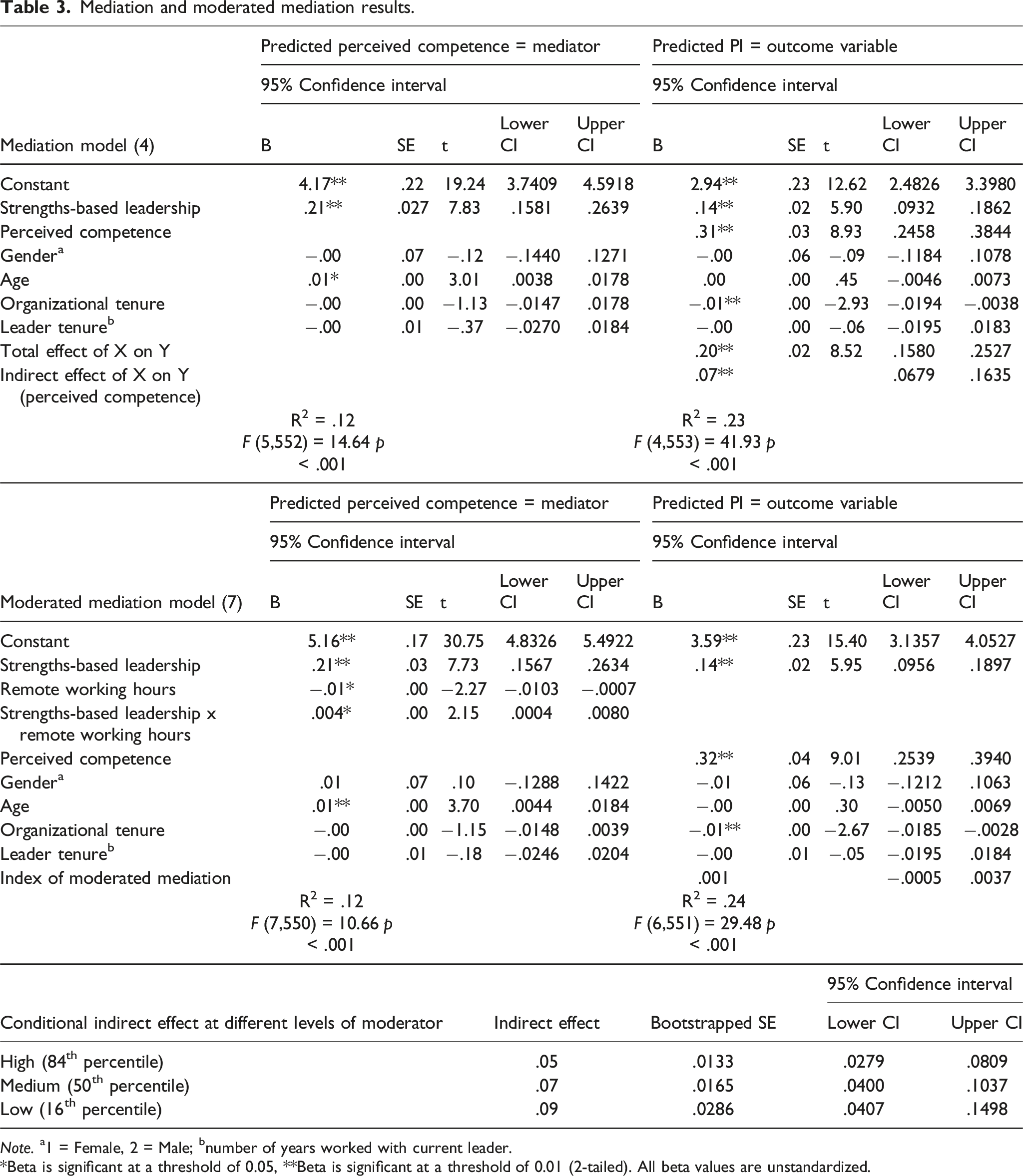
Note. a1 = Female, 2 = Male; bnumber of years worked with current leader.
*Beta is significant at a threshold of 0.05, **Beta is significant at a threshold of 0.01 (2-tailed). All beta values are unstandardized.
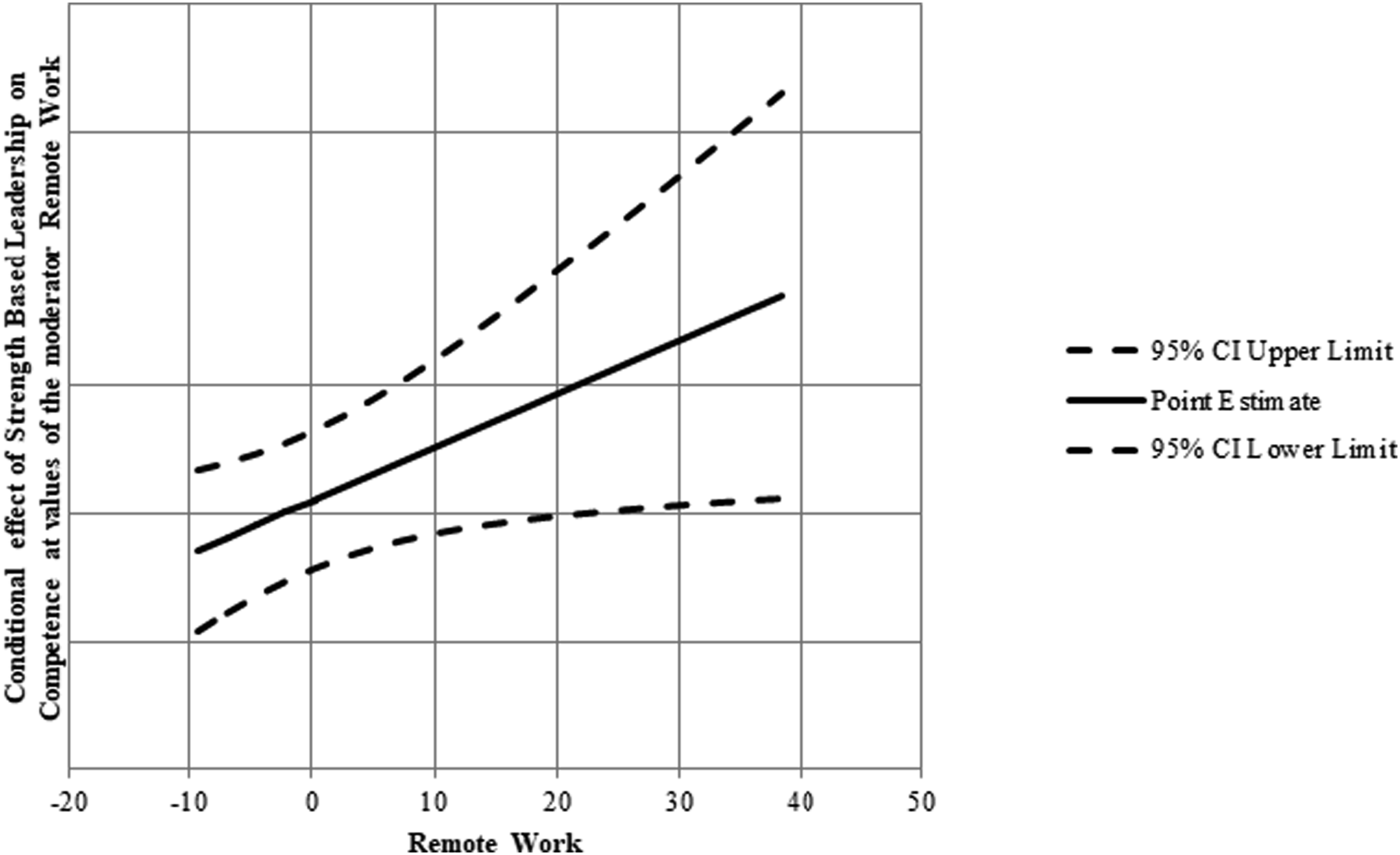
To further test the moderation hypotheses, Process Model 7 was used. The results showed that remote working hours were significantly and negatively related to employees’ perceptions of competence (B = -.005, p < .05, 95% CI [-.0103, −0.0007]). The interaction effect of strengths-based leadership and remote working hours was significant (B = .0042, p < .05, 95% CI [.0004, .0080]), such that employees experienced the highest levels of perceived competence at high levels of strengths-based leadership together with high numbers of hours worked remotely (see Figure 2 and Table 3). Thus, the results supported Hypothesis 3. The Johnson‒Neyman technique was then used to establish the nature of the interaction. The technique was used to investigate different values of the moderator (remote working hours, including low, medium, and high numbers) at which the relationship between strengths-based leadership and perceived competence changes from significant to nonsignificant. The Johnson–Neyman output revealed that the interaction effect was significant at all levels of the moderator, indicating a greater effect size as the number of remote working hours increased (e.g., low B = .16, p < .001, 95% CI [.0940, .2282]; medium B = .21, p < .001, 95% CI [.1564, .2629]; and high levels B = .27, p < .001, 95% CI [.1907, .3485] (see Figure 3). This suggests that, whereas remote work moderates the relationship, the strength of the moderation remains consistent across the tested range of hours working from home. To test Hypothesis 4 (test of moderated mediation), the index of moderated mediation was conferred, which was not significant. This finding indicates that remote working hours did not affect the results obtained with the full mediation model (B = .001, 95% CI [-.0004, .0038]). Thus, Hypothesis 4 was not supported. Only organizational tenure had a significant effect on PI (B = −0.01, p < .05, 95% CI [-.0185, −0.0028]), and none of the other control variables, tenure with current leader, age, or gender, were significantly related to PI (Table 3). Moderating effect of strengths-based leadership and remote work on perceived competence. Moderation of the effect of strengths-based leadership and remote work on perceived competence with confidence intervals based on Johnson–Neyman output. *Note: The solid line is the estimate of the interaction effect, and the dashed lines are the lower and upper limits of the corresponding confidence intervals.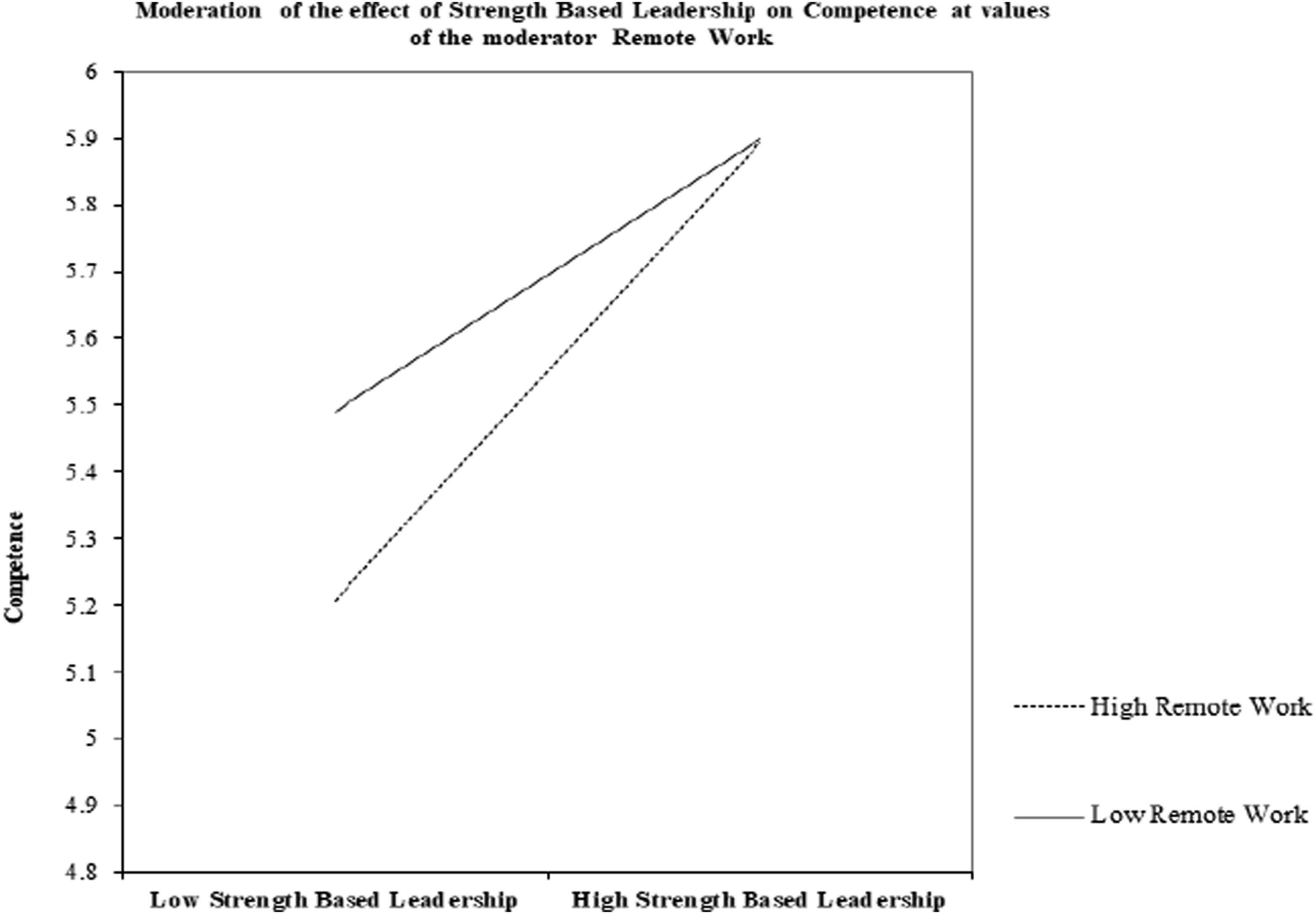
Discussion
The findings of this study contribute to SDT (Ryan and Deci, 2017; Vansteenkiste et al., 2020) by exploring how remote working hours moderate need satisfaction. Additionally, they expand the literature on PI by examining the role of leadership in fostering PI (Tornau and Frese, 2013). Specifically, the study investigated the conditional role of remote working hours in the indirect relationships among strengths-based leadership, employees’ perceived competence, and PI. Strengths-based leadership was found to promote employees’ PI through employees’ increased perceptions of competence. Furthermore, employees working remotely felt even more competent when they experienced high levels of strengths-based leadership. The hypotheses that 1) strengths-based leadership directly influences PI and 2) this relationship is mediated by perceived competence were supported (Figure 4). Moderated mediation model with effect sizes and significance levels. Note: the dotted line indicates the indirect relationship between strengths-based leadership and PI, *Beta is significant at a threshold of 0.05, and **Beta is significant at a threshold of 0.01 (2-tailed). n/s Beta is not significant. All beta values are unstandardized.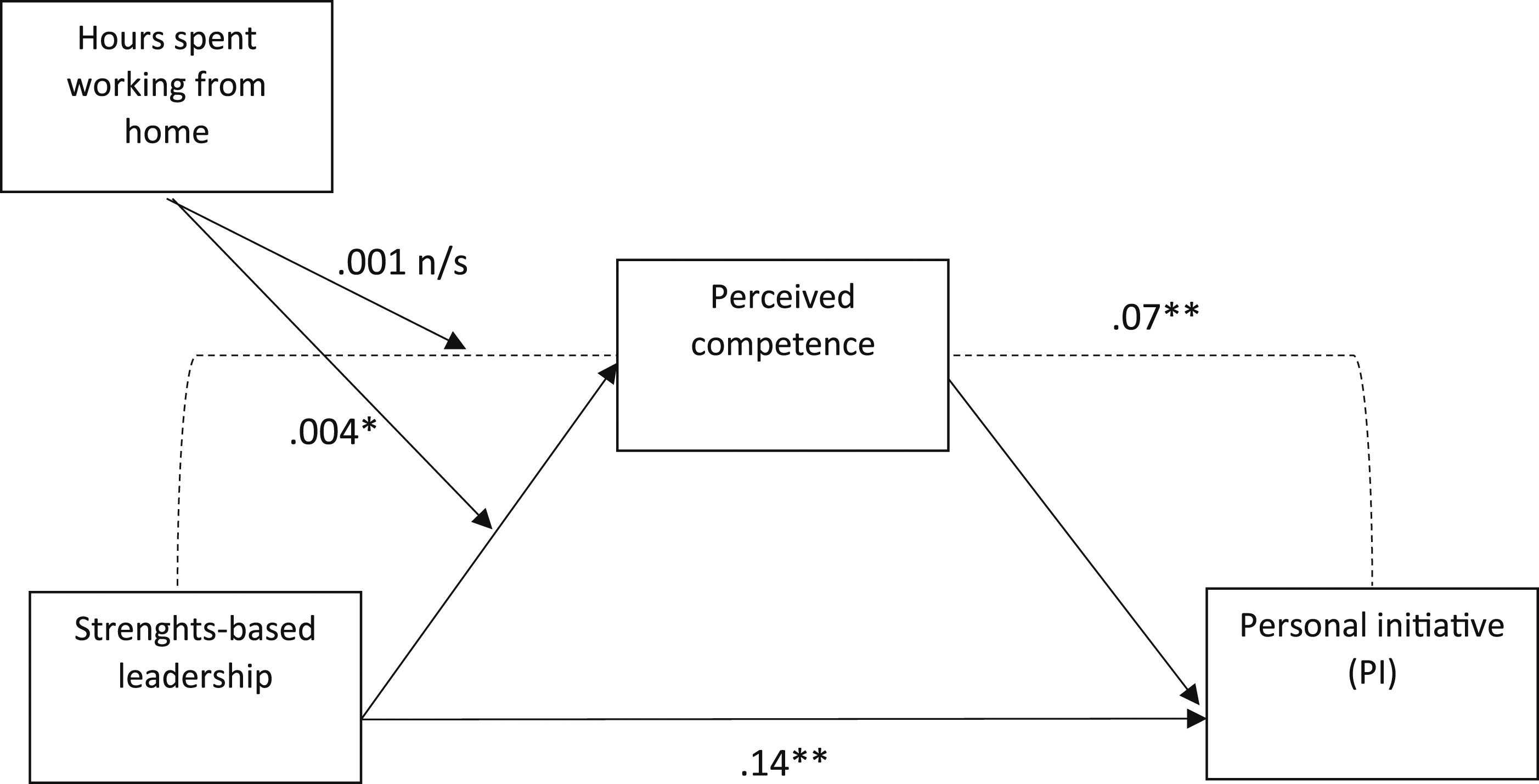
However, the study did not find evidence for a moderated mediation effect of remote working hours on the indirect relationship between strengths-based leadership and PI through perceived competence (disconfirming Hypothesis 4). Nonetheless, a conditional effect of remote working hours on the relationship between strengths-based leadership and perceived competence was observed. Specifically, the positive relationship between strengths-based leadership and perceived competence was stronger for employees who worked more hours from home (supporting Hypothesis 3).
Theoretical implications
The main finding that strengths-based leadership was directly related to PI is in line with previous research indicating that favorable workplace interactions among coworkers increase both individual and team proactivity (Cai et al., 2019; Liu et al., 2015; Tucker et al., 2008; Vinarski-Peretz et al., 2011). This direct relationship was partially mediated by employees’ sense of competence. Strengths-based leadership thus fosters employees’ PI by supporting the fulfillment of their need for competence. This finding aligns with prior research highlighting the importance of leadership in empowering employees to leverage their strengths and its positive impact on proactivity (e.g., Ding et al., 2020; Ding and Quan, 2021; Ding and Yu, 2021a; Miglianico et al., 2019; Wang et al., 2023). When employees are supported by their supervisors in utilizing their strengths, they receive efficacy-enhancing feedback rather than demeaning evaluations. Such supportive feedback has been shown to foster employees’ perception of competence (e.g., Deci and Ryan, 2000; Ryan and Deci, 2017; Vallerand and Reid, 1984; Vansteenkiste et al., 2020). This is further supported by research showing that positive performance feedback increases individuals’ perceptions of self-esteem and perceived competence, whereas negative performance feedback diminishes it (e.g., Meyers et al., 2020; van Woerkom et al., 2016a; van Woerkom and Kroon, 2020). The findings of this study build upon the above discussed research and reinforce the conclusions of that research by emphasizing the role of need fulfillment as an underlying mechanism in the relationship between strengths-based leadership and PI. Furthermore, this study’s findings underscore the pivotal role of leaders in facilitating employee need fulfillment (Deci and Ryan, 2008), particularly highlighting strengths-based leadership as a social-contextual factor that supports the need for competence. This contribution advances the understanding of leadership’s role in fulfilling basic psychological needs by demonstrating that strengths-based leadership goes beyond traditional leadership theories (e.g., transformational leadership and authentic leadership theory) by emphasizing specific behaviors, such as actively assisting employees in identifying, developing, and leveraging their strengths (Wang et al., 2023). While traditional leadership theories broadly emphasize the importance of support, strengths-based leadership provides concrete, actionable strategies for leaders to facilitate employees’ need fulfillment, specifically by enhancing their perception of competence. The findings of this study further contribute to the PI literature. Previous research has reported mixed findings regarding the role of leadership as an antecedent of PI (e.g., Hong et al., 2016; Parker et al., 2006; Parker et al., 2010). Even after the mediator was included, the direct effect of strengths-based leadership on PI remained significant. This finding suggests that leadership uniquely contributes to PI beyond its influence on employees’ perceptions of competence.
The moderating role of remote work
The findings of this study support that remote work significantly moderates the link between strengths-based leadership and employees’ perceived competence. Those who perceived more strengths-based leadership while working remotely reported more perceptions of competence than did those who perceived less strengths-based leadership in a remote working context. With increased hours in the home office, employees would benefit more from strengths-based leadership in terms of increased perceptions of competence. In contrast, employees who experience less strengths-based support from their supervisors while working from home, may experience less perceived competence fulfillment because they may experience a sense of ineffectiveness or even failure and helplessness (Vansteenkiste et al., 2020). This important finding contributes to the literature on remote work and to SDT; specifically, it addresses how context plays a role in satisfying an employee’s need for competence (Vansteenkiste et al., 2020), as it shows that strengths-based leadership may function as a need-supportive context, addressing the social and contextual deficits often associated with remote work, such as a lack of opportunities for using and extending skills and the availability of social-contextual events such as feedback, communication, and rewards (Perry et al., 2018). Strengths-based leadership compensates for these factors by guiding employees in leveraging their strengths, providing positive and constructive feedback, and focusing on “what works” rather than emphasizing weaknesses or “what does not work.”
Given the dual advantages and challenges of remote work, strengths-based leadership emerges as a critical resource that supports employees in navigating and managing the demands of remote work more effectively.
Although remote work moderated the relationship between strengths-based leadership and employees’ perceptions of competence, the results did not support the hypothesis that remote work also moderates the indirect effect between strengths-based leadership and PI through perceived competence; this suggests that strengths-based leadership is important for PI, regardless of whether employees are working remotely, which is in line with previous studies showing a general upside of a strengths-based approach from leaders (e.g., Ding et al., 2020; Ding and Quan, 2021; Wang et al., 2023). Past research has identified contextual factors as predictors of PI, such as work characteristics (complexity and control), HRM systems, and initiative-enhancing climates (e.g., Frese et al., 2007; Hong et al., 2016). The remote work environment may not impact the relationship between strengths-based leadership and PI in the same way as the above-mentioned contextual variables do; this is because strengths-based leadership embodies behaviors that are critical for fostering PI, regardless of the work setting. Leaders who enhance employees’ sense of competence by emphasizing their positive individual attributes provide a sense of mastery that, in turn, promotes proactive behaviors such as PI. These relationships seem unaffected by the physical work location, suggesting that strengths-based leadership serves as a more universal antecedent of PI. This study’s findings thus contribute to the PI literature by further exploring the contextual antecedents of PI (Parker et al., 2010).
Practical implications
This study’s findings have several practical implications that can serve as recommendations for human resource professionals to consider when they design and plan for future remote work for their employees, thereby managing the “new normal.” Given the context of our study, the health care sector, our findings also apply to work settings where contact is reduced and not only to hybrid work settings. Health care workers had to work in fixed work teams during the COVID-19 pandemic and therefore had only limited or no contact to other members of the organization (Fuglehaug, 2020; Johnsen, 2021). With the continuous increase in remote work after the pandemic, it is important to be aware that telework reduces opportunities for employees to freely interact with colleagues and supervisors and hinders their professional development (Charalampous et al., 2018). Creating virtual spaces for personal connections may be an intriguing solution to counteract the potential lack of face-to-face social interactions among colleagues. Past research on remote teams has indicated that nonwork-related communication is particularly important for team performance and effectiveness, fosters positive interactions among remote team members (Jarvenpaa and Leidner, 1999; Mesmer-Magnus et al., 2011) and consequently enhances the sense of PI (e.g., Vinarski-Peretz et al., 2011). Virtual spaces for social interactions may provide such opportunities for nonwork-related communication. However, recent research has shown that virtual spaces are not without their downsides. For example, virtual social practices may disrupt work–life balance and create Zoom fatigue (e.g., Bailenson, 2021; Bennett et al., 2021).
The findings of the present study suggest that supervisors may prove to be important in maintaining employees’ feelings of competence when working remotely or when contact is reduced. Supervisors who encourage their employees to use their skills may foster employees’ feelings of competence, even when the social context lacks other supportive elements. Similarly, leadership that promotes employees’ resources has been identified as an important factor in promoting other proactive behaviors, such as job crafting (e.g., Wang et al., 2017) and well-being, as indicated by work engagement (e.g., Knight et al., 2017). Thus, such supervisors serve as social contextual resources when working remotely. Fortunately, techniques for providing strengths-based support can be developed, and several studies have shown promising results for strengths-based interventions among leaders and in organizations (cf. Ghielen et al., 2018; Lanaj et al., 2019; Miglianico et al., 2019). Specifically, leaders should be trained to provide more positive feedback than negative feedback; communicate with employees about their strengths; and discuss how those strengths may be utilized, encouraging employees to include using their strengths as performance goals (cf. Wang et al., 2023).
The lack of spontaneous communication and face-to-face interactions while working remotely has previously been linked to employees’ performance being less visible to leaders (cf. Charalampous et al., 2019; Lippe and Lippényi, 2019). Therefore, both remote and contact reduced work settings require leaders to actively identify employees’ strengths in virtual meetings and follow employees more closely to be able to emphasize their strengths when they complete work tasks. The current findings suggest that when perceptions of strengths-based leadership are low, combined with many hours spent working remotely or with contact reduction, employees’ perceptions of competence are reduced. Thus, remote work as a part of an organization’s practice should be offered as a voluntary solution to increase flexibility and not as an involuntary solution to reduce costs related to office expenses. The development of strength-oriented supervisors who build on the resources inherent in each employee will help employees build self-confidence and feelings of competence. This study’s findings may therefore guide organizations in deciding whether and how much employees should spend working from home “post-COVID” and provide useful information for managers in leading a hybrid workforce.
Limitations and directions for future research
Like any research, this study is not without limitations. First, this study is based on a two-wave study design or a half-longitudinal design without controlling for the influence of potential third variables where surveys were distributed electronically (Cole and Maxwell, 2003). Web-based surveys have several shortcomings, such as satisficing and social desirability bias. As recommended, reverse-scored items were rarely used in this study to avoid inattention to minimize the risks of such biases (Weijters and Baumgartner, 2012). Researchers suggest that reversed items can introduce bias and lower reliability; therefore, reversed items were used only on one scale, the perceived competence measure (Cronbach’s alpha = .82), which is included in this manuscript (Weijters and Baumgartner, 2012). Since the survey was distributed at two time points, the participants did not answer all the items each time, thereby reducing the mental load.
The independent variable (strengths-based leadership), the mediator (perceived competence), and the moderator (remote work) were measured at Time 1. The dependent variable (PI) was measured at Time 2. Even though this study’s design may reduce the risk of common-method bias to some extent since some variables are separated by time (Podsakoff et al., 2012), it is still not possible to draw conclusions with respect to the causal order of the variables (Maxwell and Cole, 2007). For example, there may be a potential reverse relationship between strengths-based leadership and PI; employees who exhibit more PI may also receive more strengths-based support from their leaders. To disentangle these relationships, future research should implement a longitudinal approach. Relatedly, another potential limitation of this study is the issue of endogeneity, which can arise due to omitted variable bias, measurement error, or reverse causality (Antonakis et al., 2010). While steps have been taken to mitigate these concerns through the addition of several relevant control variables, residual endogeneity may still exist. In relation to the first main relationship in the research model at hand—strengths-based leadership and PI—it is possible that omitted variables could impact both constructs. For example, previous research highlights the role of organizational support in promoting strength use (van Woerkom et al., 2016a). Specifically, an organizational climate that encourages employees to leverage their strengths may shape leadership practices, potentially influencing both strengths-based leadership and PI. Additionally, in relation to the second main relationship in the current research model—strengths-based leadership and perceived competence—it is possible that omitted variables could influence both constructs. For example, perceived competence, as a basic psychological need, will according to theory become satisfied when a person capably engages in activities and feels that there are opportunities for using and extending skills and expertise (Vansteenkiste et al., 2020). A strengths-based leader will surely provide such perceptions; however, other relevant sources may increase perceived competence, such as individual characteristics (e.g., self-efficacy and goal orientations) (Vansteenkiste et al., 2020) or aspects related to the organizational level (e.g., perceived organizational support and employee development opportunities) (Ryan et al., 2019). This is also relevant for the third main relationship in the current research model—perceived competence and personal initiative (PI)—where factors such as self-efficacy and organizational-level characteristics may impact both constructs. For example, work characteristics such as job control and complexity, along with personal control orientations (e.g., self-efficacy), have been shown to influence PI, with evidence of a reciprocal relationship between these factors (Frese et al., 2007). Although reverse causality and omitted variables may exist in the current research model, it offers a theoretically grounded approximation based on SDT. According to SDT, perceived competence is strongly shaped by positive communication and feedback—a core component of strengths-based leadership (Wang and Ding, 2023). Furthermore, SDT posits that perceived competence fosters proactivity and diminishes feelings of helplessness (Deci and Ryan, 2000; Vansteenkiste et al., 2020). In addition to using a sound theoretical framework, including control variables such as organizational tenure, years worked with the current leader, age, and gender, better protects the model against endogeneity by accounting for relevant factors that may influence the relationships under study. Nevertheless, endogeneity remains a potential limitation in the current research model. Future research could address this issue more effectively by using alternative approaches, such as experiments or longitudinal data collection, to strengthen causal inferences. Furthermore, the findings of this study are context specific because the data were gathered during the COVID-19 lockdown. The COVID-19 pandemic was an extraordinary context with elements that may not be transferrable to “post-COVID” contexts (Rousseau and Fried, 2001; Wang et al., 2021). It is not possible to determine how strengths-based leadership may affect perceptions of competence and PI during “normal” hybrid work. Thus, future research should study the same relationships under conditions other than those in this study. The context of the COVID-19 lockdown may also have influenced the number of social interactions employees engaged in while teleworking. Organizations often had social video calls—for example, video lunches or workout sessions—to maintain employee social interactions. This may explain why the hypothesized moderated mediation was not found. Questions thus arise regarding the type and extent of social interactions necessary to maintain PI in a hybrid workplace. This study did not measure how much employees communicated with each other while working from home or what type of technology they used. Furthermore, as the sample consisted of a mix of essential and nonessential employees, some employees in the sample did not work remotely at all and may not have experienced significant changes in how they communicated and received feedback. Therefore, remote work may not have influenced the participants’ PI. However, an essential employee could also have coworkers who are defined as nonessential and therefore experience the same type of loss of feedback and communication, with fewer coworkers present in the office (Lippe and Lippényi, 2019). Nevertheless, the current findings contrast with past research that has identified work context as an important antecedent of PI (Hong et al., 2016; Parker et al., 2006). Another explanation for this finding may be that strengths-based leaders create a climate for taking initiative, which still exists when employees work remotely. Given that the sample included essential and nonessential workers and that employees were only partially working remotely, the participants and their leaders may have been able to uphold a climate fostering PI. Hong et al. (2016) for example, reported that empowering leaders create a climate for taking initiative. Similarly, past research has shown that leader communication is an important predictor of organizational climates (Zohar and Polachek, 2014). Future research should therefore further investigate the links among strengths-based leadership and organizational climates, social interactions, and PI in the remote work context.
Similarly, the national and sector context of the sample may lower generalizability. The sample included only Norwegian participants working in the healthcare sector. Compared with those in other European countries, COVID-19 restrictions in Norway were less strict and allowed limited social contact and free movement outdoors; this could have influenced the number of social interactions among the participants.
Additionally, women were overrepresented in the sample since the study included only participants working in the healthcare sector, which is a sector with mostly female workers (Håland and Daugstad, 2003). Although the sample is representative of the organization from which it was drawn (72% female employees), it consisted of an overrepresentation of women (79% female participants). However, a main effect of gender was not found for any of the variables in this study’s model. This is surprising considering that past research has identified gender effects in telework (e.g., Allen et al., 2015; Gajendran and Harrison, 2007). This finding might be due to the COVID-19 lockdown, which forced all employees, regardless of their gender, to engage in telework. Future research should further investigate the relationship between remote work and gender, for example, the influence of telework on men’s perceptions of competence and PI. Additionally, the response rate in this study was relatively low. Since data collection occurred during the COVID-19 pandemic, employees may have been burdened with increased workloads, potentially leading them to deprioritize their participation. Furthermore, the study’s participants were primarily from the health care sector, which faced significant understaffing at the time; this may have introduced bias into this study’s findings, as it is possible that only the more engaged employees found time to respond. Future research should aim to replicate these results in non-health care sectors and under more typical working conditions. Finally, although the relationship between strengths-based leadership and the perception of competence moderated by remote work was of interest in this study, competence need frustration was not measured. Initially, SDT focused on the role of need support and need satisfaction in promoting psychologically healthy individuals (e.g., Ryan, 1995). However, this focus has since been enriched with studies on need-frustrating experiences (cf. Vansteenkiste et al., 2007; Vansteenkiste et al., 2020). This includes a two-dimensional viewpoint (rather than the traditional one-dimensional viewpoint), where experiences of need satisfaction and need frustration are studied independently (Vansteenkiste et al., 2020). This study’s findings are based on a one-dimensional view, leading to the conclusion that low strengths-based leadership together with a high amount of telework lowers employees’ perceptions of competence. Future research could focus on telework and determine whether it also prevents the need for competence from being met, which is considered to have more severe consequences for individuals experiencing need frustration (Vansteenkiste et al., 2020).
Conclusion
The COVID-19 pandemic has undoubtedly changed the way we work. Remote work has moved from being an opportunity for the privileged few to being a common practice worldwide. This change requires human resource professionals, supervisors, and employees to adapt in ways that will maintain workers’ psychological well-being and enable them to perform optimally in the “new normal.” This study’s findings provide insight into potential resources when working remotely. Supervisors who focus on their employees’ strengths and inherent resources ultimately enable those employees to benefit from PI. For those working remotely, a strengths-based leadership approach is even more crucial for satisfying the need for competence. These results highlight the growing importance of leadership approaches that emphasize individual strengths in the post-pandemic world, where remote work will likely remain a norm. As traditional, in-person support mechanisms diminish, leadership strategies that actively cultivate competence and PI through strength development can become pivotal to organizational success. This shift not only offers valuable insight for leadership theory but also provides practical guidance for adapting to the evolving workforce landscape.
Footnotes
Declaration of conflicting interests
The author(s) declared no potential conflicts of interest with respect to the research, authorship, and/or publication of this article.
Funding
The author(s) received no financial support for the research, authorship, and/or publication of this article.

Note
Appendix
Estimate
S.E.
Est./S.E.
Two-tailed p-Value
Perceived competence
1. I don’t really feel competent in my job
.591
.047
12.60
.00
2. I really master my tasks at my job
.792
.028
28.80
.00
3. I feel competent at my job
.805
.031
25.93
.00
4. I doubt whether I am able to execute my job properly
.495
.039
12.63
.00
5. I am good at the things I do in my job
.813
.033
24.61
.00
6. I have the feeling that I can even accomplish the most difficult tasks at work
.758
.026
29.06
.00
Personal Initiative (PI)
1. I actively attack problems
.625
.039
15.83
.00
2. Whenever something goes wrong, I search for a solution immediately
.655
.037
17.81
.00
3. Whenever there is a chance to get actively involved, I take it
.772
.023
34.19
.00
4. I take initiative immediately even when others don’t
.798
.019
41.73
.00
5. I use opportunities quickly in order to attain my goals
.703
.025
27.74
.00
6. Usually I do more than I am asked to do
.677
.029
23.73
.00
7. I am particularly good at realizing ideas
.708
.027
26.12
.00
Strengths-based leadership
1. My immediate supervisor gives me the opportunity to do what I am good at
.901
.010
91.97
.00
2. My immediate supervisor allows me to use my talents
.883
.015
60.17
.00
3. My immediate supervisor ensures that my strengths are aligned with my job tasks
.901
.010
86.85
.00
4. My immediate supervisor makes the most of my talents
.919
.009
99.47
.00
5. My immediate supervisor focuses on what I am good at
.899
.012
71.98
.00
6. My immediate supervisor applies my strong points
.931
.007
131.47
.00
7. My immediate supervisor allows me to do my job in a manner that best suits my strong points
.838
.017
49.76
.00