




Abstract
Music listening can impact emotional well-being. However, self-compassion, an aspect strongly related to emotional well-being, is rarely discussed in music listening literature. Therefore, this study explored self-compassionate and uncompassionate music listening experiences within the context of the COVID-19 pandemic. Two hundred and ninety-six Australian university students (Mage = 19.32) completed a mixed-methods music listening and self-compassion questionnaire. The questionnaire included the Self-Compassion Short Form Scale along with an author-adapted version exploring the influence of music listening. Additional, open-ended questions probed self-compassionate and uncompassionate music listening experiences. Most participants (81.76%) reported self-compassionate experiences through listening to music during the pandemic. Template analysis examining people’s self-compassionate and uncompassionate music listening experiences resulted in an overlap of themes including emotional experience, connection, and music styles. Distinct patterns were found, such as positive outcomes in self-compassionate responses and negative outcomes in uncompassionate experiences. The inclusion of emotional release within uncompassionate responses demonstrates the complexity of the relationship between music listening and self-compassion. These findings highlight the need for further exploration into music listening and self-compassion, particularly in an everyday context beyond the pandemic.
Self-compassion involves being aware and open to personal suffering with the intention to ease the distress with kindness and without judgement (Neff, 2003a). It contributes to emotional well-being (Inwood & Ferrari, 2018; Kirby et al., 2017; Muris & Otgaar, 2023; Neff, 2003a) through various activities such as self-compassion journaling (McKay et al., 2024; Williamson & Blackhart, 2021), physical activity (Wong et al., 2021), and meditation (Reilly & Stuyvenberg, 2023). While various activities have been used in studies to cultivate self-compassion, a gap is evident regarding the activity of music listening, a practice known to strongly influence human emotions (Juslin & Laukka, 2004).
Since the onset of the COVID-19 pandemic, well-being and mental health concerns have increased worldwide (Brooks et al., 2020; Williams et al., 2020) with people turning to self-regulatory activities, such as music listening, to cope (Carlson et al., 2021; Fink et al., 2021; Krause et al., 2021). While research suggests a positive association between listening to music and self-compassion (see McClymont & Krause, 2025; Sorensen et al., 2019), an extensive understanding of this relationship is lacking. Thus, this study addresses this paucity by exploring self-compassionate and uncompassionate music listening experiences.
Music listening
Music listening is fundamental to the human experience (Lonsdale & North, 2011). According to the International Federation of the Phonographic Industry (IFPI, 2023), people spend up to 20.7 hr per week listening to music and consider the activity as an important aspect for their mental health. Moreover, beyond personal enjoyment, listening to music is used in a variety of settings to promote mental and physical health, such as in medical environments for stress relief, surgical recovery, and childbirth (Hanser, 2010). Music is also an essential part of music therapy (de Witte et al., 2022), with research suggesting that listening to music can stimulate almost any emotion felt by a person (Juslin & Laukka, 2004).
In addition to music listening being used in therapy settings, it offers individuals a way to regulate their emotions and moods (Krause et al., 2023; Randall et al., 2022; Vidas et al., 2023). The importance of music listening has become even more prominent during the COVID-19 pandemic, particularly for emotion regulation (Fink et al., 2021). Moreover, research suggests that engaging with music during the pandemic can improve life quality (Krause et al., 2021).
Selecting music to stimulate emotions can be influenced by various factors, such as age, gender, culture, past experiences, and personal characteristics (Völker, 2021; Vuoskoski & Eerola, 2011), suggesting that emotional reactions to music can be idiosyncratic (Juslin & Västfjäll, 2008; Van den Tol & Edwards, 2011; Vuoskoski & Eerola, 2011). Moreover, emotional reactions to music can be complex, with studies indicating that negative encounters can lead to a cathartic release which can occur through the processing of emotions whilst listening (Krause et al., 2024). Music listening can be used to alleviate distress, loneliness or to increase certain emotions (Groarke et al., 2022; Schäfer et al., 2020). For example, people who may be experiencing sadness may listen to music that emphasises this emotion (Hunter et al., 2011; Van den Tol & Edwards, 2011; Xue et al., 2018) or choose to listen to what they identify as happy music (Knobloch & Zillmann, 2002; Schellenberg et al., 2008). Listening to music to increase emotions can link into emotional contagion, the notion that the listener unconsciously mimics the emotion expressed by the music (Juslin & Västfjäll, 2008), where music listening is used to reflect current emotional states (Saarikallio & Erkkilä, 2007; Van den Tol & Edwards, 2011). Furthermore, studies suggest that listening to music during emotional hardship can help listeners feel connected to their own emotions, the emotions of the songwriters, and the stories within a song, which can strengthen the listener’s sense of common humanity (Juslin & Västfjäll, 2008; Van den Tol & Edwards, 2011). Neff (2003a) defines common humanity as being part of the broader human experience rather than feeling isolated during challenging times. Common humanity is also a key component of self-compassion (Neff, 2003a).
Self-compassion
Compassion is embedded in many spiritual and moral philosophical traditions, and has various definitions (Gilbert, 2017). These include responding to other people’s suffering with care (Goetz et al., 2010) and showing empathy and kindness when someone is experiencing hardship (Feldman & Kuyken, 2011). Over the past few decades, compassion has been extensively studied, with a focus on three areas: (1) receiving compassion, (2) compassion for others, and (3) self-compassion (Gilbert, 2017). The primary focus of this study is self-compassion, which involves fostering a positive attitude towards oneself and allows for psychological well-being (Gilbert, 2009; Matos et al., 2022; Neff & Germer, 2013).
Self-compassion draws upon concepts from Buddhist philosophy (Neff, 2003a) where compassion is described as having awareness to relieve suffering from oneself and of others (Goetz et al., 2010). Considering the various teachings in Buddhism (see Salzberg, 2020), Neff (2003a) defines self-compassion as ‘an emotionally positive self-attitude’ (p. 85) and describes it as a balance of compassionate self-responding (CS) and uncompassionate self-responding (UCS) (Neff, 2003a, 2023). CS includes areas such as self-kindness, which involves being supportive and understanding towards oneself during hardships; common humanity, which means acknowledging and accepting the shared human experience; and mindfulness, which entails observing negative thoughts and feelings with openness. UCS areas include self-judgement, isolation, and over-identification and are referred to as the opposite negative counterparts of CS. For example, resorting to harsh self-judgement in place of self-kindness, or feeling isolated during hardships instead of common humanity, or over-identifying with negative thoughts and feelings instead of being mindful during challenging times (Neff, 2003a, 2023). As a person develops self-compassion, CS is likely to increase, whereas UCS decreases (Neff, 2023).
Complimentary to Neff’s (2003a) overview on self-compassion, Gilbert and colleagues (2017) suggest that self-compassion is not a fixed personal characteristic but rather an intrinsic motivation that can be developed over time. While Neff’s (2003a) model is solely focused on self-compassion, an alternative model proposed by Gilbert (2017) explores compassion more broadly and defines compassion as the ability to acknowledge, ease and prevent suffering within oneself and others. Gilbert conceptualises compassion as a biopsychosocial process towards others, received from others, and towards/for oneself (Gilbert et al., 2023). Gilbert’s (2013) model highlights attributes that contribute to compassion such as distress tolerance, care for well-being, non-judgement, sensitivity, sympathy, and empathy.
Present study
This study explored self-compassionate and uncompassionate music listening experiences considering the context of the COVID-19 pandemic. Using a mixed-methods approach, our research had the following aims:
To identify if music listening can cultivate self-compassion.
To analyse the perceived impact of music listening on self-compassion since the onset of the COVID-19 pandemic through retrospective reflection.
To explore personal experiences of self-compassionate and uncompassionate music listening experiences through open-ended questions.
Method
Design
This study was part of a larger, online mixed-methods questionnaire focused on music listening preferences and practices, self-compassion, and the value of music listening during the COVID-19 pandemic (see Krause et al., 2025), conducted between February to November 2022. This research received approval from the University of Melbourne Human Ethics Committee (HREC number: 2022-23129-24935-3). Participation in the study was entirely voluntary; however, individuals participating via a university research programme received course credit. An a priori power analysis indicated a minimum of 232 participants was required to detect a moderate effect (f = 0.25) with 90% power at an alpha level of 0.05.
Participants
Two hundred and ninety-six university students, residing in Australia, aged 17-33 years (M = 19.32, SD = 2.37) completed a mixed-methods questionnaire. The sample included 211 individuals who identified as female (71.28%), 72 as male (24.32%), seven as non-binary (2.36%), three who chose not to disclose their gender (1.01%), two as genderfluid (0.68%), and one as agender (0.34%). Participants, on average, reported that they listened to music for 3.50 hr (Mdn = 3, SD = 3.14) per day, and indicated that music was important to them (M = 6.21 on a 7-point scale, Mdn = 6, SD = 0.95). The majority identified as non-musician, with 37.16% stating they hardly ever play(ed) and 17.57% reporting occasional playing, while 30.74% reported themselves as an amateur, 12.16% as a semi-professional, and 2.36% as a professional musician.
Procedure and materials
Qualtrics was used to collect data with participants’ consent. Demographic questions were included to gather information on participants’ gender, age, postal code (to verify residency in Australia), and current university student status.
The questionnaire for this study included two sections to explore the relationship between music listening and self-compassion. The first section included the Self-Compassion Short Form Scale (SCS-SF; Raes et al., 2011). The SCS-SF consists of 12 items measured on a 5-point scale (almost never to almost always): two questions address each element of compassionate self-responding (CS; namely self-kindness, common humanity, and mindfulness) and uncompassionate self-responding (UCS; namely self-judgement, isolation, and over-identification) (Raes et al., 2011). As a shortened version of the self-compassion scale (SCS; Neff, 2003b) demonstrating a near-perfect correlation with the 26-item SCS (Raes et al., 2011), the SCS-SF was chosen to minimise the impact on participants’ time. SCS-SF overall scores were calculated as means for participants, where higher scores represented higher levels of self-compassion (Neff, 2003b). For this study, the overall SCS-SF scale demonstrated good internal reliability (α = .826). An author-adapted version of the 12-item SCS-SF was also used to specifically examine how music listening contributes to self-compassion (SCS-SF_M). The adapted version included changes to address music listening; for example, ‘When I fail at something important to me, I become consumed by feelings of inadequacy (SCS-SF)’ read as ‘When I fail at something important to me, listening to music contributes to feeling consumed by feelings of inadequacy’ (SCS-SF_M) (see Appendix 1 for the full music adapted scale). Similar to the SCS-SF, an overall mean score of the SCS-SF_M was calculated, with higher scores representing higher levels of self-compassion that has been contributed by music listening. The full SCS-SF_M scale demonstrated acceptable internal reliability (α = .725) in this study.
Due to the varying definitions of compassion, the second section commenced with the following definition of self-compassion: Self-compassion is considered a valuable strategy for emotion regulation when encountering hardship and suffering. It focuses on three key areas: self-kindness, which is defined as being considerate and thoughtful towards one’s self in times of difficulty and suffering as opposed to ruminating in self-judgement; common humanity, which is the sense of being part of the wider human experience rather than feeling isolated or alone; and mindfulness, taking a broader outlook on personal encounters with the willingness to observe negative thoughts and emotions with openness.
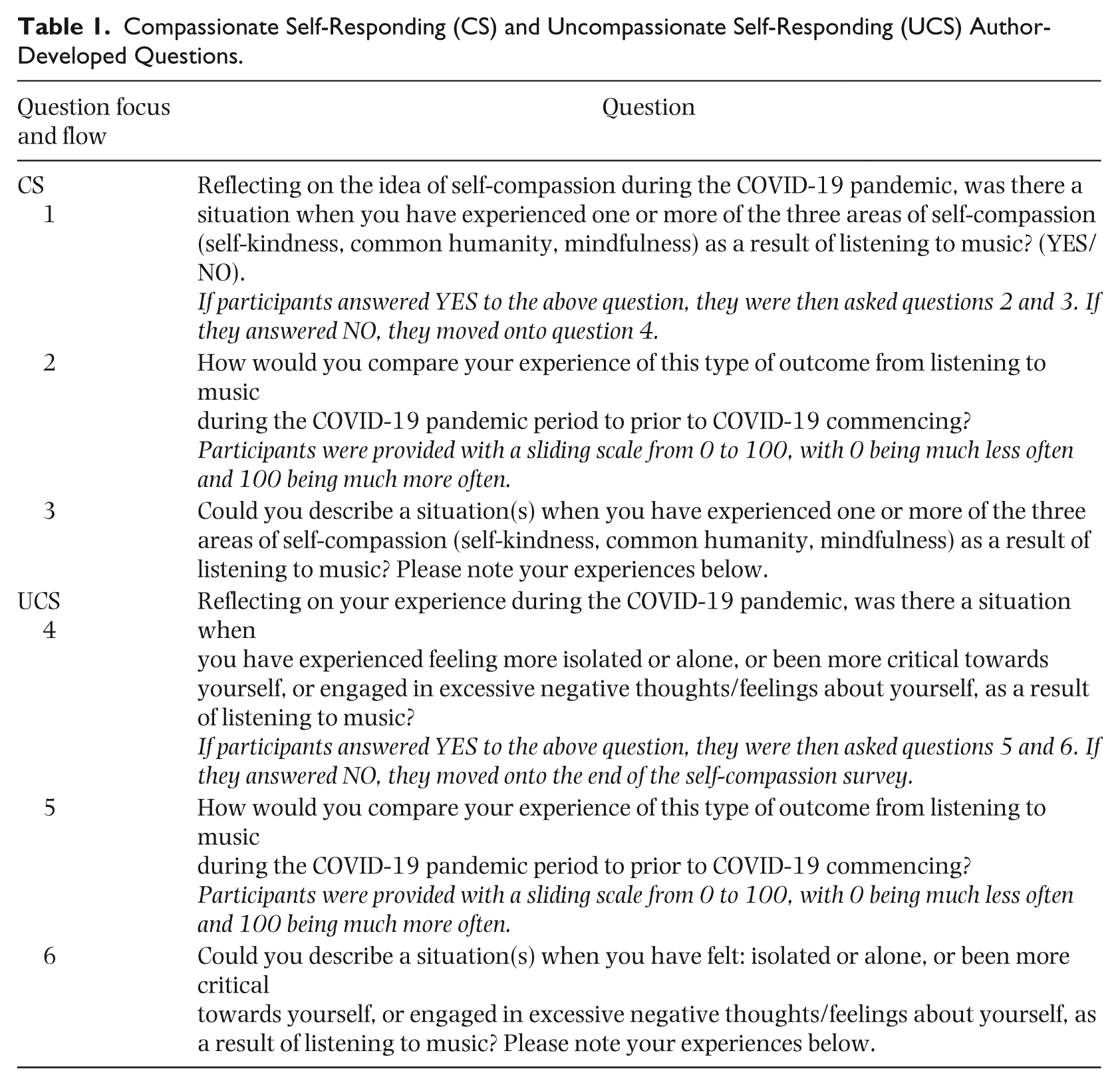
Following the definition of self-compassion, self-compassionate and uncompassionate music listening experiences were assessed (see Table 1 for a complete list of questions). The first question explored these experiences in a yes/no format. The subsequent question probed how these experiences differed during the pandemic compared to the time prior, using a sliding scale. Participants who answered yes were then invited to elaborate on their experience through an open-text question. Bespoke open-text questions were then asked to gain broader prospectives and contextualise the lived experiences behind participant’s answers regarding self-compassionate or uncompassionate music listening experiences (see Table 1, Questions 3 and 6).
Compassionate Self-Responding (CS) and Uncompassionate Self-Responding (UCS) Author-Developed Questions.
Data analysis
This study employed a mixed method concurrent embedded design, combining both quantitative and qualitative data collection and analysis (Creswell & Plano Clark, 2017). The qualitative analysis was emphasised to contextualise the lived experiences of self-compassionate and uncompassionate music listening experiences, with quantitative data supplementary to the overall design which analysed both self-compassion scores and experiences during the COVID-19 pandemic.
The qualitative data, derived from the two open-ended questions (namely on SC and UCS self-responding) were carefully read, coded and categorised thematically using template analysis, a form of thematic analysis that can be adapted to meet the needs of the researcher (Brooks et al., 2015). Template analysis was chosen due to its flexible approach that can include both inductive and deductive coding (Brooks et al., 2015; King, 2012). While template analysis often includes the use of a priori codes (pre-identified codes), this study took an inductive approach. The first author undertook the following six steps (Brooks et al., 2015): (1) familiarising self with the data, (2) inductive open coding of the data, (3) grouping codes into sub- and grand-themes, (4) creating an initial template using the sub- and grand-themes, (5) applying the initial template to the data with adaptions made as necessary, and (6) finalising the template which was then applied to both the CS and UCS responses. Responses that were lacking in detail or could not be coded to a particular theme (e.g., ‘dealing with a break-up’ or ‘no, sorry, nothing comes to mind’) were categorised as ‘not specified.’ To ensure reliability, 33% of the responses were independently coded, using the final template, by the third and fourth authors and resulted in an overall coding agreement of 76%. Discrepancies were resolved through consensus. The first author completed the remaining analyses after inconsistencies were addressed.
The quantitative data were analysed using SPSS (version 29.0.2.0). A Welch’s one-way ANOVA was performed to examine the differences in self-compassion scores amongst four groups, (1) participants who answered yes to self-compassionate music listening experiences and no to uncompassionate experiences, (2) participants who answered yes to uncompassionate music listening experiences and no to self-compassionate experiences, (3) participants who answered yes to both experiences, and (4) participants who answered no to both experiences. A multiple response frequency analysis was used to examine if these self-compassionate or uncompassionate music listening experiences had changed during COVID-19 compared to the period before. An additional multiple response frequency was used to consider the occurrence of identified themes from the template analysis.
Results and discussion
The majority (81.76%) of participants reported having self-compassionate music listening experiences, while 29.73% reported uncompassionate music listening experiences during the COVID-19 pandemic. To analyse the variations in these reported experiences participants were categorised into four groups: (1) included 59.46% of participants who answered yes to only having self-compassionate music listening experiences, (2) included 7.43% of those who answered yes to only having uncompassionate music listening experiences, (3) included 22.30% of those who answered yes to both experiences, and (4) included 10.81% of those who had neither self- compassionate nor uncompassionate experiences with music during the COVID-19 pandemic. A Welch’s one-way ANOVA revealed statistically significant differences between these groups in the overall SCS-SF scores, F(3, 64.145) = 8.284, p < .001, f = .318, and SCS-SF_M scores, F(3, 64.079) = 11.147, p < .001, f = .351 (see Table 2 for the descriptives and confidence intervals), suggesting that these grouped experiences are associated with different levels of self-compassion as measured on both the SCS-SF and the music adapted version. In particular, post hoc tests revealed that participants who answered yes to experiencing self-compassion due to music listening reported higher scores than those who answered yes to uncompassionate experiences (SCS-SF: Mdif = 0.534, p = .013, SCS-SF_M: Mdif = 0.517, p = .004) (see Table 3), suggesting that music listening may contribute to one’s sensitivity to self-compassion.
Self-Compassion Scores and Reported Compassionate Experiences Through Music Listening- Descriptives and Confidence Intervals.
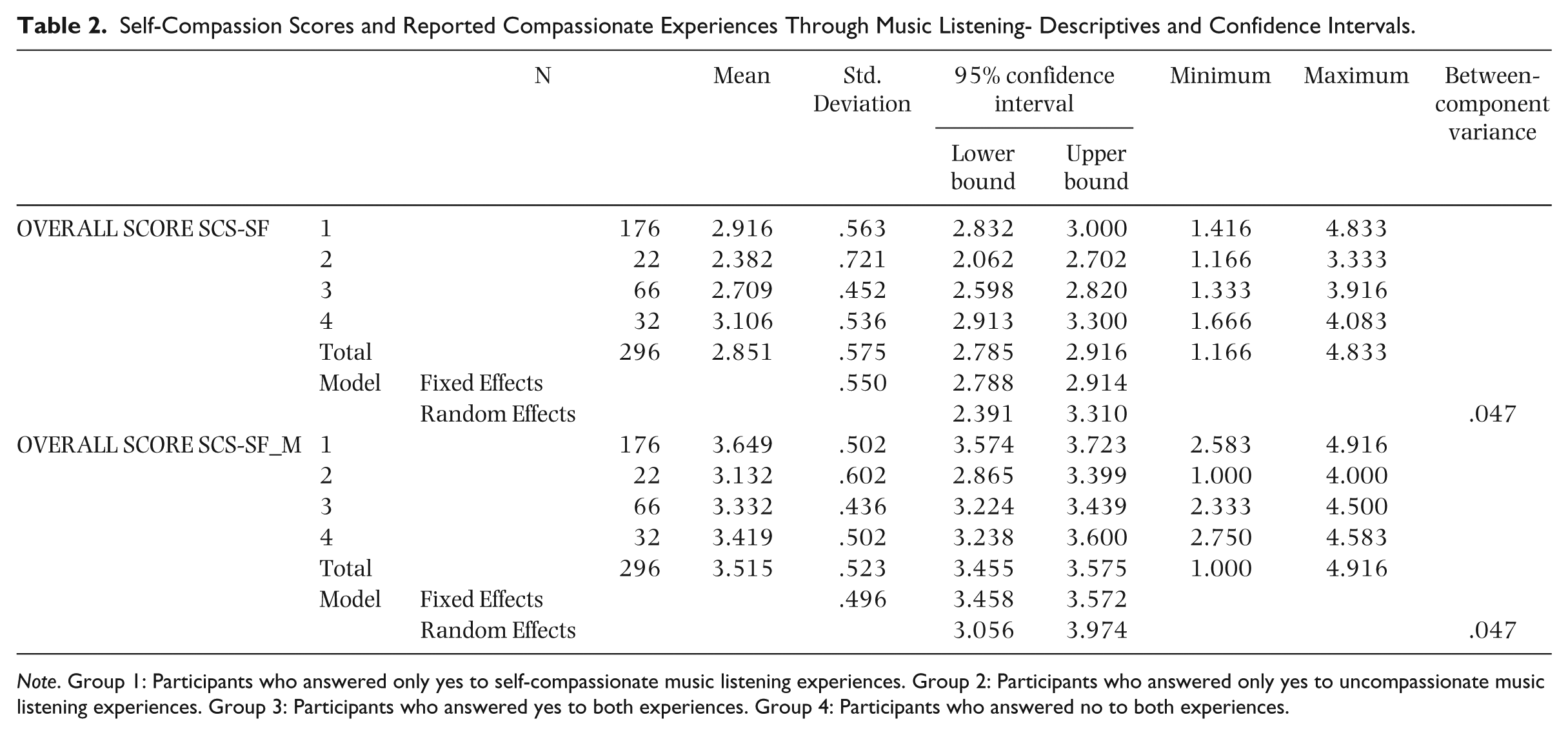
Note. Group 1: Participants who answered only yes to self-compassionate music listening experiences. Group 2: Participants who answered only yes to uncompassionate music listening experiences. Group 3: Participants who answered yes to both experiences. Group 4: Participants who answered no to both experiences.
Post Hoc Tests Self-Compassion Scores and Reported Compassionate Experiences Through Music Listening.
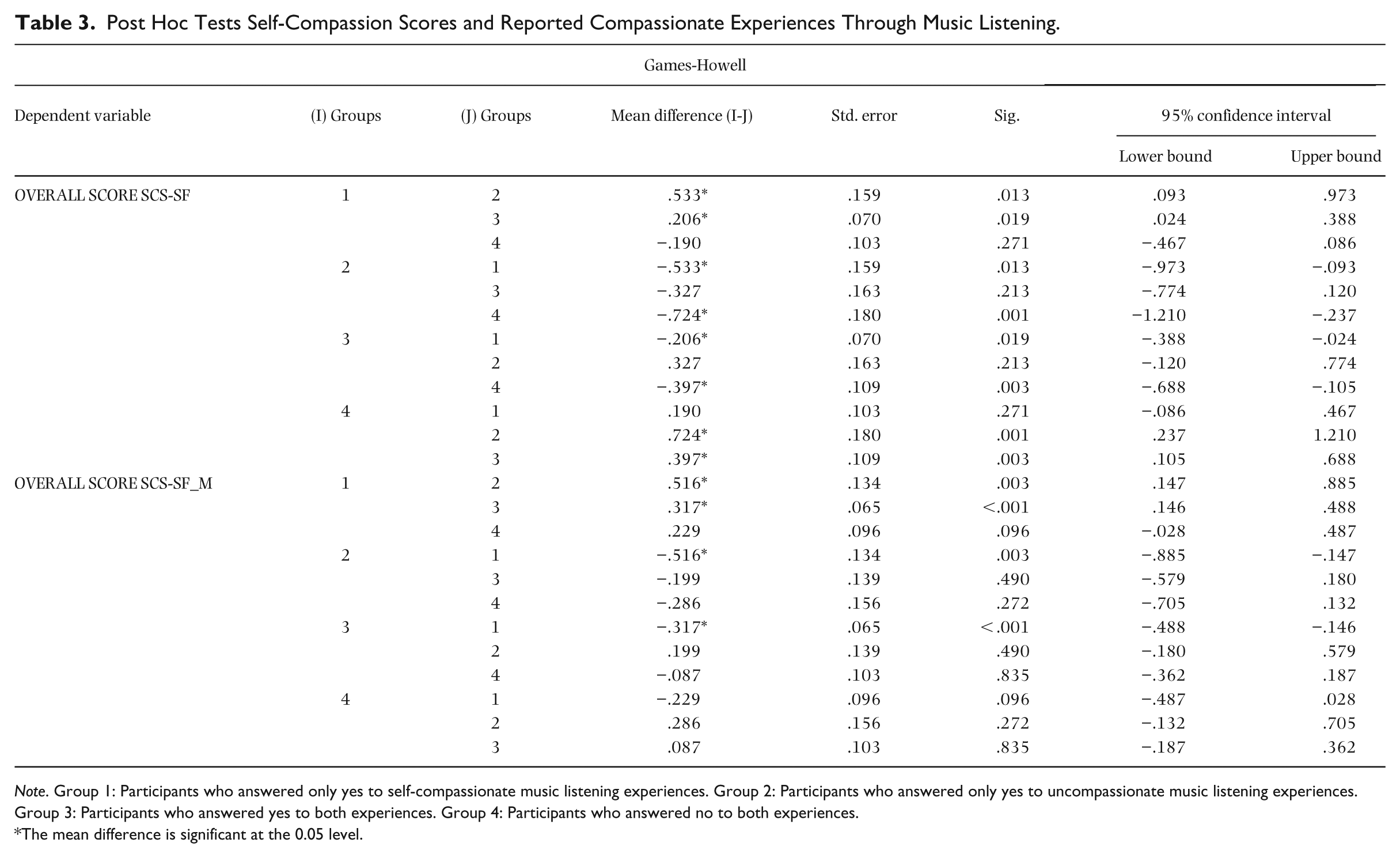
Note. Group 1: Participants who answered only yes to self-compassionate music listening experiences. Group 2: Participants who answered only yes to uncompassionate music listening experiences. Group 3: Participants who answered yes to both experiences. Group 4: Participants who answered no to both experiences.
The mean difference is significant at the 0.05 level.
Interestingly, participants who answered yes to both self-compassionate and uncompassionate music listening experiences reported moderate to high levels of self-compassion on both scales (see Table 3). While it is not surprising that both experiences can coexist, given that the complexity of emotions associated with music listening is a commonly reported outcome (Krause et al., 2024; McClymont & Krause, 2025), it does, however, highlight the multilayered role of music listening in self-compassion. While this study further underscores the multifaceted relationship between music listening and emotions, it is important to consider the context this study was taken in and the role of the pandemic, particularly as poorer mental health outcomes was reported during this time (Zhao et al., 2022). Shifts during the pandemic were also found in how people valued music (Krause et al., 2025) and in the types of lyrics people listened to, which included both positive and negative themes (Putter et al., 2023). Thus, exploring the impact of music listening and self-compassion during challenging times outside of this context is imperative.
When comparing their self-compassionate listening experience to the period before COVID-19, participants’ scores ranged from 19 to 100. The sample mean score was 68.76 (SD = 13.67), indicating a moderate increase in this type of music listening experience during COVID-19 compared to the period before. This finding aligns with previous research highlighting music use for emotion regulation during the pandemic (Fink et al., 2021). Moreover, sliding scale comparisons concerning this uncompassionate COVID experience to experiences before COVID ranged from 8 to 100. The sample mean of 62.02 (SD = 18.03) indicates an average level of uncompassionate music listening experiences between during COVID-19 and the period before, further highlighting the complex relationship people have with music and emotions (Krause et al., 2024).
Template analysis of the participant responses concerning compassionate listening experiences resulted in the identification of five themes (with additional subthemes; see Table 4). Analysis of the uncompassionate listening experiences resulted in identifying four themes (with additional subthemes; see Table 5).
Thematic Descriptors and Exemplars Concerning Compassionate Self-Responding (CS) Experiences in Music Listening During COVID-19.
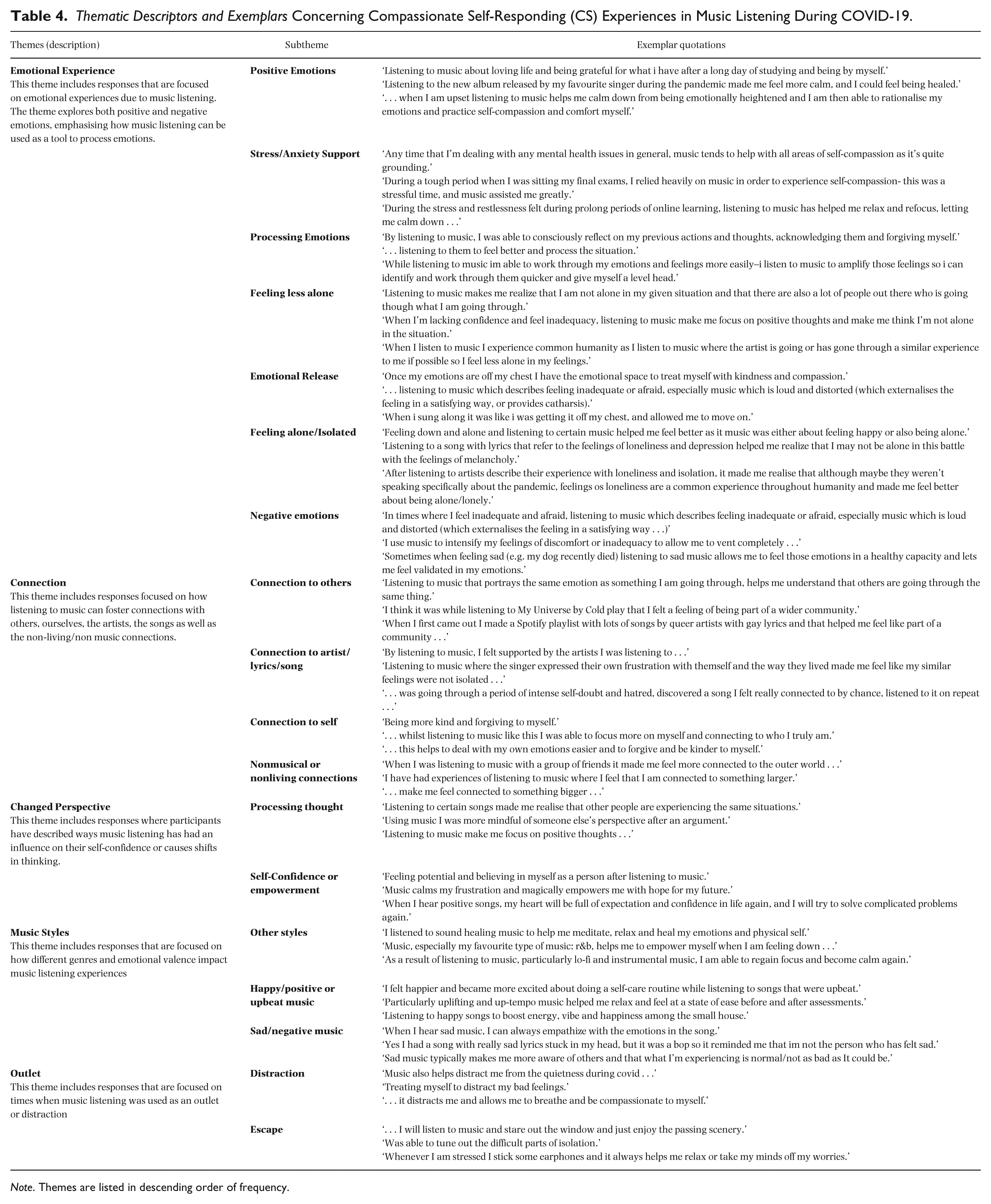
Note. Themes are listed in descending order of frequency.
Thematic Descriptors and Exemplars Concerning Uncompassionate Self-Responding (UCS) Experiences in Music Listening During COVID-19.
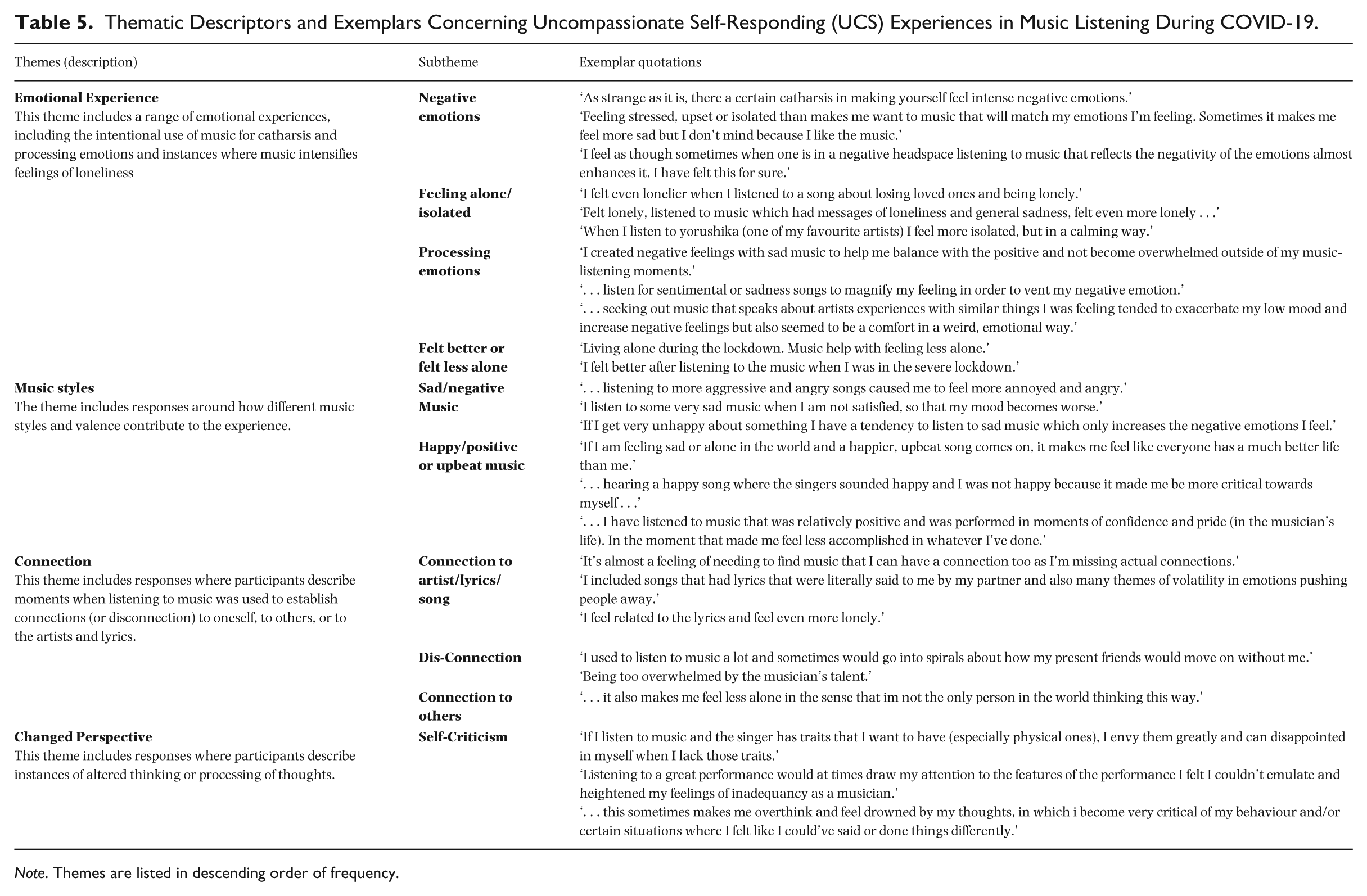
Note. Themes are listed in descending order of frequency.
Self-compassionate experiences
Emotional experience
Responses such as ‘getting it off my chest’ and ‘catharsis’ highlighted the profound emotional experience that music listening can facilitate. These descriptions emphasised the impact music listening has on our emotions and aligns with prior research on the benefits of music and its ability to ease everyday stress (e.g., Krause et al., 2023) particularly during the COVID-19 pandemic (Chmiel et al., 2024; Granot et al., 2021; Ribeiro et al., 2021).
Participants described how music allowed them ‘to move on’ and to acknowledge that their feelings of ‘loneliness’ were ‘a common experience’ fostering a sense of shared humanity. This concept aligns with Neff’s (2003a) key component of self-compassion, common humanity, acknowledging that struggles in life are universal rather than isolated to the individual.
While music’s ability to release and process emotions has been extensively recognised (Juslin & Laukka, 2004; Randall et al., 2022; Randall & Rickard, 2017), these responses emphasised that music listening not only allows individuals to process their emotional challenges but can also help to build distress tolerance. Distress tolerance is defined as the ability to withstand and manage intense emotions without avoidance or denial, and as Gilbert (2013) posited, is an important factor when it comes to compassion.
Connection
Participants described experiences of listening to music to connect with others, themselves, or the artists, lyrics, or songs. Responses such as ‘feeling of being part of a wider community’ and ‘I felt supported by the artists I was listening to’ highlighted the connection and support that music can provide, resonating with findings from previous studies regarding music and connection (Cabedo-Mas et al., 2021; Fink et al., 2021; Ribeiro et al., 2021). Previous research findings suggest that listeners feel emotionally supported and understood when the song lyrics are directly related to their lives (Barradas & Sakka, 2022; Lippman & Greenwood, 2012). This sense of connection can contribute to an increased tolerance to distress, as individuals may find it easier to experience difficult times when they feel supported (Gilbert, 2013).
More recently, studies have suggested that music can act as a social surrogate, in that social benefits can occur even while listening alone (Krause et al., 2024; Schäfer & Eerola, 2020) and can represent an ‘empathetic friend’ during difficult times (Schäfer et al., 2020). Considering this study’s questions were framed to the COVID-19 pandemic, a period where social interactions were limited, it reinforces music listening as a tool for fostering connection during periods of isolation. Moreover, the responses referencing connection also reflect the concept of common humanity where participants are engaging with music listening for companionship and a sense of shared experience, as exemplified by a participant who stated, ‘Listening to music . . . helps me understand that others are going through the same thing.’
Moreover, participants mentioned that listening to music allowed them to connect with themselves. Music listening allowed participants to ‘forgive’ and ‘be kinder’ to themselves, illustrating Neff’s (2003a) self-kindness element. Self-kindness is that warmth and understanding we give ourselves when we experience challenging times, rather than resorting to self-judgement or criticising oneself (Germer & Neff, 2013). While there are some similar aspects between self-compassion and the concept of connection, particularly in recognising self-kindness and common humanity, the difference is that self-compassion focuses on how people respond during difficult situations (Gilbert, 2013). Thus, music listening as a tool to nurture self-compassion could be beneficial when considering mental health strategies, as it can offer insights into how engaging with music can facilitate connection and a compassionate response through challenging situations.
Changed perspective
Responses that described a changed perspective, included experiences where there had been a change in thinking or a shift in self-awareness. Common humanity was again evident in responses such as ‘songs made me realise that other people are experiencing the same situations.’ These experiences seemed to assist participants in acknowledging shared human experiences and allowed them to gain a different perspective on personal difficulties (Neff, 2003a). Along with common humanity, Neff’s (2003a) mindfulness component was also evident. People recounted balancing negative emotions and thoughts (Neff & Dahm, 2015); for instance, people shared, ‘Music calms my frustration’ and ‘listening to music makes me focus on positive thoughts.’ This shift in thinking can help an individual to become more mindful of the negative thoughts and emotions they are experiencing without over-identifying with them (Neff, 2003a).
Feelings of empowerment were also found amongst this changed perspective highlighting the impact music listening can have on self-confidence. Participants shared experiences of ‘feeling potential, and believing in myself,’ and that listening to music ‘magically empowers me with hope for my future.’ Feeling empowered has been reported as a commonly felt emotion that can occur from everyday encounters with music (Saarikallio et al., 2021). Empowerment has been linked to self-resilience (Neff, 2003a), self-compassion (Stevenson & Allen, 2017) and can be a form of self-awareness (Feste & Anderson, 1995) allowing individuals to be more attentive to the changes in their physical feeling, emotions, and thoughts (Gilbert, 2009).
Music styles
Some participants mentioned specific music styles including various genres and emotional valence when detailing their experiences. Valence, in the context of this study, is the emotional positivity conveyed by a piece of music (Droit-Volet et al., 2010), such that songs with high valence are described as more positive, such as happy or cheerful. For the purpose of this analysis, descriptions of ‘upbeat music’ were also included in this category if it was referred to in a positive way such as ‘Particularly uplifting and up-tempo music helped me . . . ’ In contrast, pieces lower in valence tend to sound more negative, with emotions such as sadness or anger. Interestingly, both ‘happy’ and ‘sad’ music were cited, consistent with literature that when people experience hardship, they either prefer to listen to calming or happy music (Schellenberg et al., 2008) or choose to listen to music to match their current emotion such as sadness (Garrido & Schubert, 2011; Putter et al., 2023; Xue et al., 2018).
The theme of music styles links to emotional experience and how individuals can immerse themselves in their emotions and engage in emotional processing. For example, participants stated, ‘listening to music, particularly lo-fi and instrumental music, I am able to regain focus and become calm again’ and ‘Music, especially my favourite type of music: r&b, helps me . . . when I am feeling down’ emphasises the importance of self-selected music for emotional well-being (Groarke & Hogan, 2019; Helsing et al., 2016; Schäfer et al., 2020) and self-compassion. These experiences also reiterate how listening to music can assist with processing negative emotions resolving to feeling a cathartic release (Krause et al., 2024; McClymont & Krause, 2025). While the questions in this study did not directly ask about the specific types of music that allowed for self-compassionate or uncompassionate self-experiences, it became clear from the responses that particular music styles, such as music that was high or low in emotional valence or that belonged to specific genre of music, played a role in shaping individual experiences when it came to music listening and self-compassion.
Outlet
Another theme concerning self-compassionate responses from music listening was ‘outlet.’ This theme included responses where individuals used music listening as a distraction with responses such as ‘I will listen to music and stare out the window’ and ‘it distracts me and allows me to breathe.’ Using music as an outlet provided an escape from negative feeling, as evidenced in previous music listening research, particularly during the pandemic and the use of music for diversion (Carlson et al., 2021).
Uncompassionate self-experiences
Emotional experience
Similar to the self-compassionate experiences with music listening, emotional experience was common in uncompassionate responses, with individuals using music intentionally for catharsis and to process emotions. Responses such as ‘there’s a certain catharsis in making yourself feel intense negative emotions’ and that when ‘feeling stressed, upset or isolated than makes me want to [listen to] music that will match my emotions . . .’ demonstrate instances where music contributed to emotional processing. Interestingly, however, as participants were addressing uncompassionate aspects, there were some responses that highlighted possibly positive areas. There were responses such as music listening allowed them to ‘to vent my negative emotion’ and that listening to music ‘tended to exacerbate my low mood and increase negative feelings, but also seemed to be a comfort in a weird, emotional way.’ The use of music for cathartic release is also evidenced in research exploring self-compassion through music use (McClymont & Krause, 2025), underscoring music listening’s ability in processing difficult emotions.
While catharsis is evident in the responses, recounts such as ‘Felt lonely, listened to music which had messages of loneliness and general sadness, felt even more lonely’ highlighted moments where a release did not eventuate. Music listening indeed can facilitate both positive and negative emotions (Juslin & Laukka, 2004), with research suggesting that music listening can lower a mood even when the intention is for mood improvement (McFerran & Saarikallio, 2014). Self-compassion involves looking at our experiences with an open perspective so that negative thoughts and emotions can be observed more broadly (Neff, 2003a). The responses in this theme provide insights into how music listening can be used to assist in identifying negative emotions and can also provide an opportunity to process them and facilitate a release. Understanding how self-compassionate and uncompassionate self-experiences with music listening can assist with the processing of emotions, could help inform more effective mental health strategies using music.
Music styles
Specific music styles were also noted in uncompassionate self-experiences with music listening. Responses indicated that ‘very sad music’ or ‘more aggressive and angry songs’ were used to intensify listeners’ emotions, aligned with previous research indicating that individuals willingly choose to listen to sad music, even though it may sometimes heighten negative feelings (Saarikallio & Erkkilä, 2007; Van den Tol & Edwards, 2014). Moreover, responses such as ‘I have a tendency to listen to sad music which only increases the negative emotions I feel,’ may lead to over-identifying with negative emotions, or resorting to self-judgement, aligning with the uncompassionate aspects of Neff’s (2003a) model of self-compassion.
Connection
There was a link between music listening and a sense of connection, or in some instances ‘disconnection’, within the uncompassionate responses. Participant responses included instances where music listening fostered feelings of isolation where music brought on ‘spirals’ about how ‘present friends would move on’ and recounts that triggered negative self-reflection such as ‘being too overwhelmed by the musician’s talent.’ These responses are related to the opposite sides of self-compassion, focusing on self-judgement and criticism (Neff, 2003a).
Change in perspective
Once again, similar to the self-compassionate responses, a change in perspective was evident within participant responses. The experience of being self-critical was reported and how thoughts shifted to disappointment when participants felt that their ‘traits’ or ‘physical ones’ were unlike the artist. One participant mentioned they experienced ‘feelings of inadequacy as a musician.’ These recounts link back to the ‘disconnect’ individuals experienced during music listening and how this changed their perspective within themselves. This shift in thinking also demonstrates how the perceived excellence of others can heighten emotional responses and can lead to self-judgement.
Overlap of self-compassionate and uncompassionate music listening
The template analysis uncovered an overlap of themes within both self-compassionate and uncompassionate self-experiences such as emotional experience, connection, and music styles (see Table 6 for frequencies). While the theme of emotional experiences, accounting for 64.88% of self-compassionate responses and 70.45% of uncompassionate responses, was similar in frequency, there were differences in the occurrence of the remaining overlapping themes. For instance, the theme of connection occurred in 48.35% of self-compassionate responses, and in only 6.82% of uncompassionate self-experiences. Similarly, changed perspective was considerably higher in self-compassionate experiences (36.78%) compared to uncompassionate self-experiences (6.82%). In contrast, music styles was greater in uncompassionate self-experiences (37.50%) compared to self-compassionate experiences (13.64%). These differences demonstrate how variable and complex emotional responses can be when it comes to music listening.
Themes Identified Concerning Compassionate and Uncompassionate Self-Responding Experiences in Music Listening During COVID-19.
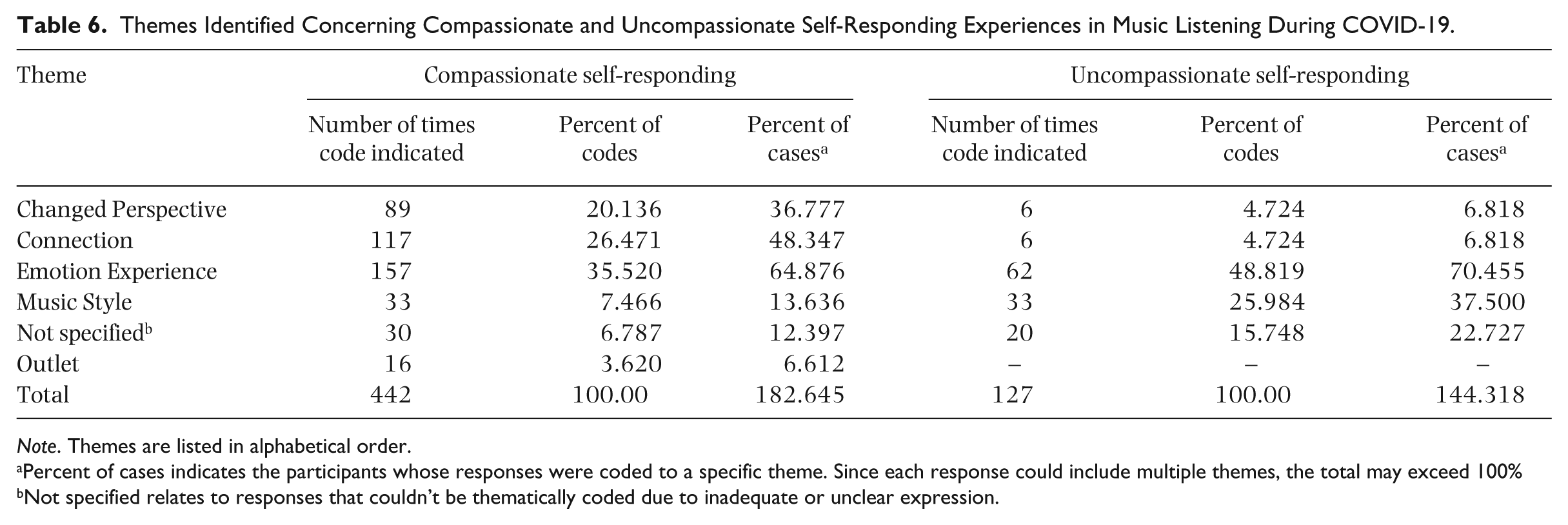
Note. Themes are listed in alphabetical order.
Percent of cases indicates the participants whose responses were coded to a specific theme. Since each response could include multiple themes, the total may exceed 100%
Not specified relates to responses that couldn’t be thematically coded due to inadequate or unclear expression.
Beyond the different frequencies, clear distinctions were evident within each theme: self-compassionate experiences primarily focused on positive outcomes, while uncompassionate self-experiences were focused on negative encounters. There were, however, instances where responses overlapped, specifically within the emotional experience theme. For example, although some individuals reported uncompassionate responses, they also mentioned that they used music to vent or process emotions, such as ‘. . . to magnify my feeling in order to vent my negative emotion.’ This suggests that, even in uncompassionate experiences, individuals used music as a tool to recognise and process negative emotions.
Another overlap pertained to the music style’s theme, with sad music associated with achieving both compassionate and uncompassionate outcomes. This is exemplified by comparing the responses from one participant, ‘When I hear sad music, I can always empathize with the emotions in the song’ (self-compassionate response), and another participant, ‘I listen to some very sad music when I am not satisfied, so that my mood becomes worse’ (uncompassionate response). These findings highlight the need for further exploration especially as music listening is used as a tool to help recognise and cope with negative emotions (Groarke et al., 2019; McClymont & Krause, 2025) and understanding how both self-compassionate and uncompassionate music listening experiences contribute to emotional processing can provide valuable insights for emotional well-being.
An overlap was also evident when participants answered yes to both self-compassionate and uncompassionate music listening experiences. For example, one participant shared ‘When I’m feeling down, music acted as a reminder that there are people in the same situation as me’ (self-compassionate response), and ‘When people are not understanding towards my problem, sad music made me feel more isolated and alone’ (uncompassionate response). Another example includes a participant responding to the self-compassionate question with, ‘Listening to music that directly contrasts or relates to my current mood generally results in me feeling better about myself.’ The same participant responded with, ‘When feeling down it’s easy to find music that enhances that emotion rather than rectifying it’ for the uncompassionate question. This suggests that music listening is not always a consistent source of positive outcomes, even for individuals who acknowledge music for its positive contribution. Music indeed can offer both self-compassionate and uncompassionate experiences; however, it is important to consider that the intended emotional response does not always eventuate (McFerran & Saarikallio, 2014).
General discussion
This study explored self-compassionate and uncompassionate music listening experiences that occurred during the COVID-19 pandemic. Neff’s (2003a) model was used to structure the open-ended questions, and as expected it was evident in participants’ reported responses. These responses, however, also resembled features of Gilbert’s (2013) attributes of compassion. These included responses that displayed changes in perception, an awareness of emotional experiences, and an openness to needs and distress. Additionally, there were responses that included experiences where participants acknowledged and faced difficult emotions and had the ability to tolerate them, along with showing empathy for themselves (Gilbert, 2009). These findings highlight the importance of considering multiple theoretical models to better understand emotions and coping mechanisms that individuals use that can be explored through self-compassionate music listening.
While using Neff’s (2003a) model (and the associated scale, SCS-SF – Raes et al., 2011) as a foundational framework has maximised the connection of our findings to the broader extant literature on self-compassion, there is currently increased scrutiny on the model’s factor structure (Muris & Otgaar, 2020; Zeng et al., 2016) and concern that it does not access compassionate motivation or action (Steindl et al., 2021). Therefore, additional, alternative frameworks should be considered in future work to better understand music listening’s role in cultivating self-compassion.
This study offers new insights into the relationship between self-compassion and music listening, particularly in times of hardship such as the pandemic. This study, however, did not consider this connection outside of the pandemic and further research focused on everyday contexts is needed. While the findings shed light on self-compassion and music listening, the study did not explicitly explore these in relation to personal pandemic-related stressors or individual characteristics, such as age, gender, or private circumstances. Future research could aim for broader and more diverse samples. Such work is well placed to continue to develop the adaption of the SCS-SF (Raes et al., 2011) to address the contribution of music listening. For instance, dedicated consideration of the scale’s validity and reliability through scale validation will ensure it is applicable to different populations and contexts.
It is important to note that this questionnaire did rely on retrospective self-report. This could potentially result in loss of detail and retrospective bias. An alternative approach, such as the experience sampling method (Van Berkel et al., 2017) would enable researchers to collect more immediate contextualised music listening data in everyday life.
As a result of this study, we now know that individuals experience self-compassion through the activity of listening to music, which can also coincide with uncompassionate self-experiences. The finding of this study provides practical implications, contributing to the growing body of literature on self-compassion as well as research on music listening and emotions. Future research could expand on how the application of music listening, a popular leisure activity that is easily accessible in Western society, could be included in existing strategies that involves cultivating self-compassion (see, for example, Gilbert et al., 2023). Understanding this relationship can assist in informing mental health and well-being strategies in a variety of settings where self-compassion is practised, such as schools, universities, mental health services, and community organisations. Furthermore, on a wider scale, this study highlights the significance of music listening and personal use, particularly in times of hardship such as the COVID-19 pandemic, emphasising the need for future research outside of this context. This research and continuing studies could leverage music listening as a tool for emotional regulation, connection, and distress tolerance, with implications for future work examining music listening for emotional well-being.
Footnotes
Appendix 1
Acknowledgements
The authors extend heartfelt appreciation to all individuals who contributed to this research. We extend this thank you to
Authors’ note
Portions of the content presented in this article were previously shared during presentations at the SEMPRE 50th Anniversary Conference in 2022, the Australian Music and Psychology Society (AMPS) Conference 2022, the Global Arts and Psychology Seminar: Creativity in Music and the Arts 2023, and the ICMPC17-APSCOM7 joint conference in 2023.
Contributorship
SM, AK, SG, and MO worked together to design the study, obtain ethical approval, and recruit participants. SM administered data collection and conducted the analysis, with SG and MO performing reliability checks. SM drafted the initial version and collaborated with MO, AK, and SG on revisions. All authors have reviewed and approved the final manuscript.
Data statement
The Ethics approval for this project did not permit the sharing of the collected data.
Declaration of conflicting interests
The authors declared no potential conflicts of interest with respect to the research, authorship, and/or publication of this article.
Funding
The authors received no financial support for the research, authorship, and/or publication of this article.
Ethical approval
This research received approval from the University of Melbourne Human Ethics Committee (HREC number: 2022-23129-24935-3) on January 28, 2022. Participants provided written consent before starting the survey.
