




Abstract
People use music to regulate their emotions in a variety of ways. Whereas some of these strategies are conceptually and empirically distinct from one another, other strategies are not wholly distinguishable. We examined the distinctiveness among strategies used to regulate emotions via music listening. College students (N = 274) completed an online questionnaire with closed-ended and open-ended items designed to measure their use of music to regulate emotions and other music- and emotion-related measures. Confirmatory factor analyses suggested that some of the strategies in Saarikallio’s taxonomy are not completely distinct from one another, yet correlations between these strategies and other functions of music listening and absorption in music suggested a fair amount of empirical similarity among most of these functions. Qualitative analysis suggested that, in addition to strategies described by Saarikallio, people use music to remember, to feel calm, and to match their mood. This mixed-methods research therefore suggests that both constricting and expanding prior taxonomies of strategies to regulate emotions via music could be warranted.
Listening to music plays a crucial role in mood regulation. For example, when feeling sad, young adults use music to feel better just as often as they talk with others (Kahn et al., 2022). Music is specifically used to regulate emotions by boosting positive mood and lowering negative mood (Groarke & Hogan, 2018; Lonsdale & North, 2011; Sakka & Juslin, 2018) as well as using music to relax, take one’s mind off of worries, and to vent, among other things (Saarikallio, 2008). The current study investigated the distinctiveness of different strategies used to regulate emotions via music listening. Specifically, we examined whether the ways in which people can use music to regulate emotions empirically differed and related to other constructs in different ways.
Background
Emotion regulation refers to efforts to affect the emotions one experiences as well as when and how one experiences emotions (Gross, 1998, 2014). Emotions can be regulated in various ways: (a) selecting/avoiding a situation, (b) modifying aspects of a situation, (c) focusing one’s attention elsewhere (e.g., distraction), (d) engaging in cognitive change (e.g., reappraising the meaning of a situation), and (e) modulating the emotion response (e.g., suppressing emotional expression; McRae & Gross, 2020). Effective emotion regulation has been linked to several desirable outcomes such as social competency, behavioral self-control, and cognitive functioning (McLaughlin et al., 2011; Thompson, 1994). Dysfunctional emotion regulation, however, has been found to be connected to a variety of forms of psychopathology, including anxiety disorders, depression, eating pathology, and substance abuse (Aldao et al., 2010; McLaughlin et al., 2011). Since emotion regulation is linked to so many aspects of an individual’s adjustment, it is important for a person to find a healthy way to regulate emotions. Music can play a key role in this process.
A great deal of literature has supported the idea that listening to music can be an effective aid in regulating one’s emotions (Chin & Rickard, 2014; Cook et al., 2019; Groarke & Hogan, 2018; Moore, 2013; Sakka & Juslin, 2018; Schäfer et al., 2013; Thoma et al., 2012). Saarikallio (2008, 2012) identified seven emotion-regulatory strategies involved with music listening. These are providing (a) Entertainment (maintaining a positive mood), (b) Revival (getting energy when feeling tired), (c) Strong Sensation (searching for intense emotions), (d) Diversion (avoiding worries), (e) Discharge (expressing emotions), (f) Mental Work (contemplating and reappraising one’s emotions), and (g) Solace (attempts to feel understood and accepted). These strategies were generated from prior theory as well as interviews with Finnish adolescents (Saarikallio & Erkkilä, 2007). Saarikallio (2008) used this taxonomy to develop the Music in Mood Regulation (MMR) Questionnaire, a 40-item self-report measure of strategies used to regulate emotions through music, and the 21-item Brief Music in Mood Regulation (B-MMR) Questionnaire (Saarikallio, 2012) that measured the same seven strategies.
Both the MMR and B-MMR have been used in several studies pertaining to music emotion regulation. For example, Hennessy et al. (2021) found that all subscales of the B-MMR were positively correlated with individuals feeling better after listening to music. Carlson et al. (2021) used the B-MMR to analyze the associations among music engagement, use of mood for music regulation, and anxiety. Results indicated that participants who used more cognitive-oriented management strategies (i.e., mental work, diversion, strong sensation, solace) had higher levels of anxiety, whereas participants who used more arousal-focused management strategies (i.e., entertainment, revival) had lower anxiety. Zoteyeva et al. (2016) found that depression scores were positively associated with Diversion, Discharge, and Mental Work among military veterans.
Saarikallio’s (2008, 2012) work has provided a critically important taxonomy to guide research on strategies used to regulate emotions. One unresolved issue relates to the empirical distinctiveness among these strategies. Some evidence points to differential associations between some MMR/B-MMR subscales and outcomes. For example, in Saarikallio’s (2008) initial MMR study, Discharge was negatively correlated with mood regulation ability, whereas other strategies showed positive correlations. Saarikallio (2008, 2012) also found that Strong Sensation was the only strategy that was negatively associated with expressive suppression, and all strategies except for Discharge were positively associated with cognitive reappraisal. Further research on MMR/B-MMR subscales shows different associations with measures of mental health problems; Diversion is the only MMR subscale associated with negative social interactions, for example (Zoteyeva et al., 2016). In terms of emotional responses to music, Saarikallio et al. (2013) found that Strong Sensation was the only MMR subscale to be correlated (positively) with finding aesthetic pleasure from liked music, and Diversion was the only subscale correlated (positively) with feeling happy while listening to disliked and sad music.
Contrary to these findings, other evidence suggests substantial overlap among at least some strategies for using music to regulate emotions. Correlations among MMR subscales ranged from .31 to a high of .81 (Saarikallio, 2008) and from .26 to a high of .77 on the B-MMR (Saarikallio, 2012); these higher correlations cast doubt on the uniqueness among at least some of these strategies. Additionally, confirmatory factor analysis (CFA) of the MMR items suggested a single higher-order factor which further supports empirical overlap among many of these strategies (Saarikallio, 2008). Even some of the correlational evidence suggests tremendous overlap; for example, correlations between the attention, clarity, and mood repair subscales of the Trait Meta-Mood Scale (Salovey et al., 1995) and Mental Work (r = .29, .02, and .14) had the same pattern of strong versus weak correlations as those for Solace (r = .27, .02, and .15) and Diversion (r = .20, .03, and .14) (Saarikallio, 2008).
In sum, there is conflicting evidence about the uniqueness of strategies of using music to regulate emotions. Evidence suggests that some of these strategies are empirically distinct, whereas there is substantial commonality among other strategies. In particular, correlations suggest that the strategies of Mental Work, Solace, and Diversion are not terribly distinct from one another, whereas Revival seems different from the others (Saarikallio, 2012). Given the ubiquity of using music to regulate emotions in many people’s lives (Kahn et al., 2022), there is theoretical value in understanding the strategies people use. Such an examination could be done in two ways. First, using Saarikallio’s (2008, 2012) taxonomy as a starting point, one could extend research on the MMR/B-MMR to see how the subscales differ from each other and from related concepts. Second, qualitative work could be used to generate a new list of strategies in which people use music for a common emotion-regulation purpose to feel better.
The present study
In this mixed-methods study, we examined how distinct several emotion strategies using music are in the two ways described above. The quantitative portion involved collecting new data using the B-MMR; we used the B-MMR instead of the longer MMR because we could not find any prior CFAs on the newer B-MMR. We therefore conducted CFAs to find the optimal factor structure, and we computed correlations to see whether the B-MMR subscales have similar associations with other constructs related to using music for emotion regulation. Specifically, we examined correlations with other functions of listening to music (i.e., self-awareness and social relatedness) as well as absorption in music, a construct reflecting emotional involvement in music listening (Sandstrom & Russo, 2013). Although other constructs may also be related to using music for emotion regulation, we focused on these given their conceptual parallels to emotion and music listening.
Additionally, we collected qualitative data describing how people use music to “feel better” about something, in order to see whether strategies similar to those on the B-MMR emerged. Whereas emotion regulation does not always involve efforts to feel better, enhancing positive emotions and reducing negative emotions are common regulation goals (Sakka & Juslin, 2018). Finally, we examined associations between B-MMR subscales and the qualitative coding to see how much empirical overlap there was. Given the varied findings concerning the empirical overlap among B-MMR subscales, we did not make specific hypotheses about these tests; rather, we considered this study to be data-driven more than theory-driven.
Method
Participants
College students (N = 274) in the United States completed an online survey in exchange for extra credit in a psychology course. Participants included 228 women, 43 men, and 2 who selected another gender. Most participants (69%) were European American, 10% were Latino/-a, 8% were African American, 3% were Asian American or of Asian descent, 3% were biracial or multiracial, 2% were of Middle Eastern descent, and the remainder reported identifying with another race or ethnicity. The mean age was 19.40 years (SD = 1.98).
Measures
The B-MMR scale (Saarikallio, 2012) is a 21-item self-report measure of the strategies one uses to regulate emotions using music. The B-MMR has seven subscales of 3 items each: (a) Entertainment, (b) Revival, (c) Strong Sensation, (d) Diversion, (e) Discharge, (f) Mental Work, and (g) Solace. Items are rated on a 5-point Likert scale ranging from 1 (strongly disagree) to 5 (strongly agree). Coefficient alphas for the subscale scores range from .73 to .85 (Saarikallio, 2012). In our study, alphas were .79 (Entertainment), .64 (Revival), .76 (Strong Sensation), .74 (Diversion), .85 (Discharge), .86 (Mental Work), and .84 (Solace).
We created a 15-item measure of functions of music derived from Schäfer et al.’s (2013) empirically determined factors of music functions: self-awareness, social relatedness, and emotion regulation. Schäfer et al. found these factors based on a principal components analysis of 129 items that had been used in past research on music functions. We chose the 5 items with the highest factor loadings on each of the factors Schäfer et al. found, thus yielding a 15-item measure with three subscales. The Self-Awareness subscale (α = .90) reflects using music to help think about one’s identity. The Social Relatedness subscale (α = .88) reflects using music to connect with other people and social environments. The Emotion-Regulation subscale (α = .88) captures using music to improve one’s mood and regulate arousal. Each item began with the stem “I listen to music because . . . ” Items were rated on a scale from 1 (strongly disagree) to 7 (strongly agree).
One’s emotional response to music was measured using the Absorption in Music Scale (AIMS; Sandstrom & Russo, 2013). The 34 AIMS items are rated on a 5-point Likert-scale ranging from 1 = strongly disagree to 5 = strongly agree, whereby higher scores indicate greater emotional involvement while listening to music. Coefficient alpha has been found to range from .92 to .94 (Sandstrom & Russo, 2013); alpha was .96 among the present data. Scores on the AIMS have been found to be correlated with other measures of music involvement and absorption (Sandstrom & Russo, 2013).
For the qualitative portion of the study, participants were asked to describe a time they used music to feel better about something. Specifically, they responded to the following prompt: Please write about a time that you used music to feel better about something. What made you feel upset in the first place? What music did you listen to? Did music help you in that particular instance? If so, how or why do you think it helped? Try to be as descriptive as possible. The more detail you give the more we can learn about why people listen to music.
Procedure
This study was approved by the Institutional Review Board at the authors’ university. Procedures followed Eysenbach’s (2004) Checklist for Reporting Results of Internet E-Surveys (CHERRIES). Data were collected during the 2019–2020 academic year. Using a passive recruitment method and convenience sample, potential participants signed up for this online study in exchange for credit that could be used as extra credit in one of their psychology courses. This was one of several potential studies in the Department of Psychology in which they could participate. A participation rate could not be computed because the total number of potential participants was not known.
After signing up, participants were provided a link to the online survey. They first read an informed consent form that described the purpose of the study, the length of time the study would take, the risks and benefits of participation, the compensation (i.e., extra credit), how their data would be stored, and who to contact for more information. Participants indicated their consent by clicking a button; this took them into the survey. They then completed some demographic items, the B-MMR, the measure of functions of music, and the AIMS. Participants then wrote about a time they used music to feel better about something. After completing the survey, the participants read a debriefing page that explained the purpose of the study in more depth and provided contact information for the researchers.
Results
Correlations among B-MMR subscales were all positive and significant (see Table 1). Squared multiple correlations (SMCs) were above .70 for Diversion, Mental Work, and Solace, suggesting that these three subscales have substantial overlap with other B-MMR subscales. SMCs for Entertainment and Discharge were the lowest; thus, these two strategies were most unique vis-a-vis the others.
Correlations Among B-MMR Subscales.
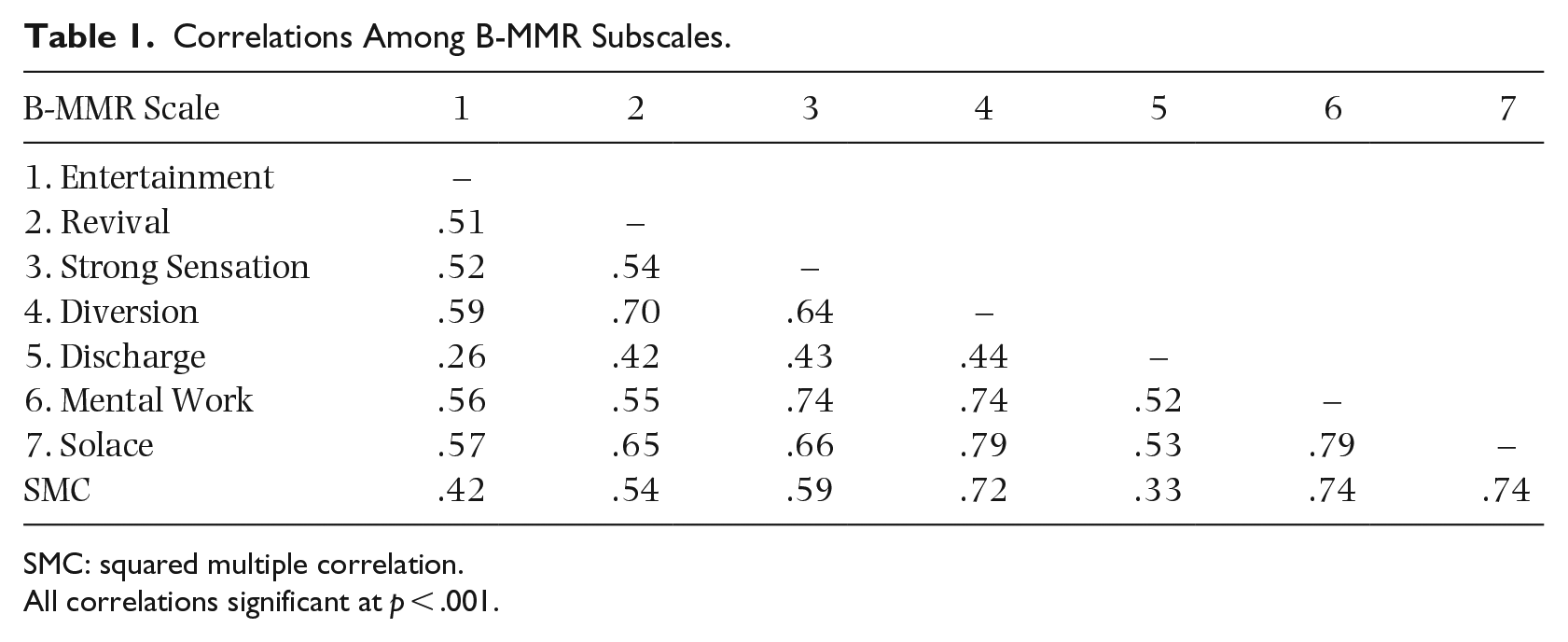
SMC: squared multiple correlation.
All correlations significant at p < .001.
CFAs of the B-MMR
We tested a series of CFAs utilizing maximum likelihood (ML) estimation on the B-MMR items to ascertain how distinct the seven strategies were. This analysis was done using lavaan, a package for R designed for structural equation modeling and related analyses (Rosseel, 2012). Past research has indicated a single second-order factor and seven first-order subfactors of the longer MMR (Saarikallio, 2008), and the B-MMR was developed with the same structure (Saarikallio, 2012). Thus, we anticipated the same factor structure, but we were unable to find a CFA of the B-MMR in the literature. To assess model fit, we reported Hu and Bentler’s (1999) empirically derived cutoffs. Although recommended cutoff values may vary depending on the conditions of the model and data (Hu & Bentler, 1999), we considered model fit to be good if the Comparative Fit Index (CFI) was ⩾.95, the root mean-square error of approximation (RMSEA) was ⩽.06, and the standardized root mean-square residual (SRMR) was ⩽.08.
We first tested a model with seven correlated factors corresponding to the B-MMR subscales—Entertainment, Revival, Strong Sensation, Diversion, Discharge, Mental Work, and Solace. Each factor of the B-MMR was specified to be measured by 3 items. Estimating this seven-factor model led to a non-positive definite covariance matrix among the latent variables; specifically, the model failed to converge because of a correlation greater than 1 between Diversion and Revival. We therefore re-specified the model but with Diversion and Revival items loading on a single factor. CFA was then used to analyze this new six-factor model (i.e., Entertainment, Strong Sensation, Diversion/Revival, Discharge, Mental Work, and Solace), and the model converged. The fit of this six-factor model (with correlated factors) was acceptable based on the SRMR, but it was not acceptable based on the CFI or RMSEA, χ2(174, N = 272) = 500.68, CFI = .91, RMSEA = .08 (90% CI = [.08–.09]), SRMR = .06.
We next estimated a model with these six first-order factors (including the combined Diversion/Revival factor) and a single second-order factor. This model provided a good fit to the data based on the SRMR, but again the CFI and RMSEA suggested a lack of adequate fit, χ2(183, N = 272) = 557.66, CFI = .89; RMSEA = .09 (90% CI = [.08–.10]), SRMR = .07. Finally, we tested a one-factor model for which all 21 items loaded on a single factor. This model also provided a poor fit to the data, χ2(189, N = 272) = 976.41, CFI = .77, RMSEA = .12 (90% CI = [.12–.13]), SRMR = .08. Thus, our analyses suggest that there is not a single strategy people use to regulate emotions via music. However, Revival and Diversion were too similar to form separate factors, and, even when they were combined, a model with separate subscale factors did not provide a great fit to the data.
Correlations between B-MMR subscales and functions of music and absorption
We next computed Pearson correlations to determine associations between B-MMR subscales and (a) broad-based functions of listening to music—general emotion regulation, self-awareness, and social relatedness—and (b) ability to become absorbed in music. If some B-MMR subscales were correlated with these other variables to a different magnitude or direction than other B-MMR subscales, it would point to the distinctiveness of the emotion-regulation strategies measured by the B-MMR. We used all seven B-MMR subscales despite the aforementioned overlap between Diversion and Revival.
As Table 2 indicates, all correlations were significantly positive. The mean correlations between B-MMR subscales and other variables ranged from .36 to .55, suggesting medium to large effect sizes. Standard deviations among correlations ranged from .07 to .13, which suggests that there is some variability across correlations for the seven B-MMR subscales. To illustrate this variability, boxplots are displayed in Figure 1. For using music to regulate emotions, the correlation with Discharge represented an outlier; this suggests that Discharge has less to do with using music to regulate emotions than the other B-MMR subscales. Similarly, Entertainment was a low outlier when it came to correlating with using music for social relatedness as well as correlating with absorption in music. As such, Entertainment seems to relate to other variables differently from the other B-MMR subscales.
Pearson Correlation Coefficients Between Brief Music in Mood Regulation Scale (B-MMR) and (a) Three Functions of Music and (b) Absorption in Music.
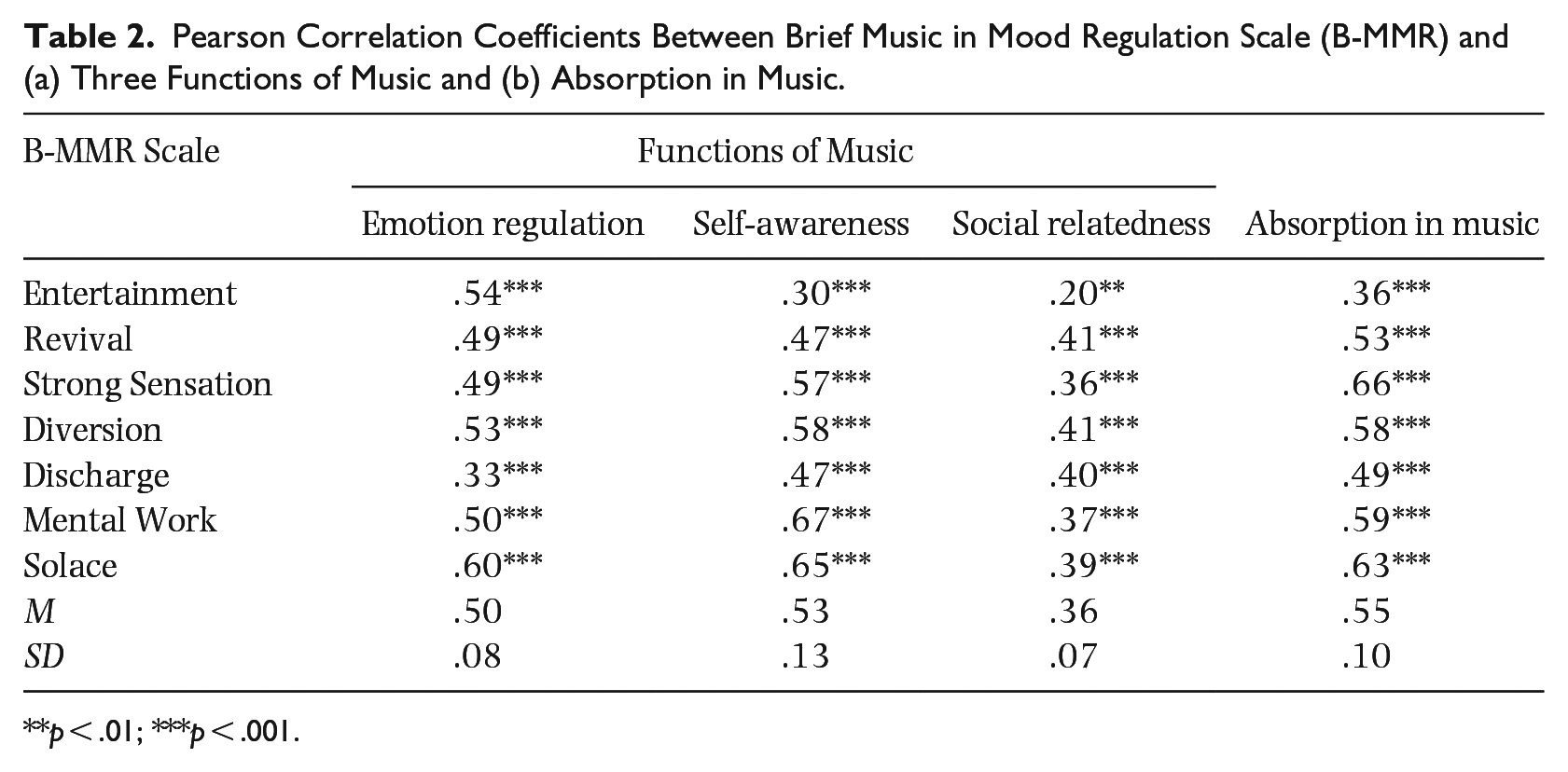
**p < .01; ***p < .001.
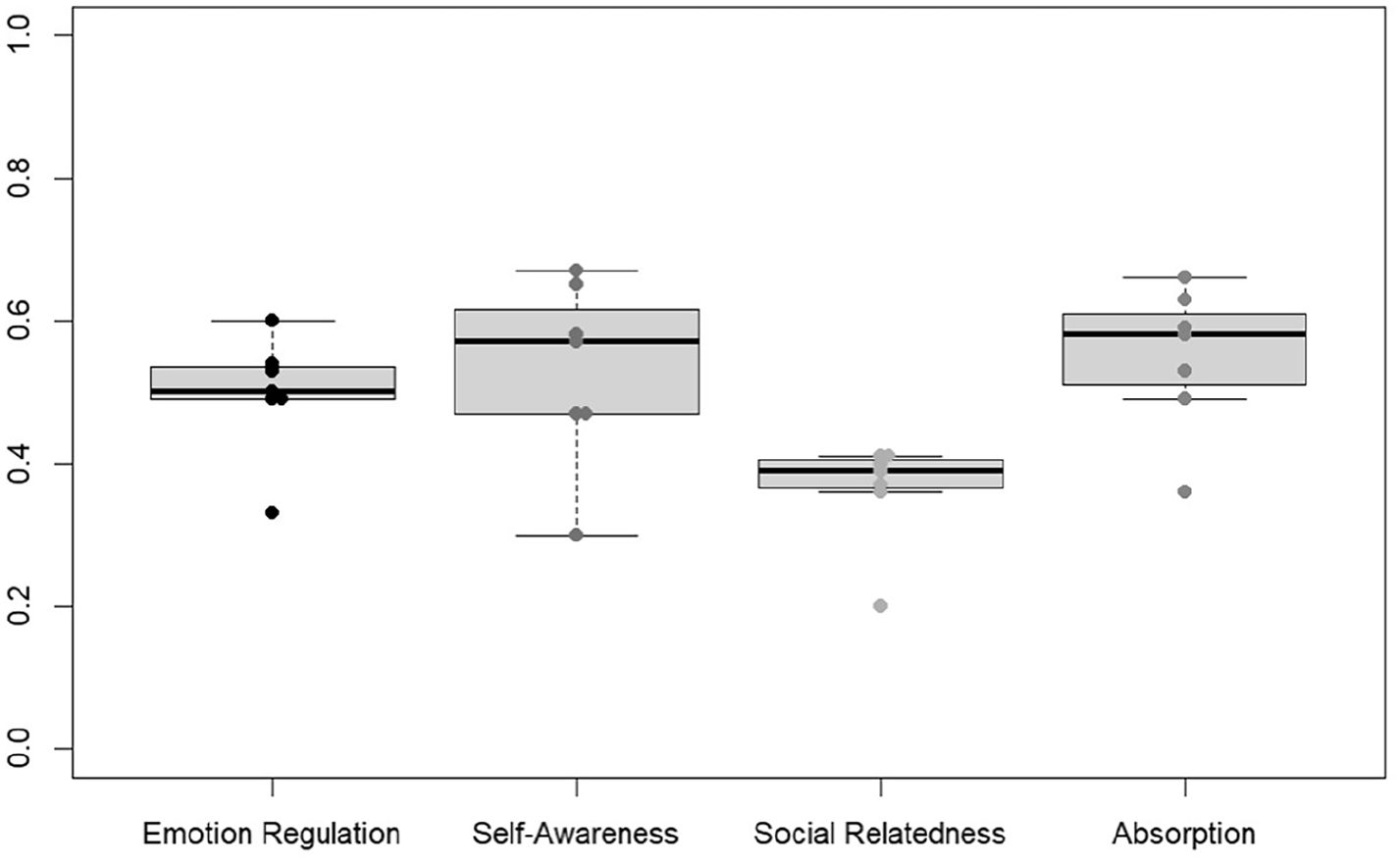
Boxplots of Correlation Coefficients Between B-MMR Subscales and Related Variables.
Qualitative analyses of strategies used to feel better with music
The purpose of the qualitative analyses was to explore how people regulate music to “feel better” via written descriptions of an actual emotion-regulation effort. Of the 258 participants who responded to this item, the mean number of words written was 66.21. To learn about commonalities among responses, we drew upon Hsieh and Shannon’s (2005) guidelines for content analysis. Three undergraduate psychology students served as raters of responses to participants’ descriptions of the time they used music to feel better. Through initial discussion, the three raters decided on 12 categories. The raters then independently read each participant’s response and coded the topic into one of these 12 categories. Fleiss’s kappa among these three raters was = .47, p < .001; there was three-way agreement on 37% of the cases. The resulting category was the one for which at least two raters agreed. For 44 of the 258 responses (17%), all three raters disagreed with one another; for these responses, the first author chose which of the three categories seemed most reasonable, and that was the resulting category.
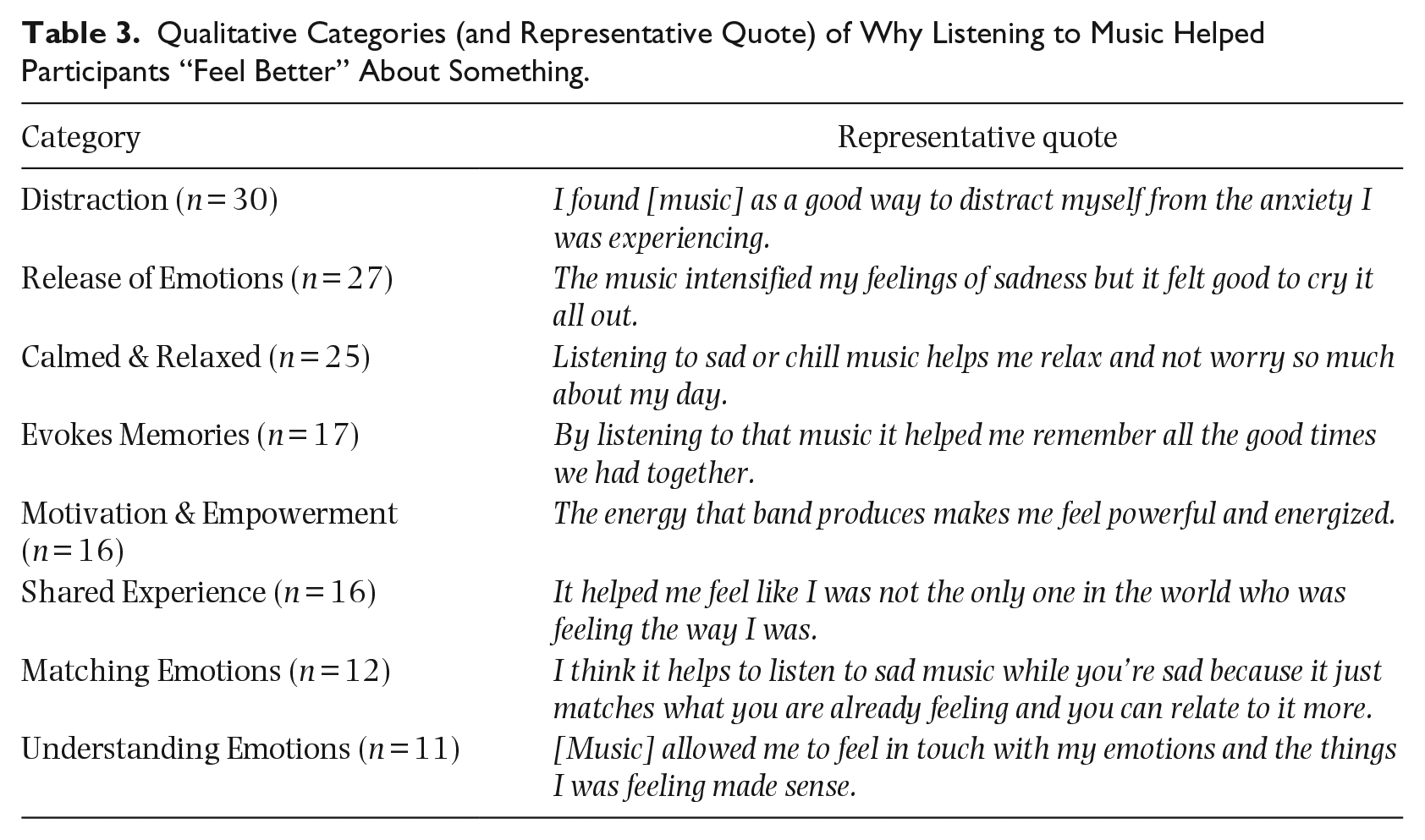
As Table 3 shows, our judges extracted several strategies used by participants: (a) music provides a distraction from one’s emotions (12% of responses had this as the primary strategy), (b) music allows one to release emotions (11%), (c) music helps one to calm down and relax (10%), (d) music reminds the person of earlier experiences or people (7%), (e) music motivates and empowers (6%), (f) music helps someone feel as though they are not alone (6%), (g) the right kind of music can match the emotions of what one is feeling (5%), and (h) music helps one to understand their emotions (4%). Raters also included a category for multiple strategies (17%), a category where the strategies were not apparent (6%), a category where strategies were apparent but they were nonspecific (6%), and an “other” category for esoteric responses (11%). These categories somewhat aligned conceptually with several B-MMR subscales (e.g., Revival = Motivation & Empowerment, Diversion = Distraction, Discharge = Release of Emotions, Mental Work = Understanding Emotions, and Solace = Shared Experience). Qualitative analyses suggested listening to music can also result in feeling calm and relaxed, evoke memories, and match what one is currently feeling.
Qualitative Categories (and Representative Quote) of Why Listening to Music Helped Participants “Feel Better” About Something.
Finally, we examined the ability of B-MMR subscales to predict those categories of strategies people used when listening to music to feel better. Because so many responses suggested the use of multiple strategies, a graduate student in psychology read all participant responses and indicated whether each of the eight strategies identified by the three coders was present in each response. This was coded 1 = yes and 0 = no. A given participant’s response might therefore have all no determinations (if none of the eight strategies were indicated), or it may have multiple yes determinations (if more than one of the eight strategies were indicated). This procedure resulted in eight dichotomous variables reflecting whether a given strategy was present in each participant’s response. To enhance reliability, we limited our analyses to those strategies that appeared in at least 10% of participants’ responses, even if it was not the predominant strategy in a given response: (a) the right kind of music can match the emotions of what one is feeling (present in 23% of responses), (b) music distracts them (20%), (c) music helps one to calm down and relax (17%), (d) music reminds the person of earlier experiences or people (13%), and (e) music helped them to release emotions (12%). Thus, we did not analyze how much music motivates and empowers, how much music helps someone feel as though they are not alone, nor how much music helps one to understand their emotions because these did not occur in enough responses for analysis.
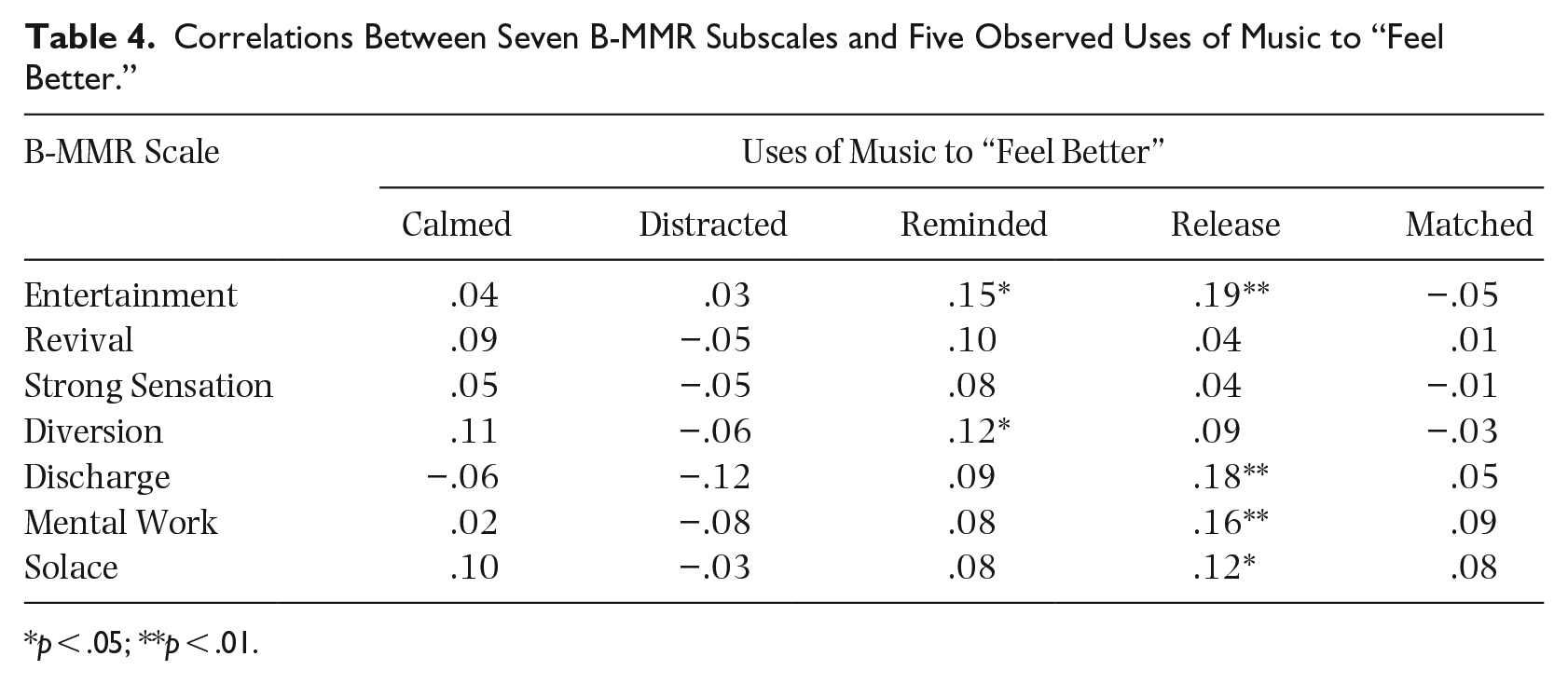
We then computed point-biserial correlations between the seven B-MMR subscales and these five dichotomous responses (Table 4). By and large, there was little association between B-MMR subscales and these naturally occurring strategies people use when listening to music to feel better about something. The one exception was that four B-MMR subscales were positively related to using music to release emotions; this was associated with Entertainment, Discharge, Mental Work, and Solace. Nevertheless, it is fair to characterize these associations as small in size.
Correlations Between Seven B-MMR Subscales and Five Observed Uses of Music to “Feel Better.”
p < .05; **p < .01.
Discussion
Researchers have made tremendous progress in outlining the ways in which people use music to regulate emotions, yet there are questions as to the distinctiveness among these strategies. We addressed the issue of the distinctiveness of strategies using Saarikallio’s (2008, 2012) taxonomy as a starting point. Our analysis of Saarikallio’s B-MMR questionnaire suggested that some strategies are so highly correlated that their distinctiveness is suspect, whereas other strategies are clearly unique. Because Saarikallio’s taxonomy may not encompass all ways in which people use music to regulate emotions, we also collected qualitative data about a time participants used music specifically to manage negative moods (i.e., to “feel better”)—one common way (but not the only way) in which people use music to regulate emotions (Lonsdale & North, 2011). Our qualitative analyses revealed some areas of overlap with Saarikallio’s taxonomy as well as some differences.
With respect to the B-MMR (Saarikallio, 2012), our factor-analytic work suggests that neither a seven-factor structure nor a single-factor structure would be appropriate. Instead, it is best to consider the B-MMR as assessing strategies that vary in their distinctiveness. Put more specifically, Diversion, Revival, Mental Work, and Solace have substantial overlap with one another. Perhaps these largely reflect cognitive-oriented regulation strategies as opposed to arousal-focused strategies (Carlson et al., 2021). These four strategies also represent active efforts to downregulate distress, whether it involves forgetting one’s worries, perking up after a rough day, getting through hard experiences, or feeling comforted when feeling sad (to paraphrase B-MMR items). These can be contrasted with Entertainment, which is using music as background to modify one’s sonic situation; Discharge, which is primarily the expression of anger; and Strong Sensation, which is an effort to viscerally and emotionally feel music (Saarikallio, 2008, 2012). Thus, we would argue that four of the strategies measured by the B-MMR tap into the same goal—to reduce distress—although they differ in minor ways strategically.
Like Saarikallio (2012), we found that these seven B-MMR subscales by and large correlated with related constructs in similar ways, although some outliers were detected. Not surprisingly, all B-MMR subscales were positively correlated with people’s use of music to regulate emotions, thereby adding to the construct validity of B-MMR scores. Likewise, all B-MMR subscales were positively correlated with using music for self-awareness and using music for social relatedness. Moreover, all B-MMR subscales were positively correlated with absorption in music, perhaps because high levels of absorption are required to engage emotionally with music (Sandstrom & Russo, 2013). If there was one B-MMR subscale that seemed to have weaker associations with these variables, it was Entertainment. This further supports our earlier observation that using music for entertainment is different from downregulating negative emotions. If anything, listening to music to make things more pleasant is a form of situation modification (McRae & Gross, 2020), whereas other forms of regulation via music involve either attentional shift (e.g., using distraction) or response modulation (e.g., working through feelings).
Our qualitative analyses indicated that, when people listen to music to feel better about something, they use multiple strategies. We noted that many of these data-derived strategies aligned conceptually with several B-MMR subscales (see Saarikallio, 2012). First, many participants described using music as a form of distraction; this is similar to the Diversion subscale on the B-MMR. Second, some participants described using music to motivate and empower themselves, a strategy similar to Revival on the B-MMR. Third, participants described the goal of understanding their emotions via music, something captured by the Mental Work subscale of the B-MMR. Fourth, participants described how music promotes a sense of shared experience, something reflected by the Solace subscale of the B-MMR. Finally, participants described using music to release their emotions; this is analogous to the Discharge subscale on the B-MMR which has items that largely concern anger expression, although the original conceptualization of discharge focused on emotions beyond anger. For example, one participant referred to using music to express sadness (e.g., “I listened to sad music to make me sadder and take out all of my feelings”). We suspect that using music for discharge can therefore look different depending on which emotion is being discharged.
We also uncovered additional music-related strategies people use to feel better from the qualitative analyses. First, participants described using music to relax and calm one’s nerves. This seems to be another downregulation strategy but one that regulates stress and anxiety; this could have parallels with distraction, as some participants wrote that calming music helps them to take their “mind off of things,” and it has overlap with revival given that people may use music not only to get energy but to relax (Saarikallio & Erkkilä, 2007). Second, music can be used to evoke memories of people or places. Participants seemed to indicate that these memories were a comfort to them; for example, the music would “remind me of home or my parents.” Third, some participants wrote how listening to music was helpful in that it matched what one was feeling. For example, one participant wrote that the music “described exactly how I felt and exactly what I wanted to say.” This echoes Hunter et al.’s (2011) laboratory research that indicated that people for whom sadness was induced reported no difference in their liking of sad and happy music, whereas happy music was liked more than sad music for participants not induced to feel sad. Perhaps, then, people “hear” more sadness in music when they are sad (Hunter et al., 2011); this could help with emotional expression. It may also be that the process of choosing emotional music is helpful in identifying an emotion. If so, we might speculate that listening to music may not only be directly associated with changing emotion; it can be used to identify emotion which can help with later regulation.
Perhaps it was no surprise that there was some conceptual similarity between our qualitatively generated strategies and those found by Saarikallio (2008) and used in the development of the MMR scale. What did seem surprising is that there was very little empirical overlap between B-MMR subscales and use of a specific strategy to feel better in the instance described by the participants. Participants who described seeking to release their emotions were more likely to characteristically use music for Entertainment, Discharge, Mental Work, and Solace, yet no other qualitatively generated strategy was associated with more than two B-MMR subscales. Perhaps this is evidence of the challenge of predicting behaviors from self-reports (Mischel, 1968); how one uses music in a single situation may not be representative of how one typically uses music.
Limitations and future directions
There are important limitations of this research. First, our focus on U.S. college students limits the degree to which we can generalize our research to people across the lifespan and to people in different life roles. We had a particularly high percentage of women in our study which further affects our ability to generalize. Second, our examination of Saarikallio’s (2008, 2012) strategies was done with the B-MMR, yet the longer, original MMR would have also been an option. Longer measures often have higher reliability than briefer measures, so our choice of the B-MMR might have been a limitation. Third, our procedure involved participants completing the closed-ended questionnaires, such as the B-MMR, before responding to the open-ended prompt. This might have led to unintentional order effects whereby completing the B-MMR affected participants’ responses to the open-ended prompts. Fourth, whereas our qualitative focus on how people used music to feel better provided useful data, what someone does at a single point in time may not reflect what one typically does. Using experience-sampling methodologies (e.g., Randall & Rickard, 2017) to identify the different regulations strategies one uses over a period of time would be valuable. Fifth, we focused on what people do when using music to “feel better about something,” but emotion regulation might involve other goals that could be explored in future studies. Finally, although we used three coders to identify the primary strategy used when using music to feel better, only one coder identified whether each strategy was present in participant responses. Thus, our qualitative coding might have suffered from reliability issues. Replicating the qualitative portion of this study by expanding the reasons for listening to music and expanding the domain of coders would be a valuable goal.
Conclusion
We know that emotion-regulation efforts can take a variety of forms (McRae & Gross, 2020), and this is true when listening to music to regulate emotions (Saarikallio, 2008). This study focused on the degree to which these regulation strategies overlap conceptually and/or empirically. Our results suggest that the taxonomy underlying the B-MMR questionnaire could benefit from both simplification and elaboration. On the simplification side, cognitive-oriented efforts to downregulate distress (Diversion, Revival, Mental Work, and Solace) do not seem to differ enough empirically to justify the use of separate subscales. On the elaboration side, it might be helpful for future work to include using music to relax one’s nerves, using music to evoke memories of people and places, using music to match one’s mood, and using music to express sadness as additional regulation strategies. Future scale-development work could be used alongside experimental and experience-sampling research to advance our understanding of the important role music listening plays on emotions.
