




Abstract
Performance-related somatic symptoms may include pain, weakness, numbness, and tingling, and they are commonly experienced by students in higher music education. From a self-determination theory perspective, this study examines the relationship between basic psychological need satisfaction (BPNS) and frustration, somatic symptom burden, giving up, and life satisfaction among music performance students (n = 281). Two theoretical models were tested hypothesizing that music students’ BPNS would be negatively associated with both students’ somatic symptoms and giving up and positively related to general life satisfaction. Basic psychological need frustration (BPNF) was anticipated to have the opposite relations. The two models were confirmed. Participants whose basic psychological needs were satisfied were unlikely to be burdened by somatic symptoms and giving up and simultaneously likely to experiencing high levels of general life satisfaction. Conversely, participants whose basic psychological needs were frustrated were more likely to be burdened by various somatic symptoms and to giving up facing adversity. Need-frustrated participants also reported low levels of life satisfaction. This study contributed to extending the application of self-determination theory to address somatic symptom burden in the context of music performance. Educational implications are discussed in the light of teaching and learning in higher music education.
The foremost activity observed around and within music conservatories is instrumental practice. Music students dedicate numerous hours to refining their skills in pursuit of excellence (Jørgensen & Lehmann, 1997). This journey towards mastery can be both rewarding and complex, characterized by productivity and achievements, as well as competition, underlying rivalry, and playing-related injuries. Evidently, these contrasting aspirational characteristics in music education place a particularly strong emphasis in motivation. According to self-determination theory (SDT), the quality of human thriving and motivation is determined by the extent to which three basic psychological needs – autonomy, competence, and relatedness – are satisfied (Deci & Ryan, 2000, 2017). Despite an impressive body of SDT research both within and outside music, it is less clear whether basic psychological need satisfaction and frustration (BPNSF) affect music students’ burden with somatic symptoms, and to which extent BPNSF is related to coping and general life satisfaction (GLS). To start filling this empirical gap, the present study examined two theoretical models covering (a) basic psychological need satisfaction (BPNS) and (b) basic psychological need frustration (BPNF) as separate constructs, and their relations to somatic symptom burden (SSB), GLS, and giving up.
Overview of theory, constructs, and previous research
SSB in music
A substantial body of research points to music practice and performance as a particularly straining endeavour for the human physiology (Kok et al., 2016; Rotter et al., 2020). Performance-related musculoskeletal pain (PRMD) is “pain, weakness, numbness, tingling, or other symptoms that interfere with musicians’ ability to play their instrument at the level they are accustomed to” (Zaza et al., 1998, p. 2016), and it can start to appear even among adolescent music talents. Between 25.8% and 84.4% of music students’ experience one or more form of PRMD (Silva et al., 2015), and one of the foremost risk factors of PRMD is practicing without breaks (Cruder et al., 2020). In fact, eager music students seem to be extremely, and at times overly, motivated to do well and progress as rapidly as possible (Hatfield, 2016). At the same time, they may lack knowledge and patience to prevent potentially adverse outcomes (Rickert et al., 2015). One study reported that as many as 94% of young elite-string players reported practicing and playing with pain (Robitaille et al., 2015). Shoulders, neck, and thoracic areas are the most burdened (Robitaille et al., 2015). The frequency of reported performance-related pain increases with age and musical experience (Gembris et al., 2020). A study investigating playing-related pain among music performance students found that 79% had a history of playing-related physical pain. As much as 100% of percussionists reported such problems, as well as 84%–87% of string, woodwind, keyboard, and brass players (Brandfonbrener, 2009). A recent study conducted in schools of music in the US (N = 1007) confirmed these measures: 67% of the music students reported experiencing performance-related somatic symptoms (Stanek et al., 2017). Burdens related to PRMD are strongly associated with music performance anxiety and depression, and female music students report greater levels of somatic burdens than male students (Kenny & Ackermann, 2015; Wristen & Fountain, 2013). Meta-analytical findings revealed that ten out of twelve studies reported higher prevalence of musculoskeletal and somatic symptoms (e.g., headaches) among female musicians (Kok et al., 2015). When experiencing either PRMD or performance anxiety, music students tend to consult with their main instrument teachers before seeking help elsewhere (Williamon & Thompson, 2006). However, 44% of music students reports that their complaints of symptoms are not completely taken seriously or not taken seriously at all (Gembris et al., 2020).
As demonstrated, there is already extensive knowledge regarding the prevalence of SSBs among both aspiring and professional musicians, as well as insights regarding various antecedents of maladaptive outcomes of SSB. However, Motivational determinants of SSB are less known and indeed understudied in the realm of music performance.
SDT and basic psychological needs
Since its conceptual introduction to the realm of music in 2015, SDT has gained tremendous popularity (for review, see Evans, 2015; Evans & Ryan, 2022). According to SDT, human beings are inclined to explore, grow, and overcome challenges (Deci & Ryan, 2000; Ryan & Deci, 2023). Basically, all living organisms are dependent on and inclined to search for environmental nutrients to fulfil basic physiological needs such as food, water, shelter and sex (Hull, 1952). Basic Psychological Needs Theory (BPNT), a sub-theory within the framework of SDT, refers to the satisfaction of psychological needs in a similar fashion claiming that optimal psychological functioning and nourishment is dependent on the satisfaction of three basic psychological needs, namely autonomy, relatedness, and competence (Ryan & Deci, 2017; Ryan & La Guardia, 2000; Vansteenkiste et al., 2020). The need for autonomy is satisfied when individuals feel volitional and responsible for their own actions. Conversely, autonomy frustration takes place when individuals feel controlled by other individuals or oneself, as well as through external rewards and punishment (Ryan & Deci, 2006). The need for relatedness is satisfied when individuals feel belongingness and cared for by others and frustrated when being dismissed and ignored by fellow human beings (Ryan & Powelson, 1991). The need for competence is satisfied when individuals volitionally master and succeed in their aspirations. Lack of mastery and goal achievement are associated with competence frustration (Ryan & Deci, 2017; Ryan & Moller, 2017).
Moreover, basic psychological needs are generally satisfied or thwarted based on the extent to which the environment is perceived as either autonomous or controlling. Individuals who aspire within an autonomy-supportive environment perceive their actions as volitional and coherent with their sense of self and personally integrated with the activities and people at hand. Individuals who perceive their environment as controlling behave based on external rewards, punishment, or avoidance behaviour (see Ryan & Deci, 2017). The activities are thus unintegrated and external to the individual’s self and carried out based on external or internal pressure (e.g., avoidance approaches). BPNS not only promotes health and well-being, but creativity, intrinsic motivation and the capacity to overcome and resist adversity (e.g., Calvo et al., 2010; Pope & Hall, 2015). On the other hand, BPNF is associated with psychopathological states such as depression, anxiety, social isolation, lack of persistence, and burnout (Deci & Ryan, 2000; Lemyre, 2005; Vansteenkiste & Ryan, 2013; Wei et al., 2005).
In music, SDT is a relatively new theory that has received increasing popularity over the last decade (Evans, 2015; e.g., Evans et al., 2013; Evans & Ryan, 2022). Research applying SDT in music finds that BPNS promotes music students’ well-being (e.g., Alessandri et al., 2020; Bailey, 2023; Blackwell et al., 2020; Kang & Yoo, 2019), positive career intentions (Freer & Evans, 2018, 2019; Kingsford-Smith & Evans, 2021; Yoo, 2021), adaptive coping (Bonneville-Roussy et al., 2017), flow (Valenzuela et al., 2017), quality practice (Evans & Bonneville-Roussy, 2015), and flourishing (Herrera et al., 2021). However, considerably fewer studies in music have investigated BPNF as an independent construct. Nonetheless, BPNF, has been associated with dropping out (Evans et al., 2013; Hatfield, 2023) and less frequent quality practice (Evans & Bonneville-Roussy, 2015).
Basic psychological needs as a physiological determinant
Basic psychological needs satisfaction and frustration (BPNSF) not only applies to psychological functioning, but to physiological (somatic) functioning and health as well (Deci et al., 2001; Ryan & Sapp, 2007). There are to date no studies that investigated associations between BPNSF and somatic symptoms in music. However, Williams et al. (2014) found that employees’ perceptions of managerial support for basic psychological needs in organizations were positively associated with low levels of SSB. Participants low in need satisfaction were more likely to report turnover intention, emotional exhaustion, as well as absenteeism from work. A study including 405 waiters/waitresses found that basic psychological needs for autonomy, competence, and relatedness were positively related to autonomous work motivation, which in turn were positively related to work performance and negatively related to SSB (Olafsen & Halvari, 2017). Meta-analytical findings reveals that autonomy-support and low levels of amotivation/controlled motivation are positively related to adaptive changes in physical and psychological health outcomes in many different domains (Ntoumanis et al., 2021). However, similar research is lacking within the field of music.
General life satisfaction
GLS refers to the extent to which individuals are happy and satisfied with regard to their personal perceptions of general life quality (Diener et al., 1985). As such, GLS is based on everyone’s personal reference of high and low quality of life. Life satisfaction as a measure turns out to be stable over time and across cultures (Wristen, 2013). BPNS is linked to global life satisfaction in myriads of studies within organizational psychology and sports (e.g., Komenda et al., 2022; Leversen et al., 2012; Unanue et al., 2017). This relation has received considerably less attention in music research. Yet, some studies find that music students and professional musicians report lower levels of life satisfaction, as well as higher prevalence of anxiety and depression compared to the general population, which is often linked to somatic symptoms and burnout (e.g., Alessandri et al., 2020; Vaag et al., 2016). Simultaneously, musicians score higher than the general population on positive emotions, relationships, meaning, and well-being (Ascenso, 2022; Ascenso et al., 2018). A study among aspiring and professional musicians in Canada revealed that harmonious passion, as opposed to obsessive passion (for review, see Vallerand, 2015), predicts GLS (Bonneville-Roussy & Vallerand, 2020). In addition, several studies link BPNS to music students’ well-being (e.g., Alessandri et al., 2020; Bailey, 2023; Blackwell et al., 2020; Kang & Yoo, 2019).
In the present study, we applied two items to measure giving up (i.e., giving up in response to challenges during music practice and performance). We anticipate that GLS will have a negative association to both BPNSF and giving up. Moreover, exploring these relationships in the context of higher music education offer valuable insights into the role of BPNSF on students’ inclination to giving up in the face of adversity, GLS, as well as understanding better the overall relations between symptom burden and giving up (e.g., Jang et al., 2016; Ryan & Moller, 2017).
The present study
Hypotheses
Individuals pursuing musical activities for leisure report greater levels of BPNS, healthy aging and general well-being compared to individuals not taking part in such activities (Bailey, 2023; Koehler & Neubauer, 2020; Krause et al., 2019; Perkins & Williamon, 2014). Recreational reasons for engaging with music seem to contrast with performing music at a professional level where excellence is the ultimate goal (Haraldsen et al., 2020; Stabell, 2018; Williamon & Thompson, 2006). External expectations and competition, well manifested through BPNF, put considerable pressure on both aspiring and professional musicians (Dobson, 2011; Miksza et al., 2019; Palmer & Baker, 2021). On the hand, BPNS is associated with well-being, optimal functioning and flourishing among aspiring professional musicians (Evans & Ryan, 2022; Herrera et al., 2021), and negatively related to SSB in different work contexts (e.g., Olafsen & Halvari, 2017). Given that BPNF is linked to SSB in different professional work environments (Olafsen & Halvari, 2017; Williams et al., 2014), we find good reasons to believe that BPNF can impact aspiring professional musicians’ mental and somatic health and GLS negatively. We expect BPNS to have to opposite effect. With this in mind, two hypotheses are tested (see Figure 1(a) and (b)):
Hypothesis 1 (H1). BPNS is negatively associated with SSB and giving up and positively associated with GLS.
Hypothesis 2 (H2). BPNF is positively associated with both SSB and giving up and negatively associated with GLS.
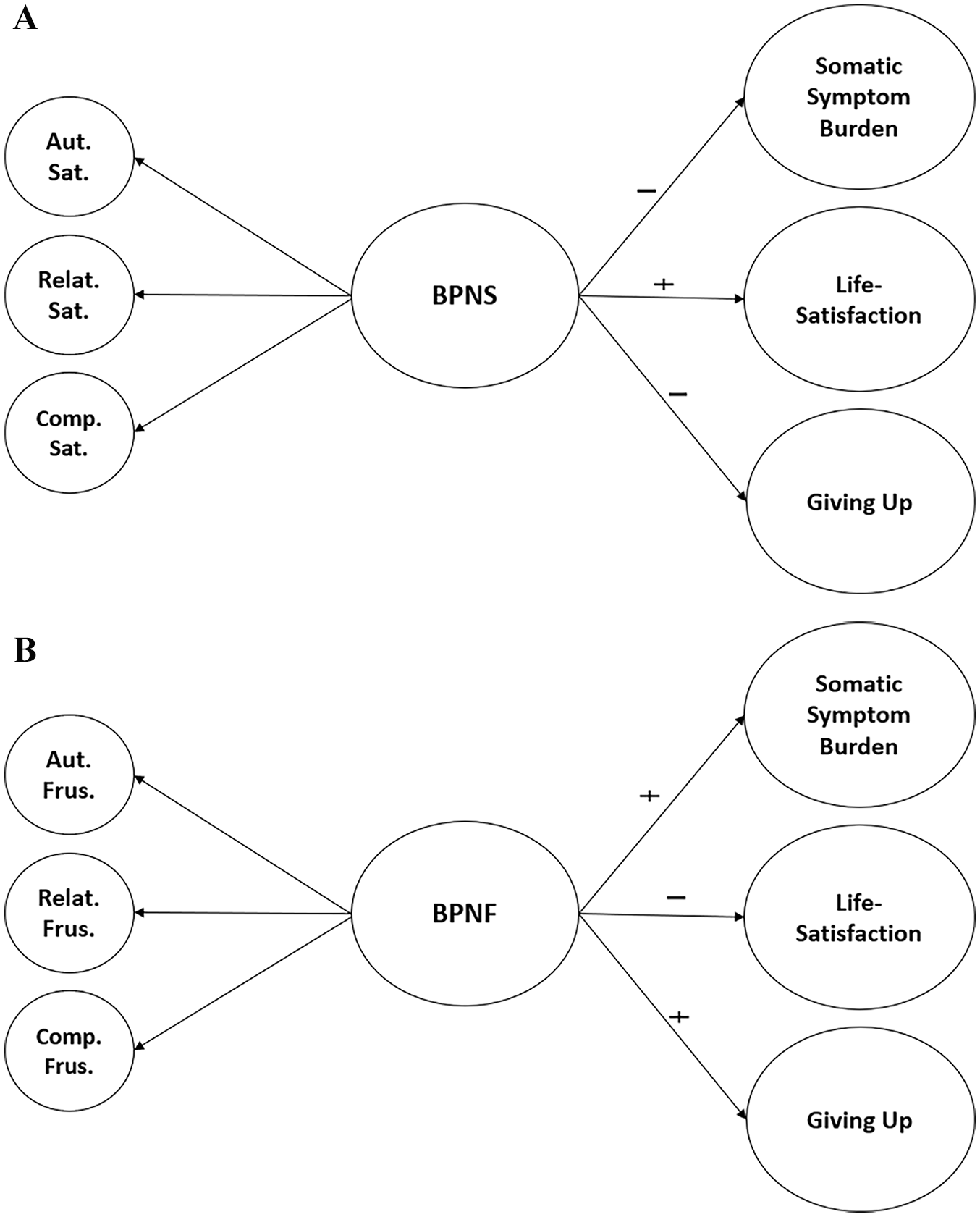
Overview of the Two Hypotheses.
Method
Participants
The present study is based on a large research project that was administered to music students in Scandinavia and England (Hatfield, Halvari, & Williamon, under review). The participants (N = 281) were aspiring professional musicians who attended music performance studies in Scandinavia and England. There were in total 55.2% women, 40.2% men, and 4.6% other. In this study, 65.2% of participants were bachelor students, 29.5% at master’s level, and 5.3% pursuing diplomas or doctorates. Furthermore, 90.8% of music students reported practicing 1–7 hours daily (M = 3.4 hours, SD = 1.4). Of these, 75.8% were enrolled in a Western classical music programme, while the rest pursued studies in jazz, folk music, music education, or church music. The sample consisted of string players (26.4%), singers (19.2%), woodwind players (15.3%), brass players (12.1%), pianists (8.2%), guitarists (7.5%), percussionists (3.2%), organists (2.8%), harpists (1.4%), conductors (.7%), and other instruments (2.8%).
Procedure
In Spring 2022, music students from prominent Scandinavian and UK music conservatoires were invited to participate in a web-based electronic survey provided by the University of Oslo’s www.nettskjema.no. This survey, initially distributed by the deans of these institutions, emphasized voluntary participation, anonymity, and the option to withdraw at any time. All responses from the UK were entered into a prize draw through which three prizes of vouchers at Amazon were offered. Participants received three follow-up reminders over a 2-month availability period. Ethical approval was secured from the Norwegian Social Science Data Service (NSD) in Scandinavia and the Conservatoires UK (CUK) research ethics committee.
Measures
All scales were scored on a 7-point Likert scale from 1 (strongly disagree) to 7 (strongly agree) if not otherwise reported.
Basic Psychological Need Satisfaction and Frustration Scale
In this study, we employed a modified Basic Psychological Need Satisfaction and Frustration Scale (BPNSFS) to gauge music students’ perceptions of psychological need satisfaction and frustration within the context of higher music education (Chen et al., 2015; Olafsen et al., 2021). The BPNSFS was adapted for this specific demographic. The scale encompasses six subscales, each with four items, assessing satisfaction and frustration in three areas: autonomy, relatedness, and competence. The items were introduced in accordance with the context under investigation: “The following questions are related to your life as an aspiring musician and music student.” Examples of adapted items include statements such as: “I feel I have been doing what really interests me” became “As a music student, I feel that I do what really interests me”; “I feel forced to do many things I wouldn’t choose to do” became “As a music student, I feel forced to do many things I would not choose to do.” The subscales demonstrated excellent internal consistency, with Cronbach’s alpha values ranging between .82 and .93.
Somatic Symptom Burden
Six items were selected from the Patient Health Questionnaire (PHQ)-15 Scale that were deemed suitable for the field of music performance (Kroenke et al., 2002). The scale was used to assess SSB in relation to music practice and performance. The following questions were asked: “During the past 4 weeks, when practicing and/or performing, how much have you been bothered by any of the following problems?” The music students were asked to rate the extent to which they had been bothered by symptoms over the past 4 weeks, including (a) pain in the face, lips, or mouth; (b) back pain; (c) pain in the arms, shoulders, or joints (elbow, fingers, etc.); (d) pain caused by inflammation; (e) headaches; and (f) trouble sleeping, all on a 3-point Likert-type scale (0 = ‘not bothered at all’, 1 = ‘bothered a little’, 2 = ‘bothered a lot’). The scale showed a somewhat low, but acceptable, internal reliability with a Cronbach’s alpha of .61 (for review, see Costello & Osborne, 2005).
Giving up
This measure captures the extent to which music students tend to give up after repeated unsuccessful attempts of mastery in the context of music practice and performance. Two items were developed to capture this: “I usually give up when I’m not achieving the desired performance results” and “I usually give up when I repeatedly fail to perform difficult passages while practicing.” The internal consistency for scale was good with a Cronbach’s alpha of .81.
The Satisfaction With Life Scale
The Satisfaction With Life Scale (SWLS) is designed to measure global cognitive judgements of one’s life satisfaction (Diener et al., 1985). The participants indicated their agreement to five statements about their life, such as “In most ways, my life is close to my ideal”. The total score reflects an overall assessment of life satisfaction. This scale is not intended to assess satisfaction with specific life domains, such as health or finances, but rather an overall subjective evaluation of one’s life. The internal consistency was excellent, Cronbach’s alpha of .87.
Analytical procedures
Analyses were carried out applying IBM SPSS 30 and IBM Amos version 28. Overall, the internal consistency of the data ranged from acceptable to excellent, with Cronbach’s alpha scores between .61 and .93. The data were also far within acceptable measures for normality within structural equation modelling (SEM) including skewness less than 2.3 (Lei & Lomax, 2005), and kurtosis less than 7.0 (Byrne, 2016). Confirmatory factor analysis (CFA) was performed to assess how well two hypothesized higher order CFA models matched the sample data (see Supplemental Material A1a and A2b). We applied standardized fit criteria established in the field of SEM (Hu & Bentler, 1999; Marsh, 1995). In our initial analysis, we regressed both the three need satisfaction and the three need frustration variables onto the three independent variables in a nine-factor solution. However, this solution revealed a high degree of collinearity between the latent constructs relatedness support and relatedness frustration (φ = −.80), and between competence support and competence frustration (φ = .80), which distorted parameter estimates and made it difficult to disentangle their unique effects on the outcome variables. As a result, most predictors became non-significant despite moderate to strong associations in bivariate analyses (see Table 2). The same collinearity issue emerged in the second-order model (φ = −.91) between BPNS and BPNF as predictors. Given that BPNS and BPNF are theoretically supported as distinct constructs (Chen et al., 2015; Olafsen et al., 2021), we opted to present them in separate models to better capture their individual contributions to the outcome variables. The two second-order models evaluating (a) students’ perceptions of BPNS, and (b) BPNF, showed a strong fit with the underlying data (see Table 1). Factor loadings between manifest variables (i.e., the single items in a questionnaire) and the latent construct (i.e., all six items related to SSB) in CFA measure how well the manifest variables reflect the underlying latent construct. Factor loadings were within an acceptable range, ranging from .42 to .93 for Model 1, and from .40 to .90 for Model 2. (Hair et al., 2009; Tabachnick & Fidell, 2013). 1 The item Pain1 exhibited a somewhat lower factor loading in both CFA models (.32 and .31, respectively). However, it was considered theoretically relevant for maintaining construct variance across all participants, including specific subgroups such as wind instrument players who may experience pain in the face, lips, and/or mouth. Moreover, the model fit the data well (for review, see Table 2).
Fit Indices for Both CFA and SEM Models.
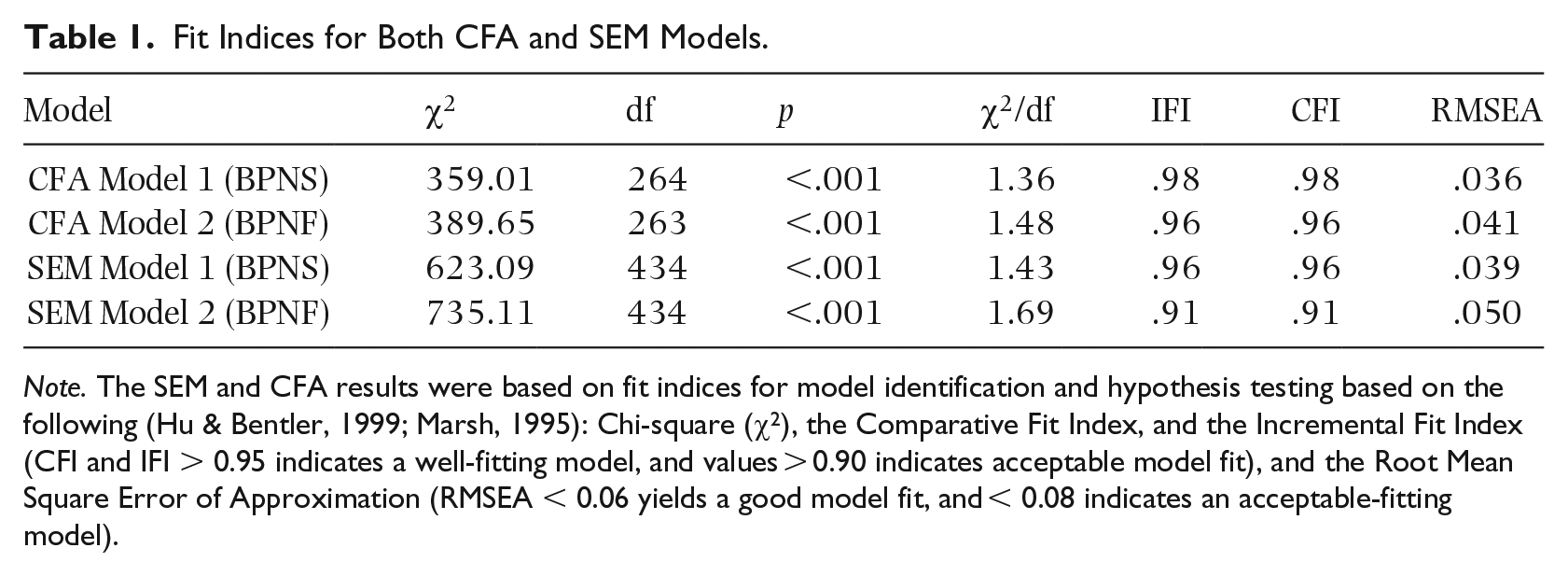
Note. The SEM and CFA results were based on fit indices for model identification and hypothesis testing based on the following (Hu & Bentler, 1999; Marsh, 1995): Chi-square (χ2), the Comparative Fit Index, and the Incremental Fit Index (CFI and IFI > 0.95 indicates a well-fitting model, and values > 0.90 indicates acceptable model fit), and the Root Mean Square Error of Approximation (RMSEA < 0.06 yields a good model fit, and < 0.08 indicates an acceptable-fitting model).
Descriptive Statistics and Pearson’s Correlations Between Study Variables.
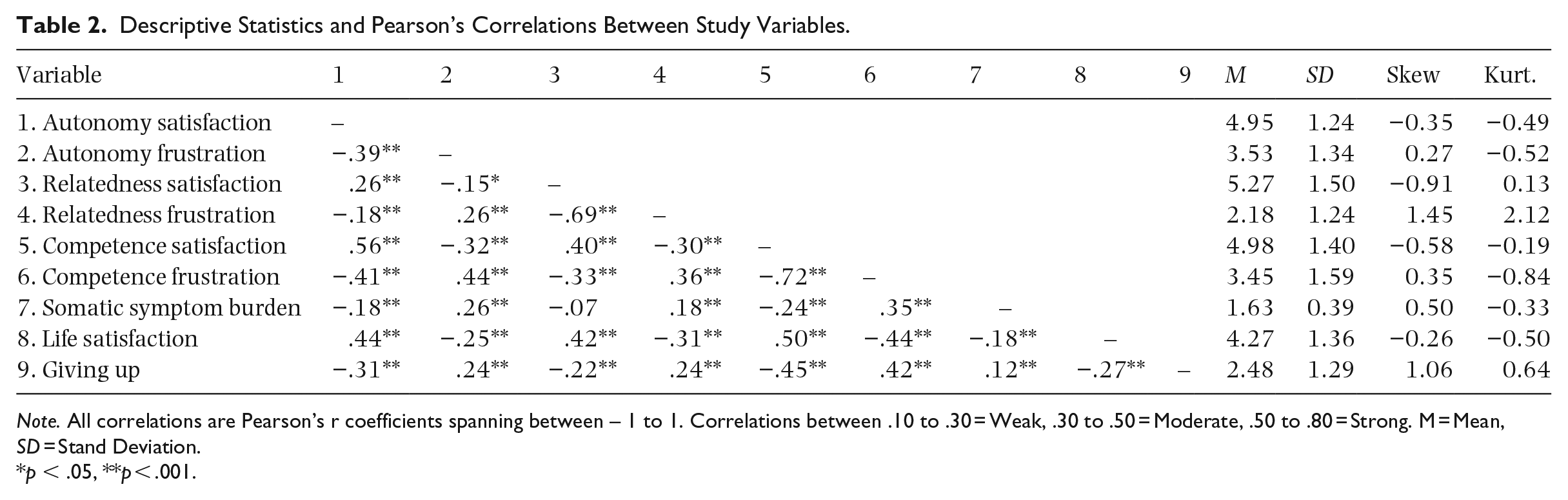
Note. All correlations are Pearson’s r coefficients spanning between – 1 to 1. Correlations between .10 to .30 = Weak, .30 to .50 = Moderate, .50 to .80 = Strong. M = Mean, SD = Stand Deviation.
p < .05, **p < .001.
The hypotheses were furthermore carried out applying SEM. The two structure models demonstrated acceptable to good model fit with the underlying data (see Table 1). Furthermore, background variables such as gender, instrument, practice hours, country, work status, sleep hours, study level, and study programme were included as control variables. Control variables were modelled as predictors of the dependent latent constructs (i.e., SSB, life satisfaction, and giving up) ensuring that their potential confounding effects were accounted for (see Tables 1 and 3). For further review, see Supplemental Material A1a, A1b, B1a, and B1b depicting the CFA and SEM models with latent, observed, and control variables.
Regression Results for the Structural Equation Model 1 (BPNS).
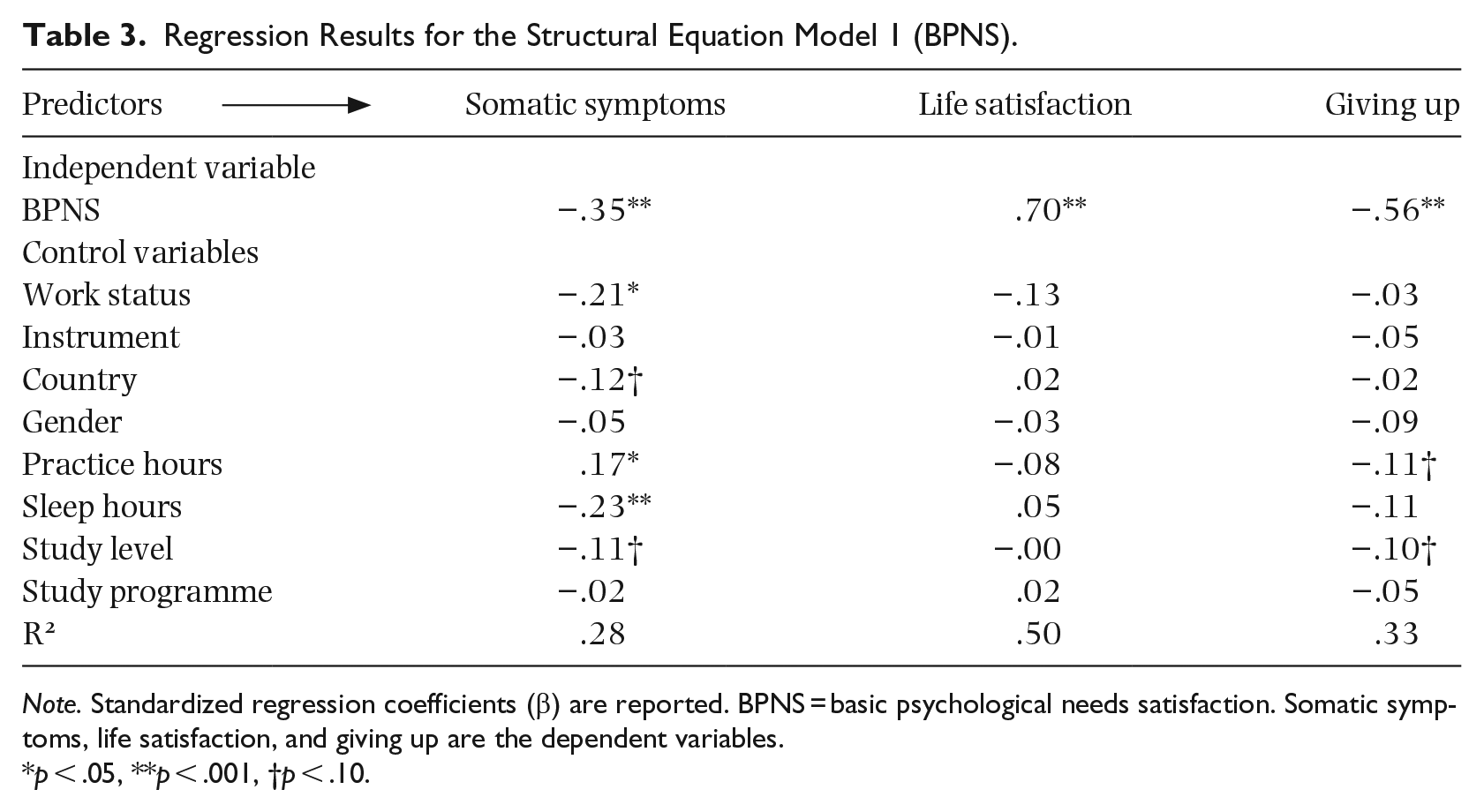
Note. Standardized regression coefficients (β) are reported. BPNS = basic psychological needs satisfaction. Somatic symptoms, life satisfaction, and giving up are the dependent variables.
p < .05, **p < .001, †p < .10.
Results
Descriptive and bivariate findings
The initial data analysis revealed that music students in general report a high score on BPNS (autonomy satisfaction: M = 4.95; relatedness satisfaction: M = 5.27; competence satisfaction: M = 4.98) and generally low mean scores on BPNF (M = 3.53; 2.27; 3.45). Furthermore, a majority of the sample reported close-to-average mean measures on GLS (M = 4.27). Students were generally low in giving up when facing difficulties (M = 2.48). For further review, see Table 2. With regard to the Pearson’s correlations, satisfaction of all the three needs was moderately to strongly correlated to life satisfaction (r = .42, .44, and .50, p < .001). Frustration of all three basic psychological needs are negatively correlated with life satisfaction, demonstrating opposite trends (r = −.25, −.31, and −.44, p < .001). Furthermore, moderate negative correlations between autonomy and competence satisfaction and giving up in the face of failure were found (r = −.22, −.31, and −.45, p < .001). Thus, the higher satisfaction for competence and autonomy reported, the lower scores reported in regard to giving up when facing difficulties in instrumental practice and performance. On the other hand, competence frustration was moderately and positively correlated to giving up (r = .44, p < .001) and to SSB (r = .35, p < .001; the higher competence frustration reported, the higher scores on both SSB and on giving up in the face of failure). Finally, a moderate correlation was found between autonomy frustration and SSB (r = .25, p < .001; for further review, see Table 2 and Appendix 1).
Several students reported that they struggle with SSB. Back pain and pain in arms, shoulders, and joints, as well as headaches and trouble sleeping, were the most pronounced burdens reported (Figure 2).
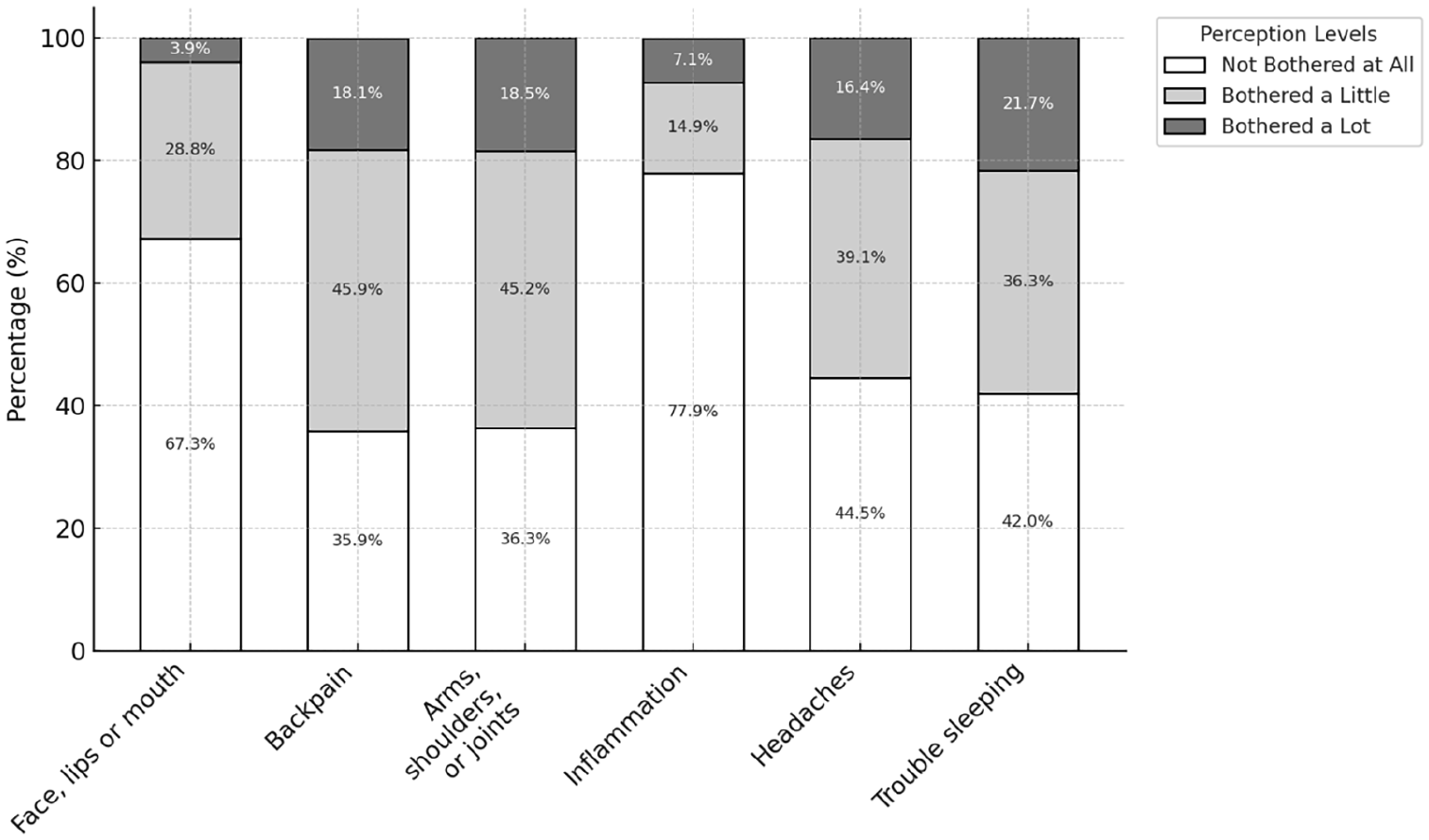
Distribution of Perception Levels by Somatic Symptom Burden Items.
Primary findings
The results support H1: BPNS showed a significant negative association with SSB (β = −0.35, p < .001) and giving up (β = −0.56, p < .001), indicating that higher BPNS is linked to lower levels of both somatic symptoms and giving up. In addition, BPNS demonstrated a positive strong association with GLS (β = 0.70, p < .001), confirming that greater BPNS is associated with enhanced life satisfaction (Table 3).
The findings support H2: BPNF exhibited a positive association with SSB (β = 0.48, p < .001) and giving up (β = 0.52, p < .001), suggesting that higher BPNF corresponds to increased somatic symptoms and giving up. Furthermore, BPNF was negatively associated with GLS (β = −0.57, p < .001), indicating that greater need frustration is linked to reduced life satisfaction (Figure 3 and Table 4).
Regression Results for the Structural Equation Model 2 (BPNF).
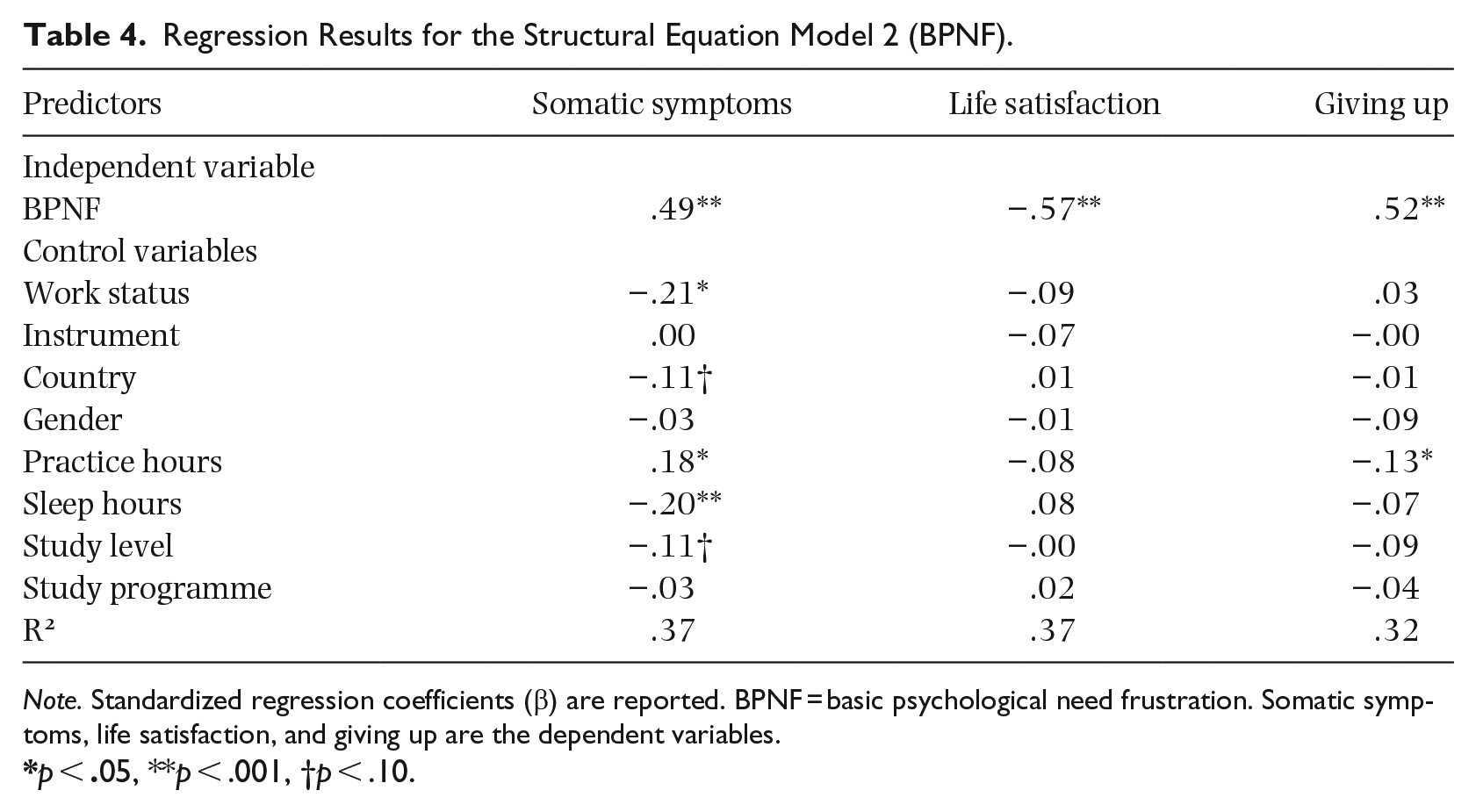
Note. Standardized regression coefficients (β) are reported. BPNF = basic psychological need frustration. Somatic symptoms, life satisfaction, and giving up are the dependent variables.
p < .05, **p < .001, †p < .10.
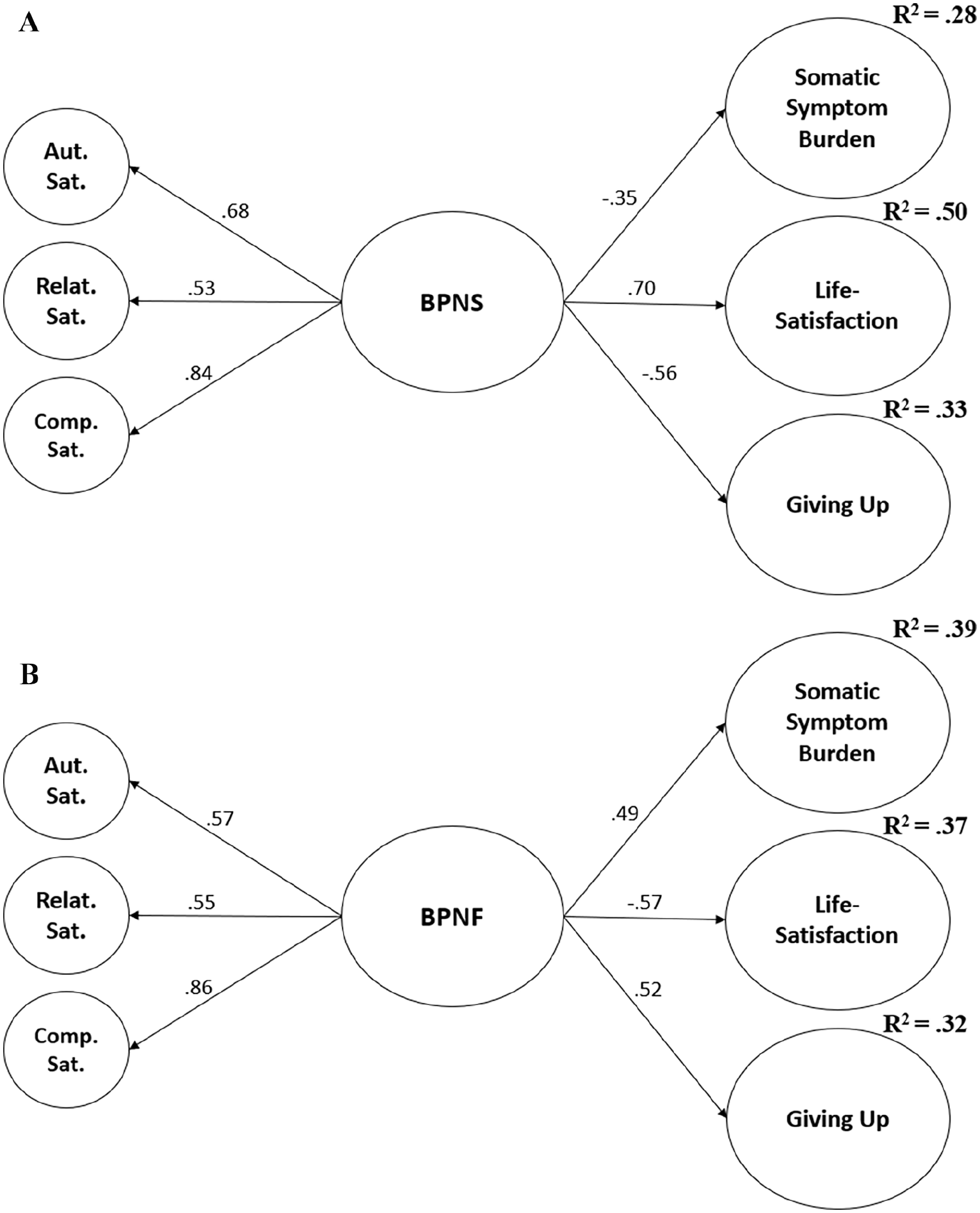
Test Results for Hypothesized Models.
Control variables
The results revealed that control variables generally did not have a significant effect on the direction and strength of the independent variables (i.e., BPNS and BPNF) in the dependent variables (i.e., somatic symptoms, life satisfaction, and giving up); however, there were a few exceptions (Tables 3 and 4). First, work status had a moderate negative association to somatic pain (β = −0.21, p < .05), indicating that participants who were working besides studying music were less likely to report somatic burdens. Second, the more practice hours reported, the greater chance of reporting somatic symptoms (β = 0.18, p < .05). However, participants who reported practicing for 3 hours or more were marginally less likely to give up when facing difficulties in their practice and music performance (β = −0.13, p < .05). Finally, sleep hours were associated with a lower likelihood of experiencing SSB (i.e., the more sleep reported the less likely participants were to report SSBs). This was also the case after removing the item related to trouble sleeping (i.e., Pain6; β = - 0.22, p < .001).
Explained variance
In Model 1, the BPNS model, the explained variance was R² = .28 for SSB, R² = .51 for life satisfaction, and R² = .33 for giving up in the face of failure. In Model 2, the BPNF model, the explained variance was higher for SSB, R² = .39, while life satisfaction and giving up in the face of failure had an explained variance of R² = .37 and R² = .32, respectively. These values suggest that BPNF is more strongly associated with SSB, whereas BPNS shows a stronger relationship with life satisfaction (Tables 3 and 4).
Discussion
The influence of basic psychological needs on SSB
The relationship between basic psychological needs satisfaction (BPNS), needs frustration (BPNF), and SSB remains an under-researched area within performance science. Addressing this gap, the present study found that aspiring professional musicians whose basic psychological needs were satisfied were less likely to experience playing-related somatic symptoms compared to those whose basic psychological needs were frustrated. On average, participants demonstrated higher scores in BPNS than in BPNF, and BPNF showed a stronger association with SSB than BPNS. Specifically, autonomy and competence frustration had the strongest correlations with somatic symptoms and accounted for the highest levels of explained variance in outcomes. Although frustration of the need for relatedness was also positively correlated with somatic burden, this association was comparatively weaker. On the other hand, autonomy and competence satisfaction were negatively correlated with SSB, which corresponds to previous findings in organizational psychology (Olafsen & Halvari, 2017; Williams et al., 2014).
Possible links between BPNSF and somatic burden
Although this study does not establish causality, the results suggest that participants perceiving a predominantly controlling work environment – characterized by external and internal pressures – might be at a higher risk of developing somatic symptoms than participants perceiving higher music education as autonomy-supportive. Yet, it is also possible that SSB predominantly contributes to a perceived lack of competence and autonomy and thereby a lack of belonging (e.g., hiding weaknesses through avoidance behaviours). The links between BPNF and somatic burden may also be bidirectional: a demanding, controlling environment may exacerbate somatic symptoms, which, in turn, may lead to psychological need frustration and further physiological stress (and the other way around concerning BPNS). Notably, the findings suggest that an autonomy-supportive motivational climate, which fulfils basic psychological needs, could foster both physical and psychological health in aspiring musicians (Evans & Ryan, 2022). The complexity and directionality of these relationships remain inconclusive and deserve more attention in future research.
Possible co-factors of BPNSF contributing to SSB
A significant proportion of participants reported a considerable somatic burden; over 18% of the participants reported that they are bothered a lot with both back pain and pain in their arms, shoulders, and joints. An additional 45% of the students expressed that they were slightly troubled by these physical ailments. However, despite experiencing these pain symptoms, participants reported an average of 3.5 hours of daily practice, suggesting that music students persist in practice and performance even in discomfort (Robitaille et al., 2015; Stanek et al., 2017). The lowest mean score in this study was accordingly observed in giving up, indicating that these aspiring professional musicians generally demonstrate resilience and persistence when facing aversity. Moreover, a high-pressure environment may foster a “no pain, no gain” mentality, potentially leading to BPNF, insufficient rest, and inadequate injury prevention (Hatfield & Lemyre, 2016; Kreutz et al., 2008; Lehmann & Jørgensen, 2012). In fact, participants practicing 3 hours or more daily were more likely to report higher levels of SSB than those practicing less than 3 hours. Furthermore, participants who reported sleeping 7 hours or more were less likely to experience somatic symptoms than participants sleeping 5–6 hours per night. In addition, female participants demonstrated higher mean scores for somatic burden and were marginally more likely to report symptom burdens than their male counterparts, consistent with previous studies (Kenny & Ackermann, 2015; Kok et al., 2015; Wristen, 2013; Wristen & Fountain, 2013). These findings indicate the complexity of BPNSF-SSB relationship and the number of factors that contribute to SSB and lack thereof.
BPNSF, somatic burden, and life satisfaction
The study revealed that participants whose basic psychological needs were met also reported high levels of GLS, a finding consistent with previous studies (Diseth et al., 2012; Unanue et al., 2017). Notably, 50% of the variance in GLS was explained by BPNS. Conversely, participants with high levels of BPNF reported lower levels of GLS, with 37% of the variance explained by BPNF. This is an important finding which suggests that satisfaction and frustration of basic psychological needs may determine the extent to which music students are satisfied with life both within and outside higher music education. As anticipated, SSB and life satisfaction were negatively correlated, suggesting that the discomfort from somatic symptoms may extend beyond physical pain possibly impacting overall well-being and happiness with life in general. Both these observations highlight the possible far-reaching impact of BPNSF and somatic burden on various aspects life (Kenny & Ackermann, 2015; Lamontagne & Bélanger, 2015), as well as the potentially constructive quality of an educational context highlighting autonomy support at its core (Bonneville-Roussy et al., 2020; Butler, 2022; Evans et al., 2013).
The role of BPNSF in giving up
Participants reporting high levels of BPNS were more likely to persist in the face of failure, whereas those with high levels of BPNF demonstrated reduced resilience when confronted with repeated setbacks. Given the cross-sectional nature of this study, it is also possible that giving up may contribute to BPNF, which could, in turn, be influenced by SSB. Notably, giving up was weakly and positively correlated with SSB, suggesting that somatically burdened students might choose to withdraw rather than endure ongoing discomfort. More research is needed to elucidate the ways in which various coping mechanisms, BPNSF, and somatic burden interact and influence one another. The overarching findings of this study suggest that BPNS may be a significant precursor to preventing somatic burden and fostering life satisfaction and resilience. Overall, these results underscore the importance of a learning environment that nurtures BPNS, thereby promoting autonomous self-regulation among music students. (Evans & Ryan, 2022; Hatfield, 2018; Reeve et al., 2008).
Limitations
The present study’s design and methodology have several limitations. First, while the study included 281 music performance students, a sample size deemed acceptable according to SEM standards (Byrne, 2016), its generalizability to all music students is limited due to the convenience sampling method used (Tabachnick & Fidell, 2013). Future research would benefit from randomized sampling to broaden the applicability of the findings. Second, the study’s cross-sectional nature precludes causal conclusions between variables. However, the research is theoretically underpinned, allowing for theoretical causality based on expertise and prior research (Black et al., 2010). Third, the study does not deeply explore individual students’ perceptions. Future research could be strengthened by employing mixed-methods designs, which would complement quantitative results with qualitative insights (Creswell, 2009). Fourth, although students were asked to report somatic symptoms specifically while practicing or performing, including an item assessing potential somatic pain outside of music performance would have improved the face validity of the SSB construct. Thus, to distinguish between playing-related pain and possible other causes of pain development, future studies should to a greater extent assess participants’ perceptions of pain history and the distinct pain cause. The six items from PHQ-15 measuring SSB had a poor internal consistency (Cronbach’s α = .61). We believe that future studies should consider applying the Musculoskeletal Pain Intensity and Interference Questionnaire for Musicians (Berque et al., 2014), which explicitly targets perceived pain cause and the exact location of musculoskeletal pain in musicians. Finally, future studies employing longitudinal and interventional designs could yield valuable insights into directionality, causal effects, and temporal changes among these variables.
Conclusion and educational implications
In higher music education, aspiring musicians encounter both overt and subtle pressures and expectations to excel and showcase exceptional performance. This study reveals a significant role of the satisfaction and frustration of basic psychological needs in the extent to which students experience somatic symptoms related to performance. It was found that students who have their needs satisfied are less prone to these symptoms. Conversely, need frustration was closely linked to an increased burden of somatic symptoms in both practice and performance situations. This correlation between BPNSF and SSB has not been previously established, indicating novel implications for educators and students. Therefore, educators are advised to assist students burdened with somatic symptoms in identifying and altering unproductive practice and performance patterns, encouraging the adoption of constructive and personally relevant goals (Hatfield, 2018). This study is the first to investigate interrelations between BPNSF and various factors including SSB, giving up, and GLS. The findings underscore the educational importance of understanding and applying the central principles of SDT. As such, we suggest that educators, administrators, as well as students can potentially mitigate somatic symptoms and simultaneously promote life satisfaction by integrating principles of BPNT into teaching and learning (for review, see Deci & Ryan, 2000; Evans & Ryan, 2022; Reeve et al., 2008). This involves addressing the negative effects of excessive competition and control, while creating a learning environment that is open, transparent, and collaborative that fosters autonomy-support and need satisfaction (Jang et al., 2016; Ntoumanis et al., 2021; Ryan & Deci, 2017). Given the lack of prior research establishing associations between BPNSF and somatic symptoms in music, we call for more research to explore the nuances and causal links between basic psychological needs and somatic well-being.
Supplemental Material
sj-pdf-1-pom-10.1177_03057356251350157 – Supplemental material for No pain, no gain? Satisfaction and frustration of basic psychological needs, somatic burden, giving up, and life satisfaction in music students
Supplemental material, sj-pdf-1-pom-10.1177_03057356251350157 for No pain, no gain? Satisfaction and frustration of basic psychological needs, somatic burden, giving up, and life satisfaction in music students by Johannes L Hatfield, Hallgeir Halvari and Aaron Williamon in Psychology of Music
Footnotes
Appendix
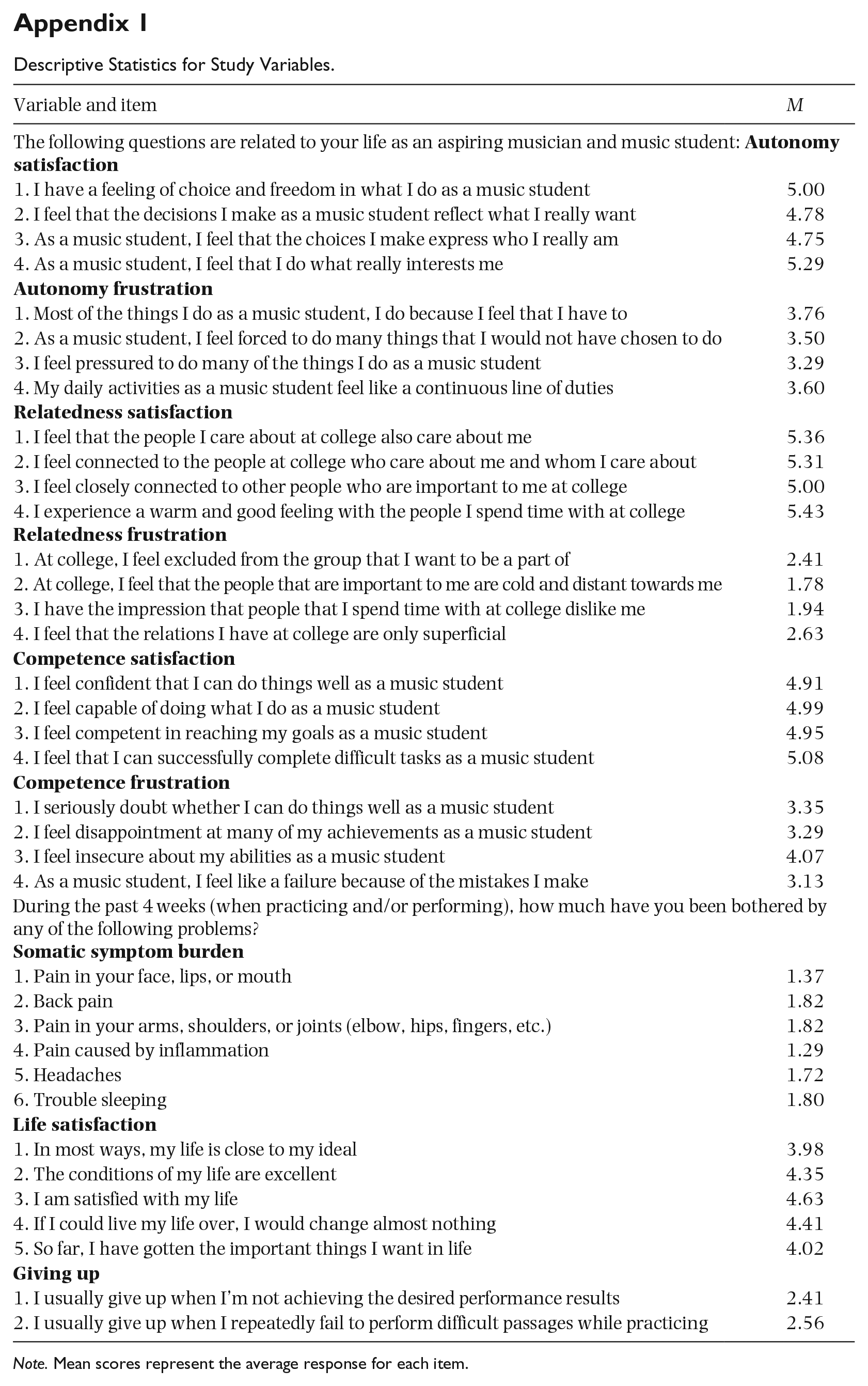
Descriptive Statistics for Study Variables.
| Variable and item | M |
|---|---|
| The following questions are related to your life as an aspiring musician and music student: |
|
| 1. I have a feeling of choice and freedom in what I do as a music student | 5.00 |
| 2. I feel that the decisions I make as a music student reflect what I really want | 4.78 |
| 3. As a music student, I feel that the choices I make express who I really am | 4.75 |
| 4. As a music student, I feel that I do what really interests me | 5.29 |
|
|
|
| 1. Most of the things I do as a music student, I do because I feel that I have to | 3.76 |
| 2. As a music student, I feel forced to do many things that I would not have chosen to do | 3.50 |
| 3. I feel pressured to do many of the things I do as a music student | 3.29 |
| 4. My daily activities as a music student feel like a continuous line of duties | 3.60 |
|
|
|
| 1. I feel that the people I care about at college also care about me | 5.36 |
| 2. I feel connected to the people at college who care about me and whom I care about | 5.31 |
| 3. I feel closely connected to other people who are important to me at college | 5.00 |
| 4. I experience a warm and good feeling with the people I spend time with at college | 5.43 |
|
|
|
| 1. At college, I feel excluded from the group that I want to be a part of | 2.41 |
| 2. At college, I feel that the people that are important to me are cold and distant towards me | 1.78 |
| 3. I have the impression that people that I spend time with at college dislike me | 1.94 |
| 4. I feel that the relations I have at college are only superficial | 2.63 |
|
|
|
| 1. I feel confident that I can do things well as a music student | 4.91 |
| 2. I feel capable of doing what I do as a music student | 4.99 |
| 3. I feel competent in reaching my goals as a music student | 4.95 |
| 4. I feel that I can successfully complete difficult tasks as a music student | 5.08 |
|
|
|
| 1. I seriously doubt whether I can do things well as a music student | 3.35 |
| 2. I feel disappointment at many of my achievements as a music student | 3.29 |
| 3. I feel insecure about my abilities as a music student | 4.07 |
| 4. As a music student, I feel like a failure because of the mistakes I make | 3.13 |
| During the past 4 weeks (when practicing and/or performing), how much have you been bothered by any of the following problems? |
|
| 1. Pain in your face, lips, or mouth | 1.37 |
| 2. Back pain | 1.82 |
| 3. Pain in your arms, shoulders, or joints (elbow, hips, fingers, etc.) | 1.82 |
| 4. Pain caused by inflammation | 1.29 |
| 5. Headaches | 1.72 |
| 6. Trouble sleeping | 1.80 |
|
|
|
| 1. In most ways, my life is close to my ideal | 3.98 |
| 2. The conditions of my life are excellent | 4.35 |
| 3. I am satisfied with my life | 4.63 |
| 4. If I could live my life over, I would change almost nothing | 4.41 |
| 5. So far, I have gotten the important things I want in life | 4.02 |
|
|
|
| 1. I usually give up when I’m not achieving the desired performance results | 2.41 |
| 2. I usually give up when I repeatedly fail to perform difficult passages while practicing | 2.56 |
Note. Mean scores represent the average response for each item.
Funding
The author(s) received no financial support for the research, authorship, and/or publication of this article.

Supplemental material
Supplemental material for this article is available online.
Notes
References
Supplementary Material
Please find the following supplemental material available below.
For Open Access articles published under a Creative Commons License, all supplemental material carries the same license as the article it is associated with.
For non-Open Access articles published, all supplemental material carries a non-exclusive license, and permission requests for re-use of supplemental material or any part of supplemental material shall be sent directly to the copyright owner as specified in the copyright notice associated with the article.
