




Abstract
In the last decade, the construct of ‘culture’ was featured very prominently in music cognition research. However, researchers have adopted a narrow conceptualisation and a limited repertoire of methodologies when investigating ‘culture’. The purpose of this article is to expand on recommendations of Jacoby et al. and propose a novel approach to cross-cultural investigations of affective experiences with music. First, I critically examine how culture has been operationalised in previous studies and present a theoretical framework outlining aspects of culture within the music context. My proposed framework recognises that culture manifests in the individual, the music, and the environment and context, and that these components are continually and mutually constituting one another. Second, I argue that the self is constituted in relation to the cultures that one is part of and hypothesise ways that self-construal theory, as a way of operationalising the self, can enhance current understanding of how culture impacts affective experiences with music. The empirical evidence reviewed shows that self-construal influences motivation, cognition, and emotion outside of musical contexts, which may similarly impact music preferences, perceived emotions, and felt emotions with music. Finally, I reflect on the implications of this approach for future developments in music psychology theory and research. Self-construal, as a means of operationalising the self, can potentially elucidate similarities and differences in affective experiences with music both between and within cultural contexts. Examining the self can be a step-change to advance theory and cross-cultural understanding of affective experiences within music psychology.
There is renewed interest in cross-cultural research within psychology of music given contemporary discourse surrounding anti-colonialism in music studies (Adeogun, 2021; Loaiza et al., 2022; Sauvé et al., 2023; Tan, 2021). After all, music exists in cultures all around the world (Mehr et al., 2019), and affective experience of music is an important aspect of musical engagement for many, with empirical evidence showing that music elicits a wide spectrum of emotional experiences (Swaminathan & Schellenberg, 2015). Over the last decade, ‘culture’ has featured prominently in music perception and emotion research (Sauvé et al., 2023). However, researchers have adopted a narrow conceptualisation and a limited repertoire of methodologies when investigating ‘culture.’
Conducting cross-cultural music cognition research presents multiple challenges. Based on an interdisciplinary discussion, Jacoby et al. (2020) recommended better operational definitions of culture and an integration of sociological and psychological approaches. This article aims to expand on these recommendations and propose a novel approach to cross-cultural investigations of affective experiences with music. First, I critically examine how culture has been operationalised in previous studies and present a theoretical framework outlining aspects of culture within the music context. Second, I argue that the self is constituted in relation to the cultures that one is part of, introducing self-construal as one way to operationalise the self. Thereafter, I hypothesise how this can enhance the understanding of culture’s impact on affective experiences with music. Given that affective experiences cover a wide spectrum of topics, I will focus on music preference, emotion perception, and felt emotions in music because they are relevant to well-being and music therapy, and have been central to music and emotion research in music psychology (Dingle et al., 2021; MacDonald, 2013; Västfjäll et al., 2013). Finally, I reflect on the implications of this approach for future developments in music psychology theory and research.
Conceptualising and operationalising culture
Culture in psychology and music psychology
The term ‘culture’ is widely regarded as one of the most complex to define, and definitions have changed over time (Rohner, 1984; R. Williams, 1985). In psychology, one definition describes culture as ‘shared elements that provide the standards for perceiving, believing, evaluating, communicating, and acting among those who share a language, a historic period, and a geographic location’ (Triandis, 1996, p. 408). These ‘shared elements’ were vague and assumed to be demarcated geographically such that culture was frequently associated with nation-states. Consequently, researchers operationalised culture using categories such as nationality and race when studying emotions outside musical contexts (e.g., Boiger et al., 2018; Furukawa et al., 2012; Liu et al., 2015; Scollon et al., 2004). Researchers in music psychology have adopted similar approaches. For example, Midya et al. (2019) compared emotional responses to Hindustani music between participants residing in India and those in other countries. Researchers have also compared music from different countries, such as traditional Chinese and Western classical music (Beier et al., 2022; Cowen et al., 2020; X. Wang et al., 2021). A Web of Science search using the terms ‘music’, ‘culture’, and ‘emotion’ revealed 91 publications in 2022, with all but one recruiting participants of various nationalities and ethnicities, and/or investigating music from different countries.
Cultural psychologists have elaborated on these ‘shared elements’ to include an expansive set of material and symbolic concepts, such as cultural systems, social practices, group norms, and cultural values (Niedenthal et al., 2006; Roberts, 2016). In other words, culture comprises shared attitudes and beliefs within and between groups of individuals. By aggregating individual-level survey data to the national level, cultural psychologists have identified various cultural values (see Supplementary Materials Appendix A). Consequently, researchers have elucidated cross-national differences on emotions in everyday life using these cultural dimensions (e.g., Baker et al., 2013; Laukka & Elfenbein, 2021; Lim, 2016; Schimmack et al., 2002; Yon et al., 2023). Researchers in music psychology have adopted analogous approaches in their cross-cultural investigations. Specifically, they used nationality to operationalise individualism and collectivism, attributing cross-national differences to these cultural values (Boer & Fischer, 2012; Juslin et al., 2016; Saarikallio et al., 2021; Schäfer et al., 2012). For instance, Saarikallio et al. (2021) compared music-evoked emotions between participants from Finland and India, suggesting that the highest-scoring emotion factor of power-empowerment for Finns was due to their individualistic culture, while the highest-scoring emotion factor of peaceful transcendence for Indians was because of their collectivistic culture.
Taken together, nationality, geographical boundaries, and ethnicity have often been used as proxies for underlying cultural differences. Albeit insightful, using these factors to operationalise culture relies on several assumptions. First, demographic categories were deemed the most appropriate dimension for clustering cultures because it assumes within-group homogeneity and between-group heterogeneity. However, research shows considerable heterogeneity within countries in terms of affective experiences (Eid & Diener, 2001; Matsumoto, 1993) and cultural values (Talhelm et al., 2014; Taras et al., 2016).
Second, these variables, typically gathered at intake, remain static and may obscure rather than explain the mechanisms regarding how culture influences affective experiences. Cross-cultural research in music psychology have mainly sampled participants from countries deemed to be collectivistic based on low scores on the index of individualism by Hofstede et al. (2010). However, scholars argue that individualism and collectivism are orthogonal dimensions, such that individuals may possess both values simultaneously (Gelfand et al., 1996; Y. Lee et al., 2019). Furthermore, individualism is rising in many societies worldwide (Santos et al., 2017), calling into question the appropriateness of using countries to operationalise these cultural values.
This brief overview is not exhaustive; researchers have also defined and operationalised culture using artefacts, cultural practices, and indigenous philosophies (e.g., Dalal & Misra, 2010; Nobles, 2015; Yama & Zakaria, 2019). Given the limitations of using nation-state to operationalise culture, it is imperative to combine definitions of culture with appropriate methodological innovations that do justice to a nuanced theoretical understanding of how musical experiences are shaped by cultural specificities.
A theoretical framework for investigating culture in music
The working definition of ‘culture’ I adopt here is that culture consists of ‘explicit and implicit patterns of historically derived and selected ideas and their embodiment in institutions, practices, and artifacts; cultural patterns may, on one hand, be considered products of action, and on the other as conditioning elements of further action’ (Adams & Markus, 2004, p. 341; emphasis in original). In other words, culture includes ‘the ideas, institutions, and interactions that guide individuals’ thoughts, feelings, and actions’ (Markus & Hamedani, 2019, p. 15; emphasis in original). One important idea underlying these definitions is that culture and individuals continually and mutually constitute one another; as cultural content changes, the mediating self and psychological functioning change as well (Markus & Kitayama, 2010).
Based on this working definition, culture is ubiquitous. Culture may reside ‘inside the head’ in individuals, and culture may reside ‘outside the head’ in daily situations, cultural products, and pervasive ideas (Morling, 2016). This conceptualisation can be applied to the study of music (see Figure 1). In this model, ‘culture’ manifests at the individual level through psychological constructs such as motivation, cognition, and emotion. ‘Culture’ is also apparent in musical behaviours (e.g., musicians interacting with one another, an audience watching a performance, etc.), materials (e.g., instrumentation, notation, etc.), and practices (e.g., ceremonies, religious festivals, etc.). Furthermore, ‘culture’ permeates the broader environment and context such as within a country (macro-level), a concert hall (meso-level), or at home (meso-level). In Figure 1, the influence of environment and context is depicted by dotted lines because individuals and music may move between environments and bear vestiges of the context from where they originate. Whilst ‘culture’ can be found in these domains, it is important to recognise that these components continually and mutually shape one another.
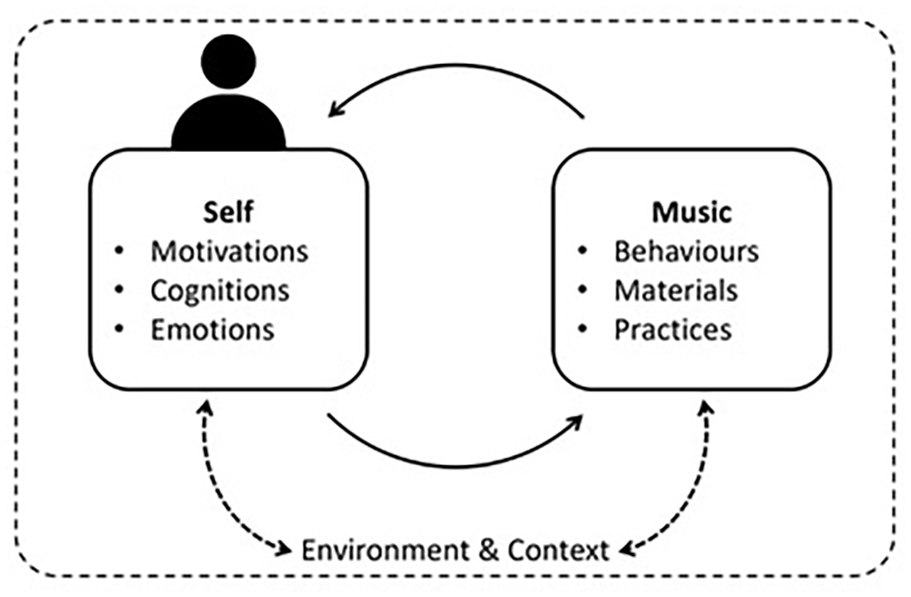
Mutual constitution of self, music, and context.
This conceptual framework offers a nuanced understanding of how cultural specificities shape musical experiences. Take the song ‘Happy Birthday’ as an example. While seemingly universal, variations exist due to macro- and meso-contextual influences. Different countries and social groups have their own renditions in terms of language, melody, and accompanying behaviours (e.g., cake with lighted candles, clapping, etc.; Condé Nast Traveller, 2018). Individual factors also play a role. Professional jazz musicians and family members may have varying motivations (i.e., financial remuneration for the former and a celebration of life for the latter) and perform ‘Happy Birthday’ in radically different ways. Awareness and recognition of these different components allow us to distinguish specific ‘cultural’ aspects that influence affective experiences with music.
As discussed earlier, most research on affective experiences with music have examined cross-cultural differences based on geographical regions and ethnicity. Researchers have also operationalised individualism-collectivism using demographic variables that assume the homogeneity of cultural groups. Based on this theoretical framework, previous studies have illuminated how culture influences music and emotions at the macro-level of national context. However, it overlooks the individual’s role in navigating the cultural world. Culture is not separate from the individual; one important function of culture is to provide guidance, both consciously and unconsciously, for what the individual should be doing and how to be a person. Therefore, investigating individual differences, such as the self, can significantly enhance our understanding of how culture influences affective experiences with music.
Culture, self, and affective experiences with music
Culture and the self
Cultural psychologists have operationalised various ‘inside the head’ constructs (Morling, 2016). One example is self-construals: how individuals define and make meaning of the self (Cross et al., 2011; Markus & Kitayama, 1991, 2010). At this juncture, I feel it is necessary to state my positionality to elucidate my motivations and clarify the arguments I am making. Born and raised in postcolonial Singapore, I am ethnically Chinese, have studied and worked in the U.S., and currently reside in the U.K. These experiences have shaped my worldview, making me acutely aware of the power and privilege, as well as dynamics and tensions between dominant theories and ideologies from different cultural traditions. I recognise that the notion of self has been theorised extensively across disciplines including philosophy (Pitson, 2002; Walker, 2017), sociology (Callero, 2003; Petrunik & Shearing, 1988), social psychology (Baumeister, 1999; Decety & Sommerville, 2003), and music education (Creech et al., 2020). To go beyond WEIRD (Western, educated, industrialised, rich, and democratic) frameworks (Broesch et al., 2020; Masuda et al., 2020; Sauvé et al., 2023), I adopt a concept of self that is informed by indigenous perspectives (Morris, 1994; Nwoye, 2006; Okolo, 1992; Yu, 2008) and grounded in cultural psychological theories (Cross et al., 2011; Markus & Kitayama, 1991, 2010; Zhu & Han, 2008).
In cultural psychology, the self represents the ‘me’ at the centre of experience – ‘a continually developing sense of awareness and agency that guides action and takes shape as the individual, both brain and body, becomes attuned to the environment it inhabits’ (Markus & Kitayama, 2010, p. 421). Self-construals represent how people view themselves with respect to others – as unique and independent, as related to close friends and family, or as part of larger social groups (Cross et al., 2011). While the self and identity are synonymous and often used interchangeably by scholars (e.g., Spychiger, 2017; Swann & Bosson, 2010), they are theoretically distinct. The self is closely tied to self-concept, referring to how individuals define and make meaning of themselves (Cross et al., 2011; Markus & Kitayama, 1991, 2010). Identities, in contrast, refer to traits, social relations, roles, and group memberships that define who one is (Stryker, 1980; Stryker & Burke, 2000; Tajfel, 1981, 1982). Therefore, the self and identity can be considered as nested elements: the self is more malleable and dynamic, whereas identities are relatively stable constructions of the self (e.g., Chinese identity, female identity, etc.), which consequently form one’s self-concept. For a detailed overview of these concepts, see the articles of Morf and Mischel (2012) and Oyserman et al. (2012).
Research in cultural psychology identified two prevailing self-construals found in East Asian and Western cultures (Cross et al., 2011; Markus & Kitayama, 1991, 2010). The empirical evidence suggests that people of non-Western, primarily East Asian cultures, have interdependent self-construals: the self is viewed as embedded within the social context and less differentiated from others. This interconnectedness guides thoughts, feelings, and actions to maintain relational harmony and pursue group goals over individual needs. In contrast, the evidence suggests that people of Western cultures have independent self-construals: the self is viewed as a relatively integrated motivational and cognitive entity such that awareness, emotion, judgement, and action are organised into a distinctive whole, separate from others against a social and natural backdrop.
In essence, Markus and Kitayama (1991) proposed that national differences in collectivism-individualism give rise to interdependent-independent self-construals, respectively. Although conceptually similar, these constructs represent different levels of analysis: collectivism-individualism describe large-scale entities such as nation-states, while self-construals represent individual-level components. Research indicates that other factors, such as religious heritage (Croucher, 2013), socioeconomic development (Taras et al., 2016), and the history of voluntary settlement (Kitayama & Bowman, 2010; Kitayama, Ishii, et al., 2006), also impact these self-construals. Several approaches have been developed to measure self-construals, including self-report questionnaires (e.g., Gudykunst et al., 1996; Hackman et al., 1999; Hardin et al., 2004; Singelis, 1994; Yamada & Singelis, 1999) and implicit measures (see the papers by Cross et al. (2011) and Smith (2011) for an overview).
It is important to note that interdependent and independent self-construals are not opposite ends of a single construct, but are separate factors that exist concurrently within the same individual (Singelis, 1994). Individuals can hold both self-construals, which vary between and within cultural contexts (Oyserman et al., 2002). The ‘culture as situated cognition’ theory posits that variations in self-construals depend on social-contextual factors, which influences behaviours and other processes (Oyserman, 2011; Oyserman & Lee, 2008). Similarly, the ‘dynamic constructivist approach to culture’ stresses the interaction between individual, situation, and culture, suggesting that different selves emerge due to the availability, accessibility, and applicability of cultural factors (Hong et al., 2000; Hong & Mallorie, 2004). In other words, within a cultural context, certain self-construals may be chronically accessed, making them more readily accessible (Oyserman & Sorensen, 2009).
Guided by these theories, researchers developed priming manipulations to examine causal hypotheses and cultural consequences of interdependent and independent self-construals (Brewer & Gardner, 1996; Gardner et al., 1999; Trafimow et al., 1991; Ybarra & Trafimow, 1998). For instance, participants may be asked to reflect on what makes them similar to (interdependent self-construal prime) or different from (independent self-construal prime) their friends and family (Trafimow et al., 1991). Studies have shown that different self-construals can be activated in people from the same cultural context, resulting in behaviours congruent with interdependent or independent selves (Ikeda, 2021; Kafetsios & Hess, 2013; Liddell et al., 2017; Neumann, 2020; Pusaksrikit & Kang, 2016). Hence, self-construal, as a means of operationalising an arguably important aspect of culture, can potentially elucidate similarities and differences in affective experiences with music both between and within cultural contexts.
This simple dichotomy of interdependent and independent selves as representing East Asian and Western cultures has been challenged (Matsumoto, 1999). One might argue that this East-West mapping of self-construal types may reflect an Orientalist perspective and perpetuate stereotypes about cultural differences being essentially ‘Eastern’ or ‘Western’ (Hamdi, 2013; Matsumoto, 1999; Oyserman et al., 2002; Takano & Osaka, 1999). Consequently, alternative models have been proposed to capture the complexity of selfhood across cultures (e.g., Fernández et al., 2005; Harb & Smith, 2008; Hardin, 2006; Hardin et al., 2004). For instance, Vignoles et al. (2016) developed a seven-dimensional model of selfhood across 55 cultural groups in 33 countries. Their findings suggest that the simple binary of interdependence and independence does not adequately capture the diverse cultural self that exists globally. Instead, cultural groups emphasise different ways of being both interdependent and independent.
Research in cultural psychology has been slow to adopt alternative models of selfhood across cultures. Nevertheless, research involving self-construal has flourished, highlighting its importance in influencing cognition, perception, motivation, emotion, and health (for an overview, see Cohen & Kitayama, 2019). Hence, I argue that self-construal also plays an important role in affective experiences with music. In subsequent sections, I review current cross-cultural research and hypothesise how self-construal theory can enhance our understanding of how culture impacts music preference, emotion perception, and felt emotions in music. My hypotheses are based on the current state of knowledge regarding the role of self-construal in affective experiences, which have predominately used the two-factor model of selfhood: interdependent and independent self-construals.
Self and music preferences
Music preference refers to a person’s liking for one piece of music over another (Hargreaves et al., 2015). Beyond this, the music people like may reveal much information about themselves (North & Hargreaves, 2007a, 2007b, 2007c), including their personalities and identities (Dys et al., 2017; Vuoskoski, 2017). Research has shown a consistent pattern of correlations between personality types and music preference (Rentfrow & Gosling, 2006; Schäfer & Mehlhorn, 2017).
Music, as a cultural product, may reflect different cultural values. Research on popular music reveals that lyrics of Chinese songs contained more collectivistic themes, whereas U.S. songs contained more individualistic themes (Rothbaum & Tsang, 1998; Rothbaum & Xu, 1995). At the individual level, Huang et al. (2020) found that most Chinese college students preferred Chinese pop music because they shared the same cultural background. Similarly, Marshall and Naumann (2018) found that individuals identifying strongly with their race preferred music that was typically associated with that race (e.g., African Americans and rap music). These findings underscore the reciprocal relationship between the self and music. However, this still begs the question: where do music preferences come from?
The reciprocal feedback model of music response suggests that music preferences are influenced by the interplay between the music, the situation, and the listener (Hargreaves et al., 2015; Schubert et al., 2014). For example, listeners tend to like music that evokes positive feelings and avoid music that trigger negative ones (Ladinig & Schellenberg, 2012). Contextually, music congruent with the listener’s mood is preferred (Xue et al., 2018). Furthermore, individual factors including age (Cohrdes et al., 2017), gender (Dobrota et al., 2019), familiarity (Kang & Yoo, 2016; Sangnark et al., 2021; Schubert, 2007), and intelligence (Račevska & Tadinac, 2019) also shape music preferences.
Several studies have explored how culture influences music preference. Schäfer and Sedlmeier (2010) investigated this by operationalising culture at the macro-context level within a single country. Participants were asked about the relevance of classical, rock, pop, electro, rap, and beat music (German ‘Schlager’ or ‘Volksmusik’) to national identity (e.g., ‘this music can express the identity of our country’). Surprisingly, they found no significant association between the preference for these music genres and nationality.
In another study, Schäfer et al. (2012) observed cultural differences among participants from different countries. The German participants preferred rock and pop music, whereas Indian participants preferred Carnatic classical music. In addition, German participants generally exhibited higher preference ratings than Indian participants, with variations attributed to different music functions (i.e., why people use music). These findings were interpreted in light of distinct cultural values, with Germany tending towards individualism and India towards collectivism. Alternatively, I hypothesise that these music preferences may reflect individuals’ dominant self-construal. Future research could test this empirically, examining how preferred music correlates with interdependent or independent self-construals, in terms of lyrical content, affordances, and other musical elements.
Self-construal as a predictor of ideal affect and music preference
There is strong evidence suggesting that self-construal influences ideal affect, the affective state that individuals value and would ideally like to feel (see Supplementary Materials Appendix B). Individuals with an independent self-construal prioritise their individual subjective experience, leading to a preference for maximising positive and minimising negative emotions (Tamir & Gutentag, 2017; Tsai, 2007; Tsai et al., 2006). Conversely, individuals with an interdependent self-construal prioritise external and public aspects of the self (e.g., status, roles, and relationships), valuing interpersonal harmony over individual needs. They would prefer not to feel too much positive emotions, which would threaten group cohesion, and use negative emotions to attune more to others. Although they still generally desire more positive than negative emotions, the gap between their desire for positive and negative states is smaller than that of those with an independent self-construal.
Studies employing surveys and experimental primes have consistently shown that individuals with an independent self tend to report more positive affect and less negative affect (Grossmann et al., 2016; Kim et al., 2014; Sims et al., 2015; Spencer-Rodgers et al., 2010; P. Williams & Aaker, 2002). Conversely, those with an interdependent self often report mixed affect experiences. Further investigations have revealed that individuals with an independent self prefer high-arousal positive states (e.g., excited, enthusiastic, elated), while those with an interdependent self prefer low-arousal positive emotions (e.g., calm, peaceful, relaxed; Tamir et al., 2016; Tsai et al., 2006; Tsai, Miao, et al., 2007). Neuroimaging studies have provided converging evidence for these cultural differences (Park et al., 2016, 2017).
These different self-construals lead individuals to prefer people and activities aligned with their ideal affect (Bencharit et al., 2019; Koopmann-Holm & Tsai, 2014; Sims et al., 2014, 2018; Tsai, 2017; Tsai et al., 2019; Tsai, Louie, et al., 2007; Tsai, Miao, et al., 2007). For instance, European Americans were more likely to choose the high-arousal positive CD (its cover depicting a man surfing with a large wave behind him; the back containing fictitious music reviews indicating high energy and invigoration), whereas Hong Kong Chinese participants preferred the low-arousal positive CD (its cover depicting a man meditating on a rock overlooking a bay; the back containing reviews indicating calm and relaxation; Tsai, Miao, et al., 2007). It is crucial to note that this study relied on CD covers and fictious reviews, not actual music. In the absence of other contextual factors, I predict that individuals with an independent self would prefer music that evokes high-arousal positive emotions, while those with an interdependent self would prefer music that elicits low-arousal positive emotions. Future research could test these hypotheses empirically, investigating whether individuals with different self-construals prefer different types of music within and between cultural contexts. In addition, future studies could explore aspects of the musical experience that evoke high- or low-arousal positive states and examine their relationship to music preference.
Self and emotion perception in music
Emotion perception in music refers to recognising emotions expressed in music without necessarily feeling them (Juslin, 2016). Cross-cultural research has mostly examined whether individuals from different countries perceive similar (or different) emotions in various music genres (Athanasopoulos et al., 2021; Balkwill et al., 2004; Balkwill & Thompson, 1999; Bodner, 2014; Fritz et al., 2009; Kwoun, 2009; Laukka et al., 2013; X. Wang et al., 2021). Other studies have examined how individuals from different cultures use musical structures when perceiving emotions in music (Adachi et al., 2004; Athanasopoulos et al., 2021; X. Wang et al., 2021; Zacharopoulou & Kyriakidou, 2009). These studies generally found that people are better at judging affect from culturally familiar versus unfamiliar music. Upon closer scrutiny, these studies did not investigate any ‘cultural’ factor per se but actually examined how familiarity with and exposure to a certain genre of music influences emotion perception.
Research has shown that self-construal influences emotion perception outside of musical contexts (see Supplementary Materials Appendix C). Through facial perception studies (which typically involve visual stimuli), alongside self-report and experimental manipulations, research showed that self-construal affects decoding of facial expressions (Blais et al., 2008; Ikeda, 2021; Miyamoto et al., 2011; Yuki et al., 2007), accuracy in inferring others’ emotions (Kafetsios & Hess, 2013; Ma-Kellams & Blascovich, 2012; Stanley et al., 2013), and perception of emotion intensity (Matsumoto et al., 2018). Specifically, individuals with an interdependent self were more attuned to negative emotions, whereas those with an independent self were better at recognising positive emotions (T. Li et al., 2015; Ma-Kellams & Blascovich, 2012). In addition, when perceiving emotions, individuals with an interdependent self were influenced by contextual information more than individuals with an independent self (Federici et al., 2011; Hess et al., 2016; Ito et al., 2013; Ko et al., 2011; Kuwabara et al., 2011; H. Lee et al., 2017; Masuda et al., 2008, 2012; Matsumoto et al., 2012). Neuroscientific studies measuring event-related potentials (ERPs) provide further empirical support for these cultural differences (Fong et al., 2014; Goto et al., 2013; Russell et al., 2015, 2019).
Research indicates that self-construal influences emotion perception in auditory tasks too. Participants tasked with judging the valence of word meanings after listening to them spoken in different emotional vocal tones showed cultural differences. Asians (both Japanese and Filipinos) tended to focus more on the auditory context, whereas North Americans prioritised the meaning of the word (Ishii et al., 2003, 2010; Kitayama & Ishii, 2002). Further investigations using ERP methods showed that individuals with an interdependent self-construal were more sensitive to the incongruence between word content and vocal tones (Ishii et al., 2010).
Examining the self within the musical context may provide insights into how culture influences emotion perception in music. Differences in emotion perception were often attributed to distinct cognitive styles associated with different self-construals (Varnum et al., 2010). Individuals with interdependent selves tend to employ holistic cognitive styles, focusing on contextual information and relationships, and emphasising situational causes in attribution. Conversely, individuals with independent selves tend to use analytic cognitive styles, characterised by a narrow visual focus, taxonomic categorisation of objects, and dispositional bias in causal attribution (Nisbett, 2003; Nisbett et al., 2001). The empirical evidence consistently shows how these different self-construals and their related cognitive styles influence visual perception, decision-making, narrative construction, and memory judgements (Chua et al., 2005; Ji et al., 2000; L. M. W. Li et al., 2015; Masuda et al., 2008; Masuda & Nisbett, 2001, 2006; Senzaki et al., 2014; H. Wang et al., 2012). Similarly, I argue that individuals with different self-construals may adopt these distinct cognitive styles when perceiving emotions in music.
Based on self-construal theory, several hypotheses can be made. Since individuals with interdependent selves tend to employ holistic cognitive styles, they may be more influenced by contextual information when perceiving emotions in music. Conversely, individuals with independent selves tend to employ analytic cognitive styles and may not be as influenced by contextual information. For songs (i.e., music with lyrics), contextual information may encompass the interplay between musical features (e.g., harmony, timbre, expression) and lyrical content (meaning of words). I predict that self-construal would impact the accuracy of classifying emotions in a music excerpt, contingent upon the congruence or incongruence of auditory cues and lyrical content.
In addition, contextual information may include interactions between instruments or musicians, listener-performer/music dynamics and relationships, and broader social contexts of music engagement. There is evidence demonstrating cross-modal interactions in emotion perception during music performances, with higher emotional intensity reported when visual information accompanied the musical experience (Chapados & Levitin, 2008; Vines et al., 2006, 2011). As described earlier, cross-cultural studies have mainly focused on individual musical elements and how they contribute to the perception of emotions in music. If we regard music as social praxis (Regelski, 2009; Small, 1998), we should consider the broader social context of music engagement and its influence on emotion perception. In many cultures, music is rarely a solitary act, and multiple actors, both real and imagined, are involved (Mehr et al., 2019; Trehub et al., 2015). The presence of others, even during a seemingly solitary iPod-listening activity, may impact emotion perception to varying degrees, depending on one’s self-construal. Future research could test these hypotheses empirically, focusing on the self to elucidate cultural differences in how individuals perceive emotion in music.
Self and felt emotion in music
Felt emotions in music refers to the affective response that music evokes in listeners (Juslin, 2016). Research shows that music can elicit emotions across cultures. Some studies emphasised cross-cultural similarities, such as participants experiencing chills in response to both familiar and unfamiliar musical styles (Beier et al., 2022), individuals from different countries reporting similar felt emotions when listening to the same piece of music (Midya et al., 2019), and common emotional patterns during music listening across countries (Juslin et al., 2016). However, there are also notable cross-cultural differences (Cowen et al., 2020; Gregory & Varney, 1996). Emotions such as peaceful-transcendence, nostalgia-longing, and joy-happiness were more prevalent in collectivistic cultures, whereas sadness-melancholy and power-empowerment were more common in individualistic cultures (Juslin et al., 2016; Saarikallio et al., 2021). In these studies, culture was investigated at the macro-context level, where the researchers operationalised individualism-collectivism using nationality.
Unlike cultural values, which is a measure of group (or national) differences, the self is a measure of individual difference that may better explain why individuals from different cultures experience certain emotions with music. There is strong evidence that self-construal influences emotional experiences outside of musical contexts (see Supplementary Materials Appendix D). Using diary and survey methods along with self-report, implicit, and experimental self-construal measures, research has shown that self-construal influences the frequency, type, and intensity of felt emotions (Chentsova-Dutton & Tsai, 2010; Elliott & Coker, 2008; Grossmann et al., 2016; Koeda et al., 2013; Neumann, 2020; Neumann et al., 2009; Nezlek et al., 2008; Wege et al., 2014). Specifically, individuals with interdependent selves experience socially engaging emotions (e.g., feeling connected, friendly, guilty, ashamed) more frequently and intensely, whereas individuals with independent selves experience socially disengaging emotions (e.g., feeling superior to, proud, angry, frustrated) more frequently and intensely (Boiger, Deyne, & Mesquita, 2013; Boiger, Mesquita, et al., 2013; Eid & Diener, 2001; Furukawa et al., 2012; Jakubanecs et al., 2019; Kitayama et al., 2000, 2009; Kitayama, Mesquita, & Karasawa, 2006; Leu et al., 2010; Pusaksrikit & Kang, 2016; Savani et al., 2013; Uchida et al., 2009).
These differences can be explained by the interpersonal versus intrapersonal model of emotions associated with different self-construals (Markus & Kitayama, 1991; Mesquita et al., 2016; Tsai & Clobert, 2019). For individuals with an interdependent self, emotions are shaped by intersubjectivity and social connection, leading to a greater emphasis on emotions that connect themselves with others (i.e., socially engaging emotions). Consequently, their affective state is also more influenced by the surrounding social context. Conversely, individuals with an independent self-construal prioritise personal subjective experiences, leading to a greater emphasis on emotions that distinguish themselves from others (i.e., socially disengaging emotions). Similarly, their affective state is less influenced by the social context.
Based on the self-construal theory, several hypotheses can be made regarding how self-construals influence felt emotions in music. Returning to the interpersonal versus intrapersonal model of emotions, individuals with interdependent selves might experience more socially engaging emotions when listening to music, while individuals with independent selves might experience more socially disengaging emotions. In addition, the extent to which social context influences an individual’s emotional response to music is contingent upon their prevailing self-construal. Research has examined how social context impacts felt emotions in music. However, the findings are mixed. Some studies found that social feedback (positive vs. negative judgements) influenced both arousal and valence dimensions (Egermann et al., 2009, 2013), whereas others found that social feedback influenced only arousal responses (Koehler & Broughton, 2017). Moreover, some listeners reported more intense emotions when listening with a close friend (Liljeström et al., 2013), but others reported more intense emotions when listening alone (Egermann et al., 2011; Sutherland et al., 2009). I postulate that self-construal theory may offer a nuanced understanding of these conflicting findings. Self-construal is a measure of individual difference, and interdependent-independent selves vary within a cultural context. Although participants in these studies came from Western countries (Egermann et al., 2009, 2011, 2013; Koehler & Broughton, 2017; Liljeström et al., 2013; Sutherland et al., 2009), they may possess different self-construals. This means that the effect of socio-contextual information on felt emotions would differ based on the individual’s self-construal, with interdependent selves being more influenced by others than independent selves. Future research could test these hypotheses empirically, investigating how self-construal influences felt emotions in music.
Role of culture in theories of emotion induction with music
Thinking about self-construal in relation to dominant theories of felt emotion with music reveals the potential to reconceptualise theories of emotion induction with music. Current theories, such as the BRECVEMA framework (Juslin, 2013a, 2016) and the multifactorial process approach (Scherer & Coutinho, 2013), start from the premise that any research on emotion and music should focus on music characteristics, namely musical structure and performance variables. I agree that musical factors play an important role in eliciting emotions.
Nevertheless, scholars have critiqued the BRECVEMA framework for its limited consideration of broader socio-cultural influences (Reber & Bullot, 2013; Simonton, 2013). For instance, Hargreaves et al. (2013) noted that the model ‘is effective in explaining intra-individual factors in emotional responses to music, but it is much less effective in dealing with inter-personal, inter-group, and cultural influences’ (p. 269). Although Juslin (2013b) acknowledges these limitations, he contends that socio-cultural considerations are beyond the purview of a psychological theory that aims to model individual differences. Here, I respectfully disagree. If we regard music as social praxis (Regelski, 2009; Small, 1998) and embrace diverse cultural understandings of music involving people and multiple artistic mediums (Mehr et al., 2019; Nzewi, 1997), it is imperative to equally consider the socio-cultural context of music engagement and its influence on felt emotions. While the multifactorial process approach accounts for listener characteristics and contextual features, it is ambiguous about how it accommodates cultural factors beyond familiarity and exposure to different music cultures. In short, these theories merely regard ‘culture’ as an add-on. Instead, I argue that cultural factors should be more embedded into theories of music-evoked emotions, aligning with constructionist (Cespedes-Guevara & Eerola, 2018; Lennie & Eerola, 2022) and active sense-making approaches (Schiavio et al., 2017). Based on this discussion of self-construal theory, the impact of culture is clearly ubiquitous, and its role in affective experiences with music needs to be afforded due consideration.
Discussion and future directions
In this article, I reviewed how culture was operationalised in previous studies and presented a theoretical framework for investigating aspects of culture within the music context. My proposed framework recognises that culture manifests in the individual, the music, and the environment and context, with these components continually and mutually constituting one another. Given that previous research has mostly focused on culture at the macro-context level, investigating individual differences, such as the self, can enhance our understanding of how culture influences affective experiences with music.
The empirical evidence reviewed suggests that self-construal can potentially elucidate similarities and differences in affective experiences with music both between and within cultural contexts. Self-construal influences an ideal affect which consequently impacts preferred individuals and activities (see Supplementary Materials Appendix B), affects emotion perception through its related cognitive styles (see Supplementary Materials Appendix C), and shapes felt emotions through its interpersonal and intrapersonal focus (see Supplementary Materials Appendix D). Based on this, self-construal may play an important role in affective experiences with music in the domains of music preferences, emotion perception, and felt emotions in music.
This discussion reflects the formulation of self-construal found in the reviewed literature, which describes people as having interdependent and independent self-construals. Three nuances need to be considered. First, majority of the reviewed research recruited participants from different countries, suggesting that sampling based on sociodemographic factors is inevitable in any cross-cultural investigation. However, including self-construal measures (e.g., self-report questionnaires) alongside recruiting participants from different countries clarified specific ‘cultural’ aspects influencing affective experiences. For example, Hess et al. (2016) found that interdependent self-construal mediated the observed differences between Greek (more interdependent) and German (more independent) participants, confirming that interdependence and its related holistic cognitive tendencies influenced how social context impacted Greek participants’ perception of emotions.
In some cases, results revealed that individuals from different countries do not always conform to the expected differences in self-construal (Levine et al., 2003; Matsumoto, 1999; Oyserman et al., 2002). For example, Kitayama et al. (2009) found that American participants had higher interdependent self-construals than Japanese participants, and Japanese participants had higher independent self-construals than Americans. Such findings align with ‘the culture as situated cognition’ hypothesis (Oyserman, 2011; Oyserman & Lee, 2008) and the ‘dynamic constructivist approach to culture’ (Hong et al., 2000; Hong & Mallorie, 2004), which argue that different self-construals can become salient in different situations. These results underscore the limitation of using sociodemographic variables to operationalise cultural values such as collectivism-individualism. As Smith (2011) noted, ‘cultures are characterised by the interrelatedness of their various components and are consequently more than the simple aggregate of the individuals within them’ (p. 252).
In addition to self-report measures, researchers have utilised experimental self-construal manipulations (e.g., Fong et al., 2014; Ishii et al., 2010; Kafetsios & Hess, 2013; Neumann, 2020; Neumann et al., 2009). These manipulations enable comparisons between individuals from different cultural contexts and those from the same cultural context. For instance, Neumann et al. (2009) found that both Chinese and German participants felt more pride thinking about others’ achievements when primed with an interdependent self-construal. In another study, Fong et al. (2014) found that Asian Americans displayed holistic and analytic cognitive tendencies when primed with interdependent and independent self-construals, respectively. Manipulating self-construals allow for confident causal inferences regarding the role of culture in affective experiences. This approach extends the recommendations of Jacoby et al. (2020) whereby these priming manipulations allow cross-cultural research to be conducted with individuals from the same cultural context. Future studies could test the hypotheses presented in this article, operationalising self-construal through both self-report questionnaires and priming manipulations.
Second, the literature predominantly relies on the two-factor model of selfhood: interdependent and independent self-construals. Alternative models, such as the seven-dimension model by Vignoles et al. (2016), remain underutilised within empirical research in cultural psychology. While Markus and Kitayama’s (2010) characterisation of East Asian and North American cultural selfhood has been partially validated, the two-factor model does not adequately capture the complexity of global variation in selfhood. This article refrains from speculating on reasons for this limitation but proposes preliminary hypotheses based on Markus and Kitayama’s theory, offering a foundation for rethinking cross-cultural investigations of affective experiences with music. Future research could embrace alternative models and explore the interactions between various cultural components. After all, different cultural systems may incentivise individuals to adopt different ways of behaving interdependently or independently. For instance, people with interdependent self-construals in Brazil may dance more to express their connectedness with others than those in China who may perceive dancing to be more self-enhancing (Loaiza et al., 2022; J. Wang et al., 2023).
Third, music may reflect an individual’s self-concept and cultural identity. Returning to the notion that culture and individuals are continually and mutually constituting one another, we should also consider the idea that music, as a cultural artefact and social practice, helps construct and maintain one’s self. The work of critical and new musicology posits that music enables listeners to adopt particular subject positions and ways of being (Clarke et al., 2011). In other words, music ‘constructs our sense of identity through the direct experiences it offers to the body, time and sociability, experiences that enable us to place ourselves in imaginative cultural narratives’ (Frith, 1996, p. 124). From an ecological psychology perspective, different music may afford a vicarious experience of interdependent-independent selves, which consequently impacts affective responses to music (Windsor & de Bézenac, 2012). Future research could examine whether specific music shapes listeners’ self-construal and affects their affective responses.
Throughout this discussion, I have primarily emphasised self-construal as one way to operationalise ‘inside the head’ cultural constructs or individual cultural differences. However, I acknowledge that other individual differences influence affective experiences, which are also (at least partially) shaped by culture. For example, culture impacts the prevalence of personality traits, based on the five-factor model (Terracciano & McCrae, 2006), which also influences music preferences (Schäfer & Mehlhorn, 2017), perceived emotions (Dibben et al., 2018), and felt emotions with music (Ladinig & Schellenberg, 2012). It is essential to note that while the Big Five are etic dimensions of personality, studies incorporating an emic perspective have unveiled cultural subtleties in personality types and factors (Triandis & Suh, 2002; K.-S. Yang, 2006). For cross-cultural understanding of affective experiences with music to flourish, I contend that we, as researchers, need to exercise critical self-reflexivity by reflecting on our own positionality, making explicit our epistemological and ontological assumptions, and embracing both etic and emic theoretical perspectives.
In this article, I have explored how self-construal theory can be applied to cross-cultural investigations of music preferences, emotion perception, and felt emotions in music. The self-construal theory can be extended to various aspects of affective experiences and other domains of musicking including music-making, music education, and music therapy. In fact, several studies have linked self-construal to music consumption habits among Malaysians (Taman et al., 2009), unauthorised music downloading and sharing behaviours (Z. Yang et al., 2015), and willingness to support crowdfunding effects in the music industry (Cook, 2015). Recently, Lawendowski and Besta (2020) found direct relationships between independent self and self-awareness functions of music, and between interdependent self and social functions of music within a music festival context. Future studies could delve into the role of self-construal in composition, improvisation, and performance to offer insights into the subtleties of musicking between and within cultural contexts. These insights have practical applications for music creators looking to make music for a select audience, as well as for music therapists and practitioners in terms of developing culturally appropriate clinical and therapeutic practice.
In conclusion, I have critically examined current operationalisations of culture in cross-cultural research on music preferences, emotion perception, and felt emotions in music. I have proposed a framework for investigating culture within the music context and highlighted the role of self in cross-cultural investigations of music-related affective experiences. I have shown that self-construal, as a means of operationalising the self, can potentially elucidate similarities and differences in affective experiences with music both between and within cultural contexts. Through this discussion, I have demonstrated the theoretical relevance and potential of self-construal theory in advancing theory and cross-cultural understanding of affective experiences within music psychology.
Supplemental Material
sj-pdf-1-pom-10.1177_03057356241305154 – Supplemental material for The important role of self in cross-cultural investigations of affective experiences with music
Supplemental material, sj-pdf-1-pom-10.1177_03057356241305154 for The important role of self in cross-cultural investigations of affective experiences with music by Jonathan Tang in Psychology of Music
Footnotes
Acknowledgements
The author would like to thank Nikki Dibben, Renee Timmers, Lara Pearson, Mark Doffman, and Justin Christensen for their feedback on earlier versions of this article. The author would also like to thank the anonymous peer reviewers for their constructive feedback to improve this manuscript.
Declaration of conflicting interests
The author(s) declared no potential conflicts of interest with respect to the research, authorship, and/or publication of this article.
Funding
The author(s) received no financial support for the research, authorship, and/or publication of this article.

Supplemental material
Supplemental material for this article is available online.
References
Supplementary Material
Please find the following supplemental material available below.
For Open Access articles published under a Creative Commons License, all supplemental material carries the same license as the article it is associated with.
For non-Open Access articles published, all supplemental material carries a non-exclusive license, and permission requests for re-use of supplemental material or any part of supplemental material shall be sent directly to the copyright owner as specified in the copyright notice associated with the article.
