




Abstract
This study investigates how a first-time Cypriot mother used music in caring for her infant during the COVID-19 pandemic. Limited research has been done about musical parenting during this time, highlighting the importance of this single case study. For 5 months, the mother-participant engaged in an online musical parenting program, which aimed to increase knowledge regarding the use of music and movement with infants and suggest ways for practical implications. Data included interviews, informal discussions, the participant’s digital journals and filmed videos, and researcher field notes taken during the teaching program. Thematic analysis revealed that even without prior formal or informal musical training, and in prolonged isolation with related stressors during the COVID-19 pandemic, the mother-participant engaged extensively in musical interaction with her infant. Musical activities provided a meaningful framework for the mother to cope with the daily demands of mothering and to manage the isolation due to COVID-19. Music engagement enhanced the bond between the mother and her infant, united family members, and promoted her perceived state of well-being. The findings support previous research on the significance of musical interaction between caregivers and infants, particularly during the COVID-19 outbreak.
Keywords
The potential to act musically is deeply rooted in human nature from birth (Dissanayake, 2000), and therefore the first attempts by infants to communicate with others are musical (Trevarthen, 2012). From infancy, social interactions between babies and their caregivers are musical in nature, and infant-directed speech observed in this phase—known as “motherese” or “parentese” (Papoušek, 1996)—blends music and language in an expressive, artistic form.
Musical parenting is considered a universal and intuitive practice (Papoušek, 1996; S. Young, 2018), including parents’ behaviors, beliefs, and attitudes toward their children’s musical experiences (Custodero & Johnson-Green, 2003). In most cultures, musical engagement begins early as a powerful force for the education and care of young children from infancy (Barrett, 2009), and it appears as a diverse multimodal act (Ilari et al., 2011) within different family settings. There is growing interest in conducting in-depth investigations of musical experiences at home from different perspectives, lending insight into the complexity of musical childhoods and music in home environments (S. Young, 2016) and highlighting the importance of musical interactions in family settings.
The COVID-19 pandemic has caused changes in family routines and parenting (Cluver et al., 2020) and added to caregivers’ pressure, anxiety, and burnout (American Psychological Association [APA], 2020; Brown et al., 2020). Parents, families, and communities were reinventing rituals (Imber-Black, 2020) to cope with new circumstances and this was found to affect musical rituals as well (Cho & Ilari, 2021). Some research has indicated that COVID-19 changed the musical behaviors of parents and children and musical rituals in home settings considerably (Cho & Ilari, 2021; Ribeiro et al., 2021). Studies conducted during the COVID-19 pandemic regarding musical engagement in family settings revealed that parents utilized music as a useful tool to cope with stressors related to COVID-19 and to socially connect with their children and reinforce their child’s positive mood (Cho & Ilari, 2021; Ribeiro et al., 2021; Steinberg et al., 2021). With this research, I aimed to describe how a new mother used music as a parenting tool with her newborn during the COVID-19 pandemic and discuss her perceived role of musical engagement for her and her infant.
Theoretical framework
Communicative musicality
Evidence suggests that infants can process complex musical stimuli and show musical sensitivities immediately after birth (Trehub, 2009; Trevarthen & Malloch, 2017). Infants from the age of 2 months are “sophisticated listeners” (Ilari, 2002, p. 319) who recognize rhythm and adapt themselves accordingly (Addessi, 2009). Having the disposition of social creatures, they tend to engage in body movements, rhythmic gestures, and vocal narratives, which they share with their parents and caregivers as emotional signals and to engage and connect with them (Trevarthen & Malloch, 2017). Researchers’ investigations (Trevarthen, 2012; Trevarthen & Malloch, 2017) into infants’ attempts at emotional communication and expression highlighted that this communication is musical and this was defined as communicative musicality.
Communicative musicality builds attunement between infants and caregivers through the interaction of arousal and attention, where caregivers sympathetically respond to infants’ vocalization by imitating and exaggerating (Malloch, 1999). According to Malloch (1999), communicative musicality is the “art of human companionable communication . . . It is the vehicle which carries emotion from one to the other” (p. 48). McLean et al. (2019) defined this musical engagement as “the well-established intrinsic and innate human interaction, where parents interact musically in different multi-modal ways with their baby” (p. 2). This communication has common characteristics found in all cultures; it is a healthy interaction between caregivers and infants involving spontaneous and improvised vocal narratives with pulse, pitch, timbre, volume, and gesture (Greiser & Kuhl, 1988). Attunement provides a fundamental context for establishing relationships and musical companionship (Trevarthen & Malloch, 2017). The dynamic state of attunement provides a vital context for an infant to construct their musical self (Barrett, 2017; Tafuri, 2017), learn to process emotions and establish bonds with their caregiver (Fancourt & Perkins, 2017; Johnson, 2013; Persico et al., 2017), and cultivate social and cultural skills (Lamont, 2017; Trevarthen & Malloch, 2017). As V. Young et al. (2022) stressed, “Being in the moment through communicative musicality” (p. 283) fosters closeness, and meaningful communication between infants, parents, and carers. Even within the complex ecology of neonatal intensive care units, musical interaction between mothers and preterm infants through singing and speaking proved to be beneficial to “rekindle” (Monaci et al., 2021, p. 6) communication between them, establishing attachment relationships. McLean et al. (2019) asserted that parents’ musical engagement provides a unique way to overcome any environmental obstacles and establish interaction with babies in neonatal units, safeguarding the psychological well-being of preterm infants and their parents. Communicative musicality between infants and adult caregivers appears to be an essential tool to relax and calm babies (Trehub, 2009) and regulate their emotional state, supporting everyday care (Custodero, 2006; Custodero & Johnson-Green, 2008; Ilari, 2018).
Musical parenting
Parents have used music as a parenting tool throughout history in diverse cultural and societal contexts (Ilari, 2009); however, investigating musical interactions in family settings is a recent worldwide phenomenon (Barrett, 2009). Ilari et al. (2016) reinforced the idea of many musical childhoods and the necessity for a deeper examination of musical childhoods by immersing in the family micro-community (see also Bronfenbrenner, 1979). Welch (2021) supported the notion that music benefits children’s cognitive, social, and emotional growth, suggesting that music is vital to a child’s whole education.
Ethnographic studies in home environments have shown the richness and complexity of the musical interactions that happen there between young children and parents as well as between siblings, relatives, and friends (Brodsky et al., 2020; Koops, 2020; S. Young, 2016). The term musical parenting was described initially by Custodero and Johnson-Green (2008) as the “use of music to provide for the expressed and implicit needs of children” (p. 16) and was later defined as the “beliefs, values, attitudes and behaviours of parents towards their children’s musical experiences” (Ilari & Young, 2016, p. 4). Family members are the primary initiators of musical interactions in home environments (Koops, 2020; Wu, 2018). Infants or young children and their parents have the key role and extensively involve the participation of siblings and friends as musical co-players (Dosaiguas et al., 2021; Ilari et al., 2016).
Koops’s (2020) Family Musicking Framework organized musical interactions between infants or young children and adults into different categories (musical parenting and parenting musically), suggesting that these activities fulfill different purposes practically and relationally. Specifically, Koops proposed that musical parenting involves promoting children’s musical development, whereas parenting musically refers to musical actions that support parents in their parenting role. Within these two categories, musical interactions can be practical (e.g., encouraging feeding with a song) or relational (e.g., deepening the bond between caregiver and infant) or a blend of the two. This concept served as a framework for the present study investigating the use of music by the mother-participant.
Families commonly use lullabies and play-songs in different styles to engage with infants (Ilari, 2005; Rock et al., 1999). Generally, lullabies calm infants and encourage sleep (Bowers et al., 2019; Wolf, 2017) and play-songs (popular or invented songs) entertain and arouse infants (Ilari, 2005; Trehub & Schellenberg, 1995). Songs serve to facilitate communication and connection between infants and caregivers (Malloch, 1999; V. Young et al., 2022), even during pregnancy (Wulff et al., 2021) and are associated with mother–infant bonding and mother well-being (Fancourt & Perkins, 2017); accompany everyday routines, such as feeding, changing, bathing, or bedtime (Custodero & Johnson-Green, 2008); and regulate infants’ emotional states and behaviors (Rock et al., 1999). Researchers found that musical interactions within families promote bonding (Addessi, 2009; Custodero & Johnson-Green, 2008) and generate a sense of community among the members of the family (Costa‑Giomi & Benetti, 2017), uniting all members in an enjoyable atmosphere (Gingras, 2013).
Although musical parenting is considered a universal and intuitive practice (Papoušek, 1996; S. Young, 2018), it is not static because it is time- and place-specific (Ilari, 2017). Factors such as family setting, culture, religion, ethnicity, technology, caregiver background, previous musical experiences, and well-being influence musical parenting (Custodero & Johnson-Green, 2003; Ilari, 2005, 2017; Mehr, 2014). The COVID-19 pandemic was reported to be an additional factor causing significant changes in families’ dynamics and in shared musical activities between caregivers and children (Ribeiro et al., 2021). Parents have been in a vulnerable position, experiencing a substantial decrease in well-being (Gassman-Pines et al., 2020; Russell et al., 2020) due to the multiple demands associated with childcare and the disruptions associated with the pandemic (Cho & Ilari, 2021). This has also had an impact on musical parenting. Steinberg et al. (2021) found that parents increased their engagement in musical activities with their young children during the COVID-19 pandemic. Parents reported using music as a tool for both their own and their child’s emotional regulation as well as for social connection with their children during the pandemic. Moreover, parent–child music engagement significantly predicted parent–child attachment, controlling for relevant parent variables, including parent distress, efficacy, and education; parent–child engagement in nonmusical activities; child age; and change in time spent with their child during COVID-19 isolation. These findings suggest that music can serve as a powerful tool for parents seeking to maintain or improve their relationship with their children, particularly during times of uncertainty (Steinberg et al., 2021), and coping with stress and isolation (Ribeiro et al., 2021; Steinberg et al., 2021).
Maternal well-being during pregnancy and childbirth
The time during pregnancy and childbirth is special and important in a woman’s life and is usually “filled with feelings of excitement and joy” (Wulff et al., 2021, p. 69); however, it is also a highly vulnerable time, especially for new mothers, who experience a plethora of emotions due to hormonal changes and may also experience feelings of inability to cope with the baby and the new maternal role, which can be demanding, stressful, and overwhelming (Eaves, 2017). Immediately after birth, caregivers participate in a cyclical repetition of daily events for the infant’s care. This new routine results in loss of freedom, loneliness, entrapment, and interruption of personal interests (Baker & Mackinlay, 2006), which may negatively affect caregivers’ well-being. Conversely, the daily care routine, including emotions, experiences, and memories, is fundamental for the child (Addessi, 2009). The cyclical repetition of events (i.e., feeding, sleep–wake, bath, and free-play) creates a continuous emotional interaction between the caregiver and infant, which is vital for the infant’s growth (Fogel & Garvey, 2007).
Previous studies have indicated that a caregiver’s well-being has immediate effects on their infant’s well-being (e.g., Wulff et al., 2021) and development (Yoshikawa et al., 2020); therefore, it is important that caregivers sustain a positive emotional state while nurturing their infants. Improving a caregiver’s mood and well-being and supporting caregiver–infant bonding can have significant positive effects on their infant’s well-being (Wulff et al., 2021). Music provides the ideal setting to accompany the daily care of an infant, as it encompasses gestures and movement, linguistic and cultural nods, and emotional communication (Trevarthen, 2012; Trevarthen & Malloch, 2017). Research has indicated that music has a positive effect on the emotional state of pregnant women and women during childbirth (Lin et al., 2019; Wulff et al., 2021; Yang et al., 2019), and many studies have highlighted that music interventions during pregnancy and after childbirth reduce the general anxiety experienced by women, assist mother–infant bonding, and improve maternal well-being and self-esteem (Cozolino, 2010; Fancourt & Perkins, 2017; Persico et al., 2017).
The consequences of the COVID-19 pandemic (city lockdowns, quarantines, etc.) dramatically affected all aspects of society, adding a challenging element to parenting within home settings. COVID-19 altered daily family routines and musical interaction and, crucially, decreased caregivers’ well-being (Ribeiro et al., 2021) and caused parental burnout (Cho & Ilari, 2021). APA (2020) reported that most parents experienced significant stressors related to disrupted routines, causing negative mood, caregiving burden, and decrease of well-being. Interestingly, Ribeiro et al. (2021) indicated that during the COVID-19 pandemic, caregivers with higher levels of well-being tended to sing more with or to their children and reported teaching them new songs more frequently than caregivers with lower well-being. Despite the limitation of this research regarding the sample (it consisted of well-educated caregivers that were able to work from home during isolation), and the influence of social desirability bias, this result indicates that parental mental health is an essential factor in determining musical engagement at home (Parental depression is associated with disengaged parenting and reduced empathy toward their young children (Salo et al., 2020).
The increase of musical engagement within families reported during the pandemic (Ribeiro et al., 2021; Steinberg et al., 2021), especially music listening (Ribeiro et al., 2021), indicates that music remains a powerful parenting tool in challenging and insecure situations. Studies support that musical interaction during the COVID-19 pandemic secured parent–child attachment, regulated their emotions, and facilitated their well-being (Cho & Ilari, 2021; Ribeiro et al., 2021; Steinberg et al., 2021).
The study
S. Young and Ilari (2019) highlighted the necessity of exploring single in-depth cases to better understand how musical interactions occur within families and gain a deeper understanding of the complexity and significance of family musicking. Dosaiguas et al. (2021) stated that single case studies allow researchers to discover new information and identify and uncover the “meaningful musical interactions in family life that are not always noticed” (p. 3). In the present study, I examined the experience of a first-time mother from Cyprus who participated in an online musical parenting teaching program and employed musical activities in the daily care of her infant during the COVID-19 pandemic. I investigated the musical activities she incorporated into her infant’s daily care and her views and thoughts on the perceived role of integrating music during the first months of maternity for her and her infant under the challenging conditions of the COVID-19 pandemic.
Several things made this study particularly valuable and interesting: (a) there was an absence of musical parenting teaching programs in Cyprus and a lack of awareness within a structured process regarding benefits of musical parenting; (b) there was an absence of research regarding musical parenting in Cyprus; (c) this research was conducted during the period of the COVID-19 pandemic where social distancing and quarantining were mandatory; (d) the participant was not musically oriented (see Costa-Giomi & Benetti, 2017); and (e) the participant was a first-time mother, and thus she was facing a higher risk of experiencing perinatal psychological distress (see Kristensen et al., 2018).
Three research questions guided this study:
How does the mother describe the musical engagement with her infant?
How does mother–infant musical interaction manifest in the research artifacts?
How does the mother perceive the role of musical interaction with her infant for her and her newborn during the challenging conditions of COVID-19 lockdown?
Describing and interpreting phenomena in terms of meanings is central to this study. Therefore, I employed a qualitative case study approach (Cohen et al., 2011) with a phenomenological lens in analyzing data due to the focus on the “essence or structure of an experience” (Merriam, 1998, p. 15).
This was a single case study of one mother-participant, who, among five others, participated in an online teaching program called Music During Pregnancy and Infancy which I led. The selection of the mother was purposeful: she was experiencing motherhood for the first time, she expressed her anxiety and lack of confidence in taking care of her infant optimally, and she reported an absence of prior formal or informal musical training. Her lack of training added an interesting characteristic for the research, as previous research has shown that caregivers’ own engagement with music can significantly influence musical parenting (Ilari, 2017; Politimou et al., 2018). The program’s duration was 5 months, between February and June 2021, and its scope centered on promoting mothers’ awareness of the use of music during pregnancy and infancy and educating them on how music activities could be integrated into their daily routine with their infants. Additionally, the program aimed to endorse interaction between the mothers participating in the program and facilitate their self-esteem during the first months of maternity. During the teaching program, participants were encouraged to share their experiences regarding the incorporation of music in the daily care of their babies and the ways these musical activities assisted their role during the program’s online live sessions and through the program’s chatroom. The program’s content was structured into 12 online sessions, which covered the use of gestures and vocalizing, songs (lullabies and play-songs), chants and rhythmic patterns, movement and dance, and background music. Through the Blackboard Collaborate platform, a music educator (who acted as a research assistant) and I (researcher) demonstrated practical activities to program participants in online sessions. The recordings and additional educational material were emailed to the mothers after the sessions. During each session, the research assistant and I initiated informal discussions between the mothers to encourage them to share their practices with each other and to diarize their perceptions and thoughts.
Drawing from the epistemological assumptions of the social constructionist/interpretivist paradigm, I focused on uncovering the perceived experience (Denzin & Lincoln, 2008) of the mother-participant and on answering the “what,” “how,” and “why” (Yin, 2018), of her musical interaction with her infant. As educator during the research, I adopted the role of facilitator and not expert to mitigate S. Young’s (2018) concern that mothers might believe that they lack skills. Having myself experienced motherhood, I created a secure context of mutual sharing of experiences that allowed the participant to best express her thoughts and feelings. The research assistant contributed to contacting the online sessions, reviewed data, and reflected on its interpretation, ensuring trustworthiness.
Participant
Participant “Mania” was a general elementary school teacher in her late thirties. She was in the last weeks of her pregnancy when she joined the program. This was her first pregnancy after two miscarriages. Her husband was full-time employed at a company, and as she reported, he eagerly supported her participation in the program. During her initial interview, she said that her husband encouraged her to participate: “It is good for you, Mania! It is a great idea to attend this program. You can teach me some of these songs. Maybe I can sing with you” (Mania Interview 1). Mania reported an absence of formal or informal engagement with music, and she described herself as a nonmusical person; however, she was enthusiastic about engaging in all the musical activities presented.
Data
I collected data through multiple methods in an ongoing process: I conducted three 40-minute semi-structured interviews with the participant, at the beginning, middle, and end of the project, to ensure conceptualization of the case, and to allow us to revisit and clarify topics. During the 12 online sessions of the teaching program, I gathered field notes and diarized the informal discussions between Mania and the other mothers in the online program. The program’s chatroom data further enhanced the discussion data. Mania supplied seven videos of herself with her infant, which I transcribed. These videos offered a glimpse of actual musical interaction occurring at home, which increased my understanding of the case, confirming and bolstering self-reported participant data. As an extension to the above methods, I asked Mania to keep a digital journal and reflect on how she used music in the daily care of her infant and how it affected her and the infant. In addition to Mania’s journal, I maintained weekly communication with her via email, her preferred communication method, and this provided a space for us to discuss her experience outside of scheduled meetings, enhancing my understanding of the use of music and its value for her and her infant in various contexts.
I collected data from all methods mentioned above, transcribed them where necessary, and organized them in folders according to the research tool (field notes, journal entries, video transcriptions, informal discussions). I finalized the documentation of data, to make sure that the original data were reflected successfully in the documents. I was then engaged in an ongoing process of coding, involving continual reflection to analyze data following Creswell’s (2008) steps of analysis. During the initial round of open analysis, I immersed myself in the data by reading and rereading the documents carefully, while creating memos of ideas that came to my mind and without being concerned with categorizing the data. From this initial interaction with data, topics such as the different types of musical activities, parenting activities, social norms and roles during musical interaction, accompanied thoughts and emotions, and certain processes were evolving as main ideas. The aim of this stage was to familiarize myself with the content and to notice things relevant to the research questions (see Figure 1).
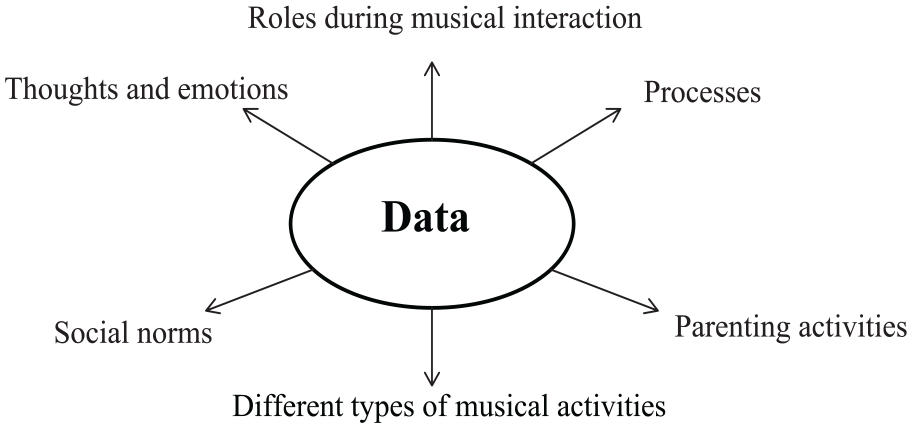
Familiarization With Data.
In the second round of analysis, I tried to make sense of the ways music was used by the mother for the care of her infant in the family context and the role of this musical interaction for her and her infant during the quarantine of the COVID-19 pandemic, and descriptively label aspects of the investigated case. I posed the how and why of musical interaction: (a) How does the mother–infant musical interaction unfold? and (b) Why do musical interactions occur (the purpose)? For the first question the components of Bronfenbrenner’s (2001) PPCT model (process, person, context, time) guided my analysis lens. The processes utilized by the mother were revealed through the gerunds I searched for within the data (see Saldańa, 2016; e.g., [gerunds italicized] “Mania is holding the baby after breastfeeding, and she is vocalizing randomly using the neutral syllable “ou” changing the tone of her voice”). The analysis incorporated features such as structure and functions of musical activities, mother–infant interactions and other behaviors, timeframe, place, and people. For the second question, I focused on realizing the reasons and motivation for the mother–infant musical engagement, considering emergent features such as baby care, behavior regulation, emotional needs, social needs, and mutuality. I compiled my analysis into a visual form (see Figure 2).
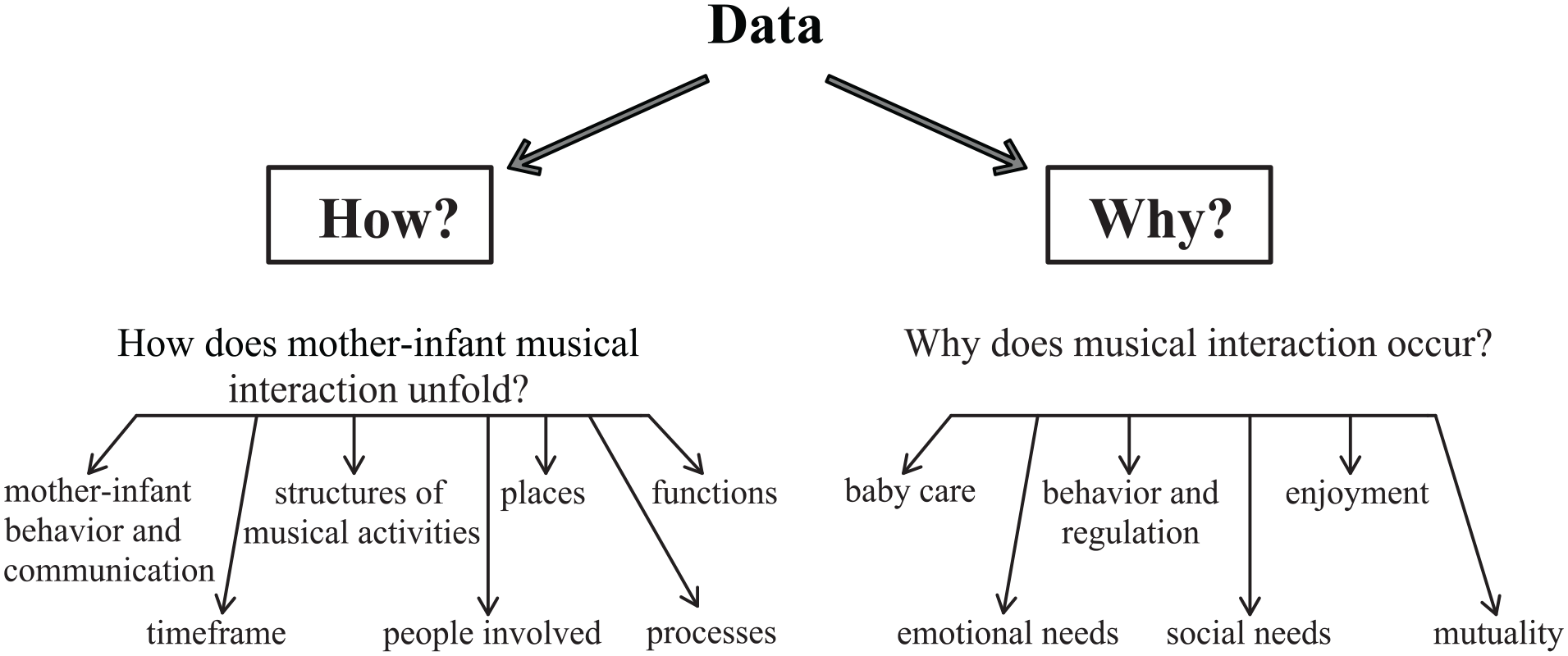
The How and Why of Musical Interaction.
During the third round of analysis and aiming to move beyond the how and why of mother–infant musical interaction, providing an in-depth meaningful capture of the case, Ι was engaged in searching key words and sentence segments that appeared consistently in the data. I ended with many key words that were found repetitively throughout the data and I categorized these words in topics.
The key words that emerged from the third round of analysis revealed five topics:
Elements of musical engagement: The nature of mother–infant musical interactions.
Facilitating caregiving: The intersection of musical activities in the daily caregiving routines.
Emotional state: The emotions attached to musical activities.
Connections: The construction of relationships through musical activities.
Motherhood empowerment: The overall mood of the mother while interacting musically with her infant (Figure 3).
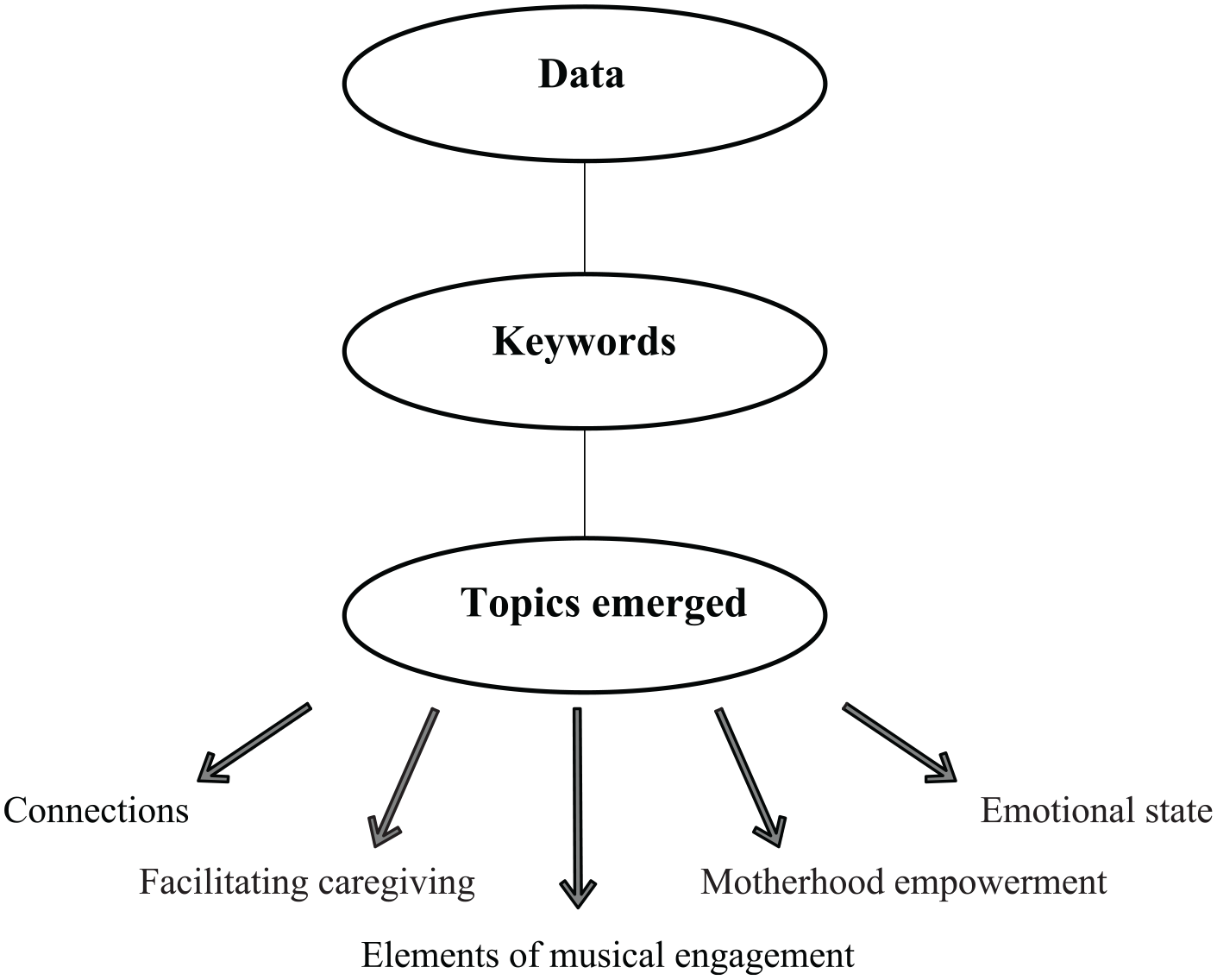
Emergent Topics.
Guided by my research questions and to ensure a holistic and more sophisticated interpretation of the case (Merriam, 1998), I lastly engaged in identifying and forming complex connections (Creswell, 2008) between topics. I reviewed topics and isolated interrelations that uncovered a comprehensive understanding of the case. From this process, three themes emerged that provide a holistic interpretation of the case. Each of the following three themes was a result of combining three or more of the emergent topics from the third round of analysis (Figure 4).
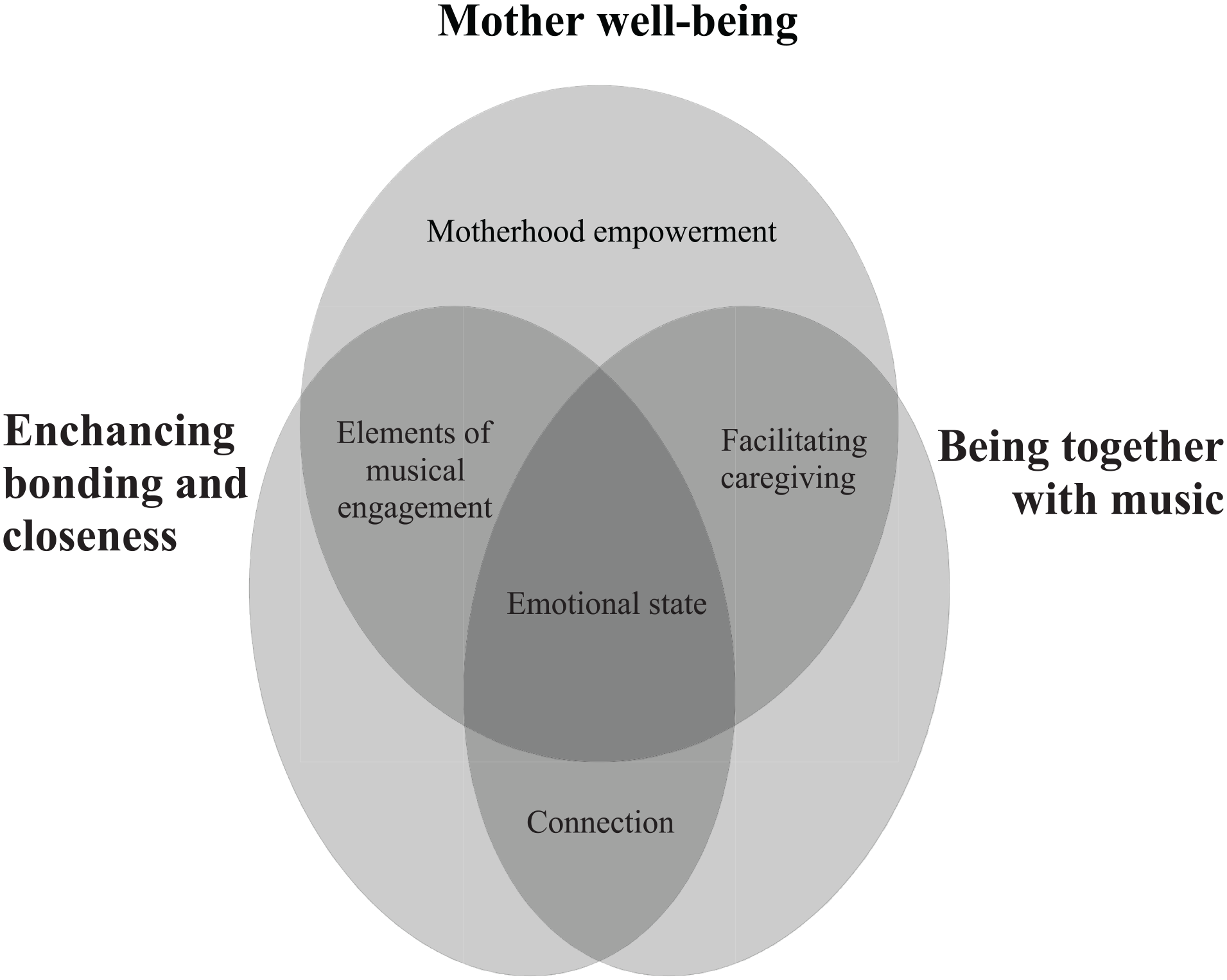
Themes.
Being together with music;
Enhancing bonding and closeness;
Mother well-being.
Trustworthiness strategies included member checks, triangulation, and peer review of the data coding.
I created a visual representation for the analysis process in Figure 5.
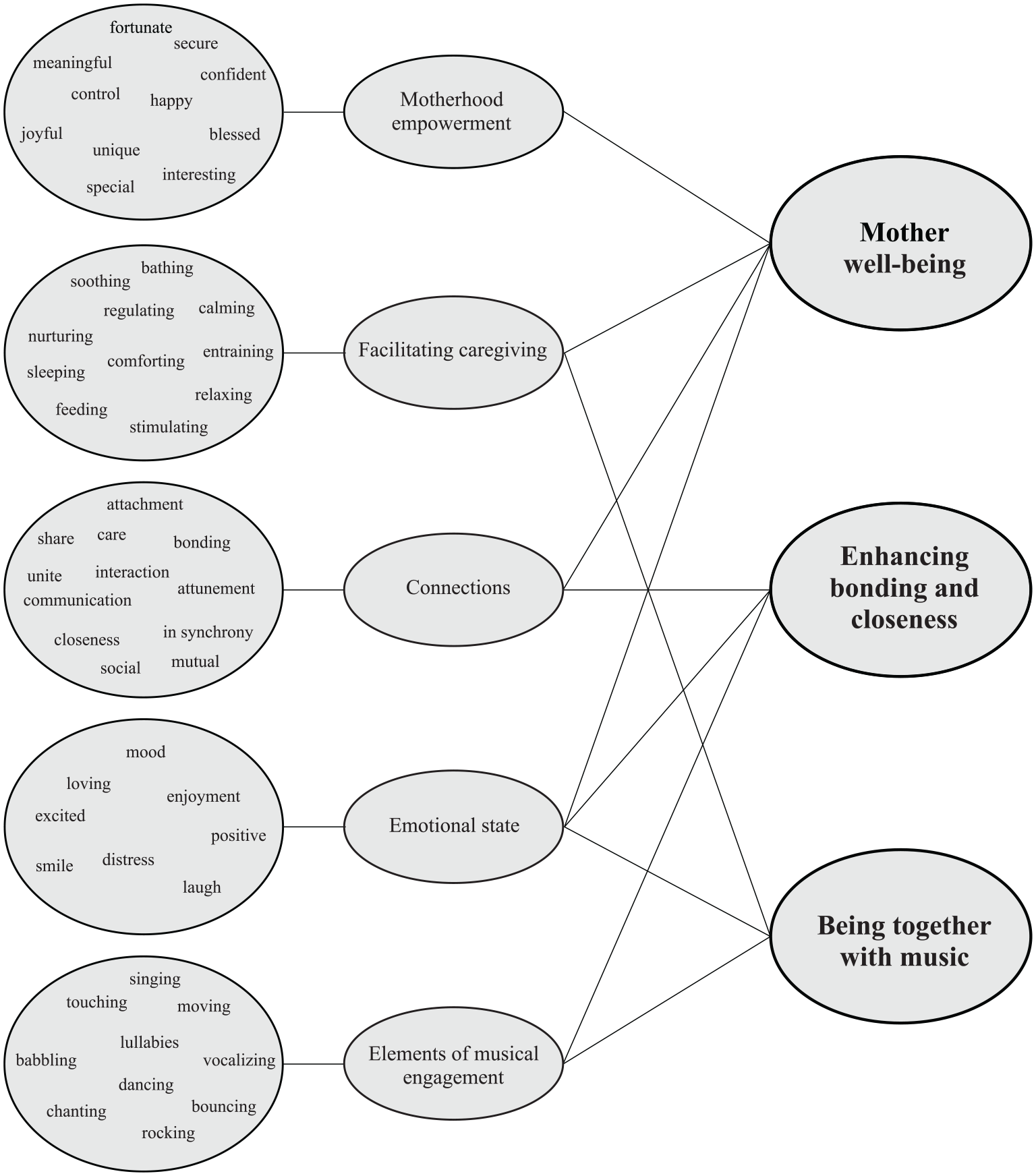
Steps of Analysis and Themes.
Findings and discussion
In the following sections, I present and examine the data within the context of the three research questions. I have translated all participant quotes into English.
Theme 1: being together with music
Mania extensively incorporated multimodal musical interactions (McLean et al., 2019) with her infant within the framework of communicative musicality (Trevarthen & Malloch, 2017). This was evident in the videos Mania supplied and consistent mentions in her journal and was supported by her interview responses. Music appeared to be a powerful resource for Mania and the infant to be together and interact, within the social context of the family. The family setting involved musicking (Small, 1998) in its expanded conception of fluid, multimodal, and context-embedded musical processes, supporting the notion that infants are naturally immersed in the everyday musical activities of families (S. Young & Ilari, 2019). Mania stressed that she considered musical interaction with her baby as a natural and essential means of communication, presenting the definition of communicative musicality (McLean et al., 2019; Trevarthen & Malloch, 2017). She indicated that it evolved intuitively and was grounded in her family setting during the daily care of her infant. She said, “Music is everywhere in the house. We do different musical things in many different ways. How can I explain that? . . . I sing, chant, move, dance with the baby; almost every moment with the baby is filled with music” (Mania Interview 2). The increased level of musical interactions between Mania and her newborn, including the father on many occasions, is consistent with previous research exploring musical parenting during the COVID-19 pandemic (Cho & Ilari, 2021; Ribeiro et al., 2021; Steinberg et al., 2021). For Mania and her infant, musicking encompassed diverse modes of musical communication, such as singing, rhythmic speech, musical play, movement and dance, and background music, which she used with variations to accompany daily events, such as sleep time, bath, feeding, diaper change, and entertainment. She often incorporated the songs and chants that she learned during the online program, in various styles and for various purposes. Nevertheless, many times she used her own arrangements of preferred songs (pop music) or improvised melodies.
Babbling and singing were primary activities in Mania’s musical interaction with her infant consistent with research by Custodero (2006) and Gingras (2013). However, she also used made-up songs (Custodero & Johnson-Green, 2003) and improvised vocal narratives (Trevarthen & Malloch, 2017), or her preferred pop songs, which she incorporated spontaneously throughout the day to attune with her infant. An example of the use of an arranged play song that she incorporated occurred in one of the videos:
Mania is holding the baby after breastfeeding, and she is vocalizing randomly using the neutral syllable “ou” changing the tone of her voice. Then she sings the phrase “tsimbi tsimbi” (part of a traditional Cypriot play song), while smiling to the infant and touching their nose. She pauses to kiss the infant from time to time and when the infant smiles she starts again. (Notes from Video 2)
Chanting and movement activities were central to her musical interaction with her infant. Mania explained that when she was not singing, a track was on in the background to create a pleasant atmosphere for her and her infant during the day. Although Mania did not receive any formal or informal music education, she musicked extensively and confidently with her infant (see Monaci et al., 2021). This was apparent in the videos Mania provided: She was performing various melodies and she appeared safe and sure of herself. In her journal, she wrote,
I make music with my girl in different ways. I sing a lot! Maybe I do not have a beautiful voice, this is what everybody tells me, but I sing to her, and she likes it so much. She has her eyes open, and she smiles. (Journal Entry 6)
Using music with her infant transformed ordinary daily care activities into meaningful activities, supporting the assertion of V. Young et al. (2022) that musical communication supports precious moments. Data revealed that music altered Mania’s lived experience with the infant’s care:
Mania is bathing the baby while chanting “scrub scrub.” It is late at night, but she looks energetic and motivated. The baby starts crying but she doesn’t lose her smile and patience. She begins talking to the baby in “motherese” explaining to it the process of bathing; she is enjoying the moment. (Notes from Video 6)
The demanding process of taking care of a newborn infant became an enjoyable, pleasant process. The daily activities that might have been monotonous and dull were joyful and significant for Mania, consistent with Custodero’s (2006) research. Mania said,
I cannot think of myself changing the diaper of my girl without singing to her, or feed her without humming my favorite “Still Loving You Baby” [sic] tune by Scorpions. I had never thought that I would need music to accomplish my job as a mother. Music makes every action meaningful and significant. There is a difference between just changing a diaper and changing a diaper while singing or chanting. (Mania Interview 2)
Interestingly, Mania was aware that her decision to initiate a musical activity during the daily care of her infant could benefit her and her infant. She was aware and conscious of the aim of each music activity. She said, “Sometimes I need to sing for my sake when I feel blue and tired. But surely when I begin, I engage my baby in the act” (Notes from Session 10).
Accordingly, in a video “she appears to start singing ‘shake the ball’ but using the tune of a pop song. She includes chanting using ‘buh’ and voice glissandi up and down when the infant moves their arms” (Notes from Video 4). Throughout the data, it was clear Mania had the ability to understand her infant’s needs and to adopt a musical parenting activity that suited their mood at the specific moment. Video data showed Mania remodeled activities based on the conditions each time. While engaging in a musical parenting activity, she often altered the tempo of a melody, her voice texture, the lyrics, the expressive concepts. Mania acted musically beyond the “conventional idea of ‘song’” (V. Young et al., 2022, p. 227), in an extended spontaneous musical communication. She drew from the program’s material and utilized intuitive musicking relying on her infant’s needs and responses. This is in contrast with Bond’s (2011) finding that parents need prescriptive training to engage in musical parenting; Mania’s musical communication demonstrated that parents can have the capacity to act as the first music teachers of their infants (cf. Papoušek, 1996). Mania provided further evidence in her journal that her decision-making was based on circumstance:
Today I did not use any play-songs. It was one of those difficult days; my baby hardly slept for 10 minutes straight. I was so exhausted, and the baby was nervous and in pain. Lullabies, in a very slow tempo, and humming were the best solution for today. (Journal Entry 12)
Mania said that she could recognize the appropriateness of the music for every routine and in each moment based on her and her infant’s mood and state, a behavior Ilari (2018) described. Mania stated,
I know what she needs at every moment. I tried different activities and after these months, I am aware of whether I need to sing a lullaby, dance with her, or chant and wiggle. Sometimes I just hum melodies that come to my mind from different pop songs. When I bathe her, and she looks tired, I would sing a lullaby instead of the scruba duba chant you taught us. If she is not in the mood, scruba duba will make her cry. Other times scruba duba makes her so happy, she is moving and kicking and laughing. (Mania Interview 2)
For Mania, parenting musically emerged as more important than musical parenting. Musical activities fulfilled her practical and relational purposes. Mania explained that she sang sometimes to soothe and comfort her infant and other times to arouse and wake her up. Trehub et al.’s (1997) research supports this approach, stressing that different types of songs serve different emotional regulatory purposes due to their distinctive musical and expressive features. Mania reported that a specific lullaby (“Ni-na-no”) worked best to assist her infant in sleeping, and the “Roly poly,” “Hopla hopla,” and “Cheek a Boo” play-songs were very effective for entertainment:
My girl likes the lullaby “Ni-na-no.” I like it too! So, when I sing it to her, she calms down and sleeps. Of course, when she wants to play, I chant to her silly chants, we do a lot of buh buh buh, and we dance a lot. She likes the “Peek-a-Boo” song and the play-songs we learned during the program. (Mania Interview 3)
The findings of this case study are largely consistent with previous research (Byrn & Hourigan, 2010; Custodero & Johnson-Green, 2008; Tafuri, 2017; Trehub & Schellenberg, 1995), revealing that musical activities helped to regulate the infant’s emotional state and assisted the mother in the infant’s care.
Theme 2: enhancing bonding and closeness
Mania parented musically for practical purposes (i.e., to feed, bathe, or entertain her infant) and for relational purposes, facilitating the mother–infant relationship and fostering the attachment between them. She wrote in her journal,
I realized that music, is my way to show my baby girl how much I love her, how much I care! It is our unique way to communicate. We both understand its inherent meanings. Nobody can get in the way when we communicate musically; it is only my baby and me. It’s amazing; I am so thrilled to experience this. My deepest worry was finding a way to express my love and care for my little girl and understand her needs, but now I know that I can do that through music. (Journal Entry 11)
The ability of a mother to attune to her infant’s needs (see Ilari, 2009) is considered central to the development of attachment between mother and infant. For Mania, music supported interactions with her infant, strengthening their relationship and establishing attachment (see Bowlby, 1983). As noted by Vlismas et al. (2013), Byrn and Hourigan (2010), and V. Young et al. (2022), mother–infant musical interactions promote bonding and are central to their relationship.
Hatch and Maietta (1991) found that movement activities and dancing were the most effective for establishing a bond in a mother–infant dyad. Vlismas and Bowes (1999) likewise described bonding as a skill that incorporates the components of space, timing, and effort to match movements, which requires mutual involvement. Mania wrote in her journal, “I hug her and move. We are moving together. I feel that the baby and I are synchronizing in music while singing or listening to music. It works perfectly for my baby and me; it is a unique sensation.” Mania’s statement is related to embodied music cognition (see Leman, 2016), which describes how bodily involvement structures the perceived meaning of a musical experience. In her interview, Mania emphasized that bodily proximity was central to her musical interaction with her infant. She reported, “We move a lot together and in different ways; all the time, I guess. Movement is fitting the musical activity. We rock, bounce, march, dance . . . It gives us energy” (Mania Interview 3). As Savage et al. (2021) emphasized, music facilitates interpersonal movement synchrony.
Data showed that music helped to socially connect and create a bond not only between Mania and her infant, but also between Mania, her husband, and their infant. Being together at home due to COVID-19 lockdown facilitated the involvement of all members of the family in musicking. Making music seemed to be a way to pass the time safely, with enjoyment and social relatedness for family members. They developed a sense of family community through their use of music at home, consistent with Costa-Giomi and Benetti’s (2017) research. Mania’s journal and videos showed that all three family members engaged in musical activities that connected them. Mania wrote in her journal,
We [her, her husband, and their infant] are all here at home, all day. We are not allowed to go out or have friends and relatives at home. Moments are filled with music, and this is so relaxing. It [music] helps us forget all the negative things of COVID-19; illness, loneliness, fear. (Journal Entry 11)
This is consistent with Steinberg et al.’s (2021) research findings that listening to and making music helped parent participants to socially connect with adults in and outside of their family and to socially connect with their children.
Mania and her husband took distinct roles in the musical activities, facilitating the involvement of their infant in music-making and creating a pleasurable atmosphere in which they could express their feelings. Mania was surprised about her husband’s immersion in musical activities during the day:
Music is live in our house and has created a solid framework of care, love, and bonding. Even my husband participates in the activities with enthusiasm. He sings along with me; he sometimes holds our baby and moves rhythmically while I prepare the bath or milk. He enters the house with a hello song. It is wonderful! I believe music has positively connected him with the baby and motivated him to get involved in the baby’s daily care. (Journal Entry 9)
Mania and her husband acknowledged the importance of musical activities for bringing the family closer and establishing relationships, especially during the stressful conditions of the COVID-19 pandemic. Her husband bought a harmonica to join the musical interaction with his infant and wife, and Mania perceived his involvement as support for her maternal role. The data revealed that the family enjoyed the musical moments they experienced together. “We just love our music making; we are so blessed to be able to live it all together.” Consistent with the findings of Gingras (2013), Dosaiguas et al. (2021), and Costa-Giomi and Benetti (2017), musical moments united the family members, allowing them to connect and share cherished moments.
Theme 3: mother well-being
Being a mother was something that Mania had wished for. Her miscarriages had frustrated her, creating anxiety and stress during pregnancy and after childbirth. The COVID-19 pandemic considerably increased her stress levels as commonly found in mothers in the United States (Calarco et al., 2020) and around the world (Ribeiro et al., 2021; Russell et al., 2020). Mania perceived the new maternity role and the COVID-19 pandemic, including isolation and social distancing, as negative factors for her well-being. She reported feeling depressed at moments and insecure and hopeless in dealing with her infant’s needs. The fact that she could not ask for assistance due to the lockdown circumstances made her feel isolated. However, data collected during this study showed that the addition of musical activities to Mania’s daily routine with her infant significantly improved her mental well-being and her confidence to take care of her infant. She felt in control of the care of her infant and was feeling blessed to experience the mutual communication with her infant. She wrote in her journal,
I feel so excited to be able to build such a strong relation with my girl. I sing to her, and she smiles! I am blessed; I am sure I understand what she needs, and I can take care of her. (Journal Entry 8)
The musical interaction she experienced with her infant, the responses she received from them, and the fact that she successfully parented them, contributed to her empowerment as a mother.
She described one instance that demonstrated this:
I had been struggling to calm her down for hours. I was frightened that something wrong was happening with her. I was scared, I was all alone, I did not want to call my husband and make him worry. I started humming the lullaby I had heard in the session, “Ni-na-no, I love you,” trying to communicate with my baby. I wanted to express my love and care for her, hoping she would stop crying and go to sleep. After repeating the lullaby a few times, I began to feel better. As soon as I felt more comfortable, my baby stopped crying. . . . I was so pleased that my baby got to sleep. (Notes from Session 12)
In line with earlier studies (e.g., Baker & Mackinlay, 2006; Biringen et al., 2000; Cozolino, 2010; Fancourt & Perkins, 2017; Wulff et al., 2021), the incorporation of musical activities in Mania’s daily infant care routine had a positive impact on her well-being even during a period of uncertainty (Ribeiro et al., 2021; Steinberg et al., 2021). Music helped her attune with her infant and increased her belief in herself as a good mother. This finding is consistent with McLean et al. (2019), affirming that musical interaction fosters the construction of parent role and identity. Mania believed singing lullabies and play-songs was the most valuable practice to overcome negative feelings and connect with her infant. Her state of euphoria during the implementation of the musical activities with her infant was evident in the data, especially in the filmed videos. During her last interview, she reported,
Especially singing during the day fostered my positive state and gave me the courage to move on and smile. Even when I feel out of control or distressed, I sing to my baby; it is therapeutic for both. It is our way to come closer. (Mania Interview 3)
Overall, this study suggests that the use of music in the infant’s daily care provided a valuable means of communication and improved emotional bonding for the mother-participant and her infant in the lockdown of COVID-19. This comforted the mother, enhanced her confidence, and fostered her well-being.
Conclusion
Within this single case study, I explored the impact of musical parenting of one mother and her infant during the COVID-19 pandemic, endeavoring to document the mother-participant’s perspective on the use of music with her infant as well as the attributed value of using music with her infant. The findings of this study supported previous research, highlighting that musical interactions between mother and infant are intuitive in nature (Papoušek, 1996), enhance their attunement and bonding, regulate their moods, assist practically in the mother’s care for the infant, and have positive effects on maternal well-being.
Although she had no formal or informal musical training, the participant extensively used music in the framework of family musicking (Koops, 2020) that transformed the infant’s daily care into meaningful and significant action. Her positive attitude toward enhancing communication musically in the home setting allowed the extensive fusion of musical interaction during the daily care of her infant, which proved in this case to be more important than musical skills per se, as also found in V. Young et al. (2022). Although participation in the program provided her with ideas and material for use, she incorporated musical activities in a fluid way, relying on her infant’s needs and responses. This supports the idea that musical communication can be broadly defined (V. Young et al., 2022, p. 277). The participant found musical activities to be valuable tools in the daily care of her infant: The experience of bathing, changing diapers, feeding, and entertaining became bonding moments and the music helped the infant adjust. By adjusting the musical activities to specific circumstances and emotional states, the participant was better able to regulate her and her infant’s moods. She reported that ordinary daily care transformed into a meaningful and enjoyable experience that she cherished.
Data showed that engaging in musical parenting during the lockdown of the COVID-19 pandemic enhanced mother–infant bonding, united the family, and fostered the mother’s well-being. The use of music helped the participant to accomplish both practical and relational purposes. She used music as a parenting tool and medium to bond with her infant. Music enabled her to connect with, understand the needs of, and attune with her infant. She said it was a “unique way to communicate” (Mania Interview 3). Moreover, the musical activities were beneficial for the bonding of the whole family. The participant expressed that her husband had constructed a harmonious relationship with their infant and that music promoted his involvement in the infant’s daily care.
The use of music in the daily care of her infant supported the well-being of the participant, even though first time maternity and the pandemic increased her risk of experiencing mental health issues (Kristensen et al., 2018; Russell et al., 2020). The fact that musical interaction enabled her to develop a strong bond with her infant and enhance care fostered her confidence in her new maternal role (McLean, 2019), transforming stress and loneliness into a positive emotional state. Previous research similarly underlined that music intervention during pregnancy and after childbirth decreases the general pressure experienced by women, assists mother–infant bonding, and improves mothers’ well-being and self-esteem (Cozolino, 2010; Fancourt & Perkins, 2017; Monaci et al., 2021; Persico et al., 2017; Wulff et al., 2021). Music allowed Mania to feel comfortable and confident when taking care of her infant and scaffolded her ability to understand her role as a mother (McLean et al., 2019).
Considering the limitations of this study (findings are specific to this one case and social desirability bias may have occurred; see Ilari, 2017), findings add to existing literature indicating that the musical interaction between mothers and infants is significant for both parties. I acknowledge that the Hawthorne effect could have influenced the participant’s behavior, since she was aware of being studied; however, the diverse methods employed to collect data assert that communicative musicality has been a massive part of her daily routine, enhancing her infant’s growth and her well-being. Findings also provide a picture of parent–child musical interaction during the COVID-19 pandemic, indicating that music can be an essential tool for parent–child bonding in periods of uncertainty (Steinberg et al., 2021), improving families’ well-being (Ribeiro et al., 2021). The participant felt that the teaching program, Music During Pregnancy and Infancy, was beneficial for her. Several times during this study, she stressed that the skills she gained while participating in the program inspired her to incorporate musical activities in the daily care of her infant, promoting their musical interaction. This is in alignment with other research findings suggesting that educating parents to understand their children’s musical worlds could empower them and improve musical parenting practices (Barrett, 2009). As noted by Wulff et al. (2021), “It is desirable to develop suitable interventions to improve postnatal maternal well-being” (p. 2). Future research could examine the significance of new mothers attending music teaching programs targeted to them and explore possible benefits or drawbacks to mothers who participate in these types of programs. As V. Young et al. (2022) suggested, “We should foster and fiercely support this precious moment of musical communication” (p. 283). Future research could include the investigation of musical interaction between infants and other parental figures such as fathers, baby-sitters, grandparents, or other caregivers.
Footnotes
Acknowledgements
The author thanks Ms Christina Charalambidou, who acted as a research assistant.
Author’s Note

Declaration of conflicting interests
The author(s) declared no potential conflicts of interest with respect to the research, authorship, and/or publication of this article.
Funding
The author(s) received no financial support for the research, authorship, and/or publication of this article.