




Abstract
This article presents the findings of an intervention aimed at promoting positive emotions in music performance, as positive emotions are intrinsically valuable and can have associated benefits. The intervention sought to help participants conceive performance in more meaningful, self-transcendent terms. This study investigated whether the intervention helped performers to change their approach to performance; whether an increase in meaningfulness and self-transcendence led to more positive performance-related emotions; and whether an increase in positive emotions resulted in higher perceived quality of the performance. Comparison of self-report measures pre- and post-intervention indicated that after the intervention, participants approached performance in a more meaningful, self-transcendent manner. Specifically, they were more focused on the value of music, privilege of performing, and benefits for the audience. They also reported more rewarding performance experiences: they reported more joy, engagement, and self-confidence; more inspiration and connection with their audiences; and less anxiety. In addition, they reported being able to give better performances. None of these changes were found with a randomly assigned wait list control group. We conclude that an intervention designed to change performers’ conceptions of the meaningfulness of performing can have beneficial impacts on the quality of that experience.
Although musicians report a whole range of performance experiences, most studies have focused on investigating negative emotions in performance, particularly anxiety (Kenny, 2011). However, in recent decades, researchers in many fields have turned their attention to positive emotions, as such emotions are valuable per se; that is, they feel good, are key ingredients of an individual’s happiness (Cohn et al., 2009), and are the source of many positive outcomes. For instance, evidence suggests that positive emotions help individuals to live longer and healthier lives, have better interpersonal relationships, earn higher incomes, be more satisfied with their lives, and achieve professional success (Lyubomirsky et al., 2005). Furthermore, positive emotions seem to enhance musicians’ motivation to perform and the self-perceived quality of their performance (Kaleńska-Rodzaj, 2018; López-Ìñiguez & McPherson, 2021; Perdomo-Guevara, 2014).
Emotions impact how individuals think and behave, as they are holistic responses that comprise affect and cognitive, psychological, and behavioral processes (Pekrun et al., 2011; Scherer & Brosch, 2009). For example, while negative emotions narrow individuals’ focus of attention (in preparation for defensive action), positive emotions expand it; render their thinking more integrative, creative, flexible, and open to new information; and broaden their thought–action repertoire (Fredrickson, 2001; Fredrickson & Branigan, 2005; Fredrickson & Joiner, 2002). An emotion such as joy (a positive, activating emotion) creates the urge to play, push one’s limits, and be creative in all types of activities, whether they are social, physical, intellectual, or artistic (Ellsworth & Smith, 1988; Frijda, 1986; Pekrun et al., 2002).
Research in educational settings demonstrated that positive emotions (i.e., enjoyment, hope, and pride) are positively related to achievement, whereas negative emotions (i.e., boredom, anxiety, or hopelessness) are negatively related to it (Pekrun et al., 2011). Positive emotions help students to develop and maintain interest in their subject of study (Hidi & Renninger, 2006), to adopt a deeper approach to their material, to practice self-regulated learning with associated increase in motivation (Mega et al., 2014), and the speed at which they acquire new skills (Holmes, 2018). The impact of emotions on students’ academic behavior is summarized by Pekrun et al. (2002) as follows: Emotions serve the functions of preparing and sustaining reactions to important events and states by providing motivational and physiological energy, by focusing attention and modulating thinking, and by triggering action-related wishes and intentions. This would imply that emotions can profoundly affect students’ thoughts, motivation, and action. (p. 96)
Given that not only negative but also positive emotions affect individuals’ thoughts, motivation, and actions, researchers are increasingly investigating the impact of positive emotions on optimal functioning (Fredrickson, 2001; Seligman, 2011), focusing on positive emotions, “flow states” and a sense of meaning. Accordingly, research into emotion in music performance is moving away from a narrow, pathologized, and almost exclusive focus on anxiety, to a broad perspective influenced by this “positive psychology”; specifically, it is now investigating and promoting musicians’ wellbeing, as this appears to be conducive to optimal performance (Cohen & Bodner, 2019; Hatfield & Lemyre, 2016; Perdomo-Guevara, 2014; Williamon & Antonini Philippe, 2020).
One of the pillars of wellbeing is meaning (Seligman, 2011), which contributes to individuals’ joy and satisfaction (Schnell, 2009; Schnell & Krampe, 2020). People with a high sense of meaningfulness in life are more hopeful and optimistic; exhibit higher self-efficacy, self-compassion, and resilience; and have superior physical health compared with individuals with a low sense of meaningfulness (Damasio et al., 2013). By contrast, a lack of meaning is associated with depression, anxiety, and negative moods as well as reduced positive affect and life satisfaction (Schnell & Krampe, 2020). Meaning is an all-important component of musicians’ wellbeing and is associated with optimal performance experiences (Ascenso et al., 2016, 2018; Lamont, 2012; Perdomo-Guevara, 2014).
Meaning refers to making sense of one’s life in terms of coherence, significance, direction, and belonging (Schnell, 2009). It encompasses the feeling of being part of something larger than the self, the pursuit of worthwhile goals, and a sense of fulfillment (Damasio et al., 2013; Seligman, 2011; Steger, 2012) and purpose. It is associated with decreased self-salience, increased feelings of connectedness (Yaden et al., 2017), and is closely related to self-transcendence—the breaking down of the distinction between self and not-self (Maslow, 1971). Some theorists claim that self-transcendence is individuals’ highest need, the satisfaction of which results in the greatest happiness (Csikszentmihalyi, 1993; Maslow, 1971).
Empirical studies of the experience of education and employment suggest that individuals who confer self-transcendent meaning on their reality and pursue self-transcendent goals experience more joy and fulfillment in their activities (or lives) compared to self-centered individuals. Emmons’ (1991, 2003) study of undergraduate students found that the presence of self-transcendent strivings (i.e., intimacy, generativity, and spirituality) within a person’s goal hierarchy predicts greater subjective wellbeing (SWB) and, in particular, higher positive affect. Conversely, self-centered achievement strivings—which he related to agency and power—tended to be associated with lower levels of SWB and higher levels of negative affect. Similarly, individuals who experience their work as meaningful and self-transcendent—that is, as significant, contributing to “the greater good,” and oriented toward growth and a worthwhile purpose (Steger, 2012)—report higher levels of life and work satisfaction (Wrzesniewski et al., 1997) than those with a self-centered approach to their work (Duffy & Dik, 2013; Rosso et al., 2010; Wrzesniewski et al., 1997), who conversely view their work primarily as a source of financial gain, self-esteem, power, prestige, or social status.
Several studies in the field of music performance indicate that meaningfulness is associated with positive subjective experiences. For instance, Lamont (2012) demonstrated that performers who reported the most positive emotions in performance described their performance in meaningful, self-transcendent terms. These performers emphasized the synergy achieved between themselves, other performers, and the audience, the quality of the sound, and the beauty of the music. By contrast, performers who reported the most negative emotions considered their music-making to be a highly personal and almost introverted activity.
Self-transcendence in music performance is delineated in a range of qualitative studies. Analysis of the narratives of three professional musicians who loved to perform (Perdomo-Guevara, 2007) found that they cared deeply for their audience and performed for them, in contrast to performers who play in front of their audience. These performers were convinced that their performances contributed to other people’s lives and viewed themselves as channels between the “source” of the music—something that lies beyond their conscious selves—and their audience. The findings suggested that these individuals’ meaningful, purposeful, self-transcendent narratives about performance contributed to their performance-related joy. A subsequent study indicated that performers who cared about the audience, seeking to connect with it and bring it something of value, reported more joy and simultaneously less anxiety in performance than musicians who had a healthy but egocentric approach to performance (Perdomo-Guevara, 2014).
Conceiving performance as an act of sharing and giving was a significant source of positive emotions, meaning, and accomplishment for the six professional musicians in the study of musician wellbeing by Ascenso et al. (2016). In addition, Bernard (2009) found self-transcendent meaning to be a key aspect of performers’ best music-making experiences, stating that: [T]hese experiences are marked by the performer’s sense of being a part of something larger than oneself in some way—perhaps by being a part of a long-standing musical or cultural tradition, by being a part of a particular social group, or by being a part of larger forces of nature or of the universe. (p. 4)
“Flow”—being fully engaged and absorbed in an activity (Csikszentmihalyi, 1997)—is a core construct in the study of optimal performance experiences and has been extensively employed in the study of sport (Jackson & Kimiecik, 2008; Jackson & Wrigley, 2004) and music practice and performance (see Hawkes, 2018 for a review). However, despite the fact that optimal performance experiences are associated with being fully immersed in an activity, flow is a non-emotional experience; it is only after flow that people may experience positive emotions (Csikszentmihalyi, 1997, p. 32). Moreover, the construct does not capture the complete picture of best performance experiences, because performance experiences are different from, and much more complex than, being in flow.
In summary, there is evidence that conceiving one’s life or activities in self-transcendent, meaningful terms promotes positive emotions, and possibly also optimal outcomes. Before introducing our study, we provide context for this research by briefly reviewing relevant findings on music performance anxiety (MPA) and highlighting the lack of meaning that characterizes MPA sufferers’ approach to performance.
MPA, self-centeredness, and meaninglessness
Research into emotions in music performance has focused almost exclusively on MPA (Kenny, 2011). MPA refers to ‘the experience of persisting, distressful apprehension about and/or actual impairment of, performance skills in a public context, to a degree unwarranted given the individual’s aptitude, training, and level of preparation’ (Salmon, 1990, p. 3). Various studies have suggested that MPA results from the interplay between the situation (i.e., whether the performer performs as a soloist), the difficulty of the task (i.e., the degree to which he or she masters the program at hand), and the performer’s personality and ways of thinking (Cox & Kenardy, 1993; Hamann, 1982; Papageorgi et al., 2010; Wilson, 1997). For instance, MPA correlates with personality characteristics such as trait anxiety (Cox & Kenardy, 1993; Kenny et al., 2004; Langendörfer et al., 2006; Lehrer et al., 1990; Osborne & Kenny, 2008; Steptoe & Fidler, 1987); perfectionism and/or an excessive need for control (Dobos et al., 2019; Mor et al., 1995; Patston & Osborne, 2016; Wilson & Roland, 2002); and neuroticism, introversion, and proneness to social phobia (Craske & Craig, 1984; Steptoe, 2001; Steptoe & Fidler, 1987).
Although the aforementioned factors influence MPA, there is evidence for the crucial role of cognitions in the phenomenon (Osborne & Kenny, 2008). For example, genetic determinants will impact activation of a performer’s sympathetic nervous system (Kenny, 2011), but it is his or her interpretation of such arousal and not the arousal per se that elicits MPA (Brooks, 2014; Connolly & Williamon, 2004; Craske & Craig, 1984; Hanin, 2010; Steptoe, 1989, 2001). MPA sufferers report characteristic performance-related cognitions, such as negative self-talk, a preoccupation with inadequacy, a focus on the potential threats of performing (Wilson & Roland, 2002), irrational beliefs (e.g., “I must be perfectly competent at musical performance in order to be a worthwhile person”; Steptoe, 1989), and a fear of negative evaluation and humiliation (Kendrick et al., 1982; Osborne & Kenny, 2008; Steptoe & Fidler, 1987; Wilson & Roland, 2002). Furthermore, catastrophizing—believing that minor errors may have catastrophic consequences—appears to have a significant impact on MPA as it leads to an exaggerated fear of losing control (Steptoe & Fidler, 1987).
Independent of the performer’s personality, situation, and level of preparation, this way of thinking about oneself and performance is in itself likely to be anxiety-provoking. What is striking about performers’ self-reports in the studies cited above, is not only the concerns that occupy their mind but also those that are absent. In the light of the evidence reviewed above regarding the link between meaning, positive emotion and wellbeing, one interpretation of this is that these performers are narrowly centered on their own fears of underachievement and omit the meaningful reasons that might move them to perform in the first place. They seem to lack a meaningful narrative about performance or a self-transcendent purpose to go on stage. This lack of meaning is likely to deprive them of joy as well as foster anxiety.
The most common and successful treatments for MPA (e.g., cognitive behavioral therapy) involve some kind of cognitive restructuring (Burin & Osório, 2016; Fernholz et al., 2019) as follows: When performers change their cognitions and adopt a healthier, more realistic approach toward performance and self, their level of anxiety drops (Braden et al., 2015; Kendrick et al., 1982; Nagel, 2010; Nagel et al., 1989). For reviews of relevant treatments, see Burin and Osório (2016), Fernholz et al. (2019), Kenny (2005), McGinnis and Milling (2005), McGrath (2012), and Ortiz-Brugués (2009).
However, reduced anxiety does not necessarily mean increased joy, as negative and positive emotions are parallel systems and not poles of the same continuum (Cacioppo & Gardner, 1999). Notably, the terms “joy” and “positive emotions” do not appear in the systematic reviews on MPA treatments mentioned above. This is possibly due to the fact that such treatments do not aim to increase positive emotions, but rather to decrease negative emotions.
Based on this reasoning regarding the characteristics of positive performance experiences, we argue that, to experience joy, performers require more than a healthy approach to performance and self; they may also require meaningful, self-transcendent reasons to perform. This thesis provides the basis for designing mitigation strategies and interventions for promoting more positive engagement in music performance. Consequently, we aimed to investigate whether performers could be helped to conceive of performance in more meaningful, self-transcendent terms using an intervention, and if so, whether an increase in the meaningfulness of their approach to performance would result in more enjoyable performance experiences.
Current interventions based on positive psychology
Recent interventions inspired by the positive psychology movement are not only aimed at reducing MPA but also, crucially, at promoting optimal performance. Many interventions are based on findings from sport science, which have indicated that optimal functioning is facilitated when athletes are assisted in cultivating specific skills. Therefore, psychological skills training (PST) is increasingly used to help musicians achieve optimal performance (Hawkes, 2018). PST is a systematic and consistent practice aimed at enhancing performance, increasing enjoyment, or achieving greater sporting and physical self-satisfaction (Weinberg and Gould, 2011, in Hatfield & Lemyre, 2016). It comprises goal setting, attentional focus, arousal regulation, imagery, and acceptance training self-talk.
An example of a PST intervention for musicians is the 11-week program by Cohen and Bodners (2019) comprising mental skills training. It included multiple methods, such as an introduction to positive thinking, goal setting, mental rehearsal, concentration and focusing, the identification of negative automatic thoughts, performance preparation, and resilience training. After the intervention, the authors observed significant increases in the performers’ self-reported positive emotions as well as decreased anxiety, together with improvements in independent ratings of performance quality.
A review of 14 interventions with musicians based on PST confirmed its effectiveness as follows: PST commonly employed in sport is effective at subjectively enhancing music performance (Ford & Arvinen-Barrow, 2019). The interventions generally help performers in multiple ways, such as by decreasing performance anxiety; improving learning, focus, concentration, flow, and mood; and contributing to a positive outlook on music performance and practice.
Study design
Based on insights from the prior research reviewed here, we designed an intervention to enhance positive emotion in performance and investigated the extent to which performers experienced a set of emotions before and after the intervention, using a randomized wait list control trial design. Like many of the interventions conducted to optimize music performance mentioned above, this was inspired by the positive psychology movement and adopted a multifaceted approach, which included PST (Clark & Williamon, 2011). For instance, the intervention included relaxation and visualization techniques, helping performers to focus on their strengths, identify negative thoughts, and actively seek opportunities to perform. However, our intervention differs from those exclusively based on PST due to its theoretical foundation and purpose.
First, the main goal of the intervention was to enhance the joy and fulfillment that musicians gained from performance. Although we expected that an enhanced subjective experience would lead to superior performance outcomes, the enjoyment of performance per se was viewed as a highly valuable goal and not merely as a means to optimize performance, which has tended to be the aim in other interventions. Second, the intervention avoided an exclusive focus on helping performers perform at their best (achievement), because the evidence suggested that performing at one’s best does not necessarily mean that a performer confers meaning on performance; the performance might fulfill his or her need for achievement but not other psychological needs that evidence suggests is essential for ensuring optimal experiences (Csikszentmihalyi, 1993; Deci & Ryan, 2008; Lamont, 2012; Maslow, 1971). Finally, the intervention focused on helping performers to cultivate a more meaningful approach to performance. That is, it aimed to help performers become more appreciative of what they actually had and could offer to the audience, of the value of music and the privilege of being a performer, and of opportunities to enhance other people’s lives opened up by the performance. Participants were asked to work on their narratives about performance, which refer to the stories that individuals tell themselves and which confer meaning on their reality (Echeverría, 2017; McAdams, 2001, 2008). The goal was for these narratives to become more coherent, significant, purposeful, and self-transcendent (Schnell, 2009). We expected that increasing the meaningfulness of the participants’ approach to performance through the intervention would also increase their performance-related positive emotions, due to evidence of an association between positive emotions and meaningful, self-transcendent experiences of performance (Lamont, 2012; Perdomo-Guevara, 2014).
We hypothesized that cultivating a meaningful, self-transcendent approach to performance would result in more joyful, fulfilling performance experiences. In addition, we hypothesized that an increase in positive emotions would not only be valuable per se but might enhance the quality of the performance experience as assessed by the participants. Given the hypothesis-driven character of the investigation, we adopted a quantitative approach using self-report Likert items, which enabled pre- and post-test comparison of variables of interest.
Method
Participants
Individuals were eligible to participate if they were a music performer and willing to improve the quality of their performance experience (music students, professionals, or amateurs belonging to any musical genre). They also needed to be fluent in Spanish, the language in which the online course was delivered, with the ability to access an online course. We shared invitations to participate in the intervention study via an email link to the home page of the project. The mailing list comprised music institutions, professional unions, and personal contacts of the first author encountered through her professional activities as a performer and music teacher. Recipients of the link were also invited to send it to their acquaintances.
Procedure
The home page of the project website briefly introduced the participants to the study. It explained that the study was part of a research project that aimed to measure the impact of the intervention on their approaches to performance and their emotions, and for this reason, they would be asked to complete pre-and post-intervention questionnaires. The course was free, but performers had to register in a virtual school to participate in the project.
The intervention was administered as an asynchronous, online audio–visual course to facilitate uptake by performers. It comprised a series of 24 short-duration, prerecorded videos embedded in a virtual school platform. The total duration of the videos was 3 hr and 12 min. Each video comprised a single lesson in which the tutor (the first author) introduced and explained topics, and invited performers to carry out introspective homework and practical exercises. Successive videos were uploaded weekly during the 5 weeks of the course, which participants could watch at a time convenient to them. The videos remained available to participants for 4 months. In addition to the videos, there was a discussion forum for participants, which enabled interaction among participants and between them and the course tutor.
The same intervention was delivered twice at an interval of 6 weeks to allow a wait list control (WLC) group comparison. Participants were randomly allocated to either the immediate treatment group (ITG), or the WLC, using a list generated by a website (random.org). This enabled comparison of the results of participants who had already completed the course against those participants who had not yet undergone the intervention.
To investigate the impact of the intervention on the participants’ approach to performance and emotions, participants were asked to complete a pre-intervention questionnaire (hereinafter “Pre-Q”), a postintervention questionnaire (hereinafter “Post-Q”), and a follow-up questionnaire (hereinafter “Follow-Up Q”) 3 months after their respective intervention. In addition, WLC group participants were asked to complete a second Pre-Q (“Control-Q”) immediately before taking the course due to the time lapse between their first Pre-Q, when allocated to the WLC, and when receiving the intervention itself.
Intervention
A detailed description of the online intervention is provided in the Supplemental Materials. The course aimed to help performers broaden their perspective on performance, so that they could approach performance as an opportunity to go beyond themselves as well as connect and contribute. It emphasized the role that narratives play in emotion. Performers were invited to engage in introspective work to become more aware of their own performance-related narratives. They were also invited to become more conscious of their values, core beliefs, and psychological needs (these subjects were briefly introduced) and to cultivate performance-related narratives aligned with their needs and values (Csikszentmihalyi, 1993; Deci & Ryan, 2008; Echeverría, 2017; Maslow, 1971). Moreover, the intervention aimed to help performers replace automatic and possibly unhealthy narratives about performance with narratives that are consciously designed, self-transcendent, personally meaningful, and inspiring; furthermore, the narratives were intended to focus attention on the opportunities that a performance opens up rather than on the threats it might pose (Elliot, 2006).
To assist performers in breaking unhelpful automatic behaviors, relaxation and visualization exercises were briefly introduced. The performers were also encouraged to proactively create opportunities to play for others in progressively challenging situations while they worked on enhancing their new narratives.
Data collection
Due to the focus of this article, we describe and discuss the primary outcome measures relevant to understanding participants’ approaches to performance and performance-related emotions, as measured before and after the intervention. These were assessed using a self-report questionnaire at baseline (Pre-Q and Control-Q), immediately after the intervention (Post-Q) and 3 months after the intervention (Follow-Up Q; see “Questionnaires” in Supplemental Materials). The Pre-Q collected demographic data about respondents, including their musical backgrounds (age, main instrument, number of years of musical practice, and main genre). Questions regarding the methods participants used to prepare for performance and their experience of performance were identical in all the questionnaires, with the exception of the time period respondents were asked to reflect on: the Pre-Q and Control-Q asked participants about their performance experiences during the previous year, the Post-Q asked about the previous 3 weeks, and the Follow-up Q asked about the previous 3 months. The time frames given were specific (see Conway & Pleydell-Pearce, 2000) and in the case of the Pre-Q, long enough to be viewed as typical of their performance experiences in general. Questions were presented as 9-point Likert-type items, where 1 indicated a complete absence of the variable and 9 meant its full presence.
Outcome variables—approach to performance. To investigate the impact of the intervention on participants’ approaches to preparing for their performances, they were asked about the extent to which they used the methods that would be introduced during the course. These methods comprised visualization and relaxation, focusing on their strengths and effective preparation, on the value of music, the privilege of being a performer, and the benefits that their performances might bring to their audience. Some of these methods are prevalent among performers (Burin & Osório, 2016), but the last three are less common and were at the heart of the intervention. We hypothesized that an increase in the frequency with which participants reported focusing on these three latter topics would indicate an increase in the meaningfulness of their narratives.
Outcome variables—performance related emotions and perceived quality of the performance. The quality of the experience of performance was deduced from variables commonly investigated in performance research (i.e., engagement, self-confidence, self-perceived quality of the performance, and anxiety). In addition, we included variables that have been investigated less frequently but which are, nonetheless, often mentioned by performers when reporting their best performance experiences (see Ascenso et al., 2018; [redacted], 2007; Lamont, 2012; Perdomo-Guevara, 2014). We did not include validated questionnaires for performance anxiety because the intervention was designed to enhance joy in performance rather than to treat anxiety. Instead, we adapted the Fordyce Index of Happiness (Fordyce, 1977, 1987) by including self-report variables that provide insight into the quality of performance experiences (rather than happiness in general): enjoyment, anxiety, absorption, self-confidence, perceived standard of performance when compared with practice, willingness to perform, inspiration, connection with the audience, and a sense of contributing. The latter three variables were chosen to investigate the link between emotions and a self-transcendent approach to performance. The psychological construct “inspiration” was chosen (rather than “transcendence”) because it is more readily understood (Hart, 1998) and emphasizes sources for inspiration in the external environment (Thrash & Elliot, 2003). “Absorption” captures information about the focus of the performers’ attention during performance, which is relevant given evidence that best performance experiences are associated with individuals being fully absorbed or engaged in their activity (Csikszentmihalyi, 1997). Therefore, in this study, the self-transcendent nature of the performers’ approach to performance (centering beyond self, as opposed to self-centeredness) was investigated through variables that either emphasized the genesis of the self-transcendent experience (i.e., inspiration in performance; focusing on the value of music and on the privilege of being a performer as methods to prepare for their performance), and variables that emphasized the outcome of the experience (i.e., connection with and contribution to the audience, and deliberately focusing “on the value for the audience” as a way to prepare for performance).
The Fordyce Index of Happiness was also adapted to investigate the percentage of time that performers reported having positive, negative or neutral emotions during their performances, practice and daily life. Informants were asked to estimate what percentage of time they had “enjoyed” the performance, and to investigate negative emotions they were asked what percentage of time they had had a “tough/rough time” (in Spanish, pasarlo mal) during the performance. This latter term deliberately encompassed any negative emotion (e.g, frustration) and not only anxiety.
Ethics
Informed consent was obtained from all participants. Participants were free to quit the course at any time without providing an explanation. Participants were informed that they would be identified through their email address for the whole project; consequently, they were asked to use the same address for the duration of the study. They could choose to use their usual email address or a unique one that they could create specifically for this project to preserve their anonymity. The study received ethical approval from the host institution’s ethics committee.
Data analysis
Participant flow and description
In total, 231 performers completed the Pre-Q; 75 (31%) completed at least one post-intervention questionnaire, either the Post-Q or the Follow-up Q; and 45 (19%) completed all three questionnaires (see Figure 1). This attrition rate is relatively low compared with the percentage of individuals who usually enroll and complete MOOCs (massive online open courses) (Khalil & Ebner, 2014).
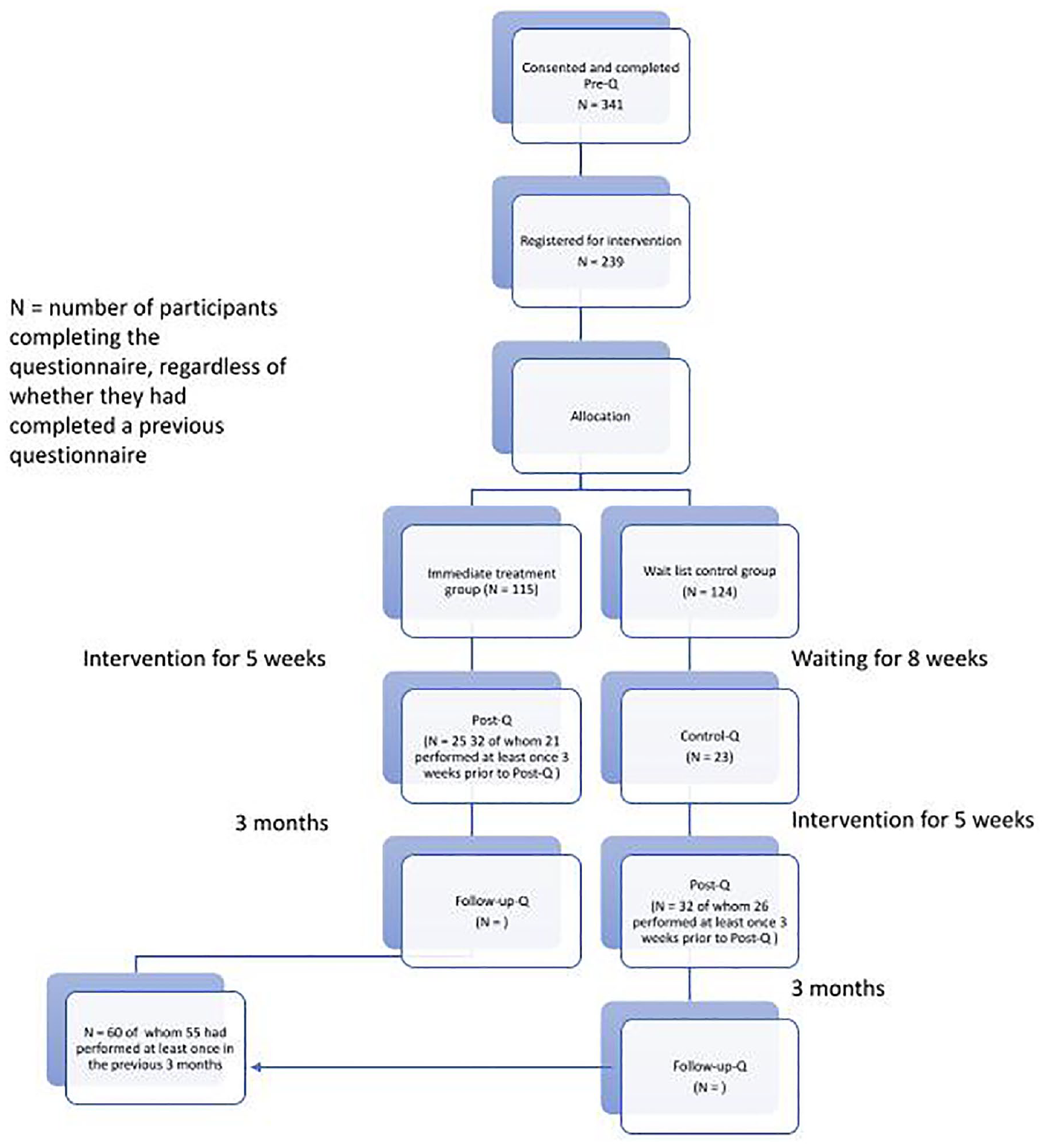
Study design and participant flow.
Of the participants who completed all three questionnaires, 22 were men (49%) and 23 were women (51%), and they ranged in age from 18 to 63 years (M = 37.80, SD = 13.40) and had an average of 18.53 years of musical practice (SD = 11.92). The vast majority of participants (n = 37; 82%) were classical performers, which can be attributed to the convenience and snowballing sampling method of participant recruitment. Almost half were students (n = 22; 49%), whereas 18 were professional musicians (40%), of whom 16 were primarily teaching (36% of the whole sample) and two primarily performing (4% of the whole sample), and five were amateurs (11%). A range of European heritage instruments were represented: 15 participants played the piano (33%), eight the guitar (18%), and six the violin (13%); four were singers (9%); and the other performers played instruments such as the cello, trumpet, and oboe. Last, 21 usually performed as soloists (47%), 18 in small groups (40%), and six in large ensembles (13%).
No statistically significant differences were found between the WLC and the intervention group on any of the background variables, nor their self-reported level of engagement with the intervention at Post-Q, which was high (Videos watched: median (Mdn) = 9, interquartile range (IQR) = 1.8; Exercises done: Mdn = 7, IQR = 2.8).
Analytical approach
Results were analyzed by comparing the participants’ responses to the pre-intervention, post-intervention, and follow-up questionnaires. The data are ordinal and not normally distributed, the two groups at (Post-Q/Control Q) were relatively small (N = 25 and N = 23) and, despite there being no statistically significant differences on any background variables, they were not perfectly alike. For instance, the ITG had a higher percentage of classical performers than the WLC group (92% versus 74%), and a higher percentage of teachers (48% versus 30%). Therefore, we used non-parametric tests to measure intra-group changes, rather than comparing between the intervention and control groups. For the purpose of this article, we present and discuss the data from the intervention phase (i.e., data from the ITG and the WLC group, combined), for participants who completed all three questionnaires, and performed at least once between the Pre-Q and Post-Q and between the Post-Q and Follow-up Q.
Results
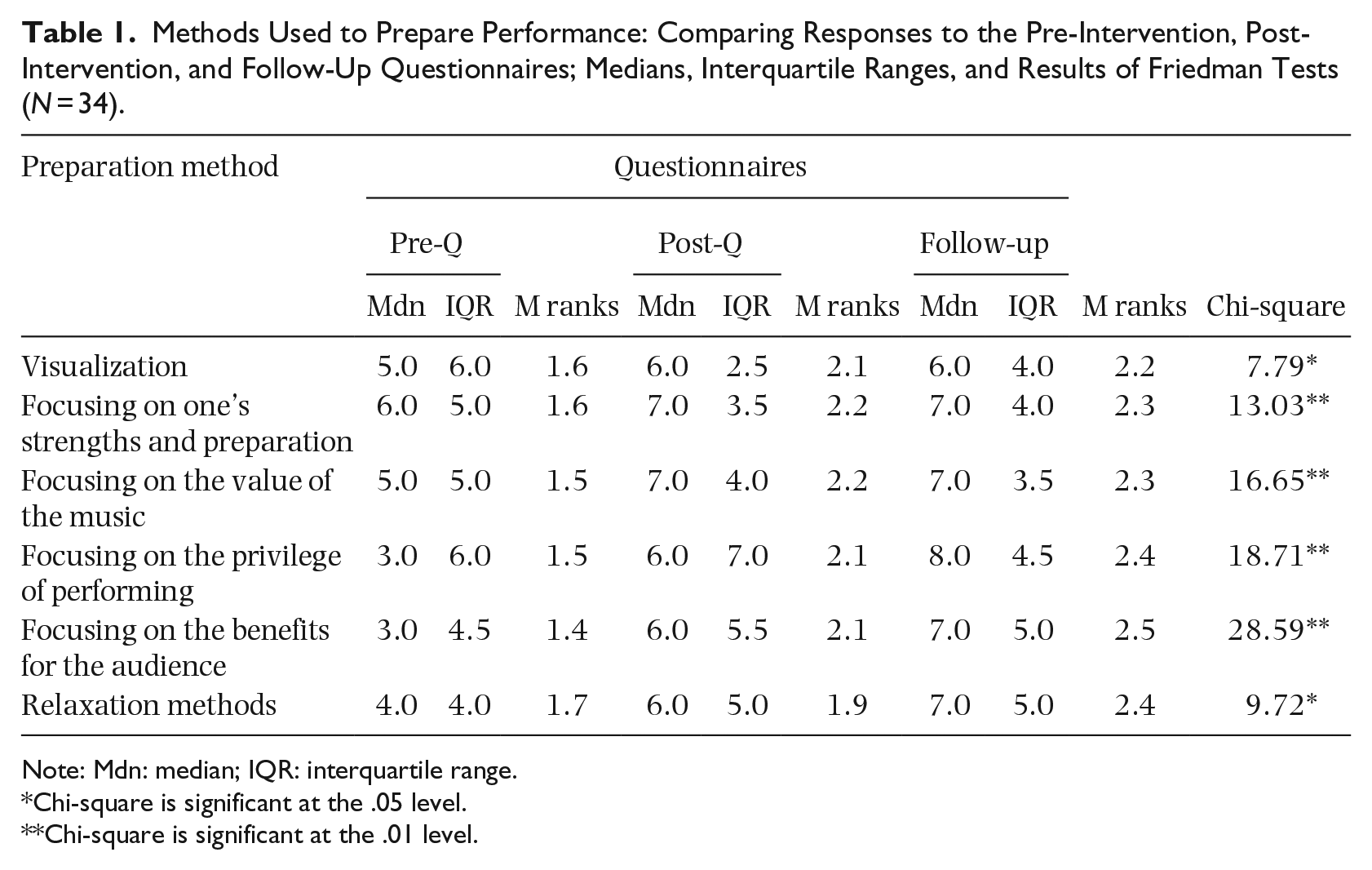
Table 1 presents the results of a Friedman test (a non-parametric test of differences among repeated measures), which measured changes in the extra-musical methods that performers used to prepare for performances. The test revealed that participants used all of the preparation methods introduced during the intervention significantly more frequently after the intervention—in the Post-Q and the Follow-up Q (3 months after the course ended)—than they did before the intervention in the Pre-Q.
Methods Used to Prepare Performance: Comparing Responses to the Pre-Intervention, Post-Intervention, and Follow-Up Questionnaires; Medians, Interquartile Ranges, and Results of Friedman Tests (N = 34).
Note: Mdn: median; IQR: interquartile range.
Chi-square is significant at the .05 level.
Chi-square is significant at the .01 level.
The increases were particularly high for the three preparation methods that expressed a self-transcendent approach to performance, which were the primary focus of the intervention: focusing on the value of music, on the privilege of performing, and on the benefits for the audience. Notably, performers reported using the last two methods more frequently in the Follow-up Q than in the Post-Q.
Notably, two of these variables were particularly low before the intervention, namely focusing on the privilege of being a performer and focusing on the benefits for the audience. Performers appeared not to perform for the audience but rather in front of the audience (see Perdomo-Guevara, 2007). Furthermore, they seemed to conceive of performance as a self-centered activity. This might be due to the fact that 82% of the participants belonged to the classical music sociocultural milieu, which appears to promote a more self-centered approach to performance than non-classical music milieus (Perdomo-Guevara, 2014).
Impact of the intervention on performance-related emotions and performance quality
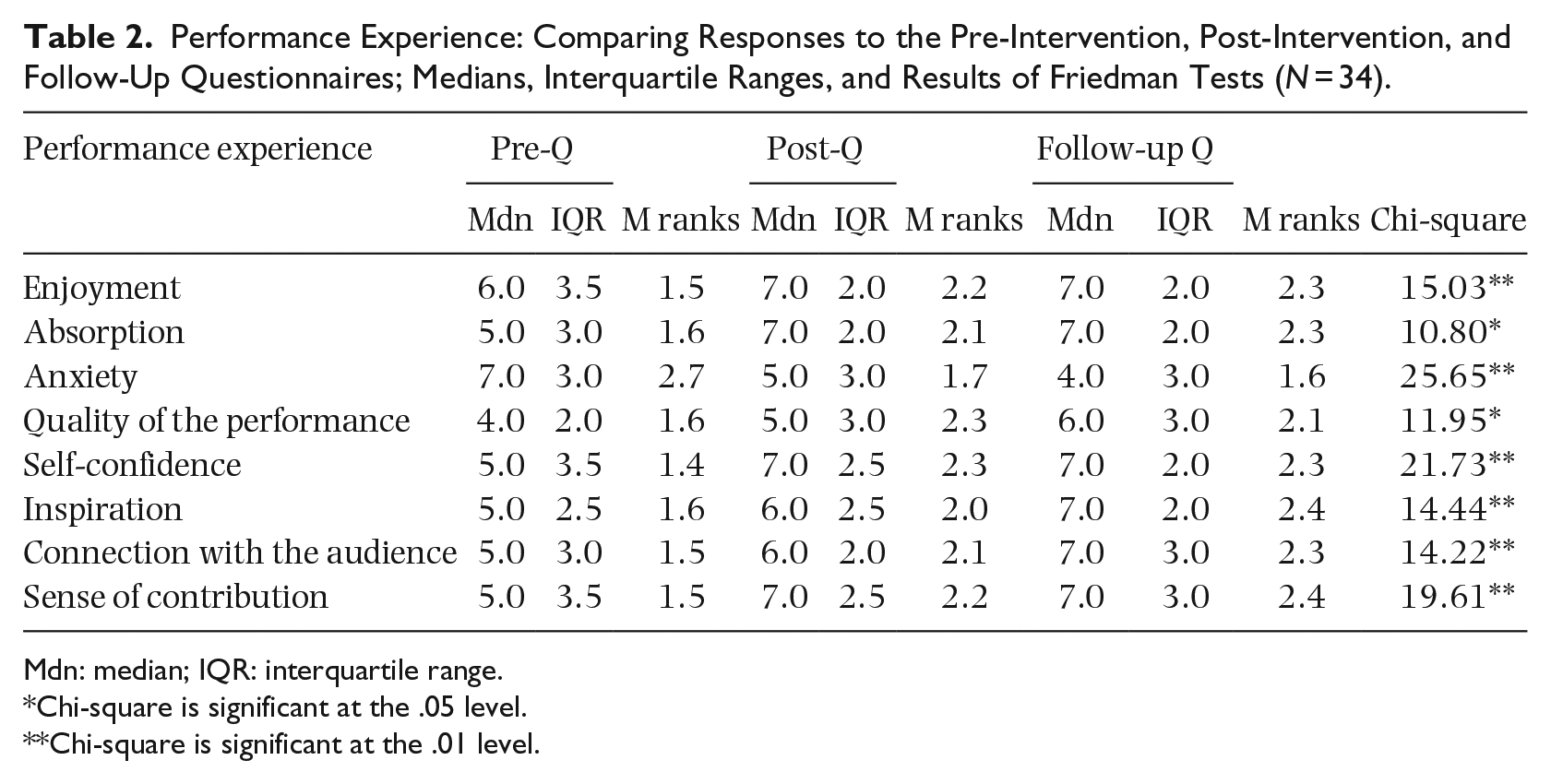
Table 2 indicates that all the variables measuring positive outcomes were significantly higher after the intervention than before it. The participants reported significantly more performance-related enjoyment, absorption, self-confidence, and inspiration; greater connection with the audience; a higher sense of contribution; and a higher quality of performance. They also reported significantly lower levels of anxiety in the two questionnaires that followed the intervention. The values of some of the variables (connection with the audience, inspiration, and perceived quality of the performance) were higher 3 months after the intervention than immediately after it ended. Moreover, anxiety continued to decrease during the 3 months that followed the intervention. These results suggest that after the intervention, the performance experience became more meaningful and self-transcendent and more dominated by positive emotions. Furthermore, the quality of the performance appeared to be enhanced.
Performance Experience: Comparing Responses to the Pre-Intervention, Post-Intervention, and Follow-Up Questionnaires; Medians, Interquartile Ranges, and Results of Friedman Tests (N = 34).
Mdn: median; IQR: interquartile range.
Chi-square is significant at the .05 level.
Chi-square is significant at the .01 level.
To know whether these changes could be attributed to the intervention, intra-group comparison was carried out on the WLC group. Notably, no significant changes were found in the WLC group when their first and second Pre-Qs (Pre-Q vs Control-Q) were compared through Wilcoxon tests. Given that intra-group differences were found for those that took the intervention but not those in the wait list, this suggests that the changes were caused by the intervention.
Discussion
This article reports the findings of an intervention that aimed to increase performance-related positive emotions by helping participants to cultivate a more meaningful, self-transcendent approach to performance. We hypothesized that such an approach would allow performers to enjoy their performance more fully, which would, in turn, enhance the quality of the performance.
The results indicated that after the intervention, performers focused increasingly on the value of music, the privilege of performing, and the benefits that their performance could bring to their audience. This was not the case for a control group who had not taken this intervention, and whose experience of performance had not changed significantly. The group who participated in the intervention appeared to increasingly conceive of performance as an opportunity to go beyond themselves, connect, and contribute. This seemed to increase their joy, an emotion that is on everyone’s list of primary emotions and makes life worth living (Emmons, 2020).
In addition, conceiving of performance as a self-transcendent activity also appeared to have facilitated the experience of self-transcendence during performance; in addition to joy, the participants reported higher values for variables expressing self-transcendence, namely absorption, inspiration, connection, and a higher sense of contribution. We speculate that enhanced meaningfulness might have elicited an upward spiral of functioning, where self-transcendence and positive emotions reciprocally reinforce one another (Fredrickson & Joiner, 2002; Van Cappellen & Rimé, 2013).
In addition to higher positive emotions, the respondents reported a decrease in self-perceived anxiety. This could be because positive emotions, such as self-transcendent strivings, counteracted the narrow-focused thoughts associated with anxiety; moreover, they might have promoted approach motivation to performance—the propensity to move toward it—as opposed to avoidant motivation, which is associated with anxiety (Elliot, 2006; Fredrickson, 2001).
In line with previous research, the findings also indicated that positive emotions are not merely valuable per se but might also be at the origin of other positive outcomes. In fact, after the intervention, the performers assessed the objective quality of their performance as higher than they did prior to the intervention. This enhanced self-perceived quality of their performance, together with the positive changes that they reported in their performance experience, was maintained for at least 3 months after the intervention. This may indicate that the intervention elicited long-term changes in the performers’ attitudes toward performance.
Overall, the findings of this study suggested that, after the intervention, the participants’ performance experience became more similar to the best performance experiences described in the literature and previously discussed in this article (i.e., Bernard, 2009; Lamont, 2012; Perdomo-Guevara, 2007, 2014).
Limitations and contributions
The results of this study should be interpreted in light of its limitations. First, these results are based on the data of the 30% of registered performers who were willing to complete all three questionnaires; hence, it is not possible to know whether the intervention benefited participants who did not complete the questionnaires. More robust results would require that the intervention be delivered in a context affording higher compliance (e.g., within the curricula of a music institution).
Second, the results may have been biased by the fact that the course instructor was also one of the researchers; for example, the participants might have tended to increase their positive feedback to please her. Third, the enhanced performance experience reported might not have resulted exclusively from an increase in the self-transcendence of the performers’ approach to performance, but rather from other materials included in the course (i.e., performing relaxation and visualization techniques and focusing on one’s own strengths). Future studies might compare the impact of two interventions based on PST, where one promotes a meaningful self-transcendence approach to performance, while the other does not. Additional research would also be necessary to determine whether the positive changes found in this study lasted longer than 3 months.
Despite its limitations, this study’s findings are promising as they indicate that even short online interventions with prerecorded material and limited one-to-one interaction can help individuals to change their approach to performance. Remarkably, when the participants’ approach became more meaningful, transcendental, and inspiring, their enjoyment of performance increased and their anxiety diminished. This suggests that interventions could be even more ambitious, not only aiming at reducing anxiety but also at increasing positive emotions as well as rendering the performance more meaningful.
In addition, these findings have implications for education. Although interventions such as this suggest new ways to render the performance experience more fulfilling, it should ideally be up to music education to ensure that students not only become skilled musicians but also—and most critically—cultivate meaningful, self-transcendent approaches to their activities as musicians and performers. Unfortunately, the little self-transcendent meaning that the participants conferred upon performance before the intervention suggests that their classical music training did not help them to develop inspiring narratives about performance.
An increasing number of studies are demonstrating that meaning and self-transcendence contribute to positive emotions and that positive emotions contribute to optimal functioning. Hopefully, these studies will incite institutions and teachers to ponder this important issue.
Supplemental Material
sj-docx-1-pom-10.1177_03057356241246052 – Supplemental material for Cultivating meaning and self-transcendence to increase positive emotions and decrease anxiety in music performance
Supplemental material, sj-docx-1-pom-10.1177_03057356241246052 for Cultivating meaning and self-transcendence to increase positive emotions and decrease anxiety in music performance by Elsa Perdomo-Guevara and Nicola Dibben in Psychology of Music
Footnotes

References
Supplementary Material
Please find the following supplemental material available below.
For Open Access articles published under a Creative Commons License, all supplemental material carries the same license as the article it is associated with.
For non-Open Access articles published, all supplemental material carries a non-exclusive license, and permission requests for re-use of supplemental material or any part of supplemental material shall be sent directly to the copyright owner as specified in the copyright notice associated with the article.
