




Abstract
Music performance anxiety (MPA) is most often defined as a negative experience that is harmful to successful performance, but potential facilitating effects of MPA often are acknowledged. The distinction between facilitating and debilitating effects often is attributed to various cognitive frameworks based on the quantity of anxiety, where smaller amounts may be helpful and larger amounts harmful. The hypothesis underlying the present study holds that the difference between facilitating and debilitating MPA is more a matter of quality than quantity, specifically the qualities associated with the other positive and negative emotions that accompany MPA. A web survey recruited 114 musicians to test for differences in MPA and accompanying emotions by responding to descriptions of four specific musical contexts. Results show that between roughly one-quarter and one-half of the musicians in the study viewed MPA as facilitating, depending on context. Respondents endorsing the facilitating quality of MPA (compared with the debilitating group) showed significantly higher levels of positive emotion accompanied by lower levels of both MPA and negative emotion in three of four contexts. Results are interpreted as supporting the hypothesis that emotions accompanying MPA shape the quality of its effect on musical performance.
Music performance can be anxiety-inducing (Burin & Osorio, 2017; Kenny, 2005; Spahn et al., 2021) but less well understood is the complexity of the full emotional reaction accompanying music performance anxiety (MPA). The concomitant arousal of other positive and negative emotions, coupled with elements of the musical context, may play a pivotal role in the suite of emotions that comprise an anxious performer’s experience (Woody & McPherson, 2010). Application of emotion theory in the context of music performance suggests that anxiety brings with it both positive and negative emotions that shape the consequences of anxiety arousal as either broadly facilitating or debilitating to performance. The present study foregrounds anxiety as one of several emotions aroused in music performance contexts, examining how a wider collection of emotions is affected by changes in the solo or group context, and whether the focal activity is rehearsal or performance.
Music performance anxiety
MPA has been defined as “the experience of persisting, distressful apprehension and/or actual impairment of performance skills in a public context, to a degree unwarranted given the individual’s musical aptitude, training and level of preparation” (Salmon, 1990, p. 3). The debilitating effects of MPA can occur regardless of audience size, number of co-performers, or experience level (Dobos et al., 2019; Kenny et al., 2004; Spahn et al., 2021). Performing music in front of an audience is often a nerve-wracking experience, particularly for solo performers (Faur et al., 2018; Norem & Cantor, 1986; Spahn et al., 2021). Research has connected debilitating MPA to relatively lower levels of a musician’s self-efficacy and self-esteem, especially when facing an important or stressful performance, including during an audition, with a large or otherwise intimidating audience (Nicholson et al., 2015; Osbourne & Franklin, 2002; Papageorgi et al., 2013; Spahn et al., 2021). In addition, MPA has a greater prevalence among those with social anxiety disorder (American Psychiatric Association, 2013; Osbourne & Franklin, 2002). The prevalence and potential severity of MPA have given rise to numerous approaches to remedy its effects, including biological (drug) treatments, cognitive-behavioral therapy, meditation, mindfulness, hypnotherapy, and yoga (Burin & Osorio, 2017; Chang et al., 2003; Diaz 2018; Kenny, 2006; Khalsa et al., 2009; Spahn, 2015).
Although there seems to be general agreement in the literature that MPA is problematic, several authors acknowledge long-running strands of anxiety research in other domains that point to potentially positive effects of MPA (Barbeau, 2011; Kenny, 2005). Theory supporting the idea of anxiety facilitating performance dates back more than 100 years. The Yerkes-Dodson (Yerkes & Dodson, 1908) law (YDL) suggested an inverted-U relationship between arousal and performance that has been “almost axiomatic” in psychology for decades (Brown, 1965, p. 663). Despite questions about evidence in favor, the YDL holds that a small quantity of anxiety can be helpful to performance, but beyond an optimal (medium) level further anxiety arousal increasingly impairs performance (Corbett, 2015). Approximately 50 years after the YDL appeared, Alpert and Haber (1960) took a different approach to interpreting the inconsistent effects of anxiety on performance, conceptualizing a distinction between separable “facilitating” and “debilitating” constructs of anxiety, not as opposite ends (or lower/higher levels) of one anxiety dimension.
More recent emotion theory suggests that among adults, emotions are rarely simple or straightforward experiences. Instead, emotions most often are experienced as complex schemas that integrate a collection of several emotions, some of which might be positive (Greenberg & Paivio, 1997; Izard, 2007; Leahy, 2002). However, the idea that MPA is consistently debilitating to performance has been challenged only occasionally in the literature (Kenny, 2009; Wolfe, 1989). The connections between positive emotions and performance “. . . has remained almost entirely overlooked in music” (González et al., 2018, p. 833), although research has examined concepts that strongly implicate positive emotion such as flow (Wrigley & Emmerson, 2013), engagement/well-being (Ascenso et al., 2017; Kenny et al., 2014), and performance boost (Simoens et al., 2015). Among the most positive emotion-related experiences for musicians described in the literature is flow. Flow refers to an emotionally intense experience that blends a variety of skill levels with appropriate degrees of challenge as part of an optimally arousing state with high creativity, concentration, and involvement, one in which thoughts of potential failure are successfully held at bay (Csikszentmihalyi, 1975; Csikszentmihalyi & Larson, 2014; Csikszentmihalyi & LeFevre, 1989). Flow states often occur in dedicated musicians who strive to continuously improve their craft in performance situations, as opposed to those who play solely for leisure (Kirchner, 2011; O’Neill, 1999).
Applied to music performance, the brief literature review above leads to questions about whether MPA can sometimes be facilitating instead of debilitating, and if so, the reasons why. There has been a persistent focus on the negative connotations of MPA, but several authors have acknowledged the potential for anxiety to have facilitating effects, such as maintaining cognitive responsiveness and a sense of fulfillment in older adults (Barbeau & Mantie, 2019; Lebel, 2017). Consistent with the YDL, facilitating anxiety most often is interpreted in relation to quantity rather than quality of the anxiety. Kirchner (2011) succinctly states the position, “(w)hile many believe it is important, and even necessary, to have a certain amount of anxiety in order to perform one’s best, too much anxiety can be debilitating” (p. 289). In the present study, we adopt a position more in line with Alpert and Haber’s (1960) empirical argument, later supported by emotion schema theory (Greenberg & Paivio, 1997; Izard, 2007; Leahy, 2002) and a small number of studies in music (Simoens et al., 2015; Wolfe, 1989). We argue that facilitating anxiety is qualitatively different from debilitating anxiety in part because of the configuration of associated emotions, recognizing that at different levels of intensity, combining anxiety with positive emotions such as enjoyment, excitement, and pride results in a qualitatively different experience than combining anxiety with negative emotions associated with fear or distress (Kaleńska-Rodzaj 2020). That is, MPA can be facilitating or debilitating depending on the emotional accompaniment.
Emotion theory
According to Reeve (2015), emotions have biological, subjective, expressive, and purposive components. These factors are powerfully interconnected, providing rapid and flexible integration of physiological and cognitive processes in reaction to events in the immediate context, memories, experiences, and goals (Reeve, 2015). From a functional perspective, Fredrickson’s (2013; Fredrickson & Branigan, 2005) broaden-and-build theory describes key differences between positive and negative emotions. The broaden-and-build theory emphasizes that positive emotions are not simply the antithesis of negative emotions as if in a see-saw relationship; rather, they have different functions. Whereas negative emotions tend to be goal-oriented (Lebel, 2017), positive emotions tend to broaden an individual’s thought-action repertoire, build relationships and resources for future use, and act to undo or reverse the lingering effects of negative emotions (Fredrickson, 2013). Positive emotions are more difficult to define, as they are diffuse and seldom experienced in isolation (Fredrickson & Branigan, 2005; Fredrickson & Levenson, 1998).
The notion that positive and negative emotions are neither opposites nor mutually exclusive has been around for a long time. Alpert and Haber (1960) discussed the issue as an empirical question about the relationship between facilitating and debilitating anxiety, proposing that each be seen on its own continuum with its own measurement. The authors note that
these two constructs of debilitating and facilitating anxiety may be uncorrelated. Thus, an individual may possess a large amount of both anxieties, or of one but not the other, or of none of either. The nature of this correlation can be determined empirically. . . (p. 213).
If it is possible to experience high degrees of both positive and negative anxiety, then the detrimental effects of anxiety arousal on music performance, as described well in the literature, is only part of the MPA story. Rarely would the emotions associated with a musical performance be uniformly positive or negative.
Co-occurring positive and negative emotions create varying combinations and amalgamations of affect during an event, evolving precipitately, influencing and unbalancing each other like the twists, turns, peaks, and valleys of a rollercoaster (Rossi & Pourtois, 2012). Even if anxiety is foregrounded in performers’ interpretation of their experience, understanding the full collection of emotions may be key to interpreting how anxiety affects musical performance. A musician is likely to react very differently if they believe anxiety will lead to a loss of control and embarrassing mistakes (Faur et al., 2018; Norem & Cantor, 1986) versus anxiety being accompanied by excitement in anticipation of the opportunity to display one’s skill (González et al., 2018; Spahn et al., 2021).
Over time, participating in complex musical events generates summary accounts and appraisals of an immense volume of stimuli and experiences. Appraisals are cognitions that can modify basic emotions, altering and deepening the perception of feelings and motivations, creating an individual’s emotion schemas (Greenberg & Paivio, 1997; Izard, 2007). A schematic approach to MPA allows for an examination of patterns of reactions as a collection of emotions that can be grouped into broadly defined types or clusters (Spahn et al., 2021).
Overall, there is a lack of research into the flexibility of emotion schemas in general, as well as in the different contexts of performing music. Crucially, the prevailing view of anxiety as debilitating may be restraining both performers and researchers from examining the potentially facilitating effects of anxiety on musical performance, and how that effect might change with the musical context such as solo versus group settings, or performance versus rehearsal activities.
Performing music in a group context allows musicians to share their emotional experiences, potentially diffusing the effects of MPA for individuals and enhancing positive emotions (Spahn et al., 2021). The camaraderie induced by teamwork (such as in a group of choral singers), alongside a collective acceptance of mistakes, can lower the pressure on an individual’s anxiety (Barbeau, 2011; Kenny, 2005). However, group performance (GP) may induce stress by enhancing the responsibility to perform well for the sake of the group, as each member depends on the others to succeed in their common goal. Solo performances (SPs) potentially generate greater anxiety because the individual alone is responsible for their mistakes, should they occur, with no one else to blame (Cox & Kenardy, 1993; Kenny, 2014; Papageorgi et al., 2013). SPs can offset the potential for culpability with potential credit that can be reaped from success; soloists have been shown to have a heightened perception of their own skills (Spahn et al., 2021). In keeping with the emotion theories discussed above, the emotions associated with MPA, whether in group or solo contexts, may be more relevant to the performer’s reactions than the quantity or level of anxiety per se (Fredrickson & Branigan, 2005; Izard, 2007; Reeve, 2015).
Emotions in the rehearsal context can be markedly different from the performance context (Kirchner, 2011). The close link between anxiety and the development of skills suggests we should not neglect the rehearsal context, or how anxiety might play a role in skill development from rehearsal to performance (Robson & Kenny, 2017). When musicians are aware they will perform a specific piece, their anxiety varies with their degree of comfort with the arrangement as well as the composition of their audience (Nicholson et al., 2015). Trends in anxiety arousal suggest it tends to be at its lowest in the solo rehearsal (SR), increasing in a group setting, and reaching a maximum during a performance, particularly for a soloist (Nicholson et al., 2015; Papageorgi et al., 2013). Researchers tend to attribute the increasing anxiety to fears of negative evaluation and social anxiety, though there has been a dearth of research considering complementary emotions, such as enjoyment, frustration, pride, guilt, or the social comparisons to fellow musicians either in a group context or if performers play solos in succession.
The present study
MPA has been widely studied, and most often taken to be an unwelcome and disruptive influence on a musician. The notion that anxiety arousal can potentially be facilitative is supported by research dating back 100 years as well as both emotion schema and flow theory. The literature on MPA acknowledges its potentially facilitating effects but has not reported on the incidence of facilitative versus debilitative anxiety. In addition, researchers tend to ascribe a potentially facilitating role to a lower quantity of anxiety, but the potential for qualitatively different experiences, tied to co-occurring positive and negative emotions, has not been studied. Finally, potential differences in MPA and associated emotions have not been studied across contexts defined by both participants and the focal activity: (1) solo rehearsal (SR), (2) group rehearsal (GR), (3) solo performance (SP), and (4) group performance (GP).
The following research questions are proposed:
What percentage of respondents consider anxiety facilitative versus debilitative; does the percentage vary across contexts?
Does the group that considers anxiety to be a debilitating experience show more MPA than the group that sees anxiety as facilitating, in any of the contexts?
Does emotion valence (average levels of positive and negative emotions) vary across contexts and does the perception of anxiety as debilitative vs facilitative interact with emotion valence in any of the contexts?
What are the most prevalent positive and negative emotions in each context? How do respondents describe their anxiety in different contexts?
Method
Participants
A total of 114 musicians participated as the result of snowball sampling method using social media, asking musicians to refer other musicians to the survey. Musicians of various instruments and levels of experience (range 2–60 years) were welcome to participate so long as they had experience in at least one of the selected contexts (GR, GP, SR, and SP). All participants were required to be above the age of 16 to participate. Most participants were female (N = 67), followed by male (N = 42) and nonbinary (N = 4), with the remaining respondents choosing not to specify a response. The majority of participants were from North America (N = 111). The age range is 16–84 years (M = 38.98, SD = 16.72) although most participants reported being 20–50 years old (N = 73).
Measures
Contexts
The current study considers four contexts of music performance with two independent variables. The first independent variable, participants, consists of solo and group settings. The second independent variable, activity, contrasts rehearsal and performance contexts. These variables account for each typical context: GR, GP, SR, and SP. We asked respondents to respond to the types of context with which they had prior experience; we did not experimentally create the contexts.
Music performance anxiety
Participants were asked to complete a reduced version of the PerfAIM (Barbeau, 2011). To modify the scale for online presentation, PerfAIM items were removed if they measured causes/situational factors and temporal occurrence, asked about substance use, or were reversely coded. This removal ensured the web survey was brief, lowering the risk of participants leaving the study incomplete. In each context, participants were asked to reflect upon the last time they participated in each context and carry out the revised PerfAIM regarding their experience. If the participant had no experience in a certain context, they skipped to the next context or ended the survey. The reduced PerfAIM-R measured MPA using 14 self-rated statements on a 1–5 Likert scale (1 = strongly disagree, 5 = strongly agree). The PerfAIM-R additionally asked participants to check off three possible symptoms that they experienced during performances (e.g., racing and/or pounding heart, upset stomach). Cronbach’s α for this scale ranged from .85 to .92 within the four contexts (see Table 1).
Cronbach’s Alpha Reliability for MPA Scale in Each Context.
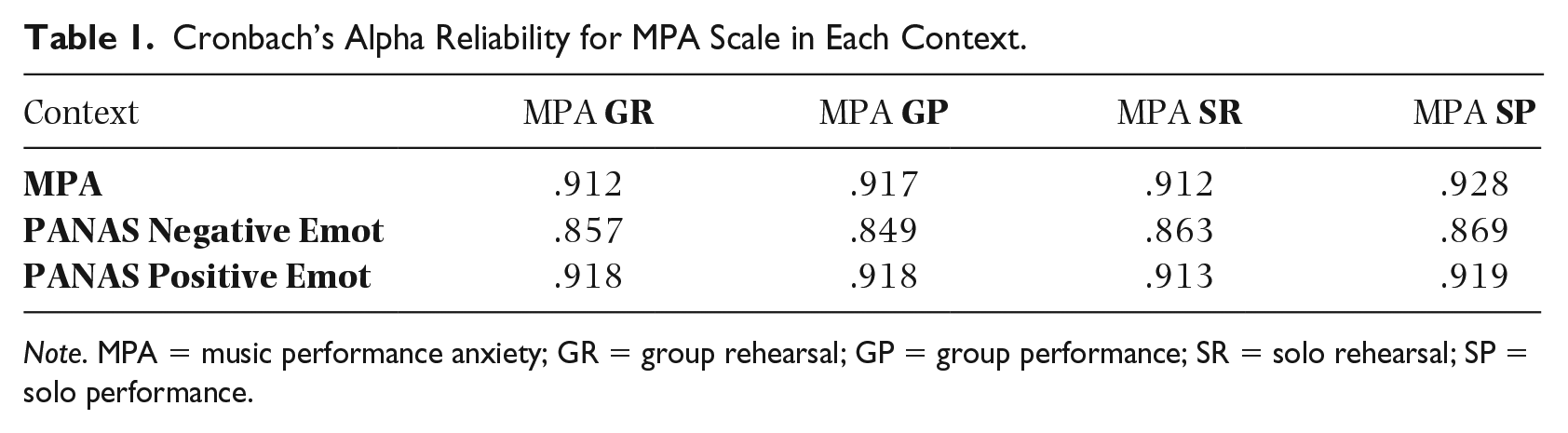
Note. MPA = music performance anxiety; GR = group rehearsal; GP = group performance; SR = solo rehearsal; SP = solo performance.
Emotions
Participants completed the Positive and Negative Affect Schedule (PANAS; Watson et al., 1988) with reference to each of the four contexts separately. PANAS evaluates 10 positive and 10 negative emotions for participants to rate on a scale of 1–5, representing the degree to which they experienced each emotion (1 = not at all, 5 = extremely) in that context. The instructions given to the participants read, for instance, “Think back on your last experience rehearsing as a soloist and rate the following emotions on a scale of 1–5 how much you felt this way during the performance.” Cronbach’s α for this scale ranged from .91 to .93 within the four contexts (see Table 1).
Is anxiety facilitative or debilitative? This single, forced-choice item, created specifically for the current study, assessed whether participants’ MPA within each context was self-rated as facilitating or debilitating: “Thinking about [context], which of the following is most true of you?” The possible responses are “Anxiety makes my performance better” (facilitating) or “Anxiety makes my performance worse” (debilitating; see Table 2).
Frequency Tables for Facilitating and Debilitating Anxiety Across Contexts.
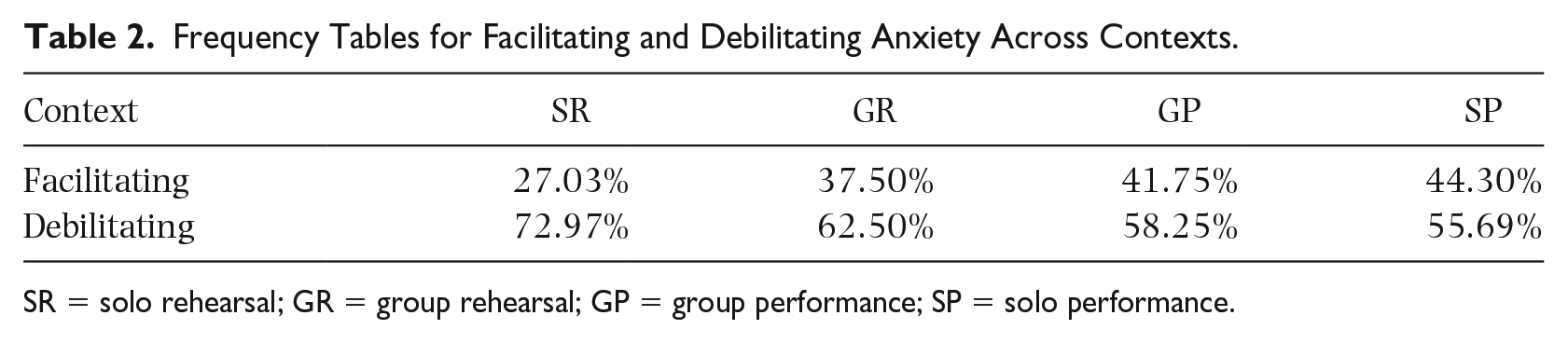
SR = solo rehearsal; GR = group rehearsal; GP = group performance; SP = solo performance.
Additional information
At the end of the survey, participants were provided an optional box to fill out to describe their experience with MPA, performing in different contexts, their emotions, or any other relevant information that they wished to share to aid in the researchers’ interpretation of the results of this study and allow the participants to express their experiences. Only 14 responses were received, but the thoughtful observations in the participants’ voices will be added where appropriate in the Discussion section.
Procedure
Participants were recruited through social media posts advertising the study on Facebook, Twitter, and Instagram. The snowball sampling method was utilized, where participants could share a link for a Google Form on their own social media platforms with other musicians. A link in the social media post led to a landing page with a detailed consent form. If respondents agreed to participate, the survey began with demographic information and the participants’ experience as musicians. Following this, four contexts were presented: (1) GR, (2) GP, (3) SR, and (4) SP. Participants indicated whether they perceived anxiety in each context as generally facilitative or debilitative and then completed the MPA and PANAS. Participants had the option to skip responding to a context with which they were unfamiliar. The final item for each of the four contexts allowed the option to provide more information in their own words about their experiences with MPA.
Results
To address the first research question, a frequency table was generated showing the percentage of respondents describing anxiety as facilitating or debilitating in each context. Results show more respondents used the term debilitating rather than facilitating to characterize MPA, but contextual differences emerged. The largest percentage endorsing a debilitating (as opposed to facilitating) effect of anxiety was observed for SRs (approaching a 3:1 ratio). The lowest percentage endorsing debilitating effects was in the SP context, with a near-even split between endorsing facilitating and debilitating anxiety.
A much higher percentage of respondents reported that anxiety was facilitative in SP contexts (44.3%) compared with SRs (27.03%). There was almost no difference in the percentage endorsing anxiety as facilitative in the GP (41.75%) compared with the GR (37.5%) context (see Table 2).
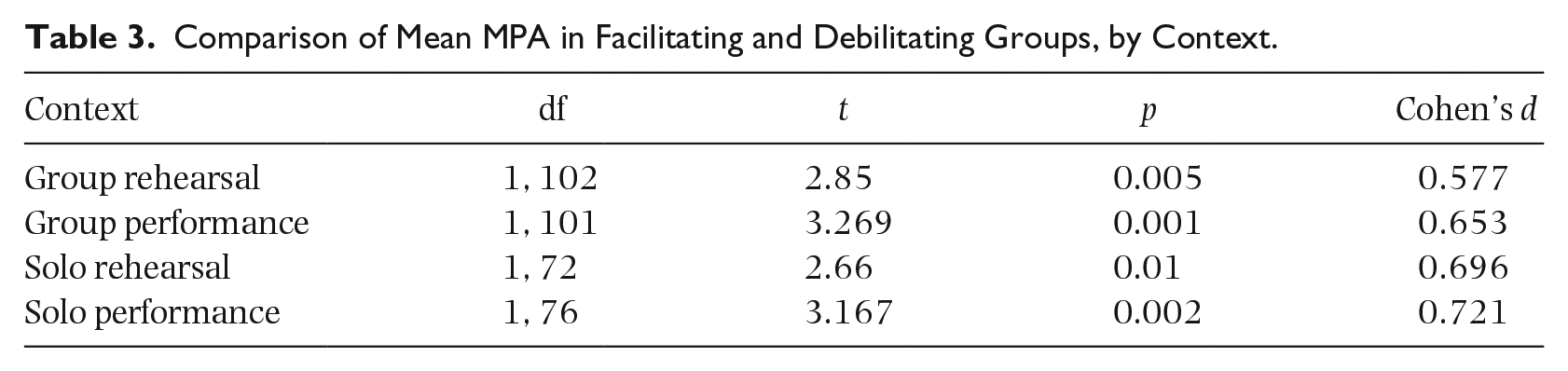
The second research question asked whether those who described their anxiety as debilitating would have higher MPA scores than those who endorsed anxiety as facilitating. Given that respondents could choose facilitating in one context and debilitating in another, the four contexts were examined separately, each with a t-test. The independent variable in the t-test was the anxiety type (facilitative vs debilitative) and the dependent variable was MPA (PerfAIM) score within a context. Levene’s test indicated that the assumption of homogeneity of variance underlying the t-tests was met for each context (all ps > .05). Results in all four contexts showed mean values of MPA that were significantly higher for the debilitating anxiety group (see Table 3 and Figure 1). Cohen’s d consistently showed effects that can be described as “medium” in strength (Cohen, 1988; Lakens, 2013).
Comparison of Mean MPA in Facilitating and Debilitating Groups, by Context.
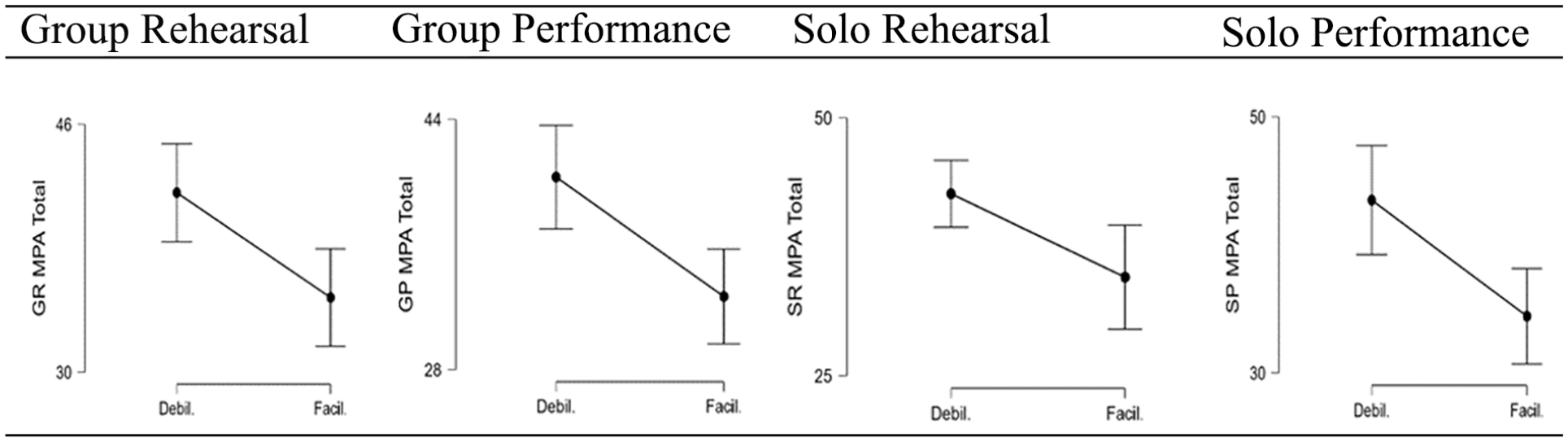
Mean Levels of MPA in Facilitating and Debilitating Groups, by Context.
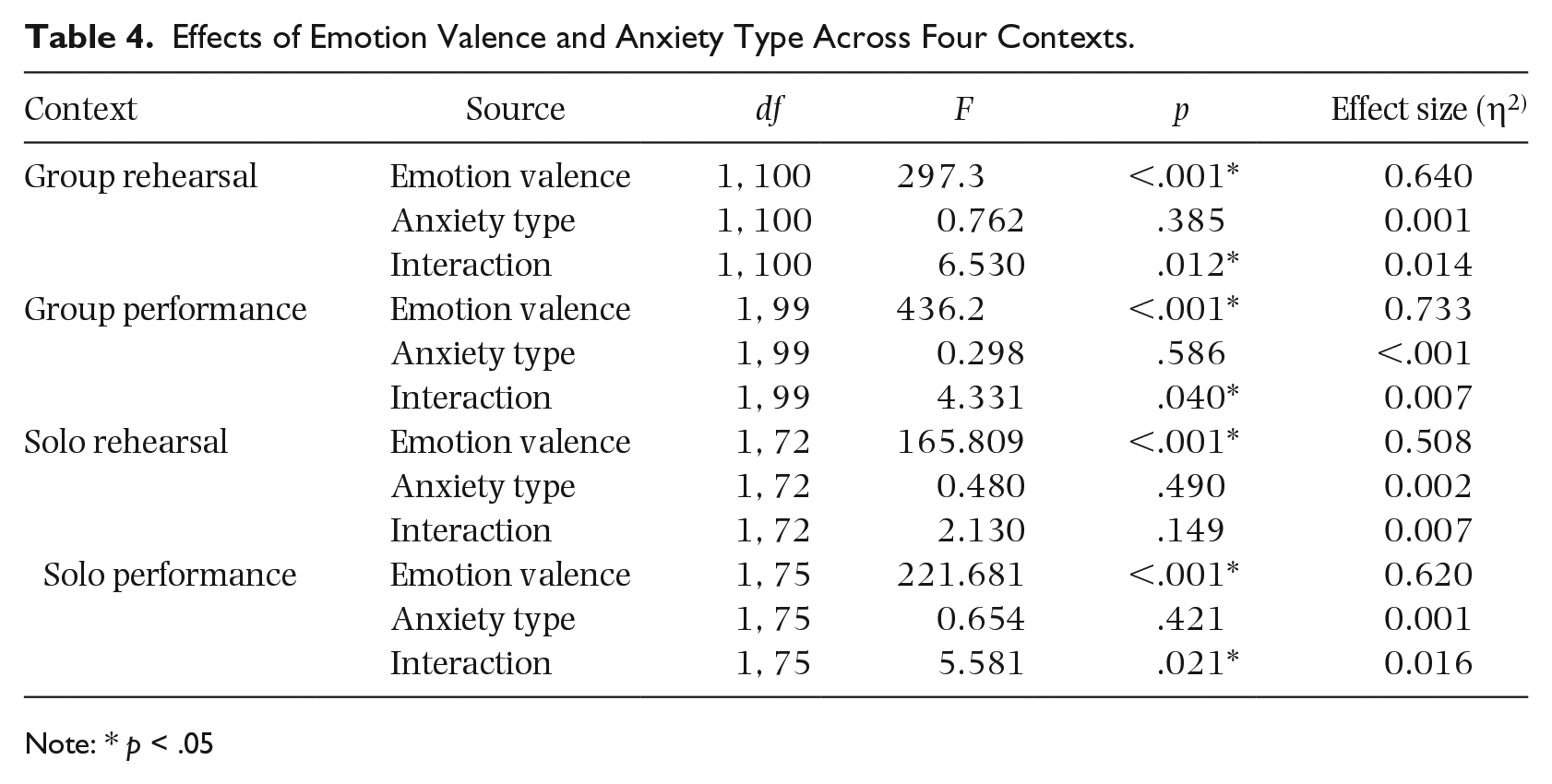
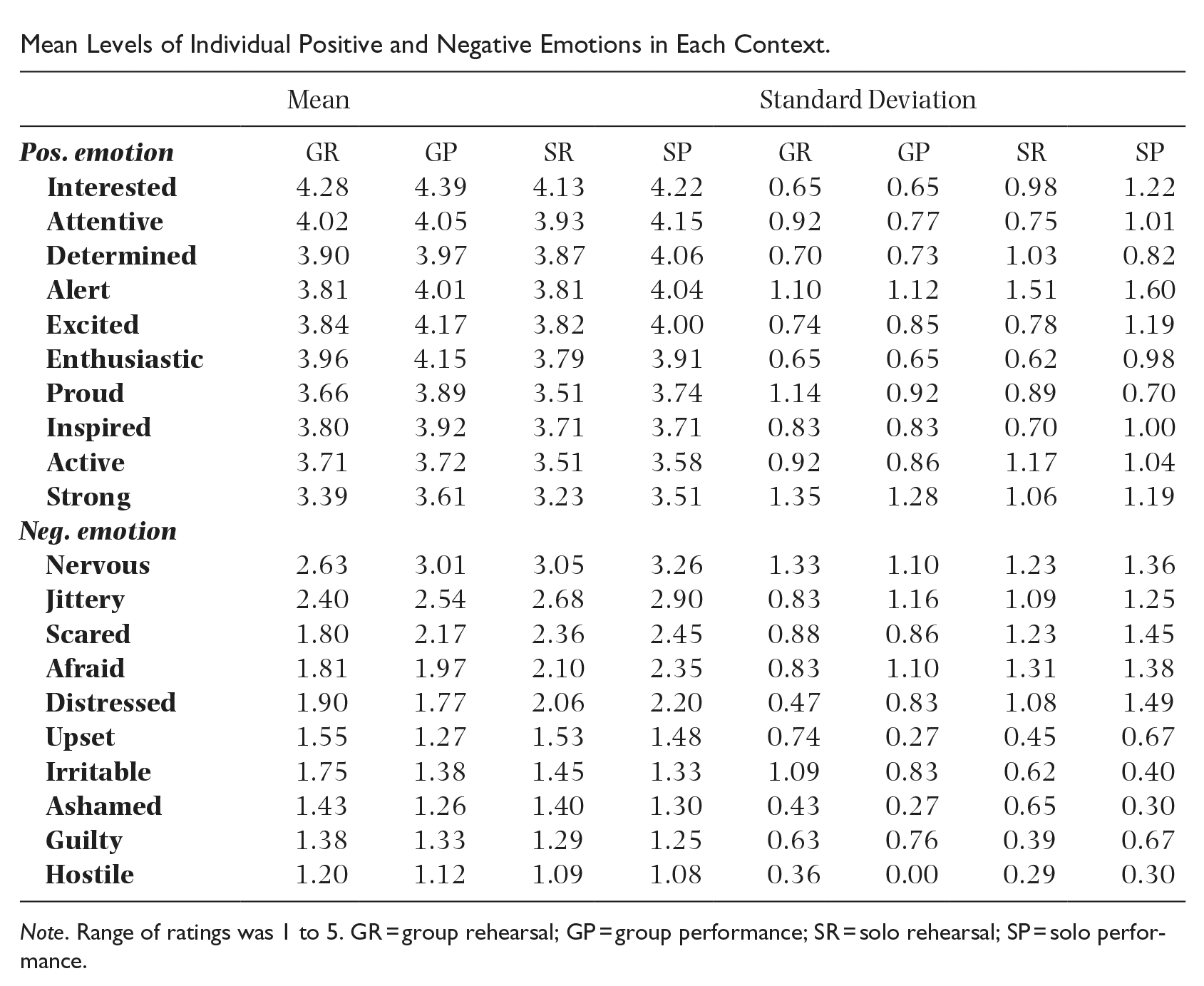
The third research question examines differences between mean levels of emotions (total negative and total positive emotion) across contexts, split by whether the respondent indicated that anxiety in the context was facilitating or debilitating. Four 2 × 2 split plot ANOVAs were conducted, one for each context. For each ANOVA, the between-subjects factor was anxiety type (facilitative vs debilitative) and the within-subjects factor was emotion valence (positive vs negative). Levene’s test indicated that the assumption of homogeneity of variance in the between-subjects factor was met in each context (all ps > .05). Results showed a significant interaction between anxiety type and emotion valence in three of the four contexts. In GR, GP, and SP contexts, those who indicated anxiety was facilitative reported a higher mean rating for positive emotions and a lower mean rating for negative emotions compared with those who indicated anxiety was debilitative. For the SR context, the interaction was not significant. However, there was a significant main effect for emotion valence (see Table 4) indicating higher levels of positive than negative emotion, a main effect that was significant in all four contexts (see Figure 2). The eta-squared effect sizes (see Table 4) for all contexts were medium in size. Results for the ratings of each positive and negative emotion are presented in Appendix 1.
Effects of Emotion Valence and Anxiety Type Across Four Contexts.
Note: * p < .05
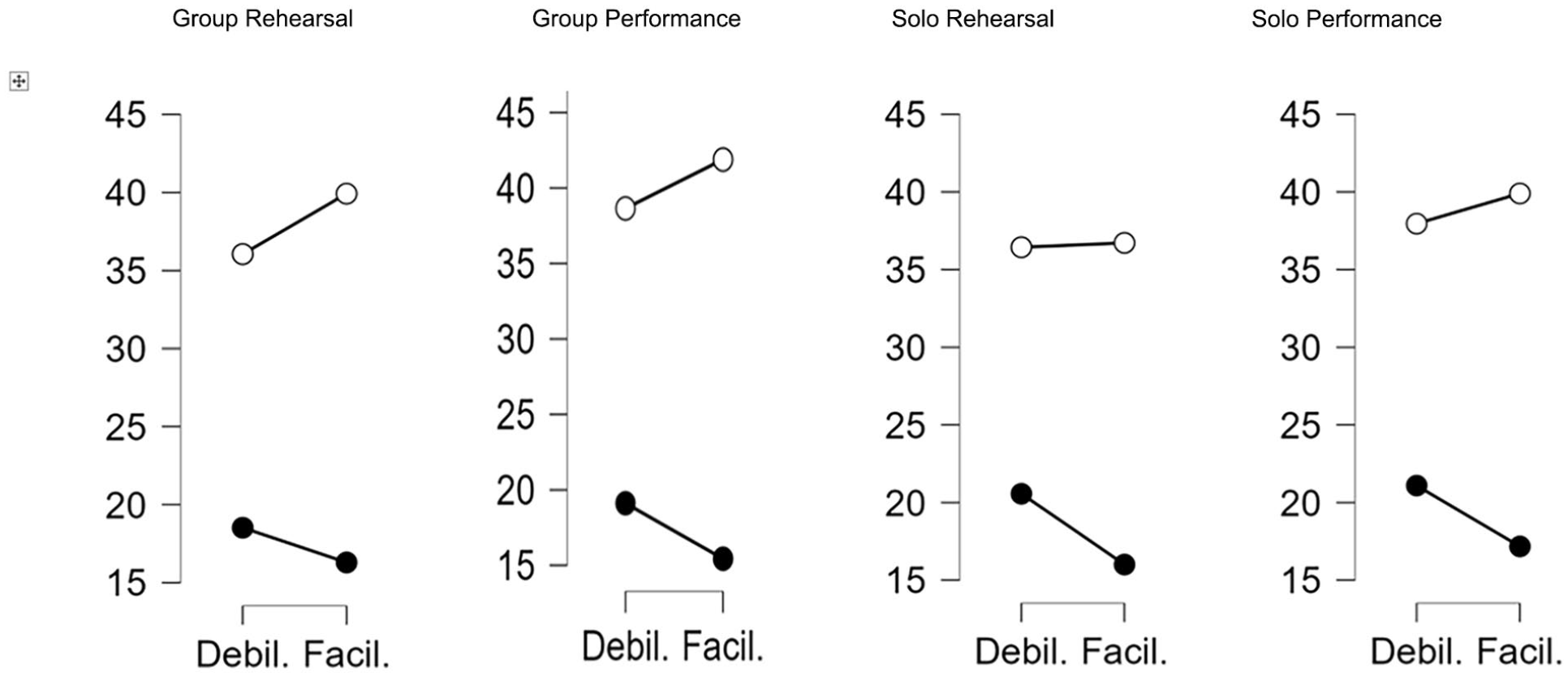
Mean Level of Total Positive and Negative Emotion in Each Context.
Discussion
The present study aimed to quantify the incidence of facilitating versus debilitating MPA, gain an understanding of its positive and negative emotional accompaniment, and examine variations across contexts. This research contrasts with the prevailing view of MPA which, although sometimes acknowledging a potentially facilitating role for anxiety, emphasizes its debilitating effects on performance (Kenny et al., 2004; Spahn et al., 2021). Our overall findings suggest that the amount or level of anxiety might not be the basis on which anxiety is labeled as facilitating or debilitating. Although much of the literature suggests a small amount of anxiety can be helpful (facilitative) and a large amount harmful (debilitative) (Kenny, 2005; Spahn et al., 2021; Yerkes & Dodson, 1908), our view is that the underlying emotions that accompany anxiety color the experience, differentiating the musician’s appraisal of anxiety in a specific context as broadly harmful or helpful. Context plays a significant role in the presence of positive and negative emotions that accompany MPA, as the purpose of the performance and the support (or weight) of co-performers alter the experience further. As one participant describes, “I’ve literally only performed solo once and it felt unnatural and uncomfortable as opposed to performing hundreds of times as part of a group and feeling 100% fantastic.”
The debilitating effects of anxiety on music performance have been widely reported, implying the experience of anxiety is in some cases a hindrance in need of therapy or other treatment (Dobos et al., 2019; Kenny et al., 2004; Spahn et al., 2021). However, the present data show that anxiety can be perceived to enhance performance by a substantial minority of participants who report that anxiety can be accompanied by positive emotions (Kirchner, 2011). Given that the potential facilitating effects of MPA are under-researched (González et al., 2018), their prevalence might be underestimated. Results reported here indicate that facilitating anxiety could be described as a fairly common experience, endorsed by roughly one-quarter to half of the respondents, depending on context. It is noteworthy that anxiety was rated as most facilitating for SP. Previous research has taken special note of the SP environment, describing it as the most anxiety-inducing (Faur et al., 2018; Norem & Cantor, 1986; Spahn et al., 2021). However, these studies typically describe this anxiety as debilitating due to the potential stressors associated with SPs. It might be worth considering in more detail the co-occurring positive emotions present during SP (Simoens et al., 2015), including those that occur in musicians’ flow states (Cohen & Bodhner, 2021; Csikszentmihalyi, 1975).
The inverted-U-shaped relationship between arousal and performance described by the YDL (Yerkes-Dodson Law) for over 100 years has been interpreted in the MPA literature to suggest anxiety in small doses helps, and higher levels of anxiety harm, musical performance (Kenny, 2006; Kirchner, 2011). The present study proposes that the amount of anxiety might not determine whether MPA is experienced as facilitative or debilitative. In the present results, participants rated SP as the most anxiety-provoking. As one respondent put it, “Mistakes are less forgiving when you play alone.” However, this context is the one in which anxiety is most often considered facilitative—an explanatory challenge for the YDL. The key evidence from the ANOVA results (RQ3) indicates that there are significantly higher levels of co-occurring positive emotions, and lower levels of negative emotions, among the group that views MPA as facilitating (compared with the debilitating group). This finding supports the alternative notion that the crucial difference between facilitating and debilitating anxiety might be the quality of the emotions accompanying a performance. Simoens et al. (2015) describe performance boost as extra alertness, including an extra kick and euphoric thrill associated with better, sharper performances. In the present study, participants who reported their anxiety as facilitating also reported a variety of positive emotions, including ratings of high levels of strength, enthusiasm, and interest in their activities, even as their feelings of nervousness were elevated. The difference between facilitating and debilitating forms of anxiety may be qualitative, not quantitative, which also is consistent with the account emerging from studies of emotional experiences with music (Csikszentmihalyi, 1975; Kirchner, 2011; O’Neill, 1999; Woody & McPherson, 2010). MPA may be expected to be elevated whenever skills are challenged, and the anxiety experience may be facilitative or debilitative at a wide range of levels, depending in part on the other emotions present.
Whereas the present study’s findings suggest the potential for facilitative MPA, we must emphasize that the majority of participants described anxiety as debilitating. For many, the positive emotions that accompany MPA are not enough to bring their anxiety into a facilitative state. At high levels, anxiety can be a potent emotion that may have disastrous effects on those experiencing it frequently. As one respondent said,
(t)he worst anxiety is just before I get on stage. One time I just couldn’t do it, even though I’d been on the same stage many times before. When I do manage to get up there, the first song gets played way too fast, as if I just want it to be over. But from experience I know it will get better and by the end of the second song, I’m usually into my groove.
Comments such as this imply that debilitating and facilitating MPA are not necessarily fixed categories but can be flexibly constructed in the situation. Another respondent echoed the sentiment that MPA can be malleable, “The first hour is not enjoyable for me whatsoever [. . .] just wanting to get through it. The last couple of hours I don’t want to leave.” With experience and skill development, musicians may perceive their MPA discomfort to be transient and manageable. The participants’ personal stories indicate their experience tends to aid in reducing debilitating anxiety and increasing facilitative anxiety. A more complete picture of MPA suggests that accenting accompanying positive emotions might nudge anxiety toward its facilitative quality.
Limitations and future research
One limitation of the present study is the recruitment of participants through online surveys and snowball sampling during a time of restrictions on both in-person performances and data collection (given COVID-19 protocols). Although online surveys have become a commonly used method, they require participants to have internet access, and in the present case, to receive a link to the survey from a contact on social media. The sample size is small, and there is considerable diversity in instrument type, context, and experience of the respondents. The results might differ if a more specialized sample were to be recruited. We did not analyze demographic factors or individual difference correlates, but age, gender, experience in different performance contexts, personality, motivation, and other variables potentially mediate the effects of MPA and other emotions on performance. Future research also might consider in more detail how MPA can be more or less facilitative/debilitative, how the perception of the quality of anxiety changes during a performance, and especially how attributes of the setting affect differences in the accompanying emotions aroused in specific contexts.
A further limitation is that the questionnaire asked participants to consider recent performance experiences at a time (December 2021–January 2022) when many performance venues were closed due to health protocols. Future research might examine MPA and accompanying emotions under more typical performance conditions. Finally, the scales used here had to be adapted for online presentation. The reduced version of the PerfAIM measure of MPA was not pilot-tested prior to its use here, though the obtained reliability estimates were acceptable. In addition, the PANAS instrument examines 20 emotions (10 positive and 10 negative) but was not designed with music performance in mind. Some emotions (e.g., irritable, hostile) did not show much variability at all in this sample and seem almost inapplicable in music performance contexts. Future research might consider developing a measure of positive and negative emotion more targeted to the nuances of music rehearsal and performance. As one respondent said, “I say anxiety but an excited nervousness would be a closer description.”
Conclusion
Although it might seem counterintuitive at first glance, our results show that SP was seen not only as the most anxiety-provoking of the four contexts examined but also the one in which anxiety was most often described as facilitative. We argue that the results are best explained by emotion schema theory, which draws on the emotions accompanying MPA that can tip the balance between its facilitating and debilitating qualities. Future research is required to elaborate on this idea but, if supported by additional studies, it might suggest alternative approaches to dealing with MPA that emphasize anxiety as a largely unavoidable, transient, complex, and potentially helpful—but not necessarily the defining—emotional reaction to music rehearsals and performances.
Footnotes
Appendix 1
Mean Levels of Individual Positive and Negative Emotions in Each Context.
| Mean | Standard Deviation | |||||||
|---|---|---|---|---|---|---|---|---|
|
|
GR | GP | SR | SP | GR | GP | SR | SP |
| |
4.28 | 4.39 | 4.13 | 4.22 | 0.65 | 0.65 | 0.98 | 1.22 |
| |
4.02 | 4.05 | 3.93 | 4.15 | 0.92 | 0.77 | 0.75 | 1.01 |
| |
3.90 | 3.97 | 3.87 | 4.06 | 0.70 | 0.73 | 1.03 | 0.82 |
| |
3.81 | 4.01 | 3.81 | 4.04 | 1.10 | 1.12 | 1.51 | 1.60 |
| |
3.84 | 4.17 | 3.82 | 4.00 | 0.74 | 0.85 | 0.78 | 1.19 |
| |
3.96 | 4.15 | 3.79 | 3.91 | 0.65 | 0.65 | 0.62 | 0.98 |
| |
3.66 | 3.89 | 3.51 | 3.74 | 1.14 | 0.92 | 0.89 | 0.70 |
| |
3.80 | 3.92 | 3.71 | 3.71 | 0.83 | 0.83 | 0.70 | 1.00 |
| |
3.71 | 3.72 | 3.51 | 3.58 | 0.92 | 0.86 | 1.17 | 1.04 |
| |
3.39 | 3.61 | 3.23 | 3.51 | 1.35 | 1.28 | 1.06 | 1.19 |
|
|
||||||||
| |
2.63 | 3.01 | 3.05 | 3.26 | 1.33 | 1.10 | 1.23 | 1.36 |
| |
2.40 | 2.54 | 2.68 | 2.90 | 0.83 | 1.16 | 1.09 | 1.25 |
| |
1.80 | 2.17 | 2.36 | 2.45 | 0.88 | 0.86 | 1.23 | 1.45 |
| |
1.81 | 1.97 | 2.10 | 2.35 | 0.83 | 1.10 | 1.31 | 1.38 |
| |
1.90 | 1.77 | 2.06 | 2.20 | 0.47 | 0.83 | 1.08 | 1.49 |
| |
1.55 | 1.27 | 1.53 | 1.48 | 0.74 | 0.27 | 0.45 | 0.67 |
| |
1.75 | 1.38 | 1.45 | 1.33 | 1.09 | 0.83 | 0.62 | 0.40 |
| |
1.43 | 1.26 | 1.40 | 1.30 | 0.43 | 0.27 | 0.65 | 0.30 |
| |
1.38 | 1.33 | 1.29 | 1.25 | 0.63 | 0.76 | 0.39 | 0.67 |
| |
1.20 | 1.12 | 1.09 | 1.08 | 0.36 | 0.00 | 0.29 | 0.30 |
Note. Range of ratings was 1 to 5. GR = group rehearsal; GP = group performance; SR = solo rehearsal; SP = solo performance.
Funding
The author(s) disclosed receipt of the following financial support for the research, authorship, and/or publication of this article: Publication of this article was facilitated by grant number 453-2021-0923 from the Social Sciences and Humanities Research Council of Canada awarded to the third author.
