




Abstract
This article offers a critique of the notion of “universals” in cross-cultural studies on music and emotions based on empirical observations and philosophical arguments. The empirical material comes from experiments with songs evoking animals and belonging to the Indigenous Sámi “yoik” tradition. Participants from the Belgian Ardenne untrained to the yoik (N = 114, age 4–79) listened to recordings and tried to guess which animal was evoked. While their scores were significantly above chance level, additional data about their own environment and relationships to animals illustrate that interpretations in terms of “universals” would obscure the interrelational processes and (productive or unproductive) “misrecognitions” at work during the experiments. By analogy, this illustrates the need for a down-to-earth approach in cross-cultural studies on music that acknowledges the creative role of experimental designs and laboratory conditions in the production of universals. This approach may imply a move away from the nature/culture divide and a renewed attention to experimental subjects in a postcolonial context, with the aim of informing us on the entanglement of human musicality in “relational places” and the productive biases these offer to relate across different environments.
This article proposes a critique of the notion of “universals” in cross-cultural studies on music. It does so through an empirical example, namely, an inquiry focused on the yoik, a singing practice from the Indigenous Sámi minority in northern Europe. In the Sámi tradition, the melodies used in the experiments are meant to evoke and describe animal species. They were played to 114 participants (children and adults) untrained to the yoik, whose task was to guess which animal was being evoked.
The genesis of this investigation stems from my fieldwork experience with Sámi yoikers and the observation that the intelligibility of their repertoire to outsiders constituted for them a recurring source of fascination. Some of them stressed two categories of people as particularly good at recognizing animal yoiks: children and people with a good knowledge of the animals involved. By turning these hypotheses into an experimental design, my aim is not to “prove” or “disprove” them: the Sámi do not need input from the psychology of music to assess the validity of their knowledge. On the contrary, these ideas served as starting points to assess how the yoik might enrich our understanding of music with novel perspectives.
I focus here on the notion of musical “universals” and approach it through a comparison with cross-cultural studies on music and emotions. In a way, the experiments I conducted (and to which I will turn after this necessary introduction) are in line with the orthodox way of conducting cross-cultural studies on music and emotions. In a classical and typical study, Thomas Fritz and colleagues (2009) advised investigators to look for participants “who are completely naive” (p. 573) to the music used in the study. In their case, this implied visiting a “remote” Mafa community in North Cameroon and verify whether they could identify emotions in “Western” music. In my case, I turned to my native region, the Belgian Ardenne, where the yoik is almost entirely unknown.
Applied in research on musical emotions, this method revealed that humans are generally equipped to relate emotionally to the music of others, although their accuracy equals the one observed with their own music (Balkwill et al., 2004; Cespedes-Guevara & Eerola, 2018; Fritz et al., 2009; McDermott & Hauser, 2005; Snowdon et al., 2015; Swaminathan & Schellenberg, 2015). However, some ethnomusicologists have argued against the very existence of universals, emphasizing the culturally contingent quality of musical traditions. Jean-Jacques Nattiez attempted to summarize their arguments (without agreeing with them) by pointing to our lack of knowledge on past musical cultures, the counterexamples found in response to any “universal,” the fact that musical universals are generally not specific to music, and the possibility that what we call “music” might not be universal (Nattiez, 2012, pp. 68–69).
My own ambition is not to deny the “existence” of universals, but to point at the ways they are produced. I follow here the philosopher and psychologist Vinciane Despret (2004b), in particular, her observations on the ethnopsychology of emotions. According to her, seeking universals in psychology has consisted for investigators in “disarticulating” their subjects from their culture and relational universe and creating the experimental conditions for universals to emerge (Despret, 2004b, p. 106). Theories of emotions stemming from laboratories remain legitimate, but only if we acknowledge that “the lab is not a neutral place, it is a social place laden with expectations, the researcher’s and the subject’s trying to guess those of the researcher” (Despret 2004b, p. 85). This implies that such theories cannot serve to disqualify other possible versions of what emotions can be, in particular, those encountered on the “field” by ethnologists.
In musicology, the topic is timely as long-standing concerns about Indigenous or “non-Western” voices in the discipline (Agawu, 1995; Bracknell, 2015; Witzleben, 1997) are resurging in response to recent anti-racist movements (Bohlman & Celestini, 2020; Copeland & Lee, 2017). As noted by the philosopher François Jullien (2008), such is indeed the paradox of “universality” that it stems from a specific philosophical milieu and a series of historical contingencies in Europe resulting in a singular tension between logical abstractions and the lived environment. This universalist perspective, he observes, has traditionally remained unsuspected by—or tangential in—the philosophies of Islam, and those of India, China, and Japan.
Animals and emotions share some features that are significant for the purpose of this study. On one hand, they both constitute a substantial part of human life shared across cultures: all societies cohabit with non-human animals and experience emotions. On the other hand, the modalities of these animal presences and emotional experiences are anchored in local places. One difference lies in the fact that, while a few emotions have often been defined as universal ones by psychologists (Despret, 2004b), all animal populations differ across places in obvious ways.
Focusing the study on animals thus forces the investigator to take into account the participants’ local ecology; one might indeed expect a Belgian listener to recognize more easily a domestic pigeon than a giant anteater. Moreover, physical proximity is not enough: human–animal relationships are nurtured through particular practices—Despret (2004a) calls these “anthropo-zoo-genetic” practices, stressing the co-construction at work. The yoik is such a practice, evoking and nurturing specific modes of cohabitation with animals and landscapes (Aubinet, 2020, pp. 103–255; Hilder, 2013, pp. 109–148; Ramnarine, 2009). Thus, attitudes in tests involving animals cannot be interpreted without attending to local environments and practices. I argue that cross-cultural research on emotions should show the same sort of caution as is required with the animal model before interpreting results in terms of universals.
The following sections provide some information about the yoik, the recordings used, and the geographical regions involved (that of the recordings and that of the participants). The article then turns to three experiments belonging to the same design, followed by a general discussion and conclusion.
Preliminary presentations
The yoik
The yoik is the main endemic musical practice of the Sámi people. I have been investigating it since 2014 through a review of the existing literature, 10 months of fieldwork, 16 formal interviews, participation in nine yoik workshops, and eight consultations in Sámi cultural and research institutions consisting of brief presentations of my research followed by open discussions.
A yoik is generally a short song traditionally sung a cappella in everyday life. It can be sung by everyone (men, women, or children) and often relies on syllables without any linguistic meaning or improvised texts. In the Sámi tradition, each yoik is tied either to a person, an animal, or a place. Yoiks evoking animals are sung in a variety of contexts, for example, as herding tools to interact with reindeer, as pedagogical tools for teaching children about animal behavior, or as ways of nurturing one’s relationship with a particular species. In all cases, the performances are supposed to act not merely as an artificial representation of the animal, but as a vocal instantiation of its presence (Ramnarine, 2009, p. 191).
The semiotic basis of this evocation has been debated among non-Sámi writers between proponents of iconism (Laade, 1958; Lüderwaldt, 1976; Tirén, 1942) and arbitrariness (Graff, 1985), but a large majority of Sámi yoikers agree that a yoik must always “sound like” what it evokes. The idea that people with little experience of the yoik might recognize what the melodies evoke is actually a theme that often came up during my interviews and that some yoikers considered particularly interesting.
After a long period of prohibition due to colonial or religious restrictions, the yoik has developed into a public form of musical expression in the past 50 years and is now often blended with other musical aesthetics (Hilder, 2013; Jones-Bamman, 1993). The recordings used in this article belong to the more “traditional” practice of yoiking in everyday life, which is still common in some regions.
The yoik has already been used in three cross-cultural studies focused on musical expectancy. These were conducted with Finnish music students and “Western musicians” (Krumhansl et al., 2000), and with South African Pedi healers (Eerola, 2004; Eerola et al., 2009). These studies identified a notable ability among participants to relate to unfamiliar musical systems, depending on cultural distance and musical experience.
Recordings
The yoik played during the experiment are those of the common raven (Corvus corax), the moose (Alces alces), the long-tailed duck (Clangula hyemalis), the mountain hare (Lepus timidus), the gray wolf (Canis lupus lupus), and the brown bear (Ursus arctos) (Figure 1). Each yoik recording lasts approximately 1 min. They were selected due to their popularity within the yoik repertoire of Kautokeino and the diversity of animal taxa they represent. They were recorded by Ánte Mihkkal Gaup, one of the most respected yoikers in Kautokeino, in a record devoted to animal yoiks released in 1998.
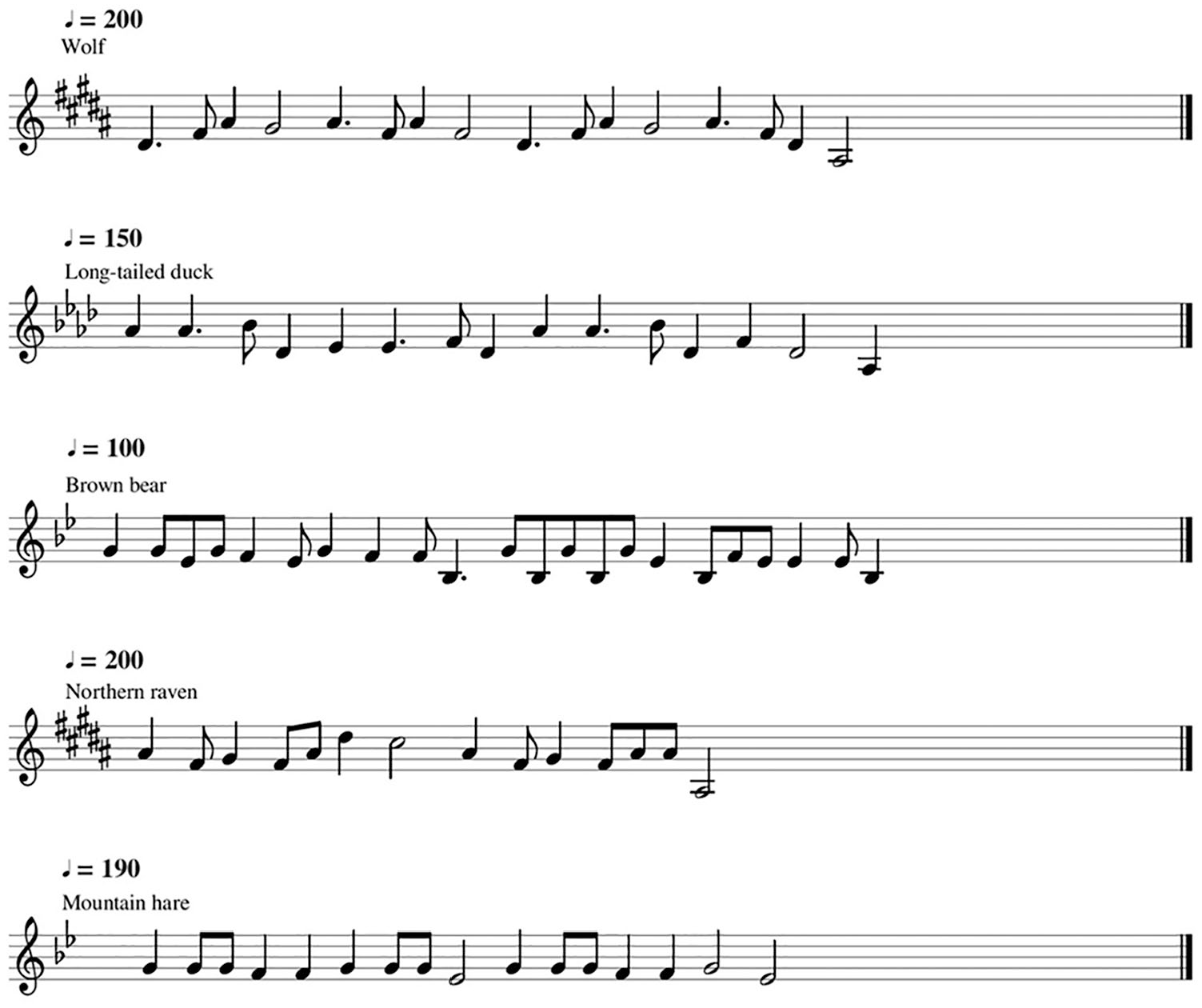
Transcriptions of the Yoiks Played to Participants. These Scores Are Indicative and Do Not Render the Microtonal Complexity of Each Melody.
Frode Fjellheim (2004), another prominent yoiker also known for his work as a music composer, described three of these yoik melodies in a book designed to teach beginners how to yoik. According to him, the bear’s and the hare’s yoiks both imitate animal movements; while the bear’s yoik uses melodic and rhythmic devices to evoke the bear’s walk and its occasional pauses to observe the surroundings, the hare’s yoik evokes the motion of a hare moving either slowly or fast, depending on the performance’s tempo; Fjellheim illustrates this by juxtaposing pictures of hare tracks in the snow, showing two different patterns. Fjellheim also comments the raven’s yoik, which relies on an onomatopoeia imitating the bird’s caws: rágo rágo rágo go.
The long-tailed duck’s yoik also evokes animal sounds, this time through melodic movements resembling the bird’s peculiar vocalizations (Graff, 1985, p. 129). The wolf’s yoik is supposed to imitate a specific hunting behavior, namely, its “final attack on the reindeer,” using a fourth interval “pushed toward the tritone, a particularly dissonant interval, known as Diabolus in Musica in medieval times” (Sinding-Larsen, 2019, p. 194)—this “tritone” stems from the fourth note in the transcription, situated somewhere between G# and A. While the Sámi’s relationship with the wolf is a complex and ambiguous one, reindeer herders have been known to describe it as the Devil’s creation (Turi, 1910, p. 174).
Finally, the moose’s yoik does not appear to imitate any particular feature of the animal in an explicit way. Musicologists have suggested that large animals are generally evoked with large interval leaps (Danckert, 1956, p. 291; Laade, 1958, p. 494); while this is the case here, the melody seems to evoke the animal as a whole rather than any specific aspect quality.
Kautokeino
Kautokeino (“Guovdageaidnu” in North Sámi) is a municipality located in the region of Finnmark, in northern Norway. It has a population of nearly 3,000 inhabitants, including 1,400 reindeer owners. In total, 90% of its inhabitants use North Sámi as their first language. The population density is about 0.3 inhabitants per km2. It is an emblematic place for yoiking and reindeer herding, home to numerous renowned Sámi yoikers and hosting the Sámi Grand Prix, an annual yoik contest. It also hosts various Sámi institutions, like the Beaivváš Sámi Theatre and the Sámi University of Applied Sciences. The landscape is one of tundra-covered mountainous plateau crossed by the Alta-Kautokeino River.
Among the animals presented during the experiment, the moose, the raven, the long-tailed duck, and the hare can be observed within the municipality. Wolves and bears are no longer settled in the area but occasionally visit the area from Finland.
The Belgian Ardenne
Participants in Groups A and B were students in a public school located in the High Ardenne, in Belgium. Participants in Group C came from locations situated within a range of 10 km around the school. The school’s municipality is home to 7,000 people, with a density of 84 inhabitants per km2. The closest large city is Liège, located 45 km away, and French is the main language spoken in the area. The landscape is one of forested and meadow-covered hills and fen-covered plateaus.
Among the animals presented during the experiment, only the raven can be observed in the region, although the carrion crow is more common. Observations of wintering long-tailed ducks are too rare to be taken into account. The moose and the bear lived in the region until the Middle Ages, but the former is today perceived as a “northern” animal. The wolf disappeared during the 19th century, but has recently returned and settled in the area.
Participants
Experiments 1 and 2 were undertaken with 114 participants, originally split into the following three groups:
Group A: 36 children from third maternal school class (4–5 years old), 20 female and 16 male.
Group B: 38 children from a fifth to sixth primary school class (10–11 years old), 21 female and 17 male.
Group C: 40 adults (26–79 years old), 23 female and 17 male.
Experiment 3 relied on a questionnaire submitted only to group C.
Experiment 1
Methodology
Each participant listened to three yoik recordings through headphones. For each recording, they were presented with two cards representing animal pictures and asked, “which of these animals does the song make you think of?” The pictures were created from photographs (Figure 2) and designed according to the same pattern, picturing male animals as black silhouettes on a white background, facing right, standing, and looking straight ahead, in order to eliminate biases in photographs or detailed pictures.
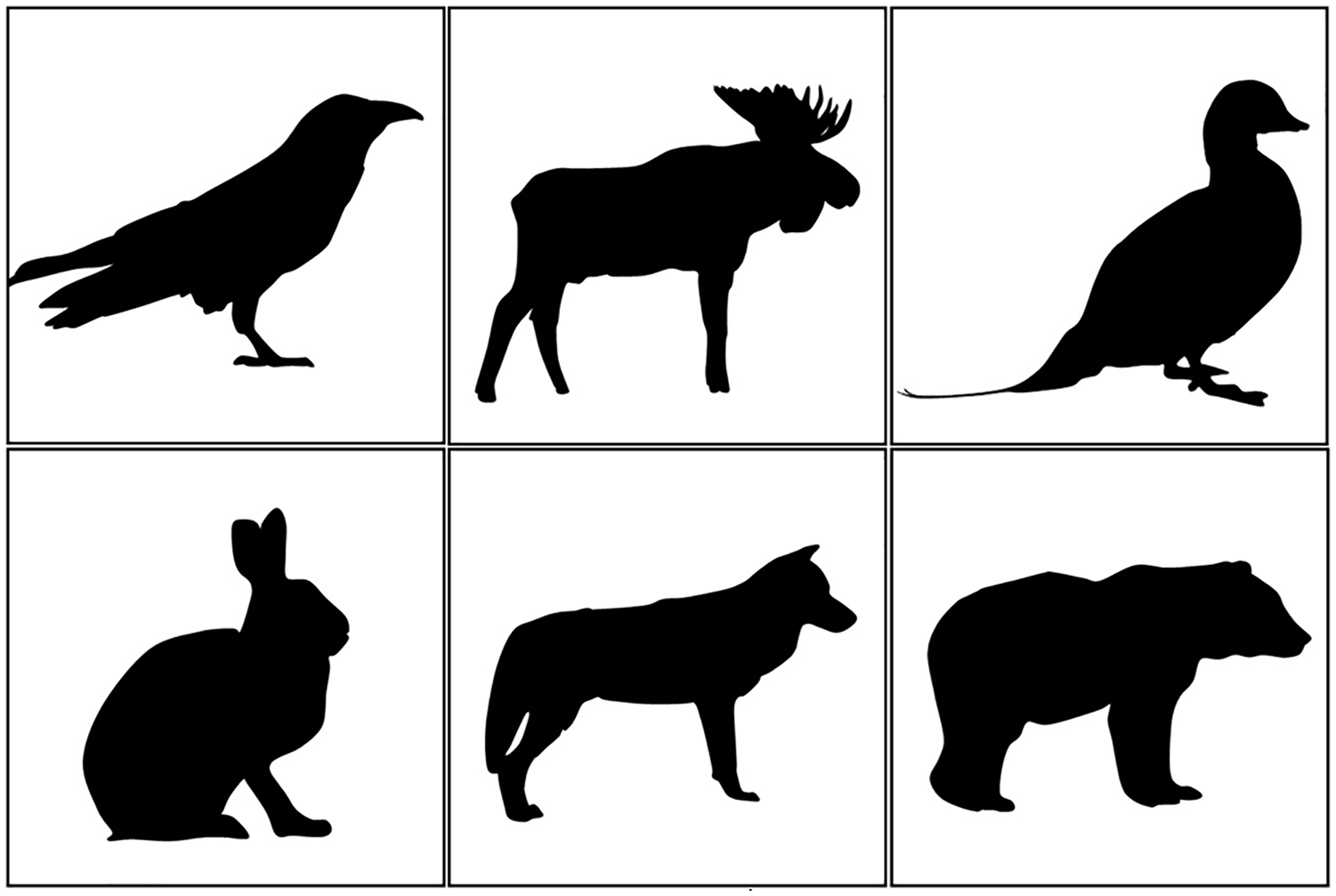
Animal Pictures Presented to the Participants.
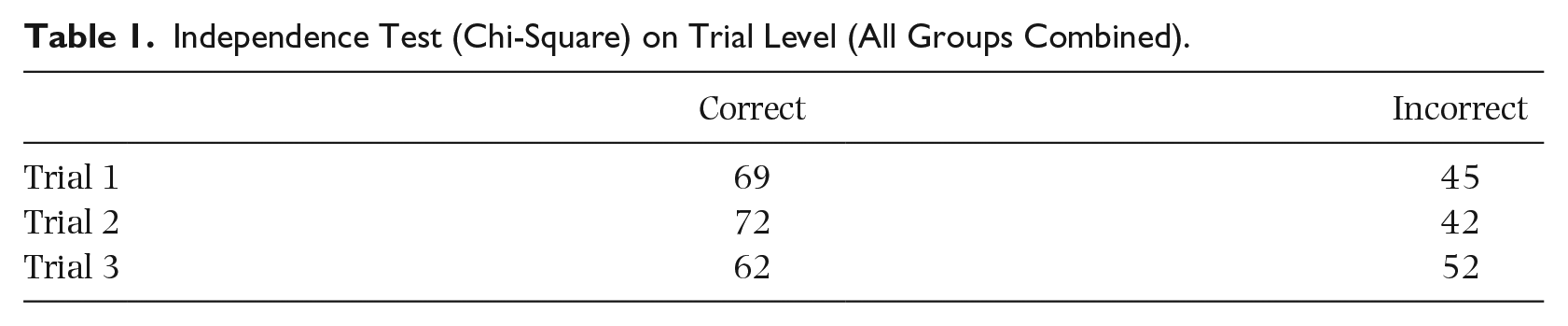
The participants passed the tests individually. They were not informed on the yoik tradition and the origins of the melody, nor on the fact that the melodies actually referred to an animal. They were free to answer while the yoik was playing or to wait until it was finished. The test was conducted three times with each participant, each time with a different pair of animals, so that each participant was presented the six animal cards but heard only three yoiks, in order to avoid repeated exposure to the same yoik or the same cards and to approach conditions where each trial (n = 342; that is, 3 × 114) may be considered independent (this independence was afterward tested, see “Results and discussion” section).
The pairs of animals, their order of appearance, and which of the two animal yoiks was played were changed with each participant, so that in a group of 20 people, each yoik was played 10 times and each possible pair of cards appeared four times. The playlist was generated in advance so that the investigator did not know which yoik was being played. The results were assessed in relation to chance level and sample sizes.
Results and discussion
Out of 342 yoiks played, participants managed to guess the correct answer 203 times, that is, a success rate of 59.36%. Given the number of attempts (n = 342; the independence of each trial was tested using chi-square test: χ²(2, n = 342) = 1.9, p = .38, see Table 1), this score lies significantly above chance level (Binomial test p-value < .001), even though the success is modest. This supports the hypothesis that, to a certain degree, listeners with no former knowledge of the yoik tradition can identify animals from their yoiks.
Independence Test (Chi-Square) on Trial Level (All Groups Combined).
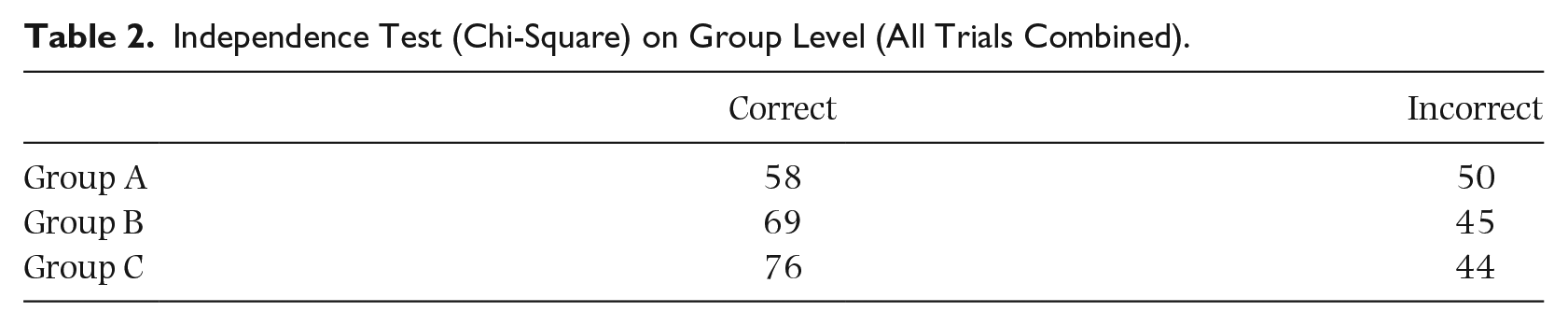
The division of participants into three groups was intended to test the hypothesis that young children reach better scores than adults. On the contrary, only groups B and C scored significantly above chance level (Binomial test p-values = .015 and .002, respectively; these are robust to Bonferroni correction with α = .05/3 and .01/3, respectively; Figure 3). These results recall recurring observations of a “threshold” in the musical development of children around 6–8 years old, notably in their perception of modes and emotions (Balkwill et al., 2004; Cespedes-Guevara & Eerola, 2018; Fritz et al., 2009; McDermott & Hauser, 2005; Stachó et al., 2013). However, group-level analysis (chi-square and Kruskal–Wallis tests) does not provide conclusive evidence of a threshold for yoik perception, χ2(2, n = 342) = 2.3, p = .32; H(2) = 3.05, p = .22 (see Table 2 and Figure 4).
Independence Test (Chi-Square) on Group Level (All Trials Combined).
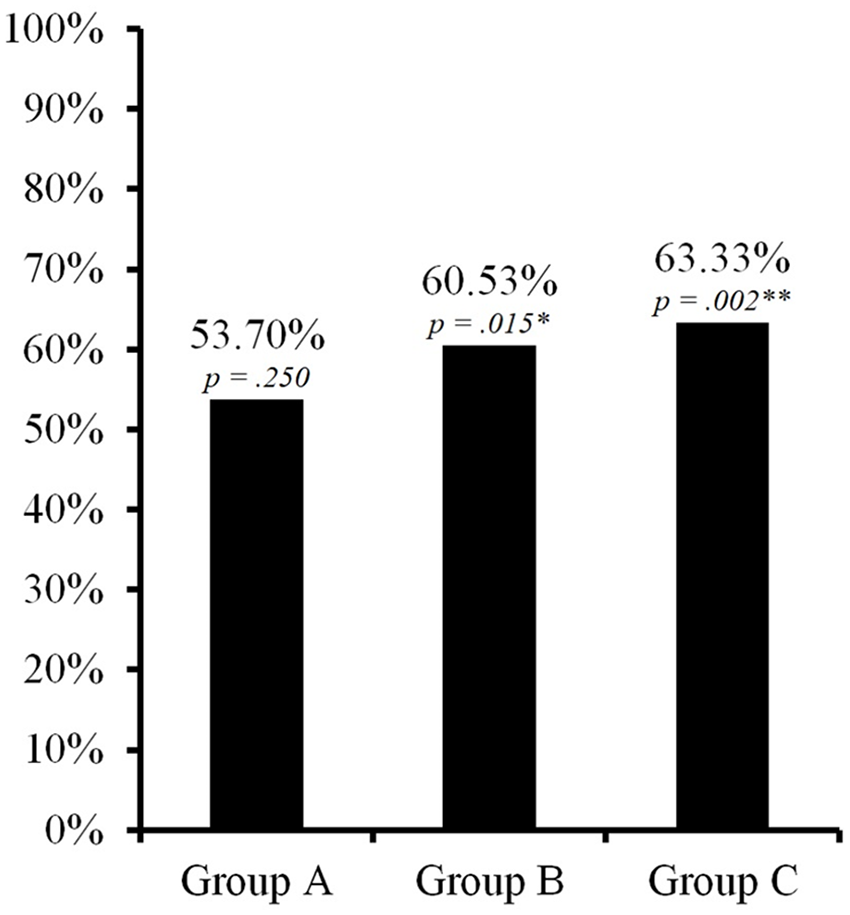
Success in Experiment 1 in Each Group.

Total Score in Experiment 1 for Each Participant.
When looking at each animal separately, only the hare and the bear were guessed above chance level (Binomial test p-value = .0016 and .0038, respectively; these are robust to Bonferonni correction with α = .01/6 and .05/6, respectively; Figure 5). The yoiks that gave the best success rates are therefore those that evoke the movements of animals.
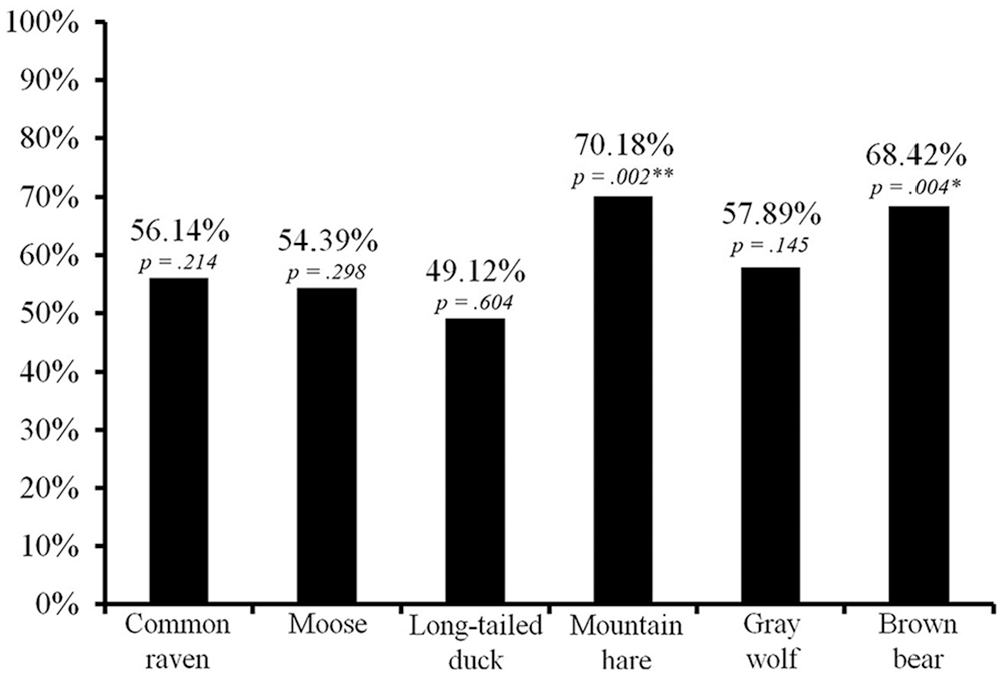
Success in Experiment 1 for Each Animal.
The fact that the participants did not reach significant results with yoiks evoking sounds may be interpreted as follows: the long-tailed duck’s vocalization is peculiar and unknown in Belgium, while the raven’s onomatopoeia rágo rágo rágo go slightly differs from the French croa croa. The lack of significant success with the wolf could stem from diverging perceptions of the animal: its supposedly “evil” or “disruptive” nature evoked by the tritone hardly fits with the friendly image conveyed in contemporary French-speaking popular culture (Pastoureau, 2018), especially in an area where free-range herding is not practiced. As for the moose, the animal is not well known in Belgium and its overall aspect differs from deer species present in the participants’ region (e.g., red deer, roe deer).
Experiment 2
Methodology
Immediately after Experiment 1, all participants were asked to name the animals pictured on the cards. This experiment had the following two aims: (1) determining whether results in Experiment 1 for each animal could be predicted by the capacity to recognize them on pictures and (2) identifying the most common mistakes for each picture (hereafter, labeled “alternative animals”) that would serve in Experiment 3.
Results and discussion
Figure 7 presents the number of times the participants identified animal pictures correctly and, for each of these animals, the number of times they answered with the corresponding alternative animals, which were all animals living in the participants’ region (Figure 6).
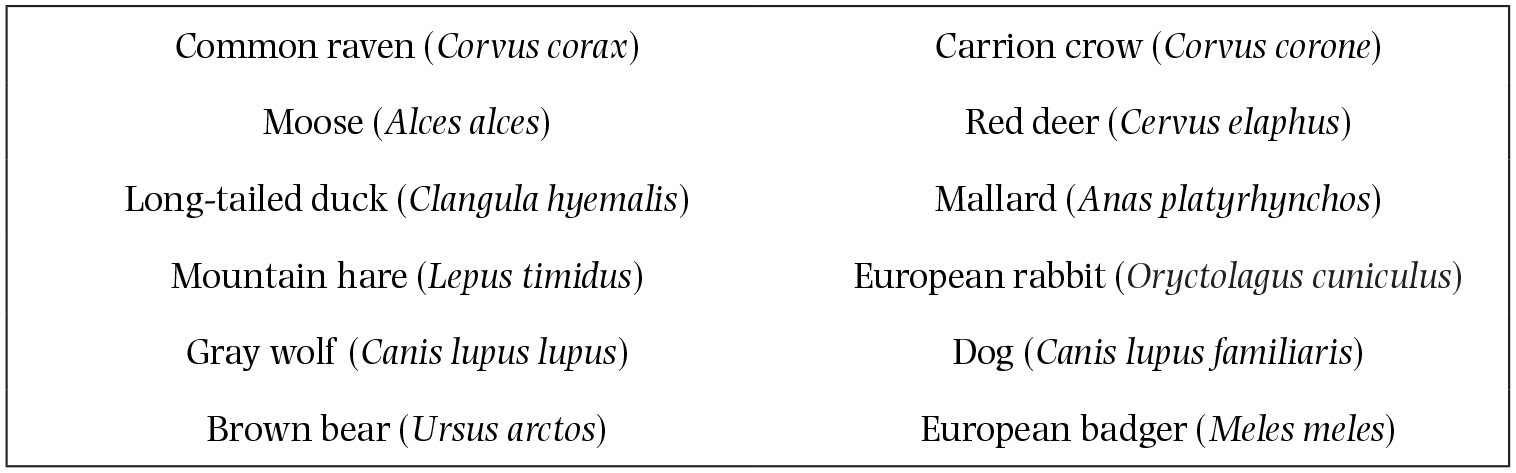
Animals on Pictures (left) and Local Alternatives (right).
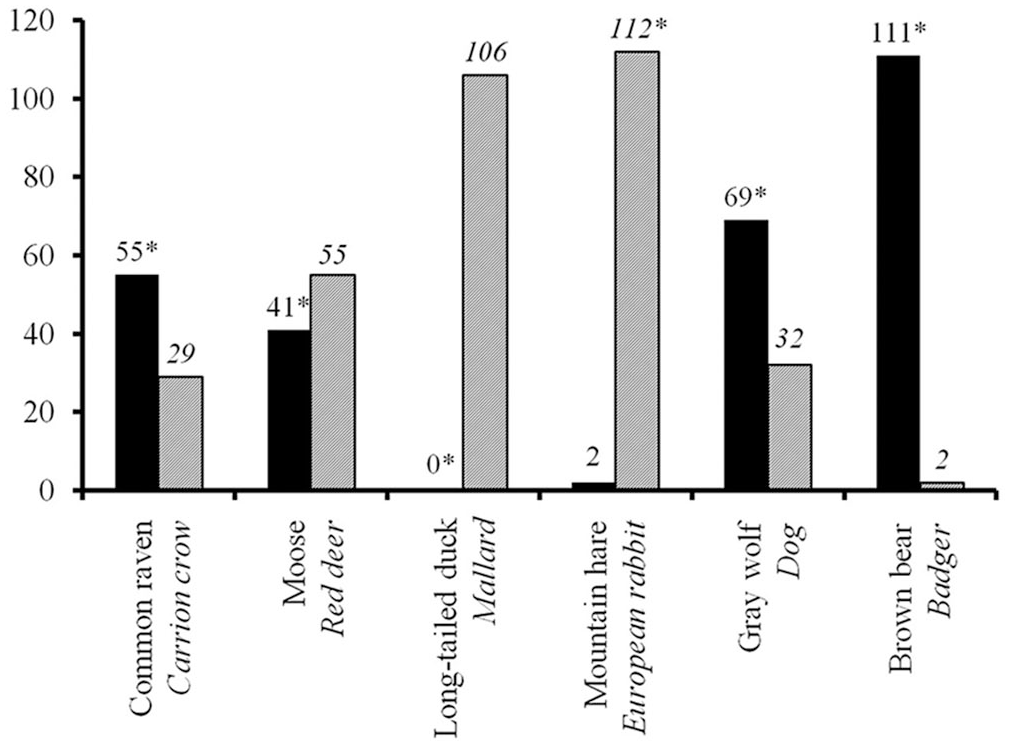
Number of Correct Animals and Alternative Animals Mentioned in Experiment 2.
Besides these “typical” alternatives, some participants identified the raven simply as a “bird” and the long-tailed duck as a “duck.” Only three participants from group A failed to recognize the bear, identifying twice as a badger and once as a “werewolf.” As for the mountain hare, it was almost systematically identified as a rabbit. This is a predictable mistake; compared to the European hare (Lepus europaeus) living in Belgium, the mountain hare has a rounder silhouette and shorter ears, making it similar in shape to the European rabbit.
Regressive and Spearman’s correlation analyses did not reveal any dependence between the score for each animal in Experiment 2 and those in Experiment 1. Regarding results from Experiment 2, both sets of responses were tested: number of correct answers and number of mentions of the alternative animals. From this perspective, the “familiarity hypothesis,” according to which the animals most familiar to the participants are more easily recognized from their melodies, is not verified. Further analyses were conducted to assess which combination of results between these two sets best predicted results in Experiment 1. The best model was found by relying on the number of correct answers and replacing the hare’s score with the rabbit’s, R2 = .96, F(1, 4) = 87.44, p = .0007; rs(6) = 1. The regression results were robust to Bonferroni correction (α = .05/64, accounting for all 64 pairs of results in Experiment 2).
Since the hare had the highest score in Experiment 1, the fact that the results were best predicted by supposing that its picture represented a rabbit is noteworthy, as it suggests a form of productive “misrecognition.” Indeed, it appears as if believing that the card actually pictured a rabbit (an animal highly familiar to the participants, as shown in Experiment 3) improved their performance with the hare’s yoik. In fact, the term “mis-recognition” is barely appropriate given that both animals are similar in all relevant features for Experiments 1 and 2. Besides their similar shapes, their tracks in the snow (used by Frode Fjellheim to illustrate the yoik, see above) present common patterns, indicating similar movements.
In contrast, assuming that the animal represented on the long-tailed duck’s card was a mallard would be an unproductive misrecognition, since the corresponding yoik imitates a type of vocalization radically different from the mallard’s. Consequently, the low success rate with this yoik is better predicted with the incapacity of participants to recognize the picture than with their assumptions that it is a mallard or simply a “duck.”
Experiment 3
Methodology
Immediately after Experiments 1 and 2, participants from group C filled a questionnaire in the form of a grid evaluating their familiarity with each animal from 1 (“I do not know this animal”) to 5 (“I am perfectly familiar with this animal”). The grid included the animals evoked by the yoiks and the alternatives highlighted in Experiment 2 (all experiments with groups A and B were completed before turning to group C; common mistakes in Experiment 2 in groups A and B were the same as in group C). The participants also indicated whether they had seen the animals in their natural habitat and/or in captivity (the dog was omitted from this last part of the questionnaire, as the notions of its “natural habitat” and “captivity” were confusing).
As in Experiment 2, the purpose of Experiment 3 was to assess whether results in Experiment 1 for each animal (all groups combined) could be predicted by familiarity with animals evoked by the melodies or their local alternatives. This experiment was not conducted with children, since participants in group A could not read and, according to one of their teachers, even group B might be confused by the questionnaire and provide unreliable data.
Results and discussion
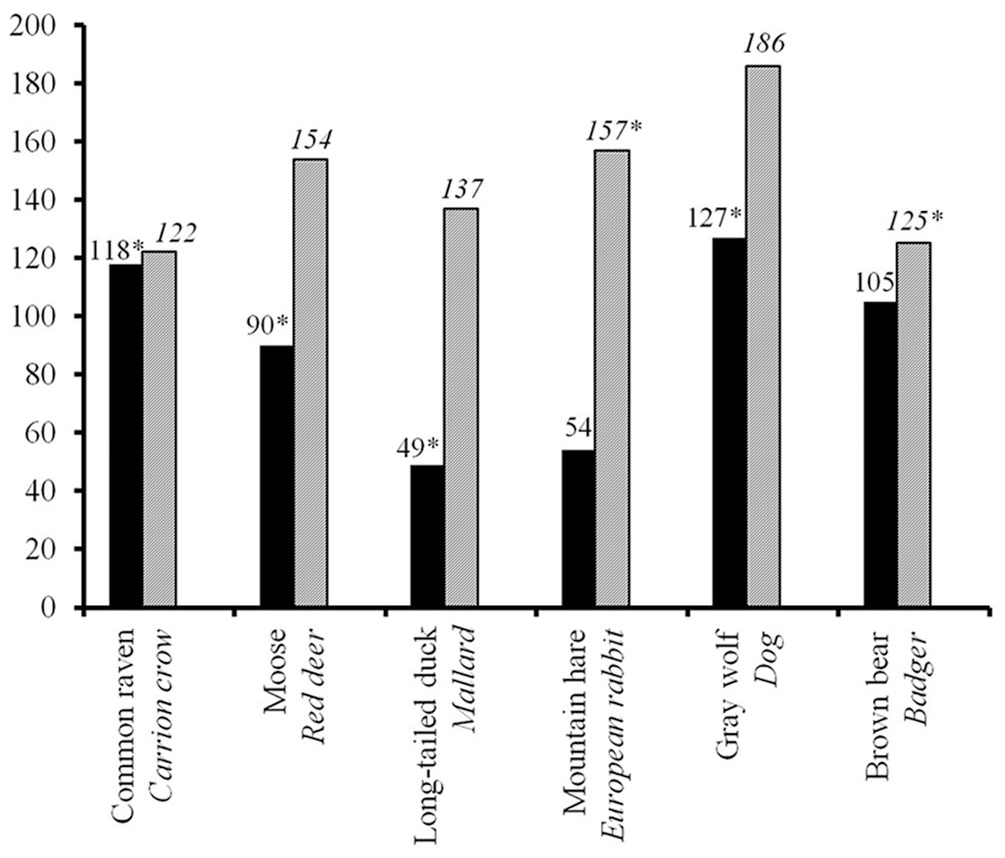
Among the animals evoked by the yoik, the wolf, the bear, and the raven were the most familiar ones (Figure 8). This could be expected, since these are also Indigenous to the participants’ region. A high number of participants have seen the animals evoked by the yoiks in captivity (Figure 9). Apart from the long-tailed duck, they can all be observed in a zoological park located 25 km away from the school. They have rarely been seen in their natural habitat, except for the raven. As for the alternative animals, the results indicate that participants considered their familiarity as very high and that most participants have observed them in their natural habitat, including the discrete badger.
Sum of Familiarity Scores from All Participants for Each Animal.
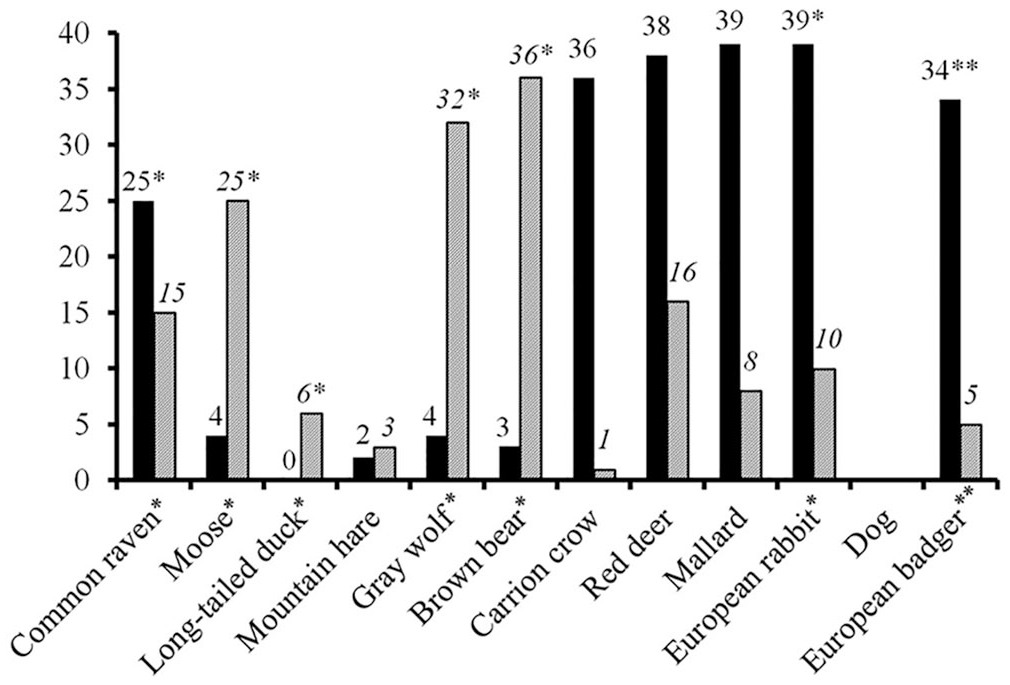
Number of Participants Having Observed Each Animal in its Natural Habitat (Black-Filled) and in Captivity (Striped).
In order to relate these results to Experiment 1, the same approach as in Experiment 2 results was adopted. As was the case then, the total familiarity score for the animals evoked by the yoiks or their alternatives did not predict their respective scores in Experiment 1; the “familiarity hypothesis” was, therefore, not immediately verified. The model that best predicted success in Experiment 1 was again a hybrid one, in which familiarity scores with four animals evoked by the yoiks (raven, moose, long-tailed duck, and wolf) are combined with the local equivalents of the two other animals (rabbit instead of hare and badger instead of bear), R2 = .74, F(1, 4) = 11.23, p = .0286; rs(6) = .9429, p = .0048. Although these results are not robust to Bonferroni correction, the fact that they imply the two animals most easily recognized in Experiment 1 is significant.
Conducting the same analyses between results in Experiment 1 and the number of participants who observed each animal gave similar results. These analyses relied on the highest score for each animal between observation in natural habitat or captivity, thus retaining the most common way of observing each species. The best model was found by replacing the hare with the rabbit, R2 = .80, F(1, 4) = 15.53, p = .0170; rs(6) = .9856, p = .0003. Replacing the bear with the badger only slightly affected the results, as both have been observed with nearly as many participants (one in its natural habitat, the other in captivity), R2 = .77, F(1, 4) = 13.05, p = .0225; rs(6) = .9856, p = .0003.
These observations strengthen the suggestion presented in Experiment 2 that the rabbit may be considered a productive “misrecognition” of the hare in Experiment 1. This might also be valid for the badger, even though it could not emerge as a valid “misrecognition” in Experiment 2, since almost all participants recognized the bear’s picture. In French, the badger is sometimes called petit ours des campagnes (“country’s little bear”), due to its morphology, diet, and tracks resembling those of a small bear (the badger being a discrete animal, its presence is often inferred from its tracks). As in the case of hares and rabbits, this suggests that the yoik’s evocation of bear movements might as well evoke a badger.
General discussion and conclusion
The main experimental results can be summarized as follows:
Listeners with no prior knowledge of the yoik appear capable of recognizing animals from their melodies significantly above chance level, although with modest accuracy.
Children do not reach better scores than adults; the results actually suggest the opposite but do not allow any conclusive statement.
Taken individually, the two yoiks recognized significantly above chance level are those evoking animal movements, namely, the hare and the bear.
Familiarity with specific animals only predicts success in Experiment 1 under certain conditions, namely, if we assume that the hare’s picture represents a rabbit and the participants relied on their familiarity with rabbits and badgers rather than hares and bears.
Before interpreting results such as these as indicative of universals features in human musical cognition, particular attention should be given to relational dimensions in cross-cultural experiences. For example, the observation that people were more responsive to the evocation of movement may merely be due to the fact that the participants live in an area where animals resembling those evoked by the yoik and moving in similar ways are regularly observed. This type of order, where apparently universal understandings emerge from diverging perspectives, is notably known in anthropology through Anna Tsing’s notion of “friction” (Tsing, 2004). Further research is needed to assess whether this “relational” paradigm may not only grant more attention to alternative musical experiences, but also prove more rigorous in its interpretative framework.
These results also point to potential benefits for cross-cultural studies on music to follow the “non-human turn” already taken by ethnomusicology and specialized fields, such as ecomusicology and zoomusicology. In a recent paper, Michael Silvers (2020) listed several ways in which attending to the agency of animals has indeed improved (or could improve) our understanding of human musicality. The following element could be added to his list: attending to non-humans may at least unsettle some interpretative habits in cross-cultural studies and assess whether universals may be easy answers covering potentially more interesting, “interrelational” processes (Despret, 2016, p. 32). This would imply reinserting human cognitive and musical abilities in what could be called “relational places,” that is, biocultural environments emerging through specific livelihoods and relationships with the land, its animal and plant life, reflecting Indigenous understandings of place in the Sámi area (Ingold & Kurttila, 2000, p. 186).
Returning to Fritz and colleagues’ (2009) study, the supposition that the Mafas in North Cameroon constitute a population entirely isolated from the “West” and, as such, have something to tell us about musical universals, is profoundly nested in an ontological vision proper to European modernity, labeled by the anthropologist Philippe Descola (2013) as “naturalism,” that is, the assumption that the world is divided into two separate realms, nature and culture. In a nutshell, the reasoning takes the form of a syllogism: The Mafas can relate to Western musical emotions. This ability is not cultural, since they are isolated. Therefore, this ability is natural (i.e., innate and universal).
Even if we ignored the fact that the Mafas have been in regular contacts with neighboring population and with the “West” (notably through colonial experiences and visits by several generations of ethnologists), what seems crucial is whether their status of “naive” listeners is a preexisting fact or a product of the experimental design. More attention to their relational environment, to the ways in which they experienced “Western music” and its ontology (beyond the correct/incorrect measurement), or to their perception of the experiment’s purpose and interest might have informed how the Mafas, like any experimental subjects, acted as resourceful actors in response to propositions that were not innocent. In the study as it stands, the Mafas were not left any possibility of saying anything intelligent; from a postcolonial perspective, this poses not just methodological, but also ethical issues. One way to address cross-cultural processes in more careful ways may be to allow diverging voices (in particular, Indigenous ones) to affect the experimental designs and interpretative frameworks, or to respond to it interestingly (Latour, 1999, p. 144).
In the experiments earlier, I have tried to follow this agenda through a relational perspective by starting from questions that Indigenous singers actually found interesting and relevant, by choosing participants belonging to a culture that I knew well enough not to reduce it to a random “non-Sámi” environment, and by trying to take into account their own knowledge and local ecology. This perspective echoes earlier research in music psychology emphasizing the importance of local attitudes toward emotions (Susino & Schubert, 2016), the difficult translation of emotional or mood categories (Hu & Yang, 2017), or the entanglement of listening experiences in physical and cultural environments (Clarke, 2005). Surely, the experiments above remain blind to a large part of what makes musical experiences in Kautokeino and in the Belgian Ardenne interesting, but they can at least provide elements of responses to the circumstantial issues exposed in the introduction.
In sum, displacing the issue of emotions by turning to the evocation of animals illustrates the need for a “down-to-earth” approach in cross-cultural studies, informing us about the entanglement of human musicality in “relational places” and the productive biases these offer to relate with one another.
