




Abstract
White spot lesions (WSLs) have been reported to occur in a majority of orthodontic patients who undergo multibracket appliance treatment. WSL scores are proven to be higher in total-etch techniques as compared to partial etching, with no difference in bond strengths. It is thus very important to prevent unnecessary etching and demineralization of enamel in those areas where it is not needed and to etch only the surface intended for bracket bonding. This article describes a simple method to limit the flow of the acid etchant to the area on the tooth surface receiving the bracket, with the added advantage of a positioning gauge on the etchant applicator.
A Simple Method to Restrict the Flow of the Acid Etchant on Enamel
Acid etching of tooth surfaces to promote bonding of orthodontic attachments to the enamel has been a routine procedure in orthodontic treatment. A variety of etchants have been used for enamel pretreatment, of which the most common is 37% phosphoric acid which removes anywhere between 3 and 10 µm of enamel. 1
Although it is important to etch the tooth surface adequately so as to give an acceptable bond strength to the orthodontic attachment, it is essential to ensure that a limited surface of the tooth is etched, that is, only the surface of the tooth that will be bonded should be etched.
The presence of white spot lesions (WSLs) is of considerable importance, given that demineralization is often associated with orthodontic treatment. WSLs have been reported to occur in 2-96% of orthodontic patients who undergo multibracket appliance treatment.2–4 In addition to the demineralization of enamel causing WSLs, poor oral hygiene is also an added factor.
WSL scores are proven to be higher in total-etch techniques as compared to partial etching, with no difference in bond strengths. 5 It is thus very important to prevent unnecessary etching and demineralization of enamel in those areas where it is not needed.
This article describes a simple method to limit the flow of the acid etchant to the area on the tooth surface receiving the bracket, with the added advantage of a positioning gauge on the etchant applicator.
Fabrication and Use
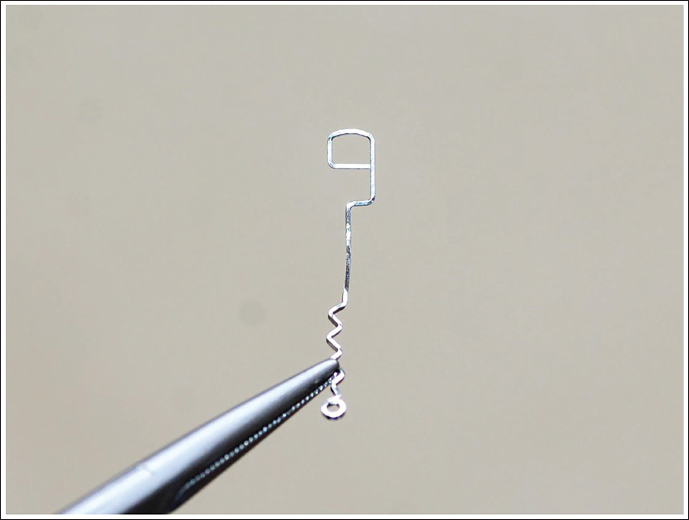
A 0.019″ × 0.025″ straight-length stainless steel wire is bent to form the outline of a standard orthodontic bracket (Figure 1).
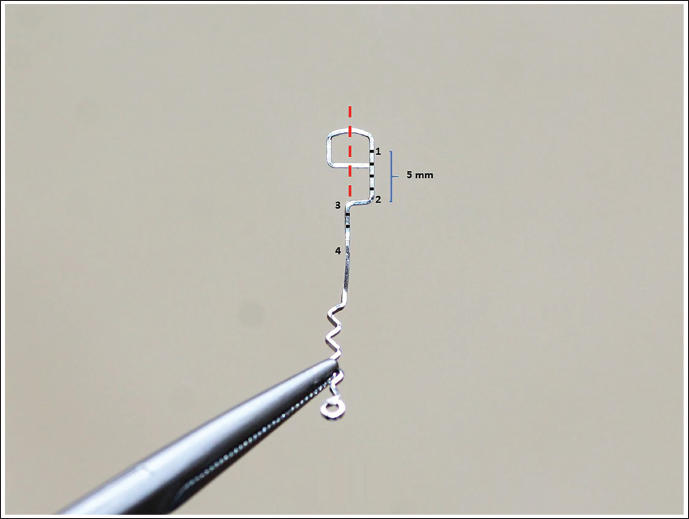
The distance between points 1 and 2 is kept at 5 mm (Figure 2), where point 1 would hypothetically coincide with the bracket slot. Thus, if point 2 is held coinciding with the incisal edge, the bracket will approximately be positioned 5 mm from the incisal edge.
Bend the wire from point 2 (90° inward) as shown, such that lines 3-4 coincide with the long axis of the tooth and the midpoint of the bracket (Figure 2).
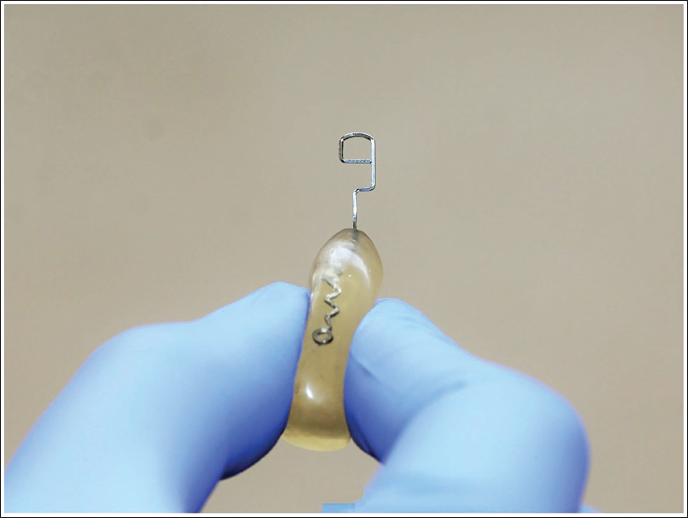
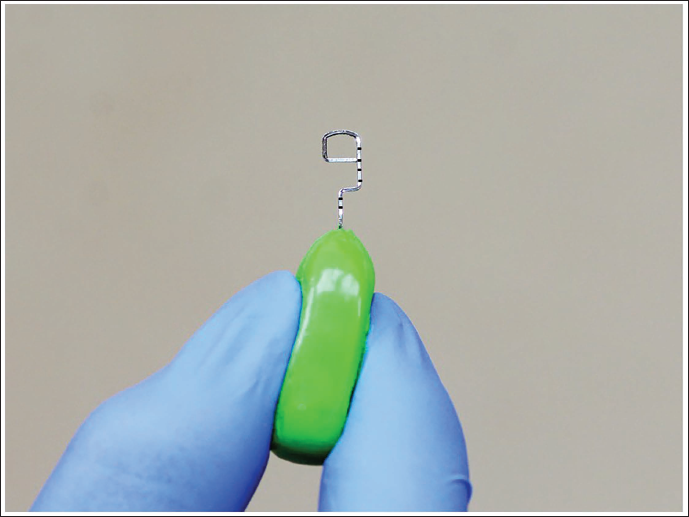
From point 4, bend the free end of the wire in a zig-zag fashion as shown (Figures 2 and 3), so that it can be incorporated into a handle made with acrylic (Figure 4).
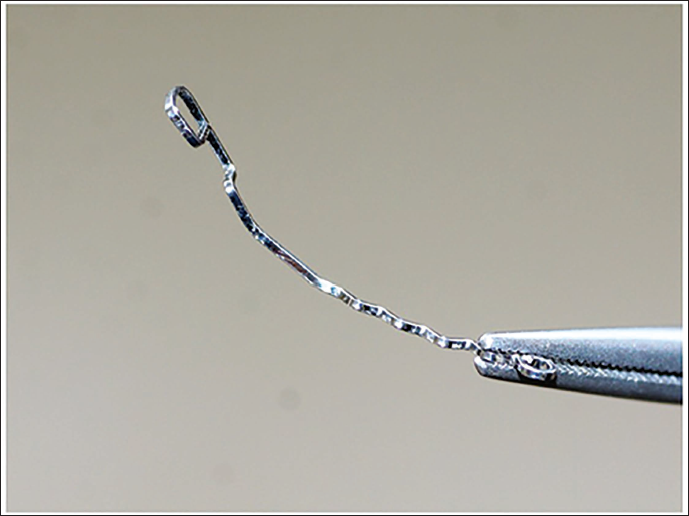
Figure 3 shows the wire framework from the profile view.
This completes the fabrication of the “limit flow etchant applicator.” The acrylic handle can be colored, and millimetric markings can be made on the wire framework if needed (Figure 5).
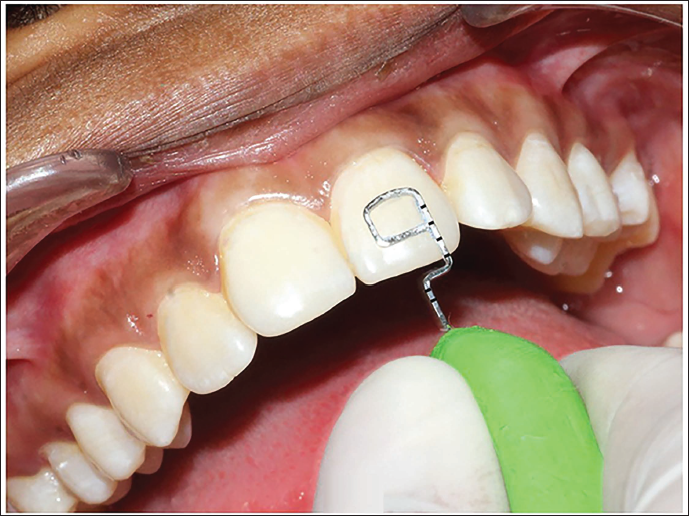
The applicator is held on the tooth at the approximate intended height (Figure 6), and the etchant is applied inside the wire framework depicting the bracket outline (Figure 7).
After application of the etchant, the applicator is lifted off from the tooth.
A 0.019″ × 0.025″ Straight-length Stainless Steel Wire is Bent to Form the Outline of a Standard Orthodontic Bracket.
Markings and Specifications of the Wire Component of the Applicator.
Profile View of Etchant Applicator.
Acrylic Handle with Wire Component.
Limit Flow Etchant Applicator.
The Applicator is Held on the Tooth at the Approximate Intended Height.
The Etchant is Applied Inside the Wire Framework Depicting the Bracket Outline.
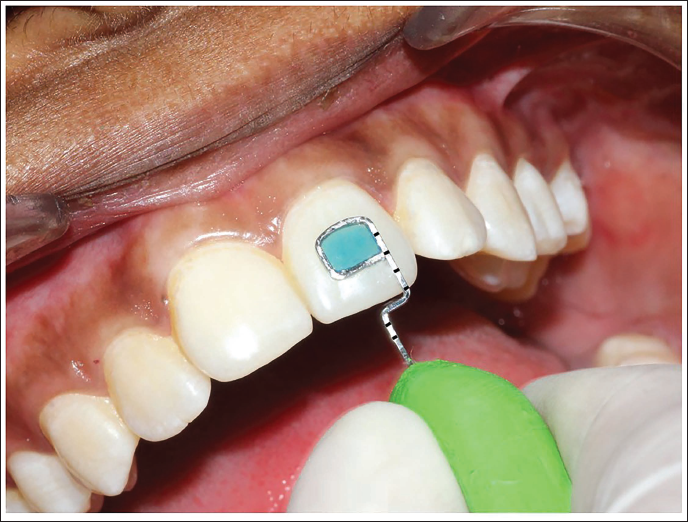
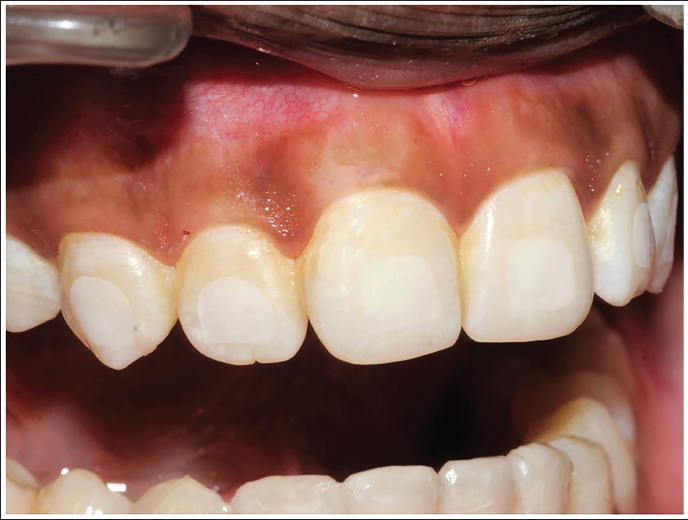
The etchant flow can thus be limited only to the bracket surface area on the teeth (Figure 8), such that only the necessary area is etched, and it appears frosty white upon air drying (Figure 9).
The Etchant Flow Can Thus Be Limited Only to the Bracket Surface Area on the Teeth.
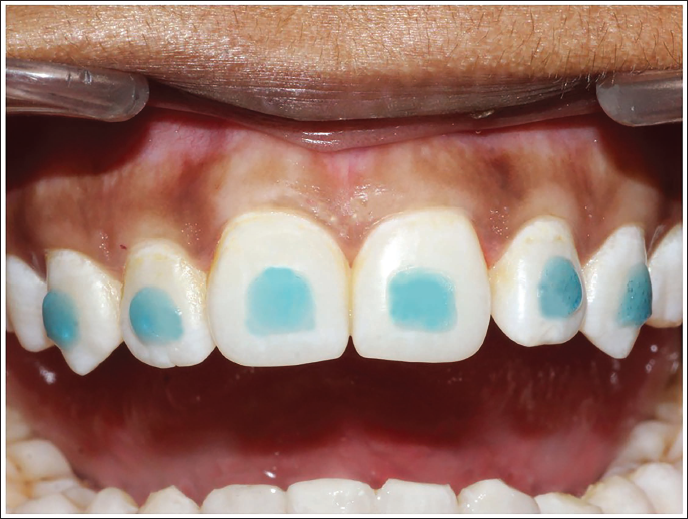
Only the Necessary Area is Etched and the Enamel Appears Frosty White on Air Drying.
Advantages
The applicator helps in limiting the application of etchant to the desired area.
It helps in precise etching of the tooth surface in vertical and horizontal directions.
The average time taken to complete the etching of one arch, using the gauge, is around 20-30 seconds.
Footnotes
Declaration of Conflicting Interests
The authors declared no potential conflicts of interest with respect to the research, authorship, and/or publication of this article.
Ethical Approval
Ethical clearance for the study was obtained from the Institutional Ethical Committee.
Funding
The authors received no financial support for the research, authorship, and/or publication of this article.
Informed Consent
Patient consent was taken for the clinical photographs.
