



Abstract
Objective
To investigate the dynamic aspect of attractive smile and smile parameters in different growth patterns.
Methods
Participants ranging in age from 17 to 25 years were randomly selected and videographic records of smile were obtained. A panel of two orthodontists, two prosthodontists, and two laypersons were involved in the selection of attractive smile. Inter-examiner variability was also assessed. The final sample of 84 participants with attractive smile were grouped into three categories based on clinical FMA into average, horizontal, and vertical growth pattern. Upper lip length = ULL-R, Lower lip length = LLL-R were measured on rest photographs. Upper lip length = ULL-S, Lower lip length = LLL-S, Upper lip thickness = ULT, Lower lip thickness = LLT, Maxillary incisal display = MID, Interlabial gap = ILG, Outer inter commissural width = ICW, Buccal corridor space = BC were measured on smile photographs. Pearson’s Chi-square test was done for the perception of attractiveness of smile. Differences among the three groups was subjected to one-way analysis of variance and Tukey’s post hoc test.
Results
Highly significant correlation was observed among orthodontists, prosthodontists, and laypersons in assessing attractiveness of smile. Vertical parameters such as upper lip length at rest, upper lip length during smile, lower lip length at rest, lower lip length during smile, and lower lip thickness (LLT) were significantly increased in the vertical pattern when compared with the average and horizontal growth pattern, whereas buccal corridor space was the least in horizontal growth pattern.
Conclusion
Growth patterns appear to have an influence on perception of smile esthetics and smile parameters. This suggests that care should be taken while framing treatment goals considering the significant differences among growth patterns. Strong correlation was observed among orthodontists, prosthodontists, and laypersons in assessing attractiveness of smile. ULL-R, ULL-S, LLL-R, LLL-S, and ΔULL show a significantly higher value in vertical growth pattern when compared to average and horizontal growth pattern. The buccal corridor space (BC) among the participants was the least in horizontal growth pattern.
Introduction
The paradigm shift in orthodontics has led to an emphasis on soft tissue diagnosis and treatment strategies focusing on esthetics. 1 The characteristics of malocclusion in the frontal view has become important instead of greater emphasis solely on profile in the past. Smile is a key component of facial esthetics, which continues to be an important consideration in treatment planning. 2
In modern society, physical attractiveness is a social aspiration. An attractive smile being one of its key features is often considered a quality in social interactions, career opportunities, etc. 3 Improvement in facial esthetics is the most common motivating factor for seeking orthodontic treatment.
The characteristics of smile are a result of static and dynamic interactions among dental, skeletal, and soft tissues of the face. Extensive literature on characteristics of smile and influence of facial patterns reveals that dentoskeletal pattern has static and dynamic influences on smile. No study has enquired about the characteristics of smile and influence of vertical skeletal patterns particularly on smiles deemed to be attractive. Existing studies have evaluated smile characteristics in randomly selected subjects. This may result in average values of smile characteristics of a population. Since smile esthetics is highly subjective especially among laypersons, it is important to examine characteristics of those smiles which are deemed to be attractive. A careful examination of smile characteristics in such subjects is essential to determine treatment goals, outcomes, and prognosis.
Smile analysis includes upper and lower lip lengths, changes in upper lip length (ULL), upper lip thickness (ULT), and LLT, inter commissural width, and buccal corridor. 4 Videography has been extensively used to examine the dynamic aspects of smile.
This study attempts to find characteristics of an attractive smile in subjects with different growth patterns and the contributing factors that govern the smile esthetics. A panel of orthodontists and prosthodontists and laypersons were recruited to evaluate the attractiveness of a smile. The conclusions thus obtained will help in determination of treatment goals.
Materials and Methods
Selection and Description of Participants
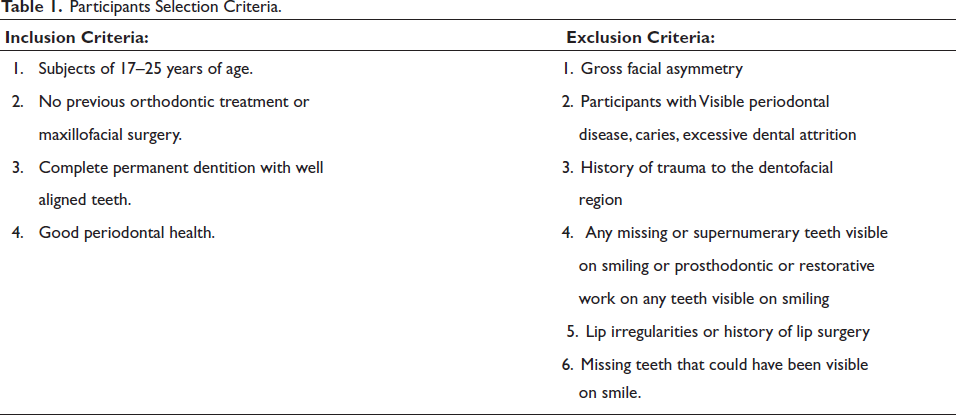
This cross-sectional study was conducted with 140 participants selected randomly among students and residents at the post-graduation section of orthodontics. The sample size was calculated using G-power-3.1.9.7. The participant selection criteria are described in Table 1. Necessary approvals were obtained from Institutional research committee and institutional ethical committee and informed consent was obtained from all participants.
Participants Selection Criteria.
Study Design
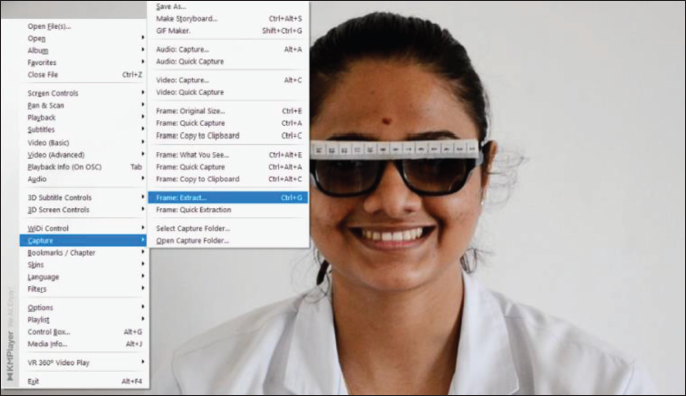
A Canon DSLR-200D was used to record the video clips of the subjects. The videographic equipment and method for recording dynamic smiles were largely similar to the previous studies. The camcorder was stabilized on a tripod stand and placed at a distance of 3 feet from the participant. The spectacle having a millimeter scale was worn by the participants while taking the videos and was later used for calibrating the photographs. Continuous focusing portrait light was kept behind the camera to prevent shadows in the video. The relaxed lip position and a smile of the individual participants was recorded. The digital video clips were imported into commercially available video editing software KM Player 4.2.2.58 for windows which provides individual frames, 30 images per second (Figure 1). The software automatically extracts frames from the video clip. This allows for frame-by-frame analysis of dynamics of smile from rest position to posed smile.
Extraction of Frames from Digital Video Clips by Using KM Player 4_xyz156198211db259.
Smile Analysis
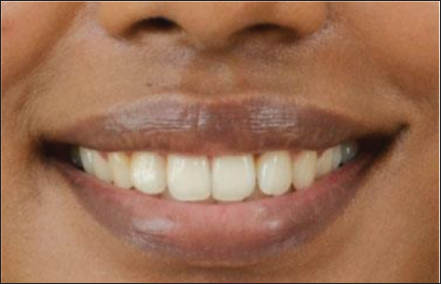
Two frames that represent the participant’s relaxed lip position and natural unstrained posed smile which was the widest commissure-to-commissure smile were selected and saved in JPEG file format. Each JPEG file was imported into adobe photoshop and cropped, leaving only a rectangular proportionate area of 6 × 4 inch that contained the perioral region, which is denoted as smile image (Figure 2).
Smile Image_xyz15619860845261.
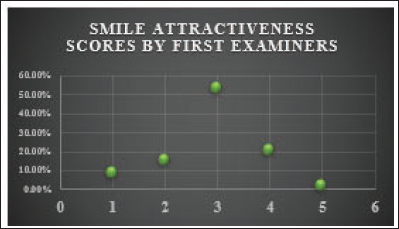
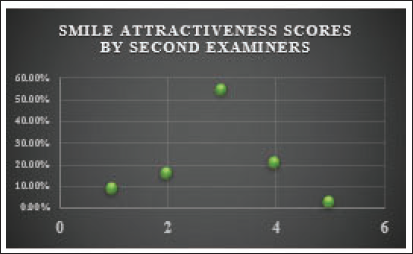
The smile images were deployed in slide carousels and shown to a panel of assessors. The panel consisted of two orthodontists, two prosthodontists, and two laypersons. The panel was given no specific information about the faces. They were allowed to assess the smile esthetics of every participant. Smile attractiveness was assessed as being very good looking, good looking, average, disharmonious, very disharmonious, and subsequently accorded a score with “very good looking” showing high (5) and “very disharmonious” showing low (1). The participants with final attractiveness score of 3.5 and above were included in the study (Graph 1A and 1B).
Smile Attractiveness Score Given by First Examiner_xyz1561987443cc24.
Smile Attractiveness Score Given by Second Examiner_xyz156198ccf44316.
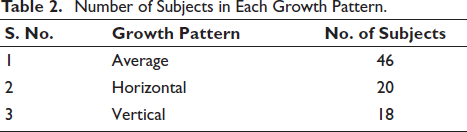
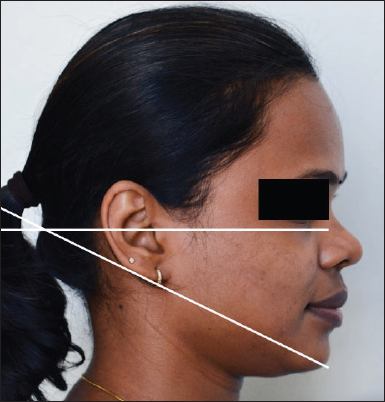
And a final sample of 84 participants with a high score for smile esthetics were selected and divided into one of the three groups – average, horizontal, and vertical skeletal pattern based on CLINICAL FMA by a panel of three orthodontists (Figure 3). Clinical FMA was evaluated by visualizing a tangent to lower border of mandible and Frankfort horizontal plane. The intersection of these planes when beyond the occiput is considered horizontal growth pattern, in front of occiput – vertical and at the occiput for average growth pattern. Such a method was used to avoid cephalogram, which would have unnecessarily caused radiation exposure. The final sample consisted of 46 subjects of average, 20 subjects of horizontal and 18 of vertical facial types (Table 2).
Number of Subjects in Each Growth Pattern.
Determination of Growth Pattern Based on Clinical FMA_xyz1561984875bef2.
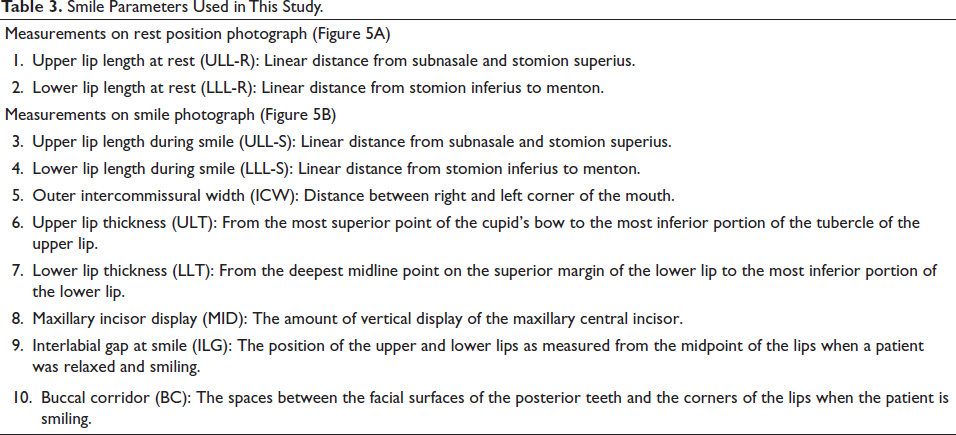
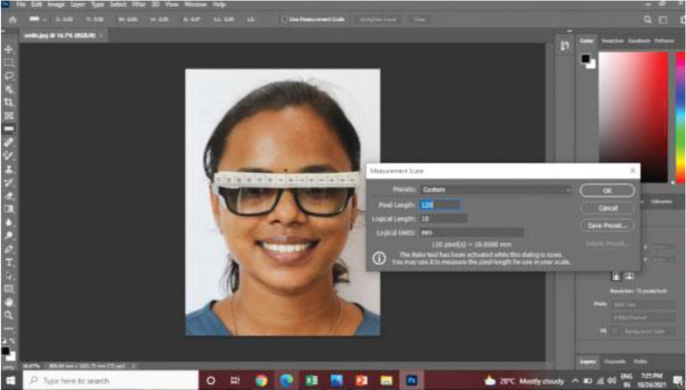
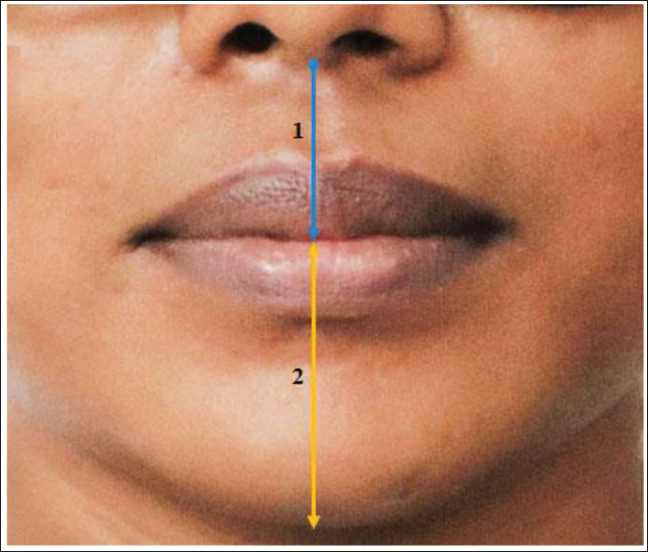
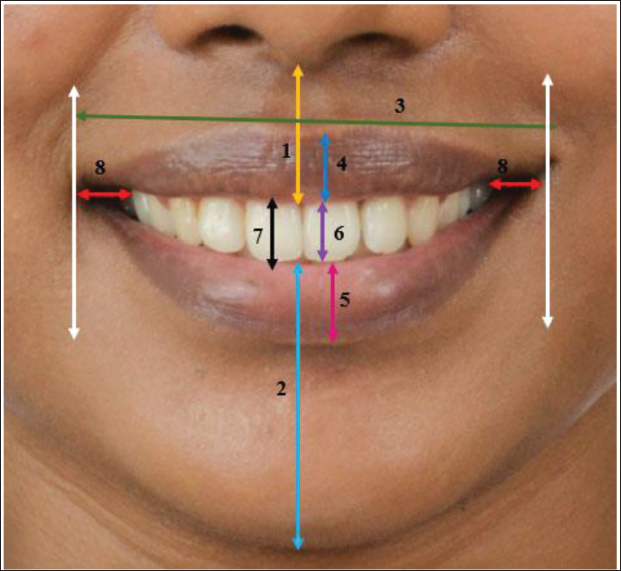
The smile parameters were measured by using Adobe photoshop software (Adobe Premiere Pro CC version 7.0.0). The method used to standardize the image was as described by Siddique et al. Scale and measurements were taken by drawing a line with the ruler tool and recorded from the measurement log panel that appeared in the window. For linear measurements in each photograph, the measurement scale was preset and customized. While setting the measurement scale, the ruler tool is automatically selected. Drag the tool to draw a 10 mm line on the scale visible in the photo and enter the logical length as 10 and logical units as millimeters. Then, the ruler tool is customized and will give real life size measurements between any two selected points in millimeters. By drawing a line with the ruler tool, measurements were taken and recorded from the measurement Log panel that appeared in the window (Figure 4). Measurement of Upper lip length = ULL-R, Lower lip length = LLL-R was taken on each rest position photograph (Figure 5), and eight measurements were taken on each smiling photograph (Figure 6) Upper lip length = ULL-S, Lower lip length = LLL-S, Upper lip thickness = ULT, Lower lip thickness = LLT, Maxillary incisal display = MID, Interlabial gap = ILG, Outer inter commissural width = ICW, Buccal corridor space = BC (Table 3).
Smile Parameters Used in This Study.
Analysis of Smile Using Adobe Software_xyz1561986b52a8ef.
Measurements on Rest Position Photograph and during Smile_xyz15619837a38f45.
Measurements Smile Photograph_xyz156198209ab680.
Statistical Analysis
The data collected were compiled using MS-Office Excel and subjected to statistical analysis. All analyses were performed on SPSS for Windows, version 26.0 (SPSS Inc., Chicago, Illinois, USA). Descriptive and inferential statistics was used to analyze the data. The scores for the attractiveness of the smiles were compared by using Pearson’s Chi-square test. The correlation among the examiners for the perception of attractive smile was assessed by using Pearson’s correlation test. The mean and standard deviation for each parameter was estimated from the samples in each group. The groups were compared by one-way analysis of variance (ANOVA) test. Pairwise comparison among the three groups was done by using Tukey’s post hoc analysis. p value of less than .05 was considered to be statistically significant (p < .05).
Results
Pearson’s Chi-square test showed that the score of 3 was awarded the most by the panelist during the assessment of attractive smile (Graph 1A and 1B). Pearson’s correlation test reveals that highly significant medium (0.3–0.5) positive correlation was observed among orthodontists, prosthodontists, and laypersons perceptions in assessing attractiveness of smile (Table 4).
Perception of Attractiveness of Smile Assessment Among the Panel Members.
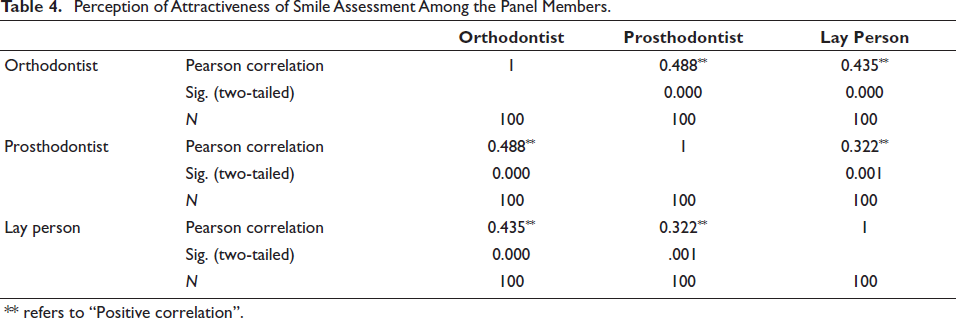
** refers to “Positive correlation”.
Comparison of smile parameters among three growth patterns such as average, horizontal, and vertical patterns was done by using one-way analysis of variance test (ANOVA) (Table 5). It was found that ULL and lower lip length both during rest and smile, LLT during smile and buccal corridor space during smile depicted significant differences.
Comparison of Smile Parameters between Three Growth Patterns by Using One-way Analysis of Variance (ANOVA).
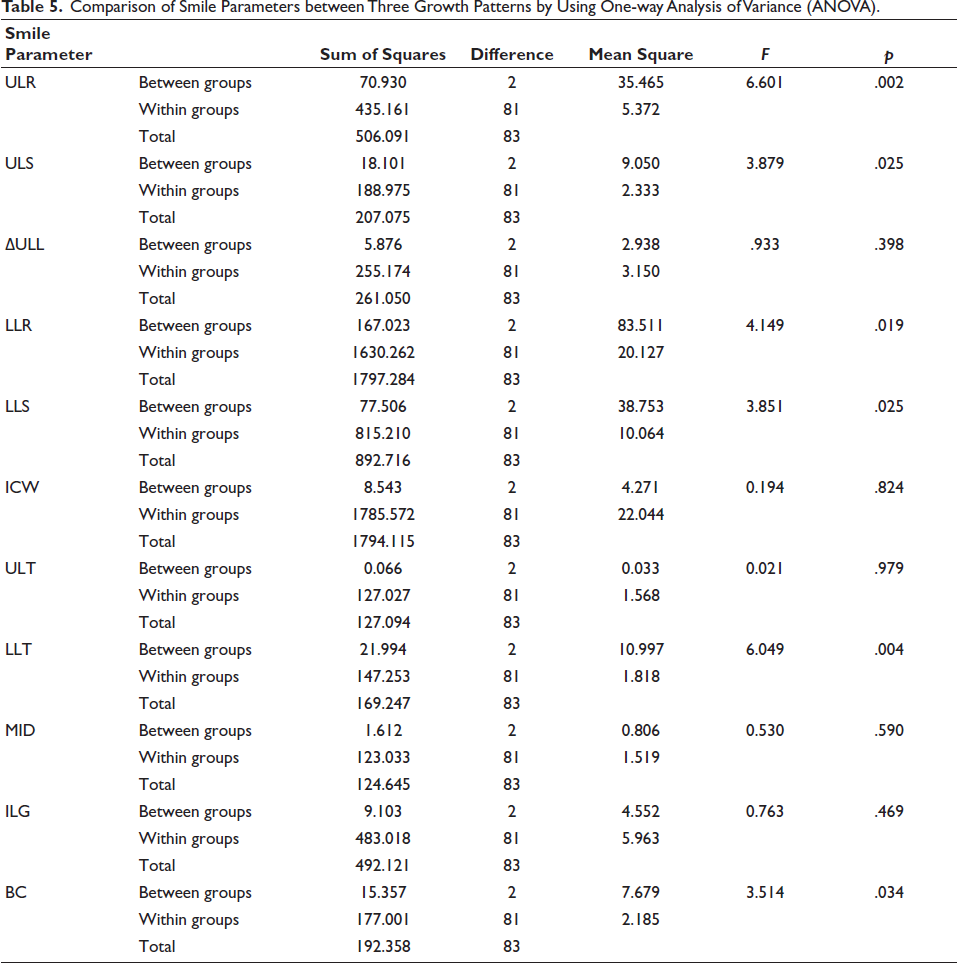
The pairwise comparison using post hoc test reveals that there is significant difference between average and vertical growth patterns for ULL and LLL at rest, LLL during smile, and LLT during smile. Also, the difference is significant between horizontal and vertical growth patterns for ULL both at rest and during smile, and for LLT. The horizontal growth pattern showed the least buccal corridor space among the three patterns with average pattern having the greatest. The difference was statistically significant.
Discussion
Contemporary orthodontics is governed by soft tissue paradigm, which emphasizes on soft tissue proportions and adaptations. 1 Clinical treatment strategies are focused on facial esthetics and creating attractive smile. The perception of smile attractiveness varies among orthodontist, other professionals, and layperson. 6 Prosthodontist deals with creative and artistic aspects in smile recreation. Facial types are an important consideration for a prosthodontist in designing the prosthesis. Hence, prosthodontists were included in our study to assess the smile attractiveness. Laypersons were included in this study to assess the attractiveness of smile, as they are the primary consumers of orthodontic services.
The characteristics of smile are a result of static and dynamic interactions among skeletal, dental, and soft tissue elements of the face. Still photographs were used to assess the smile esthetics in various studies.7, 8 Schabel et al. compared the smiles of participants captured by clinical photography with the smiles of participants obtained from digital video clips after orthodontic treatment. 9 Photographs do not capture the dynamics of a smile; hence in this study, we assessed the esthetics of dynamic smiles by using frames obtained from video clips of the participants.
The characteristics of smile in various growth patterns such as average, horizontal, and vertical growth pattern have been evaluated.5, 10 The participants were classified into different growth patterns based on their cephalometric parameters. To avoid unnecessary exposure of radiation and for ethical reasons, clinical FMA was used in this study to determine the growth pattern of the participants.
In previous studies, the subjects were selected randomly, and the smile parameters were compared.4, 5, 10, 11 The smile photographs of participants were judged by a panel of orthodontists, prosthodontists, and laypersons on a scale 1 to 5. Therefore, in this study, only smiles deemed to be attractive were studied for smile characteristics. Since there was a lack of precedence of studies conducted on attractive smiles, samples having a score of 3.5 and above were selected for the study. This added a degree of randomness to our study; moreover, attractiveness is already subjective in nature.
Circumoral muscles act as a control against forward migration of the teeth in both dental arches. The strong interrelationship between the lips and the dental structures is important to the orthodontist. 12 Differences in lip size, posture, and thickness have been considered as etiologic factors in the development of various malocclusion. These considerations are also crucial in determining stability of treatment outcomes.
Upper lip length is one of the major factor that influences the amount of upper incisor and gingival exposure during speech and smiling.13, 14 The results of this study are comparable with the study done by Burstone, who reported that the range of upper lip length at rest (ULL-R) was 17–23 mm and with the study done by Peck et al. who concluded that the mean value of ULL at rest is about 23.3 mm. In the present study, the range of ULL-R is about 14–26 mm with the mean value of 19.064. The ULL-R and upper lip length during smile (ULL-S) shows a significantly higher value in vertical growth pattern when compared to average and horizontal growth pattern. But there was no significant difference in ULP between average and horizontal growth pattern.
An attractive smile not only depends on tooth size, shape, color, and position, but also on the amount of visible healthy gingivae and the surrounding lips. The lips have greater role in the esthetic value of the smile, because the higher the lip is elevated, the more visible the teeth and gingivae during smiling. 15 Possible causes of gummy smile are lip length, lip activity, clinical crown length, altered passive eruption, and vertical maxillary excess. One of the diagnostic assessments of gummy smile is lip analysis in which an analysis of the upper lip is done to assess for excessive gingival display in both static and dynamic positions. ULL during rest and smile were assessed in our study to identify the contributing factor to the gummy smile. 16 As in previous studies, a change in ULL (ΔULL) was greatest for the vertical growth pattern when compared to average and horizontal growth pattern, although statistically insignificant. 5
The esthetics of the smile are affected by the relationship between the lower lip and upper anterior and the number of teeth displayed during smile. The lower lip length at rest (LLL-R) and during smile (LLL-S) was significantly higher in vertical growth pattern with the mean value of 42.19 and 39.33, respectively. Sachdeva et al. reported similar findings. 4
Inter commissural width (ICW) has significant influence on smile esthetics since it may affect buccal corridor space and display zone. It also provides knowledge about the inherent activity of the facial muscles involved in raising and widening the smile. 17 No significant difference was found in ICW among the groups. This is in contrast with the study by Siddique et al. where vertical growth pattern showed significantly lesser inter commissural width.
Lip thickness plays a crucial role to determine the attractiveness of the smile. Plastic surgery and other cosmetic treatments are done for the enhancement of the size of the lips as fuller lips are desirable. ULT had a strong positive correlation to the skeletal vertical dimension. Therefore, the lip thickness can influence smile esthetics and must be considered by Orthodontists when planning treatment. 16 The ULT during smile (ULT) was not significantly different among the groups. In contrast, LLT during smile was significantly higher in vertical growth pattern when compared to average and horizontal growth patterns. The higher values of lip thickness in our study can be attributed to racial differences.
Increased maxillary incisal display (MID) during smile is a result of a combination of increased skeletal as well as increased maxillary dental height but more closely associated with the increased elevation of the upper lip in individuals with a vertical skeletal pattern, and vice versa for individuals with a horizontal skeletal pattern. 5 In our study, the vertical growth pattern showed a higher value of MID, which was statistically insignificant. Clinical experience also shows that MID is often increased in vertical growth pattern.
Inter labial gap (ILG) affects the amount of incisor exposure and display zone, which is critical for smile esthetics. The increase in ILG is often seen in maxillary vertical excess. Among the three growth patterns, the variations in ILG during smile are statistically insignificant.
Buccal corridor space (BC) is the dark space or negative space visible during smile formation between the corners of the mouth and the buccal surfaces of the maxillary teeth. There seems to be a difference of opinion among investigators about the esthetic value of buccal corridors. Some concluded that they have no esthetic value; others believe that visible buccal corridors are unattractive. 6 The negative space did not influence the esthetic evaluation of smile for both orthodontists and lay people. 17 In contrast to this, the laypeople and orthodontists prefer smiles with small or no negative spaces. 7 In the present study, the BC among the participants shows significantly lower value in horizontal growth pattern. This result is in accordance with the study done by Grover et al. 10
This study evaluated smile characteristics in various facial types. Sagittal skeletal inter maxillary relationship is deemed to have a considerable effect on various smile characteristics. Further examination of smile among various sagittal skeletal relationships is necessary to comprehensively understand the characteristics of attractive smile. A larger panel of laypersons of different age groups and from diverse walks of life are needed to fully understand social differences in perception of esthetic smiles. In this study, smile photographs were shown to assessors. Another alternative would be to show full facial frontal smile photograph to the panel. To eliminate the influence of other facial characteristics, only smile photographs were shown. But there is a need for a study where full facial smile photographs should be considered and results evaluated. This might add an interesting perspective to the attractiveness of smiles.
Conclusion
The following conclusions were drawn from the present study:
Strong positive correlation was observed among orthodontists, prosthodontists, and laypersons perception in assessing attractiveness of smile.
The ULL-R and ULL-S shows a significantly higher value in vertical growth pattern when compared to average and horizontal growth pattern. But there was no significant difference in ULL between average and horizontal growth pattern.
The change in ULL (ΔULL), the lower lip length at rest (LLL-R), lower lip length during smile (LLL-S), and LLT during smile was higher in vertical growth pattern when compared to average and horizontal patterns.
The BC among the participants shows significantly lower value in horizontal growth pattern when compared to average and vertical growth pattern.
No significant difference was found in ULT, inter commissural width, incisal display, ILG among the groups.
There were significant differences when smile esthetics were studied among persons deemed to have pleasing smile.
Ethical Approval
The study was conducted in KSR Institute of dental science and research, Tiruchengode, Namakkal District, Tamilnadu, India and approved by the KSRIDSR Institutional Ethics committee (Ref: 250/KSRIDSR/EC/2019) and informed consent was obtained from all participants.
Footnotes
Declaration of Conflicting Interests
The authors declared no potential conflicts of interest with respect to the research, authorship, and/or publication of this article.
Funding
The authors received no financial support for the research, authorship, and/or publication of this article.
