



Abstract
Objectives:
To evaluate and compare the effect of adhesion boosters on shear bond strength (SBS) of orthodontic brackets on bleached teeth.
Materials and Methods:
A sample of 90 extracted maxillary premolars was equally divided into 2 groups of bleached and non-bleached teeth. Twenty-two percent carbamide peroxide gel was used as an agent for bleaching. Each group was further divided equally into 3 subgroups depending on the type of adhesive booster used (Enhance LC, All-bond 2, and no adhesive booster [control]) and maxillary premolars brackets were bonded. Debonding was done with a universal testing machine, and the SBS was recorded.
Results:
The SBS of non-bleached teeth was highest for All-bond 2 (14.78
Conclusion:
Adhesive boosters increased the SBS of both bleached and non-bleached teeth significantly. Among the two adhesive boosters used, All-bond 2 showed more SBS values.
Introduction
With increased awareness of cosmetic dentistry, teeth bleaching has become a popularized patient requisite procedure to enhance the smile. However, the bleaching procedure results in damage to the outer enamel layer by forming porosities, which leads to demineralization and modification in the calcium–phosphate ratio. Studies suggest a significant decrease in brackets’ survival rate bonded to the bleached tooth compared to the non-bleached tooth. 1 Hence, a bleached tooth may require additional bond strength when compared to non-bleached teeth. Over the last three decades, several advances in orthodontic adhesives were documented. Adhesive boosters are one such miracle that allowed the orthodontists to achieve higher shear bond strength (SBS) in different clinical scenarios.
Reynold believed that SBS ranging from 5.9 MPa to 7.8 MPa is adequate for an efficient bonding in orthodontics. 2 However, few clinical conditions require higher bond strength, such as bonding of posterior, hypocalcified, bleached, and fluorosis teeth. Adhesive promotors were previously described as a surface-active comonomer that attempts to build chemical adhesion of plastic to the tooth layout, later were found to enhance the bond strength of bleached teeth.3, 4 However, early commercial applications with N-phenyl glycine-glycidyl methacrylate (NPG-GMA) products had yielded poor clinical results. 5 Various adhesive boosters available include Enhance LC, All-bond 2, and Orthosolo. As with any product, adhesion promoters have their limitations, like the enamel loss due to debonding. 6 Removal of adhesive remnants on the enamel after debonding results in enamel reduction of approximately 55.6 μm. 7
This study evaluates adhesive boosters’ efficiency on SBS of bleached and non-bleached teeth and surface characteristics in orthodontic bonding.
Materials and Methods
Ethical approval and clearance for the study were obtained from the Institutional Review Board (IRB), Vishnu Dental College, IRB Ref No: IRB/VDC/MDS14 Ortho 6.
A sample of 90 maxillary premolars teeth and pre-adjusted edgewise maxillary premolar stainless steel brackets (Gemini Series, 3M Unitek Dental Products, Monrovia, Calif) were used in the study.
The extracted maxillary premolars with anatomical and morphological well defined enamel, intact buccal surface, non-carious, and with no prior chemical treatment were included in the study.
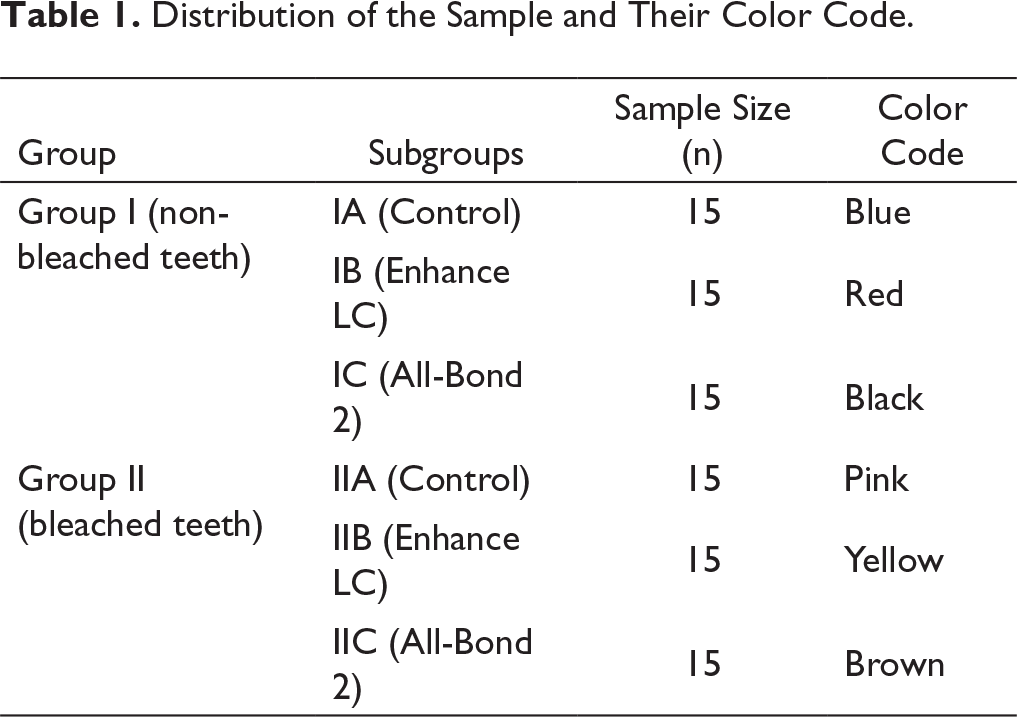
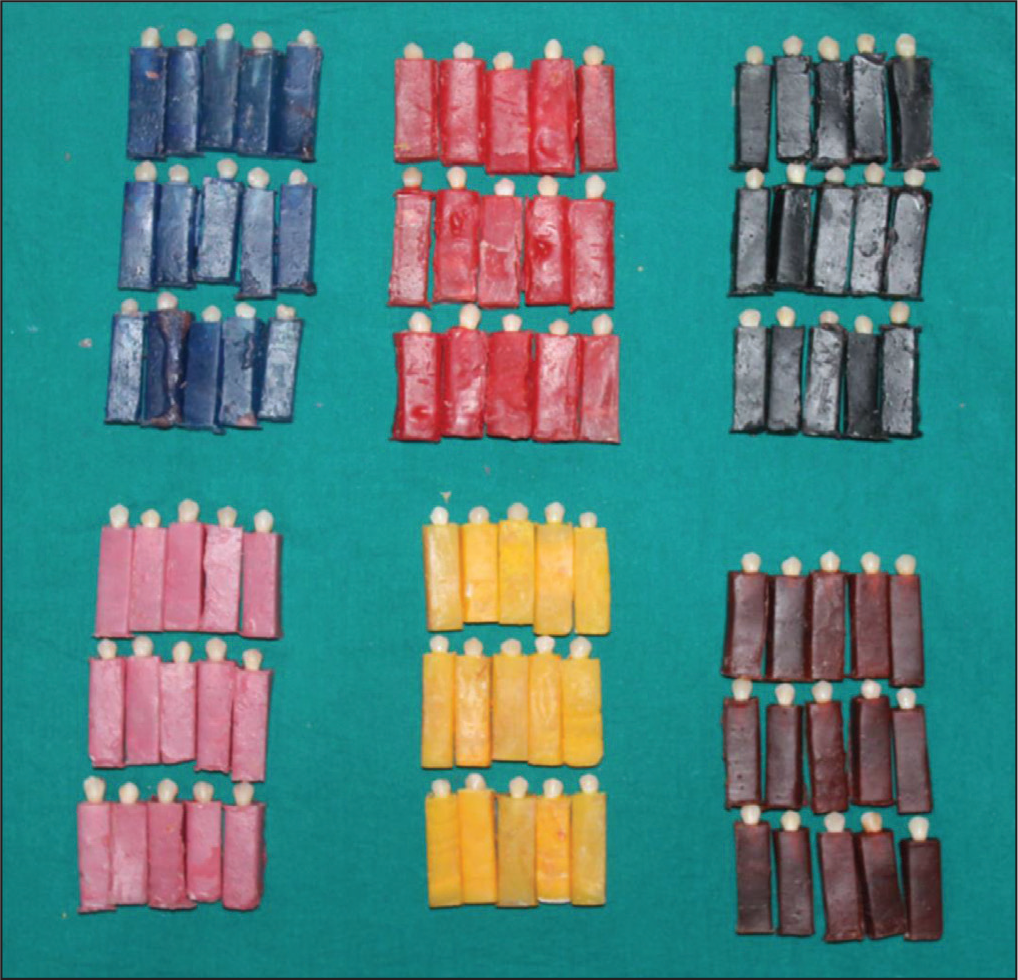
The extracted upper premolars were cleaned and stored in 0.1% wt/vol thymol solution to prevent bacterial contamination until bleaching and bonding. The sample was randomly divided equally into two groups (n = 45) of bleached and non-bleached teeth. Each group was furthermore divided equally into 3 subgroups (n = 15) depending on the type of adhesive booster used (Table 1). The teeth were mounted on self-cured colored acrylic blocks for differentiation (Figure 1).
Bleaching Procedure
Approximately, 1-mm thick layer of 22% carbamide peroxide gel was applied to the buccal enamel surface with a brush. The bleached surface was rinsed thoroughly for 30 s with compressed air and water syringe. The tooth is then air-dried and stored in artificial saliva, which is changed every day and stored at 37°C. After repeating this bleaching procedure for 10 consecutive days, the teeth were subjected to the bonding procedure.
Bonding Procedure
The bonding procedure for different groups was done as follows:
Distribution of the Sample and Their Color Code.
Teeth Mounted on Colored Self-cured Acrylic Blocks for Differentiation.
Debonding and Evaluation of Shear Bond Strength
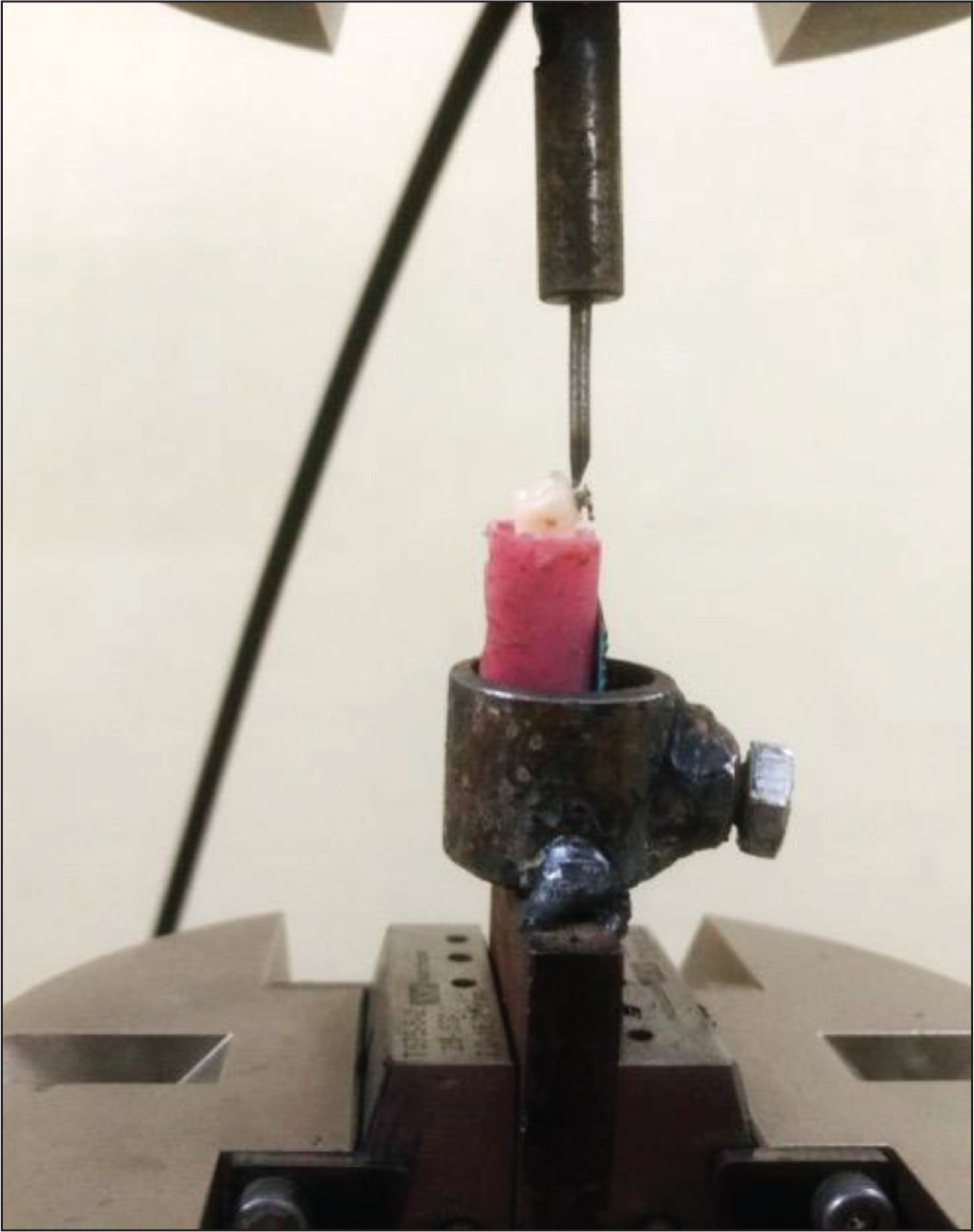
Debonding was carried out with a Universal Testing Machine (INSTRON 8801). The teeth were set at the machine base, and the rod’s sharp end was incised between the base and bracket wings, which exerts a force parallel to the tooth’s surface in an occlusoapical direction (Figure 2). The tests were carried out with a crosshead speed of 0.5 mm/min. The universal testing machine was attached to an electronic console that displayed the debonding forces acting between the jaws. The force when the bracket gets debonded was noted in mega Pascal (MPa) from the console.
Statistical Analysis
SPSS Version 20.0 (SPSS Corporation, Chicago, IL) was used to obtain statistics. Intragroup comparison of SBS of non-bleached teeth and bleached teeth was made using ANOVA and post-hoc Tukey test. Intragroup comparison of SBS among different subgroups in non-bleached teeth and bleached teeth was made using the Student’s t test.
Results
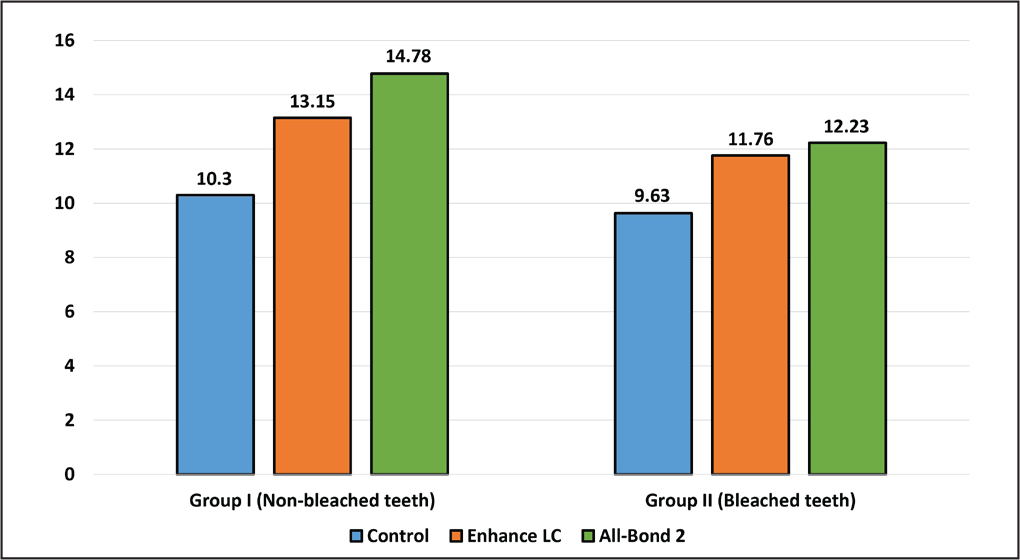
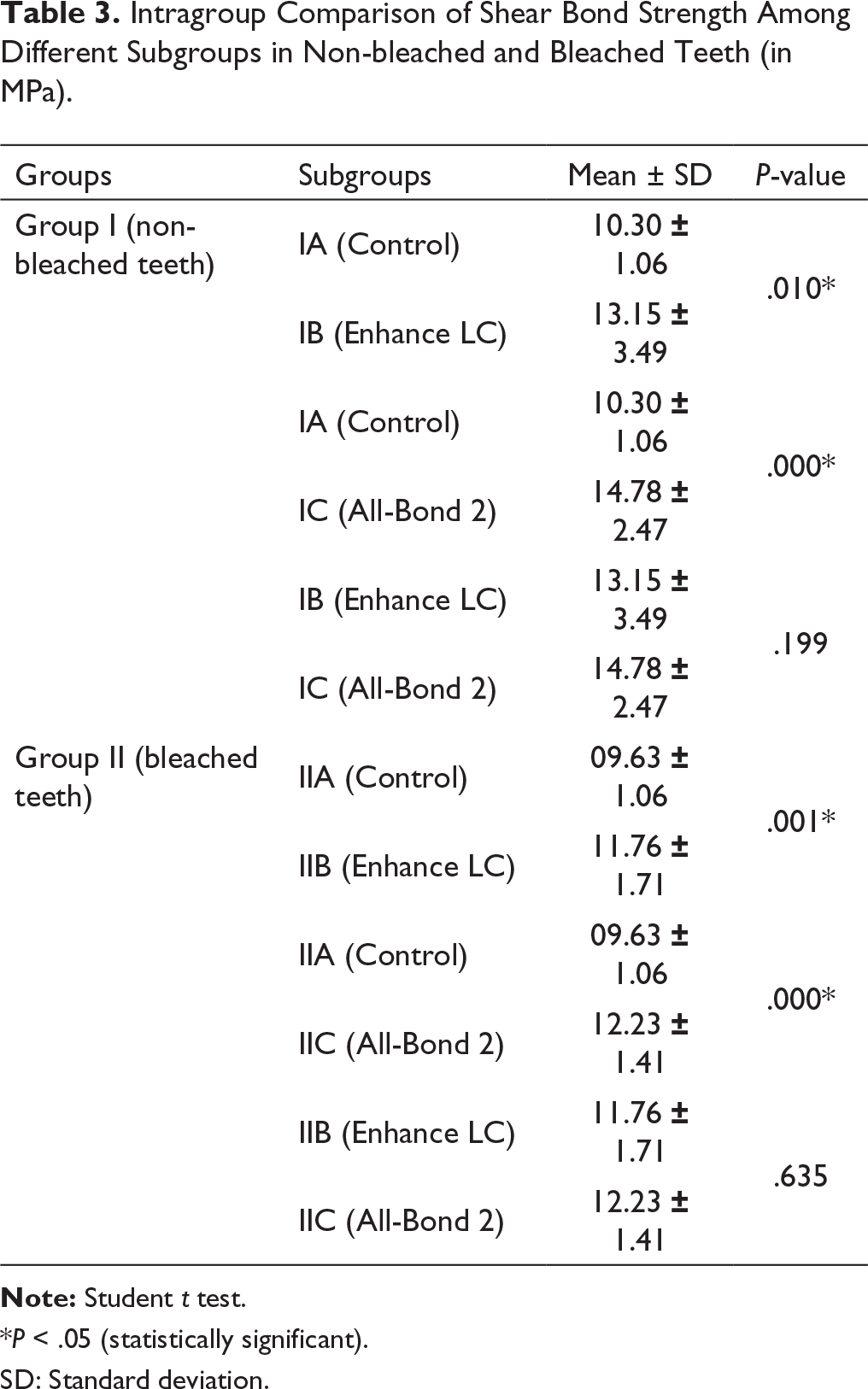
The bond strength of non-bleached teeth was tested during debonding, and the SBS was highest for All-bond 2 (14.78 ± 2.47 MPa) followed by Enhance LC (13.15 ± 3.49 MPa) and control (10.30 ± 1.06 MPa). All subgroups of non-bleached showed a significant difference in SBS (P = .000) (Table 2). The bond strength of bleached teeth was tested during debonding, and the SBS was highest for All-bond 2 (12.23 ± 1.41 MPa) followed by Enhance LC (11.76 ± 1.71 MPa) and control (9.63 ± 1.06 MPa). All bleached subgroups showed a significant difference in SBS (Table 2) (Figure 3). All-Bond 2 showed significant higher SBS in both bleached (P = .000) and non-bleached (P = .000) groups compared with control (Table 3). Enhance LC showed significant higher SBS in both bleached (P = .001) and non-bleached (P = .010) groups compared with control (Table 3).
Debonding Carried Out With a UNIVERSAL Testing Machine (INSTRON 8801).
Intragroup Comparison of Shear Bond Strength of Non-bleached and Bleached Teeth (in MPa).
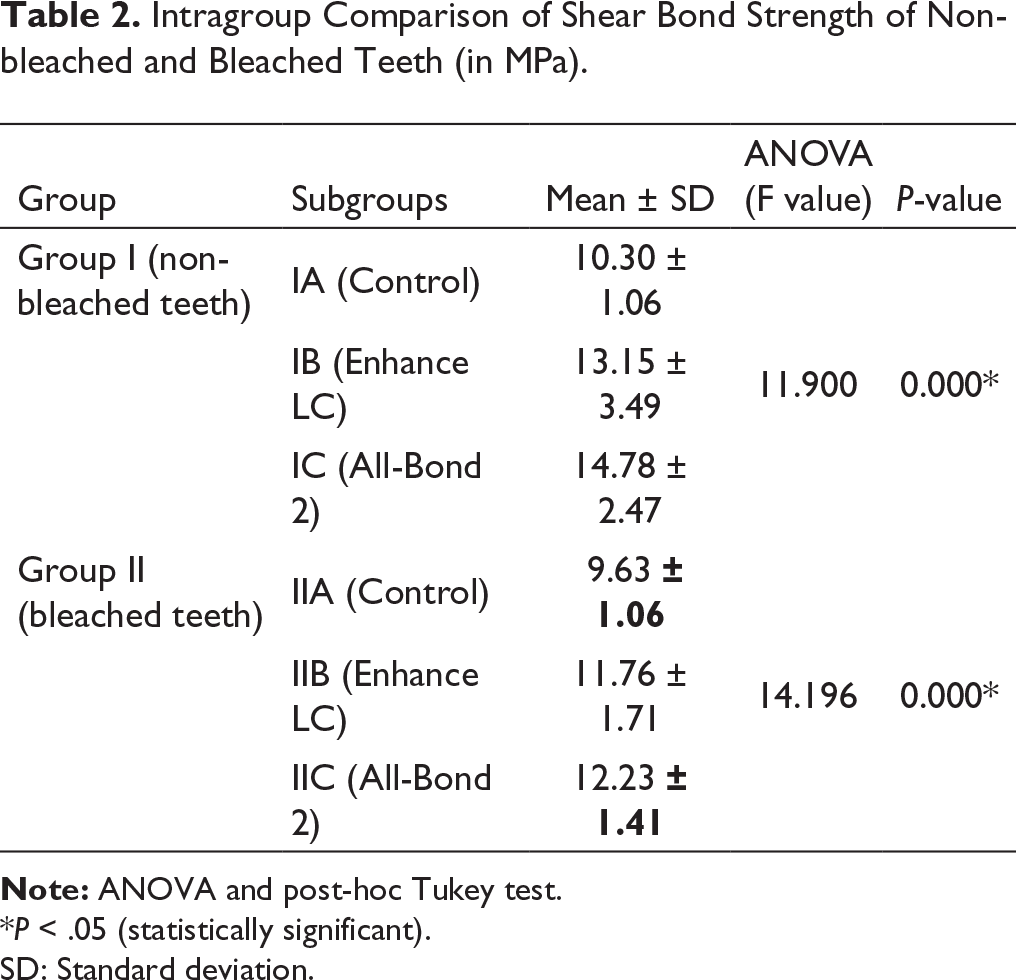
Note: ANOVA and post-hoc Tukey test.
*P < .05 (statistically significant).
SD: Standard deviation.
Mean Shear Bond Strength Among Different Subgroups in Non-bleached and Bleached Teeth (in MPa).
Discussion
In the present study, adhesion boosters’ efficiency on SBS of orthodontic brackets on bleached and non-bleached teeth was compared.
Shear Bond Strength of Bleached Teeth
There is a need for higher bond strength in bleached teeth to support for orthodontic bonding. Recent advances such as adhesive boosters serve as a viable option for achieving higher bond strengths. In the present study, two adhesive boosters, that is, Enhance LC and All-bond 2, which were used, showed a mean SBS of 9.63
Intragroup Comparison of Shear Bond Strength Among Different Subgroups in Non-bleached and Bleached Teeth (in MPa).
Note: Student t test.
*P < .05 (statistically significant).
SD: Standard deviation.
Effect of Adhesive Boosters on Shear Bond Strength of Bleached Teeth
The mean SBS of bleached teeth group with adhesive booster All-bond 2 (12.23 ± 1.41 MPa) was significantly higher than the control group where no adhesive booster was used (9.63 ± 1.06 MPa). Increased bond strength may be due to hydrophilic monomers in adhesion boosters, which facilitates the resin infiltration into the enamel’s prism level, reducing interfacial porosity and improving integrity and bond strength. 13 Reduction in SBS after bleaching may be due to surface roughness and structural changes of enamel surface morphology. 17 Adhesion boosters’ ability to reduce the interfacial porosity may have aided in increased bond strength in bleached teeth. A significant (P = .000) increase in SBS (14.78 ± 2.47 MPa) of the All-bond 2 group was observed among bleached teeth. The mean SBS of bleached teeth group with adhesive booster Enhance LC (11.76 ± 1.71 MPa) was significantly (P = .001) higher when compared with a control group where no adhesive booster was used (9.63 ± 1.06 MPa).
Adhesive boosters showed increased SBS values, as they contain two functional groups, that is, one hydrophobic and the other hydrophilic. The addition of hydrophilic monomers in adhesive systems helps resin infiltrate enamel etched at the prisms level. This characteristic feature should reduce interfacial porosity and increase adhesion, achieving a higher bond strength through polymerization. 18 The All-bond 2 adhesion booster yielded higher mean SBS than Enhance LC, but there was no significant difference (P = .635) between the two groups. Interference with resin infiltration and resin polymerization inhibition due to the residual oxygen from the bleaching agent could compromise the bond strength. 10
The time interval between the bleaching and bonding also affects SBS. There were variations among the time recommended after bleaching procedures in different studies (24 h to 4 weeks). Some opined that a minimum of 2 weeks is needed post bleaching for the tooth structure to regain its pre-bleaching adhesive properties.19, 20 Bleaching agents produce residual oxygen, which inhibits resin polymerization and interferes with resin attachment.10, 21 Hence, it was recommended to delay the brackets’ bonding after bleaching for 7 to 10 days. Bulut et al. opined that a duration of 7 days after bleaching was sufficient to attain the required tensile bond strength for clinical conditions. 22 Hence, the bonding of the brackets was delayed by 1 week, and the specimens were stored in artificial saliva to eradicate the effect of residual oxygen.
In the present study, both adhesion boosters significantly increased SBS on bleached teeth and can be used while bonding on bleached teeth.
Effect of Adhesive Boosters on Shear Bond Strength of Non-bleached Teeth
In the present study, evaluation of SBS of non-bleached teeth with two different adhesive boosters (All-bond 2, Enhance LC) was done. A significant difference was observed between the adhesive booster groups’ SBS compared to the control group. The study findings agree with Vijayakumar et al., where Enhance LC showed significantly superior bond strengths for new brackets over its control. 23
All-bond 2 group (14.78 ± 2.47 MPa) showed a significant (P = .000) increase in SBS values compared with the control group. The mean SBS of Enhance LC group (13.15 ± 3.49 MPa) showed a significant (P=0.010) increase in SBS values compared with the control group. Enhance LC is composed of hydroxyethyl methacrylate (HEMA), tetrahydrofurfuryl cyclohexane dimethacrylate, and ethanol. Even though there were higher bond strength values observed in All-bond 2 group than the Enhance LC group, there was no significant difference (P = .199) between the two groups.
Although adhesive boosters increased SBS of non-bleached teeth, SBS produced without adhesion promoters is sufficient for clinical bonding, according to Reynolds. 2 However, adhesive boosters in bonding non-bleached teeth where there is a need for higher bond strength may be beneficial.
Clinical Significance
Shear bond strength plays a significant role in orthodontic bonding, which is compromised on bleached teeth and impacts them negatively. In such a clinical condition, adhesive boosters will enhance SBS and increase the survival rate of brackets bonded to the bleached tooth.
Limitations
The study was confined to test 22% carbamide peroxide gel as a bleaching agent. However, SBS might alter with other commercially available bleaching agents, which needs to be evaluated.
The present in-vitro study might not precisely simulate the oral environment.
Conclusion
Bleached teeth showed decreased SBS values compared to the non-bleached teeth.
Adhesive boosters significantly increased SBS of both bleached and non-bleached teeth.
All-bond 2 showed more SBS values when compared with Enhance LC in both non-bleached and bleached teeth.
Footnotes
Declaration of Conflicting Interests
Funding
The authors received no financial support for the research, authorship, and/or publication of this article.
Statement of Informed Consent and Ethical Approval
Necessary ethical clearances and informed consent was received and obtained respectively before initiating the study from all participants.
