




Abstract
Lack of stabilization of metal components during soldering is the most common problem encountered in orthodontic lab work. Metal components tend to slip or change from their actual position during soldering. This article provides a simple tip for easy and steady positioning of metal components during the soldering procedure using pottery clay.
Introduction
Steady handling of metal components during soldering process is a challenging task that is usually encountered in orthodontic lab work. Metal components tend to lose their stability and get soldered in an altered position. 1 One method to hold the position of metal components is by the use of modeling wax. However, the wax melts off due to the heat generated during soldering, alters the joint location, and the melted wax acts as an impurity and results in a weak joint. Another commonly used method is by fixing them with gypsum plaster. However, the metal components should be held in position until it hardens to prevent the change in position. These metal components might change in their position while during the setting of plaster, and moreover it is tiring for removal and cleaning of the hardened plaster. This article suggests a simple tip of using pottery clay (terra-cotta clay dough) for stabilizing the metal components during soldering.
Procedure
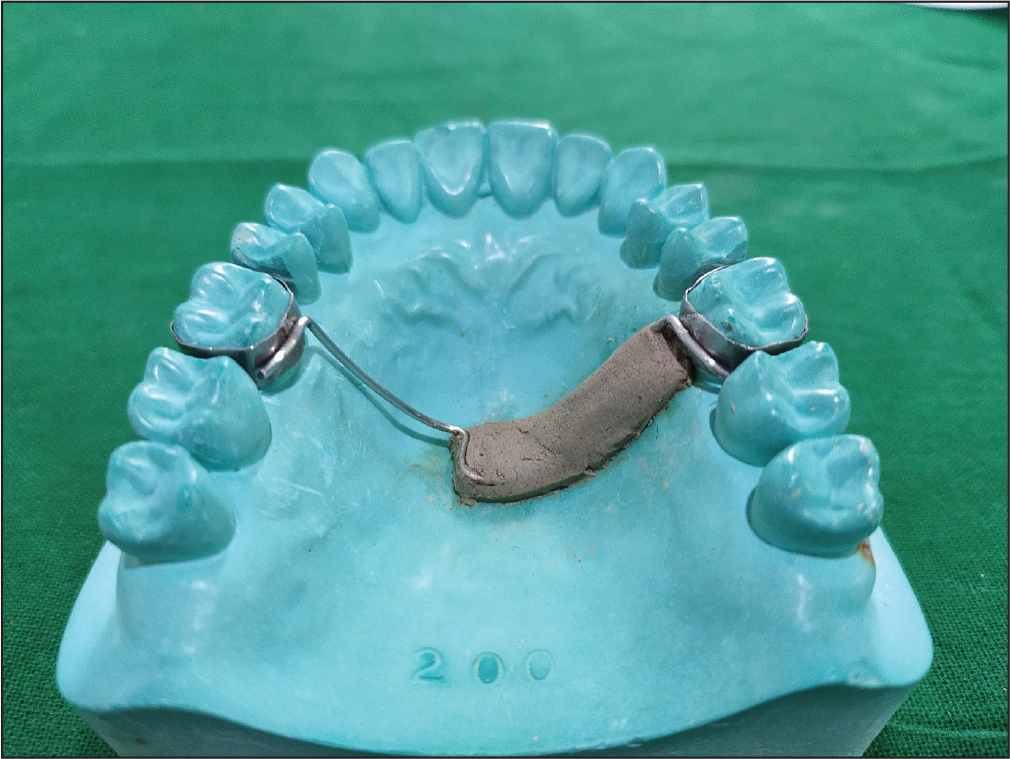
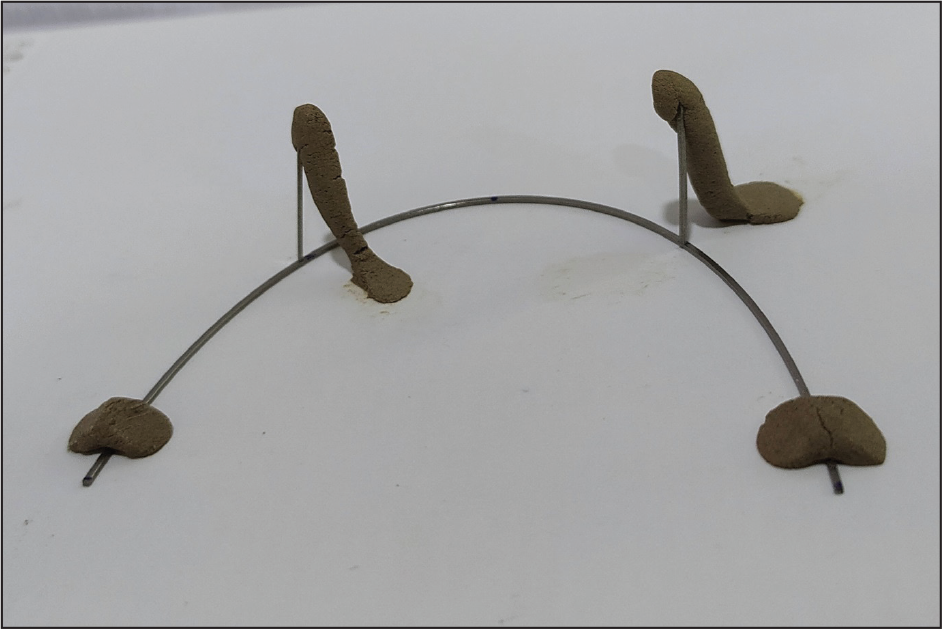
Take the required quantity of pottery clay and soften it by mixing it into a ball or rope. Place the pottery clay slightly away from the soldering area and stabilize the metal components. Seal the metal components with pottery clay and do the finer adjustments as and when required (Figures 1 and 2). Once stabilized, solder the joint and then remove the pottery clay with a wax knife.
Advantages
easy molding and removal;
acts as a spacer;
aids in the stabilization of metal components; and
prevents oxidation of the sealed metal surface.
Conclusion
Using pottery clay will shrug off the effort, time, and helps to stabilize the metal components accurately during soldering.
Footnotes
Statement of Informed Consent
Informed consent was not sought for the present study because no identifiable images were used.
Declaration of Conflicting Interests
Funding
The authors received no financial support for the research, authorship, and/or publication of this article.
