




Abstract
Torque is produced by a twist in an “archwire” that creates a couple when interacted with a “bracket slot.” Depending on the magnitude of the twist, the size of the wire, the built-in torque and the size of the slot, the archwire expresses torsional forces to the teeth. When brackets are manufactured, some variations may inadvertently occur in the dimensions of the bracket slot. Hence this study was done to determine the accuracy of different manufacturer’s dimensions of bracket slots and the built-in torque.
Method:
Seven upper right central incisor brackets of Mclaughlin Bennet and Trevisi (MBT) prescription with 0.022-inch slot from 5 different manufacturers were taken to assess the accuracy of bracket slot dimensions and built-in torque. A stereomicroscope was used to accurately determine slot dimensions and built-in torque.
Results:
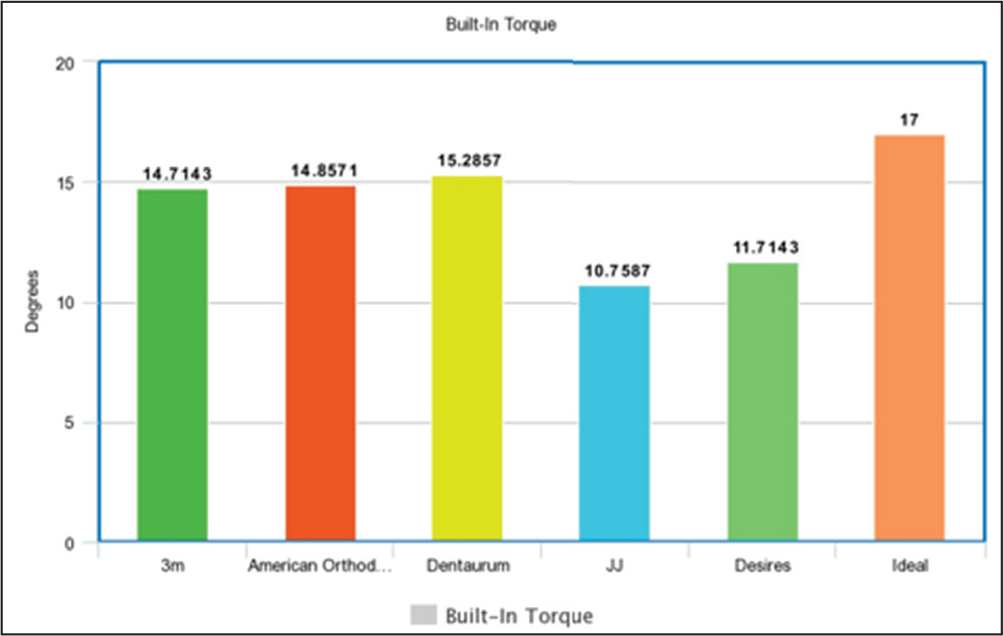
The results showed that all the bracket slots measured in this study were oversized when compared to the standard value. Dentaurum showed significant difference from the ideal slot size and brackets from JJ Orthodontics and Desires showed highly significance difference from ideal slot size. The mean values for built in torque were less in all the brackets. The brackets from JJ Orthodontics and Desires showed highly significant difference from the ideal built in torque values.
Interpretation and Conclusion:
The above findings of the study suggest that one should be cautious when choosing a commercially available brand in day to day practice as some of the materials may not fulfill the desired standards.
Introduction
One of the aims of an orthodontic treatment is to place teeth, consistently and accurately in the planned position with a good degree of control. In 1972, Lawrence F. Andrews first developed the fully programed, or “preadjusted,” brackets with built-in first, second, and third-order bends corresponding to horizontal, vertical, and bucco-lingual movements, respectively, with the objective of using archwires without bends. 1
Torque is produced by torsion in an “archwire” that creates a couple upon interacting with a “bracket slot.” Depending on the magnitude of the torsion, the size and the quality of the wire, and the deformability of the bracket, the archwire moves the tooth through the torsional tension induced in the activated state. 2
A large variation is seen in different prescriptions exists with respect to the torque in incisors. The torque in maxillary central incisor varies from 12° in the Roth to 22° in the Bioprogressive prescription. 3 The MBT system offers a greater palatal root torque for the upper central incisors of +17°. However, in spite of incorporating ideal torque characteristics in the structure of the brackets, in certain cases, it is required to incorporate more torque on certain teeth. This may be attributed to numerous factors such as mechanical side effects, differences in morphology of the labial surface, changes in bracket position, different techniques of wire and bracket manufacturing, the slop between the bracket and the wire, variations in bracket designs, properties of the materials constituting the brackets and the wires, the differences between the value of the torque claimed by the manufacturers, and the actual torque of the bracket. 4
Complete torque expression can be achieved by using a full sized archwire to fill the bracket slot. However, to insert such a wire it is necessary that there exists a certain amount of play. This means that the dimension of the bracket slot must be greater than that of the archwire. If there is a great discrepancy between the archwire dimensions and the bracket slot, the torque expressed will be inconsistent. 5
The archwire moves the root of the teeth through alveolar bone, through localized tension and pressure generated by a twist in the archwire. Most of the orthodontic treatment is carried out in under-sized archwires, leading to lack of cohesive contact between the bracket and the wire; this is known as torsional play. 3 The MBT system developed by McLaughlin, Bennett, and Trevisi modified the torque on incisors, molars, and mandibular premolars to achieve clinical goals with minimum wire bendings, considering the play between the bracket slot and the wire. 4 Clinically, torque control is quintessential in the maxillary incisors for an ideal inter-incisal angle, adequate incisor contact, and sagittal adjustment of the dentition in order to achieve ideal occlusion. 3 Achieving a satisfactory inclination or torque of the incisors is important for the final esthetic result. 6
Many studies have highlighted the inadvertent dimensional changes that arise in bracket slots during the manufacture of brackets. Brackets manufactured by some companies have been found to be up to 24% oversized. 7 Hence, this technique which aims to achieve a precise finish by the virtue of the accuracy of attachments, it is very essential that the manufacturing procedures associated with these brackets are impeccable. 8 A maxillary central incisor has the highest torque built into it and any manufacturing errors resulting in a change from the original value can result in the need for additional bends in wire or compromised treatment results. Hence this study was undertaken to assess the precision of the built-in torque and the slot size of right maxillary central incisor bracket, both of which influence the torque expressed onto the incisors.
Methodology
For this study, MBT prescription brackets of slot dimension 0.022″ × 0.028″ were chosen from 5 different manufacturing companies. The left upper central incisor brackets were chosen from each sample and they were divided into 5 groups.
Blocks were made using self-cure acrylic resin. Acrylic blocks were grouped according to the manufacturing companies of the bracket into.
Group I: 3M-Unitek (Victory series) Group II: American Orthodontics (Mini Master series) Group III: Dentaurum (Equilibrium 2 series) Group IV: JJ Orthodontics (Orthox) Group V: Desires (Ozone series)
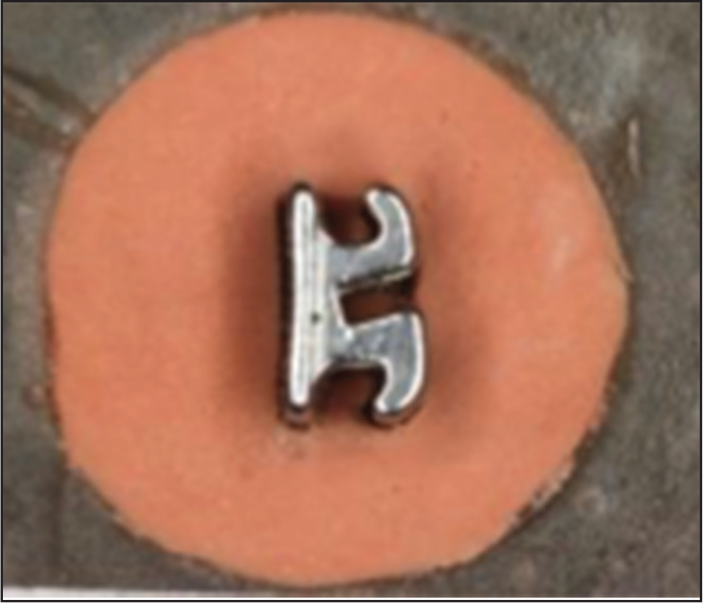
Holes were made in these acrylic blocks and a single jig was used to guide the positioning of the brackets. The jig was made using a 0.021″ × 0.025″ straight length stainless steel wire. One bracket from each group was separated. To fix the brackets, the holes were filled with rubber based putty material and an individual bracket representing a particular group was stabilized using a jig so that half of the bracket in profile was inserted into the putty material while the other half was exposed for the assessment (Figure 1). Once the putty material had set, the mold obtained was used to position the remaining brackets for the same group (Figure 2).
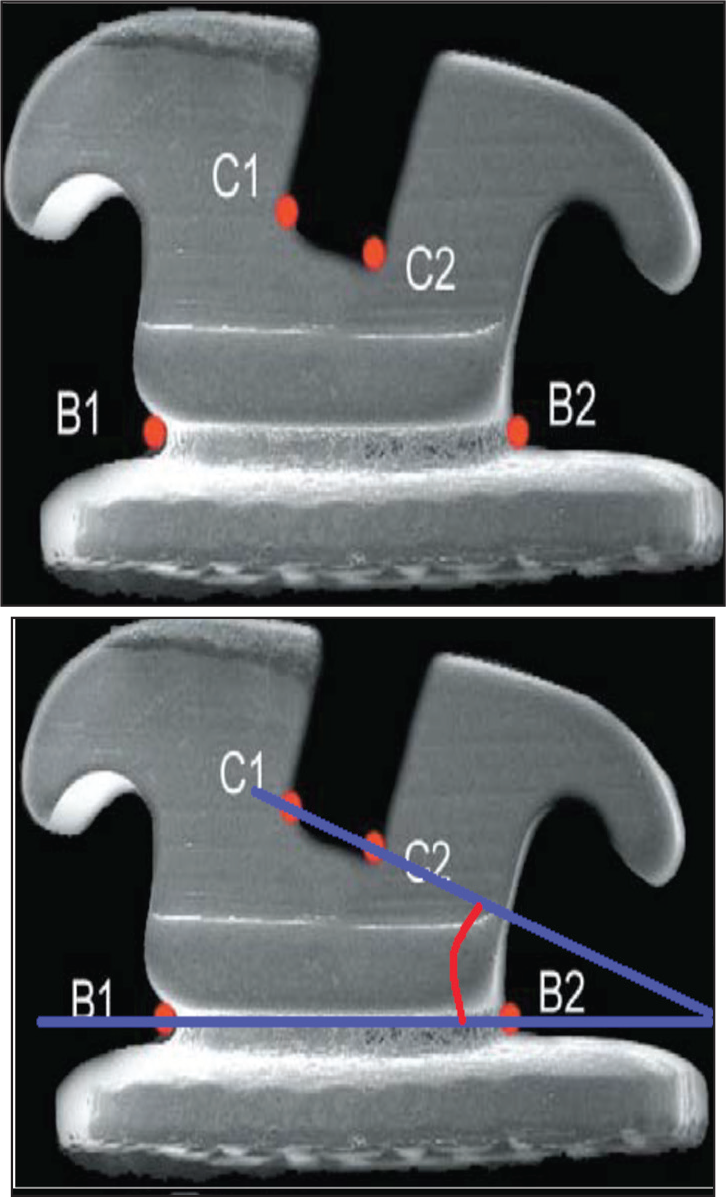
For slot size calculation, the profile view of the brackets was scanned using a stereomicroscope under a magnification of 10× (Figure 3). The images were obtained, and the slot dimension was calculated by drawing a line on the slot base and measuring the linear distance of the line drawn using the software of a stereomicroscope.
The torque was measured in the images by plotting reference points and lines. Two points were marked at the bracket base (Figure 3): points B1 and B2. Two points were marked on the slots as well, at the vertex of the angle between the internal face of the wings and the floor of the slot, viz C1and C2. Line B was formed by joining points B1 and B2 and line C was formed by joining points C1 and C2. These lines were extended until they met. The torque was defined by the angle formed between these 2 lines.
Statistical Analysis
One way ANOVA was used to check for the difference with standard values and the test values for the 5 different groups of manufactures. Since a significant difference was found, one to one comparison was done between the values using post-hoc Tukey’s test with Bonferroni corrections for group-wise comparisons. A P-value of .05 or less was considered as statistically significant and less than or equal to .01 is considered as statistically highly significant. SPSS version 20 software was used for all the analysis. Intra-examiner reliability was assessed using Kappa statistics and the value was found to be 0.85 showing good reliability.
Results
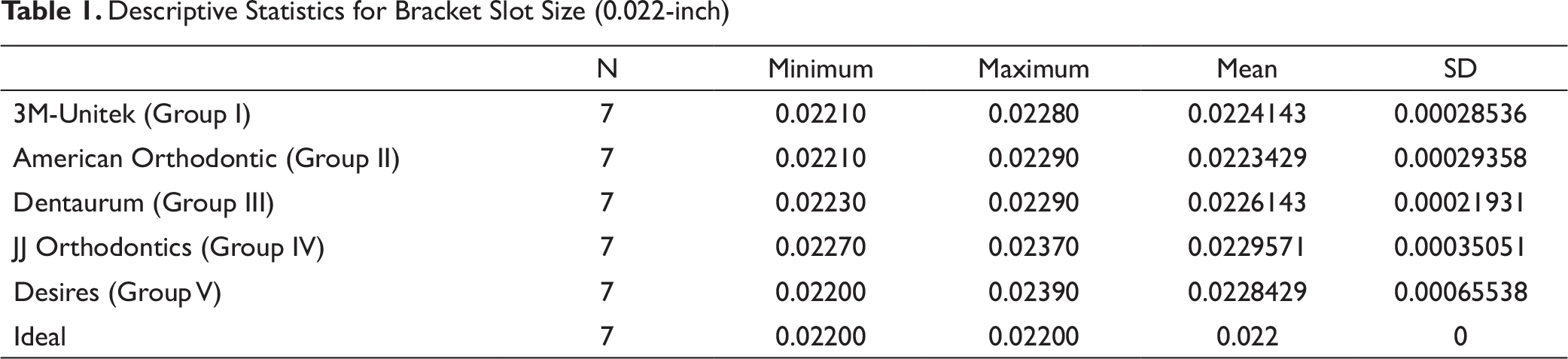
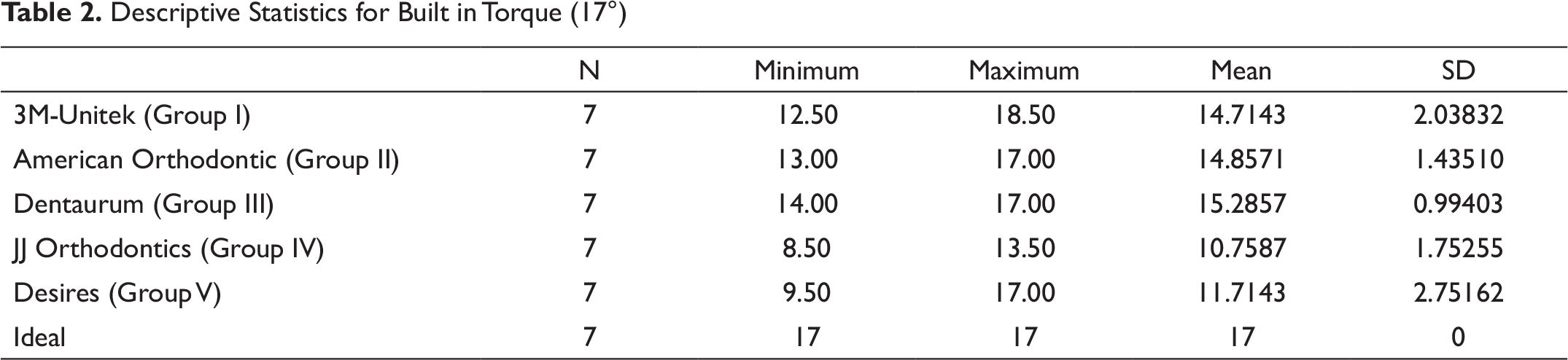
The descriptive statistics for bracket slot size and built-in torque are presented in Tables 1 and 2, respectively.
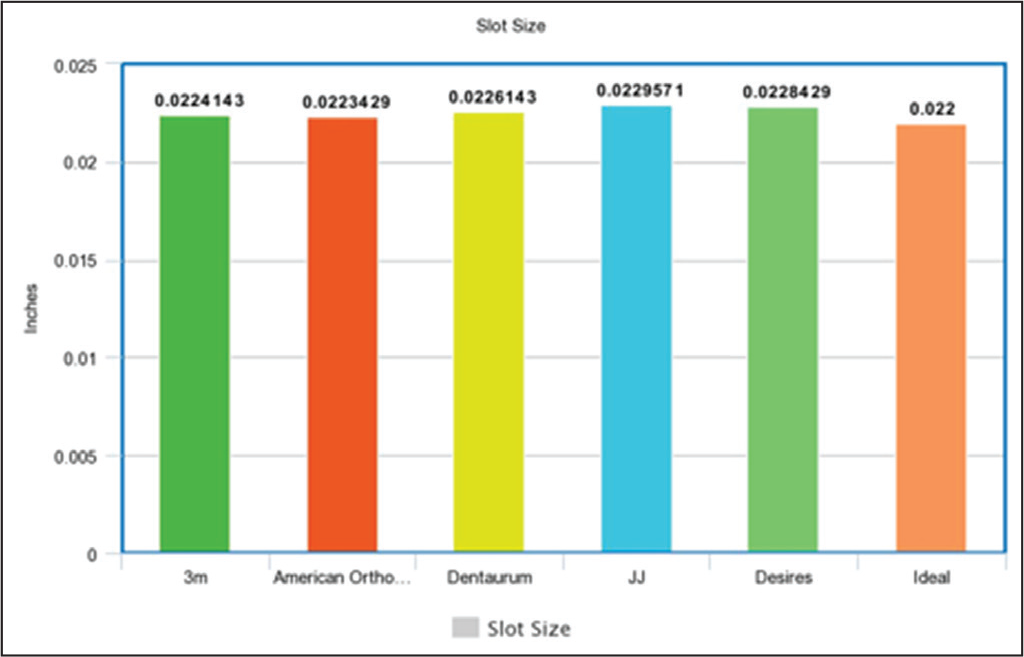
Bracket Slot Size (Tables 3, 4 and Figure 4)
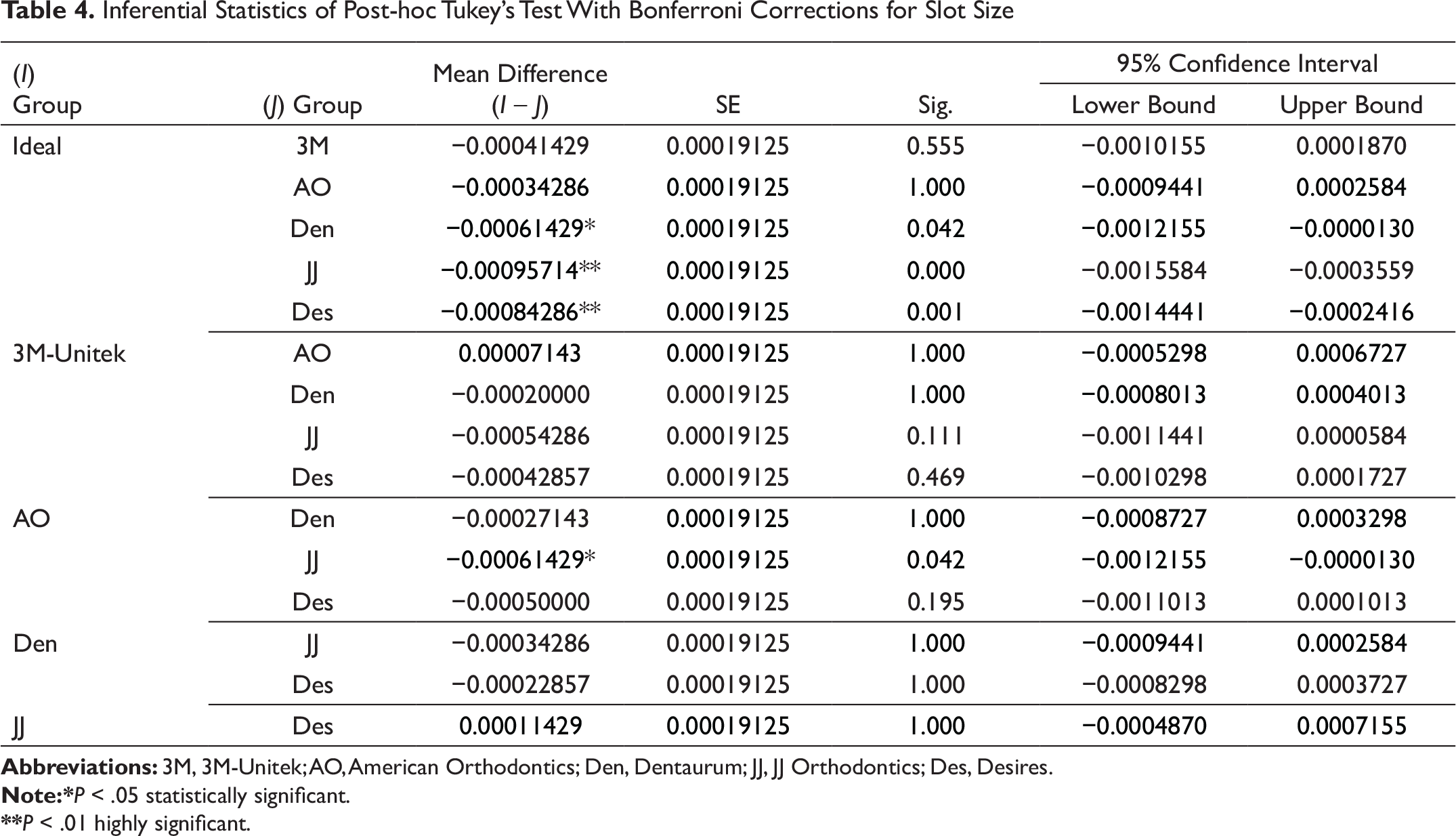
The slot sizes of American Orthodontics (Group II) brackets were closest to the nominal value, however, the mean values of all the five manufacturers were found to be higher than the nominal value. 3M-Unitek (Group I) and American Orthodontics (Group II), when compared with ideal values, showed no statistically significant difference. The mean value of the slot size for Dentaurum (Group III) showed a significant difference (P < .05) from standard value, while the mean value of the slot size for JJ Orthodontics (Group IV) and Desires (Group V) showed a highly significant difference (P < .01) from the standard value. A post-hoc power analysis was done and it was found to be 0.761. As the beta error was less significant, it was not taken into consideration.
Mounting Bracket and Making a Mold
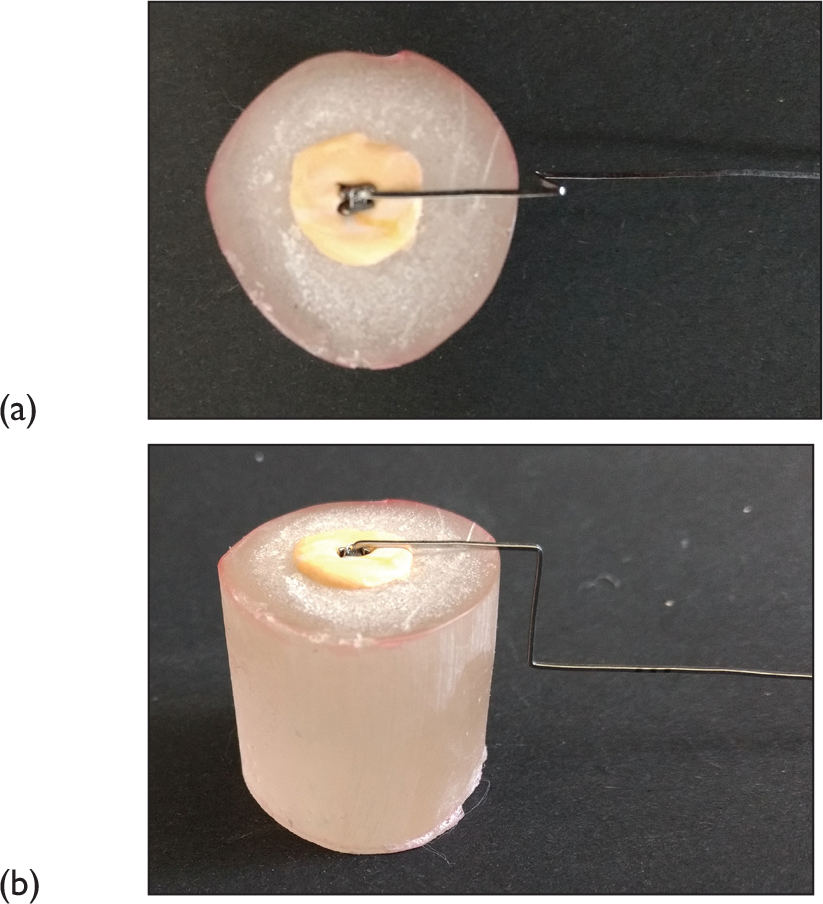
Bracket Mounted in Profile View
Built-in Torque: (Tables 5, 6 and Figure 5)
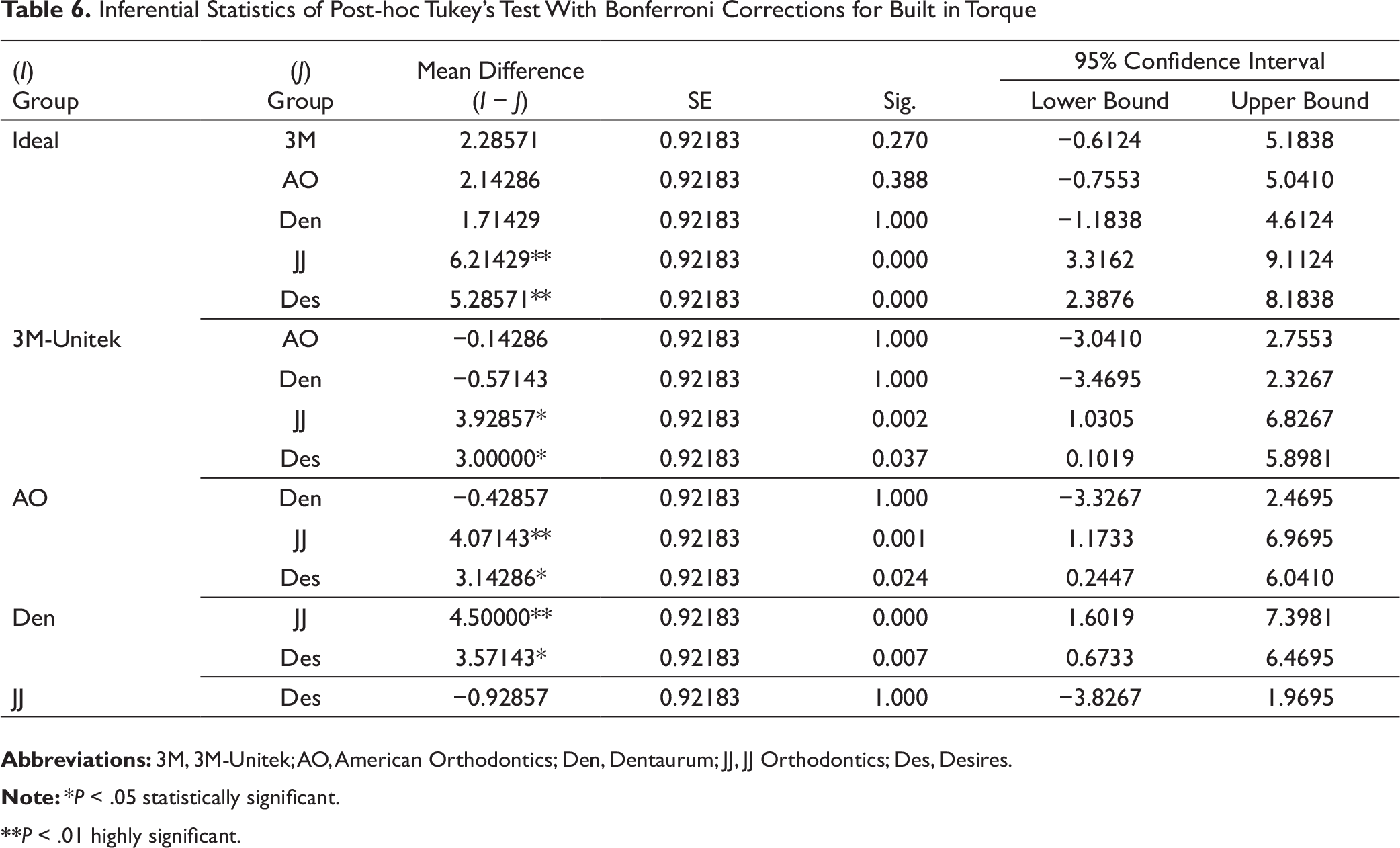
The incorporated torques of 0.022″ slot brackets supplied by Dentaurum (Group III) was closest to the nominal value. The incorporated torques of all the 5 manufacturers were found to be lower than the nominal value. 3M-Unitek (Group I), American Orthodontics (Group II), and Dentaurum (Group III), when compared with ideal values, showed no statistically significant difference. However, JJ Orthodontics (Group IV) and Desires (Group V) showed a highly significant difference (P < .01) compared to the standard values. A post-hoc power analysis was done and it was found to be 0.761. As the beta error was less significant, it was not taken into consideration.
Descriptive Statistics for Bracket Slot Size (0.022-inch)
Descriptive Statistics for Built in Torque (17°)
Inferential Statistics From One Way Analysis of Variance (ANOVA) for Slot Size

Inferential Statistics of Post-hoc Tukey’s Test With Bonferroni Corrections for Slot Size
**P < .01 highly significant.
Inferential Statistics From One Way Analysis of Variance (ANOVA) for Built in Torque

Inferential Statistics of Post-hoc Tukey’s Test With Bonferroni Corrections for Built in Torque
**P < .01 highly significant.
Shows the Ideal and the Mean Bracket Slot Size
. Shows the Standard and the Mean Built in Torque in the 0.022-inch Bracket Slots
Discussion
The preadjusted appliance system was a huge development in orthodontic treatment mechanics and the key feature of the system is the torque that has been incorporated into the brackets. The effectiveness of these brackets in producing the required torque depends on many factors such as the precision in the manufacture of brackets and wires, the slop between the bracket slot and the wire, various modifications in bracket designs, material properties of the brackets and the wires, and the differences between the nominal value of the torque as informed by the manufacturers and the actual measured value of the torque incorporated in the bracket.8, 9
This study found that the bracket slot heights were oversized. Such deviation from the nominal bracket slot dimensions has also been found by other authors. Kusy and Whitley 10 examined brackets from 8 different manufacturing companies and found that 20 brackets slots were larger, and 3 bracket slots were smaller from the nominal dimensions. Cash et al. 7 evaluated slots of brackets from 11 commercially available bracket systems and found that all the slots were oversized. Bhalla et al. 11 measured the slot sizes of 0.022-inch self-ligating brackets from 6 different manufacturing companies and deduced that slot sizes were larger than the manufacturer claims, and the slot walls diverged from the bracket bases. Siatkowski 12 calculated the anterior torque control loss due bracket slot variations. He reported that inaccuracies in archwire dimensions and bracket slot results in unpredictable failures of those mechanics which were formerly reliable, especially for posterior teeth protraction. He found that if a 0.018-inch bracket slot is actually 0.0195 inch, a 0.017 × 0.025-inch archwire will result in 5° of extra bracket-wire slop. A 0.018 × 0.025-inch wire, which fills a 0.018-inch slot, will still have 2-4° of bracket-wire slop. If a 0.022-inch slot bracket is actually 0.0235 inch, then a 0.018 × 0.025-inch and 0.0215 × 0.028-inch archwire will have 5° of additional bracket-wire slop. 12 In this study, slot sizes were measured at the base. It was also found that there was a rounding in the corners where the walls met the bottom. The larger the rounding radius, the less accurate is the assumption that the slots are essentially a trapezoidal shape. The 3M-Unitek, Dentaurum, and Desires brackets have a slight rounding in the corners at the slot bottom whereas, Dentaurum and JJ brackets appear nearly square. It was found that Desires, JJ, and Dentaurum brackets presented statistically significant difference from the ideal slot size of 0.022″. This can be attributed to inaccuracies in manufacturing procedures. A comparison between the measured torque values and the nominal MBT prescription values was done. It was found that JJ and Desires brackets presented a statistically significant difference in relation to the nominal torque value of +17°, as they exhibited markedly lesser values. This difference could be attributed to the variation in the manufacture of these brackets, as they are manufactured by incorporating torque in the base and face to allow for more flexibility of design. This enhances bracket strength and features such as the depth of wing and labio-lingual profile, but when the face of the bracket is brazed onto the base, there might be some changes in the net torque incorporated. Overall, all the examined bracket slots were oversized and the built-in torque was lesser than the values claimed by the manufacturer. The major orthodontic supply companies strive to produce a product which is as closely aligned with the original specification as possible so as to ensure greater clinical precision, but it is important for the clinician to recognize the imperfections that arise in various manufacturing procedures and be cognizant of the untoward outcomes that results from these flaws. The operator should be prudent and take measures to prevent these mishaps from the very beginning. He should utilize his wire bending skills to add additional torque whenever it is necessary on finishing wires of sufficient size and take control rather than allowing the appliance to dictate.
Scope for Future Studies
In the future studies it will be exciting to determine the effects of torqueing procedures on the brackets wings as various manufacturing companies use different grades of stainless steel which might respond differently and increase the slot size as a result of the torqueing forces which would make the manufacturing accuracy in slot-size futile.
Conclusion
This study was conducted to assess the manufacturing precision of 7 brackets that were supplied by 5 commercial manufacturers by evaluating and comparing the built-in torque and slot size. The conclusions that can be drawn from this study are:
The bracket slots measured in this study were all oversized when compared to the standard value. The values of bracket slot size were closest to the ideal values for American Orthodontics. The mean built-in torque measured in this study were all lesser than the ideal value The values of built-in torque were closest to the standard values for Dentaurum. Whenever indicated additional torque should be bent into the wire to overcome the deficiencies in the manufactured product.
Footnotes
Declaration of Conflicting Interests
The authors declared no potential conflicts of interest with respect to the research, authorship, and/or publication of this article.
Funding
The authors received no financial support for the research, authorship, and/or publication of this article.
