



Abstract
Abstract
Retention period is the most important phase of orthodontic treatment, which is often neglected. Bonded retainers have advantages compared to conventional removable retainers in that they are invisible from the front, require less patient cooperation, and provide long-term (as long as 10 years) or even permanent retention. 1 Stabilization of bonded retainer prior to its bonding is of key importance. In the present paper, we have designed a more simple and innovative method of stabilizing the retainer wire by just holding the retainer with a prefabricated retainer holding clip, followed by the bonding procedure of lingual retainer.
Introduction
Retention period is the most important phase of orthodontic treatment, and is often neglected. Success of an orthodontic correction depends on the stability of the achieved results and prevention of relapse. There are several ways to provide posttreatment retention by means of Hawleys retainer, wrap around retainer, and Essix retainer, etc. Bonded retainers have advantages compared to conventional removable retainers in that they are invisible from the front, require less patient cooperation, and provide long-term (as long as 10 years) or even permanent retention. 1
Direct bonding of lingual retainer has to be done in a precise manner to get proper adaptation and good bond strength. Stabilization of bonded retainer prior to its bonding is of key importance. Stabilization of the retainer can be done with a finger, 2 dental floss,3-5 orthodontic elastics,6-8 ligature wires or inlay pattern resin. 9
In the literature, various authors have fabricated different types of retainer holding devices such as modified Kesling separator, 10 Kesling separator, 11 and W-shaped lingual retainer wire stabilizer. 12 Each of these have their own disadvantages.
In this paper, the authors have designed a more simpler and innovative method of stabilizing the retainer wire by just holding the retainer with a prefabricated retainer holding clip, followed by the bonding procedure of a lingual retainer.
A retainer holding clip provides a quick, a simple, and an efficient way to stabilize the lingual retainer.
Fabrication
Wire used for retainer holding clip can be 017" × 025" titanium molybdenum alloy (TMA)or 017” × 025” stainless steel. We used stainless steel wires as they are more cost-effective and stiffer compared to TMA which would produce better stability to retainer wire.
Steps in Fabrication
Following are the sequential steps that must be followed in fabrication:
A circle of approximately 1.5 cm diameter is made of a 017” × 025” SS wire (Figure 1). 90° bends are given from both on both the crossing over arms of the circle (Figures 2 and 3). A 90° bend is given at a distance of 4 mm for loop fabrication on the lower arm and a small U loop is fabricated. A U loop provides the range of action of clip and makes it fail safe (Figures 4 and 5). An arm with a U loop is again bent at 90° and the excess wire is cut off (Figure 6 ). Clip is fixed in the passive position (Figure 7). The clip is activated by pressing the circle with fingers (Figure 8).
Stepwise Clip Wire Bending Process
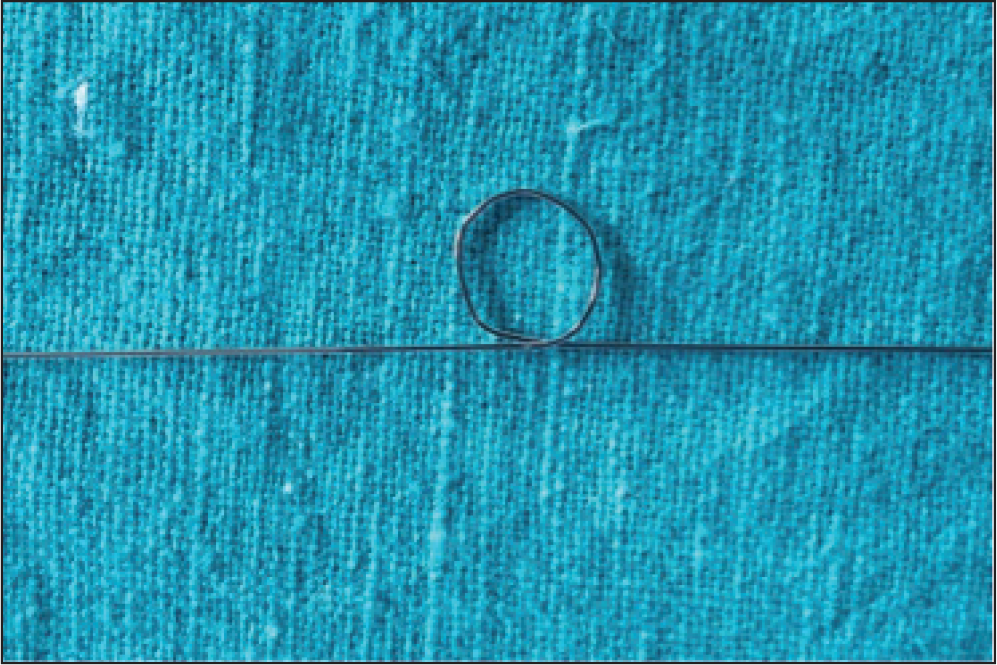
Stepwise Clip Wire Bending Process
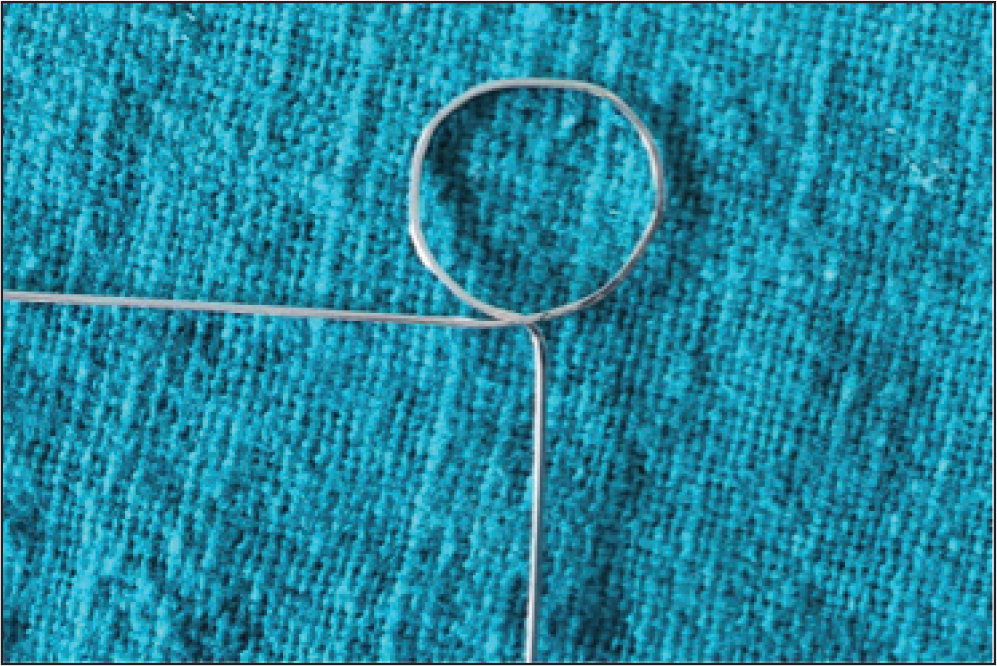
Stepwise Clip Wire Bending Process
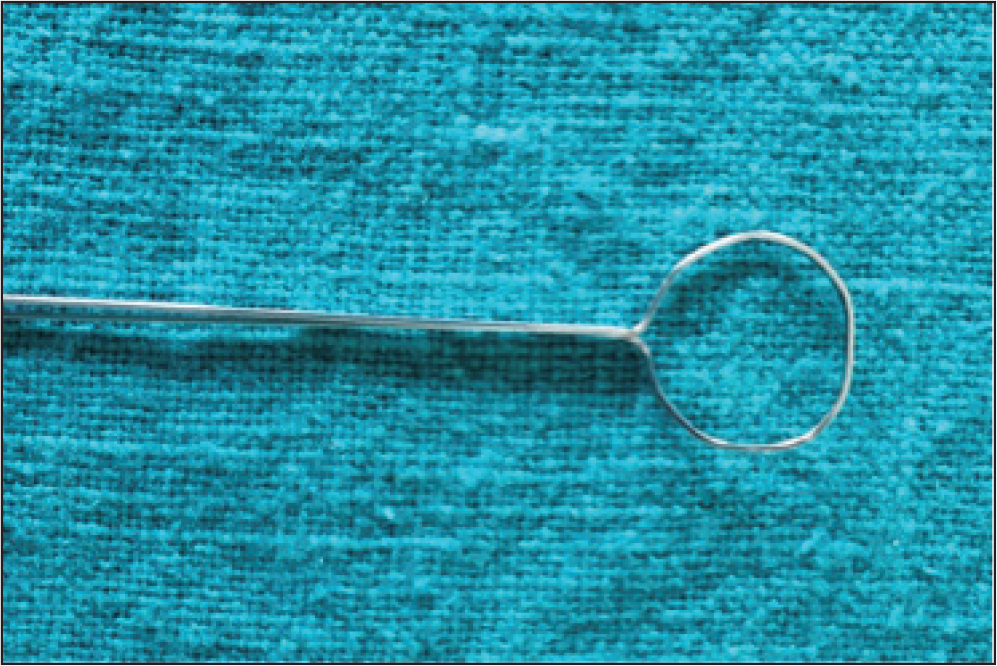
Stepwise Clip Wire Bending Process
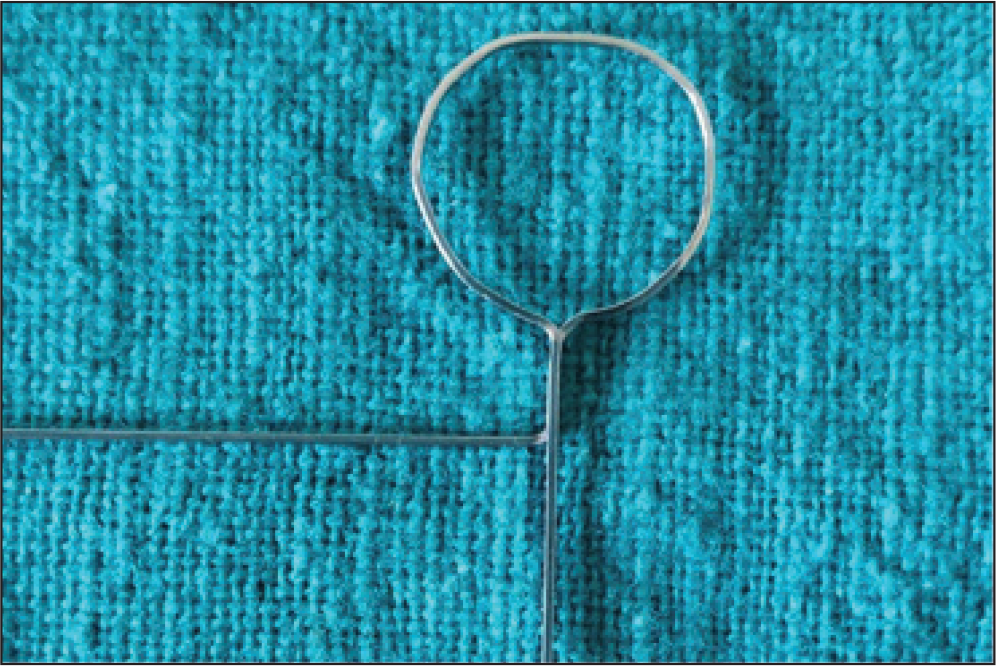
Stepwise Clip Wire Bending Process
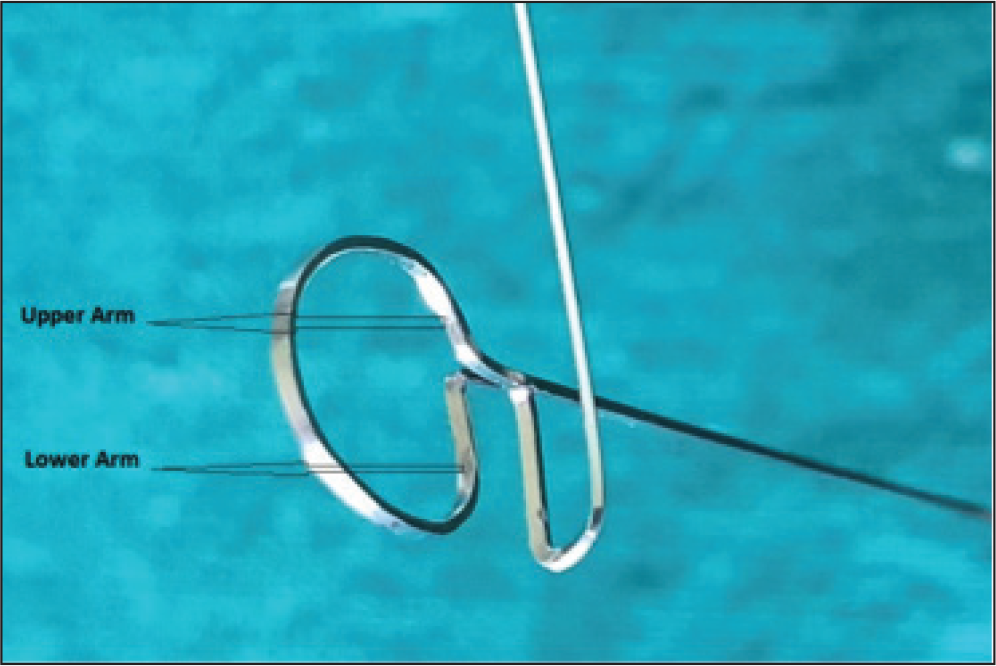
Stepwise Clip Wire Bending Process
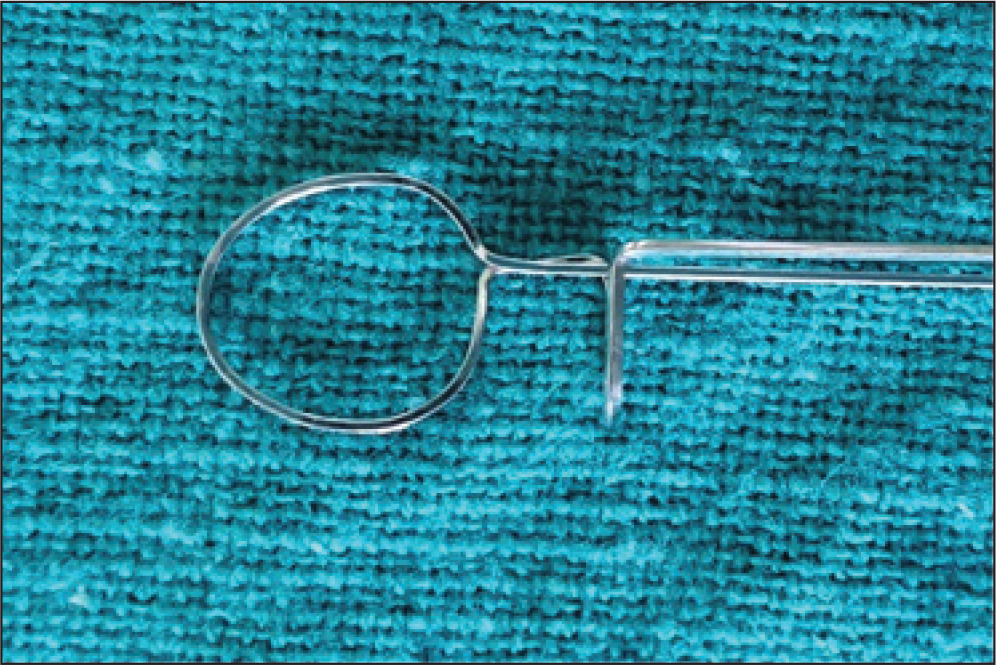
Clip Placement Process
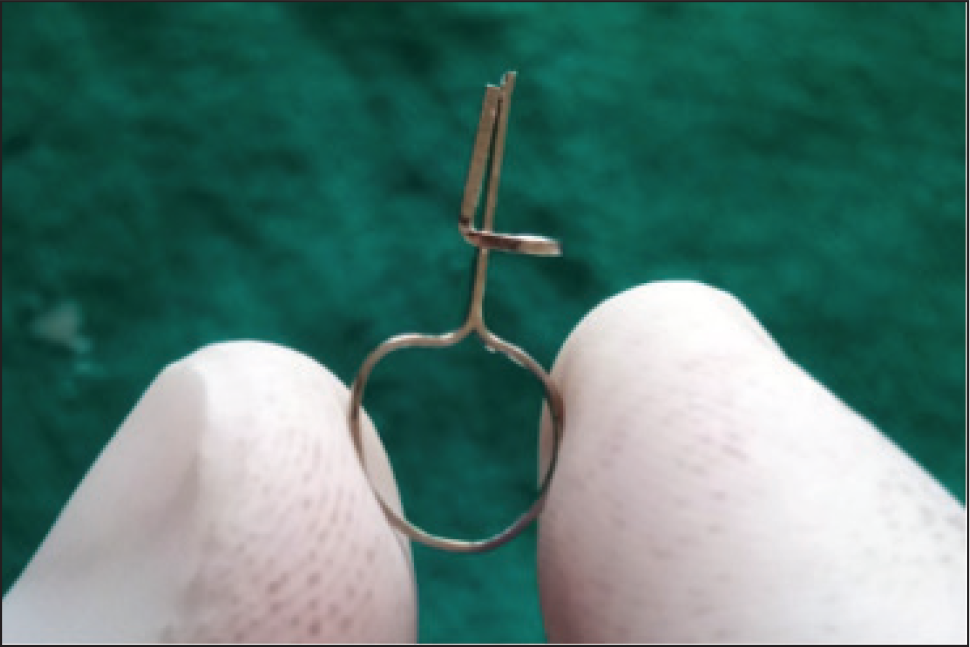
Clip Placement Process
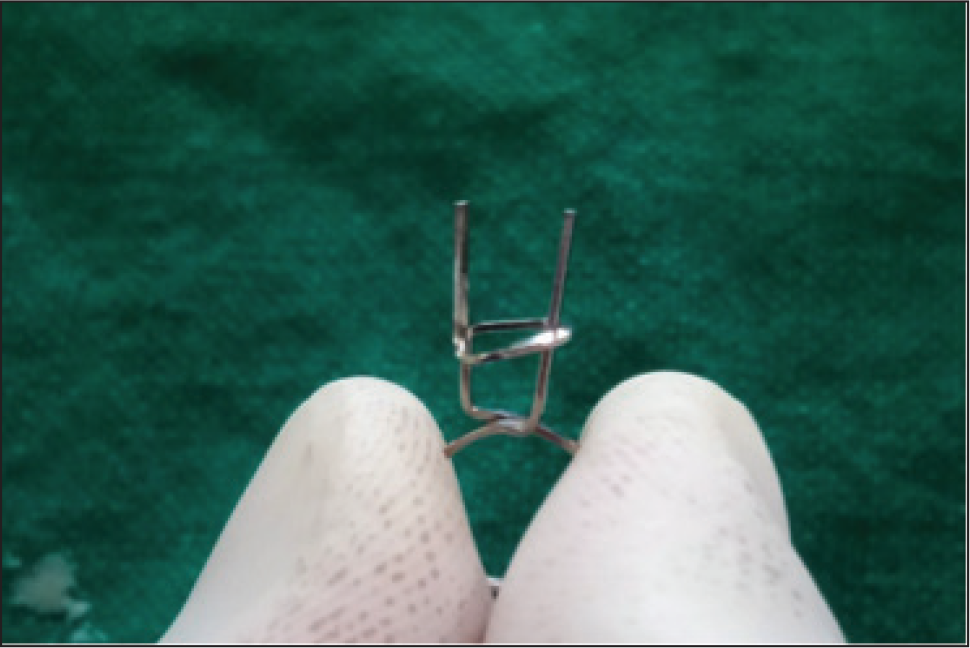
Clip Placement Process
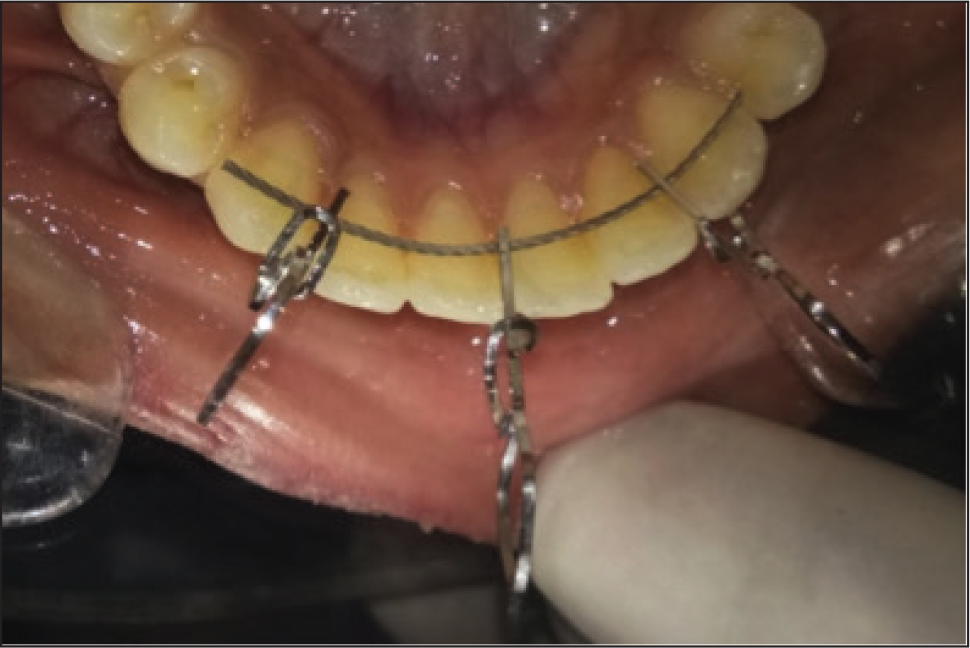
Clip Placement Process
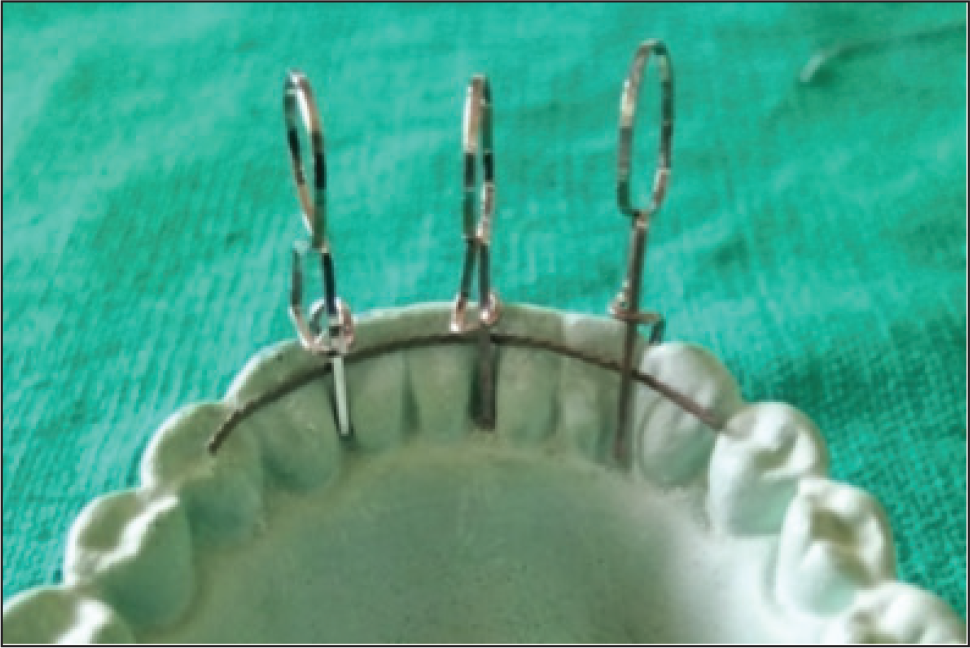
Method of Placement of Retainer Holding Clip
Lingual surfaces of the anterior teeth are etched and cleaned with water properly. After drying, a bonding agent is applied and cured with curing light. The wire is placed and stabilized using a retainer holding clip.
To hold the retainer wire with a clip, the circle of the clip is pressed, which separates the buccal and lingual arms of the clip, and then the clip can be placed interdentally to stabilize the retainer wire. 3 clips should be placed for adequate stabilization of retainer ie in between central incisors and in between lateral incisor and canines on both right and left sides (Figures 9 and 10 ).
Advantages
Easy to fabricate
No laboratory work required
There is no requirement of strap up for the placement of a retainer holding clip
Easy to insert and remove
Can be reused after chemical sterilization
Requires minimal patient cooperation and gives minimal discomfort
Can also be used for holding the old dislodged retainer
Can be used for stabilizing periodontal splints
Conclusion
A retainer holding clip stabilizes the lingual retainer and allows placing the retainer in the desired position without removing the clip. This clip saves time and makes lingual retainer bonding easier.
Footnotes
Declaration of Conflicting Interests
The authors declared no potential conflicts of interest with respect to the research, authorship, and/or publication of this article.
Funding
The authors received no financial support for the research, authorship, and/or publication of this article.
