



Abstract
Objective:
To investigate young people’s experience of retainer wear in the immediate term and at 6 months after appliance removal, and to explore the factors affecting retainer wear adherence.
Design:
Qualitative study.
Setting:
Orthodontic departments at two teaching hospitals in Yorkshire, UK.
Participants:
A total of 12 participants aged 13–18 years were recruited using a purposive sampling approach.
Methods:
Data collection occurred through one-to-one, virtual, photo-elicitation interviews at two time points (immediate and 6 months) with data analysed using interpretative phenomenological analysis (IPA).
Results:
Three overarching themes were developed to describe young people’s experience of orthodontic retention: immediate experience and expectation of retainers; the process of adaptation; and motivating factors. Barriers to adherence were mostly ascribed to daytime wear, despite normalisation of retainers in young people’s lives. Interventions to help individuals overcome the initial adaptation phase and self-manage their foreseen problems of forgetfulness include routines and reminders, which seem to be less important at 6 months. At both time points, internal and external motivation significantly contribute to retainer adherence, with compensatory changes in behaviour being more important at 6 months.
Conclusions:
Understanding early experiences of retainer wear can help clinicians to provide timely and well-targeted interventions and information. Co-constructing unique adherence strategies may help to overcome the initial adaptation phase, with particular emphasis on understanding the individual.
Introduction
Orthodontic retainer adherence is a persistent and widespread problem for young people, with wear often reducing over time (Al-Moghrabi et al., 2018; Little et al., 1981). Individuals experience a range of physical, social and emotional factors that can impact their adherence to retainer wear (Al-Moghrabi et al., 2019; Frawley et al., 2022; Kettle et al., 2020; Wilson et al., 2023). They also express concerns about the risk of relapse and about the burden of retainer wear (Al-Moghrabi et al., 2019; Frawley et al., 2022). Physical issues relate to aching, rubbing, the retainer feeling tight and it ‘feeling weird’. Speaking while wearing retainers and forgetting to wear and clean appliances have been highlighted as reasons for non-adherence, along with emotional factors, such as feeling annoyed and self-conscious in certain social settings (Kettle et al., 2020). Further reported barriers to retainer wear include long-term maintenance, a lack of access to replacement appliances, a lack of follow-up appointments and varying maturity levels of individuals. Transient negative impacts of retainer wear, particularly in relation to daytime wear, are quickly overcome; however, young people feel that they should be more actively involved in decision-making about retainer wear (Frawley et al., 2022).
Listening to the experience of young people is an essential step to understanding retainer adherence and developing effective support. The aim of the present study was to explore young people’s experience of orthodontic retention and individual factors that influence adherence to retainer wear at two time points: in the immediate adaptation phase (within 1–2 weeks of completion of active orthodontic treatment) and after 6 months of orthodontic retention.
Methods
Qualitative approach
Underpinned by an interpretivist qualitative methodology, this study utilised one-to-one, photo-elicitation interviews at two time points, and data were analysed using interpretative phenomenological analysis. The methods and reporting are aligned with Standards for Reporting Qualitative Research (SRQR) guidance (O’Brien et al., 2014). Ethical approval was obtained through NHS Ethics (IRAS number 240992) and the HRA (East of England – Cambridgeshire and Hertfordshire Research Ethics Committee [18/EE/0140]).
Photo-elicitation
Photo-elicitation has been successfully applied to educational, healthcare and psychology research (Edmondson and Pini, 2019) but has not yet been used in orthodontic research. This presents a novel and timely opportunity to explore young people’s lived experience of early retainer wear taking a participant-led approach.
Photo-elicitation is a qualitative method that simply involves participants taking photographs of anything they wish in relation to a specific phenomenon to help answer qualitative research questions (Harper, 2002). The photographs can include any object, setting or person that the participant feels will help to explain their experience. These photographs are then shared with the researcher during interviews to facilitate in-depth discussion (Close, 2007). Topic guides are replaced by the photographs, so it is the dialogue and conversation around the photograph that generates meaningful data (Frith and Harcourt, 2007). The content and quality of the photographs are unimportant, and the photographs themselves are not formally analysed. Photo-elicitation interviews have the potential to be more dynamic and participant-led than traditional researcher-led interviews, with a focus on exploring individuals’ lived experience (Pini et al, 2019).
During each interview, the participant’s photographs were shared on screen so that the researcher and participant could both view them. The photographs were discussed in any order at the participant’s discretion. The photographs were only used as a visual aid to enhance the discussion during interviews. Image content was not analysed, just described, as their purpose in the study was to support engagement and enhance conversation.
The proposed advantages of photo-elicitation are that it generates rich data, provides a visual aid to encourage engagement and build rapport, shifts the power balance, creates participant-led interviews and provides value for underserved groups (Kyololo et al., 2023; Mandleco, 2013; Shaw, 2013). The potential limitations are that participants may not engage with taking photographs, it can be time-consuming and it requires access to digital equipment.
Researcher characteristics and reflexivity
Reflexivity is the process of the researcher self-assessing and reacting during the research process in acknowledgement of how their prior experience and beliefs will impact the research process. The purpose of reflexivity is not to counteract the subjectivity but embrace it as an inevitable feature of qualitative research (Braun and Clarke, 2020). Reflection is the analysis of performance and consideration of how the interview went and how it could be improved.
In this study, the postgraduate researcher (KS) was new to qualitative research and photo-elicitation, but one member of the research team (SP) was highly experienced in the method. KS was a female orthodontic specialty trainee and had sole responsibility for data collection. KS did not have any face-to-face interaction with the participants and was not involved with their clinical care in any way. During the virtual interviews, KS introduced herself as a trainee orthodontist who is conducting a study as part of her training. In addition, KS chose to wear non-clinical clothing and undertook interviews in a non-clinical setting to minimise any potential feelings of power imbalance (Longstaff et al., 2021). KS provided a welcoming and non-judgemental virtual environment that encouraged participants to speak freely and openly.
Before the interviews, KS undertook bespoke one-to-one training in qualitative research from an expert in qualitative methods (SP), as well as formal training through the Social Research Association. Several pilot interviews helped prepare KS for the actualities of conducting qualitative interviews in the virtual environment. These interviews were appraised by SP. Throughout the data analysis, KS brought emerging ideas to supervisory meetings and discussed them within the research team to ensure similar themes and interpretation of the data. The credibility of data analysis was enhanced through peer-debriefing with the supervisory team, as well as reflective journalling throughout.
Recruitment
Recruitment was undertaken at two teaching hospitals in Yorkshire. Potential participants were identified by the treating clinician with verbal and written study information provided during their orthodontic appointment. Contact information for anyone who was potentially willing to participate was passed to the research team. Further discussion and informed consent were obtained by the primary researcher via the telephone, with written consent completed by the treating clinician at subsequent face-to-face clinics. Recruitment ceased once thematic saturation was deemed to have been reached, whereby no new codes or themes were exemplified in the data.
An information sheet was provided to explain the process and value of taking photographs, which was emphasised by KS when obtaining consent from participants and setting up the interviews. Potential participants were made aware of how the photographs were going to be used during the interview.
Participants
Purposive sampling was used to identify young people who had experienced orthodontic treatment and been provided with retainers within 1-2 weeks of their first interview (Palinkas et al., 2015).
The inclusion criteria were as follows:
Young people aged 13–18 years
English speaking
Any sex and ethnicity
People who were within 1–2 weeks of completing active orthodontic treatment
People who were prescribed any type of retainer (bonded, vacuum-formed, Hawley or a combination)
The exclusion criteria were as follows:
People with craniofacial abnormalities
People undergoing cleft or orthognathic treatment
Data collection
The first round of interviews occurred between September 2021 and March 2022 within 1–2 weeks of appliance removal. The second round of interviews occurred at the 6-month time point between April 2022 and September 2022, with the same 12 participants being interviewed for a second time. Participants could choose whether to have their parents present during interviews. Due to COVID-19 restrictions and to protect participants and staff, interviews were undertaken using the virtual platform Zoom. The Zoom auto-transcription tool was used to produce an initial transcript, which was checked and corrected by KS for accuracy.
Photographs were taken before the interview of ‘anything’ that helped the participants explain their experience of wearing retainers (Figures 1–3). This meant the interviews were participant-led and dynamic in nature. Prompt questions were used where necessary, but these were unique to each individual and interview rather than being pre-determined in a topic guide.
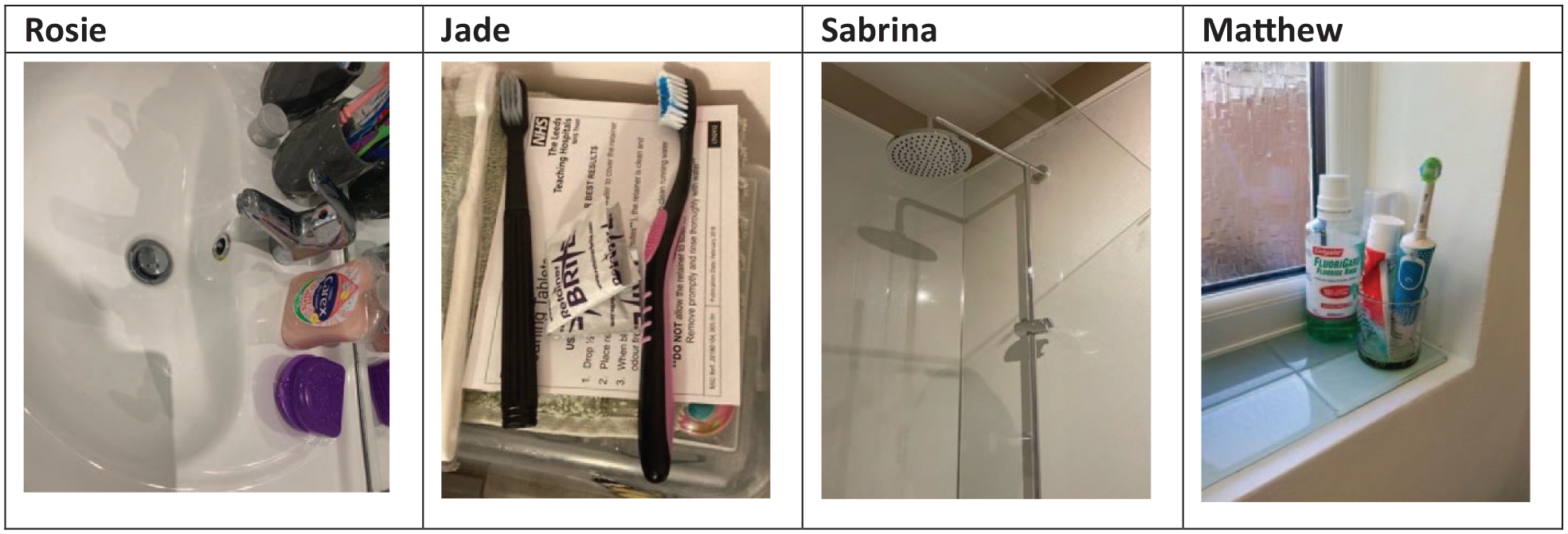
Examples of participant photographs related to routines (pseudonyms used).
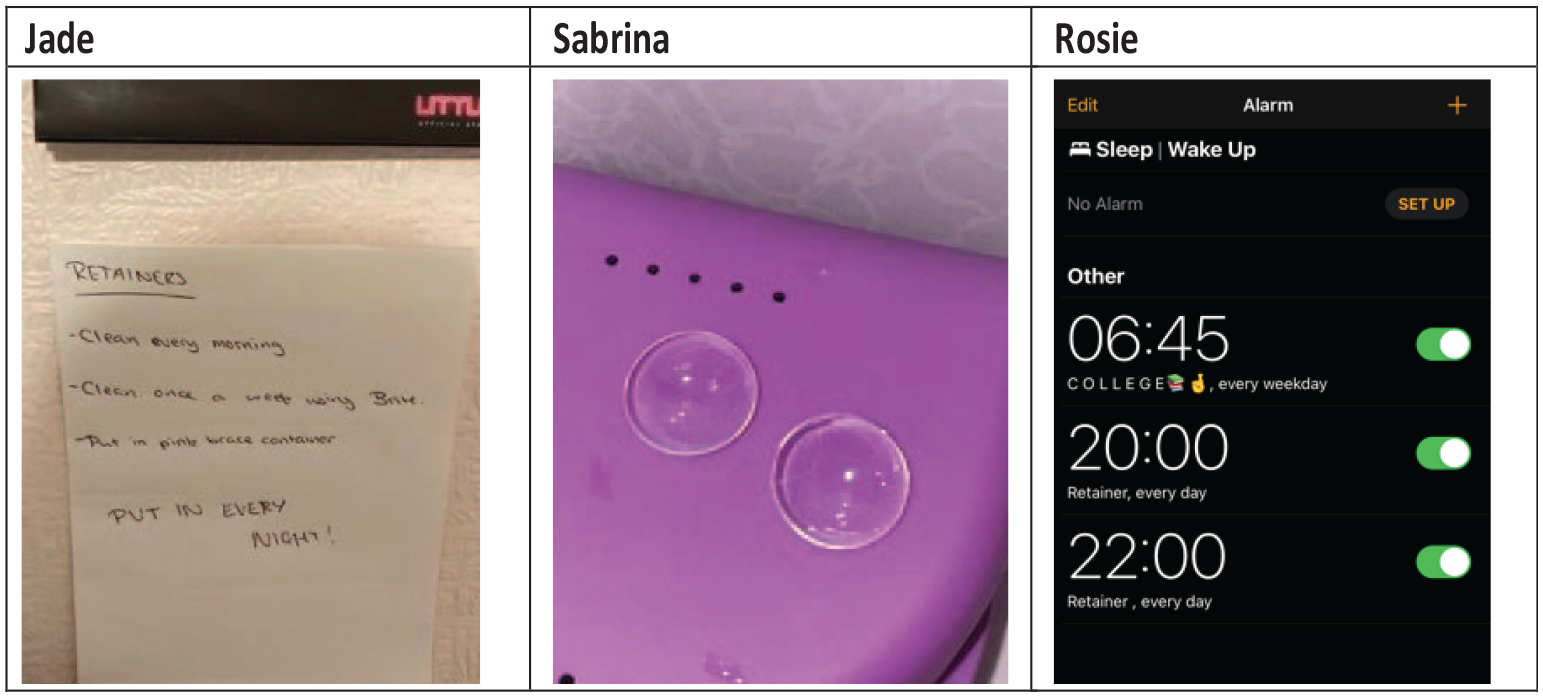
Examples of participant photographs related to reminders (pseudonyms used).
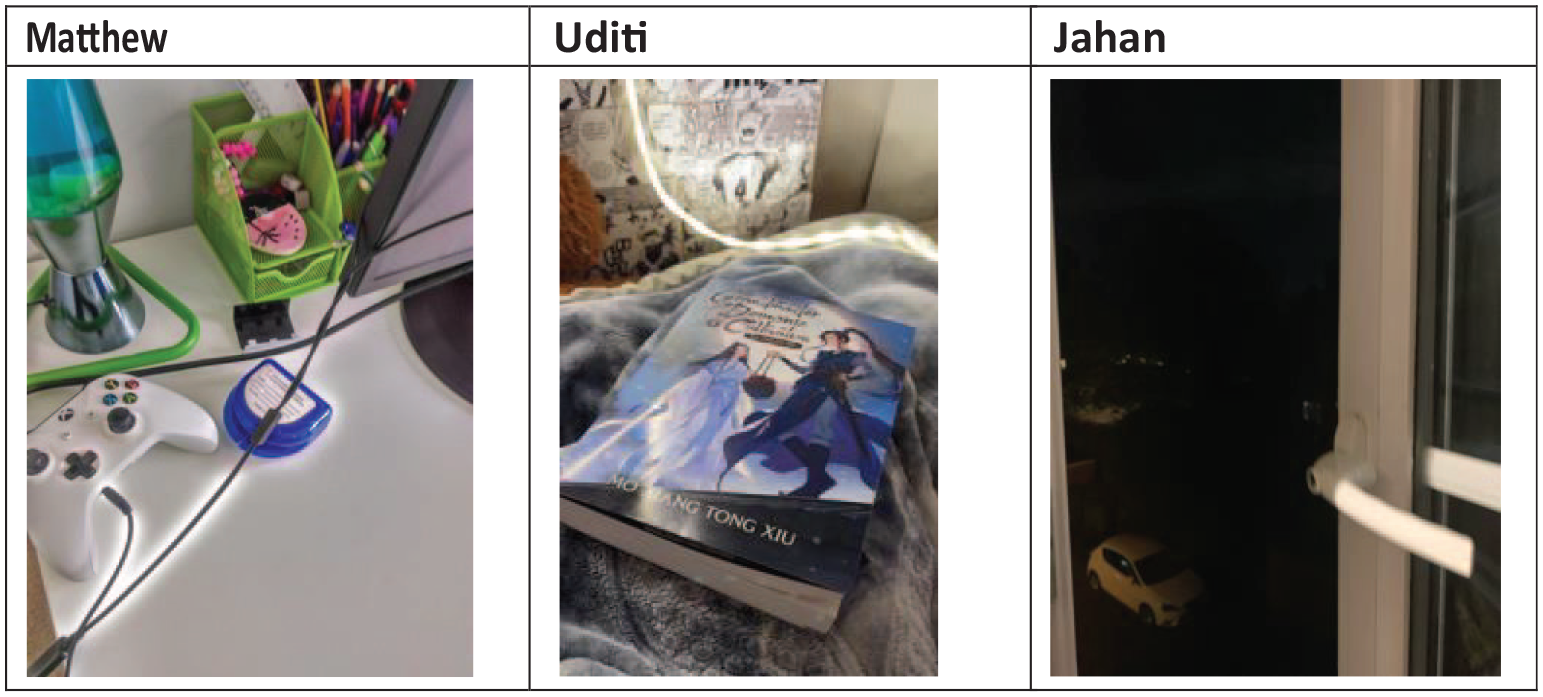
Examples of abstract participant photographs (pseudonyms used).
All data were collected and processed in accordance with the University of Leeds Data Protection Code of Practice. Personal data and research data were stored securely with close attention paid to anonymity and confidentiality. Photographs were collected, processed and stored in accordance with the Data Protection Act 1998. For anonymity, participants were provided with pseudonyms, which were selected with the participant to reflect their sex and ethnicity.
Data analysis
The transcripts of the interviews were analysed using Interpretative Phenomenological Analysis (IPA). IPA involves an explicit commitment to the extensive examination of individuals’ experiences and perspectives while recognising the importance of context (Biggerstaff and Thompson, 2008; Smith et al., 2009) and is consistent with the interpretative design. IPA is concerned with the personal account of an event or phenomena, seeking to ensure that participants’ voices are given primacy. With IPA, researchers try to immerse themselves in the data, observing and reflecting on the individual accounts and language used.
The standard stages of IPA were followed (Smith et al., 2009):
Management of the data, familiarisation with transcripts and noting initial analytic observations
Reading, note-taking and identifying emerging ideas to form initial codes
Describing and generating themes from each dataset in turn
Developing and defining subthemes
Interpretation of themes: development of the themes occurred toward the end of recruitment; giving the themes titles took significant thought due to the overlap between different phenomena
Results
A total of 23 patients were approached, of whom 12 agreed to be interviewed (Table 1). Reasons for not taking part included disengaging in communication with the research team and feeling that they did not want or have time to be interviewed. Most of the participants interviewed were girls (75%) and none of the participants were prescribed Hawley retainers. Two participants chose for a parent to be present during the interview in a supportive role. There were no withdrawals after consent.
Participant characteristics.
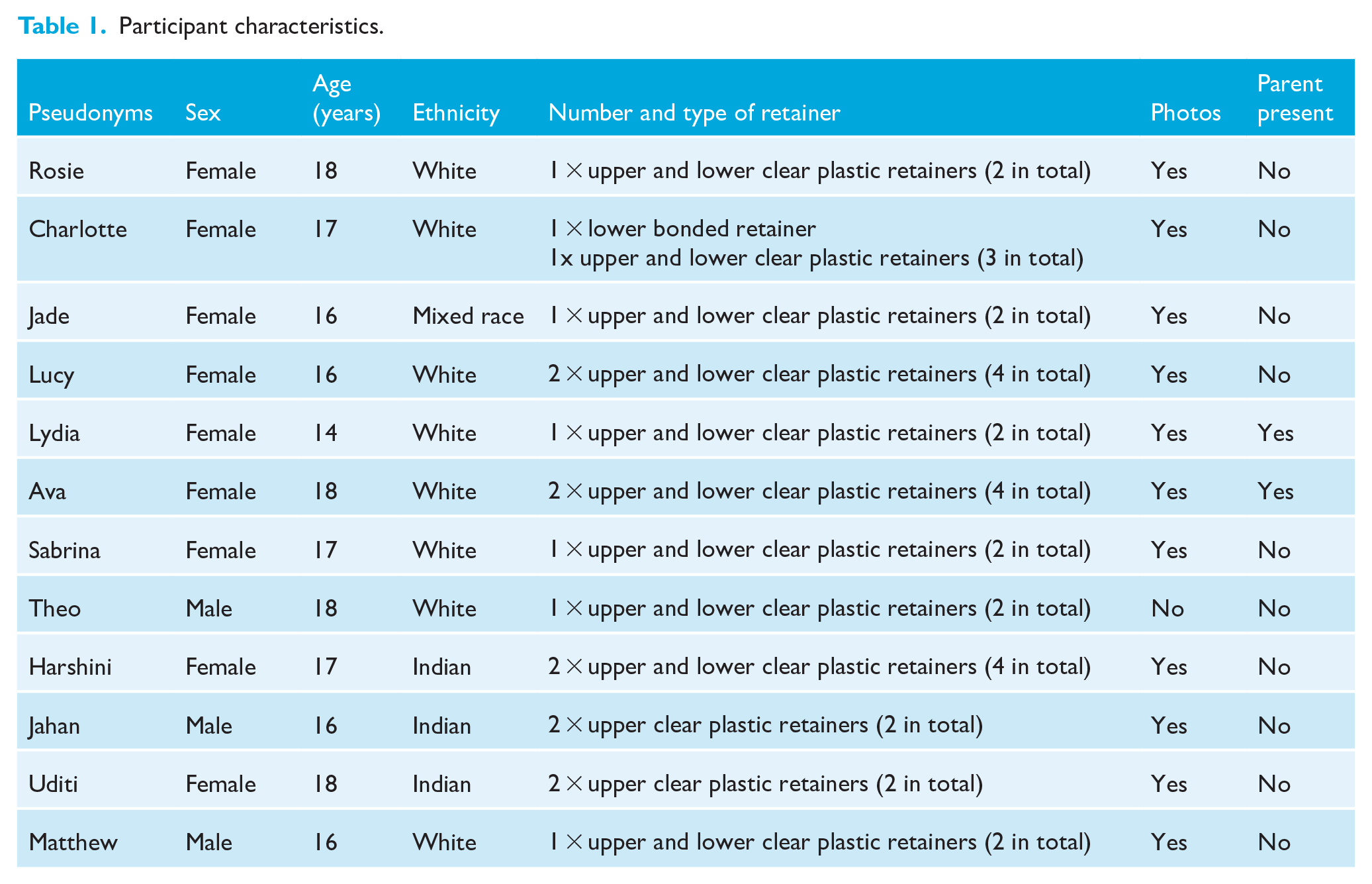
Of the 12 participants, 11 bought their own photographs to the interviews. Interviews ranged from 17 to 57 min (median 35 min). In the case where one individual did not bring photographs, the conversation was guided by the participant’s experience of retainer wear without the prompt of photos.
Summary of the themes
Three themes were developed to describe young people’s experience of retainer wear in the immediate adaptation phase and at 6 months: (1) experience of wearing retainers; (2) adaptation to retainers; and (3) motivators for retainer wear adherence (Figure 4). Themes were rich and complex and due to diversity in individuals’ experiences, the themes and subthemes held contrasting views.
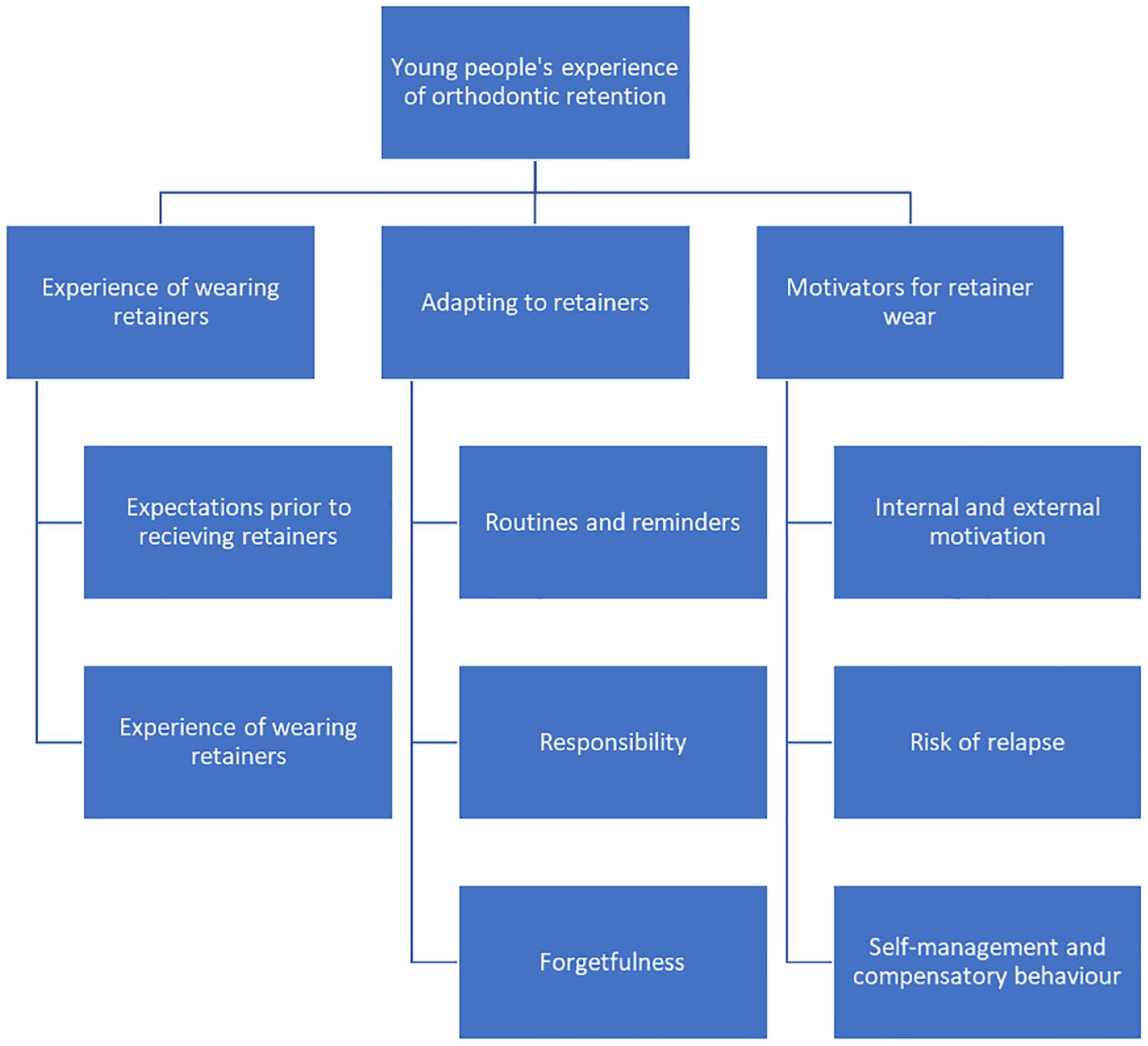
Summary of the themes.
Theme 1: Experience of wearing retainers
Participants had varied and mostly positive experiences of retainer wear in the immediate adaptation phase, particularly with respect to their expectations.
Expectations
Expectations were derived from individuals’ own experiences, the reported experience of others and parental assumptions about retainer wear. Previous experience of wearing fixed appliances meant individuals felt they had some understanding of what to expect when wearing a bonded retainer. Similarly, people who had worn removable appliances previously felt prepared for removable retainers:
‘When I had my removable ones, for like a month, I went to Australia, so I know what it was like, I just had to make sure I put in at night. So, it just would be the same experiences with my retainers.’ [Jahan]
Expectations from parents did not always align with young people’s experience:
‘They just assumed that when I had my retainers in that, like, I’d have a lisp and talk funny and stuff like that, but when I have the retainers in, I don’t think they even realise that I have them in, yeah so, now they don’t really have an opinion about them.’ [Harshini, immediate]
Peer experience of retainer wear can influence young people’s expectations both positively and negatively, with peers having an impact on their current experience of wearing retainers:
‘I went over for a sleepover, I think it’s like 2 weeks ago, and I almost forgot. She was like, “Have you put your retainer in”, and I was like “Oh, no”, and she was like “You’ve got to put it in”. Cause she remembered hers, I remembered mine.’ [Sabrina, 6 months]
Immediate experience
Common physical experiences of minor significance initially included ‘discomfort’ and feeling ‘tight’. From the outset, these sensations were minimal and most patients adapted to them relatively easily. Retainers do not seem to disrupt young people’s lives; even in the longer term (6 months), wearing them was not something that took much effort:
‘Erm, I think now it’s probably like less of an effort. At first, when they were a bit more uncomfortable, then I used to think oh I’ve got to put my retainers in now. Whereas now like I don’t really think about it, I just kinda do it. I don’t mind wearing them, it’s like, it doesn’t cause me any problems.’ [Rosie, 6 months]
The young people in this study felt that there was acceptance from their peers about wearing retainers. Certain social situations seemed to affect adherence differently for different individuals. For instance, when around family members as opposed to friends, young people could be increasingly disinclined to wear them. This point was reiterated at the 6-month time point, with young people having a preference about when and where they would want to wear their retainers.
‘Like if we were sat there with family, I’d have to say, “aw can I go upstairs and take out my retainer?” But if it was like just around my friends, I would be less embarrassed.’ [Ava, immediate]
‘I think it’s different from in school because everyone has them but if I was like, let’s say it was a Saturday and I went out for like a meal with my family, I wouldn’t really want to be like, you’d have to go to the toilet, I wouldn’t want to be in the restaurant pulling out my retainer and like putting it back in.’ [Sabrina, 6 months]
Theme 2: Adapting to retainers
The use of routines and reminders were perceived to be more important immediately after appliance removal than after 6 months of retainer wear. Initially, forgetfulness was a perceived barrier; however, over time, instead of forgetting, individuals made conscious decisions about when to wear the retainers to aid adaptation.
Routines
Nighttime routines, makeup routines and shower routines were initially commonly associated with wearing retainers. These routines were harder for some to adapt to than others:
‘Well, I kind of had to set like a reminder on my phone, because I knew I’d forget, because it’s like, I find it hard to get into a new habit.’ [Ava, immediate]
Developing a habit of wearing their retainers every night rather than reducing retainer wear to alternate nights may prevent disruption to routines:
‘I think I’d rather wear them every night, just because I feel like, I’m just more likely to forget. See it’s all about the routine, if I’m on and off it’s just not gonna work. I’d just rather wear them every night or not at all, sort of thing.’ [Rosie, 6 months)
Reminders
Initially, reminders, such as setting alarms, parental reminders and obvious placement of the retainer box, helped young people get retainer wear into their routines (Figure 2). For most, these reminders were far less important at 6 months. Immediately after appliance removal, positive parental support served as a useful backup for when self-created reminders were ignored; however, once routines were established, parental reminders were less necessary.
‘I think it’s more of my personal thing, but if I do need reminding for anything with my braces, I can always like sort of rely on my family to be like have you done this.’ [Jade, immediate]
Responsibility
There was a shift in perceived responsibility from active treatment to retainers:
‘It wasn’t like I had to really do anything about them, just that it was the orthodontist’s job to like to fix them and move my teeth and stuff like that. But now that I’m on my own, it’s my responsibility.’ [Harshini, immediate]
Forgetfulness was not reported to be deliberate, but it was nevertheless perceived to be a significant issue, particularly in the initial adaptation phase. Periods of disruption in routines, such as holidays, school examinations or extra-curricular activities, were identified as times where young people felt they might forget their retainers:
‘Obviously then with the exam season and everything, I might get a bit busy, and it might slip my mind a few times but I’m hoping it doesn’t.’ [Jade, immediate]
For others, however, the risk of forgetting to wear their retainers was untenable:
‘I forget everything, but my retainer is one of those things I never forget. I literally can’t go to sleep without my retainer. It feels weird otherwise. Mentally, I know I need to have them in at night. I tell myself “Come on, you’ve not had to wear them all day, if you don’t wear them tonight you’ll have to face the consequences.” I can’t afford to not wear them.” [Harshini, 6 months]
Theme 3: Motivators for retainer wear adherence
Internal and external motivation
All the young people interviewed in this study experienced a newfound sense of confidence and happiness with their teeth after their brace treatment. This was a central motivator for them to continue wearing retainers and to sustain the orthodontic treatment process.
‘(My smile) it’s just like my prized possession now, I love them. I love the outcome.’ [Harshini, immediate]
In addition to their newfound confidence, a commonly expressed view was that by completing orthodontic treatment, young people would gain the ‘prize’ of not having anything on their teeth at all. Uditi explained that since having her brace off she felt ‘so free’. Harshini also reflected positively on ‘having the freedom. . . just to embrace your smile’:
‘I feel like I’d have had such a long commitment to my brace and the whole point of getting them off is to like show your teeth off and, like, you know, I like how it feels to actually have like nothing on your teeth.’ [Harshini, immediate]
Young people recognised that after initial completion of active treatment, the novelty increased their motivation; however, like many things, this began to wear off over time and their enthusiasm to wear their retainers declined.
‘Like, at the start, when they were like new, like new teeth, and I was like “Right, this is it, I need to keep them.” Like now, it’s the same, but probably not as intense.’ [Rosie, 6 months]
External pressures around appearance encouraged young people to wear their retainers; for example, a belief that having straight teeth will reduce the chance of receiving negative comments from others. Some felt that the idea of peers noticing relapse would be more embarrassing than experiencing relapse itself:
‘If I’ve had my braces on before, and I tell people like, I’ve had them and they’ve moved, they’ll be like, “Oh, well why aren’t your teeth straight then”, so then I’d feel a bit like, “Oh God”, about it.’ [Harshini, immediate]
This external motivation persisted in the longer term due to societal influence and social media:
‘I feel like your teeth are one of the first things someone sees about you, your smile. People judge people off of their teeth, because there is a stigma to have straight teeth and stuff now. If your teeth aren’t like what society wants them to look like, with the influence of social media and all that stuff, people could, like, not be horrible but pass comments or it could be something people target when saying stuff to you.’ [Harshini, 6 months]
Another motivator to wearing the retainers was avoidance of disappointing others and those involved with getting them to this point of completing treatment. There was a desire to not want to waste anyone’s time and efforts.
‘I’ve done the 3 years, it’s been a bit like if you don’t wear them then I’ll be a bit like, going back to the start again. . . could be a waste of time if not wouldn’t it, for everybody, everybody not just me.’ [Theo, immediate]
Fear of relapse
Initially, avoidance of relapse was the main reason for young people choosing to wear their retainers. For some, after months of retainer wear, they began to feel their teeth may not relapse as much as expected.
‘It was like panic that if you don’t wear them your teeth are going to move. And that’s not really true, like they’re not going to move that much if you forget to wear them for 1 day.’ [Sabrina, 6 months]
For some, a degree of relapse was acceptable as long as it was unnoticeable. When relapse was not identified after a period without the retainer, young people may decide to stop wearing their retainers.
‘I was wearing them some nights, taking them out some nights so I could balance it, so if I noticed my teeth did move I could wear it more. After time, I think mostly due to laziness, I chose not to wear it and it didn’t affect or move, and didn’t cause any change in appearance. I still have them, and I could still wear them if I wanted to.’ [Harshini, 6 months]
Self-management and compensatory behaviour
Young people recognised that to be successful with retainers they could chose to alter wear regimes to compensate for missed retainer wear:
‘I just kinda like put them in the next time maybe for like 6 hours, just to like make up for lost time sort of thing.’ [Rosie, 6 months]
When discussing how individuals felt about lifelong retention, responses were unique to each young person. Anticipated barriers include maintaining hygiene and the financial commitment of wearing them.
‘For the rest of my life, I don’t wanna be cleaning my retainers. That’s like a whole minute every night for the rest of your life. I can’t get those minutes back. Eventually I won’t wear them every night. I am hoping if I wear them every night now, I won’t have to wear them as much later on. When I’m older, I won’t have to wear them as much then maybe three times per week.’ [Jahan, 6 months]
Discussion
Adherence to retainer wear is a complex and multifaceted process that is unique to the individual. While the titles of the themes are in keeping with the findings from previous qualitative research, the method of photo-elicitation helped young people to explain the nuances of their own individual lived experience, which highlighted diversity and differences within shared experiences.
The young people in this study described how their previous experience of appliances had informed their attitudes toward, and expectations of, retainer wear. In addition, the reported experience of their peers had a significant impact upon their expectations and shaped their anticipated behaviours about their own retainers. Common physical experiences of minor significance initially included ‘discomfort’, a ‘lisp’ and feeling ‘tight’. From the outset, these were minimal and most participants adapted to them relatively easily. Initial wear was not defined as painful and was never given as a reason to warrant young people abandoning their retainer entirely, which is contrary to the findings of Frawley et al. (2022) and Wong and Freer (2005) who found discomfort to be a significant barrier.
Even though young people characterised retainer wear as socially acceptable and normalised among friends, nighttime wear was preferable because of the inconvenience associated with wearing retainers during social situations, such as eating in public. Most participants reported feeling more confident in front of their peers than family members. This is an unexpected finding because research generally supports the view that the relationship between adolescent and parents is usually related to higher levels of self-esteem and self-efficacy compared to that with peers (Gorrese and Ruggieri, 2013); however, it may be that young people consider retainers to be ‘normal’, whereas people of parental age may hold outdated views. As with the findings from Frawley et al. (2022), some young people in this study suggested a potential barrier to long-term wear may be the social burden retainers may carry in later life, particularly when moving to university or travelling. This is interesting as although retainers are normalised, young people still want to avoid wearing them where possible.
Overcoming the initial adaptation phase required young people to embrace the shift in responsibility and self-create routines and reminders unique to them, which helped them to integrate retainer wear into their lives. Reminders and parental support were less important at 6 months as routines became engrained. This is in keeping with the finding from Frawley et al. (2022), where parental support diminished during the retention stage. Young people recognised the shared responsibility of retainer wear and the shift from the orthodontist to them as individuals. Adapting to retainers required self-created interventions to help individuals manage their anticipated forgetfulness or interruption to routines. Over time, forgetfulness was perceived to be less of a barrier, with young people actively choosing when and where they would want to wear their retainer and managing this alongside their social lives and their experience of relapse. It has been suggested that to support individuals in making these decisions, part-time night-only wear should be recommended to avoid young people needing to wear their retainers during the day where non-adherence is more likely (Littlewood et al., 2017).
Internal and external motivation were clear drivers of retainer wear adherence. Gaining positive feedback and reflecting on the effort they had invested into the orthodontic process were both significant motivating factors for the young people in this study. Previous research has found participant’s attitudes, particularly this sense of ‘investment’ towards their retainers, to be an important determinant of retainer adherence (Kearney et al., 2016). Al-Moghrabi et al. (2019) similarly found that participants who had already experienced extensive orthodontic treatment did not want to devalue their already-invested efforts and commitment by experiencing orthodontic relapse.
The participants reported that receiving compliments from friends and family and their newfound confidence provided motivation to wear their retainers. Improved appearance and increased confidence have been found to be motivators in previous research (Kettle et al., 2020). Furthermore, the young people in this study described the avoidance of embarrassment or negative comments as an additional important motivator for retainer wear as well as guilt and not wanting to let themselves or the orthodontist down. This echoes the findings from Frawley et al. (2022) and highlights the simultaneous and complementary role of internal and external motivation.
Young people felt able to self-manage and make compensatory behaviours regarding wear times, especially once they had adapted to their retainers. For instance, if they missed a night of retainer wear, they would often compensate by increasing wear the next day or night, which allowed people to integrate retainer wear in a realistic way into their lives. This may be a useful strategy to promote to increase adherence in the longer term.
Strengths
The insights from the young people in the study have provided a unique contribution to the body of knowledge in orthodontic research. Previous qualitative studies have investigated young people’s experiences of retainer wear, but this study is the first of its kind because, until this study, photo-elicitation had not been employed in orthodontic or dental research. The notable strengths of this study are the richness of data, the uniqueness of the methodology, and the transparency and trustworthiness developed through reflexivity.
Credibility and dependability have been demonstrated at every stage of this study, through being transparent, consistent, organised and systematic with data collection and the analysis process. Documentation of reflective and reflexive thoughts through journalling and regular debriefing within the research team was a strength of this study, further demonstrating credibility. Scrutinising the transcripts and extensive familiarisation with the data led to the development of codes and themes that span the participants’ experiences, with evidence of verbatim quotes represented across the results.
The findings of qualitative studies do not set out to be generalisable. Instead, the researcher strives to provide a transparent methodology so that the reader can decide whether the results can be transferred to other contexts, settings or other respondents (Carminati, 2018). Clearly documenting the entire process and explaining the methodology would enable another researcher to repeat similar research in other settings or disciplines, which increases the transferability of this study. Delivering a concise, coherent, logical writeup of the data while remaining faithful to the lived experience of young people has enabled further insight into the lives of people wearing retainers. As a result, the richness and depth of information gained from the young people in this study makes a valuable contribution to the current retainer adherence literature.
The virtual interviews did not adversely affect the quality of data collected. Participants were visibly comfortable in their own setting to discuss their lived experiences in depth. Furthermore, the flexibility afforded by virtual interviewing was utilised by participants, who at times rearranged scheduled interviews around personal and school commitments.
Although more nuanced data may have been collected through face-to-face means, such as non-verbal communication, it was convenient for participants to meet virtually and the online space provided an opportunity for participants to be able to share and explore their photographs with the researcher. Another advantage of virtual interviews was that they were sustainable, eliminating the need for travel for both participant and researcher.
Limitations
During recruitment, 11 out of 23 patients who were initially approached did not want or consent to be interviewed. Participants were approached face-to-face by their treating clinician, with those interested followed up by telephone or email by KS to provide further information and gain consent. Several young people failed to respond to the invitation to participate in the study, stating a lack of interest, changing their mind after further information and a lack of time to be interviewed. Although not given explicitly as a reason, the additional burden of taking photographs or willingness to participate in virtual interviews may have been a disincentive. Once consented, no participants dropped out of the study.
Purposive sampling was planned with the intention to include people of different ethnicities and sexes with experience of all different types of retainers. However, in the recruitment period, only one person with bonded retainers and no one with Hawley retainers were identified and enrolled. Therefore, the findings of this study were unable to provide detail about young people’s experience of Hawley retainers and the reported experience of bonded retention was limited. For this reason, data saturation was only met in relation to the experience of clear vacuum formed retainers, and further research about the lived experience of young people using Hawley and bonded retainers would be useful.
The data presented do not reflect longer-term experiences with retainers; however, a 2-year follow-up will be undertaken with this same cohort. The data present only people who were treated within a hospital setting, which may not be reflective of those who have orthodontic treatment in primary care. The data do not capture the experience of specific groups of people, such as younger children, people with special educational needs and disabilities or people with complex conditions where retainer adherence may be different such as patients with hypodontia, orthognathic or cleft and craniofacial conditions.
Recommendations
The findings from this study have led to several recommendations.
Establishing an individual’s prior experience of wearing braces and understanding their expectations about retainers may help clinicians to support patients in preparing them for retainer wear.
Co-constructing unique adherence strategies, routines and reminders, as well as ways to make compensatory behaviours, could help young people to overcome the initial adaptation phase and aid realistic, longer-term adherence.
Understanding the specific internal and external motivators for retainer wear to help to drive adherence on an individual basis.
Conclusions
Photo-elicitation is an exciting and novel method of data collection for qualitative orthodontic research and dental research more broadly. This method empowers participants to lead and shape the direction of their interview, share their own photographs and articulate a lived experience of retainer wear that is unique to them.
The themes developed were in keeping with the findings from previous research, but the experiences reported within a theme emphasise the scope for exploring detail and diversity in individual’s lived experiences.
The findings from this study have revealed that understanding early experiences of retainer wear and the factors that affect retainer wear adherence can help orthodontic clinicians provide timely and well-targeted interventions and information.
Co-constructing unique adherence strategies may help young people to overcome the initial adaptation phase and drive adherence in the longer term, with particular emphasis on understanding the individual and their specific motivators for retainer wear.
Despite the recognised importance of retainers for maintaining orthodontic outcomes, this study found that for most young people, wearing retainers takes up just a small space in their life; therefore, efforts should be made to harness existing behaviours and encourage autonomy and self-determination from the outset.
Recommending indefinite part-time wear is clinically advantageous and evidence-based, but it may also enhance adherence by avoiding use of retainers during the daytime or during social situations.
The use of photo-elicitation in future research would be advantageous. This method could be applied in various contexts, with different demographics and with certain cohorts of patients to explore individual lived experience further.
Footnotes
Acknowledgements
Our sincere thanks to all the participants who took part in the research and to the staff who helped with recruitment.
Declaration of conflicting interests
The author(s) declared no potential conflicts of interest with respect to the research, authorship, and/or publication of this article.
Funding
The author(s) received no financial support for the research, authorship, and/or publication of this article.
