




Abstract
Abstract
Lip bumpers have become an integral part of treatment regime in interceptive and corrective orthodontics. The triumph of it depends on the sturdiness without distortion and fracture during the course of treatment. Most often, excessive stress engendered by the patient triggers its breakage. This article presents a modified lip bumper that aims to diminish the undue stress in the wire, which makes the appliance more fracture resistant and effective.
Introduction
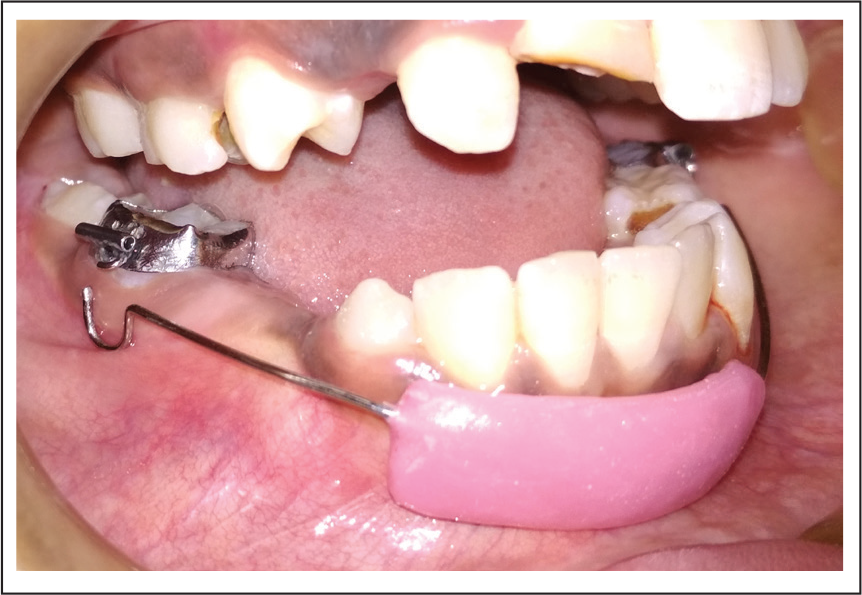
Lip bumper has turned out to be integral in interceptive and corrective orthodontic treatment regimes. It has been repeatedly proven that lip bumpers recover arch length, maintain leeway space, reinforce molar anchorage, levels the curve of Spee, and interrupts pernicious habits. 1 The effectiveness of the lip bumper depends on the material used, its fabrication, patient compliance, durability without distortion, and breakage. However, common clinical hindrance of the appliance breakage due to excessive stresses created during fabrication reduces its effectiveness (Figure 2).
Here, we present a modification to the conventional lip bumper that aims to reduce the undue stress in the wire, which makes the appliance more fracture resistant and effective.
Steps in Fabrication
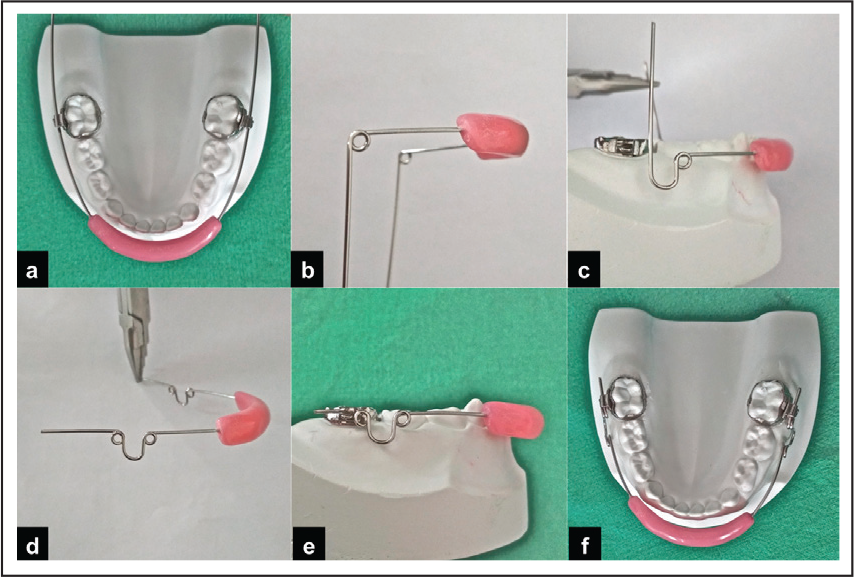
Take 0.045” stainless steel wire and contour it similar to a traditional lip bumper with a muscle shield attached to it with no more than 2 to 4 mm from the labial surface of anterior teeth (Figure 1a).
At a distance of 1 cm from the mesial aspect of the molar tube, make a helix with an internal diameter of 3 mm (away from the tissue) (Figure 1b).
The mesial helix should be continued as a U-loop with mesial and distal legs 5 to 10 mm (based on vestibular depth) in height and 5 mm in width (Figure 1c).
Further, a distal helix with an internal diameter of 3 mm (away from the tissue) should be made at the distal aspect of the U-loop, which then terminates at the entrance of the molar tube (Figure 1d).
The wire is made to pass into the molar tube, extending out distally from the opening by 3 to 5 mm (Figure 1e).
The same procedure is followed simultaneously on the other side for the fabrication of U-loop with helices (Figure 1f).
Activation
The muscle shield is activated by gradually opening the U-loops on either side by 1 to 2 mm in the consecutive visits depending on the requirement.
The height of the muscle shield is adjusted by opening or closing the mesial helices for upward or downward movements, respectively.
Discussion
Appliance Versatility
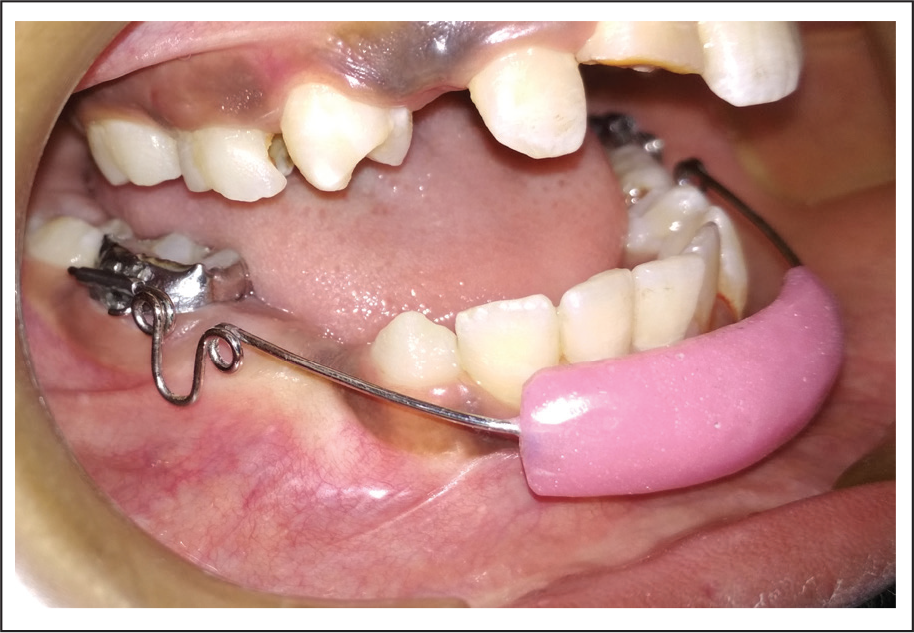
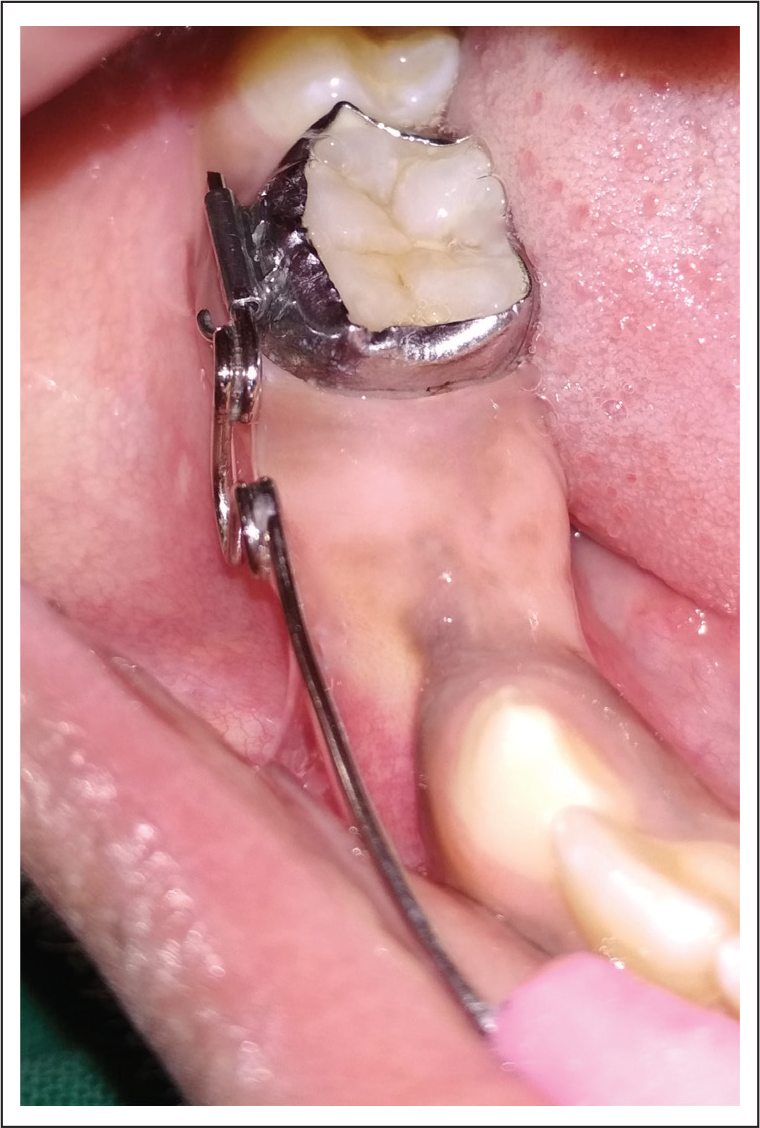
Incorporation of quad helices to the traditional lip bumper makes it unique by reducing stresses accumulated at the 90 degree margin of U-loops, making it more fracture resistant and also increasing the range of action as the wire length is increased. Moreover, these U-loops with quad helices act like a spring, taking up the undue force load from the lip musculature. As these U-loops are made along the outer ring of the helices, these are almost 2 to 3 mm away from the gingival tissue, preventing their injury (Figure 3 & 4).
Conclusion
The modified quad helical U-loop lip bumper eliminates the common clinical hindrance of the appliance breakage and also increases the springiness of the appliance, making it more operational.
Footnotes
Declaration of Conflicting Interests
The authors declared no potential conflicts of interest with respect to the research, authorship, and/or publication of this article.
Funding
The authors received no financial support for the research, authorship, and/or publication of this article.