




Abstract
Animal models have critical roles in biomedical research in promoting understanding of human disease and facilitating development of new therapies and diagnostic techniques to improve human and animal health. In the study of myriad human conditions, each model requires in-depth characterization of its assets and limitations in order for it to be used to greatest advantage. Veterinary pathology expertise is critical in understanding the relevance and translational validity of animal models to conditions under study, assessing morbidity and mortality, and validating outcomes as relevant or not to the study interventions. Clear communication with investigators and education of research personnel on the use and interpretation of pathology endpoints in animal models are critical to the success of any research program. The veterinary pathologist is underutilized in biomedical research due to many factors including misconceptions about high fiscal costs, lack of perceived value, limited recognition of their expertise, and the generally low number of veterinary pathologists currently employed in biomedical research. As members of the multidisciplinary research team, veterinary pathologists have an important role to educate scientists, ensure accurate interpretation of pathology data, maximize rigor, and ensure reproducibility to provide the most reliable data for animal models in biomedical research.
Keywords
“One medicine” refers to the idea that all biology has utility for study and knowledge to better understand the human condition. This concept had origins in the 19th century when Rudolf Virchow, from his early observations at his father’s butcher shop, was able to eventually describe the life cycle of Trichinella spiralis and coined the term “zoonosis.” From these early foundations, animal models have been increasingly seen as useful for study. But opportunities to refine or improve usage of animal models have often coincided with new challenges in rigor and reducibility of such studies, and in translation to the human disease they are used to study. 37 This article discusses several areas in which the veterinary pathologist can have significant impact in helping research teams to identify and navigate common opportunities and challenges involving animal models.
Emerging Technologies and Gene Editing in Animal Models
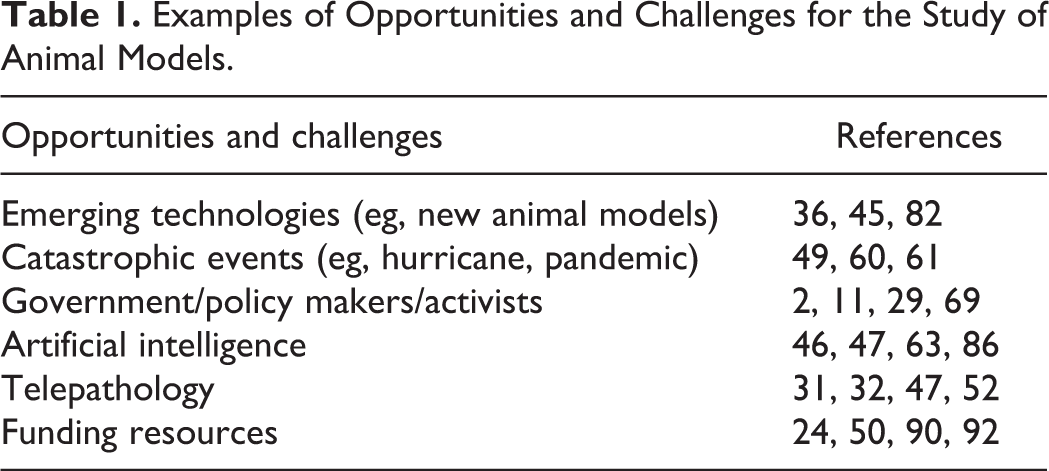
Emerging technologies can affect animal models by increasing their efficacy and relevance for translational studies. In the 1980s, the development of genetically engineered mice provided scientists with an unprecedented surge in new molecular and in vivo tools to study the roles of genes. 34,65 Later, in the early 2000s, somatic cell nuclear transfer was used to produce new genetically modified animal models in livestock and other larger species, allowing for refinement and complementation to the limitations seen in rodent models of human disease. 5,41,70,79,83 While technological advances such as these can help improve animal models, they can also coincide with newfound challenges. For instance, the study of genetically modified pigs quickly exposed a lack of validated reagents (eg, immunohistochemistry) as compared to rodent models. 23,55,56,81 Thus, relevant antibodies need to be validated for studies in different species. Continually emerging technologies in modeling require ongoing attention, education, and adaptability (Table 1). Two examples of emerging technologies highlight some of the opportunities and challenges.
Examples of Opportunities and Challenges for the Study of Animal Models.
The first example is gene editing technology. 33 In simple terms, gene editing involves cutting or deleting specific nucleotide sequences, and allowing the host machinery to repair or modify this defect. Knockouts, knockins, and other manipulations can be generated with this technology. A common gene editing tool called clustered regularly interspaced short palindromic repeat (CRISPR) is based on the adaptive immune system of bacteria. CRISPR and similar gene editing tools have been suggested as potential treatments and cures for a variety of conditions including monogenic diseases (eg, cystic fibrosis), metabolic disease (eg, type 2 diabetes), cancer (eg, melanoma), infectious diseases, septic shock, and neurodegenerative diseases (eg, Alzheimer’s disease). 93 Gene editing has produced tremendous, if not unparalleled, enthusiasm in the scientific community, public sector, and news media. However, in the rapid development and application of this technology, there have been concerns particularly for off-target effects, safety, and selection of appropriate controls in the use of these tools. 44,89,94 While gene editing tools are often described as “specific” for their targets, research studies continue to report new approaches to improve specificity, 3,45 which also raises questions as to how thoroughly off-target effects are being routinely evaluated. Since pathologists serve as key professional resources on multidisciplinary teams and provide critical expertise in phenotypic and safety studies, they continually update their expertise to provide effective guidance in defining and evaluating appropriate controls, safety assessments, evaluating target specificity, and screening for off-target effects. 37,66
The second example is of the unexpected challenges that sometimes arise that require new approaches and technologies in animal model development and utilization, as illustrated by coronavirus disease 2019 (COVID-19) caused by severe acute respiratory syndrome coronavirus 2 (SARS-CoV2). 21 This novel zoonotic coronavirus emerged in China in 2019 and by early 2020 was declared a pandemic by the World Health Organization (www.who.int). 97 As a result of its efficient transmission and potentially severe to lethal consequences, economic shut downs and social distancing were imposed in many locations across the globe, greatly affecting research. Institutional research enterprises were largely postponed, supply chains were disrupted, and personal protective equipment was scarce. Nonessential research studies were halted and nonessential animals euthanized, so that a minimum of staff could manage institutional vivaria and maintain social distancing. But as the old proverb states, necessity is the mother of invention, and new opportunities have already grown out of this challenging season. New types of animal models were developed and new research techniques (eg, single cell transcript analysis) were applied to advance studies on SARS-CoV2 cellular predilection, pathogenesis, and therapies. 20,82,98 Additionally, through this pandemic, society as a whole has become more aware of the importance of the One Health concept, and how zoonoses can quickly have a marked and devastating global impact. 35
Considerations When Choosing and Evaluating Animal Models
Animal models have been fundamental in preclinical and biomedical research for revealing key biochemical and physiologic processes, clarifying disease mechanisms, and translating biomedical discoveries into effective clinical treatments for human disease. 4,13,43,85,96 Animal models have been critical in the development of history’s most seminal breakthroughs in medicine. For example, insulin was developed in part through the development of multiple surgical and pancreatic extract injection models utilizing dogs, cats, and rabbits. Dogs, in particular, played a significant role in the early development of local and general anesthesia. These are just two of many examples of animal model impacts on human medicine.
In the post genomic era, the term “animal model” evokes images of genetically manipulated mice replicating features of a human disease phenotype, and indeed, US government statistics indicate that approximately 80% to 90% of the animals used in research are mice, rats, and other small rodents. 4,43 Advantages of rodents include relatively low operational costs, extensive genetic information, small size and ease of handling, availability of reagents for molecular techniques, and the existence of models for a plethora of human disease conditions. 4,6,84,85,88 However, now there are a variety of non-rodent model systems available, including rabbits, sheep, pigs, fish, dogs, and nonhuman primates, each offering their own advantages and challenges. 4,85 The limitations of each model can be recognized, as well as its relevance to specific research questions. For example, intratracheal instillation of bleomycin sulfate in rodents is often used to model pulmonary fibrosis in humans, a chronic disease of poorly understood etiology. The mouse model induces acute lung injury following instillation, followed by progressive deposition of extracellular matrix resulting in interstitial fibrosis lasting for 3 to 4 weeks following dosing. Although the fibrosis induced in the bleomycin model resolves over time and is not accompanied by the type II pneumocyte hyperplasia that is characteristic of human idiopathic pulmonary fibrosis, the model has been valuable in the study of numerous mediators involved in the development of pulmonary fibrosis, including TGF-β and several interleukins, which led to a better understanding of the pro-inflammatory as well as the profibrotic role of macrophages in the disease. 58
“All Models Are Wrong, but Some Are Useful”
As George Box, one of the great statistical minds of the 20th century, stated, “All models are wrong, but some are useful.” 10 Although the use of animals in research is widespread and has advanced the understanding of human disease, concerns about the limitations of preclinical animal research and its ability (or often inability) to reliably predict clinical trial success have received considerable attention. 4,18,26,40,75,80,85,91,95,96 Too frequently, historical precedent, availability and funding drive selection of animal models, rather than critical analysis of the model system, and how it can answer the research question. Unanticipated effects of genetic manipulations or genetic backgrounds, or absence of expected phenotypes, are examples of conditions that negatively impact a model’s relevance to the human disease. To increase the validity and utility of animal models, it is necessary to clarify the study hypothesis and experimental aims, to select models to address the research questions, to determine the pathology endpoints most likely to produce biologically useful information, and to rigorously report study design and details of the methods. 26,40,43,53,76,80,88,91,95,96
Intrinsic and Extrinsic Factors
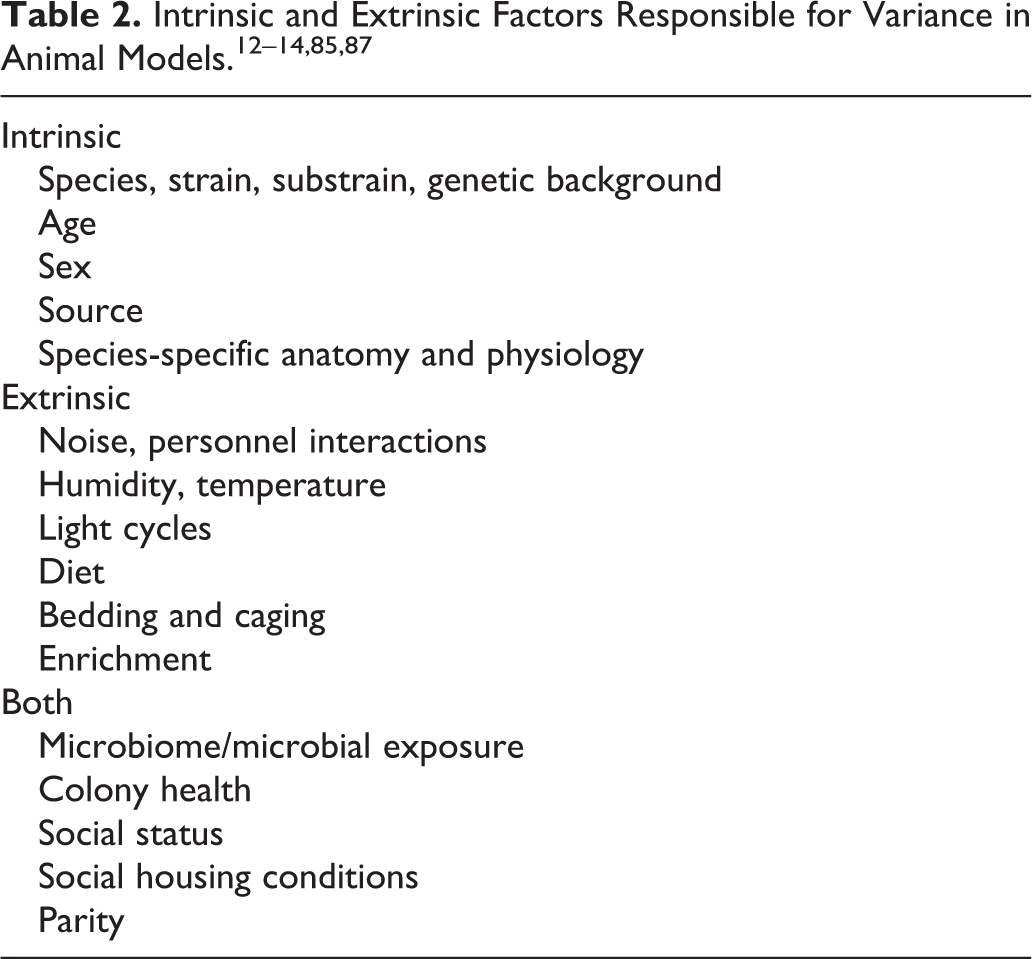
Intrinsic and extrinsic factors can impact animals, and therefore also impact research endpoints, experimental data, and interpretation of animal models. Intrinsic factors include, but are not limited to, species, strain, substrain, and/or genetic background, age, sex, source, and species-specific physiology and anatomy. 9,12 –14,18,28,38,40,43,51,72,77,84,85,87,95,96 Extrinsic environmental or husbandry factors include noise, personnel interactions, light cycles, temperature, humidity, diet, bedding and caging, enrichment, colony health, and even the microbiome or natural infections. 6,8,12 –14,40,42,87,96 Some of the intrinsic and extrinsic factors that impact animals, data, and interpretation of findings in animal models are summarized in Table 2.
Sample Size, Age, and Sex
Effects of too small a sample size (n), and inappropriate inclusion of age or sex in animals studies are frequent, and implicated in poor reproducibility in peer-reviewed publications involving animal models. Ideally “n” is determined by power analyses of relevant data. Relevant data will not be available for new models or projects. Historical precedent, common practice, convenience and availability of animals and resources commonly influence n. Randomized block study design is an approach that may be suited to limited availability of animals and resources. 43,53,96 Sexual dimorphisms are expected in anatomic and physiologic features of animal species, and should be expected in data from animals. Increasingly, the National Institutes of Health (NIH) peer review expects assessment of both sexes in study design. Sex as a biologic variable (SABV) 18 and international mouse phenotyping consortium (IMPC) assessments at different ages are required to characterize age-relevant drug responses or toxicities, or to determine chronology or incidence of proliferative or degenerative changes. 19,43 There is no ideal age at which to evaluate animals, as selection should be driven by the experimental questions. Examination of healthy young adults avoids age-related background lesions, minimizes housing and husbandry expense, and can make use of abundant historical control data. For example, the IMPC conducts primary adult phenotyping on mice 9 to 16 weeks of age, and currently has data on thousands of mouse genotypes. Earlier developmental phenotyping is done on subviable genotypes. Selected mutants are subjected to later and specialized phenotyping. When animal and resource availability limit options for assessing more animals, both sexes, or different ages, data from a smaller study may inform future study design, and factorial or randomized block study designs may be useful. 12,27,39,67,78
Control Animals
Sufficient and relevant control animals are essential to identify research relevant differences from baseline. Particularly for genetically engineered mice (GEM) that bear multiple mutations developed on different backgrounds, identification and availability of the most appropriate controls can be a challenge, as well as expensive to maintain and test with their cohorts. Ideally, all genotypes are evaluated (homozygous, heterozygous, wildtype, hemizygous), and controls are age-, sex- and source-matched to avoid misinterpretation of background lesions which may occur spontaneously independent of the experimental manipulation. If GEM mice are bred in the facility, then it is generally better to use controls from the same facility rather than those procured from a vendor because the latter may differ in their microbial status, background genetics, diets, and other factors. 12,43,53,96 Untreated controls, as well as sham-treated or vehicle controls are critical to assess effects of anesthetics, surgical stress, and vehicles on pathology and other endpoints.
Block or Batch Effects
“Block or batch effects” should be considered and avoided. 74 For example, time of day of necropsy or other testing affect data on various metabolic, endocrine, and other traits with circadian periodicity. Variations in tissue collection, preparation, processing, and downstream assays also contribute to variability in results and confound interpretation when performed by different personnel, or performed in separate runs (ie, immunohistochemistry). When a strict time course is warranted for measurement of specific endpoints (serum biomarker, hours or days post-inoculation, etc), study design can be modified for “staggered” specimen collections and necropsy timing so that all animals on study can be reliably compared across groups. Much of preclinical research would benefit from further consideration of good laboratory practice (GLP)-type standardization and quality assurance procedures, as these are not always standard practice in academic research. 7
Veterinary Pathologists in Research Teams
Veterinary pathologists play a critical role in research in the academic biomedical and preclinical (nonclinical) space. Expertise in systems biology, comparative physiology, and pathology are key to design and interpretation of studies involving animal models of human disease. Researchers often have highly specific scientific expertise, and little or no animal or pathology experience. The pathologist can bridge the gap from an idea to a relevant and meaningful research outcome. Facilitating collaboration and ensuring the success of a research project using animal models requires 2 key attributes: (1) the willingness and ability to educate the scientific team on the value of pathology and how best to answer their scientific questions and (2) effective interdisciplinary communication regarding the specific aims of the study and the value as well as limitations of pathology in addressing those aims, in a research environment that is often limited by budget constraints, publication expectations, and deadlines. The door of opportunity for education indeed swings both ways in biomedical research, as pathologists juggle the challenges of diverse aims, expectations, questions, models and disease conditions, with new knowledge and technologies, in diverse research teams. No two days are the same, and there is amazing opportunity, and requirement, for dedication to lifelong learning.
Communication and Education
Early and sufficient understanding of the “why,” “what,” and “how” of the project are essential to enable the pathologist to make the most useful contribution. Education of the research team on experimental design, sample collection and preparation, and interpretation of pathology endpoints is critical to achieving useful reproducible and replicable results (Table 3), and is imperative given the high costs of personnel time, animal resources, and concerns for animal welfare. 26,53,96 Some contributors to faulty experimental design that affect downstream pathology interpretation are outlined in Table 4. Cautionary tales of peer-reviewed errors 22,30,48,59,62 as well as resources for standardization of procedures, collections, trimming, and terminology represent opportunities for education by pathologists. 8,9,12,14,16,26,51,53,57,71 –73,75 Particularly in academic settings, education of research teams is cyclic and ongoing, as laboratories turn over when postdoctoral fellows exit and students graduate.
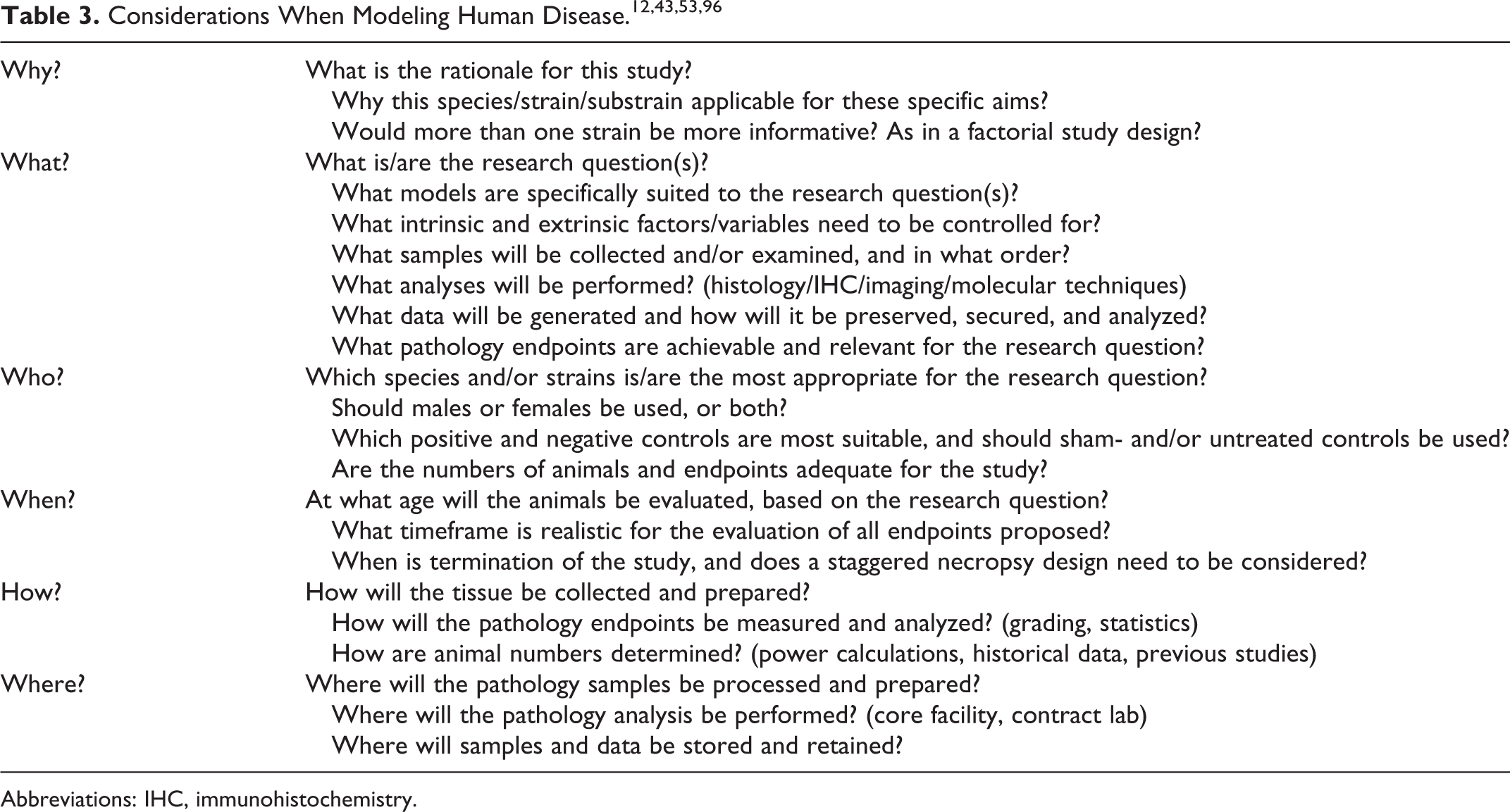
Abbreviations: IHC, immunohistochemistry.
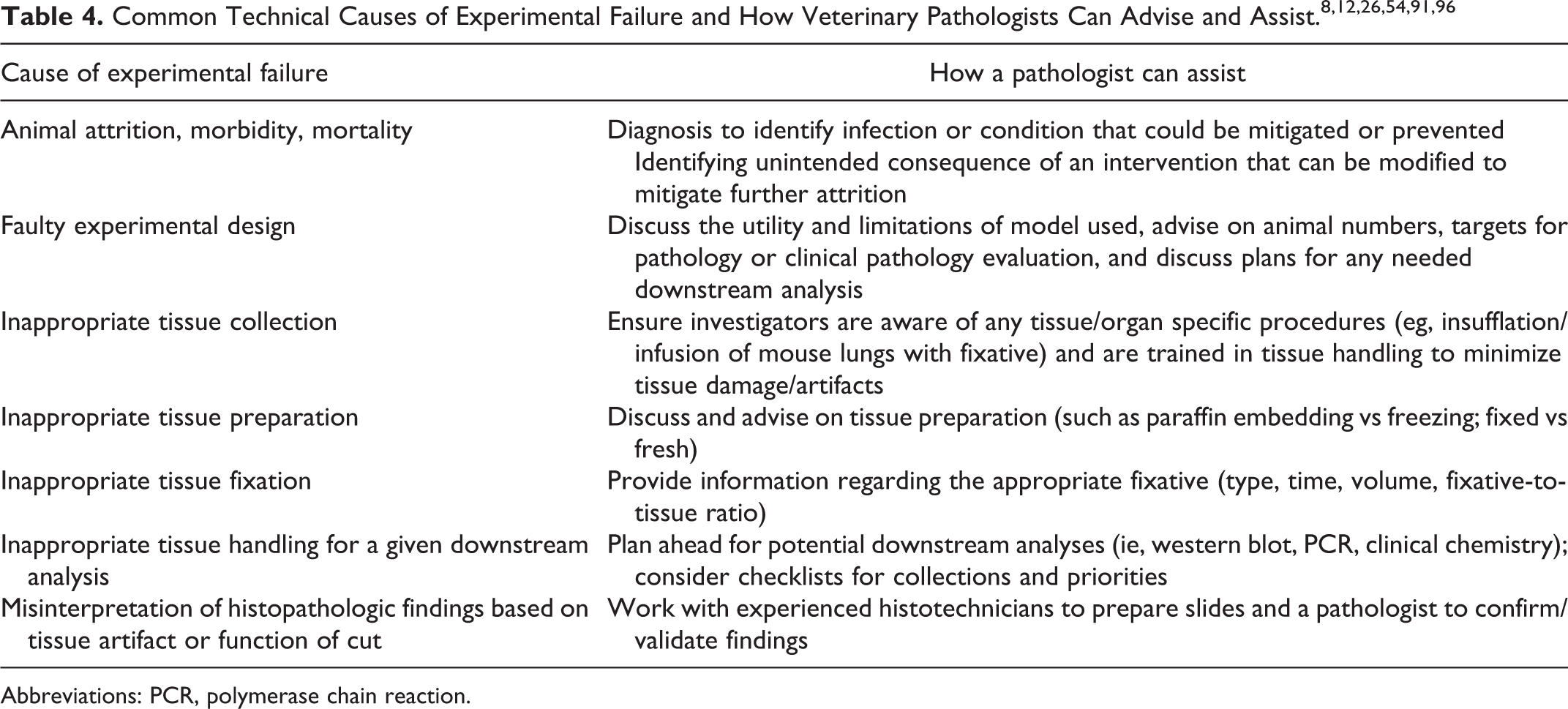
Abbreviations: PCR, polymerase chain reaction.
Limitations and Realistic Expectations
Recognizing the limitations of the model, the study design, and the resources requires early and honest communication. Scientists can have world class expertise in their field and with certain aspects of certain models, but they may not readily understand what is practical or possible for pathology endpoints, or the necessary steps to generate these endpoints. Managing expectations also requires early and honest communication. Unrealistic expectations regarding what can be achieved by pathology, as well as unrealistic turnaround times, puts both the pathologist and researcher at a disadvantage; the pathologist is pressured to complete evaluations quickly or with inappropriate endpoints which affect quality of the outcome, and the researcher is set up for disappointment and frustration if timelines are not kept or endpoints do not meet their expectations. Researchers may have little understanding of what is required to achieve certain pathology endpoints in terms of technical expertise, scientific knowledge, and labor. What seems a simple scoring exercise to the researcher may indeed be very technically challenging and require extensive optimization and standardization before reliable results can be generated.
“Do-It-Yourself” (DIY) Pathology
Pathology done by researchers and trainees (DIY pathology) can be attributed to (1) budgetary constraints (particularly in academia) and (2) the shortage of trained comparative pathologists in biomedical research. DIY pathology can result in loss of critical data due to inappropriate tissue collection, processing or preservation, as well as misinterpretation of pathology findings. 15,26,53,91,96 The pathologist and the team should be familiar with relevant expected species and strain variations. Examples of misinterpretation of normal anatomic structures in mice litter the scientific literature, as do species- and strain-specific background conditions, interpreted as research-relevant conditions. 22,30,48,59,62 For example, mice normally have significantly higher levels of serum calcium and phosphorous 25 compared to humans. It is important to be aware of this physiologic difference before erroneously, concluding that an experimental manipulation has led to life-threatening hypercalcemia or hyperphosphatemia. Other examples include interpretation of myeloid hyperplasia in the C57BL/6 mouse as myeloproliferative disease (rather than an expected inflammatory response to ulcerative dermatitis), or the spontaneous development of lymphomas in NOD-SCID mice before 1 year of age. 12,17
Timeframes and Project Management
Some projects continue for years, involve multiple groups of animals, varying conditions and specimens, and pathology scoring that has evolved over time. Finally, the time comes to publish the data. To provide a final summary report, the pathologist may need to review the entire project, and align the scoring in the context of new data sets. Ideally, some degree of pathology peer review can be incorporated into the final reports and publications. Grant-supported pathologists in ongoing communication with the research team have advantages in terms of input to standardize collections and analyses, and may have centralized access to documents and specimens. With short-term fee-for-service arrangements, collating the materials (paper and glass), and review of materials can be time consuming and expensive. Complexities inherent in managing paper, glass and wet specimens, long-term projects, and interdisciplinary and interinstitutional collaborations increasingly speak to needs for investments in robust project management capabilities, such as Laboratory Information Management Systems (LIMS), with much to be learned from GLP-compliant systems, and much to be gained through digital slide management options to facilitate and access comparison analyses. 1,7,13
Service, Collaboration, and Authorship
Centralized resources or cores offer fee-for-service pathology, including necropsy, tissue collection, tissue processing and embedding, slide cutting and staining, and data interpretation. 8,13 Core services can improve and standardize tissue collection and processing and pathology interpretation, and can offer opportunities for interdisciplinary collaboration when integrated with research teams. However, cost structures, work volumes, and resources may limit opportunities for meaningful interactive collaborations and pathologist time commitments to specific projects, particularly without grant support to do so. Institutional precedents and culture may not expect authorship for “paid” contributors to a project, although contemporary publication ethics and NIH guidance encourage recognition of meaningful contributions. 68 Situations in which the work would not have been possible or the research conclusions could not have been made without the contribution of the veterinary pathologist likely warrant co-authorship. For each individual the privilege of authorship should be based on a significant contribution to the conceptualization, design, execution, or interpretation of the research, as well as to drafting or substantively reviewing or revising the manuscript. 64 In addition, authorship also conveys responsibility for the study, and expertise is essential to defending data based on pathology endpoints.
Conclusions and Future Contributions of Veterinary Pathology
Work as a veterinary pathologist in interdisciplinary biomedical research teams offers exciting opportunities to impact human and animal health. Projects and discoveries may be directly translatable to the clinic in terms of improved diagnostic strategies or novel therapeutics, truly making a difference in many lives. Future comparative veterinary pathologists will continue to play important roles in identifying and researching emerging diseases and pandemics, critically assessing and developing models to meet these and other challenges. The recent SARS-CoV2 pandemic illustrates the need for new models and approaches for emerging diseases, as well as roles for comparative pathologists in developing and interpreting the models to develop and qualify vaccines and other interventions with rigor and efficiency. When global events impact society, as in 2020, pathology provides mission critical insights into feasible solutions. With these challenges come significant opportunities for pathologists to advance our roles and opportunities in biomedical research and pharmaceutical drug development, and beyond.
Footnotes
Declaration of Conflicting Interests
The author(s) declared no potential conflicts of interest with respect to the research, authorship, and/or publication of this article.
Funding
The author(s) received no financial support for the research, authorship, and/or publication of this article.
