




Abstract
Data collected in animal cancer registries comprise extensive and valuable information, even more so when evaluated in context with precise population data. The authors evaluated 11 740 canine skin tumors collected in the Swiss Canine Cancer Registry from 2008–2013, considering data on breed, sex, age, and anatomic locations. Their incidence rate (IR) per 100 000 dogs/year in the Swiss dog population was calculated based on data from the official and mandatory Swiss dog registration database ANIS. The most common tumor types were mast cell tumors (16.35%; IR, 60.3), lipomas (12.47%; IR, 46.0), hair follicle tumors (12.34%; IR, 45.5), histiocytomas (12.10%; IR, 44.6), soft tissue sarcomas (10.86%; IR, 40.1), and melanocytic tumors (8.63%; IR, 31.8) with >1000 tumors per type. The average IR of all tumor types across the 227 registered breeds was 372.2. The highest tumor incidence was found in the Giant Schnauzer (IR, 1616.3), the Standard Schnauzer (IR, 1545.4), the Magyar Vizsla (IR, 1534.6), the Rhodesian Ridgeback (IR, 1445.0), the Nova Scotia Duck Tolling Retriever (IR, 1351.7), and the Boxer (IR, 1350.0). Mixed-breed dogs (IR, 979.4) had an increased IR compared to the average of all breeds. Previously reported breed predispositions for most tumor types were confirmed. Nevertheless, the data also showed an increased IR for mast cell tumors and melanocytic tumors in the Nova Scotia Duck Tolling Retriever and for histiocytomas in the Flat Coated Retriever. The results from this study can be taken into consideration when selecting purebred dogs for breeding to improve a breed’s health.
Keywords
Skin tumors are among the most common canine tumors sent to histopathology diagnostic services. In fact, they are the most and second-most frequently reported tumors in male and female dogs, respectively. 6,9 –11,16,22 The studies cited here are only a small excerpt from those describing the occurrence of canine tumors. Such studies vary greatly with respect to the data source, the sample numbers, the size of the geographical region assessed, the availability of population data, and the depth and specification of data evaluation.
Studies on tumor occurrence are commonly based on data collections derived from tumor registries, 6,11,22 diagnostic lab reports, 16 animal hospital reports, 23 or animal insurance databases. 9 The variation in evaluation methods and calculated parameters is substantial. Some studies calculated either the relative tumor frequency 6,16 or the odds ratio (OR), 15,23 on the basis of the overall patient data in the collection; another study calculated a relative risk ratio using the number of dogs registered in the national kennel club. 11 Other studies again reported tumor incidence rates (IRs) calculated with an estimated population size based on insurance data, 9 municipal animal registry data, 18 or animal registry data completed with telephone surveys. 3,22 All these studies calculating tumor IRs considered fewer than 7000 tumor samples each and described the occurrence of major tumor types with respect to the major organ systems.
However, detailed population-based studies on skin tumors are lacking, and the existing studies on skin tumors describe the relative tumor frequency. 1,5,7,20,23 With the exception of the study of Villamil et al, 23 which included 25 996 tumors, these publications describe cohorts of fewer than 1000 tumors and often lack the correlation of tumor types to breed, age, and/or anatomic location.
In this paper, we present a comprehensive evaluation of 11 740 canine skin tumors collected in the Swiss Canine Cancer Registry from 2008 to 2013. We describe the absolute and relative tumor frequency, the site, breed, and age predisposition, and we calculate the tumor IR for the most common cutaneous tumor types based on the population data from the Swiss animal registry ANIS, 2 the official service for the mandatory registration of dogs in Switzerland during the period of this study.
Material and Methods
Data Source
The tumor data originated from the Swiss Canine Cancer Registry (data available on request at Collegium Helveticum Zurich,
The canine population data originated from the Swiss animal registration database Animal Identity Service ANIS. Pursuant to the Swiss ordinance on epizootic diseases, 21 the registration of resident dogs and the deregistration in case of death or permanently leaving Switzerland has been mandatory since 2007. For this study, we extracted breed, age, and sex data of dogs being registered during the above-mentioned time interval. Unfortunately, castration/neutering status is not registered in the ANIS database.
Data Preparation
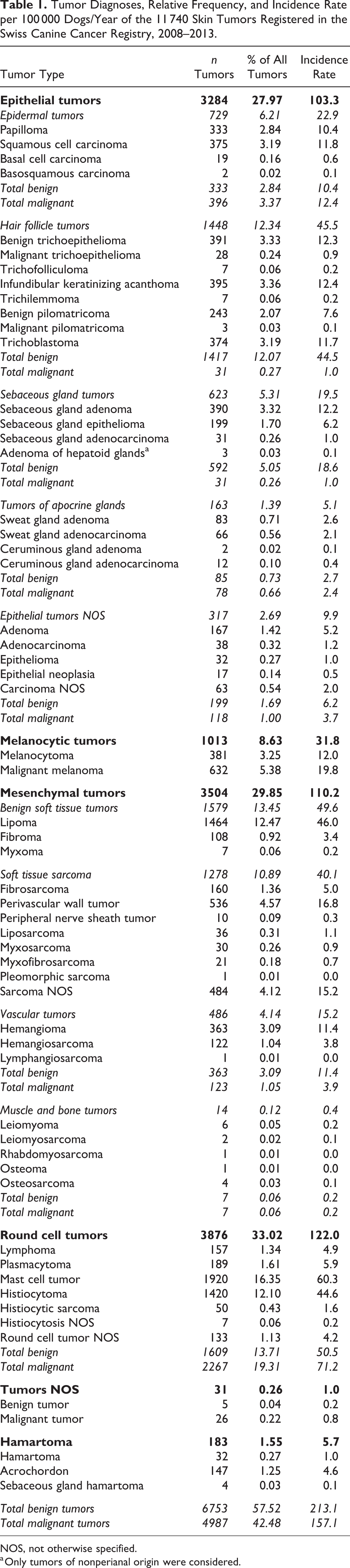
The diagnoses in the Swiss Canine Cancer Registry were coded according to the tumor topographical and morphological keys of the ICD-O-3. 16 For the present study, all cases of skin tumors were included, even if a parameter (eg, location, age, or sex) was not recorded. Epithelial cysts and hyperplastic lesions were excluded. Hepatoid gland tumors were included only when originating from haired skin of nonperianal region. Subtypes of tumors were grouped into major tumor types according to the WHO Histological Classification of Tumors of Domestic Species (Table 1 and Supplemental Table S1). 12,17 Where possible, benign and malignant tumors of the same tissue of origin were listed separately. This was not possible for mast cell tumors (MCTs) and peripheral nerve sheath tumors. They were all taken together and considered malignant tumors. Epitheliomas were classified as benign tumors.
Tumor Diagnoses, Relative Frequency, and Incidence Rate per 100 000 Dogs/Year of the 11 740 Skin Tumors Registered in the Swiss Canine Cancer Registry, 2008–2013.
NOS, not otherwise specified.
a Only tumors of nonperianal origin were considered.
To reach sample numbers large enough to calculate breed-specific tumor IRs, particular tumor types were grouped as main tumor types. This was done for epidermal tumors, hair follicle tumors, sebaceous gland tumors, melanocytic tumors, soft tissue sarcomas, and vascular tumors as shown in Table 1. Lymphomas and plasmacytomas were taken together as lymphoid tumors. There were enough tumor samples of MCTs, histiocytomas, and lipomas to be reported as individual entities.
Breed allocation was based on the information provided in the diagnostic reports. Dogs reported as more than one breed (eg, Australian Shepherd X Border Collie; Schnauzer mix) were classed as mixed-breed dogs. Cases with unknown breed were listed as “unknown breed.” The same criteria were used for the ANIS data.
The IR was calculated as annual rate per 100 000 dog-years at risk by applying the following formula:

The time at risk for dogs with tumors was considered for only half of the observation time, since the exact time to tumor occurrence was unknown. A tumor occurring simultaneously at more than one anatomic location was counted as a single tumor event. Simultaneously occurring different tumor types and tumors of the same type occurring sequentially were counted as multiple separate events. The overall IR was calculated under consideration of the total number of tumor cases and dogs registered. Incidence rates specific for breeds, tumor groups, and ages were calculated by applying the formula only on tumor case and dog numbers of the respective category (eg, only MCTs, only Rhodesian Ridgebacks, only 3-year-old dogs). The breed-specific IR was calculated only for dog breeds with >4000 dog-years at risk.
Statistical Analyses
The influence of sex, breed, and age on overall tumor development was tested in a logistic regression analysis using Stata Software (StataCorp, Release 12. The dependent variable tumor (yes/no) and the independent variables sex, breed, and age were integrated in a multiple logistic regression model using binary logistic models (Pearson’s chi-square test) and stepwise backward procedure (likelihood-ratio statistic). The underlying Stata model for the multiple logistic regression was <logistic vary varx1 varx2 varx3>, whereby vary = tumor (yes, no), varx1 = sex (male, female, where male was the reference), varx2 =breed (number in the ANIS database > 4000, where mixed breed was the reference), varx3 = age (years <1–20, where dogs aged <1 years were the reference). Mixed-breed dogs were used as the reference for comparison with the other breeds since they were assumed to have the largest genetic variation. A P < .05 was considered statistically significant, and ORs with 95% confidence intervals (CIs) were calculated.
Results
Dataset
From January 2008 to December 2013, tissues from 41 950 dogs were analyzed by cytology, biopsy, or necropsy. Out of this dataset, 11 853 samples from 11 740 dogs were diagnosed with a skin tumor; 9985 dogs (85.05%) had a diagnosis from surgical biopsy, 1730 (14.74%) from cytological examination, and 25 (0.21%) from postmortem examination. One hundred thirteen dogs had the same tumor concurrently in 2 different skin locations.
Breed Distribution
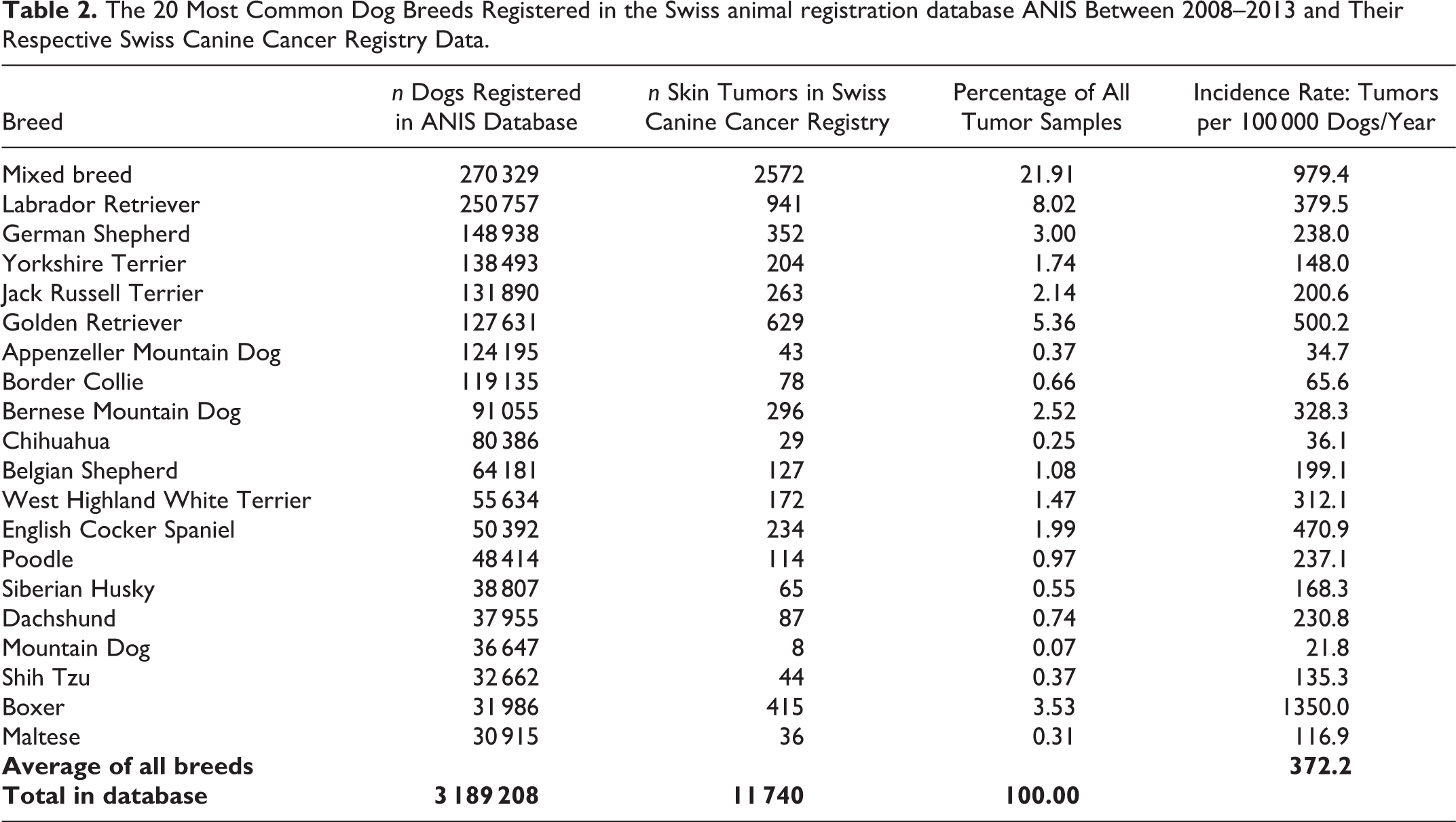
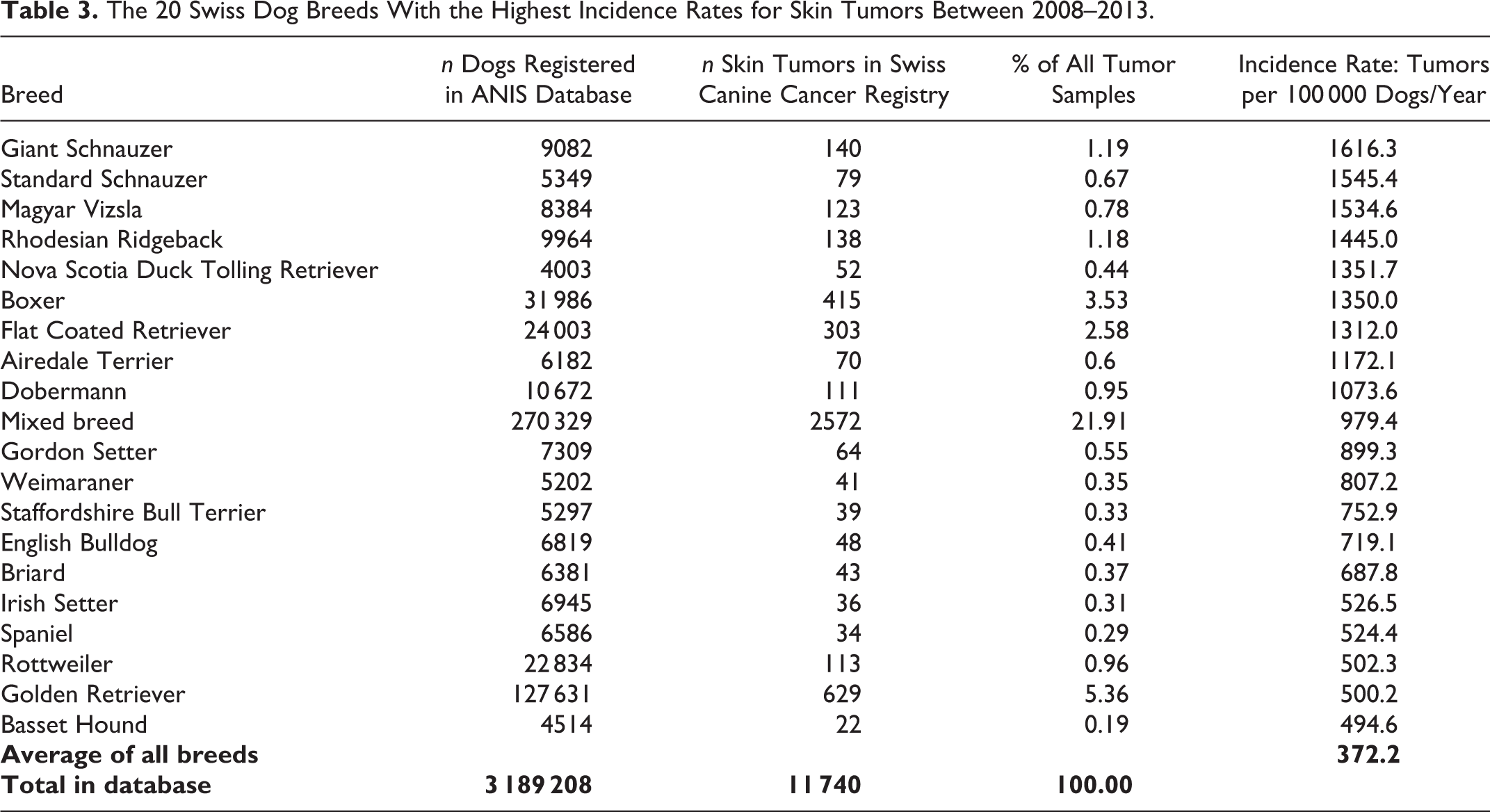
The dataset (n = 11 740) comprised 227 different dog breeds. Most tumor samples were submitted from mixed-breed dogs (n = 2572; 21.91%), followed by Labrador Retrievers (n = 941; 8.02%) and Golden Retrievers (n = 629; 5.36%). The breed was not specified/unknown in 921 dogs (7.84%). Table 2 lists the 20 most popular dog breeds in Switzerland registered in the ANIS database between 2008 and 2013 with the number of tumor samples and overall tumor IR.
The 20 Most Common Dog Breeds Registered in the Swiss animal registration database ANIS Between 2008–2013 and Their Respective Swiss Canine Cancer Registry Data.
Sex Distribution
Most skin tumors (n = 3523; 30.01%) originated from female neutered dogs followed by tumors from male intact dogs (n = 3090; 26.32%) and from female intact dogs (n = 2458; 20.94%). The smallest number of tumors was derived from male castrated dogs (n = 2224; 18.94%). For 445 tumors (3.79%), the sex of the dog was not reported. The sex distribution for the 10 most frequent tumor types is shown in Table 4.
Age Distribution
The dataset included tumors from dogs of <1 year to 20 years of age. More than three-quarters of the dogs with tumors were between 5 and 13 years of age (n = 9166; 78.08%), and more than half of the dogs were between 8 and 11 years of age (n = 6134; 52.26%). This distribution reflects the age distribution of the total sample submission but was not linear to the age distribution in the total dog population (Fig. 1).
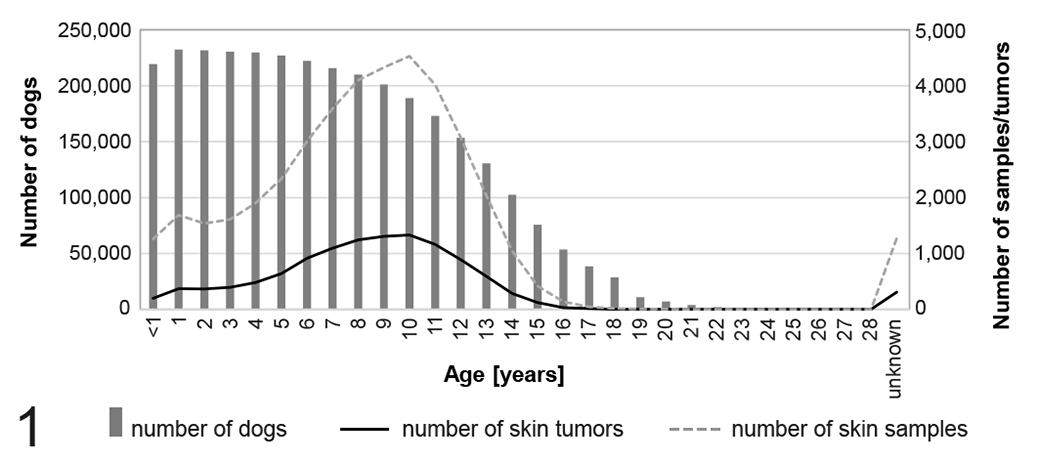
Number of dogs registered in the Swiss animal registration database ANIS, number of skin samples, and number of skin tumors in relation to age. Relative to the decreasing number of registered dogs, the number of skin samples and skin tumors increases with age.
Tumor Types and Anatomic Location
Table 1 shows the tumor diagnoses with absolute and relative tumor frequency recorded within this 6-year period; 6753 tumors (57.52%) were benign, and 4987 tumors (42.48%) were malignant. The 5 most frequent individual tumor types were MCT (all grades; n = 1920), lipoma (n = 1464), cutaneous histiocytoma (n = 1420), malignant melanoma (MM, n = 632), and perivascular wall tumors (WHO classification: hemangiopericytoma; n = 536). Of the 11 853 tumor samples 1773 (14.96%) were localized on the head, 526 (4.44%) on the neck, 3016 (25.45%) on the trunk, and 2596 (21.90%) on the extremities. For 3942 tumors (33.26%), the location on the skin was not specified.
Overall Tumor Incidence
All dogs registered in Switzerland between 2008 and 2013 counted for a total of 3 189 208 dog-years (1 617 860 female dog-years, 1 556 806 male dog-years, 14 542 of unknown sex dog-years). Considering the number of 11 740 tumor events reported resulted in 3 153 988 dog-years at risk (1 599 917 female dog-years at risk, 1 540 864 male dog-years at risk, 13 207 of unknown sex dog-years at risk). Thus, the overall tumor IR was 372.2 tumors per 100 000 dogs/year. For female dogs (intact and neutered, 5981 tumors), the IR was 373.8; for male dogs (intact and castrated, 5314 tumors), the IR was 344.9. Dogs between 6 and 13 years of age had an IR higher than the overall tumor incidence, with the highest IR at 10 years of age with 718.3 tumors per 100 000 dogs/year (Fig. 2).
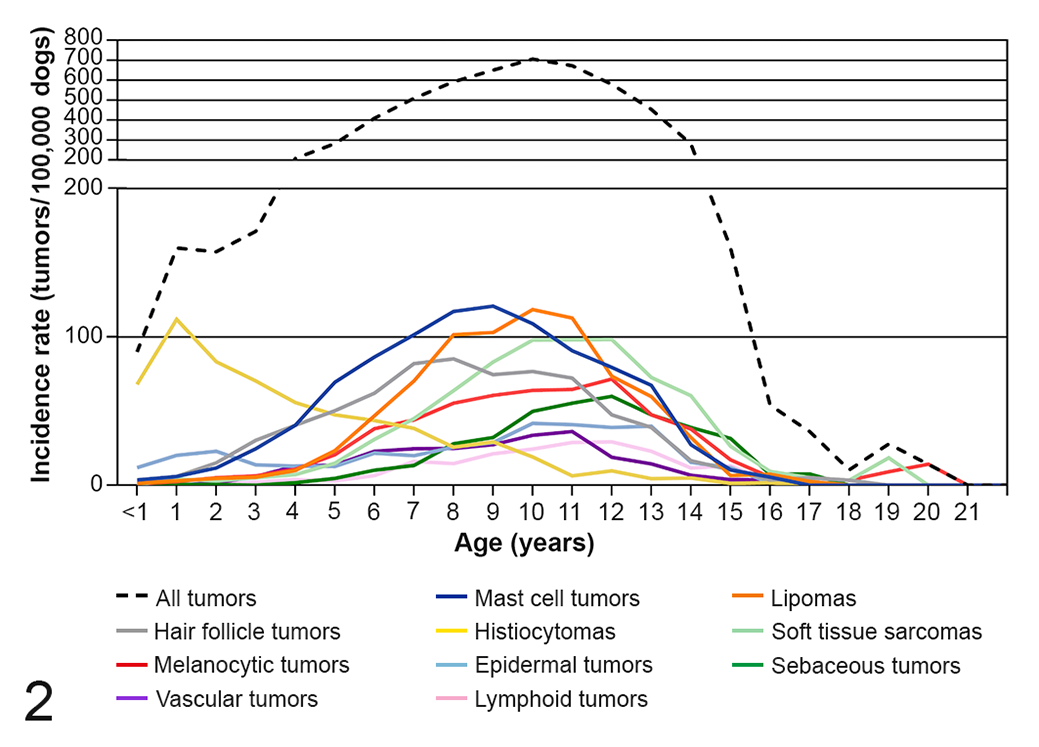
Incidence rates of the 10 most common skin tumor types and overall skin tumor incidence rate in relation to age. Most tumors occur between 8 and 11 years of age. Histiocytomas peak at 1 to 3 years of age.
Breed-Specific Tumor Incidence Rates
Dog breeds with at least 4000 individuals registered in Switzerland were considered. The highest tumor IR (IR, 1616.3) was found in the Giant Schnauzer, followed by the Standard Schnauzer (IR, 1545.4) and Magyar Vizsla (IR, 1534.6). The 10 breeds with the highest tumor IR also included the Rhodesian Ridgeback (IR, 1445.0), the Nova Scotia Duck Tolling Retriever (IR, 1351.7), the Boxer (IR, 1350.0), the Flat Coated Retriever (IR, 1312.0), the Airedale Terrier (IR, 1172.1), the Dobermann Pinscher (IR, 1073.6), and mixed-breed dogs (IR, 979.4). The 20 breeds with the highest and lowest tumor IRs are listed in Table 3 and Supplemental Table S2, respectively. Figure 3 shows the IR for the 10 most common tumor types in the 20 most popular dog breeds.
The 20 Swiss Dog Breeds With the Highest Incidence Rates for Skin Tumors Between 2008–2013.
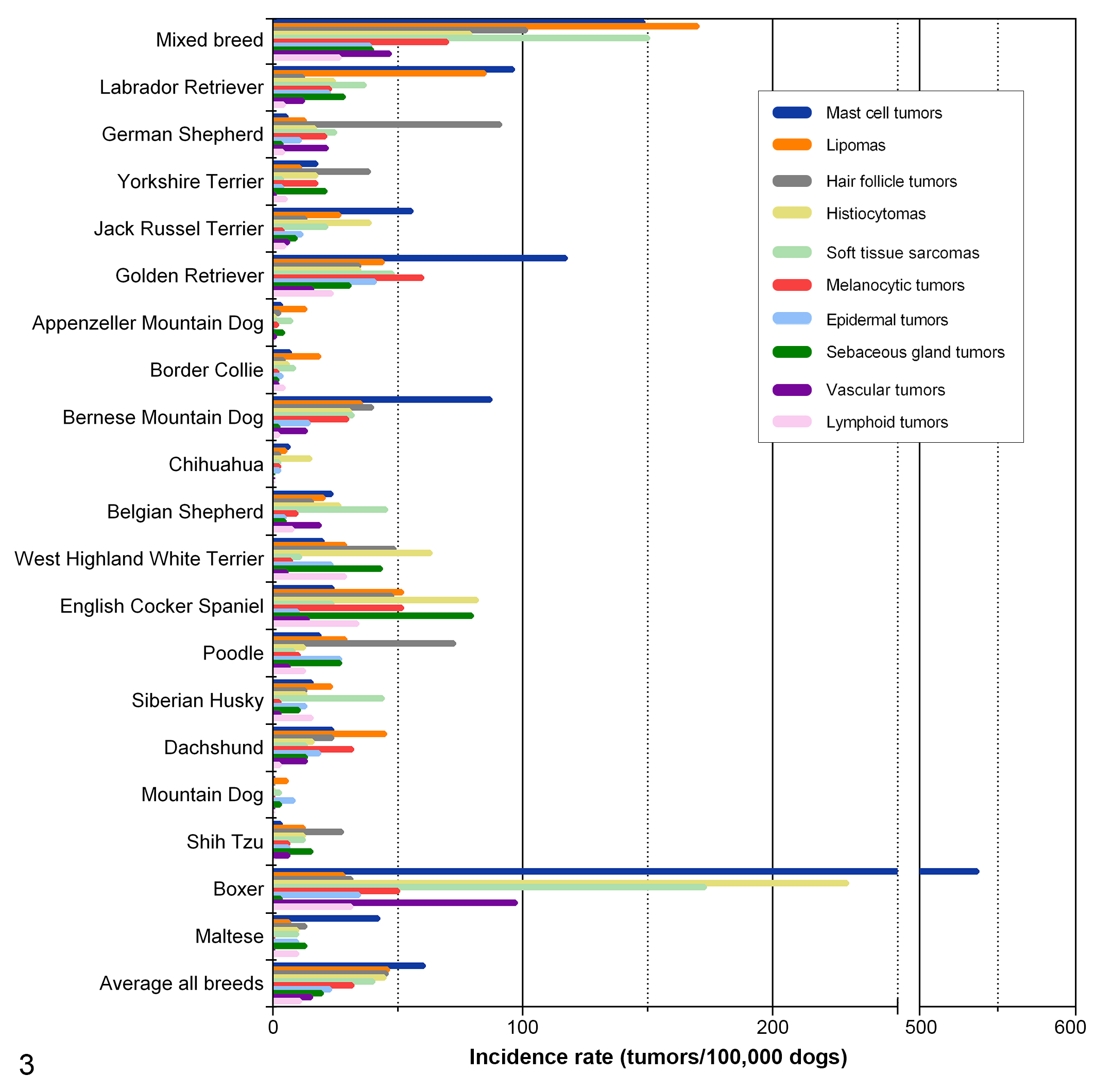
Incidence rates of the 10 most common skin tumor types in the 20 most popular Swiss dog breeds. Boxers and mixed-breed dogs show increased incidence rates for several tumor types.
The 10 Most Frequent Tumor Types: Relationship of Tumor IRs to Breed, Sex, Age, and Location
The 10 most common tumor types and the dog breeds with the highest IR for the respective tumor type are listed in Table 4. The table also includes the relative frequencies of sex, anatomic location, and the overrepresented age range. The breeds with the highest tumor IR for a particular tumor type usually had a 5- to 10-fold increased IR compared to the average of all breeds for that tumor type. Accordingly, the breeds with the lowest IR for a particular tumor type usually had a 5- to 10-fold decreased IR compared to the average IR of that tumor type (data not shown).
The 10 Most Common Skin Tumor Types and the Respective Distributions of Breed, Sex, and Anatomic Location.
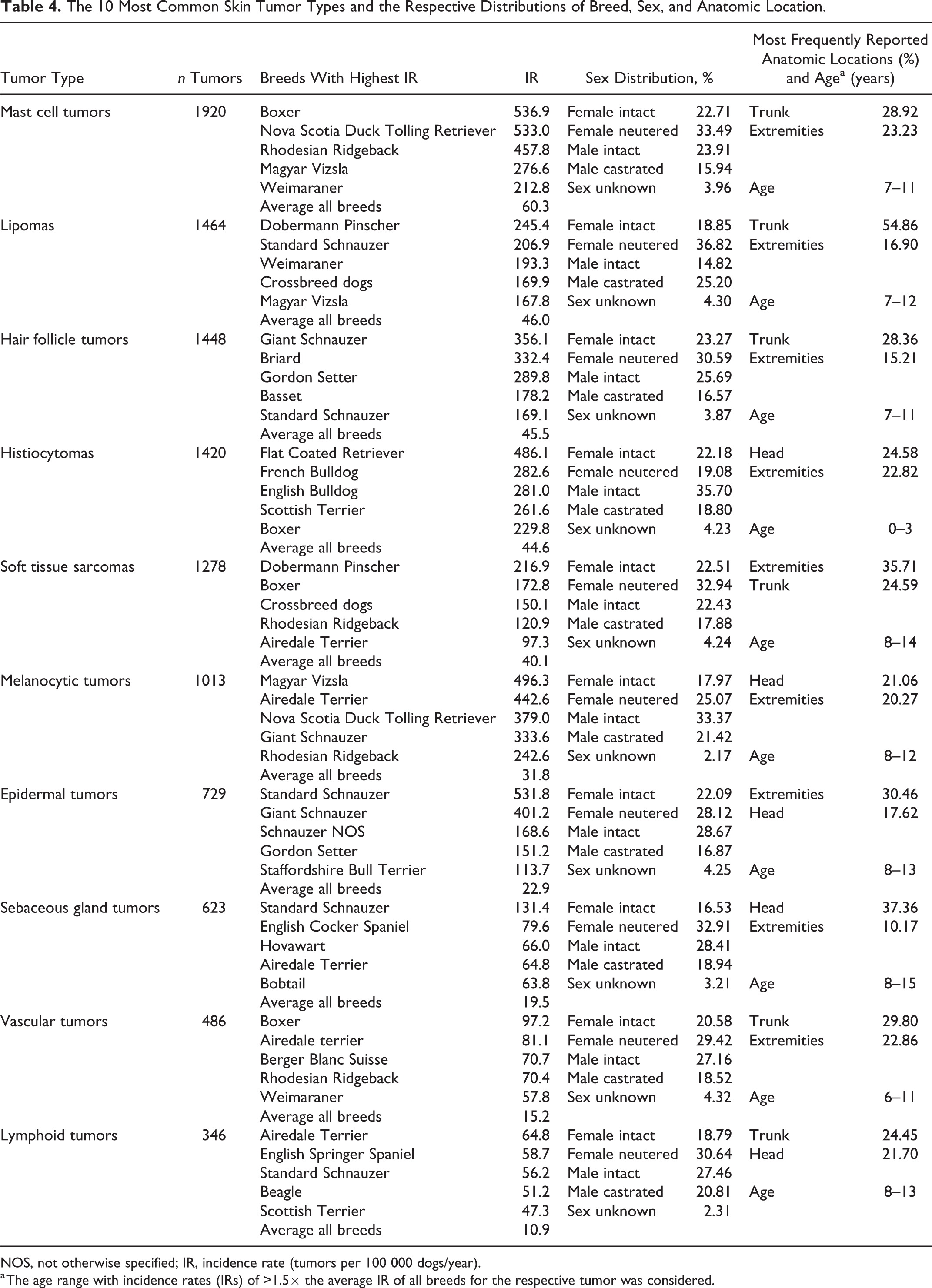
NOS, not otherwise specified; IR, incidence rate (tumors per 100 000 dogs/year).
a The age range with incidence rates (IRs) of >1.5× the average IR of all breeds for the respective tumor was considered.
Mast cell tumors (16.35% of all tumors), lipomas (12.47% of all tumors), and histiocytomas (12.10% of all tumors) were among the 4 most common tumor types, together with the group of hair follicle tumors (12.22% of all tumors). Among the hair follicle tumors, infundibular keratinizing acanthoma, trichoepithelioma, and trichoblastoma were most common (Table 1). These 3 tumor types were frequently diagnosed in Giant Schnauzers, Briards, and Gordon Setters (data not shown), resulting in an increased tumor IR for hair follicle tumors in these 3 breeds.
Soft tissue sarcoma was the fifth most common tumor type (n = 1278; 10.89% of all tumors). They were most often found on the extremities (n = 456; 35.71%), with predominance of the paws (n = 118; 9.24%) and the elbow (n = 101; 7.91%). Melanocytic tumors were the sixth most frequently reported, and almost two-thirds of them were malignant (Table 1). Both benign and malignant melanocytic tumors were overrepresented in the Magyar Vizsla (malignant melanoma (MM) IR, 288.7; benign melanocytic tumor (BMT) IR, 204.0), the Airedale Terrier (MM IR, 21.6; BMT IR, 228.0), the Giant Schnauzer (MM IR, 210.5; BMT IR, 121.6), the Nova Scotia Duck Tolling Retriever (MM IR, 125.4; BMT IR, 251.7), and the Rhodesian Ridgeback (MM IR, 110.8; BMT IR, 131.0). Malignant melanoma commonly originated from the perioral skin (n = 58; 8.81% of all MM), the toes (n = 48; 7.55% of all MM), and the paws (n = 36; 5.66% of all MM), while BMTs were found on the eyelids (n = 35; 9.09% of all BMT) and the paws (n = 33; 8.57% of all BMT). There was no significant difference in the age distribution between benign and malignant melanocytic tumors (data not shown).
Epidermal tumors were mainly squamous cell carcinomas (SCC) and papillomas (Table 1). For SCC, there was a marked predisposition in the Standard Schnauzer (IR, 512.5), the Giant Schnauzer (IR, 389.9), and the Schnauzer not otherwise specified (IR, 137.8). In the group of papillomas, the Staffordshire Bull Terrier was slightly overrepresented (IR, 113.7). Papillomas and SCC were most often found in dogs between 8 and 13 years of age; however, there was a slight IR increase for papillomas between 1 and 2 years of age (Fig. 2). For SCC, the most common location was the toe (n = 115; 30.67% of all SCC).
Sebaceous gland tumors were most often reported as adenomas and epitheliomas (Table 1). More than one-third of the sebaceous gland tumors derived from the skin of the head (Table 4), with a significant number of eyelid tumors (n = 109; 17.33% of all sebaceous gland tumors).
In the group of vascular tumors, the increased tumor incidence in Boxer dogs, Airedale Terriers, Bergers Blancs Suisses, and Rhodesian Ridgebacks was mainly due to hemangiomas. However, the Berger Blanc Suisse and the Boxer were also slightly overrepresented for hemangiosarcomas (data not shown).
Only 2.95% of all tumors were lymphoid tumors, including lymphoma and plasmacytoma (Table 1). Lymphomas frequently occurred on the trunk (n = 62; 35.63% of all lymphomas), and plasmacytomas were most often reported on the paw (n = 24; 12.63% of all plasmacytomas). Seventeen dogs with lymphoma were affected in more than one anatomic location, while plasmacytomas were mostly single lesions.
The relative frequency of the 10 most commonly reported tumor types on the most frequent anatomic locations is shown in Figure 4.
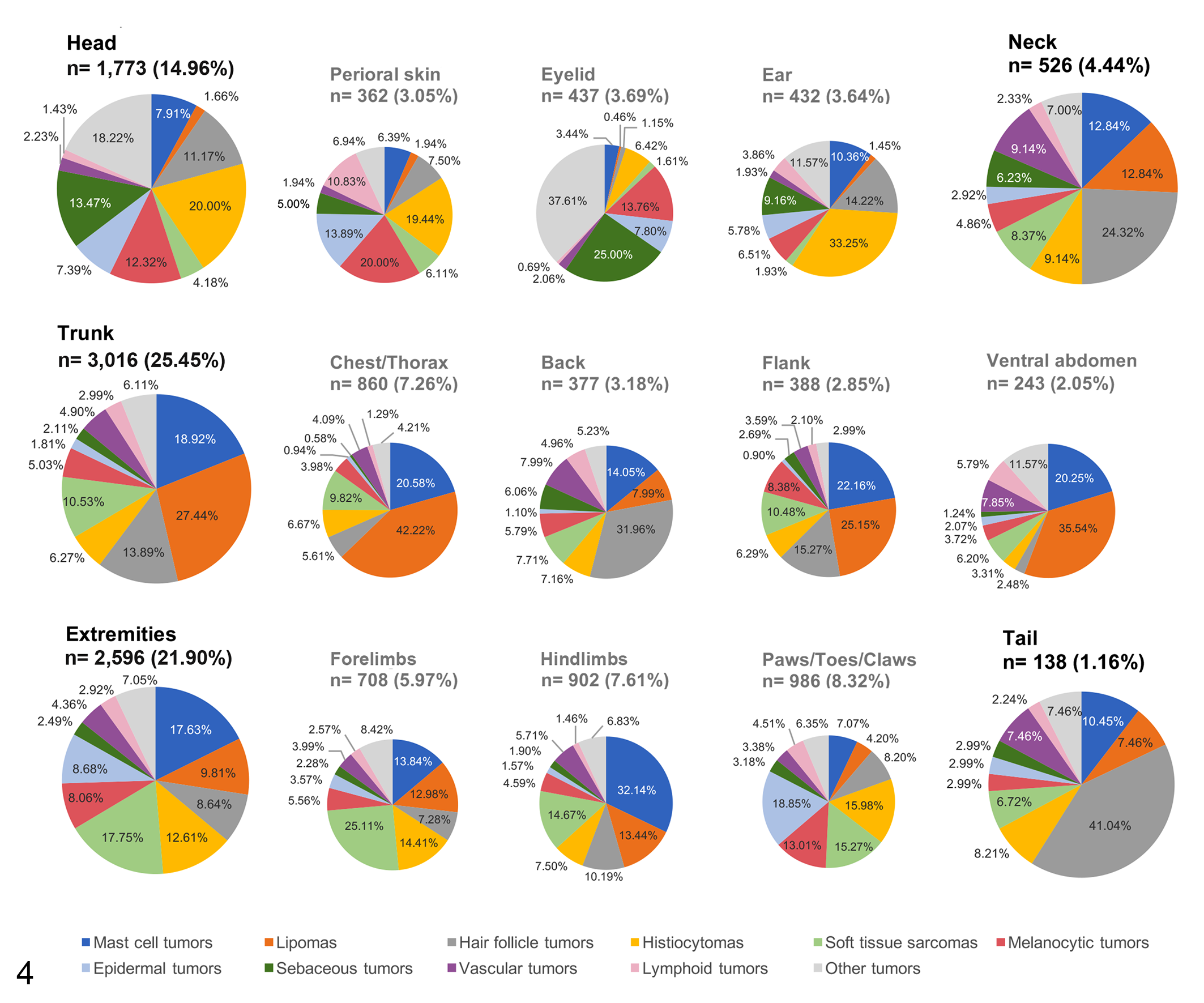
Absolute (n) and relative (%) numbers of skin tumors per anatomic location. For 3942 tumors (33.62%), no location was reported. The slices show the relative frequency of the 10 most common tumor types in each anatomic location. “Head” includes the terms “head not otherwise specified,” “eyelid,” “ear,” “jaw/chin/flew,” “lip,” and “nose.” “Perioral skin” includes “jaw/chin/flew” and “lip.” “Trunk” includes “chest,” “trunk not otherwise specified,” “thorax,” “back,” “flank,” “shoulder,” “abdomen,” “tail,” “axilla,” “inguinal,” “perianal,” and “belly.” “Ventral abdomen” includes “abdomen” and “belly.” “Extremities” includes “paw,” “thigh,” “forelimb,” “toe/claw,” “hindlimb,” “elbow,” and “knee.” “Forelimbs” includes “forelimb” and “elbow.” “Hindlimbs” includes “hindlimb” and “knee.”
Other Tumor Groups With n < 200 Tumors
Apocrine gland tumors mainly derived from sweat glands (Table 1). The percentage of malignant tumors was relatively high within this tumor group (48.15%). The overall IR was 5.1 tumors per 100 000 dogs/year. Bobtail dogs were overrepresented within this group (IR, 47.8).
One hundred fifteen dogs had a benign soft tissue tumor other than lipoma (0.98% of all tumors), including fibroma and myxoma (Table 1). For these two tumor types, mixed-breed dogs were overrepresented (IR, 14.0) compared to the overall IR of 3.6 tumors per 100 000 dogs/year. Benign soft tissue tumors were most often reported on the paws, with fibroma (n = 14) being the most frequent one in that location.
Malignant histiocytic tumors were diagnosed in only 50 dogs (0.43%). The overall IR was 1.6 tumors per 100 000 dogs/year. In this small group of 50 dogs, an increased tumor IR was found in the Flat Coated Retriever (IR, 91.9), as well as the Bernese Mountain dog (IR, 9.9). Histiocytic sarcomas were most often found on the extremities around elbows and knees (n = 19; 38.00%). However, in 24 cases, the location was not reported.
For many epithelial neoplasms (n = 317; 2.69% of all tumors), the diagnoses were not specified (in terms of their histogenesis) beyond adenoma, epithelioma, adenocarcinoma, carcinoma, or epithelial neoplasia (Table 1). Round cell tumors not otherwise specified comprised 133 cases (1.13% of all tumors). Sarcomas not otherwise specified (n = 476; 4.06% of all tumors) have been included in the group of the soft tissue sarcoma. A minority of tumors were not further specified and listed as either benign (n = 5) or malignant (n = 26) tumors; many of these were likely diagnosed by cytologic examination. Hamartomatous lesions comprised 183 tumors (1.55%).
Statistical Analyses
The results from the multiple logistic regression analysis are shown in Table 5. Female dogs had a significantly increased OR compared to male dogs (P < .05). The 7 dog breeds with the highest overall tumor IR also had a significantly increased OR of developing a tumor in comparison to mixed-breed dogs (P < .05). A significant influence of age on tumor development was confirmed for most age groups.
Multiple Logistic Regression Model Showing the Influence of Sex, Breed, and Age on Tumor Development.
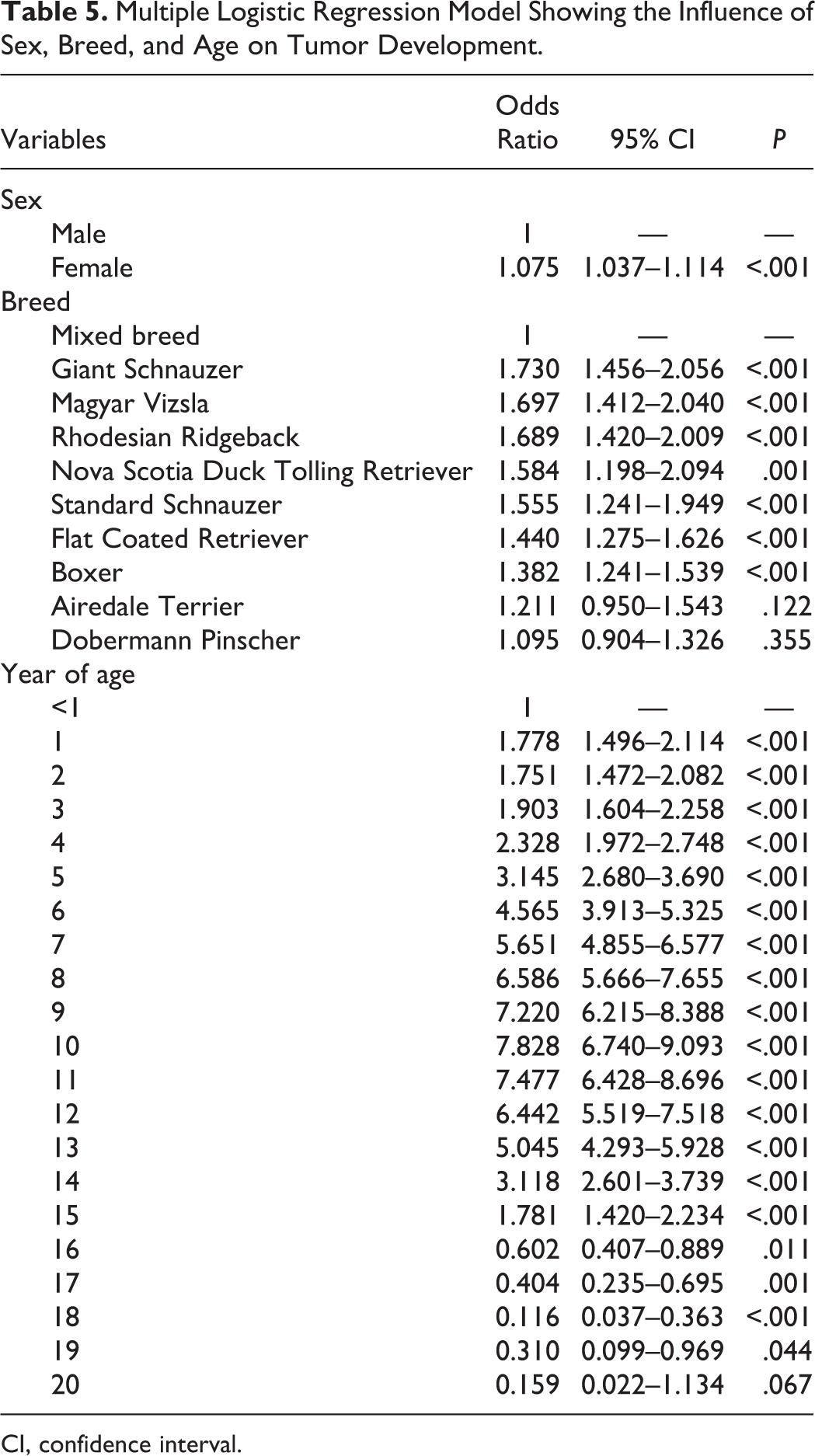
CI, confidence interval.
Discussion
With the present study, we provided an analysis of more than 11 000 canine skin tumors with detailed information on breed, age, sex, and anatomic location of the tumors. In addition, this study calculated the IRs of the tumors based on the mandatory dog registration data from the Swiss animal registration database ANIS. Thus, the tumor IRs for the overall dog population, as well as for specific breeds presented in our study, are more precise than those reported in other studies using population data compiled by telephone surveys 3,22 or derived from national kennel clubs. 11 However, since the Swiss Canine Cancer Registry comprises diagnostic report data from only 3 out of 7 Swiss laboratories offering histopathology service and given the fact that not all tumors are sent for diagnostic analysis, it must be assumed that the overall tumor incidence in the Swiss canine population is underestimated. We can assume, however, similarities in the relative tumor frequency, the proportion of affected breeds, and anatomic locations, as well as the distribution of sex and age among the tumor samples submitted to the other Swiss laboratories, since their samples derive from all over Switzerland, as is true for the 3 participating laboratories (personal communication). Nevertheless, geographic differences in skin tumor incidence are possible (eg, due to a more intense ultraviolet exposure in alpine areas, due to increased pollution in urban areas, or due to differences in neutering among geographic areas). Such a geographic evaluation would be possible with the data from the Swiss Canine Cancer Registry and the ANIS database, but was beyond the scope of this study.
The overall IR for skin tumors in our study was 372.2 tumors per 100 000 dogs/year which is comparable to results from a recent Italian study (around 300 skin tumors/100 000 dogs) 3 but is substantially higher than reported in a study from the UK (IR, 143.7) 9 and two earlier Italian population-based studies, where IR values < 300 even for the overall tumor incidence (not only skin tumors) were reported. 18,22 It has to be considered that the IR in our study is based on diagnostic analyses paid by the dog owners, while in other studies, the diagnostic assessments were either covered by an animal insurance 9 or offered for free in the framework of a tumor registry project. 3,22 Our results certainly reflect the wealth of Switzerland and the high emotional value that pets have in our country.
The overall tumor incidence was higher in several purebred dog breeds compared to mixed-breed dogs, as reported in other studies based on cancer registry data. 3,6,22 Nevertheless, in our dataset, mixed-breed dogs had a more than 2.5-fold higher tumor IR than the average of all breeds. The highest overall tumor IR (>4-fold than average of all breeds) was found in the Giant Schnauzer and the Standard Schnauzer, correlated with an increased IR for epidermal tumors, hair follicle tumors, and melanocytic tumors (Giant Schnauzer) and soft tissue tumors (Standard Schnauzer). The Giant Schnauzer is known for its predisposition for SCC, 4,13 and Schnauzer breeds in general are known to be at increased risk for melanocytic tumors and certain types of hair follicle tumors. 13 It might be due to the Schnauzers’ predisposition for digital SCC and the overrepresentation of Schnauzers in the cohort of SCC in this study that the toe was the most common location for SCC.
A markedly increased overall IR (3.5- to 4-fold higher than the average of all breeds) was also found in the Rhodesian Ridgeback, the Magyar Vizsla, and the Nova Scotia Duck Tolling Retriever, in correspondence with their marked overrepresentation in the cohort of melanocytic tumors and MCTs. The Magyar Vizsla and the Rhodesian Ridgeback have previously been described to be at increased risk for these tumors. 13,23 However, the Nova Scotia Duck Tolling Retriever has not been reported to be at increased risk for any tumor type, which might be due to its lesser popularity in other countries compared to other breeds. The Boxer, previously reported to be at increased risk for MCTs, 15,23 lymphomas, soft tissue tumors, cutaneous melanomas, and hemangiosarcomas, 23 ranked only in the sixth position for overall tumor IR. Nevertheless, it had an at least 2-fold increased IR for MCTs, histiocytoma, soft tissue tumors, and lymphoma compared to the average of all breeds in our dataset.
Histiocytic sarcoma, a tumor type with a well-known breed predisposition in the Bernese Mountain Dog and the Flat Coated Retriever, 8 was registered only in 50 dogs in our dataset. The almost 100-fold increased IR in Flat Coated Retrievers for histiocytic sarcoma is therefore possibly overestimated due to the small number of samples. However, the IR of Bernese Mountain Dogs could be underestimated since this breed is a common farm dog and their owners potentially spend less money for the diagnostic assessment of a tumor. Nevertheless, both Flat Coated Retriever and Bernese Mountain Dogs were clearly overrepresented in the cohort of histiocytic sarcoma. Interestingly, Flat Coated Retrievers also ranked first for histiocytomas, another histiocytic tumor, although originating from a different subtype of histiocytes. This breed has previously not been reported for a predisposition for histiocytoma. 14,19
In our tumor collection, the percentage of benign tumors was higher than the percentage of malignant tumors (57.5% vs 42.5%), as reported in a majority of previous studies investigating canine skin neoplasia. 5,7,20 However, the percentage of benign tumors might be underestimated, based on the assumption that benign tumors are less frequently removed or submitted for analysis. Furthermore, we could confirm the occurrence of canine skin tumors at an older age—more than 50% of the tumors derived from dogs between 8 and 11 years of age—as described previously. 23 Female dogs had a significantly higher IR and OR compared to male dogs (373.8 vs 344.9; P < .05). Unfortunately, neutering status is not specified in the ANIS database; therefore, no IR specific for the neutering status could be calculated. Nevertheless, almost one-third of the submitted tumors (30.01%) derived from neutered females. These findings are in contrast to most previous studies, which found higher skin tumor numbers and IR in male dogs, although the differences were often not significant. 3,5,11,18
Comparing the relative frequency of selected tumor types, our data are in agreement with the results of previous studies. The most common tumors in our study were MCT (16.4%) and lipoma (12.5%). These two tumor types were also most frequently reported in studies from Denmark (lipoma, 24.5%; MCT, 15.2%), 5 Korea (lipoma, 11.4%; MCT, 8.8%), 20 and the USA (lipoma, 27.4%; adenoma, 14.1%; MCT, 11.0%). 23 The frequency of hair follicle tumors (12.2%) was surprisingly high since this tumor type was previously mentioned in only one study focusing on follicular tumors, where they represented about 6% of the canine skin biopsies examined. 1 Histiocytomas had a comparable frequency (12.1%) as reported in Denmark (13.1%), 5 while their IR was higher (IR, 44.6) compared to data from the UK (IR, 37.7).
In summary, our study confirms previously published data about canine skin tumors with respect to tumor frequency and breed predisposition. Moreover, it expands the current knowledge with detailed incidence data for these frequent tumors. Previously unrecognized predispositions for breeds and tumor types have been unveiled. The consideration of the results of our study for the specific selection of breeding dogs may help to improve a breed’s health.
Supplemental Material
Supplemental Material, DS1_VET_10.1177_0300985818789466 - Cutaneous Tumors in Swiss Dogs: Retrospective Data From the Swiss Canine Cancer Registry, 2008–2013
Supplemental Material, DS1_VET_10.1177_0300985818789466 for Cutaneous Tumors in Swiss Dogs: Retrospective Data From the Swiss Canine Cancer Registry, 2008–2013 by Ramona Graf, Andreas Pospischil, Franco Guscetti, Daniela Meier, Monika Welle, and Martina Dettwiler in Veterinary Pathology
Footnotes
Declaration of Conflicting Interests
The author(s) declared no potential conflicts of interest with respect to the research, authorship, and/or publication of this article.
Funding
The author(s) received no financial support for the research, authorship, and/or publication of this article.

Supplemental material for this article is available online.
References
Supplementary Material
Please find the following supplemental material available below.
For Open Access articles published under a Creative Commons License, all supplemental material carries the same license as the article it is associated with.
For non-Open Access articles published, all supplemental material carries a non-exclusive license, and permission requests for re-use of supplemental material or any part of supplemental material shall be sent directly to the copyright owner as specified in the copyright notice associated with the article.
