




Abstract
Animal sexual abuse (ASA) involves harm inflicted on animals for the purposes of human sexual gratification and includes such terms as bestiality, zoophilia, zoosadism, animal sexual assault, and others. The prevalence of ASA is not known, although it may be more common than is currently perceived. Veterinarians have the skills required to identify and document cases of ASA. This article reviews the terminology, legal definitions and forms of ASA, and its social and psychological context. An investigative approach is outlined, including an alternate light source examination; collection of swabs for DNA analysis; sampling vaginal washes, rectal washes, and toenails for trace evidence and biologic analyses; radiographic studies; and a complete forensic necropsy, including histopathology. Gross lesions identified in ASA victims include injuries to the anus, rectum, penis, scrotum, nipples, and vagina; the presence of foreign bodies; and abrasions, bruising, and other evidence of nonaccidental injury. Specialized procedures, including examination using alternate light sources and screening tests to identify human seminal fluid within samples from ASA victims, are of potential value but have not been validated for use in animals.
Keywords
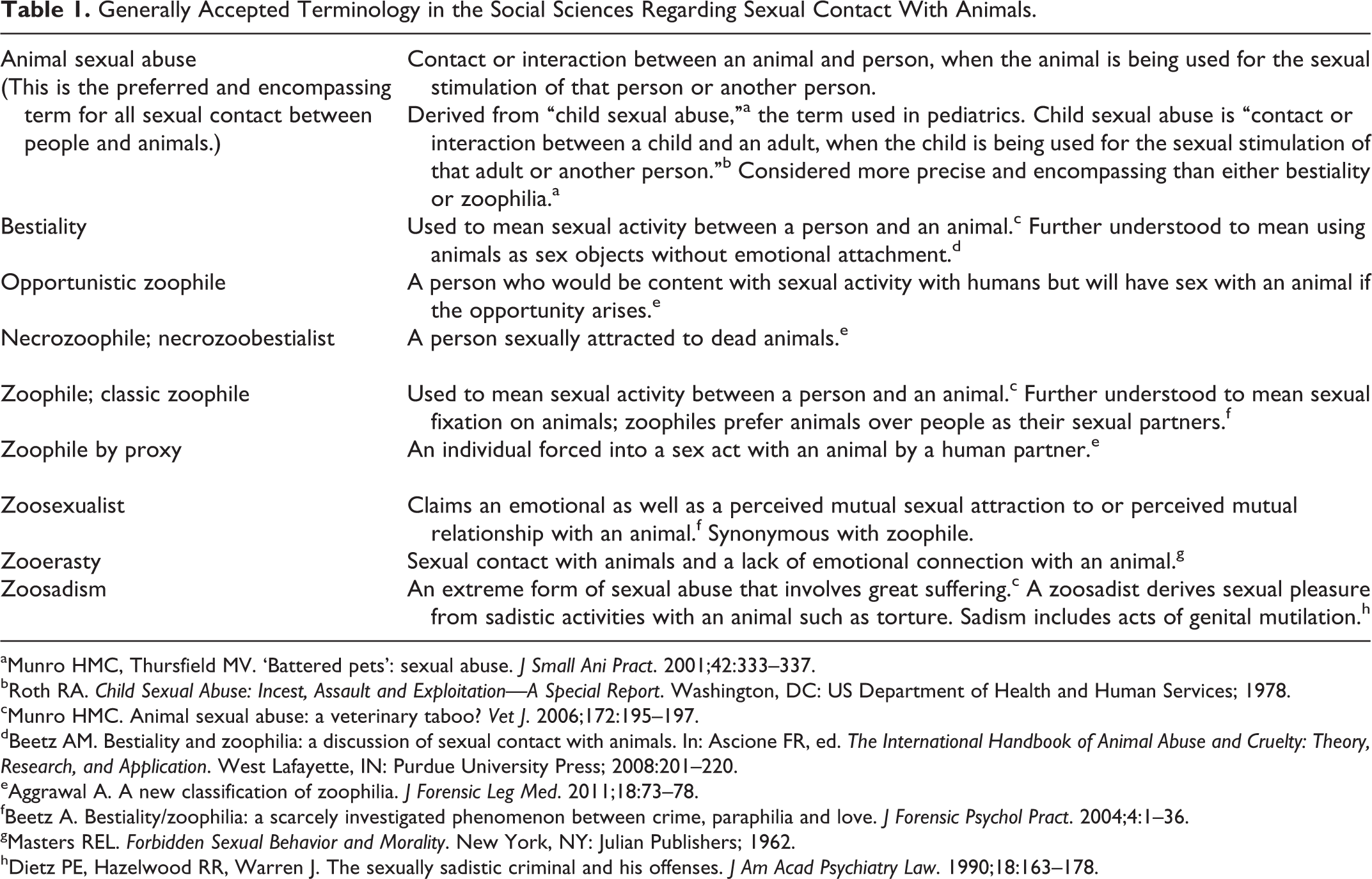
Animal sexual abuse (ASA) is also known by a variety of terms (Table 1). The term animal sexual abuse is preferred in the animal welfare field over zoophilia and bestiality. 50 Bestiality, zoophilia, and similar terms are used to explain the motives and behavior of the perpetrator. However, as perpetrator-centric definitions, they fail to convey a sense of the harm that occurs to the animal. Regardless of what terminology is used, as veterinarians, our primary concern is the animal welfare implications of human sexual contact with animals, the recognition of injuries, and the meticulous documentation of evidence.
Generally Accepted Terminology in the Social Sciences Regarding Sexual Contact With Animals.
aMunro HMC, Thursfield MV. ‘Battered pets’: sexual abuse. J Small Ani Pract. 2001;42:333–337.
bRoth RA. Child Sexual Abuse: Incest, Assault and Exploitation—A Special Report. Washington, DC: US Department of Health and Human Services; 1978.
cMunro HMC. Animal sexual abuse: a veterinary taboo? Vet J. 2006;172:195–197.
dBeetz AM. Bestiality and zoophilia: a discussion of sexual contact with animals. In: Ascione FR, ed. The International Handbook of Animal Abuse and Cruelty: Theory, Research, and Application. West Lafayette, IN: Purdue University Press; 2008:201–220.
eAggrawal A. A new classification of zoophilia. J Forensic Leg Med. 2011;18:73–78.
fBeetz A. Bestiality/zoophilia: a scarcely investigated phenomenon between crime, paraphilia and love. J Forensic Psychol Pract. 2004;4:1–36.
gMasters REL. Forbidden Sexual Behavior and Morality. New York, NY: Julian Publishers; 1962.
hDietz PE, Hazelwood RR, Warren J. The sexually sadistic criminal and his offenses. J Am Acad Psychiatry Law. 1990;18:163–178.
ASA, like rape, is the erotization of violence, control, and exploitation. 41 ASA includes the sexual molestation of animals by humans, including a wide range of behaviors, such as fondling genitalia; vaginal, anal, or oral penetration or oral-genital contact (from person to animal and vice versa); penetration with an object; and injuring or killing an animal for sexual gratification (zoosadism). The ways that ASA may result in a fatality or injury to the animal victim differs with the activity. ASA is an activity that may be perpetrated by men and women; however, only men can penetrate an animal with a penis and ejaculate on or in the animal.
Because data for various crimes are not reported in any consistent manner, the frequency with which it occurs is unknown. The website www.Pet-Abuse.com reports crimes against animals (both alleged and convicted) collected from media reports and have 108 cases currently listed since 1989 where a conviction was reached in the case or a summary (civil) charge was issued with the abuse type “bestiality.” This listing describes convictions for ASA to dogs, horses, goats, sheep, llamas, pigs, rabbits, chickens, cows, and a guinea pig.
Veterinary pathologists should consider ASA as a possible cause for genital trauma. While not always fatal, animals killed in the act of ASA may be presented for necropsy. This article provides an overview of ASA, including relevant laws with an emphasis on the United States, as well as a description of types of perpetrators, the forensic necropsy examination, and special techniques for identifying and collecting trace evidence such as semen.
Laws
Laws regarding ASA vary widely by state, and some examples of legal definitions are shown in Supplemental Table S1. In some states, bestiality may be a felony or a misdemeanor, whereas in other states, it may not be prohibited. For example, proof of penetration is required in Nebraska. 39 Currently, 36 states have laws regarding the criminalization of ASA. Laws typically fall into 1 of 4 categories: deviant sexual acts or intercourse, sodomy or buggery, crimes against nature, or bestiality or other animal sex prohibitions. The first 3 categories are generally older statutes using antiquated language. As new laws are introduced, they tend to be treated as more egregious crimes (thus more frequently felony than misdemeanor) (C. Edwards, personal communication, 2015).
The number of prosecutions is unknown, although prosecutions for ASA are uncommonly reported. Some prosecutors have been more inclined to bring charges under public indecency, breach of the peace, indecent exposure, or cruelty to animals, rather than under a formal bestiality statute. Prosecutors often allow offenders to plead to these other charges, which impose minimal sentences. The changing of the charge prior to a plea makes it difficult to find confirmed cases. In addition, the media or the court often delete any reference to “sex” from the information that is released to the public, which obscures the extent of the problem. In 2016, the Federal Bureau of Investigation will collect data on animal cruelty crimes through the National Incident Based Reporting System, including ASA as 1 of the 4 categories.
Internationally, Great Britain makes it a crime to “sexually penetrate or to be sexually penetrated by an animal,” and the statute imposes a 2-year maximum penalty. Several European countries (Germany, Sweden, and Denmark) passed laws banning bestiality, whereas bestiality is legal in Finland and Romania. 15,17,73
Social and Psychological Context
Human sexual contact with animals is a form of animal abuse that has impacts for the animal victim, the abuser, and society. The sociology, criminology, legal, and medical fields use a variety of terms to describe human sexual contact with animals (Table 1). Most human sexuality texts have limited discussion devoted to zoophilia. 74
In the most recent edition of the Diagnostic and Statistical Manual of Mental Disorders (DSM-5), zoophilia is not considered a diagnosable mental health problem unless it causes distress to the person who does it. 18 This may be because zoophiles rarely seek treatment, and not all people who commit ASA are zoophiles, but the DSM does not consider animals as victims (a requirement for diagnosis of a paraphilic disorder typically requires that a human be harmed). A 10-tier classification scheme for zoophilia has been proposed ranging from role players to exclusive zoophiles. 1
Men, women, and children may be involved in ASA activities: penetrating animals with foreign objects, committing acts of zoosadism, or in the production of animal pornography. People may also be penetrated by a male animal or receive oral contact to the genitals for the purposes of sexual gratification. In several instances, the animal caused serious injury and/or death of the human involved in the sexual acts. Injuries inflicted include penile injuries, 46 rectal trauma, 34 anal injuries, 9 and fatal blunt force trauma by a calf. 16
ASA may be a crime of opportunity, such as the choice of an animal victim by a child molester to avoid the risk of being caught or reoffending. Offenders may have a preference for sexual gratification through the use of animals, or they may use animals because they are nondiscretionary and available. A variant of bestiality is necrobestiality, which is sexual gratification toward a dead animal. 1
Although the historic cliché of a farm boy with farm animals arises from data gathered in the Kinsey report from the late 1940s, the true frequency of sexual contact with animals by humans is not known, and few studies have investigated this in detail. 20,27 Just as there is no single “type” of people who maltreat other people, there is no single type of person who sexually abuses animals. 37 The Kinsey reports on human sexual behavior indicated that 8% of males and 3.6% of postpubescent women had sexual contact with animals. 32,33 A survey of college students found that both men and women acknowledged having sexual contact with animals. 26 An online questionnaire study identified people, including men, women, and a single transgender, who were self-defined zoophiles. 74 In a profile of men from Pakistan with sexually transmitted infections, 2 of 465 men reported bestiality. 58 A study in Brazil identified sex with animals as a risk factor for penile cancer; 171 of 492 study participants reported to have had sex with animals. 77 When comparing polygraph results versus self-reporting in juveniles, 26 of 32 male participants either self-reported bestiality (confirmed with polygraph testing) or denied bestiality with self-reporting but were considered likely to have a history of bestiality when questioned during the polygraph examinations. 63 The prevalence of bestiality (actual sexual contact and sexual fantasy) was significantly higher in psychiatric inpatients compared to 2 control groups. 2
Similar to pedophilia, there is an imbalance of power in ASA that makes sexual contact with an animal coercive. 7 Animals are neither able to consent nor report such an episode. Animal sexual abusers are difficult to profile because they come from every socioeconomic group, range from teenagers to the elderly, and have many different types of human relationships. One study suggests, like some pedophiles, many self-proclaimed zoophiles are actively engaged in high-tech jobs. 74 Sexual abusers of animals are more likely to have been victims of emotional neglect and abuse as children, 5 and bestiality has been linked to subsequent aggression against humans. 27 Bestiality is most commonly found among violent offenders, sex offenders, and the sexually abused. 3,19,27 This is thought to be because sexuality and aggression become developmentally fused when people or animals are treated as objects and are manipulated, exploited, and controlled. 44 Various studies point to a link between bestiality and other forms of animal or human cruelty, although there is not enough research to support any particular hypothesis. For bestialists, generalized deviation and sexual polymorphism as descriptors fit better than a graduation hypothesis. Much is still unknown about the sexual abusers of animals and their propensity to violence against people because what is known comes from few limited studies.
A zoosadist will torture an animal to death as part of seeking sexual gratification, and these animals can have evidence of traumatic injuries in addition to the sexual assault. 6 Strangulation can be seen as a concurrent injury as in human sexual assaults where strangulation is a common cause of death in rape-murder cases. 25,35
Graphic and violent sadistic videos (“crush videos”) depicting the torture, beating, burning, and/or mutilation and death of an animal are sold on pornographic websites. The videos are intended to provide sexual gratification for those who are aroused by the torturing (including crushing) of animals. Animals that do not resist may be under the influence of sedatives or tranquilizers, or they may have been stunned from blunt-force trauma or conditioned to accept the activity.
Forensic Necropsy Examination
An algorithm for processing suspected ASA cases is presented in Figure 1. The veterinary pathologist has received training to identify, describe, and interpret lesions and therefore has the skills required to examine a possible ASA victim. 49 The forensic necropsy includes an internal and external examination, including appropriate and thorough documentation and evidence collection. 23 Prior to performing the forensic necropsy, a complete history should be provided to the pathologist, 23 including the circumstances of the event, type of sexual contact suspected, use of weapons/objects and/or restraints, description of medical intervention, and information regarding the animal, including recent urination, defecation, or ingestion of food and/or water. It is helpful to review scene photographs and narrative reports from the submitting law enforcement agency, if available. Data obtained from the forensic necropsy should be documented so that it can be viewed or re-created by others and meet the standards required for legal proceedings. Documentation may include a body diagram form used to record the locations of injuries (such as contusions, abrasions) and areas that fluoresce during an alternate light source (ALS) examination.
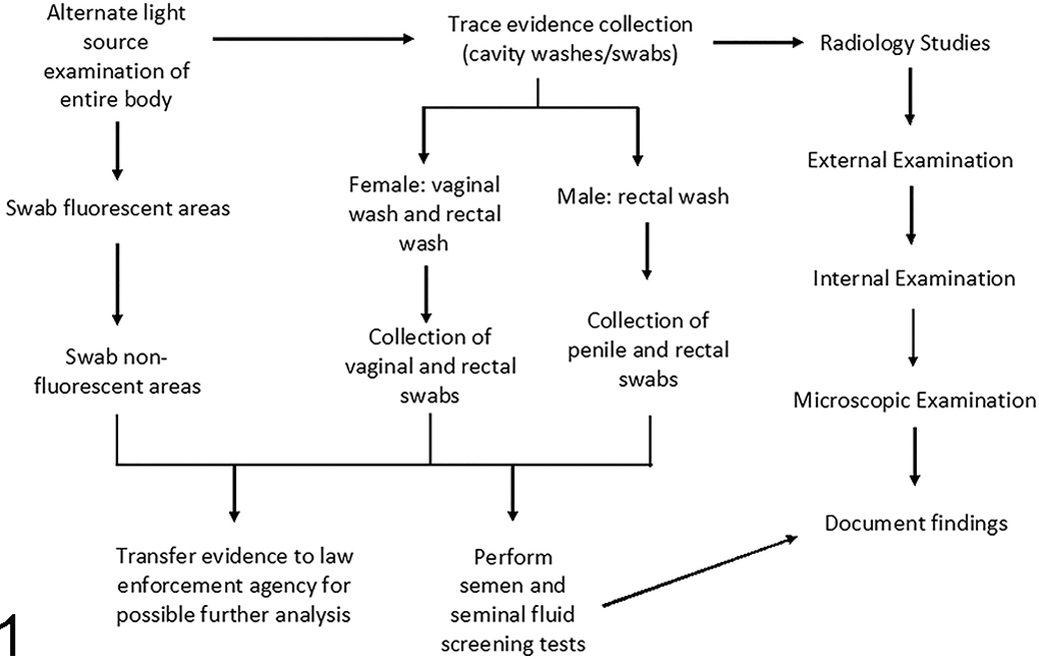
Algorithm for forensic necropsy examination of an animal suspected or known to be a victim of sexual abuse.
The collection and management of evidence is a critical aspect of the forensic examination. It is important that the evidence is not inadvertently destroyed during the examination, appropriately documented, preserved in a manner that allows investigation by other laboratories, and considered admissible in a court of law. The examination procedure and collection of evidence should be consistent, whether or not there are grossly visible lesions or discernible evidence, because negative findings could be useful to exonerate an alleged suspect. The pathologist’s duty is to the court, so the examination of the animal and collection of evidence must be objective, unbiased, and open to multiple possibilities, rather than directed to supporting one side or the other. Answering the question of what happened to the animal is the focus and purpose of the forensic necropsy examination, not who did it.
The steps taken during the forensic examination of an ASA case are outlined in Figure 1. Powder-free gloves should be worn during the handling and examination of the animal and changed frequently to avoid cross-contamination of samples. At the beginning of the forensic necropsy, an ALS examination should be performed as described in the following section; suspect areas should be documented and photographed and swabs taken for DNA evidence.
After the ALS examination, the animal should be carefully and thoroughly combed over butcher paper or a clean white sheet to identify trace evidence, including foreign (human) hairs. Foreign material of any type (dirt, stains, twigs) should be noted and collected as evidence. It is important to take photographs, with and without a photo scale, of any lesions identified on the animal. 23 Clippings and scrapings of the animal’s nails should be collected for potential analysis as these may contain DNA of the perpetrator.
Evaluation for seminal fluid, including spermatozoa, is described in detail in a separate section. Rectal and vaginal or penile swabs should be taken for collection of DNA evidence. In cases of human penetration by a dog penis, human DNA could potentially be recovered from these samples. Two swabs should be collected from each site to provide samples for both the prosecution and defense, and an unused swab should also be submitted as a negative control.
Rectal swabs should be collected prior to use of lubricants for a clinical examination or for obtaining a rectal temperature. 12 If a condom was worn, lubricants may be identified from samples collected from the canine vagina or anus and can provide evidence that sexual contact occurred in cases where seminal fluid could not be identified and may be able to identify the brand of condom. The presence of condom lubricants in a body cavity is evidence of penetration. 60 The most common lubricant (polydimethylsiloxane [PDMS], a silicone) is not water soluble and not absorbed but can be washed away with urination. 53 Some lubricants contain particulates (cornstarch or amorphous silica); hence, it is important to wear powder-free gloves during the examination and evidence collection. Nonoxynol-9 spermicide may also be detectable from swabs. 8
Oral swabs for DNA analysis should be obtained from both males and female animals. Dry samples can be collected on a cotton-tipped swab moistened with sterile saline. The swab should be allowed to air dry and sent in paper (not plastic) to a forensic laboratory for analysis. If damp materials are packaged in a plastic bag, mold can develop and denature the DNA evidence collected.
After collection of swabs for DNA, a vaginal wash sample should be collected from female animals. Using a syringe and tubing such as a plastic urinary catheter, sterile saline is infused into the vagina, gently aspirated, and then reinfused and reaspirated. The wash fluid is stored in a glass tube and submitted for further analysis to a forensic laboratory such as microscopic examination for the presence and/or motility of spermatozoa. 43,57
If the rectum is not full of feces, a rectal wash sample should be obtained from both male and female animals to collect trace biological evidence. The procedure is similar to performing a vaginal wash. If the rectum is full, feces should be collected and can be analyzed for blood, gastrointestinal parasites, and/or analysis of seminal fluid. 43
After completion of the ALS examination and trace evidence collection, full-body radiographs should be taken, as described in a later section. Following this, the animal can be shaved to examine the skin for bruising and abrasions. The skin of the entire body should be reflected to demonstrate areas of bruising in the subcutaneous tissues, which could have resulted from blunt-force injury, because bruising may be difficult to identify externally even when the hair is shaved.
Thorough examination of the gastrointestinal tract is required, particularly the descending colon and rectum. If there was insertion of a foreign body into the anus, perforation of the rectum or colon can occur, and identification of the perforation site would be warranted. Similarly, the entire reproductive tract should be assessed in situ and then removed from the body.
Thorough examination of the reproductive tract is required to detect perforation by a foreign body. If anal or vaginal lesions are identified, it is important to document their location using a clock-face description. For example, the anal sacs are located at the 4- and 8-o’clock position, and the ventral-most aspect of the anus would be at the 6-o’clock position. The distance of perforations or other lesions from the anus or vulva should be measured.
Formalin-fixed tissues should be retained. If the animal is repeatedly a victim of ASA or has other lesions suggestive of nonaccidental injury, histopathology may be of value to determine their age.
Macroscopic Lesions
Animal victims of sexual abuse may have a variety of injuries to the anus/rectum and genitalia, while others have no such injuries despite sexual contact. Vaginal and uterine lesions in ASA victims include recurrent vaginitis, vaginal prolapse, uterine tears near the cervix, vaginal stricture, cervical scarring, uterine hemorrhage, and the presence of intrauterine, intracervical, or vaginal foreign objects. 29,30,48,50 Insertion and manipulation of an unknown object within both the rectum and vagina of five 3-month-old calves resulted in massive internal bleeding. 29 In dogs, recurrent vaginitis and vaginal bleeding have been reported. 43 Vaginal foreign objects have been recovered from dogs, including a candle, stick, and a broom handle (Fig. 2). 48
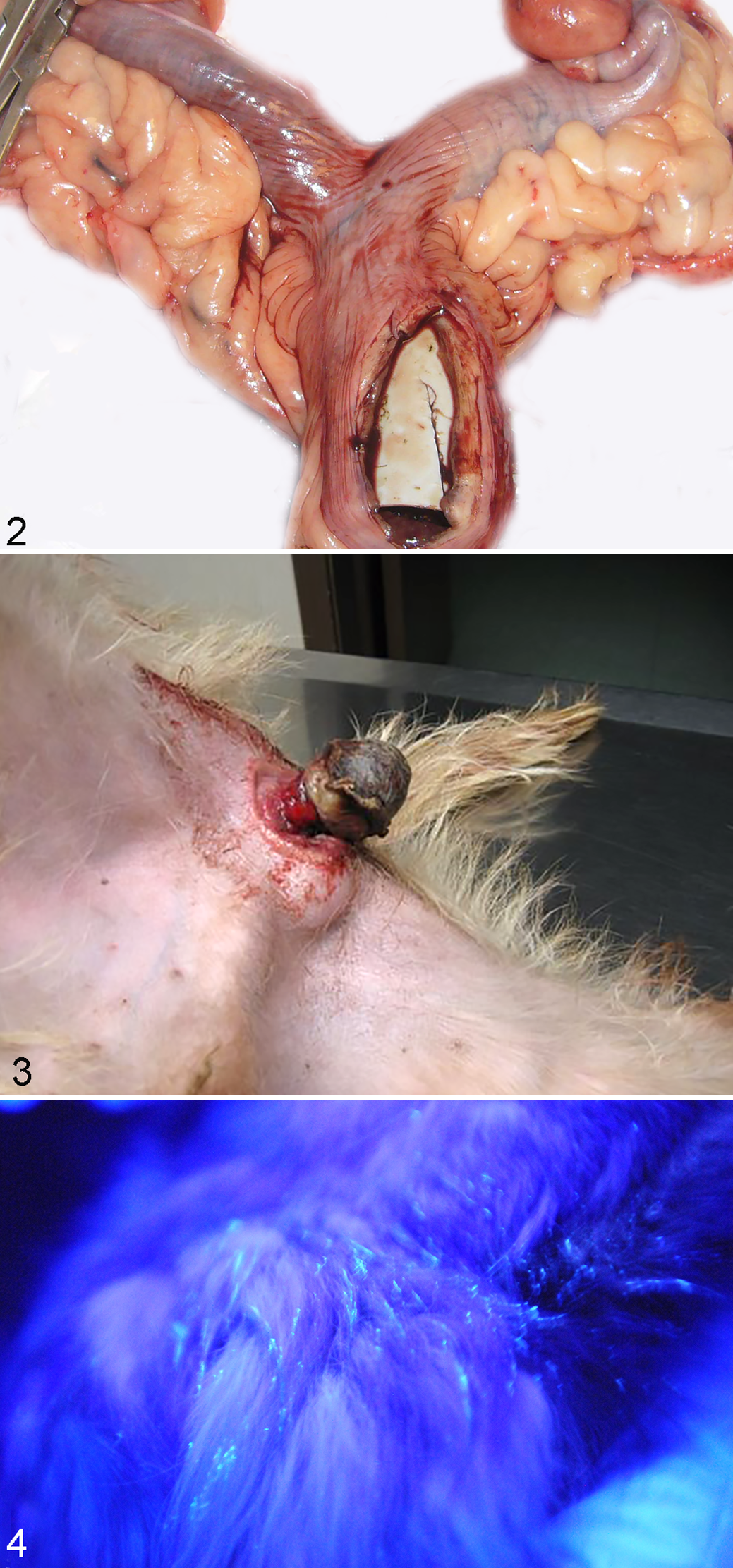
In horses, vaginal evisceration of the small intestine and colon has rarely been reported. 70 In 1 report, 2 of 3 cases resulted from perforation of the vaginal fornix dorsal to the cervix by the penis of a stallion; however, penetration with a foreign object may present in a similar fashion, and historical information may prove beneficial in determining the cause of the injury.
Anal, rectal, and perineal injuries include insertion of foreign objects, stab wounds in the perineal region, colonic perforation, anal dilation, and anal tears. 43,48 Peritonitis, proctitis, rectal fistulas, and/or rectal prolapse may occur as a sequela to anal and colonic injuries. 43 A broom stick inserted into the rectum of an intact female dog penetrated to the level of the liver and resulted in death. 48 Dilation of the anus has been reported in sexually abused animals, but it should be noted that the anus may dilate after death, and this finding should not be confused with an antemortem lesion. 11,48
Injuries to the scrotum have been reported in dogs. 48 Band castration is not accepted for castration of dogs, although it is an acceptable practice for bull calves, 4 and any such evidence should be documented and retained (Fig. 3). Traumatic castration may result in a large open wound with profuse hemorrhage. 48 Injuries to the penis of a male animal could occur in some situations of ASA.
Other injuries may be associated with the sexual abuse act but are not sexual in origin. 43,48 These injuries include bruising, abrasions from fingernail scrapings, fractures, thickening of the skin of the pinna or cartilage of the otic canal, and injuries to internal organs such as lacerations of viscera from blunt-force trauma, sharp-force injuries, and strangulation. 11 Ocular examination may identify traumatic anterior uveitis, hyphema, scleral injection, retinal hemorrhage, or conjunctival petechial hemorrhage in cases of blunt-force trauma or asphyxiation.
Microscopic Lesions
There is scant scientific literature on the microscopic findings in sexually abused animals. A complete set of tissue samples should be collected for histopathology in all forensic necropsies as the findings may support or further characterize the gross findings. 23 For example, if there is bruising, histopathologic examination may determine the age of the lesion and differentiate hemorrhage from congestion. Proctitis may result from the trauma of retained foreign bodies or from rectal penetration and may be microscopically evident. 43
Histopathologic examination could also refute the gross findings or identify an alternative cause for gross lesions such as acute necrotizing colitis. Since natural disease might cause similar gross findings to those occurring in sexually abused animals, it is imperative that a histopathologic examination be performed.
Special Techniques
Special techniques may be useful in the investigation of ASA cases, including ALS examination, screening tests to identify semen or seminal fluid, and diagnostic imaging. Screening tests may raise the index of suspicion for ASA, but confirmatory testing will most appropriately be done at the jurisdictional crime laboratory. Much of the available information comes from the human forensic literature with anecdotal uses in veterinary medicine; therefore, many of these techniques require further validation for use in veterinary forensic pathology. The first priority for the evidentiary material gathered is to make it available to the judicial process. Both the prosecution and the defense will want the opportunity to have materials tested, so any screening tests conducted by the veterinary pathologist should not consume the entire available sample. If there is scant material available, it should be preserved and forwarded to the authorities.
Alternate Light Source Examination
Alternate light sources, including lasers and high-intensity filtered lights, have been adapted to medicolegal investigations. 36 Nonlaser light sources can enhance the contrast of biologic evidence against the background or cause the evidence to fluoresce. 59
Semen can be identified with an ALS as it absorbs light at particular wavelengths and then reemits the absorbed energy at a longer wavelength. 36 The excitation spectrum of human semen is 300 to 480 nm, and the emission spectrum is 400 to 700 nm. 68 The fluorescence of human semen is best detected using an excitation wavelength of 420 to 450 nm and viewed through orange goggles. 52,71 To clearly observe the photoluminescence effect of semen, the investigator must use appropriate filters or goggles to filter out strong excitation wavelengths. 68
A Wood’s lamp is a source of ultraviolet light and emits wavelengths of 320 to 400 nm. Wood’s lamps have been reported to fluoresce biologic substances, including urine and semen, 22,61 but the accuracy is questionable. Wood’s lamp evaluation of human victims of sexual assault was performed at many hospitals with Sexual Assault Nurse Examiner programs, 13 although now there is a recommendation for elimination of the Wood’s lamp during sexual assault examinations. 21 In 1 study, none of the 29 semen samples fluoresced when scanned with a Wood’s lamp, 61 and another study found 0% sensitivity for detection of semen with a Wood’s lamp. 52
Other ALS are more useful for detection of semen. The Bluemaxx BM500 (Sirchie, Medford, NJ) was 100% sensitive for human semen, although not specific, and participants could differentiate semen from other stains 83% of the time. 52 The Polilight, which emits wave lengths of 415 to 650 nm, had a high frequency of false positives when examining exhibits for seminal stains; it was suggested that this light be used as a screening aid to locate stains and that further laboratory analysis should be performed on samples of interest. 71
Depending on the nature of the assault and the size of the animal, visible internal or external wounds may or may not be seen. In these cases, biological material found on the animal through the use of an ALS examination may be the only marker of animal sexual assault. The ALS examination should cover the entire body (including the perineal region, front and back legs, tail, ventrum, lateral body, dorsum, neck, and head). Animal victims will often self-groom the perineal region, removing trace or biological evidence, but may not be able to reach or may be less fastidious in other areas.
There is scant literature on ALS examination of animals for identification of seminal fluid stains. A conference proceedings stated that a Wood’s lamp is not effective, whereas another stated that bodily fluids will fluoresce. 40,75 Examination of the external body with a UV light or alternate light source to detect biological evidence on ASA victims is recommended, but there are no recommendations on the specific emitted wavelength of light or specific light source to be used. 11,43 In the experience of 1 author (A.W.S.), the Bluemaxx BM500 was useful for seminal fluid detection. During a Wood’s lamp examination of a sexually abused dog examined by 1 author (M.S.-B.), an area of clumped fur fluoresced and the material was confirmed to be human semen based on morphological identification of human spermatozoa at a state crime laboratory (Fig. 4).
Radiographs
Full-body radiographs should be taken to identify musculoskeletal injuries, gas pockets in the uterus or vagina (Fig. 5), or evidence of peritonitis. The radiographs should be carefully examined for signs of trauma, such as periosteal reactions from repeated leg binding or muzzling. Other findings of nonaccidental injury may be identified, including rib, skull, and long bone fractures, and these may be acute or chronic.
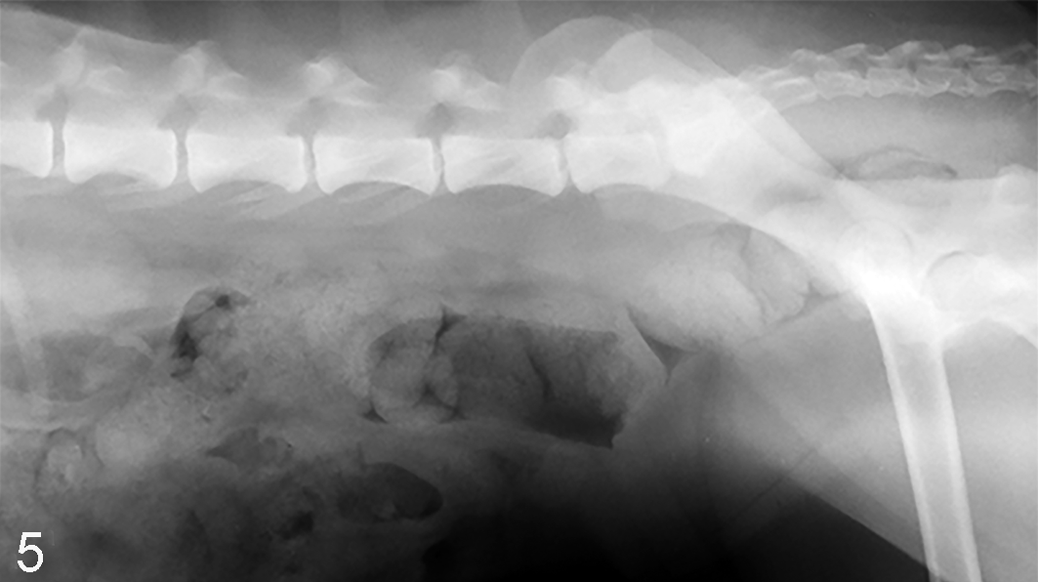
Animal sexual abuse, dog. Gas lucency in the uterus of the dog in Figure 2. Radiograph.
Tail injuries are reported in cases of ASA as manipulation of the tail may dislocate or fracture the proximal coccygeal vertebrae. 43 This should be distinguished from tail tip fractures, which are often accidental in nature. 43 In the experience of 1 author (M.S.-B), chronic or repeated sexual abuse in an animal may lead to laxity of the ligaments at the tail base, causing the tail to be remarkably loose or unstable at the base.
Semen Evaluation
The survival of sperm in various environments has been documented in the human literature, and sperm survival is shorter in deceased than living humans. 56 In humans, sperm may be recovered from the vagina for an average of 23 to 38 hours after death and may be recovered from the rectum for 12 to 28 hours after death. 56 To the authors’ knowledge, there are no comparable studies for living or deceased animals.
When moist materials are collected (such as a moist clump of fur), direct impressions may be made on glass slides for microscopic identification of spermatozoa. Care must be taken to avoid contamination when collecting or drying the samples. Dried materials may be collected for DNA analysis by cutting the fur and preserving it in a paper envelope (a “bindle” or “pharmaceutical fold”) or by swabbing with sterile water and cotton-tipped swabs. 66,69 Alternatively, dried matter may be collected by scraping with a scalpel blade or by using a swab moistened with sterile saline; the latter should be air-dried before preserving in a paper envelope. The time and anatomic location of each sample should be recorded on an evidence collection form. It is vital to avoid contamination by using sterile cotton-tipped swabs and preventing contact with any object other than the target area. An unused swab should be submitted in a similar manner to serve as a negative control. Swabs should be collected from the oral cavity, penis or vagina, rectum, perineal area, and fur from regions with abnormal staining, clumping, or abnormality observed during the ALS examination. 43
Sperm from different animal species vary in shape and size. Sperm have 3 regions: head, midpiece, and tail. Differences in shape and structure of the heads distinguish dog, horse, sheep, and human sperm. 10 The sperm heads are paddle-shaped in bulls, dogs, and humans; hook-shaped in rodents; and spindle-shaped in roosters.
Histochemical and cytochemical stains can be used to visualize sperm cells. The Kernechtrot-picroindigocarmine stain (Christmas tree stain) is most often used. Nuclear fast red differentially stains the DNA-containing sperm head red, and the counterstain picroindigocarmine stains the tail green-blue. There are differences in staining patterns of sperm between humans and dogs. 64 In human spermatozoa, the acrosomal cap stains less intensely red than the nuclear portion of the sperm head, and the midpiece and tail stain green or blue-green. Similarly in the dog, there is light staining of the acrosomal cap and dark red staining of the postacrosomal region; however, in contrast to human sperm heads, the dog sperm head has a third colorless region (band) between the acrosome and postacrosomal region. 64
With a hematoxylin-eosin stain, human sperm heads have a very pale purple acrosomal cap and a dark purple postacrosomal region with a distinct line of demarcation between the regions. 64 Canine sperm heads stained with hematoxylin-eosin have a pale purple postacrosomal region and pale purple fading to a colorless acrosomal cap. 64
Collaboration with veterinary clinical pathologists and veterinary theriogenologists for cytological evaluation smears and washes may be helpful to screen for the presence of sperm. However, evaluation by an accredited human forensic laboratory is advised to ensure the evidence is admissible in a court of law.
Tests for Seminal Fluid
The above tests may not recover spermatozoa from some cases of sexual abuse if the perpetrator used a condom, lacked sperm because of testicular disease or surgical sterilization, or did not ejaculate. In such cases, the presence of seminal fluid may be detected by screening tests for acid phosphatase (AP) test, prostate-specific antigen (PSA), or semenogelin (Sg) or by mass spectrometry–based proteomics. 28,31,51,65,67 The confirmatory tests for human seminal fluid are the microscopic identification of spermatozoa, analysis of short tandem repeat loci from the Y chromosome (Y-STRs), and mass spectrometry–based proteomics. 14,42,51,67,72 Some of the tests described in this section are practical and easy to use, but validation studies are lacking for their use in animals for the detection of human seminal fluid. Some research has been published on species cross-reactivity of several available tests. 45,55,62,65,67
PSA can be used as a marker of seminal fluid. 27,65,76 In humans, PSA is produced by prostate epithelial cells and is found in seminal fluid, prostatic fluid, male serum, and male urine. PSA is also found in apocrine sweat glands, breast milk of lactating women, and some breast tumors. 65 Nonprostatic fluids contain very low levels of PSA, and this should not be an issue in sexual assault cases. 24 PSA may be detected in urine of males aged 12 to 14 years or older. 62 The species cross-reactivity of 3 different membrane test assays for human PSA has been evaluated, using a few samples of seminal fluid from a limited number of mammalian species, including cat, dog, horse, pig, and bull; all samples tested negative for PSA. 28 Urine from male cats and dogs showed no reaction using the commercially available “SMITEST” PSA card. 62 In another study, dog semen was positive for PSA (mean 44.7 ng/ml). 65
AP is primarily localized to columnar epithelial cells of the human prostate. 47 Low levels of human prostatic acid phosphatase messenger RNA (mRNA) expression have been reported in nonprostatic cells of the urinary bladder, kidney, pancreas, cervix, lung, testis, and ovary. 47 AP is not influenced by the presence or absence of spermatozoa. PSA detection is considered more reliable that AP detection after 48 hours in humans. 31 A high incidence of positive reactions obtained from mouth swabs and a single sample from a urine stain indicates that the presence of human saliva or urine could be misinterpreted as an indication of possible seminal fluid. 38 Seminal fluid from pygmy chimpanzee, chimpanzee, and orangutan tested positive with the assay for human AP, whereas samples from mandrill, gorilla, and dog were negative. 65
Sg (both SgI and SgII) is secreted in human semen. Sg assays are useful for detection of seminal plasma in forensic samples. 54,55 Semen samples from pig, bull, stallion, cat, dog, and rooster were negative for Sg using a membrane strip test. 55,67 There was no cross-reactivity for Sg in various bodily fluids from dogs, including semen, urine, saliva, vaginal secretions, and blood, with only a single false positive detected in a fecal sample when analyzed by a membrane strip test. 67
Mass spectrometry–based proteomics can be used both as a screening technique and as a confirmation technique for identification of various biologic fluids. Using this technique, Sg can be used as a biomarker to identify a biologic fluid sample as semen. 72
Analysis of Y-STRs may be used to compare the DNA profile in a fluid sample to that obtained from the suspect. One forensic study has proposed a workflow method that has incorporated Y-STRs analysis if the sample in question is positive on the screening tests such as Sg and/or PSA. 42
The SPERM HY-LITER (Independent Forensics, Lombard, IL) kit is used to specifically identify human spermatozoa and with no cross-reactivity to spermatozoa of several other animal species. 45 The reported limitations included nonspecific background staining and an increased amount of background fluorescence with extreme heat fixation. 45
Veterinary pathologists must understand the legal limits of the use of these assays. Any testing of seminal fluid or sperm should be considered a screening test. If there is insufficient material available for both screening and confirmation (because the sample would be consumed by the screening test), the material should be preserved and submitted to the appropriate authorities.
Conclusion
ASA is likely more common than documented. The veterinary pathologist has the necessary skills to examine cases of suspected ASA. When investigating a case of potential ASA, accurate documentation of lesions or lack of lesions is of crucial importance to the forensic investigation. Documented injuries in animals that have been sexually abused include injuries to the anus, rectum, penis, nipples, and vagina and are directly due to sexual contact,
29,30,43,48,50
whereas other injuries are indirectly related and may include abrasions (caused by fingernails) and bruising.
11,43,48
Signs of ASA can be subtle, so the examination must be meticulous. Complete documentation of the tests and procedures performed and the results of each are required. In any case of suspected ASA, it is recommended that the following procedures be performed in a methodical order to avoid both a loss of potential trace evidence and to allow for a complete and thorough forensic examination. Alternate light source examination Collection of swabs for DNA testing Collection of samples for trace evidence analysis (rectal wash, vaginal wash) Radiographic studies Complete forensic necropsy, including histopathology
If present, the identification of semen and seminal fluid is of major importance in these cases as it confirms the nature of the crime and allows for the identification of a potential perpetrator by law enforcement agencies through the utilization of DNA testing. In human forensic medicine, ALS examination is a useful tool to identify semen. Recently, it has been shown that Wood’s lamp evaluation was not useful, whereas use of the Bluemaxx BM500 was 100% sensitive for human semen. 52,61 Alternate light sources need to be validated in veterinary forensic cases to be accepted in court. Similarly, currently available screening tests are potentially useful to identify human seminal fluid within samples of fluids and stains from ASA victims, but these tests have not been validated for use in animals, and some differences have been observed among animal species. 45,55,62,65,67 Veterinarians and forensic investigators should design studies to evaluate and validate the use of the investigative tools in cases of ASA.
Footnotes

Declaration of Conflicting Interests
The author(s) declared no potential conflicts of interest with respect to the research, authorship, and/or publication of this article.
Funding
The author(s) disclosed receipt of the following financial support for the research, authorship, and/or publication of this article: Dr Smith-Blackmore’s position is supported by a grant from the Stanton Foundation.
References
Supplementary Material
Please find the following supplemental material available below.
For Open Access articles published under a Creative Commons License, all supplemental material carries the same license as the article it is associated with.
For non-Open Access articles published, all supplemental material carries a non-exclusive license, and permission requests for re-use of supplemental material or any part of supplemental material shall be sent directly to the copyright owner as specified in the copyright notice associated with the article.
