




Abstract
Veterinary pathologists working as toxicologic pathologists in academic settings fill many vital roles, such as diagnosticians, educators, and/or researchers. These individuals have spent years investigating pathology problems that mainly or exclusively focus on the reactions of cells, organs, or systems to toxic materials. Thus, academic toxicologic pathologists are uniquely suited both to help trainees understand toxicity as a cause of pathology responses and also to provide expert consultation on toxicologic pathology. Most toxicologic pathologists in academia are employed at colleges of medicine or veterinary medicine, even though specific toxicologic pathology faculty appointments are uncommon in Europe and North America. Academic toxicologic pathologists typically receive lower financial compensation than do toxicologic pathologists in industry, but academic positions generally provide alternative rewards, such as higher workplace autonomy and scheduling flexibility, professional enrichment through student interactions, and enhanced opportunities for collaborative research and advanced diagnostic investigations. Regular participation by academic toxicologic pathologists in professional training opportunities (eg, as pathology and toxicology instructors in medical and veterinary medical courses, graduate programs, and residencies) offers an important means of engendering interest and inspiring veterinarians to select toxicologic pathology and toxicology as their own areas of future expertise.
Shifting demographic stresses and societal resource requirements have presented new challenges and opportunities to veterinary practitioners and trainees with respect to creating pathways for long-lasting careers that have viability and vitality. Advanced education in veterinary pathology has been and remains a vibrant means of establishing an area of specialized biomedical expertise that improves flexibility for veterinarians throughout their postgraduate careers. An essential subbranch of this discipline is toxicologic pathology, which consists of a combination of knowledge and practical skills used to study the responses of cells, organs, and organisms to various toxic materials. Most toxicologic pathologists in Europe, Japan, and North America are employed by industry, where their skills in pathology data collection and analysis, as well as critical thinking and problem solving, are valued by fellow scientists, corporate managers, and regulators who rely on toxicologic pathology data in guiding product discovery and development. 45 However, the critical and sometimes unique roles that can be filled by toxicologic pathologists in other settings, such as academia, are seldom appreciated by the general public, the scientific community, or even other veterinary pathologists. This current mini-review was commissioned by the Society of Toxicologic Pathology (STP) to identify and characterize the diverse contributions that academic toxicologist pathologists make to the global scientific endeavor and specifically to the growth and evolution of veterinary pathology in the 21st century.
A Brief Review of Toxicologic Pathology
Pathologists study the nature of disease and evaluate changes in animal tissues and organs (anatomic pathology) or body fluids (clinical pathology), produced in response to host challenge. Toxicologists focus on the mechanisms by which toxic agents (“toxicants”) can act to disrupt cell and organ function. Toxicologic pathologists merge these 2 fields of knowledge by studying the ability of toxicants to induce anatomic lesions and organ dysfunction. 32,45 As such, the discipline of toxicologic pathology requires knowledge of morphologic and clinical pathology, pathophysiology, pharmacokinetics, and toxicology, as well as other related disciplines, so that complex data can be integrated to provide predictions about potential biological consequences in other animals and humans. 3,17
The educational background of toxicologic pathologists varies considerably around the globe. Most toxicologic pathologists in Europe, Japan, and North America are veterinarians who have completed specialized postgraduate applied and/or research training in pathology and have achieved postgraduate certification in pathology and/or toxicology. 3,14 Similar training and credentials in pathology, but not necessarily toxicology, are required for most veterinary pathology faculty positions in these regions as well. Fewer toxicologic pathologists in Europe, Japan, and North America have specialized training in medicine (MD or equivalent) or comparative pathology (doctoral level), and their numbers have been declining slowly over time. In contrast, most toxicologic pathologists in China hold MD degrees. In many parts of the globe, toxicologic pathologists have been trained almost exclusively as anatomic pathologists. In North America and, to a lesser extent, Europe, but not Japan, a substantial fraction of clinical pathologists are employed full-time in industry to collect and evaluate toxicologic pathology data sets. 14,32 Regardless of their specialty, most toxicologic pathologists receive their advanced pathology training in academic institutions that emphasize conventional diagnostic- and research-based curricula and then follow it with significant on-the-job training in toxicologic pathology.
Most toxicologic pathologists in Europe, Japan, and North America are employed by industry, including bio/pharmaceutical and chemical companies, as well as contract research organizations (CROs). This concentration is driven primarily by the need for for-profit institutions engaged in product discovery and development to identify potential hazards and assess potential risks following xenobiotic exposure prior to pursuing regulatory approval for product licensing and marketing. Fewer toxicologic pathologists are employed in government agencies, where they primarily address applied research problems associated with environmental and occupational toxicants. In our experience, very few veterinary pathologists in academic settings identify themselves as toxicologic pathologists.
Essential Roles for Toxicologic Pathologists in the Academic Setting
Overview
It is difficult to obtain accurate estimates of the numbers of toxicologic pathologists currently employed by academic institutions and also the employment market for such expertise. While approximately 33% of board-certified veterinary pathologists in North America work in academic environments, 1 only a tiny fraction claim toxicologic pathology as either a primary focus of their daily intellectual activities or a primary job responsibility. As of fall 2012, only 12% (145 of 1208) of STP members listed academia as their primary place of employment. 41 This scarcity likely reflects the low number of employment opportunities for veterinary pathologists with this field of interest within university settings, as well as the approximately 30% greater level of compensation (“golden handcuffs”) available in industry relative to academic positions. 1 For example, a review of all open pathology positions posted between November 2010 and October 2011 to the “Career Center” domain of the American College of Veterinary Pathologists (ACVP) website (http://www.acvp.org/about/CareerCenter.cfm, which represents a broad mix of international employment postings for veterinary pathologists) indicated that only 21% (8/39) of academic postings (from a total of 89 listed positions) expressed a desire for candidates with a toxicologic pathology or toxicology background. In contrast, 71% (24/34) of biopharmaceutical positions mentioned experience in toxicologic pathology or toxicology as a desirable attribute, and 59% (20/34) specifically advertised for a toxicologic pathologist. These numbers indicate that individuals with toxicologic pathology expertise are underrepresented significantly among faculty ranks at academic institutions. Few colleges of veterinary medicine have one faculty member with substantial knowledge in this field, and almost none have 2 or more.
This scarcity is undesirable because academic veterinary pathologists engaged in toxicologic pathology are capable of fulfilling multiple, critical functions. These areas of function may be classified broadly as diagnostics, education, research, and service/outreach. The proportion of an individual’s time that is devoted to each of these activities varies greatly within and among academic institutions. In general, toxicologic pathologists in academia rarely focus exclusively on toxicologic pathology in planning their daily schedules.
Diagnostic Toxicology in Academic Laboratories: Participation by Pathologists
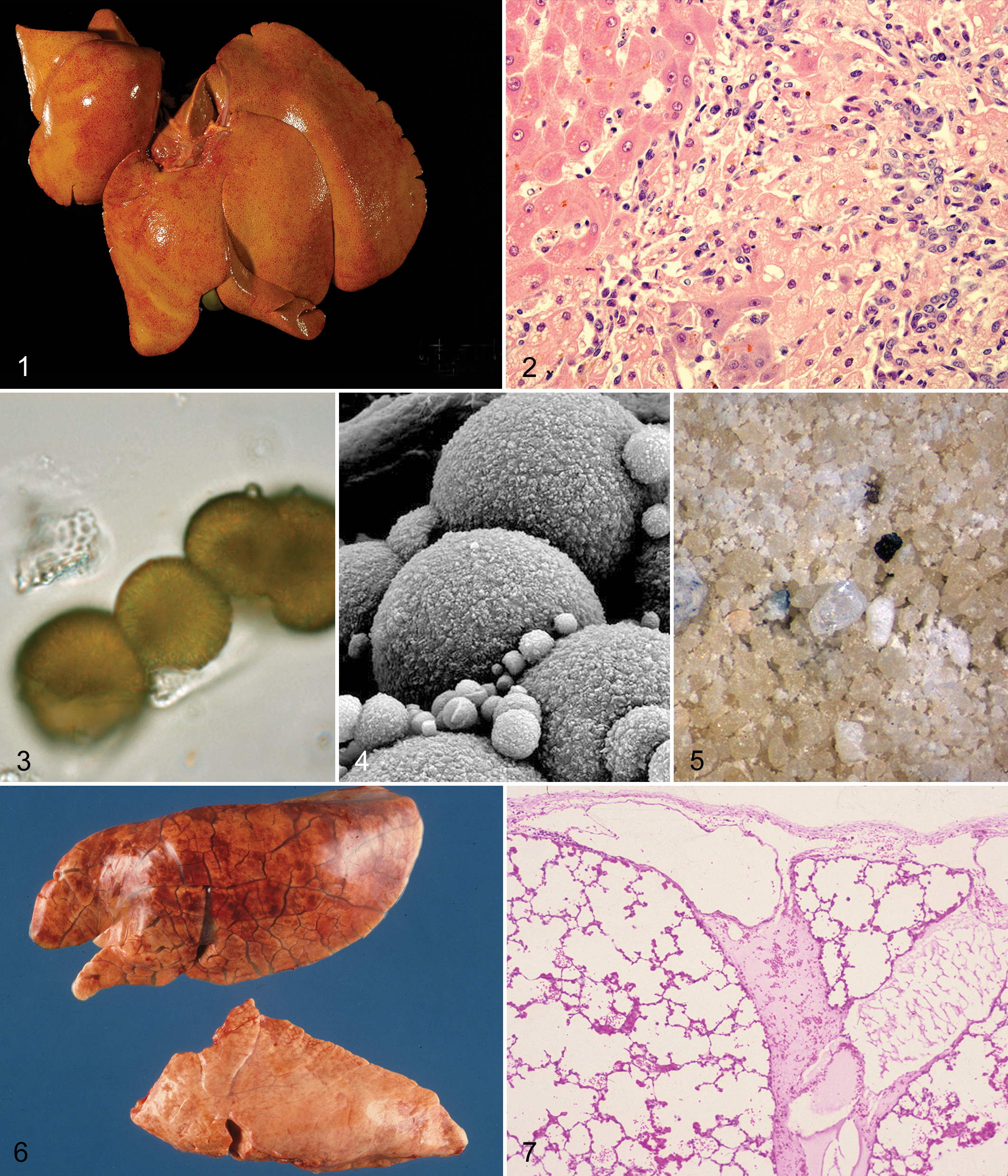
Veterinary pathologists working in diagnostic laboratories at academic institutions investigate all types of animal diseases, and a portion of the caseload will include poisoning cases. The exact number of poisoning cases submitted for investigation will vary by the institution, with higher toxicity caseloads typically occurring at institutions with known expertise in diagnostic toxicology. Toxicity in the veterinary practice setting is reported to result from accidental exposure in approximately 99.5% of cases (chiefly affecting dogs [75%] and, to a lesser extent, cats [15%]), although the prevalence of intentional poisoning in animals is likely to exceed the current estimate of 0.5%. 16,27 While exposure to toxicants, and thus their impact, often is restricted to individual locales (eg, single or adjacent farms), intoxication epidemics in animals across large regions or even multiple continents are important and fairly frequent diagnostic challenges for toxicologic pathologists in academia. For example, commercial dog food produced in 2005/2006 with mycotoxin-contaminated corn led to an outbreak of clinical aflatoxicosis in dogs throughout the eastern United States (Figs. 1, 2). 11,29 Accordingly, maintaining a cadre of academic pathologists skilled in toxicologic pathology investigations is a necessity to sustain an efficient and effective diagnostic capability.
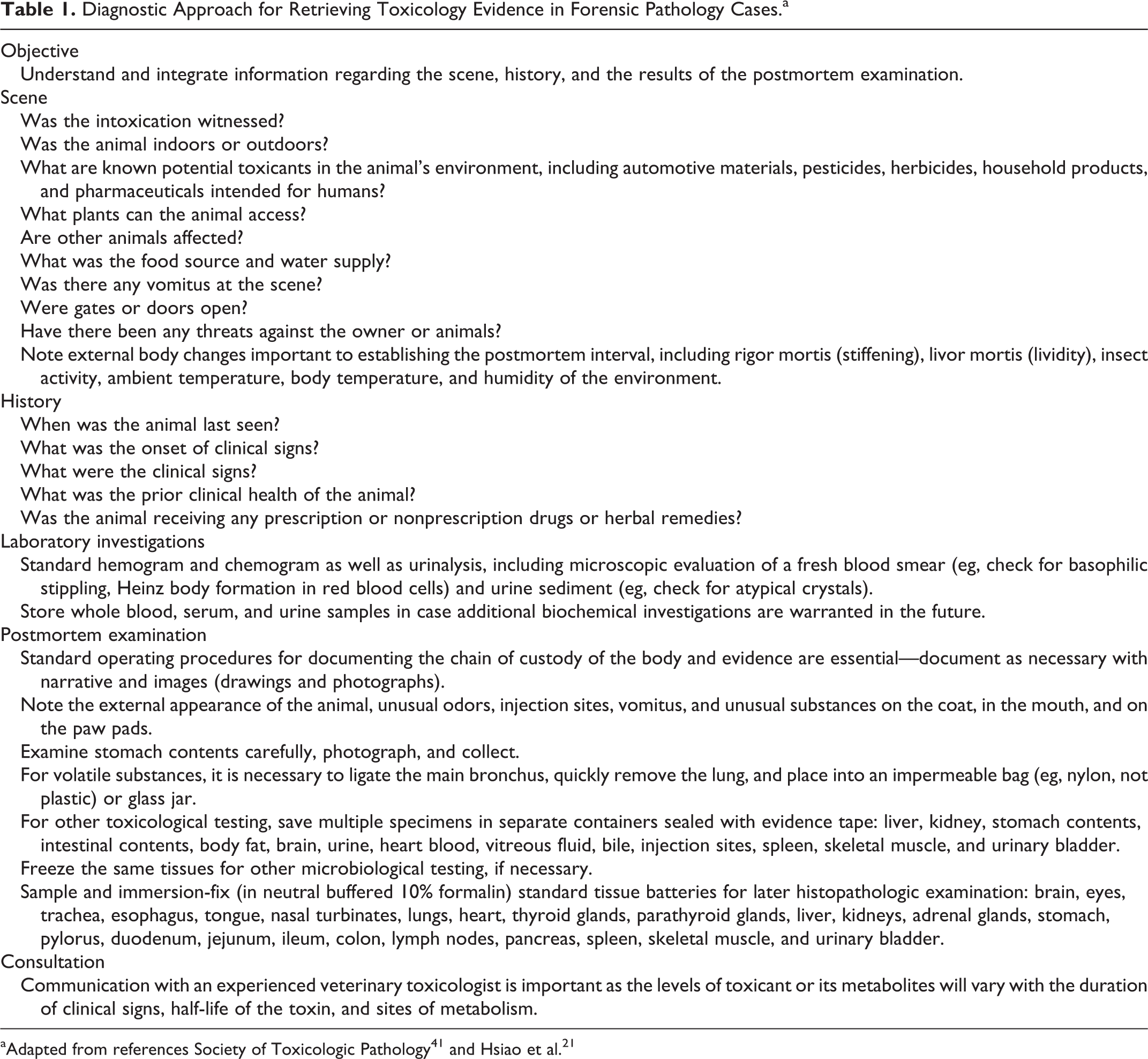
Academic pathologists with a penchant for diagnostic toxicology evaluations work closely with both referring veterinarians and diagnostic toxicologists to integrate clinical signs, pathology data, and chemical analyses to establish a complete data set (Table 1). In particular, formal documentation of lesions at necropsy and/or by microscopic examination of tissues often is vital to support insurance claims or legal actions where liability is involved. The utility of identifying the pathogenesis of naturally occurring, toxicant-induced diseases should not be underestimated as often these cases add crucial information needed to improve understanding of both toxic mechanisms and physiologic pathways. An example of this approach was the observation that inadvertent ingestion of foxglove (Digitalis purpurea) by livestock led to heart failure. This serendipitous finding led to the discovery of cardiac glycoside toxicity and the development of synthetic analogues as therapies for congestive heart failure and cardiac arrhythmias.
Diagnostic Approach for Retrieving Toxicology Evidence in Forensic Pathology Cases.a
Multiple challenges face veterinary pathologists who engage in diagnostic investigations of poisoning cases. These include the nonspecific nature of the clinical signs induced by most toxicants, differing susceptibilities of various species to a given toxic agent, and the unknown prevalence of toxic diseases within populations. Furthermore, the identification of toxicity outbreaks in animals often has potential relevance for public health, either because both animals and humans are directly exposed to the agent at the same time or from the same source, or because of concern about possible entry of toxicant-contaminated animal products into the human food supply chain. For example, intentional adulteration of imported vegetable protein products in pet food with melamine resulted in widespread nephrotoxic renal failure in cats and dogs throughout North America due to formation of intratubular crystals (Figs. 3–5). 6,13 Equivalent toxic effects were identified later in infants who received melamine-contaminated milk replacement formulas, 39 thus highlighting the value of translating diagnostic findings in animals to predict possible biological responses in susceptible human populations. In this light, domestic or wild animals may serve as sentinels for environmental diseases associated with numerous classes of toxicants. 12,24,31 An example of this was the discovery that the collapsing populations of Gyps vultures in the Indian subcontinent resulted from their selective poisoning as they scavenged carcasses of animals treated with the nonsteroidal anti-inflammatory drug, diclofenac. 30
Educational Roles for Toxicologic Pathologists in Academia
Pathologists may hold appointments at different types of academic institutions. The primary settings are colleges or schools of veterinary medicine and, to a lesser extent, colleges of medicine. In these settings, academic toxicologic pathologists have the opportunity to serve as mentors and role models for many constituencies. In particular, these individuals will play an important role in shaping students’ future career paths in pathology. 26 When surveys conducted by the ACVP and STP suggested a developing global shortage of veterinary pathologists with difficulties in recruiting individuals to fill industrial positions, 10 faculty members with toxicologic pathology experience were well positioned to help students gain knowledge of the rewards and challenges to be had in industry. The value of creating early interest in alternative career pathways, like toxicologic pathology, cannot be overstated as veterinary students often formulate opinions about future employment in their first year of the program. 22,23
In general, veterinary pathologists contribute to multiple facets of veterinary education, only a portion of which involves toxicologic pathology. Much of their instructional effort supports the mainstream veterinary medical curriculum, where core pathology courses emphasize general concepts and systems pathology (oriented toward basic diagnostic knowledge needed to practice veterinary medicine). Nonetheless, these foundational courses can serve as effective platforms for introducing fundamental principles related to chemical entities and their abilities to produce toxic lesions. Academic pathologists also are highly engaged in providing advanced pathology training to veterinary pathology and toxicology residents and graduate students, especially in providing information about the adaptive, degenerative, proliferative, and genetic responses to xenobiotics that are considered areas of core knowledge for toxicologic pathologists. 3 This additional instruction in toxicologic pathology at academic institutions often may be extended to include senior veterinary students, as well as veterinary and human medical practitioners and pathologists through the use of various electives, workshops, and short courses (eg, in animal modeling, common animal toxicoses, laboratory animal pathology, or toxicologic pathology in industry settings). These academic events typically rely on information delivery using a lecture format, supplemented by electronic or hands-on laboratories to explore case materials and investigative practices. Most academic toxicologic pathologists regularly contribute peer-reviewed articles, author book chapters, edit reference books, and speak at professional meetings to further hone their educational prowess. 17,19,34,42
Some academic institutions offer full courses in toxicologic pathology using a mix of traditional and topical materials. 25,44 Such courses typically include material focused on major mechanisms and systems-based toxic effects (Table 2). These offerings may exist as stand-alone courses, or they may be implemented as part of a toxicologic pathology specialization for a postgraduate training program, such as the combined residency/graduate program in veterinary pathology at the University of Illinois’s College of Veterinary Medicine (Table 3). The content of toxicologic pathology courses in academic settings usually concentrates on common methods and end points in anatomic pathology and clinical pathology, thus serving as a natural extension of standard diagnostic pathology training. However, toxicologic pathology courses often also provide exposure to aspects of comparative and laboratory animal pathology, as well as techniques for data collection and analysis, which are not included in routine materials provided in diagnostic pathology training programs. This inclusion of unique information coupled with the recognized need for a steady stream of well-trained toxicologic pathologists to fill positions in industry justifies the delivery of formal courses in toxicologic pathology within the academic setting.
Sample Syllabus for a Senior-Level Undergraduate Course in Toxicologic Pathology.a
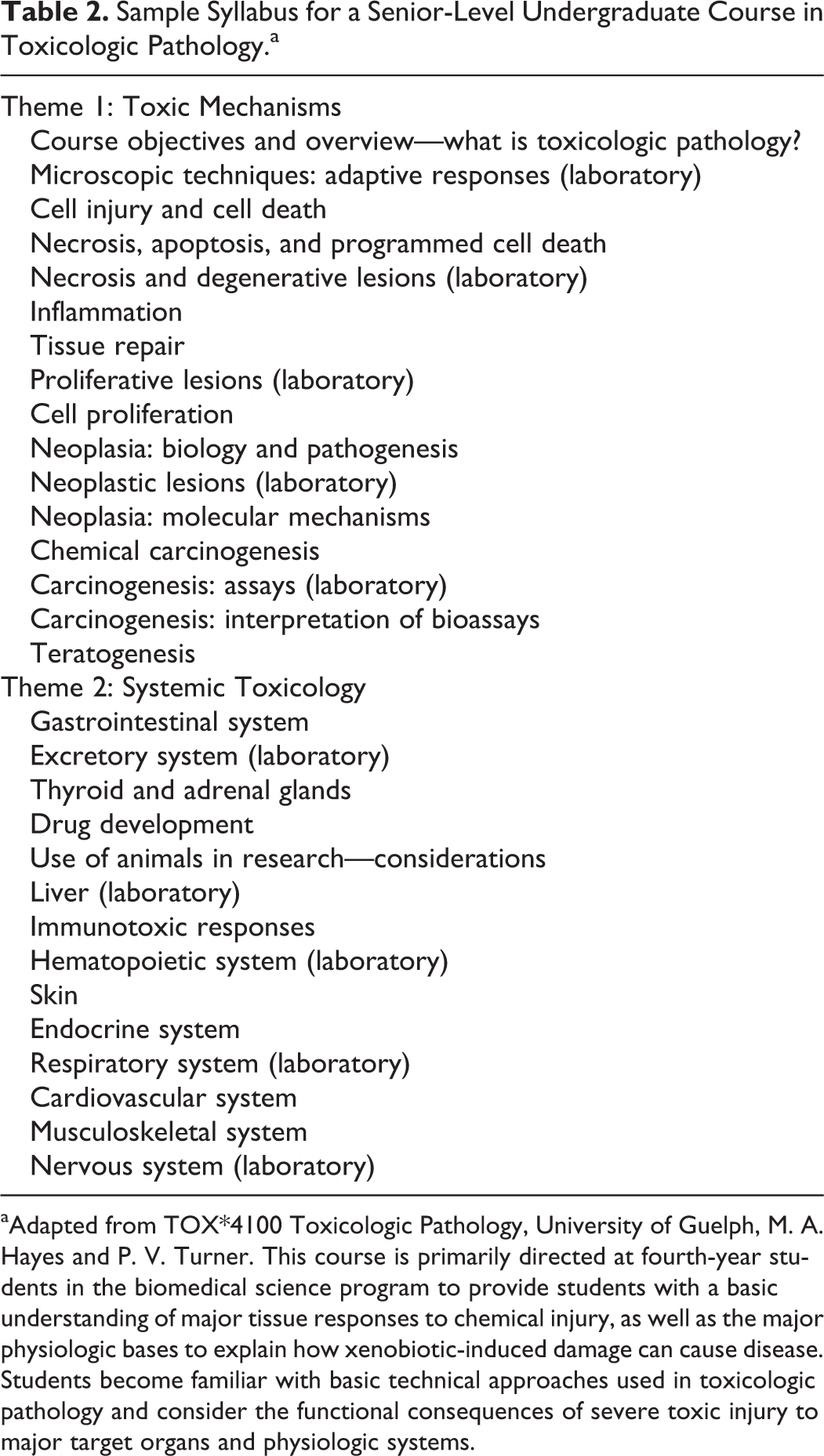
aAdapted from TOX*4100 Toxicologic Pathology, University of Guelph, M. A. Hayes and P. V. Turner. This course is primarily directed at fourth-year students in the biomedical science program to provide students with a basic understanding of major tissue responses to chemical injury, as well as the major physiologic bases to explain how xenobiotic-induced damage can cause disease. Students become familiar with basic technical approaches used in toxicologic pathology and consider the functional consequences of severe toxic injury to major target organs and physiologic systems.
Toxicologic Pathology Specialization—Combined Pathology Residency/Graduate Program (University of Illinois).
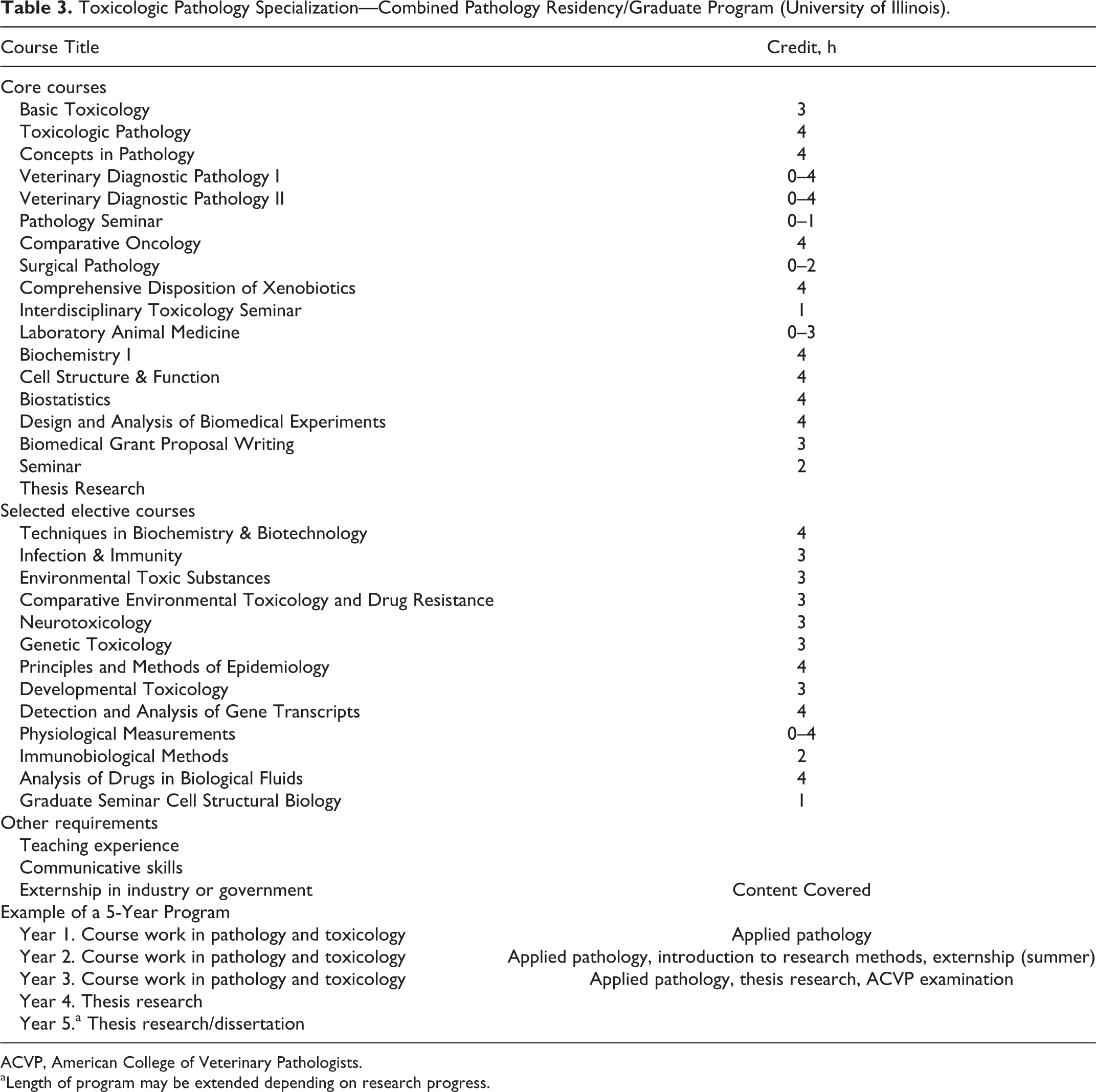
ACVP, American College of Veterinary Pathologists.
aLength of program may be extended depending on research progress.
In addition to formal teaching, faculty with expertise in toxicologic pathology mentor students informally in a number of ways. Important means include interactions with individual undergraduate, professional, and graduate students, as well as group mentoring by acting as liaisons or speakers for student pathology clubs. Academic pathologists also serve as important sources of leads for pathology externships 36 and as references for individuals seeking entry into competitive postgraduate training programs and toxicologic pathology positions. Indeed, these interactions likely are a more common means of modeling the desirability of the toxicologic pathology profession than offerings of toxicologic pathology coursework.
Academic toxicologic pathologists provide vital educational support to other constituencies besides veterinary (or medical) students and pathology trainees. For example, academic pathologists with backgrounds in toxicologic pathology frequently are called upon to train toxicologists to improve their understanding of target organ toxicity. Examples of specific postgraduate toxicology programs of this sort include courses in Canada at the University of Guelph, in the United Kingdom at the University of Surrey, and in the United States at the University of Illinois, Johns Hopkins University, and Michigan State University. Academic toxicologic pathologists may also be called upon to develop and deliver customized training programs to assist technical personnel at small biotechnology and pharmaceutical firms, at CROs, and at academic research laboratories. Topics for instruction may include proper sample collection and submission; guidance in adequate selection, analysis, and interpretation of clinical pathology data; recognition and description of gross tissue changes at postmortem; development of necropsy and trimming protocols; and instruction in collection of appropriate postmortem specimens for subsequent microscopic analysis. Delivery of educational material to toxicologists through participation of academic toxicologic pathologists in scientific sessions and workshops is a common occurrence at professional meetings for toxicologists, such as the American College of Toxicology (http://www.actox.org/), the British Toxicology Society (http://www.thebts.org/), and the Society of Toxicology (http://www.toxicology.org/).
In a similar fashion, academicians with expertise in toxicologic pathology are regular invitees to educate and/or advise other members of the scientific community, particularly researchers and reviewers at regulatory agencies. Regular recipients of these interactions include Health Canada, the US Environmental Protection Agency (EPA), and the US Food and Drug Administration (FDA). Academic pathologists usually provide insights regarding the effects to be expected when organisms are exposed to novel xenobiotics and to provide perspective regarding interpretation of pathology data given between different pathologists. Input from academic pathologists typically is sought by regulatory agencies, but in some instances, scientific organizations (eg, STP) have been successful in proposing and delivering educational sessions on selected topics to promote exchanges between toxicologic pathologists and regulators on topics of mutual interest.
Finally, the influence of the academic toxicologic pathologist extends beyond the world of university and professional settings to affect the lives of the general public on a daily basis. One means by which academic pathologists affect public well-being is in making important new discoveries in toxicologic pathology to minimize the initial or continued exposure of at-risk populations, both human and animal. An example of a successful intervention of this nature is the identification of melamine-induced toxicity associated with contaminated pet food, 15 which served as an early warning that humans ingesting melamine-contaminated products also might experience toxicity. 39 A second manner in which academic toxicologic pathologists protect the public interest is in providing educational opportunities for recognizing and avoiding toxicants. For example, the American Society for the Prevention of Cruelty to Animals campaign for public notification and awareness arose from the discovery by university researchers that sporadic renal toxicity and failure could arise in dogs that consumed raisins and grapes. 28 Another outcome of this campaign was the launch of a comprehensive open-access poison control website (http://www.aspca.org/pet-care/poison-control/) for companion animals to provide direct, easily accessible information on toxicities. This website is continually updated using input from academic veterinary pathologists and toxicologists, among others.
Research by Toxicologic Pathologists in Academia
A basic mandate for veterinary pathologists with faculty appointments is to conduct research and to provide research opportunities for graduate students. Some academic veterinary pathologists have chosen toxicologic pathology as an area for some or all of their focused research. Some individuals function as a primary investigator, responsible for project oversight and funding for their own laboratories, while others serve as research collaborators, providing toxicologic pathology expertise to other scientists as a member of an interdisciplinary academic research program. The nature of toxicologic pathology research can range from basic discovery and mechanistic studies to applied nonclinical efficacy and toxicity testing. In many cases, academic programs in this field are directed toward more exploratory questions than typically would be the case in industry settings, which are usually involved in developing products for regulatory approval. Academic research projects in toxicologic pathology may focus on any of numerous possible objectives, all of which may have relevance to protecting animal, human, and/or environmental health. Investigative threads may be drawn from observations made during diagnostic workups, address questions related to clinical veterinary medicine, explore environmental issues, or attempt to translate outcomes using animal models to predict responses in other animal species or humans. Sometimes, the succession of new questions actually fulfills multiple objectives. For example, diagnostic investigation into thousands of dying pigs fed Fusarium verticillioides (previously Fusarium moniliforme)–contaminated corn screenings from the 1989 corn crop in Georgia, Illinois, and Iowa identified the mycotoxin fumonisin as the cause of fatal porcine pulmonary edema (Figs. 6, 7). 18 An academic toxicologic pathologist led the subsequent multidisciplinary research effort that demonstrated that pulmonary edema occurred secondary to decreased myocardial contractility. 40 Additional work in calves, horses, and rodents has indicated unique species vulnerabilities and target organ localization following fumonisin exposure, as well as demonstrating that altered sphingolipid metabolism and hepatotoxicity characterize fumonisin toxicity in all species. This common finding led to the development of a rapid diagnostic test for fumonisin toxicity based on alterations in sphinganine and sphingosine levels in blood and tissues. 21 Furthermore, the collected body of work resulting from this animal outbreak was used subsequently by the FDA to develop regulatory guidelines for acceptable fumonisin levels in livestock feed and for human risk assessment performed by the International Agency for Research on Cancer.
Another avenue by which academic toxicologic pathologists may make important research contributions is in characterizing new animal models of human disease. Tasks undertaken in this regard often include performing the initial pathology analysis for newly discovered animal diseases, examining novel genetically engineered mouse lines, or evaluating the ability of potential therapeutic candidates to alleviate the clinical signs and pathologic lesions (ie, efficacy testing) or induce off-target adverse effects (ie, toxicity testing) in exposed animals. 5 Participation by toxicologic pathologists in such research projects is especially important in academia as many primary investigators are unfamiliar with the degree to which concurrent diseases may confound efforts to discern genuine xenobiotic-induced effects. In addition, veterinary pathologists with toxicologic pathology expertise are adept at devising semi-quantitative grading systems for classifying chemically induced tissue changes 2,4,33,37,43 and thus are particularly well suited to train medical pathologists and principal investigators in the effective acquisition and use of experimental pathology data. 35 This learned scoring aptitude of toxicologic pathologists differs from the more qualitative approach typically employed when assigning grades to lesions in the diagnostic pathology setting. 20,38
Academic toxicologic pathologists often are invited to fulfill these same functions with respect to animal model development and consultations to bio/pharmaceutical firms seeking to speed efforts to develop new products. 45 Academic pathologists often provide research support for CROs or for laboratories holding government or other agency contracts, typically to help with mechanistic studies to clarify the pathogenesis of previously identified toxicant-induced findings. Because such consulting work is viewed as continuing professional development that hones and refines the skills of the pathologist, many academic institutions provide professional time to pathology faculty for these activities. Additional advantages to this form of academic research in toxicologic pathology include the ability to obtain contract funding to support an academic research laboratory and, with permission of the sponsoring organization, the capacity to gather case materials (eg, photographs of gross findings, tissue sections with pathology lesions) for educating graduate and veterinary students.
Academic toxicologic pathologists contribute to the transition of potential therapeutic targets and molecules from academic discovery studies to clinical testing and eventual commercial production. Many academic scientists have little or no knowledge of the many steps needed to shepherd a concept from bench to bedside, and this lack of awareness may adversely affect their ability to obtain grants and/or venture capital with which to begin developing the new molecule. Experienced toxicologic pathologists in academia serve as bridges to harmonize the expectations and needs of basic researchers, university officers charged with developing intellectual property, and industries that might be interested in licensing a promising innovation. The value of academic toxicologic pathologists in fulfilling this information transfer function was recognized by the decision of the Medical Research Council in the United Kingdom to support a Chair in Toxicologic Pathology at the Royal Veterinary College in London through a Skills Gap grant award.
Service Roles for Toxicologic Pathologists in Academia
As with other members of the faculty, academic veterinary pathologists with expertise in toxicologic pathology regularly provide service to their institutions in a number of ways that have little to do with their diagnostic, educational, and research functions. These service tasks often involve filling committee or leadership roles at the department, college, or university level and, as such, seldom if ever provide an avenue for showcasing the value of toxicologic pathology. However, academic pathologists typically are encouraged to extend their service activities to help maintain the viability of professional societies or other organizations (eg, granting agencies, scientific journals) with which they have regular interactions. Examples of vital functions of this kind include membership on panels engaged in devising standard scientific nomenclature, lesion scoring schemes, and tissue trimming protocols; peer review of discipline-specific grant proposals or scholarly manuscripts; and terms as editors of journals or moderators of Internet-based resources for veterinary pathology. These external forms of service are instrumental in enhancing the standing of academic toxicologic pathologists as valuable assets for the global scientific community as well as society at large. More important, such informal networks can be particularly significant in speeding the response to intoxication episodes with epidemic potential, such as the 2007 incident with melamine-contaminated pet food.
Academic veterinary pathologists with expertise in toxicologic pathology provide other services to the general public as well. Their comparative medicine training encompassing animal and human biology uniquely qualifies them to serve on public health teams, such as a county board of health or municipal health department, and provides a valuable resource to disaster response planning. Another form of public service open to academic toxicologic pathologists is to protect public and animal health by providing scientific credibility as an expert witness in various court proceedings. Examples of incidents where such expertise is warranted include allegations of illegal environmental contamination (ie, toxicant “dumping” practices) as well as individual cases of accidental or intentional animal intoxication. Finally, academic toxicologic pathologists are well equipped to communicate the full scope of veterinary toxicology issues to the lay public. Common means of performing this service include written materials describing intoxication episodes of current importance (eg, the Animal Health Laboratory newsletters distributed by the University of Guelph; http://guelphlabservices.com/AHL/Newsletters.aspx) and delivery of oral presentations about toxicity episodes at public gatherings (eg, meetings of producer and breeder groups), as well as media interviews.
Challenges for Toxicologic Pathologists in the Academic Setting
The relatively low number of toxicologic pathologists in the academic sector reflects 2 factors: a steady need for toxicologic pathologists in industry and difficulties in gaining sufficient funding to support educational and research needs in this field. The first factor is being addressed in part through organizations such as the ACVP/STP Coalition for Veterinary Pathology Fellows (www.vetpathcoalition.org). This coalition was established in 2004 to provide training fellowships to increase the supply of veterinary pathologists available for employment in both the industrial and academic settings in North America. 8,9 In particular, the coalition was formed to create a unified central mechanism to solicit funds from industry and allocate them to support new training positions in which the program of study at the sponsoring academic institution includes components relevant to toxicologic pathology. Practical instruction in toxicologic pathology is obtained through the required externship at the sponsoring pharmaceutical firm under the mentorship of an experienced toxicologic pathologist, who offers important perspective from an industry viewpoint and who may participate on the student’s advisory committee and provide input into the doctoral research project. 7,9 Upon completion of their program, fellows are not obligated to accept employment with their industry sponsor, although mutually favorable externship experiences may result in entry-level offers. The coalition has proved to be a systematic means of recruiting the most qualified students into the veterinary pathology field and matching them with the best training programs. Other academic-industry partnerships exist. In some cases, graduate research projects may be conducted at the pharmaceutical site, whereas the academic institution provides the student stipend, applied discipline training, and didactic coursework.
The second factor, limited funding for academic research programs in toxicologic pathology programs, is a difficult challenge. Support for training opportunities specifically in toxicologic pathology is extremely limited. In most cases, exposure to toxicologic pathology is superimposed on standard veterinary pathology training programs in institutions where toxicologic pathologists are located. Traditional funding entities, such as the US National Institutes of Health (NIH) or the Canadian Institutes for Health Research (CIHR), tend to favor hypothesis-driven grant applications that focus on discovery of fundamental biologic principles rather than the observation-driven questions that are more typical of applied programs for product discovery and development. A promising alternative means for maintaining an academic laboratory devoted to toxicologic pathology research could involve assigning a portion of laboratory resources to supporting research projects commissioned by external organizations (eg, CROs or other industry institutions). The main challenge to this may be the need to develop and maintain a facility that is capable of conforming to Good Laboratory Practice (GLP) conditions. A third avenue to achieve funding is to seek corporate (rather than government-sponsored) funding, either as an outright grant or as a venture capital infusion giving the sponsor partial rights to any resulting intellectual property generated in the course of the project. Such innovative funding mechanisms likely will be necessary in the future to sustain the viability of toxicologic pathology research at most academic institutions.
Conclusions
Academic toxicologic pathologists face many challenges in their day-to-day work, but every day brings novel discoveries and new and interesting projects to consider. Work in an academic environment requires continuous multitasking, flexibility, and an ability to interact directly with and satisfy a constantly changing range of stakeholders. Animal producers/owners and referring veterinarians often require immediate assistance with diagnosing whether toxic agents are the cause of animal (or human) health concerns. The combination of educational activities and student interactions necessary to instill basic and advanced pathology concepts, including principles of toxicologic pathology, into veterinary and graduate students and residents coupled with the diverse opportunities for self-selected research can provide both immediate and long-term prospects for professional satisfaction, all while providing positive and lasting enhancement of human and animal health and well-being. The chief drawbacks mentioned by individuals in academic toxicologic pathologist positions are lower compensation, time management issues due to multiple responsibilities, and inability to devote more time to their toxicologic pathology interests relative to their industrial counterparts. That said, many academic toxicologic pathologists believe that the substantial autonomy in goal and schedule setting compensates for these factors.
Footnotes
Acknowledgements
We thank Gianni Chiappetta for assistance with image preparation.
Declaration of Conflicting Interests
The authors declared no conflicts of interest with respect to the research, authorship, and/or publication of this article.
Funding
The authors received no financial support for the research, authorship, and/or publication of this article.