




Abstract
Transgenic animal models have been used in small numbers in gene function studies in vivo for a period of time, but more recently, the use of a single transgenic animal model has been approved as a second species, 6-month alternative (to the routine 2-year, 2-animal model) used in short-term carcinogenicity studies for generating regulatory application data of new drugs. This article addresses many of the issues associated with the creation and use of one of these transgenic models, the rasH2 mouse, for regulatory science. The discussion includes strategies for mass producing mice with the same stable phenotype, including constructing the transgene, choosing a founder mouse, and controlling both the transgene and background genes; strategies for developing the model for regulatory science, including measurements of carcinogen susceptibility, stability of a large-scale production system, and monitoring for uniform carcinogenicity responses; and finally, efficient use of the transgenic animal model on study. Approximately 20% of mouse carcinogenicity studies for new drug applications in the United States currently use transgenic models, typically the rasH2 mouse. The rasH2 mouse could contribute to animal welfare by reducing the numbers of animals used as well as reducing the cost of carcinogenicity studies. A better understanding of the advantages and disadvantages of the transgenic rasH2 mouse will result in greater and more efficient use of this animal model in the future.
Because of ethical limitations in clinical studies, an animal model is indispensable for carcinogenicity risk assessment in humans. Although the contribution of animal models to human risk assessment is a subject of constant debate, good reproducible data can be obtained from good animal models. Specific response, uniformity of response, and reproducibility are important characteristics for a good animal model. In addition, any animal model used in regulatory science needs an established production system consisting of a means for mass production, quality assurance based on monitoring, and a stable phenotype obtained by genetic manipulation.
Although many carcinogenicity studies use 2 rodent species, an alternative short-term study protocol using 1 transgenic rodent model was approved at ICH4 (S1B) in 1997. After the International Life Sciences Institute (ILSI)/Health and Environmental Sciences Institute (HESI) international validation project, the results of 7 alternative models, including 5 genetically manipulated models (the rasH2, TgAC, p53+/–, XPA–/–, and XPA–/–/p53+/– models), a neonatal mouse model, and the Syrian hamster embryo (SHE) cell transformation assay, were announced at the Workshop on the Evaluation of Alternative Methods for Carcinogenicity Testing in 2000. As a result of the ILSI/HESI Alternative to Carcinogenicity Testing (ACT) project, US, European, and Japanese regulatory agencies approved the use of transgenic models for regulatory applications. 7,13 Twenty percent of mouse carcinogenicity studies for new drug applications in the United States now use transgenic models. 4 The rasH2 and p53+/– mouse models have recently been recognized as particularly useful. 6,13 This report describes how one founder mouse, the rasH2 mouse, was established as an animal model for use in regulatory science. The focus of this discussion includes strategies for mass producing mice with the same stable phenotype, including constructing the transgene, choosing a founder mouse, and controlling both the transgene and background genes; strategies for developing the model for regulatory science, including measurements of carcinogen susceptibility, stability of a large-scale production system, and monitoring for uniform carcinogenicity responses; and finally, efficient use of the transgenic animal model on study.
Basic Strategy for Mass Production of Mice With the Same Phenotype
One of the most difficult tasks associated with development of laboratory animals for regulatory science is creating a strategy that will allow for high-volume production of mice with the same phenotype. To consistently express the desired phenotype in many individuals over many generations, the transgene must be simple and stable. The rasH2 mouse transgene was constructed by ligating the normal restriction fragments of human activated c-HRAS oncogenes associated with urinary bladder carcinoma and melanoma with a single-point mutation at codon 12 and codon 61, respectively, to create a normal (protooncogene) c-HRAS. The transgene contains a mutation in the last intron, which induces high enhancer activity. 2 The transgene was a prototype DNA genome that included its own promoter and enhancer region (Fig. 1 ). 12,14
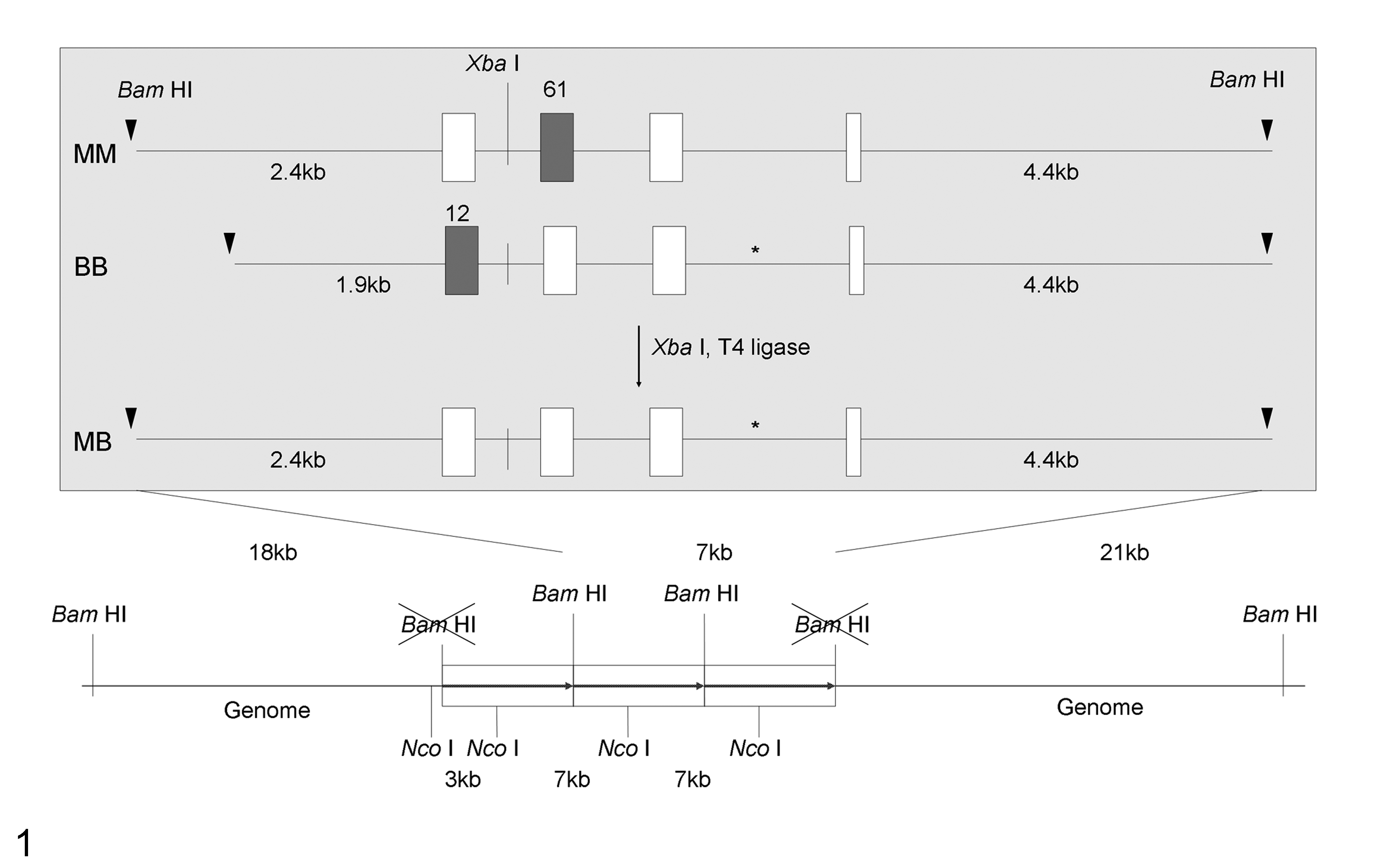
Gene construct integrated in the rasH2 mouse. MM: a human c-HRAS gene (Bam HI fragment) derived from a patient with melanoma carrying the mutation at codon 61. BB: a human c-HRAS Bam HI gene fragment derived from a patient with urinary bladder carcinoma carrying the mutation at codon 12. MB: the recombinant of MM and BB with no mutation at codons 12 and 61. The MB gene was introduced to create the original rasH2 mouse. This recombinant gene has been confirmed not to have transformation activity for NIH3T3 cells. *Position of a mutation in the last intron. Modified from Sekiya T, Prassolov VS, Fushimi M, Nishimura S. Transforming activity of the c-Ha-ras oncogene having two point mutations in codons 12 and 61. Jpn J Cancer Res. 1985;
The next major step following creation of the transgene is to identify a founder mouse that has the primary phenotype from which all other mice are based. To create a transgenic mouse with the human ras gene, 8 founder mice were obtained, but only 2 were successfully established. 12 After a preliminary comparison of the tissue specificity of spontaneous tumors between the remaining 2 lines of transgenic mice, rasH2 and rasH7, the rasH2 line was chosen as the founder mouse. 12 Approximately 5 copies of the transgenes were assumed to be integrated into the mouse genome at the time of establishment; additional studies confirmed that 3 copies of the transgene arrayed in a head-to-tail configuration at the chromosome No 15 E3 area. 12,14 Integration of a small number of copies of a simple human prototype transgene in a head-to-tail concatamer in one area was a major factor that allowed for maintenance of the rasH2 mouse phenotype under mass production for more than 20 years.
Although the transgene integrated into the rasH2 mouse was quite stable, genetic monitoring was necessary to maintain the phenotype over many generations. Monitoring includes testing for lack of the transgene, induction of point mutations, and induction of translocations in all founder mice. Whenever any genetic alterations were detected, the affected animals were excluded.
To produce a large number of laboratory animals on schedule, consideration of both the transgene and the background genes of the mouse should be made. In the United States, embryos of the FVB mouse derived from a Swiss mouse are usually used in creating a transgenic mouse, whereas embryos from first-generation (F1) crosses of 2 different strains are usually used in Japan. In the creation of a knockout mouse, a chimera mouse is produced using embryonic stem (ES) cells of the 129 strain. If the congenic process of background genes is insufficient because of insufficient backcrossing to a specific inbred strain, genetic uniformity will not be achieved in subsequent mass production, which lowers the quality of the data obtained. Because this is a critical issue for animals used in regulatory science, a strategy to produce animals of the same quality on a large scale should be considered at the early stage of development. For the rasH2 mouse, a founder mouse was produced by integrating the transgene in the F1 embryo of the DBA/2 and C57BL/6 mouse strains, and the founder mouse was backcrossed to the C57BL/6J strain for more than N10 generations, which should be enough time for the strains to become congenic. Mass production was started when the backcross to the C57BL/6J strain became 99.5% homozygous.
Strategy to Develop a Laboratory Animal for Regulatory Science
As mentioned above, mass production of rasH2 mouse was started when the background strain became congenic. This process creates a stronger genetic uniformity (higher inbreeding coefficient), but target specificity of tumor development becomes strain dependent, which is not desirable for an animal model needed to detect multitissue susceptibility in human carcinogenicity risk assessments. The animal model is required to have a wide-ranging tissue spectrum for carcinogen susceptibility, especially when required to detect systemic effects such as in safety evaluation studies of new drug candidates, to prevent false-positive or false-negative results. That is why the rasH2 mouse was mated with another inbred strain to produce F1 hybrids that achieve specific carcinogen susceptibilities for each strain in the final stage of the production system.
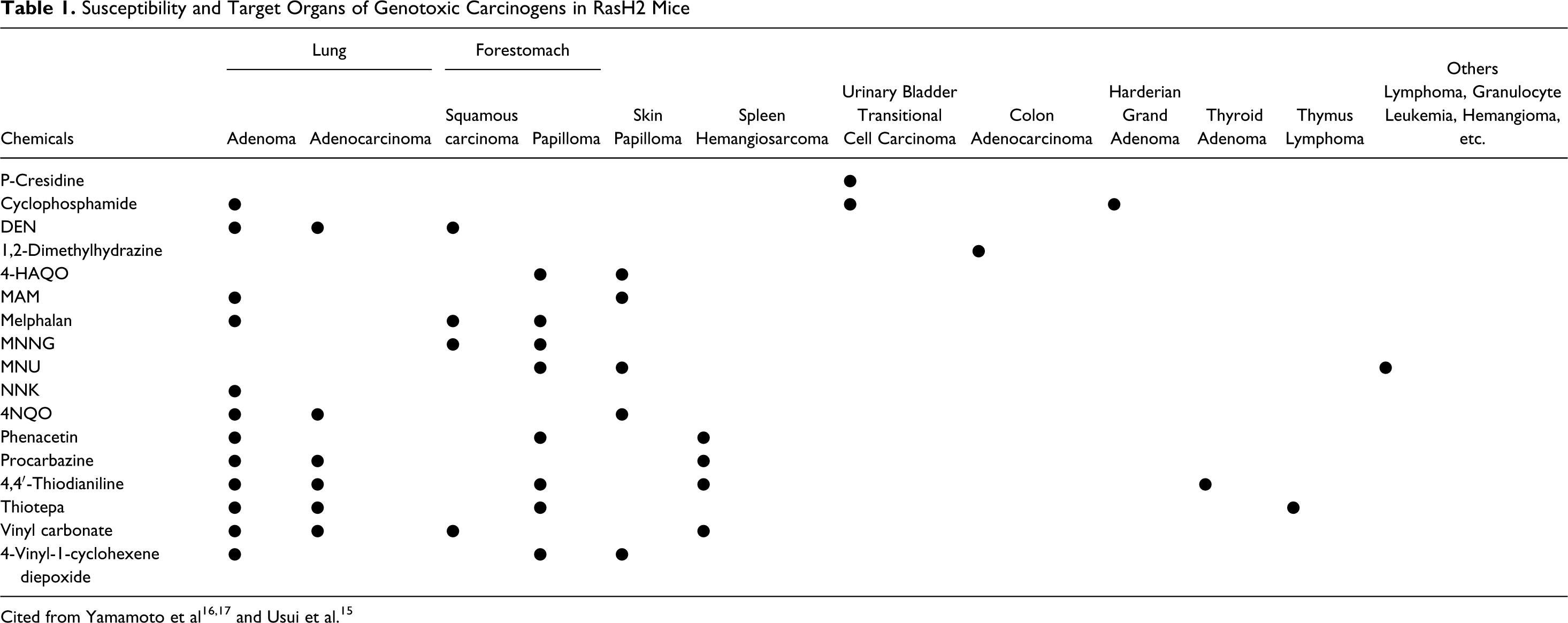
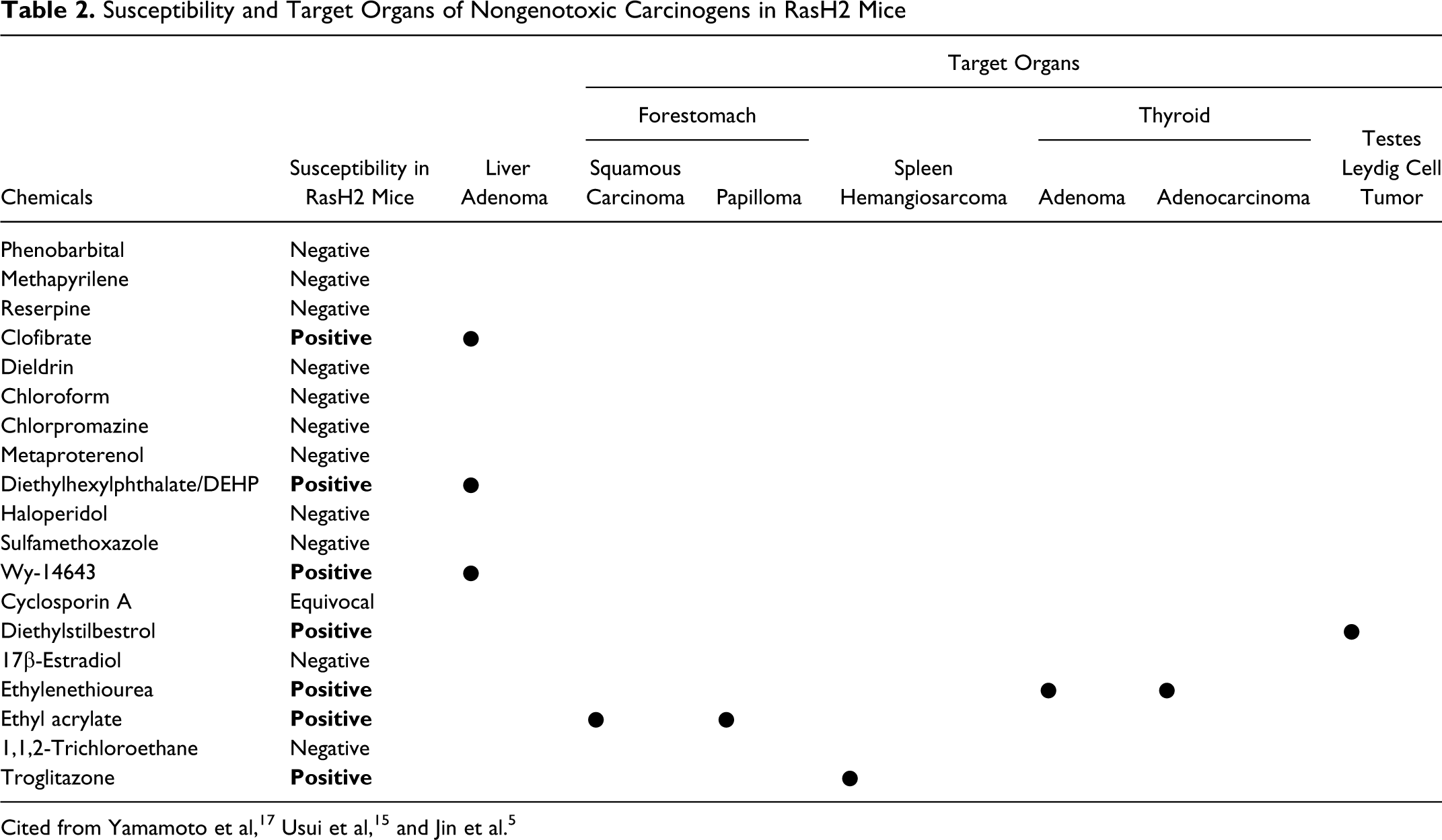
The F1 hybrid rasH2 (CByB6F1-Tg(HRAS)Jic) mouse used for short-term carcinogenicity studies was produced by crossing a wild-type BALB/cByJ female and a hemizygous male rasH2 mouse with C57BL6/J background since the homozygous rasH2 state is lethal (Fig. 2 ). 12 The BALB/cByJ strain was chosen to produce the F1 hybrid of the rasH2 mouse since epithelial tumor induction is likely in this strain, based on previous experience, and the female is known to have large litters and superior nursing ability. Because of this crossbreeding, the rasH2 mouse was confirmed to achieve wide-ranging carcinogen susceptibility as expected (Tables 1, 2). 15 – 17 The number of test animal backcrosses used for the ILSI evaluation program was N15 to 17, and the number of backcrosses currently stands at more than N50.
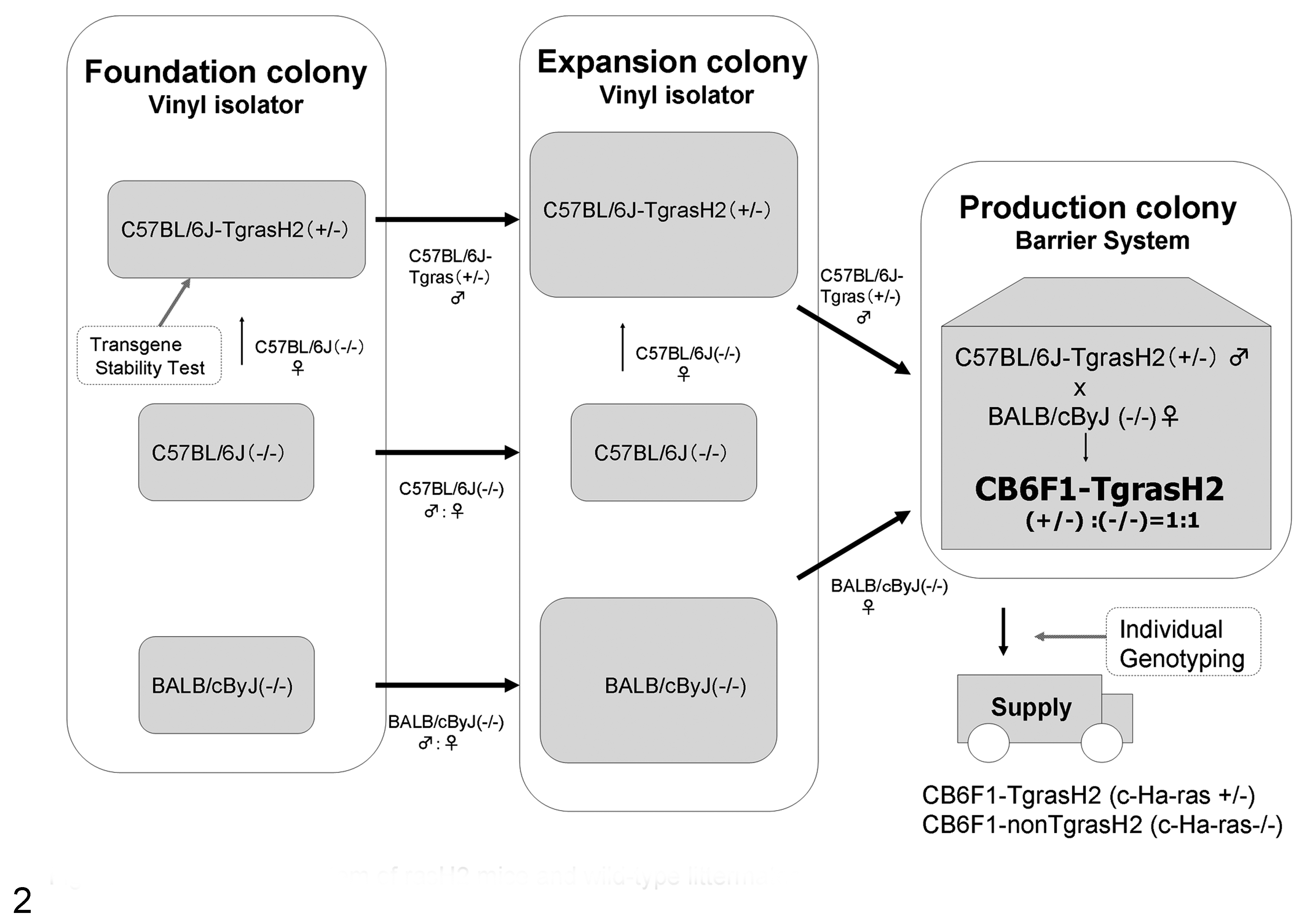
Production system of rasH2 mice and wild-type littermates. Three strains of mice (C57BL/6J-TgrasH2, C57BL/6J, and BALB/cByJ) are maintained individually, and rasH2 mice are produced in 3 steps. Since homozygous c-HRAS genotype is lethal, hemizygous transgenic mice are maintained by crossing with inbred C57BL/6J mice in the foundation colony. After breeding in the expansion colony, male B6-transgenic mice are mated with female BALB/cByJ mice to obtain transgenic mice with CB6F1 background in the production colony. Pups that are hemizygous (c-HRASs +/–) or wild-type (c-HRAS +/−) are selected by individual genotyping of tail tips. Each step is carried out in specific pathogen-free conditions using a vinyl isolator system.
Susceptibility and Target Organs of Genotoxic Carcinogens in RasH2 Mice
Susceptibility and Target Organs of Nongenotoxic Carcinogens in RasH2 Mice
As previously discussed, all hemizygous male rasH2 mice and F1 hybrid mice (test animals) are submitted for individual confirmation of the transgene. As part of any large-scale stable production system, countermeasures against accidental mating with other strains, or point mutations of the transgene or the background genes, should be considered. The background genes of rasH2 mice have been monitored with allele markers in accordance with the standards of the International Council for Laboratory Animal Science (ICLAS) Monitoring Center since their development. Furthermore, microsatellite markers have also been used for scheduled monitoring since 2008. 11
RasH2 mice have been produced in 2 facilities since 2003 and supplied to customers in United States by Taconic (Germantown, NY) and to customers in Europe and Asia by CLEA Japan, Inc (Fuji, Shizuoka, Japan). To prevent the appearance of substrains, all production colonies in both facilities are replaced every 5 years with living hemizygous male rasH2 mice restored from the original embryos cryopreserved at the Central Institute for Experimental Animals (CIEA). CIEA preserves frozen embryos for replacement every 5 years for both colonies up to 5 times in order to supply the original rasH2 mice for 25 years (Fig. 3 ). Furthermore, CIEA also stocked other frozen embryos at the next generation in the same scale, which means the original rasH2 mice will be progressed only 2 generations for the next 50 years.
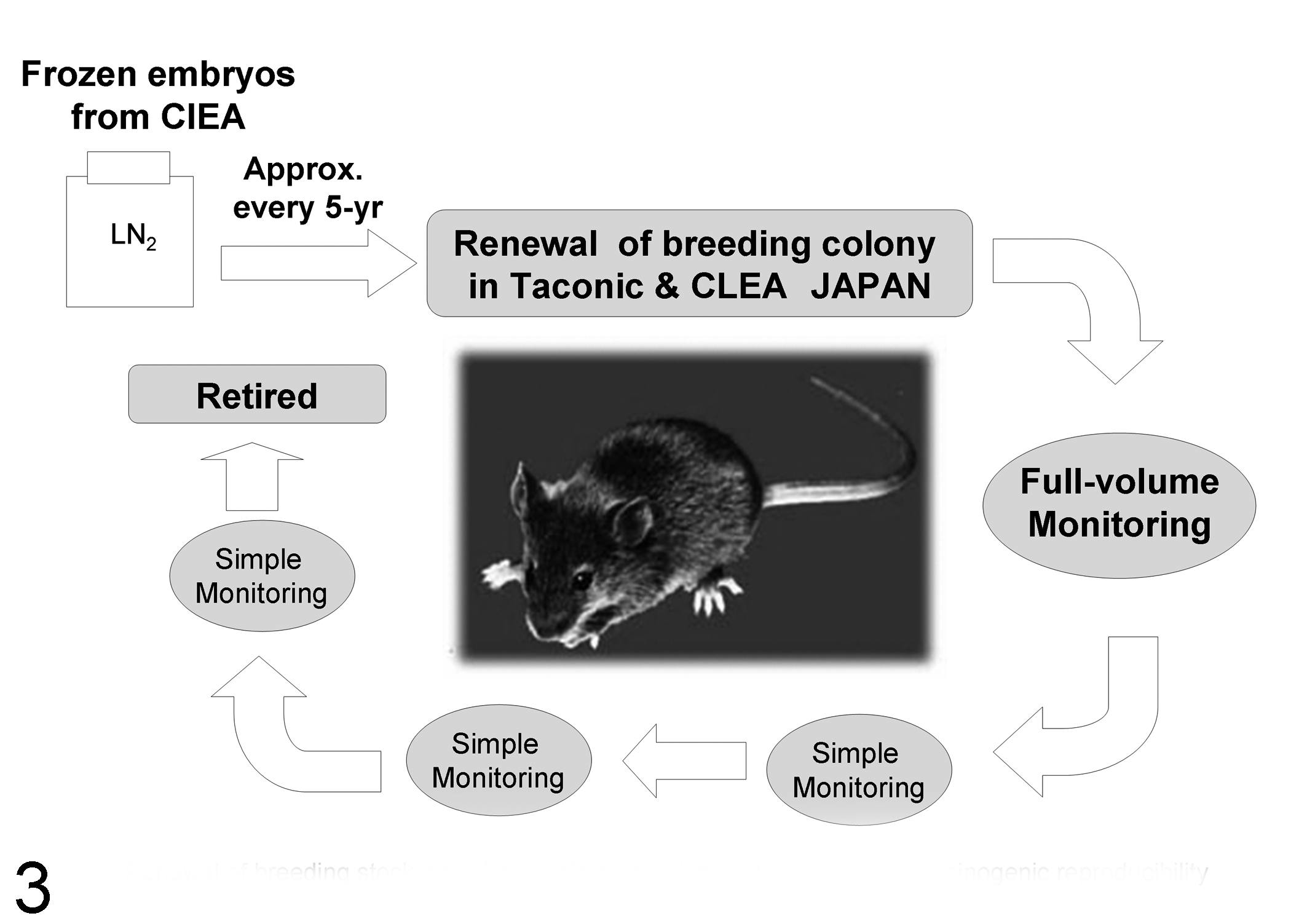
Renewal of breeding stock and phenotypic monitoring system to ensure carcinogenic reproducibility. To ensure the uniformity and maintenance of the phenotype of rasH2 mice, the carcinogen susceptibilities of both colonies are monitored every 5 years at the Central Institute for Experimental Animals (CIEA) using standard criteria. Furthermore, simple carcinogenicity monitoring targeted at the forestomach, the organ most sensitive to N-methyl-N-nitrosourea (MNU), is performed about once a year.
The main phenotypic characteristic of rasH2 mice is “carcinogen susceptibility.” Monitoring the carcinogen susceptibility of rasH2 mice produced in many facilities requires standardization of protocols for comparison of these susceptibilities since the phenotype might be affected by environmental factors. 3 As mentioned previously, rasH2 mice are produced and supplied to customers by 2 facilities, Taconic and CLEA Japan. To investigate the uniformity and maintenance of the phenotype of rasH2 mice, the carcinogen susceptibilities of both the Taconic and CLEA Japan colonies in comparison to the standard positive control compound N-methyl-N-nitrosourea (MNU) are routinely monitored at CIEA at the time of colony replacement approximately 1 year after the shipping of the hemizygous rasH2 mice restored from the original embryos preserved at CIEA. 8 Furthermore, simple carcinogenicity monitoring, targeting only the forestomach, the organ most sensitive to MNU, is performed approximately once per year to guarantee the consistency of rasH2 mice derived from both facilities (Fig. 4 , Table 3 ).
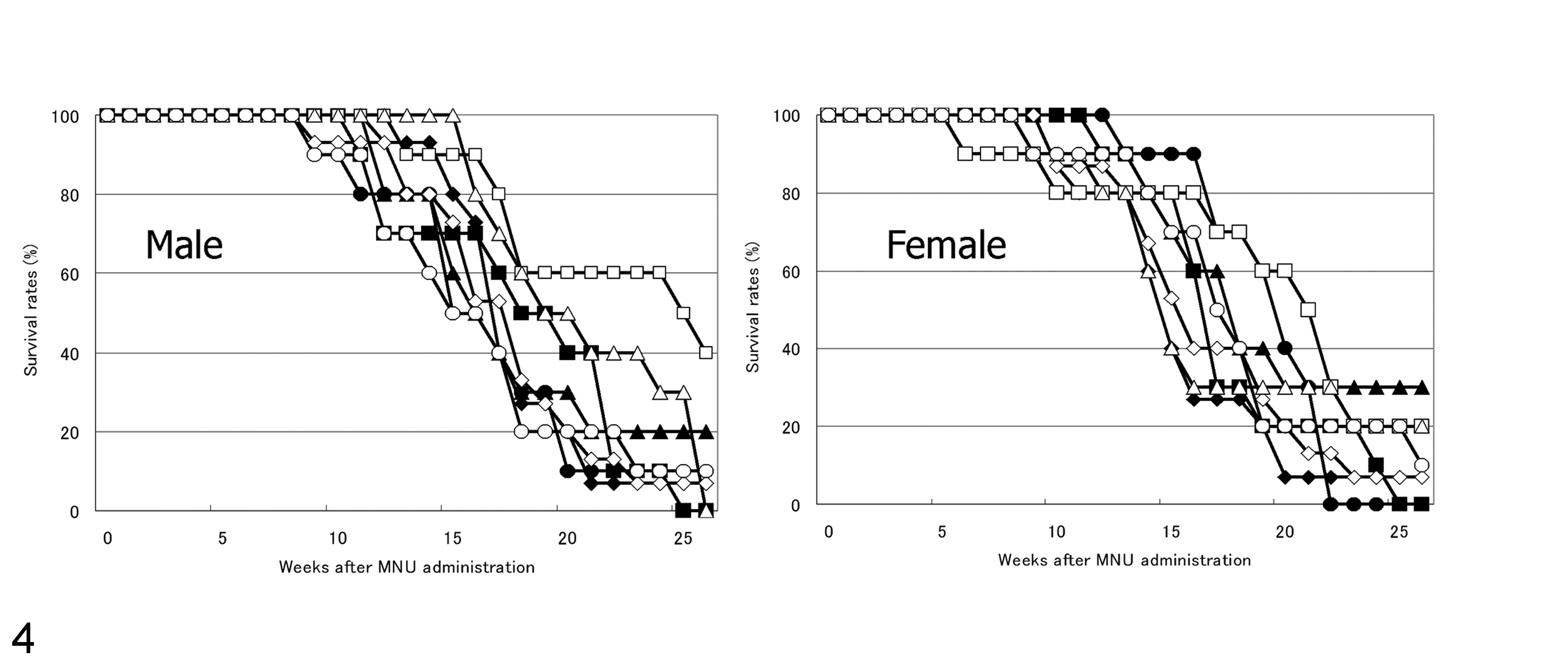
Survival rates of rasH2 mice in carcinogenicity monitoring performed from 2006 to 2010. Survival rates of rasH2 mice produced by CLEA Japan and Taconic after 75 mg/kg N-methyl-N-nitrosourea (MNU) administration are shown. RasH2 mice, including all stages of testing, both genders, and all stages of breeding, started to die due to tumors around 10 weeks after MNU administration, and 0% to 40% of animals survived to the end of the study. ♦: CLEA JPN for 2006, ▪: CLEA JPN for 2008, ▲: CLEA JPN for 2009, ●: CLEA JPN for 2010. ◊: Taconic for 2006, □: Taconic for 2008, ∆: Taconic for 2009, ○: Taconic for 2010.
Forestomach Findings Observed in RasH2 Mice by 26 Weeks After MNU Administration a
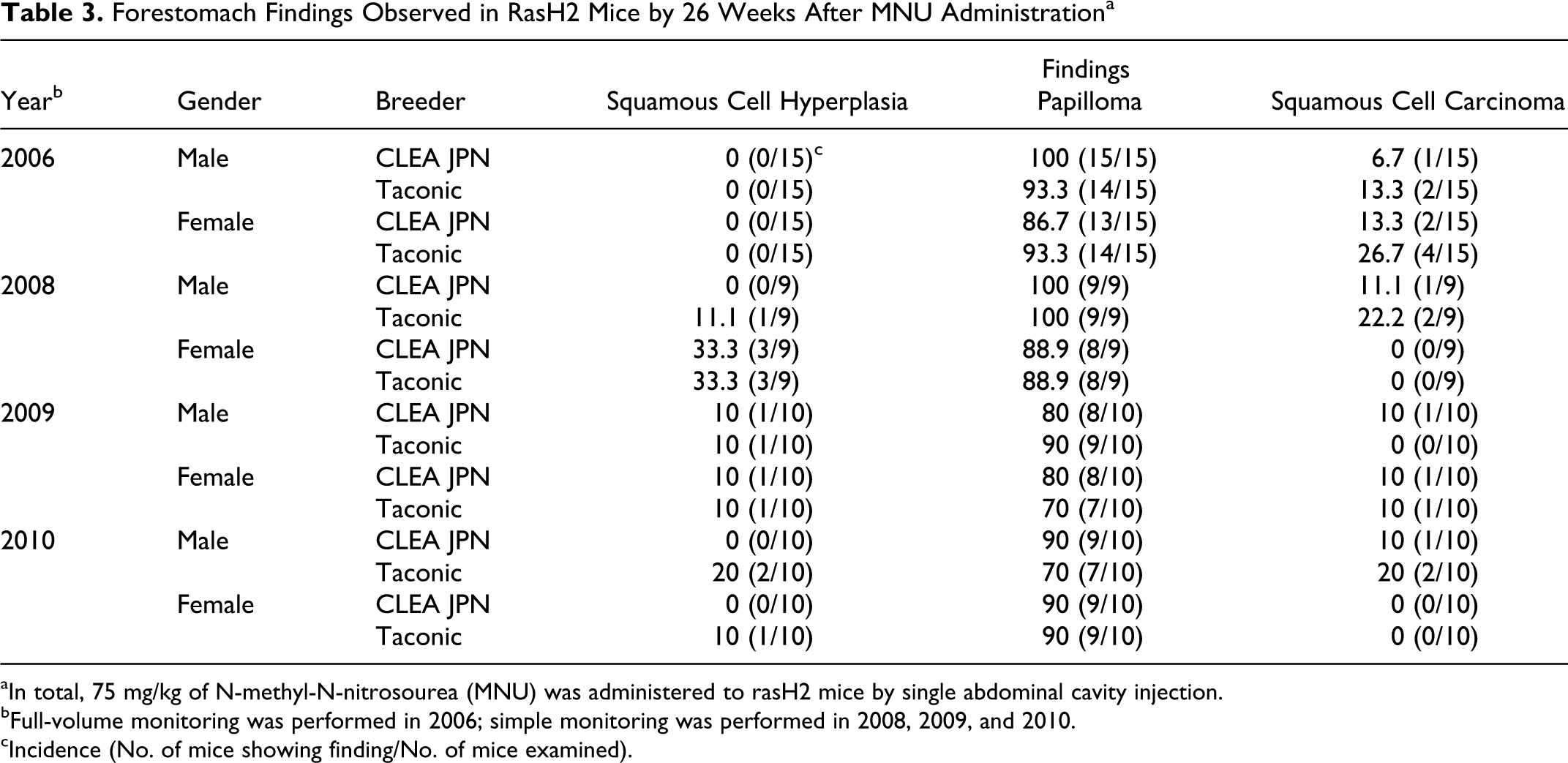
aIn total, 75 mg/kg of N-methyl-N-nitrosourea (MNU) was administered to rasH2 mice by single abdominal cavity injection.
bFull-volume monitoring was performed in 2006; simple monitoring was performed in 2008, 2009, and 2010.
cIncidence (No. of mice showing finding/No. of mice examined).
Efficient Application of RasH2 Mice Based on Background Data
RasH2 mice are susceptible not only to genotoxic carcinogens but also to nongenotoxic carcinogens based on the large amount of data accumulated from chemical carcinogenicity studies (Tables 1, 2). Since rasH2 mouse responded to almost all genotoxic carcinogens examined, Dr Mitsumori, who has performed many rasH2 mice studies and first reported the carcinogen susceptibility of rasH2 mice to peroxisome proliferator-activated receptor γ agonists, paid attention to this point and proposed a new strategy described in Figure 5 . 5,9,10 He recommended carrying out a short-term transgenic model study prior to a long-term rat study, not simultaneously as usual, after a genotoxic battery test to progress a new drug development efficiently. According to his strategy, a short-term study using a transgenic model should be carried out if the result of a genotoxic battery test is negative or equivocal. If the short-term study using the transgenic model is negative, the compound is considered nongenotoxic, and then a long-term rat study should be performed. If the result of the long-term rat study is negative, the compound should be considered noncarcinogenic. If the result of the long-term rat study is positive, the compound is considered a nongenotoxic carcinogen, and a final decision should be made based on a discussion of the safety margin and therapeutic indication for clinical use. This strategy should save costs and time in new drug development.
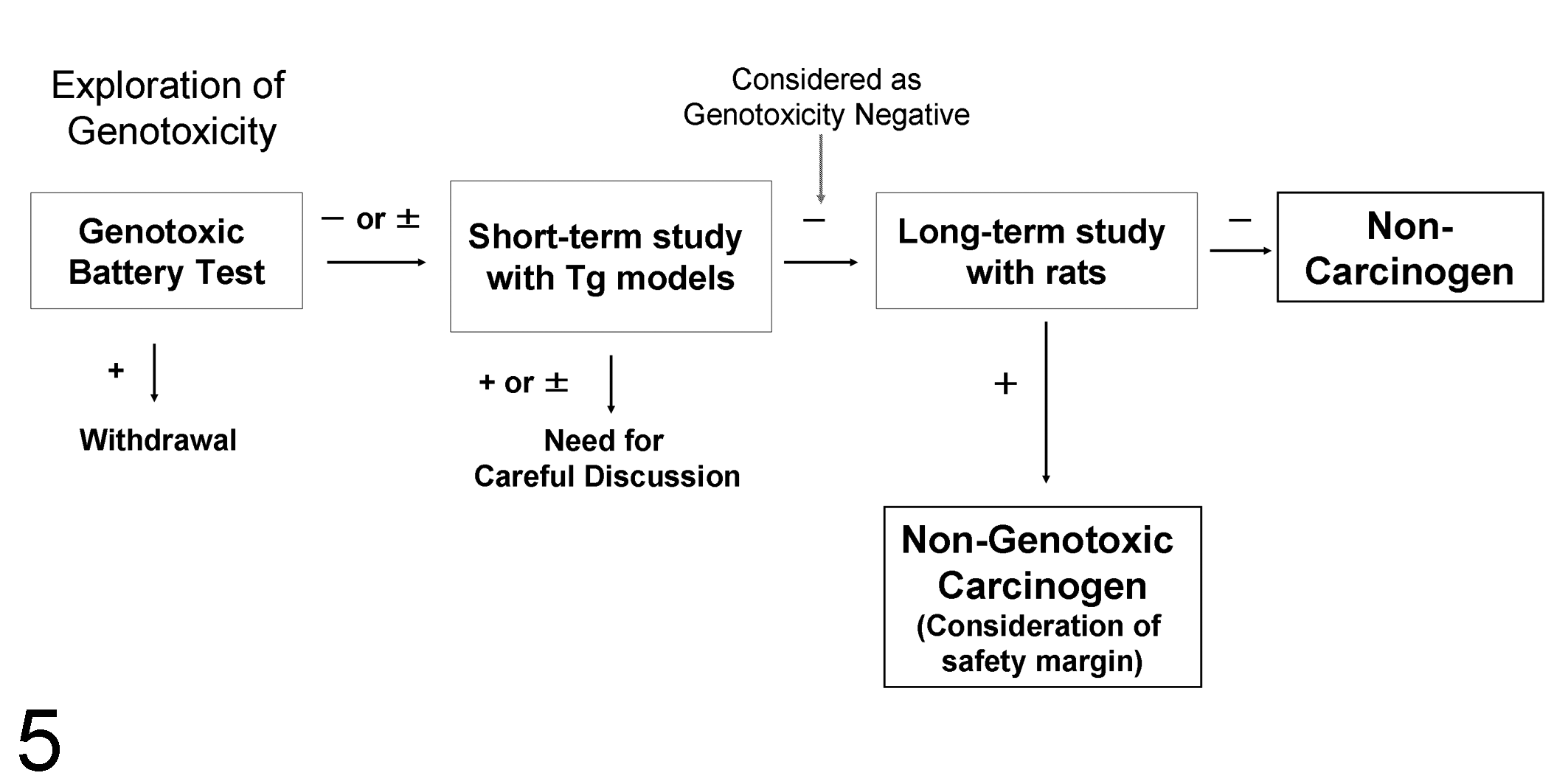
A proposal of how to use a transgenic model for a carcinogenicity study (courtesy of Dr Mitsumori). If a genotoxic battery test is negative or equivocal, a short-term study using a transgenic model should be carried out. If the short-term study of the transgenic mice is negative, the compound is considered nongenotoxic, and a long-term study on rats should be performed. If the result of the rat study is negative, the compound should be considered noncarcinogenic; if the result is positive, the compound is considered a nongenotoxic carcinogen.
In contrast, in a pharmaceutical development strategy in the United States, the rasH2 mouse model is applied for nongenotoxic molecules in combination with the P53+/– transgenic mice for genotoxic molecules, concomitant with the 2-year rat cancer bioassay. This transgenic paradigm, considered alone, has been demonstrated as equally or more effective and definitely more efficient in identifying International Agency for Research on Cancer (IARC) group 1 (known) and 2A (probable) human carcinogens compared to the combined rat and mouse 2-year traditional bioassays. 1,13
Conclusion
Although many types of transgenic animals have been produced with the development of genetic technology and molecular biology, most of them were used in small numbers as tools for gene function investigations in vivo and were discarded once the study was finished. This is why transgenic animals did not become widely used as laboratory animals for hazard identification studies. The rasH2 model was developed for use as a high-quality transgenic animal in regulatory science, with a phenotype that would be stable during mass production and over successive generations. This report discussed how the rasH2 model has become an animal model widely used in regulatory science, as well as strategies and methods to maintain its carcinogen susceptibility phenotype. The rasH2 model could contribute to animal welfare by reducing the numbers of animals used as well as reducing the cost of carcinogenicity studies for new drug candidates. It is also important to recognize that no animal model is perfect for extrapolation of human risk. All animal models, including the rasH2 mice, should be used based on a clear understanding of their advantages and limitations.
Footnotes
The author(s) declared no potential conflicts of interest with respect to the research, authorship, and/or publication of this article.
The author(s) received no financial support for the research, authorship, and/or publication of this article.