




Abstract
Genetically engineered mice and rats are increasingly used as models for exploring disease progression and mechanisms. The full spectrum of anatomic, biochemical, and functional changes that develop in novel, genetically engineered mouse and rat lines must be cataloged before predictions regarding the significance of the mutation may be extrapolated to diseases in other vertebrate species, including humans. A growing list of reference materials, including books, journal articles, and websites, has been produced in the last 2 decades to assist researchers in phenotyping newly engineered rodent lines. This compilation provides an extensive register of materials related to the pathology component of rodent phenotypic analysis. In this article, the authors annotate the resources they use most often, to allow for quick determination of their relevance to research projects.
In the past 25 years, genetically engineered mice (GEM) and rats (GER) have advanced from novelty status to essential tools in biomedical research programs. 167,168,220 The driving force behind this evolution is the conviction that the functional and structural consequences of altering a rodent gene will be mirrored in human patients who carry a similar genetic anomaly in the homolog gene. 204 Supporting the accuracy of this premise is the fact that the effects in human patients of the 100 top-selling pharmaceutical agents are predicted by the GEM phenotypes that arise when genes encoding each drug’s target are deliberately disrupted. 245 Another development in genetic engineering during the last decade has been the generation of humanized rodent models (ie, substitution of a human molecule or cell type in place of its native rodent counterpart), thus providing a system to test the functional and structural significance of human molecules in vivo. 168,243 The push to annotate the whole mammalian genome by comprehensive gene targeting in GEM 30,130,193 will greatly expand the magnitude of engineered rodent research and its application to human disease modeling.
Proficient phenotyping of GEM and GER requires regular access to a range of biomedical expertise. The complexity of phenotypic analysis typically necessitates a team approach for greatest success. In many cases, such know-how is provided within an institution through the assembly of “comprehensive centers” or “shared phenotyping resources” comprising several collaborating research and/or service laboratories. In other instances, the entire institute is fully dedicated to rodent phenotyping. Either strategy is suitable as long as a critical mass of multidisciplinary expertise is available to support the efforts of the research team conducting its experiments.
The key bottleneck affecting all rodent phenogenomic programs, including the international effort to annotate the mammalian genome, 130 is the inability to perform high-throughput phenotypic analysis at a pace that matches the generation of new GEM and GER lines. A chief factor in this phenotyping backlog is the well-documented dearth of experienced comparative pathologists. 13 , 35 This shortage is the outcome of 2 primary trends in scientific research. First, laboratory animal pathologists are usually allocated to other research roles, such as disease diagnosis in laboratory animal facilities or evaluation of rodent tissues from toxicity bioassays. More important, training programs designed to produce comparative pathologists with substantial experience in rodent-based research are uncommon, so most individuals who enter the field do so at present by undertaking an informal course of mentored or self-directed independent study. 24 The major flaw of this individualized approach to comparative pathology training is that, by definition, it fails to provide a standard knowledge base for individuals engaged in GEM and GER phenotyping projects.
Efforts are currently underway by several organizations (eg, the Academy of Genomic Pathology, http://ctrgenpath.net/?page_id=2612; the ACVP/STP Coalition for Veterinary Pathology Fellows, http://www.vetpathcoalition.org/) to produce more consistent training experiences in comparative pathology emphasizing rodent phenotypic analysis. However, the curricula and final product (eg, formal degree, continuing education certificate) have yet to be defined. Therefore, individuals interested in acquiring knowledge and practical skills in comparative pathology must continue to pursue their education in a self-directed fashion for the present.
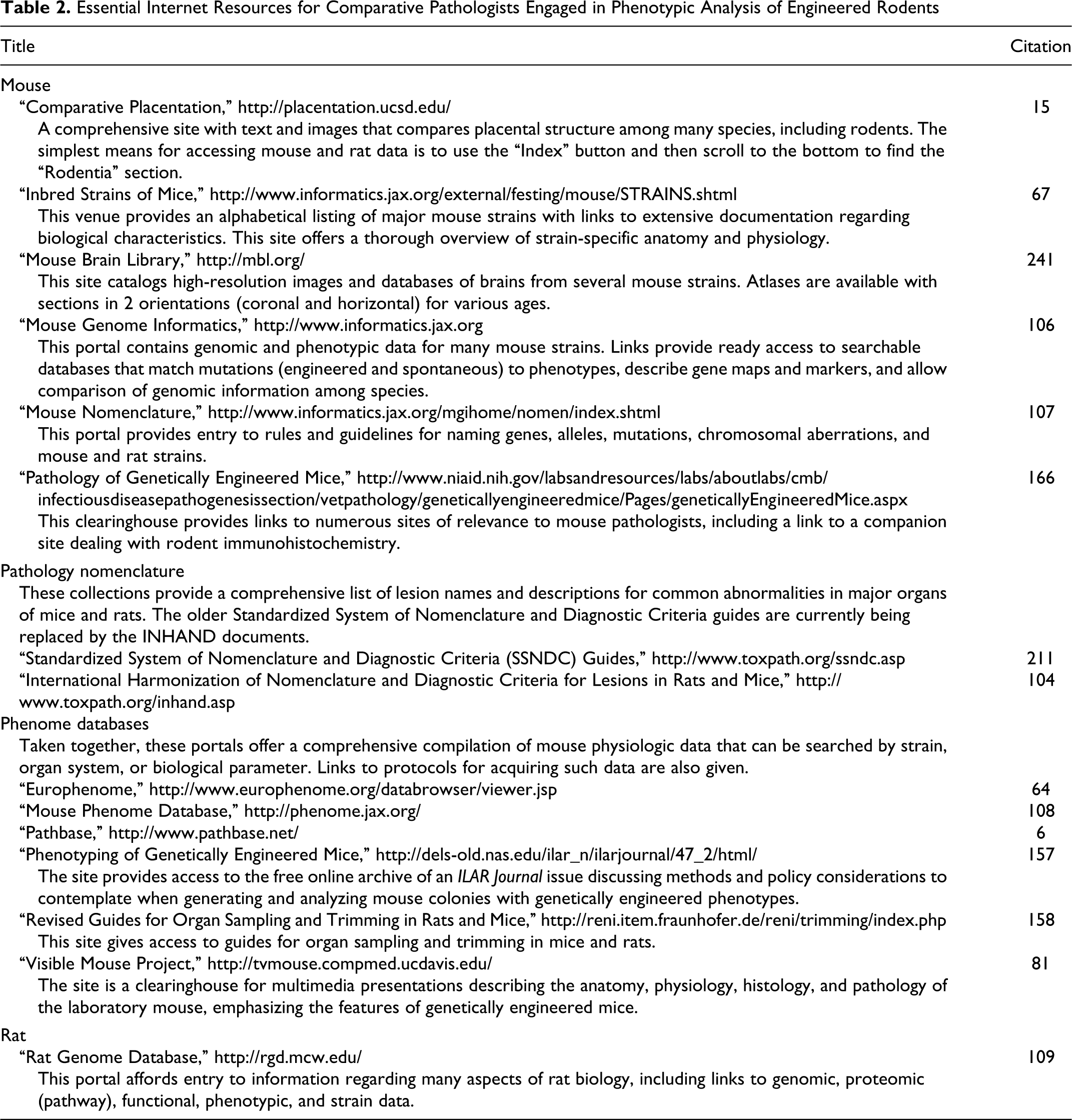
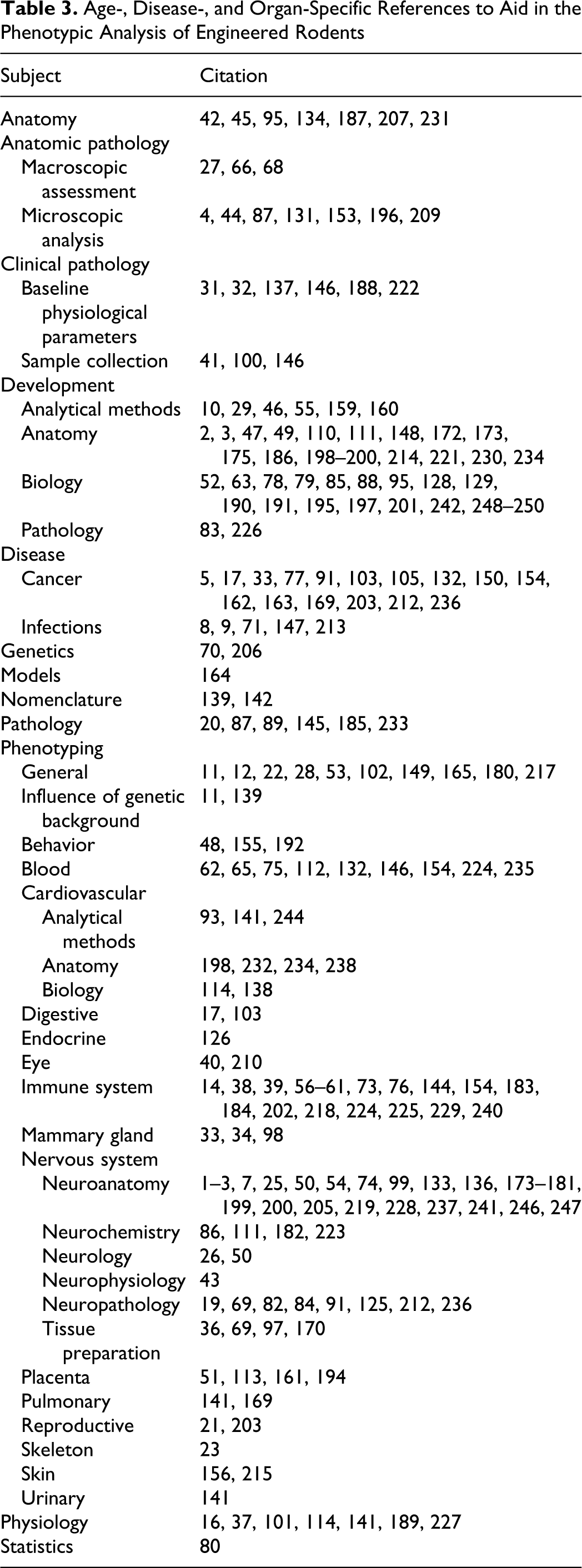
A partial remedy for the scarcity of organized training programs in rodent pathology is to devise a self-study program based on readily available resources. The current review is designed to be a multidisciplinary compilation of Internet and print resources to support a well-rounded autotutorial curriculum in GEM and GER pathobiology and phenotyping. The cited resources are arranged in 3 tables for convenience. The first 2 tables reflect the printed materials (eg, books and journal articles; Table 1 ) and websites (Table 2 ) that we most commonly use in our daily course of comparative pathology research. Each frequently utilized reference is followed by a brief description of its content and main features. We recommend that the annotated print items in Table 1 be available in each pathologist’s departmental library, and ideally in his or her office. The third table lists topics related to rodent phenotyping that occasionally require input from a comparative pathologist but fall outside the core pathology expertise expected of such individuals. These latter materials are accompanied by a list of one or more nonannotated citations that offer further discussion on such auxiliary subjects. For some topics in Table 3 (eg, neuroanatomy atlases for adult mice), multiple editions of a given book have been produced by the same authors. All editions have been included in the citation list in cases where we have found that the various versions may illuminate distinct features of the given rodent system.
Essential Printed Resources for Comparative Pathologists Engaged in Phenotypic Analysis of Engineered Rodents
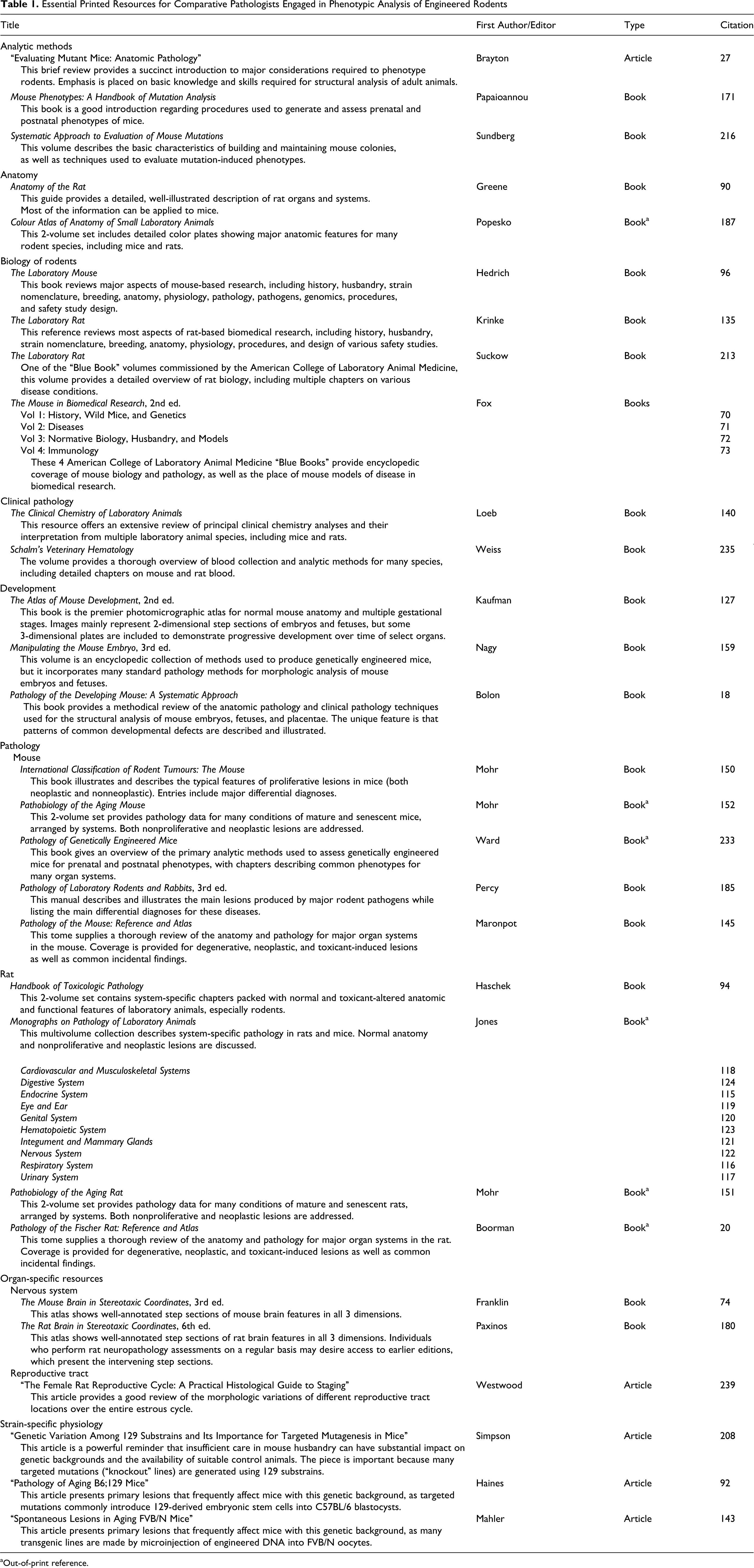
aOut-of-print reference.
Essential Internet Resources for Comparative Pathologists Engaged in Phenotypic Analysis of Engineered Rodents
Age-, Disease-, and Organ-Specific References to Aid in the Phenotypic Analysis of Engineered Rodents
A solid understanding of the foundational knowledge required for proficient GEM and GER phenotyping may be readily attained by a sincere study of the resources in the annotated lists. Sufficient time will have to be spent perusing these baseline resources so that the budding comparative pathologist becomes familiar with not only individual facts but also the location of essential topics of relevance to phenotyping GEM and GER models. Pathologists who regularly participate in rodent phenotyping will also need to engage in a lifelong quest for continuing education due to the rapid evolution of information, skills, tools, and techniques within this field.
Footnotes
The authors declared no potential conflicts of interest with respect to the research, authorship, and/or publication of this article.
The authors received no financial support for the research, authorship, and/or publication of this article.