




Abstract
Aerosol is the most likely route of dissemination of biological select agents and toxins in a bioterrorist attack, regardless of the natural route of exposure to the agent. The use of animal models for testing preventative and therapeutic countermeasures requires knowledge of the pathogenesis of disease after inhalation exposure. Factors that relate to outcome after respiratory exposure include the inherent infectivity and virulence and/or toxicity of the agent in the host under investigation, in addition to characteristics of the aerosol particle and host that affect the delivered dose of, and host response to, the inhaled material. This introductory article discusses the emerging science of aerobiology and the unique features of respiratory tract anatomy, physiology, and immunology that are relevant to the pathogenesis of aerosolized biothreat agents.
Aerosol is the most likely route of dissemination of biological select agents and toxins (BSATs) in a bioterrorist attack. 35 The respiratory tract, with its large surface area, may serve as the primary site of disease manifestation or, more simply, as a portal of entry for the pathogen or toxin, with the major manifestation of disease at distant sites. Not, BSATs often have vastly different pathogenic effects after inhalation compared to other routes of exposure, and the relative importance of different virulence mechanisms used by BSATs may vary with exposure route and host species. For example, humans exposed to anthrax spores by inhalation die from a rapidly fatal bacteremia without developing primary lung lesions, whereas humans exposed to anthrax spores by skin inoculation develop a necrotic skin lesion with a much lower frequency of systemic dissemination and death. In susceptible mouse strains, subcutaneous inoculation of low doses of anthrax spores results in rapid systemic dissemination and death. 42,73 Capsule is the primary virulence factor for anthrax after respiratory exposure in mice, whereas toxin is required for establishment of subcutaneous infections in mice with at least some strains of anthrax. 5,30 The differential pathogenesis with different exposure routes is not limited to infectious agents. For example, the clinical syndrome after gastrointestinal staphylococcal enterotoxin B (SEB) exposure is dominated by vomiting and diarrhea, whereas the clinical syndrome after inhalation of SEB includes pulmonary disease in addition to gastrointestinal disease. 44,62 In contrast, the clinical syndrome of descending flaccid paralysis owing to botulinum neurotoxins is essentially the same whether the toxin is administered by way of gastrointestinal or aerosol exposure. 19,52 Therefore, the pathogenic mechanisms of BSAT-induced diseases are complicated and involve a number of host and pathogen factors, as we discuss throughout this review.
Factors that relate to outcome after inhalation of BSATs include the inherent infectivity and virulence or toxicity of the agent after aerosol delivery in the host under investigation, in addition to the characteristics of the aerosol particle and the host respiratory tract that affect the total and regional dose of the inhaled material and the host response to the BSAT. The purpose of this article is to provide an introduction to the emerging science of aerobiology and to provide an overview, with examples, of the unique features of host respiratory tract anatomy, physiology, and immunology that affect the pathogenesis of BSAT-induced disease after aerosol delivery. Virulence mechanisms related to specific agents are discussed in other articles in this issue.
The Science of Aerobiology
The study of the various factors that influence the nature of disease caused by inhaled pathogens has evolved significantly in recent years. In this section, we review the current state of understanding of aerobiology as it pertains to diseases caused by BSATs. We invite readers to consider other articles relating to BSATs in this issue of Veterinary Pathology or elsewhere in light of aerobiological principles. We believe that this kind of perspective will facilitate a more accurate understanding of diseases caused by inhaled BSATs and will better illustrate the significant challenges that the biomedical community faces in developing needed countermeasures to these diseases.
Relatively few microorganisms are naturally pathogenic by aerosol when one considers the abundance of microbial life that coexists with us in the atmosphere and to which humans and animals are exposed. This exclusive group of microbial pathogens has evolved to circumvent the biological and physical rigors associated with the harsh environment of airborne transport to effectively infect the respiratory system. A select few, such as Mycobacterium tuberculosis and influenza virus, are considered obligate airborne pathogens, meaning that communicable transfer predominantly occurs through expelled airborne respiratory secretions from an infected host. 8 Other pathogens are considered opportunistic in terms of aerosol infectivity; the aerosol route is simply a means of entry into the host to cause systemic disease (e.g., inhalation anthrax). Alternatively, genetic predisposition or impaired immune function that affects susceptibility may predispose one to otherwise harmless airborne microbial flora; pulmonary aspergillosis in AIDS patients is a prime example of opportunistic airborne infection. 69
There are noteworthy physical and biological distinctions between natural and experimentally induced airborne infections. Naturally produced aerosols are almost exclusively produced by a host’s experiencing an active infection and serving as a vessel for the repeated distribution of pathogen via the respiratory system. Microbial concentrations found in infectious bioaerosols that are produced from a natural “generator” are controlled, at least in part, by the severity and duration of the disease in the infected host. Multiple passages through many hosts can also modify the infectious agent, either attenuating or selectively increasing virulence. Naturally produced infectious bioaerosols generated from an infected host possess a size distribution that can range from 0.1 to 20.0 μm. 49
Deposition in the respiratory system largely depends on particle size, but other factors are important. For instance, the viability of agents contained in an aerosol particle can be diminished by deleterious environmental stressors, such as ultraviolet radiation. 46 However, pathogens residing at the core of a larger (> 10 μm) infectious aerosol may experience a protective effect from environmental stressors, depending on the consistency and composition of the carrier fluid (eg, mucus). 36 Particle size does nonetheless determine the initial deposition pattern within the respiratory tract and, ultimately, the ability of the deposited BSAT to initiate disease. Sizing of the particles therefore takes on a profound meaning if the BSAT in question affects only particular cell types found in specific regions of the respiratory tract. Fine particle distributions (1–3 μm) are considered the optimal size for pulmonary deposition of most BSATs, 17 whereas larger particles tend to be deposited in higher portions of the respiratory tract. In the case of aerosolized ricin toxin, for example, the deposition pattern is a critical determinant of host response and outcome. Accordingly, mice exposed to ricin aerosols greater than 5 μm showed minimal effects when given an inhaled dose of 20 μg/kg. The same dose would be equivalent to approximately four lethal doses if the particle distributions were less than 1 μm (ie, targeting the lower respiratory system). 57 The physical and biological variables associated with exposure to infectious bioaerosols are in many ways unique and must be considered to better understand the potential effects of aerosolized BSATs.
Artificially produced formulations of biological aerosols, if prepared using sophisticated means by individuals with the appropriate knowledge base, are altogether different from naturally produced infectious aerosols. Governments with active offensive biological programs recognized early on that pathogens purposely grown and harvested from passaged culture, preserved and formulated for protection against environmental stress, sized for optimal pulmonary delivery, and dispersed in a manner that maximizes homogeneous high-dose exposure were relatively cheap and highly effective weapons for use against military and civilian targets. They soon realized that airborne delivery of appropriately formulated pathogens, though arguably targeting the most susceptible route of entry into the body, was exceedingly difficult to defend against or prevent. 11 The problem of effective prevention or treatment for many of the pathogens identified as biological threat agents remains a concern today. Many of the BSATs of greatest concern are considered exotic disease agents and exhibit low or sporadic clinical incidence rates. Such low disease incidence, combined with the often remote locations where cases occur, has resulted in a lack of clinical knowledge of the ensuing diseases. The resultant deficiencies in our understanding of many of these diseases have left the biomedical community with an insufficient knowledge base for the advanced development of vaccines and therapeutics. In addition, the natural route of transmission for many of the BSATs of concern is not aerosol—for example, the pathogenic alphaviruses developed in the past as BSATs. Alphaviruses are naturally vector-borne diseases, but when artificially delivered by aerosol, the pathogenesis and clinical disease course are significantly altered. 55 Experimental study of the pathophysiology and medical product development for many of these disease agents is therefore highly reliant on the use of laboratory animals and corresponding inhalation systems to define and identify differences in pathogenesis with respect to aerosol administration of BSATs. 58
A number of methods have been employed to experimentally infect laboratory animals with infectious bioaerosols for the purposes of inducing respiratory infection and understanding the pathogenesis of various inhaled BSATs. Intranasal inoculation and intratracheal instillation are the surrogate methods most commonly used in lieu of aerosol exposure; these methods involve application of inoculum directly into the nose and trachea, respectively, of the laboratory animal. The dispersion patterns in the respiratory system may vary considerably when surrogate methods are compared with inhalation exposures using aerosolized pathogens. Although providing a significant amount of control over the inoculation process, both surrogate methods many times fail to produce the type of respiratory disease observed after aerosol exposure using a similar starting concentration or cause overwhelming disease at the locus of the inoculation with a majority of the lung remaining unaffected. The use of small-particle aerosols for respiratory infection, depending on the inhalation configuration, is an ideal method to approximate aerosol exposure when using laboratory animals. 43 It is also the most expensive and complex of the available methods that can be used for respiratory infection models. 29 The moniker “true aerosol” has been used to describe this method of exposure. In aerosol exposures involving BSATs, either whole animals or a portion of the animal (eg, muzzle, head) is exposed to a steady-state aerosol in a dynamic inhalation chamber housed within a primary containment device, such as a class III biological safety cabinet (Fig. 1 ). The aerosol is produced and exhausted at a known rate into a designated plenum within the inhalation system. Some inhalation configurations incorporate continuous isokinetic sampling of the experimental atmosphere for post hoc microbial analysis and subsequent calculation of the aerosol concentration of the BSAT, allowing for estimation of the inhaled dose. 28 Aerosolized particles containing microorganisms may consist of single microbes or clumps of several microbes, with or without associated carrier medium, depending on the size of the particle, the size of the microbe, the microbe concentration in the suspending medium, and other parameters associated with particle generation. A number of other variables affect experimental aerosol exposures, some of which are uncontrollable. These are notable because differences in these variables can affect the delivered dose. Respiration, which tends to vary in depth and rate, is important in exposures involving larger species such as nonhuman primates (NHPs) that are usually exposed singly. 7 Similarly, the relative hardiness of an aerosolized pathogen will determine the viable fraction that is delivered during exposure. Pathogens that are conducive to aerosol transport (eg, bacterial endospores) are minimally affected by this process, whereas vegetative organisms suffer dramatic reductions in viable fraction when in aerosol. 38
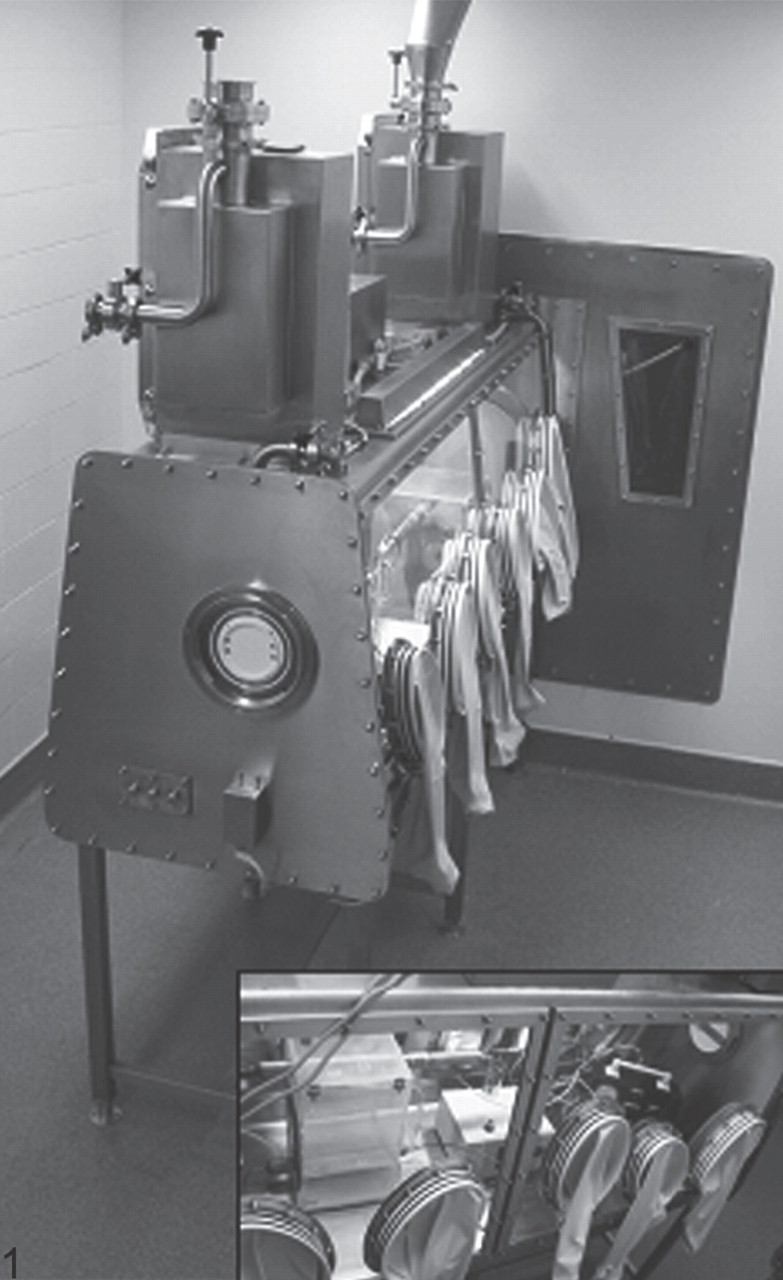
Class III biological safety cabinet housing inhalation equipment (see inset) for performance of animal inhalation exposures with highly infectious pathogens. The cabinet provides a HEPA-filtered, continuously negative atmosphere (approximately –1.0 in. H2O) to the surrounding environment. This unit has been integrated into the animal holding area for seamless transfer of experimentally infected animals after aerosol exposure.
Aerosols can be characterized using a number of additional parameters. Whereas such factors can greatly affect critical aspects of the BSATs to which animals can be exposed—and, therefore, the nature of the disease that results—they are beyond the scope of this review. Interested readers are referred to other sources of information that discuss these and related matters. 7,58
The Fate of Inhaled Particles
The fate of inhaled particles in humans and laboratory animals has been extensively examined in inhalation toxicology studies, and excellent sources of information are provided in several textbooks and review articles. 45,53,61,63,64,66 Whereas some differences are to be expected for inhalation of particles containing infectious agents compared to particles containing nonreplicating material, many of the findings gleaned from inhalation toxicology studies are useful for conceptualizing the proximate fate of inhaled BSATs.
Inhaled particles are initially deposited on surfaces of the respiratory tract or oral cavity or are exhaled. Total deposition refers to the material deposited throughout the entire respiratory tract, whereas regional deposition refers to the amount of material deposited in each of the three functional anatomic compartments of the respiratory tract discussed below. As noted previously, the site of deposition within the respiratory tract is important because the agent must come into contact with a susceptible cell type or tissue to induce disease; thus, disease severity and pathogenesis may vary with the site of initial deposition. Deposited particles, either free or within phagocytic cells, that do not rapidly dissolve are physically removed by anatomic region-specific host clearance mechanisms. Particles that are not cleared are retained in the respiratory tract, where they may be subjected to host defense mechanisms, including components of the innate and adaptive immune systems.
The total and regional deposition of nonfibrous particles in the respiratory tract occurs through the physical processes of impaction, sedimentation, and diffusion (Fig. 2 ). 45,53,61,64 These three deposition processes are governed by the physicochemical characteristics of the particle—such as size, shape, charge, density, hygroscopicity, solubility, and chemical reactivity—and by host factors, such as respiratory route (nasal versus mouth breathing), rate and tidal volume, and respiratory tract anatomy. In general, particles greater than 15 μm do not form stable aerosols and are not respirable. These are not considered further. The equivalent aerodynamic diameter of a particle is defined as the diameter of a spherical particle of standard unit density (1 gm/cm3) with the same settling velocity in the same gas. It is a useful measure for considering deposition by impaction and sedimentation, whereas actual physical size is more useful for considering deposition by diffusion. Impaction is the dominant mechanism governing deposition of particles with an aerodynamic diameter greater than 1 to 2 μm, and it typically occurs in the nasopharyngeal and tracheobronchial regions, particularly at airway branching points where bulk air flow is faster and more turbulent. Sedimentation of particles in the range of 0.5 to 10.0 μm is an important deposition mechanism in the smaller conducting airways, where the air velocity is slower, whereas diffusion of particles in the range of 0.1 to 2.0 μm is an important deposition mechanism in small bronchioles and alveoli, where the air velocity is slowest. Rapid, shallow breathing increases air velocity and enhances the likelihood of deposition by impaction, whereas slow deep breathing and pauses in respiration decrease air velocity and enhance the likelihood of deposition by sedimentation and diffusion.
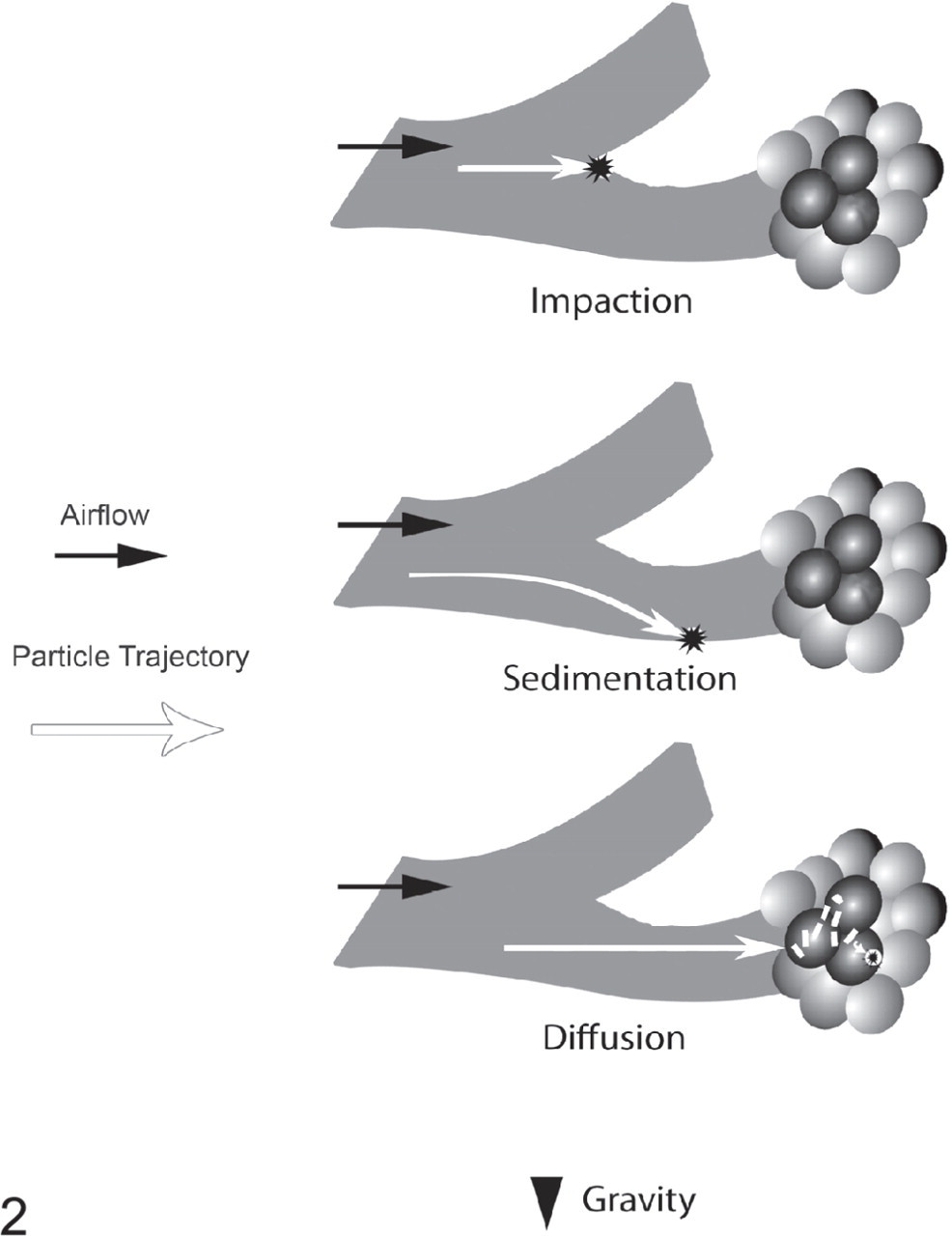
Deposition of nonfibrous particles in the respiratory tract is primarily governed by impaction, sedimentation, and diffusion.
Clearance from the respiratory tract is the physical removal of insoluble and poorly soluble particles and the dissolution and absorption of soluble particles. 40,45,53,61,63,66 Clearance mechanisms include entrapment of insoluble particles in mucus within the nasal cavity and tracheobronchial region with subsequent mucociliary transport toward the oral cavity, along with sneezing, swallowing, blowing, and coughing actions to expel the material. In the alveolar region, alveolar macrophages phagocytize insoluble particles and destroy them locally or clear them by migrating to the conducting airways for mucociliary transport, to the lymphatics at the bronchoalveolar junction, or directly into the blood. Less commonly, insoluble particles may be cleared directly into the blood or lymphatics without the assistance of alveolar macrophages. Soluble particles may be directly absorbed into blood or lymphatics after dissolution in respiratory fluids.
The Influence of Respiratory Tract Anatomy on the Fate of Inhaled BSATs
Respiratory tract anatomy and breathing pattern have been identified as important factors determining the site of particle deposition and the severity and type of disease development after aerosol exposure to BSATs. Although the overall organization and function of the respiratory tract are similar across species, there are distinct species differences in respiratory anatomy and physiology that affect the pathogenesis of inhaled BSATs and, ultimately, the suitability of particular species as models of the human disease. Detailed comparisons of the respiratory tract of diverse species are beyond the scope of this review, and only those features that have been shown to be relevant for the pathogenesis of inhaled infectious agents and toxins are addressed in this section. For a comprehensive species comparison of respiratory tract anatomy and physiology, see Comparative Biology of the Normal Lung. 50
The general organization of the respiratory tract is similar for humans and other terrestrial mammals and is typically considered to be composed of three functional anatomic compartments: the upper respiratory tract (the nasal cavity, nasopharynx, and larynx), the conducting airways (the tracheobronchial tree through the terminal bronchioles), and the pulmonary parenchyma (the gas exchange region, including the alveolar ducts to alveoli). As the primary route of entry for inspired air, the nasal cavity is a common site for deposition of inspired particles. During nose breathing, few particles larger than 10 μm are likely to be deposited deeper than the nasal cavity, regardless of the species. Substantial interspecies differences exist in the overall architecture of the nasal cavity, as characterized by marked variations in its size and shape and number and complexity of turbinates, 25 which ultimately influence the total and regional deposition of particles. BSATs deposited in the nasal cavity or nasopharynx may be rapidly cleared by sneezing or swallowing or may induce disease locally within the nasal cavity; they may be carried by lymphatic drainage to the retropharyngeal and mandibular lymph nodes; or they may be transported along the olfactory nerves or other peripheral nerves to the brain.
The importance of particle size, respiratory tract anatomy, and breathing pattern in governing the deposition of inhaled infectious particles was demonstrated early on using mice, guinea pigs, and NHPs exposed to bioaerosols consisting of a range of particle sizes (approximately 1 to 12 μm) of radiolabeled Bacillus subtilis spores (as a surrogate for Bacillus anthracis) by nose-only aerosol (guinea pigs and mice) or face mask (NHPs). 26 Animals were euthanized immediately after exposure, and the total respiratory tract deposition and the regional deposition of inhaled particles were compared. In general, the percentage of inhaled material that was deposited in the head increased as particle size increased. For a given particle size, the percentage of the total respiratory material deposited in the head was greater for guinea pigs and mice than for NHPs, which was likely due to increased turbinate complexity in the guinea pigs and mice. For guinea pigs, there was an increase in total respiratory deposition from 1.0- to 2.5-μm particles, with subsequent decreases for particles over 2.5 μm. The decreased total respiratory deposition for particles larger than 2.5 μm was attributed to enhanced deposition of these particles at the extreme periphery of the nares. The deposition results for NHPs were more variable, with an increase in percentage deposition in the lungs (including bronchi) between 1 μm and 4- to 6-μm particles. The increased variability in lung deposition in NHPs was attributed to the variable occurrence of mouth breathing in NHPs, which permitted greater deposition of larger particles into the distal conducting airways and the pulmonary parenchyma.
Deposition of larger particles in the nasal cavity results in the delivery of fewer particles to the conducting airways and pulmonary parenchyma, which may ultimately affect the lethality of the BSAT. Druett et al demonstrated that the lethality of anthrax spores was highly dependent on inhaled particle size for guinea pigs and rhesus macaques, with particles of individual spores in the 1- to 2-μm range having the greatest lethality in both species. 14 Decreased lethality of larger particles was related to increased particle deposition in the upper respiratory tract. Similar decreases in lethality with increasing particle size have been have been reported for guinea pigs exposed to aerosols of Yersinia pestis 16 and Brucella suis 15 and for guinea pigs and rhesus macaques exposed to Francisella tularensis. 10,22
The site of regional deposition of BSAT particles within the respiratory tract may also influence the disease pathogenesis after aerosol exposure. Local tissue susceptibility and region-specific clearance mechanisms that facilitate spread of agent to nonrespiratory tissues contribute to variations in pathogenesis. Glomski et al demonstrated local germination of inhaled anthrax spores in the nasopharynx of mice, using spores from a nonencapsulated strain and a nontoxicogenic strain of anthrax, respectively. 20,21 In the much earlier study by Druett, rhesus macaques exposed by aerosol to large-sized particles of anthrax spores developed a disease characterized by massive edema of the head and neck before development of fatal bacteremia, suggesting local germination of spores within the nasal cavity and lymph nodes draining the head. 14 In the aerosol study of Y pestis in guinea pigs mentioned earlier, not only was the lethality of aerosols of single organisms (1–3 μm) greater than it was for aerosols of 12-μm particles, but the time to death was longer. Animals exposed to small-particle aerosols of single organisms developed bronchopneumonia, with peribronchial lymphangitis, necrosuppurative inflammation of the bronchial lymph nodes, and late-occurring bacteremia with involvement of the liver and spleen. In contrast, animals exposed to aerosols of 12-μm particles developed nasopharyngeal disease, with bacterial invasion of the nasal mucosa, nasal lymphangitis, regional lymphadenitis, and subsequent bacteremia. Terminally, the lungs were congested, edematous, and sometimes infarcted or hemorrhagic but without evidence of primary bronchopneumonia.
The importance of regional deposition of BSATs is especially evident for aerosolized neurotrophic viruses. Olfactory neurons are highly susceptible to infection by Venezuelan equine encephalitis virus (VEEV), providing a direct and rapid route to the brain after aerosol exposure. 60,68,70 The viral tropism for olfactory neuroepithelium is specific; neither respiratory nor squamous epithelia are infected by VEEV. 55 Accordingly, mice exposed to aerosolized eastern equine encephalitis virus targeted for nasopharyngeal deposition (5–8 μm) developed viremia and encephalitis at a much more rapid rate than that of animals receiving particles targeted for pulmonary deposition (1–3 μm). 59
The influence of particle size on deposition site and subsequent lethality is not limited to infectious agents. As mentioned previously, aerosolized ricin toxin delivered to mice as 1-μm particles deposited extensively in the pulmonary parenchyma and induced mortality from necrotizing alveolitis and pulmonary edema, compared to induction of minimal disease using comparable or higher presented doses of particles greater than 5 μm in diameter. 57 An earlier study demonstrated that part of the ricin delivered to rodents by aerosol ended up in the stomach, presumably after the animal swallowed material initially deposited in the nasopharynx. 13
Certain species, such as rats and mice, are obligate nose breathers because of the close approximation of the epiglottis and palate. As mentioned previously, this often results in increased nasal deposition of aerosolized BSATs in these species. If the nasal cavity lesions are sufficiently inflammatory, obligate nose-breathing species may develop airflow obstruction and death from hypoxia before development of the full spectrum of BSAT-induced respiratory tract lesions observed in humans. This was recently observed in rats after aerosol exposure to the chemical weapon sulfur mustard (T.H. March, personal communication). Rats exposed to vapors and aerosols of sulfur mustard in nose-only exposure chambers developed airflow obstruction and severe respiratory distress requiring euthanasia by 3 to 4 days postexposure. These rats had marked gastric dilatation attributed to aerophagia, as identified at necropsy. Histologically, the nasal cavities were obstructed by necrotic cell debris, inflammatory cell exudates, and mucus. Histologic evidence of sulfur mustard–induced lesions in the gastrointestinal tract and bone marrow was also identified, without development of lesions in the conducting airways and pulmonary parenchyma.
Inhaled BSATs that clear the upper respiratory tract are carried through the conducting airways toward the pulmonary parenchyma. Significant heterogeneity exists among species with regard to the number of lobar bronchi and lung lobes, the pattern of conducting airway branching, the presence and type of glands in the submucosa, the degrees of cartilage investment in the intrapulmonary conducting airways, the presence of bronchial-associated lymphoid tissue, and the height and cellular composition of the lining epithelium. Two major branching patterns are described. Monopodial divisions are asymmetric and present in most common laboratory animal species, including NHPs. 54,65 In contrast, the regular dichotomous branching pattern of the human lung is highly symmetric. 53,72 In some species, the conducting airways abruptly end at the terminal bronchioles, whereas in others (including humans), the terminal bronchioles end in respiratory bronchioles with alveolarized walls. The relevance of species' differences in conducting airway branching patterns in the pathogenesis of BSATs is largely unexplored. Anatomic variations in the conducting airway branching patterns influence the air velocity and turbulence in these regions and, thus, the anatomic site of inhaled particle deposition within the conducting airways. Bronchial-associated lymphoid tissues are strategically located at airway bifurcations, a prominent site of impaction of inhaled particles. Presumably, this juxtaposition may contribute to enhanced uptake of some BSATs through the overlying lymphoepithelium. Alternatively, the accumulation of mucus at branch points may facilitate trapping and clearance of particles deposited in this region. Additionally, the presence of a cough reflex may facilitate clearance of BSATs in some species.
The pulmonary parenchyma begins with the respiratory bronchioles (in those species that have them) and the alveolar ducts (in all others). Anatomically organized lymphoid tissue in the pulmonary parenchyma is lacking, and the alveolar septa are without lymphatic vessels. Interspecies variations exist in the thickness of the pleura, the degree of lobulation of the lungs, the extent of collateral circulation, and the location of pulmonary veins and lymphatic vessels. The juxtaposition of lymphatic vessels and alveolar septa in species with respiratory bronchioles may facilitate lymphatic clearance of materials deposited in alveoli, which could increase the rate of dissemination of infectious agent to the draining lymph nodes. Likewise, the variability in pleural thickness and pulmonary microvasculature may affect the rate of pleural effusion development in some species. However, definitive relationships between these host factors and the pathogenesis of BSAT-induced diseases have not been demonstrated.
Respiratory Immunity
The large surface area of the respiratory tract provides an extensive interface between the host and the external environment, with frequent exposure of respiratory mucosal surfaces to commensal and pathogenic microbes. The innate and adaptive immune responses attempt to control these microbes without inflicting permanent damage to the air exchange surfaces of the lungs. In this section, we provide a brief review of immune mechanisms relevant to the host response to inhaled BSATs, with emphasis on those factors that are more or less unique to the respiratory system. Immune factors of a more systemic nature are important in the respiratory system as well. Nevertheless, we leave much of the information regarding those aspects of immunity to a number of available resources.
Innate Immune Elements in Respiratory Immunity
Innate immunity in the respiratory tract consists of cellular and secreted components (Fig. 3A). Among the most elemental components of innate immunity in the respiratory tract are the physical barriers posed by the epithelial tissues and the mucociliary clearance mechanisms, along with coughing and sneezing reflexes. The physical barrier function of the epithelia is augmented by the activity of macrophages that patrol the respiratory tract, engulfing and destroying invading pathogens and removing debris via the mucociliary escalator or draining lymphatics.
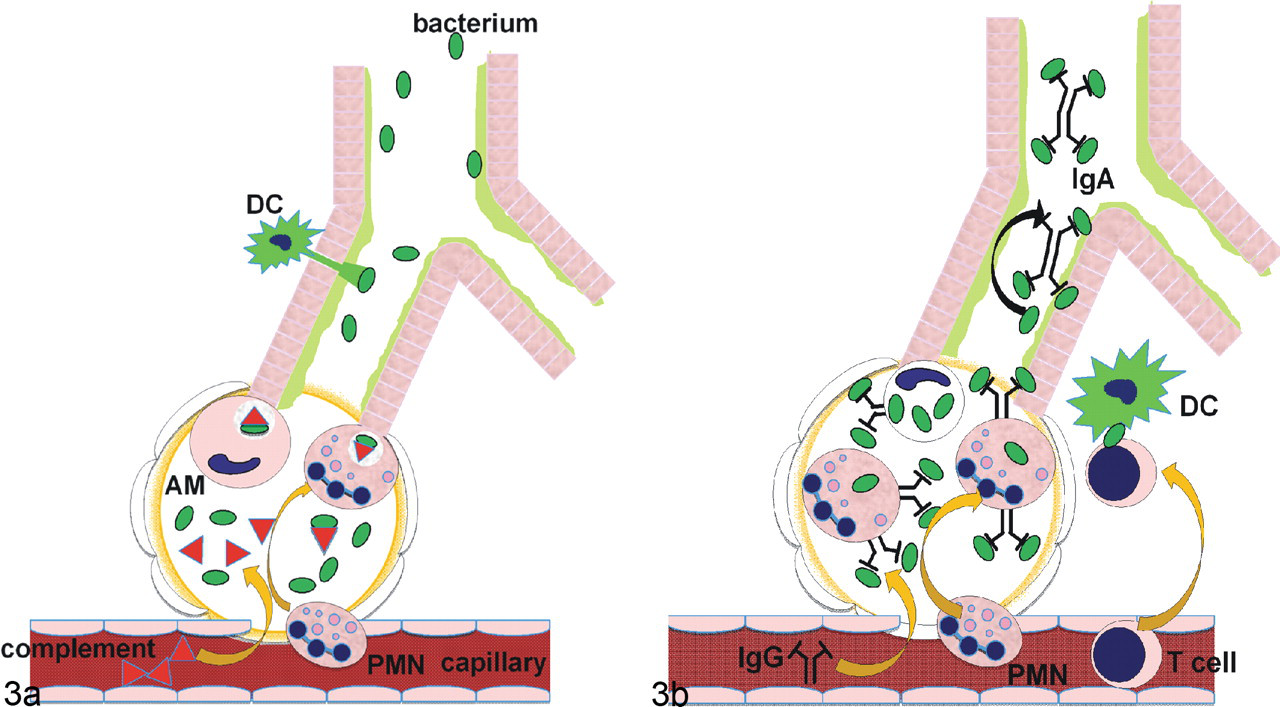
The innate and adaptive immune response in the lung. A, in the naïve lung exposed to bacteria, the innate defenses include the mucociliary escalator, surfactant and other secreted proteins, and alveolar macrophages and neutrophils recruited from the blood. Inflammation facilitates the entry of complement into alveoli and airways, where complement activation provides opsonizing C3b to enhance uptake of bacteria by phagocytes. Subepithelial dendritic cells (DCs) sample bacteria, process antigens, and travel to draining lymph nodes to initiate the adaptive response. B, on reexposure to the bacteria, the lung of the immune host responds with an amplified and more focused response. Dimeric immunoglobulin A (IgA), secreted by subepithelial plasma cells into the lumen of the conducting airways, can block binding of the microbe to the epithelium. IgG in the alveolus opsonizes bacteria for enhanced uptake by phagocytes. Th1 cells recruited to alveoli and the interstitium, following presentation of antigen by resident lung DCs, can secrete interferon γ to activate alveolar macrophages and recruit monocytes. PMN, polymorphonuclear leukocyte; AM, alveolar macrophage. Figure reproduced with permission by Annual Review of Pathology: Mechanisms of Disease.
The epithelial cells that line the respiratory tract are not simply a passive barrier to infection. Lung epithelial cells activate their own defense mechanisms to fortify them against attack, and they produce cytokines and chemokines to attract leukocytes into the respiratory tract—particularly, neutrophils. 47 Lung epithelia constitutively secrete several small peptides that have direct antimicrobial activity. Alpha- and beta-defensins are small cationic peptides that can have direct lytic activity against bacteria and viruses, and they are thought to be primarily mediated by the formation of pores causing disruption of the cell membrane. Defensins may also play a role in wound repair, chemotaxis, and activation of innate and adaptive immunity. 32,37 Whereas alpha-defensins are primarily made and released by neutrophils, beta-defensins are produced by the lung epithelium as well as by leukocytes.
Cathelicidins and collectins have properties similar to those of defensins but are expressed differentially and have other properties as well. LL-37, the only known human cathelicidin, is derived from an inactive precursor produced by respiratory epithelial cells and inflammatory cells and is stored inside granules for release. Release and activation of LL-37 is triggered by toll-like receptor (TLR) signaling. 32,37 Cathelicidins are thought to act primarily by insertion into and disruption of the cell membrane, although some act by mechanisms that are not yet understood. Collectins (eg, mannose-binding protein, surfactant A, surfactant D) are C-type lectins that are also produced by the lung epithelium and are important in normal lung function but can act as opsonins, binding bacteria and viruses and promoting their uptake and destruction by polymorphonuclear leukocytes, macrophages, and dendritic cells (DCs) that patrol the lung epithelium. 32,37 Lung epithelial cells play an important role in not only activation of innate immunity but also the generation and homing of activated T and B lymphocytes to the site of inflammation. These epithelial cells, along with macrophages, DCs, and other leukocytes, express a number of pattern recognition receptors (PRRs) both on their surface (eg, TLRs) and in the cytosol (eg, nodlike receptors and retinoic acid–inducible proteins); the PRRs interact with pathogen-associated molecular patterns on microbes and produce cytokines and chemokines that activate inflammatory responses, including interferon γ and interleukin 1 (IL-1). 23,47,67 Lung epithelial cells also produce cathelicidins and defensins when stimulated by PRRs or proinflammatory cytokines. Stimulation of epithelia with proinflammatory cytokines can also trigger antiviral responses, making the epithelial cells refractory to infection.
Macrophages and DCs both patrol the respiratory tract, sampling their environment and searching for invading viruses and bacteria. Alveolar macrophages generally do not play a role in activation of the immune response. Their activation in this highly antigenic environment is modulated by interactions with airway epithelia, which inhibit excessive inflammation in response to nonpathogenic organisms. Some evidence suggests, however, that they may in fact act like other macrophages as professional antigen-presenting cells. 18,33 Interstitial DCs are found throughout the lungs and upper respiratory tract. Encountering a pathogen in the respiratory tract triggers phagocytosis of the pathogen, followed by maturation of the DC or macrophage and migration to the draining lymph nodes to trigger adaptive immune responses. Some pathogens—notably, F tularensis—may take advantage of this migration to draining lymph nodes to disseminate from the lungs into other tissues; evidence from several studies have found that infection of a DC by F tularensis triggers upregulation of CCR7, which is important for homing to lymph nodes. 2 However, F tularensis–triggered maturation of DC is impaired and is at least partly responsible for the delayed inflammatory response to F tularensis in vivo. 6
Adaptive Immune Elements in Respiratory Immunity
As in other organs, the adaptive immune response in the respiratory tract consists of cellular and secreted components, including T lymphocytes, B lymphocytes, and immunoglobulins (Fig. 3B). Lymphocytes are found in small numbers diffusely associated with the epithelium or organized into specialized sites within the lungs, airways, and nasal passages to provide localized pathogen-specific immune responses (mucosal-associated lymphoid tissue). These sites resemble isolated or aggregated lymphoid follicles overlaid by follicle-associated epithelium, similar to the M cells found in the small intestine. 4 Bronchial-associated lymphoid tissue is thought to be present in the fetus of most species, with postnatal development—and expansion in particular—after antigen exposure. Nasal-associated lymphoid tissue has been documented exclusively in rodents, although diffuse nasopharyngeal lymphoid tissue in other species is thought to play a similar functional role. The follicles in mucosal-associated lymphoid tissues are thought to be important sites for production of respiratory antibody. Note, however, that the follicle-associated epithelium and underlying lymphoid tissues could serve as a point of entry for some pathogens that directly target the immune system. 48,51
Alpha-beta (αβ)T lymphocytes in the respiratory tract are either effector or effector memory cells, whereas those found in draining lymph nodes may be of either effector or central memory phenotype. CD8 T lymphocytes found in the respiratory tract are principally cytotoxic T lymphocytes that can kill virally infected host cells. CD4 T lymphocytes in the respiratory tract are predominantly of the Th1 phenotype, which aids in the activation of cell-mediated immunity, or the Th17 phenotype. Th17 cells, which are primarily CD4+, have been found to be important for protection against several respiratory pathogens, including gram-negative bacterial pathogens such as Klebsiella pneumoniae and F tularensis and viruses such as respiratory syncytial virus and influenza virus. 1,9,39,74 Th17 cells produce IL-17A and IL-17F, which recruit and activate neutrophils, and IL-22, which stimulates the production of antimicrobial peptides by other cells in the respiratory tract. Surprisingly, a recent report found that early production of Th17 and Th1 cytokines was associated with severe pandemic influenza infection in humans. 3 Clearly, more work is needed to understand the role of these cells in protection against respiratory pathogens.
Gamma-delta (γδ)T lymphocytes are found in many tertiary lymphoid tissues and mucosal tissues, including the respiratory tract. Unlike other mucosal sites, γδ T lymphocytes do not form the majority of T lymphocytes present in the lung. Similar to Th-17 αβT lymphocytes, pulmonary γδ T lymphocytes can produce IL-17, which has been shown to play a role in protection against gram-negative bacterial pathogens and immune-mediated pulmonary disease. 31,41 IL-17 production by γδ T lymphocytes has been shown to be important for survival after infection of mice with the live vaccine strain of F tularensis. 31 Pulmonary γδ T lymphocytes are important in immunity against M tuberculosis and respiratory syncytial virus. 12,56 γδ T lymphocytes have also been shown to be important in injury/repair responses of pulmonary epithelium and may play a role in suppressing or triggering airway hyperresponsiveness to allergens. 24,34 More work needs to be done to understand the role of γδ T lymphocytes in pulmonary immune responses and protection of the host against pathogens.
B lymphocytes produce immunoglobulins that bind to and neutralize bacterial and viral pathogens either directly or in concert with other elements of the immune system, such as complement. In peripheral and tertiary tissues such as the respiratory tract, most B lymphocytes are either antibody-secreting plasma cells or memory B lymphocytes found in germinal centers (lymph nodes) or the follicle-associated epithelium. Immunoglobulin produced by plasma cells constitutes the humoral immune response to pathogen invasion. Of the four isotypes of immunoglobulin, IgG and IgA are the most common isotypes found in the respiratory tract. IgA is the primary type of antibody found in mucous secretions and is produced as a dimer with an additional secretory component that protects from degradation. IgA has been shown to play an important role in protecting mice against aerosol challenge with VEEV. 27 IgA is also found in the alveolar region, although IgG is the primary immunoglobulin isotype found in the lower respiratory tract. 71 IgG is better than IgA at opsonization and activation of complement; both isotypes are important in triggering antibody-dependent cell-mediated cytotoxicity through Fc receptor binding by polymorphonuclear leukocytes, macrophages, and DCs.
Summary
The emerging science of aerobiology will be critical to improving our understanding of the pathophysiology of inhaled BSATs in experimental animal models and the subsequent use of these models in vaccine and countermeasure efficacy testing. Unique features of inhalation exposure to BSATs influence the mechanisms by which these pathogens induce disease and the lethality that ultimately results. Figure 4 summarizes these features. Particle, airway, and respiratory factors influence the site of deposition of inhaled BSATs within the respiratory tract and, importantly, the cell types and other factors to which the particles are exposed. A viable infectious agent or toxin that is retained at a susceptible tissue may induce local inflammatory or toxic disease at the site of deposition. Location-specific clearance mechanisms also help to determine the fate of deposited BSATs and the sites to which the agent may disseminate. Nervous system and lymphoid tissue elements in the respiratory tract are key factors that permit the spread of BSATs beyond the respiratory system. Nonneutralized agent may initiate disease at sites distant from the initial deposition site. Ultimately, a range of pathogen and host factors determine the outcome of inhalation exposure to BSATs.
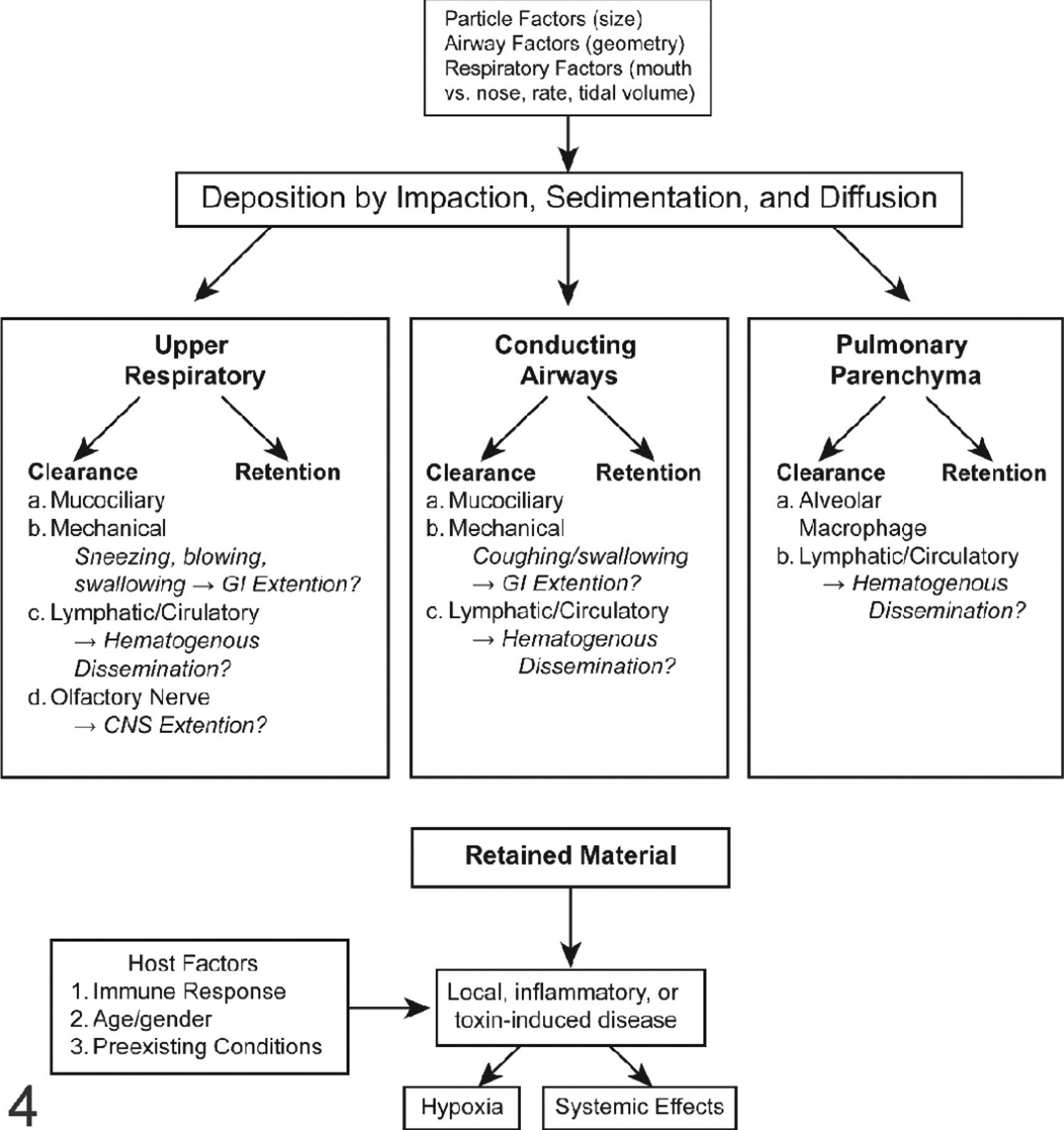
Factors influencing the disease outcome after aerosol exposure to biological select agents and toxins (BSATs). Particle, airway, and respiratory factors influence the site of deposition of inhaled BSATs. Location-specific clearance mechanisms determine the immediate fate of deposited BSATs and the sites to which the agent may be disseminated. Material retained at a susceptible tissue may induce local inflammatory or toxic disease at the site of deposition, depending on host factors such as immunity, age, gender, and preexisting conditions. Local inflammatory or toxin-induced disease may cause morbidity and mortality owing to hypoxia or systemic inflammatory or toxic effects. GI, gastrointestinal; CNS, central nervous system.
Footnotes
The authors declared that they had no conflicts of interest with respect to their authorship or the publication of this article.
The authors declared that they received no financial support for their research and/or authorship of this article.