




Abstract
Streptococcus spp are opportunistic pathogens that normally reside in the upper respiratory, intestinal, lower urinary, and genital tracts but can cause localized infection or septicemia in dogs of all ages. A retrospective study of streptococcal infection in 393 dogs was conducted to identify the species of Streptococcus isolated, determine demographics of affected dogs, and characterize the disease processes associated with infection. The major streptococcal species isolated were S canis (88 cases, 22.4%), S dysgalactiae ssp equisimilis (13, 3.3%), and S equi ssp zooepidemicus (4, 1.0%). Sex was not a risk factor (P > .30). Fetuses and neonates were more likely to have streptococcal infection than were other age groups (P < .001). Streptococcal septicemia was considered an important cause of abortion and neonatal death and was isolated from all samples submitted for aerobic culture from dogs in that age group. There was a seasonal trend, with dogs more likely to have streptococcal infection in summer months. In dogs for which a disease process was identified, streptococcal infection was associated with dermatitis (29 dogs), pneumonia (24 dogs), adult septicemia (13 dogs), and fetal/neonatal septicemia leading to abortion or neonatal death (16 dogs). Identification of other clinically significant bacterial, viral, fungal, and parasitic organisms was common (267 of 393 dogs, 68%), especially in dogs with dermatitis or pneumonia. Infection with Streptococcus spp should be considered in the differential diagnosis in cases of abortion, septicemia, dermatitis, and pneumonia in dogs. Clinical significance of isolation of streptococcal organisms should be interpreted in context of clinical signs and pathologic findings.
Streptococcus spp are gram-positive bacterial cocci that often appear in pairs or chains in routine Gram stains, cytologic preparations, and histologic sections. 3,18,47 Streptococcus spp are easily cultivated, catalase negative, and facultative to strict anaerobes that are categorized on the basis of their hemolytic pattern on blood agar as α-hemolytic, β-hemolytic, or γ-hemolytic (nonhemolytic). 3,47 In general, α-hemolytic and γ-hemolytic streptococci are normal inhabitants of the upper respiratory and lower urogenital tracts. Species of β-hemolytic Streptococcus are typically pathogenic. 3,47 However, some pathogenic species, such as S agalactiae, have variable hemolytic patterns. 47 Some species can be categorized into alphabetically designated Lancefield groups based on cell wall polysaccharides (C-substance), if present. 3,19,47 Pathogenic species of Streptococcus in dogs are usually in Lancefield groups B, C, D, or G. 47
Streptococcus spp are common opportunistic pathogens of mammals and are associated with a variety of diseases affecting multiple organ systems. 3 Streptococcal infection in dogs has been associated with abortion, pneumonia, septicemia, endocarditis, necrotizing fasciitis, keratitis, lower urinary tract infections, cholangiohepatitis, arthritis, and meningoencephalitis. 42,44,45,48,56,60,61,63 The purpose of this study was to review the major Streptococcus species isolated, the demographic data, and the associated diseases in 393 dogs with streptococcal infection.
Materials and Methods
Study Population
The database at the Oklahoma Animal Disease Diagnostic Laboratory (OADDL) at Oklahoma State University was searched from August 2005 through April 2008 for any specimen from a domestic dog in which Streptococcus spp were cultured from tissues submitted to OADDL or from tissues harvested at necropsy at OADDL. Cases with isolation of Enterococcus spp or α-hemolytic Streptococcus spp that were not further speciated were excluded.
Data
The following information was tabulated from case records: age, sex, month and year of submission, sample type, species of Streptococcus, pathological diagnosis, and other infectious or neoplastic diseases. Streptococcus speciation was based on hemolytic pattern, biochemical reactions, and Lancefield groupings. Dogs were grouped by age as fetus/neonate (< 1 week), puppy (1 to 8 weeks), juvenile (9 weeks to 1 year), adult (1 to 8 years), and geriatric (> 8 years). Seasons were defined as winter (December, January, and February), spring (March, April, and May), summer (June, July, and August), or fall (September, October, and November).
Data Analysis
All canine tissues submitted to the OADDL for bacterial culture were tabulated by year, month, sex, age, and tissue type. These numbers were used for statistical analysis to determine if sex or age were risk factors for bacterial infection or if there were annual or seasonal trends. The same data, plus the bacterial species isolated and any associated disease, were tabulated for those cases with Streptococcus isolation. Streptococcus isolates were also categorized as pure cultures, mixed cultures with less pathogenic bacterial organisms, or mixed cultures with other clinically important bacterial, fungal, parasitic, or viral organisms.
Demographic data and clinical associations were statistically evaluated using commercial software programs (Microsoft Office Excel 2007, Microsoft Corp, Redmond, WA; Epicalc 2000 1.02, Brixton Books, http://www.brixtonhealth.com/; SPSS 17.0.1, SPSS Inc, Chicago, IL). The proportion of dogs with isolation of Streptococcus spp from the total samples cultured was evaluated according to the age of dogs by calculating a chi-square test for linear trend and by calculating risk ratios and 95% confidence intervals. The proportion of samples that were positive for Streptococcus spp was evaluated with a chi-square test to assess possible associations with sex. The proportion of positive samples per year was evaluated with correlation and regression analyses. Raw data were analyzed, including data that were weighted according to the number of months in the partial years at the beginning and end of the study and the number of samples per year. The overall association of season with the proportion of positive samples was evaluated by chi-square test; pairwise comparisons of seasons were analyzed by critical ratio (Z) tests. A P value of less than .05 was considered statistically significant.
Results
General Bacteriology
Of the 2,432 samples cultured during the study period, streptococcal organisms were isolated from 499 cases (20.5%). Of these 499 cases, 106 (21.2%) were categorized as α-hemolytic Streptococcus spp and were not further included in the study. The species of Streptococcus isolated in the remaining 393 samples are correlated with the disease diagnosed in each dog in Table 1 .
Association of Streptococcus Isolation With Disease in 393 Dogs a
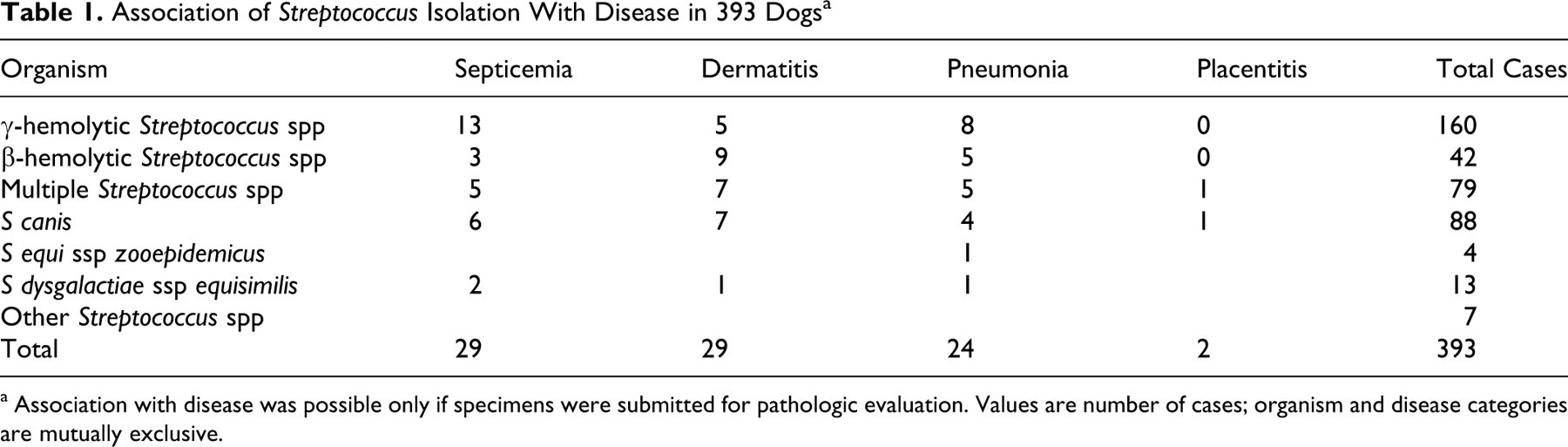
a Association with disease was possible only if specimens were submitted for pathologic evaluation. Values are number of cases; organism and disease categories are mutually exclusive.
Of the 393 samples, Streptococcus spp were the only organisms identified in 17 dogs (4.3%). In 376 dogs, at least 1 other bacterial, viral, parasitic, or fungal organism was identified. The nonstreptococcal bacteria isolated were considered nonpathogenic contaminants in 109 dogs. The remaining 267 dogs had concurrent infection with a pathogenic virus (24 cases), fungus/yeast (12 cases), bacteria (173 cases), or a combination of these pathogens (69 cases). Concurrent viral pathogens included canine adenovirus serotype 2, canine parvovirus 2, canine coronavirus, canine herpesvirus, and canine distemper virus. Fungal and yeast pathogens included Malassezia pachydermatis, Sporothrix schenckii, and Candida spp. Other clinically important bacteria included Staphylococcus spp, Bordetella spp, Brucella canis, Clostridium difficile, C perfringens, β-hemolytic Escherichia coli, Proteus spp, Pasteurella spp, and Pseudomonas spp. Some dogs were also infected with parasites, including Demodex canis, hookworms, roundworms, and whipworms.
Signalment of Dogs With Streptococcal Infection
Of the 393 dogs, 24 were fetuses or neonates, 58 were puppies, 66 were juveniles, 144 were adults, and 64 were geriatric. Age was not specified for 37 dogs (9.4%). Of the total 2,432 cultured samples for which age was recorded, a Streptococcus species was isolated from 100% of the fetuses of neonates (24 of 24), 35.2% of the puppies (58 of 165), 21.0% of the juveniles (66 of 314), 13.5% of the adults (144 of 1,067), and 9.7% of geriatric dogs (64 of 661). There was a significant linear trend for Streptococcus isolation from younger dogs (P < .001). Dogs < 1 year old were 2.2 times more likely to have a positive culture than were older dogs (95% confidence interval = 1.9, 2.6). Likewise, dogs < 8 weeks of age were 4.0 times more likely than older dogs to have a Streptococcus sp isolated (85% confidence interval = 3.1, 5.3).
Of the 393 dogs, 176 were male, 188 were female, and sex was not recorded for 29. Streptococcus spp were isolated in 17.5% (176 of 1,007), 15.1% (188 of 1,242), and 15.8% (29 of 183) of male, female, and dogs of unknown sex, respectively (P > .30).
Of the 2,432 samples submitted for culture, Streptococcus spp were isolated from 36% (64 of 178), 17% (157 of 913), 15% (150 of 1006), and 7% (22 of 335) for the years 2005, 2006, 2007, and 2008, respectively. No annual trend for percentage of positive samples was detected by correlation or regression analyses of raw data or data that were weighted to account for partial years at the beginning and end of the study or annual fluctuation in sample size (P > .05). The proportion of positive cultures of Streptococcus spp varied by season, with 12% (90 of 745), 16% (102 of 633), 21% (101 of 478), and 17% (100 of 576) for winter, spring, summer, and fall, respectively (P < .001). All pairwise comparisons of proportions according to season were statistically significant (P < .05) except for comparisons between spring and fall and between summer and fall (P > .10). The proportion of positive samples in winter (12%) was significantly less than that in all other seasons, and the proportion for summer (21%) was significantly greater than that for spring (16%).
Pathology
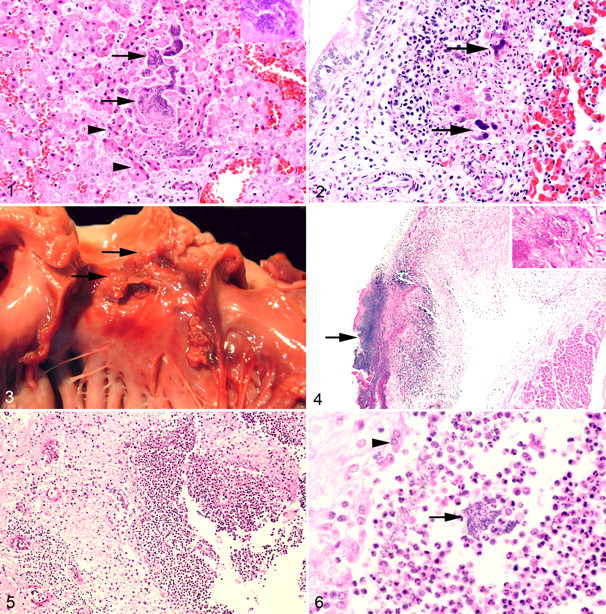
Of the 24 fetal and neonatal dogs cultured, 15 (62.5%) had streptococcal septicemia that resulted in abortion or neonatal death. Gross lesions were minimal. Histologically, colonies of cocci distended vascular lumina in multiple organs (Figs. 1, 2). Inflammation and necrosis of the vascular wall and surrounding tissues was also seen. Placentitis was noted in 2 cases. Interestingly, septicemia was not diagnosed in dogs between 1 week and 1 year of age. Streptococcal infection was associated with septicemia in 13 dogs older than 1 year. Endocarditis and encephalitis were sequela of streptococcal septicemia in adult dogs. In cases of endocarditis, the wall of the affected valve was irregularly thickened and mottled dark red (Fig. 3). Histologically, the valve was markedly expanded by fibrin, cellular debris, and numerous neutrophils (Fig. 4). Neutrophils and fibrin adhered to the surface. In cases of encephalitis, numerous neutrophils mixed with fibrin and fewer macrophages, lymphocytes, and plasma cells markedly expanded the meninges and Virchow–Robin space. 28 The inflammation was focally severe, forming space-occupying lesions that effaced the neuropil and penetrated the ventricles (Figs. 5, 6).
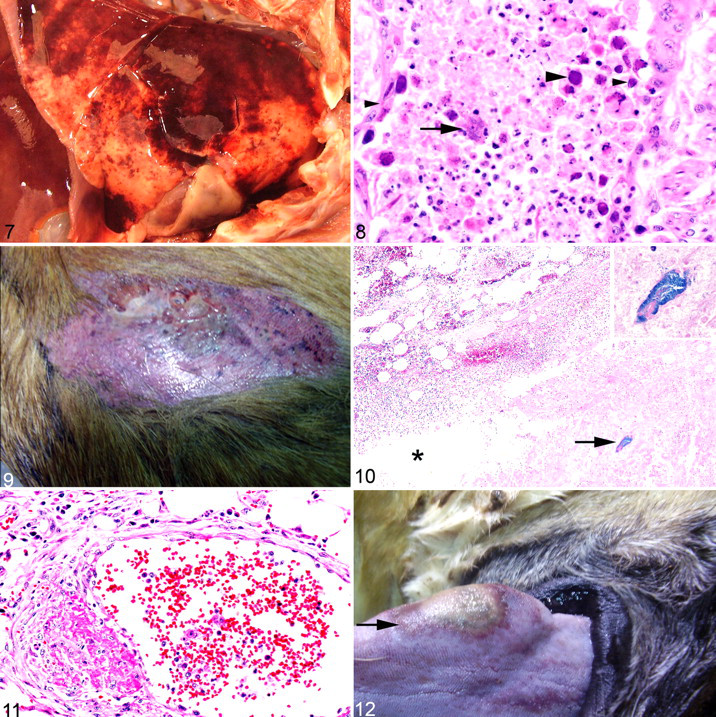
Pulmonary streptococcal infection appeared as bronchopneumonia or a hemorrhagic form. Bronchopneumonia was associated with streptococcal infection in 7 neonates and 17 dogs older than 1 week of age. Affected dogs developed severe pneumonia characterized by pulmonary consolidation (Fig. 7). Histologically, numerous neutrophils flooded the bronchial, bronchiolar, and alveolar spaces, obliterating the adjacent architecture (Fig. 8). In more severely affected areas, the neutrophils were admixed with necrotic cellular debris and fibrin. Microcolonies of cocci were frequent. The hemorrhagic form was associated with streptococcal infection in 2 dogs between 1 and 8 years of age. Affected dogs had dark red, wet, rubbery lungs that oozed copious blood on section. Histologically, alveolar spaces were flooded with erythrocytes and variable numbers of neutrophils admixed with fibrin. Colonies of cocci were rarely present within capillaries or pneumonic parenchyma.
Streptococcus was isolated from 32 of the 187 samples of skin or hair. Associated dermatitis was documented in only 29 of these dogs, all of which were > 1 year of age. Only 2 had necrotizing fasciitis. Grossly, dogs with necrotizing fasciitis had regionally extensive alopecia. The affected epidermis was moist, red, and occasionally ulcerated (Fig. 9). Underlying dermis and subcutis were effaced by cavitations filled with clumped, red to brown material. Histologically, there was liquefactive necrosis of the dermis and subcutis (Fig. 10). Hemorrhage was common, as was infiltration by numerous neutrophils with fibrin and cellular debris. The presence of bacterial microcolonies was variable. Regional vasculitis was also seen (Fig. 11). Necrotizing fasciitis resulted in secondary septicemia and toxic shock–like syndrome in 1 dog, which had infarcts in multiple organs, including the tongue, spleen, and kidney (Fig. 12).
Streptococcus species were isolated from 5 of 22 liver or bile samples: 1 such isolate was from a dog with hepatitis; 2 were from dogs with septicemia; in the other 3 cases, no disease process was identified in the report.
Streptococcus was isolated from 54 of the 196 ear swabs from dogs. The significance of streptococcal infection in the development of otitis in these dogs is not known, because clinical information or samples for histopathology were not provided. Isolation of other organisms, such as Pseudomonas spp, Malassezia spp, and Proteus spp, was considered to be clinically significant in most cases of otitis.
Streptococcus was isolated from 122 of 244 samples of the gastrointestinal tract or feces. Of these 122 dogs, enteritis was documented in 73. However, it is unlikely that streptococcal infection was a primary cause of enteritis in any of these dogs. Overgrowth of streptococcal organisms may have followed infection with a primary intestinal pathogen, such as canine parvovirus 2, Clostridium spp, Salmonella spp, and/or β-hemolytic Escherichia coli. Canine parvovirus 2 infection was the most common primary infection in dogs in this study.
Species of Streptococcus were isolated from 10 of 35 male reproductive tract samples, 5 of 23 ocular or periocular samples, 26 of 804 urine or lower urinary tract samples, and 2 of 12 kidney samples. However, isolation was not associated with disease in any of these cases, because of incomplete clinical histories or lack of samples for histologic examination. Streptococcus spp were not isolated from any of the 7 mammary tissue or milk samples from dogs with mastitis.
Discussion
The 3 most commonly isolated species of Streptococcus in this study were S canis, S dysgalactiae ssp equisimilis, and S equi ssp zooepidemicus. Infection with S canis or multiple Streptococcus spp was most likely to be associated with severe disease, including dermatitis, septicemia, placentitis, and pneumonia. Concurrent infection with other pathogenic bacteria, viruses, fungi, or parasites was common (267 of 393, 68%), especially in cases of dermatitis or pneumonia.
Sex was not a risk factor. Fetuses and neonates were much more likely to have streptococcal infection than were other age groups; streptococcal organisms were isolated from all specimens in that age group. An annual trend was not detected, but streptococcal organisms were more commonly isolated in the summer. Confounding factors were not detected.
Streptococcal septicemia is one of the most common causes of fetal and neonatal death in the dog. 5,33,34,51,63 In the present study, Streptococcus was isolated from all cultured fetal or neonatal specimens and was considered the cause of the abortion or neonatal death. Streptococcal infection should be highly considered in the differential diagnosis in cases of abortion or neonatal death in the dog. Histopathology and routine aerobic cultures are required to confirm infection.
As with people, a proportion of the canine population is a carrier of this opportunistic pathogen and does not develop clinical signs. 6,35 Infection in utero or during passage through the vagina poses a great risk to the canine fetus. 5 Septicemia and death typically occur in the first week of life. Consumption of contaminated milk is another possible but less likely source of infection. 52
Spread from the vagina, where several species of Streptococcus can reside in healthy individuals, to the uterus can result in endometritis or metritis with subsequent extension to the placenta. 4,5,55 In the present study, streptococcal infection was a rare cause of placentitis. Neonatal streptococcal septicemia can also develop secondary to omphalophlebitis 27 ; however, omphalophlebitis was not detected in the present study.
Streptococcal septicemia in older dogs is often a sequel to localized infections, such as with necrotizing fasciitis. 40,45,46 In the present study, streptococcal infection was associated with septicemia in only 13 of 1,728 cultured specimens from dogs older than 1 year. This indicates that streptococcal septicemia in the adult dog is relatively rare. Once the circulation has been seeded, the infection can spread to visceral organs—particularly, the heart, as well as the brain and the joints. 20,39,48,59,60 Streptococcal infection is the most common cause of valvular endocarditis in the dog, and it typically affects the mitral valve. 17,50,57,60,62 Concurrent polyarthritis in these dogs is common. 2,10,20,26,60 Streptococcal infection in the brain and spinal cord can present as a parenchymal or subdural abscess, as a more diffuse inflammation (eg, meningoencephalitis), or as diskospondylitis. 8,28,32,39,48,53
Pulmonary streptococcal infection can present as bronchopneumonia or as a hemorrhagic form. 9,11,22,31,44 In the present study, fetal/neonatal streptococcal bronchopneumonia was the most common presentation. Concurrent infection with other bacteria or viruses often complicates the histologic picture in streptococcal bronchopneumonia. Common copathogens include Bordetella spp, canine distemper virus, canine adenovirus 1 and 2, and canine herpes virus. 9 Aerobic bacterial cultures and viral testing on lung samples are recommended in conjunction with histologic examination to confirm mixed infections. The hemorrhagic form of streptococcal pneumonia, which was rare in this study, can be devastating, with high morbidity and high mortality, particularly in kennel or shelter populations. 22,31,44
Necrotizing fasciitis is a severe, debilitating disease in adult dogs that can result in systemic illness and death. 15,24,29,41 Although streptococcal dermatitis was common in this study, necrotizing fasciitis was relatively rare. Toxic shock–like syndrome, a typically fatal sequel of necrotizing fasciitis in dogs, 45,46 resembles the toxic shock syndrome in people infected with S pyogenes. 13,15,40,58 Affected dogs typically have intensely painful, deep dermal or subcutaneous lesions along the limbs or trunk. 45 The skin commonly sloughs within 24 to 48 hours, and affected animals rapidly develop severe hypotensive shock and disseminated intravascular coagulation. 45 Postmortem involvement of multiple organ systems suggests a period of septicemia before the development of this syndrome. 45
In dogs, S canis is the most common streptococcal species isolated in cases of toxic shock–like syndrome associated with necrotizing fasciitis. 15,40 In people, the clonal expansion of invasive strains of S pyogenes is thought to promote the development of toxic shock syndrome. This does not appear to be the case in the dog. 16 Furthermore, proteins from the strains of S canis isolated from cases of necrotizing fasciitis have homology with only 2 proteins (M protein and streptolysin O) of the 10 known virulence factors of invasive strains of S pyogenes. 15 This finding suggests that other yet unknown factors are involved in the pathogenesis of S canis toxic shock–like syndrome in dogs.
People are most commonly infected with group A β-hemolytic streptococci, which include S pyogenes. 25 Infection with group A β-hemolytic streptococci typically results in pharyngitis, although these organisms cause more severe diseases, such as necrotizing fasciitis and toxic shock syndrome. Group A β-hemolytic streptococcal infections most commonly occur from direct spread between people. Although group A β-hemolytic streptococci can be isolated transiently from the nasopharynx of household pets, dogs are not considered to be a significant source of infection.
In contrast, dogs commonly harbor group G β-hemolytic streptococci, which can spread from dogs to people via skin-to-skin contact as well as through bite wounds, especially if the person is immune compromised. 37,43 S canis is the group G β-hemolytic Streptococcus most commonly associated with zoonotic infections between dogs and people. In people, S canis infection can result in septicemia, localized soft tissue infection, urinary tract infections, and osteomyelitis. 21
Streptococcal infection has also been associated with cholangiohepatitis, keratitis, prostatic abscesses, perianal fistulas, and mastitis in dogs, 23,30,42,54,64 as well as with urinary tract infections in the adult dog. 12,36,56 In the present study, these disease processes were rarely reported with streptococcal infection. Free-catch urine samples can be contaminated by the normal flora inhabiting the mucosa of the external genitalia or vaginal vestibule. 6 However, isolation of streptococcal organisms from a urine sample collected by cystocentesis or from kidney is likely clinically significant. 36
In the present study, streptococcal organisms were cultured from the skin and intestine but were rarely associated with disease in these organ systems. Streptococcus spp can reside on the skin and in the gastrointestinal tract of clinically healthy dogs and can be cultured from the conjunctiva, ears, external genitalia, intestine, feces, skin, oral cavity, and upper respiratory tract. 1,6,7,14,38,49,65 Therefore, cultures of the skin, ears, and intestine should be interpreted in the context of clinical signs and pathologic findings. Streptococci are probably cultured incidentally or are secondary opportunistic invaders in most dogs with otitis or enteritis.
In summary, streptococci are important opportunistic pathogens in the neonatal and adult dog. S canis, S dysgalactiae ssp equisimilis, and S equi ssp zooepidemicus are the most common pathogenic species in the dog. Streptococcal infection can result in septicemia as well as life-threatening localized infections in the skin and lung. Although streptococcal infection can cause disease in dogs, these organisms are a component of the normal flora of the skin and gastrointestinal tract. Thus, isolation of Streptococcus does not necessarily correlate with disease and must be interpreted with consideration of clinical and pathologic findings.
Footnotes
Acknowledgements
Oklahoma State University’s Veterinary Research Scholars Program is supported by competitive grants from the National Institutes of Health, the Merck-Merial Veterinary Scholars Program, and the Morris Animal Foundation and by the Center for Veterinary Health Sciences. We would like to thank the OSU information technology services for technical assistance related to searching the UVIS database for cases important to the study. We would like to thank Dr Bradley Njaa for his careful review of the article.
The authors declared no potential conflicts of interest with respect to the authorship and/or publication of this article.
The authors received no financial support for the research and/or authorship of this article.