




Abstract
Contrapposto, an asymmetrical twisting of the hips and shoulders, has historically been associated with beauty and aesthetics in art. While the impact of a female contrapposto posture on perception of attractiveness and visual attention has been studied, its effects on males remain understudied. The current research aims to explore whether contrapposto postures in men influence perceptions of attractiveness, dominance, masculinity, dynamism, and naturalness, as well as visual attention. Two eye-tracking studies were conducted, utilizing images of male models in contrapposto and upright poses. Despite differences in attributions, no significant differences were found in visual attention between the two poses in both initial fixation and prolonged gaze behaviors. Contrapposto was consistently perceived as less dominant, masculine, and natural. These findings suggest a feminizing effect of contrapposto on male body posture, aligning with previous research on female contrapposto. The current research provides insights into the historical and artistic significance of contrapposto while contributing to the understanding of nonverbal communication through body posture.
Small changes in a person's body posture can convey information about a person's internal states, such as their thoughts, feelings, and attitudes, through nonverbal communication (Cazzato et al., 2012; Grammer et al., 2000; Mehrabian, 1969). Previous research has examined how these perceptions of a variety of psychological traits are influenced by changes in body posture such as dominance (Carney et al., 2005, 2010; Pazhoohi, Grammer, et al., 2020; Rule et al., 2012; Vacharkulksemsuk et al., 2016), confidence (Briñol et al., 2009), openness (Latu et al., 2017; Vacharkulksemsuk et al., 2016), and sexual interest (Grammer, 1990; Moore, 1985; Pazhoohi et al., 2018, 2023; Wade et al., 2021).
One body posture associated with beauty and aesthetics in art history is contrapposto pose, a form of body posture that is characterized by an asymmetrical alignment of the shoulders and arms in contrast to the hips and knees. In this body posture, one leg is at ease while the other leg bears the weight, with a slight twist of the body or torso playing an important role in achieving an asymmetrical alignment, resulting in a position considered by many to be both natural and dynamic. The contrapposto pose has been a common theme and widely used in both paintings and sculptures created by artists since antiquity and has been a pervasive motif for depicting both men (e.g., Donatello's David or Michelangelo's David) and women (e.g., Colonna Venus and Aphrodite of Knidos from the Classical period and Venus de Milo from the Hellenistic period). However, despite the historical, cultural, and artistic significance of contrapposto pose, empirical studies are scarce on the effect of this posture on perception and how it is evaluated.
Investigating the impact of contrapposto posture of female models on perception of attractiveness and visual attention, Pazhoohi, Macedo, et al. (2020) showed that women depicted in a contrapposto pose were perceived as more attractive than those in a non-contrapposto pose (i.e., an upright standing pose). Moreover, the curvier side of the body in contrapposto pose attracted greater visual attention, suggesting that a contrapposto pose may be considered a supernormal stimulus contributing to greater perceptions of attractiveness (Pazhoohi, Macedo, et al., 2020). Furthermore, in another study, Pazhoohi, Arantes, et al. (2020) demonstrated higher neural activity in response to women's contrapposto pose compared to a non-contrapposto pose in early and late visual components. They associated the behavioral attractiveness ratings with the activation of brain regions involved in the perception and attractiveness judgment of females’ bodies, namely, the middle temporal gyrus and the angular gyrus. Moreover, in a gaze behavior study, Jacobs et al. (2023) found that individuals look longer at women in contrapposto pose than in standing posture. Their results showed that the preference for contrapposto poses only happens over an extended period of time but not immediately in the first gaze shift, suggesting a top-down contribution to the increased attention toward contrapposto poses.
Moving beyond philosophical and artistic musings, Pazhoohi et al. (2022) conducted the first empirical study on the effect of male contrapposto posture on human perception. Specifically, it was found that using male statues from antiquity (e.g., Michelangelo's David), an exaggerated contrapposto posture compared to an erect posture (decreased contrapposto) reduces perceptions of attractiveness and masculinity while increasing the perception of dynamicity (Pazhoohi et al., 2022, Study 2). However, it remains unclear whether these findings can be generalized to contemporary male models rather than being a feature specific to statues. To clarify, it would be necessary to conduct a replication study to determine whether the aesthetic effect observed in male models, which contradicts the attractiveness of the contrapposto pose in female models, can be extended to other male models from different periods and contexts. The present study aims to investigate potential differences in perceptions of attractiveness, dominance, masculinity, dynamicity, and naturalness between a male model in a contrapposto pose and another one in a standing, erect posture, both without any contextual information.
Moreover, the mechanisms through which male contrapposto posture might influence visual attention have yet to be fully elucidated. According to Pazhoohi et al.’s (2022) research, an erect male statue body posture is deemed more attractive and masculine than a contrapposto, implying that an upright male body pose is expected to elicit greater visual attention. To address this question, the present study employs a preferential looking task that uses online gaze tracking, a recent technological development that enables real-time gaze analysis through users’ WebCameras (Semmelmann & Weigelt, 2018). The preferential looking task is developed to induce attentional competition, requiring viewers to display gaze priority to one of the competing images (Shimojo et al., 2003). Such designs have been found to be effective for quantifying visual priority and disentangling top-down versus bottom-up visual and cognitive processes (Fecteau et al., 2000; Luck et al., 2021; Will et al., 2021), with top-down visual attention driven by the observer's goals and expectations and bottom-up visual attention driven by stimulus features in the environment and scene (Connor et al., 2004). Therefore, the present research also investigates whether contrapposto poses elicit more visual attention in the initial fixation phase (bottom-up attention) and/or throughout the trial (top-down attention).
Study 1
Method
Participants
The number of participants was determined using an a priori power analysis using WebPower (Zhang et al., 2018). We sought to detect a medium- to large-sized effect (f = .20) with a desired power of 80% for regression with one predictor (pose), which resulted in a desired number of 42 participants. Because participant attrition rate is relatively high when doing eye tracking online (Jacobs et al., 2023), a total of 71 participants took part in the survey and gaze tracking components. Twelve participants’ data were removed for having poor gaze tracking accuracy (mean error >250 pixels), which subsequently resulted in a mean x-axis error of 83× pixels with 59 participants in the analyses (30 females, 29 males; Mage = 39.3, SDage = 10.5). Participants were recruited through Amazon Mechanical Turk (MTurk) located in the United States. The distribution of participants reporting their highest educational attainment were as follows: 24.3% had a high school diploma, 12.2% had a post-secondary diploma, 51.4% had an undergraduate degree, and 12.2% had a graduate or professional degree.
Stimuli
Using Daz3D software (www.daz3d.com), a 3D male model was created and posed in both contrapposto and standing positions. Additionally, mirrored images of the contrapposto poses were made to ensure balance between the model's curvier sides. Each pair of images was cropped from the clavicle to the knee and contains one contrapposto and one standing pose. An example is shown in Figure 1.
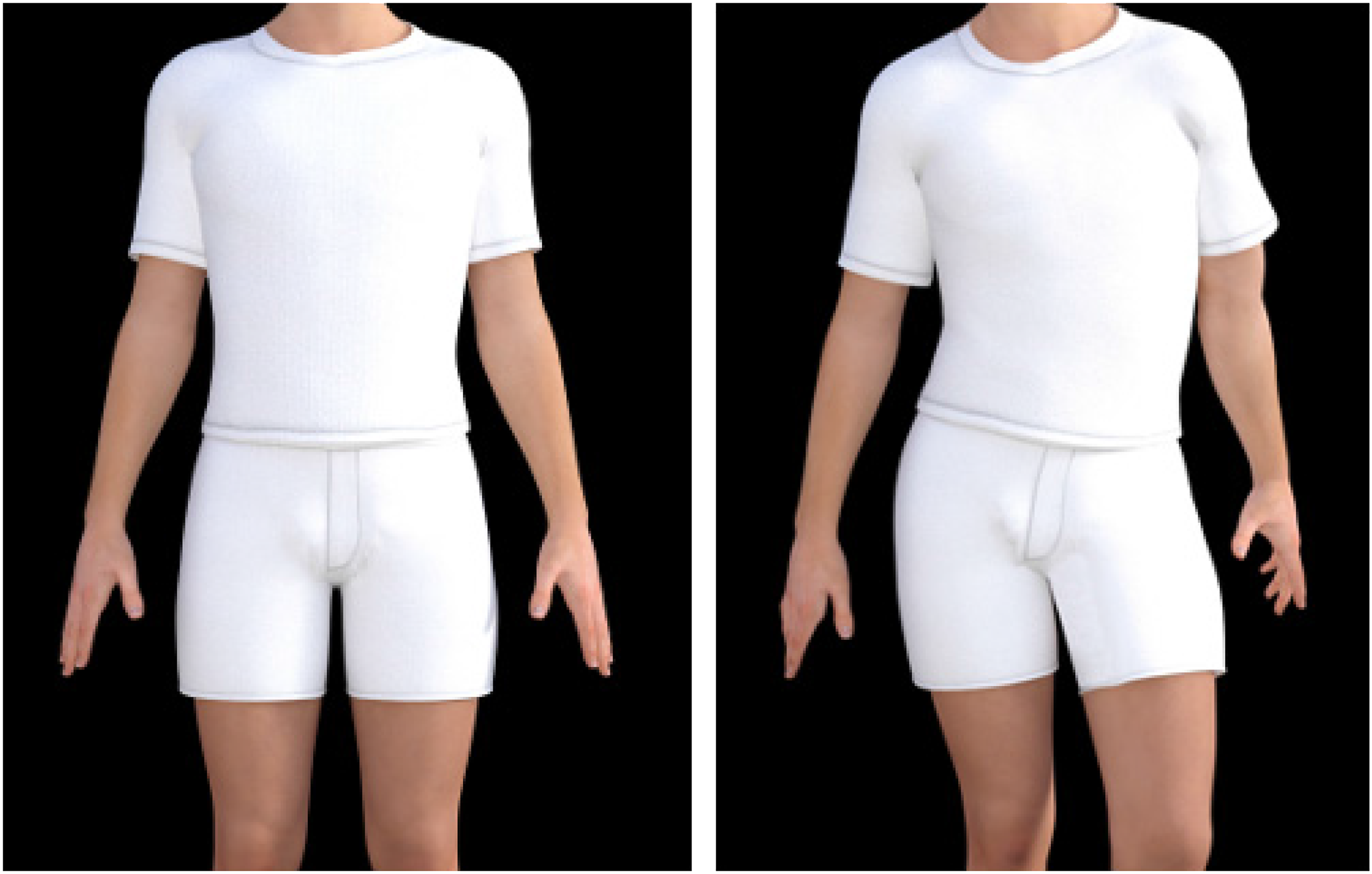
An example of stimuli in standing (left) and contrapposto poses (right) used in Study 1.
Materials and Procedure
A Qualtrics survey was developed and distributed to participants using MTurk and CloudResearch. After reviewing an ethics form and consenting to take part, participants were asked to fill in a basic demographic questionnaire with items pertaining to age, sex, education, and vision (e.g., normal or corrected-to-normal vision). Participants were then given instructions that they would be asked to complete a gaze-tracking component using Pavlovia. After successfully enabling their WebCameras, participants completed a 30-point calibration phase, with the latter 10 of these points being used to form an accuracy measure. Participants were then shown a series of trials for 10 s, each containing opposing contrapposto and non-contrapposto versions of the male models. The trials were presented in a random order for each participant. After finishing these trials, participants were given a completion code and asked to return to Qualtrics to complete more questions. These questions included attribution assessments (attractiveness, masculinity, dominance, dynamicity, and naturalness) for the contrapposto and non-contrapposto stimuli. Participants were then given manipulation checks, asking what they thought the purpose of the experiment was and if there were any reasons they believed their WebCamera might not have been tracking their eyes properly. Finally, participants were debriefed and thanked for participating.
Gaze Tracking, Measures, and Data Analysis
Gaze tracking was done through participants’ WebCameras using the WebGazer.js library, which is an open source gaze-tracking program available to the public (Papoutsaki et al., 2016). WebGazer has previously been used in online preferential looking tasks (Jacobs et al., 2023) and has been validated for research based on its spatial accuracy of approximately ∼100 pixels with a 60 Hz refresh rate (Semmelman & Weigelt, 2018). The calibration for WebGazer requires participants to look at and click on boxes appearing in 30 different locations. This creates spatial error estimates as the real-time model compares gaze position estimates with the precise pixel coordinates of the locations of the boxes. This calibration error provides x- and y-axis estimates, but for the purposes of the present study, only x-axis errors were considered. We employed a strict x-axis cutoff threshold of 250 pixels based on prior suggestions (Yang & Krajbich, 2021). As noted above, this led to 12 participants being removed. With the exclusion of these participants, the mean x-axis error was 83 pixels. For each sampling period, WebGazer provides x- and y-estimates that were used to calculate first fixation and gaze proportions. First fixations were calculated by taking the mean × position in the initial 500 ms of each trial. Notably, these gaze estimates are given in reference to the center of the screen (0, 0), such that all negative x-values correspond to the left side of the screen and all positive values indicate positions on the right side of the screen. Gaze estimates falling in the center of the screen (−100, 100) were coded as landing in the center and were not included as either falling on either the left or right side. Values outside this range were coded as falling into the left or right areas of interest (AOIs). Gaze proportions were calculated by taking the proportion of estimates landing on the left and right AOIs, leading to a quasibinomial value for each participant's trials (e.g., 0.44, 0.71). Gaze proportion, first fixations, and aesthetic attributions were analyzed in R.
Results
Attribution Ratings
For each of the five attribute ratings, a paired sample t-test was conducted between the contrapposto male pose and the non-contrapposto male pose (Figure 2). It was revealed that the contrapposto pose was considered significantly less attractive, t(58) = −4.2, p < .001, less dominant, t(58) = −5.05, p < .001, less masculine, t(58) = −9.38, p < .001, and less natural, t(58) = −4.66, p < .001. There was no difference between poses on ratings of dynamicity, t(58) = −1, p = .322.
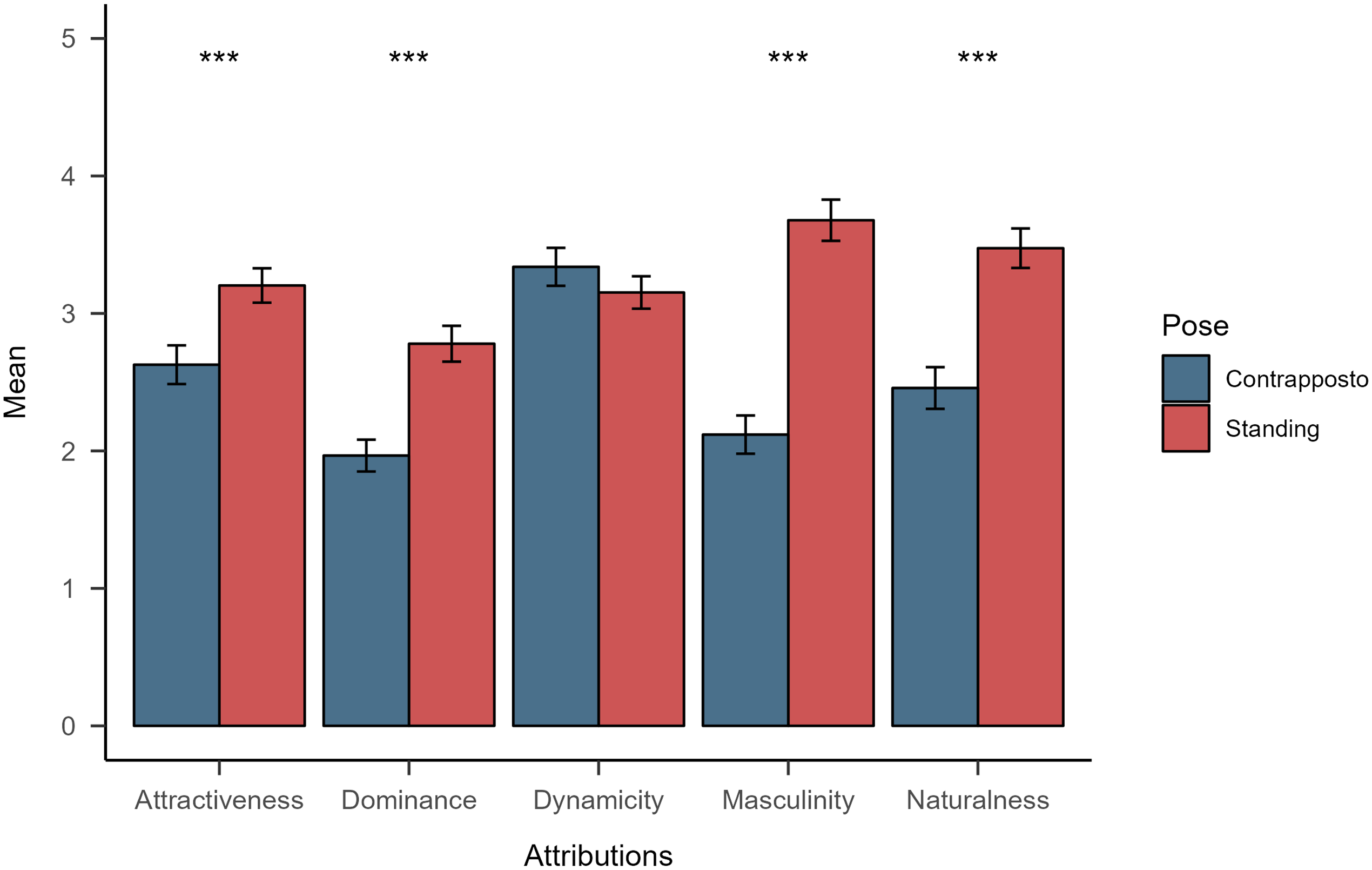
Mean attribution ratings by pose.
Gaze Analysis
First Fixation. A generalized linear model (GLM) was fit using a Poisson distribution, with location of the first fixation as the dependent variable and the contrapposto stimuli as a predictor. The results showed that the location of the contrapposto stimuli was not a significant predictor, β = .182, SE = 0.289, z = 0.632, p = .527, and the model did not differ from an intercept-only model, χ2(1) = 0.402, p = .526, indicating there was no effect of pose on the first fixation.
Prolonged Gaze Preference. A GLM was fit using a quasibinomial distribution with the dwell proportion as the DV and pose as a predictor. The results showed that the pose of the stimuli was not significant, β = −.221, SE = 0.302, t(58) = −0.731, p = .468, and that the model fit was not different than an intercept-only model, χ2(1) = −0.171, p = .465, indicating there was no effect of the contrapposto stimuli on prolonged gaze preferences.
Again, a GLM was fit using a quasibinomial distribution to the dwell proportion on contrapposto stimuli with sex as a predictor. The results showed that the sex was not significant, β = .092, SE = 0.148, t(235) = 0.622, p = .534, and again did not differ from the intercept-only model, χ2(1) = −0.012, p = .534, indicating there was no effect of sex on the dwell proportion to contrapposto stimuli.
Discussion
The results of the first study indicated that there were strong differences in aesthetic attributions between the contrapposto and standing poses. Specifically, the contrapposto model was considered significantly less attractive, dominant, masculine, and natural. However, these effects did not translate to differences in visual attention, both in the initial fixation and prolonged gaze behavior. These results for male models contrasted strongly with previous work using WebGazer, which found gaze preferences for contrapposto poses in female models (Jacobs et al., 2023). One explanation could be that the female models’ arms and hands were not displayed, unlike the stimuli used here in Study 1. The lack of arms and hands may accentuate the contrapposto's asymmetrical features, which in turn would support differential attentional selection. A second study addressed this possibility.
Study 2
New stimuli were created without the inclusion of arms and hands. New participants were recruited to rate and view the stimuli again using WebGazer and the same methodology.
Method
Participants
A total of 55 participants were recruited, but only 50 participants (25 females, 24 males, one other; Mage = 42.4, SDage = 11.78) remained after the same calibration thresholds were applied as in Study 1.
Materials and Procedure
The stimuli and procedure for Study 2 were the same as in Study 1, save for the exclusion of the arms from the stimuli. An example of stimuli is presented in Figure 3.
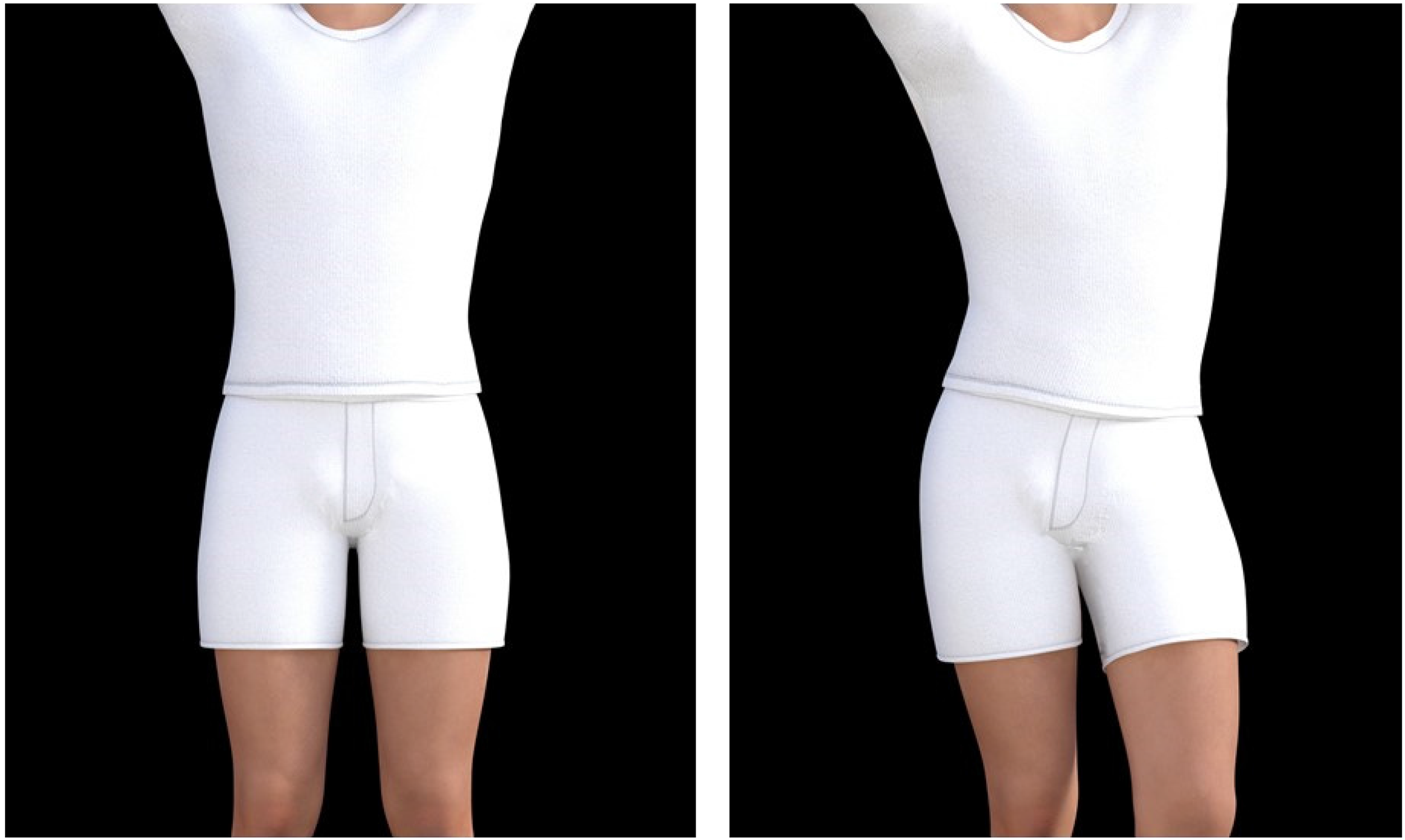
An example of stimuli in standing (left) and contrapposto poses (right) used in Study 2.
Gaze Tracking and Data Analysis
Gaze tracking was done identically to Study 1 using WebGazer with the same thresholds and methods for calculating first fixations and gaze proportions.
Results
Attribution Ratings
For each of the five attribute ratings, a paired sample t-test was again conducted between the contrapposto male pose and the non-contrapposto male pose. The contrapposto pose was considered significantly less dominant, t(49) = −3.83, p < .001, less masculine, t(49) = −7.00, p < .001, and less natural, t(49) = −2.19, p = .033. There was no difference between poses on ratings of attractiveness, t(49) = −0.321, p = .749, and dynamicity, t(49) = −1.26, p = .213 (see Figure 4).
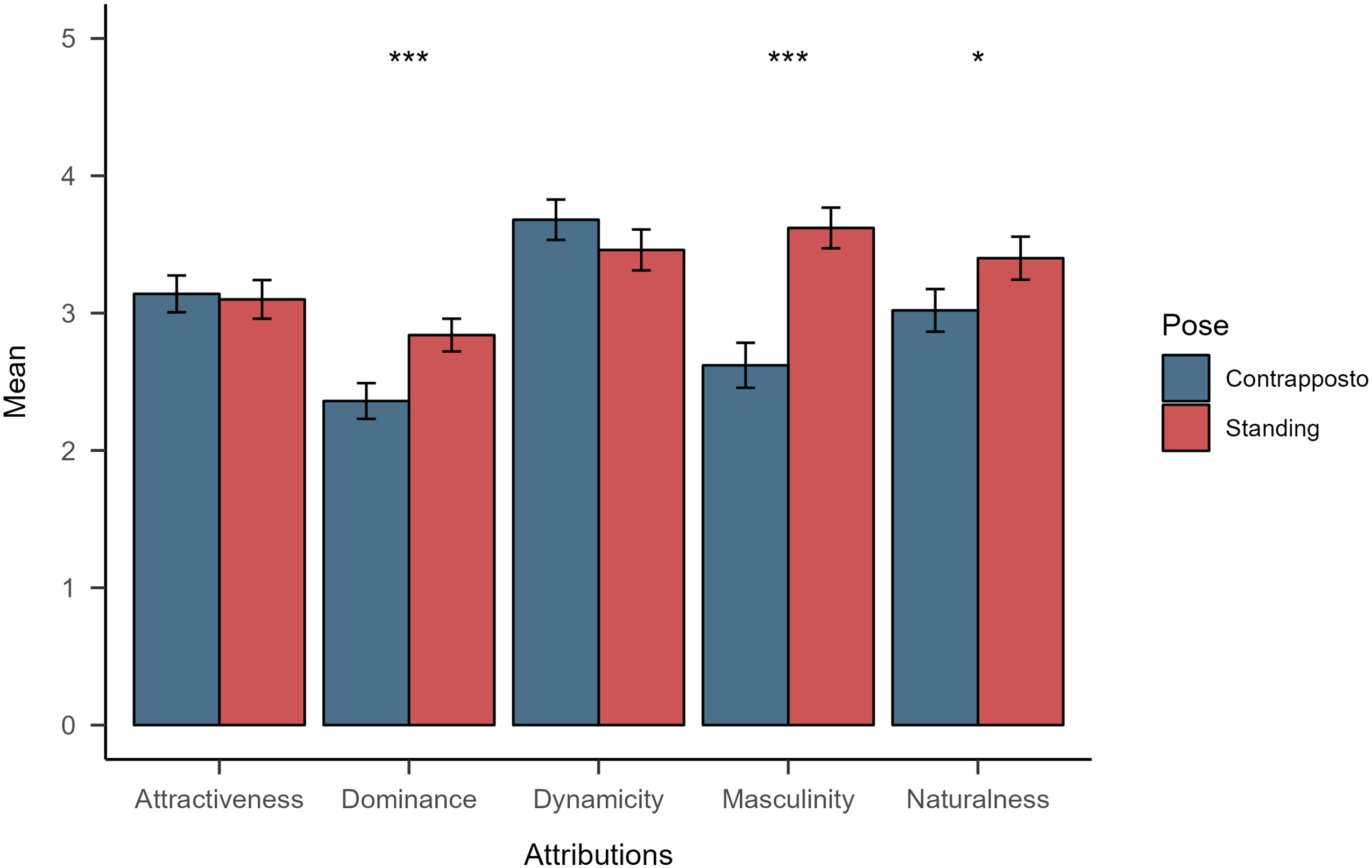
Mean attribution ratings by pose.
Gaze Analysis
First Fixation. The GLM showed that the location of the contrapposto stimuli was not a significant predictor, β = .015, SE = 0.106, z = 0.142, p = .887, and the model did not differ from an intercept-only model, χ2(1) = −0.020, p = .887, indicating there was no effect of pose on the first fixation.
Prolonged Gaze Preference. The GLM results showed that the pose of the stimuli was not significant, β = −.122, SE = 0.118, t(398) = −0.1035, p = .301, and that the model fit was not different than an intercept only model, χ2(1) = −0.365, p = .300, again indicating there was no effect of the contrapposto stimuli on prolonged gaze preferences.
Again, a GLM was fit using a quasibinomial distribution to the dwell proportion on contrapposto stimuli with sex as a predictor. The results showed that the sex was not significant, β = .235, SE = 0.172, t(194) = 1.361, p = .175, and again did not differ from the intercept-only model, χ2(1) = −0.666, p = .173, indicating there was no effect of sex on the dwell proportion to contrapposto stimuli.
Discussion
The results of the second study, where the arms and hands were excluded, showed that standing posture was considered more dominant, masculine, and natural than a contrapposto pose. Similar to Study 1, these differences in aesthetic attributions between the contrapposto and standing poses did not influence the visual attention, both in the initial fixation and prolonged gaze behavior.
General Discussion
The primary objective of this study was to investigate whether a male body posed in contrapposto garners greater visual attention compared to when in an upright standing position. Additionally, the research aimed to ascertain whether these distinct male body postures impact perceptions of attractiveness, dominance, masculinity, dynamism, and naturalness. Through two separate gaze behavior studies, our findings did not reveal any significant differences in visual attention between contrapposto and standing male postures. Furthermore, the contrapposto pose was consistently perceived as less dominant, masculine, and natural in both studies. Additionally, when the model's arms and hands were included in the stimuli (Study 1), contrapposto pose was also regarded as less attractive. Collectively, the outcomes of the present study align with the feminizing impacts of contrapposto, a notion previously proposed through research involving female models (Jacobs et al., 2023; Pazhoohi, Arantes, et al., 2020; Pazhoohi, Macedo, et al., 2020).
In 1894, Eugene von Blaas, an Austrian–Italian artist, created “Flirtation,” portraying an interaction involving a courting man and three women, in which the man engages in playful flirtation with one of the women (Figure 5). One of the women who is the object of the courting man's attention is depicted in a contrapposto posture, while the man stands upright in front of her. Our results in the current research, along with those of previous research on attractiveness of women in contrapposto (Jacobs et al., 2023; Pazhoohi, Arantes, et al., 2020; Pazhoohi, Macedo, et al., 2020), corroborate the painter's intuition about the optimal body poses of flirting men and women. In essence, the analysis of the painting reveals the artist's intention to portray the woman signaling attractiveness and coyness to the man, while the man conveys masculinity and dominance to her. Nonetheless, it should be mentioned that our study, as well as previous ones (Jacobs et al., 2023; Pazhoohi, Macedo, et al., 2020; Pazhoohi et al., 2022), have used either male or female contrapposto poses separately. In contrast, this painting depicts a man and woman together. Therefore, future research using eye-tracking or ratings is needed to analyze paintings with multiple models differing in sex and posture.
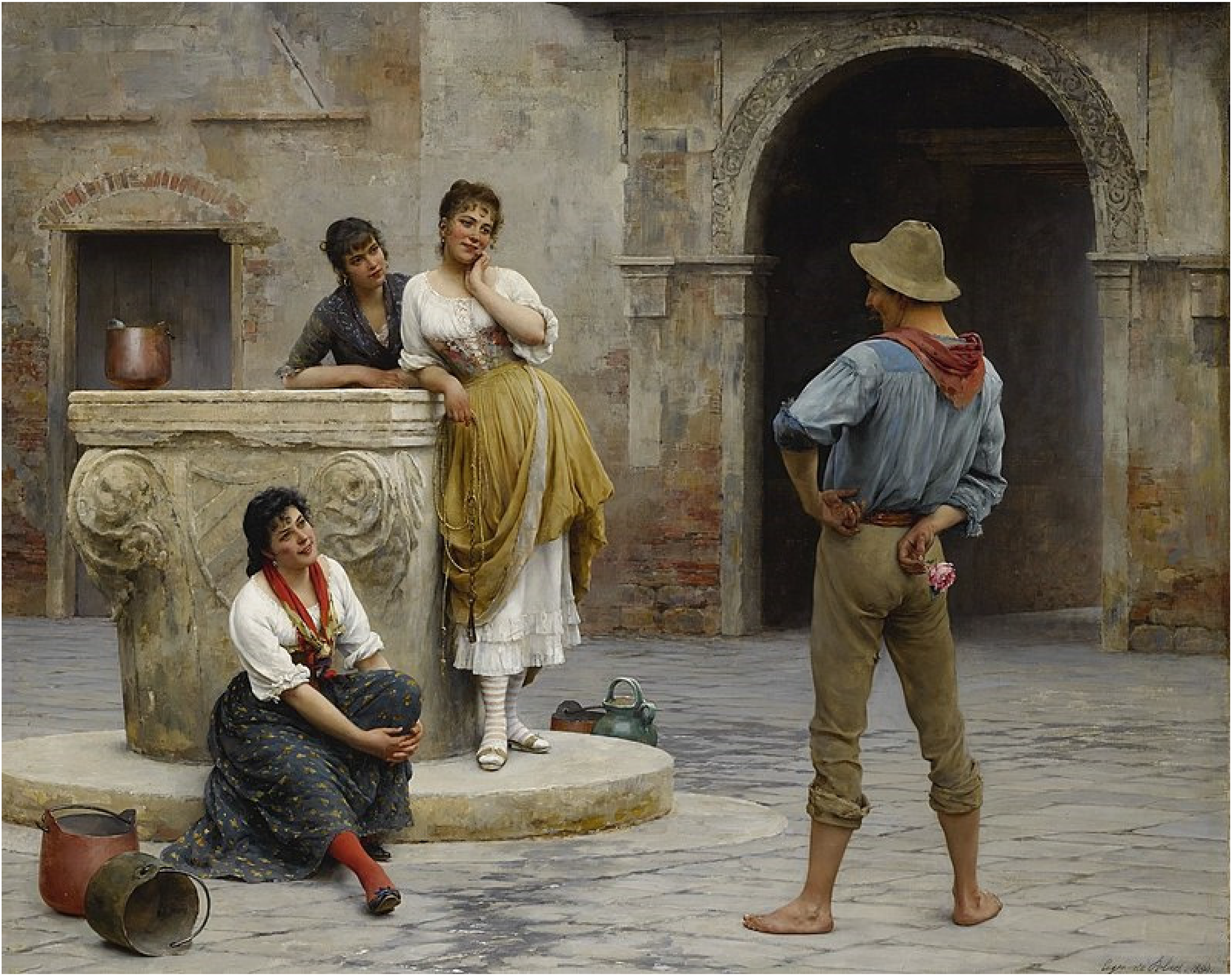
Eugene de Blass. (1894). The Flirtation [oil on canvas]. Wikimedia Commons. https://upload.wikimedia.org/wikipedia/commons/3/39/Eugene_de_Blaas_-_Flirtation_%281894%29.jpg
In a prior investigation concerning the perception of male contrapposto by Pazhoohi et al. (2022), the researchers employed male statues from antiquity. They found that an exaggerated contrapposto, particularly in virtual reality (Pazhoohi et al., 2022, Study 2), was perceived as more attractive and masculine in contrast to the upright male statues up until a certain degree. That is, more exaggerated contrapposto was also associated with reduced attractiveness. However, their outcomes from Studies 1 and 3, utilizing 2D renditions of the same statues, did not reveal variations between male bodies of differing postures. The disparities observed between the outcomes of our present study and those of Pazhoohi et al. (2022) might be attributed to differences in the stimuli models. In our present research, a generic white male body figure was employed, whereas Pazhoohi et al. (2022) used specific male antiquity models renowned for their contrapposto postures. Additionally, it is worth noting that their research utilizing 2D studies also failed to identify perceptual differences. While future research might opt to illuminate the effects of 3D versus 2D perceptions of male contrapposto, our results support the notion that men are regarded as more masculine and dominant in an upright pose. This observation is in line with the feminizing effect of the female contrapposto that can be seen as affecting male contrapposto similarly. Moreover, our results also indicated that the contrapposto pose was rated as less natural than the standing pose. One reason for this could be attributed to the possibility that contrapposto is a posture that males do not commonly adopt in daily life. Thus, individuals might have perceived it as less natural compared to the more commonly adopted convenient standing pose. Likewise, participants might have interpreted “naturalness” as a posture that occurs in a spontaneous and effortless manner or as the most comfortable and familiar body position. Consequently, they may have considered contrapposto as less aligned with these interpretations of naturalness. These possibilities highlight two limitations of the present work: clarity for how “naturalness” should be interpreted by participants and the lack of any firm base-rate real-world measures of contrapposto postures. Regarding the former, in future studies, researchers could opt to provide participants with more precisely crafted definitions of what constitutes a natural body form. The latter presents a daunting challenge, but a first step might be to compare the relative frequency that males and females display a contrapposto posture. Regarding the ratings of dynamicity, no difference was found in either study. One possible reason for this finding could be the 2D nature of the stimuli compared to actual sculptures. This argument aligns with the findings of Pazhoohi et al. (2022), where differences in dynamicity emerged when stimuli were observed in virtual reality but not in 2D renders of same male statues.
In contrast to a previous study by Jacobs et al. (2023) that used a similar methodology to record visual attention and found that individuals attended for a longer duration to the female contrapposto than to standing poses over an extended period of time—suggesting a top-down influence on female contrapposto—our two studies did not reveal any difference in gaze behavior with respect to male contrapposto. In other words, our findings do not imply that male contrapposto attracts more visual attention than a standing body posture. This once again bolsters the notion of the feminizing effect of contrapposto on body posture.
In conclusion, this present research, conducted through two gaze-tracking studies, explored the impact of male contrapposto on visual attention via a preferential-looking task. The findings indicated that while men in a standing pose are perceived as more masculine, dominant, and natural compared to men in a contrapposto, there was no observable preference for visual attention. While these results provide insights into artistic portrayals of men and women, further research is warranted to better comprehend the underlying motivations for the recurrent utilization of male contrapposto in art history.
Footnotes
Consent to Participate
All participants consented to taking part in the study.
Consent for Publication
All the authors consent for the publication of the article.
Code Availability
The authors will share upon request.


Data Availability
The authors will share upon request.
Declaration of Conflicting Interests
The authors declared no potential conflicts of interest with respect to the research, authorship, and/or publication of this article.
Ethical Approval
This and the following research were approved by the Behavioural Research Ethics Committee of the University of British Columbia and was conducted in accordance with the Declaration of Helsinki as it pertains to research with human participants.
Funding
The authors received no financial support for the research, authorship, and/or publication of this article.