



Abstract
We employ a cognitive sociological perspective to empirically assess how the evaluation of music fragments – electronic dance music (EDM) in particular – is affected by the perceived attractiveness of a DJ, in relation to their gender. Using a survey experiment based on randomized vignettes within a sample of the US population (n = 2710), in which respondents evaluate music fragments randomly paired with images of DJs, we assess to what extent music evaluations are affected by artists’ 1) gender, 2) perceived attractiveness, and 3) the interaction between these traits (while controlling for race/ethnicity and respondent characteristics). We find a strong positive relationship between artists’ perceived attractiveness and how ‘their’ music is evaluated. While this is true regardless of DJ gender, attractiveness benefits male artists slightly more than female artists. These findings provide further empirical support for the notion that audiences include non-musical traits about artists in music evaluation processes.
Introduction
Studies demonstrate that non-musical characteristics of musicians can play a role in how their music is evaluated. For example, classical musicians who are considered attractive (Ryan & Costa-Giomi, 2004; Ryan, Wapnick, Lacaille, & Darrow, 2006; Wapnick, Mazza, & Darrow, 1998, 2000) or ‘appropriately’ dressed (Griffiths, 2008, 2009; Urbaniak & Mitchell, 2022), are perceived as better musical performers. North and Hargreaves (1997) found similar results for musicians making ambient/new age music, where better evaluations were given for music by musicians who were considered physically attractive. Further studies suggest that other non-musical traits such as gender (Clawson, 1999; Miller, 2016; Stronsick, Tuft, Incera, & McLennan, 2018), can also play a persistent role in how artists are evaluated. While many aspects of an artist can be taken into consideration when evaluating their work, the mechanisms that lie at the heart of non-musical classifications can only be activated when individuals perceive differences between musicians that are salient to them. In other words, people first tend to see differences between people (e.g. ‘men’ vs. ‘women’) or objects before they can assign evaluations (e.g. ‘good’ vs. ‘bad’) to these differences (c.f. Cerulo, 2001; DiMaggio, 1997; Zerubavel, 1997). In this paper, then, we build on this knowledge and ask: how do gender and perceived attractiveness operate in the evaluation of music?
Focusing on electronic dance music (EDM) allows us to analyze connections between audience perceptions of artists and their music, while excluding potentially gendered musical content such as vocals. Moreover, EDM is interesting because despite a slow but steady increase of women artists and artists from ethnic minority groups (Farrugia, 2012), and the rise of well-known female DJs (e.g. Nina Kraviz, Charlotte de Witte, Anja Schneider, Ellen Allien, The Black Madonna, or Monica Kruse), the field of electronic dance music remains numerically and symbolically dominated by male and white DJs, particularly among the top segment of artists (Gadir, 2017; Gavanas & Reitsamer, 2013; Goedegebuure, 2019; Yücel, 2017). While some music professionals indeed reason that characteristics such as a musician's gender have sonic consequences, research shows that the music itself is not convincingly delineated along lines of, for example, gender (Farrugia, 2012). Moreover, within this prevalent masculine discourse, physical attractiveness of women artists is often ‘understood in diminutive terms and is thus perceived as irreconcilable with skill’ (Gadir, 2017, p. 198). Without prior knowledge, people cannot sonically distinguish whether electronic dance music is produced by men or women, or attractive or unattractive people. Yet, classifications based on gender and perceived attractiveness play a role in all explanations for the symbolic dominance of male artists in the EDM genre.
By using a novel method – a survey experiment with randomized musical vignettes – we explore to what extent non-musical traits play a role in the evaluation of EDM fragments. In the study, respondents (n = 2710) were asked to evaluate one of twenty-five music fragments and indicate their liking of the fragment. The fragments were randomly accompanied by one of a hundred images of DJs, varied in terms of gender and race/ethnicity. Moreover, respondents indicated, in a separate measure, whether they found the DJ attractive or not. In doing so, we can assess to what extent the evaluation of music fragments is affected by 1) a DJ's gender, 2) perceived attractiveness and 3) the interaction between these traits (while controlling for DJ race/ethnicity and respondent background characteristics). We find that musicians’ perceived attractiveness has a strong effect on how ‘their’ music is evaluated. For DJs, being perceived as attractive bears considerable positive consequences for how their music is evaluated. Although this is the case for both male and female artists, we do find that attractiveness has an additional benefit for men. By contrast, interestingly, perceived unattractiveness disadvantages both male and female artists indiscriminately.
Gender Status Beliefs in Music Production
Being considered as one of the most visible characteristics, gender is salient in both gender-diverse and gender-specific spaces and organizations (Auspurg, Hinz, & Sauer, 2017; Ridgeway, 2011). As such, gender can play an important role in music evaluations too. Socially shared expectations about gender tend to shape how audiences and producers alike perceive music. These stereotypical role expectations based on gender can be instilled in people from a very young age onwards, where we see, for example, that boys are expected to and generally desire ‘masculine’ instruments such as drums or guitar, whereas girls are expected to and generally prefer to pick ‘feminine’ instruments such as flute, harp, or bass guitar (Clawson, 1999; Cramer, Million, & Perreault, 2002; Sargent, 2009). Gender role expectations can thus shape what people see themselves doing (or not doing), and how people evaluate what others (should) do. Importantly, these gender status beliefs are widely shared among men and women, meaning that people may hold these beliefs even when they are negatively affected by them (Correll & Ridgeway, 2003). Through these expectations, genres can become segregated along gender lines. See for example the dominance of men in metal music as opposed to women in mainstream pop (Berkers & Schaap, 2018).
Gender status beliefs can affect music fields in a hierarchical fashion as well: men tend to take up positions that are perceived as having higher status (Blackburn, Browne, Brooks, & Jarman, 2002; Faupel & Schmutz, 2011). The consequence of such gender inequalities in music are particularly pronounced in consideration of the gender wage gap and the potential to pursue sustainable careers. Numerous studies find a considerable wage gap between men and women in creative professions, for example in the United Kingdom (O’Brien, Laurison, Miles, & Friedman, 2016), the United States (NEA, 2008) and Germany (Schulz, Zimmermann, & Hufnagel, 2013). In terms of careers, studies find that women are generally underrepresented in key-positions in the popular music industry (e.g. Dowd, Liddle, & Blyler, 2005; Leonard, 2007) and receive less (positive) attention in critical reception (e.g. Berkers, Verboord, & Weij, 2016; Faupel & Schmutz, 2011; Schmutz & Faupel, 2010), on the basis of which can be concluded that ‘the spaces where women artists work, create, and perform are not designed around their needs’ (Miller, 2016, p. 119). As a case in point, the usage of blind screen auditions in classical music orchestras increased the number of women selected for positions by up to 50%, even though jury members were convinced that gender did not play a role in their evaluations of musicians (Goldin & Rouse, 2000).
As such, gender status beliefs do not only relate to what kind of performance is expected from men and women respectively, but they also influence the perceived quality of a person's performance and their reward for this. When certain practices become associated with high status – technical competence on DJ decks for example – they can become more closely linked to notions of masculinity as well. Therefore, our first hypothesis states that respondents evaluate music fragments associated with images of female performers more negatively, as compared to music fragments associated with images of male performers (h1).
Physical Attractiveness in Music Production
Decades of research in psychology, economics, and sociology have demonstrated that perceived attractiveness is associated with how people are evaluated in terms of skills and social status over the course of the lifespan. Studies provide evidence that higher perceived attractiveness is positively related to, for example, a person's income (e.g. Hosoda, Stone-Romero, & Coats, 2003; Judge, Hurst, & Simon, 2009), performance evaluations (e.g. Hamermesh & Parker, 2005) and job security (Commisso & Finkelstein, 2012). In line with these findings, perceived unattractiveness is linked to lower levels of social and economic capital (and vice versa), clearly demonstrating that attractiveness coincides with stratification outcomes (Schneickert, Steckermeier, & Brand, 2020; Webster & Driskell, 1983).
In music production, similar patterns have been scrutinized. In a study on male and female violin players in orchestras, Wapnick et al. (1998) find that, overall, violin players who are perceived as more attractive receive higher evaluations than performers who are perceived as unattractive. Interestingly, they find similar results when respondents only evaluate audio fragments without clues regarding the performer's perceived attractiveness. This means that perceived attractiveness may not only influence evaluations directly, but, in line with the enduring positive consequences of attractiveness over the life course (e.g. Jæger, 2011; Schneickert et al., 2020), the explanatory mechanism may be that ‘as musicians progress in their training, the more attractive of them received more encouragement and approval than do the less-attractive musicians’ (Wapnick et al., 1998, p. 518). In other words, more attractive performers receive more and better guidance than their less attractive peers, so that attractive musicians come to actually play better. We therefore hypothesize that respondents evaluate music fragments more positively when associated with images of perceived attractive performers, than when associated with images of performers perceived as unattractive (h2).
However, perceived attractiveness may not function universally across different gender groups. Even though women are generally evaluated as more attractive on average than men because they are perceived to possess higher amounts of erotic capital – a complex combination of perceived beauty, charm, and sexual appeal, physically and/or socially (Hakim, 2010) – this does not necessarily lead to social rewards. Expectations regarding gender also play a fundamental role in the evaluation of attractiveness, since culturally specific perceptions of successful/failed performances of masculinity and femininity guide these evaluations (Kuipers, 2015). The relatively few studies that have been conducted in this area come to divergent conclusions concerning the importance and direction of the interaction between perceived physical attractiveness and gender.
On one hand, some findings suggest that attractiveness is mostly beneficial for women. Ryan and Costa-Giomi (2004) find that without blind auditions (Goldin & Rouse, 2000), higher perceived attractiveness has positive consequences for the evaluation of piano performances by women, while perceived unattractiveness has positive consequences for the evaluation of male performers. This is also affected by the perceived performance level of pianists, where perceived attractiveness has more influence among seasoned professionals than for pianists at entry/intermediate levels. When performers are evaluated as belonging to a high-performing tier of music professionals, ‘being attractive favored the female pianists, and being unattractive favored the male performers’ (Ryan & Costa-Giomi, 2004, p. 151).
On the other hand, studies also show that women artists who (are evaluated to) display attractiveness and sexual desirability, are perceived negatively in terms of musical skill (Gadir, 2017; Schaap & Berkers, 2013). Generally, this is caused by women being evaluated on looks – objectified – more so than men (Fredrickson & Roberts, 1997). In a study of woman violinists playing jazz, classical, and folk pieces, Griffiths (2008; 2009) finds that technical proficiency and musicality are negatively associated with perceived attractiveness. Here, women tend to be evaluated based on their attractiveness first, so that ‘musical talents may be considered secondary to this or even devalued because of it’ (Griffiths, 2009, p. 160). This suggests a zero-sum game, where women are implicitely expected to be either attractive or skillful, but not both (Bayton, 1997; Farrugia, 2012; Gadir, 2017; Gavanas & Reitsamer, 2013; Griffiths, 2008, 2009).
Finally, some scholars stress the importance of attractiveness over gender in evaluation processes. North and Hargreaves (1997) collected ratings from a student sample for twenty new age/ambient music fragments associated with images from four categories of performers: attractive man, unattractive man, attractive woman, and unattractive woman. They found that perceived attractiveness leads to higher scores on ‘liking’ a song, and rating a performer as more ‘sophisticated’, ‘intelligent’, having more ‘artistic merit’, and more ‘likely to be popular,’ but that there is no interaction between performer's gender and attractiveness. Similarly, in the study on violin players by Wapnick et al. (1998) mentioned before, attractive performers were evaluated higher, irrespective of their gender. Again, this suggests that attractiveness benefits are non-gender specific.
While the literature is undecided on the interaction between perceived attractiveness and gender, the consequences for musicians’ careers – both symbolically and economically – remain considerable. To study this interaction, we use randomized musical vignettes with images of EDM DJ's on a large number of evaluations. Tentatively, our hypothesis is then: there is no interaction between gender and perceived attractiveness in evaluating music fragments (h3). Importantly however, our study was specifically designed towards identifying such an interaction if it occurs (described below).
Methods and Data
Procedure
To assess to what extent gender and perceived attractiveness influence the evaluation of EDM fragments, we set-up a factorial survey design based on randomized vignettes. In an online survey, respondents were asked to evaluate a musical fragment of 20 seconds by indicating how much they liked the fragment on a seven-point Likert scale (ranging from ‘definitely no’ to ‘definitely yes’). The fragment was accompanied with an image of a relatively unknown male or female DJ (see Figure 1). 1 Individual respondents only evaluated a single fragment. We deliberately opted for this procedure to avoid respondents comparing stimuli (which might even result in them noticing differences in gender and attractiveness). The fragments (25) and images (50 men, 50 women) were randomized across respondents, resulting in 2500 possible unique combinations of fragments/images. To make sure that respondents would not answer before they had heard the fragment, a time-lag was built into the survey, only displaying the evaluation question after 15 seconds.
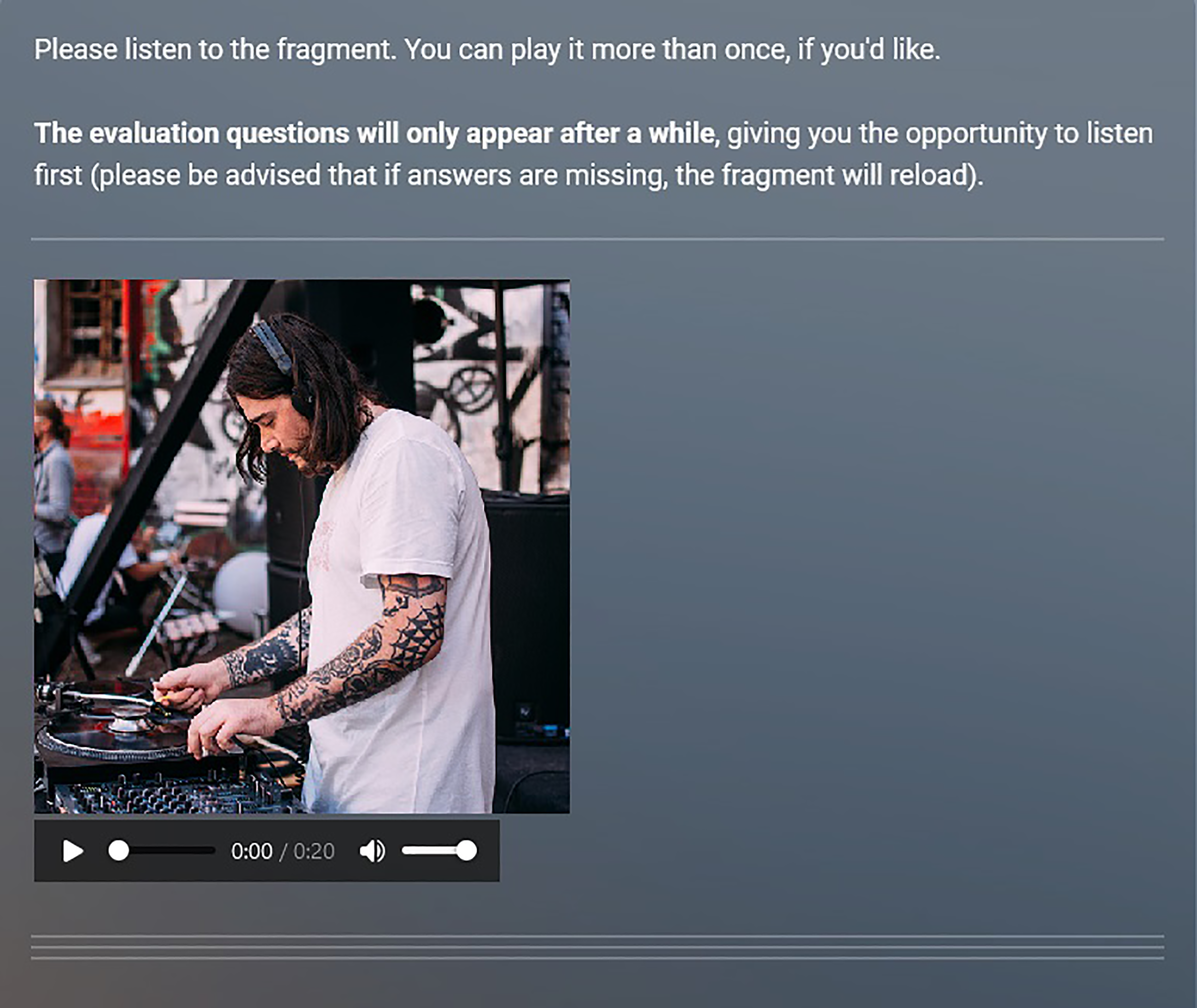
Screenshot of vignette condition (sample image by IODUM PH, not used in research).
After the evaluation of the fragment, respondents were asked about their taste in music (eleven common genres rated on a five-point scale) and relevant background characteristics (age, gender, sexual orientation, education, ethnicity). At the end of the survey, respondents were once again shown the picture of the DJ they had seen before and asked to evaluate the DJ's attractiveness (‘How attractive do you consider this person?’) on a five-point Likert scale ranging from ‘very unattractive’ to ‘very attractive’.
To check for the unlikely case that respondents are familiar with the fragment and/or the DJ, we asked respondents whether they knew the fragment and the DJ and, if so, who or what they are. Whereas few respondents indicated they knew the music or the fragment, none were able to subsequently state who they thought they heard/saw. Finally, while we made sure that the survey instructions, the presentation of the vignette and the order of the survey did not give away what we intended to measure, we asked respondents to tell us what they thought we intended to do with the study. 94 respondents hinted at our intentions, and we removed their entries. All other respondents answered either ‘no’ or a variation of ‘to find out what I think of a song’.
Sample of Fragments and Images
We used 25 fragments of relatively unknown contemporary electronic dance music tracks. To keep the variation between fragments to an absolute minimum, all fragments are of the same length (twenty seconds), in the same mode, and of a similar bpm (beats per minute) of around 130. None of the fragments include vocals or text. All fragments have regular ‘four-to-the-floor’ beats in a 4/4 time signature and contain relatively few melodic lines or harmonies. Every twenty second fragment contains a small build up and ‘beat drop’, to make sure that all fragments contain similar within-song variation. Although the fragments were selected to reduce variability, inevitably some fragments may be more likeable than others. Assessing such differences in sonic qualities is not the aim of our study. To account for any differences between fragments, random intercepts models were used with the fragments as a grouping variable. This means that the intercept can differ for individual fragments, so fixed effects of the independent variables of interest (and controls) can be assessed, regardless of any differences in likeability of the individual fragments.
The sample of images was created by browsing for small-scale EDM events on open profile Facebook pages and other social media. This was done to make sure there were no (very) well-known DJ's in the sample (which was subsequently checked by asking respondents whether they recognized DJ's). We built in variation in terms of race/ethnicity. This was done exclusively by way of control, to avoid that findings would be affected by DJ's race/ethnicity. Deciding on the DJ's gender and race/ethnicity was done by means of visual validation in combination with DJ-background information as found surrounding the event. We operationalized race/ethnicity through a binary variable with the categories ‘White’ and ‘non-White’. 2 The images and fragments were used under the Fair Use exception on copyrights for scientific purposes.
Respondent Sample
For this study, we used unique survey data collected through Amazon's Mechanical Turk (MTurk). This is a paid participant-compensation platform which has become a fertile source of data collection over various populations, the United States in particular (cf. Goodman, Cryder, & Cheema, 2013; Litman & Robinson, 2020; Rouse, 2015). Various studies have demonstrated that samples drawn from MTurk yield comparable results to other internet-driven samples and that ‘MTurk can be used to obtain high-quality data inexpensively and rapidly’ (Buhrmester, Kwang, & Gosling, 2011, p. 3). Various studies even indicate that MTurk at times provides better data than that drawn from student samples and several high-quality national samples (for a review, see Kennedy et al., 2020). Of course, as respondents are self-selected, a sample from this platform cannot claim representativeness. However, for our purposes we primarily aimed for sufficient variation in respondent characteristics.
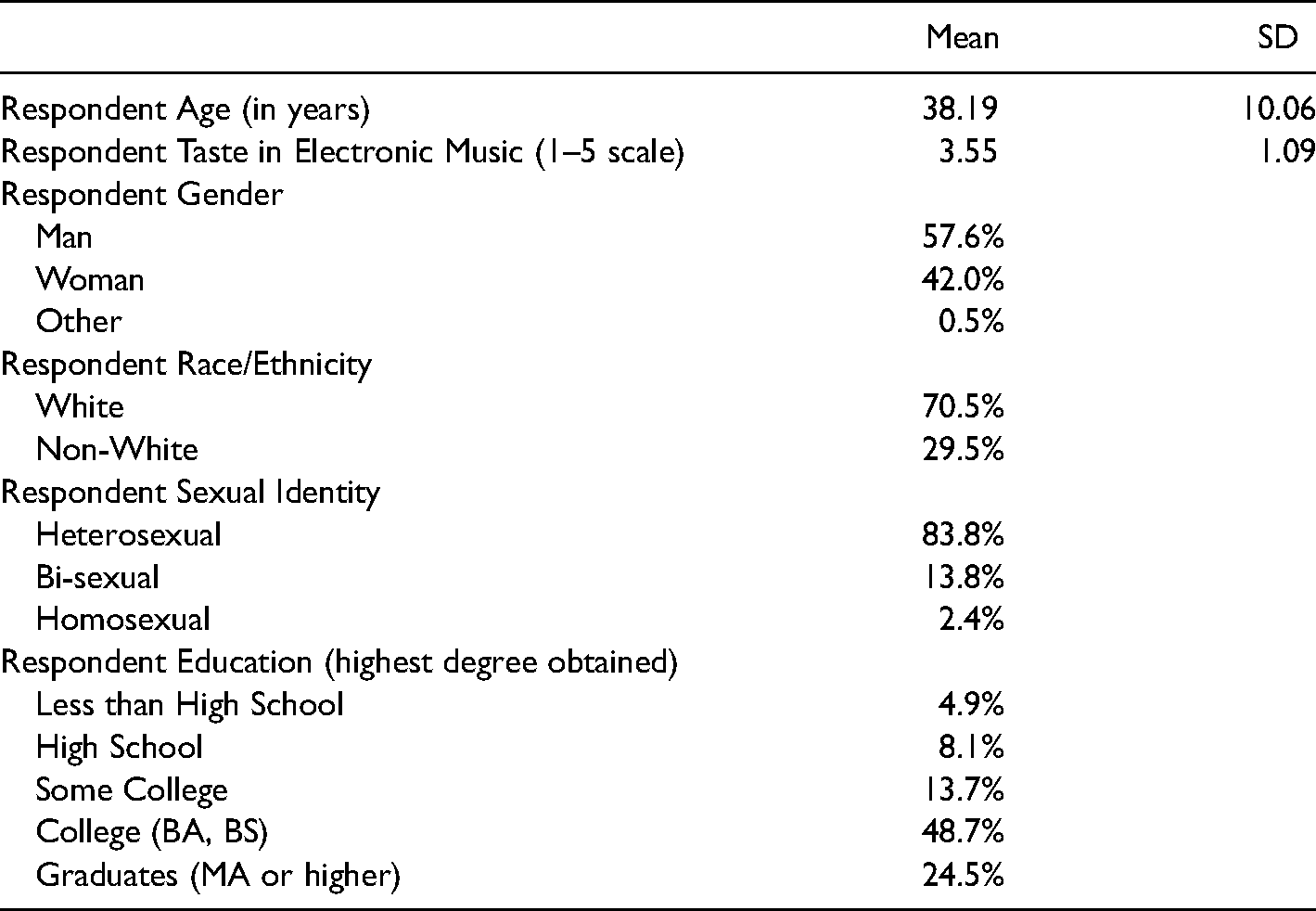
To circumvent known risks of gaining low-quality data though MTurk (Litman & Robinson, 2020), we provided: clear instructions for the survey including a conservative estimation of the time necessary to complete the survey (for which we checked afterwards as well); only allowed ‘Master Turkers’ based in the United States (experienced workers with a good reputation on the platform) to complete the survey; and provided a relatively generous financial compensation ($2,- for, on average, less than 5 min of work). Finally, workers trying to access the survey via VPN-services were automatically blocked in our survey software Qualtrics (Kennedy et al., 2020). The survey was posted multiple times separately in May 2020, on different times of the day (morning, afternoon, evening and night) to account for time differences and increase diversity within the sample (Casey, Chandler, Levine, Proctor, & Strolovitch, 2017). To further check for potential issues with data quality, we excluded 336 respondents post hoc because of unlikely response times (100 respondents), failing a simple attention check (142 respondents), or, as indicated earlier, guessing or hinting at the purpose of study (94 respondents). This resulted in a final sample of 2,710 American respondents. Descriptive statistics are displayed in Table 1. Only 0.5% of respondents did not identify their gender as binary, but men are somewhat overrepresented. On both race/ethnicity and sexual identification, the sample of respondents approximates general figures for the country in 2020 (Jones, 2021; US Census, 2021).
Descriptive Statistics (n = 2,710).
Results
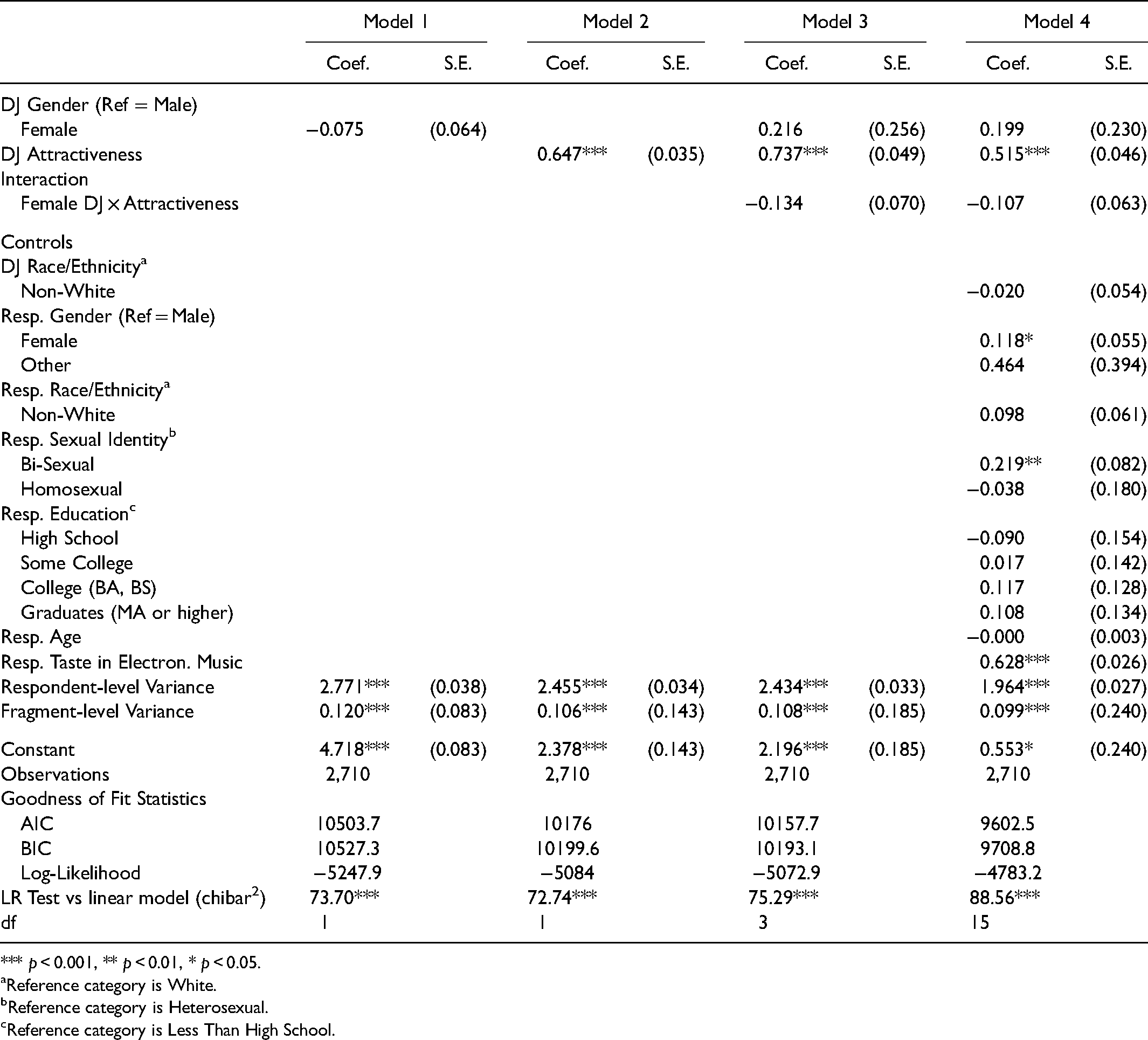
In this study, a seven-point scale which measures how much a respondent ‘likes’ a song fragment serves as the dependent variable in a mixed-effects linear regression analysis with random intercepts for the individual fragments that respondents evaluated. This allows us to interpret the effects of independent variables by controlling for possible differences between song fragments. The independent variables of interest in this analysis include DJ gender, perceived attractiveness of the DJ (rated by respondents), and the interaction of these two. The controls include DJ race/ethnicity and several respondent characteristics (gender, race/ethnicity, sexual identity, education, age, and taste in electronic music). In Table 2, we modelled the dependent variable against DJ gender (model 1), perceived attractiveness of DJ (model 2), interaction of DJ gender and perceived attractiveness with main effects (model 3), this same interaction and main effects along with a set of controls (model 4). For any of these effects, the significant fragment-level variance (the variance of the random intercepts) makes clear that there are substantial differences in evaluation between the fragments, but still the variance that can be attributed to respondents is considerably larger.
Mixed-Effects Linear Regression with Random Intercepts, Predicting how Much a Respondent ‘Likes’ (Scale1–7) an EDM Song Fragment (n = 2,710).
*** p < 0.001, ** p < 0.01, * p < 0.05.
Reference category is White.
Reference category is Heterosexual.
Reference category is Less Than High School.
Looking at the first two models in which we focus on the effect of the DJ's gender (model 1) and perceived attractiveness (model 2), we see that perceived attractiveness has a strong, positive effect on liking a music fragment. In other words: the higher the perceived attractiveness of a DJ, the higher the evaluation of the music fragment. This relationship is visualized in Figure 2, which presents adjusted predictions based on the marginal effects of model 2. 3 Here we can see that on average, when a music fragment is accompanied by an image of a DJ who is perceived as very attractive, this results in a predicted evaluation score which is two-points higher (seven-point scale) than DJs perceived as very unattractive. Surprisingly, taken on its own, we find that DJ gender has no influence on whether a respondent likes a fragment or not. In other words, the gender of the DJ does not affect whether a music fragment is liked or disliked.
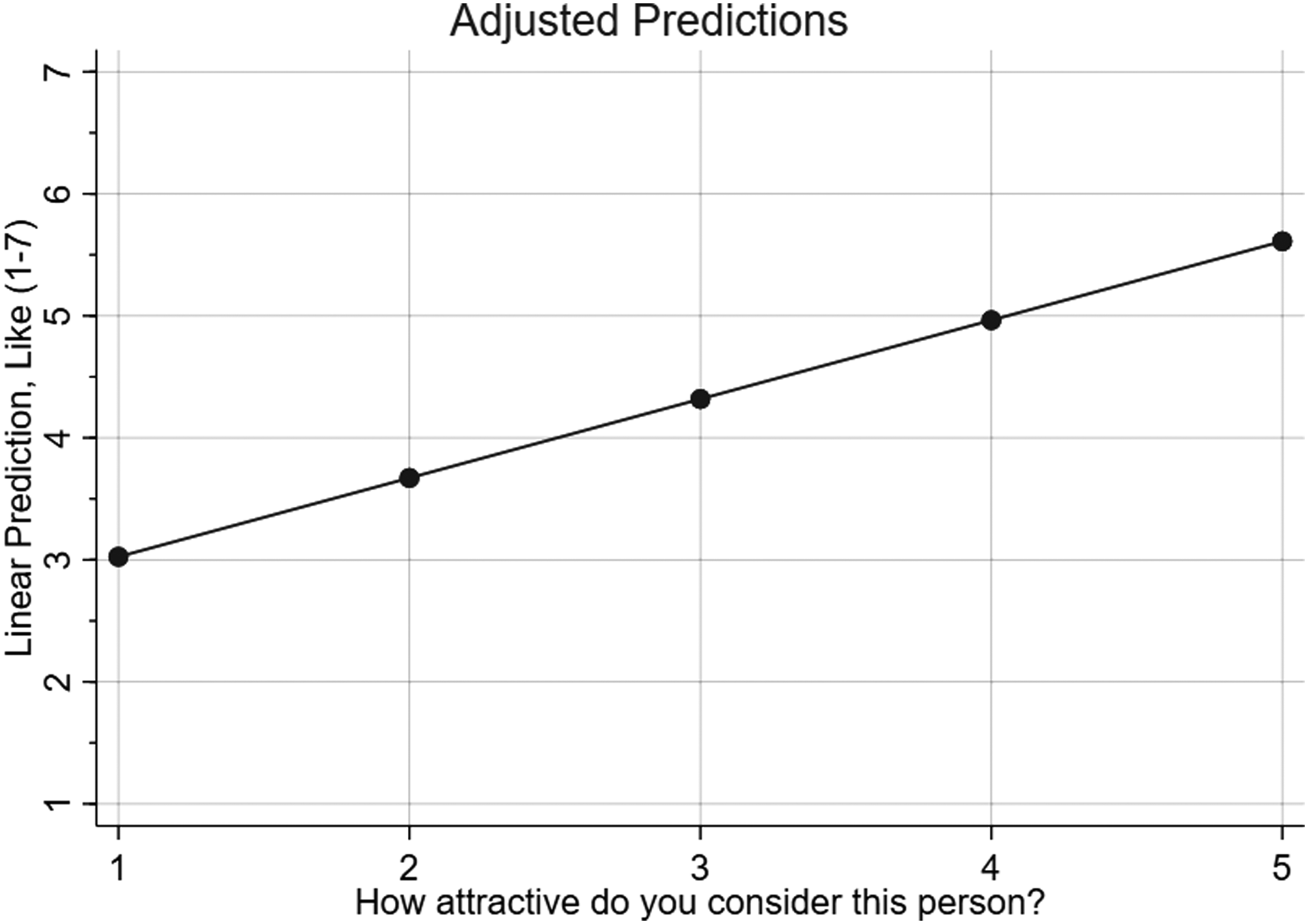
Influence of perceived attractiveness on liking a music fragment (model 2).
In model 3 we introduce an interaction between DJ gender and perceived attractiveness. Here we see that the main effect of perceived attractiveness is stable and the main effect of DJ gender still seems to have no impact on the evaluation. The estimate for the interaction effect is non-significant, but consistent with suggestions by Williams (2012) and Mize (2019), we investigated this further by estimating marginal effects and producing associated plots. While omitted for the sake of space 4 , these suggest subtle differences between male and female DJs along the spectrum of perceived attractiveness (further explained below).
Model 4 builds upon the previous one by introducing a set of relevant controls. The main effect of perceived attractiveness remains when controlling for DJ race/ethnicity and respondent attributes. To further explore the interaction between DJ gender and perceived attractiveness, we produced Figure 3 and Table 3 to compare average marginal effects for DJ gender at various points of the attractiveness scale. This clarifies that there is a small interaction between attractiveness and DJ gender, but it is contained to the upper end of the attractiveness scale. Male and female DJs who are perceived as (very) unattractive, are equally likely to be rewarded (or punished) for their perceived (un)attractiveness in the evaluation of the music they are assumed to have produced. However, from the middle category upwards (those perceived as neither attractive nor unattractive, but especially those who are perceived as attractive to very attractive), male DJs receive slightly, but significantly higher evaluations for ‘their’ music than female DJs. In other words, for both male and female DJs, being perceived as attractive increases the liking of the music they are presumed to have made, but attractive male DJs receive a slight ‘bonus’ as opposed to attractive female DJs, for whom the effect of attractiveness is smaller.
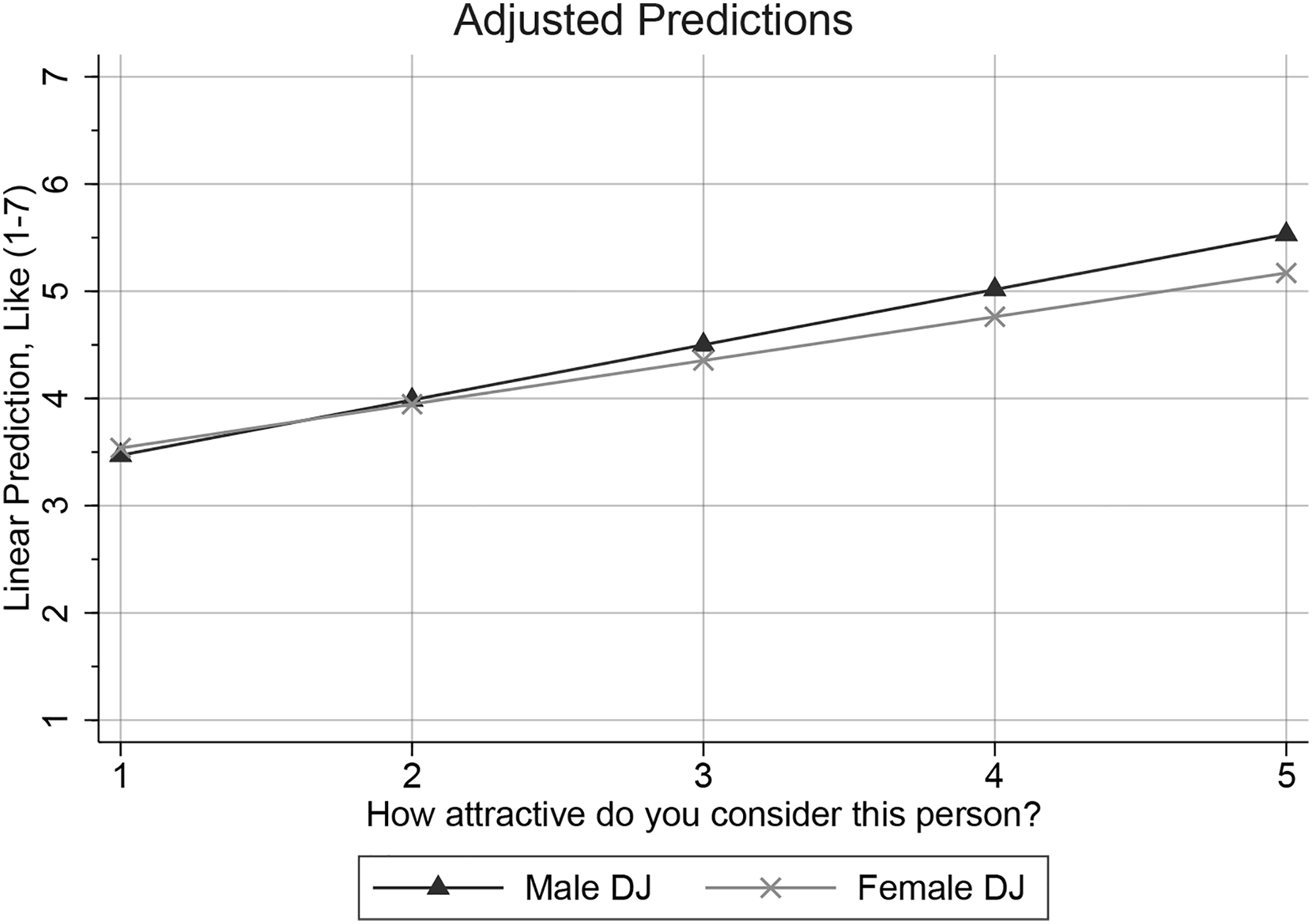
Influence of perceived attractiveness on liking a music fragment, differentiated for gender, with controls (model 4).
Predicted Value of ‘Liking’ a Fragment (1–7) with Marginal Effects of DJ Gender Across Levels of Perceived Attractiveness (n = 2,710).
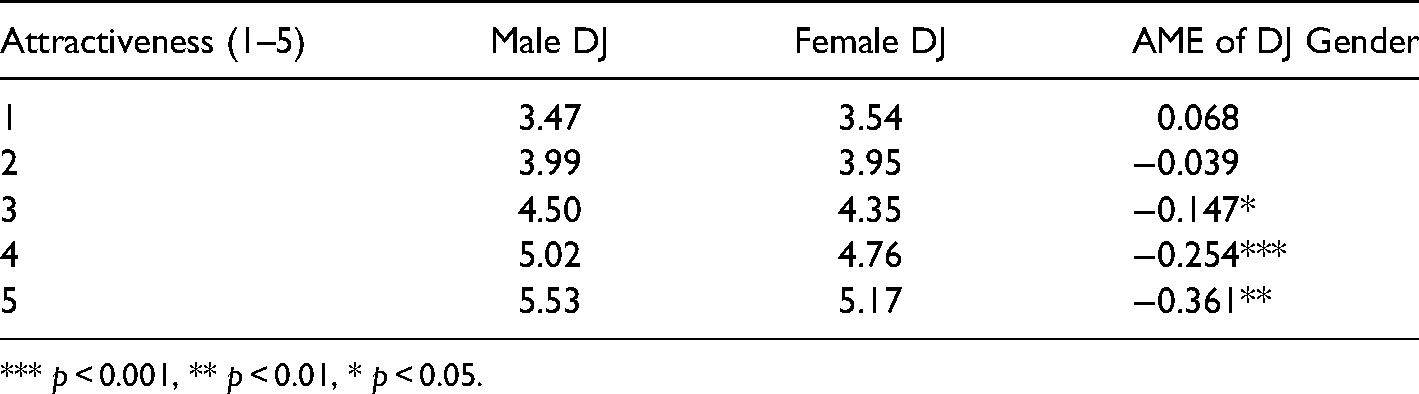
*** p < 0.001, ** p < 0.01, * p < 0.05.
While we cannot infer from the data why this is, based on previous research we theorize that this may be due to the pervasive role played by gender status beliefs that interact with perceived attractiveness. Whereas for men, high attractiveness and skill are expected to coincide with each other, women find themselves more often in a trade-off between attractiveness and skill, reiterating similar findings among women violin players (Griffiths, 2008, 2009) and metal musicians (Berkers & Schaap, 2018). In addition, women are more commonly judged based on their looks than men (Fredrickson & Roberts, 1997), making it likely that, for women, higher perceived attractiveness results in relatively lower evaluations of accompanied music fragments.
Furthermore, we see that DJ race/ethnicity has no effect on how a music fragment is evaluated. Also, unsurprisingly, we see that liking EDM has a positive effect on liking a fragment. This follows a predictable pattern: the more a respondent states a taste for EDM, the more the fragment is liked. We also see that when respondents identify as women, they are somewhat more likely to evaluate a fragment positively, although this effect is only slightly significant and hence its meaning for the analysis limited. Finally, respondents identifying as bisexual tend to evaluate fragments more positively than their heterosexual and homosexual counterparts. Although of no direct relevance for the present study, this finding is intriguing and warrants further research.
Overall, then, we can refute h1 (artist gender affects the evaluation of music fragments), while strongly confirming h2 (perceived attractiveness of artists affects the evaluation of music fragments). We partly refute h3 (there is no interaction between gender and perceived attractiveness in evaluating music fragments), as there is a small attractiveness ‘bonus’ for male DJs compared to female DJs, while the general pattern still applies for both gender groups.
Conclusion
In this article we explored to what extent evaluations of music are affected by non-musical characteristics of artists, specifically their gender and perceived attractiveness. Our analysis of this original dataset (n = 2,710) suggests that of these factors, perceived attractiveness is the most salient. When respondents find (what they believe to be) a music creator attractive, they also perceive (what they believe to be) their music more positively. The converse is similarly true: DJs perceived as less attractive ‘make’ music that is less well-liked. This finding is durable in terms of different specifications of the model, even when controlling for race/ethnicity of the DJ or respondent characteristics or preferences. However, our findings do suggest that for DJs who are perceived as attractive, their gender does matter in how ‘their’ music is evaluated: (very) attractive male DJs receive slightly higher evaluations than women who are perceived as equally attractive. This finding is in line with previous research on the consequences of gender status beliefs and objectification of female bodies, due to which women are evaluated more harshly than men when they are considered attractive. Although small, this effect deserves more research. Overall, our findings suggest that even though the electronic dance music space, like many other areas of cultural production, is rife with gender and race inequalities (in terms of festival bookings, etc.), when it comes to the perceptions by audiences, the boundaries between good and bad music are most clearly demarcated by perceptions of attractiveness: artists who are perceived as attractive are judged to be better artists.
A limitation to this study is that a more ecologically valid approach would be to have a minority/majority setup in which respondents mainly see men and only a few women. This could also be used to test ideas regarding tokenism (Kanter, 1977; Yoder, 1991). For now, this approach was deemed too complex (in the current research design) and would come at the cost of the randomization of vignettes. A second limitation of this study is that the sample provided by Amazon's Mechanical Turk is slightly skewed in terms of education level. While theoretically there is no indication to assume that results would be different when this would be mitigated, this should be considered when generalizing to the population-level. Finally, the fact that this study was limited to the EDM genre did not allow for insights into variations in terms of genre and/or instrumentation – aspects which in particular may play a role in gender status beliefs, as previous studies have demonstrated (e.g. Berkers & Schaap, 2018; Clawson, 1999; Miller, 2016; Sargent, 2009). The design used in this study can be reproduced for other music genres, allowing for cross-genre comparisons – an opportunity for further research.
The findings in this paper have several implications for our knowledge on inequalities in music production, EDM specifically. Although this cannot be established empirically in this paper, we theorize that the lack of differences found based on gender – as also found by North and Hargreaves back in 1997 – demonstrates that audiences may be less sensitive to including gender in their music evaluations than expected. An avenue for further research may hence be to specifically study stakeholders and gatekeepers in music fields such as EDM, who perhaps include such characteristics in their evaluations more often than general audiences. This could partly explain why gender inequalities in well-known music fields (including EDM) persist, while empirical studies such as this garner evidence towards the notion that gender itself only has marginal consequences for how music is evaluated.
In addition, it could be that the (slowly) changing salience of gender category traits in music genres also affects how people evaluate music. Despite the persistent existence of these role expectations in the popular music industry, the last decade has seen a gradual shift in (renewed) attention towards the work of women in popular music and organized attempts are being made to change the gendered dynamics within the field. Journalistic studies on gender inequalities in festival line-ups, such as the ones mentioned in the introduction, have become prevalent, making the problem generally more visible and giving incentives for change towards professionals in the field. This has resulted in a concerted attempt under the moniker of ‘Keychange’, in which many music festivals pledge to have gender equal and generally more diverse and inclusive line-ups by 2022 (Keychange, 2021; Wicks & Monroe, 2018). In addition, the rise of the #metoo movement in 2017 has garnered attention towards widely spread practices of objectification, sexism, sexual abuse, and gender exclusion in the popular music industry generally and EDM more specifically (e.g. DJ Mag, 2018; Mustefa, 2020; Ross, 2021). Aside from the attention garnered by articles on the topic and interviews with artists, multiple well-received documentaries such as Play Your Gender (2017) and Underplayed (2020) have helped garner public attention for the topic. While slowly, such media attention could gradually change the gendered role expectations projected on DJs.
An equivalent dynamic is probably not yet at play with regards to what audiences consider attractive. Following Hakim's (2010) theory of erotic capital, we clearly find that attractive people have an edge over those considered less so. While not typically considered a measurement of inequality, Hakim (2010) argues that attractiveness, as a powerful cocktail of social and physical attributes, shapes the life course of those that possess it (alongside cultural, social, and economic forms of capital). Within the context of our findings in this paper, we can say that while audiences might increasingly view women and men on a more level playing field, the more attractive remain a cut above.
Supplemental Material
sj-docx-1-art-10.1177_02762374221118526 - Supplemental material for Attractive People Make Better Music? How Gender and Perceived Attractiveness Affect the Evaluation of Electronic Dance Music Artists
Supplemental material, sj-docx-1-art-10.1177_02762374221118526 for Attractive People Make Better Music? How Gender and Perceived Attractiveness Affect the Evaluation of Electronic Dance Music Artists by Julian Schaap, Michaël Berghman and Thomas Calkins in Empirical Studies of the Arts
Footnotes
Acknowledgments
We thank Christophe Berghmans, Noelle Chesley, Robin Leen, Joost Oude Groeniger, John Roberts, Britt Swartjes, Femke Vandenberg, Koen van Eijck, Frank Weij, and colleagues of the Rotterdam Popular Music Studies research groups for assistance and feedback at various stages of this research project.
Declaration of Conflicting Interests
The author(s) declared no potential conflicts of interest with respect to the research, authorship, and/or publication of this article.
Funding
The author(s) received no financial support for the research, authorship, and/or publication of this article.

Supplemental Material
Supplemental material for this article is available online.
Notes
Author biographies
References
Supplementary Material
Please find the following supplemental material available below.
For Open Access articles published under a Creative Commons License, all supplemental material carries the same license as the article it is associated with.
For non-Open Access articles published, all supplemental material carries a non-exclusive license, and permission requests for re-use of supplemental material or any part of supplemental material shall be sent directly to the copyright owner as specified in the copyright notice associated with the article.
