




Abstract
What factors influence street-level bureaucrats’ willingness to risk their lives during acute crises? The research on street-level bureaucrats’ willingness to risk their lives is in its infancy. While previous literature has identified several factors that influence street-level bureaucrats’ routine risk-taking behavior, the motivations that drive them to put themselves in harm's way during crises may differ. To explore this question, we conducted interviews with 29 police officers who were first responders during the October 7, 2023 attack on Israel. All interviewees actively risked their lives during this event. Our findings suggest that the motivations for street-level bureaucrats to risk their lives during crises differ from those during routine operations. In times of crisis, street-level bureaucrats are primarily driven by personal and organizational values such as purpose, duty, and camaraderie. Content warning: This article contains graphic descriptions of a warzone.
Introduction
Street-level bureaucrats (SLBs) are pivotal actors in implementing policy due to their extensive discretion. As such, they can decide how, when, and which clients they are willing to assist (Tummers & Bekkers, 2014). These decisions may pose risks for SLBs (Pisoni, 2018; Sabbe et al., 2021) to their status (Chalhi et al., 2018), occupation (Diab & Cohen, 2022), and even their lives (Cohen et al., 2024). Indeed, risk-taking behavior is an inherent part of various street-level professions in interactions with clients. For example, nurses and doctors are exposed to illness and infections (Civinskas et al., 2021), firefighters run into burning buildings (Fender, 2003), teachers are subjected to violence in schools (Davidovitz & Cohen, 2022), and police officers confront dangerous criminals (Homant et al., 1994). Studies that have explored risk-taking behavior among SLBs, specifically police officers, have identified several factors affecting the decision to engage in this behavior. Examples include personal ideology, incentives and potential sanctions from their organization, and pressure from the public (Cohen & Golan-Nadir, 2020). Other studies stressed the importance of trust in peers, managers, and the organization as a predictor of risk-taking behavior among police officers (Cohen, 2022; Cohen et al., 2024).
However, these studies focused on routine risk-taking behavior. They did not address such behavior in acute crises. Crises are defined as events that pose a critical threat to the community and/or the organization (Weick, 1988). They disrupt normal functioning and require urgent intervention (Boin et al., 2016). In the face of acute crises, SLBs must adapt to situations that differ from their routine procedures (Kalkman, 2020). For example, nurses and doctors battling the Covid-19 pandemic were confronted with different challenges than the ones they usually encounter (Gofen & Lotta, 2021; Moussa, 2022). Similarly, teachers in school shootings are subjected to different risks than other types of violence (Stevens et al., 2020). Firefighters and police officers encountered different situations in the 9/11 terror attack than the ones they confront daily (Freedman, 2004). Therefore, it is vital to understand the difference between risking one's life in normal times and doing so in times of acute crisis (Brodkin, 2021; Henderson, 2014).
We explore the factors promoting SLBs’ decision to risk their lives in times of acute crisis. We do so by building on the work of Cohen and Golan-Nadir (2020), who examined risk-taking behavior among SLBs in routine settings, and extending their framework to extreme emergencies. This is an exploratory effort aimed at understanding how SLBs’ motivations shift during times of acute danger and uncertainty. We argue that in such situations, the factors influencing the decisions to risk one's life are different than those affecting these decisions in normal times, even for those who routinely confront dangerous situations in the course of their regular work. Thus, we ask: What factors influence street-level bureaucrats’ willingness to risk their lives during acute crises?
To explore our research question, we conducted semi-structured interviews with 29 police officers who were first responders during the October 7 attack on Israel. In this coordinated attack, Hamas's armed forces invaded the southern border of the State of Israel and murdered more than 1,200 civilians and troops. In these events, police officers, some on duty and some off duty, were first responders in several locations. Sixty-two police officers lost their lives in these events. All of our interviewees actively engaged in life-threatening behavior during the events. Thus, our data consist of actual behavior, not intentions.
Our study makes several contributions to the literature. First, while there are studies about SLBs’ risking their lives in their daily interactions with clients, there is no research on how they respond to acute crises. Second, examining reactions to the October 7 attack in Israel offers a rare opportunity to study SLBs’ responses to a large-scale terror event—one of the most severe of its kind in recent history. While not intended as a direct comparison in terms of the severity or impact, this case presents an empirical context on a scale not studied since the 9/11 attacks in the United States. Lastly, on a practical level, understanding what factors influence SLBs to risk their lives as part of their job in acute crisis situations can help public organizations prepare better for such events.
The paper is structured as follows. We first introduce the concept of SLBs’ risk-taking behavior in normal situations. Then, we explain the possible influence of a crisis on this behavior. In the next section, we introduce the case study and methodology we employed. Finally, we present and discuss our results.
Life Risking Behavior at the Street-Level
A crucial element in SLBs’ work is their vast discretionary space, meaning the degree of freedom they can exercise (Evans, 2013) regarding the type, quantity, and quality of sanctions and rewards given to citizens when implementing policy (Tummers & Bekkers, 2014). SLBs can decide whether to assist their clients by moving towards them, minimize their interactions with their clients by moving away from them, or actively move against their clients (Tummers et al., 2015). In their routine interactions with clients, SLBs use their discretion to decide how to balance the sometimes contradictory demands of the policy and their clients (Maynard-Moody & Musheno, 2012), the internal and external pressures that characterize their work environment (Cohen, 2018; Hupe & Buffat, 2014), and the potential costs and risks of their choices (Diab & Cohen, 2022; Pisoni, 2018).
One factor affecting the discretionary decision of SLBs to help their clients by risking themselves is the priority they ascribe to the well-being of others and the level of personal risk they are willing to accept (Sabbe et al., 2021). Theories of pro-social behavior refer to actions intended to benefit others in society or one's social group (Penner et al., 2005). Studies on SLBs show that they often engage in pro-social behavior in an attempt to assist their clients. They might even be willing to break the organization's rules to do so (Bernards et al., 2024; Potipiroon, 2022), an action that entails personal risk to the bureaucrat. The theory provides several explanations for pro-social behavior, including a sense of altruism, empathy towards others, social norms and expectations, and various situational factors (Eisenberg et al., 2006).
Some SLBs face more than just professional risks; at times, their work involves life-threatening situations. Examples include violence against healthcare workers, teachers, and social workers (Davidovitz & Cohen, 2022; Munobwa et al., 2023) or police officers’ pursuits of violent criminals (Homant et al., 1994). Indeed, the literature shows that SLBs may risk their lives in the line of duty on routine days as well as in crisis situations (Cohen & Golan-Nadir, 2020; Moussa, 2022). This behavior is often considered contrary to rational thinking (Beck, 1994). Nevertheless, it is an inherent part of some street-level professions, such as police officers and firefighters, and also appears in other professionals who encounter troublesome situations. While all SLBs might be subject to some kind of risk at work (Diab & Cohen, 2022; Pisoni, 2018), they can use their discretion to decide whether, when, and how to risk their lives (Cohen, 2022).
The literature on risking one's life among SLBs is still in its infancy. So far, only three studies have explored these tendencies, and all refer to risking one's life as part of one's routine work (Cohen, 2022; Cohen & Golan-Nadir, 2020; Cohen et al., 2024). These studies maintain that there are three groups of factors that may play a part in this decision. The first are the SLBs’ personal characteristics such as their risk-taking tendencies, ideological beliefs regarding their country and duty, their satisfaction with their work, their sense of success when saving lives, and their personal status. Having a family makes SLBs more cautious (Cohen & Golan-Nadir, 2020). Cohen and Golan-Nadir (2020) also highlighted the importance of experience and social interactions at work in shaping SLBs’ risk-taking behavior. Thus, the findings suggest that organizational factors such as the expectations of the management and their colleagues lead SLBs to risk their lives. Later studies established the trust in their colleagues, managers, and organizations as an important predictor of such behavior (Cohen, 2022; Cohen et al., 2024). Finally, incentives and rewards, either monetary or societal, may increase these tendencies, as well as fear of sanctions and punishments (Cohen & Golan-Nadir, 2020).
Lastly, previous studies have demonstrated how public perceptions and expectations also influence SLBs’ decisions to risk their lives (Cohen & Golan-Nadir, 2020). SLBs are exposed to several accountability regimes simultaneously (Hupe & Hill, 2007). Each provides a set of norms that guides their decision-making and behavior (Hupe & Buffat, 2014; Thomann et al., 2018). Hupe and Hill (2007) explained that SLBs are accountable to the complex environments in which they operate, in what they called “participatory accountability.” Hupe and van der Krogt (2013) defined this concept as the effect of outside pressure, such as society's expectations of them. As implementers of policy, SLBs must adjust their responses to the situation and adapt to the pressures of their clients (Maynard-Moody & Musheno, 2012). Thus, when confronted with a hostile environment and their clients’ expectations of assistance, SLBs will often engage in risk-taking behavior (Cohen & Golan-Nadir, 2020).
Life Risking Behavior in Times of Crisis
Crises are defined as events that pose a critical threat to the community and/or the organization. They disrupt normal functioning, cause stress, and require immediate intervention (Weick, 1988). These events vary in their scale (local or international), the populations affected (certain groups or everyone), and the triggering factors (man-made or natural). However, all crises are considered a salient threat that generates a sense of urgency (Boin et al., 2016). In such contexts, organizational resilience relies on systems that enable real-time adaptation, coordination, and learning (Comfort, 2007). Given the urgency and unpredictability of crises, top-down control is often limited or counterproductive, requiring frontline workers to exercise discretion in managing unfolding situations (Kalkman, 2020).
Thus, crises are usually unexpected events characterized by uncertainty that leaves little opportunity for individuals to reflect on their actions (Boin & Renaud, 2013). However, many studies and real-life examples of people in emergencies show that they act decisively during these situations. Helsloot and Ruitenberg (2004) and Scanlon et al. (2014) highlighted several instances where individuals did not panic but instead acted intuitively (Rand & Epstein, 2014) and took effective action during and after crises, often saving lives. Klein (1999) explored this intuitive decision-making, demonstrating how experienced professionals often rely on rapid, experience-based judgments when operating under pressure. This type of behavior has also been studied using the theoretical lens of the “devoted actor,” referring to people willing to sacrifice themselves in extreme situations due to their personal and collective identities (Atran, 2016; Gómez et al., 2017).
Therefore, we would expect SLBs who are accustomed to risking their lives in their everyday interactions with the public to operate similarly in extreme crises and emergencies. However, the different pressures that SLBs face in such situations and the extreme nature of the danger they face may require different motivations for engaging in life-threatening behaviors (Gómez et al., 2017). While studies of crisis events such as wartime often refer to soldiers (Glowacki & Wrangham, 2013; Swann et al., 2014), who differ greatly from “regular” SLBs, much can be learned from their willingness to risk their lives in the face of extremely dangerous situations. For example, studies about combatants show that rewards and fear of sanctions (Glowacki & Wrangham, 2013), as well as the desire to save lives (Swann et al., 2014) may prompt soldiers to put themselves in the line of fire. In fact, one study established that altruistic behavior in warfare was more likely in defensive rather than offensive situations (Rusch, 2013). Other studies showed how personal characteristics such as ideology (Moskos, 1970) and hostility to the enemy (Gray, 1998) contribute to this decision. During crises, these individual-level motivations intersect with broader institutional dynamics, such as the need for sense-making, meaning-making, and emotional framing—elements that shape both behavior and legitimacy in high-stakes environments (’t Hart & Sundelius, 2013).
While police officers and firefighters knowingly enter professions that are potentially life-threatening, they still have significant control over the amount of risk they choose to take (Cohen, 2022). Their readiness to confront life-threatening situations is crucial in everyday circumstances and, even more so, in times of crisis (Brodkin, 2021; Gofen & Lotta, 2021). Due to their unique position in the interface between citizens and the state (Thomann, 2015), emergencies and crises may challenge and redefine their relationships with the public. Thus, it is vital to understand how SLBs’ discretion may change during a crisis (Kalkman, 2020) and identify that factors that prompt them to risk their lives during catastrophic events.
The Context: Israeli Police Officers during the October 7 Attack
The Israeli police force consists of approximately 33,000 officers (Israel Police Website, 2025) and is organized into seven geographical districts controlled by a national headquarters. Various specialized departments handle economic crimes, public complaints, service administration, human resources, investigations and intelligence gathering, and logistical support. Three key operational units complement this structure: the Border Police (Magav), serving as the combat arm that protects the borders; the Yamam, an elite counter-terror hostage rescue unit; and the Yassam, a district-level counter-terror unit (Cohen & Shamai, 2010).
The Israeli police's semi-military model evolved from its establishment during wartime. It is modeled on the format of the British Mandate Police, and maintains this character due to ongoing security challenges and its officers’ backgrounds as veterans of mandatory military service (Gimshi, 2007). However, the force has strong parallels with Western democratic police agencies in its legal framework and operational conduct. Israeli police officers operate under strict legal constraints regarding the use of force, detention, and arrest procedures, with clear obligations for equal, non-discriminatory treatment. Local police stations, supervised by a government-appointed commissioner, handle responsibilities similar to their Western counterparts: managing traffic, dealing with crime, and providing general public services (Cohen & Hertz, 2020). Day-to-day operations closely resemble those of local police agencies in the United States or Europe, with patrol officers managing most citizen interactions (Perry & Jonathan-Zamir, 2014). While the Israeli police force maintains its unique organizational culture and procedures, it operates within the framework of democratic policing principles, balancing its security responsibilities with community service obligations (Jonathan-Zamir & Harpaz, 2018).
Case Study: The October 7 Attack in Israel
On October 7, 2023, armed forces of the Palestinian Islamist Hamas and Jihad, infiltrated the southern border of the State of Israel and launched a massive, coordinated attack on military bases and civilian communities and cities, murdering, raping, and torturing more than 1,200 civilians and soldiers, as well as abducting more than 250 people to the Gaza Strip. That day and in the days that followed, 62 police officers were killed. While police officers in Israel are trained to deal with terror attacks, the scale of the event was unimaginable. The Israeli army failed to respond in the first hours of the events. Thus, the police officers, most of whom were not trained for this type of infiltration, were left to hold the line and protect citizens.
Methodology
Data Collection
Between March and August 2024, we conducted 29 in-depth interviews with police officers who took part in defending Israel's borders on October 7 and who survived to share their stories. The inclusion criteria for interviewees were being police officers in different positions who were first responders during the October 7, 2023 attack and actively risked their lives on that day. We used a purposive sampling approach, identifying SLBs who met the study's criteria through professional networks, and then employed snowball sampling to expand the sample by asking participants to refer others who also fit the criteria (Cohen & Arieli, 2011).
The SLBs worked in three areas of police work: patrol officers, investigators, and members of the Yamam and Yasam counter-terror units. All participants were SLBs according to Lipsky's (2010) definition. They worked as policy implementers and had direct daily interaction with clients.
Table 1 lists the characteristics of the sample. The majority of the police in our study were men (89.6%). Interviewees ranged in age from 26 to 44 (m = 33). Most were off duty on October 7, which was a holiday in Israel, and received an urgent message to report to their stations (68.9%). Participants were recruited from various stations across Israel, but most lived in the southern area of Israel. Nevertheless, by drawing on data from multiple stations, we were able to identify general patterns of their practices, above and beyond the organizational setting within which they were embedded.
The Sample's Characteristics.
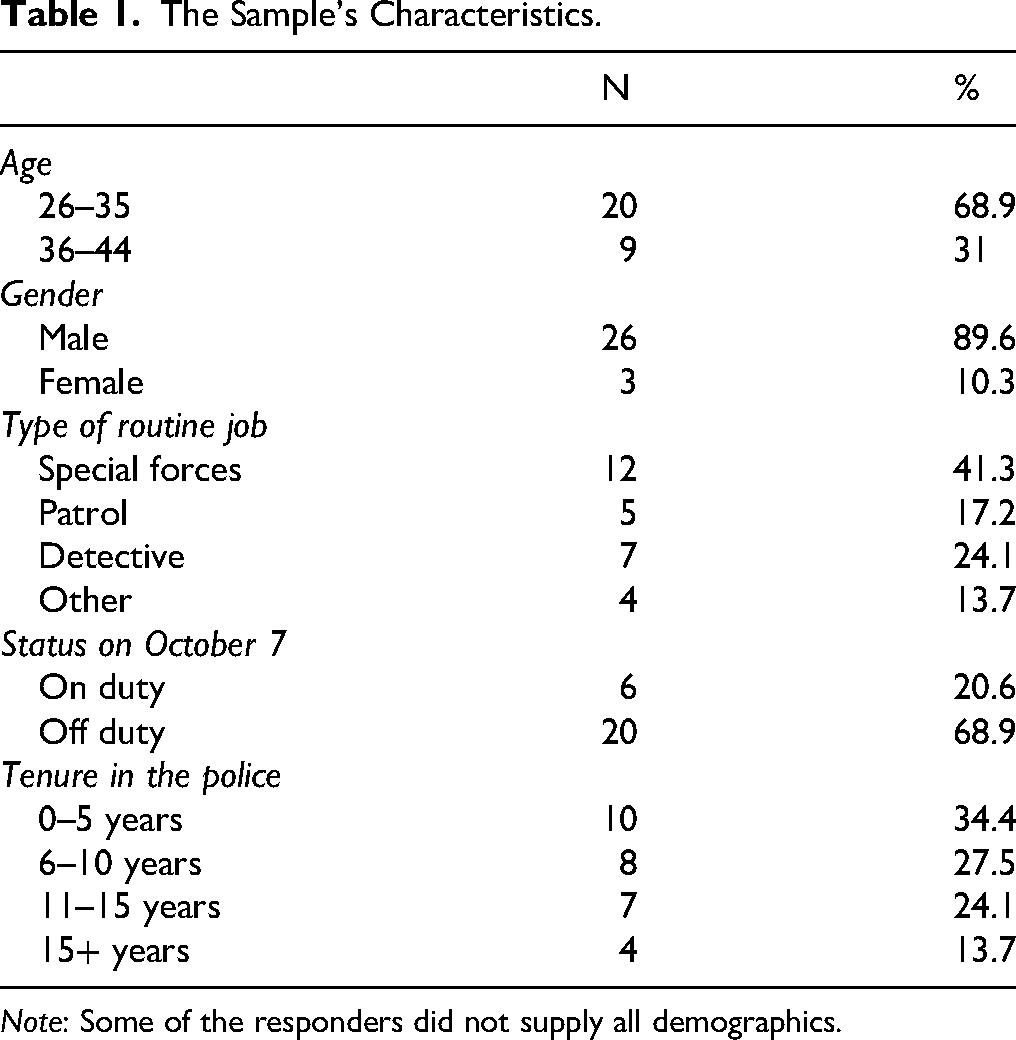
Note: Some of the responders did not supply all demographics.
Measures and Procedures
This study and its protocol received institutional ethical approval from the University of XX's review board. The interview protocol was designed to obtain a comprehensive picture of the police officers’ experience in the October 7 attack and the reasons that led them to risk their lives in it. Interviews lasted 45 min on average. Anonymity and confidentiality were ensured. All interviews were audio recorded, transcribed, and analyzed. Due to the sensitive topic, participants were able to stop the interview at any point or skip questions they felt uncomfortable with.
Police officers were asked to describe their daily work, their reasons for joining the Israeli police force, and the reasons they chose to risk their lives in their daily interactions with the public. Then, the interviewees were asked to share their experiences in the October 7 attack and the events that followed. The main part of the protocol consisted of questions related to risking one's in an acute crisis. For example, we asked “Why did you risk your life that day?” “How did you cope with the need to risk your life?” “Why did other police officers you know risk their lives that day"?
Data Analysis
We analyzed the data using the Atlas.ti software for qualitative data. Following the directed content analysis method for data analysis (Potter & Levine-Donnerstein, 1999), we used existing theory to identify key concepts or variables as the primary coding categories and provided them with operational definitions. First, we coded the transcripts based on the initial theory. Data not included in this coding were coded again, sentence-by-sentence, in another coding process in which we tried to identify themes that we did not expect according to the theory (Hsieh & Shannon, 2005).
The initial coding was concerned with the pre-identified reasons for risking one's life in everyday interactions with clients (Cohen & Golan-Nadir, 2020). For example, the code for incentives included any statements regarding the decision to risk one's life in return for financial security, financial compensation, and societal rewards. The code for personal ideology included any statement regarding the police officers’ belief regarding their duty to their clients and country. Finally, we combined the categories and their relationships to construct a comprehensive portrayal of the participants’ shared experience (Aronson, 1995). This approach allowed us to develop an analytical narrative and a structured presentation of the main explanations for engaging in life-threatening behaviors during crises.
Results
Following previous research, we first explored the reasons SLBs risk their lives in everyday interactions with clients. We then delved into their experiences in the October 7 attack and compared their motivation to put themselves in the line of fire during this acute crisis to their motivation to act this way in regular times.
Why do Street-Level Bureaucrats Risk their Lives?
We found several reasons that explain SLBs’ willingness to risk their lives that accord with previous findings on this topic (Cohen & Golan-Nadir, 2020). First, many interviewees referred to their ideological belief regarding their role as public defenders, stating that their mission is to save lives. Many of the officers described their motivation using the concept of Shlichut—a Hebrew term that has no direct English equivalent but refers to a deeply internalized sense of mission or calling. Rooted in cultural and national traditions, Shlichut conveys more than professional duty; it reflects a moral commitment to serve a cause greater than oneself, often tied to a sense of collective identity and purpose. For many officers, this sense of Shlichut guided their decision to act during the crisis. Thus, they framed their role not merely as a job, but as a personal, ethical obligation to protect others—even at great personal risk: “I think most police officers have a sense of purpose […] we want to help people …” (interview no. 26). “In my opinion, what motivates police officers to risk their lives is a sense of purpose and commitment to protect the citizens of this country and its institutions” (interviewee no. 27). Thus, as interviewee no. 20 noted: “The operational police officers chose these positions. They knew it entails risking their lives …”
Our interviewees maintained that the difference between those who risk their lives and those who do not lies mainly in their type of job: “The difference is at the point of friction” (interviewee no. 1). Indeed, interviewee no. 11 said: “The chances that an administrator will risk his life is usually smaller than an operational officer.” They explained that this choice has to do with training as well: “Police officers in patrol units are not trained like special forces in the police [Yamam or Yasam] …” (interviewee no. 19).
Several interviewees also mentioned incentives as a reason for choosing this lifestyle. They explained that they had enrolled in these police units for financial security and monetary incentives. In accordance with Cohen and Golan-Nadir (2020), others claimed that people's personal status influences their tendency to risk their lives at work. As interviewee no. 16 stated: “Factors like having a family, that makes you think twice about which role to enlist in …”. Similarly, interviewee no. 21 explained: Family and children affect police officers differently. An officer with a family and children may act more cautiously in combat, knowing what they are leaving behind and wanting to be there for their children. In contrast, an officer without a family may be less deliberate in their actions, perhaps because they feel they have nothing to lose …
Facing an Acute Crisis: Experiences from the October 7 Attack
Our findings suggest that while police officers are trained for and accustomed to risking their lives as part of their job, the October 7 attack was an entirely different experience. Interviewee no. 9 said he felt like “a sitting duck.” Interviewee no. 12 shared: “I thought it was an event like what we practiced for, a small number of terrorists […] When I arrived at the unit and turned on the communication device, I thought we are going to lose the country …”
The events were chaotic: “Everything was in serious chaos. There were many injured. There were many terrorists. It was something I had never encountered before …” (interviewee no. 16). Most of the police officers were off duty, because it was a holiday in Israel. They received messages to report immediately, unaware of what was waiting: “I got so many alerts on my phone. Then, after a while, we saw a video of a truck with terrorists inside Sderot [a southern city in Israel] …” Some of the police officers lived in cities that were under attack. They left their homes in flip-flops, underwear, and a pistol to fight off the attackers: I live in Ofakim [one of the communities that was attacked], so that morning I woke up from the incessant alarms. I quickly put on flip-flops and took my personal weapon with me and went down to the shelter. At a certain point, I started hearing gunfire, automatic gunfire. I left the shelter and saw people running, and among them were people with long weapons and green ribbons on their heads [Hamas's uniform] in our streets! Before that, I didn't understand what was happening, but when I saw what I saw, everything became clear to me. I couldn't believe it. I went out into the street with my flip-flops, my pajamas, my gun, and went out to fight off the terrorists … (interviewee no. 23).
The memories from the attack are unsettling. Interviewees report witnessing dozens of casualties in a shocking state: I drove by and saw a lot of corpses on the road […] bodies, bodies everywhere. The smoke … It looked like the old war movies; you saw bodies of civilians and terrorists everywhere. I will always carry with me the scent. There was this weird smell in the air. I did not know before and I don't know how to define it, but it was abnormal. It stayed in my nose … and the sound of the police communication [the interviewee chokes up]. Police officers said their goodbyes to their families and the world. Asked us to tell their families that they loved them (interviewee no. 11).
Other interviewees shared the same disturbing, detailed descriptions: “I remember looking at the skies thinking time has stopped. I just wanted this day to pass …” (interviewee no. 12). “I saw so many bodies I did not understand what I was seeing at first …” (interviewee no. 13).
Many of the interviewees also shared that they lost their comrades in the attack: “As we fought, we heard of friends of ours, our colleagues, who died. Only when we got back to the unit did we understand it was 9 people …” (interviewee no. 17). “I lost two comrades in the fight” (interviewee no. 21). “My commander and his second died in an RPG missile attack” (interviewee no. 22).
Why do Street-Level Bureaucrats Risk their Lives in an Acute Crisis?
Many of these officers were not on duty. They could have chosen to remain at home with their families. Nevertheless, they helped save dozens of young people's lives at the Nova music festival (interviewee no. 24), left their wives and children in hiding at their home in the kibbutz and set off to help others (interviewee no. 3), or raced from all over the country to answer the call for backup (interviewee no. 12; interviewee no. 21(. Why? Figure 1 depicts our main findings.
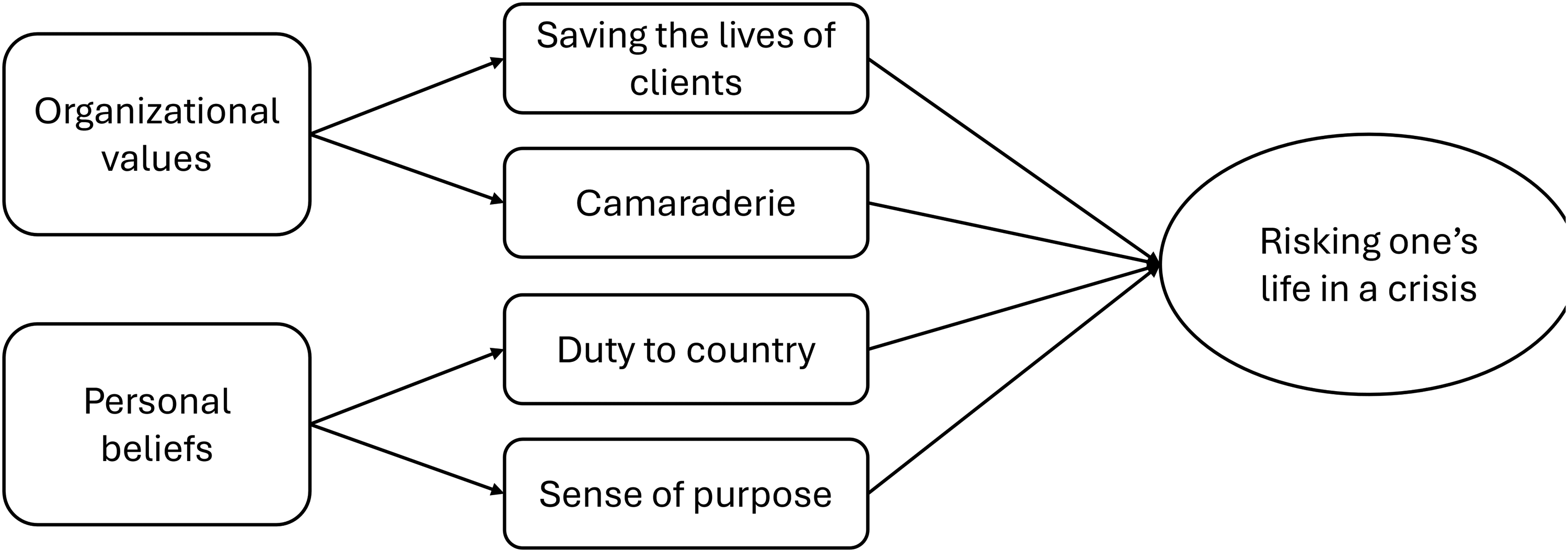
Factors Influencing the Willingness of SLBs to Engage in Life-Threatening Behavior in an Acute Crisis.
The first and foremost motivation was the goal of saving lives in this extreme situation. There was a sense of emergency: “There was a sense of destruction” (interviewee no. 1). “It's very hard not to risk your life when you understand the scale of the catastrophe you have on your hands …” (interviewee no. 17). Thus, they explained that there was no other choice: “If I won't do it, no one else will …” (interviewee no. 12). In such extreme situations: “You don't think about risking your life. You think about saving lives …” (interviewee no. 11). “This is why I enlisted in the first place, to save lives. Anyone who could do something in that situation, even civilians with weapons, did” (interviewee no. 20).
Our interviewees once again discussed the concept of Shlichut, a sense of purpose, of mission: “It's Shlichut, understanding that we are an unprecedented event in the history of this country …” (interviewee no. 19). “The satisfaction is enormous, knowing that you saved lives […] you are not thinking about yourself; you are thinking about the others; it's Shlichut …” (interviewee no. 3). “When you wear the uniform, you know it's your job to protect the public. It's not just a profession; it's more than that. There is Shlichut in what we do, and especially in that moment I felt I was there to save lives” (interviewee no. 18).
The interviewees also spoke of a sense of patriotism and duty to the country: “It's the call of the hour—I'm fighting for my country, for the land I live in” (interviewee no. 1). “We live in a country where every day is a fight for our existence […] I will do whatever I can to protect the country” (interviewee no. 16). “I enlisted to protect the country and its citizens. I swore to it, and I will risk my life for it” (interviewee no. 19).
Indeed, a strong sense of duty emerged as central to this decision. As one SLB explained: “Duty surpassed any personal hesitation” (interviewee no. 15). Interviewee no. 2 stated: “I was called for duty. It is my job to protect the citizens of the State of Israel. This is why I enlisted; this is what I learned at home. We have no other country.” While some interviewees, like interviewee no. 2, spoke about their education from home, many of the interviewees attributed their sense of duty and commitment to human life to their organization: “I risked my life out of Shlichut, protecting the country, protecting its citizens. Those are the values that the police teach us” (interviewee no. 23). As interviewee no. 5 explained, the factors motivating him were “values, a sense of mission, and the willingness to engage, protect, and serve.”
Our interviewees showed a deep commitment to their profession. As interviewee no. 1 noted: “It's the job we have learned; it's our calling, our professionalism.” Interviewee no. 21 stated: “I did not see it as risking my life but as performing the job I signed up to do.” This commitment was also evident with regard to their sense of what they owed their colleagues and the camaraderie they shared: If someone told me right now that there was a Yassam vehicle that had been hit by a missile and they needed to be rescued–and it really happened, actually–I wouldn't think twice and go to their rescue. At any cost. This is how it is in our unit, and this is what is expected of you. It is an honor and a privilege to be a part of this unit. And you are supposed to take risks. This is the essence of being a member of the unit. All for one and one for all. True musketeers (interviewee no. 11).
Lastly, and in contrast with the behaviors in which they engaged in everyday interactions that were potentially dangerous, here having a family played a different role. Our interviewees highlighted the importance of family in the willingness to risk their lives in times of crisis. Instead of thinking about the family they wanted to return to, the police officers thought of the families they sought to protect: “I did not think of my family at that time […] I only thought whether they were safe in the shelter right now” (interviewee no. 1). “I'm going to do my job. It's me, my comrades. And I'm protecting my family in the process” (interviewee no. 12). “It's a survival mode, fear, wanting to protect my family” (interviewee no. 23). Others stated that they thought of their family, but pushed the thought aside to do their jobs: “Thoughts of family also cross your mind. There are moments when you suddenly remember the people you love, but then you immediately refocus on the mission. It's a paradox—on the one hand, you want to stay safe for yourself and for them, but on the other, you recognize the immense responsibility you have in that moment” (interviewee no. 18).
Interestingly, most of our interviewees stated that they were even more willing to risk their lives after the October 7 events: “I don’t think something has changed in me. On the contrary, I understand that I have to risk my life no matter what. If something like this happens again, God forbid, I will not think twice” (interviewee no. 17). “If something like that happens again, I will do it again, fight shoulder to shoulder with my comrades. I will be willing to protect them and sacrifice my life for them.”
Discussion
The aim of this article was to identify the factors influencing SLBs’ willingness to risk their lives in times of an acute crisis. Specifically, we explored the experiences of police officers in the October 7 attack in Israel and compared their motivations to risk their lives on a daily basis with their motivations to do so during this catastrophic event. As an exploratory effort, this study continues and extends the work of Cohen and Golan-Nadir (2020), who examined SLBs’ risk-taking in routine settings by investigating how these motivations shift during major crises.
Our findings suggest that SLBs are exposed to risk in their everyday interactions with clients and may be willing to endanger their lives in exchange for incentives, due to ideological beliefs, or personal circumstances, as the previous literature has suggested (Cohen & Golan-Nadir, 2020). However, during major crises, their motivations become more intrinsic. Their focus is on their desire to save lives, protect their comrades and families, and fulfill their duty or life's mission. Such motivations are strong enough to push them to stand in the actual line of fire and confront unfamiliar threats in extreme, high-pressure situations such as the October 7 attack.
These shifts also reflect a transformation in the perceptions of their role. In times of crisis, police officers move from being enforcers of the law (Edri-Peer & Cohen, 2023) to protectors of the state. These identity-based motivations resonate with research on collective resilience, which shows that individuals who feel a sense of shared identity with others during emergencies are more likely to engage in coordinated, prosocial behavior (Drury et al., 2009). In our case, this sense of Shlichut and solidarity—whether directed toward their colleagues, the community, or the state—may have acted as a powerful amplifier of risk-taking.
Our study contributes to the literature by highlighting the distinction between the motivations for pro-social behavior and risking one's life in everyday situations versus during times of acute crisis. While prior research has primarily focused on monetary and societal benefits as key factors in these decisions (Cohen & Golan-Nadir, 2020), we find that during crises, values, and personal beliefs take on a more significant role. As such, the idea of saving lives leads to altruistic risk-taking behavior (Rusch, 2013). The importance of moral commitment and psychological resilience has been recognized as a critical factor in responding to crises (Hannah et al., 2009), with individuals who possess strong professional values and intrinsic motivations being better equipped to function under pressure (Tezcür, 2016). These values may be personal or cultivated through organizational training (van der Meer et al., 2024). Professions such as policing, social work, and healthcare are shaped by the strong professional codes embedded in their formal training. Our findings underscore how instilling values in professionals not only supports routine policy goals but also enhances their commitment and effectiveness during crises (Tezcür, 2016). These results align with research on healthcare professionals, who were committed to their professional code of behavior and continued to dedicate themselves to their patients even amid life-threatening situations, such as during the Covid-19 pandemic (Moussa, 2022).
Our examination of the October 7 attack makes valuable contributions to the literature on street-level crisis management. Understanding the discretionary decisions professionals make in order perform effectively in the face of acute crises (Kalkman, 2020), particularly those involving extreme violence and threats, can provide insights into preparing for, managing, and potentially mitigating such events. While Klein's (1999) Recognition-Primed Decision model has been influential in explaining how experienced professionals act under pressure by drawing on familiar cues, the October 7 attack presented officers with a fundamentally unfamiliar and disorienting situation. In the absence of recognizable patterns, many relied instead on improvisation, deeply internalized values, and a strong sense of collective identity to guide their actions. Research on the organizations on which society relies highlights the importance of factors such as organizational culture, rigorous training, and adaptability in maintaining performance under extreme stress (Sutcliffe, 2011; Weick & Sutcliffe, 2001). As Stern (1999) emphasized, individual cognition alone does not shape people's responses to crisis. Inherited organizational values and institutional frameworks also influence their reactions. In our case, these deeply embedded narratives of duty, sacrifice, and public service played a key role in the police officers’ willingness to act decisively despite the chaos.
Indeed, our findings suggest that fostering a strong sense of mission and duty within organizations can enhance adaptive performance during crises. While Comfort (2007) identified key organizational structures—real-time communication, decentralized coordination, and institutional learning—as essential for fostering resilience, our findings suggest that such mechanisms were largely absent during the October 7 attack. SLBs operated without clear support systems, relying instead on their internalized sense of duty—whether rooted in personal or organizational values—to guide their actions in the face of extreme uncertainty. As intrinsic motivations tend to dominate in extreme crises, crisis management strategies should focus on strengthening identity-based motivations that are known encourage people to take extraordinary risks (Tezcür, 2016), especially the collective identity (Sheikh et al., 2016) of one's profession or nationality. Our findings also align with previous studies about the importance of trust in SLBs’ decisions to risk their lives (Cohen, 2022; Cohen et al., 2024), as establishing reciprocal relationships enhances altruistic behavior (Trivers, 1971).
Lastly, our study makes a practical contribution. Our findings, which align with sense-making theory in crises (Weick, 1993), demonstrate that professionals navigate chaotic, high-pressure situations by framing their actions through their personal and professional identities. Understanding this process can help crisis managers design training programs that reinforce these intrinsic motivations, enabling first responders to act decisively in unprecedented situations such as the October 7 attack. This approach aligns with ’t Hart and Sundeliu'’s (2013) call to strengthen not only structural and resource capacities but also professional communities capable of sense-making, meaning-making, and emotionally grounded leadership during crises. Our findings imply that crisis simulations and drills should not only emphasize technical skills but also prioritize psychological preparedness, enabling professionals to internalize their roles and missions before a real crisis arises. Moreover, identifying the values and motivations that prompt people to risk their lives in crises can inform recruitment strategies by helping organizations select individuals who are more likely to uphold these commitments under pressure.
On a normative level, SLBs’ decisions to risk their lives require further thought. Such decisions raise ethical dilemmas. Is it justifiable to ask SLBs to risk their lives and their families’ future for others? Should they be rewarded, and if so, how? Going beyond one's job requirements without adequate organizational support or compensation can impose significant personal costs. Another concern is the fair distribution of this burden across society. While the top management may encourage SLBs to exceed their duties, doing so could disproportionately benefit privileged groups or certain areas. The literature shows that structural factors such as salary influence people's job choices and commitment (Lambert et al., 2017). Given that some police officers come from lower socio-economic backgrounds, the profession may offer financial stability and social mobility, raising ethical concerns about asking them to take life-threatening risks when their employment alternatives are limited. Indeed, our findings show that some police officers chose this profession specifically because they needed a stable income, and regard risking their lives as an inherent part of their chosen profession.
Like all studies, this one has its limitations. First, the findings are based on a single case, meaning they are tied to specific time, location, and context. Therefore, future research should explore the factors influencing the willingness to risk one's life among SLBs, as well as the strategies they adopt to deal with this choice, in a variety of settings. In addition, our study focused exclusively on Israel during an extremely acute situation. Given the ongoing conflict in the region, Israeli society is characterized by a strong sense of patriotism and commitment to the state, which may not be as pronounced in countries without such prolonged conflicts. As such, future studies should examine this phenomenon in other contexts, both non-war related and within other professions, to better understand the broader applicability of these findings.
Second, the use of convenience sampling, rather than probability sampling, may limit the generalizability of our results. However, due to the sensitive and high-stakes nature of our topic, convenience sampling was the most practical and feasible approach for gathering data. This method allowed us to access relevant participants who were directly involved in the crisis situation. Nevertheless, future studies could benefit from using probability sampling to further validate and expand upon these findings.
Future studies should also explore how individuals cope with risking their lives in high-pressure situations. Specifically, it is important to investigate how these behaviors manifest in the field and the coping mechanisms that SLBs use to manage the stress and psychological toll of engaging in such behavior. Additionally, the intense events of the October 7 attack had a profound impact on the police officers who were involved. Future research should examine the long-term effects of their exposure to this trauma at the street level, including its implications for the officers’ personal lives, mental health, and well-being. Moreover, understanding how such a trauma influences their work can offer valuable insights into improving policy implementation and support systems for those in high-risk professions. Finally, many civilians also chose to engage in combat during the attack, risking their lives to defend others. While this study focuses on public service professionals, future research should examine the similarities and differences between civilian and SLB motivations, actions, and psychological responses during major crises.
Conclusions
This exploratory study contributes to our understanding of what drives street-level bureaucrats to risk their lives during acute crises. By extending prior research on routine risk-taking among SLBs to an extreme and unprecedented event, the October 7 attack in Israel, we show that crisis conditions shift the basis for such behavior from external incentives to deeply internalized values. In the absence of clear institutional structures, police officers relied on a strong personal sense of mission, identity, and duty to guide their actions. These findings underscore the importance of cultivating value-based motivations and organizational preparedness for frontline responses to crisis. Future research should continue to explore these dynamics across different contexts, professions, and types of crises.
Footnotes

Funding
This research was supported by several fellowships awarded to Ofek Edri Peer, including the Israel Academy of Sciences and Humanities’ Alix de Rothschild Fellowship Program for Doctoral Students in the Humanities and Social Sciences, the ISEF Foundation, the IDIT Fellowship of the Herta & Paul Amir Faculty of Social Sciences at the University of Haifa, and the Founders’ Fellowship of the American Society for Public Administration (ASPA). Nissim Cohen received support from the Israel Science Foundation (Grant No. 276/24).
Declaration of Conflicting Interests
The authors declared no potential conflicts of interest with respect to the research, authorship, and/or publication of this article.