



Abstract
This article presents the findings of an exploratory study examining the relationships between street-level bureaucrats’ (SLBs) trust in their peers, managers, and the institution they belong to, and their willingness to endanger their own lives for the public. We build on previous administrative and behavioral theories to present a model of these relationships. Using a survey of 211 police officers in Israel, our findings demonstrate the important role of trust in understanding the willingness of civil servants to risk their lives for citizens. We also identify additional factors that may be related to their willingness to take this risk and the types of clients for whom they are less or more willing to do so. We discuss the normative elements related to these findings and suggest fruitful future directions for study.
Introduction
Since Lipsky’s (1980) influential work, research has sought to reveal the influences that shape street-level bureaucrats’ (SLBs) perceptions and practices. Lately, this literature has begun examining two interesting aspects that we believe should be linked. The first is SLBs’ willingness to risk their lives for others (Cohen & Golan-Nadir, 2020). The second is the role of trust in their practices (Davidovitz & Cohen, 2020, 2021a, 2021b).
Why do SLBs risk themselves for others? Helping citizens has risks and costs for SLBs (Do et al., 2017; Lipsky, 1980; Müller & Rau, 2016; Vives & FeldmanHall, 2018), including the possibility of losing their lives. For example, doctors and nurses who treat pandemic patients endanger their own health, teachers intervening in a school fight can be hurt, and firefighters entering a burning building may be seriously injured. The choice to do so depends on the SLBs’ valuation of others’ well-being and the degree of personal risk the SLBs find acceptable. Although police officers and firefighters knowingly choose a career that could endanger their lives, they have considerable discretion regarding the level of risk they are willing to take. Their willingness to engage in situations that are potentially fatal to themselves is important in ordinary times and vital in extraordinary times of crisis (Brodkin, 2021) and risk (Henderson, 2014).
Trust is a crucial element both in everyday life and in times of crisis. Hence, it is "The Usual Suspects" to be linked to willingness to risk life for others in the collective. The literature documents efforts to understand various aspects of public trust in government and their possible impact on society and effective governance (Bouckaert, 2012; Cleary & Stokes, 2009; Giordano & Lindström, 2016; Keele, 2007; Sønderskov & Dinesen, 2016; Vigoda-Gadot & Mizrahi, 2014). Although trust is considered one of the most important elements in public administration (Hardin, 2006), specifically in the context of SLBs (Davidovitz & Cohen, 2020), researchers have yet to examine the connection between trust and civil servants’ willingness to risk their lives for others.
This study contributes to the implementation literature by investigating the factors associated with SLBs’ discretion in the extreme context of risking their lives. We argue that SLBs’ life risking requires us to propose a new theoretical formulation to distinguish it from other seemingly related phenomena, such as public service motivation (PSM) or organizational citizenship behaviors (OCBs). OCB is defined as individual behavior that is discretionary, not part of the formal requirements or reward system of the organization, but that promotes organizational effectiveness (Organ, 1988). OCB scholars seek to learn more about traits, capabilities, and behaviors that lead employees to help others, build connections, and thrive at work. Such practices can be directed at coworkers, the organization itself (Luthans & Youssef, 2007), as well as citizen–clients (Lavee & Pindek, 2020). OCBs are acts that organizations do not officially demand that SLBs perform as part of their job, such as taking risks for others when off-duty. At times, however, police officers are formally expected to risk their lives as a condition of their employment. Our study does not investigate the motivations of public servants to seek risky employment in the public sector. We are interested in why, after joining their organization, and given that they all share the same organizational expectation to risk life, SLBs are nevertheless diverse in their willingness to risk their lives to help others. Specifically, we posit that SLBs’ willingness to risk their lives is linked to trust in their institutions and the people in their organizations. We suggest several hypotheses regarding the relationship between various types of trust and SLBs’ willingness to risk their life for others. We detail our context and methodology, and then proceed to test these hypotheses using a survey we distributed nationally.
Street-Level Bureaucrats and Trust: The Theoretical Setting
There are various definitions of trust in the literature (Oomsels & Bouckaert, 2014, pp. 580–582). Briefly, Party A trusts Party B because A presumes it is in B's interest to act in a way consistent with A's interests (Hardin, 2002). Trust may also describe the belief of an individual in the good faith of others and their future intentions (Hosmer, 1995). Trust exists on three main levels: interpersonal, organizational, and institutional (Nyhan, 2000; Oomsels & Bouckaert, 2014). Each of these levels is present in SLBs’ work.
Studies have highlighted the important role of SLBs in policy processes and their influence on citizens’ lives (Hupe, 2019; Maynard-Moody & Musheno, 2000). Two main characteristics of their work under the new managerialism (Brodkin, 2011) and modes of governance (Sager et al., 2014) are their substantial discretion in policy execution (Evans, 2016; Maynard-Moody & Musheno, 2003) and their complex relationships with their clients (Gofen, 2014; Lavee, 2021; Raaphorst et al., 2018; Riccucci, 2005). Unlike other civil servants, they not only enjoy a certain degree of autonomy vis-à-vis the organizational authority (Maynard-Moody & Portillo, 2010; Thomann, 2015), but also have considerable discretion in determining the nature, amount, and quality of benefits and sanctions provided by their agencies (Lipsky, 1980).
Although trust is a major element in all human relationships (Hardin, 2002; Rothstein, 2000; Uslaner, 2002; Yang, 2005), there are few studies about the role of trust in the work of SLBs (for a review, see Davidovitz & Cohen, 2020). Trust has long been recognized as an important factor in determining individual organizational performance and in explaining organizational success and stability. It increases employees’ commitment, well-being, positive attitudes, collaboration, organizational commitment, and citizenship behavior, and reduces their turnover intentions (Albrecht & Travaglione, 2003; Cho & Song, 2017; Dirks & Ferrin, 2001). SLB scholars focus mainly on such elements associated with trust as clients’ honesty (Maynard-Moody & Musheno, 2003) or trustworthiness (Raaphorst et al., 2018). A recent study (Davidovitz & Cohen, 2020) reveals that when SLBs feel that their organization is unsupportive of them, they are more responsive to demands of the clients whom they distrust, and less responsive to the demands of those whom they trust. They prioritize clients whom they distrust, bending and breaking rules to meet their demands. When considering the context of SLBs, we must recognize the importance not only of interpersonal trust in their clients, peers, or managers but also of trust in their institutions (Kramer, 1999; Rousseau et al., 1998; Six, 2013; Six & Verhoest, 2017).
A better understanding of the role that trust plays in SLBs’ work may shed light on how they make decisions and implement policy. Furthermore, it may provide new insights into the dynamics between state and society. To accomplish these goals, we investigated why SLBs would risk their lives for their clients. Determining the factors that drive SLBs’ actions in such situations can create a new framework for understanding their decisions and, on the macro level, their influence on policy outcomes (Portillo & Rudes, 2014).
Model and Hypotheses
Long ago, St. Augustine claimed that while human beings are endowed with contradictory instincts, they are equally free to choose good or evil. Indeed, like all individuals (Engel, 2011), SLBs vary in the extent to which they are willing to help others (Cohen & Hertz, 2020). Such variation is often considered a reflection of differences in the value one individual assigns to the welfare of another (Fehr & Schmidt, 1999). Variations in social value orientation refer to the dispositional weights that individuals assign to their own outcomes and those of others in interdependent situations (Kuhlman et al., 1986; McClintock, 1972; Messick & McClintock, 1968). Those who have a prosocial orientation seek to promote both their own and others’ interests and desire equality in outcomes (Balliet et al., 2009; Roux et al., 2015).
Helping others may come with costs and risks for SLBs, as the COVID-19 pandemic has demonstrated (Gofen & Lotta, 2021). SLBs worldwide deliver emergency products, provide security and safety, engage in rescue operations, assist in evacuating civilians, and work to restore political, social, and economic normalcy (Henderson, 2014). Focusing on police officers, Paton (2006) has shown that their stress may be attributed to operational tension, that is, day-to-day strain from their routine work.
Like other individuals (Halek & Eisenhauer, 2001; Holt & Laury, 2002), SLBs also differ in the risks they take (Cohen & Golan-Nadir, 2020). This is a reflection of risk preferences—the degree to which a decision maker tolerates uncertain outcomes (Gross et al., 2020). Paying a price to provide benefits to others, usually considered as cooperation, is an integral part of human behavior and a cornerstone of human societies (Rand & Nowak, 2013), challenging the instinct to be selfish (Sigmund, 2016). Why are some people willing to pay this price? Behavioral scholars have investigated cooperation between people, mainly through laboratory experiments and games. One of the most popular is the Public Goods Game. Here, one group of participants simultaneously chooses how much money to contribute for the benefit of another and how much to keep for itself (Zelmer, 2003, p. 301).
Paying with their own life to ensure the safety of others is the highest price SLBs can pay. Why would they be willing to do so? The literature offers various theoretical insights that include both risk preferences (Brock et al., 2013), and social preferences (Saito, 2013). Most research on why people risk their lives for others has focused on soldiers and other combatants. Although the work environment of police officers and firefighters differs from that of soldiers, this research nevertheless provides some insights. Indeed, Campbell and Campbell (2010) point out that in the United States, significant segments of police operations have taken on military characteristics, while many military initiatives have taken on policing characteristics.
According to Glowacki and Wrangham (2013, pp. 445–446), there are three explanations. The first is associated with Darwinism. Scholars stress that people have the biological (some might say genetic) potential to care about the welfare of others (Simner, 1971), which develops with experience (Staub, 2015). SLBs have evolved to engage in risky behavior on behalf of others. Reciprocal altruism has been a hallmark of human existence. Such behavior includes helping in times of danger, assisting the very young and very old, caring for the sick and wounded, and sharing food, tools, and knowledge (Gouldner, 1960). Those who risk their lives to save others not closely related to them are considered altruistic. Altruistic behavior has been defined as “behavior that benefits another organism, not closely related, while being apparently detrimental to the organism performing the behavior, benefit and detriment being defined in terms of contribution to inclusive fitness … ” (Trivers, 1971, p. 35). Risking one's life in wartime is called heroism (Smirnov et al., 2007), bravery (Lehmann & Feldman, 2008), or parochial altruism (Choi & Bowles, 2007).
Studies suggest that extreme high-stakes altruism may be driven by automatic, intuitive processes. In examining the testimony of extreme altruists (in this case, Carnegie Hero Medal Recipients), who risked their lives to save others, Rand and Epstein (2014) found that when explaining their decision, they described cognitive processes that were overwhelmingly intuitive, automatic, and immediate. However, their study dealt with civilians who voluntarily risked their lives to an exceptional degree although not responsible for the victim's safety. Their research did not deal with SLBs. A recent study focusing on the United States Military Academy (Schaefer et al., 2020) found that cadets with higher risk-taking propensity demonstrated superior military and physical performance, but had more behavioral problems, poorer grades, and showed a discrepancy between their confidence and conscientiousness-related attributes. We note that a single individual may exhibit different combinations of altruistic and intuitive behavior.
Studies suggest that the willingness to make costly sacrifices is affected independently by a commitment to sacred values and identity fusion. Their interaction maximizes this willingness when a real or perceived threat emerges (Sheikh et al., 2016). Some would consider the outcomes surreal. Researchers in this field have tried to understand the mechanism that influences a “devoted actor” to pay an extreme price for others (Atran, 2010, 2016). They maintain that an individual will protect “nonnegotiable sacred values” when associated with a group that the individual fuses into a unique collective identity (Sheikh et al., 2016). For example, in their study of combatants against the Islamic State (as well as captured ISIS fighters), Gómez et al. (2017) found that the willingness to fight for sacred values was associated both with the importance individuals gave to the spiritual (as opposed to physical) strength of themselves and their opponents, and their indifference to material concerns (their lives or the well-being of family members). As Atran and Ginges (2015) suggest, people are willing to sacrifice themselves and even die to protect “morally important or sacred values,” particularly when such values are an integral part of their group identity. In this regard, “sacred values” are nonnegotiable preferences that lead individuals to act, regardless of the costs and consequences of such actions (Ginges et al., 2007).
Altruism plays a role in mate selection, both in human beings and other species (Farrelly, 2011). Studies indicate that this psychological trait exerts a positive effect on romantic choices (Bhogal et al., 2019; Farrelly et al., 2016). Altruism is a “signal” of a kind and prosocial nature (Farrelly, 2013), and a predictor of a lasting relationship. Margana et al.’s (2019) study found that women are drawn to men who display heroism and altruism. While this is reinforced when the male is physically attractive, women seeking a long-term partnership put a higher value on prosocial traits. Trustworthiness is an important factor in such decisions (Ehlebracht et al., 2018).
While similar, heroism and altruism are not the same. In both cases, individuals are paying a price, and the behavior signals cooperativeness (Farrelly, 2011). Heroism, however, is riskier than altruism. It is associated with “civil courage” (Greitemeyer et al., 2007), which may have negative consequences. Given that heroism is associated with risking one's life, it is considered a higher form of altruism (Margana et al., 2019, p. 127). Rusch (2013) found that altruistic behavior toward members of the in-group occurred more frequently when soldiers were defending themselves and comrades against enemy attacks than when they themselves were the attackers (Rusch, 2014). This finding supports other studies arguing that while intergroup conflict fosters “in-group love,” it does not necessarily encourage “out-group hate” (Halevy et al., 2012). De Dreu et al. (2010) established that oxytocin, a neurotransmitter promoting cooperation and trust, increased in-group cooperation, but did not promote out-group aggression.
This first explanation may lead to insights regarding SLBs who work in organizations that are part of their societies. While not shared by every member, there are common values in all societies. SLBs are expected to serve civilians who need help or protection. Clients, as well as peers and managers, are part of their society. It is reasonable to assume, therefore, that their trust in peers and managers will be associated with their willingness to help clients—even if it involves risks. Hence, when SLBs believe that others in society have good intentions toward them, they may reciprocate. Moreover, we know that SLBs’ practices toward clients they trust, or distrust vary depending on the organizational conditions (Davidovitz & Cohen, 2020) Not only is SLBs’ interpersonal trust in their peers or managers important, but also trust in their institutions (Six & Verhoest, 2017). Thus, in the same vein, SLBs’ trust in the organizations that employ them should also be linked to their willingness to risk life for others.
The second explanation deals with the threat of punishment from their organizations that require SLBs such as police officers and firefighters to risk themselves for others. In wartime, some societies impose community-enforced social sanctions for inadequate participation (Mathew & Boyd, 2011). Balliet and Van Lange (2013) meta-analysis addressed the role of punishment in dealing with free-rider problems and its link to trust. Free riding is a practice whereby individuals benefit from collectively provided public goods without contributing their fair share. Findings reveal that punishment promotes cooperation more strongly in societies with high levels of trust. Where there is mutual trust, individuals count on one another to contribute to the common good. Adherence to this norm is enforced by punishing free riders.
The “threat of punishment” explanation also affords insights. On the one hand, managers’ leadership is an important motivating factor in work (Bass, 1985), including that of SLBs (Keulemans & Groeneveld, 2020). Thus, it is reasonable to assume that SLBs’ trust in managers and organizations will motivate them to risk life. (Note SLBs may informally “punish” or “be punished” by their peers as well). On the other hand, authoritarian leadership and punishment cannot be expected to work for the long term, given that the price of punishment is lower than the price of life risking.
The third explanation deals with rewards. Organizations may encourage SLBs to risk their lives by offering them promotion or professional recognition. Glowacki and Wrangham (2013, p. 445) suggest that both “material and immaterial, culturally specific rewards” can be used to incentivize participation in life-threatening situations. In this context, “cultural” rewards should not be considered “intrinsically motivating biological rewards.” Rather, such benefits include status, strengthening personal or corporate bonds, and material items, such as captured goods (Wrangham & Glowacki, 2012). In the context of war, “warriors may be motivated to participate in conflict because of a number of factors, including the possibility of rewards, punishment, and a parochially altruistic psychology…” (Glowacki & Wrangham, 2013, p. 446). “Rewards” or “rewarding leadership” may lead to strengthening personal or corporate bonds between SLBs and their organizations, but it is unclear if it will increase their trust.
Cohen and Golan-Nadir' (2020) qualitative study is the first to explore the reasons why SLBs’ are willing to risk their lives for others. Based on in-depth interviews and focus groups with Israeli police officers, they suggest three main factors influencing SLBs’ willingness to endanger themselves for others. The first is individual characteristics including the desire to gain respect and recognition, the wish to test one's courage, ideology, and risk-taker personality. The second is organizational conditions including expectations of peers, supervisors, and organization, as well as employment security and promotion. The third is environmental context, including a hostile workplace and the importance of public opinion. Cohen and Golan-Nadir' (2020) findings underscore the importance of individual characteristics in SLBs’ willingness to risk themselves for others but conclude that they are not its sole basis. It also develops through experience and interactions with others. If their conclusion is correct, trust should affect SLBs’ willingness to risk their lives. Trust is a factor in interpersonal, organizational, and institutional relationships (Nyhan, 2000; Oomsels & Bouckaert, 2014), and all are present in SLBs’ work.
Utilizing these insights, we posit that:
Hypothesis 1: SLBs’ willingness to risk their lives for others will be positively related to their trust in colleagues. Hypothesis 2: SLBs’ willingness to risk their lives for others will be positively related to their trust in managers within their organization. Hypothesis 3: SLBs’ willingness to risk their lives for others will be positively related to their general trust in the police as an institution.
The Context: Israeli Police Force
Police officers worldwide work in a complex environment that differs greatly from that of their counterparts in other public agencies (Cohen, 2018a; Cohen & Cohen, 2021). The Israeli police force resembles police agencies in many democratic societies in terms of core responsibilities, strategies, and restraints, making it a reasonable setting for this study. It is a statutory organization that as of the beginning of 2021 employed 32,482 officers (28,097 Jews, 2,139 Druse, 817 Muslims, 730 Christians, 335 Bedouin, 71 Circassians, 64 Christian-Arabs, and 229 “others”) in 65 stations serving local communities countrywide (Israeli Police Website, 2021). Like other police forces worldwide (Cohen & Golan-Nadir, 2020), it has the authority to use coercion. It provides services that include law enforcement, maintenance of public order, security, and crime prevention. It is geographically and hierarchically structured. The country is divided into districts, sub-districts, and stations that serve local communities, all supervised by a commissioner who is a government appointee. Israeli police officers often see “the dark side” of society in their day-to-day interactions with citizens, unlike social service providers such as nurses, teachers, and social workers. They usually believe that their accomplishments in fighting crime are more important to the public than the fairness of their processes (Jonathan-Zamir & Harpaz, 2014). Studies of Israeli public attitudes have shown that the police are given a poor rating (Rattner, 2009; Yogev, 2010; Vigoda-Gadot, Mizrahi & Cohen, 2021). However, SLBs and the general public may view reality quite differently, as Nachmias and Rosenbloom (1978) have demonstrated.
Interactions between SLBs and their clients are always embedded in a context (Hupe, 2019). Although not unique, the Israeli context has special features. First, the main element is the politically complex Arab–Israeli conflict, with its long-standing, emotionally charged, and entrenched views of all participants (Friedman et al., 2018). Second, Israel is a deeply divided society (Eisenstadt, 2019). The main rift is between Israeli Arabs and Jews, the majority of whom live in separate ethnically homogeneous communities. Historically, Jews and Arabs lived in mixed towns (Rabinowitz & Monterescu, 2007), but by the State of Israel's establishment in 1948, Jews left most of the then-mixed towns to live in predominantly Jewish towns and villages. The 1948 War of Independence intensified the separation. Most of the Arabs left or fled from the territories that fell under Israel's control (Shwed et al., 2018, p. 647).
There are also wide rifts between religious and nonreligious groups, the political left and right, native-born Israelis and immigrants (mostly from Ethiopia and the former USSR), Ashkenazi Jews (from Europe and North America) and Mizrahi Jews (from the Middle East and North Africa), and rich and poor. These divides, which often intersect and overlap, are characterized by competing visions of Israel as a Jewish and democratic state. They profoundly affect political culture, and can be expected to impact Israeli police officers’ decision-making processes. Recommendations that minorities be better represented in Israeli public administration (e.g., the Kubersky Committee and Israeli State Comptroller reports), have not been implemented.
Method
Sample and Procedure
To test our model and hypotheses, we asked Israeli police officers to report their perceptions about and attitudes toward risking their lives, as well as their trust in peers, direct managers, and the police in general. This study is based on a questionnaire with both open and close-ended questions. We created the research tool based on the literature above, theoretical logic, and our familiarity with the Israeli context. We collected the data between September 2020 and February 2021. Note, during this period, COVIID-19 had spread in Israel, shutting down most of the economy, but there were no unusual events. Before launching the survey nationally, we conducted a pilot use of the questionnaire with a small unrepresentative sample of police officers, mostly M.A. students. The pilot's purpose was to remove unnecessary questions and correct unclear wording.
The survey was distributed through the Qualtrics software to approximately 400 active police officers in various units, geographical areas, and ranks. All participants were assured anonymity. The platform allowed them to answer sensitive questions from any location where they felt comfortable. We sent the questionnaire directly to approximately 300 police officers from divisions including traffic, patrol, riot, detective, SWAT, and counterterrorism. They were from different geographical areas and held various ranks. We asked them to refer the survey to peers, and about 40 of them reported that they had sent it to one or more colleagues in their unit. Note that due to the Israeli–Arab conflict, traffic police are expected to serve time in conflict zones. While SWAT team members work in riskier environments, all Israeli police officers can potentially encounter life-threatening situations. We then asked the police officers we had contacted to refer us to candidates from other units and with different ranks. Initial contact with most potential interviewees was by phone or email, when we introduced the study and requested their cooperation. The research was described as addressing “the willingness of police officers to risk their lives for others.”
In total, 211 Israeli national police officers in active service participated in the study. There were 187 males and 24 females, with ages ranging from 20 to 58 years (Mean = 40.6 years). Most were married (82.9%); 10.9% were single, 6.2% were divorced. Of the respondents, 19.4% were childless, and 80.6% reported an average of 2.85 children. Regarding education, 32% were high school graduates, 39% had some college-level education, and 29% had completed higher education and held a master's degree. Individuals with higher education were overrepresented compared to the general Israeli population (45%). Regarding ethnicity, 87.2% were Jews, 2.4% Muslims, 1% Christians, 8.5% Druse, and the rest (1%) defined themselves as “other.” Of the respondents, 46% defined themselves as “secular”, 41.7% as “traditional”, 8.5% as “religious”, 2.4% as “ultra-religious”, and 1.4% as “other”. Except for the number of female respondents (11% of our participants compared to 30% in the Israeli police) the sociodemographic diversity of our sample does not increase suspicion for nonresponse bias.
Measures and Analysis
We asked the participants to indicate their responses on a scale ranging from 1 to 6, where we measured the variables with single or groups of statements. For the latter, we verified the statements for consistency using Cronbach's alpha test. We included an OLS regression analysis. The analysis also controlled for age, gender, number of children, marital status, education, ethnicity (Jews/Non-Jews) religiosity, participants’ risk aversion, and subjective expectations of others to risk life.
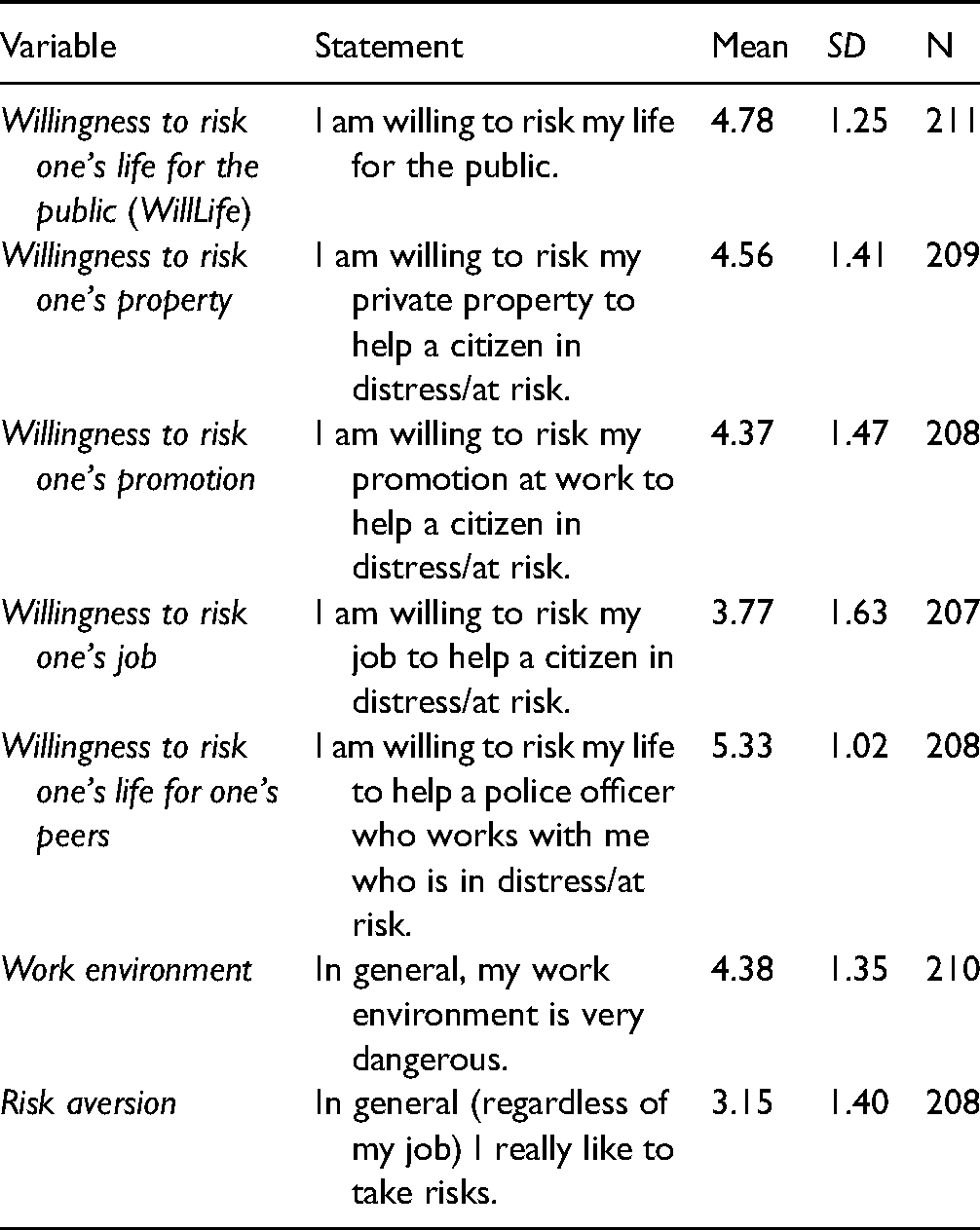
Willingness to risk one's life (WillLife) was measured by the simple statement: “I am willing to risk my life for the public.” Although we focused on the extreme situation of a life-threatening encounter, we also measured the participants’ willingness to risk other resources (e.g., private property, promotion at work, and their job) (Table 1).
Participants’ Willingness to Risk Themselves, Work Environment, and Risk Aversion.
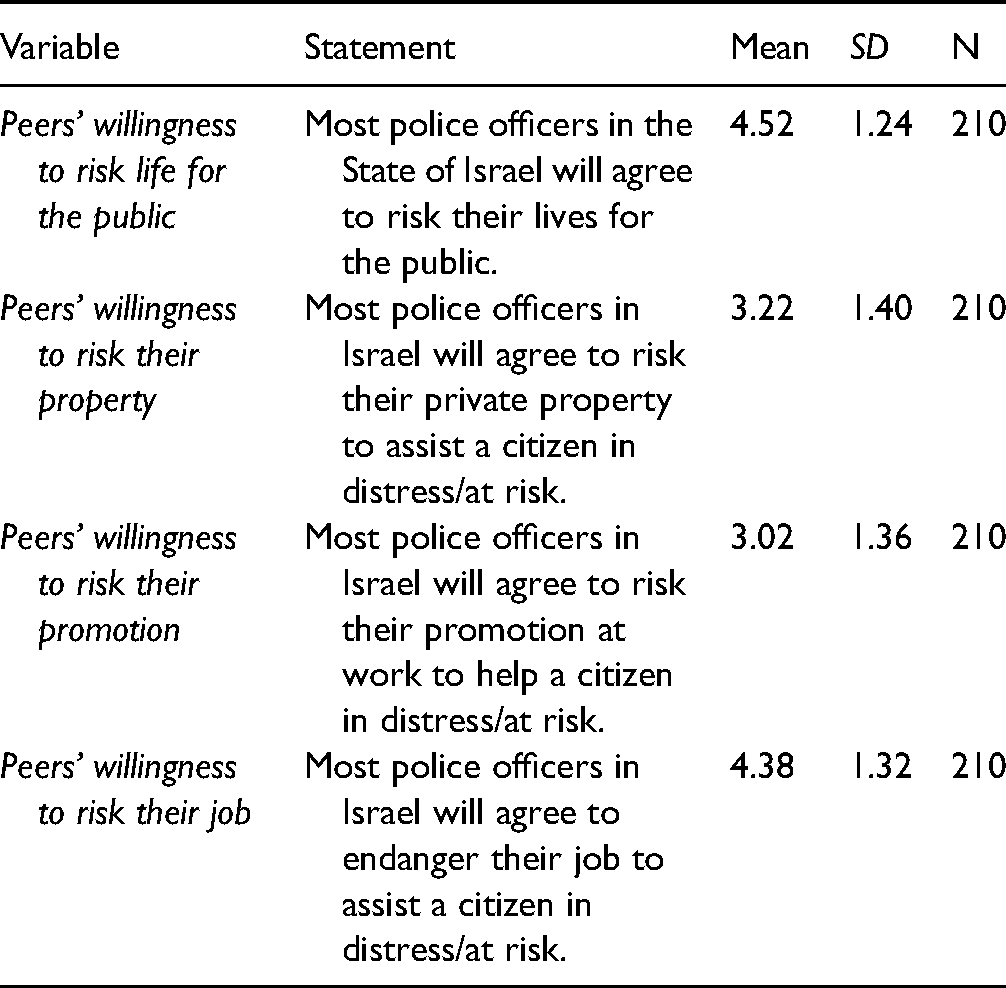
We used projection questions for the above statements. As detailed in Table 2, we assessed the participants’ perceptions regarding the willingness of other police officers to risk their lives with the statement: “Most police officers in the State of Israel will agree to risk their lives for the public.” We also measured their perceptions regarding other police officers’ willingness to risk other resources by modifying the preceding statement to read: “Most police officers in Israel will agree to risk their … ”.
Participants’ Perceptions Regarding other Police Officers.
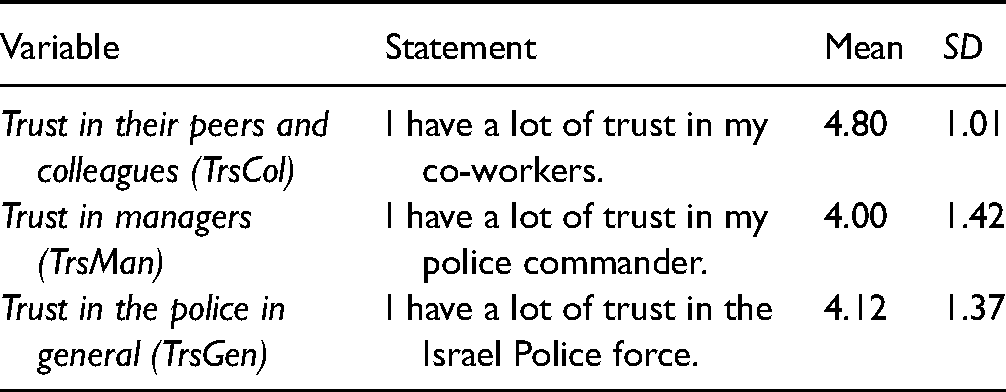
Trust in the police in general (TrsGen) was measured by the statement: “I have great trust in the Israel Police.” Trust in managers within their organization (TrsMan) was measured by the statement: “I have a lot of trust in my police commander.” Trust in their peers (TrsCol) was measured by the statement: “I have a lot of trust in my co-workers.”
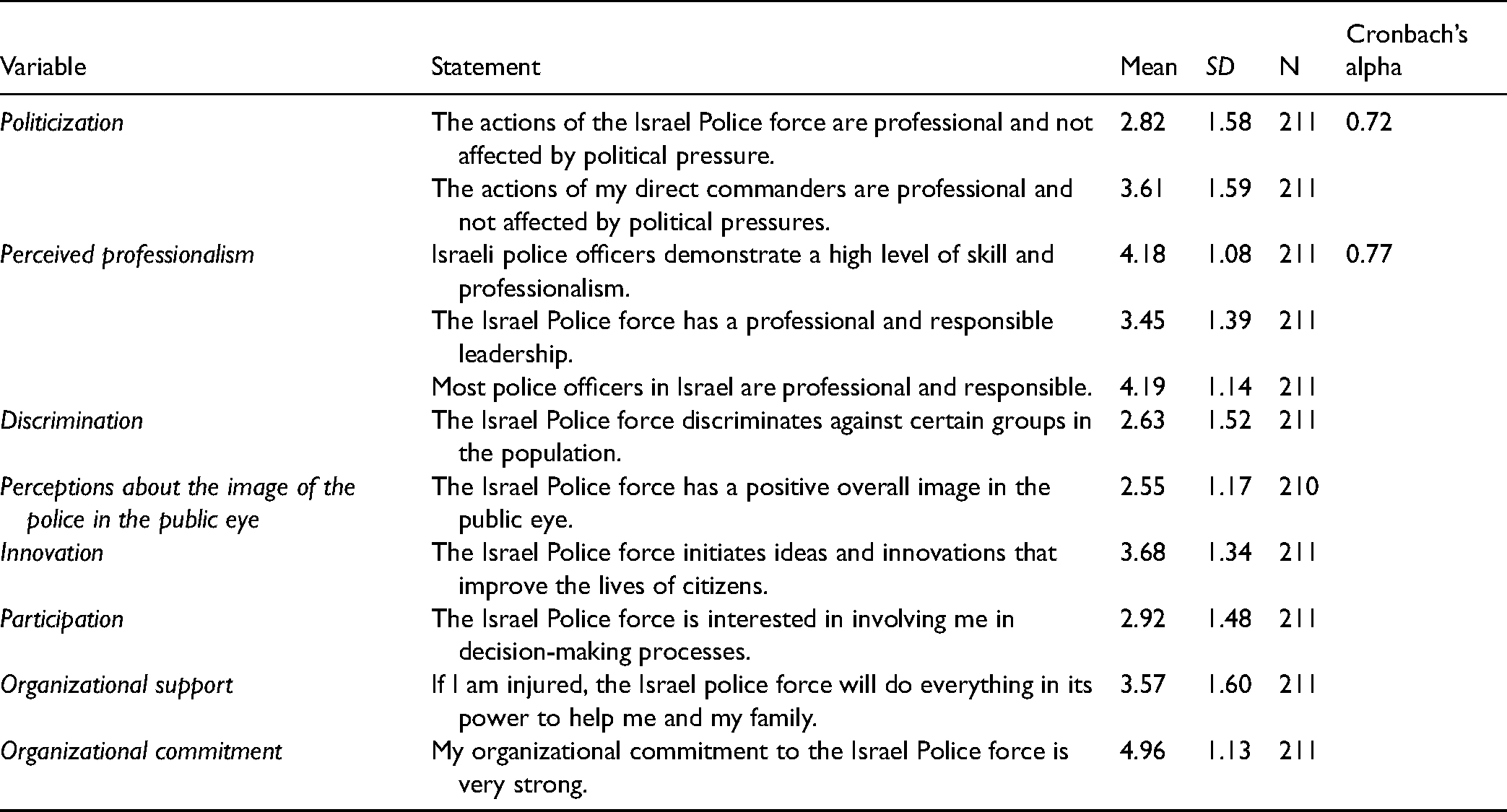
Building on public administration scholarship linking trust to other variables (Bouckaert, 2012; Hardin, 2006; Sønderskov & Dinesen, 2016), we explored whether additional elements might be linked to police officers’ willingness to risk their lives. These included respondents’ organizational commitment, perceptions of the police force in the public eye, professionalism, participation in decision-making, politicization, and discrimination.
Findings
Descriptive Statistics
As presented in Table 1, the participants reported that not only were they willing to risk their lives for others (Mean = 4.78), but also resources such as their property (Mean = 4.56), their promotion (Mean = 4.37), and their job (Mean = 3.77). They reported that their work environment was dangerous (Mean = 4.38). Their average risk aversion stood at 3.15. As Table 2 shows, our respondents also agreed that their colleagues were willing to risk themselves for others, but to a lesser degree, especially regarding property (Mean = 3.22) or promotion (Mean = 3.02).
When asked if they ever risked their lives at work, 41.8% said that they did so “very many times”; 22.6% said “many times”; 27.8% said “a few times”; the remaining (7.7%) said “never.” When asked to provide examples of situations in which they risked their lives (an open-ended question), the participants described entering high-risk areas to chase suspects, undercover tasks, shooting incidents, dealing with riots (especially Fridays on the Jerusalem Temple Mount or in Arab neighborhoods), and engaging in dangerous missions confronting armed individuals.
When asked how often their organization expected them to risk their lives at work, 50.7% reported “on a daily basis,” 8.2% “on a weekly basis,” 3.3% “on a monthly basis,” 28% “seldom,” and 9.6% “never.”
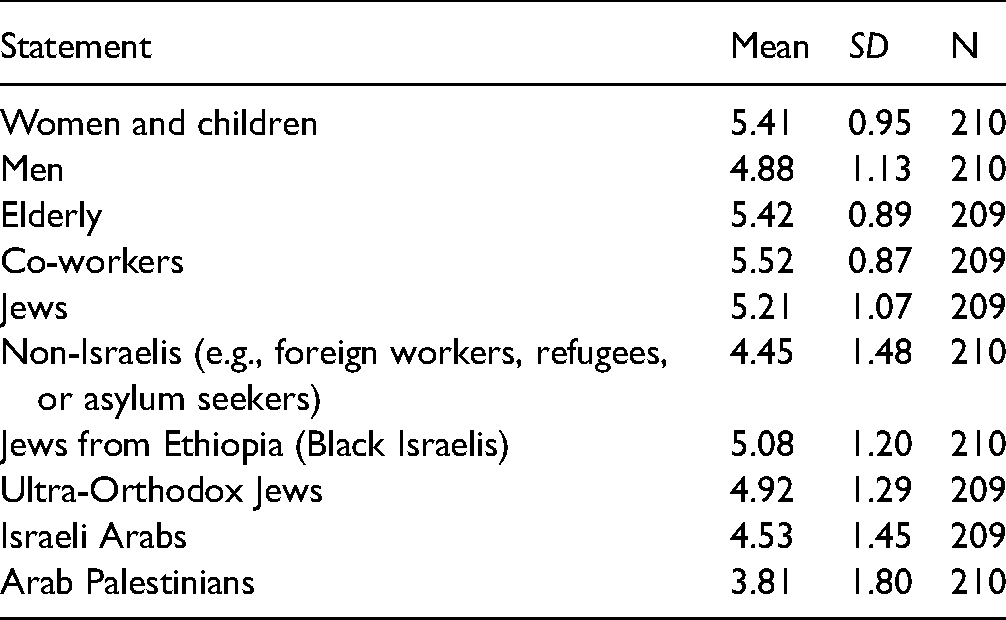
Other findings related to the question of for whom police officers were willing to risk their lives. We asked the participants to rate their willingness to risk their lives for specific groups from 1 (not at all willing to risk my life for them) to 6 (very willing to risk my life for them). Table 3 presents the findings. The respondents’ level of willingness to risk their lives was not the same for all groups. There was a high level reported for co-workers (Mean = 5.52), the elderly (Mean = 5.42), and women and children (Mean = 5.41). There was a lower level for other groups, such as Black Israelis (Mean = 5.08), Ultra-Orthodox Jews (Mean = 4.92), Israeli Arabs (Mean = 4.53), non-Israelis (Mean = 4.45), and Palestinians (Mean = 3.81).
Willingness to Risk Life for Specific Groups.
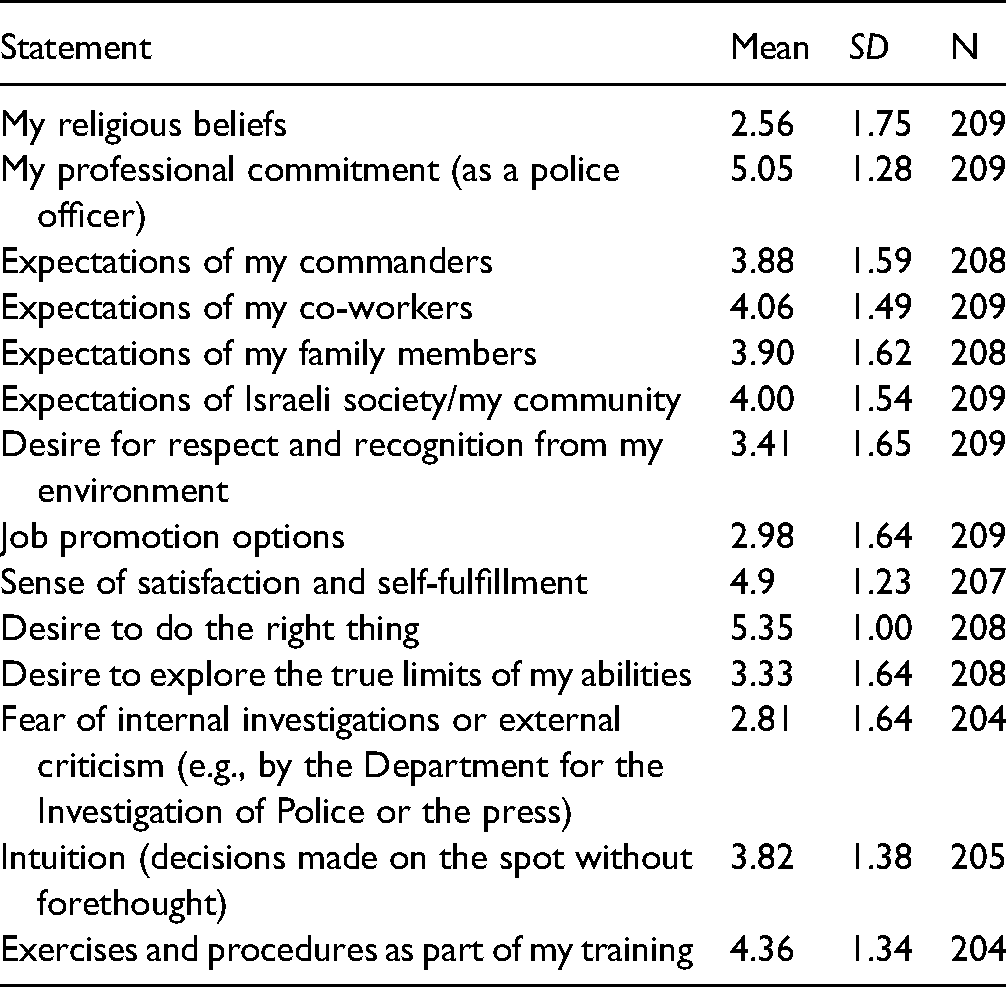
The central goal of our research was to test the link between trust and willingness to risk one's life. Nevertheless, given that the literature on SLBs’ willingness to risk life is in its infancy, we considered it valuable to identify other major factors that police officers believed increased their willingness to endanger themselves for others. We asked them to indicate the impact of various factors, basing the possible choices on the literature. As Table 4 demonstrates, our respondents reported that the major factors were a desire to do “the right thing” (Mean = 5.35), professional commitment (Mean = 5.05), and sense of satisfaction and self-fulfillment (Mean = 4.9).
Police Officers’ Perceptions Regarding the Factors That Increase Their Willingness to Risk Lives.
To expand knowledge in this area, we explored whether additional elements might be linked to police officers’ willingness to risk their lives. Table 5 details our results.
Additional Elements that Might be Linked to Police Officers’ Willingness to Risk Lives.
As our main goal was to establish the link between SLBs’ willingness to risk their lives and trust, Table 6 presents the results of our survey regarding participants’ trust in peers, managers in their organization, and the Israeli national police. The participants indicated their responses on a scale from 1 to 6. The results showed that participants’ trust in their peers was much higher than their trust in their managers or the police in general.
Police Officers’ Trust in Peers, Managers, and the Israel Police Force in General.
Correlations and Regressions
Table 7 presents a Pearson correlation between willingness to risk life, the independent variables (trust in peers, managers, and the police), and additional variables measured to test their link to willingness to risk life or as a control. As the table demonstrates, we found a significant linear link between willingness to risk life and participants’ trust in colleagues and the police as an institution. We found no correlation between willingness to risk life and participants’ trust in their managers. There was a positive correlation between willingness to risk life and perceived professionalism (p = .22) and organizational commitment (p = .21), and a negative correlation (p = −.19) with discrimination.
Correlation Matrix for the Research Variables.
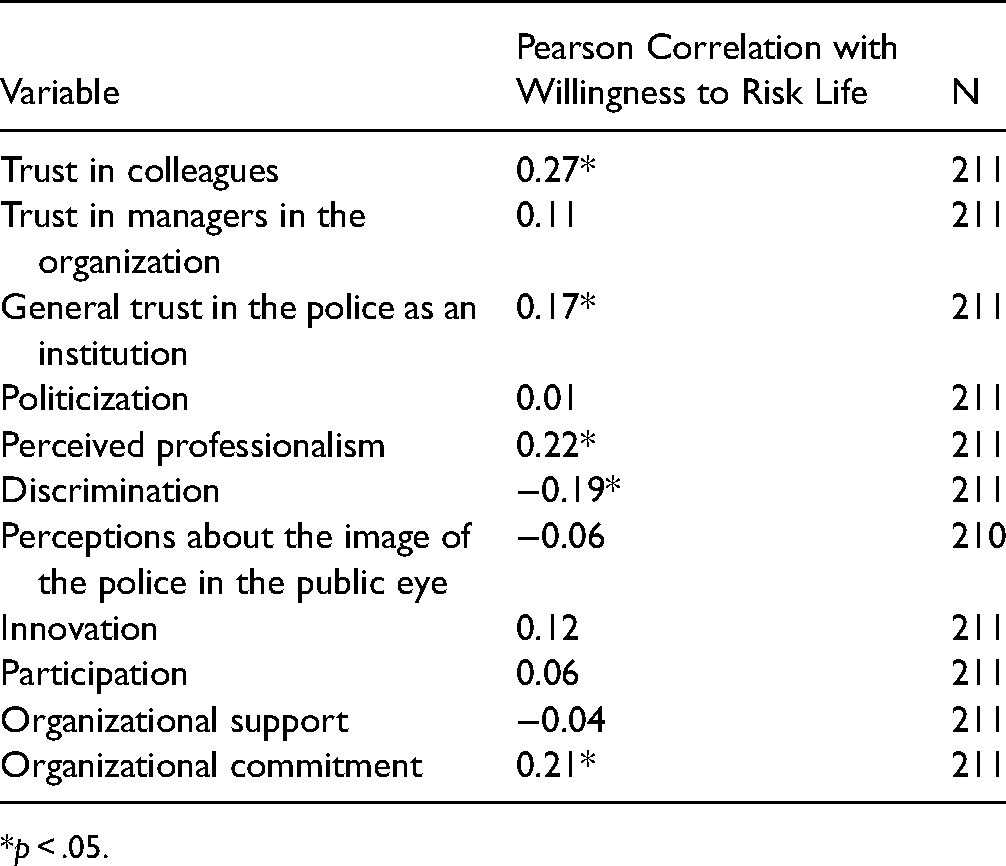
p < .05.
Table 8 presents the results of the multiple regression analysis (non-standardized and standardized coefficients) [OLS] for the direct effect of the independent variables on willingness to risk life. It shows that two of the independent variables tested in our research model—trust in peers and trust in the police in general—are related to SLBs’ willingness to risk life for others. Trust in managers, however, is not found significantly related to willingness to risk life. While our empirical results support H1 and H3, H2 seems unsupported by the data.
Multiple Regression Analysis for the Direct Effect of the Independent Variables on Street-Level Bureaucrats’ (SLBs) Willingness to Risk Life.
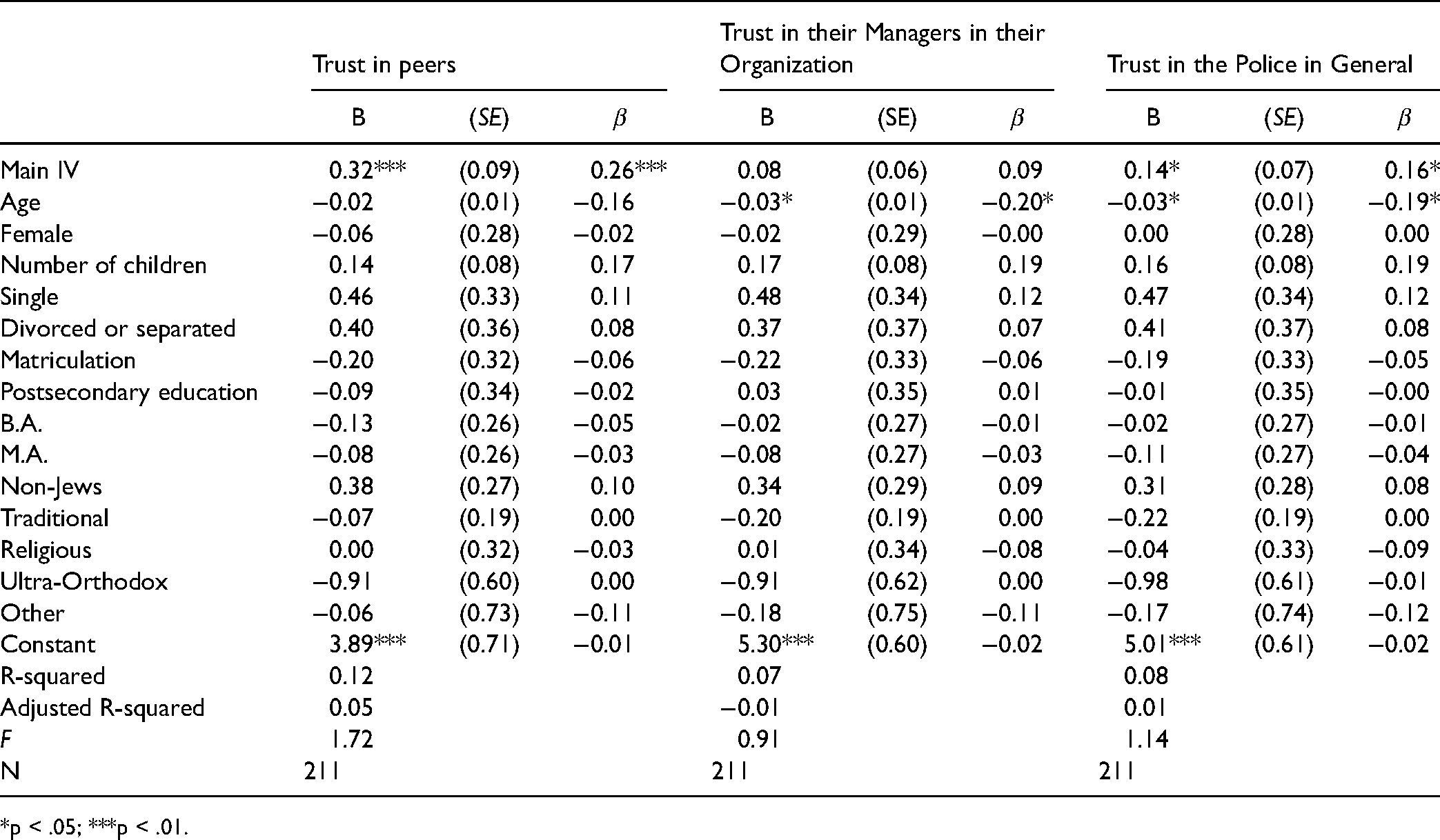
*p < .05; ***p < .01.
As presented in Table 8, we controlled for various sociodemographic variables. Of these, only age was significantly related to our hypothesis (negatively).
Given that the explanation for difference may be simply that some individuals love risk-taking, whereas some shun it (Wildavsky & Dake, 1990) or that the expectations of others may influence SLBs differently (Cohen, 2018b), we decided to control for these two variables. We conducted sensitivity tests to establish whether risk aversion and expectations to risk life (on a weekly basis, monthly basis, seldom, or never) were related to participants’ willingness to risk life or affected the relationship between the dependent and independent variables. The organizational expectation from respondents to risk their lives as part of their work was found to be associated with their actual willingness to risk life in a one-way ANOVA test [F(4, 202) = 3.21, p = .014]. Nevertheless, the inclusion of this variable did not affect the association of main explanatory variables with the dependent variable to a notable extent in sensitivity regression analyses. Hence, given these tests, we may argue that indeed the data supports H1 and H3, but not H2.
Discussion and Conclusions
Since Lipsky’s (1980) influential work, research has sought to reveal how SLBs’ perceptions and practices are shaped. We contribute to the implementation literature by investigating the factors associated with SLBs’ discretion in the extreme context of life risking. We provide a broad view of SLBs’ discretion in this regard and its relationship with trust. Given our findings, we conclude that at least in the context of Israeli police officers, there is a significant link between SLBs’ willingness to risk their lives for others and their trust in both their peers and the institution to which they belong. Contrary to findings in the literature that managers play an important role in shaping SLBs’ discretion (May & Winter, 2009) and attitudes toward clients (Keulemans & Groeneveld, 2020), and contrary to our hypothesis #2, our data do not establish any correlation between SLBs’ trust in managers and willingness to risk life for others. (As Table 6 demonstrates, our participants trust their managers much less than they trust their peers). We also found that police officers’ perceptions regarding police professionalism, organizational commitment, and perceived discrimination are linearly linked to their willingness to risk their lives.
Our data's failure to support hypothesis #2 is puzzling. Managers’ leadership ability has been considered to have an important impact on police work (Cohen, 2018, p. 897). Why is leadership not a factor here? Hassan et al. (2019) found that empowering leadership practices motivate police officers to perform their work more proficiently and conscientiously, and contribute positively to the effectiveness of work units in police organizations. To engage in empowering leadership, managers themselves must feel empowered (Park & Hassan, 2018). While it is difficult to determine why we found no correlation between SLBs’ trust in managers and willingness to risk life, we offer one tentative explanation: management's adoption of New Public Management (NPM) reforms, with the institution of performance measures and an outcome-based focus. Over the last decades, these have radically altered SLBs’ work environment, introducing market-like mechanisms into the implementation of public policy (Brodkin, 2011). Public administration now evaluates SLBs as operators in competitive markets with financial rewards for outperformers and penalties for underperformers. Police officers know that “watchful administrators” expect them to handle street problems with efficiency and certainty, and can later hold them accountable (Skolnick, 2011). Hence, one may suggest that managers’ NPM practices affect the trust their subordinates have toward them.
Our research shows that Israeli police officers are willing to risk their lives for others yet believe their colleagues’ willingness to do so is less than their own. Israeli police officers’ willingness to risk life differs with respect to specific groups. They are more willing to risk their lives for co-workers, the elderly, and women and children, and less willing for UltraOrthodox Jews, Black Israelis, Israeli Arabs, non-Israelis, and Palestinians. They report that the desire to do “the right thing,” professional commitment, sense of satisfaction, and self-fulfillment influence their willingness to endanger themselves. The literature discusses SLBs’ representation in the public administration workforce, stressing the need to encourage the engagement of those belonging to racial and ethnic minorities. A bureaucracy representative of the citizenry indicates equality of opportunity, open access to government, and government by the people (Mosher, 1982), benefiting both public organizations and clients (Watkins-Hayes, 2009). It also may strengthen SLBs’ willingness to risk themselves and their resources for citizens not belonging to their group.
Our study has limitations of which the following three are most significant. The first is our chosen methodology. As Rand and Epstein (2014) argue, studying why people risk their lives is challenging, because actual behavior in extreme situations cannot be fully understood through laboratory experiments and surveys. The second limitation is that we cannot assure “pure” sampling principles, and that females in this exploratory research were underrepresented. The third limitation is the depth of our data. While our survey enabled us to collect much information from many SLBs, the standardization of the questionnaire reduced our ability to gather information that might highlight hidden elements of the phenomenon. A larger and more random database would permit the detection of differences between groups that are significant although of smaller magnitude. The fourth limitation is that our research focuses on a specific group of SLBs—police officers. While life risking seems most relevant to the work of police or firefighters, social workers, teachers, or medical personnel may also operate in risky environments (Brodkin, 2021; Gofen & Lotta, 2021).
Can we generalize our findings to other contexts? The case presented here is specific with regard to time, place, and policy content. We believe, however, that given the common characteristics of law enforcement work in many countries, our findings can be generalized, especially to police in multicultural or divided societies. We do not claim the same for SLBs operating within institutional contexts or cultures where different or additional factors may play a role. Nevertheless, our analytical model underscores the impact of SLBs’ trust in shaping their willingness to risk resources for others.
Our findings pave the way for future studies of broader scope, both theoretically and empirically. These studies should investigate the willingness of SLBs such as firefighters, as well as doctors, nurses, and social workers to risk their lives and resources, using a comparative approach, multiple research tools, and larger samples. The ways different SLBs use or deploy policy narratives may be significant.
This brings us to the normative aspects of our study. While SLBs’ willingness to take risks for clients is potentially advantageous to the public welfare, increasing solidarity and social capital, it may also create dilemmas. Such practices exceed the job's requirements, and there are neither sufficient organizational resources nor rewards for them. Moreover, they may entail heavy costs on an individual's work and personal life. Equally important is the question of equity. As our findings reveal, at least in the Israeli case, this burden is not equally distributed among all groups in society.
Last, we should stress that the SLBs in this sample, as is the case worldwide, risk their lives for society. “There is no duty more indispensable than that of returning a kindness,” says Cicero, adding that, “all men distrust one forgetful of a benefit” (cited in Gouldner, 1960, p. 161). While our research dealt with the most extreme outcome that SLBs might face—loss of life—in other areas such as social work or medical services, these bureaucrats pay a tremendous price in terms of stress, fatigue, and depression, and, in some cases, violence from their clients. Helping protect SLBs from these outcomes is the responsibility of the organizations they serve.
Footnotes
Acknowledgments
The author would like to thank Ofek Edri and Kfir Zechariah for their assistance in the data collection.
Declaration of Conflicting Interests
The author(s) declared no potential conflicts of interest with respect to the research, authorship, and/or publication of this article.
Funding
The author(s) received no financial support for the research, authorship, and/or publication of this article.
