




Abstract
What role do the perceptions of clients about the procedural justice that street-level bureaucrats (SLBs) use when implementing policy play in prompting citizens to engage in vigilante actions? Using qualitative methods, we examine the unintended effects of SLBs’ implementation of policy on citizens’ vigilantism. We contribute to the literature by showing that procedural justice on the street level is in fact an important factor in citizens’ decisions to act as vigilantes. Our findings identified three significant factors in these decisions: the citizens’ ability to voice their complaint, the sense that they were treated respectfully and their trust that the police officers would do what they could to deal with their complaint. Furthermore, we also demonstrated that citizens and SLBs do not share the same perceptions of the role of the police as service providers, and that this gap increases citizens’ motivations to act independently.
Introduction
The social order depends on the general consent and cooperation of its members (Lipsky, 2010). However, in various cases, individuals and groups challenge this order by engaging in vigilante activities (Kirkpatrick, 2008). Vigilantism is an illegal activity carried out by a private citizen in response to a criminal activity committed by another private citizen against that perpetrator (Haas et al., 2012). It is used as a means of narrowing the perceived gap between the distributive justice one desires and the actual result in order to restore one's sense of justice (Exline et al., 2003). Are distributive justice and policy outcomes the only elements that explain why people engage in vigilantism? Is it possible that how the policy is implemented, not just its results, also influence vigilante behavior? Indeed, several studies show that procedural justice in the process of allocating public goods is particularly important in examining the interaction between citizens and service providers (Mentovich et al., 2020). Previous research has also demonstrated the possible effect of procedural justice on supporting vigilantism but not necessarily acting on it (see Koster, 2020; Tankebe, 2009). Nevertheless, the factors that lead people to act as vigilantes remain unstudied. Thus, to better understand vigilantism, we must focus on day-to-day interactions between citizens and those who implement policy. To accomplish this goal, we investigated the specific impact of citizens’ interactions with street-level bureaucrats (SLBs) on the former's decision to take matters into their own hands.
Procedural justice is particularly salient in the day-to-day interactions between citizens and SLBs (Durnescu & Poledna, 2020; Portillo & Rudes, 2014), yet the literature linking the two is inadequate. Studies that do document the importance of procedural justice among SLBs in various government institutions, especially in law enforcement agencies (Skogan, 2006), reinforce the need to understand their impact on citizens, due to their role in enforcing compliance. Regardless of the written policy, how SLBs use procedural justice when implementing policy might affect citizens’ behavior. Thus, the role of SLBs is important not only because of their influence on policy outcomes, but also because the way they implement policy may prompt citizens to engage in vigilante activities.
The question that underlies this study is: What role do the perceptions of clients about the procedural justice that SLBs use when implementing policy play in prompting citizens to engage in vigilante actions? This study seeks to understand the possible influence of SLBs’ perceptions and behavior on the emergence of vigilantism.
We used a qualitative research design and conducted in-depth semi-structured interviews with Israelis who had been victims of minor property offenses, some of whom had engaged in vigilante actions in response to these crimes. We also interviewed police officers to understand how they work with crime victims and their perceptions about vigilantism. This approach provided us with a holistic perspective on the issue of vigilantism and the interactions between police officers and the public. We conducted an analysis based on directed content analysis. Thus, we used existing theory to identify key concepts or variables to answer our research question.
What contribution does the focus on SLBs in the case of vigilantism make to both the literature on street-level bureaucracy and the literature on vigilantism? First, it expands the existing theory on vigilantism in terms of its connection to procedural justice. By focusing on the public's experiences, rather than the outcome of the interaction, we hope to better characterize the relationship between citizens and SLBs and shed further light on the factors leading to vigilantism (Delmas, 2018). Second, this study also expands the existing knowledge about the relationship between SLBs’ discretion and work routines, on the one hand, and the perceptions and behaviors of their clients on the other (de Boer, 2020a; de Boer, 2020b). Our third contribution is empirical. We provide evidence about vigilantism from a developed democratic country, evidence that is lacking in the vigilante literature (Haas et al., 2014; Tankebe, 2009). Finally, our results have practical implications for developing public policy that meets the needs of citizens and thus significantly reduces the need for vigilantism.
Literature Review
Conceptualizing Vigilantism
Conceptualizations of vigilantism vary considerably, making it difficult to arrive at a single definition. Whereas some definitions regard vigilantism as violent activity (Moncada, 2017; Rosenbaum & Sederberg, 1974), Black (1983) places it within the broad definition of self-help, explaining vigilantism as the act of handling a complaint using unilateral aggression. Chang et al. (2018) have discussed it as a type of co-production. Another well-studied example of nonviolent vigilante activity is “digital vigilantism,” meaning direct online actions in response to civil or moral offenses, crimes, or injustices (Loveluck, 2020). Examples include independent investigation, public humiliation (“shaming”) and the publication of personal information. Thus, vigilantism is a sequence of behaviors, with the most severe of all being violent behavior that harms another person. Therefore, we tend to accept the definition of Haas (2010), who believes that vigilantism is a planned, illegal activity carried out by a citizen in response to criminal activity (or the perception of a threat associated with such activity) allegedly committed by another citizen against that same perpetrator (Haas et al., 2014). We adopt this definition because it sees vigilantism as an illegal activity that is sometimes violent, but not necessarily so. By addressing vigilantism as a planned activity, it also distinguishes it from a spontaneous act of self-defense. This definition is broad enough to contain an extensive repertoire of vigilante activity but limited enough to allow the phenomenon to be examined through empirical research (Haas et al., 2012).
According to the literature, vigilantism occurs because of gaps in distributive injustice: a gap between the desired outcome and the actual outcome of the official response (Exline et al., 2003). Thus, vigilantism is a way for the victim of the offense to reduce the perceived gap and restore a sense of justice. This phenomenon occurs when citizens, from whom the authorities are supposed to derive their legitimacy, do not want the involvement of the law enforcement authorities, when these authorities fail to provide the service, or when the authorities are involved but not to the satisfaction of these citizens (Adinkrah, 2005). However, are distributive justice and the results that people experience the only elements that explain their engagement in vigilantism?
The Role of Street-Level Bureaucrats in Implementing Procedural Justice
The term SLBs refers to frontline workers of the public sector who implement public policy through their daily interactions with the public (Brodkin, 2011; Gofen, 2014; Hupe & Hill, 2015; Tummers & Bekkers, 2014). Due to their unique role in the interface between the state and the public (Thomann, 2015), SLBs are public service providers who interact with the public daily, thus influencing the allocation of resources and sanctions (Lipsky, 2010).
The demand for public services will always be greater than the supply. To cope with their heavy workloads and process information about the large number of clients who apply for public services every day, SLBs develop coping mechanisms (Lipsky, 2010). The literature recognizes several ways of coping, such as bending or breaking the rules for clients (Evans, 2011), routinizing the delivery of public services (Thomann & Rapp, 2018), and using personal resources to help clients (Lavee, 2020). Tummers et al. (2015) classified these coping mechanisms into three categories: (1) moving toward clients by adjusting how they implement the policy to meet their clients’ needs, even if it means breaking the rules of their organization; (2) moving away from clients by standardizing how they deliver services, failing to tailor the policy in any way and limiting the availability of the service; and (3) moving against clients by sticking to the rules and even displaying aggression toward clients.
The public administration literature acknowledges that SLBs’ coping mechanisms influence policy outcomes, beyond the organization's procedures, and sometimes in stark contrast to them (Cohen, 2021; Davidovitz & Cohen, 2020; Lavee, 2020). Yet, there is limited research about the impact of these coping mechanisms on citizens’ perceptions and behavior (de Boer, 2020a; de Boer, 2020b). The literature from related disciplines refers to procedural justice, an element related to the degree of fairness in the process of allocating public goods (Tyler, 1990). When citizens interact with those in authority, they are attentive to the degree of justice and fairness in the process of the interaction (Tyler, 2004).
Theories of procedural justice suggest that people are affected by the resource allocation process itself and their experience with the authorities (Tyler, 1990). The literature shows that the decision-making process is significant because it indicates to citizens their value and place in society (Lind & Tyler, 1988). Processes that lack procedural justice prevent citizens from voicing their concerns. Such processes also imply that decisions are being made based on personal opinions, which signals to people that they are unworthy (Tyler & Blader, 2003).
Procedural justice has four main characteristics. The first is the ability to make one's voice heard and to participate in the decision-making process. Voicing their concerns and the possibility of making claims during interactions with establishment agents are key factors in citizens’ assessments as to whether the authorities are acting fairly and legitimately (Lind & Tyler, 1988).
The second characteristic is neutrality in decision-making. Neutrality involves allocating resources consistently and making impartial decisions with full transparency (Tyler, 2004). When interacting with citizens, public service workers must demonstrate in careful and clear ways that they have not treated others better or discriminated against anyone based on any personal trait.
The third characteristic is treating the public with respect. This factor involves treating people politely and showing genuine respect for a person's rights (Murphy, 2009). The quality of the interpersonal care that citizens receive is the key to their perception that the authorities act professionally (Goodman-Delahunty, 2010).
The final characteristic is the public's sense that the decision makers’ motives are trustworthy and that they care about their clients’ concerns and needs. The authorities can encourage citizens to see them as trustworthy by providing an explanation and justification for how decisions are made, while paying attention to the needs of citizens (Tyler, 2004).
Procedural justice is significant in both official and unofficial decision-making. Although there are written procedures, their implementation is open to the interpretation and discretion of SLBs. Sometimes, these procedures do not provide a solution to all situations, so those in authority must make decisions without official laws guiding them (Tyler & Blader, 2003). According to the literature, there are various factors that influence citizens’ perceptions about procedural justice, a major one of which is their experience and personal interactions with state officials (Tyler & Fagan, 2008). Thus, procedural justice is particularly important in examining the interaction between citizens and service providers, the SLBs.
Recent research has found that SLBs’ discretion and mistreatment affect the clients’ opportunity to voice their opinions, prompting them to search for an alternative way to obtain the public goods and services they seek (Golan-Nadir et al., 2020). In some cases, immediately after their initial interaction with the SLB handling their case, citizens choose to exit and find alternatives even before the outcome of the official policy. In these cases, it is impossible to refer to distributive injustice alone, as the literature previously suggested (Exline et al., 2003). Rather, the citizens’ response seems to be based on their feelings about the process. The interaction with the SLBs is an essential element in shaping citizens’ perceptions and behavior regarding cooperation with the authorities (Murphy, 2016; Sunshine & Tyler, 2003). To better understand people's decision to engage in vigilante activity (Haas, 2010), we examined the process they go through when filing a complaint. We believe that under certain conditions, the coping mechanisms SLBs use to handle their workload lead to a lack of procedural justice and to citizens choosing to resort to self-help strategies.
The Context: Vigilantism and the Israeli National Police
We examined our claims with Israeli crime victims of minor property offenses and police officers in Israel, because such crimes are the most common type of offense in Israel in recent years (Israeli Police, 2021). The Israeli national police is a statutory organization that is spread across 65 police stations in local communities and employs approximately 32,000 officers (Israeli Police Website, 2021). The Israeli police have similar responsibilities, strategies and constraints as many other law enforcement agencies in the Western democratic world, making it suitable for this study (Jonathan-Zamir et al., 2015).
Similar to other police forces around the world, the Israeli national police are in charge of crime fighting (Cohen & Hertz, 2020). The Israeli crime rate is similar to that in other OECD countries. Since the mid-1990s Israel's relative position has remained more or less unchanged. However, the sense of personal security in Israel is significantly lower than what is customary in these countries (IDI, 2016). Although Israel as a liberal democratic state has checks and balances aimed at monitoring law enforcement agencies and preventing behavior such as vigilantism, such phenomenon occurs even among normative citizens.
The data indicate a steep decline in property crime rates. In 2008, the rate of property crime victims in Israel was 29.2 per 1,000 residents. As of 2020, that rate had dropped to 11.5 per 1,000 residents (Israeli Police, 2021). This decline has occurred despite the fact that the Israeli public has generally expressed little satisfaction with the police (2.39 out of 5 in 2008, 2.67 out of 5 in 2019) (Vigoda-Gadot et al., 2019). The OECD (2019) reports that Israel is ranked 34 out of 43 countries in its citizens’ confidence in the police (3.25 out of 5, where the OECD average is 3.85 out of 5). The reason for the decrease in property offense cases might be related to the streamlining and improvement of the police services. However, there might be another reason, as the Central Bureau of Statistics’ report from 2016 shows that 64% of property crime victims did not file a complaint with the police at all (CBS, 2016).
Methodology
The study uses a qualitative design. Between October 2021 and March 2022, we conducted 50 interviews with civilian crime victims (N = 28) and SLBs (N = 22). Conducting interviews with both the crime victims and the police officers provided us with a broader perspective on the issue. By investigating both sides of the phenomenon we were able to learn about the entire process of filing a complaint. This approach improved our understanding not only of the motives that lead citizens to act as vigilantes, but also the mechanisms in the work of the police that affect their behavior when working with the public and how they prompt this kind of behavior.
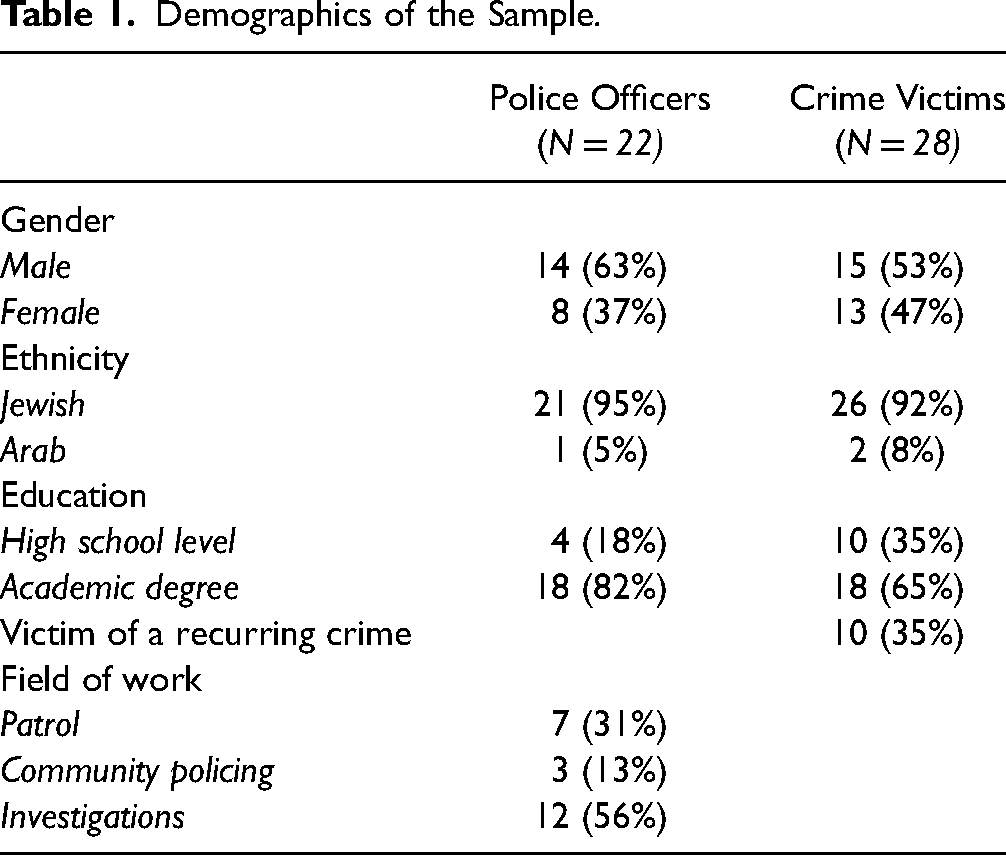
The inclusion criteria for civilian crime victims were normative citizens who filed a complaint with the police after falling victim to minor property offenses. We interviewed both crime victims who acted in vigilante ways (N = 15), and crime victims who chose not to act in such a manner (N = 13), and to wait for a response from the police. Of the interviewees, 53% were men and 47% were women. Interviewees ranged in age from 22 to 51. We used a non-probability sampling method, a purposive approach in which people who meet the criteria of a study are identified in any way possible. Thus, we issued a call on social media indicating the criteria for participation in the study and approached relevant respondents. To avoid biasing the interviewees we did not use the terms “vigilantism” or “illegal behavior” in the initial call. Instead, we referred to a “private initiative” or “independent action.”
The SLBs worked in three areas of police work: patrol officers, investigators, and community police officers. All participants were SLBs according to Lipsky's (2010) definition. They implemented policy and had direct, daily interactions with clients (Cohen, 2022). The majority of the police in our study were men (63%). Interviewees ranged in age from 21 to 58. Participants were recruited from various stations across Israel. By drawing on data from multiple stations, we were able to identify general patterns of workers’ practices, above and beyond the organizational setting within which they are embedded. First, we recruited SLBs referred to us by professional contacts. Then, we asked these individuals to refer us to additional candidates who fit the criteria. Table 1 provides the demographics of our participants.
Demographics of the Sample.
Measures and Procedures
The research tool was an in-depth semi-structured interview. The interview protocol was designed to provide comprehensive evidence of crime victims’ interactions with police officers and of police practices at the street-level. We conducted the interviews, which lasted 45 min on average, via Zoom during the Covid-19 pandemic, and by phone. Anonymity and confidentiality were ensured. All interviews were audio recorded, transcribed, and analyzed.
Crime victims were asked to describe the offense committed against them, the process of filing the complaint, and the sequence of events that followed. The main part of the protocol consisted of elements related to procedural justice during the interaction with SLBs, such as: “Describe the process of filing the complaint” “During the interaction, did you feel that the police officers were genuinely trying to help?” “Did you feel you were treated with dignity?” “Did you feel you were able to tell your story?”
We held the interviews with the SLBs after completing most of the interviews with the crime victims. We asked the SLBs to describe their general work routine concerning interactions with crime victims and their perceptions about their role. The main part of the protocol focused on the SLBs’ practices and their coping mechanisms such as prioritizing their clients and rationing the time and resources they gave to them. We also asked the SLBs about elements of procedural justice in the process of filing a complaint. We explained the preliminary findings from the interviews with the victims to the SLBs, asking whether they were aware of the impact that their interactions had on the perceptions and behavior of crime victims.
Data Analysis
We analyzed the data using the Atlas.ti software for qualitative data. Following the directed content analysis method for data analysis (Potter & Levine-Donnerstein, 1999), we used existing theory to identify key concepts or variables as primary coding categories and provided them with operational definitions. First, we coded the transcripts based on the initial theory. Data not included in this coding were coded again, sentence-by-sentence, in another coding process in which we tried to identify themes that we did not expect according to the theory (Hsieh & Shannon, 2005).
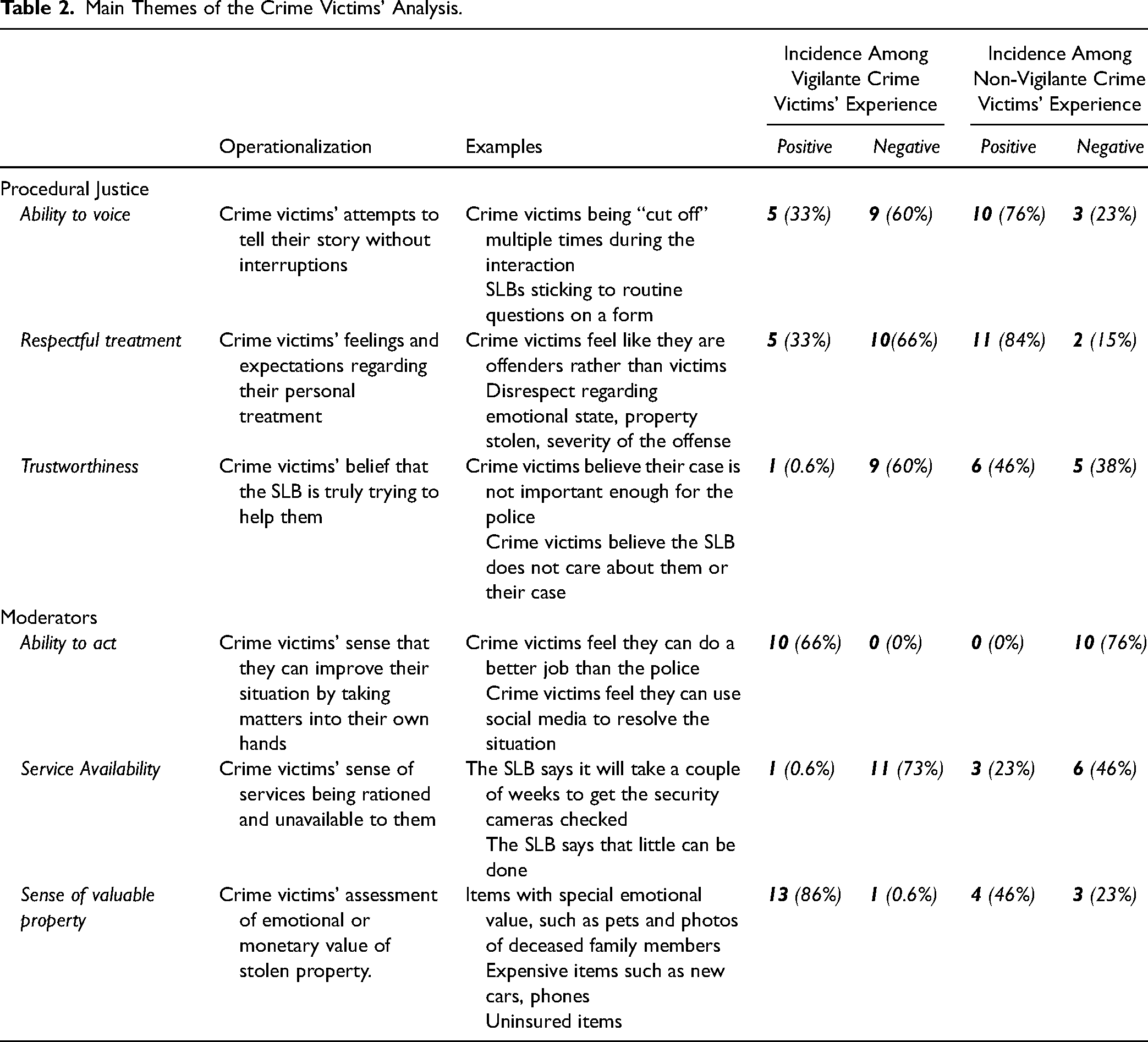
In accordance with the literature, it became clear that perceptions about a lack of procedural justice were common among the crime victims. Thus, the initial coding was concerned with the elements of procedural justice that were significant in the eyes of the participants and to what extent these elements led them to act as vigilantes. Based on existing definitions of the concept (Tyler, 2004), we included any attempts the crime victims made to tell their story when filing their complaint in the category of voice. The code for treating citizens with dignity included any statements regarding the crime victims’ feelings and expectations about the treatment they received. The code for trustworthiness included any statement made by the crime victims regarding their belief that the SLB would help them with their case. After coding these elements, we focused on the main analytical task of explaining the causes and catalysts of this phenomenon. At this point, there were several possible factors: their ability to engage in vigilante actions, the value they placed on the stolen property, and the availability of the service the authorities would provide (See Table 2).
Main Themes of the Crime Victims’ Analysis.
Initial coding of the interviews with the SLBs focused on their coping mechanisms, work routines, and how they saw their role in their interactions with citizens. Thus, based on the literature, we were looking for statements regarding work overload and coping mechanisms (Lipsky, 2010; Tummers et al., 2015) such as prioritizing cases and rationing services to unworthy clients. We also coded the elements of procedural justice that the SLBs themselves noted in their work. After developing these codes, we tried to identify the factors explaining the causes of this phenomenon. Based on the general categories that emerged from the interviews, these factors included the perceptions of the police officers about their role in dealing with crime victims and the gaps between these perceptions and official police policy and citizens’ expectations as explanations of the SLBs’ behavior. Finally, we combined the categories and their interrelationships to create a comprehensive picture of the participants’ collective experience (Aronson, 1995). This form of analysis produces an analytical story and a coherent presentation of the key factors in the emergence of vigilantism.
Findings
Previous research demonstrates that vigilantism occurs when crime victims are unsatisfied with the outcome of the police response. We found that their perceptions about procedural justice at the street-level are also an important factor in their decision to act as vigilantes. In addition, other factors emerged as critical in this decision. In accordance with the research question, we first discuss vigilantism and the victims’ perceptions about various elements of procedural justice they experienced when filing their complaint. We then detail the factors that explain the structure of the interaction and its consequences from both the perspectives of the client and the service provider.
Vigilantism Among Citizens
We found several strategies that crime victims use that, based on the literature, can be defined as vigilante activity. Most of the interviewees stated that they had filed a complaint with the police, but shortly after, they started conducting a private investigation into police efforts to find the perpetrator and their property: We left the police station and went back to the street where the theft happened and asked homeowners to look at their security cameras. We saw a biker who passed by the car and took the computer from our car. We saw he was a delivery man for some restaurant. We found another security camera of a business nearby and located the address where he delivered the food. We then asked the people at the address which restaurant they ordered from. Eventually, we confronted the owner, found the thief, and retrieved the computer (Crime victim no. 3).
Some of the strategies that vigilantes use are not violent, but they are illegal. For example, one victim stated: “My brother works for the police. We used his card to enter police records and found the perpetrator's name. I crossed referenced that information with information I got online, and we found his address” (Crime victim no. 14). Another victim described: “We posted the video on Facebook, we even got on TV. We found out the name of the offender, we gave the details to the police, and they scolded us for disrupting investigation proceedings, they said that we could also be charged for it!” (Crime victim no. 2). Other vigilantes acted violently: “One of the perpetrators tried to escape. I knocked him over and said, ‘you are not going anywhere.’ I placed my knee on his neck” (Crime victim no. 10). Similarly, another victim recounted: “There was a GPS track system on the bicycle. I checked the map and saw where they were. I started running in that direction […] I saw my son's helmet on someone's head. I immediately tackled him so he wouldn't run away” (Crime victim no. 12).
In some cases, citizens chose not to wait for the official police response and outcome, and acted immediately after their first encounter with police officers. In these cases, the satisfaction with the outcome did not seem sufficient as an explanation for their vigilantism. Thus, we tried to understand the conditions under which such citizens chose to engage in vigilante strategies.
Procedural Justice and Vigilantism
We identified several factors that influence crime victims’ decision to act as vigilantes. As the literature indicates, outcomes affect citizens’ trust in the police. As one crime victim stated: “The outcome I received made me lose my trust in the police” (Crime victim no. 5). However, procedural justice, meaning, the process itself has an effect too, perhaps an even stronger effect than the outcome. For example, one victim said: “I was very frustrated with the process. They kept passing me from one to another and did not show any interest in the matter” (Crime victim no. 1). Another crime victim added: “If they had treated me better and made me feel like I could count on them, I would not have had to resort to illegal actions” (Crime victim no. 6).
With respect to procedural justice, we have found three elements that influence crime victims in their decision to act as vigilantes. The first is the ability to voice their concerns and participate in the decision-making process. Voicing their concerns and the possibility of making claims during interactions with establishment agents are key factors in crime victims’ assessments about whether the authorities are acting fairly and legitimately. The interviewees saw themselves as unable to voice their concerns and felt that their story was not important to the SLBs: Whenever I tried to explain something to her, she would say she was writing and that I shouldn't disturb her. It showed me that she was not interested in hearing what had happened. She asked very formal questions, like they were said according to the book […] It had happened to me. I knew what had happened. I knew what needed to be done, but she wouldn't listen (Crime victim no. 3).
The second element is lack of trustworthiness. The crime victims often felt that the decision maker's motives could not be trusted. They felt that the SLBs did not care about them or their concerns and would not do what needed to be done to help them. As one of the crime victims explained: “They didn't make me feel like someone was going to help me. They took the complaint because they had to” (Crime victim no. 2). Another crime victim added: “They said they would handle [the case], but you could tell it's going straight into the garbage or the archive. I lost my trust in them. They gave me a phone number I could follow up with, but when I called, no one knew who I was” (Crime victim no. 12). The authorities can encourage citizens to see them as trustworthy by explaining how decisions are made. However, one theme that reoccurred in most of the interviews was the failure to provide information. Some of the crime victims cited this lack of information as a reason for their vigilantism: They didn't even give me information or a phone number to call. I didn't know who the investigator in charge was, or who to call to if there was any news (Crime victim no. 15).
I felt a lack of control. I felt no cooperation from the police officers. They did not keep me informed about the investigation, if anything was going on, and if they were still searching […] I had to do something (Crime victim no. 1).
The third element is the personal treatment the victims received from the police officers. By demonstrating a respectful attitude toward the public, SLBs can increase their sense of procedural justice. Indeed, the interviewees referred to the SLBs’ personal behavior as important: They didn't care. I cried to the policeman in hysteria, and he said, 'what you are crying for? It's just a horse, how much is it worth in money? How much did you pay for it?' He did not address at all the emotional state that people are in The police officer's treatment was very disrespectful. Very dismissive attitude. He asked what was stolen. When I said it was wallet and a hundred shekels, he gave me a weird look, like he was thinking 'that's why you came here for?' I did not feel that anyone wanted to help me. I felt they were trying to get rid of me (Crime victim no. 2).
Further Explanations of Vigilantism
Although a lack of procedural justice is important in the eyes of crime victims in their decision to act as vigilantes, sometimes that lack alone is not sufficient for them to act. We found three factors that moderated the relationship between procedural justice and vigilantism. The first is the sense of the ability to act. When crime victims felt that there was something they could do to better their situation, they were more likely to act. As one crime victim said: “I tried to talk to news reporters, write to all sorts of Facebook pages. I felt I had the power of all the social networks, so I said, let's use that” (Crime victim no. 1). Other stated: “I trust myself; I could handle it better than the police” (Crime victim no. 5).
One crime victim's motorcycle was stolen and taken to the area of the Palestinian Authority, an area that is out of bounds for the Israeli police and most Israelis are afraid to enter. However, this crime victim grew up in this area, and felt at home there. Therefore, he said: “I think that anyone in my situation that is familiar with this area and feels safe to enter would have done it. I felt safe going in there and looking for my motorcycle” (Crime victim no. 10).
Interviewee no. 19 chose not to act as a vigilante, although the process of filing the complaint left him with little trust in the police. When asked why, he said: “I couldn't do anything. Nothing would come out of it” (Crime victim no. 19).
The second factor is the sense of the availability of service. The interviewees were all victims of minor property offenses. Such offenses, if not dealt with immediately, are unlikely to end with the property being restored or the perpetrator being caught. It is not merely about being capable of doing something. It is also about the police not doing anything: “It's about capability and the understanding that if you won't do it, no one will do it for you” (Crime victim no. 7). When crime victims sense that their case is not important enough to the SLBs treating their case, and when they sense that the service they seek is unavailable to them or is being rationed to them, they are more likely to act as vigilantes: I asked about the security cameras in the street. The police officer said they must get permission to watch it. It would take a week or two. Bottom line is, you understand it is not going to happen (Crime victim no. 3).
I told the police officers what had happened, that I have a locater on the motorcycle and that I know where it is. They said it doesn't matter. 'Come by tomorrow and file a complaint in the police station'. I said, 'By tomorrow the motorcycle will be gone'. They insisted, said the chances of getting it back were low anyway […] Their response led me to act on my own (Crime victim no. 10).
The third factor is the value of the property in the eyes of the crime victims. When what was stolen was especially valuable to the crime victims, they were more likely to act as vigilantes. For example, when the property was insured, crime victims chose to move past the event: “I have insurance. Why should I put any effort to try finding it?” (Crime victim no. 16). However, the value of property may be sentimental, not monetary. One crime victim had two cars. They were each stolen from him two weeks apart. Both cars were insured, but the second car was his “dream car,” which he bought just a month earlier. It was the sentiment attached to the car that made him act: “Emotionally, it's an enormous disappointment. That car was a dream come true. It's a significant loss that you can't simply give up” (Crime victim no. 15). As another crime victim, whose horse was stolen, sums it up: There was no choice. It's more than family. It's the thing most dear to us. I was willing to do anything. I am a very law-abiding person, very non-violent, but if anyone touches my mare, I will kill him with my own hands. A very extreme emotional state. It is much more important than money (Crime victim no. 6).
Street-Level Coping Mechanisms and Gaps in Perceptions About Service
To better understand why vigilantism occurs, we examined the phenomenon from both sides. After conducting the interviews with the crime victims, we sought to understand how police officers see vigilantism and its causes, and the mechanisms in police work that might prompt this phenomenon. Our goal was to determine whether there is a gap between their perceptions and those of the public, why and how it affects the tendency of crime victims to act as vigilantes.
We found two main gaps between SLBs and crime victims that lead to a decline in the quality of service: a professional gap and a gap in perceptions about the role of the police. The professional gap refers to the information and experience that police officers have as part of their profession. Based on these factors, they decide how to handle their immense caseload. For example, the findings show that SLBs prioritize cases: “That's part of the job. You always must prioritize between what is urgent and what isn't” (SLB no. 21). Priorities are sometimes decided by the management, as one of the interviewees stated: “It's my manager's job to prioritize my cases” (SLB no. 18). However, SLBs also have enough discretion to determine if a case is urgent: I decide which case to focus on today and which to focus on tomorrow. I decide based on whether the actions I make will change or not if time passes. Can you catch the perpetrator red-handed or is it just bureaucracies, which can wait? (SLB no. 11).
Once the SLBs decide which case is worthy and which is not, they ration services to their clients. As one explained: If someone stole your football, we won't use all our resources for it. If it's less important, or there are no investigation leads, then we will allocate fewer services to it. I'm not lying to the crime victims. I explain to them what we are going to do. I explain the process… this way, they realize it's going to take some time (SLB no. 1).
Prosecutions are an important part of police work. The SLBs explained that whenever they had cases in which the perpetrators were more likely to be indicted, they invested more resources in it: “A case that has more potential for evidential extraction will get prioritized higher than cases that lack evidence. I prefer to focus on cases in which I can get an indictment" (SLB no. 4). These decisions affect their clients’ perceptions about how they are being treated and their sense of procedural justice. Given that minor property offenses are less likely to be prosecuted, police officers give them little priority: “In property offenses there is a slim chance of finding any suspects” (SLB no. 3). “When there is a suspect or there are forensics, we turn our resources there and handle the case quicker” (SLB no. 1). However, as we noted earlier, victims of crimes regard their cases as just as important as other cases. They do not accept the police officers’ professional decisions to ration services to them. As a result, they come to regard the police as unwilling to help them and as untrustworthy.
This assessment is also reflected in the frustration that many crime victims express about their inability to make their statements to the police in their own way. SLBs are well-trained police officers who know what they need from their clients to solve cases, unlike their clients, who are “unaware of the procedures” (SLB no. 4). One SLB referred to the process of filing the complaint: I know what I need to handle a case. Crime victims don't understand it. They don't know what I know […] They don't know what we need to get an indictment. I don't have the time for this. If a crime victim starts gushing and telling me things I don't need, then I will stop him (SLB no. 18).
This gap is further reflected in the SLBs’ perceptions about their own limitations. Police officers are bound by rules and procedures. These procedures make the process of investigating a crime slower than the victims expect or understand. As one of them explained: “We can't simply enter a house and ask them for the security cameras. We need a warrant. Crime victims don't get it. They get upset. So they go do it on their own, getting the investigation going” (SLB no. 1). Another added: “Crime victims have to understand there are places I can't enter, like the Palestinian Authority's areas on the West Bank. We do what we can” (SLB no. 12). As demonstrated here and in the section above, crime victims quickly understand they can do more for their case then the police are.
The second gap refers to perceptions about the role of police officers. The official policy of the Israeli police focuses on service. The SLBs noted that they were reminded daily about this goal: “It's definitely on the police's agenda. All the way from the chief to the street-level worker” (SLB no. 8). Furthermore, in accordance with the New Public Management regime, they are often measured on their service performance: “They measure us for it. Today when I meet a citizen, everything is filmed […] If we don't meet their [the managers’] standards, he won't be part of the system” (SLB no. 12). These measures are meant to increase public satisfaction with police services, but the SLBs believe they are part of the problem, not part of the solution: The police work on statistics, data. That has a strong connection with harming the citizen. We have certain objectives that we need to meet, cases that we need to close, and that puts us under pressure. That pressure harms the service citizens get (SLB no. 13).
The constant demand for public services and the limited resources that SLBs have for dealing with these demands lead to a great deal of stress for them. Police officers from all fields described their working environment as stressful and involving a heavy workload: “A police station usually has around 800–1000 cases, divided between 12 and 14 investigators. It is a very heavy workload” (SLB no. 1); “It's like a factory, lots of complaints everyday” (SLB no. 7). This load leads to a decline in the quality of service: If you have one crime victim or two waiting, that's fine. But if you have six, then you do everything fast and you can't give them your full attention […] You can't give them service and things get lost in the way (SLB no. 3).
I would like to be more attentive to every crime victim, to explain to him what comes next, what is the legal process, what are his rights, but there is no time and there are too many tasks (SLB no. 4).
We are in survival situations. I just want to finish the shift. How am I, as a person, not as a policewoman, supposed to give good service and listen to crime victims when I didn't even eat or drink today, because there is no time? (SLB no. 2).
Moreover, the SLBs described MASHAL, the very unit responsible for supplying services to citizens, as “worn out”: “There is a lack of resources and manpower, so many times burned out police officers are transferred from patrol to MASHAL and those officers are supposed to give you good service” (SLB no. 2).
While service is one of the Israeli police's main objectives, it often fails to provide it in the eyes of the public, because there is a gap between the official policy and the implemented policy. The findings demonstrate that police officers do not see themselves as service providers but as enforcers of the law: “Cops don't see it as a service to the citizen, but more as enforcers of things that citizens do not want” (SLB no. 2); “My job is to save lives. If the citizen is satisfied or not, that's irrelevant to me” (SLB no. 12); “My service is to manage the case, collect evidence and get an indictment” (SLB no. 18) (Table 3).
The Gap Between Crime Victims and SLBs with Regard to Service.

Moreover, the police officers often disagree with the practice of referring to citizens as clients. As one said: I do not think we called them clients in any way […] It's not something that happens in the police. We never looked at them as clients but as citizens or almost every human being as a suspect (SLB no. 2).
The gap is a major factor because citizens who do see themselves as clients expect certain standards of service. When they are unmet, these people feel the need to take matters into their own hands: Statistically, a citizen will file one complaint in a lifetime. It doesn't matter what happened. He has an expectation. If you ask citizens why they are unhappy with the police, I bet they will say it's because the 'small cases’ like small thefts, why? Because as a normative citizen, that experience is what you care about (SLB no. 5).
Citizens don't care if there is a workload in the police station. They need us and we are not there. That creates a perception that the police only deal with major cases and that citizens should act on their own (SLB no. 2).
Interestingly, the findings indicate that a solution may already exist: community policing. This type of policing is focused on developing relationships with community members and is client oriented. Community policing is still relatively uncommon in Israel, and there are not enough community police officers in each district. Nevertheless, they do make a difference: “I see what they [community police officers] do in the neighborhoods; they do wonders” (Patrol officer, SLB no. 2). This happens because their perception of service is different: “For me it's different. My purpose is to give service. That's the essence of the job, to improve service for clients” (Community police officer, SLB no. 20) (Figure 1).
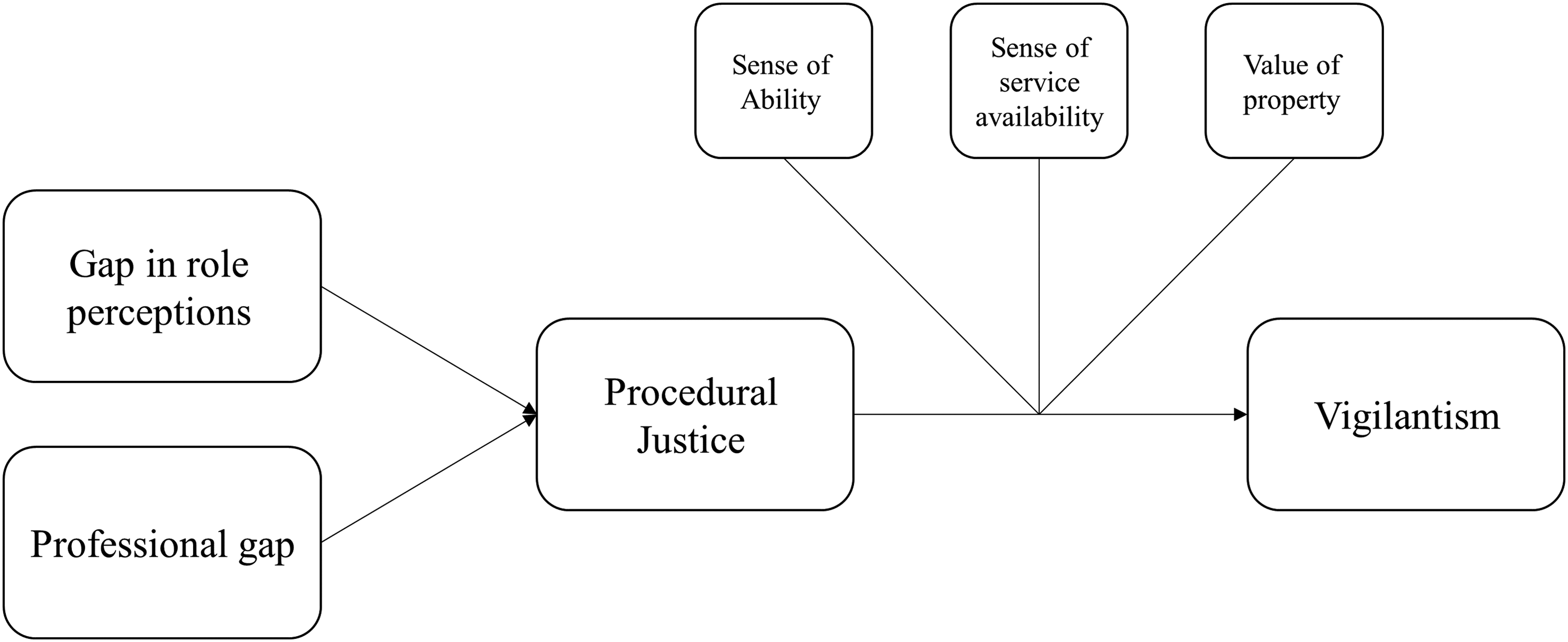
Factors influencing the emergence of vigilantism.
Discussion and Conclusions
Our goal was to investigate how procedural justice at the street-level affects people's tendency to act as vigilantes, and the mechanisms behind it, both from the perspective of the crime victims and the police officer SLBs. Previous research suggested that vigilantism can be explained as a gap between the desired outcome and the actual outcome of the official response (Exline et al., 2003). Nevertheless, as we demonstrated, such activity may occur even before there is an official outcome. Conducting interviews with both the crime victims and the police officers provided us with a broader perspective on the issue of vigilantism and the interactions between police officers and the public. The theoretical framework that resulted from this investigation emphasizes the important role of perceptions about procedural justice in the implementation of policy and how perceptions about the role of the police on the part of both groups affect the implementation process.
In accordance with the literature on procedural justice (Tyler, 2004), we found three main elements that motivate crime victims to adopt vigilante strategies aimed at influencing their personal outcomes during their interactions with police officials: the ability to voice their concerns, the trust they have that the police will provide the services the victims seek from them and the respect that the police accord them. However, we also identified several factors that modified this relationship with the police that do not appear in the literature: the citizens’ sense that they have the ability to rectify the situation on their own, their sense of the availability of the service they seek and the value of the stolen property.
With regard to the SLBs, our findings indicate that their massive workloads prompt them to use coping strategies such as exercising their discretion to prioritize and ration services (Tummers et al., 2015). SLBs often resort to using these coping mechanisms due to the gaps between how they see their work and how the public views the role of the police. These findings accord with a previous study documenting that SLBs and the general public may view reality quite differently (Nachmias & Rosenbloom, 1978). In addition, as research has documented, Israeli police officers usually believe that their accomplishments in fighting crime are more important to the public than the fairness of their processes (Jonathan-Zamir & Harpaz, 2014). Moreover, we also found a gap between the official policy and the manner in which SLBs implement it. Police officers resent the notion of crime victims as clients that the New Public Management ideology has imposed on them. They also bristle at the market-like approach to public services (Brodkin, 2012) and the imposition of performance benchmarks that must be met (Brodkin, 2011). Their heavy workloads and limited resources make them chafe at the idea that they must satisfy the crime victims as if they were customers in a store, rather than do their jobs, which they see as enforcing the law. This finding is surprising, as recent research has reported that new public service values have prompted SLBs to believe that they should take charge of citizens’ well-being, even if doing so means using informal resources (Lavee, 2020). Nevertheless, our findings suggest that SLBs who serve as police officers are less inclined to move toward their clients or even to refer to them as such.
Our findings add to the literature in several ways. First, we expand existing theory on vigilantism in terms of its connection to procedural justice. Hirschman (1970) maintains that when clients are dissatisfied with the outcomes they receive, they choose to exit, meaning switch to another supplier. Later studies have shown that under certain conditions, dissatisfied citizens may engage in exit-like behavior, which is sometimes illegal, and seek the goods and services they want in other places (Lehman-Wilzig, 1991; Lyons & Lowery, 1986; Mizrahi, 2012; Rusbult & Lowery, 1985). This behavior is also primarily a result of their dissatisfaction with the outcome of public services (Cohen, 2012; Cohen & Filc, 2017). However, our findings underscore the importance of the process, not merely the outcome, in citizens’ decision to exit the public system and pursue the outcomes they seek on their own.
Second, this study also contributes to the literature on SLBs by expanding existing knowledge about the relationship between their discretion and work routines, and the perceptions and behaviors of citizens (de Boer, 2020a; de Boer, 2020b). Previous studies have focused on what happens during encounters with SLBs. In contrast, we reveal what happens in between encounters with public officials (Bartels, 2015), and the unintended outcomes that such encounters have.
This study also makes an empirical contribution. We provide the first evidence about this phenomenon in Israel, a developed, democratic country. To date, the vigilante literature has no empirical information about this phenomenon in Israel, as most of the studies were conducted in developing countries (Haas et al., 2014; Tankebe, 2009). In addition, we present evidence from two perspectives, the clients and the SLBs. By investigating not only the clients’ perceptions and behaviors, but also why police officers act the way they do, we are able to establish a holistic explanation of the phenomenon.
Our findings may also have practical implications for developing public policy that meets the needs of citizens and thus significantly reduces the need for vigilantism. Clearly, improving the sense of procedural justice in SLBs’ work is important in accomplishing this goal. We can also generalize this recommendation to all aspects of SLBs’ work, not just police officers.
Like all studies, this one has its limitations. First, the situation we presented is a single case. Thus, it has specific elements and occurs at a particular time and in a particular place. It is important for future research to examine the conditions that promote vigilantism among citizens, as well the strategies they adopt, in varied settings. We examined our claims solely in Israel, a small democratic country in the Middle East whose population has a relatively low level of satisfaction with the police (2.67 out of 5) (Vigoda-Gadot et al., 2019). Therefore, it is difficult to generalize these findings to additional countries. However, it is possible to generalize our findings to countries with similar characteristics. Second, our case study refers to “normative” citizens, who had never engaged in criminal activity before the incident that led them to act as vigilantes. Thus, we cannot claim that our findings are true for all people. Further research should examine this phenomenon among other groups. Third, the use of convenience sampling instead of probability sampling may affect our results. However, due to the sensitive nature of our topic, it was necessary to use such methods. Lastly, the use of two independent samples of police officers and vigilantes makes it difficult to connect the experience of the police officers and the vigilantes. These are different interactions and drawing conclusions from them as one process is complex. Therefore, future research should try to examine these processes as one and test the causal relationship between SLBs and vigilantism using experimental methods.
Footnotes
Acknowledgements
We are grateful to the Editor, Stephanie Newbold, and two anonymous reviewers for their insights and comments. We would also like to thank the conference participants of ICCP, EGPA, ASPA, and IRSPM, who offered valuable critiques and provided us with constructive suggestions, thereby improving the article substantially.
Declaration of Conflicting Interests
The author(s) declared no potential conflicts of interest with respect to the research, authorship, and/or publication of this article.
Funding
The author(s) received no financial support for the research, authorship, and/or publication of this article.
