




Abstract
Public employee pension management is the nexus of public and private financial management systems that are significant long-term components of public finance. The idea that these pension systems can look quite similar yet perform in quite different and conflicting ways is significant when designing policy; system design templates are not successful in complex systems. Even pension systems within the same city can have radically different states of actuarial health based upon small differences in the rules (or adherence to the rules) establishing them. To better understand such systems, viewing them from a common pool resource perspective is useful. Elinor Ostrom (1990), in her seminal book Governing the Commons, provides eight principles that facilitate governing common pool resources. The general theme running through Ostrom's principles is the need to facilitate the building and channeling of social capital. By facilitating constructive collective choice, the goal of effective, sustainable collective action is achievable. In this study, we examine the political, cultural, and institutional structures that are in place in the pension systems of Dallas and Houston, Texas. We examine the pensions’ governance practices to determine which appear to violate Ostrom's ideal institutional arrangements and their impact on the pensions’ long-term sustainability. Pertinent survey information from pension beneficiaries conducted as part of this research are provided
Introduction
Public employee pension management is the nexus of public and private financial management systems that are significant long-term components of public finance. The idea that these pension systems can look quite similar yet perform in quite different and conflicting ways is significant when designing policy; system design templates are not successful in complex systems. Even pension systems within the same city can have radically different states of actuarial health based upon small differences in the rules (or adherence to the rules) establishing them. When the long-term obligations of pension funds are not properly funded, the resulting cascade of fiscal problems can manifest themselves in a range of ways for local governments; lower bond ratings at a minimum up to bankruptcy at the upper extreme. The pensioners suffer due to unkept promises and lost support while the general citizenry suffers reduced and more expensive services and infrastructure. This state of affairs begs the question, how do some municipalities ensure the long-term success in their fiscal challenges, particularly public pensions, while others fail?
To better understand such systems, viewing them from a common pool resource perspective is useful. Elinor Ostrom (1990), in her seminal book Governing the Commons, provides eight principles that facilitate governing common pooled resources. The general theme running through Ostrom's principles is the need to facilitate the building and channeling of social capital. By facilitating constructive collective choice, the goal of effective, sustainable collective action is achievable. In this study, we examine the political, cultural, and institutional structures that are in place in the pension systems of Dallas and Houston, Texas. We examine the pensions’ governance practices to determine which appear to violate Ostrom's ideal institutional arrangements and their impact on the pensions’ long-term sustainability.
The study begins with a review of the Institutional Collective Action (ICA) framework underlying the establishment of these public pension systems and then moves into the goals and governance constructs of the systems as described by Feiock (2013), and furthered by Tang et al. (2014) in their application of the Common Pool Resource (CPR) perspective. From there we examine the risk and volatility that has been introduce into these systems through a governance structure that did not fully recognize or address those issues. From this basis, we analyze and compare both Ostrom's micro-situational variables and her design principles for governing a commons in light of how they apply to these public pension systems. We close with a discussion of how Ostrom's principles can help policy makers facilitate the design of public pension institutions and systems that are both sustainable and demonstrate a high degree of resiliency.
Literature Review
This section examines the taxonomy and incentives of a myriad of infrastructure financing systems on investment options currently available to investors. ICA dilemmas emerge when government authority is divided, causing decisions made by one government in a specific area to affect others and their functions. While it's a recognized principle in policy design to align policy interventions with the scale and nature of issues, practical implementation is complicated due to ICA dilemmas. These dilemmas result from fragmented policy responsibilities, causing scale-related issues and both positive and negative consequences, as well as challenges with shared resources (Feiock, 2013). The CPR perspective, initially designed to address concerns related to the management of natural resources, is highly applicable for analyzing matters concerning the fiscal sustainability of the public sector, as they both involve comparable collective action challenges (Tang et al., 2014). This stems from the fact that when local actors prioritize short-term interests in their strategies, it highlights the collective action problem. Without mechanisms to coordinate decisions across policies and jurisdictions, individual decisions are likely to be collectively inefficient (Feiock, 2013).
The coverage of instruments as imbued in this section is comprehensive as they span from different forms of the governance of pensions in the state of Texas, risks, and volatility trade-offs for different investment vehicles available to pensions as imbued in Elinor Ostrom's principles based on the rational choice model and insights drawn from the developmental economics on ecological preservation.
Individuals in different advanced economies are exposed to significant changes within the economy. Such changes are often driven by globalization and technology, shifting market economies, the economic crisis of 2008, and a set of institutional dynamics, a view that Elinor Ostrom furthers. According to Ostrom's work, contrary to the prevailing conventional thought, communities remain better placed in self-organizing ways that play a critical role in pushing free-riders of shared resources. Ostrom's theory provided several guidelines in the management of common-pool of resources. These rules revolve around creating policies that define good conflict resolution methods and the community's duty in maintaining resources that are proportional and equal to their benefits (Bergstrom, 2010). The development has wrought economic growth and opportunities for individuals as consumers and workers. The inclusion of the universal public service and the universal social security following the aftermaths of the Second World War provided avenues of providing social assistance to the poor through social policies.
Public pensions were established based upon the understanding that in return for lower pay, and reduced promotion opportunities, municipal employees would have greater job security and a modest defined benefit retirement plan (National Conference on Public Employee Retirement Systems, 2008). Many of these pension systems were established during the time of ‘big labor’ and the economic boom for the middle-class following WWII. Defined benefit pension plans were common and the expectation of the recipients was that both the plans, and the organizations that sponsored them, were at little to no risk of failure. Then came the oil shocks of the 1970's and the wholesale restructuring of labor relations in the 1980's. The final blow to organized labor by many accounts was the firing of the striking Air Traffic Controllers by President Reagan in 1981 (McCartin, 2011).
So, during this time, municipal unions were still maintaining some measure of power, which was quickly fading, with one exception. The paramilitary sectors of public employees—the First Responders—were still able to command a great deal of public empathy and respect. This makes them very popular with the public and very problematic for elected officials because the fire and police unions, particularly in Dallas and Houston, are able to rapidly organize and deploy public relations campaigns in the political arena. This ability, in turn gives the unions a powerful voice in who gets elected—not only at the local level, but also the state level in many instances. The public safety unions have used this power to drive over-expropriation to the point that both the cities of Dallas and Houston have had to institute tiered systems, with newer employees receiving much less generous pension benefits.
The members of the pension boards are elected officials and employees or retirees. Many economists argue that is a conflict of interest (Long, 2011). Elected officials need votes and public employees vote. Elected officials are beholden to the beneficiaries of these plans to get reelected. This leads to election cycle promises of, ‘sure, I will give you a benefit, now, even though it back end loads the impact on taxpayers.’ That leaves the professional managers to deal with the issues.
Management might see the issues, but are they in a position to intervene and fix the issues? Do they start fight with the powerful employee groups? What leverage do they have on powerful and influential employee groups like police officers and fire fighters? Do their elected supervisors want to be forced to deal with the difficult policy issues relating to managing defined benefit pension funds? Is management anymore courageous than their elected bosses and their employees? The managers are part of the employee family and they are also vested in the system.
We wind up with an eco-system that prefers opacity to transparency. It is easy for all the stakeholders to ignore problems as well. There is little appetite for any of the stakeholders to question the actuarial assumptions that underlie the pension systems. In the 1990s, investment portfolios were able to return eight percent interest with low risk (Nagaswami, 2014). This environmental conditioned changed at the close of the century, but the stakeholders did not, or could not, change their actuarial assumptions. This financial environment change, and the lack of a necessary actuarial response, was one of the important drivers of the solvency issues faced by the pensions. As we shall discuss later, the increased risk introduced into the pension plans in an attempt to maintain these high rates of return led to a subtle, yet substantial break in the social contract. There was no incentive for anyone to point out the possible downside risks of placing highly volatile investments in the pension portfolios. The stakeholders involved—the employees, the elected officials, the managers, and the public—were familiar and comfortable with debating the merits of benefits; none were comfortable discussing the underlying actuarial assumptions regarding risk and volatility. These factors, when combined with the governance structure of public sector pensions at the state level of Texas, were three of the four primary catalysts in bringing the public safety pension systems in Dallas and Houston to a crisis point.
Issues Facing Public Pensions
The first additional goal for the pension systems was to function as a pay equalizer. Smaller communities surrounding the larger metropolitan areas began offering increased salaries for experienced fire and police officers in an attempt to encourage them to serve their communities. As training and recruitment of fire and police officers became more expensive, it was cost effective for these smaller municipalities to look upon the trained officers of the large municipalities as their talent pool for recruitment. To counter this trend, both elected officials and city managers of the large cities leaned more heavily on the perks of their municipal pension programs because this was an area that the small municipalities could not readily compete.
The second additional goal for the pension systems came in the form of needing to retain experienced officers beyond twenty years of service. Once a sworn officer hit twenty years of employment, there was very little incentive to continue active service. With pension payments approaching ninety percent of their salary (The Economist, 2016; Houston, Dallas pension docs 2017), there was a high level of incentive for individual officers, many only in their forties, to begin second careers outside of public service. To counter this adverse incentive, the pension system was modified to include a Deferred Retirement Option Plan (DROP). A DROP plan typically allows an employee the option of having their retirement payments placed into an account with the city while still drawing their regular salary (Birley and Eichstadt, 1998). In the Dallas and Houston plans, these DROP accounts were guaranteed an eight percent return. At the end of a specified period of time, typically ten years, the officers participating in the DROP program were allowed to make a lump sum withdrawal, which in some cases was an amount approaching one million dollars. When the pension systems in Dallas and Houston began to have liquidity problems, a ‘run’ on the DROP accounts exacerbated the problems (The Economist ,2016). This was the ultimate and most drastic of the four factors precipitating the crisis in the Dallas and Houston public safety pension systems.
In large and diverse urban areas there was a belief in management that the need to hold onto police officers was more critical than it was for fire fighters. Police officers still on the street were required to be much more physical than fire fighters. Fire fighters had seen their workload shift to 80% to 90% emergency medical services versus fighting fires. Police officers on the street were not normally assigned to stay at a station like fire fighters. It was seen that police officers work careers were shorter than that of fire fighters. The other major concern that management had with DROP was that most of the police and fire fighter workforces were predominately white and DROP would reduce turnover and negatively impact the cities’ attempt to diversify their uniform workforces. The high levels of public sympathy for these workforces kept management and elected officials from eliminating DROP even though they knew DROP would have adverse organizational and fiscal impacts.
The issue has reached crisis level in many local government budgets to include those of Dallas and Houston. The Dallas pension funds felt a particularly severe impact from the actions of the board chasing needed returns with ever increasing risk in the investment portfolio. It looked as though the pension fund was caught in a gambler's downward spiral; losses on investments causing increasing bets on even riskier investments which produced ever larger losses. Even when viewed from a national scale, the level of funding for state pension plans is concerning. According to an Issue Brief published by the Pew Charitable Trusts in 2017, 2015 presented a worsening fiscal picture that was largely driven by weaker investment returns than the year before. Given the continued volatility in investment returns, state and local Unfortunately policymakers cannot depend on investment returns alone to close the pension-funding gap over the long term due to the continued volatility in the markets. Funding policies will need to be established that put them on a path to pay down pension debt.
Unfortunately, the gap between plan assets and liabilities would have increased even if pension plans had met the investment targets in 2015 because several state contribution policies do not reach positive amortization. Several states demonstrated improvement on this metric—32 had a positive amortization in 2015 versus 15 in 2014. This reflects the efforts of state policymakers to strengthen contribution policies to start to close funding gaps as well as the timing of contribution calculations and improved funding conditions carried over from 2014. The other, and even more pervasive problem is that in 2013 state retiree health plans were funded at only 6 percent—23 states had funding levels of zero to one percent funding! While beyond the scope of this study, the volatility and uncertainty surrounding healthcare costs are another issue that insert additional volatility and risk into the portfolios of public pensions.
Previous Research on Governance Constructs
Tang et al. (2014) reference Von Hagen's (2006) three general types of fiscal design rules that affect how public fiscal institutions address collective action issues. These arrangements include, “ex ante fiscal rules, electoral rules, and the budgetary process (Tang et al., 2014, 792). An example of ex ante rules is the stipulation of a balanced budget. The electoral rules influence the preferences of elected officials for fiscal allocation. This is important with regard to loss aversion. In a study conducted by Carolyn Bourdeaux (2016) the following aspects of political behavior of elected officials comes to light. As reported by Bourdeaux: …voter preferences are colored by loss aversion and that elected officials are concerned about antagonizing voters. Elected officials are therefore likely to seek cutback strategies that avoid or mitigate voter perceptions of loss. A further key observation in behavioral economics is that the perception of loss often depends on the reference point over which people evaluate loss (2017).
So, the question remains, how do some municipalities ensure the long-term success in their fiscal challenges, particularly public pensions, while others fail? Are there structures and institutional arrangements that lend themselves to sustainability while others invite failure? Tang, Christianson, and Pisano point out that Ostrom (2010) provides the following guidance in this area. Ostrom, 2010 states that, “micro-situations affect the level of cooperation that participants achieve in social dilemma settings (including both public goods and common-pool resource dilemmas)” (661). Ostrom (2010, 661–662) consolidates these “micro-situations” or institutional arrangements with the following list:
Communication is feasible with the full set of participants. When face-to-face communication is possible, participants use facial expressions, physical actions, and the way that words are expressed to judge the trustworthiness of the others involved. Reputations of participants are known. Knowing the past history of other participants, who may not be personally known prior to interaction, increases the likelihood of cooperation. High marginal per capita return (MPCR). When MPCR is high, each participant can know that their own contributions make a bigger difference than with low MPCR, and that others are more likely to recognize this relationship. Entry or exit capabilities. If participants can exit a situation at low cost, this gives them an opportunity not to be a sucker, and others can recognize that cooperators may leave (and enter other situations) if their cooperation is not reciprocated. Longer time horizon. Participants can anticipate that more could be earned through cooperation over a long time period versus a short time. Agreed-upon sanctioning capabilities. While external sanctions or imposed sanctioning systems may reduce cooperation, when participants themselves agree to a sanctioning system they frequently do not need to use sanctions at a high volume, and net benefits can be improved substantially. Define clear group boundaries. Match rules governing use of common goods to local needs and conditions. Ensure that those affected by the rules can participate in modifying the rules. Make sure the rule-making rights of community members are respected by outside authorities. Develop a system, carried out by community members, for monitoring members’ behavior. Use graduated sanctions for rule violators. Provide accessible, low-cost means for dispute resolution. Build responsibility for governing the common resource in nested tiers from the lowest level up to the entire interconnected system.
From these institutional arrangements, Ostrom (1990) argues for the following eight Principles for Managing a Commons.
Through her extensive research Ostrom highlights these principles as factors that are common among long lasting institutional arrangements for common pooled resource systems. Tang et al. (2014) adopt these principles in their study of three Southern California municipal governments—San Bernardino County, San Bernardino City, and Los Angeles County—to determine what financial institutional arrangements (or combination thereof) had a significant impact on the fiscal resilience of the entity. The following section incorporates Ostrom's (2010) six micro-situational variables in a manner similar to the methods of Tang et al. (2014) to conduct an analysis of the Dallas and Houston Public Pension systems, with particular attention on the Fire and Police Pension systems.
Findings Regarding Micro-Situational Variables
The Dallas and Houston Fire & Police pension system governance constructs have similarities and differences that have led to financial difficulties. Two different approaches were taken, with one system requiring greater top down intervention than the other. Both would be well served to adopt alternative approaches. The situation in Dallas became more severe than that of Houston. The Dallas Fire and Police pension became underfunded by almost three billion dollars. It also led rating agencies to downgrade the city's bond rating, driving up the cost of capital for the city.
For Dallas, the Ostrom (2010) list of micro-situational variables almost became a checklist of what not to do. Communication between those charged with operating the pension fund and city staff began to erode in the early 2000's, with the movement of the pension management to separate facilities away from Dallas city hall. The pension fund had always been a problematic issue for elected officials and city staff, so the movement of the day-to-day operations of the fund, seemed like a good idea. The problem was once the fund administration was moved off-site, city oversight dropped precipitously. Aggravating this situation was the release of responsibility of the fund's management to the users—the Fire and Police pension board members—to ensure the fiscal well-being of the fund. The fund managers were no longer required to communicate meaningfully with the city. This situation became exacerbated when the DROP fund, described earlier, was put in place and the actuarial firm [Towers Perin] responsible for determining the impact of that change provided an unrealistic assessment [so much so that the City of Houston is currently in litigation with the firm (Anonymous. 2016. Interview with former senior Houston public administrator by authors. October 17)]. The pension fund won a multimillion-dollar lawsuit against its investment-advising firm Townsend Group, but that was minor compared to the billion-dollar damages to the fiscal health of the fund (Trahan, 2017).
Houston, with its strong mayor form of government, did not run into this precise problem. They suffered from a problem that was common to both cities: the communications between the Texas legislative committee that had inserted itself into the negotiations between the pension fund boards and the cities that helped fund them. In 1975, the Texas constitution was amended, authorizing the legislature to enact laws regarding the formation of the firefighter's relief and retirement fund (Law 360, 2016). The amendment was subsequently repealed and replaced with a revised statute and another law requiring parity between fire and police. This statue allowed the state to dictate to the city and the pension fund how much each must contribute based upon actuarial projections. It also applied to cities in Texas that had a population over 1.6 million, which meant that it only applied to the city of Houston. The City of Houston has also been precluded by law, from auditing the pension fund's books.
So, in both cases, there are few open or uncontested communications between the cities and their pension funds. This allowed benefits to creep upward while the previously discussed actuarial data hid an increasingly high level of risk in their rather opaque assumptions. With the books on these pension funds closed, and the issues complex, broader community stakeholders were rarely effectively informed of ongoing issues. This situation was also fed by the reputations of the participants.
In the case of both cities, there was very little inclination for compromising on the side of the public safety officers’ unions. Their boards were taking on increasing levels of risk as well as the adoption of the DROP accounts to retain experienced officers. The elected officials were also reluctant to be seen as adversaries of first responders, particularly after the events of 9/11 and the public support enjoyed by public safety officers. The unions were also very active politically, which gave them additional power relative to their elected counterparts.
The concept of having a high marginal per capital return for participants in successful collective efforts was also severely compromised in both cities. Until the 2009 financial crisis brought the problems to the fore, the public safety unions had little reason for working with other stakeholders. The pensions’ benefits were guaranteed by State statute, and the cities would be forced to provide the funding for the benefits (Law 360, 2016). However, once the problems of actuarial miscalculation, the failure of many risky investments by the pension boards, the downgrading of the cities’ credit ratings, and the threatened bankruptcy filings by Dallas and Houston, this position changed, but the damage had been done.
Entry or exit capabilities for key participants are also compromised. There are deep divisions between elected officials of the cities and the state and within the cities themselves. Both levels point at each other, claiming that each should do something to address budgetary issues, but neither have the credibility to effectively create long term solutions. The cities and the State of Texas are frequently at odds over revenue generation and this contentiousness is also felt within the cities, with multiple competing interests seeking relief in a resource poor environment (There is a current State legislative effort to limit ad valorem taxing authority of the cities).
The issue of time horizon further complicates issues, but in slightly different ways for Dallas and Houston. The Dallas city manager serves at the will of the city council, so in theory, could have a long tenure. This is far from the case in practice since the average tenure for the Dallas city manager is roughly four years (Dallascityhall.com, 2018). In Houston, the strong mayor form of government makes the city's administrative officers subject to the election cycle of the mayor and the controller. Both of these offices are term limited as well. For both cities, the support of the public safety unions is an important consideration for elected officials. Both elected officials and city staff pointedly avoid being seen as intentionally antagonizing public safety employees.
Finally, the concept of agreed-upon sanctioning capabilities is non-existent for both cities. In order to reach compromises, the issues are frequently played out in the press with the side that is able to best articulate their position (or undermine the others’) wins the day, usually in the form of a public referendum (Anonymous. 2016. Interview with former senior Houston public administrator by authors. October 17). Even having won a referendum, the winning side is frequently challenged in court due to the implementation of the agreement.
Methodology
Given the fractious settings present in both cities with regard to their micro-situational variables, the foundations for establishing Ostrom's design principles are very weak. The challenges go even further if the subunits of each organization are examined. The change of the public safety pension plans from defined benefit to defined contribution has caused union members to become divided. Exacerbating this issue is the ‘run’ on the DROP programs (particularly in Dallas) that threatens to destabilize the pension systems in both cities to the point of bankruptcy (The Economist, 2016). From this perspective, we examine the Dallas and Houston public safety pensions in light of Ostrom's eight design principles (1990). Furthermore, we distributed a survey to a substation in the Dallas Firefighters, of which we got 31 responses. We utilized a simple convenience sample to better inform our theoretical argument.
Research Design
This study adopts a mixed-methods approach, combining qualitative interviews and a quantitative survey to investigate the management of public safety pensions in Dallas and Houston in relation to Ostrom's design principles.
Participants
Interviews: Participants include key stakeholders involved in public safety pension management in Dallas and Houston, such as pension administrators, government officials, financial experts, and representatives from relevant organizations.
Survey: The survey was distributed to a substation within the Dallas Firefighters. A convenience sample of 31 responses was obtained from firefighters to gather insights into their perspectives on pension management.
Data Collection
Qualitative Interviews: Semi-structured interviews were conducted with participants to explore their experiences, perspectives, and insights regarding the design and management of public safety pensions. Anonymized interviews were conducted to encourage candid responses. Interview questions were designed to probe participants’ understanding of Ostrom's design principles and their application in pension management.
Quantitative Survey: A survey was designed to gather quantitative data on firefighters’ perceptions and experiences related to the public safety pension system. The survey included questions regarding satisfaction with the pension system, perceptions of long-term sustainability, and suggestions for improvement. Survey responses were anonymized to encourage honest feedback.
Data Analysis
Qualitative Analysis: Thematic analysis was employed to identify recurring themes and patterns in the interview data. Data were coded and categorized according to Ostrom's design principles, allowing for an exploration of how these principles manifest in public safety pension management.
Quantitative Analysis: Survey responses were analyzed using descriptive statistics to summarize participants’ perceptions and experiences. Quantitative data were compared and contrasted with qualitative findings to provide a comprehensive understanding of the issues surrounding public safety pension management.
Ethical Considerations
Informed consent was obtained from all participants prior to their participation in interviews and surveys. Confidentiality and anonymity were ensured in reporting and disseminating findings to protect participants’ privacy. Institutional Review Board (IRB) approval was obtained to conduct the study in accordance with ethical guidelines.
Limitations
The study's reliance on convenience sampling for the survey may limit the generalizability of findings. The focus on Dallas and Houston may not capture the full range of experiences in public safety pension management across different municipalities. The study's reliance on self-report data may introduce bias or inaccuracies in participants’ responses.
This methodology outlines the comprehensive approach adopted to investigate the management of public safety pensions in Dallas and Houston, focusing on the application of Ostrom's design principles. By integrating qualitative interviews and a quantitative survey, this study aims to provide insights into the factors contributing to the long-term success or failure of public safety pension systems.
Findings
Well defined boundaries. In both instances, those using the municipal fiscal resources can force the providers into a position of supplying additional resources, regardless of external economic conditions, or face the dire consequences of municipal bankruptcy. The cities do not have majority control of the pension boards so while they may protest, they cannot resist without great cost, both in legal and monetary terms (Law 360, 2016: Texas supreme court ruling on the rights of the pension boards). One strategy currently being implemented is to allow the cities to have a majority representation on the public safety pension boards with an additional requirement of a super majority to change benefits or funding levels (Fink, 2017: West, Huffines negotiation outcome). This action may have a positive impact for Dallas because it also addresses all six micro-structural issues; no such arrangement is being considered for Houston (which currently has a minority on the boards). In fact, Houston had recently been blocked in court from being able to audit the books of its public safety pension board (Law 360, 2016). This changed with the recent ‘fix’ to the pension system that allows the city to confirm the performance of the pension plans in exchange for fully funding them (Fulton, 2016; Morris, 2016). However, it is clear that firefighters from our sample strongly opposed having approval by city council and citizens of Dallas when it regards to changes in benefits (see Figure 1).
Proportional equivalents between benefits and costs. This principle entails ensuring that the actuarial information is consistent, transparent, and available to all participants in the common resource—the municipal budget. Users and funders must have credible and impartial information provided to them regarding the actuarial assumptions and the current low-risk rates of return on investments (Nagaswami, 2014). This transparency is currently not available to all the stakeholders in either Dallas or Houston, which makes fundamental agreement on funding and benefits exceptionally difficult. Based on our sample, most firefighters believe funding solutions should be a mix of both employee contributions and increased contributions from the city. Figure 2
Collective choice arrangements. The many stakeholders involved in the common pooled resource of a municipal budget require an orderly and transparent process to reasonably consider options. The lack of such a process in both cities with regard to their public safety pension funds greatly impedes the ability to make difficult decisions by all parties. The long held and simmering distrust among the parties, and the near constant need to settle issues in court, bind each stakeholder group into extreme choices based upon fully rational fears of catastrophic loss if a position is compromised. It also makes it very difficult for voters to know how to hold the various officials involved accountable. Figure 3 shows who the sample prefers to control the Police and Fire Pension plan board. A strong majority prefers a mix of experts, city management, and fire/police officials.
Monitoring. The severely dysfunctional relationships between the parties in each city make monitoring a no-win task. The groups have adopted a winner-take-all positions to the point where any monitor that points out an issue unfavorable to one group of stakeholders is immediately subject to ad homonym attacks (Morris, 2016). Transparent actuarial information, formed through a politically removed process, would be a first step in achieving this principle—neither city, nor the State of Texas, has such a process in place.
Graduated sanctions. As mentioned earlier, the current structure for both cities has resulted in extreme sanctions for errors; either collapse of their position resulting in financial ruin, or nothing (basically business as usual). Without a restructuring of the current system, enforcement of graduated sanctions to help keep errant stakeholder groups in line is not possible. This reality flows into the next principle regarding conflict resolution.
Conflict-resolution mechanism. The current conflict resolution in the case of both cities is that of the State courts. This method is both expensive and time consuming. When excessive resources are spent in search of conflict resolution, positions necessarily harden and any compromise is forced. Loss aversion takes hold and political considerations begin to override prudent fiscal ones (Bourdeaux, 2016).
Minimal recognition of rights. The elected officials of Texas are hesitant to allow much freedom of action to local governments. While this environment does not directly prevent cooperation of stakeholders at the local level, it does create additional stresses as described by the analysis of Tang et al. (2014). If parties think they can successfully appeal local negotiations to a higher authority, there is a reduced incentive to negotiate in good faith.
Nested enterprise. This principle is best served by repeating Ostrom's question: “How can we create a multi-layer, polycentric system that will be adaptive, and effective over time?” (Ostrom, 2005, 271). Tang et al. (2014) emphasize the contention that the three factors typically discussed in public finance literature (ex ante fiscal rules, electoral rules, and the budget process) can fully explain what conditions are necessary for fiscal sustainability. The reluctance of the State to meaningfully delegate power to the local municipalities precludes many of the other principles that help insure long-term fiscal sustainability. This final principle may be the lynchpin for the design of a more resilient system.
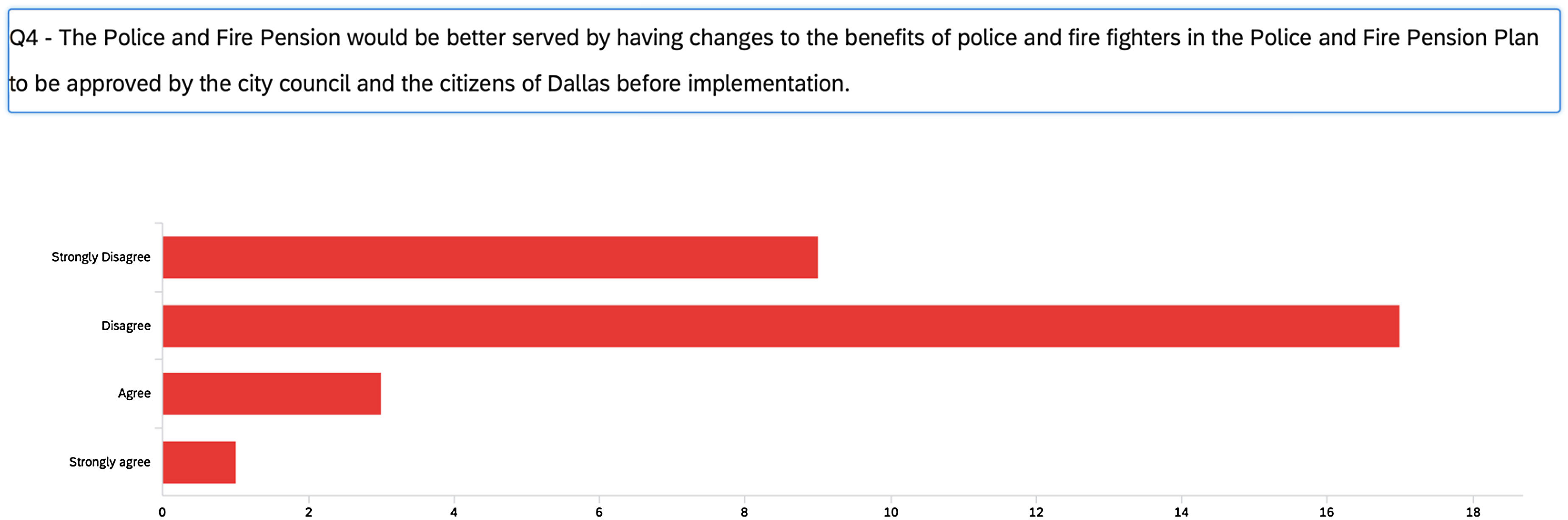
Question regarding the need for a public referendum.
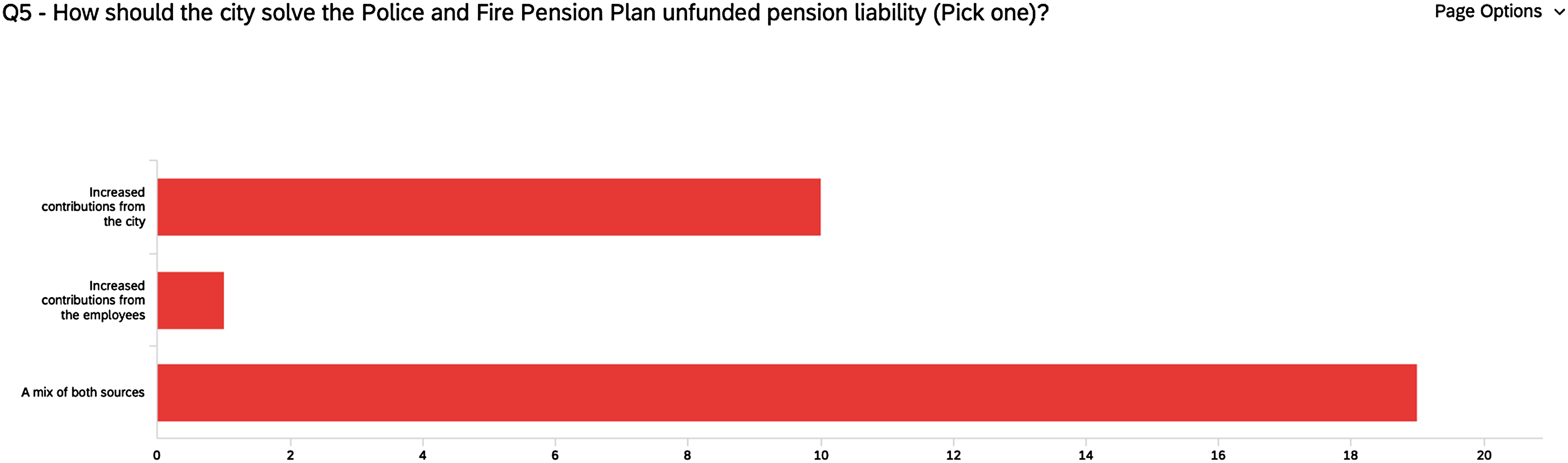
Question regarding who should pay the unfunded liability.
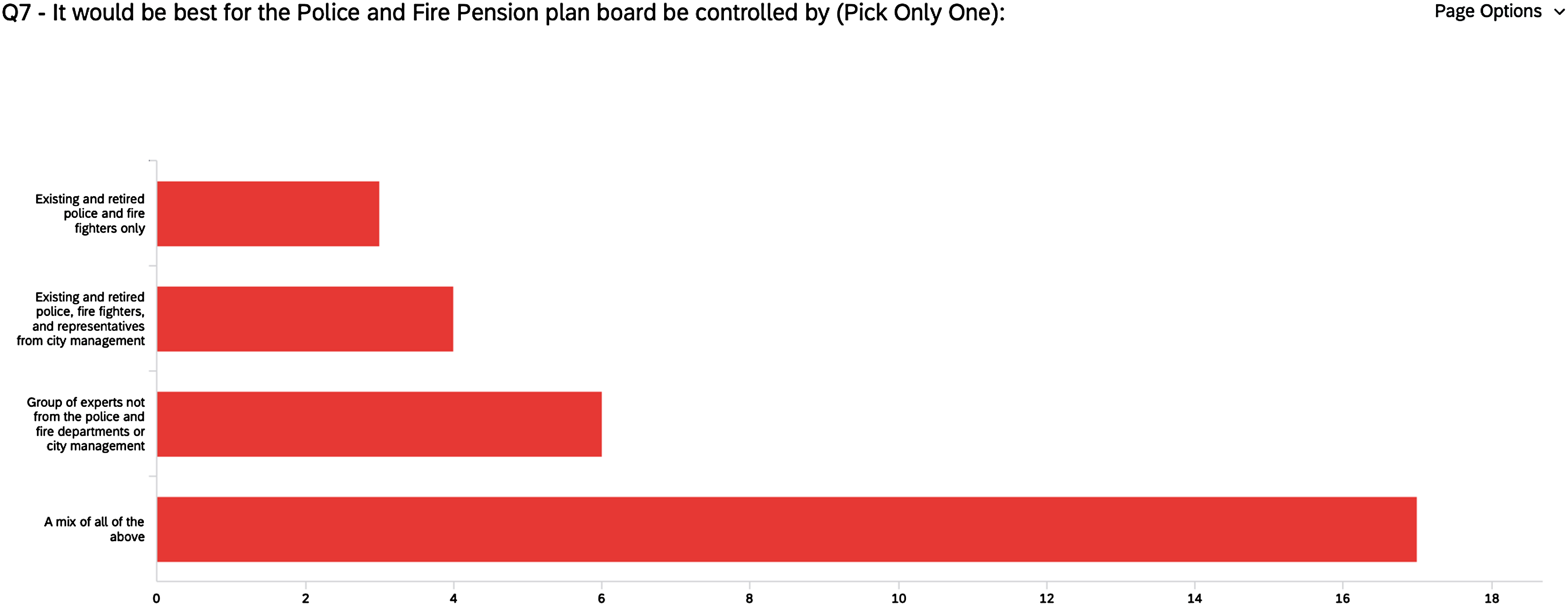
Question regarding who should control the pension.
Concluding Discussion and Recommendations
Rent seeking behaviors and political opportunism are a toxic combination to the effective governance of a commons because they undermine trust. The temptations for individualistic behavior, at the expense of the collective, are high when institutions are isolated and information is guarded. Given these issues and the others identified earlier, it remains to be seen if the revamped institutional designs will enable Dallas and Houston to remedy their pension issues and repair their frayed social contracts.
There are two key attributes embedded into the Houston plan. The first attempts to anticipate market risk by including a mechanism called the “corridor,” which requires the pensions to further cut benefits if the city's payments rise more than 5 percent of payroll above the projected cost (Fulton, 2016; Morris, 2016). This also brings additional communication of the pension funds’ performance up for public debate because the City is required to fund the pension obligation at 100% on a yearly basis. The increase in transparency is a positive step in the effort to repair trust and build social capital, but there are counterforces involved in this agreement that have the potential to derail the agreement, not the least of which is an effort to hold a public referendum on shifting from a defined benefit to a defined contribution plan for new employees. That coupled with the fiscal pain of a 1-billion-dollar pension bond may prove to be politically overwhelming (Fulton, 2016; Morris, 2016).
The Dallas agreement has gone a bit father with the redesign of the institutional structure of their pension's oversight. The mayor, in consultation with the city council, chooses six people to govern the pension system going forward. The police and fire unions choose two people to represent their interests. Any party would need to have a two-thirds majority vote before reducing the city's contribution rates, increasing member contributions or changing benefits (Pruner, 2017). For this, the City of Dallas also puts up a 1-billion-dollar pension-funding bond. Again, the increase in transparency is a positive step in the effort to repair trust and build social capital, but there is a great deal of mistrust to overcome.
The one component that remains the same is the State legislature's oversight of both systems. This construct seems to remain at odds with Ostrom's principles. Time will tell if sufficient authority has been delegated to those parties directly affected by the funding of the pensions by the State. If past is prelude, rent seeking behaviors and political opportunism at multiple levels within this institutional design will be its undoing. All stakeholders will need to remain extremely vigilant to prevent one, or multiple parties, from defecting into opportunistic behaviors at the expense of the common good. The new-found equilibrium in the social contract is fragile. Efforts must be maintained to ensure the social capital between the stakeholders grows to the point where the funds can withstand the turbulent political and financial environments of the twenty-first century.
Footnotes
Declaration of Conflicting Interests
The authors declared no potential conflicts of interest with respect to the research, authorship, and/or publication of this article.
Funding
The authors received no financial support for the research, authorship, and/or publication of this article.
