




Abstract
Workforce retention is a current challenge for public administration, and there are continued questions about the impact of the COVID-19 pandemic on the public safety workforce and their willingness to serve. Past studies have shown there are limits to what first responders will endure during complex and uncertain emergencies, leading them to potentially leave their position. Using a nationwide survey (n = 3,582), in-depth interviews (n = 91), and a visual methodology called PhotoVoice, this study examines the factors impacting threats to workforce retention (i.e., role abandonment and turnover intentions) among first responders and the ways public organizations can mitigate this negative impact. The results show personal or family risk may contribute to first responders’ decisions to quit, while an understanding of public risk may promote retention. We identify several organizational strategies (e.g., emotional safety, sufficient protective equipment, standard operating procedures) that may reduce retention threats.
Public health emergencies are becoming increasingly more common and complex. Ebola, H1N1, the opioid epidemic, and the long wave of the COVID-19 pandemic are all examples of health crises in the 21st century that have required coordinated government responses and have taken a considerable toll on the public safety workforce. The highly infectious nature of COVID-19 across the globe, coupled with changing disease trends, led to uncertain and unpredictable crisis phases, posing specific challenges for first responders (i.e., police officers, firefighters, and emergency medical service (EMS) workers) who were on the frontlines of COVID-19 response efforts in 2020 and beyond.
Because of the nature of their jobs, first responders not only encountered a disproportionate risk of infection from the coronavirus but also risked infecting their family members and friends. Specific personality traits, a willingness to put oneself in harm's way, and high public service motivation (PSM) are a hallmark of first responders who view their career as a calling instead of a job (Benincasa et al., 2022). For many first responders, the risks and impacts of the COVID-19 pandemic, coupled with organizational stressors, prompted them to consider leaving their calling by not showing up to a shift (i.e., role abandonment), quitting their job (i.e., turnover), or leaving their first response careers altogether. Workforce retention is an ongoing challenge for public administration, as many employees, especially street-level bureaucrats and public health workers, are trading public-sector jobs for private-sector employment (Tavares et al., 2021). A 2021 nationwide poll showed that one in five healthcare employees quit their jobs during the pandemic, deeming the risk of infection and the additional burden not worth the pay (Galvin, 2021). Another survey of 258 EMS organizations found that nearly a third of ambulance workers left their jobs in 2020, opting for less risky jobs with similar salaries (Weixel, 2021). This indicates a need to understand which factors contribute to workforce retention to ensure that there is a public workforce willing to serve during crises.
In the broader literature on the pandemic, more attention has been paid to other “essential” workers who were unable to work from home and were disproportionately impacted by the pandemic, including hospital medical workers (e.g., doctors and nurses), grocery store employees, and meat plant employees (e.g., Bandyopadhyay et al., 2020; Galbraith et al., 2020; Li & Tang, 2022; Mallet et al., 2021). Despite the well-documented adverse work-related effects on first responders (Alshahrani et al., 2022; Haugen et al., 2012), the emerging public administration literature on public health crises has paid limited attention to these street-level bureaucrats, specifically to the factors that might lead them to abandon their shift or consider exiting their career all together (Trainor & Barsky, 2011).
To fill this gap in the literature, this study asks the following research questions. During public health crises, (1) which factors impact turnover and role abandonment intentions among first responders? (2) How can organizations reduce threats to workforce retention? While retaining staff is a tremendous challenge for all public agencies, public safety organizations, in particular, have been facing a crippling workforce shortage during a time when their services are most needed by the public. By focusing on how best to prevent role abandonment and turnover intentions, the study can inform public safety organizations on how to retain their workforce to provide effective, uninterrupted delivery of services in times of public health crises.
This study utilized a mixed methodology, which included collecting data from first responders via a large nationwide survey (n = 3,582), in-depth interviews (n = 91), and a visual photographic methodology (PhotoVoice). The survey results identified factors that increased or decreased role abandonment and turnover intentions (e.g., threat perception) and revealed several organizational strategies (e.g., job autonomy, emotional safety, sufficient supplies, and protective equipment), which were associated with reducing these intentions during the COVID-19 pandemic. The qualitative results provided a deeper understanding of the survey findings by demonstrating how threat perceptions and turnover intentions were linked based on who was at risk (i.e., loved ones, community).
This article is structured in five sections. The next section summarizes the literature on work-related consequences for first responders including role abandonment and turnover intentions, while identifying the impact of organizational strategies and public health threats on workforce retention. The study's methodology follows, which triangulates multiple data sets and sources. Next, the article displays the quantitative results and qualitative findings. The article concludes with a discussion on organizational mitigation strategies and guidance on how first response agencies can reduce threats to retention and better support their frontline workers during public health disasters.
Literature Review
Work-Related Risks and Consequences
Although the work of first responders is often fulfilling to individuals who have chosen to enter the profession, there are well-documented risks and consequences of the job (Benincasa et al., 2022). First responders regularly witness death, illness, injury, and destruction and are tasked with saving lives and preserving property during emergencies. Research from emergency management, psychology, and public health shows that these high-pressure situations, combined with frequent sleep disturbances, irregular schedules, and the sustained hypervigilance of waiting for the “next call,” can have negative physical and mental impacts on first responders (Lebeaut et al., 2020; Regambal et al., 2015; Vujanovic et al., 2021). Specifically, when compared to other professions, first responders and other emergency workers experience a higher prevalence of negative health (e.g., cancer, heart disease) and psychological impacts (e.g., post-traumatic stress disorder (PTSD), acute stress disorder) than that of those in other jobs (Daniels et al., 2013; Kaplan et al., 2017; Kroll et al., 2021; Stanley et al., 2016). Research from public administration has examined the negative impacts of burnout and sustained emotional labor on those serving the public during a crisis, burnout, and PSM of frontline emergency workers (Kroll et al., 2021; Mastracci et al., 2012; Miranda & Godwin, 2018).
Changing roles and responsibilities (Webb et al., 1999), exhaustion and stress (Carroll et al., 2010), and exposure to traumatic events and PTSD (Kroll et al., 2021; Palm et al., 2004) are all common work-related consequences during disasters. The impacts of these stressors can contribute to absenteeism (Marmar, 2006), early retirement, and shortened careers (Castellano & Plionis, 2006). Public health crises, like the COVID-19 pandemic, add the additional stressor on first response employees of personal infection and the risk of contagion to their families. Recent research suggests a significant negative impact of the pandemic on employees in healthcare and frontline medical positions (Baskin & Bartlett, 2021). Studies from diverse academic fields such as psychology, sociology, and social work have demonstrated impacts on frontline medical workers’ levels of stress (Goh et al., 2020; Lorente et al., 2020; Luceño-Moreno et al., 2020), burnout (Hu et al., 2020), anxiety (Barzilay et al., 2020; Benincasa et al., 2022; Lapum et al., 2020), and resilience (Jose et al., 2020; Labrague & Santos, 2020; Pink et al., 2021). Notably, there is still much unknown about how the COVID-19 pandemic or public health crises, in general, exacerbate work-related consequences among firefighters, law enforcement, and emergency medical workers comparatively and collectively.
Threats to Retention
During disasters, first responders and other emergency workers can be exposed to a range of circumstances that threaten their ability to remain on the job. These retention threats can be divided into intentions to quit a job, known as turnover intentions, and role abandonment intentions, which are intentions to leave a shift or not show up to work (Matz et al., 2014; Trainor & Barsky, 2011). Turnover intention refers to an individual's deliberate decision to leave their current organization and can be measured through their expectation to stay or leave, job search behaviors, or a combination of both; these are known as withdrawal cognitions and withdrawal behaviors (Matz et al., 2014, p. 234). Turnover intentions are often measured within a specific time frame (e.g., the next 6 months) and considered as the final stage of withdrawal cognitions (Mobley et al., 1979). Turnover behavior, on the other hand, is the actual act of leaving the organization. Studying the intention to leave is important because steps have not yet been taken to begin the exiting process, allowing for the potential for interventions to save members of the workforce.
Role abandonment occurs when an employee fails to uphold the expectations and responsibilities of their job (Noble et al., 2019; Trainor & Barsky, 2011). Although there are few reported cases of widespread role abandonment, the impacts of role abandonment on public safety organizations represent a unique and important challenge that must be addressed to have an effective response and recovery in the aftermath of crises. Activities that would be considered role abandonment may include not reporting to work (Noble et al., 2019), absenteeism (Knezek et al., 2022), refusing to accept certain work roles (Noble et al., 2019), disappearing from work, or suddenly quitting one's job (Trainor & Barsky, 2011). According to Trainor and Barsky (2011), “it is not until the moment that a responder quits his/her job and/or disappears that role abandonment has occurred (p. 9).” Thus, employee turnover can be considered a version of role abandonment. However, the distinguishing factor between traditional turnover and role abandonment is the actions taken by employees. For example, in a traditional turnover scenario, an employee would provide notice of termination giving the employer enough time to find and train replacements. In a role abandonment scenario, an employee would not show up for work or quit without providing notice, leaving the organization unprepared to cover their workload.
For first responders, turnover intentions and role abandonment may represent a critical shift in how they view their careers. Specifically, scholarship on workforce threats for first responders accentuated their sense of duty as a reason for not leaving or abandoning their “calling” (Dynes & Quarantelli, 1973; Rostker et al., 2007). However, the response and recovery efforts for Hurricane Katrina in 2005 challenged these assumptions and revealed instances in which large-scale turnover can occur (Cigler, 2007). During Hurricane Katrina, it was estimated that 16.5% of police officers working for the New Orleans Police Department did not show up for work and 51 of those officers were fired for abandoning their post (Miller & Goidel, 2009; Treaster, 2005). It was the first documented case of large-scale role abandonment by emergency responders. Although disaster scholars maintain that role abandonment is rare and the case of Hurricane Katrina marks an exception (e.g., Quarantelli, 2008), other scholars suggest that there is a “tipping point” in which first responders will choose to abandon their calling (Lindsell, 2012). Despite the rarity, the events from Hurricane Katrina suggest that there are situations, like public health crises, that can exacerbate workforce threats and impact an employee's willingness to work. These studies show that it may not be enough to rely on internal motivations to prevent workforce threats during unprecedented emergencies. Organizations may need to implement strategies that specifically address workforce threats during these disasters to maintain their workforce.
The bulk of our understanding of workforce threats within first responder organizations comes from willingness to work studies. These studies ask first responders to assess the likelihood of reporting to work or responding to requests to report to work during different hazardous events. There are a few consistent conclusions that can be drawn from these studies. First, the type of hazard may impact willingness to work. For instance, first responders report more favorably to natural (e.g., extreme weather) and intentional hazards (e.g., dirty bombs) over public health events (e.g., severe acute respiratory syndrome (SARS), smallpox) (Markenson & Reilly, 2009; Noble et al., 2019; Qureshi, 2005). Second, the perception of the threat and the potential risk of harm to self or family may be a driving factor contributing to willingness to work (Noble et al., 2019; Knezek et al., 2022; Trainor & Barsky, 2011). Third, interventions are needed at both the individual level as well as the organizational level to mitigate the potential threats against willingness to work (Connor, 2014; Lindsell, 2012; Noble et al., 2019).
Threat Perception
The perceived risk to one's own well-being, family, or community is known as threat perception or risk perception (Peak, 2021). These differing levels of threat perception and whether first responders feel that a threat is a direct risk to themselves or a risk to their greater community will impact how they approach and respond to a crisis event.
Within studies on outbreaks and public health events, threat perception is measured in different ways. Within Yang and Chu's (2016) study on the Ebola outbreak, threat perception was an indexed term measuring harm to self and family, community, Americans, people in Africa, and the world. This measure encompassed the perceived probability of contracting the virus (e.g., threat to self) and severity (e.g., threat to the community). Other scholars simply look at threat perception as a risk to the United States as a whole (Kelly et al., 2015). However, Piltch-Loeb et al. (2019) and Rudisill (2013) distinguish between personal and community risk perception with the Zika virus and H1N1, respectively. Within research on role abandonment, threat perceptions appear to be impacted by the type of disaster and the level of risk. During acute disasters (e.g., flood, hurricane), or emergencies that pose a grave or urgent risk to the community (e.g., terrorist attack), willingness to report is high, but it starts to drop off as the ability to protect oneself or their family declines (Barnett et al., 2012; Connor, 2014; Qureshi, 2005). A willingness to work study found that healthcare workers were more willing to respond to mass casualty events (85.7%) as opposed to smallpox (61.1%) or SARS (48.4%). These results were repeated in several different studies and found willingness to work around 64% for an outbreak like smallpox (Markenson & Reilly, 2009; Noble et al., 2019). Across perception studies, there is a consistent difference between willingness to work during an outbreak as opposed to a natural disaster. Fear of becoming infected and bringing the disease home to one's family are two of the most cited reasons for these differences (Knezek et al., 2022; Trainor & Barsky, 2011). Fear of infection can even be a driving factor for not performing assigned duties. A 2003 study on the SARS outbreak found that medical staff refused to treat infected patients for fear that they would become infected (Maunder et al., 2003). Recent studies on the COVID-19 pandemic echoed these results showing that first responders experienced increased threat perception during the pandemic due to limited personal protective equipment (PPE) and social distancing requirements, resulting in worry and anxiety due to their constant exposure to the virus (Ehrlich et al., 2021; McGuire et al., 2021).
While personal and family threat perception may lead to increased role abandonment intentions, community and population threat perception may reaffirm first responders’ duty to serve. A study of public works staff and their willingness to report for work during an influenza pandemic showed that high levels of threat perception were outweighed by a sense of duty to protect the public (Redington, 2017). Another study on the influenza outbreak supported this claim showing that healthcare workers that had a greater threat perception of the influenza outbreak were more likely to respond than those that had a low threat perception (Barnett et al., 2012). These scholars also found that downplaying the severity of the event was counterproductive to motivating healthcare workers. This suggests that a greater threat perception for the citizens they serve may actually be a motivating factor to improve willingness to work. This latter finding aligns with literature from public administration which identifies first responders as groups with particularly high PSM, which is the desire to pursue activities and careers which promote societal well-being (Scheller & Reglen, 2020; van Loon et al., 2015). Recent research among law enforcement officers links high levels of PSM with reduced turnover rates (Bao & Zhong, 2019; Campbell et al., 2014) and increased job satisfaction (Hu et al., 2021; Prysmakova & Vandenabeele, 2019).
Mitigating Organizational Strategies
Emerging research in public administration on organizational strategies to decrease role abandonment among public health workers (i.e., doctors, nurses) during emergencies identifies several methods shown to increase employee willingness to work.
Resources and Procedures (PPE, Testing, Standard Operating Procedures)
For a frontline worker, personal preparedness (in terms of supplies, testing, and knowledge) is crucial to self-protection and empowerment. Equipment such as N95 masks, gloves, and gowns are relied upon to reduce the threat of harm or injury when responding to dangerous situations. Similarly, training on standard operating procedures (SOPs) establishes the roles, duties, and responsibilities of first responders before being dispatched to a scene. On emergency calls, first responders rely on these resources to protect themselves and others from harm. These resources become even more important when responding to disasters and crisis events. Public health disasters carry a great deal of uncertainty and personal infection risk. As the risk of infection, injury, and death increases, willingness to work decreases (Hope, 2010; Kuipers et al., 2020; Smith, 2007). These studies highlight the importance of providing resources, tools, and training that can reduce personal risk of infection and improve knowledge and preparedness when responding to public health disasters.
Studies from the healthcare sector show that having sufficient access to the correct PPE and access to testing increases feelings of preparedness and impacts willingness to work during a public health crisis (Alexander & Wynia, 2003; Murray et al., 2021). Studies on role abandonment in the aftermath of disasters highlight the importance of providing first responders with the ability to respond (e.g., the tools and resources needed) before having an expectation of willingness to respond (Noble et al., 2019). For example, studies examining terrorist threats cite effective equipment and prior training as the most important factors in determining willingness to respond (Markenson & Reilly, 2009; Reilly et al., 2007; Smith, 2015). The absence of these factors came to light during the COVID-19 pandemic as insufficient, incorrect, or unavailable PPE and frequently changing SOPs were a source of frustration and risk for those on the frontlines (Ehrlich et al., 2021). PPE shortages exacerbated the feelings of being unprepared and heightened personal risk of infection (Kalkman, 2020).
As pandemics typically have a degree of uncertainty (surrounding causes, transmission, and treatments), developing, communicating, and providing training on SOPs become essential to an effective response. These SOPs outline agency procedures and are intended to provide clear guidance for frontline workers facing a range of scenarios. Although some scholars claim that role clarity and strain do not lead to increased abandonment (see Quarantelli, 1993, 2008), others argue that role ambiguity and the absence of training can contribute to unwillingness to work (Hope, 2010). In a study on Australian nurses, Arbon et al. (2013) found that information on their role, the disaster, as well as organizational preparedness impacted willingness to work during disasters. Thus, SOPs may be an important mitigation strategy for reducing uncertainty when responding to public health disasters.
Although the importance of organizational procedures like having access to PPE, testing, and SOPs is well documented within role abandonment literature, there is mixed evidence on which of these strategies will significantly improve willingness to work among first responders (Noble et al., 2019). This leads to our next hypothesis.
Emotional Safety
One of the primary requirements for first response organizations is to encourage an organizational culture of emotional safety. Emotional safety, also called psychological safety, refers to the belief that employees can participate in social risk-taking at work (Edmondson, 1999; Edmondson et al., 2007). In an emotionally safe environment, employees can express their thoughts and feelings, are able to address conflict respectfully, consider the well-being of others in interpersonal exchanges, and have mutual respect for colleagues (Edmondson, 1999). Bolstering an environment of emotional safety is incredibly important for first responders who routinely experience unpredictability, risk, and trauma. Emerging studies on trauma-informed organizations suggest that organizations that provide an emotionally safe environment can protect employees from the risk of retraumatizing staff (Wolf et al., 2013). Similar to Maslow’s (1943) hierarchy of needs, some scholars suggest that organizational interventions should begin by addressing the physical and psychological needs of employees as the first step to addressing trauma at work (Hales et al., 2016; Hopper et al., 2010). Research related to disasters identifies models of critical incident stress management which can reduce negative emotional and psychological impacts on first responders who are “high-risk rescuers” and “rescuer victims”—labels that fit many first responders during the COVID-19 pandemic (Castellano & Plionis, 2006; NIMH, 2002). By addressing emotional safety at work, organizations can improve employee outcomes, especially when faced with a stressful job or disaster situations (Davis, 2018; Koneri et al., 2021; Paton et al., 2000; Troy & Mauss, 2011), leading to our next hypotheses:
Autonomy
Another mechanism shown to reduce role abandonment intentions is when employees have a sense of autonomy and control within their job role. Autonomy refers to the extent to which employees are able to exert freedom, independence, and discretion when carrying out the duties of their job (Wirth, 1990). It can also include supporting a level of self-determination and choices in how staff do their job (Wolf et al., 2013). It is anticipated that organizations that provide opportunities for autonomy reduce employee burnout and improve organizational commitment and effectiveness (Hales & Nochajski, 2020). Emerging research in role abandonment also suggests that organizations take into consideration family obligations and allow first responders the option of not responding in certain circumstances (Arbon et al., 2013). Scholars note that taking on proactive coping strategies, such as setting autonomous goals and reframing obstacles, can have positive effects on employees working in hazard-related spaces (Bhushan & Kumar, 2012). Moreover, studies demonstrate that feelings of autonomy and control assist in minimizing the emotional labor experienced working in post-disaster environments and work to support better individual outcomes (Brooks et al., 2018; Kroll et al., 2021), leading to our last hypothesis.
Despite emerging research on role abandonment, threat perception, and organizational strategies, the body of knowledge on these topics is fragmented and inconsistent, especially as it applies to first responders. This article fills these gaps by focusing on the impact of a public health crisis on first responders and the link between role abandonment, threat perception, and the specific organizational strategies that can mitigate these negative impacts.
Methods
The study utilized a mixed methods approach. The quantitative data collection method included a large nationwide survey of first responders in the United States. To supplement the survey findings and to enhance our understanding of the COVID-19 pandemic on first responders, the team collected qualitative data through in-depth interviews and a participant-driven photo component, known as PhotoVoice. Details on each of these data collection methods are provided below.
Quantitative Survey
Using Qualtrics, an online survey administration tool, we conducted an online survey of police officers, firefighters, and EMS personnel (i.e., paramedics, emergency medical technicians (EMTs)) in the United States. Our sample was originally derived from the National Public Safety Information Bureau, an organization that maintains up-to-date contact information for public safety agencies across the United States. The survey was in the field for approximately five months, spanning from November 2020 to March 2021. Email invitations were sent to agency leaders, who were asked to forward the survey to employees at their respective agencies. We sent reminder follow-up emails approximately 2 months after the first emails were sent to increase our responses.
The survey contained multiple questions across five primary categories of interest: (1) respondents’ background and demographic information; (2) how the pandemic has impacted first responders’ professional (e.g., job duties and responsibilities) and personal experiences (e.g., burnout, role strain, PTSD); (3) perceived level of informal and formal support received within their agency; (4) their agency's response to the pandemic (e.g., policies and procedures put in place); and (5) individual COVID experiences.
We used the survey data to examine the impacts of organizational strategies and threat perception on role abandonment intentions using ordinary least-squares regressions. Most items were measured using a five-point Likert scale unless otherwise noted. Survey questions utilized in this article are included in the Appendix. Threats to retention were measured using two variables: (1) turnover intentions, which measured one's intention to quit, and (2) role abandonment, which measured the dismissal of responsibilities (i.e., not showing up for work).
The impact of COVID-19 threat perception was measured using an adapted version of Yang and Chu's (2016) risk perception index for the Ebola outbreak. We combined this measure with major impact categories present in the Coronavirus Impact Scale (Stoddard et al., 2021). This resulted in two variables: well-being threat perception (α = 0.89), which measured the threat of COVID-19 to self or loved ones, and population threat perception (α = 0.94), which measured the threat to citizens and the greater population. Higher numbers in these measures represent a higher perceived threat of COVID-19.
Organizational mitigation strategies included five variables and captured an organization's ability to provide support mechanisms that helped employees cope with and respond to the COVID-19 pandemic. First, PPE was captured using a one-item question that measured the ability of the organization to provide necessary PPE during the pandemic. Second, testing procedures were measured using a one-item question showing the presence or absence of testing procedures. Third, we included a two-item measure, SOP, capturing employee perceptions of the organizations’ ability to communicate and provide training on updates to the SOPs (α = 0.84). Fourth, emotional safety (α = 0.79) was measured using Hales et al.’s (2019) safety measure and captured whether employees feel emotionally safe at work and supported by their supervisors. Fifth, autonomy (α = 0.61) was captured using Hales et al.'s (2019) measure of choices for employees in trauma-prone organizations. This two-measure item captured whether employees felt they had self-determination (i.e., control over job satisfaction) and options within their jobs.
There were also several control variables included. These control variables included tenure on the job, type of first responder (i.e., police officer, firefighter, or EMS), age, gender (coded as female or other), race (coded as white or other), and educational attainment. A variable was also included to control for police protests in 2020. This item asked participants to rate the degree of impact that police reform protests had on their work. Table 1 includes descriptive statistics for the survey measures. The sample included a total of 3,582 first responders: 886 police officers, 1,382 firefighters, and 1,314 EMS/paramedics. Overall, the majority of survey participants were college-educated (61.14%), had 11 or more years at their job (63.17%), and were between the ages of 35–55 (56.14%). Additionally, most identified as White (85.55%) and non-female (male or other) (81.94%).
Survey Descriptive Statistics.
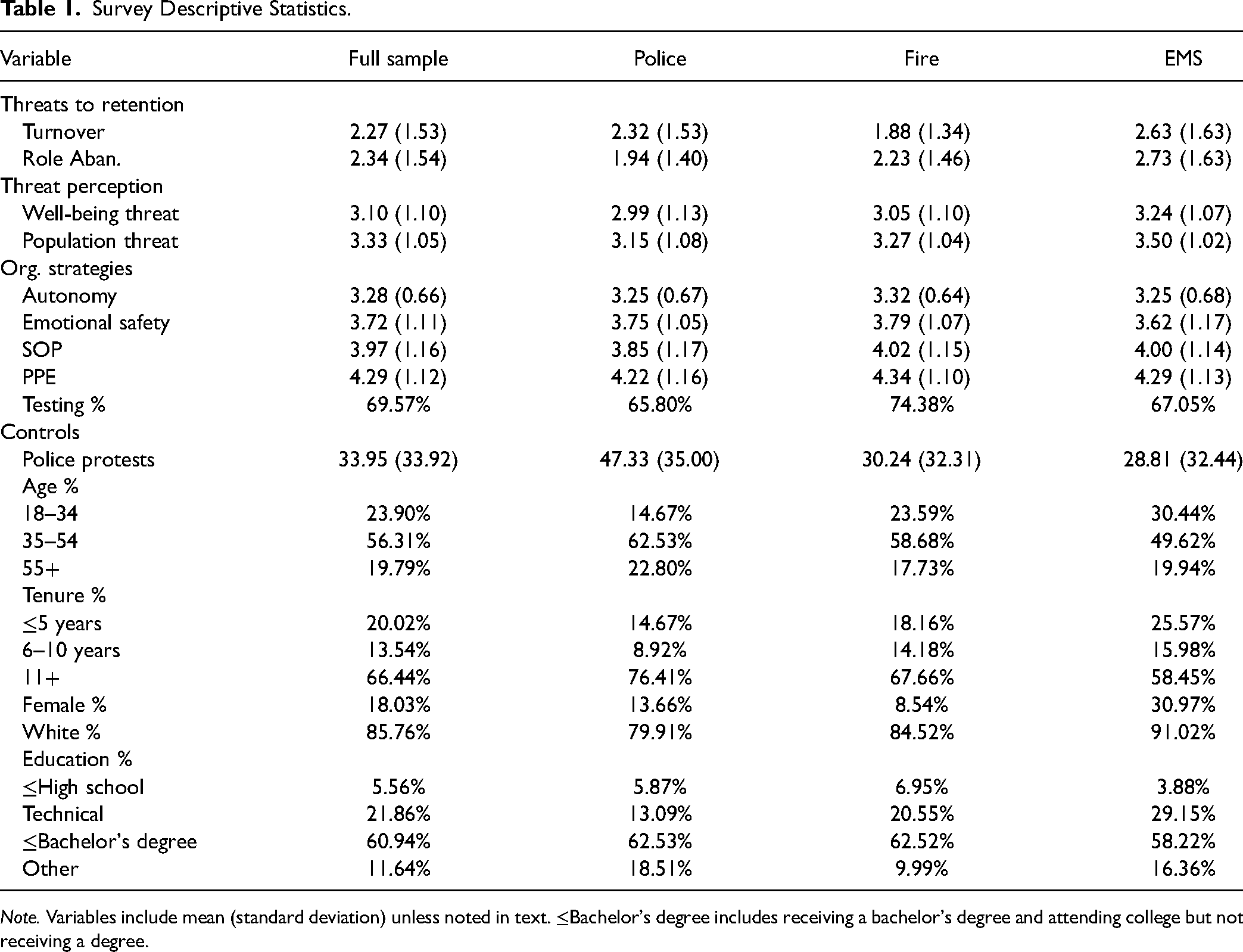
Note. Variables include mean (standard deviation) unless noted in text. ≤Bachelor's degree includes receiving a bachelor's degree and attending college but not receiving a degree.
Qualitative Interviews
We built our interview pool off of our original survey sample. During the survey, participants were given the option to self-select as willing to be contacted for a follow-up interview. First, we divided participants into the three first responder categories: (1) police, (2) firefighters, and (3) EMS. In order to provide diversity in our sample, we created subgroups based on region (divided equally between the northeast, southwest, west, southeast, and midwest) and rank (divided equally between the frontline first responders and managers/leaders). We used a random sample within these groups to identify 50 interviewees for each first responder group.
Selected participants were contacted for scheduling via email or telephone, and non-respondents were replaced with similar alternates (i.e., similar region and rank) after a third attempt. Because the COVID-19 health crisis prohibited face-to-face meetings, interviews were conducted virtually via Zoom, Microsoft Teams, or telephone. The interviews were done in an open-ended, semi-structured format, and the interview instrument consisted of seven sections: (1) demographic and socioeconomic factors, (2) current role in the organization before and after the COVID-19 pandemic, (3) current job challenges and rewards, (4) the impact of the pandemic on the responders and coping mechanisms, (5) organizational support in the workplace, (6) community engagement and participation, and (7) emergencies co-occurring with the COVID-19 pandemic. After giving informed consent, interviewees were video-recorded, or audio-recorded if they did not wish to be on video. Most interviews lasted 35–60 min, with some lasting longer or shorter. We ended our interview collection once theoretical saturation was reached, that is, when recurring themes emerged and no new insights were gained from additional interviews.
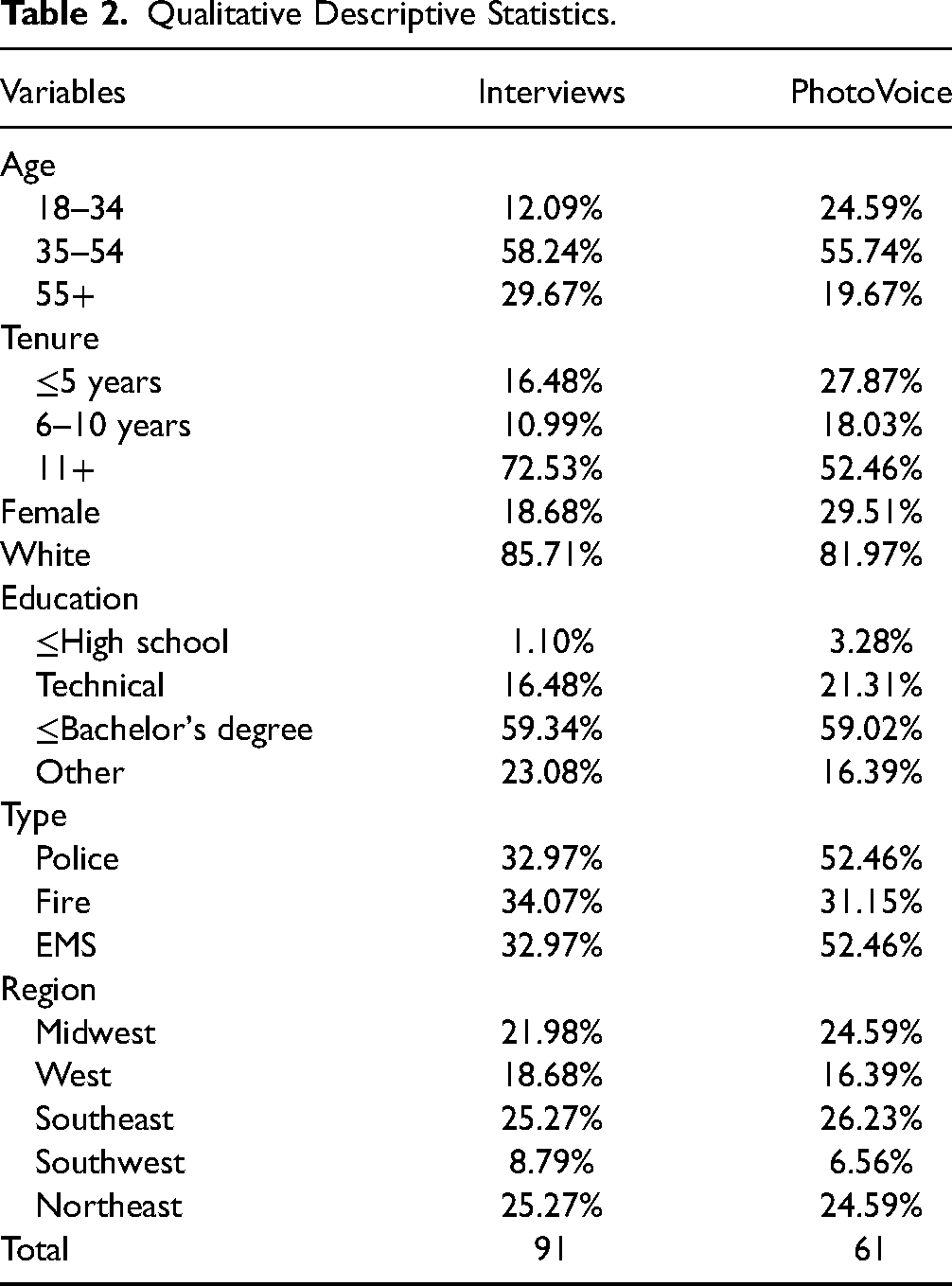
A total of 91 interviews (31 firefighters, 30 EMS, 30 police) were conducted from February 2021 to July 2021. Of our interviewees, 18.7% were female, and 14.2% were non-White. The majority were married (83.5%) and had children (77%), and about half (53.8%) had a bachelor's degree or higher. All interviews were transcribed word-for-word using auto-transcription functions in Zoom or Microsoft Teams or with the Otter transcription software. Next, interviews were manually checked and cleaned for accuracy. Transcriptions were uploaded into a qualitative analysis software, NVivo, which helped categorize themes across our data set and allowed us to draw connections between multiple sources (e.g., text, audio, video, images). Using NVivo, interviews were coded and sorted into a series of 99 nodes (e.g., role abandonment, threat perception, PPE, family impacts) that were generated based on the research questions and the preliminary findings using inductive and deductive coding techniques. There were a total of 5,017 coded references across 257,367 transcribed words. NVivo was used to draw connections between the codes based on overlap and coexistence.
The interviews were conducted by nine research assistants who were divided into four groups, including those who conducted interviews with (1) the police officers (n = 2); (2) the firefighters (n = 3); (3) the EMS personnel (n = 3); and (4) across all first responder groups (n = 1). The first three groups helped ensure team members’ familiarity with the terminology of each first responder group. The fourth group allowed the team to identify the cross-cutting themes that emerged from the interviews. The coding of interviews for each first responder group was undertaken by team members that were assigned to the interviews of that specific group. For each interview, there was a single coder who worked independently. To ensure reliability in the coding process, the project team prepared a detailed codebook, which included the themes and sub-themes to be coded as well as the definition and examples of each code. In addition, the team conducted weekly meetings, during which challenges related to coding were discussed and resolved through group consensus.
PhotoVoice
A visual photographic component, called PhotoVoice, was included as part of the survey. PhotoVoice is a community-based participatory method that solicits participant-taken photographs of daily experiences and challenges (Wang & Burris, 1997). It is commonly used in health sciences as a way of including diverse perspectives within research and policymaking. The purpose of PhotoVoice is to provide a gateway into participants’ lives that would typically be excluded from research due to personal or professional biases, as well as provide participants a pathway to participate in community or policy changes.
This study's PhotoVoice component included two complementary components: photo submissions and focus groups. Photo submissions were designed as part of the survey. Survey participants were asked to submit a photo that expressed their daily challenges in 2020. They were then prompted to submit a title, photo description, and a brief sentence on what they wanted policymakers to learn from their submission (called policy alternative). There were 61 photos that were submitted and met all inclusion criteria: (1) no photos of children, (2) identifying features could be blurred or removed from the photo, and (3) had a title and description, at minimum. Following the photo submissions, as part of the PhotoVoice component, we organized two focus groups with five survey participants total who expressed an interest in participating in discussions involving photos. Focus groups involved discussions on selected photos that were submitted as part of the survey, specifically how participants’ COVID-19 experiences resonated with what they saw within the photos.
Results
In the section below, we present our quantitative and qualitative findings, including our regression analyses, excerpts from interviews, and relevant PhotoVoice examples.
Quantitative Results
The results of the regression analyses (shown in Table 2) include four models: a full model including results for all first responders and three models segmented by type of first responder (police officers, firefighters, and EMS). Within each model, the results show relationships for both outcomes of interest: turnover intentions and role abandonment intentions. Models are presented with robust standard errors and clustered at the state level to account for heteroscedasticity and state-level uniformity within the data. A table outlining the variation inflation factors is available in the Appendix and indicates no concern with multicollinearity. The models were also run with additional robustness checks including fixed state effects and limiting the sample to responders from cities or zip codes where only one agency is responsible for emergency services (a proxy for agency clustering). The models are available in the Appendix and show minor differences. 1
Qualitative Descriptive Statistics.
The results show an association between first responders’ threat perception of COVID-19 and role abandonment intentions. In support of hypothesis 1, population threat perception is associated with reduced role abandonment intentions, indicating that first responders who perceive COVID-19 to be a greater threat to citizens and society, in general, may actually express lower intentions to leave their positions and not show up for work. The results also show support for hypothesis 2, well-being threat perception is associated with greater role abandonment intentions when first responders perceive COVID-19 to be a greater threat to themselves or their family. These results are consistent across types of first responders with the exception being within the police role abandonment model (see Table 3, model 3). Within this model, population threat perception is not significant, indicating that this may not be a motivating factor for the police that participated in this study.
The Impact of Threat Perception and Organizational Strategies on Role Abandonment.
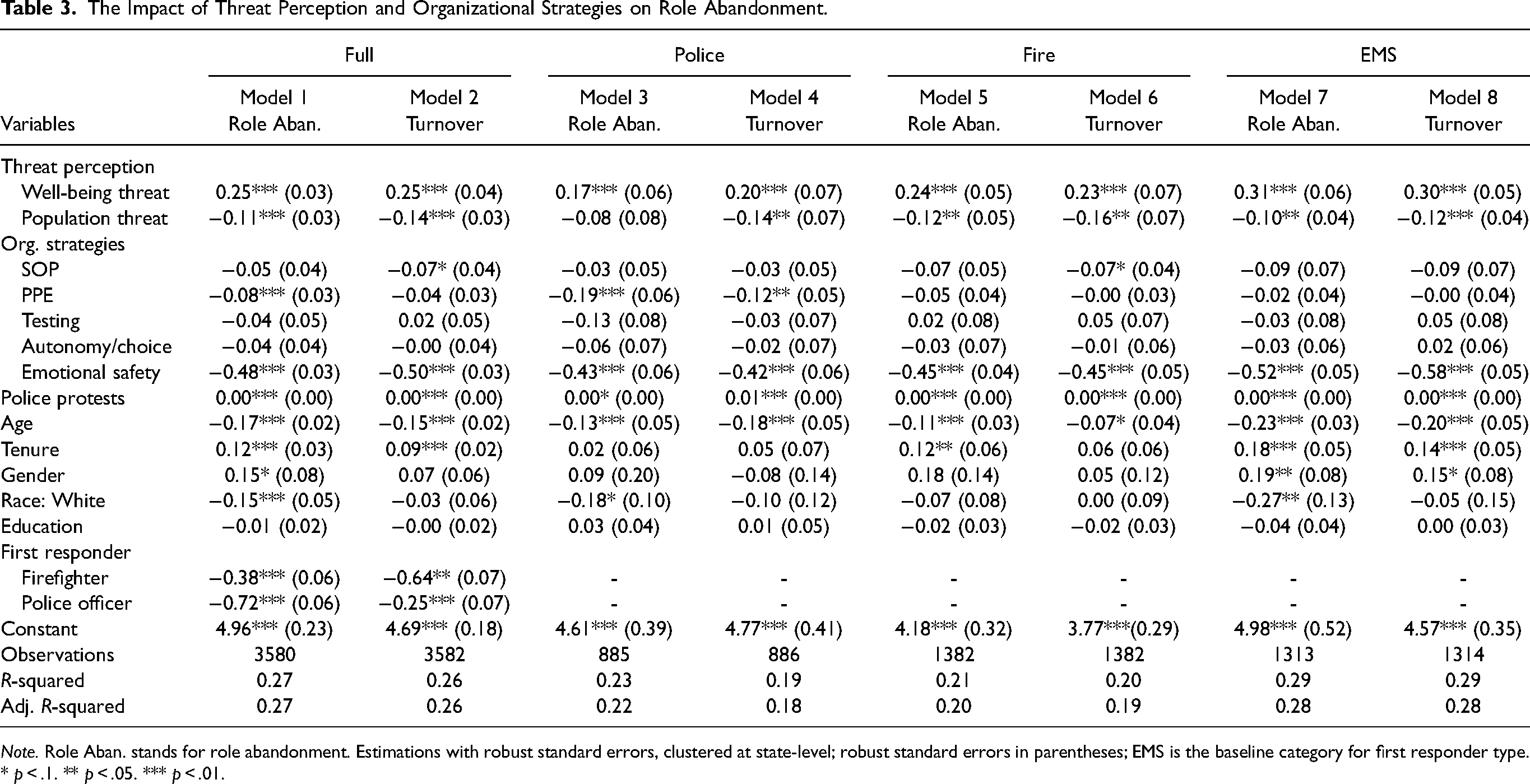
Note. Role Aban. stands for role abandonment. Estimations with robust standard errors, clustered at state-level; robust standard errors in parentheses; EMS is the baseline category for first responder type.
* p < .1. ** p < .05. *** p < .01.
A few organizational mitigation strategies also impacted retention threats. Specifically, in partial support of hypothesis 3, providing an appropriate level of access to PPE is associated with reduced role abandonment intentions within the full model. When broken down by type of first responder, access to PPE is only significant in the police models. Additionally, the variable measuring SOPs is only significant in the full turnover model (see Table 3, model 2) and the fire turnover model (see Table 3, model 6). Within all the models, the availability of testing for COVID-19 is not a significant factor in predicting role turnover or abandonment intentions.
Consistently across all models, creating an environment supporting emotional safety is a significant factor in reducing role abandonment and quitting intentions, which supports hypothesis 4. Inconsistent with hypothesis 5, greater autonomy is not a significant factor impacting role turnover or abandonment intentions.
Additionally, some control variables demonstrated interesting results. First, the age of first responders is associated with role abandonment and turnover intentions, suggesting that older first responders expressed less intentions to leave their positions during the COVID-19 pandemic. Tenure appears to be a factor for fire role abandonment intentions and EMS role abandonment and turnover intentions, suggesting that experience and time on the job played a role in some first responders wanting to not show up for their job during the pandemic. Female EMS personnel expressed less intentions to not show up for their job or quit during the COVID-19 pandemic. Race is also a significant predictor of role abandonment intentions for white police officers and EMS personnel. Finally, perceptions about the impact of police protests are correlated with both outcomes across all the models (Table 4).
Co-occurring Codes in Qualitative Interviews.
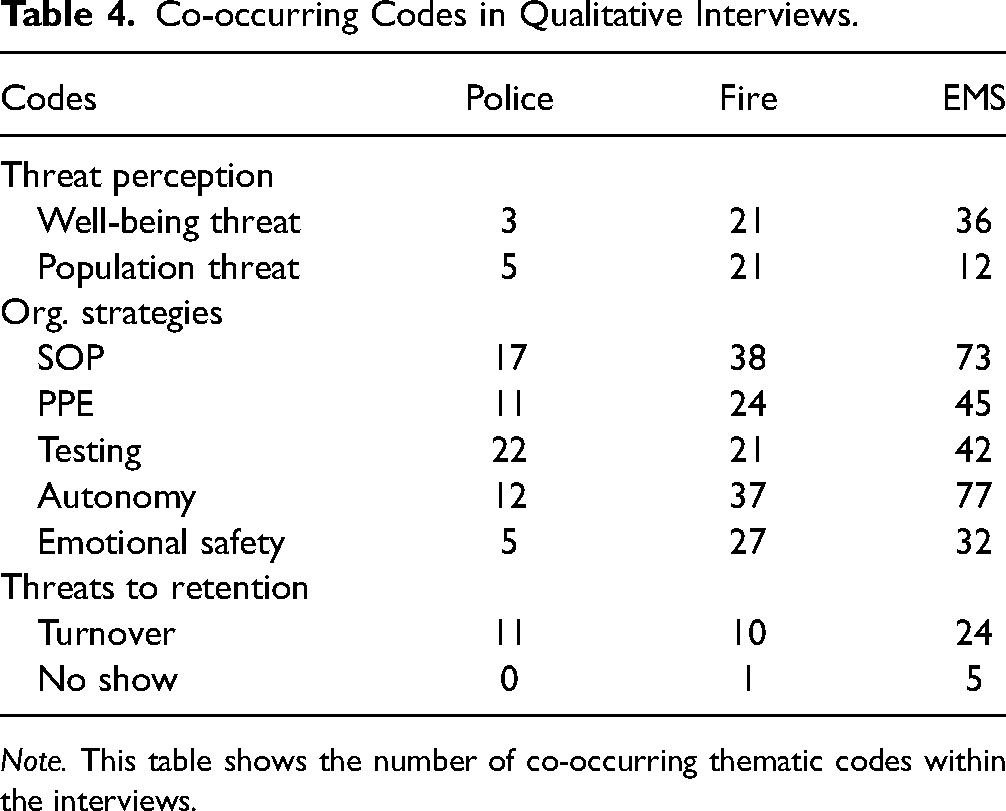
Note. This table shows the number of co-occurring thematic codes within the interviews.
Qualitative Results
Within this section, we aim to answer the following research question: How can organizations reduce threats to workforce retention during public health emergencies? Although there are limited cases of interviewees talking about walking off the job, not showing up for work or planning to quit without going through the proper channels, there are a significant number of participants who expressed intentions to leave their job. As such, this section provides context to the aspects that exacerbated or mitigated turnover intentions among first responders during COVID-19. These results highlight the proactive steps that organizations can do to prevent threat perception, improve resources and procedures (PPE and SOPs), and address emotional safety and autonomy concerns.
Well-Being Threat Perception
Feelings of being personally at risk of catching COVID-19 or bringing the virus home to their family were a source of stress and anxiety for first responders. The long list of COVID-related symptoms and the “constantly changing” information on how one could contract the virus led to a lot of “fear and a lot of reticence” as first responders felt they were “putting [themselves] in jeopardy.” Within our interviews, personal risk was exacerbated by PPE availability (discussed in the resources and procedures section), employee adherence to protocols, and fear of bringing the virus home to their family. Similar to public adherence, first responder adherence was influenced by politics and personal risk assessments. A firefighter in Florida stated that the “politicization” of COVID made crews argue about mask-wearing, vaccinations, and other preventative measures. A police chief in Wisconsin described the difficulties in managing differences in well-being threat perception: [When] you're managing people who, let's say, young staff, aren't worried about getting…sick and take care of it as a cold or a flu. And then you've got some older staff who have elderly family members, and they're very concerned about getting it. So, you have this gamut of people who have different opinions about the severity of the pandemic…trying to meet all their needs at once.
These differences led some first responders to “resent” colleagues who put their families at risk. Some organizations reaffirmed trust between colleagues to reduce complacency. A firefighter in Florida stated, “I have faith and trust that you and me are both safe, and your family is safe and my family safe and we're both watching everything we do.” Others focused on compliance. An EMT captain in Virginia focused on running more calls with staff so that he could watch his staff adhering to protocols.
Protecting the safety of family was another factor influencing well-being threat perception. Within the interviews, there was a stark difference between the organizations that considered family life and those that did not. To help alleviate some of this burden, an EMT Lieutenant in Illinois stated that they provided free testing kits for “anybody's kids or family that needed it…We’d support them in this way.” Another EMT chief in New Hampshire stated that they rented hotels and gave meal vouchers to first responders that were afraid to go home with COVID. Finally, a Lieutenant in Florida stated that they provided COVID leave if employees or their family got sick.
Population Threat Perception
Despite having more of a risk of contracting COVID-19, some first responders relied on their sense of duty as a mitigating factor in preventing turnover or role abandonment intentions. Specifically, some first responders described wanting to play a role in helping the public get through the pandemic “as fast as possible,” hinting at high levels of PSM. They explained that risks are an inherent “part of the job” and what they “signed up for.” In fact, several interviewees described these risks as a “thrill” and one of the elements that drew them to their career.
These feelings are highlighted in Figure 1 showing three photos taken by first responders. Within F1.1 and F1.2 (Figure 1), the participants elicit feelings of risk and sense of duty by using a title with the words “frontline.” F1.1 explained that the submitted photo was a description of “putting himself in harm's way without hesitation” because “so many have died from this horrible disease, and we owe it to them to make things right again.” F1.2 is an abstract photo showing an EMT weary and worn. Despite being “not ready for this,” the author of this photo says that first responders “relentlessly took the covid head on…God bless us the mighty few. WE ARE FRONTLINE.”
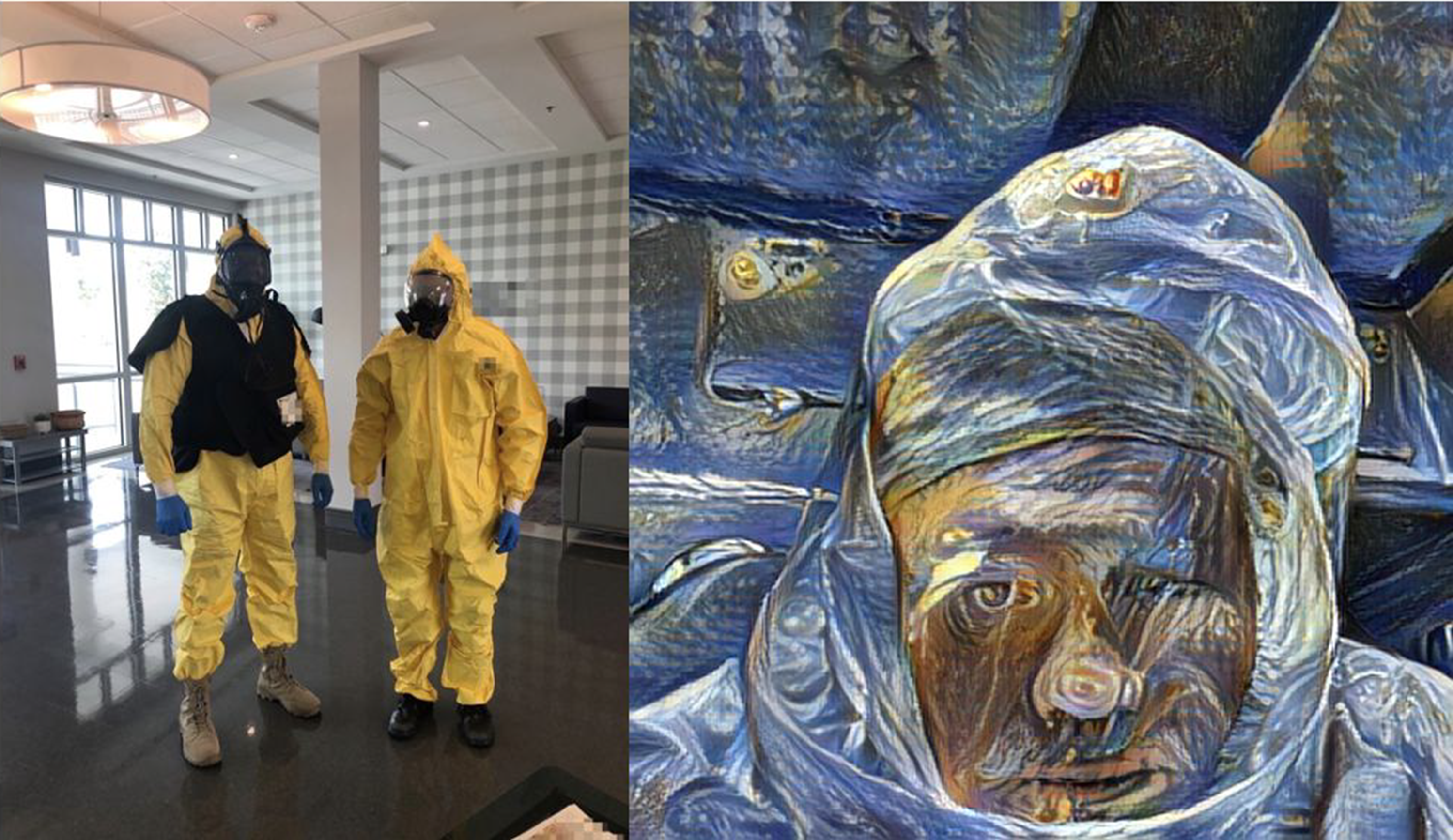
PhotoVoice pictures capturing population threat perception.
When population threat is enhanced, it can bolster a sense of duty. When it becomes overwhelming, it can lead to turnover intentions. A firefighter supervisor in Idaho stated: I have actually, during the course of this past year, actually questioned if I wanted to continue doing what I'm doing? And I keep coming back to the fact that I took an oath, I care deeply about the people that I'm here to provide health and safety to. So I continue to do it. But I have had times, where I thought, why? Why am I still doing this? Does it matter?
Within the interviews and PhotoVoice component, first responders prided themselves on “serving” the public regardless of personal harm. This internalized sense of duty was reinforced by being needed by the public during this crisis. However, there was a point at which this need, along with limited vacation and time away from their job, demoralized first responders. It was at this point that administrative staff became an important factor. An EMT chief from Pennsylvania discussed the difficulty of reinforcing this sense of duty: [I was] just trying to keep that together … It still was huge on my shoulders, just tried to, every day, go in there and tell them how much I appreciate them and go in there every day and tell them we're gonna get through this together.
While many interview and PhotoVoice participants discussed the duty to serve during the pandemic, a few police officers and firefighters felt that COVID-19 was less of a threat when compared to other issues. Pictures that correlated with social unrest and police protests showed both positive images of partners willing to “show-up” despite being negatively perceived by the public and more aggressive images likening first response jobs to burning dumpsters. A few firefighters described large-scale fires and a misalignment by leadership to tackle “deadlier” threats.
Resources and Procedures
Throughout the qualitative results, there was a recurring theme of frustration surrounding PPE availability in the early days of the pandemic. In some instances, first responders were instructed to conserve supplies and even had to reuse or limit the usage of masks. The lack of PPE resulted in feelings of vulnerability and personal risk. An EMS captain in Colorado described the fear and uncertainty of PPE shortages: “[T]here was always the fear, particularly at the beginning, that we'd run out of stock of PPE, and we had people double using masks, and I hated that.” Another EMT in Connecticut felt that his organization took COVID-19 “flippantly” stating, “[It] took a really long time to get them to get us the proper PPE…I don't think they've been very supportive to those of us who are out in the field.” This was in sharp contrast to organizations that took active steps to garner appropriate PPE. A firefighter in Arizona highlighted these feelings, “I had one everything when PPE was a shortage. Somehow, we never had a shortage…That was one of the big things that they did for us.”
While recommendations stemming from the interviews and the PhotoVoice encouraged agencies to prioritize sufficient PPE, there were also feelings of fatigue around PPE usage. The Centers for Disease Control and Prevention recommendations requiring constant face masks, gloves, and medical gowns for first responders were often labeled impractical—greatly reducing the quality of care they were able to provide as they had to “jump through hoops” to attend to patients. Interview participants described not getting enough air to perform cardiopulmonary resuscitation properly, not being able to communicate with their partner or patients, and bleeding hands and face from constantly wearing PPE.
The PhotoVoice participants echoed some of these issues. In F2.1 (Figure 2), an EMT in Michigan shared a picture of his raw hands providing the following description: “My hands looked that way because of the constant washing. I was using too small a glove because we had run out of medium sized gloves causing further breakdown of my already angry skin.” F2.2 was submitted by an EMT in Florida who described the impact that wearing a mask had on patient care: “We have now become faceless drones that are hard to understand and limited to providing what's medically necessary to improve our patient's condition(s). We've lost a big part of our ability to connect to our patients….”
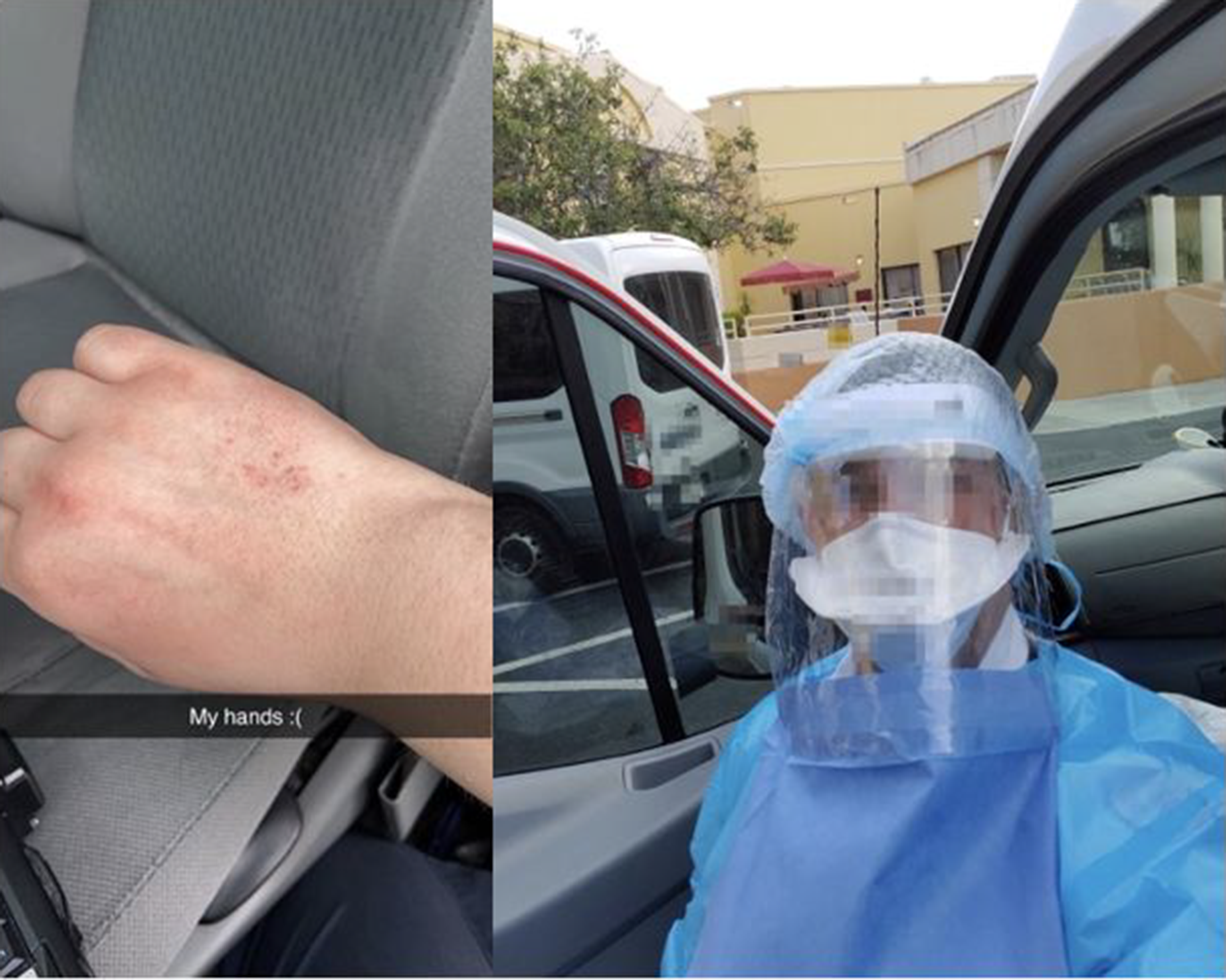
PhotoVoice pictures capturing challenges with PPE.
For law enforcement officers, exposure to illness and usage of PPE are less than routine. Thus, having sufficient PPE with correct training on how to use it was described as “comforting” as it allayed health concerns and gave a sense of control over the situation. One police officer described their appreciation of their department's efforts to provide sufficient PPE saying that “our department as a whole really took care of employees very well and kept us protected.”
Throughout the pandemic, as infection rates fluctuated, policies shifted, and scientific consensus on COVID-19 changed, the way that first responders were instructed to utilize PPE, socially distance at work, or respond to patients was changed frequently in SOPs. Many interviewees discussed how changing SOPs were often only communicated via email, leaving room for confusion over how and when to implement the changes. Additionally, these SOPs added extra responsibilities that created repetitive and burdensome work. A fire chief in Texas described having to continuously wipe down ambulances which he believed caused burnout among his staff. Another fire chief in Missouri felt that SOPs tremendously slowed the ability “to get things done.” These additional barriers exacerbated stress and created mental fatigue that contributed to turnover intentions. An EMT in Florida stated summed up these feelings: I know since the start of this year alone we have lost over 100 field employees. We've lost roughly 100 people. And these are not people who are coming in brand new… I've even thought about leaving my company right now. And I've been doing this for six years… they either haven't coped properly, or they cannot cope with the work of EMS during COVID.
This was echoed by a police officer in New York who stated, “I'm pretty tired at the end of the day, and I don't mean physically tired…retirement is looking more and more attractive. If this had to go on for a few more years, I don't know if mentally I would be able to keep up the pace.” He went on to add that his job was very rewarding but still demanding, hinting at potential limits of public service management in mitigating turnover.
Emotional Safety and Autonomy
Within the interviews, participants highlighted the importance of providing an emotionally safe space at work as a protective factor against burnout, fatigue, and turnover intentions. Mentions of emotional safety segued into discussions about peer support, connections with colleagues, and a sense of community—all of which were limited during the height of the pandemic due to social distancing guidelines. The loss of these emotional connections to colleagues impacted first responders profoundly. As this first responder explained: I think it's the same struggles with COVID, they've just gotten a lot harder, because a lot of the supports that we've sort of come to rely on are not there anymore, like socializing and maintaining sort of positivity and a hopeful outlook for the future are all important coping strategies for this job. And with the onset of the pandemic. We can't socialize, we can't go out, there's no end in sight.
These feelings of loss and hopelessness are highlighted in Figure 3. In F3.1 (Figure 3), an EMT in North Carolina submitted a photo of himself celebrating a friend's wedding alone stating, “How can we look so happy and yet feel so isolated at the same time.” In F3.2, an EMT described his exhaustion to overcome the challenges of his profession asking policymakers to “Strengthen our support system!” Improving social and psychological support was a recurring theme within both the interviews and PhotoVoice project as first responders asked the administration to prioritize mental health and address suicidal ideations prevalent within their occupations.

PhotoVoice pictures capturing emotional safety.
Finally, mentions of autonomy and control in the qualitative data referred mainly to the flexibility of the job and the ability to use discernment and judgment when treating patients, both of which were limited during the COVID-19 pandemic. The PPE and SOPs put distance between first responders and their patients, hindering the practice and expression of care. This truncation of autonomy resulted in frustration, anger, and feelings that they were not doing all they could to help patients.
Discussion
This study shed light on the factors that can impact retention among first responders by reducing turnover and role abandonment intentions during public health emergencies. Using a mixed-method design on the COVID-19 pandemic, this study had several interesting results. First, consistent with hypothesis 1, a greater threat to first responders’ well-being and family resulted in increased intentions to not show up for work and to potentially quit their jobs. This is consistent with previous studies detailing personal infection and family consequences as primary factors driving willingness to work (Knezek et al., 2022; Trainor & Barsky, 2011). Within the interviews, threats to well-being were exacerbated by PPE availability, employee adherence to protocol, and fear of family infection. Organizational strategies that focused on balancing different interpretations of well-being threats and prioritized building trust between colleagues, compliance in some cases, and family support (e.g., free testing kits for family) mitigated turnover intentions.
Second, population threat reduced quitting intentions for all types of first responders and no-show intentions for firefighters and EMS. The qualitative results reaffirm literature on PSM (Hu et al., 2020) and research within emergency management (Dynes & Quarantelli, 1973) showing that first responders’ sense of duty can be a mitigating factor for turnover intentions. Despite being more at risk, first responders within this study felt a need to help the public get through this pandemic. However, there were times that population threat became too burdensome such as when participants felt they weren’t making a difference or when SOPs impacted the level of patient care. Thus, unlike previous studies that relied exclusively on duty (Dynes & Quarantelli, 1973), our research confirms that there are limits to what first responders will endure, as suggested by Lindsell (2012). While this is unlikely to result in role abandonment, it can result in turnover intentions reducing an already strained public workforce. Organizational leadership that shows appreciation for frontline works and transparency and understanding of SOPs can mitigate these impacts.
Within the survey, population threat for police officers had no impact on their no-show intentions. The PhotoVoice component depicted a divide within law enforcement—some pictures highlighted the duty to serve during social unrest and others likened their career to dumpster fires. This underscores the complexities of police service at this time and warrants more research to understand the impact of these factors on role abandonment.
Third, organizational strategies that focused on resources and procedures (PPE, testing, and SOPs) had mixed results along the type of first responder. Specifically, PPE reduced no-show and quitting intentions for police officers. The qualitative findings showed that PPE was very important for all groups at the initial onset of the pandemic. However, as time passed, PPE became a burden for firefighters and EMS as it impacted patient quality of care. Police officers had less direct contact with infected patients and less familiarity with using PPE, which may have reduced the burden of PPE and increased its importance. Within the survey, SOPs reduced turnover intentions for firefighters. This was in contrast to some of the results of the qualitative interviews that found SOPs as repetitive and burdensome, especially for EMS and firefighters. These burdens increased turnover intentions among first responders. In addition, testing didn’t have a significant impact on role abandonment within the survey. This may have been due to ample public testing within most areas of the United States.
Fourth, emotional safety was shown to reduce role abandonment and turnover intentions among first responders. The results from the qualitative interview and PhotoVoice component showed first responders’ desire to have their organizations provide more social and psychological support during COVID-19. SOPs limited the ability of first responders to connect with each other, which is a staple of their organizational culture. With the absence of social interaction, organizations dealing with pandemics need to protectively address issues with emotional safety by bolstering interpersonal relationships. Finally, autonomy did not have a significant impact within the survey, but qualitative results revealed this may be due to SOPs that reduced these options for first responders—discretion in patient care as one example.
This study contributes to literature within public administration and emergency management that seeks to understand first responder turnover, role abandonment (Knezek et al., 2022; Lindsell, 2012; Quarantelli, 2008; Trainor & Barsky, 2011), and workforce impacts during emergencies (Kroll et al., 2021). Specifically, this study added both breadth and depth to this topic by utilizing a large-scale survey on first responders (a difficult population to gain access to) and qualitative methods including interviews and PhotoVoice. It is important to emphasize that PhotoVoice is a rarely used qualitative data collection method in public administration; yet, it was instrumental for the team to capture perishable data, including participant-driven recommendations, at a time when public safety agencies were facing unprecedented challenges. Additionally, most studies on role abandonment are limited in scope relying on a series of hypothetical scenarios (see Noble et al., 2019). This study utilized survey data on role abandonment and turnover intentions during an ongoing pandemic, providing opportunities to assess actual intentions instead of hypothetical versions which can produce an inflated sense of risk (Trainor & Barsky, 2011). Measurements of threat perception used within this study also extend prior work (e.g., Piltch-Loeb et al., 2019; Rudisill, 2013) on the importance of distinguishing levels of threat and adopting these measures based on the potential impact on public servants (i.e., adding state–citizen impact).
Finally, there are still a lot of unknowns regarding role abandonment, turnover, and willingness to work within public health emergencies in general and COVID-19 specifically. While some studies report that role abandonment may be higher during such crises (Trainor & Barsky, 2011), our study confirms other research on first responder role abandonment (Quarantelli, 2008; Tierney et al., 2006) suggesting that this is a rare occurrence, even in public health contexts. However, we caution emergency managers and scholars not to write off role abandonment as a “myth,” as this reduces preparedness and ignores the organizational factors that can influence its likelihood.
This study is not without limitations. It is important to note that media stories documented that first responders were abandoning their roles during the pandemic. As such, we surveyed and interviewed current responders that were still working at their place of employment during the pandemic, and this may underestimate the true impacts of the pandemic on role abandonment and the mitigating organizational strategies thereof. Further, participation in all parts of the research process was voluntary, as such first responders self-selected to participate, and it is likely that first responders who were perceiving high levels of threat or deciding whether to quit their job may have been less likely to participate in the survey overall. Relatedly, those first responders who did complete our survey may also report lower levels of role abandonment intentions and threat perceptions due to social desirability bias. Next, all of the variables of interest were taken from the same survey instrument, so there may also be a common method bias present. In addition, due to the variable nature of the pandemic, different regions and localities faced constantly shifting COVID infection rates and public policies. This was a nationwide study, and, for the purposes of this study, it was important for us to understand trends across the nation; however, we acknowledge the importance of disaggregating by region or locality in future studies. The data collection for all phases was conducted over an 8-month period, where COVID infection rates and protocols were rapidly changing. To address this, we asked our survey and interview participants to give their responses relevant to their experience during the height of the pandemic as experience in their region, but we acknowledge that timing throughout the pandemic could impact responses. Finally, the events of 2020 and 2021 were laden with challenges beyond the pandemic. Social unrest (e.g., Black Lives Matter protests, political riots), other disasters (e.g., wildfires, hurricanes), and other ongoing public health emergencies (e.g., opioid epidemic) complicated the COVID-19 response, placed demands on limited resources, and added additional responsibilities for first responders. While we asked our interviewees to specifically rank the impact of COVID-19 in comparison to these challenges, we cannot rule out the compounding nature of these crises. We also did not measure participants’ political ideologies which may have impacted their views of these compounding events.
This study indicates several directions for future research. First, this study measured threats to retention by examining intentions to not show up to work (role abandonment) or intentions to quit their job (turnover). There are other measures including absenteeism or intentions to walk off the job that could provide a range of experiences. Second, there are some studies which indicate that different types of first responders, particularly police officers, face different work-related challenges (Knezek et al., 2022; Peak, 2021). Further research is needed to disaggregate each type of first responder within the context of their job. Third, this article examined the role of threat perception and selected organizational strategies—availability of PPE, testing, SOPs, emotional safety, and job autonomy—on retention threats in the context of the COVID-19 pandemic. There is a need to understand how other formal organizational policies (e.g., pay, insurance, disability policies) impact retention during COVID-19 as well as different emergency contexts. Fourth, while we did not directly design our study to measure PSM, the recurrence of PSM within the interviews highlights its potential importance in understanding threat perception. More research is needed to understand the relationship between these variables. Finally, future studies could look at the interacting impacts of burnout and co-occurring crises on first responder retention.
Conclusion
As employment and retirement trends like the Great Resignation pose a threat to public service jobs (Johnston, 2021), public safety agencies brace for the potential impact of an insufficient workforce. Additionally, the pandemic has sparked new conversations among public agencies about disaster readiness, with staffing issues at the forefront. Without a workforce, first response agencies’ plans and protocols cannot be carried out, placing lives at risk. Hence, in line with our findings, we outline policy recommendations for public safety agencies which could help reduce threats to first responder retention in times of public health emergencies: (1) introducing special programs to prevent transmission of the virus to first responders and their loved ones (e.g., through lodging arrangements for those exposed; protocols that first responders can follow at home); (2) creating a working environment where first responders have greater autonomy to do their jobs and feel emotionally safe—even if they get upset at work—and supported by their leadership and co-workers (e.g., through “mental health days”; training on strategies to read and cope with job-related burnout; mentorship programs); and (3) organizations aiming to retain their workforce should adopt behaviors and protocols that bolster a sense of duty and cultivate PSM during ongoing crisis response. We also suggest that policy makers at the federal and state levels support pre-existing efforts aimed to disseminate information and provide guidance to local public safety organizations during crises.
Footnotes
Acknowledgements
The authors would like to thank the research assistants that contributed to the data collection during this project—Katherine Bleakly, Ben Duwve, Skoervitch Emile, Andrew McGirty, Emily Needham, Humayra Qadir, Ryan Raulynaitis, Mari-Nicole Rosales, and Dakota Winn. The authors would like to thank Professor Mark MacGowan for his input into the survey measures used herein.
Declaration of Conflicting Interests
The author(s) declared no potential conflicts of interest with respect to the research, authorship, and/or publication of this article.
Funding
The author(s) disclosed receipt of the following financial support for the research, authorship, and/or publication of this article: This study was supported by a grant from The Ohio State University Drug Enforcement and Policy Center. Any opinions, findings, and conclusions or recommendations expressed in this material are those of the authors and do not necessarily reflect the views of The Ohio State University Drug Enforcement and Policy Center.

Notes
Author Biographies
Appendix
Results With One Agency Per City.
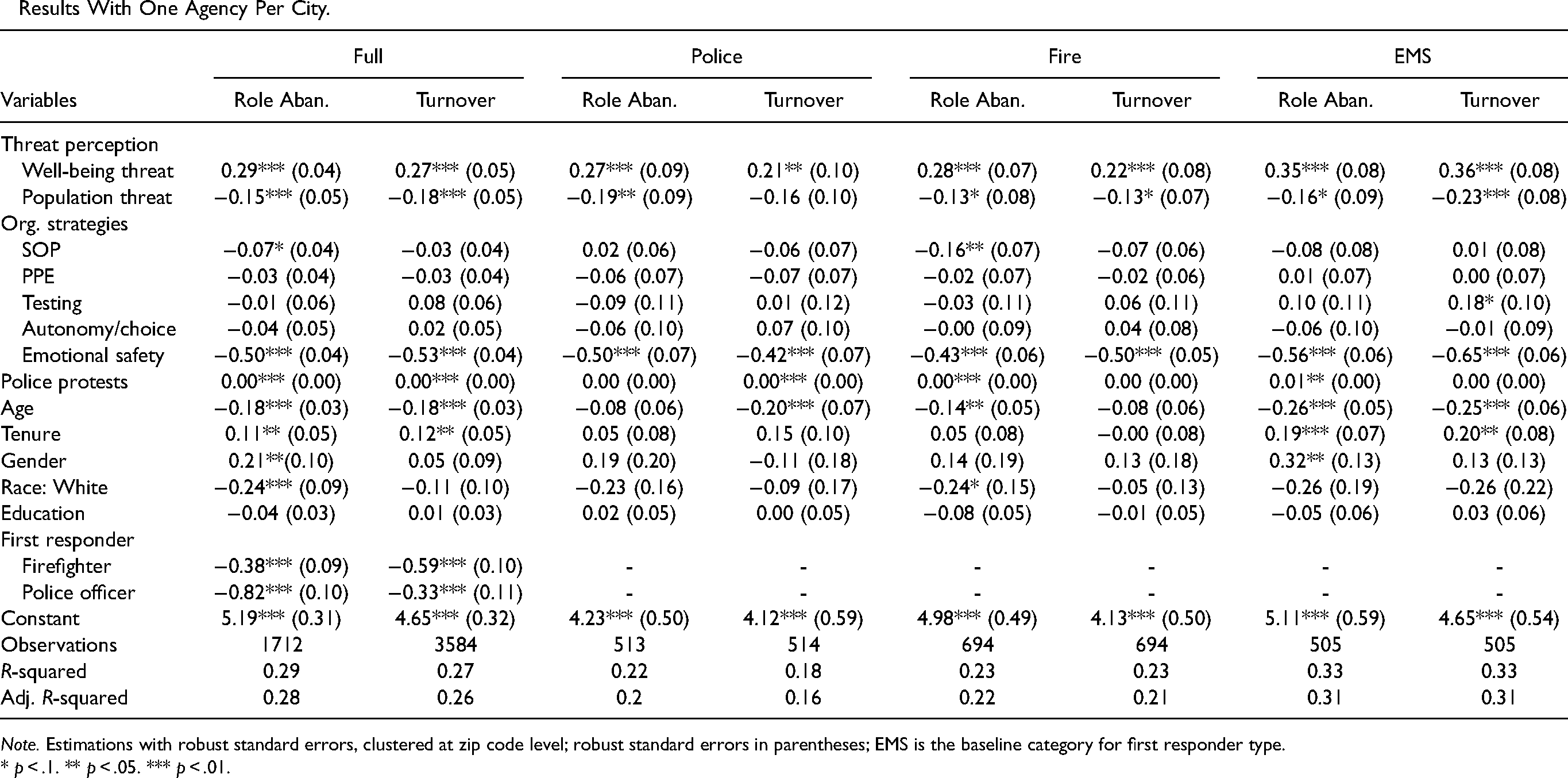
| Variables | Full | Police | Fire | EMS | ||||
|---|---|---|---|---|---|---|---|---|
| Role Aban. | Turnover | Role Aban. | Turnover | Role Aban. | Turnover | Role Aban. | Turnover | |
| Threat perception | ||||||||
| Well-being threat | 0.29*** (0.04) | 0.27*** (0.05) | 0.27*** (0.09) | 0.21** (0.10) | 0.28*** (0.07) | 0.22*** (0.08) | 0.35*** (0.08) | 0.36*** (0.08) |
| Population threat | −0.15*** (0.05) | −0.18*** (0.05) | −0.19** (0.09) | −0.16 (0.10) | −0.13* (0.08) | −0.13* (0.07) | −0.16* (0.09) | −0.23*** (0.08) |
| Org. strategies | ||||||||
| SOP | −0.07* (0.04) | −0.03 (0.04) | 0.02 (0.06) | −0.06 (0.07) | −0.16** (0.07) | −0.07 (0.06) | −0.08 (0.08) | 0.01 (0.08) |
| PPE | −0.03 (0.04) | −0.03 (0.04) | −0.06 (0.07) | −0.07 (0.07) | −0.02 (0.07) | −0.02 (0.06) | 0.01 (0.07) | 0.00 (0.07) |
| Testing | −0.01 (0.06) | 0.08 (0.06) | −0.09 (0.11) | 0.01 (0.12) | −0.03 (0.11) | 0.06 (0.11) | 0.10 (0.11) | 0.18* (0.10) |
| Autonomy/choice | −0.04 (0.05) | 0.02 (0.05) | −0.06 (0.10) | 0.07 (0.10) | −0.00 (0.09) | 0.04 (0.08) | −0.06 (0.10) | −0.01 (0.09) |
| Emotional safety | −0.50*** (0.04) | −0.53*** (0.04) | −0.50*** (0.07) | −0.42*** (0.07) | −0.43*** (0.06) | −0.50*** (0.05) | −0.56*** (0.06) | −0.65*** (0.06) |
| Police protests | 0.00*** (0.00) | 0.00*** (0.00) | 0.00 (0.00) | 0.00*** (0.00) | 0.00*** (0.00) | 0.00 (0.00) | 0.01** (0.00) | 0.00 (0.00) |
| Age | −0.18*** (0.03) | −0.18*** (0.03) | −0.08 (0.06) | −0.20*** (0.07) | −0.14** (0.05) | −0.08 (0.06) | −0.26*** (0.05) | −0.25*** (0.06) |
| Tenure | 0.11** (0.05) | 0.12** (0.05) | 0.05 (0.08) | 0.15 (0.10) | 0.05 (0.08) | −0.00 (0.08) | 0.19*** (0.07) | 0.20** (0.08) |
| Gender | 0.21**(0.10) | 0.05 (0.09) | 0.19 (0.20) | −0.11 (0.18) | 0.14 (0.19) | 0.13 (0.18) | 0.32** (0.13) | 0.13 (0.13) |
| Race: White | −0.24*** (0.09) | −0.11 (0.10) | −0.23 (0.16) | −0.09 (0.17) | −0.24* (0.15) | −0.05 (0.13) | −0.26 (0.19) | −0.26 (0.22) |
| Education | −0.04 (0.03) | 0.01 (0.03) | 0.02 (0.05) | 0.00 (0.05) | −0.08 (0.05) | −0.01 (0.05) | −0.05 (0.06) | 0.03 (0.06) |
| First responder | ||||||||
| Firefighter | −0.38*** (0.09) | −0.59*** (0.10) | - | - | - | - | - | - |
| Police officer | −0.82*** (0.10) | −0.33*** (0.11) | - | - | - | - | - | - |
| Constant | 5.19*** (0.31) | 4.65*** (0.32) | 4.23*** (0.50) | 4.12*** (0.59) | 4.98*** (0.49) | 4.13*** (0.50) | 5.11*** (0.59) | 4.65*** (0.54) |
| Observations | 1712 | 3584 | 513 | 514 | 694 | 694 | 505 | 505 |
| R-squared | 0.29 | 0.27 | 0.22 | 0.18 | 0.23 | 0.23 | 0.33 | 0.33 |
| Adj. R-squared | 0.28 | 0.26 | 0.2 | 0.16 | 0.22 | 0.21 | 0.31 | 0.31 |
Note. Estimations with robust standard errors, clustered at zip code level; robust standard errors in parentheses; EMS is the baseline category for first responder type.
* p < .1. ** p < .05. *** p < .01.