



Abstract
Business and place resilience have gained increasing attention in recent years. However, there is insufficient understanding of the role of local government in enhancing SME business resilience, especially during crises. This paper investigates the impacts of a local grant funding programme on the resilience of SMEs during a crisis and the SMEs’ future needs for local government support. The study was conducted in the aftermath of the COVID-19 pandemic within the context of a local grant funding programme provided by a UK local authority, supported by UK Government funding aimed specifically at coronavirus support for businesses. The study’s exploratory sequential mixed methods approach, combining an online quantitative survey with qualitative in-depth interviews, provides original and robust empirical evidence derived from real-world experiences of SMEs indicating that the local grant funding programme positively impacts SME resilience during a crisis and their future needs for local government support. The results of this study advance our understanding of SME business resilience and the effectiveness of local government intervention during crises. The research findings provide valuable insights for policymakers and SMEs in their attempts to adapt resources and assistance to changing post-crisis needs and to develop effective strategies for dealing with similar future crisis.
Introduction
Business and place resilience have gained increasing attention in recent years, particularly in response to global crises such as the COVID-19 pandemic and the 2008 financial crisis (Beninger and Francis 2022; Dawley et al., 2010; Glover 2012; Steinerowska-Streb et al., 2022; Zutshi et al., 2021). Among the various drivers of place resilience, individual business resilience has been viewed as central to attaining place resilience (Dawley et al., 2010; Soroka et al., 2020; Steiner and Atterton 2014). Broadhurst and Gray (2022, p.86) consider place resilience in terms of structures that can help to minimise the effects of ‘shocks’. Several authors stress that place resilience, specifically at local and regional levels, can be determined by gaining an understanding of resilience in individual firms and their ability to cope, adapt and reconfigure (Dawley et al., 2010; Soroka et al., 2020). Resilience of Small and Medium Sized Enterprises 1 (SMEs) is of particular importance to enhancing place resilience as SMEs are more susceptible to non-normative shocks, such as the COVID-19 pandemic, than larger companies (Brown et al., 2019; Cowling et al., 2020; Ghosal and Ye, 2015; Katare et al., 2021). The COVID-19 pandemic’s disruptive impact on SMEs, characterised by lockdowns and restrictions, is well documented, showing adverse consequences for survival, financial stability, employment, and supply chains (Fairlie and Fossen 2021; Walker and Hurley 2021). Glover (2012) concluded that small businesses learn how to overcome such adversities, often involving innovation, which creates a more resilient culture.
In response to the COVID-19 pandemic, various national and local programmes were introduced to alleviate business impact. Initiatives included the Coronavirus Business Interruption Loan Scheme (CBILS), Bounce Back Loan Scheme (BBLS), Coronavirus Job Retention Scheme (Furlough), Business Rates Relief, and VAT deferral.
Literature on the effectiveness of government intervention at national, regional and local levels suggests positive impacts of grant funding on business performance and local development (Arshed et al., 2021; Belghitar et al., 2022; Cowling et al., 2022; Katare et al., 2021). In the SME context, Srhoj et al. (2021) evaluated the performance outcomes arising from business development grants, demonstrating positive effects on capital stock, bank loans, intermediate inputs, and added value.
However, little is known about the impacts of government grant funding on SME business resilience and future support needs at local levels, especially during crises. Studying these phenomena is essential, given the vulnerability of SMEs, with threats of further crises, for example, future pandemics, rising costs and supply chain disruptions. Indeed, there are recent calls for further research into business resilience in the SME context (Margherita and Heikkilä 2021; Saad et al., 2021), which is an important contributor to place resilience (Soroka et al., 2020).
To address this research gap, this study
This exploratory sequential mixed methods research, based on a case study of a UK local grant funding programme, addresses the following 1. What is the impact of local grant funding on the SME resilience during a crisis? 2. What is the impact of local grant funding on SME future needs for local government support? 3. How does local grant funding influence SME resilience during a crisis? 4. How does local grant funding influence SME future needs for local government support?
The study is conducted in the context of COVID-19 pandemic with growing recognition of the need for SMEs to bolster their resilience in the face of challenges (Beninger and Francis 2022; Dahles and Suilowati, 2015; Fitriasari 2020). Specifically, this study analyses the impact of local grant funding provided by a UK local authority, involving a strand of the UK Government’s Additional Restrictions Grant (Stream 3) which was available from Spring 20212
By using an exploratory mixed methods research design, involving an online quantitative survey and qualitative in-depth interviews, the results of this study provide statistical evidence and original insights into the role of local grant funding in enhancing SME resilience during a crisis, and SME future needs for local government support.
The results of this study advance our understanding of SME business resilience and the effectiveness of local government intervention during crises. The research findings provide valuable insights for policymakers and SMEs in their attempts to adapt resources and assistance to changing post-crisis needs and to develop effective strategies for dealing with similar future crises.
The paper is organised as follows. The next section reviews literature on business and place resilience; government intervention and business resilience; local grant funding and SME resilience during a crisis; local grant funding and SMEs’ future needs for local government support, leading to a conceptual framework. The methodology outlines the sequential mixed-methods approach. The results section presents the quantitative and the qualitative findings. The final sections discuss the study findings and conclude with study implications, contributions, limitations and future research recommendations.
Literature Review
Place and business resilience
Resilience provides an effective framework in which complex and dynamic scenarios, such as those arising from crisis, can be studied both at the place and individual firms’ levels (Folke et al., 2003; Glover 2012). According to Broadhurst and Gray (2022, p86) resilient places are ‘societies that are structurally organised to minimise the effects of these shocks by maintaining and adapting their essential structures and functions … they also have the capacity and capability to reorientate and recover by swiftly acting to restore the socio-economic health of the community’. Allenby and Fink (2005) describe resilience as the capability of a system to maintain its functions and structure in the face of internal and external change, highlighting the need for businesses to adapt and endure during turbulent times.
Among the various drivers of place resilience, business resilience of individual firms manifested by their ability to cope, adapt and reconfigure, especially during a crisis, has been viewed as central to attaining place resilience (Dawley et al., 2010; Soroka et al., 2020; Steiner and Atterton 2014). Indeed, Dawley et al. (2010) stress that adaptation, adaptability and adaptive capacity make local and regional economies resilient, and this cannot occur without individual business resilience, which is yet to be further understood.
The extant literature presents business resilience as a multi-faceted concept, with various definitions and dimensions. Dahles and Susilowati (2015) frame resilience as a business’s ability to survive and to adapt and innovate during tumultuous times. Margherita and Heikkilä (2021) identify success factors for business resilience across fifty world-leading companies, including agility; adaptability; communication; coordination; strong leadership; technology application; agile business processes; crisis management capabilities; gathering real-time data; insights through analytics; and diversifying or adjusting product portfolios.
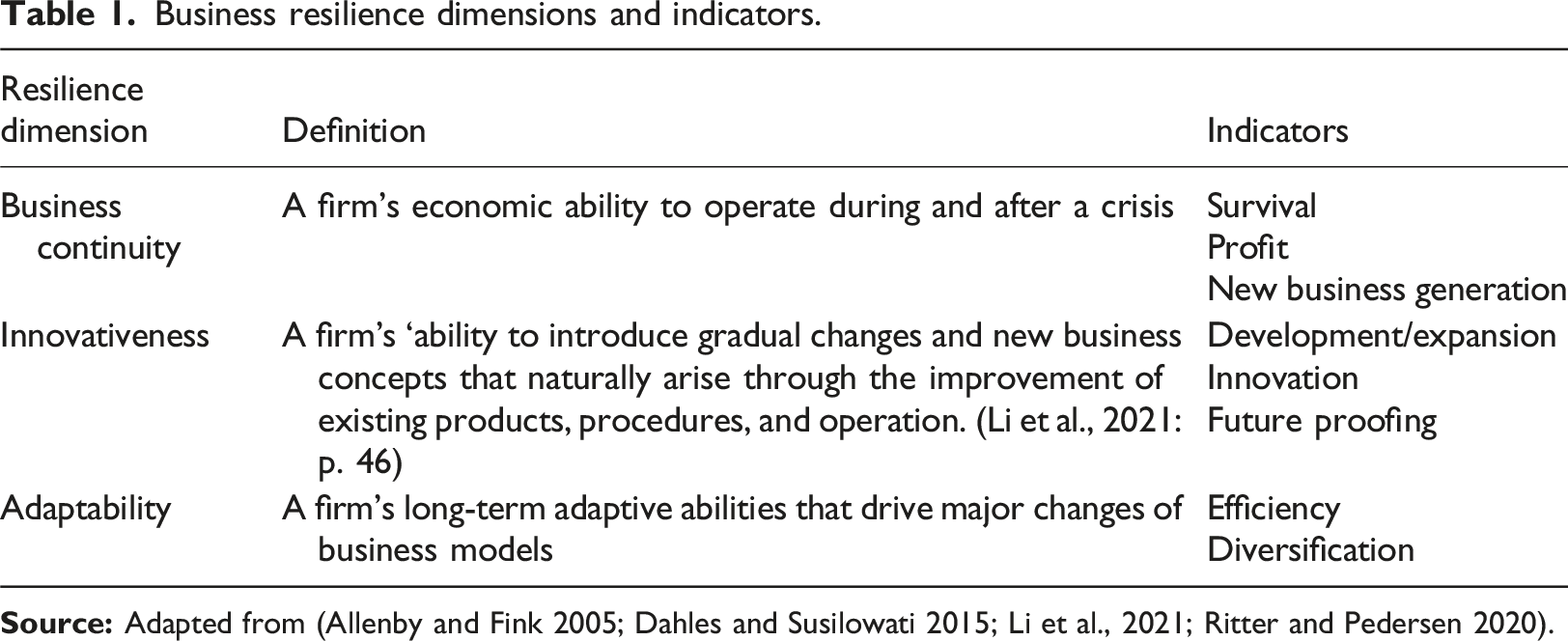
Fitriasari (2020) identified three critical elements of business resilience (product excellence, people behaviour, and process reliability), emphasising the significance of digital transformation in enhancing adaptability and competitiveness. A more comprehensive view of business resilience is offered by Dahles and Susilowati (2015) who explored SME resilience through three distinct perspectives, namely, Business Continuity, Innovativeness, and Adaptability, highlighting the capacity to maintain operations, innovate and develop, and adapt to unforeseen changes in the business landscape.
Business resilience dimensions and indicators.
Government intervention (GI) and business resilience
The COVID-19 pandemic created significant social and economic upheaval and, following the lockdown in March 2020, the UK government initiated a range of measures to boost local and business resilience. Furthermore, the local authorities have a significant role to play in supporting recovery and, indeed, have ensured the delivery of essential frontline services and meeting the needs of community (Broadhurst and Gray, 2022; Machin 2023).
In the UK, over 1.6 million companies received government-backed loans totalling over £80 billion during the pandemic (National Audit Office 2021). The UK Government’s Bounce Back Loan Scheme (BBLS) helped to save around 500,000 businesses and 1.1 million jobs with suggested improvements in cash-flow, working capital, and financial security (Arshed et al., 2021; Cowling et al., 2022; National Audit Office 2021). Katare et al. (2021) found that SMEs in receipt of government support loans were the most resilient to failure.
Collier and Mayer (2020) acknowledged the need for government support for failing companies affected by COVID-19, and the need to rebuild regional economies, but suggested the use of private sector funding. McCann and Ortega-Argilés (2021) highlighted regional imbalance in the UK economy, warning that, despite the levelling up agenda, the UK’s relatively weak responses to COVID-19 and the 2008 crisis, coupled with the effects of Brexit, could result in wider inter-regional inequalities. Further calls were made for addressing regional disparities through deployment of regionally focussed funds (Bailey et al., 2020; Barbero et al., 2024; Broadhurst and Gray 2022; Brown and Cowling 2021; Grabner and Modica 2022; Harris et al., 2020; McCann et al., 2023; McCann and Ortega-Argilés 2021).
Place focused delivery of crisis recovery therefore presents a multifaceted and complex landscape, demanding a nuanced understanding of place dynamics, targeted support mechanisms, and consideration of regional disparities to ensure a resilient and equitable recovery. ‘Scale matching’ (Broadhurst and Gray 2022) explains how local government sits at the heart of service provision in times of crisis due to their localised skills, knowledge and networks, which are needed for resilience in local places, leading to effective recovery. Broadhurst and Gray (2022) go on to identify further key principles of resilient places which include ‘human and social capital’, that is the repurposing of resources; and ‘adaptive management’, which involves changing various practices in response to a crisis. Furthermore, due to the critical significance of small businesses to the UK economy, they serve as an excellent 'unit of analysis' and a strong indicator for assessing regional resilience (Brown et al., 2020).
Local grant funding (LGF) and SME resilience during a crisis (RDC)
Whilst Local Grant Funding (LGF) can provide immediate relief and support to SMEs facing crisis situations, it may not adequately address long-term needs for performance, growth, and recovery. For instance, LGF typically focuses on providing immediate (short-term) financial assistance or resources to SMEs to help them navigate through crises.
Localised funding was one of the UK government’s tools to support competitive market mechanisms, particularly during crises (Newman et al., 2024). A shift from survival-focused support to recovery-oriented initiatives was noted by Bailey et al. (2021) who emphasised the need to build back better, which necessitates a global outlook with local considerations. Saad et al. (2021) systematically reviewed business resilience literature, identifying contextual variations across localities, emphasising that each location has specific needs, challenges and opportunities.
The debate on spatial differences extends to funding allocation, particularly in the crisis support context. The concepts of adaptability, adaptive capacity, and the creation of new pathways are central to building local resilience. These notions highlight the ability of localities to adjust to changing circumstances, enhance their capacity to respond to challenges, and create innovative solutions for long-term recovery and growth Dawley et al., (2010). Brown and Cowling (2021) observed regional disparities amongst SMEs receiving COVID-19 support funding, which were complicated by diverse impacts, and underscored the need for regionally tailored support policies. Lim et al. (2020) found potential benefits in grant support for growth-oriented SMEs in crisis which should include strategic development, including investment in resources, workforce, and training.
Belghitar et al. (2022) investigated the effects of government support on SMEs and found benefits in terms of job protection but, along with other authors (Business, Innovation and Strategy, 2021, 2022; Hutchinson et al., 2021), noted disparities across sectors and geographical areas. Some of these differences were related to the characteristics of individual support programmes and the robustness of the SMEs themselves.
Cowling et al. (2020) suggested that small, fast turnaround, grants could result in significant strategic and behavioural impacts on SMEs, particularly around activities such as e-commerce.
McClelland and Shaw (2023) highlighted how post-Covid-19 governance had evolved through the UK Government Resilience Framework’s strategic approach to resilience’ (Cabinet Office 2022), which potentially includes resilience being considered in the longer term and including preparation and prevention. Bailey et al. (2023) suggests support for resilience is needed on a regional level, albeit co-ordinated with national-level policies, thus limiting the potential impact of disruption.
This present study proposes that local grant funding supports SMEs to be resilient during a crisis. Therefore, it is hypothesised that:
There is a significant positive relationship between local grant funding and SME resilience during a crisis.
Local grant funding and SMEs’ future needs for local government support
While LGF only addresses immediate shortfalls of SME operations, Bailey et al. (2021) underscored the significance of transitioning from pandemic to recovery, emphasising the need for a comprehensive approach to rebuilding post-COVID-19. This perspective aligns with the recovery strategies of both the European Union and the United States, which prioritise sustainability as central theme in the endeavour to build back better after the pandemic. Therefore, local government agencies with their deep-rooted knowledge and skills play a critical role in ensuring place resilience during a crisis and supporting their recovery afterwards (Broadhurst and Gray 2022).
Whilst the present study hypothesises that local grant funding helps SMEs to remain resilient, this may lead to additional future funding needs. SMEs face a pressing necessity to formulate strategic responses geared towards bolstering their resilience and improving their chances of survival (Beninger and Francis 2022; Zutshi et al., 2021). Moreover, Lim et al. (2020) identified potential benefits in offering additional grant support to growth-oriented SMEs during crises and emphasised that such support should not solely focus on survival but also facilitate strategic development, including investment in resources, workforce strengthening, and training for both employees and management.
According to Goodspeed (2023), grants can reduce future unemployment, but there was also a suggestion that such funds could be inadequate. Belitski et al. (2022) emphasised the importance of nurturing creative entrepreneurial solutions and building resilient ecosystems that are customised to address local needs and contend that post-Covid-19 support should extend beyond merely safeguarding jobs and fostering entrepreneurship, even if it becomes costly. Furthermore, Hutchinson et al. (2021) discovered that, despite temporary government assistance, there remained a necessity for additional growth and mitigation initiatives and highlighted the importance for policymakers to incorporate support that extends beyond purely financial aid, emphasising the inclusion of soft skills training and specialised assistance. Therefore, while LGF can be an important tool for boosting SME resilience during crises, it should be complemented with broader strategies aimed at addressing the diverse and evolving needs of SMEs over the long-term:
There is a significant positive relationship between local grant funding and SME future needs for local government support.
The proposed relationships tested in this study are shown in Figure 1.
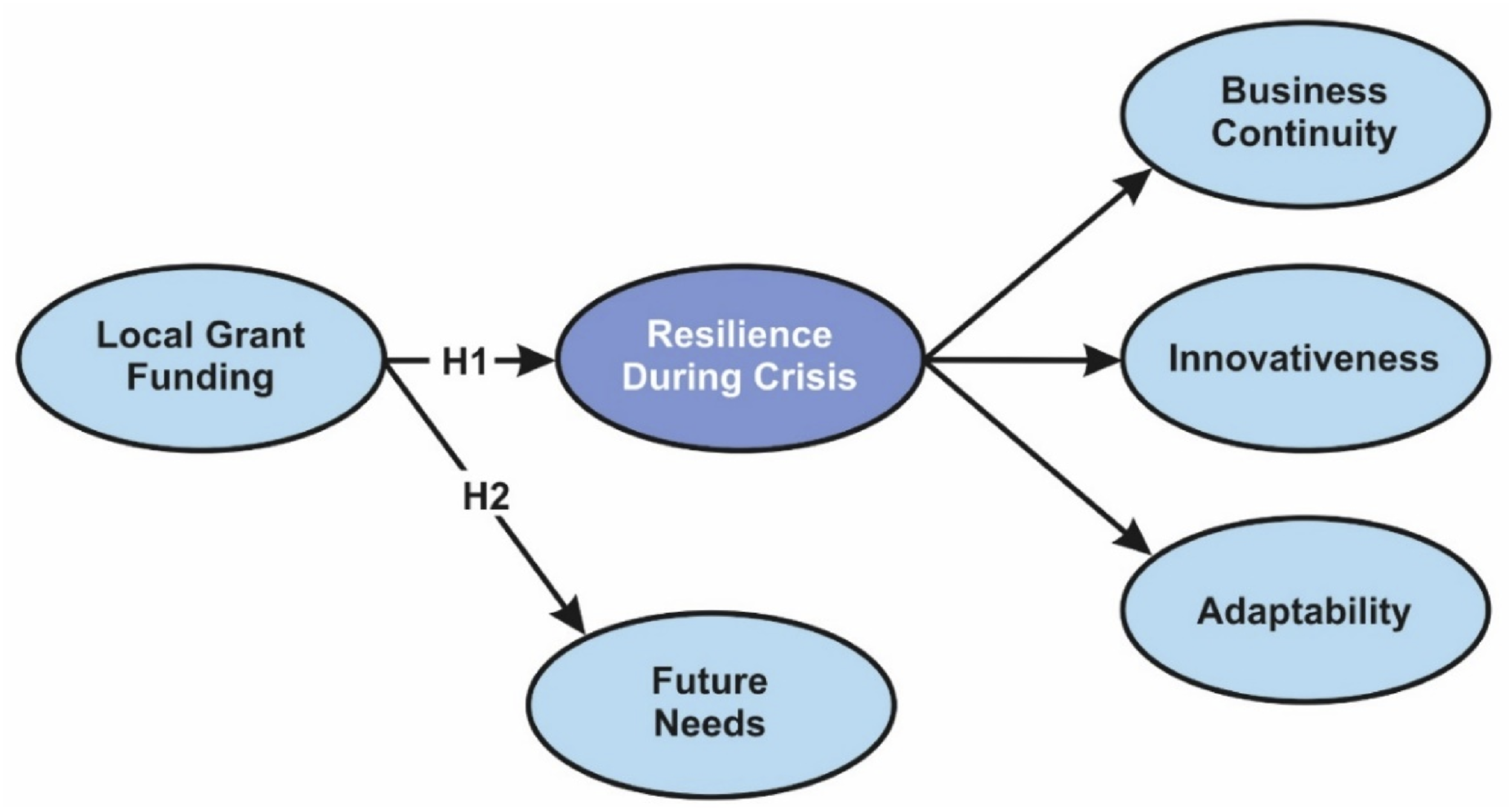
Conceptual model of the effects of local grant funding on SME resilience during a crisis and on future needs for local government support.
Research methodology
This exploratory study adopted a sequential mixed methods approach to achieve the study aim and answer the quantitative and qualitative research questions, outlined in Section 1. The research has been designed to comply with institutional ethical guidelines, including approval from the institutional ethics panel of the research process and associated documents, such as participant anonymity; participant information sheets; consent forms; secure data storage and participants reviewing write-ups.
Context and sample
Following the COVID-19 pandemic worldwide government interventions played a critical role in ensuring the survival of economies and businesses, with the UK at the forefront of such efforts. The local grant funding programme, which was the focus of this research provided grants, at various levels up to £70,000, to local organisations to help them recover in the wake of the pandemic. The LGF programme was designed to support local businesses by promoting economic recovery, fostering innovation, pride in place, and enhancing project deliverability. The £3.13 million fund was distributed to 109 local organisations, selected from 320 applicants. The research team carried out an exploratory evaluation of the programme with access to consenting companies. This evaluation involved an online survey sent to all 109 grant recipients, yielding 43 valid responses (see Section 3.2). Additionally, 15 in-depth interviews were conducted with a sample of organisations to provide further insights following the survey completion (see Section 3.3).
Quantitative methods
To evaluate the validity of the relationships proposed in the hypothesised model (Figure 2), structural equation modelling (SEM) through SmartPLS 4.0 was utilised, employing maximum likelihood estimation. Regarding the measurement model, a multi-item scale was used to measure three latent constructs, one independent construct (Local Grant Funding - LGF) and two dependent constructs (Resilience During a Crisis - RDC; SME Future Needs - FN), on a 5-point Likert scale to indicate the respondents’ level of agreement with the scale items. Structural equation model (SEM) of the effects of local grant funding on SME resilience during a crisis and on future needs for local government support.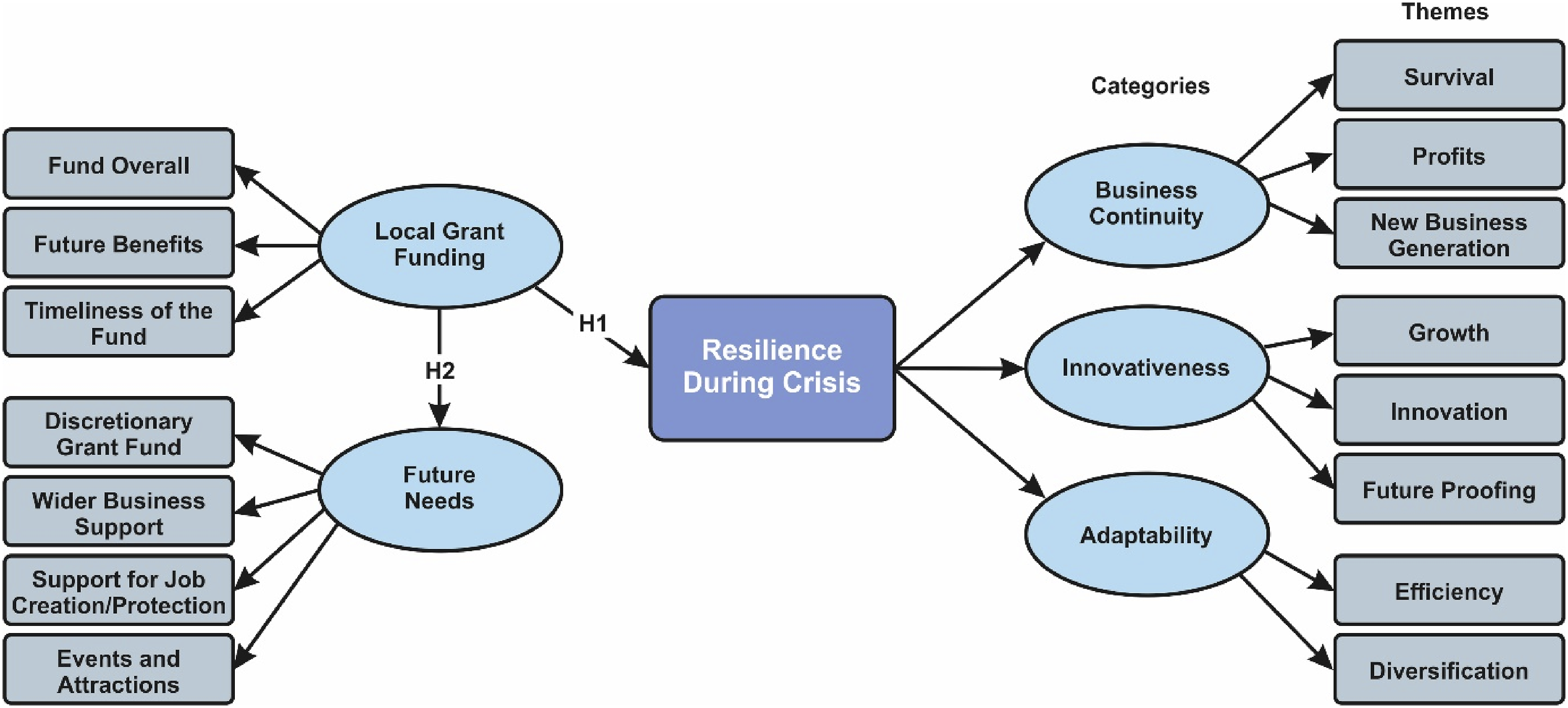
Specifically, the evaluation of local grant funding (LGF) has been measured using three items: Benefits of the Received Fund; Timeliness of the Fund; and the Fund Overall.
To measure resilience during a crisis (RDC), the measurements employed in previous empirical investigations were reviewed (Allenby and Fink 2005; Dahles and Susilowati 2015; Li et al., 2021; Prideaux et al., 2003; Ritter and Pedersen 2020) to pinpoint the indicators that reflect resilience during crises. This endeavour led to the development of an eight-item tool. These eight observed variables were organised into three sub-scales (Business Continuity; Innovativeness; and Adaptability) each measuring a distinct facet of resilience in times of crisis. While three items were used to measure Business Continuity (Survival; Profits; Generation of New Business), three Items were used to measure Innovativeness (Strategic Development / Expansion; Innovation; and Future Proofing), and two items to measure Adaptability (Efficiency; and Diversification).
To measure SME Future Needs, four future needs, for those trying to recover from the pandemic, were identified (Discretionary Grant Fund; Wider Business Support; Support for Jobs Creation/Protection; and Events and Attractions). The respondents were asked to rate each need on a 1-5 scale, ranging from ‘highly desirable’ (5) to ‘not needed’ (1).
To quantitatively test the proposed conceptual model, an online questionnaire using the JISC Survey tool was sent to 109 local organisations, in the local authority area, which received the local grant funding. The survey ran during May 2022. A total of 44 survey responses were received (40% response rate). One response was removed from the analysis as the organisation was part of a larger group, leaving a total of 43 responses for the purpose of this analysis.
The sample profile of SMEs within the quantitative study.
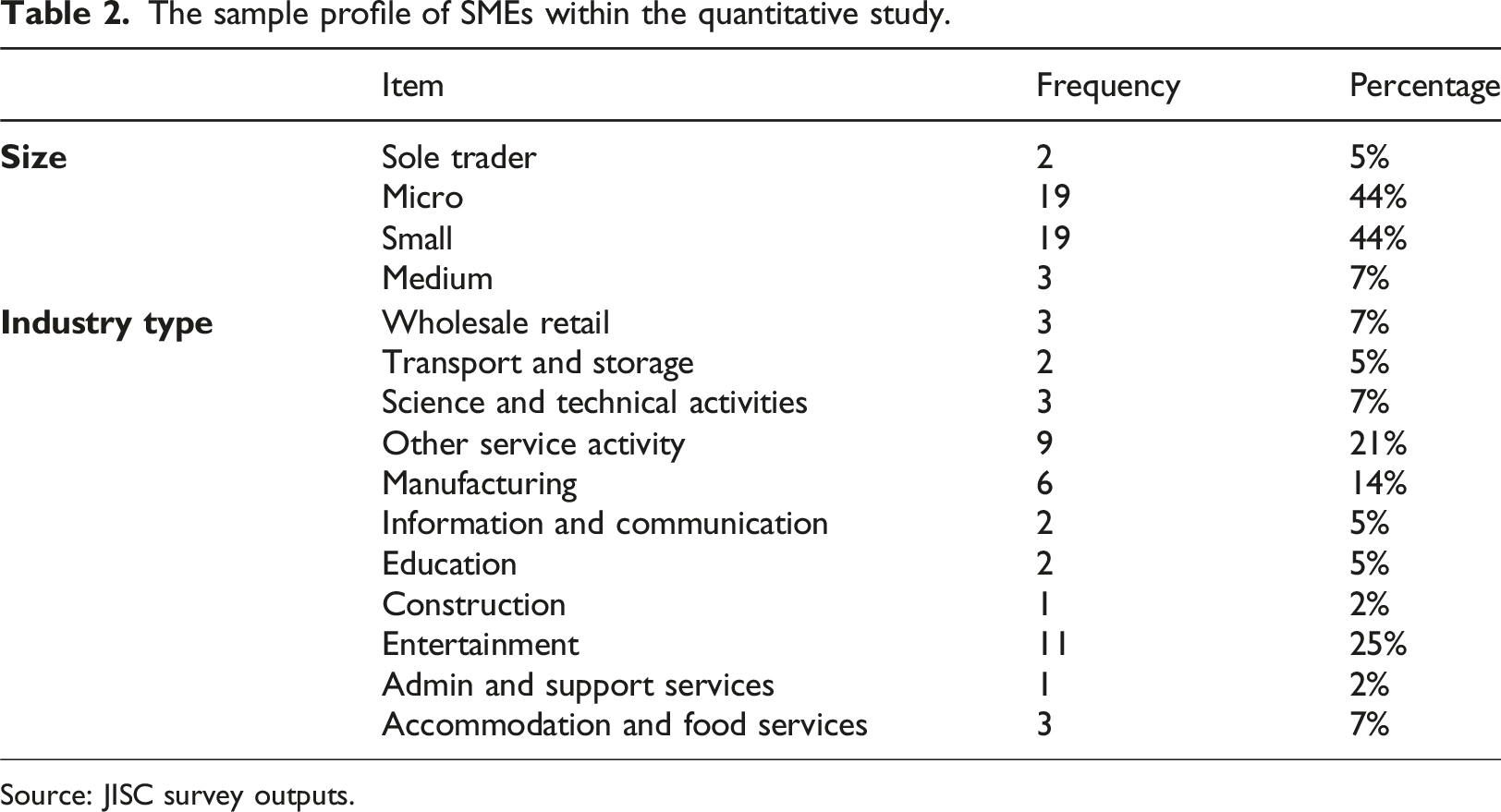
Source: JISC survey outputs.
Qualitative methods
In the qualitative stage of the study, fifteen in-depth interviews were conducted with participants in the local grant funding programme using a semi-structured format with open-ended questions designed to achieve a deeper insight into how the project went, and to further explore the issues raised in the survey. The interviews were recorded and transcribed and were mainly carried out face-to-face on the organisation’s premises or using video call (dependant on the respondent’s preference). The qualitative data was gathered from late-May to mid-July 2022. Each interview was also written up as a mini case study (vignette) and were approved by the local authority and each of the individual participants. The questions were designed to meet the research objectives but also considered the needs of the local authority client. Participants who completed the quantitative survey were given the option to participate in the later interviews. The sample for the qualitative study included twelve private SMEs, a further two SMEs were companies limited by guarantee, and there was one organisation, with charity status, which provided a business support service to SMEs.
The qualitative data analysis methodology adopted by this study was based on the principles of framework analysis (Ritchie and Spencer 1994). This method was used to identify, analyse and report themes arising from the data, with the analysis being driven by both the research questions and the theoretical underpinnings.
During the analysis stage, the data was organised within key issues and recurring themes, using a five-step process (Ritchie and Spencer 1994) as follows: 1. Familiarisation; 2. Identifying a suitable thematic framework; 3. Indexing; 4. Charting; and 5. Mapping and interpretation.
Collected data was organised into salient categories of meaning and relationships between categories were derived from the data through an inductive reasoning process. The coding process involved breaking down the data into discrete incidents (Glaser and Strauss 1967) or units (Lincoln and Guba 1985) and coding them to categories. The coding process was undertaken using NVivo 20 which is a Computer Assisted Qualitative Data Analysis Software (CAQDAS) package that aids the analysis process but does not perform any particular analysis or develop conclusions.
Results
Quantitative results
This section addresses the study’s research questions 1 and 2, as specified in the Introduction (Section 1), and tests the two research hypotheses identified in the Literature Review (Section 2.3 and 2.4).
Measurement model.
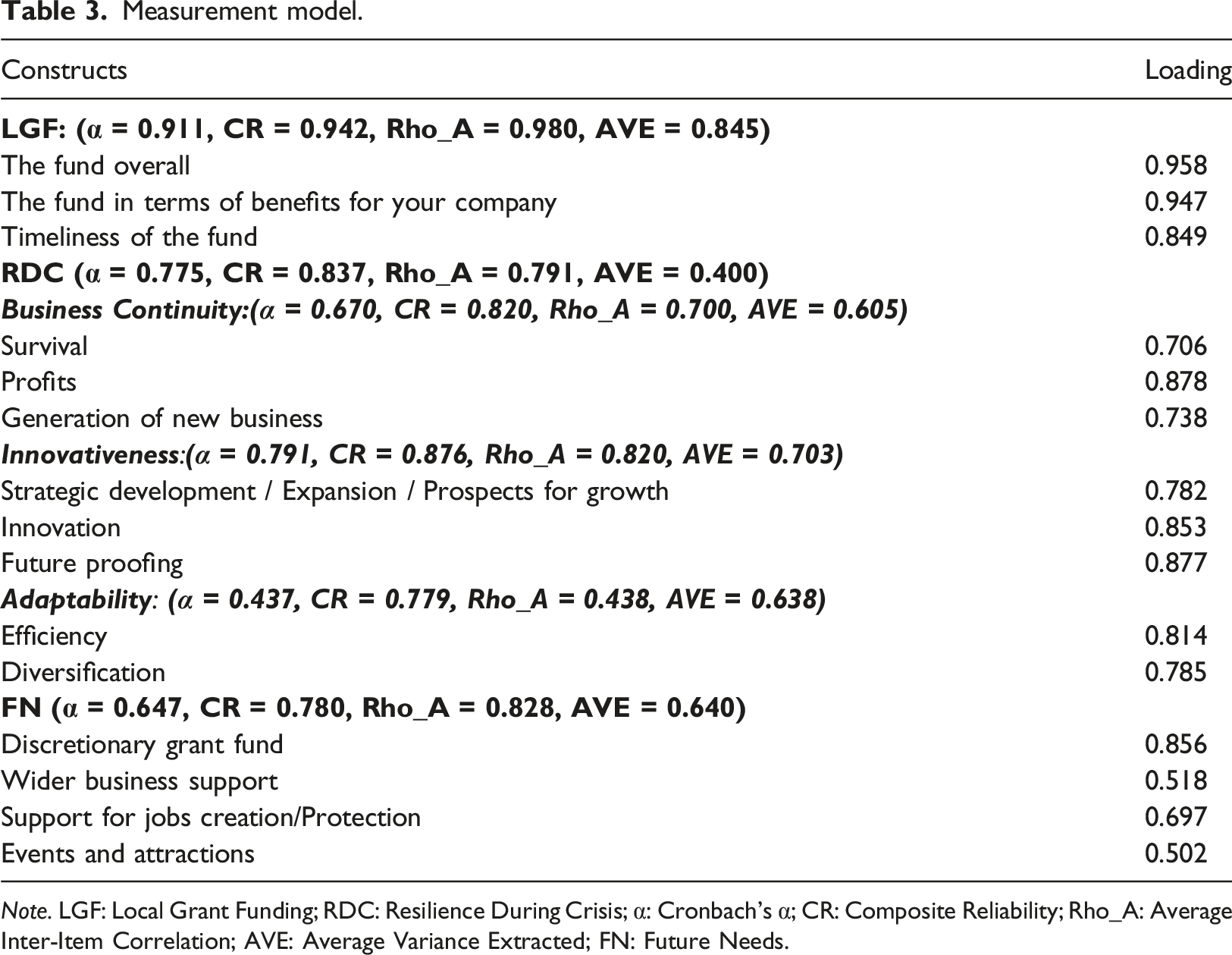
Note. LGF: Local Grant Funding; RDC: Resilience During Crisis; α: Cronbach’s α; CR: Composite Reliability; Rho_A: Average Inter-Item Correlation; AVE: Average Variance Extracted; FN: Future Needs.
Moreover, the composite reliability (CR) that measure the internal consistency in scale items and indicates how well a set of items consistently measures a single construct surpassing 0.7 as well as the average variance extracted (AVE) which assess the amount of variance captured by a construct in relation to the measurement error of its indicators exceeding 0.5 meet the recommended thresholds by Hair et al. (2017), indicating the convergent validity of the scale. Although the AVE value of 0.4 for the RDC construct falls below the suggested threshold of 0.5, it remains acceptable as per the condition outlined by Fornell and Larcker (1981) that if the AVE value is below 0.5 but the composite reliability exceeds 0.6, the convergent validity of the construct remains acceptable.
Although all constructs demonstrated satisfactory internal consistency with Cronbach’s α values exceeding 0.7, as advised by Hair et al. (2017), and rho_A values exceeding 0.7, as advised by Dijkstra and Henseler (2015), it is notable that the Cronbach’s α rho_A values for Adaptability is 0.437 and 0.438 respectively. Based on Tavakol and Dennick (2011), this lower value could be influenced by factors such as the number of items manifesting this construct (2) and the small sample size (43), which are acknowledged as limitations in this research.
Fornell-larcker criterion.
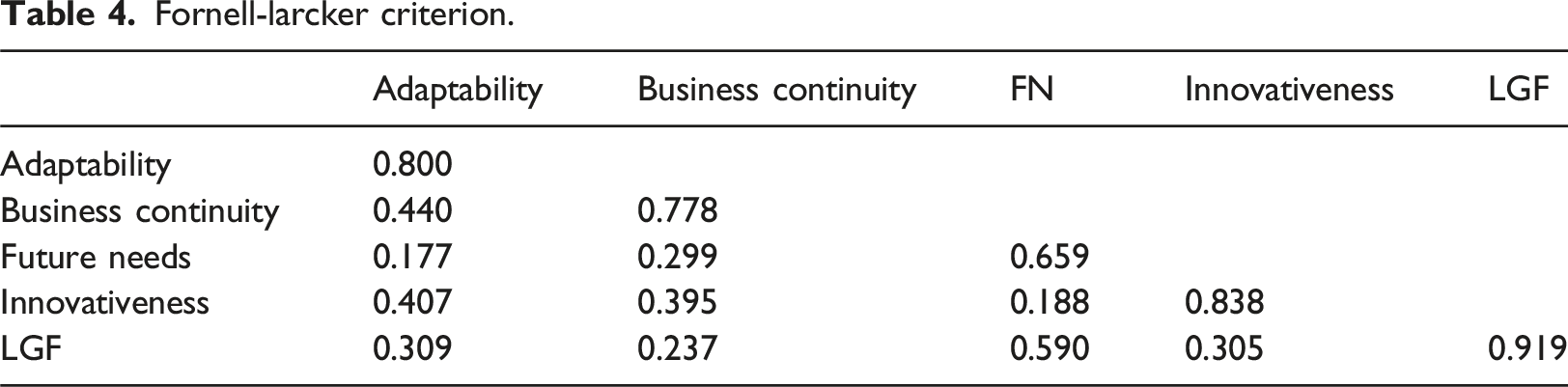
Thus, the results indicate a good measurement model fit, meaning that the three constructs' items (LGF, RDC, FN) have achieved high validity and reliability in this model. Furthermore, the higher order construct of RDC is well manifested by the three dimensions of Business Continuity (β = 0.785, p = .000), Innovativeness (β = 0.821, p = .000), and Adaptability (β = 0.721, p = .000) (Figure 3). Structural model.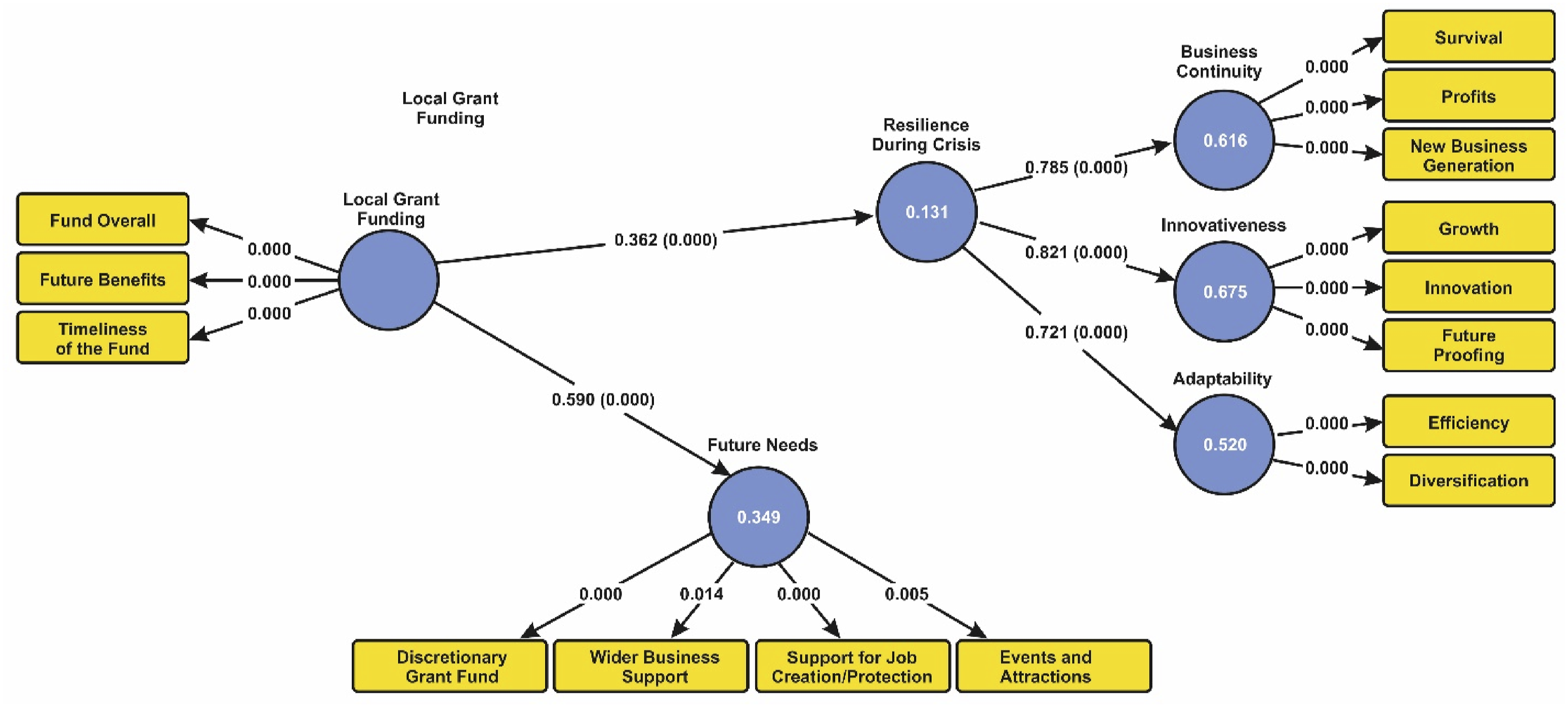
Hypotheses testing.
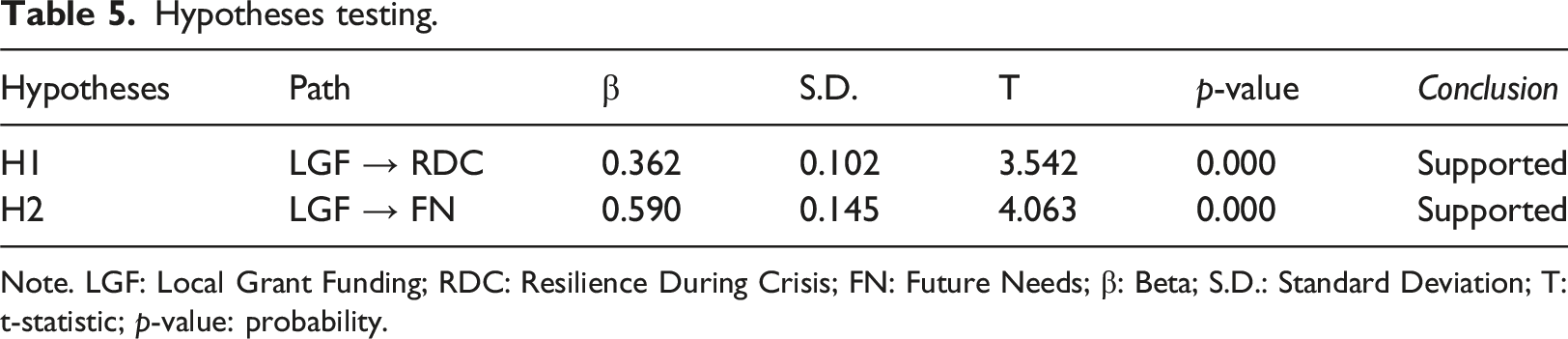
Note. LGF: Local Grant Funding; RDC: Resilience During Crisis; FN: Future Needs; β: Beta; S.D.: Standard Deviation; T: t-statistic; p-value: probability.
The quality of the structural model was evaluated using the coefficient of determination (R2). The determination coefficients (R2) for all endogenous variables exceeded 10% (0.131 for RDC and 0.349 for FN), as suggested by Falk and Miller (1992), indicating the predictive capability of the model. This predictive power was further supported by the predictive relevance of the model (Q2) values, which were above zero (0.084 for RDC and 0.231 for FN). Chin (1998) suggests that a model exhibits good predictive power if Q2 > 0. Moreover, the effect sizes (f2) for all endogenous variables were calculated (0.151 for RDC and 0.535 for FN). According to Cohen (1988), f2 values indicate the strength of relationships between variables, with 0.02 representing a small effect, 0.15 a medium effect, and 0.35 a large effect.
Qualitative results
This section addresses the study’s research questions 3 and 4, as specified in the Introduction (Section 1).
How Does Local Grant Funding Influence SME resilience during a crisis?
The main goal of the local grant funding, in this study, was to engage with local businesses through innovative economic recovery projects, to assist them in bouncing back from the pandemic by supporting innovative projects and increasing their resilience to future challenges.
Resilience was often demonstrated through ‘It's enabled us to recapitalise on our technical equipment. And we don't normally do anything local, so it's given us a perspective of offering a local contribution as well as our normal business which is international stuff’. ‘The year before COVID we did £2.8 million. In the first six months of Covid we did £300 grand. And then, due to funding, and the wins with Netflix, we were able to actually finish the year at £1.2 million. And then the year after Covid, which we've just finished, we did £3.4 million’.
There were various examples of innovative projects that were outside of the normal, everyday, operations of the SMEs. For example, an SME offering local support services for the film industry was creating a website and tools to promote the local area as a choice destination for potential film-makers. Another funded project used the grant towards the high cost of specialist, 360-degree, video equipment, which is used for simulated car scenes in the film industry. ‘Trying to encourage more film producers to come to the region to make movies. So, we created a website that highlighted, I think, ten different locations. We built that and then we started promoting that in the industry’. ‘So it allowed us to purchase the screens …. we create a 360-degree filming environment using the screen as augmented reality. So you can shoot the view around the car. There literally is nobody else on the South Coast that has the ability to do this, and we wouldn't have been able to do it without that grant’.
There were numerous examples of ‘I've always been the person that's prepared for the worst, hope for the best yes or type of mentality. So, when we went to recession when Covid came along, the first thing we do is look at the head count’. ‘A lot of businesses transitioned into more hybrid working, flexible working and, arguably, I think the perception from a lot of employees was it wasn't for their benefit, it was for the benefit of the business’ ‘Pre-Covid, we might have expected £100,000 turnover per head in the business. We're now probably looking at £140,000 to £150,000 per head because of the technology changes’. ‘It was a case of cash retention initiatives, and so we really clawed back all our spending. We reduced our headcount. We went into a bit of a survival mode’. ‘But we did survive that, you know, because we're quite small so we don't have massive overheads here’.
Resilience was seen to arise through
The Ansoff Matrix diagram (Figure 4) shows mapping of the qualitative sample of projects receiving the local grant funding, illustrating the various ways of generating new business, including diversification. Ansoff matrix mapping of interviewed SMEs.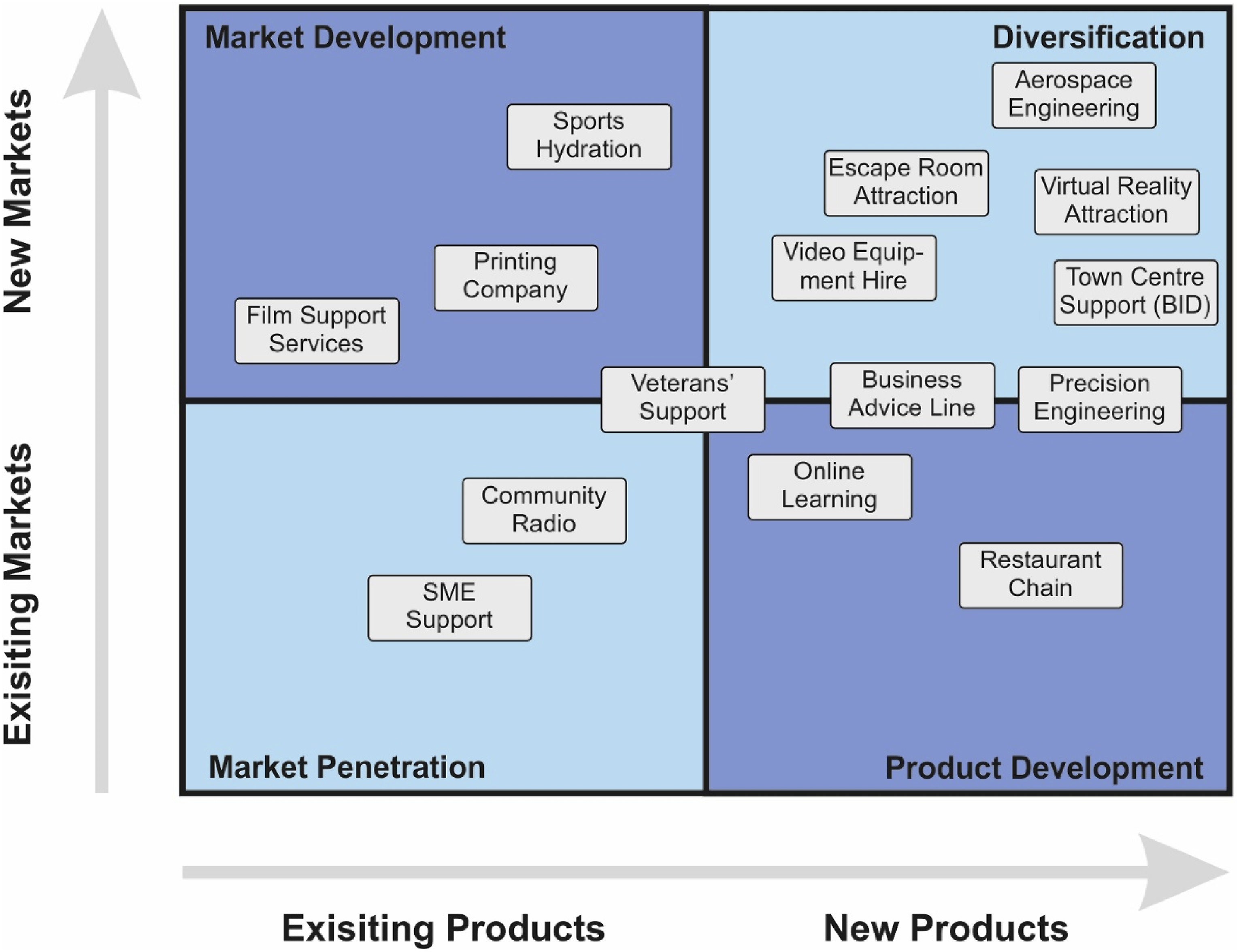
The diversification activity was particularly refreshing when SMEs tended to adopt single business models and did not previously diversify, providing additional evidence that the local grant funding contributed to their diversification, leading to enhanced resilience. ‘We kept every single member of staff ... We used the time smartly … We had always wanted to create our own virtual reality software. We already had some ideas, but this literally helped us really brainstorm the idea that we eventually came out with’. ‘We needed to find some more markets in different industries. So, we tapped into fire suppression, and this was really coming up in a big way’ ‘We used some external resources to help us develop a new range of products, both physical building products and some software, online to help recommend the correct product for the correct activity and the correct person’.
For several SMEs in this study, the new expertise and R&D investment indicated that the local grant funding may have created a ‘catalyst for change’. ‘For a longer-term future in diversifying away from what we've always done, you know? And it's really proved ourselves that we can come up with the concept. Work with a new customer who's got a global footprint’ ‘It will allow us to have an additional offering outside of the core business of fixed Escape Rooms which will give the business more flexibility to weather unexpected situations and increase the number of people it employs’.
How does local grant funding influence the SMEs’ future needs for local government support?
Considering ‘It’s game changing. You know it's got a clear wonderful road ahead. We've got ideas for games. We've got ideas for other projects, other safety aspects, all those kinds of things. So, it's, yeah, it's dramatically helped us’. ‘It'll give us some knowledge and strength on the upper tier - that’s management. I think it will give some balance as well, because it's not just me making decisions’. ‘Having that fund kickstarted something dramatic for us and we've now got something which is long-term, which is looking for more future investment and sponsorship. You know it's got a clear wonderful road ahead’.
Smaller SMEs encounter difficulties when considering future needs, including allowing time to plan, when dealing with the day-to-day running of the company, which typically includes ‘fire-fighting’ and focussing on ‘So, it was cataclysmic for us. In the first three weeks of February, we lost £600,000 of income’. ‘We're obviously a company that relies on the general public to come in and use our facility. And of course, we were closed throughout the various times in the pandemic. I would happily say that, without the government support, we may not be here today’. ‘We had to shut down ….. It's circa £500,000 plus of actual losses but could have been significantly more’.
As well as Furlough, there were alternative business support programmes. UK government figures show 1.4 million businesses were supported by CBILS loans, from around 5.5 million registered businesses, representing around 25% of businesses nationally, compared to 61% in our own survey (HM Treasury, 2021; National Audit Office, 2021). ‘We had to reshape the business so there was about a 26% headcount reduction within, let's say, six weeks, as the order book sort of collapsed in front of our eyes’. ‘We had to take a big CBILS loan and which we're still paying back. I think we've borrowed £350,000’. – ‘More of the same, really. We're moving up right at the moment - around 120% on last year. We've taken on three people this year alone, and there'll be probably two more’.
Regarding the ‘Probably things like staffing or finding people, because obviously our industry is suffering on recruitment’. ‘We're still struggling financially. It's not 100% there yet. We're on our way, but it would be nice to have another grant or another loan’. ‘The biggest one is the cost-of-living crisis, and I think we're facing an economy that is struggling and hasn't struggled like this for certainly in my lifetime’ ‘So, in an ideal world, the council would see the work that we do with the universities with young people with businesses with startups and say actually you know what you know we can … we should allocate part of our funding’ - SME support company ‘We don’t need money to be given. It needs to be administered in the right way, I think. It’s understanding the cultural value of companies like ours’.
Discussion and conclusions
The results of this exploratory mixed-methods study indicate the significant positive impact of local grant funding on SMEs' resilience during a crisis, which is consistent with Katare et al. (2021) who also observed that SMEs, which had availed themselves of government support grants, were reportedly the most resilient to failure. In the same vein, providing funding to local institutions is identified as one of the tools to bolster competitive market mechanisms, especially during times of crises (Newman et al., 2024). The results emphasise that LGF serves its purpose as it concentrates on offering prompt financial aid or resources to SMEs to assist them in navigating crises. The study also highlights the significance of transitioning from survival-focused assistance to resilience initiatives, emphasising the importance of not just reverting to business as usual but rather striving to ‘grow back better’ (Bailey et al., 2021), which includes fostering adaptability and innovativeness. This finding supports the assertion from Newman et al. (2024) that localised funding can be utilised by the UK government as a means to bolster competitive market mechanisms, especially in times of crises. Furthermore, since several scholars (Dawley et al., 2010; Soroka et al., 2020; Steiner and Atterton 2014) argue that resilient businesses drive place resilience, the research finding established in this study that the local grant funding positively impacts SMEs’ business resilience may indicate a likely positive contribution of the local SMEs examined in the current study to enhancing their place resilience.
Additionally, the findings of this study suggest a significant positive influence of LGF on SMEs’ future needs for local government support. Certainly, the results of the present study align with the strategic approach to resilience outlined in the UK Government Resilience Framework (Cabinet Office 2022), which may involve considering resilience in the long-term, encompassing preparation and prevention measures. Similar results were highlighted by literature (e.g. Beninger and Francis 2022; Zutshi et al., 2021) as SMEs are confronted with more urgent need to develop strategic responses aimed at enhancing their resilience and increasing their likelihood of survival. The results of the present study also corroborate with Bailey et al. (2023), highlighting the importance of transitioning from pandemic to recovery and stressing the necessity of a comprehensive approach to rebuilding after COVID-19. Furthermore, Lim et al. (2020) highlighted the potential advantages of providing supplementary grant support to growth-oriented SMEs during periods of crises.
In terms of theoretical contribution, the findings of this exploratory mixed-methods study, which designed, tested and explained an original model presented in Figure 2, offer important insights into the impact of local grant funding on SME resilience, during a crisis, and the SME future needs for local government support, which contributes to the very limited literature in this research area. The study recognises the dynamic and complex nature of crisis recovery processes and provides a clearer picture of how local grant funding enhances SME resilience during a crisis, and how it shapes their future needs in an uncertain and continually evolving environment. This study indicates that although LGF can play a crucial role in enhancing SME resilience during crises, it should be supplemented with comprehensive strategies and policies that address the varied and changing needs of SMEs in the long-term. Given that there is limited understanding of the effects of government grant funding on SME resilience during crises, this present study offers an original empirical analysis and evidence that advance our understanding of SME business resilience and the effectiveness of local government intervention during crises.
The results of the present study also provide valuable insights for policymakers and SMEs in their attempts to adapt resources and assistance to changing post-crisis needs and to develop effective strategies for dealing with similar future crises. Specifically, the research findings provide practical implications for policymakers, offering insights into the effectiveness of government support programs during crises, highlighting the importance of local distribution of funds and emphasising the need for flexible and adaptable support mechanisms.
The present study indicates that more local government support for SMEs is needed to aid recovery during and after a crisis, specifically highlighting four future needs for local government support. First, policymakers and local governments are recommended to provide more discretionary funding to help SMEs sustain their resilience. Second, it is recommended to provide wider business support not just financial support which has been previously recommended by Hutchinson et al. (2021) who highlighted the importance for policymakers to incorporate support that extends beyond purely financial aid, emphasising the inclusion of soft skills training and specialised assistance. Third, during crisis, losing jobs is common, therefore local government could consider a call from SMEs for measures to protect and create new jobs. Fourth, local authorities are recommended to organise more networking and business support events that could help SMEs to grow and enhance their business resilience and thus contribute to enhancing their local resilience.
Limitations and directions for future research
While the results of the present study provide valuable theoretical and practical contributions, as outlined in Section 5, there are several study limitations that inform future research in this area.
Firstly, this study is cross-sectional and focusses on examining the impact of local grant funding on SME business resilience during crisis in the context of only one local grant funding programme in the UK. There may be some merit in research around the impact of similar local grant funding programmes across a range of localities. Future research could also examine other financial and non-financial local government support programmes. Future longitudinal studies could also uncover how far the local government support helps SMEs to sustain their resilience in the long-term.
Secondly, while the measurement model employed in this study met the reliability and validity criteria, and the predictive capability of the structural model, illustrated in Figure 2, was confirmed in this study, as demonstrated in Section 4.1, it should be acknowledged that the sample size for the survey was limited to 43 responses. However, this was from the population of a total of 109 organisations participating in the local grant funding scheme, so this, in fact, represented a relatively high response rate at 40.4%. Future replication studies employing larger samples could further confirm the validity and reliability of the measurement model and the predictive capability of the structural model proposed and tested in this study.
Finally, while the present study advances our understanding of SME business resilience, in that it establishes that the local grant funding positively impacts SMEs’ business resilience, and while it argues theoretically that this finding may indicate a likely positive contribution of the local SMEs examined in the current study to enhancing their place resilience, future studies are needed to empirically confirm the role of SME business resilience in enhancing place resilience.
Notwithstanding the limitations mentioned above, this study provides original and robust empirical evidence derived from real-world experiences of SMEs, which advances our knowledge of the role of local grant funding in enhancing SME business resilience during a crisis and SME future needs for local government support, and which also provides implications for policymakers, SMEs and researchers.
Footnotes
Declaration of conflicting interests
The author(s) declared no potential conflicts of interest with respect to the research, authorship, and/or publication of this article.
Funding
The author(s) received no financial support for the research, authorship, and/or publication of this article.
