




Abstract
Many biopsychosocial changes occur in early adolescence. Adolescents with an immigrant background face additional challenges, such as ethnic discrimination, which is associated with anxiety symptoms. Studies among immigrant adults have shown that using strategies to cope with ethnic discrimination is associated with decreased anxiety. Little is known on how coping strategies could alleviate or perpetuate anxiety symptoms in the context of ethnic discrimination in early adolescence. This study assessed the coping strategies that moderate the association between ethnic discrimination and anxiety symptoms in 512 first- (born abroad; n = 241) and second-generation (at least one parent born abroad; n = 271) adolescents (Mage = 12.97; SD = .75; 55% girls). Results suggest that religious coping and substance use have a positive moderating effect on the association between ethnic discrimination and anxiety symptoms. These findings add to knowledge on coping strategies among immigrant early adolescents facing discrimination.
Introduction
A growing number of adolescents in Western countries have experienced immigration or have an immigrant parent (Motti-Stefanidi, 2018). Among Canadian adolescents, 41% have an immigrant background (Organisation for Economic Cooperation and Development [OECD], 2018). In Canada, one in five adults from visible minorities (i.e., belonging to a minority identifiable due to physical characteristics) reported being the subject of discrimination (Godley, 2018; Statistics Canada, 2018). Among those who reported experiencing ethnic discrimination, 63% felt they had been discriminated against because of their ethnic origin or skin color. In addition to the crucial developmental changes and challenges occurring in early adolescence, youths with an immigrant background often face unique challenges related to sociocultural gaps between their culture and that of the host country, language barriers, and social integration (Titzmann & Juang, 2017). First- (born abroad) and second-generation (at least one parent born abroad) immigrant adolescents can also encounter ethnic discrimination, which can often have deleterious effects on their psychological well-being, such as psychological distress symptoms (e.g., anxiety symptoms, depressive symptoms) (Lanier et al., 2017; Wang, 2021). Despite the well-known impacts of ethnic discrimination on adolescents’ mental health, few studies have looked at possible ways to limit these adverse outcomes.
Ethnic Discrimination and Anxiety Symptoms
Ethnic discrimination is the subjective perception of unfair treatment against an ethnic group or its members based on racial and ethnocentric prejudices (Jackson et al., 1998). Studies in psychology and epidemiology reveal that ethnic discrimination can have strong and persistent deleterious effects on the psychological health (e.g., anxiety, depression) of adolescents with an immigrant background (Kouider et al., 2014; Priest et al., 2013). Ethnic discrimination can be a significant stressor and can have important impacts on mental health (Lanier et al., 2017; Wang, 2021). Internalizing symptoms in adolescents with an immigrant background who report experiencing ethnic discrimination has been extensively demonstrated in the literature (for a more extensive literature review, see Benner et al., 2018, Kouider et al., 2014; Priest et al., 2013). The majority of these studies focused on depressive symptoms, although several studies on anxiety symptoms revealed positive associations between ethnic discrimination and anxiety symptoms in adolescents with immigrant backgrounds (Benner et al., 2018; Priest et al., 2013; Suarez-Morales & Lopez, 2009; Weeks & Sullivan, 2019). Meta-analyses and literature reviews have shown that ethnic discrimination is associated with adolescents’ lower socio-emotional adjustment, which can lead to higher levels of internalizing symptoms such as anxiety (e.g., Benner et al., 2018; Priest et al., 2013). Anxiety symptoms refer to cognitive and physiological symptoms of anxiety (e.g., worrying about the future, accelerated heart rate). Ethnic discrimination can have even more damaging deleterious effects during a highly sensitive developmental period such as early adolescence, and can have life-long impacts (Yang et al., 2019).
Early Adolescence as a Particularly Sensitive Period of Development
Early adolescence is a significant developmental period characterized by identity development, the search for a sense of belonging, and the attribution of great importance to peer acceptance. Along with these developmental challenges, adolescents with an immigrant background may face additional challenges, such as adjusting to sociocultural gaps between their culture and that of the host country (e.g., differences in social norms), as well as facing ethnic discrimination. Ethnic discrimination is inherently different from other stressors that adolescents may need to cope with, as it targets a person’s identity. Early adolescence is often a time of assimilation into the peer group, identification with one’s own ethnic identity, and heightened awareness of how others perceive their ethnic group (Umaña-Taylor, 2016). Consequently, adolescents tend to be increasingly aware of and sensitive to discriminatory treatment and can thus be strongly and negatively affected by ethnic discrimination (Benner et al., 2018; Brody et al., 2006). Studies among immigrant adolescent populations show that they regularly report ethnic discrimination from their peers or from adults around them (Huynh & Fuligni, 2010). Indeed, adolescents with an immigrant background have reported ethnic discrimination in various contexts, such as institutional (e.g., being harassed by a store clerk or security guard because of their ethnic background), educational (e.g., being discouraged from enrolling in an advanced level course based on ethnicity), and social settings (e.g., being called racially insulting names) (Fisher et al., 2000). The literature on immigrant youth resilience has documented sources of resilience in the social and physical environments of young immigrants. However, there is currently few avenues for targeting concrete actions that young adolescents can take when confronted with stressors specific to immigration, in particular ethnic discrimination (Motti-Stefanidi, 2019; Motti-Stefanidi et al., 2021; Motti-Stefanidi & Masten, 2017; Ungar, 2015, 2018).
Despite the extensive literature on the negative impacts of ethnic discrimination and research over the past several decades on immigrant youths’ resilience, there is still more to be learned about factors that can play a protective role in the context of discrimination (e.g., Suárez-Orozco et al., 2018; Ungar, 2015). Coping strategies could be a possible avenue to alleviate anxiety symptoms in adolescents facing ethnic discrimination.
Coping Strategies to Alleviate Anxiety Symptoms
Coping strategies can be defined as “cognitive and behavioral efforts to manage specific external and/or internal demands that are appraised as taxing or exceeding the resources of the person” (Lazarus & Folkman, 1984, p. 141). According to Litman (2006), Carver and colleagues’ (1989) coping strategies can be grouped into four categories: problem-focused, avoidant, socially-supported, and emotion-focused. More specifically, when using problem-focused strategies, adolescents could either initiate immediate action and try to resolve the situation (active coping) or organize a plan to handle the problem (planning). When using avoidant coping strategies, adolescents tend to blame themselves for the stressful situation (self-blame), refuse to believe the stressor exists, or attempt to avoid negative emotions by persuading themselves that the stressor is unreal (denial). They may also reduce their efforts to cope with the stressor (behavioral disengagement), focus more explicitly on doing things to take their mind off it (self-distraction), and use alcohol, medication, or drugs to escape reality (substance use). Socially-supported strategies can include seeking help and advice (instrumental support), relying on moral support, sympathy, and/or understanding (emotional support), or expressing their feelings (venting). When using emotion-focused strategies, adolescents might aim to learn to live with the stressful situation (acceptance), assess or reassess a stressful event in a positive way (positive reframing), use humor to defuse the gravity of the situation (humor), or turn to religious beliefs to understand or deal with a stressful situation (religious coping).
Literature on coping strategies among adolescents with an immigrant background is limited. Indeed, most studies on coping strategies have focused on middle-class White Americans and Europeans. Of the few studies on coping among adolescents and adults with an immigrant background, some have shown the benefits of using certain coping strategies to alleviate stress and anxiety symptoms when facing general stressors. Previous studies on coping suggest that emotion-focused strategies are associated with positive outcomes (lower stress and anxiety symptoms), whereas socially-supported and avoidant coping strategies are associated with adverse outcomes (higher internalizing symptoms, higher stress levels) (Ahmed et al., 2011; Carlson & Grant, 2008). However, to our knowledge, few studies have documented the effects of coping strategies on anxiety symptoms in the context of ethnic discrimination.
Can Coping Strategies Alleviate Anxiety in Adolescents Facing Ethnic Discrimination?
Research on the use of different types of coping strategies to deal with ethnic discrimination is limited (Compas et al., 2001). The biopsychosocial model developed by Clark and colleagues (1999) stipulates that the magnitude and duration of these psychological and physiological stress responses will depend on the use of maladaptive or adaptative coping responses. Using adaptive (rather than maladaptive) coping responses can reduce the adverse effects of ethnic discrimination on health. In adolescents, effective coping strategies could help limit the negative impacts of ethnic discrimination on mental health by giving them a sense of empowerment toward a systemic phenomenon that is difficult to prevent and eliminate.
Studies on the possible moderating effects of coping strategies on the association between ethnic discrimination and anxiety symptoms are limited and have mainly been conducted with young adults. These studies suggest that, in the context of ethnic discrimination, problem-focused coping strategies are associated with increased subjective well-being (e.g., the absence of negative affects such as anxiety, worry, and stress), while avoidant coping strategies are associated with decreased subjective well-being (Villegas-Gold & Yoo, 2014).
Although some studies have focused on the moderating effects of coping strategies on the association between ethnic discrimination and internalizing symptoms among adolescents, few have looked at anxiety symptoms, and most were conducted among African American adolescents (e.g., Christophe et al., 2019; Park et al., 2018; Wei et al., 2010). A study among 268 African American early adolescents (Mage = 12.90) explored the impact of racial discrimination (discrimination stress) and coping strategies (mainstream coping strategies, culturally-relevant coping) on internalizing symptoms (depressive and anxiety symptoms) (Gaylord-Harden & Cunningham, 2009). Results from that study suggested a significant interaction between communalistic coping and discrimination stress in the prediction of anxiety, that is, at high levels of discrimination stress, greater recourse to communalistic coping (i.e., individuals’ reliance on interdependence with those around them) predicted higher levels of anxiety. Brittian and colleagues (2013) examined the associations between ethnic discrimination, four coping strategies (active coping, avoidance, self-distraction, and support seeking), and internalizing symptoms (e.g., anxiety, depression, withdrawal, somatic complaints) among 189 Mexican American adolescents (first- and second-generation immigrants) in grades 7 and 8 (Mage = 12.28 and 12.30). Results from that study suggested that self-distraction strategies were associated with decreased internalizing symptoms when facing ethnic discrimination, whereas active coping (a problem-focused strategy) and avoidance strategies did not significantly moderate this association (Brittian et al., 2013). These results differed from those obtained among young adults with an immigrant background, where problem-focused coping strategies were associated with better subjective well-being and avoidance strategies were associated with decreased subjective well-being in the context of ethnic discrimination (Villegas-Gold & Yoo, 2014). A Chinese study of 482 adolescents with an immigrant background in grades 7 and 8 explored the moderating effect of coping strategies (seeking social support, positive reframing) on the relationship between ethnic discrimination and psychological distress (depressive and anxious symptoms) (Wang et al., 2018). The results suggested that socially-supported and emotion-focused strategies were associated with decreased psychological distress and compensated for the deleterious effects of discrimination and stress. These findings on emotion-focused coping were similar to those obtained in studies among adolescents and adults facing general stressors, where emotion-focused strategies were associated with positive outcomes (e.g., Ahmed et al., 2011; Carlson & Grant, 2008). However, Wang’s (2018) results on socially-supported coping differed from those obtained in studies among immigrant adolescents and adults facing general stressors, where socially-supported strategies were associated with adverse outcomes.
Since most studies on the moderating effect of coping strategies were conducted among young adults, these findings need to be considered with caution, given the many different psychosocial and developmental realities college and university students face when compared to early adolescents (e.g., identity development, academic realities, psychosocial, cognitive/neuronal, and physical changes) (e.g., Côté, 2009).
The Current Study
The aim of this study was to further examine the association between the use of coping strategies and anxiety symptoms among early adolescents with an immigrant background facing ethnic discrimination. The objective of this study was therefore to identify which coping strategies moderate the association between ethnic discrimination and anxiety symptoms.
In light of the many studies and a meta-analysis that have shown the negative impact of ethnic discrimination on mental health (e.g., Benner et al., 2018; Priest et al., 2013), we expected that there would be a positive association between ethnic discrimination and anxiety symptoms. We hypothesized that problem-focused strategies (i.e., active coping and planning) and emotion-focused strategies (i.e., positive reframing, acceptance, humor, and religious coping) would moderate the relationship between ethnic discrimination and anxiety symptoms. Conversely, we hypothesized that avoidance strategies (i.e., self-blame, denial, behavioral disengagement, self-distraction, and substance use) would enhance the relationship between ethnic discrimination and anxiety symptoms.
Given that the results in the current literature on socially-supported strategies (i.e., venting, seeking social support for instrumental or emotional reasons) differ from one study to another (Ahmed et al., 2011; Carlson & Grant, 2008; Wang et al., 2018), it is currently not possible to formulate a hypothesis for these strategies.
Method
Participants
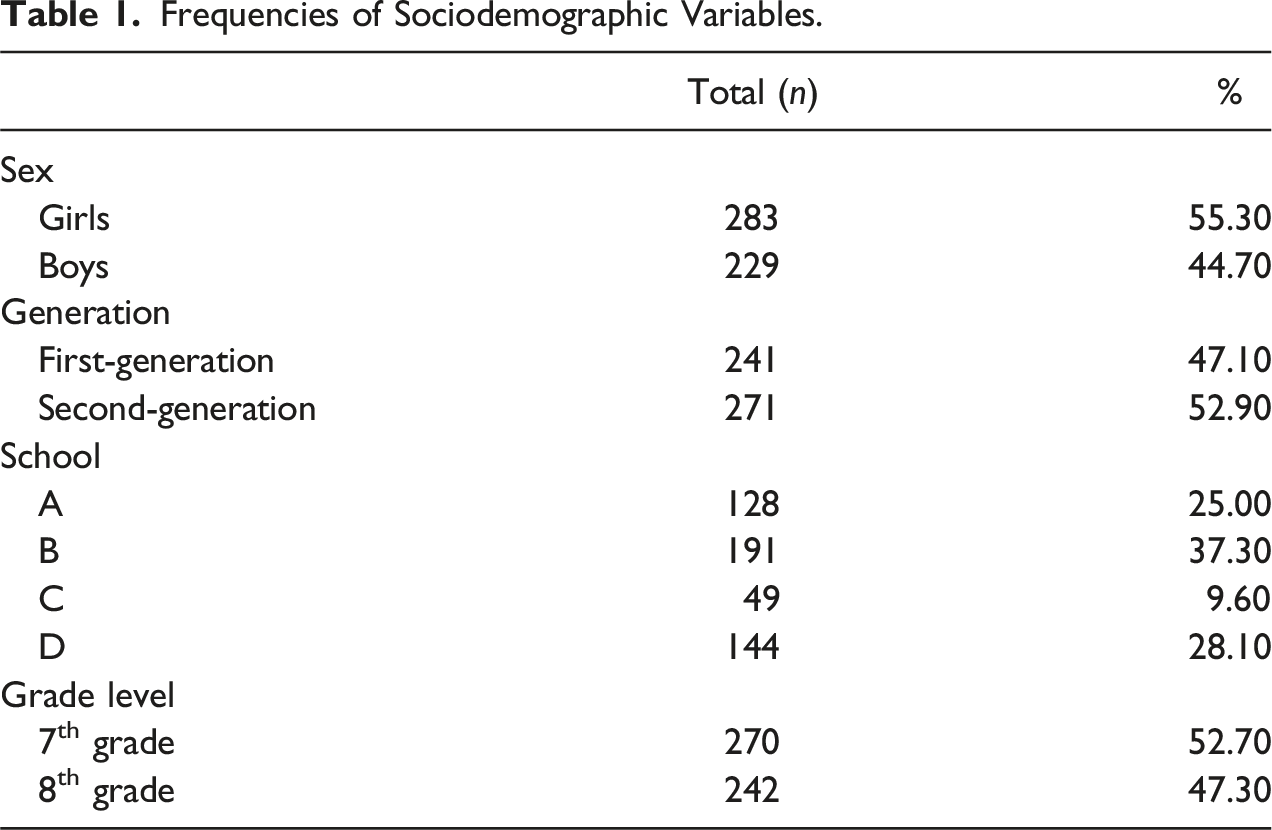
Frequencies of Sociodemographic Variables.
Measures
Anxiety Symptoms
Anxiety symptoms were assessed using the Screen for Child Anxiety Related Emotional Disorders (SCARED; Birmaher et al., 1999). To evaluate cognitive and physiological symptoms of anxiety, the total continuous scores obtained for the generalized anxiety items (9 items, e.g., “people say I worry too much”) and the panic/somatic disorder (13 items, e.g., “when I am afraid, I have trouble breathing”) scales were used. The validation study showed excellent discriminant validity (r = between .69 and .90), as the total scores and the scores for each of the five scales of the SCARED significantly differentiated children with anxiety disorders from those with non-anxiety psychiatric disorders (e.g., depression) (Birmaher et al., 1999). For each item, the adolescents were asked to indicate the frequency of symptoms on a Likert scale ranging from 0 = almost never to 2 = often. The internal consistencies of the scales used for this study are very good (generalized anxiety scale: α = .87, panic/somatic disorder scale: α = .84).
Coping Strategies
The coping strategies were assessed with a French-validated version of the dispositional Coping Orientation to Problems Experienced Inventory (Brief COPE; Muller & Spitz, 2003). The Brief COPE comprises a total of 14 coping strategies (active coping, planning, emotional support seeking, instrumental support seeking, venting, positive reframing, acceptance, religion, humor, self-blame, denial, behavioral disengagement, self-distraction, and substance use). The French-validated version of the Brief COPE is congruent with the original version by Carver (1997). The validation study showed good external convergent and discriminant validity of the Brief COPE (r = between .50 and .90), as correlations with validated instruments measuring self-esteem (Self-Esteem Index; SEI), perceived stress (Perceived Stress Scale; PSS), and psychological distress (General Health Questionnaire; GHQ-12) showed coherent results (Muller & Spitz, 2003). Each strategy is evaluated with two items (total of 28 items, e.g., “I’ve been taking action to try to make the situation better”) (for more details, see supplemental materials, Appendix, Table A2). Because the current literature does not agree on the factor structure of the different types of coping strategies (e.g., Doron et al., 2014), coping strategies were grouped into categories following an exploratory factor analysis (EFA) carried out within this sample (supplemental materials, Appendix, Table A2). The categories were: religious coping (2 items), substance use (2 items), problem-focused (4 items), socially-supported (6 items), humor (2 items), avoidance (6 items), acceptance/positive reframing (4 items), and self-distraction (2 items). Regarding the internal consistency of this instrument (for details, see supplemental materials, Appendix, Table A2), the Cronbach’s alphas calculated for each of the Brief COPE scales are all above .70. For the 2-item scales, Spearman-Brown coefficients were used in accordance with Eisinga and colleagues (2013) and were all above .70, except for one scale (substance use: rSB = .56). This is considered acceptable, especially since this scale consists of only two items, which negatively affects internal consistency (Muller & Spitz, 2003).
Ethnic Discrimination
Ethnic discrimination was assessed with a professionally translated and back-translated French version of the Adolescent Discrimination Distress Index (ADDI; Fisher et al., 2000). The ADDI assesses adolescents’ distress in response to perceived ethnic discrimination in different situations with 15 items (e.g., “you were hassled by a store clerk or store guard”). The validation study among 475 Cambodian American adolescents (13–19 years old) provided support for concurrent convergent validity (r = between .60 and .72), as significant correlations were obtained between scores on the ADDI and depressive symptoms scores measured by the Center for Epidemiologic Studies Short Depression Scale (CES-D 10) (Sangalang et al., 2015). Because the interest of the present study was to know whether adolescents reported ethnic discrimination, participants were asked to indicate the frequency of reported ethnic discrimination on a Likert scale ranging from 1 = not at all to 5 = extremely. The internal consistency of the ADDI for this study is very good (α = .88).
Sociodemographic Information
Participants provided their sociodemographic information (e.g., sex [which sex are you? 1 = boy, 2 = girl], and generation of immigration [where were you born? 1 = first-generation – born outside Canada, 2 = second-generation – born in Canada with at least one foreign-born parent]).
Procedure
This project has received ethical approval from the Université du Québec en Outaouais (UQO) and participating school boards. Research assistants presented the project to seventh and eighth graders in the fall of 2018 and handed out parent/tutor written consent forms. Adolescents who returned their consent form were eligible for a draw of three $25 gift certificates redeemable for movie tickets, independently of whether their response was to participate in the study or not. Adolescents who accepted to participate in the study completed an online French questionnaire through LimeSurvey during school hours under the supervision of two research assistants. The questionnaire took approximately 45 minutes to complete.
Statistical Analyses
The statistical analyses for the present study were performed in four steps using SPSS 27. The postulates for the different statistical analyses were verified beforehand. Participants with missing data and extreme outliers (n = 3) were removed from the sample. An exploratory factor analysis was conducted as a preliminary step to verify the factor structure of the items of the Brief COPE (Muller & Spitz, 2003) within this sample. Based on that analysis, the coping strategy items were grouped into eight factors (for more details on that analysis, see the supplemental materials, Appendix).
First, descriptive statistics and Pearson’s correlations were calculated. Then, linear regressions were conducted to explore the associations between ethnic discrimination, coping strategies, and their association with anxiety symptoms, while controlling for sex and generation. A moderation model was used to test the moderating effects of the different coping strategies on the association between ethnic discrimination and anxiety symptom levels. Before the interaction effects were integrated, the studied variables were centered by subtracting the constant from the value of each variable.
Multivariate effects were obtained using the Wilks’ lambda method (Tabachnick & Fidell, 2019). Wilks’ lambda is the proportion of the total variance in the discriminant scores not explained by differences among the groups. Bonferroni’s corrections were applied to control for type-I error.
The moderating effects were tested separately following the proposed principles of Aiken and West (1991). In accordance with these principles, the moderating variable was created by multiplying the independent variable and the moderator variable (e.g., ethnic discrimination X humor coping strategy). The analyses were carried out using four models: (1) the control variables (sex, generation); (2) the independent variable (ethnic discrimination); (3) the moderating variables (eight types of coping strategies); and (4) the interaction effects (between ethnic discrimination and the eight types of coping strategies).
Results
Correlation Matrix of the Variables of This Study (N = 512).
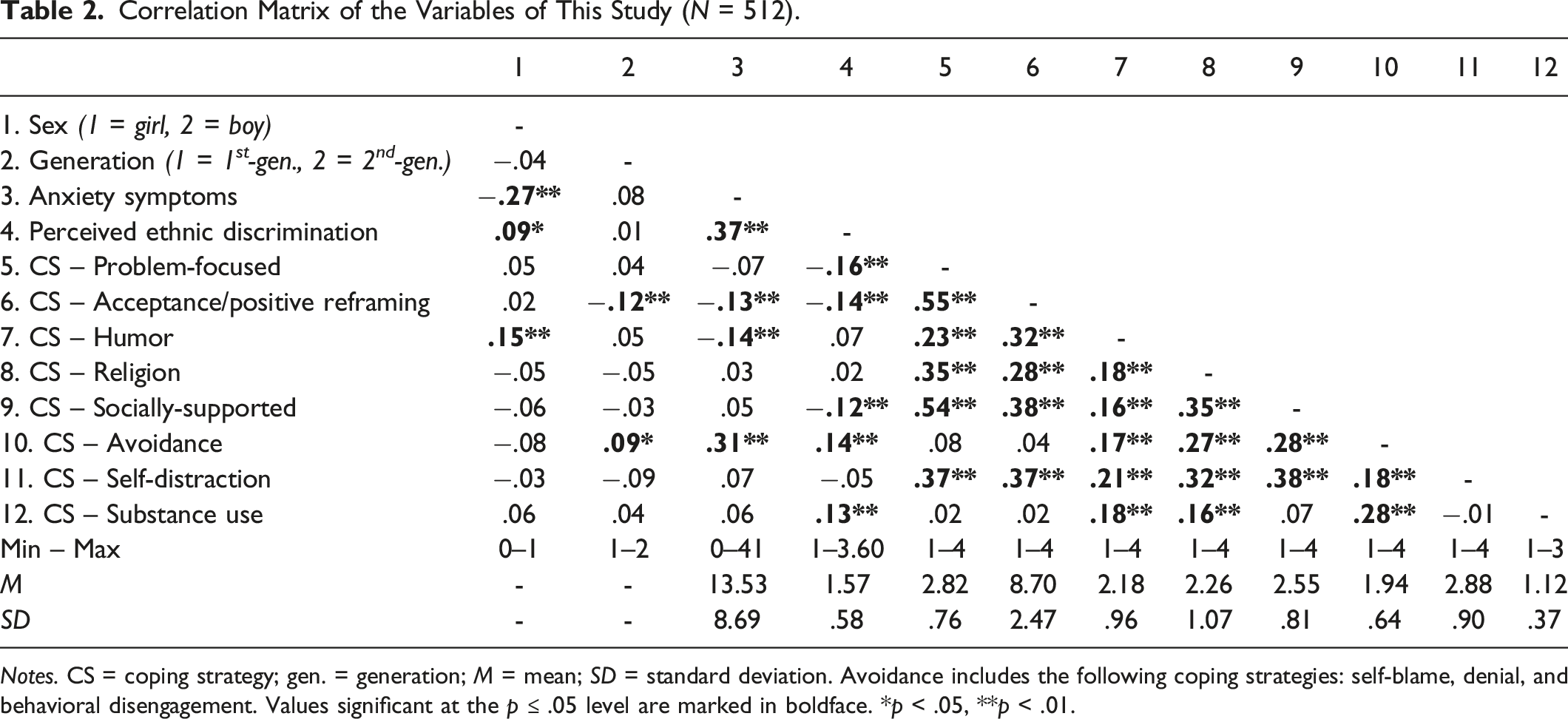
Notes. CS = coping strategy; gen. = generation; M = mean; SD = standard deviation. Avoidance includes the following coping strategies: self-blame, denial, and behavioral disengagement. Values significant at the p ≤ .05 level are marked in boldface. *p < .05, **p < .01.
Moderation Model
Moderating Effect of the Different Types of Coping Strategies on the Association Between Ethnic Discrimination and Anxiety Symptoms.
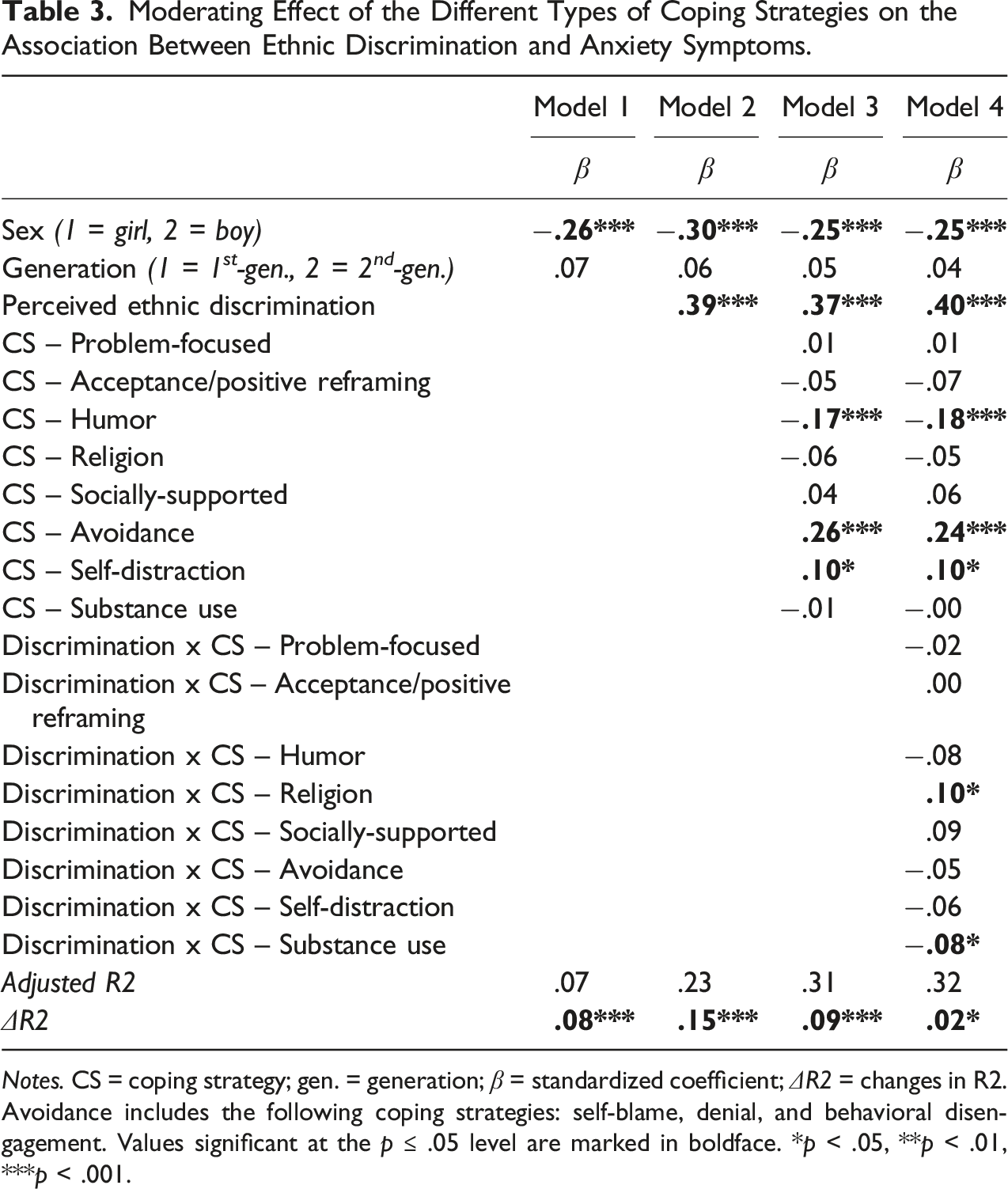
Notes. CS = coping strategy; gen. = generation; β = standardized coefficient; ΔR2 = changes in R2. Avoidance includes the following coping strategies: self-blame, denial, and behavioral disengagement. Values significant at the p ≤ .05 level are marked in boldface. *p < .05, **p < .01, ***p < .001.
The second model incorporated the independent variable (i.e., ethnic discrimination) and was also significant (F (1, 508) = 100.97, p < .001). This model explained 22.5% of the variance in anxiety symptoms, an increase of 15.3 percentage points over the previous model. Perceived ethnic discrimination was significantly and positively associated with anxiety symptoms (p < .001). Thus, participants who reported experiencing more ethnic discrimination also reported more anxiety symptoms. There was no significant association between generation of immigration and anxiety symptoms.
The third model included the moderating variables (i.e., coping strategies) and was also significant (F (8, 500) = 8.51, p < .001). This model explained 30.7% of the variance in anxiety symptoms, an increase of 9.2 percentage points over the previous model. First, humor was significantly and negatively associated with anxiety symptoms (p < .001). More specifically, those who reported using humor reported fewer anxiety symptoms. In addition, avoidance (p < .001) and self-distraction (p < .05) were significantly and positively associated with anxiety symptoms. Thus, in keeping with past research among non-immigrant youth, adolescents with an immigrant background who reported using avoidance and self-distraction more often also reported more anxiety symptoms. Generation of immigration was not significantly associated with anxiety symptoms.
Finally, the fourth model integrated the interaction effects. This model was significant (F (8, 492) = 1.93, p < .05) and explained 31.7% of the variance in anxiety symptoms, an increase of 2.1 percentage points over the previous model. The f-squared effect size was .015, indicating a modest moderation effect (Cohen, 1992). As presented in Table 3, the interaction effects between ethnic discrimination and religious coping (p < .05) and substance use (p < .05) strategies were significant. These significant interaction effects were decomposed and interpreted to compare adolescents with low and high frequencies (x̄ +/− one standard deviation) of these types of coping strategies.
Religious coping and substance use as coping strategies at high and low frequency had a significant and positive moderation effect on the association between ethnic discrimination and anxiety symptoms. As presented in Figure 1, more frequent religious coping was related to a greater increase in the association between ethnic discrimination and anxiety symptoms. Concretely, this association was stronger when religious coping was used more frequently. In adolescents who reported more frequent ethnic discrimination, turning more often towards religious coping was associated with more anxiety symptoms. In those who reported less frequent ethnic discrimination, turning towards religious coping more often was associated with fewer anxiety symptoms. Association between religious coping and ethnic discrimination to predict anxiety symptoms.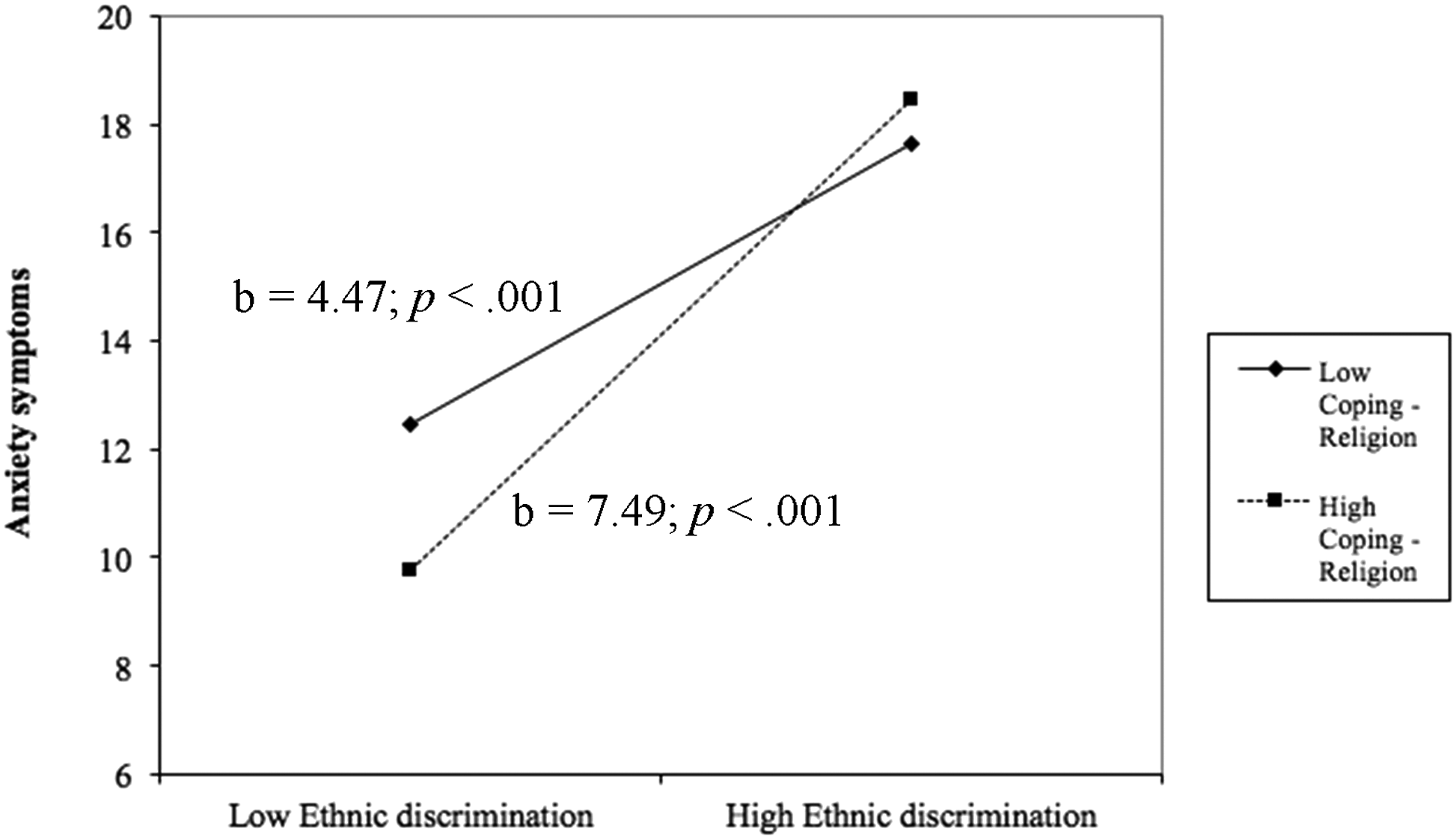
As for substance use (Figure 2), the association between discrimination and anxiety was stronger for adolescents who reported lower substance use than for those who reported higher substance use. Thus, among adolescents who reported more frequent ethnic discrimination, those who used substances less frequently had more anxiety symptoms than those who used substances more frequently. Among adolescents who reported less frequent ethnic discrimination, those who used substances more frequently had more anxiety symptoms than those who used substances less frequently. Association between substance use and ethnic discrimination to predict anxiety symptoms.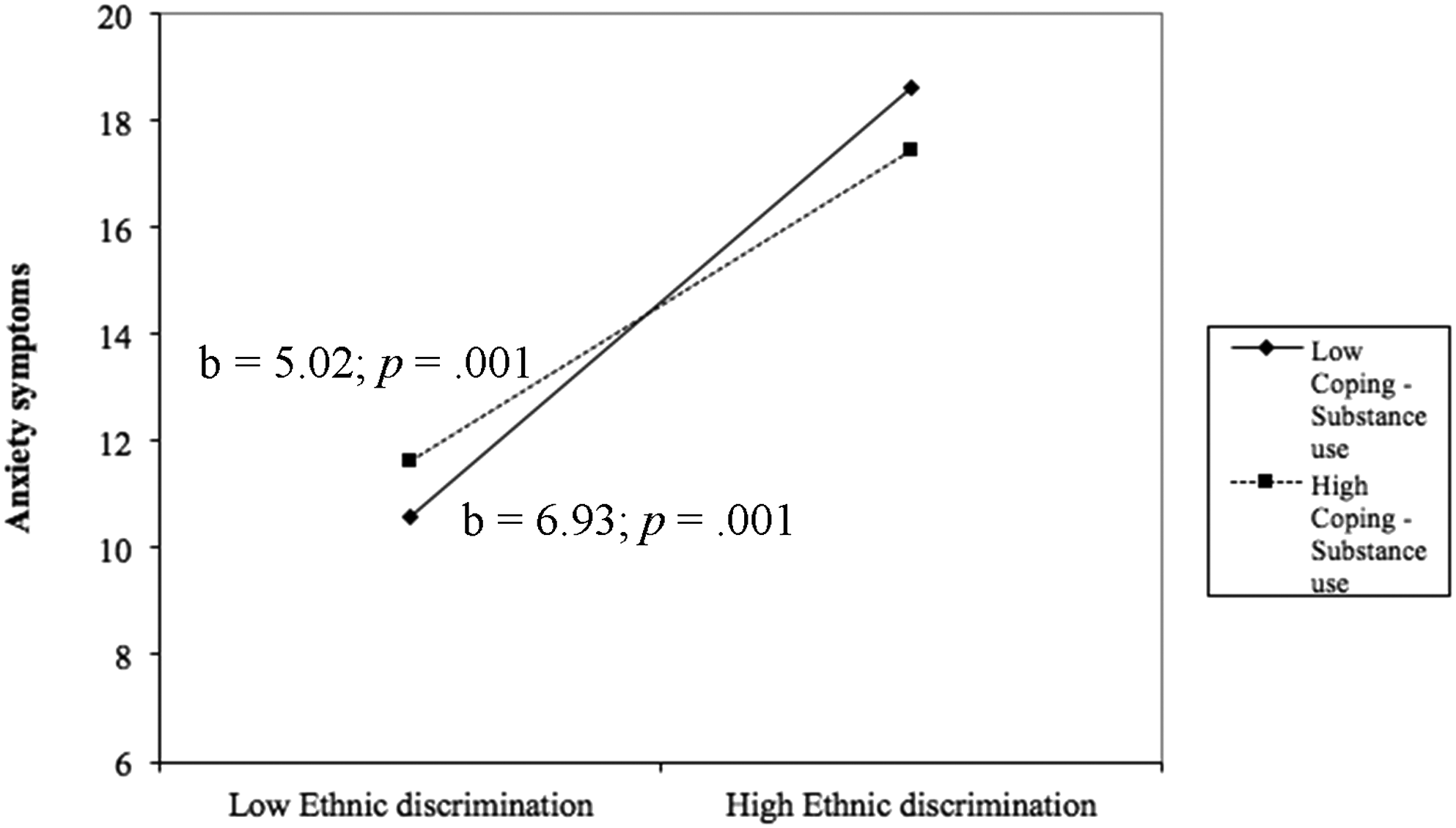
Discussion
The aim of this study was to document the use of coping strategies by early adolescents with an immigrant background in the context of ethnic discrimination. The objective was to identify which coping strategies moderated the association between ethnic discrimination and self-reported anxiety symptoms. Findings from this study suggested that the coping strategies that had a moderating effect on the association between ethnic discrimination and anxiety symptoms were religious coping and substance use.
Association Between Ethnic Discrimination and Anxiety Symptoms
The results revealed that ethnic discrimination was associated with higher levels of anxiety symptoms in early adolescents with an immigrant background living in Québec, which corroborates previous findings in the literature (Benner et al., 2018; Priest et al., 2013; Suarez-Morales & Lopez, 2009; Weeks & Sullivan, 2019). The more adolescents reported that people thought about or acted differently towards them because of their ethnicity (e.g., giving them a lower grade than they deserved or treating them as though they were not smart), the more they reported anxiety symptoms (e.g., worrying about their future, ruminating about past events, accelerated heartbeat, feeling weak and shaky). It therefore seemed important to document the extent to which youth experiencing discrimination use various coping strategies and to assess whether these strategies help to reduce the impacts of discrimination on anxiety.
Moderation Effect of Coping Strategies on Ethnic Discrimination and Anxiety Symptoms
We hypothesized, based on previous findings among young adults (i.e., college and university students) with immigrant backgrounds, that coping strategies such as problem-focused coping (i.e., active coping and planning) and emotion-focused strategies (i.e., positive reframing, acceptance, humor, religious coping) would be associated with lower levels of anxiety symptoms in the context of ethnic discrimination (Ahmed et al., 2011; Carlson & Grant, 2008; Villegas-Gold & Yoo, 2014). Based on the findings in those studies, we also hypothesized that coping strategies such as avoidance (i.e., self-blame, denial, behavioral disengagement, self-distraction, and substance use) would be associated with more anxiety symptoms among those reporting ethnic discrimination experiences. In the present study, the findings suggested that the coping strategies that had a moderating effect on the association between ethnic discrimination and anxiety symptoms were religious coping and substance use. However, it is important to highlight that the results indicated a modest moderation effect, meaning that these strategies may have a subtle effect on the relation between ethnic discrimination and anxiety.
Religious Coping
Results revealed that religious coping significantly moderated the relationship between ethnic discrimination and anxiety symptoms. Among adolescents who reported less frequent ethnic discrimination, more frequent use of religious coping was associated with lower levels of anxiety symptoms. Conversely, among those who reported more frequent ethnic discrimination, more frequent use of religious coping was associated with more anxiety symptoms. Adolescents who reported more frequent ethnic discrimination who used religious coping more frequently appeared to be slightly more affected by discrimination than those who used less religious coping. In other words, results suggest that, among adolescents who reported more frequent ethnic discrimination, those who found more comfort in their religious beliefs and spirituality reported more worries and physiological symptoms of anxiety than those who did not adopt this type of coping strategy. Thus, religious coping appeared to be more effective in reducing anxiety symptoms among those reporting fewer encounters of ethnic discrimination and less effective among those experiencing frequent ethnic discrimination.
It could also be that those adolescents who reported more anxiety symptoms sought comfort more often in religion, but that this may not have been enough to counteract the severity of the discrimination they were experiencing. These findings could be explained by the fact that early adolescents are juggling between better understanding both their ethnic and religious identities (Tineo et al., 2021). These efforts at synthesizing different identities into one coherent identity can be hindered by experiences of ethnic discrimination, which could be associated with incongruencies and internal conflicts that could intensify psychological symptoms such as anxiety (Jankowski et al., 2020). Trying to be faithful to their religious and cultural beliefs while dealing with the pressure of integrating into the mainstream culture and facing ethnic discrimination because of their religious beliefs could lead to intense internal conflicts (Tineo et al., 2021). Discrimination based on religious beliefs and/or ethnic identity has been shown to be associated with negative impacts on mental health and well-being (Lanier et al., 2017; Tineo et al., 2021; Wang, 2021). Thus, religious coping could present an additional challenge for first- and second-generation adolescents undergoing identity development while facing frequent ethnic discrimination, which could lead to higher levels of anxiety (Tineo et al., 2021).
Despite these possible explanations, future studies should provide more nuance by examining different types of religious coping, such as positive religious coping (i.e., perceiving God to be a source of support during challenging situations) and negative religious coping (i.e., questioning God’s power or feeling abandoned by God). Comparing the relative and unique contributions of each type could lead to a better understanding of the impacts of using religion to cope with ethnic discrimination (Giordano et al., 2017). Differences in the types of religious coping (positive or negative) used or the degree to which religion is practiced (e.g., exhibiting visible signs of one’s beliefs) could lead to differences in the association between ethnic discrimination and psychological symptoms such as anxiety or depression. These associations should also be explored longitudinally to understand whether increased religious coping leads to more anxiety symptoms among adolescents facing frequent discrimination.
Substance Use
The results also suggested that substance use as a coping strategy moderated the association between ethnic discrimination and anxiety symptoms. More specifically, adolescents who reported less frequent ethnic discrimination and consumed substances more frequently had more anxiety symptoms than those who consumed less frequently. Conversely, those who encountered more ethnic discrimination and consumed less frequently had more anxiety symptoms than those who consumed more frequently. The relationship between ethnic discrimination and anxiety symptoms was further strengthened when substances were consumed less frequently. In other words, the relationship between ethnic discrimination and anxiety was slightly weaker for those who used more substances, but the discrimination–anxiety association was still strong and positive.
Although the moderating effect of substance use was modest, these results are surprising, given that substance use during adolescence has been linked with adverse long-term effects, such as neurodevelopmental impacts (e.g., decrease in regional grey matter volumes, deficit in functional connectivity), social issues, violence, mental health disorders (e.g., anxiety, depression), substance dependence, and poorer physical and psychological health in adulthood (Esmaeelzadeh et al., 2018; Patrick et al., 2020). Substance use as an “escape” is more probable when someone perceives themselves as having little control over the outcomes of a stressor (Boals et al., 2011). In fact, given the ambiguity, unpredictability, and uncontrollability of ethnic discrimination, it has usually been associated with a lower sense of control, which is considered a vulnerability factor for psychological distress such as anxiety symptoms (Broman et al., 2000; Gallagher et al., 2014). This study did not measure adolescents’ sense of control regarding ethnic discrimination events, but it would be interesting if future studies addressed the impact it could have on the use of different coping strategies to deal with ethnic discrimination.
The results from this study showed different levels of moderation effect of substance use on the relationship between ethnic discrimination and anxiety symptoms. The results showed that, among adolescents who reported more frequent ethnic discrimination, higher substance use alleviated anxiety symptoms but the discrimination–anxiety association was still strong and positive. Based on a cross-sectional design, this study suggests that using substances to avoid thinking about repeated painful experiences of discrimination could be effective in reducing anxiety for a short time. This is particularly the case for early adolescents, who generally have greater emotional reactivity and engage in reward-seeking behaviors (Volkow & Boyle, 2018). The short-term reward of substance use fosters a set of beliefs about its utility as a means of reducing stress, which in turn could lead to more substance use to escape or avoid negative feelings when facing ethnic discrimination (Martin et al., 2003). This short-term reward of anxiety reduction could be a potential risk factor for the development of substance use disorder (Kushner et al., 2000). Avoidance strategies are known to reduce distress in the short term but can also hinder long-term adjustment if the stressor persists (Stephenson & DeLongis, 2020). Thus, it would be interesting to look at what effect substance use as a coping strategy might have on the relationship between ethnic discrimination and anxiety over the long term.
Coping Strategies Not Associated With Anxiety Symptoms When Facing Ethnic Discrimination
In this study, problem-focused, emotion-focused, and socially-supported coping strategies did not significantly moderate the association between ethnic discrimination and anxiety symptoms.
A possible explanation for the absence of significant results for these strategies in this study, in comparison with previous studies among young adults, could be that some types of coping strategies are used less frequently in early adolescence than in adulthood because they involve more complex cognitive and emotional processes (Compas et al., 1993, 2017).
Certain types of coping strategies may not have had a significant moderating effect because of their poor efficacy or complexity when dealing with ethnic discrimination. More specifically, the complexity involved in problem-focused coping strategies such as active coping and planning (e.g., forming a plan to report a discriminatory event, getting informed about possible options after the incident, developing a strategy, or planning how to resolve the conflict) may make them difficult for early adolescents to use. This difficulty is compounded by the reality that ethnic discrimination is part of a broader systemic issue. Indeed, a study among Canadian immigrant youth showed that most tended to employ less confrontational approaches when dealing with ethnic discrimination (Kubiliene et al., 2015).
Another possibility is that the low sense of control that adolescents may have felt over the experiences of ethnic discrimination could have influenced their choice of certain types of coping strategies. For example, problem-focused and socially-supported coping strategies are usually used to face situations where a higher sense of control is reported (Broman et al., 2000; Scott & House, 2005).
As for socially-supported strategies, the results revealed no significant moderating effect on the association between ethnic discrimination and anxiety symptoms. Some studies among adolescents from an immigrant background have reported lower levels of social support (e.g., Oppedal & Røysamb, 2004). Adolescents may turn less frequently to social support as a coping strategy when facing ethnic discrimination if social support is poorly available or absent. Therefore, the source, quality, and availability or nonavailability of social support may be important factors to consider (Ajrouch et al., 2010). Furthermore, in the present study, venting did not moderate the association between ethnic discrimination and anxiety symptoms. While venting can be helpful, it can also exacerbate negative emotions and lead to unhelpful thoughts and behaviors (Malooly et al., 2017).
In contrast to substance use, the other avoidance strategies (self-blame, denial, behavioral disengagement, self-distraction) did not significantly moderate the association between ethnic discrimination and anxiety symptoms. These results are similar to those obtained by Brittian and colleagues (2013), who found that avoidance strategies did not significantly moderate the association between ethnic discrimination and internalizing symptoms in adolescents with an immigrant background.
The use of acceptance and positive reframing as coping strategies had no significant effect on the relationship between ethnic discrimination and anxiety symptoms. It is possible that accepting and learning to live with the situation or looking for the positive in a difficult experience is not sufficiently effective in reducing anxiety symptoms linked to ethnic discrimination.
Implications
In this study, the findings on substance use as a coping strategy suggest that first- and second-generation immigrant adolescents may wish to avoid immediate negative feelings and consequently seek short-term relief of their anxiety symptoms. Knowing the biopsychosocial long-term adverse effects of substance consumption and abuse in adolescence, the results of this study underscore the need for professionals working with this population to educate early adolescents about effective coping resources to alleviate the psychological impacts of ethnic discrimination in the long term. As well, for professionals working with adolescents from immigrant backgrounds, these results underscore the importance of recognizing religion or spirituality as an important and valid coping strategy. The preliminary results from this study could be useful to mental health professionals and researchers in developing and implementing interventions to reduce the negative impacts of ethnic discrimination on anxiety symptoms, particularly interventions that involve promoting or dissuading the use of certain types of coping strategies (e.g., Marraccini et al., 2022). At the same time, these professionals and researchers need to actively promote essential measures to reduce ethnic discrimination, such as education programs and zero-tolerance policies.
Limitations and Strengths
Certain limitations must be kept in mind when considering the findings of this study. Because the research design was cross-sectional and thus did not consider the temporal sequence, it is not possible to untangle the direction of the association between ethnic discrimination, coping strategies, and anxiety symptoms, which limits internal validity. It is also important to note that the dispositional version of the Brief COPE used for this study measured strategies used in general, and not specifically in the context of ethnic discrimination. Furthermore, the instrument structure itself is culturally determined (e.g., the importance given to problem-focused coping vs. denial, which is highly valued in some cultures), and some coping strategies used in other cultures may not be represented in this instrument (e.g., trying to fit in, collectivistic coping) (Byrd, 2012; Gaylord-Harden & Cunningham, 2009; Lewis-Coles & Constantine, 2006). The fact that the questionnaires were administered in French only represents another limitation of this study. Also, several variables would have been interesting to control but we were unable to do so due to the lack of statistical power (e.g., region of origin of participants, schools of the participants). It is also important to consider with caution the results obtained for substance use, as the Spearman-Brown coefficient was lower than .70 (rSB = .56), although this is still acceptable given that it is a 2-item scale (Eisinga et al., 2013).
A primary strength of this study lies in its contribution to knowledge on coping strategies associated with higher and lower levels of anxiety among first- and second-generation early adolescents from immigrant backgrounds in the context of ethnic discrimination. Literature on the impacts of ethnic discrimination is abundant, but ways to reduce these impacts are understudied. Another strength of this study is the use of validated instruments to measure variables of interest. With regard to sample representativity, the large sample size and the inclusion of adolescents from socioeconomically diverse schools and cities around Montreal (Canada) and from a diversity of ethnic backgrounds allows for better generalization of the results to other settings.
Future Directions
While the diversity of the adolescents’ ethnic backgrounds allows for a relative generalizability of the results, replicating this study in different settings or with participants from specific ethnic groups would offer a more nuanced approach, as culture can influence the use of different coping strategies as well as the type, intensity, and frequency of ethnic discrimination (Byrd, 2012; Gaylord-Harden & Cunningham, 2009; Lewis-Coles & Constantine, 2006). Thus, future studies could also take into consideration culturally relevant coping strategies (Gaylord-Harden & Cunningham, 2009). The finding that religious coping was effective in reducing anxiety symptoms when facing less frequent ethnic discrimination, but less effective when ethnic discrimination was more frequent, suggests the need for further research on the association between different types of religious coping and ethnic discrimination to better understand how coping strategies moderate anxiety symptoms in these situations. In addition, longitudinal studies would improve knowledge about the long-term impacts of coping strategies on the association between ethnic discrimination and anxiety symptoms, as well as about the direction of this association. To improve the well-being of first- and second-generation immigrant adolescents and limit the impacts of ethnic discrimination, studies on effective coping program development and implementation would be beneficial.
Conclusion
Early adolescence is a critical period of development characterized by various biopsychosocial changes. Unfortunately, adolescents with an immigrant background face additional challenges, such as ethnic discrimination, which has important impacts on mental health. Dealing with such challenges can foster resilience. However, little is known on how adolescents with an immigrant background cope with ethnic discrimination. The results of this study add to the current literature by highlighting the detrimental impacts of ethnic discrimination on mental health in early adolescents with an immigrant background and focusing on how coping strategies are used to alleviate or perpetuate these negative impacts. This study aimed to add to the body of knowledge on the concrete strategies that first- and second-generation immigrant adolescents use to alleviate anxiety symptoms arising from experiences of ethnic discrimination. The results show the need for more education, aimed at both professionals and adolescents, on the use of effective adaptive coping strategies to alleviate anxiety symptoms in the long term. The findings also suggest that professionals working with adolescents with immigrant backgrounds need to consider religion and spirituality as a possible coping strategy to reduce anxiety when faceing less frequent ethnic discrimination. Ultimately, however, to alleviate this pervasive problem, professionals, policy makers, and society at large must also focus on promoting needed measures to reduce ethnic discrimination.
Supplemental Material
Supplemental Material - Which Coping Strategies Alleviate or Perpetuate Anxiety Symptoms in the Context of Perceived Ethnic Discrimination in Adolescents With an Immigrant Background?
Supplemental Material for Which Coping Strategies Alleviate or Perpetuate Anxiety Symptoms in the Context of Perceived Ethnic Discrimination in Adolescents With an Immigrant Background? by Sophie St-Pierre, Kristel Tardif-Grenier, and Amy K. Marks in The Journal of Early Adolescence
Footnotes
Declaration of Conflicting Interests
The author(s) declared no potential conflicts of interest with respect to the research, authorship, and/or publication of this article.
Funding
The author(s) disclosed receipt of the following financial support for the research, authorship, and/or publication of this article: This work was supported by the Fonds de Recherche du Québec-Société et Culture (2018-NP-205005), Institut Universitaire Jeunes en Difficulté (IUJD).

Supplemental Material
Supplemental material for this article is available online.
Author Biographies
References
Supplementary Material
Please find the following supplemental material available below.
For Open Access articles published under a Creative Commons License, all supplemental material carries the same license as the article it is associated with.
For non-Open Access articles published, all supplemental material carries a non-exclusive license, and permission requests for re-use of supplemental material or any part of supplemental material shall be sent directly to the copyright owner as specified in the copyright notice associated with the article.
