




Abstract
This brief report explores the associations of interpersonal strengths with subjective well-being and psychological flourishing among high-ability adolescents (M = 13.08, SD = 2.17) in Hong Kong during the COVID-19 pandemic outbreak. It also examines the indirect effects of strengths on well-being outcomes via satisfaction of basic psychological needs at school. Results demonstrated that love and leadership served as the most robust predictors of basic psychological needs satisfaction. Love was consistently associated with higher well-being outcomes. Whereas leadership was linked to higher levels of satisfaction with all dimensions of basic needs, this strength was related to lower levels of emotional well-being. Further, love, social intelligence, leadership, and kindness had indirect effects on life satisfaction, positive emotions, and flourishing via the satisfaction of basic needs for autonomy, relatedness, and competence. This research showcases the mental health benefits of selected interpersonal strengths during the pandemic outbreak.
Emergence of the coronavirus disease 2019 (COVID-19) pandemic has incurred not only physical health risks, but also mental health hazards in various societies. Recent literature (Wang et al., 2020) has emphasized how this pandemic situation can cause detrimental impacts on children and adults. The growing concern on the psychological risks associated with the COVID-19 pandemic underscores the significance of exploring psychological resources that facilitate optimal mental health functioning during this unprecedented time. This study focuses on exploring the role of character strengths in well-being outcomes among Chinese adolescents in Hong Kong.
Character strengths are trait-like positive traits that contribute to achievement of happiness and optimal psychological health (Peterson & Seligman, 2004). Specifically, strengths such as love (Blanca et al., 2017; Kretzschmar et al., 2022; Park & Peterson, 2006), kindness (Liu et al., 2022), social intelligence (Ruch et al., 2014), leadership (Toner et al., 2012), teamwork (Liu et al., 2022), and humor (Ruch et al., 2014) were associated with greater well-being outcomes. There is also evidence showing how other-oriented strengths (e.g., kindness, modesty, and team work) have been linked to lower depression in adolescents (Gillham et al., 2011). In addition, some studies have shown that specific strengths matter for effective learning such as fairness (Park & Peterson, 2006), teamwork (Wagner et al., 2020), social intelligence (Wagner & Ruch, 2015), and gratitude (Datu & Mateo, 2020). These findings indicate that character strengths might facilitate well-being and learning in children and adolescents.
However, there are key issues that remained unaddressed in the character strength literature. First, although there is evidence showing how interpersonal forms of strengths such as kindness, fairness, teamwork, modesty, and leadership are associated with well-being outcomes (Brdar & Kashdan, 2010; Ruch et al., 2014; Wagner & Ruch, 2015), these investigations primarily concentrated on children and adolescents before the COVID-19 pandemic. Second, whereas a recent research (Umucu et al., 2021) has demonstrated the protective role of character strengths in individuals with chronic disabilities, this research recruited a sample of young adults in the United States during the COVID-19 pandemic. Thus, results have limited implications for understanding how individual character strengths may relate to mental health outcomes in adolescents in non-WEIRD (Western, educated, industrialized, rich, and democratic; Henrich et al., 2010) contexts. Third, as the social distancing measures to prevent the spread of COVID-19 has caused limitations in the everyday social activities of students across the globe, it is interesting to explore how character strengths which entail some forms of interpersonal interactions might protect them against the COVID-19 psychological hazards. Fourth, as Hong Kong is considered a context with strong collectivist values (Hofstede Insights, 2020), it is likely that interpersonal strengths might operate as essential resources to cope with the current pandemic situation.
Therefore, this study explores the association of interpersonal character strengths with subjective well-being and flourishing among adolescents in Hong Kong. Guided by the engine-model-of-well-being (Jayawickreme et al., 2012) which emphasizes the importance of internal and external factors (inputs) in shaping positive outcomes (outcomes) by facilitating positive internal states (process) that potentially shape behaviors and actions, this research hypothesizes that intrinsic psychological resources such as interpersonal character strengths might indirectly relate to well-being outcomes via promoting positive psychological processes such as fulfilment of basic psychological needs for autonomy, relatedness, and competence, as satisfying such fundamental needs have been linked to optimal psychological functioning (Ryan & Deci, 2017; Tian, Chen, & Huebner, 2014). In this study, we specifically focus on how strengths relate to well-being via basic needs satisfaction at school as studies have shown that satisfying these domain-specific needs were not only linked to subjective well-being (Tian, Han, & Huebner, 2014; 2016), but also effective learning outcomes such as achievement (Wang et al., 2019; Zhou et al., 2021) in Chinese adolescents. Figure 1 represents the hypothesized conceptual model of this investigation. Conceptual model demonstrating the associations among interpersonal strengths, needs satisfaction, and well-being outcomes.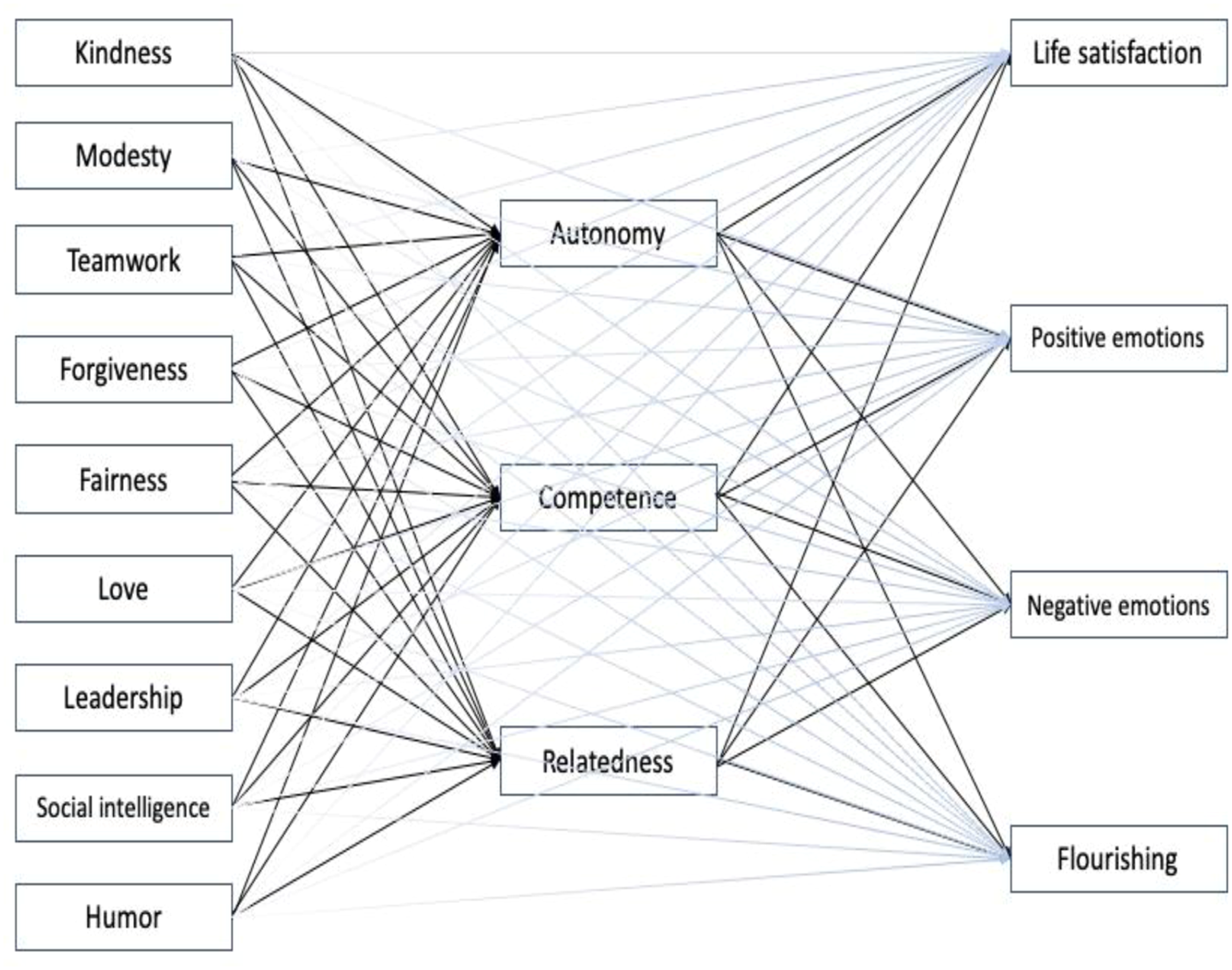
Methods
Participants and Procedures
A total sample of 580 high-ability adolescents (n primary = 204, n high school = 376) was recruited via a convenience sampling approach. Specifically, the second author invited primary and secondary school students who are enrolled in some programs in the Hong Kong Academy of Gifted Education. The participants’ average age was 13.08 with a standard deviation of 2.17. The sample comprised 284 girls, 290 boys, and 6 participants with other gender orientation. There were 203 primary school students (nprimary4 = 1, nprimary5 = 52, nprimary6 = 150) and 374 secondary school students (nsecondary1 = 86, nsecondary2 = 69, nsecondary3 = 68, nsecondary4 = 67, nsecondary5 = 42, nsecondary6 = 42) who participated in this study. Three students failed to indicate their year levels. Prior to administering an online survey with measures on selected strengths and well-being outcomes using a licensed version of Qualtrics software, ethical review application was approved in both institutions. Active consent forms were distributed to participants and their parents to ensure that students voluntarily agreed to participate in this study. Data collection took place in December 2020, a period in which face-to-face classes were temporarily suspended due to the COVID-19 pandemic situation in Hong Kong.
Measures
Interpersonal strengths. To assess the participants’ interpersonal strengths such as kindness, modesty, teamwork, forgiveness, fairness, love, leadership, social intelligence, and humor, we used the subscales measuring such traits in the Values-in-Action Inventory (Park & Peterson, 2006). There were 3 items in each subscale of interpersonal character strength. The Cronbach’s alpha coefficients of the subscales on kindness, modesty, teamwork, forgiveness, fairness, love, leadership, social intelligence, and humor were .75, .73, .80, .83, .80, .92, .74, .80, and .91.
Needs satisfaction at school. The 15-item basic psychological needs satisfaction at school (Tian, Chen, & Huebner, 2014) was used to assess the participants’ perceived fulfilment of the basic psychological needs of autonomy, relatedness, and competence at school. The Cronbach’s alpha coefficients of the subscales on autonomy, competence, and relatedness were .82, .65, and .86.
Subjective well-being. The 9-item Concise Measure of Subjective Well-Being (Suh & Koo, 2011) was used to measure the participants’ perceptions of life satisfaction, positive emotions, and negative emotions. The Cronbach’s alpha coefficients of the subscales on life satisfaction, positive emotions, and negative emotions were .86, .75, and .76.
Flourishing. The 8-item Flourishing Scale (Diener et al., 2010) was used to assess the participants’ perceived social-psychological prosperity. The Cronbach’s alpha coefficient of the scale was .91.
Note that Chinese version of all scales were administered in this study.
Results
Descriptive Statistics and Correlational Coefficients among Interpersonal Character Strengths, Basic Psychological Needs Satisfaction, life Satisfaction, Positive Emotions, Negative Emotions, and Flourishing.
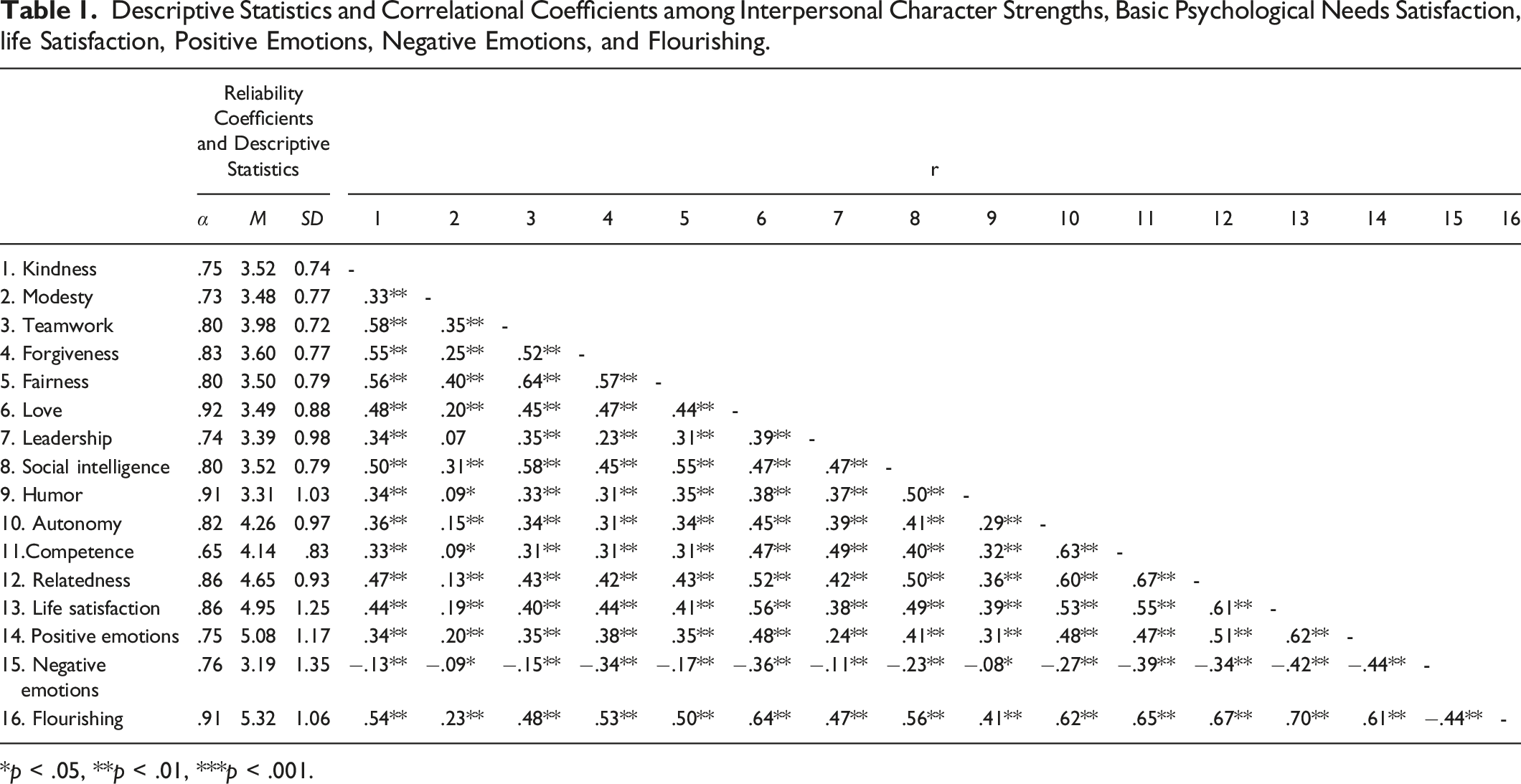
*p < .05, **p < .01, ***p < .001.
To address the main objectives of this study, a path model, which conceptualized all interpersonal strengths as predictors of subjective well-being dimensions and flourishing via all dimensions of school-based needs satisfaction when controlling for gender and year level (i.e., primary and secondary school), was tested. Based on Hair et al.’s (2010) methodological guidelines (i.e., comparative fit index (CFI) greater than .90, and the standardized root mean square residual (SRMR) and root mean square error of approximation (RMSEA) lower than .08), the results of path analysis via maximum likelihood estimation approach using AMOS version 26 showed that the model had a good fit: χ 2 = 64.30, df = 19, p <. 001, CFI = .98, SRMR = .03, and RMSEA = .08 (.06, .10).
Unstandardized and Standardized Regression Coefficients between Interpersonal Strengths and Basic Psychological Needs Dimensions.
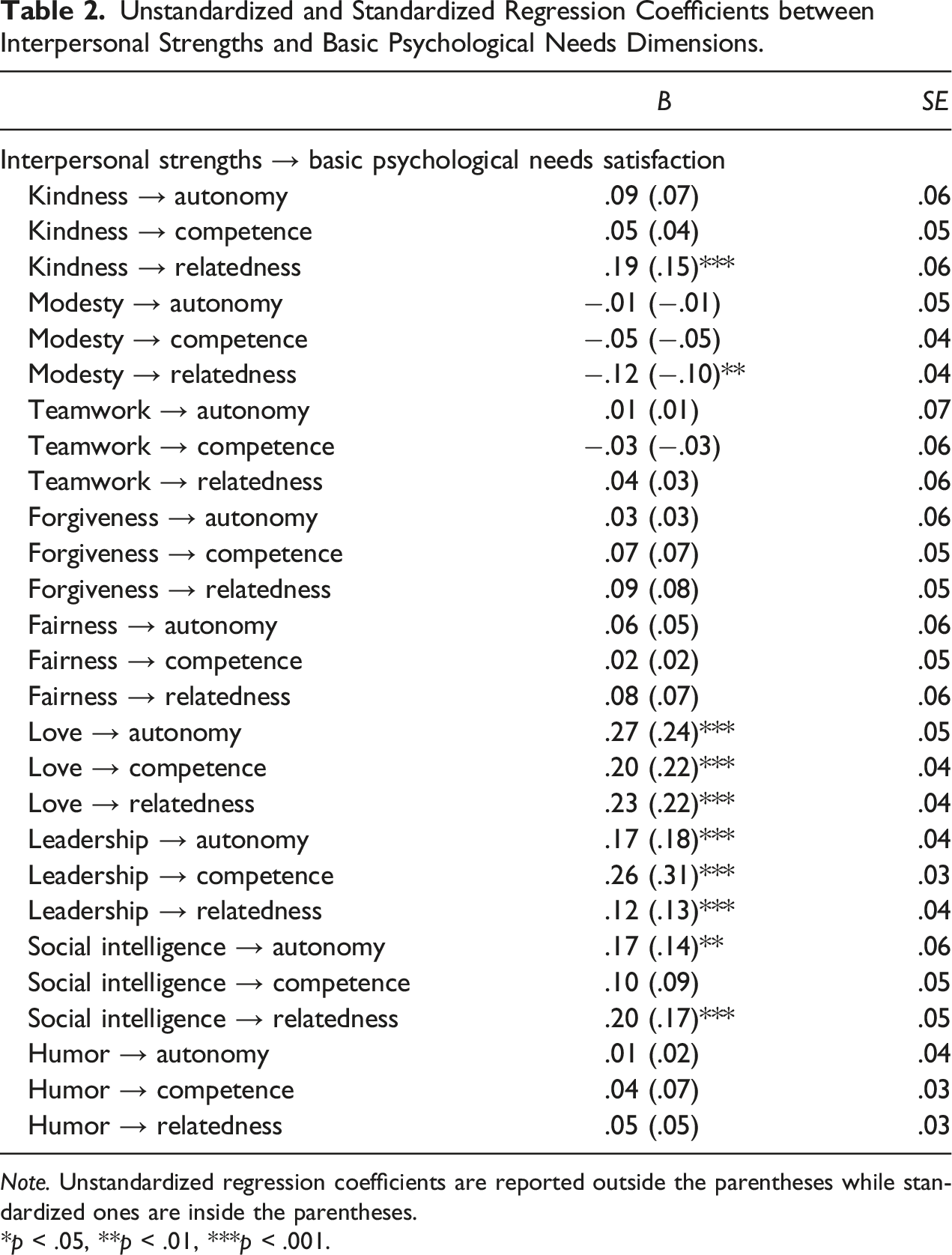
Note. Unstandardized regression coefficients are reported outside the parentheses while standardized ones are inside the parentheses.
*p < .05, **p < .01, ***p < .001.
Unstandardized and Standardized Regression Coefficients between Basic Psychological needs Satisfaction Dimensions and Well-Being Outcomes.
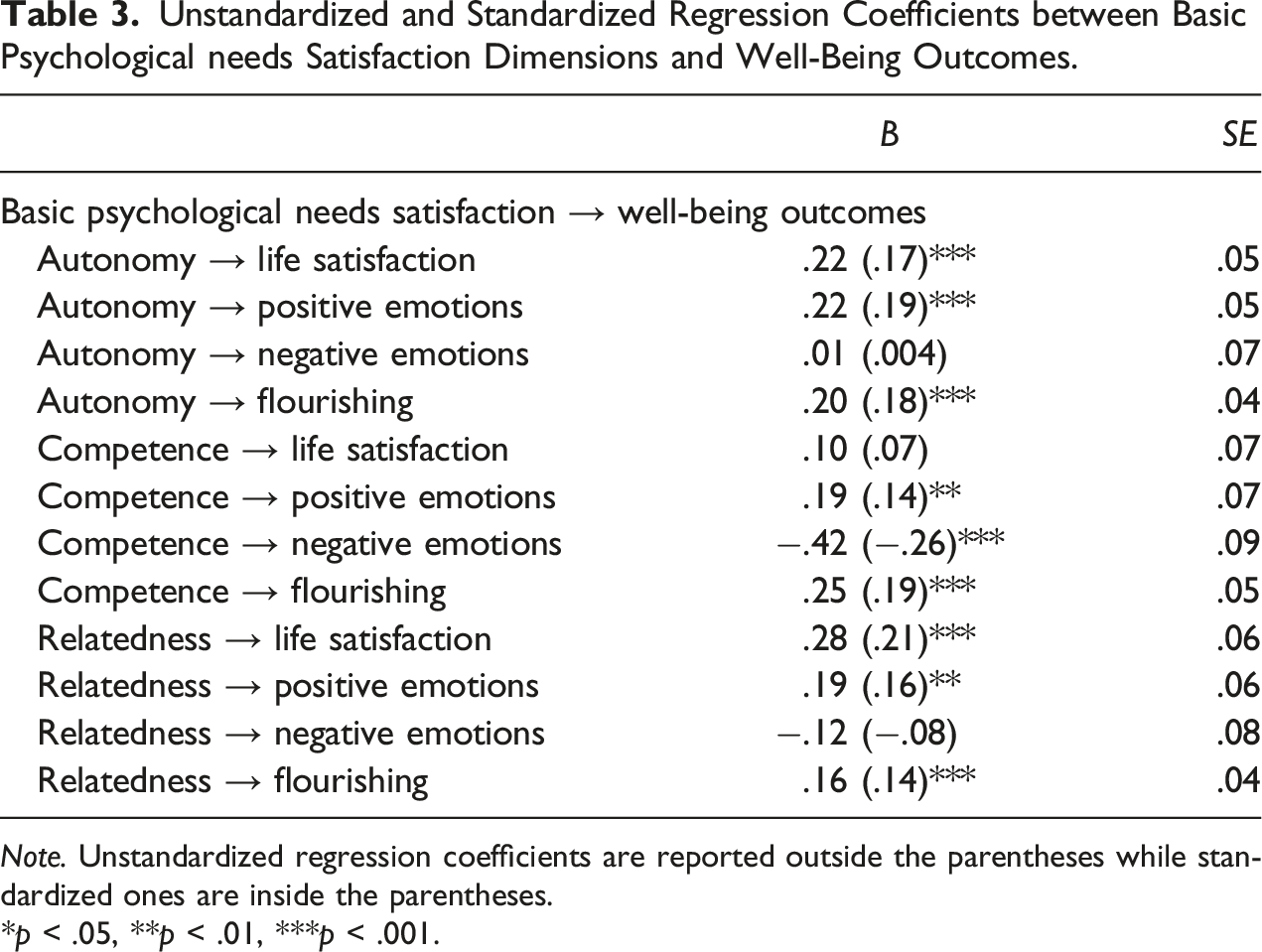
Note. Unstandardized regression coefficients are reported outside the parentheses while standardized ones are inside the parentheses.
*p < .05, **p < .01, ***p < .001.
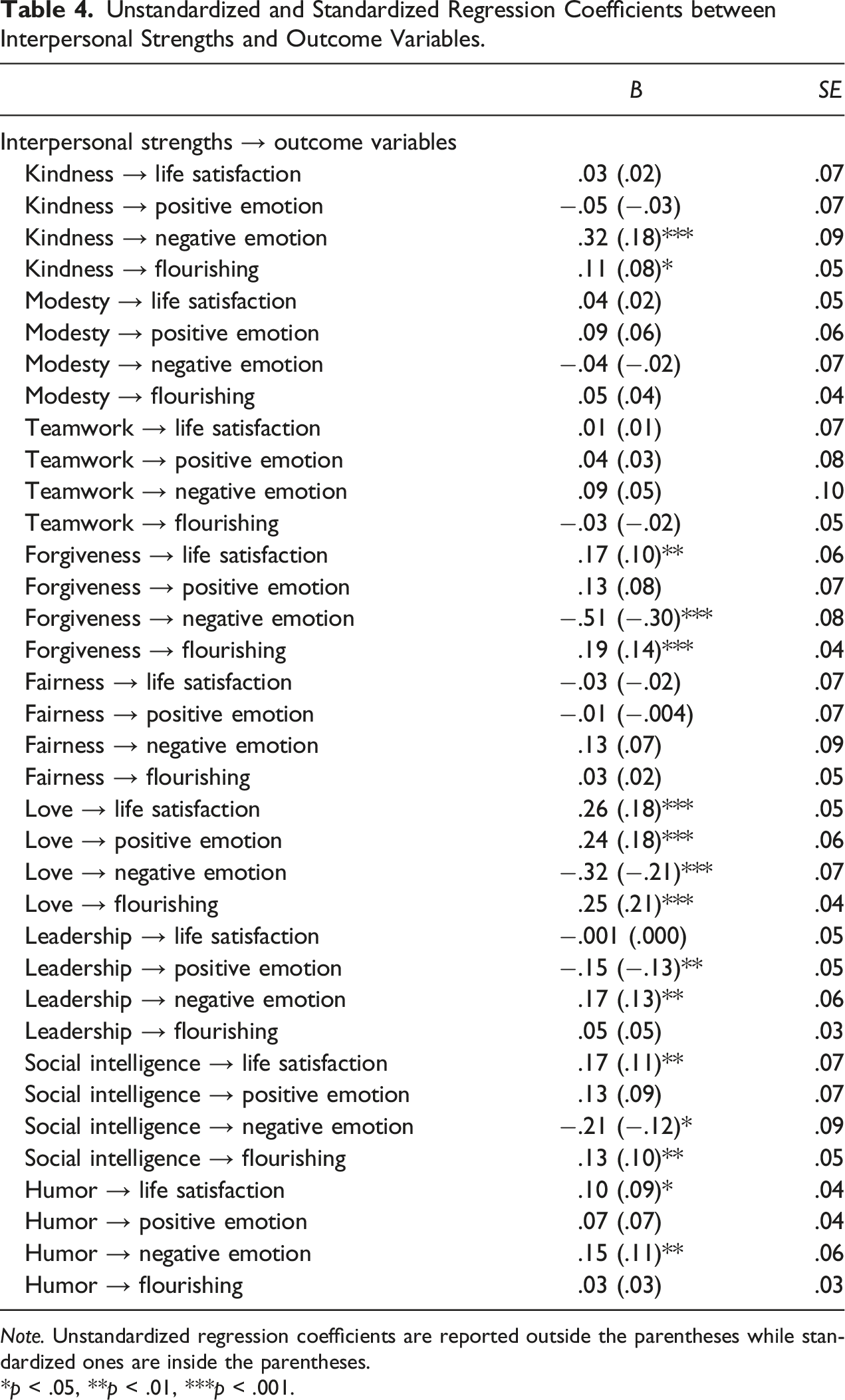
Unstandardized and Standardized Regression Coefficients between Interpersonal Strengths and Outcome Variables.
Note. Unstandardized regression coefficients are reported outside the parentheses while standardized ones are inside the parentheses. *p < .05, **p < .01, ***p < .001.
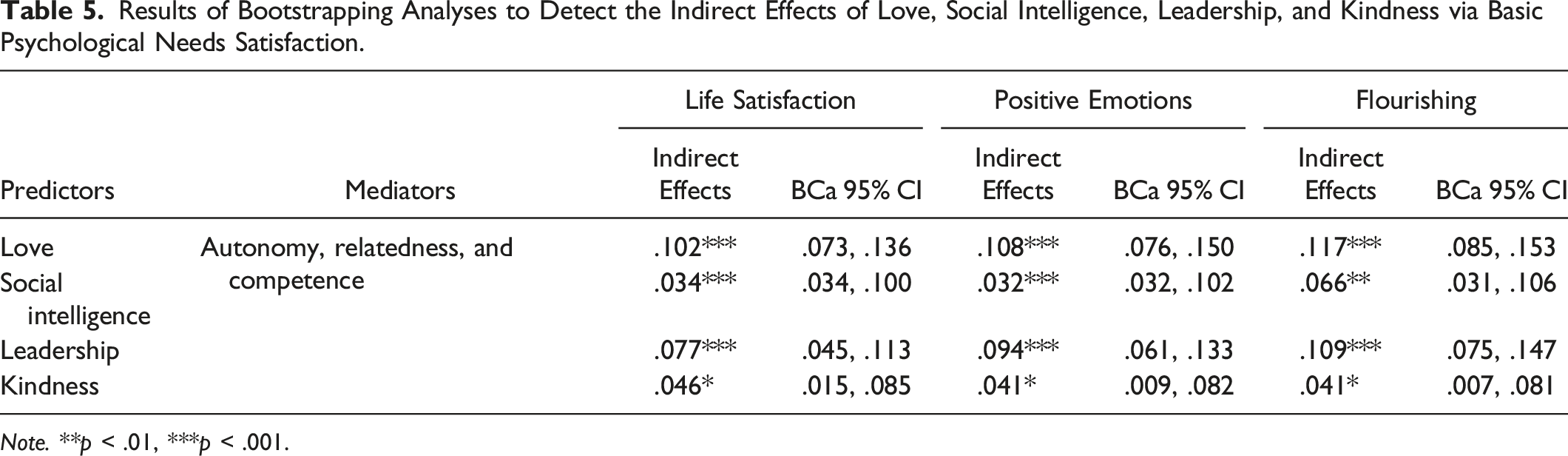
Results of Bootstrapping Analyses to Detect the Indirect Effects of Love, Social Intelligence, Leadership, and Kindness via Basic Psychological Needs Satisfaction.
Note. **p < .01, ***p < .001.
Discussion
Although there is evidence showing how character strengths might matter for mental health outcomes even in the midst of the COVID-19 pandemic among young adults in the US (Umucu et al., 2021), the results may not be generalizable to children and adolescent samples in non-WEIRD societies. This research addresses this gap by exploring the link of interpersonal strengths to subjective well-being and flourishing among adolescents in Hong Kong during the COVID-19 pandemic. Our findings showed that a few strengths relate to school-based basic psychological needs satisfaction and COVID-19 related well-being outcomes.
This research demonstrated that love, social intelligence, and forgiveness were mostly associated with dimensions of subjective well-being and psychological flourishing. These results resemble previous research findings on how specific strengths like forgiveness (Datu & Bernardo, 2020) and broader categories of virtues such as interpersonal character strengths (Brdar & Kashdan, 2010; Park & Peterson, 2006) relate to optimal psychological outcomes in Western societies (i.e., United States). To our knowledge, this research is the first to demonstrate the links of selected interpersonal character strengths and well-being outcomes in adolescents during the COVID-19 pandemic. It is likely that strengths may relate to higher well-being as espousing these strengths can facilitate effective coping strategies (Gustems-Carnicer & Caldéron, 2016) and needs satisfaction (Brdar & Kashdan, 2010).
Interestingly, this investigation has shown mixed evidence on the relationships of leadership, kindness, and humor to well-being outcomes. Whereas leadership was linked to satisfaction of all basic psychological needs at school contexts, this virtue was associated with lower levels of emotional well-being. It is likely that leadership may matter for fulfilment of school-based needs for autonomy, relatedness, and competence as it provides a pathway for cultivating students’ resilience, positive identity, spirituality, and other social, cognitive, and competencies (Lin & Shek, 2019). We speculate that leadership might relate to lower levels of emotional well-being if the additional leadership-related responsibilities and obligations rob opportunities to satisfy basic psychological needs for autonomy, competence, and relatedness. To some extent, this study aligns with prior research that showcases the disadvantageous side of accumulating more social power in collectivist settings (Datu & Reyes, 2015). By contrast, it is possible that a sense of leadership linked to duties that fulfil such basic psychological needs might relate to greater well-being. However, further research is needed to test this hypothesis.
In addition, while kindness was linked to higher satisfaction of basic needs for relatedness, this strength was linked to higher negative emotions, which corroborated prior research findings (Datu & Mateo, 2020). It is plausible that engaging in kind acts might relate to maladaptive outcomes especially if these behaviors do not match one’s personal values or dispositions (Fritz & Lyubomirsky, 2018). For example, individuals with lower tendencies to be extraverted and agreeable are less likely to benefits from activities that require showing concern for others’ welfare.
Further, humor was associated with higher levels of negative emotions. Although this result appears counterintuitive with prior research findings (Kretzschmar et al., 2022; Ruch et al., 2014), there are a few reasons that might help explain these surprising results. Humor may have detrimental effects on well-being especially if one adopts aggressive humor — a type of humor that inflicts humiliation or harm on other people (Kuiper, 2012) —, which relates to poorer well-being outcomes during the COVID-19 pandemic (Reizer et al., 2022). It is also plausible that the tendency to express or perceive funny experience may backfire on individual’s well-being when such activities do not match personality features, constituting person-activity ‘misfit’ (Fritz & Lyubomirsky, 2018).
Modesty was also related to lower levels of fulfilling basic needs for relatedness. It is possible that being humble about one’s accomplishments and acknowledging personal weaknesses may relate to lower fulfilment of such school-based psychological needs as it may potentially distort students capacity to accurately evaluate their strengths and talents. Research also shows that deceptive expression of modesty may lead to maladaptive emotional outcomes (Ashton & Lee, 2008).
Further, this study showed that satisfaction of school-based basic psychological needs for autonomy and relatedness were linked to higher subjective well-being dimensions and flourishing while fulfilment of competence needs were related to higher positive emotions and flourishing. These findings in general, corroborate prior evidence on the mental health and academic gains associated with fulfilling psychological needs satisfaction at school (Tian, Chen, & Huebner, 2014; 2016; Wang et al., 2019). Results also suggest that the indirect effects of love, social intelligence, kindness, and leadership on COVID-19-related well-being outcomes might be potentially mediated by satisfaction of basic psychological needs for autonomy, competence, and relatedness at school. These findings corroborate prior studies on how satisfying these fundamental basic needs might facilitate happiness and optimal psychological functioning (Ryan & Deci, 2017) even during the COVID-19 pandemic outbreak (Cantanero et al., 2021).
Our study has a number of shortcomings. Given that this study was cross-sectional and correlational in nature, its findings hold limited implications on understanding the causal influence of interpersonal strengths on well-being outcomes during the COVID-19 pandemic. Future research can address this through carrying out longitudinal and experimental designs. This research also relied on self-reported data on strengths and well-being so it is important to use alternative approaches (e.g., peer-reported measure of strengths) in measuring these constructs in future research. Caution should be observed when interpreting the associations of strengths and well-being dimensions with satisfaction for basic needs for competence given its relatively low internal consistency coefficient. In addition, as we did not collect data on when the participants completed the survey (e.g., school or home), it is not possible to assess how the mode of survey administration might affect the findings of this study. Given, that we did not collect information on the specific classes in which the participants belong, it is challenging to explore the extent to which classes might contribute to variance in adolescents’ well-being outcomes. Future research may consider collecting this information to assess whether there might be class-related differences in interpersonal strengths and positive psychological functioning. As we recruited adolescents in Hong Kong, findings are not generalizable to students in other non-WEIRD cultural contexts. Future research can address this shortcoming through exploring the benefits of character strengths in other collectivist societies through a cross-cultural design.
Despite these shortcomings, this research is the first of its kind to provide a preliminary evidence on how interpersonal character strengths relate to mental health outcomes among adolescents during the COVID-19 pandemic. It also contributes to the existing character strength literature via demonstrating the mediating effects of fulfilling the basic psychological needs for autonomy, competence, and relatedness on the mental health benefits of love, social intelligence, kindness, and leadership. Given the positive associations of love, social intelligence, and forgiveness with needs satisfaction and well-being, school psychologists and guidance counselors may consider creating online positive psychological interventions that boost such interpersonal strengths. As most dimensions of satisfying basic psychological needs were associated with higher levels of subjective well-being and flourishing, parents and teachers are encouraged to provide opportunities that can fulfil high-ability adolescents’ fundamental needs for autonomy, relatedness, and competence. In general, this research underscores the importance of adopting a strength-based approach in understanding psychological resources that facilitate mental health during the COVID-19 pandemic outbreak.
Footnotes
Declaration of Conflicting Interests
The author(s) declared no potential conflicts of interest with respect to the research, authorship, and/or publication of this article.
Funding
The author(s) received no financial support for the research, authorship, and/or publication of this article.
