




Abstract
The European Roma population faces violence and discrimination, but the causes of their victimisation are not well understood. This study used a multi-theoretical framework to analyse data from a representative sample of 2,913 Roma surveyed in European Union Minorities and Discrimination Survey II. The results showed that police stops perceived as ethnically motivated, exposure to risky situations, and acceptance of violence when insulted predicted physical victimisation and harassment. To reduce victimisation, recommendations include sensitising police officers, diverse police patrols, crime-reduction measures in neighbourhoods, and education on nonviolent communication. Further research is needed to understand other forms of victimisation among the Roma. The study highlights the usefulness of testing multiple risk factors from different criminological theories to address victimisation of the Roma ethnic minority.
Introduction
The victimisation of hard-to-reach vulnerable groups such as ethnic minorities is an understudied topic. Despite the fact that these groups have high risks of being subjected to both hate-motivated crimes and crimes not motivated by hate, they are less likely to seek victim assistance (Briones-Vozmediano et al., 2021; European Union Agency for Fundamental Rights, 2016; IRES, 2019; Lockwood and Cuevas, 2022; Lusky-Weisrose et al., 2021; McCart et al., 2010). In Europe, the Roma 1 are historically one of the ethnic minorities that have experienced the most heinous persecution and trauma (Powell and Lever, 2017; Rothea, 2007). In the past, they have been enslaved – in Romania, for example – and subjected to unethical scientific experiments, followed by persecution at the hands of the Nazis, which included forced sterilisation and extermination in concentration camps, among other things (Fraser, 1995). Even though their protection has substantially improved since, they continue to be in many ways the target of hate crimes and discrimination (Barker, 2017; European Commission et al., 2014; James, 2014; Kolarcik et al., 2015). Recent surveys have found that around 20–30% of European Roma had been victims of bias-motivated harassment, and around 5% had been victims of physical assaults (European Union Agency for Fundamental Rights, 2009, 2016). In comparison, the victimisation rate of Roma people is roughly five times higher than that of the general population (based on the results of the International Crime Victims Survey (ICVS), Van Dijk et al., 2007). 2 In addition, studies conducted across Europe reveal that the Roma are a high-risk group for trafficking in human beings, specifically forced begging and sexual exploitation within the European Union (EU) (Campistol et al., 2014; Gavra and Tudor, 2015; Van Dijk et al., 2014). Kisfalusi et al. (2020) also highlighted that Roma pupils have a higher probability of being bullied by both non-Roma and Roma peers. It has also been pointed out that the Roma are a particularly vulnerable group because they are either unaware of victim assistance services or distrust these institutions, and do not receive adequate support when they are victimised (Briones-Vozmediano et al., 2021; Greenfields and Rogers, 2020; Muftić et al., 2019). Furthermore, it has been found that the police in several EU countries (i.e. Bulgaria, Hungary, and Spain) target the Roma disproportionally with police stops or other discriminatory practices (Gounev and Bezlov, 2006; Miller et al., 2008).
Research on Roma victimisation has seldom focused on identifying risk factors that could be addressed by prevention programmes. The few studies conducted on this topic concluded that younger age, male sex, and visibility are predictors of hate-motivated victimisation among the Roma (European Union Agency for Fundamental Rights, 2016; Wallengren et al., 2020, 2023; Wallengren and Mellgren, 2021). While most research has focused on the study of general prejudice concerning the Roma (Orosz et al., 2018; Villano et al., 2017), Wallengren et al. (2023) added some interesting nuances with respect to the hate-motivated violence against the Roma in Sweden. Rather than ethnicity, visibility was found to be an important predictor of victimisation. To prevent victimisation, the participants in the study used strategies, or ‘routine precautions’ in the words of Felson and Clarke (2010), to decrease their visibility. Some of the techniques employed were to conceal their ethnic background, change their names, or even avoid non-Roma contexts (Wallengren et al., 2023).
These findings are remarkable, but they also warrant further research and replication in other contexts. The topic of Roma victimisation is of particular interest to criminological study given their over-representation among the victims of crime, but also because of a lack of in-depth knowledge about the risk and protection factors for victimisation since most research on the topic has been primarily qualitative, relied on small and non-representative samples, was mostly descriptive (Molnar, 2023), or relied on a single theoretical framework – for example, critical criminology (Barker, 2017; James, 2020), or a situational approach (Wallengren et al., 2023). Moreover, little is known about Roma general victimisation, such as intimate partner violence (Dan and Banu, 2018; Tokuç et al., 2010), domestic violence (Kozubik et al., 2020; Molnar and Aebi, 2021; Oliván Gonzalvo, 2004), or even property crime, which to our knowledge has not been addressed by scholarship except for Molnar and Aebi (2021) and Vazsonyi et al. (2023). Furthermore, as highlighted by the aforementioned articles, the Roma are not only targets of both systemic discrimination and violence, but also face other types of victimisation in their daily lives, in which situational elements linked to risky situations (e.g. visibility) play a precipitating role. In this context, the application of a multi-theoretical framework that identifies several risk factors to explain Roma victimisation appears appropriate. This broader understanding of the phenomenon would enable more tailored prevention strategies and multi-levelled approaches to reducing the Roma’s victimisation.
Explaining the Roma’s victimisation: a multi-theoretical criminology framework
Drawing on prior research and considering the variables available (see Methods), three criminological theoretical frameworks and associated hypotheses appear particularly useful to identify salient risk factors in regard to the victimisation of the Roma people. These are (1) the discrimination hypothesis; (2) the situational hypothesis; and (3) the acceptance of violence hypothesis.
The discrimination hypothesis
This illuminates how the Roma’s marginalised position within the society where they live increases their vulnerability to victimisation. In this regard, the theory of a figurational process of group stigmatisation (Elias and Scotson, 1994) in conjunction with the theory of territorial segregation (Wacquant, 2007) is particularly pertinent. In brief, the theory of figurational process states that when two groups co-exist, the greater cohesion and access to resources of the ‘dominant group’ allow them to treat outsiders – in this case, the Roma – as collectively inferior to their own group (Elias and Scotson, 1994). Outsiders are excluded through the dynamics of ‘praise gossip’ and ‘blame gossip’ which draw on collective fantasies. In addition, the social boundary between the two groups is maintained through the avoidance of contact with outsiders by members of the dominant group, out of fear of the others’ opinions as well as the potential threat of losing their position within their group (Elias and Scotson, 1994). However, the territorial segregation perspective (Wacquant, 2007) refers to the ghettoisation of certain groups, as a result of their position at the ‘bottom’ of society, where they do not have access to the labour system and live in poverty and geographic segregation. According to Wacquant (2007), the ghetto serves a dual purpose: it controls outsiders, while also protecting the ‘established’ group.
Powell and Lever (2017) interpreted the stigmatisation and marginalisation of European Roma by using the two concepts of territorial stigmatisation and figurational process of group stigmatisation. They argued that the persecution of Roma is to be understood as a long-term process characterised by a shifting power balance between Roma and non-Roma. On one hand, the Roma are a group persecuted by the non-Roma by means of collective illusions and fear maintained through group processes of misidentification, which would entail viewing the Roma as less valuable humans, essentially different from the non-Roma. On the other hand, non-Roma dominant groups perpetuated this marginalisation via territorial stigmatisation, leaving the Roma spatially excluded and living in ghettos. Empirical research has corroborated the systemic discrimination suffered by the Roma and the rejection by the non-Roma (Albert and Szilvasi, 2017; Barker, 2017; IRES, 2019; James, 2014).
The risky situations hypothesis
This is related to the situational elements that increase the likelihood of becoming a victim of a crime. This framework is not particular to the Roma but to all citizens and has been applied to a variety of types of crimes. The paradigm from which the hypothesis emerges is the situational approach (a term coined by Killias et al., 2019), which is based upon several theories that sought to explain why crime and victimisation occur (Burgess, 2017). In that regard, routine activities (RAT, Cohen and Felson, 1979) as well as lifestyle (Hindelang et al., 1978) are key elements associated with a high risk of victimisation. On one hand, RAT posits that for a crime to happen three elements are required: a motivated offender, a suitable victim or target and lack of guardianship. On the other, lifestyle theory links the lifestyle of a person – determined by socio-demographic characteristics and conceptualised by the time they spend out in the company of strangers – to an increased risk of victimisation. Chakraborti and Garland (2012) linked this paradigm to the explanation of hate victimisation, which Wallengren et al. (2023) applied to their study of the Roma victimisation. In a theoretical article, Chakraborti and Garland (2012) discussed the need to take into account the fact that in many hate-crime offenders targeted their victims based on their perceived vulnerability. In that sense, the victim would be perceived as, in the terminology of RAT, a suitable target (Cohen and Felson, 1979). Wallengren et al. (2023) operationalised this concept of perceived vulnerability by testing if victimisation was related to visibility, that is, the use of distinctive symbols and clothing associated with the Roma, attempts at hiding their ethnic background, and whether they believed others perceive them as Roma. They found that the visibility of victims predicted hate-motivated victimisation (12-month prevalence).
The acceptance of violence hypothesis
Endorsing violence as a mechanism for conflict resolution can exacerbate disputes, potentially escalating them into physical altercations. In the context of victimisation, individuals who tolerate or endorse violence might demonstrate behaviours that contribute to what Wolfgang (1957) identified as ‘victim precipitation’. The applicability of this concept is relevant to the offences being examined in this study – namely, physical assault and harassment. These types of offences have been historically and contemporaneously associated with the principle of victim precipitation in certain cases (Muftić and Hunt, 2013). 3
Aim of the study
Given the lack of a comprehensive understanding of the risk factors associated with Roma victimisation, the present study sought to put the three theoretical frameworks reviewed to the test. The aim of this paper is twofold: first, to identify the risk factors that increase the likelihood of the Roma experiencing victimisation, and second, to provide a contribution to the theoretical explanations of Roma victimisation by testing a multi-theoretical framework. To that end, the following study hypotheses were developed. The term ‘victimisation’ refers to both ‘physical assault’ and ‘harassment’.
Hypothesis 1 (H1). Roma individuals who have experienced discrimination are at a higher risk of victimisation than those who have not.
Hypothesis 2 (H2). Roma individuals who are exposed to risky situations are at a higher risk of victimisation than those who are not exposed to such situations.
Hypothesis 3 (H3). Roma individuals who accept violence as a means of conflict resolution are more likely to experience victimisation than those who do not use neutralisation techniques to justify the use of violence.
Hypothesis 4 (H4). Models that include discrimination, risky situations, and acceptance of violence outperform (explain additive variance) in separate models based on individual theories in predicting Roma victimisation.
Methods
Data and sample
This study draws on data collected as part of the 2016 EU-MIDIS (European Union Minorities and Discrimination Survey) II project concerning Roma. The EU-MIDIS, is a project of the European Union Agency for Fundamental Rights (2009, 2011), which began in the mid-2000s as a pioneering study on difficult-to-survey groups, including immigrants and ethnic and national minorities, on a large representative European scale. The aim of the study was to investigate the discrimination and victimisation, particularly hate-motivated, that ethnic minorities face in Europe. Following a pilot study in 2007, a first wave was carried out in 2008, followed by a second wave in 2016. Both surveys were administered in all EU countries via face-to-face interviews conducted by trained interviewers using a standardised questionnaire (European Union Agency For Fundamental Rights, 2009, 2017). The EU-MIDIS II project interviewed people, and their descendants, from the following ethnic or immigrant backgrounds: (1) Asia, (2) Turkey, (3) North Africa, (4) Recent immigrants, (5) Roma, studied herein, (6) Russian minority, (7) South Asia, and (8) Sub-Saharan Africa and North Africa. EU-MIDIS used a variety of sampling designs to obtain representative samples of the target populations, including multi-stage area sampling, direct unclustered single-stage sampling, location sampling or centre-based sampling, and non-probability sampling (i.e. quota sampling). In 2020, the European Agency for Fundamental Rights made the EU-MIDIS II database available to the scientific community (European Union Agency for Fundamental Rights (FRA), Vienna, Austria, 2020). This makes the EU-MIDIS II, conducted in 2016, an interesting dataset for statistical analyses, as only descriptive statistics have been carried out on the data thus far.
It should be noted that the survey defined ‘Roma’ as individuals who self-identify as such and who are autochthonous (i.e. their definition excludes those who have moved from the survey country from another EU Member State or Travellers, see Second European Union Minorities and Discrimination Survey: Technical report (European Union Agency for Fundamental Rights, 2017)). The data on the European Roma (N = 2,913) were collected in the following countries: (1) Bulgaria (12.7%); (2) Croatia (8.3%); (3) Czech Republic (9.6%); (4) Greece (8%); (5) Hungary (14.6%); (6) Portugal (5.9%); (7) Romania (17.1%); (8) Slovakia (14.8%), and (9) Spain (9.1%). It should also be noted that the selection of these countries for studying Roma discrimination and victimisation is related to multiple considerations: first, comparability with EU-MIDIS I, which was conducted in 2007 on the most prevalent minorities at the time; second, the existence of competent equality bodies in each EU-member state that could act as gatekeepers for the research; and third, the size of the immigrant and ethnic minority groups in each of the EU-member states (e.g. in Germany, Turkish people and their descendants are a significant minority, but not in Spain) (European Union Agency for Fundamental Rights, 2017). According to the European Union Agency for Fundamental Rights (2017), the final Roma sample size was within the range of the optimal allocation calculations in most countries. The latter was assessed considering two factors: a minimum threshold of 500 interviews per country and 400 interviews per target group, and the population size of the target group within a country and the entire EU to improve cross-country weighting efficiency.
Measures
Dependent variables
To comprehensively study the question, three dependent variables (DVs) were analysed in the study. Two of these DVs were obtained directly from the EU-MIDIS II open-access database, while the remaining DV was constructed. Two of them are dichotomous ((0) ‘No’; (1) ‘Yes’) and one is categorical. The first DV is ‘prevalence five years of physical assault (i.e. hit, push, kick or grab) for any reason’.
The second DV is ‘prevalence five years of harassment for any reason (five acts)’ that is a composite variable – provided in the original database (European Union Agency for Fundamental Rights (FRA), Vienna, Austria, 2020) – that aggregates five questions about the previous 5 years preceding the survey. These are (1) someone made offensive or threatening comments to you in person, such as insulting you or calling you names, (2) someone threatened you with violence in person, (3) someone made offensive gestures to you or stared at you inappropriately, (4) someone sent you emails or text messages (SMS) that were offensive or threatening, and (5) someone posted offensive comments about you on the Internet, for example, on Facebook or Twitter.
The third DV is ‘five years incidence of physical assault for any reason’, coded as (1) ‘no victimisation’; (2) ‘one victimisation’; (3) ‘repeated victimisation’. The fourth DV in our study is the ‘five-year incidence of harassment for any reason’. This variable is a composite measure that combines two aspects: the frequency of offensive or threatening comments made to the participant in person, including insults and name-calling, and the frequency of offensive gestures or inappropriate staring directed towards the participant. To create the composite variable, we calculated the mean value derived from both. They were coded as DV3 (1) ‘no victimisation’; (2) ‘one victimisation’; and (3) ‘repeated victimisation’. 4
Independent variables
Based upon the three theoretical frameworks discussed previously, independent variables (IVs) were aggregated in three analytic blocks: Discrimination, Risky Situations, and Acceptance of violence. All variables were dichotomous ((0) ’absence’, (1) ’presence’).
Discrimination
This was composed of: IV1, household situated in an ethnically segregated area (i.e. assessed by the interviewer); IV2, friends from other ethnicities (i.e. whether the participant has friends from other minorities or without any minority background); and IV3, ethnically motivated police stop (i.e. whether the participant has perceived that the latest experience of being stopped, searched, or questioned by police was due to their ethnic background). The variable used in the study is a composite of two questions. The first question asked participants if they had been stopped by the police in the last 5 years, to which they could respond with a ‘yes’ or ‘no’. If they answered ‘yes’, they were asked a follow-up question about whether they perceived the police stop was ethnically motivated. IV3 is composed of two categories: responses were coded as (0) ‘no’, comprising participants who were not stopped by the police in any case, and those who answered ‘yes’ to the first question but ‘no’ to the follow-up question, indicating that they had been stopped by the police but did not perceive the stop to be ethnically biased. Responses were coded as (1) if the participant answered ‘yes’ to both questions, indicating that they had been stopped by the police and also perceived the stop to be ethnically motivated. This coding approach was used to prevent what would have otherwise been a great loss of observations due to participants not answering the follow-up question (from 2,913 only 247 individuals answered the follow-up question), which would have greatly diminished the statistical power of our analyses.
Risky situations
This was composed of: IV4, witnessing crime and deviance in the local area (i.e. whether the place of residence of the participant has crime and deviance in the local area); IV5, visibility (i.e. wearing traditional or religious clothing when out in public that is different to the type of clothing typically worn in their country of residence, in this case, (1) ‘sometimes’ and ‘always’, and (0) ‘never’); IV6, avoidant behaviours (i.e. to avoid certain places such as shops or cafes or public transport for fear of being treated badly because of having a Roma background).
Acceptance of violence as a means to resolve conflicts
This was composed of: IV7, acceptance of violence (i.e. refers to whether the person finds the use of physical violence to be acceptable when someone insults them for being Roma). In this regard, to increase parsimony, the categories ‘always’ and ‘sometimes’ were combined into a single category (0 = Never, 1 = Always or sometimes). However, it should be noted that separating these categories did not alter the results.
Control variables
A number of socio-demographic indicators were used as control variable: sex (0 = female, 1 = male), age (M = 38.88; SD = 15.36, range 16–85), degree of urbanisation of the respondents’ place of residence ((1) ‘densely populated’; (2) ‘medium populated’; (3) ‘thinly populated’), and country of interview (1 = Austria, 2 = Belgium, 3 = Bulgaria, 4 = Croatia, 5 = Cyprus, 6 = Czech Republic, 7 = Denmark, 8 = Estonia, 9 = Finland, 10 = France, 11 = Germany, 12 = Greece, 13 = Hungary, 14 = Ireland, 15 = Italy, 16 = Latvia, 17 = Lithuania, 18 = Luxembourg, 19 = Malta, 20 = Netherlands, 21 = Poland, 22 = Portugal, 23 = Romania, 24 = Slovakia, 25 = Slovenia, 26 = Spain, 27 = Sweden, 28 = United Kingdom, taking into account that the countries selected for the Roma subgroup are those mentioned in the former section).
Data analyses
To conduct the statistical analyses, IBM SPSS Advanced Statistics 28 was used. Per the recommendation of the European Union Agency for Fundamental Rights (FRA), Vienna, Austria (2020), data were weighted per person, using the adjusted weight that the database provides. 5 The latter are post-stratification weights, that is, location sampling weights and using cell weighting. They are based on the size of the target group population at the regional level and are applied to interviewed cases.
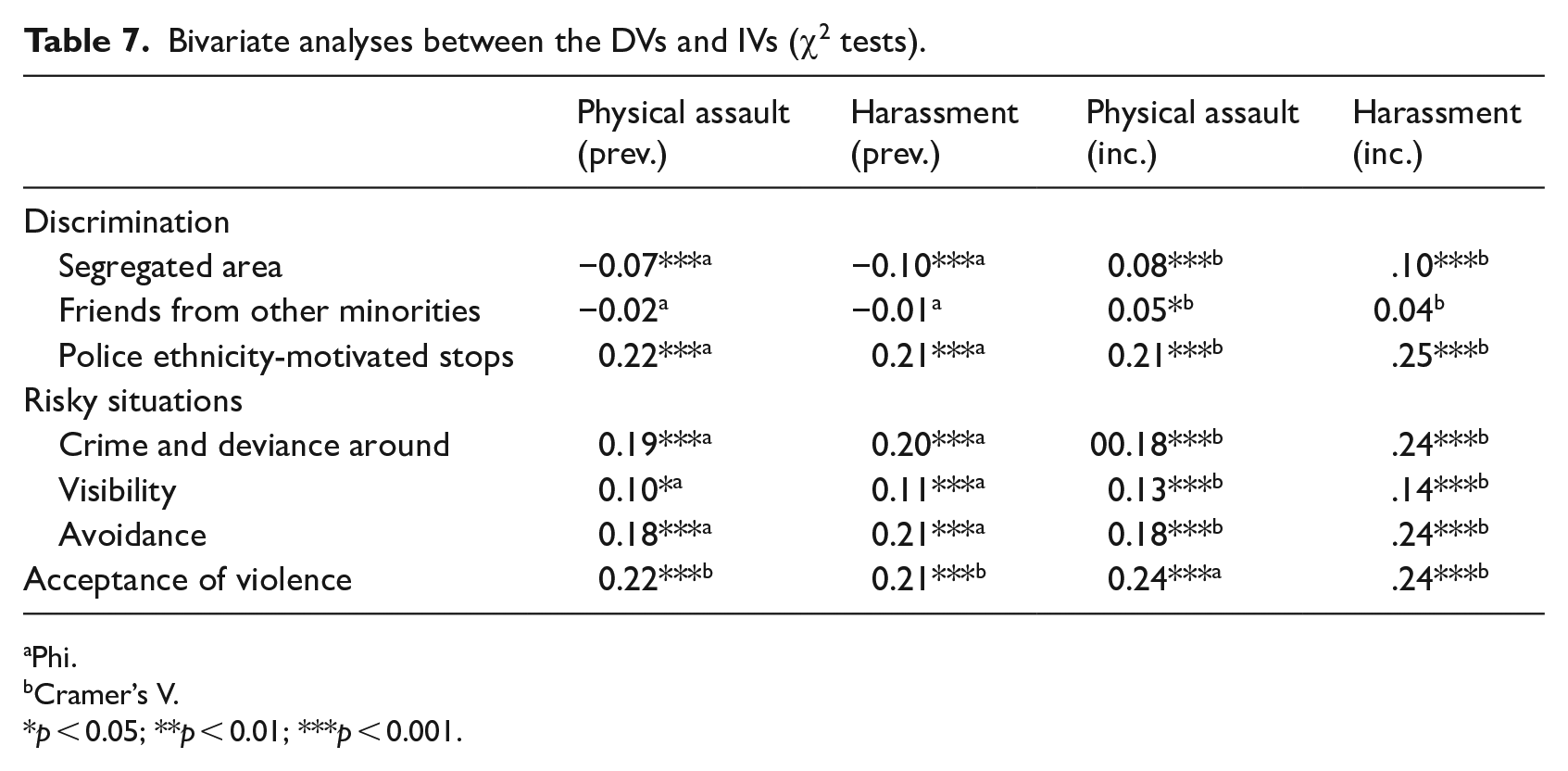
First, bivariate analyses were conducted between the DVs and IVs to assess the presence or absence of differences between the categories (i.e. χ2 analyses). The latter analyses are not included in the manuscript but are available in the Appendix. Second, we conducted a series of sequential binary logistic regressions with prevalence of victimisation as the DV and all the IVs taken into account, and a multinomial logistic regression analysis with incidence of physical assault as DV.
To ensure the absence of multicollinearity among the variables included in the multivariate analyses, a test for multicollinearity was conducted. The results indicated that the variance inflation factor statistic did not exceed the 1.30 threshold and the tolerance was above 0.90. In addition, the well adjustment of the analyses was evaluated using the Omnibus statistic, Cox and Snell’s and Nagelkerke’s pseudo-R2. To further ensure the robustness of the model, the adjustment was also assessed using Hosmer–Lemeshow’s test, Akaike information criterion and Bayesian information criterion values, the Omnibus test, Cook’s distance, Leverage value, and Dfbêtas.
It should be noted that several variables have missing values, and therefore were excluded (i.e. coded as missing) from the analysis.
Results
Descriptive analysis
Table 1 presents a comprehensive overview of the descriptive statistics for a sample of 2,913 participants, highlighting key variables including sex, age, and both DVs and IVs. The average age of the participants is 38.9 years old, and even though there are slightly more women, the sample is rather balanced in terms of gender. The DVs relate to the prevalence and incidence of physical assault and harassment in the past 5 years, with a prevalence rate of 9% for physical assault, 39.5% for harassment, 7.4% for repeated physical assault, and 25.3% for repeated harassment. In terms of the IVs related to discrimination, a significant percentage of the sample (58.6%) reported living in areas with ethnic segregation. In addition, a majority of participants (76.4%) reported having friends from other ethnic groups, while a smaller percentage (8.6%) reported experiencing ethnically motivated stops by the police. Regarding risky situations, 23.3% of participants reported being surrounded by crime and deviance around their household, while a smaller percentage (8.6%) reported wearing symbols or clothing that indicate their belonging to the Roma ethnic group. A further 11.8% reported engaging in avoidant behaviour due to fear of becoming a victim of a crime. The data indicates that 30.4% of the sample reported finding it acceptable to always or sometimes use violence if insulted due to their Roma ethnicity.
Descriptive statistics (N = 2913).
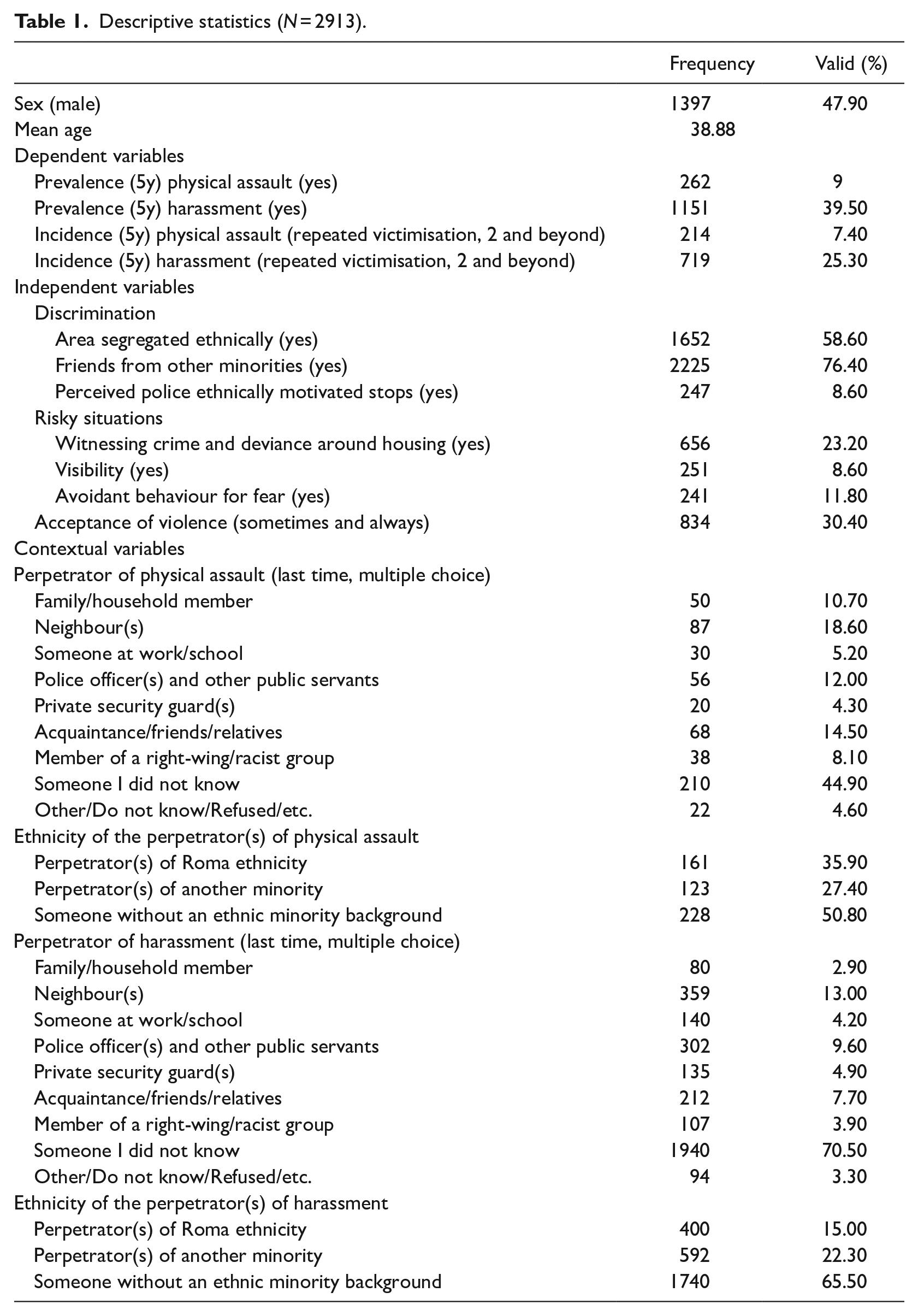
Table 1 presents also data on perpetrators of physical assault and harassment. For physical assault, the most common perpetrators were individuals unknown to the victims, making up 44.90%. Neighbours were next at 18.60%, followed by acquaintances, friends, or relatives for 14.50%, and family or household members for 10.70%. Police officers and other public servants were reported as being perpetrators of physical assault by 12.00%. Members of right-wing or racist groups made up 8.10%, and private security guards 4.30%. In cases of harassment, individuals unknown to the victims were the most common at 70.50%. Neighbours were involved in 13.00% of the cases, and police officers and other public servants in 9.60%. Acquaintances, friends, or relatives accounted for 7.70%, and private security guards for 4.90%. Members of right-wing or racist groups were cited in 3.90% of the cases, and family or household members in 2.90%.
For the ethnicity of the perpetrators in physical assault cases, individuals without an ethnic minority background were the most prevalent at 50.80%, followed by those of Roma ethnicity at 35.90%, and other minorities at 27.40%. In harassment cases, those without an ethnic minority background were the perpetrators in 65.50% of the cases, with other minorities at 22.30%, and those of Roma ethnicity at 15.00%.
Multivariate analyses
Prevalence of victimisation
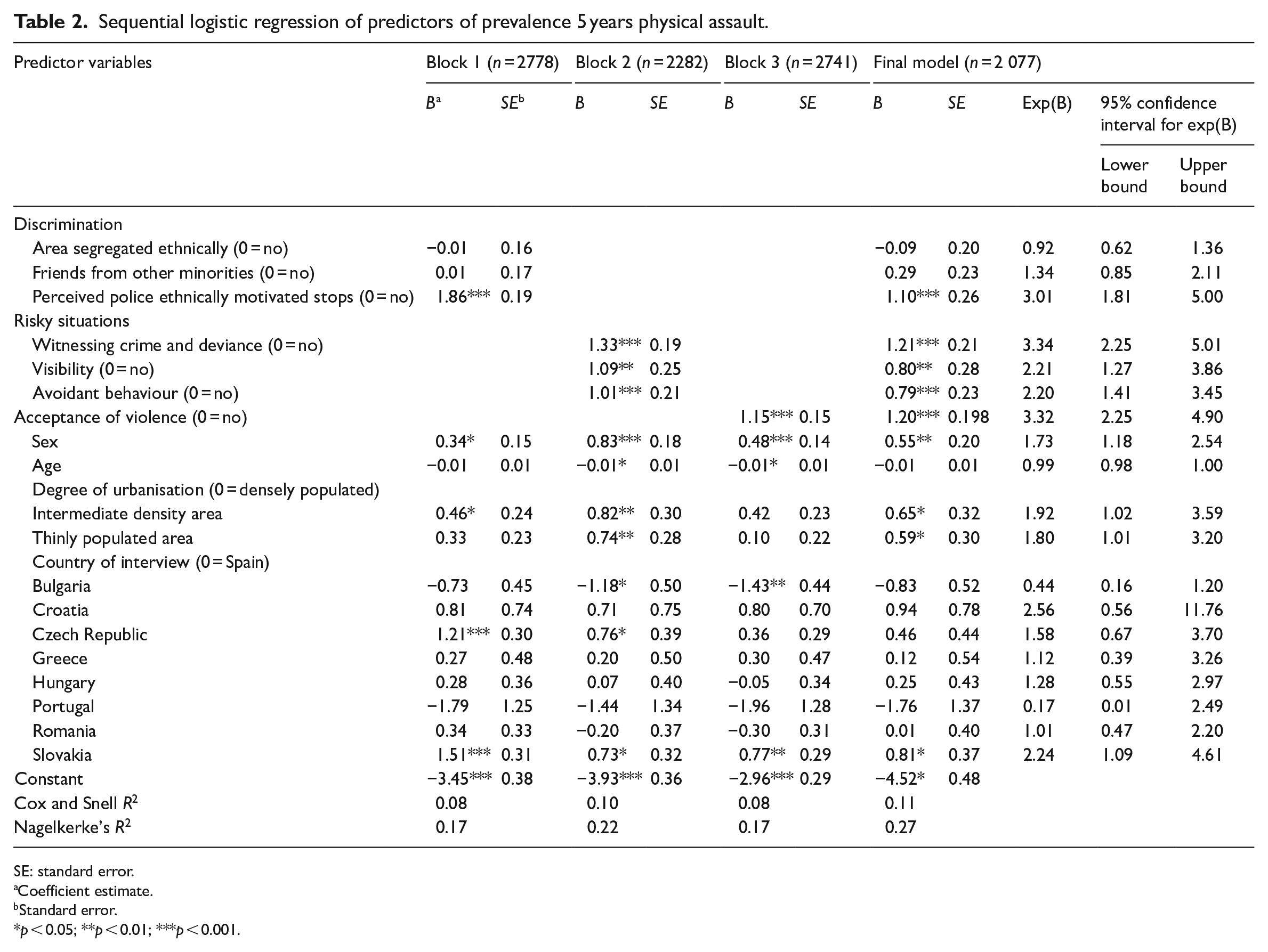
Table 2 illustrates the sequential logistic regression of the predictors of experiencing physical assault (prevalence) in the 5 years preceding the survey. Block 1 – Discrimination – shows a Nagelkerke’s R2 of 0.17 and Cox and Snell’s R2 of 0.08. Predictors of experiencing physical assault by any cause in the previous 5 years are perceived police ethnically motivated stops (ß = 1.86, p < 0.001). Block 2 – Risky situations – shows a Nagelkerke’s R2 of 0.22 and Cox and Snell’s R2 of 0.10. Predictors of experiencing physical assault by any cause in the previous 5 years are witnessing crime and deviance in the area (ß = 1.33, p < 0.001), visibility (ß = 1.09, p < 0.001) and avoidant behaviour (ß = 1.01, p < 0.001). Block 3 – Acceptance of violence – shows a Nagelkerke’s R2 of 0.17 and Cox and Snell’s R2 of 0.08. Another predictor of experiencing physical assault by any cause in the previous 5 years is always or sometimes accepting violence when insulted due to a Roma background (ß = 1.15, p < 0.001). 6
Sequential logistic regression of predictors of prevalence 5 years physical assault.
SE: standard error.
Coefficient estimate.
Standard error.
p < 0.05; **p < 0.01; ***p < 0.001.
The final model which included all variables from each of the three blocks yielded a Nagelkerke’s R2 of 0.27 and Cox and Snell’s of 0.11. Predictors of experiencing physical assault by any cause in the previous 5 years are perceived ethnically motivated police stops (ß = 1.10, p < 0.001; OR = 3.01) witnessing crime and deviance in the area (ß = 1.21, p < 0.001; OR = 3.34), visibility (ß = 0.79, p = 0.01; OR = 2.21), avoidance of places for fear of being harassed (ß = 0.79, p < 0.001; OR = 2.2) and accepting violence when insulted due to a Roma background (ß = 1.20, p = 0.003, OR = 3.3).
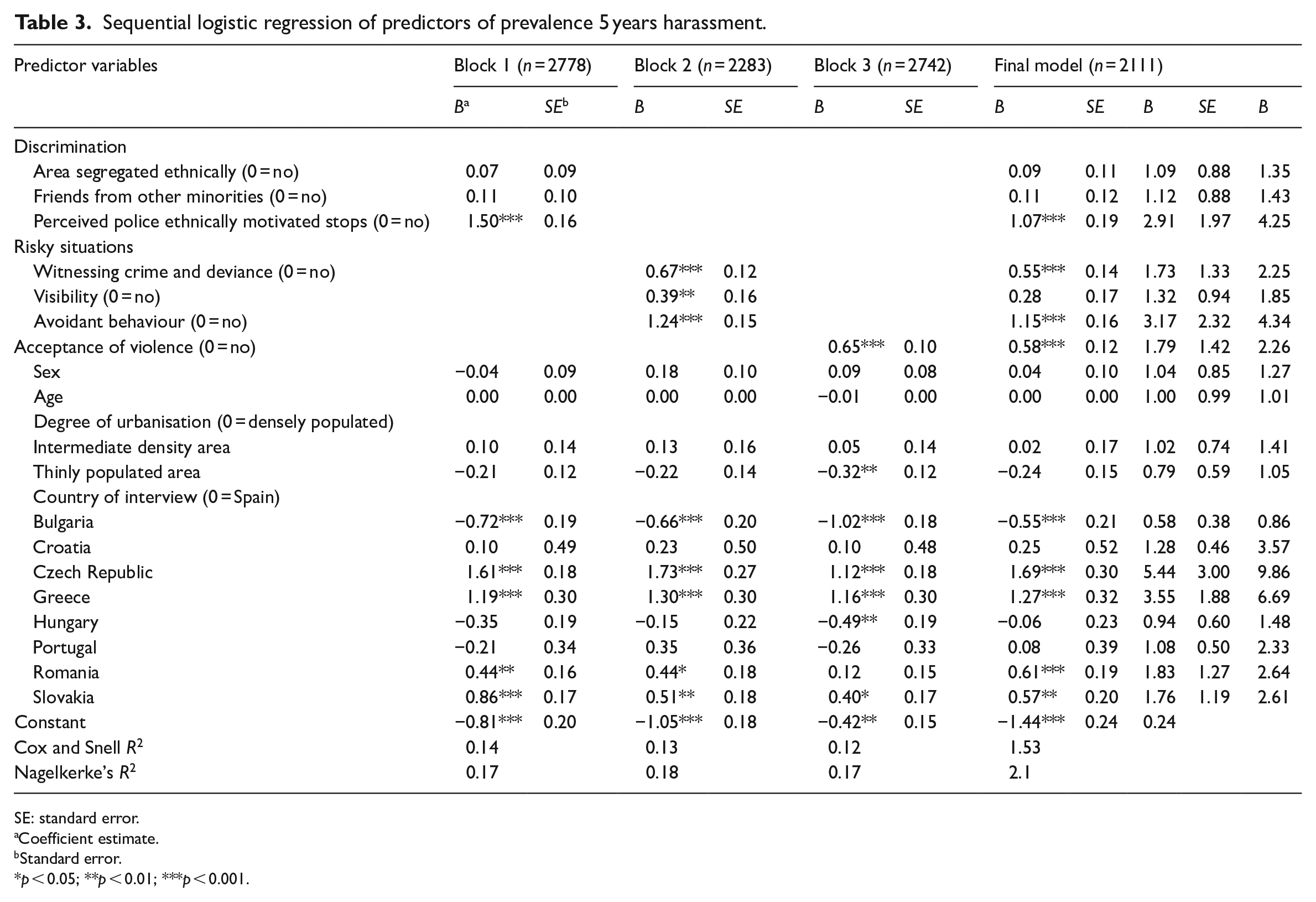
Table 3 shows the sequential logistic regression of the predictors of experiencing harassment (prevalence) in the 5 years preceding the survey. Block 1 – Discrimination – shows a Nagelkerke’s R2 of 0.19 and Cox and Snell’s R2 of 0.14. Another predictor of experiencing harassment by any cause in the previous 5 years is perceived police ethnically motivated stops (ß = 1.50, p < 0.001). Block 2 – Risky situations – shows a Nagelkerke’s R2 of 0.18 and Cox and Snell’s R2 of 0.13. Predictors of harassment by any cause in the previous 5 years are witnessing crime and deviance in the area (ß = 0.67, p < 0.001), visibility (ß = 0.39, p = 0.01) and avoidant behaviour (ß = 1.24, p < 0.001). Block 3 – Acceptance of violence – shows a Nagelkerke’s R2 of 0.08 and Cox and Snell’s R2 of 0.06. Predictors of experiencing harassment by any cause in the previous 5 years are accepting violence when insulted due to a Roma background (ß = 0.65, p < 0.001). 7
Sequential logistic regression of predictors of prevalence 5 years harassment.
SE: standard error.
Coefficient estimate.
Standard error.
p < 0.05; **p < 0.01; ***p < 0.001.
The final model which included all variables from the three blocks yielded a Nagelkerke’s R2 of 0.21 and Cox and Snell’s R2 of 0.15. Predictors of harassment by any cause in the previous 5 years are police ethnically motivated stops (ß = 1.07, p < 0.001; OR = 2.91), witnessing crime and deviance around one’s accommodation (ß = 0.55, p < 0.001, OR = 1.73), avoiding places because of fear (ß = 1.15, p < 0.001, OR = 3.17), and accepting violence when insulted due to a Roma background (ß = 0.58, p < 0.001; OR = 1.79).
Repeated victimisation
Table 4 includes the results of multinomial logistic regressions on which the DV is repeated physical assault. The model shows a Nagelkerke’s R2 of 0.25 and Cox and Snell’s R2 of 0.12. When compared with those who do not experience physical assault in the previous 5 years, predictors of experiencing one physical assault are witnessing crime and deviance around one’s accommodation (ß = 1.06, p < 0.001, OR = 2.89), and accepting violence when insulted due to one’s Roma background (ß = 1.30, p < 0.001, OR = 3.65). However, predictors of experiencing repeated victimisation (two incidents and beyond in the previous 5 years) are perceived ethnically motivated police stops (ß = 1.30, p < 0.001, OR = 3.55), visibility (ß = 1.00, p < 0.001, OR = 2.71), witnessing crime and deviance around one’s accommodation (ß = 1.16, p < 0.001, OR = 3.20), avoidance of places (ß = 0.93, p < 0.001, OR = 2.54), and acceptance of violence 8 when insulted due to a Roma background (ß = 1.25, p < 0.001, OR = 3.48).
Multinomial logistic regression of predictors of repeated physical assault (N = 2110).
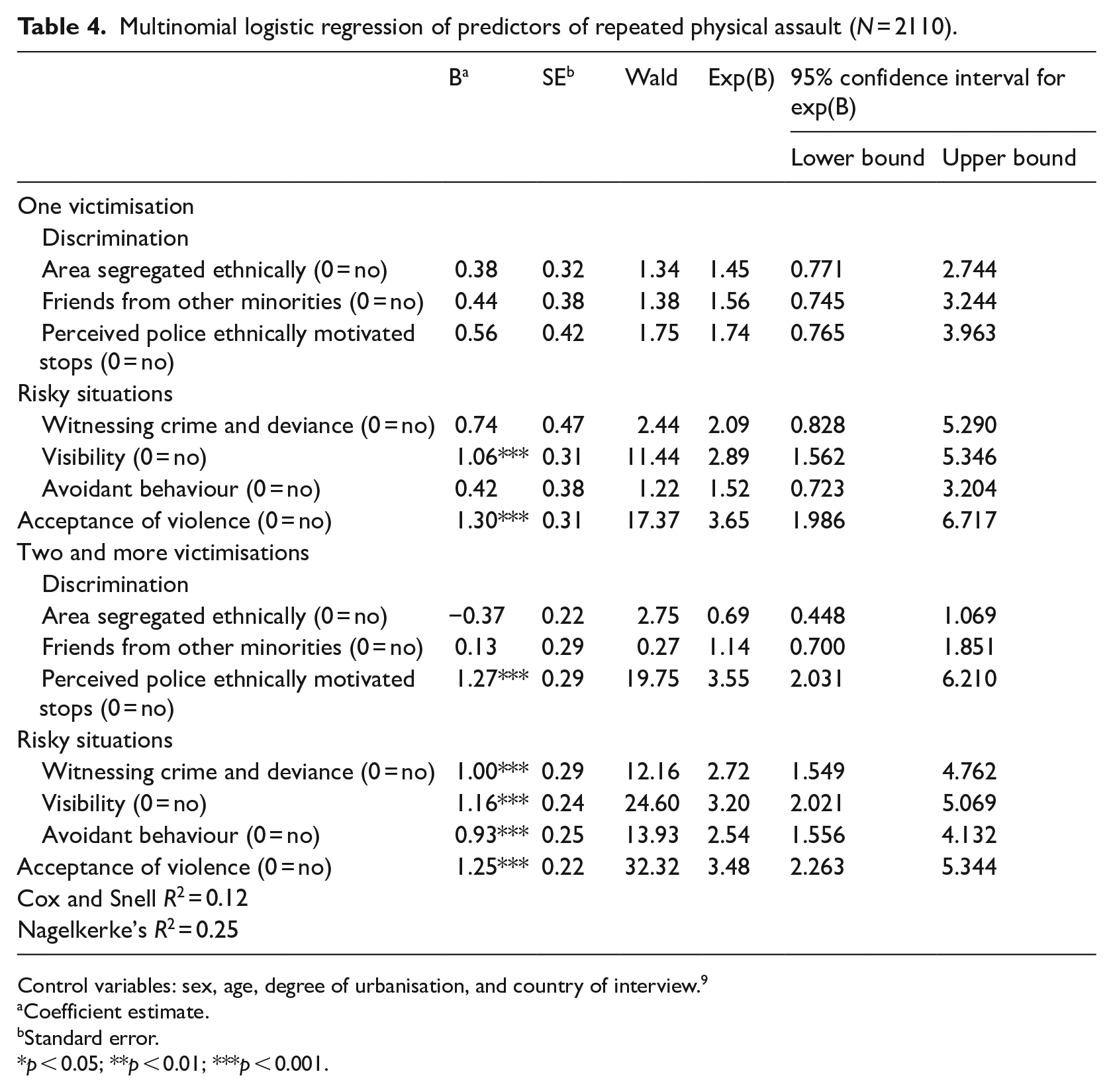
Control variables: sex, age, degree of urbanisation, and country of interview. 9
Coefficient estimate.
Standard error.
p < 0.05; **p < 0.01; ***p < 0.001.
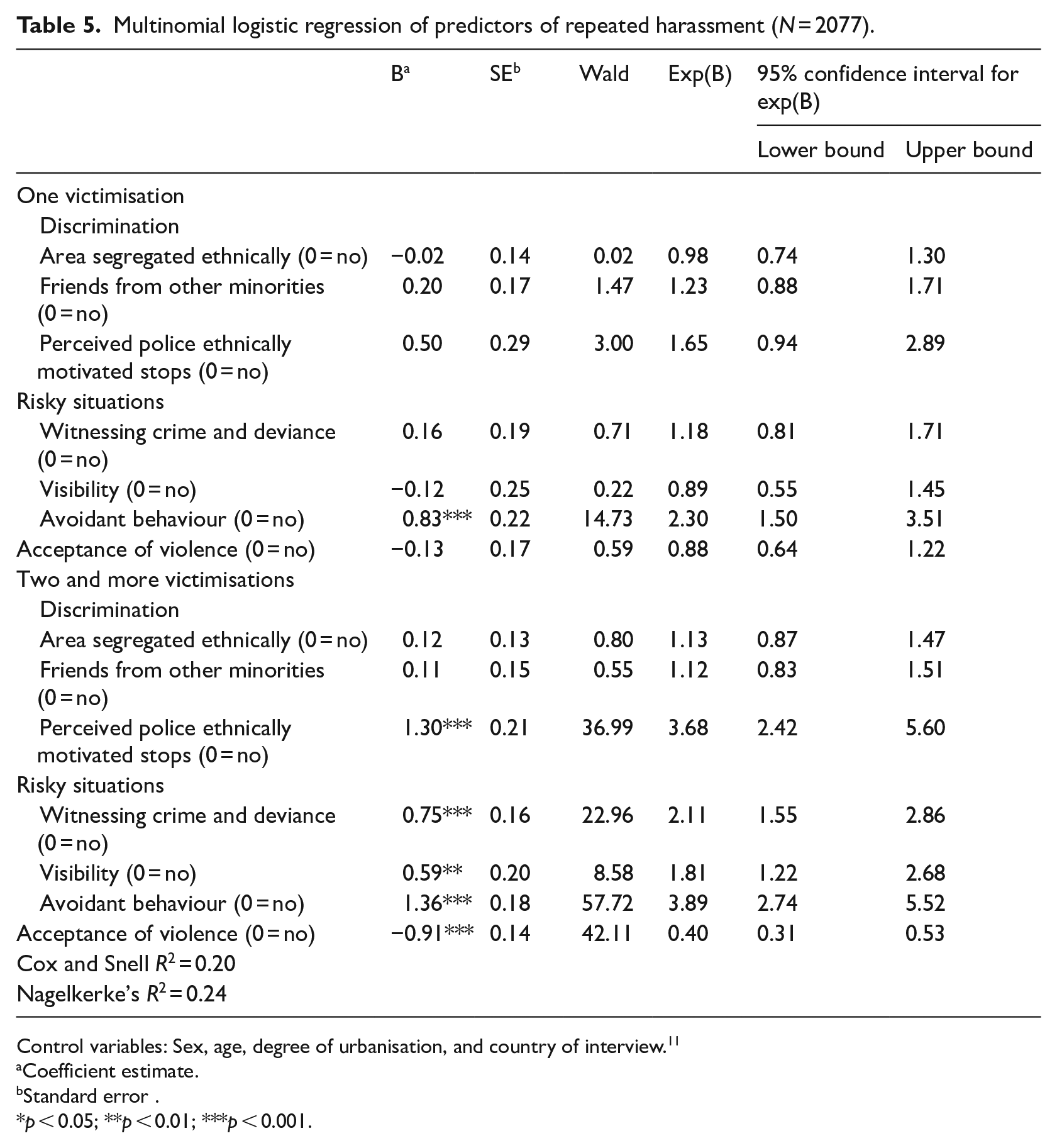
Table 5 illustrates the results of multinomial logistic regressions on which the DV is repeated harassment. The model shows a Nagelkerke’s R2 of 0.24 and Cox and Snell’s R2 of 0.20. Avoiding places due to fear (ß = .83, p < 0.001, OR = 2.30) is a predictor of experiencing one incident of harassment in the 5 previous years, when compared with participants who did not experience any incident of harassment. However, predictors of experiencing repeated harassment (two incidents and beyond in the previous 5 years) are perceived ethnically motivated police stops (ß = 1.30, p < 0.001, OR = 3.68), visibility (ß = 0.59, p = 0.003, OR = 1.81), witnessing crime and deviance around one’s accommodation (ß = 0.75, p < 0.001, OR = 2.11), avoidance of places (ß = 1.36, p < 0.001, OR = 3.89), and acceptance of violence 10 when insulted due to a Roma background (ß = −0.91, p < 0.001, OR = .404).
Multinomial logistic regression of predictors of repeated harassment (N = 2077).
Control variables: Sex, age, degree of urbanisation, and country of interview. 11
Coefficient estimate.
Standard error .
p < 0.05; **p < 0.01; ***p < 0.001.
Discussion
The purpose of the present study was to investigate victimisation, specifically physical assault and harassment, of European Roma within a multifactorial framework that incorporated discrimination, risky situations, and acceptance of violence as correlates. Accordingly, we formulated and tested four hypotheses. Results indicate that all hypotheses are supported, although with certain nuances. Regarding the discrimination block (H1), our findings indicate that only police stops perceived as ethnically motivated were correlated with both physical assault and harassment, although when analysing the incidence, this was true only for the subsample of repeated victims. Segregated places of residence and having friends from other minorities appear to have no impact on participants’ victimisation in any case.
However, risky situations (H2), as measured by the presence of crime and deviance in the surroundings of participants’ places of residence, the personal visibility of ethnic markers, and their avoidant behaviour, increased the risk of physical assault, although this was stronger for repeated victims than for the victims of one offence in the previous 5 years. Nevertheless, for the prevalence of harassment, our results suggest that only the presence of crime and deviance in the participants’ places of residence and avoidant behaviour were predictors of victimisation, whereas their ethnic visibility played no role. This was not the case for the subgroup of repeated victims, as those who endured two and more incidents of harassment in the previous 5 years had a higher likelihood of having cultural artefacts that would render their ethnicity visible to others.
Concerning both physical assault and harassment, participants’ acceptance of violence (H3) (if insulted due to their Roma ethnicity) was a predictor of victimisation, although this association was much stronger for physical assault than for harassment. This was similarly consistent in the case of repeated physical assault, for which the predictive variables are the same as for overall physical assault. However, when comparing victims of a single incident of harassment to repeated victims, the sign of the relationship is negative, indicating that the participants who found the use of violence acceptable if insulted due to their ethnicity had a lower likelihood of experiencing repeated harassment.
In addition, H4 posited that a multi-theoretical framework would provide a better explanation for the victimisation of Roma. Our findings support this hypothesis, as the final models incorporating multiple theoretical elements explained more variance (27% and 21% respectively) than each individual model. These results indicate that combining different theoretical elements increased the explanatory power of the models, although the amount of variance explained varied depends on the type of victimisation studied. The block of variables used to operationalise risky situations was found to be the most predictive in the context of physical victimisation, while the blocks show similar predictive power in regard to harassment.
Some of the relationships found are in line with theoretical assumptions – especially the principle of homogamy associated with RAT (Cohen and Felson, 1979), which states that individuals who interact in criminogenic environments (risky situations) are more likely to be victimised (Cohen et al., 1981; Jensen and Brownfield, 1986; Sampson and Lauritsen, 1990). In addition, our findings lend support to aspects of the figurational process of group stigmatisation (Elias and Scotson, 1994; Wacquant, 2007) concerning participants being the targets of ethnically motivated police stops, as perceived by the individuals themselves. However, factors such as segregation or establishing friendships with people from other ethnicities, or those without specified ethnicity, do not appear to correlate with victimisation.
Concerning the third hypothesis, there is evidence to suggest that a history of repeated physical assault victimisation is linked to a propensity to accept violence when insulted (Wolfgang, 1957). Specifically, individuals who have endured multiple incidents of physical assault and who express a willingness to respond violently to ethnic insults are more likely to experience subsequent physical assaults. Yet, the nature of this correlation – whether spurious or causal – remains undetermined due to the lack of detailed information regarding the circumstances of the assault. In contrast, the dynamics seem different for repeated harassment victimisation. We propose that participants who are more willing to accept violence may actually deter potential harassers, perhaps by not fitting the profile of ‘suitable targets’ for harassment. It is imperative to underline, however, that this hypothesis is speculative and requires further investigation to elucidate these relationships with more comprehensive data.
In contrast to previous research on the victimisation of Roma individuals (Wallengren et al., 2023), our findings indicate that participants’ visibility does not predict harassment. However, it is important to note the differences in the definition of visibility used in EU-MIDIS II and the study by Wallengren et al. (2023). In EU-MIDIS II, visibility refers to wearing traditional or religious clothing that is different from the clothing typically worn in public, given the geographical context. In this sense, European Roma living in urban areas may not necessarily wear distinctive clothing except for special occasions, but their differential phenotype (expressed in specific body features, skin colour, etc.) could also be a factor contributing to their visibility and increasing their risk of victimisation. In that regard, it is plausible that the construct of visibility is not being measured accurately.
A second unexpected finding of our study is the positive association between victimisation and avoidance of certain places which seems quite counter-intuitive. Of course it is not possible to infer causality, due to the fact that these data were cross-sectional in nature, as also noted in previous research (Killias et al., 2019; Skogan, 1987). It is also possible that the participants in the study were victims of crimes and subsequently decided to avoid certain locations to reduce their risk of further victimisation, rather than avoiding those places leading to victimisation.
Despite these promising findings, it is important to acknowledge several limitations when interpreting this study’s results. First, the study relies on the victims’ perceptions of the motives involved in particular adverse events, such as ethnicity-related police stops. This may raise concerns about validity, as it is not always possible to determine the true motivations of perpetrators. Second, EU-MIDIS II addressed physical assault and harassment, not other types of crimes such as sexual assault, burglary, or robbery. This limits the scope of the study and provides only a partial picture of the victimisation experienced by Roma people. Third, a non-negligible proportion of the questionnaires were not administered individually. This may have introduced systematic biases as respondents may have been less likely to disclose sensitive information in the presence of others, particularly in cases of domestic violence or other forms of abuse committed by partners or family members. Furthermore, it is important to note that some of the offences mentioned may pertain to domestic violence or intimate partner violence. Consequently, the applicability of the model discussed in this paper to those specific types of offences may be limited.
Theory, practical implications, and future studies
This study emphasises the potential value of Agnew’s (2011) unified criminology approach, which integrates rather than isolates multiple explanatory perspectives. Despite the extensive literature focusing on discrimination, study findings suggest that attention should also be paid to the situational factors that place Roma at risk. Being a member of an ethnic minority is a risk factor because it places individuals in a vulnerable situation. Vulnerability has been identified as a major contributing factor for victimisation. Green (2012) defines vulnerability as the risk of victimisation combined with the difficulty of addressing the harms it causes to individuals. The Roma population, and ethnic minorities in general, appear to fit this definition, as social and lifestyle issues put them at increased risk of victimisation, while their ability to access assistance and cope is severely limited due to factors such as discrimination, lack of familiarity with relevant agencies, and a lack of trust in institutions (Briones-Vozmediano et al., 2021; Wallengren et al., 2020, 2023).
While discrimination and violence by law enforcement agencies against ethnic minorities are not new or limited to one geographic area, research from other domains indicate changing the police culture might both a key issue and a long-term task (Bryant-Davis et al., 2017; Chan, 1996; Feelemyer et al., 2021; Sivasubramaniam and Goodman-Delahunty, 2008; Wu, 2014). In these circumstances, training to sensitise police officers to the ethical issues associated with dealing with members of ethnic minorities could be useful. Furthermore, the establishment of police patrols comprised of individuals from diverse ethnic and cultural backgrounds may allow for a better understanding of the difficulties and the situation of ethnic minorities (Recommendations on Policing in Multi-Ethnic Societies, n.d.; Ryan, 2007; Stodiek and Zellner, 2007). These measures may also contribute to an increase in trust in law enforcement agencies among members of ethnic minorities (Pass et al., 2020).
In light of the findings, it is also crucial to tackle the criminogenic neighbourhoods in which the Roma live, and are obliged to live, due to their precarious situation (Bartlett et al., 2015). Public policies have the power to influence these areas through the implementation of crime reduction measures – for example, situational crime prevention (Cornish and Clarke, 2003), the provision of specific and appropriately designed spaces for conflict resolution, the promotion of interethnic positive relations, and training in nonviolent communication. Various initiatives have been developed to address violence against Roma communities and promote social inclusion. Some of these initiatives have shown evidence of effectiveness in reducing discrimination and promoting social cohesion (see Bartlett et al., 2015: 54–55).
From a research perspective, it is noteworthy that the availability of concrete data on the effectiveness of Roma inclusion programmes is limited, as highlighted by Bartlett et al. (2015) and the Open Society Institute (2010). To propose evidence-based programmes, further studies on Roma victimisation should test interventions. Moreover, it would be valuable to explore other forms of Roma victimisation, such as property crime and sexual assaults, to gain a comprehensive understanding of the prevalence, causes, and predictors of these phenomena. A worthwhile avenue of investigation would involve testing whether the multifactorial approach proposed in this study can explain different types of victimisation.
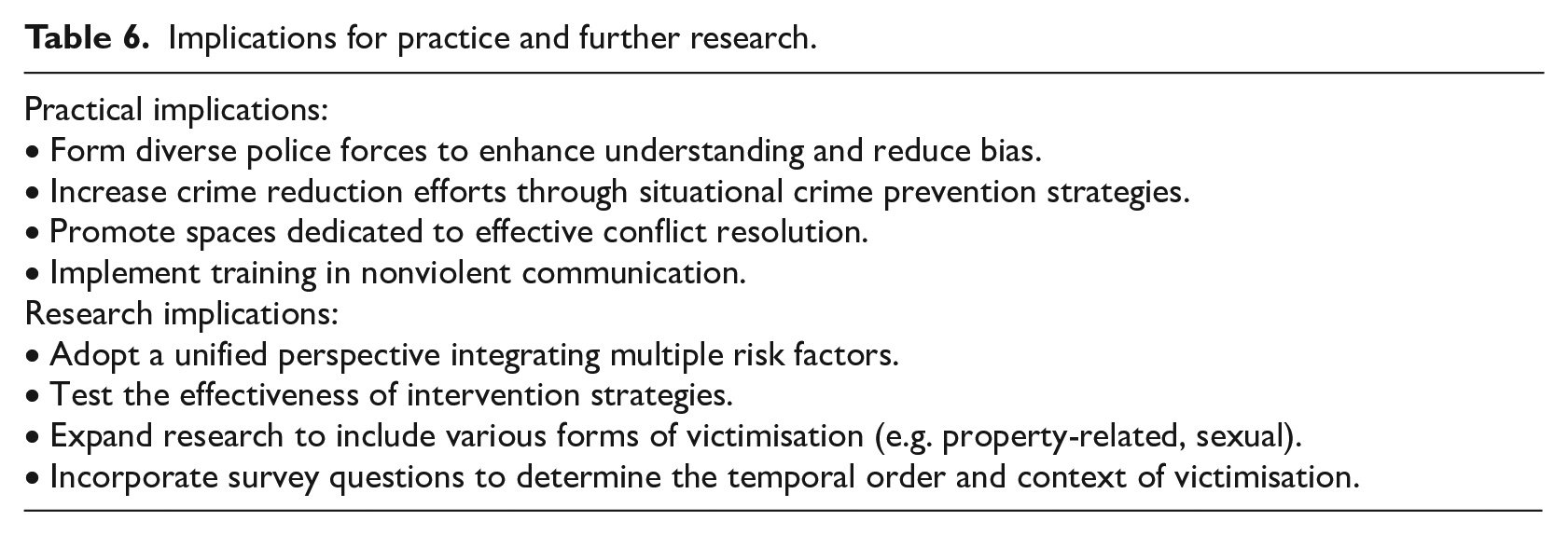
Methodologically, future surveys would benefit from including additional questions that shed light on specific nuances. A key area of exploration should be the temporal relationship between victimisation experiences of Roma individuals and their subsequent adoption of avoidance behaviours. Our findings indicate that individuals who actively avoid certain places out of fear are at an increased risk of victimisation. This issue has been previously noted in victim surveys (Killias et al., 2019), where the lack of a clear temporal distinction between the occurrence of victimisation and the implementation of preventive measures complicates the interpretation of results. It is essential to ascertain whether individuals first experience victimisation and then engage in preventive behaviours, rather than the reverse. The current cross-sectional nature of surveys tends to conflate these distinct stages, suggesting a need for methodological refinements to disentangle these temporal sequences. Furthermore, following the suggestions made by Wallengren et al. (2023), including multiple measures of visibility could provide valuable insights. One area that warrants further exploration is the absence of a statistically significant relationship between interethnic positive relationships, such as friendships, and victimisation. While we exercise caution in interpreting this finding, as it may suggest that social inclusion is unnecessary or ineffective, we firmly believe that several crucial elements are missing from this equation. These aspects cannot be adequately captured through a cross-sectional survey with only one question. Notably, previous research by Bartlett et al. (2015) indicates that efforts to improve interethnic relations can significantly contribute to reducing discrimination against the Roma community. Consequently, future studies should prioritise investigating the role of these friendships in victimisation, whether as perpetrators or guardians, utilising frameworks such as the concept of ‘collective efficacy’ coined by Sampson et al. (1997). Table 6 summarises our proposals for practice and research.
Implications for practice and further research.
Conclusion
The study investigated victimisation of European Roma in a multifactorial framework that incorporated discrimination, risky situations, and acceptance of violence as predictive factors. Four hypotheses were formulated, and all were supported to some degree. Discrimination only correlated with victimisation with regard to ethnically motivated perceived police stops. Risky situations increased the risk of physical assault and harassment. Acceptance of violence if insulted due to Roma ethnicity was a predictor of victimisation. Combining different theoretical elements increased the predictive power of the models.
While discrimination is a well-known risk factor, situational factors like living in criminogenic neighbourhoods also contribute to victimisation. The evidence from the present study recommends measures like sensitising police officers, establishing diverse police patrols, implementing crime reduction measures, and promoting social inclusion through training, cultural events, and community development centres. However, the effectiveness of current inclusion programmes aimed at reducing discrimination and promoting social inclusion is questionable, and further research is needed to better understand the prevalence and predictors of other forms of victimisation among the Roma community and other ethnic minorities.
Footnotes
Appendix
Bivariate analyses between the DVs and IVs (χ2 tests).
| Physical assault (prev.) | Harassment (prev.) | Physical assault (inc.) | Harassment (inc.) | |
|---|---|---|---|---|
| Discrimination | ||||
| Segregated area | −0.07*** a | −0.10*** a | 0.08*** b | .10*** b |
| Friends from other minorities | −0.02 a | −0.01 a | 0.05* b | 0.04 b |
| Police ethnicity-motivated stops | 0.22*** a | 0.21*** a | 0.21*** b | .25*** b |
| Risky situations | ||||
| Crime and deviance around | 0.19*** a | 0.20*** a | 00.18*** b | .24*** b |
| Visibility | 0.10* a | 0.11*** a | 0.13*** b | .14*** b |
| Avoidance | 0.18*** a | 0.21*** a | 0.18*** b | .24*** b |
| Acceptance of violence | 0.22*** b | 0.21*** b | 0.24*** a | .24*** b |
Phi.
Cramer’s V.
p < 0.05; **p < 0.01; ***p < 0.001.
