




Abstract
Objective:
Meaning-making is a way of coping when facing adverse events. A paucity of literature suggests other possible factors (e.g. delivery of knowledge) can influence how chronic illness survivors (i.e. stroke survivors in rehabilitation) cope with illness. This article explores the importance and significance of meaning in life as a mediator between perceived stroke knowledge and psychological wellbeing among stroke survivors and how such processes can be applied in practice to promote their psychological wellbeing.
Methods:
A sample of N = 192 elderly aged 60 or above who experienced a recent stroke completed a survey to assess their levels of cognitive ability, physical function, perceived knowledge of stroke, meaning in life, life satisfaction, and depression. Correlation and mediation analyses using the Sobel test were conducted to clarify the role of meaning in life among stroke survivors.
Results:
Both perceived knowledge of stroke (r = 0.35, P < 0.001) and meaning in life had positive correlations with life satisfaction (r = 0.37, P < 0.001) and a negative correlation with depression. Analyses revealed that meaning in life is a significant mediator between perceived knowledge of stroke and depression (z = −3.71, P < 0.001) and between perceived knowledge of stroke and life satisfaction (z = 3.97, P < 0.001) in two separate models.
Conclusion:
The role of meaning in life is clear and can affect the dynamics between knowledge of stroke and one’s psychological wellbeing.
Introduction
According to Park and Folkman’s 1 stress-coping model, coping with negative events (e.g. stroke) can be an important meaning-making process that can assist with one’s recovery. Meaning-making can be differentiated on two levels: (1) global meaning and (2) situational meaning. The former is defined as one’s basic goals and fundamental assumptions, as well as one’s beliefs and expectations about the world. Situational meaning refers to the interaction between one’s global beliefs and the circumstances of a particular person–environment transaction (i.e. personal conceptualizations of a particular life event). Inconsistency between one’s global meaning and situational meaning often leads to personal psychological distress.
It has been found that being able to find meaning in one’s life—a way of coping with new adverse life-changing situations—has helped patients’ mobilization to strive toward rehabilitation.2,3 In order to manage such discordance, people tend to adjust the situational meaning of the negative events using various strategies, for example, compensatory self-enhancement and causal reattribution. Compensatory self-enhancement refers to recognizing other talents in a different domain as opposed to health, while causal reattribution being altered.2,3 Hence, providing timely illness-related information may help stroke survivors’ causal reattribution of the stroke, to help them adjust the situational meaning of their stroke and, thus, better align their situational meaning with their global meaning.
Some researchers have contended that meaning-focused coping is especially relevant for the elderly as they are more likely to encounter different existential age-specific themes, when compared to their younger counterparts. 4 Conversely, other research has revealed that stroke survivors may limit their perceived meaning in life due to decreasing mastery over their own bodies and increasing dependency on their caregivers. 5
In the past decade, psycho-education, which is a systematic method to provide information regarding an illness and its treatment, that integrates various emotional aspects in order to enable patients and their families to cope with their illnesses, has become recognized as a necessity in the treatment of many chronic diseases, including stroke.6,7 Without a good understanding of the illness and resulting insight, improvement in coping is doomed to likely remain suboptimal. Although evidence has indicated that psycho-education may be a means to increase stroke survivors’ knowledge of their illness, its overall effects may not as promising as expected. 8 For instance, when psycho-education was deemed to be effective in reducing stroke survivors’ depression, the effects were small and insignificant. 9 Although some studies have examined the relationship between various interventions and patient wellbeing, or satisfaction with the information provided, 10 little research has examined the relationship between one’s perceived knowledge of stroke and one’s life satisfaction.
Current literature reveals that there may be insufficient evidence to infer that patients’ perceived levels of stroke-related knowledge are not correlated with their degree of depression. 9 As a result, further research is needed to test this relationship, and this study hopes to offset this gap in the extant literature. The aim of this study was to investigate the significance of survivors’ meaning in life in relation to their perceived knowledge and psychological wellbeing. We hypothesized that knowledge of stroke is negatively correlated with depression, and positively correlated with life satisfaction, and that the effects of meaning in life of stroke survivors mediate these relationships.
Methods
This study utilized the baseline data of N = 192 elderly Chinese participants from a randomized clinical trial conducted in Hong Kong that investigated the effectiveness of a narrative group therapy. Participants were recruited through the local stroke registries of the Hospital Authority in Hong Kong from June 2011 to May 2012 in collaboration with the Hospital Authority. This study received approval from the university’s ethics committee and the research ethics committees of the different hospital clusters (HKU/HA HKW IRB no.: UW 11-325). Participants provided informed consent before any interviews were conducted.
Preliminary analyses (t-tests) were conducted to investigate subgroup differences based on participants’ socio-demographic data. Pearson’s correlations (rs) between the continuous demographic variables (for example age, cognitive functioning, and physical impairment), predictor variables (i.e. perceived knowledge of stroke and meaning in life), and outcome variables (i.e. depressive symptoms and life satisfaction) were then analyzed. Subsequently, hierarchical regression analyses (R2) were performed, entering only those variables that were significantly associated with the outcome variables.
The mediating effects of meaning in life were tested based on the four-step procedure described by Baron and Kenny. 11 As indicated by the Sobel (z) tests, 12 a significant reduction in the regression coefficients in step 1 and step 3 was warranted to demonstrate a mediation effect. The Sobel (z) test obtained a verification with the bootstrapping test provided by the PROCESS Macro in SPSS. The bootstrapping test indicated that the mediating effect was significantly greater than zero with reference to the 95% confidence interval.
To minimize the possibility of variable omission, the demographic variables that were significantly associated with the outcome variables were controlled for in the subsequent regression analyses. In the two hierarchical regression models (Figures 1 and 2) of the study, gender was entered in the first block, followed by the discrepancy of expectation-outcome in the final block. The procedure for testing mediation was as follows: (1) simple regression analysis was conducted between the independent variable (perceived knowledge of stroke) and the dependent variable, (2) simple regression analysis was conducted between the independent variable (perceived knowledge of stroke) and the mediator (meaning in life), (3) simple regression analysis was conducted between the mediator (meaning in life) and dependent variable, and (4) multiple regression analysis was conducted between perceived knowledge of stroke while controlling the effect of meaning in life (mediator) on the dependent variable. 11
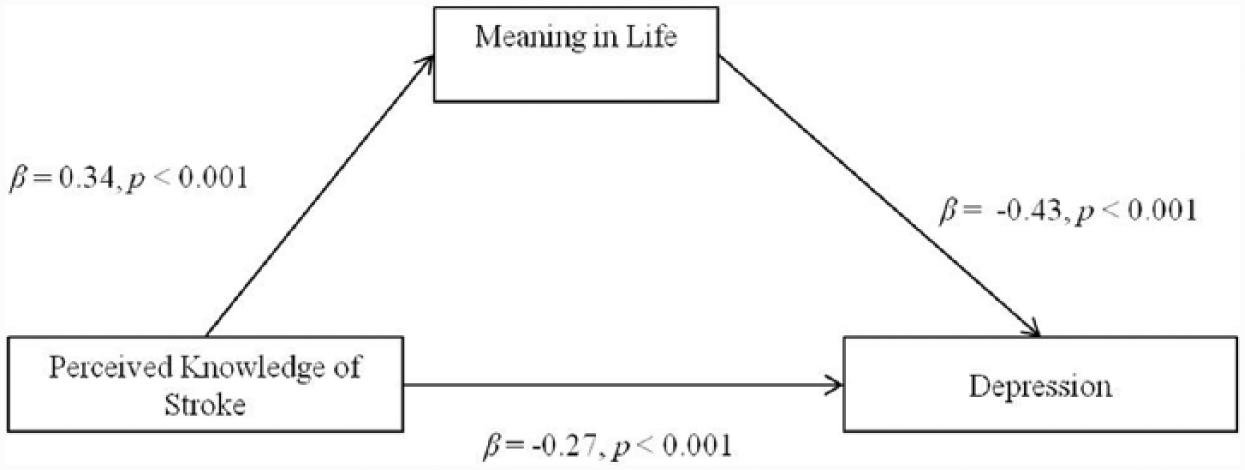
Mediation of the meaning in life variable effects between perceived knowledge of stroke and depression.
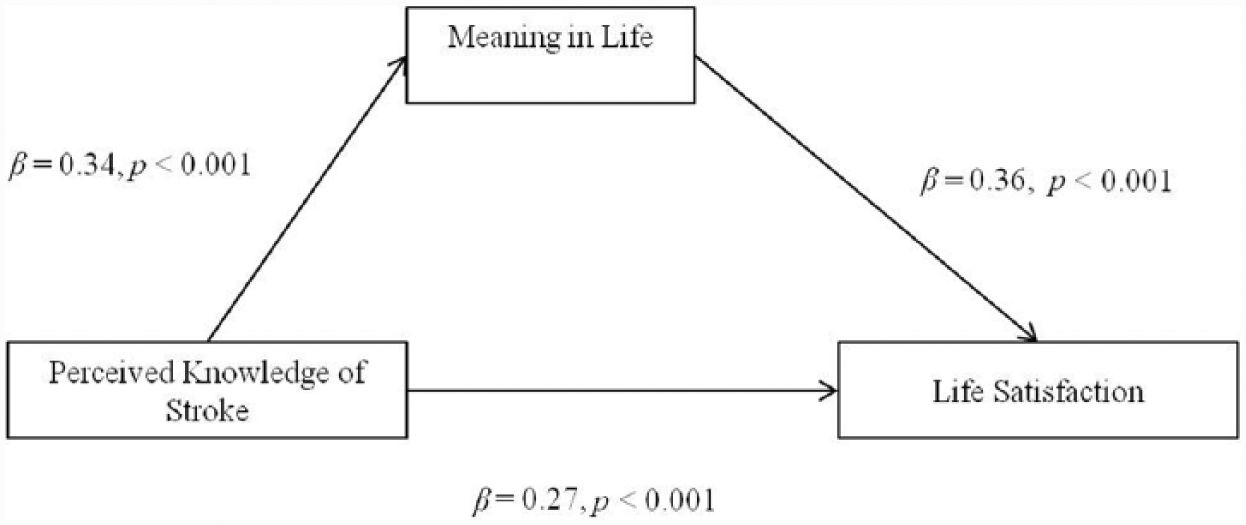
Mediation of the meaning in life variable effects between perceived knowledge of stroke and life satisfaction.
Since a manuscript regarding the original randomized control trial is still under preparation, the inclusion and exclusion criteria of participants were included as follows. Older adults (aged 60 or above) who had experienced a stroke within the previous one to two years were referred to join the randomized control study. They were excluded if they failed to meet the inclusion criteria, which included the following: (1) were aged 60 and above; (2) experienced their first stroke within the previous one to two years; (3) completed either hospital or day rehabilitation programs; (4) were able to move with physical impairment or walking aids; (5) possessed normal mental and hearing ability; (6) were not currently experiencing an acute crisis with severe stress; (7) were free from active psychotic symptoms, such as hallucinations and delusions; (8) were able to perform minimal daily functions; (9) had Cantonese Chinese Mini-Mental State Examination (C-MMSE) 13 scores ⩾18 (including moderate to high cognitive function); (10) were not intellectually disadvantaged and did not have a diagnosis of a personality disorder; and (11) did not have a record of suicide or violent behavior.
Measures
The well-regarded Mini-Mental State Examination (MMSE) is an 11-item scale 14 administered to assess cognitive functioning. A score of 24 indicates no cognitive impairment, and a score below 18 indicates severe cognitive impairment. 14 The C-MMSE used in this study was previously validated in Hong Kong. 13 The scale achieved a Cronbach’s alpha of 0.86 in this study.
The validated Chinese Activities of Daily Living scale–Short Form (ADL) from Minimum Dataset–Home Care (MDS-HC) 15 was used to assess physical impairment. The score for each item ranges from 0 (Independence) to 6 (Total dependence). A higher score indicates a higher degree of one’s physical impairment. This scale achieved a Cronbach’s alpha of 0.86 in this study.
The Perceived Knowledge of Stroke (PKS) questionnaire is a self-devised scale, which included eight items, used to measure participants’ subjective understanding of stroke, including the causes, symptoms, treatment, prevention of relapse, and rehabilitation options. The score for the items ranges from 0 (No understanding at all) to 10 (Very good understanding). The scale achieved a Cronbach’s alpha of 0.85 in this study.
The Meaning in Life Scale (MLS) is a 15-item scale to assess stroke survivors’ subjective evaluation of perceived worth of their remaining life. 16 The scores for the items range from 1 to 5, which denotes high positive meaning. This scale achieved a Cronbach’s alpha of 0.84 in this study. This scale was back-translated under the supervision of the principal investigator.
The validated Chinese version of Geriatric Depression Scale, 15-item version (GDS-15) 17 was used to detect depression among the elderly. Each item is only a dichotomous “yes/no” response. This scale achieved a Cronbach’s alpha of 0.85 in this study.
The Life Satisfaction Scale–Chinese (LSS-C) 18 consists of 14 items that assess the multidimensional needs of the Chinese elderly (e.g. food, finances, health, housing, transportation). The scale has been validated previously in a Hong Kong sample. 19 This scale achieved a Cronbach’s alpha of 0.72 in this study.
Demographic information such as age, gender, marital status and education level were also collected.
Results
Sample characteristics
All participants had relatively moderate to high cognitive functioning, with a mean cognitive functioning score of M = 26.17 (SD = 3.19), ranging from 19 to 30, with the majority of participants classified as having independent functioning according to the ADL (M = 72.67, SD = 7.53); more than half were male, and ages ranged from 59 to 89 years. The majority had received a primary education (n = 78, 41.1%). Moreover, most stroke survivors were married and had a caregiver (Table 1). Independent t-tests were initially conducted based on this demographic information regarding their depressive symptoms and life satisfaction. No gender differences were found in either outcome variable, while stroke survivors who had a caregiver experienced a greater number of depressive symptoms (see Table 2).
Selected socio-demographic information of participants (N = 192).
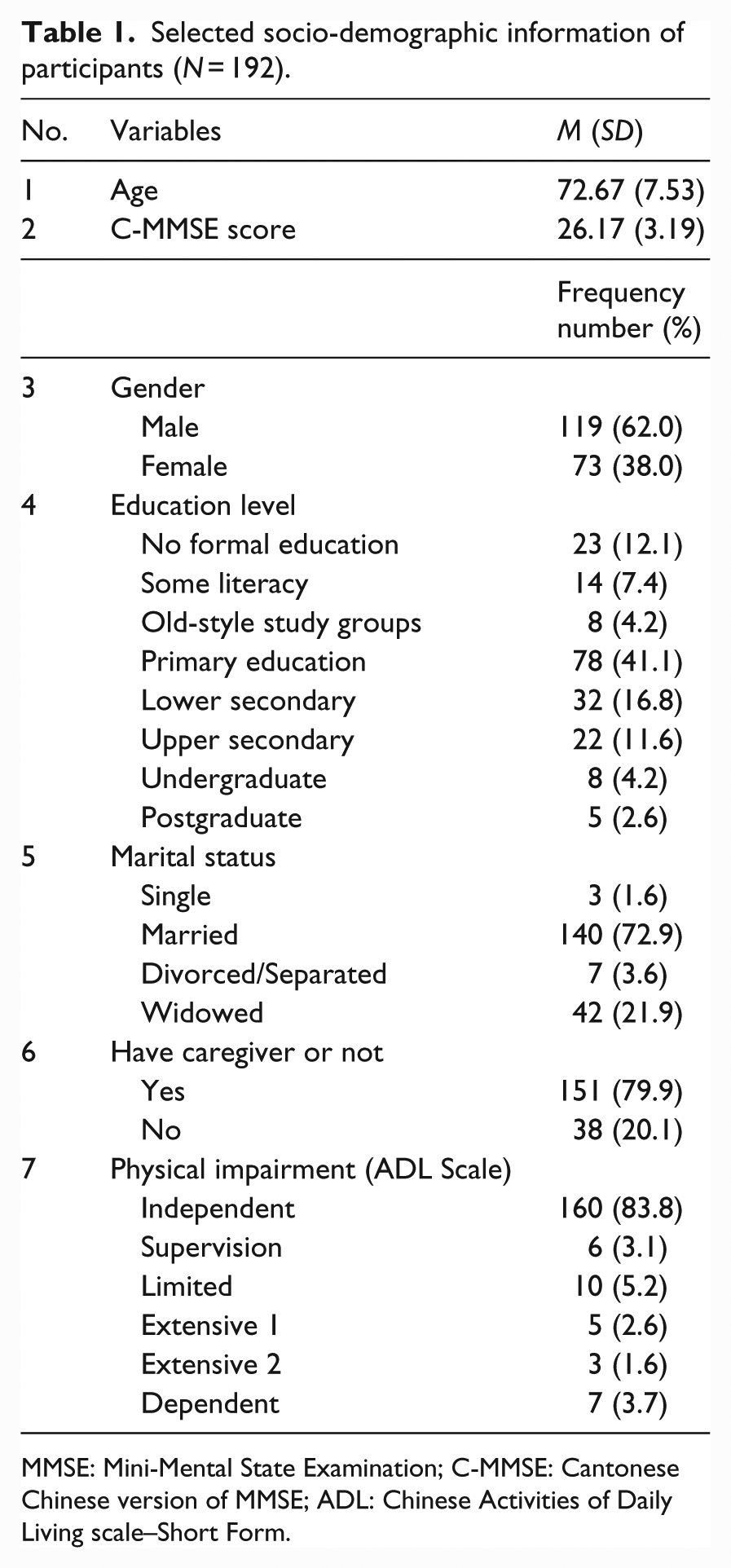
MMSE: Mini-Mental State Examination; C-MMSE: Cantonese Chinese version of MMSE; ADL: Chinese Activities of Daily Living scale–Short Form.
Comparisons of means on depression and life satisfaction: differences between subgroups on gender and caregiver (N = 192).
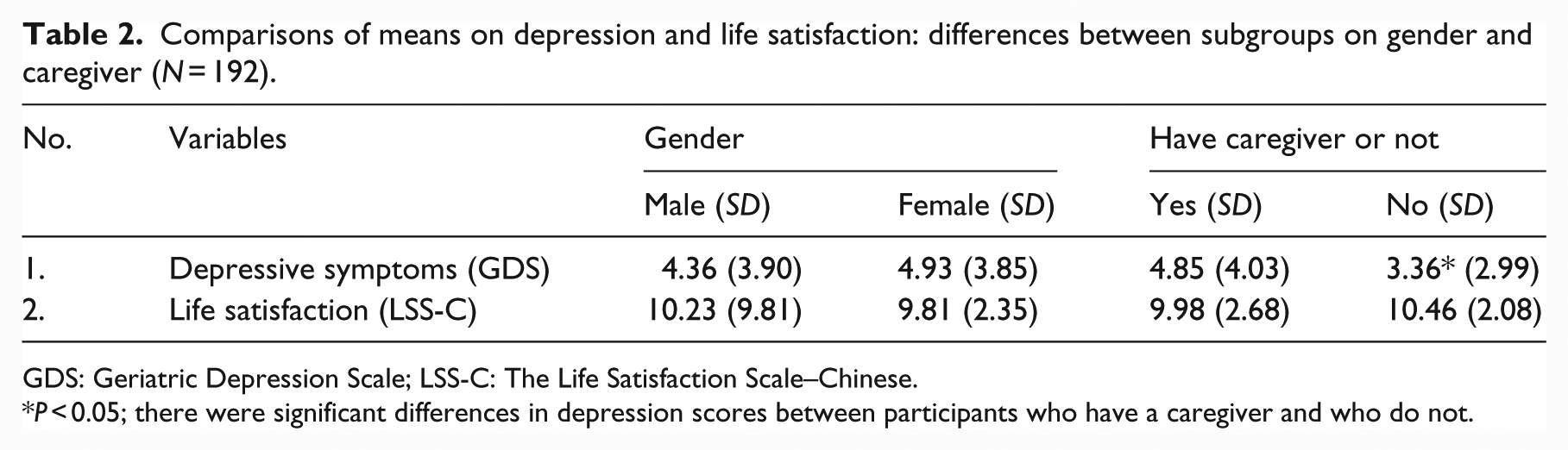
GDS: Geriatric Depression Scale; LSS-C: The Life Satisfaction Scale–Chinese.
P < 0.05; there were significant differences in depression scores between participants who have a caregiver and who do not.
Correlation analyses
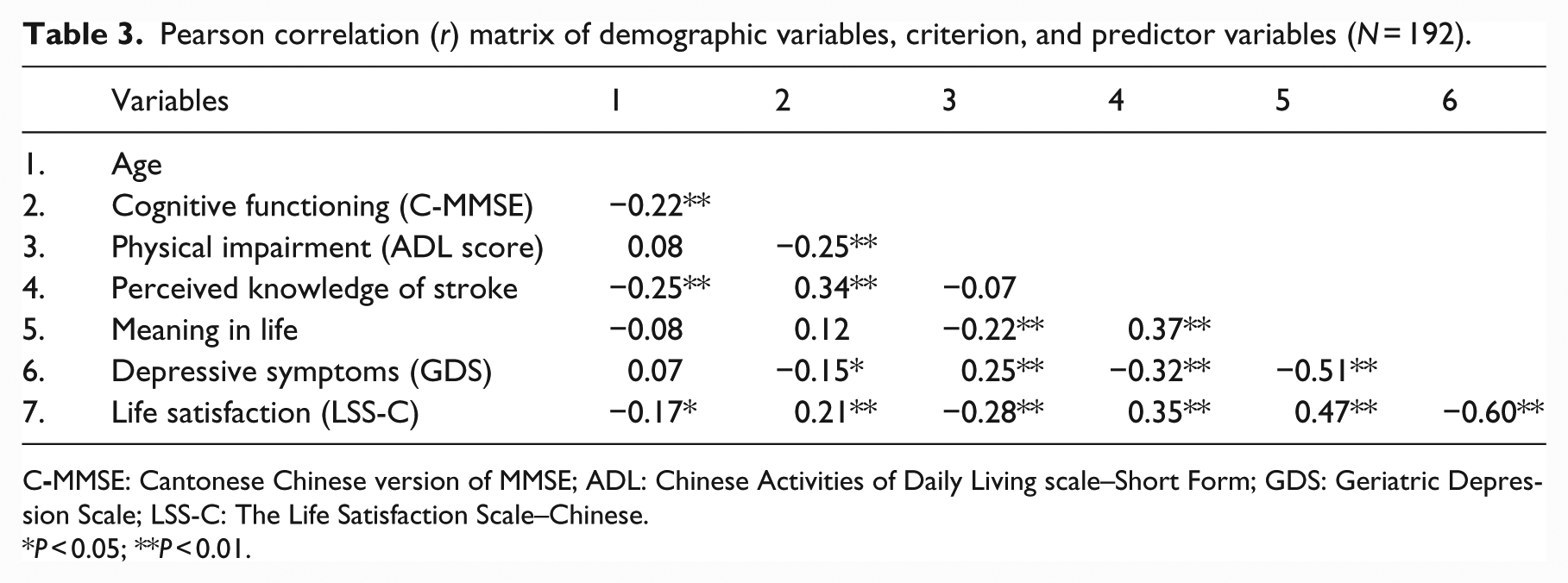
Table 3 presents the descriptive data for the predictors and criterion variables, as well as their inter-item correlations. A positive association between perceived knowledge of stroke and meaning in life (r = 0.37, P < 0.01) was identified. In addition, perceived knowledge of stroke was negatively related to depressive symptoms (r = −0.32, P < 0.01) and positively related to life satisfaction (r = 0.35, P < 0.01). For the variable meaning in life, the same patterns were found in its relation to their depressive symptoms (r = −0.51, P < 0.01) and life satisfaction (r = 0.47, P < 0.01).
Pearson correlation (r) matrix of demographic variables, criterion, and predictor variables (N = 192).
C
P < 0.05; **P < 0.01.
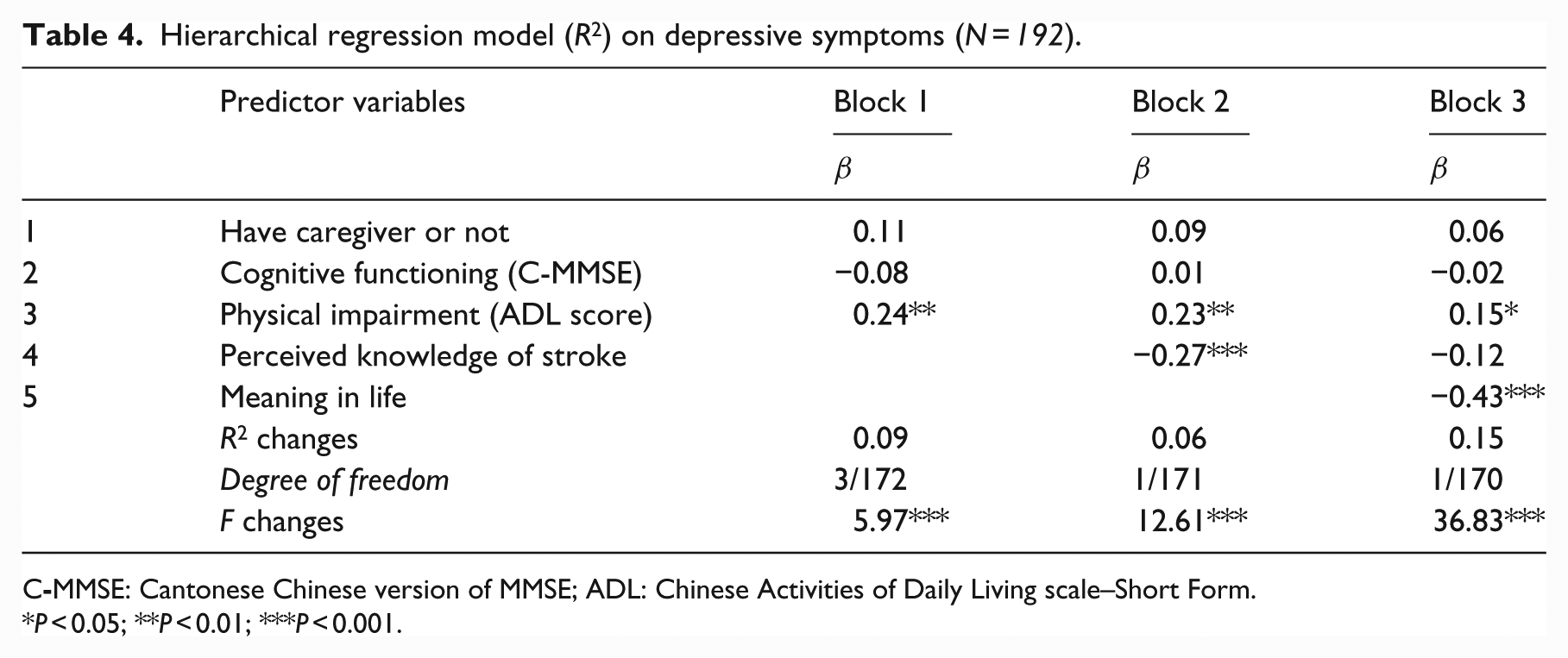
The overall hierarchal regression (R2) model explained 30% of the variance in depressive symptoms (see Table 4). In the final model, meaning in life was significantly negatively related to depressive symptoms (β = −0.43, P < 0.001). Since the level of physical impairment may affect stroke survivors’ daily functioning which may contribute to their life satisfaction, it was decided to see whether physical impairment related to depressive symptoms; in fact, it was positively related to depressive symptoms (β = 0.15, P < 0.05), and greater physical impairment was associated with more depressive symptoms.
Hierarchical regression model (R2) on depressive symptoms (N = 192).
C
P < 0.05; **P < 0.01; ***P < 0.001.
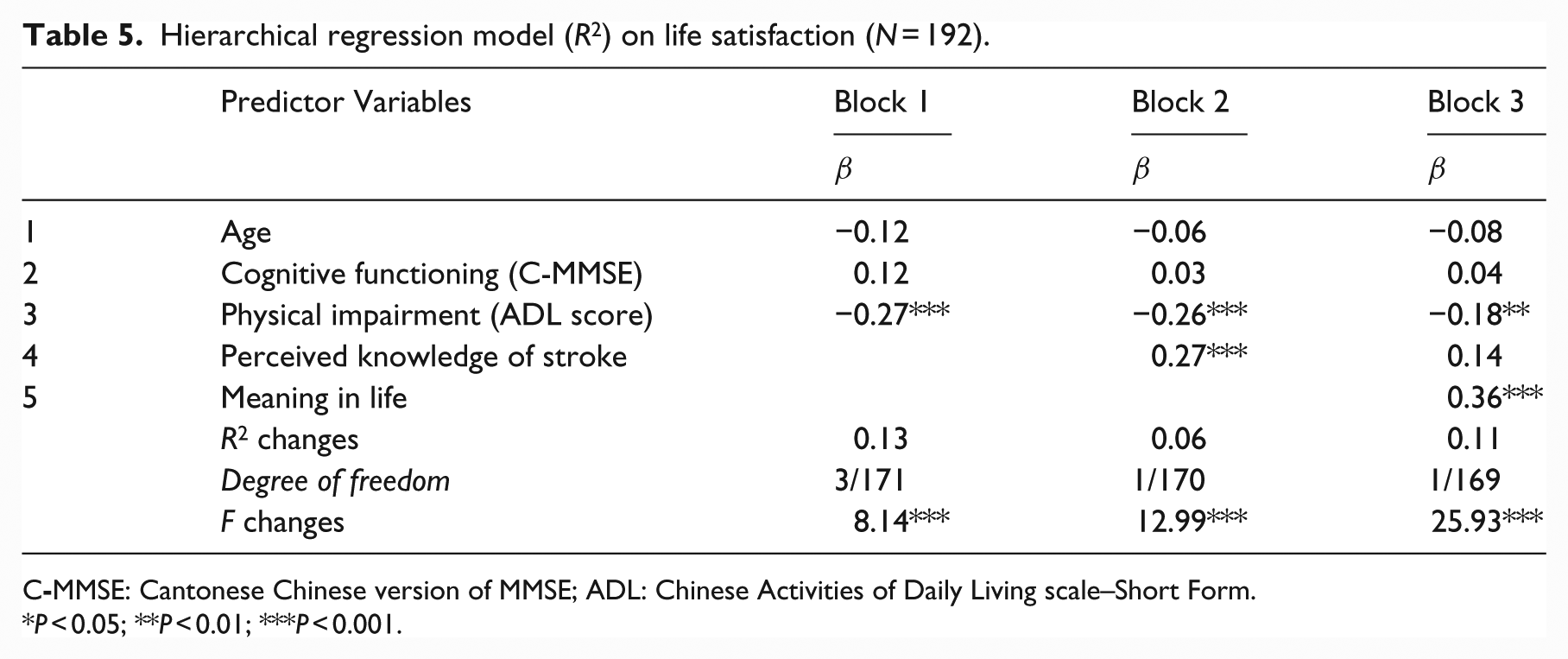
As indicated in Table 5, the overall regression model explained 30% of the variance in life satisfaction. In the final model, meaning in life was positively related to life satisfaction (β = 0.36, P < 0.001). Furthermore, physical impairment was negatively related to depressive symptoms (β = −0.18, P < 0.01), as stroke survivors with greater degrees of physical impairment were found to experience lower life satisfaction.
Hierarchical regression model (R2) on life satisfaction (N = 192).
C
P < 0.05; **P < 0.01; ***P < 0.001.
Mediating effects of meaning in life
Baron and Kenny’s 11 four-step procedure was then used to test the mediation effects of meaning in life on perceived knowledge of stroke in predicting depressive symptoms and life satisfaction in two different models. The correlations among the variables in the model were found to be significant in the first three steps (i.e. the analysis between the independent variable and dependent variable, the independent variable with the mediator, and the mediator with the dependent variable). The statistics for the first three steps for the two models, respectively, are presented in Figures 1 and 2. In step 4, the results of the Sobel (z) test 12 demonstrated that the decrease in regression coefficients was significant, indicating that meaning in life was a complete mediator of subjective understanding of stroke in the prediction of depressive symptoms (z = −3.71, P < 0.001) and also life satisfaction (z = 3.97, P < 0.001).
Discussion
The results revealed the important role of one’s meaning in life constitutes a complete mediator statistically in both relationships. Specifically, after accounting mediating effects for meaning in life, perceived knowledge of stroke no longer accounts for significant variance in predicting patients’ depressive symptoms and their life satisfaction (Figures 1 and 2). This implies that although perceived knowledge of stroke, which could be enhanced through timely psycho-education activities, was found to be helpful in improving the wellbeing of patients, it was the subsequent change in patients’ meaning in life that helped to enhance their perceived level of wellbeing. These results align with the hypothesis derived from the dynamic model of meaning in life by Park and Folkman 1 that a more enhanced understanding of knowledge of stroke and its rehabilitation process (e.g. causes, symptoms, treatment, relapse prevention, and rehabilitation options) can help stroke survivors to engage in reflective re-appraisal. This active process will create situational meanings to be more coherent with their global meaning; this state of coherence has been found to be positively correlated with the wellbeing of stroke survivors. 20
The significant result attributed to the mediating effect further confirmed that meaning in life could affect stroke survivors’ depression levels, as well as their perceived life satisfaction. This corresponded with findings from an elderly sample conducted by Alea and Bluck, 21 which revealed that life meaning had a strong correlation with more positive wellbeing. Meaning in life was also found to have a mediating effect on the relationship between physical functioning, optimism, and stroke survivors’ wellbeing. 22 According to study findings, meaning in life was a significant factor that not only related to stroke survivors’ physical functioning but also interacted with perceived knowledge and affected stroke survivors’ overall wellbeing. In addition, these findings indicated the importance of discovering meaning in life for stroke survivors, to minimize negative mental health outcomes. A recent study by Lee et al. 23 echoed the importance of meaning during illness and recovery. The notion of purposefulness—creating and finding meaning to different aspects of life—will enhance rehabilitation outcomes. Most importantly, illness can easily set the stage of creating a personal narrative whereby individuals can actively seek new purpose and their preferred identity. 23 This idea of purposefulness, and ascribed meaning, is in fact universal and is applicable to a variety of contexts, in the hopes of facilitating individuals response to any health condition. 23
A surprising finding was that more depressive symptoms were found in patients with caregivers than in those without caregivers. This finding seemed contradictory to findings from previous studies, which highlighted social support as a strong correlate with depression. 24 However, when examining research that focused not only on the patients’ psychological wellbeing but also on the caregivers’ wellbeing, it was posited that primary caregivers or spouses may feel stressed due to the overall burden of caregiving, resulting in lower levels of life satisfaction and wellbeing. 25 As concluded from a broader literature review study, a substantial percentage (11%–42%) of stroke survivors’ caregivers were found to exhibit depressive symptoms in the first five years after stroke. 26 The adverse impact on caregivers can in turn exacerbate depression levels of stroke survivors. 27 This may also explain why stroke survivors with caregivers also had higher levels of depression than those without caregivers.
This study had some limitations, which need tabling. Although meaning in life was found to constitute a significant mediator in the effects of knowledge of stroke in predicting depression and life satisfaction, it was noted that these patients scored relatively high in their degree of cognitive and physical functioning due to the stringent inclusive criteria. Hence, this sample may not be representative of patients engaging in inpatient stroke rehabilitation, such as those suffering more severe impairments in cognitive and physical functioning. Moreover, although the mediation models were found significant, given the nature of the data analysis, no causal inferences can be concluded from these findings as data were collected for the purpose of a baseline study to elucidate the effectiveness of a meaning-making therapeutic intervention. Thus, posttest analyses, such as longitudinal studies, should be further investigated to better understand the precise impact of this mediation effect.
Applications for gerontological practice
Baumann et al. 10 have found that patients are typically dissatisfied with the information they receive concerning their stroke both during their stays in hospitals and when they were discharged from inpatient rehabilitation. 10 A systematic review of this literature by Hafsteinsdóttir et al. 7 found that patients desire different kinds of information concerning strokes, at different stages after experiencing their own stroke. While patients tend to initially seek information concerning financial matters and physical recovery, they tend to ask for information about the social and psychological consequences of their stroke in their later post-stroke phases. As a result, an intervention that can provide patients with the most appropriate and timely kinds of information may be beneficial for their recovery. 20
Conversely, other research has consistently found that interventions that actively involved both patients and caregivers together are more effective in enhancing a patient’s wellbeing and knowledge. 8 In other words, an intervention that provides opportunities for participants to ask questions and interact with the information-providers is more personalized and helpful than only providing lectures or information leaflets. Moreover, while meaning in life was found to be a significant mediator of the effects of knowledge in predicting patients’ level of depression, adequate knowledge should be provided to patients in planned interventions so that they can evaluate the feasibility of joining meaningful therapeutic activities in the future. We posit that this may not only ease their doubts and misconceptions but also inspire their hopes for recovery. However, people often fail to attach the same level of positive meanings to similar events; therefore, they would ideally need a range of knowledge resources offered in various forms, that is, written, face-to-face, telephone, Internet, social media, and the like. As a result, a more meaning-making intervention, accompanied by the delivery of knowledge of stroke on an interactive platform, can work together to support the recovery of stroke survivors.
Meaning in life appears vital in the context of living with a chronic, life-threatening illness. Moreover, experiencing one’s life as meaningful, and feeling that one has significance and purpose, is positively related to wellbeing for people dealing with a range of health crises and illnesses.23,28 It was found in other research on this subject that meaning-making interventions can help patients to establish meaning in life and increase their self-esteem. 29 Meaning-making comprises a personal journey of development and the creation of the self—the activity of each person who is both shaping his or her self and shaping a coherent and meaningful life. 30 Life continually presents possibilities to find meaning, even under extremely stressful conditions. 31 Therapeutic programs that target sustaining or enhancing patients’ sense of meaning and purpose in life through the use of typical and timely themes, such as personal life stories, finiteness of life, and value-based sources of meaning, can be effectively used with such patients. 32 For example, through meaning-making interventions, patients can re-identify their strengths, even while experiencing physical trauma. With the provision of additional timely resources and supports from gerontological health professionals, clients can then perceive themselves as more active participants in achieving solutions to their own problems. 33
In conclusion, post-stroke depression and a decrease in life satisfaction exert a tremendous impact on stroke survivors’ wellbeing. The findings herein indicated that meaning in life can mediate the relationship between perceived knowledge and depression, as well as the relationship between perceived knowledge and life satisfaction. Therefore, meaning in life constitutes a possible strategic and helpful factor that enhances stroke survivors’ psychological wellbeing. Further research should be conducted to investigate the effects of meaning-making interventions on the health of other stroke survivors. Indeed, this has implications for a wide range of health and human service workers who provide interventions to this growing aging population worldwide.
Clinical Messages
Meaning in life is a significant mediator between perceived knowledge of stroke and depression, as well as life satisfaction, in two separate models among high-functioning stroke survivors in Hong Kong Chinese older adults.
Culture-specific meaning-making interventions together with stroke psycho-education can facilitate the recovery of stroke survivors.
Footnotes
Acknowledgements
Special thanks to the Editor, colleagues, and the reviewers in providing very helpful suggestions and comments on the paper. The principal investigator also acknowledges Dr Edward Leung, Dr Patrick Li, Dr Leonard Li, Dr Jenny Lee, and Dr Jacky Cheung for their support in recruiting participants from Hospital Authority. The author also expresses her gratitude to the stroke survivors and their families who actively participated in the study and extend a special thanks to Willie Tang, Desmond Dao, Karen Li, and Priscilla Ip for providing research support during various stages of the study.
Author’s Note
Esther OW Chow is a registered social worker (RSW), a licensed narrative therapist, and is a social work educator, Department of Social Sciences, City University of Hong Kong, Hong Kong SAR.
Declaration of Conflicting Interests
The author(s) declared no potential conflicts of interest with respect to the research, authorship, and/or publication of this article.
Funding
The author(s) disclosed receipt of the following financial support for the research, authorship, and/or publication of this article: This is a CADENZA project, which is funded by the Hong Kong Jockey Club Charities Trust (Project Number: 9231010).