




Abstract
Little is understood of how enterprise support organisations frame their role and impact in entrepreneurial ecosystems (EE). To explore this gap, we conduct a narrative analysis of co-working spaces’ (CWS) impact and evaluation reports. Our analysis reveals the use of three frames. Objective frames, which include scaling technology ventures, facilitating social innovation, or developing specific communities. Impact frames which include well-being and productivity, venture creation and growth, and community outreach. Driving these objectives are specific coordinating frames, peer support, bespoke support, EE facilitation, and mentor networks. The implications of these heterogenous narratives are discussed in relation to the current literature that considers the role of ESOs in EE coordination.
Introduction
Enterprise support organisations (ESOs) play a crucial role in facilitating entrepreneurship as they provide the resources that are needed for the creation and growth of new ventures (Bergman and McMullen, 2022; Clayton et al., 2018). They are frequently positioned as key within existing EE frameworks (e.g. Stam, 2015); with the idea that having an abundance of well-connected ESOs can ultimately lead to growth and innovation for a region (e.g. Huggins et al., 2023; Montayama and Knowlton, 2016). As such, they represent central components in current policy strategies to shape cities and regions as EEs (Florida et al., 2017; Kayanan, 2022; Levenda and Tretter, 2020; Wolf et al., 2018).
However, recent critique is beginning to question whether the mere presence of ESOs in a region is indeed enough to stimulate and sustain high levels of entrepreneurship (Coad and Srhoj, 2023; Hruskova et al., 2023). Furthermore, the existing ESO research has been criticised for taking a material approach to understanding how to support entrepreneurs with relatively little known about how entrepreneurial support environments are socially constructed (Bergman and McMullen, 2022; Hannigan et al., 2022; Spigel, 2016; Thompson et al., 2018). This is a particularly important avenue to address as research is progressing from diagnosing the vital ingredients needed within an EE to understanding how resources can be orchestrated and EE actors coordinated to maximise the impact of collective efforts (Hruskova, 2024; Huggins et al., 2023; Knox and Arshed, 2022; Porras-Paez and Schmutzler 2019; Santos et al., 2023).
Against this backdrop, this paper investigates how co-working spaces (CWS) frame their role and impact in EEs. CWS are regarded as important for entrepreneurs (particularly young start-ups) as they provide flexible office space and the chances for collaboration (e.g. Avdikos and Papageorgiou, 2021; Howell, 2022). In the last decade, the number and variety of co-working spaces (CWS) has grown dramatically. There are now reportedly over 30,000 CWS in existence across the globe, an increase from just 160 pre-financial crises in 2008 (GCUC, 2017).
It is important to know how CWS frame their role and impact to shed light on how ESOs position themselves within the ‘complex’ systems of infrastructure that supports entrepreneurship (Roundy, 2016). The narratives that are used can act as ‘cognitive and emotional mechanisms’ which influence various stakeholders (Roundy and Bayer, 2019: 195), including the behaviour and attitudes of entrepreneurs (Hubner et al., 2022; Kibler et al., 2014). Understanding how CWS position themselves within EEs, therefore, can provide greater insights into the interaction dynamics that help glue EEs together (Lowe and Feldman, 2017; Muñoz et al., 2022; Roundy, 2019; Theodoraki et al., 2018).
To explore this, we conduct a narrative analysis for CWS located in western country context – Australia, Canada, Germany, Ireland, Netherlands, New Zealand, United Kingdom, and the United States. Our research approach is based on how narratives are used in communication as tools to shape one’s own understanding (sensemaking) and signal to influence others’ understanding (sensegiving) to give legitimacy to actions (Brown, 1998; Herman et al., 2010; Roundy and Bayer, 2019). In this sense, we conceptualise CWS as socially constructed through the narratives they use to signal their role and impact within EEs. Our specific research question is: how do CWS position their role and impact within EEs?
This study makes two main contributions to the existing EE coordination literature. First, to the literature that looks to distinguish the physical and material attributes of different EE support infrastructure (e.g. Bergman and McMullen, 2022; Fiorentino, 2019; Knox, 2024), we provide insights into the heterogenous narratives that are adopted to signal role and impact, showing CWS as a heterogenous type of business support. Second, we extend understanding on the role of narrative in the development of entrepreneurship within a region (e.g. Kibler et al., 2014; Roundy and Bayer, 2019). We detail the various frames that position ESOs, providing insights into the foundations of how EEs are structured. This has implications for the interaction between actor agency and the material structures of an EE (Huggins et al., 2023; Kapturkiewicz, 2022; Scheidgen, 2021; Van Erkelens et al., 2023) and adds nuance to the current cluttered landscape debate (e.g. Hruskova et al., 2023). We discuss the implications of these contributions in relation to the existing literature that considers the role of ESOs in EE coordination.
Literature review
Entrepreneurial ecosystems
An EE is defined as a ‘set of interconnected entrepreneurial actors, entrepreneurial organisations, institutions and entrepreneurial processes which formally and informally coalesce to connect, mediate and govern the performance within the local entrepreneurial environment’ (Mason and Brown, 2014, p. 5). Within the existing research, the primary focus is on the physical production of EEs embodied through the availability of various resources, such as finance capital, information, and access to networks (Spigel, 2016; Stam and Van de Ven, 2021; Theodoraki and Messeghem, 2017). These resources are typically provided by enterprise support organisations (ESOs) who aim to lower entry barriers to markets for entrepreneurs and coordinate the vibrancy of the ecosystem at a regional level (Bergman and McMullen, 2022; Knox and Arshed, 2022; Stam and Van de Ven, 2021).
Despite their importance for entrepreneurs, the role and position of ESOs has received limited attention in the EE literature. The existing work has been able to diagnose EE resource landscapes, classifying ESOs into types based on function, such as mentoring, business model advising, or space and incubation (Hruskova et al., 2023; Motoyama and Knowlton, 2017; Spigel, 2016). While these elements are undoubtedly important and strongly linked to the vibrancy of entrepreneurship in a region (e.g. Leendertse et al., 2022; Stam and Van de Ven, 2021), the cultural mechanisms which structure and organise these resources to facilitate entrepreneurship are less well known (Malecki, 2018; Merrell et al., 2021b; Roundy and Bayer, 2019).
Scholars have starting to explore the social aspects of organising EEs. The coordination between various EE actors gives rise to how EEs are structured (Knox and Arshed, 2022). Strong connections between actors creates munificence and integration (Motoyama and Knowlton, 2016), while disconnect between actors can create fragmentation (Scheidgen, 2021). However, the interactions between various EE actors are inherently ‘messy’ as they each have different motives and interests which can create conflict and tension (Autio and Levie, 2017; Knox and Arshed, 2022). Therefore, the ‘types’ of support that various ESOs look to provide can shift as ESOs can vie for position and resources in an EE (Hruskova et al., 2023; Knox and Arshed, 2022). Furthermore, there are a plethora of EE actors that operate across multiple levels which poses challenges for understanding the driving mechanisms which help coordinate EEs at a system level (Knox, 2024; Spigel, 2016; Wurth et al., 2022).
Entrepreneurial ecosystem narratives
To address these limitations a growing line of literature is focusing on the role of narratives in structuring and coordinating EEs. Narratives, such as success stories, are proposed to play a critical role in transmitting culture, constructing EE identity, and providing legitimacy (Roundy, 2016). This is important for coordination for two reasons: (1) they can help to garner attention from outsiders and spark interest in the ecosystem, potentially attracted further resources (Roundy, 2016); and (2) they shape understanding (i.e. sensemaking) and signal intention to other EE actors (i.e. sensegiving) (Roundy, 2016; Roundy and Bayer, 2019).
Ultimately, narratives can structure and guide entrepreneurial behaviour, such as propensity for causation or effectual organising (Hubner et al., 2022). Furthermore, they can also influence how entrepreneurs experience support by transmitting different beliefs and values surrounding mentorship (Spigel, 2017), or where they feel belonging and how they behave to fit-in with different support networks (Knox et al., 2021). As such, narratives can be regarded as ‘microfoundations’ for EEs (Malecki, 2018; Roundy and Bayer, 2019; Wurth et al., 2022).
Drawing on the existing narrative constructions of EEs (e.g. Roundy, 2016; Roundy and Bayer, 2019), we conceptualise a narrative based on both its function as a communication tool and its ability to structure and make sense of sequences of events, actions, and experiences (Herman et al., 2010). Structurally, narratives must have experiences and events ordered temporarily and contain a causal explanation (Onega and Landa, 1995). Functionally, a narrative is used to shape both one’s own understanding (sensemaking) and signal to influence others’ understanding (sensegiving) (Brown, 1998).
Based on this conceptualisation, Roundy (2016) identifies three main types of narrative used in EEs. Success stories which frame specific actions and outcomes as being successful, such as ventures obtaining investment, which signals which behaviours to strive for. For example, the narratives used within business networks can act to ‘push’ entrepreneurs to strive for business growth (Knox et al., 2021). Historical accounts, which highlight key episodes in the development of an EE and specific characteristics which are embodied. For example, in the Detroit EE, entrepreneurs embrace stigma and comeback stories which embody grit, determination, and strength to obtain resources (Cowden et al., 2022). Finally, future-orientated narratives signal future intent and how this impacts the trajectory of an EE. For example, the way governments position their policy intentions influences how different entrepreneurs are legitimately seen within EEs (Ahl and Nelson, 2015).
However, within the existing literature, attention has focused on either entrepreneurial narrative (e.g. Cowden et al., 2022; Hubner et al., 2022) or macro-level system and policy narratives and the way they shape behaviours and legitimacy collectively (e.g. Ahl and Nelson, 2015; Wapshot and Mallett, 2018, 2024). Limited attention has been directed at an intermediary level toward ESOs and how they position themselves within EEs to signal to stakeholders their intentions. In this article, our focus is on CWS, a growing urban phenomenon that is receiving more prevalent attention as support organisations within EEs.
Co-working spaces
CWS are defined as membership-based, shared-office spaces that provide amenities and facilities to tenants that they would otherwise not be able to afford (Jamal, 2018). Several academic studies have established typologies to distinguish between the various features of CWS and other related social spaces (e.g. Bergman and McMullen, 2022). This literature highlights that CWS typically differ from other managed workspaces due to the flexible and short-term nature of renting desks in an open planned office space (Merkel, 2019). They differ from other shared workspaces such as maker spaces, fab labs, and artist studies which focus on the ‘making’ of products (Fiorentino, 2019; Marotta, 2021). They are also a distinct entity from other spaces that act as temporary sites for co-working, such as public libraries and coffee shops, as they have permeance (Merkel, 2019). Finally, they also differ from business incubators and accelerators which focus on a set type of venture, typically have an application process, and a programme that usually lasts about one or two years (Bergman and McMullen, 2022; Bliemel et al., 2019; Nicholls-Nixon et al., 2022; Oh et al., 2022).
Main impact frames within the co-working space literature.
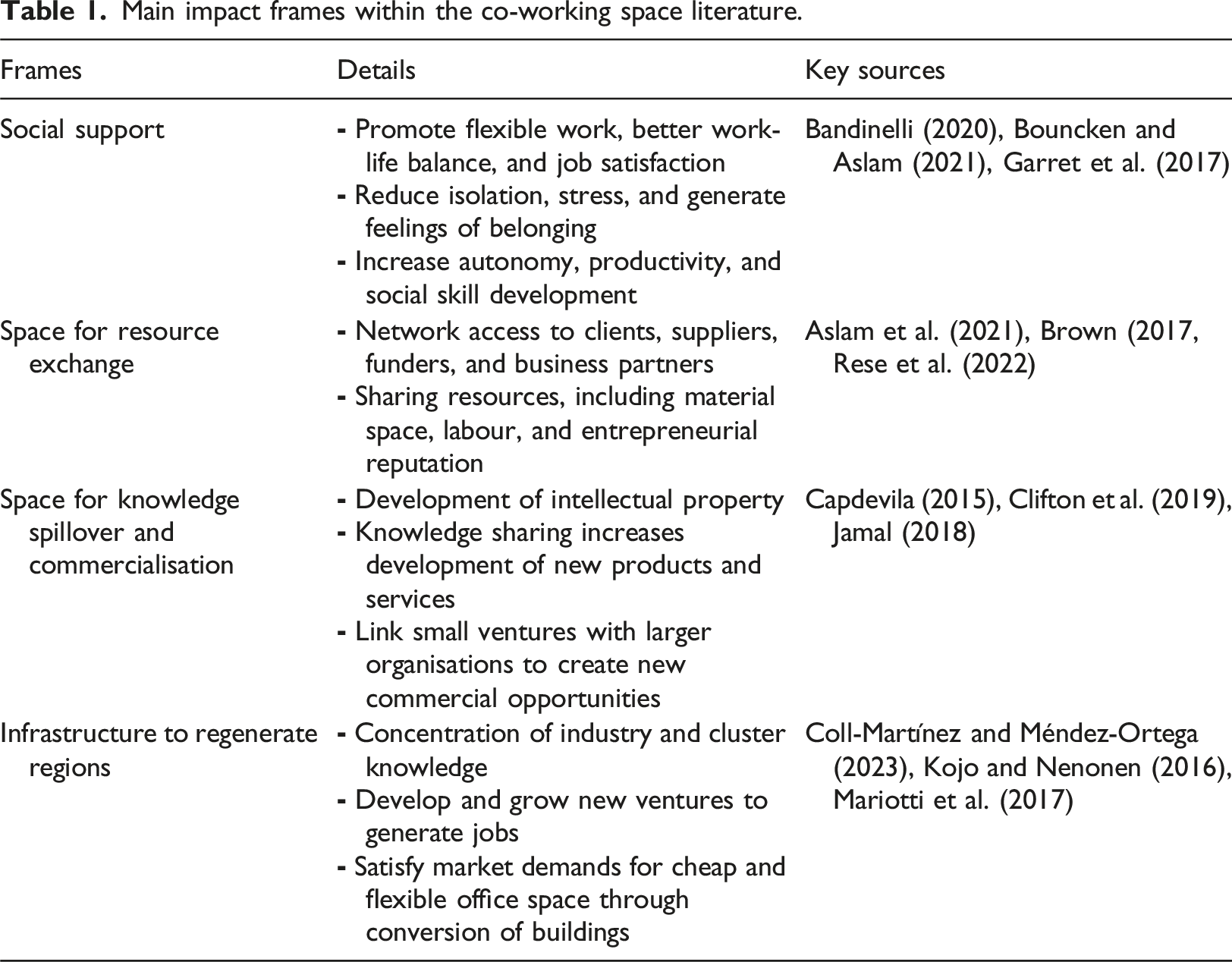
First, CWS are seen to be spaces of social support in which people can receive both informational and emotional assistance (Wright et al., 2022). These spaces focus on developing a sense of community and belonging (Garret et al., 2017), and promote autonomy, work-life balance, and job satisfaction (Bouncken and Aslam, 2021).
Second, CWS can be seen as places in which budding entrepreneurs exchange resources. This occurs through various sharing practices, including material space, knowledge on how to access funding, and ‘reputational’ resource by belonging to a CWS community (Brown, 2017). The resource exchange is facilitated by social networks that CWS membership provides (Rese et al., 2022). This generates various benefits including the development of inter-firm teams, access to clients, suppliers, funders, and business partners (Aslam et al., 2021).
The third perspective considers a CWS as a space which drives commercialisation through the development of intellectual property and the spillover of knowledge. Knowledge exchange is facilitated both laterally between CWS tenants to develop new products and services (Clifton et al., 2019), and vertically to link small new ventures to larger established ventures through the exploitation of innovation and technology (Jamal, 2018).
The final perspective considers CWS as supporting infrastructure to regenerate regions by helping to concentrate industries and sectors within specific geographic proximities (Coll-Martínez and Méndez-Ortega, 2023). This brings benefits such as job creation through the development and growth of new ventures (Kojo and Nenonen, 2016) and by helping to satisfy demands for cheap and flexible office space in increasingly competitive urban locations (Marioti et al., 2017).
However, while much of the existing academic literature places CWS as theoretically providing various benefits to users and regions there is also an ‘underdeveloped’ section of the literature that highlights negative impacts of CWS. They can be sites of exclusion which mask individualism through narratives of collectivism and mask austerity through narratives of social innovation (Lorne, 2020). They can act to reinforce precarious working conditions by providing a sense of community which can incentivise over-working and self-exploitation (Waters-Lynch and Duff, 2021; Wright et al., 2022).
Considering these theoretical positions, there is a need to explore how CWS frame their role and impact to signal their position and value to EE stakeholders. Relatively little is known of their specific role in coordination, nor the impact and value that they provide within EEs (Clayton et al., 2018; Madaleno et al., 2022). We investigate this through a narrative analysis of CWS impact reports.
Methodology: analysing co-working space impact
Narrative analysis of impact reports
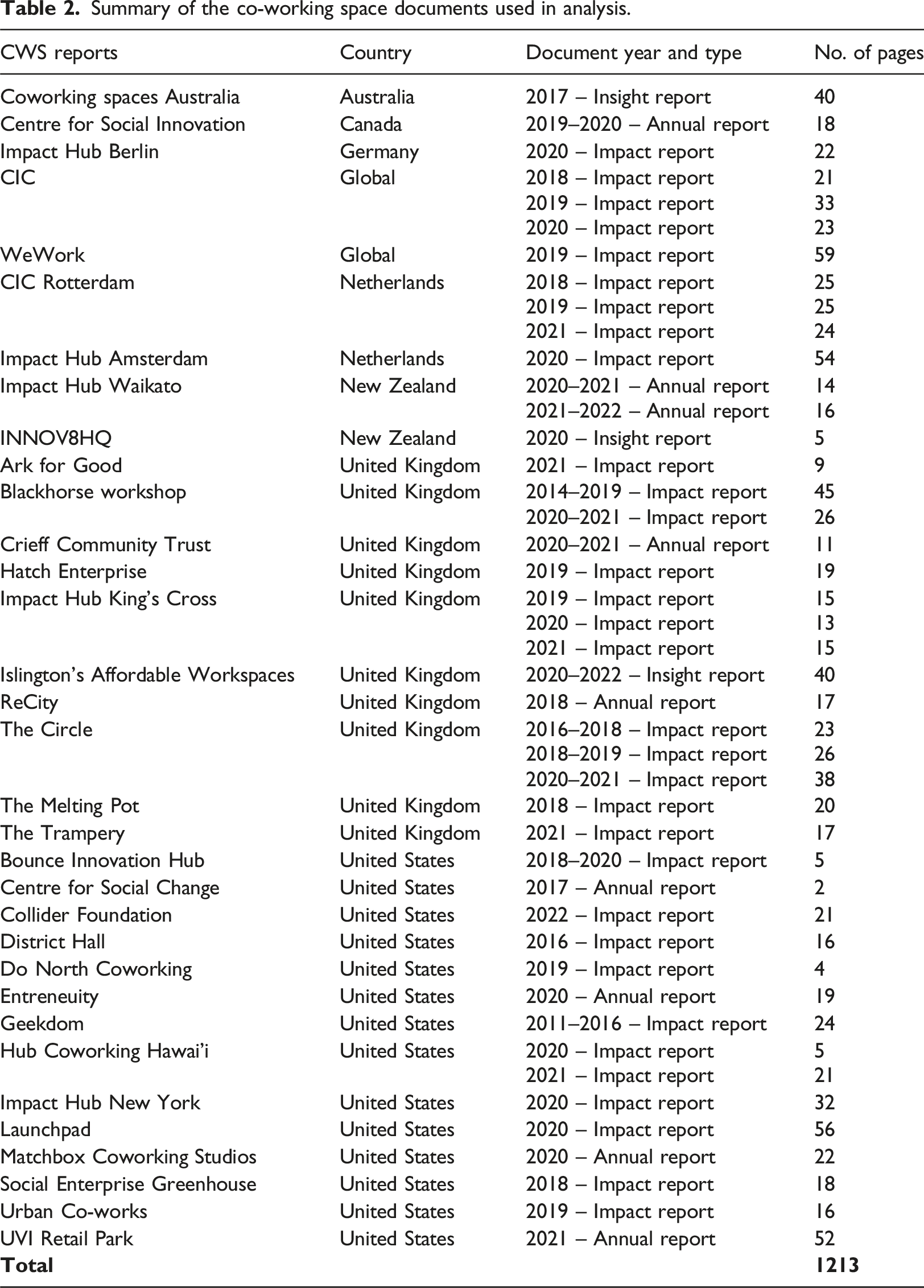
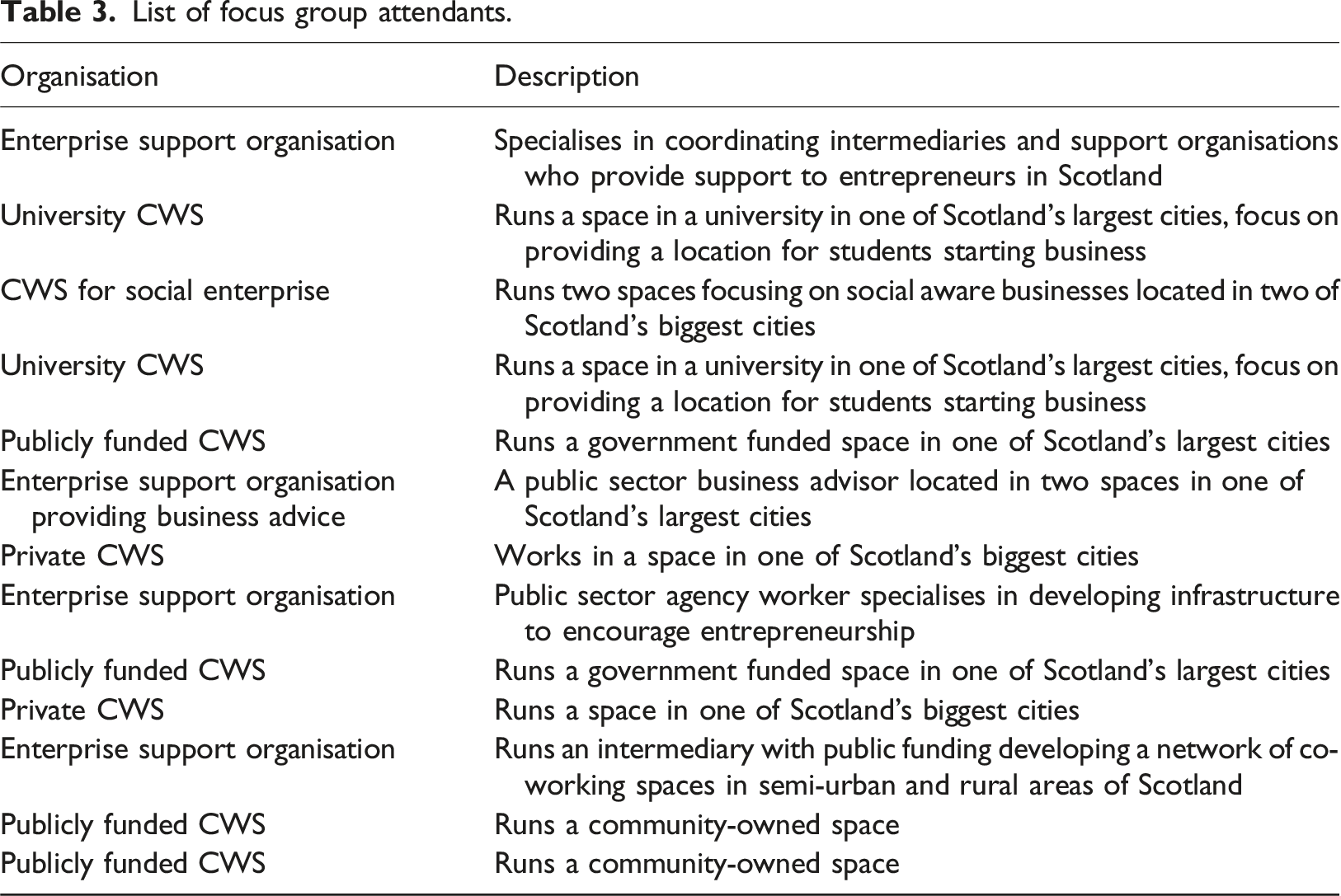
This study employs a qualitative narrative analysis to examine how CWS construct and communicate their role and value within EEs. Narrative analysis enables critical interrogation of strategic discourse and meaning-making patterns (Brown, 1998; Philips et al., 2004). To analysis how CWS position their role and impact within EEs we analyse self-published impact reports which we complemented with two focus groups. Impact and evaluation reports are regarded as key to signalling value to funders and communicating perceived impact (Lenihan, 2011). They also provide learning opportunities for organisations, offering a chance for reflection on past activities (Arshed et al., 2016; Smith et al., 2019). As such, we considered these reports as containing sensemaking and sensegiving narratives for CWS objectives, impact, and, importantly, insights into the activities that generate causal explanation for these impacts (Herman et al., 2010).
Summary of the co-working space documents used in analysis.
Analysing CWS impact reports
List of focus group attendants.
In our second step, we read through each report selecting sentences, words, and phrases that gave us insights into narrative statements and allocated initial codes. For example: ‘The Melting Pot provides a community and a solution to the isolation and distractions encountered when working at your kitchen table’ (The Melting Pot, 2018, United Kingdom).
This text was assigned the codes ‘overcoming isolation, ‘community’, and ‘productive work environment’. From this, we identified if statements were framing the objectives, impact, or how objectives and impact were coordinated. This led to 70 codes capturing CWS objectives, 72 codes capturing impact, and 109 codes which identified coordinating mechanisms. For each of these categories, we thematically grouped codes to capture the main framings. This resulted in three object frames, three impact frames, and four coordinating frames being identified to explain how CWS positioned their role and impact within EEs. After conferring these codes across the research team, we compared them with the different literature frames identified in Table 1 to analyse whether the narratives adopted in CWS framing matches existing scholarly understanding.
Findings
Objective frames
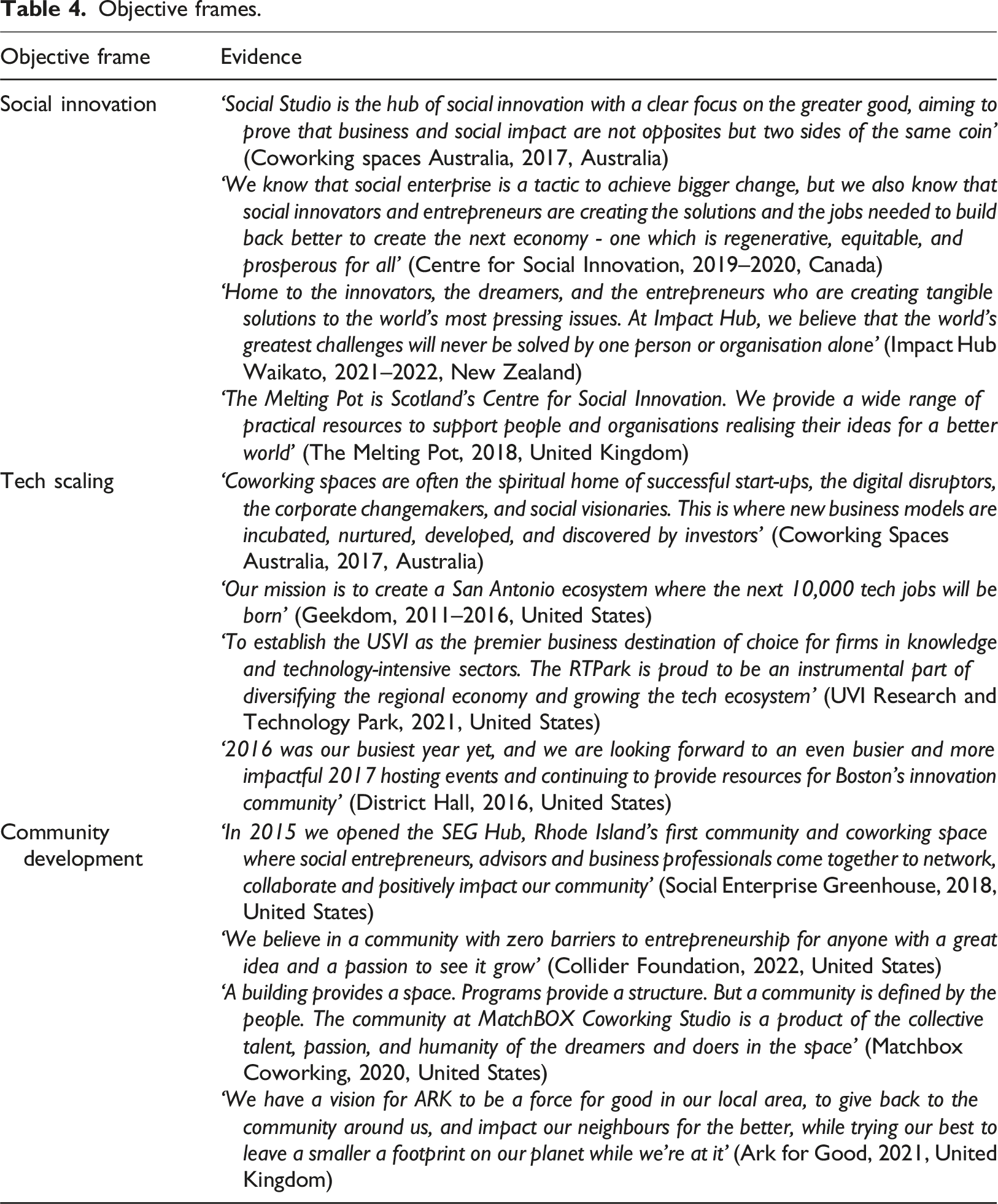
Objective frames.
Social innovation
A persistent theme across impact reports was the potential of CWS to develop social innovators and organisations with a social-based focus. The narrative was framed around generating change and disrupting existing practices that create social problems: ‘I see The Trampery acting as a laboratory for new forms of capitalism and promoting business models that deliver social and environmental benefits’ (The Trampery, 2021, United Kingdom).
The narrative from these CWS were predominately framed around social innovation as an improved means of ‘doing’ business at a wider level, rather than the CWS as a type of social innovation. Narratives were laden with notions of ‘collectivism’ and ‘solutionism’, which assumed that social innovation, generated in the collective environment of a CWS, was the best means to address social problems. Interestingly, there was little reference to public policy, lobbying, or work to impact change at a systemic level. The aims of the CWS were predominately focused on stimulating individual organisations to effect change.
Tech scaling
The desire to house fast-growing technology-based ventures was another frequently mentioned objective frame. The narrative focused on the development of technology ventures and industries as important for economic growth: ‘SouthStart runs as a non-profit and hosts a range of events for anyone interested in technology; from coder meetup groups to networking events with successful interstate and international tech start-up founders. The passion of the operators in supporting the tech industry growth for the Adelaide community is evident’ (Coworking Spaces Australia, 2017, Australia).
The narrative from these CWS followed the ‘Silicon Valley model of entrepreneurship’ with the notion of a region becoming a centre for technology and fast-passed start-ups. There was an assumption that ‘tech is best’ with limited reference or rationale for why developing technology-based start-ups, jobs, and skills were vital for city development. Again, the aims of the CWS were framed around stimulating individual organisation development.
Community development
Contrary to the social innovation and tech scaling narratives, community development focused on stimulating development at a wider level. These CWS famed their objectives around wanting to drive local place-based prosperity: ‘At ReCity, we believe that if the organizations serving our community get healthier, the community gets healthier. That’s why we’re committed to helping nonprofits build capacity because it enables us to build thriving communities, together’ (Recity, 2018, United States).
As such, the CWS was framed as a community asset which could bring people together to develop local impact. Narratives were laden with notions of ‘inclusion’ and ‘belonging’ with the assumption that only by uniting the community together could positive social change take place.
Impact framing
Impact frames.
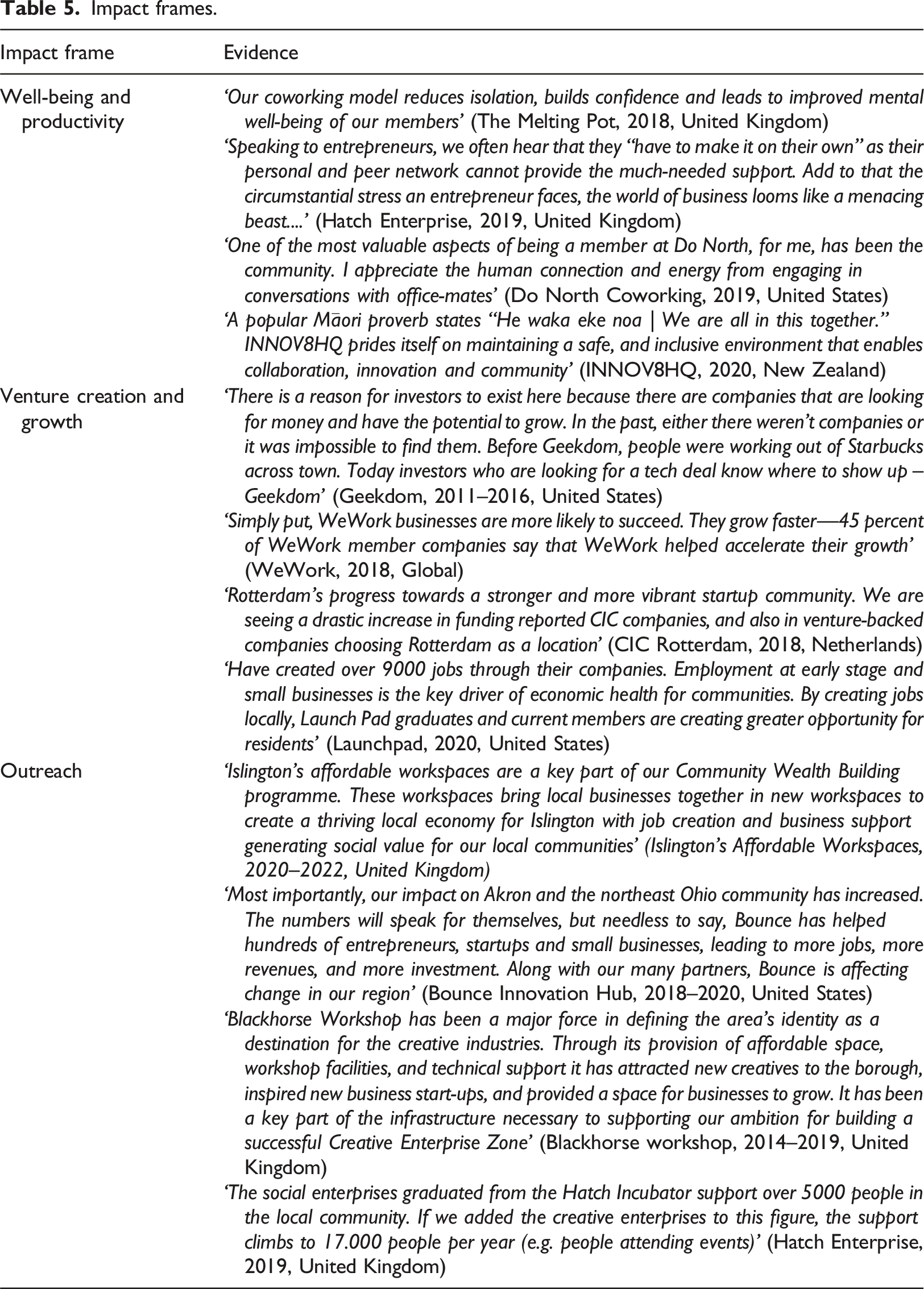
Well-being and productivity
This framing for impact was aimed at users and emphasised the productivity and well-being gains that could be made by joining a CWS. Specifically, the notion of belonging was strongly emphasised in narratives – framing the CWS as spaces of inclusion, community, and togetherness: ‘Feeling part of a community combats some of the loneliness and challenges of being self-employed or a small business and leads to a greater likelihood that the creative businesses based here will flourish' (Blackhorse workshop, 2014-2019, United Kingdom).
Productivity was typically implied within these narratives, with a message that users work better in CWS environments compared to other work settings.
Venture creation and growth
Benefits were often framed around the ability of CWS to help scale new ventures. This narrative was framed at an organisation level, mainly focused on the ability of CWS to attract resources that can help users’ growth ambitions. A common strategy within impact reports was to pool total investment or revenue growth to signal the importance of a CWS location for scaling: ‘The AVI program launched in 2019 with seven startups. The 2021 cohort added seven more companies into the fold. As of December 2021, all 21 companies are still operating. Six startups have raised capital, totaling roughly $3.5M (August 2021), though many of the startups are still in pre-revenue phases. Overall AVI companies have a combined revenue growth of $1M since 2019’ (UVI Research and Technology Park, 2021, United States).
Although attracting investment was a commonly reported narrative, venture growth narratives were also adopted by CWS that had primary objectives of social innovation or community development. Narratives for these CWS typically focused on sales growth, or job creation.
Outreach
The outreach frame was the most commonplace and focused on emphasising benefits at the community level. It focused on identifying a wide range of community activities that were delivered by CWS that may not have been delivered without the CWS: ‘Working in partnership with The Circle has allowed UnLtd to support social entrepreneurs in Dundee who we otherwise wouldn’t have found. The partnership has given us access to physical space where together we’ve run a range of successful events and has opened wide-ranging new networks for UnLtd in Dundee across the business and creative industries and the third sector’ (The Circle, 2020-2021, United Kingdom).
Typically, a figure of the potential number of people that could be supported was embedded within the narrative: ‘Since 2011, our programs have served 571 social enterprises that have improved the lives of more than 14 million people’ (Social Enterprise Greenhouse, 2018, United States). Within this outreach narrative was also often a link to regional benefits, such as job creation, or regeneration.
Framing how impact is created
Coordinating frames.
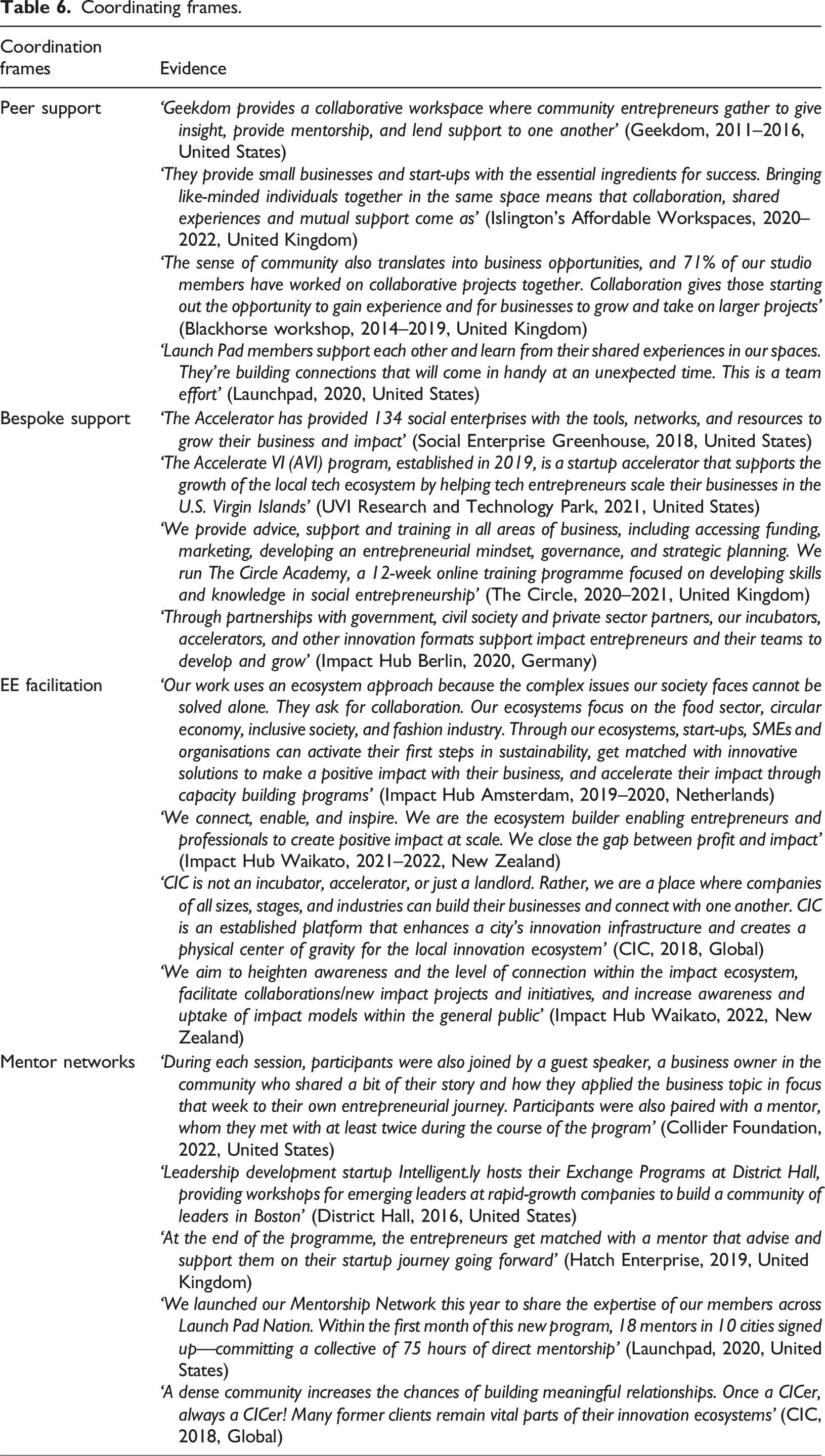
Peer support
The first coordinating mechanisms framed CWS as creating impact through peer support. Building on the idea that CWS foster a sense of belonging and community inclusion, this narrative attributed the benefits of learning from other like-minded individuals as driving impact: ‘I'm also very thankful for all of the entrepreneurs that make up this community. We've seen a tremendous “give before you get” mentality from entrepreneurial starters this year, with entrepreneurs supporting and learning from each other as they grow together. Personally, I think this is a great sign for the future of small business in this community’ (Collider Foundation, 2022, United States).
Interaction between peers was also attributed to reducing isolation, stimulating creativity, and innovation and generating new opportunities through collaboration.
Bespoke support programmes
Frequently linked to CWS was the provision of bespoke support that users could access. This support was framed as being bespoke to the needs of CWS tenants and guaranteeing access to formal support through advisors and training. Accelerator programmes were often run, using the CWS for training and networking space: ‘CSI Accelerates helps entrepreneurs build their competencies and leadership skills, and provides the connections and resources to accelerate the development, launch and sustainable growth of their ventures. Participants can be budding or maturing social entrepreneurs ready to turn prototypes into ventures or grow their fledgling ventures into sustainable enterprises’ (Centre for Social Innovation, 2019–2020, Canada).
This bespoke support helped develop skills that users required, mainly equipping them with knowledge on how to develop ideas and start businesses.
EE facilitation
This narrative focused on the ability of CWS, and specifically CWS managers, to facilitate connections between users and resource providers. EE facilitation included helping users with accessing the resources they need – including equipment, providing small grants, providing connections with investors, other users, and clients. A common means to facilitate included organising a programme of events, to attract different people to the CWS where spontaneous connections could be formed: ‘We are passionate about cultivating a supportive, inclusive, and diverse entrepreneurial ecosystem in Rochester and providing individuals with the resources they need to move forward with their business ideas’ (Collider Foundation, 2022, United States).
It was within this narrative that CWS would refer to the term ‘ecosystem’ – promoting themselves as central to ecosystems: ‘Ecosystems create entrepreneurs and geekdom is the center of the ecosystem’ (Geekdom, 2011–2016, United States). Commonplace across impact reports, the idea of the ecosystem referred to a regional network of organisations and users who were working on a similar objective. The role of the CWS within these ecosystems was to facilitate access to resources.
Mentor networks
This mechanism was less frequently attributed to driving impact but nevertheless was placed as important for wider community and regional development. These networks were framed as ‘communities of leaders’ who could act to inspire a next generation of leaders within a specific local: ‘We have built a network of almost 100 local leaders from over three dozen organizations that are collectively partnering with thousands of our most marginalized neighbors while moving the needle on many complex issues that face our communities’ (Recity, 2018, United States).
Beyond the rhetoric, these networks helped to ‘recycle’ knowledge and resource into communities with both an inward and outward focus. The inward focus was where experienced business leaders and CWS alumni would act as mentors for CWS users, helping in their venture growth and personal development. The outward focus saw CWS tenants and alumni act as mentors within local communities. These mentor networks provided a platform for members to share their expertise and was an important resource that CWS managers could draw upon for community outreach.
CWS narrative threads
Looking across objective, impact, and coordination narratives the analysis identifies some common threads (Figure 1). Community development and social innovation objective narratives are closely entwinned, with impact predominately displayed through outreach but also through well-being and productivity benefits to users. To achieve these outcomes, bespoke support and peer support were the most common mechanisms. For CWS who framed objectives regarding tech scaling, venture creation, growth, and investment was the most used impact frame. EE facilitation was framed as the predominant mechanism to help achieve impact. Summary of narratives in CWS.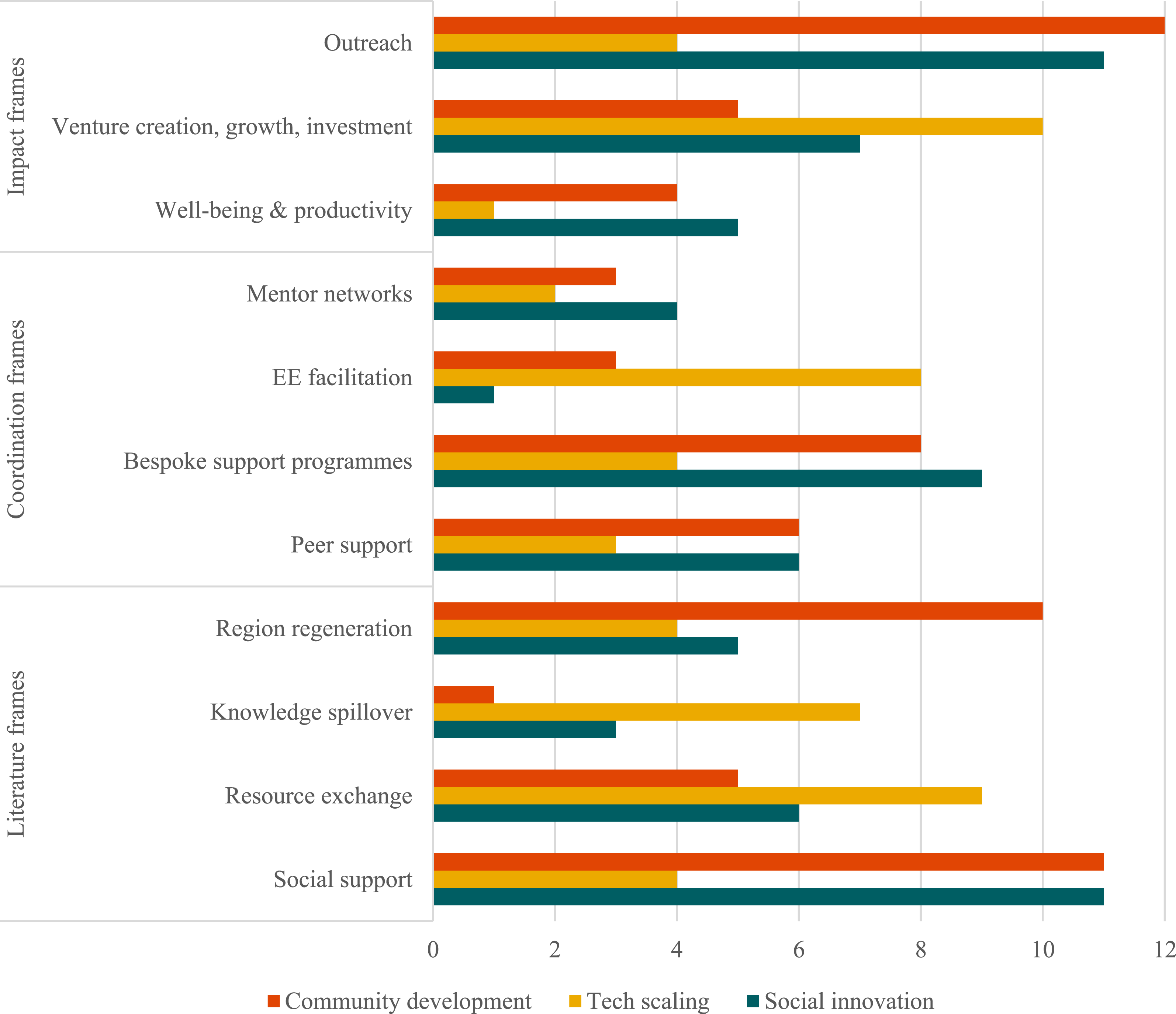
Regarding the four main frames from the academic literature identified in Table 1, all were present to varying extents, within CWS reports. Social support, in relation to users needing both access to informational and emotional assistance (Bandinelli, 2020; Bouncken and Aslam, 2021; Garret et al., 2017), was commonly identified in reports with community development and social innovation objectives. CWS as sites for knowledge spillover was a less common narrative (Capdevila; 2015; Clifton et al., 2019; Jamal, 2018). However, when there was mention of knowledge spillover activities this was predominately in CWS with tech scaling objectives. Resource exchange was mentioned across different objective frames but was slightly more prevalent in tech scaling (Aslam et al., 2021; Brown, 2017; Rese et al., 2022). Finally, region regeneration narratives (Coll-Martínez and Méndez-Ortega, 2023; Kojo and Nenonen, 2016; Mariotti et al., 2017) were more prevalent in CWS with community development objectives.
Discussion
The existing EE literature has predominately focused on the physical characteristics and attributes of enterprise support infrastructure with limited attention given to the way they are socially constructed (Hannigan et al., 2022; Oh et al., 2022; Spigel, 2016; Thompson et al., 2018). Considering that EE narratives can act as mechanisms for coordination our aim was to understand how CWS position their role and impact within EEs (Hubner et al., 2022; Kibler et al., 2014; Roundy and Bayer, 2019). Our findings show heterogeneity across objectives, impact, and how CWS attribute this impact to specific means of support. This makes two main contributions to scholarly discussions.
First, to the current literature that looks at the role of various intermediaries within EEs (e.g. Fiorentino, 2019; Oh et al., 2022), we highlight that CWS are not a homogenous type of support infrastructure for entrepreneurship. Moving beyond current physical (e.g. Fiorentino, 2019) and undifferentiated conceptualisation (e.g. Bergman and McMullen, 2022; Clayton et al., 2018; Madaleno et al., 2022), our analysis identifies how CWS are discursively constructed. Narratives of objectives and impact are often blurred as CWS position themselves within complex EE landscapes. Many CWS frame themselves as spaces that bring multiple different ‘types’ of physical and social support together.
This has implications for the current literature that ascertains different physical features of EEs (Hruskova et al., 2023; Spigel, 2016; Theodoraki and Messeghem, 2017). Considering the interconnected narratives and the close association with multiple different support mechanisms, CWS should not be considered in isolation from accelerators, incubators, and other training and networking programmes (e.g. Bergman and McMullen, 2022; Clayton et al., 2018). CWS position themselves as the third spaces that bring various EE elements together. Considering the importance of understanding the interdependencies within EEs (Wurth et al., 2022), the impact that CWS claim to make is dependent upon integrated rather than disparate support and interaction mechanisms.
In our analysis, we found strong evidence that CWS positioned themselves as spaces of social support and resource exchange (e.g. Aslam et al., 2021; Bouncken and Aslam, 2021). However, less narrative was framed around knowledge spillover or the concentration of sector specific clusters which was proposed by some researchers as a benefit of co-working (Coll-Martínez and Méndez-Ortega, 2023; Mariotti et al., 2017). It could be, therefore, that CWS believe they play a different role in the EE than science parks, open labs, or universities which incentivise knowledge creation, spillover, and commercialisation (Goddard et al., 2012; Kuebart, 2021). The role of the CWS could be to support and facilitate third parties’ efforts to exploit opportunities that have spilled over from knowledge generated intra-regionally in other knowledge intensive institutions (Audretsch and Feldman, 1996).
We also highlight a key support narrative, framed as ‘mentoring networks’ which is claimed to add value to an EE. Entrepreneurial mentoring is a cultural embedded phenomenon (Spigel, 2017), and CWS claim that their alumni and users can play a key role in developing regional social capital though promoting and encouraging the aims of CWS beyond physical walls. Entrepreneurial ‘recycling’ of time and energy back into supporting other community initiatives, education programmes, and helping other users through mentoring is a key mechanism for well-functioning EEs (Mason and Harrison, 2006), and various ESOs, such as CWS, believe they play an important role in orchestrating such activities.
Second, to the emerging EE narratives literature, we identify distinct narratives used by ESOs to signal their intention and make sense of their activities. This extends Roundy’s (2016) idea of success story narratives by highlighting three frames that can be used to position CWS within EEs – objective, impact, and coordinating. These narratives have a strategic purpose for ESOs as they act to signal intention to users, other resource providers, policymakers, and funders. Given the strategic significance of narratives for ESOs, it is perhaps a surprise that previous research has found a homogenous and cluttered ESO landscape where resource providers struggle to articulate their individual value offerings (Hruskova et al., 2023; Theodoraki and Messeghem, 2017).
Our results, however, offer explanation for this cluttered landscape critique. It could be that CWS strategically align narratives to common EE discourse to ‘fit-in’ as legitimate support providers. Thus, they may diminish the authentic value that their services provide in public facing discourse to obtain benefits of inclusion within EE communities (such as collaboration or resources). Certainly the ‘common agenda’ discourse that dominates current EE governance debates (e.g. Autio and Levie, 2017; Colombelli et al., 2019; Knox and Arshed, 2022) may have an adverse effect on ESOs from developing distinctive service offerings. Considering that narratives represent cognitive and emotional heuristics, if all ESOs adopt ‘common’ narratives this may give an impression of institutional thickness and ‘clutter’ (Hruskova et al., 2023).
Including the role of narratives can extend current understanding on the role of ESOs in EE coordination (Bergman and McMullen, 2022; Knox, 2024). Through narrative, it may be possible for CWS to structure an EE through their own interests and agenda, which could coordinate collective activity (Fiorentino, 2019; Knox, 2024). Although beyond the scope of this study to understand the wider influence, future research can explore how the narratives of an ESO may be able influence resource exchange, support, and how various actors behave throughout an EE (Hubner et al., 2022; Huggins et al., 2023; Scheidgen, 2021). As such, CWS should be acknowledged as having significant agency which has the potential to socially organise and coordinate EEs.
Conclusions
This study reveals the use of multiple narrative frames by CWS to signal their role and impact within an EE. A CWS, therefore, can be considered as an empowered agent that can intentionally cultivate specific focus or mission within an EE by working to frame discourse (Kibler et al., 2014; Roundy and Bayer, 2019). This has implications for researchers, practitioners, and policymakers who are concerned with the organisation of EEs. The prominence of a narrow EE impact framing (such as technology venture growth) could act to drown out wider impact regarding equity, diversity (Lorne, 2020). The acceptance of overlapping narratives with divergent assumptions should be embraced within collective multi-stakeholder dialogue to ensure that shared vision celebrates EE heterogeneity (Knox and Arshed, 2022; Motoyama and Knowlton, 2017).
This study is not without limitations. To ensure the internal validity of our study we narrowed our research to focus on CWS in high-income countries within a western and urban context. As EE narratives are likely to be regionally and locally embedded (Kibler et al., 2014; Knox et al., 2021; Wolf et al., 2018), it would be pertinent to explore more diverse contexts in which CWS are situated. Considering the emergence of the CWS phenomenon in rural and small towns it would be important to highlight difference in design and outcomes with urban areas (Merrell et al., 2021a). It is also important to investigate CWS impact in different country contexts, such as in eastern territories (Luo and Chan, 2020), or the global south (Tintiangko and Soriano, 2020).
The analysis also relied solely on publicly available self-published reports which present a partial narrative shaped for external audiences. However, other types of discourse can add to our narrative analysis, including wider enterprise and innovation policy narratives, other ESO narratives, and other means to capture CWS narrative, including media. Understanding the interdependencies between different discursive arenas can add understanding on how narratives interconnect and emerge over time to shape EEs.
To conclude, we propose that CWS as stand-alone interventions are unlikely to be as effective as when working side-by-side with other ESOs, such as accelerators, incubators, makerspaces, and training programmes (Hallen et al., 2020; Madaleno et al., 2022; Marotta, 2021). This has implications for regional economic development policy, as the conversion of brownfield sites into shared open office spaces will unlikely be enough to drive economic development. The value comes from the facilitators who create community workspaces and act to narratively construct EEs.
Footnotes
Declaration of conflicting interests
The author(s) declared no potential conflicts of interest with respect to the research, authorship, and/or publication of this article.
Funding
The author(s) received no financial support for the research, authorship, and/or publication of this article.
