




Abstract
This paper addresses the process of entrepreneurial ecosystem emergence in regions and the mechanisms through which new industrial paths are created. It focuses on the context of a relatively weak economic region and develops a mode of analysis that considers the role of human agency within the emergence of entrepreneurial ecosystems. This analysis addresses the case study of the Cardiff city region in the United Kingdom. It indicates that the revitalisation of lagging regions through an entrepreneurial ecosystem approach is likely to be contingent upon a number of important components: (1) access to potential entrepreneurial agency, (2) the engagement of ‘enlightened’ local political agency and (3) the formation of a collective agency across entrepreneurial and political agents as well as other relevant stakeholders. The emergence of collective agency in the city region is found to have led to new policies, networks and entrepreneurial support within the high-tech industry, coupled with the development of new industrial paths and improved economic conditions. The paper argues that adopting an agency-based approach to analysing entrepreneurial emergence highlights the importance of key human actors in such emergence. It is concluded that lagging regions can trigger a process of development through new path creation stemming from the emergence of an entrepreneurial ecosystem.
Introduction
The entrepreneurial ecosystem concept has risen in prominence over the last decade via a burgeoning literature that has expanded its understanding and meaning both theoretically and empirically (Lange and Schmidt, 2021; Leendertse et al., 2021; Spigel, 2017, 2020; Stam and Van de Ven, 2021; Wurth et al., 2022). Stemming from conceptual frameworks such as innovation systems, industrial clusters and districts (Acs et al., 2017; Malecki, 2018; Rocha and Audretsch, 2022; Schäfer and Mayer, 2019; Tsvetkova et al., 2020), the concept of an entrepreneurial ecosystem has arisen due to changes that are happening on-the-ground within regions (Cao and Shi, 2021; Guerrero et al., 2021; Kuebart, 2022; Madaleno et al., 2022).
These ecosystems are often considered to represent a spatial concept with much of the literature pointing to their appearance and evolution within advanced and economically strong regional environments (Alvedalen and Boschma, 2017; Audretsch and Belitski, 2017; Perugini, 2022; Spigel et al., 2020). Conversely, in mature regional economies, entrepreneurs and other potential agents of change may relocate to regions with a stronger tradition of entrepreneurship and greater entrepreneurial opportunities, with the behavioural profile of mature regions often lacking in entrepreneurial agency (Huggins and Thompson, 2021). Such regions are likely to suffer from an under-representation in high-tech industries that ensure value creation and the means by which to promote new development paths (Baumgartinger-Seiringer et al., 2021; Frangenheim et al., 2020; Hu, 2017).
Despite these issues, it is the case that certain weak regions around the world have begun to economically transform themselves, with some evidence suggesting that new regional path creation is connected with the emergence of an entrepreneurial ecosystem (Audretsch and Belitski, 2021; Cao and Shi, 2021; Content et al., 2020; Oh et al., 2022). However, the evidence base concerning this phenomenon remains scant, with little systematic analysis of either the mechanisms or processes of entrepreneurial ecosystem emergence or the manner in which such emergence can facilitate new path creation in weak regions, and subsequently economic development.
Given this knowledge gap, the aim of this paper is to begin to provide some in-depth consideration of the process of entrepreneurial ecosystem emergence and the mechanisms through which new path creation is fostered. It focuses on these processes and mechanisms in the context of a relatively weak and mature economic region located in an advanced national economy. Furthermore, it seeks to develop a mode of analysis that directly considers the role of human agency within these processes and mechanisms. These aims and objectives are based on addressing three principal research questions: (1) what processes and mechanisms can lead to the emergence of a regional entrepreneurial ecosystem, especially in an economically weak regional context? (2) what is the role of human agency in the mechanisms that facilitate the emergence of a regional entrepreneurial ecosystem? and (3) does the emergence of an entrepreneurial ecosystem promote new path creation and positive regional economic change?
To tackle these questions the paper is based upon an analysis of the case of the Cardiff city region (also often referred to as the ‘Cardiff Capital Region’), which forms part of the devolved wider nation of Wales in the United Kingdom. This city region is a typical example of a location that has economically suffered for many years as a result of post-industrialism (Huggins and Thompson, 2015), but it is also one that has embarked on a process of new path creation embedded with a higher degree of entrepreneurialism in recent years. This paper provides an analysis of this process based on addressing the roots of entrepreneurial ecosystem emergence and new path creation. It is found that revitalising lagging regions through an entrepreneurial ecosystem approach is likely to depend on key agentic factors such as access to entrepreneurial agency, the involvement of enlightened local political agency and the formation of collective agency among various stakeholders. The emergence of collective agency in the Cardiff city region is found to have led to new policies, networks and entrepreneurial support within the high-tech industry, coupled with the development of new industrial paths and improved economic conditions.
Conceptual framework
This section seeks to conceptualise the emergence of entrepreneurial ecosystem in the context of regional development. As illustrated by Figure 1, it is proposed that regional development may stem from the relationship between the emergence of an entrepreneurial ecosystem and the new development paths such an ecosystem may facilitate, with new path creation similarly aiding the process of emergence. In tandem with this, agency, particularly human agency, is proposed to be an underlying source of these mechanisms and processes of emergence and path creation. Conceptualising an agency-based approach to regional development.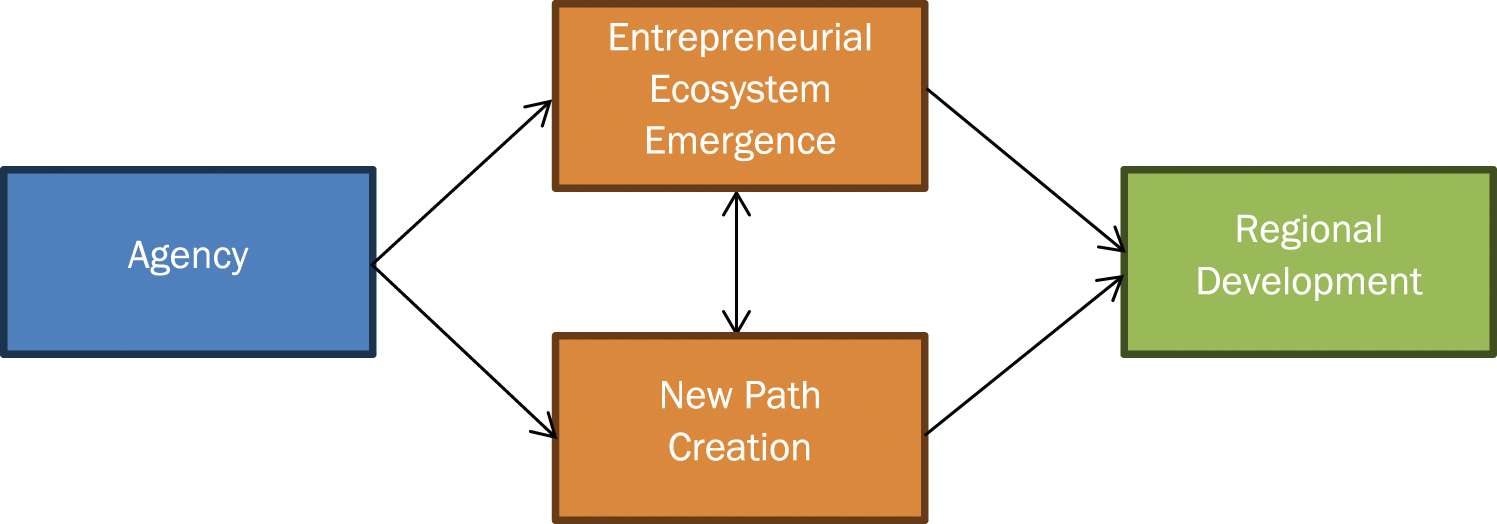
Entrepreneurial ecosystem emergence
Despite the rapid development of the entrepreneurial ecosystem concept, it has not gone without criticism. In particular, there are some claims that it lacks theoretical development with empirical examination often adopting a static viewpoint, suggesting the requirement for more in-depth explorations of the dynamics inherent in these systems (Johnston, 2024; Mack and Mayer, 2016). Furthermore, it is suggested that the field’s inclination is towards larger and traditionally ‘successful’ metropolitan areas, which leaves little room for implications applicable to smaller and medium-sized cities and city regions (Motoyama, 2024).
Harrison and Rocha (2024) go as far to argue that the concept exhibits several characteristics akin to a chaotic concept, such as tautological analyses whereby entrepreneurial ecosystems are defined by high rates of entrepreneurship, as well as definitions of the concept based on lists of factors and characteristics without a clear rationale for the cause-and-effect relationships between them (Stam, 2015). Indeed, a range of definitions have evolved over time most notably beginning with Isenberg’s (2010) six key domains consisting of a conducive culture, enabling policies and leadership, availability of appropriate finance, quality human capital, venture-friendly markets and institutional support.
Building upon this, Spigel (2017) further conceptualises an entrepreneurial ecosystem into three components based on cultural attitudes, social attributes and material attributes, while Stam (2015) broadens the perspective by highlighting both systemic conditions (networks, leadership, finance, talent, knowledge and service support) and framework conditions (formal institutions, culture, physical infrastructure and demand). More recently, Stam and Van de Ven (2021) introduce a reconceptualisation with two distinct categories: institutional arrangements (formal institutions, culture and networks) and resource endowments (physical infrastructure, demand, intermediaries, talent, knowledge, leadership and finance). Collectively, these conceptual framings provide an understanding of the interconnected factors shaping entrepreneurial ecosystems. However, it is important to analyse how they are connected, given that as with any economic system, entrepreneurial ecosystems are both evolutionary and path-dependent (Motoyama, 2024).
In terms of this evolution of entrepreneurial ecosystems, Mack and Mayer (2016) usefully outline an evolutionary pattern consisting of four stages: birth, growth, sustainment and decline. Emergence can be considered to encompass the stages from the initial birth, and the catalytic processes that underlie this birth, to the early growth stage. During this early growth stage networks between key agents are strengthened, and emerging behavioural changes further encourage entrepreneurship, supporting infrastructure and policy to become more focused on new firm creation, with investors and capital being willing to take more risk (Mack and Mayer, 2016). As Clayton et al. (2023) argue, this emergence process represents an initial phase involving the commencement and accumulation of entrepreneurial activity that forms the micro-foundations for the future establishment of an ‘agglomeration’ effect within an entrepreneurial ecosystem.
Furthermore, key features of emergence are likely to consist of (1) the fledgling ecosystem evolving in tandem with the temporal development of agents and their interactions, in particular the existence of individuals who identify and realise business ideas, (2) the role of policy intervention as a curator or nurturer of an ecosystem, rather than a leading component, (3) the role of networks and the capacity of elements through the founding and expansion of emerging firms, (4) the establishment of specialised entrepreneurial support organisations, (5) emergence through interconnecting sub-ecosystem configurations and (6) cultural change through collective narrative building (Feldman and Oh, 2024; Nordling, 2019; Oh et al., 2022; Ornston, 2021; Potter and Lawton Smith, 2024).
In order to examine this process of ecosystem emergence more systematically, it is instructive to utilise the three-order typology of emergence developed by Deacon (2006) and applied by Martin and Sunley (2012) to consider the evolution of regional economic landscapes. In this case, first-order emergence consists of the basic class of emergent phenomena whereby interaction between potential system components grows to produce aggregate system patterns and behaviours that emerge with ascent in scale. From the perspective of entrepreneurial ecosystem emergence it can be proposed that the foundational elements of effective policies, strong leadership and interconnected networks synergise to foster collective agency in an entrepreneurial ecosystem. This level of emergence is likely to be characterised by the heightened interaction between the essential mechanisms of change, creating a supportive environment for entrepreneurial activities to grow.
Second-order – also termed morphodynamic – emergence concerns the nature of self-organising emergence whereby micro-level configurational structures become amplified to determine more macro-configurational structures. The existing ecosystem definitions indicated above suggest that the availability of appropriate finance and material attributes, including customers, universities, and support services, are likely to shape self-organising system-level configurations, contributing to an adaptable and responsive entrepreneurial environment capable of morphing and evolving in response to changing circumstances.
Finally, third-order – developmental/evolutionary - emergence refers to emergent mechanisms and systems that produce influences that impart continuity or divergence from previous developmental states. Here, resource endowments, economic development and the creation of new paths become central. These factors represent the evolutionary aspects of an entrepreneurial ecosystem, contributing not only to sustained growth and evolution but also to the establishment of novel trajectories. Fundamentally, third-order emergence reflects an ecosystem’s capacity to not only adapt and respond but to evolve in ways that drive economic development and fosters innovation along new and transformative paths. This form of emergence indicates a clear potential link between entrepreneurial ecosystems and new path creation within regions.
New path creation
To date, there has been little research in the entrepreneurial ecosystem sphere that has sought to connect the existence and evolution of ecosystems with changing industrial composition and structure (Mack et al., 2024). Butzin and Flögel (2023) further argue there is little attention on the role of high-tech domains and ecosystems for initiating new growth paths in lagging regions, with the focus tending to be on more foundational economy dynamics. To an extent this is understandable given that evolutionary economic geography suggests that one of the difficulties for old industrial areas is the potential for path dependence and lock-in to limit the creation of new and technologically advanced regional development paths (Coenen et al., 2015; Hassink et al., 2019; MacKinnon et al., 2019). New paths can be created, but they are less likely to escape entirely from technological lock-in as the new paths available are driven by the past (Blažek et al., 2020; Isaksen and Trippl, 2017).
In general, advances in regional development theory have begun to provide a more comprehensive understanding of the complexities of the process of such development (Hassink et al., 2019; Huggins and Thompson, 2023). Again stemming from the emerging field of evolutionary economic geography, there is increased acknowledgement that positive regional development outcomes are based on the creation of new industrial paths that are able to foster and nurture economic development (Frangenheim et al., 2020; Grillitsch, 2019; Grillitsch and Hansen, 2019). The complex nature of these relationships and interactions underpinning such development are clearly both multidimensional and multilevel and can be configured and analysed in numerous ways, but one approach is to focus on the emergence of a particular regional economic system, such as an entrepreneurial ecosystem.
Furthermore, from the perspective of new path creation a fundamental issue concerns the role of agency in relation to the emergence of entrepreneurial ecosystems as a catalyst of new development paths (Bristow and Healy, 2014; Huggins and Thompson, 2023). In particular, given the focus on the role of individuals within ecosystems it is important to consider different forms of human agency related to regional development facilitated by new path creation and entrepreneurial ecosystem emergence.
Human agency
As Kapturkiewicz and Helanummi-Cole (2024) indicate, an agency-based approach to examining entrepreneurial ecosystems can facilitate an understanding of the diverse forms of actions involved, including actions by top-down policymakers and grassroots initiatives by entrepreneurs and other local stakeholders. In particular, such an approach is an acknowledgement of their role in ecosystem co-construction, whereby the reflective capacity of agents leads to ‘reflective emergence’ at the system level (Bliemel et al., 2024). As Hong and Spigel (2024) argue, recognising the crucial role of individual actors is vital in understanding the development and functioning of entrepreneurial ecosystems as they are the ones who ultimately generate, attract and circulate the resources essential for initiating and advancing innovative ventures.
Furthermore, an agency-based approach to new regional path creation allows for insights into factors such as the cultural change stemming from the role of regional discourse and narrative building (Beer et al., 2023). A rapidly growing field of study is addressing diverse perspectives on agency in regional development, which are contributing to new understandings of its role in the emergence of new industries (Gong et al., 2022), its motivation for driving change in lagging and old industrial regions (Nilsen et al., 2023; Píša and Hruška, 2023) and the connection between human agency and structural changes in regions (Dinmore et al., 2023; Sotarauta and Grillitsch, 2023).
Much of this agency literature emphasises the significance of collective or system-level agency in regional development, including state-led path creation and institutional entrepreneurship (Benner, 2024; Uyarra and Flanagan, 2022), as well as human behavioural and psychological complexities influencing regional development at the micro-level (Newey, 2023). In general, there can be considered to be three forms of human agency that are considered as key catalysts for regional development: entrepreneurial agency (Drakopoulou Dodd and Anderson, 2007; Korber et al., 2022), political agency (Ayres, 2014; Huggins and Thompson, 2021) and labour agency (Coe and Jordhus-Lier, 2011). In the case of entrepreneurial agency, entrepreneurs are increasingly identified as agents of change both economically and socially, which is often undertaken collectively when it shapes development (Lippmann and Aldrich, 2016). Furthermore, entrepreneurs are sometimes identified as ‘generational units’ who have a strong role in moulding collective memories over time and space (Audretsch et al., 2021; Lippmann and Aldrich, 2016; Perugini, 2022).
As well as entrepreneurial agency, the role of political agency is another factor that may determine the future of development of regions with the success of regions being increasingly considered to be associated with the quality of regional leadership (Sotarauta, 2016; Sotarauta and Beer, 2017; Sotarauta et al., 2012). Indeed, local and regional policymakers can potentially take a key role in the facilitation of processes leading to entrepreneurial ecosystem emergence (Spigel, 2020). While these agents may operate in an individual capacity, their power to catalyse the emergence of an entrepreneurial ecosystem and subsequent new path creation is likely to lie with the collective agency they form through the strategic networks they are able to carve. Within this ‘network’ line of thinking, network dynamics may play a key role in bringing together individual agency to build a more collective agency that often underlies the process of new path creation (Powell et al., 2013; Zukin, 2020).
Finally, entrepreneurial ecosystem emergence and new path creation in lagging and peripheral regions may be reliant on a relatively small number of agents, but who nevertheless possess significant power and influence (Pittz et al., 2021). This power and influence are likely to catalyse regional political agents to support an entrepreneurial approach to regional development and subsequently formulate policies through a collective process with key entrepreneurial agents.
Context and methodology
This first part of this section outlines the context concerning the nature of the Cardiff city region and the second the methodological approach adopted for the empirical analysis.
The Cardiff city region context
The Cardiff city region is an economically lagging area of the UK situated within the devolved wider nation of Wales. It is formed of 10 local authority areas covering Cardiff, the main urban centre, and a number of other areas that largely form the traditional mining and post-industrial parts of Wales. The city region can effectively be split into two sub-regions as depicted in Figure 2. The first of these is the Southern portion of the city region, which consists of those local authorities in close proximity to Cardiff and connected by the key M4 motorway corridor. The second group is the Northern Valleys which has historical connections to the mining, iron and steel industries and generally weaker transport connections (Shirani et al., 2021). Map of Cardiff city region (Cardiff Capital Region [CCR]).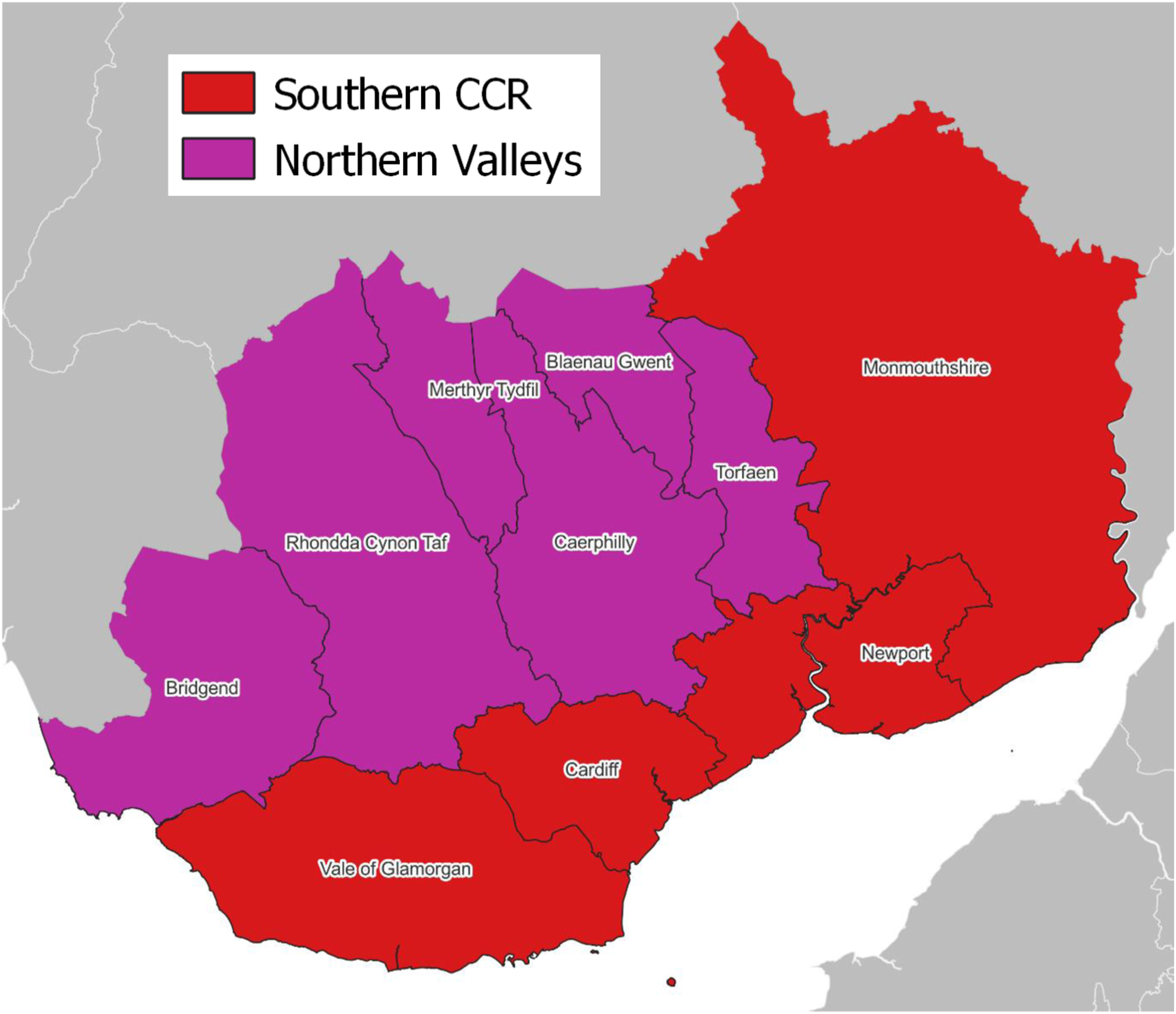
The city region has a population of approximately 1.5 million people accounting for approximately 50% of the population of Wales as a whole and similarly approximately 50% of the total economic output of Wales. The underperformance of the Welsh economy has been embedded for many years, and it has significantly low gross value added (GVA) per capita levels compared with the UK average. As a result of industrial restructuring, whereby traditional manufacturing jobs were replaced by low value service jobs (Beatty, 2016), GVA per job (labour productivity) and wage employment are also below the UK average (Huggins et al., 2018). The city region has suffered from higher levels of unemployment, and a large proportion of this is hidden as incapacity benefits (Beatty and Fothergill, 2023).
These structural changes have left the region reliant on the state and therefore vulnerable during periods of government funding cuts. The local authority district of Cardiff has progressed further in its evolution towards a service-driven economy, with, for example, some strengths in the finance sector (Crawley and Munday, 2017; Waite, 2015). Nevertheless, the Annual Survey of Hours and Earnings data indicates residents’ median gross weekly wages of £665 still lag the regional average found in London (£796), the South East of England (£724) and the East of England (£705). More generally, the business culture has lacked dynamism, particularly in terms of entrepreneurship and innovation (Huggins and Thompson, 2015; Kapitsinis et al., 2021). Historically, the decline of manufacturing industries in the city region left it with deep structural weaknesses, with the lack of an entrepreneurial spirit seen to be an industrial legacy that led to the absence of a ‘middle-class’ with the capacity to consider or undertake business ownership (Massey, 1984; Morgan, 1980).
In 1999, as part of the push by the UK Government of the time for political devolution across the UK’s regions, the National Assembly for Wales was inaugurated. Its elected Welsh Government became responsible for establishing economic policies within the context of central UK policy frameworks. This has given policymakers in Wales more independence than in the past, but Welsh Government only has limited fiscal powers, with no significant tax raising powers, and with public finance continuing to be provided via a block grant from the UK Government.
As part of the early policies developed by the Welsh Government, particular prominence was given to entrepreneurship through the establishment of an ‘Entrepreneurship Action Plan’ with the vision of ‘a bold and confident nation where entrepreneurship is valued, celebrated and exercised throughout society’ (Welsh Development Agency, 2000: p. 19). The Action Plan contained the target of reaching the UK start-up rate by 2006, equivalent to an increase of 50% (Welsh Development Agency, 2002). Such targets proved to be overly ambitious, and over time the plan was largely discarded.
In 2018, a new economic plan came into being with specific remit to address the challenges facing the Cardiff city region. The plan, known as the Cardiff Capital Region City Deal, is an agreement between the UK Government, the Welsh Government and the 10 local authorities covering the city region. It includes £1.2 billion investment in the Cardiff Capital Region’s infrastructure through a 20-year investment fund based on a collaborative programme to achieve regional growth and sustainability through investment, upskilling and connectivity (UK Government, 2016). The key aim is to build a more connected, competitive and resilient community and region. Given these developments, the emergence of an entrepreneurial ecosystem in the region can be viewed from the perspective of a place with more political autonomy and independence but also one with embedded socio-economic challenges.
Methodological approach
The methodological approach adopted is to take the Cardiff city region as a case study to examine the emergence of a high-technology entrepreneurial ecosystem. The main methodological approach consisted of a series of interviews with key informants across the city region. In total, 27 interviews were undertaken with 24 interviewees (3 interviewees were interviewed twice with the second interviews providing further information relating to developments in the city region). Of the 24 interviewes, 13 represented members of the city region’s high-technology industry and were either the founders and/or the directors of their enterprise. These enterprises formed a mix of small, medium and large businesses and covered the following industries: microelectronics, healthcare, digital technologies, renewable energy and financial technology. A further six interviews represented the city region’s policy community with a responsibility for policy formulation, which consisted of senior public sector representatives as well as representatives from the local business community that were engaged in policy formulation. Finally, three interviews represented local academia and two from the finance community.
The interviews were undertaken through a mix of in-person interviews and telephone/online (usually using Zoom software). Although there is a mix of media for the interviews, it is generally considered that online interviews provide an environment to collect data of the same quality to that administered in-person (Salmons, 2015). These interviewees were identified through the research teams’ own knowledge of members of relevant business and policy community, as well as through lists published by the local media of high-technology businesses operating in the region. Interviews lasted on average approximately 1 hour and detailed notes were taken for each.
The interview pro-forma was designed to be a relatively ‘loose script’, rather responding to a pre-defined set of factors (Bauer, 1996; Clandinin and Connelly, 2000; Johansson, 2004). This allowed the respondents to outline in their own words: (1) the economic evolution of the city region, (2) significant developments with key industries' issues and experiences, (3) the role played by particular individuals, organisations and networks as well as (4) the future opportunities and threats. We undertook a thematic analysis based on a two-stage process by first coding the notes from the interviews according to a draft conceptual framework using top-level themes concerning the key elements of entrepreneurial ecosystems as indicated above. Following this, the second stage analysed the data for each theme in relation to the salient factors underpinning each of them. This data was then triangulated with the other sources we draw upon in a process of the ‘systematic combining’ of the empirical evidence in light of proposed theoretical explanations, which broadly falls in line with an abductive approach (Dubois and Gadde, 2002; Eisenhardt, 1989; Fereday and Muir-Cochrane, 2006).
Alongside the interviews, a second strand of data collection stems from the process of observation. Some members of the research team associated with this paper have been observers of development in the city region for more than 20 years through a series of local projects and studies concerning its economic development. This has provided significant opportunities for interaction through meetings and events with the key protagonists. Although this process of observation is more informal in terms of data collection, it does provide a further perspective to consider the changes that have occurred and why they happened. Finally, the material stemming from both the interviews and observation was ‘fact checked’ by reviewing policy documentation and online media to ensure the accuracy of the narrative we present in the following section.
Entrepreneurial ecosystem emergence in the Cardiff city region
This section of the paper examines the emergence of an entrepreneurial ecosystem in the Cardiff city region. It initially examines the agentic roots of the ecosystem in terms of the principal agents involved in this process. It then moves on to address the mechanisms in which these agents were able to frame this ecosystem emergence through new regional policies, networks and support, followed by an analysis of the way in which these interventions changed the economic narrative and direction of the region through a process of entrepreneurship-led industrial restructuring. Finally, it is argued that this restructuring process has generated a broader pattern of new path creation.
Human agency and the roots of the ecosystem
Tracing the roots of any system, especially an ecosystem, can potentially lead one into many different directions, but in the case of the emergence of a high-tech ecosystem in the Cardiff city region the agency of a small number of high-profile entrepreneurs cannot be ignored or overlooked. Across the interviews undertaken it became apparent that the agency of these entrepreneurs, and their vision and drive, led to slow but sure growth in the rate of entrepreneurship and economic activity in three initial key sectors that underpinned the development of the ecosystem, namely, digital communications and associated technologies; semiconductors; and life sciences.
Within the field of digital communications and associated technologies, the entrepreneurial agency was led by Terry Matthews, who originally hails from Wales but became a highly successful serial entrepreneur when he emigrated to Canada. Matthews is the founder and Chairman of Wesley Clover International, a private, global investment management firm and holding company. Since the early 1970s, Matthews has founded or funded more than 100 companies including the networking firm Newbridge Networks and business communications leader Mitel. In the area of semiconductor production, the entrepreneurial agency was led by Drew Nelson who was the co-founder and for many years chief executive of the Cardiff-based firm IQE, which is one the very few firms head-quartered in Wales that is listed on a public stock exchange. Nelson and colleagues founded IQE (originally EPI) in 1988, and while its headquarters have remained in Cardiff it has established a number of branches around the world. In the field of life sciences much of the entrepreneurial impetus has come from Christopher Evans, who is a serial entrepreneur largely in the field of life sciences. Evans has financed and established more than 40 life science companies and raised more than US$3 billion investment in research projects. Like Matthews, Evans hails from Wales and despite being largely located outside of the country he has kept strong professional and social ties.
While the three entrepreneurs were already highly successful in their industries prior to the emergence of the ecosystem in the city region, interviewees indicated that their fundamental role in this emergence was the connections and networks they forged with the fledgling regional Welsh Government. These new relationships were critical in catalysing a number of new entrepreneurial initiatives that were at the vanguard of a wider shift towards a high-technology entrepreneurial policy focus for the city region. In this respect, it is important to acknowledge that the Welsh Government itself took a more entrepreneurial policy by forging new strategic networks with Matthews, Nelson, Evans as well as other entrepreneurs to help shape local policies, especially in the case of Matthews and Evans who represent part of a Welsh diaspora rather than local entrepreneurs.
Fundamentally, interviewees from both the business and policy sphere indicated that the relationships between these three key entrepreneurs and Welsh Government sowed the seeds for a series of initiatives that led to the kick starting of new high-technology activity in the city region. Each possessed a particular vision to promote economic development across the region through entrepreneurship. Terry Matthews sought to engender a cadre of new young entrepreneurs within the region focused on digital technologies and software through the establishment of a foundation focused on the development of entrepreneurial skills. Matthews worked with the Welsh Government’s then business minister to explore the formation of this foundation and a strong rapport between both clearly developed.
Drew Nelson’s vision was to build within the city region a world-class networked ‘cluster’ of semiconductor activity that would be globally leading in terms of innovation. This would connect R&D expertise in both his firm IQE as well as members of the local supply chain and those housed within the local university sector. The dynamics of the ‘cluster’ was considered to be based around the establishment of new start-ups alongside the attraction of investment from outside the region. Nelson and his team worked closely with officials from Welsh Government and later with the City Deal officials. In the case of Christopher Evans, his vision was to establish the region as a centre for life sciences and biotechnology activity that could begin to compete with the UK’s existing hot spots of Cambridge and London. Evans was asked by the Welsh Government to chair a Life Sciences advisory board that would craft a strategy for advancing the industry with start-ups at the heart of this strategy and venture finance being the means of helping to stimulate their establishment and the expansion of these new firms.
The mechanisms of change
Following the entrepreneurial vision shown by Terry Matthews, in 2011 an agreement between Welsh Government, Wesley Clover and the Waterloo Foundation led to the establishment of the Alacrity Foundation, which operates as a charity and receives annual funding from each partner. The main activity of the foundation is Alacrity’s Graduate Entrepreneurship Programme, which seeks to establish new technology-based firms. It prepares graduates for entrepreneurship and provides mentoring in applied R&D. A specific aspect of the programme is that it aims to align graduates with international opportunities and ensure the availability of funding support. The programme operates through teams of graduates that establish new firms and develop them once they demonstrate a route to commercial viability. A key aspect of the process is the aim to develop their intellectual property as a means of being positioned for first mover advantage. An equity seed capital fund of £2.5 million is associated with the programme, with funding coming from a range of collaborators.
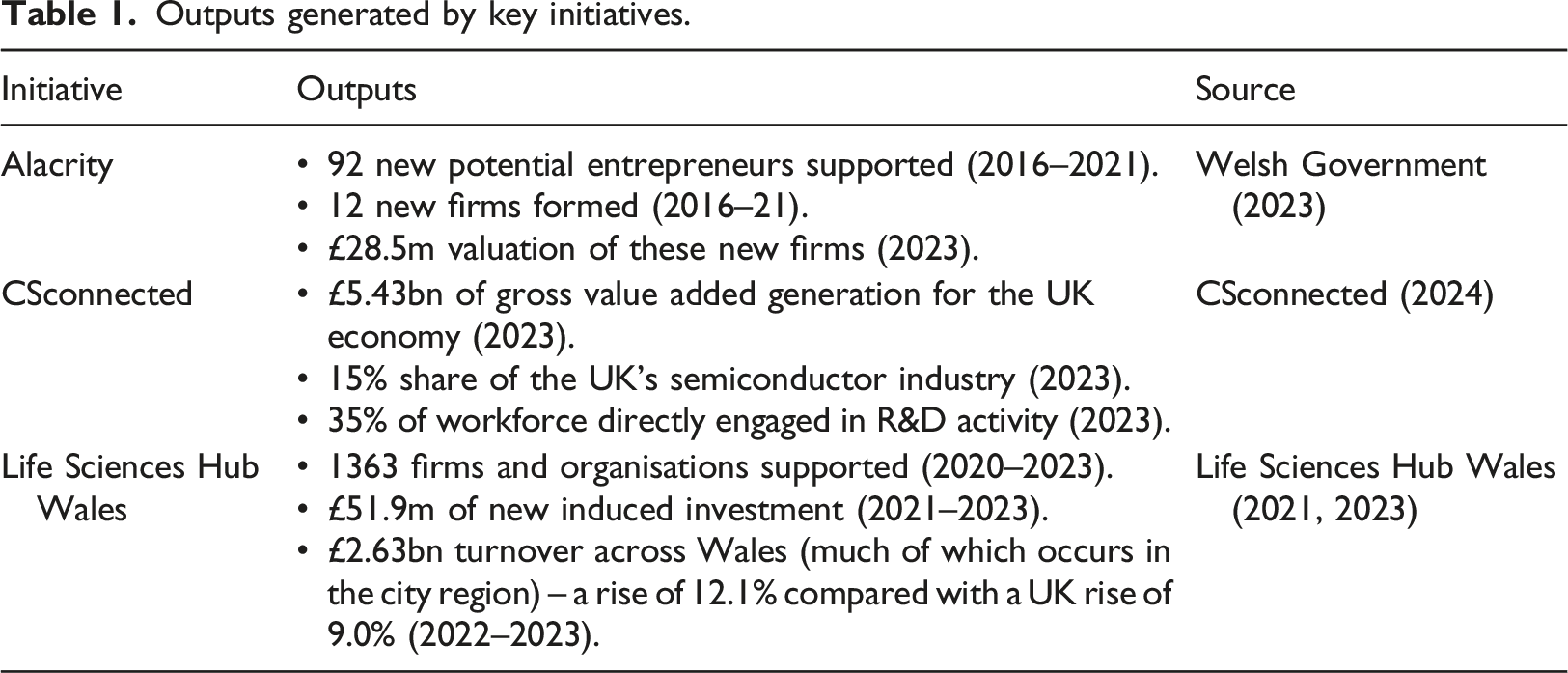
Similar in some ways to Matthews’ vision, Nelson’s ideas resulted in a three-way agreement between IQE, Cardiff University and Welsh Government, which led to the establishment in the region of the Compound Semiconductor Centre and the Institute for Compound Semiconductors at Cardiff University (which is a facility to support translational research). The Compound Semiconductor Centre was founded in 2015 and focuses on prototyping work to demonstrate new technologies based on compound semiconductor materials. It has since become a European network for product, services and skills development in compound semiconductor technologies. This has supported Nelson’s vision of a region possessing a vibrant concentration of semiconductor activity, which has since been branded as CSconnected. The key features of CSconnected’s development since 2015 are the investments in human capital and innovation, which have totalled more £600m. The initiative has achieved some significant success through the creation and attraction of three new high-technology companies in the industry, and the region is now the location for a UK Government-funded business acceleration facility (the ‘Compound Semiconductor Applications Catapult’), which acts as a focal point for stimulating new start-ups and the introduction of a number of incubation spaces to generate spinouts from local universities.
In the field of biotechnology and life sciences, the economic development strategy established by Welsh Government, in close consultation with Christopher Evans, markedly changed the entrepreneurial landscape in the region. In broad terms, this consisted of the development of three integrated initiatives: (1) a bespoke investment fund for life sciences in the region, (2) a programme that seeks to attract leading life scientists from around the world to the region, as well providing support for star scientists at different career stages in the region and (3) a new life sciences innovation centre for the region.
The Wales Life Sciences Investment Fund is a £100 million investment fund that is 50% supported by the Welsh Government and managed by the private sector Arthurian Life Sciences, which is chaired by Evans. The expectation is that in due course investments will be made in relation to the commercialisation opportunities emerging from the support provided to leading scientists in the field. This support is formalised by ‘The Life Sciences Research Network’, which was established to bring together researchers from the region and to provide a platform for engaging with firms and research organisations from across the globe to develop science supporting new drug discovery. In particular, it aims to foster an improved understanding of translational research highlighting areas of potential strength for innovation and commercialisation.
Outputs generated by key initiatives.
Changing the regional narrative
It is clear from the above that a small number of visionary entrepreneurs working in close conjunction with an enlightened regional government started to put together the elements of a regional entrepreneurial ecosystem. Each entrepreneur brought to the table their specialist expertise and knowledge with a view to building the entrepreneurial and innovative capacity and capability in the region within their own industrial spheres. The success of entrepreneur–government relationship was based on significant goodwill on both sides, and this allowed a fruitful relationship to develop that started a process of entrepreneurial and innovation-driven economic development. Obviously, this was the agenda of those representing the regional government, but it should also be acknowledged that the process provided new commercial opportunities for Matthews, Nelson, Evans and other entrepreneurs with a stake in these regional industries. In this way, it can be argued that this ‘win-win’ model of regional economic development represents a shift away from the often winner–loser models of development based on seeking foreign direct investment that may result in negative impacts on incumbent firms operating in lagging regions.
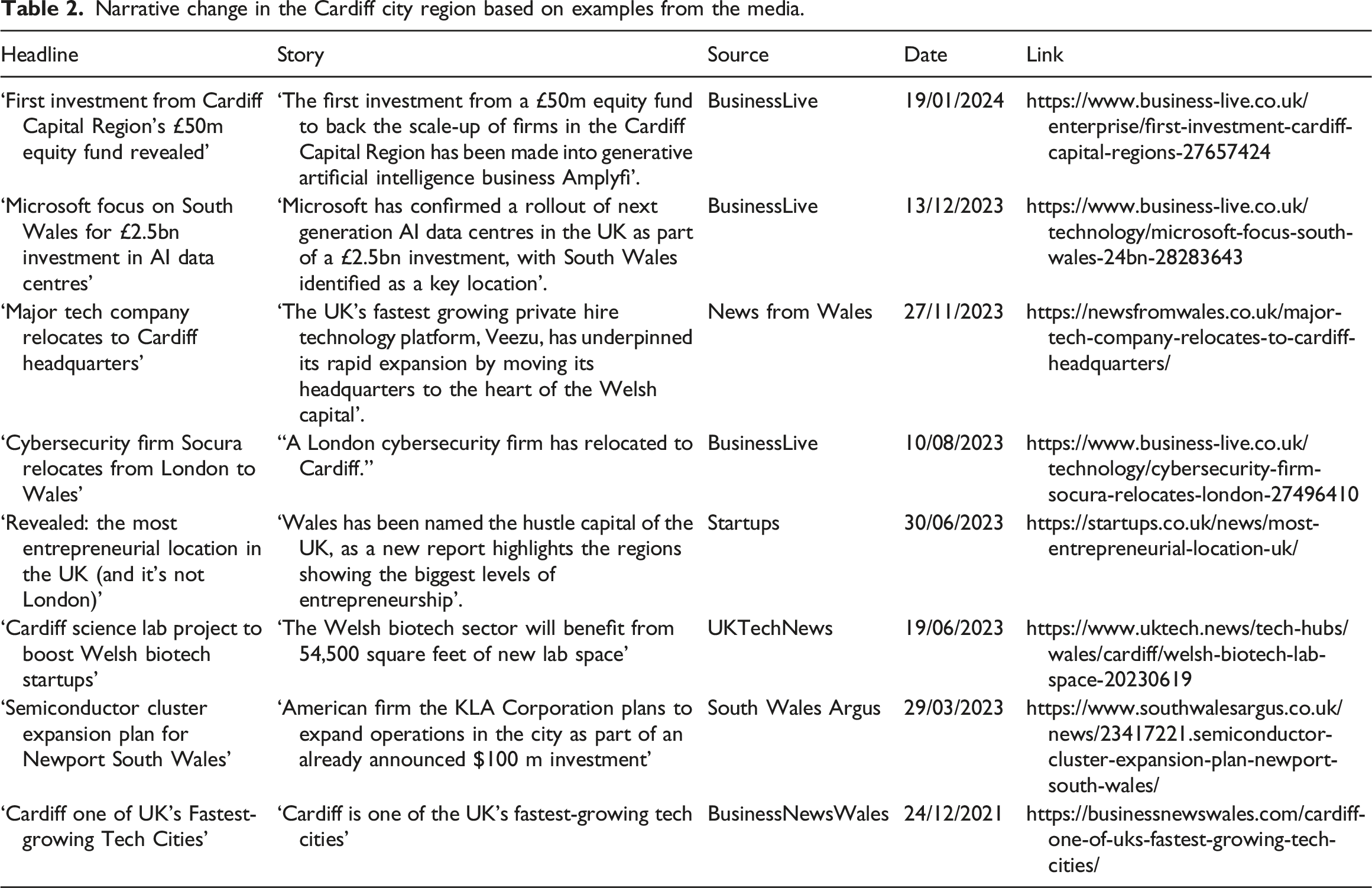
Narrative change in the Cardiff city region based on examples from the media.
In relation to fintech, as the city of Cardiff has increased its competitiveness and become buoyed by the City Deal finance, it has grown in importance as a commercial and business centre. As part of this development, the fintech sector has emerged as a rapidly growing area of activity, which has resulted in the establishment of FinTech Wales. This is an independent membership association for the fintech industry in Wales, which operates through an advisory panel consisting of entrepreneurs, representatives from small, medium and large enterprises, tech suppliers, universities, schools and the public sector.
Entrepreneurial activity in the creative industries, particularly the media sectors, has also accelerated rapidly in recent years. The region has long possessed considerable infrastructure through the presence of the BBC and the broadcast facilities it established. For many years these facilities were not capitalised upon by potential entrepreneurs, but more recently this has changed with the establishment of a significant number of new start-ups, particularly in the area of film and TV production. Following strong growth in the past 10 years, the region is now the third largest film and TV cluster in the UK behind only London and Manchester (Komorowski et al., 2021).
While much of the activity related to fintech and the creative industries was initially focused around the city of Cardiff, this has started to disperse more broadly across the city region as a whole. The cybersecurity sector, on the other hand, initially emerged in the more hinterland areas of the region, especially the ‘Valleys’ locations. This largely resulted from the leading player in the region, Thales, locating their facilities there, but since then a growing concentration across the region has emerged with a number of start-ups. Some of these have emerged from two local universities, both of which have significant research expertise in the field, but also those stemming from the Alacrity Foundation. Furthermore, it is interesting to note that the fintech sector is an important customer for the local cybersecurity industry. Building upon the success of the cybersecurity sector, the Welsh Government initiated a new programme known as ‘Tech Valleys’ with the aim being for the ‘Valleys’ areas of the region to become a leading location for emerging technologies. Furthermore, Welsh Government, Thales and the University of South Wales established the National Digital Exploitation Centre (NDEC), which facilitates both SMEs and microbusinesses to test and develop their digital concepts.
New path creation
Change in high-technology enterprises 2010 to 2023 in Cardiff city region.
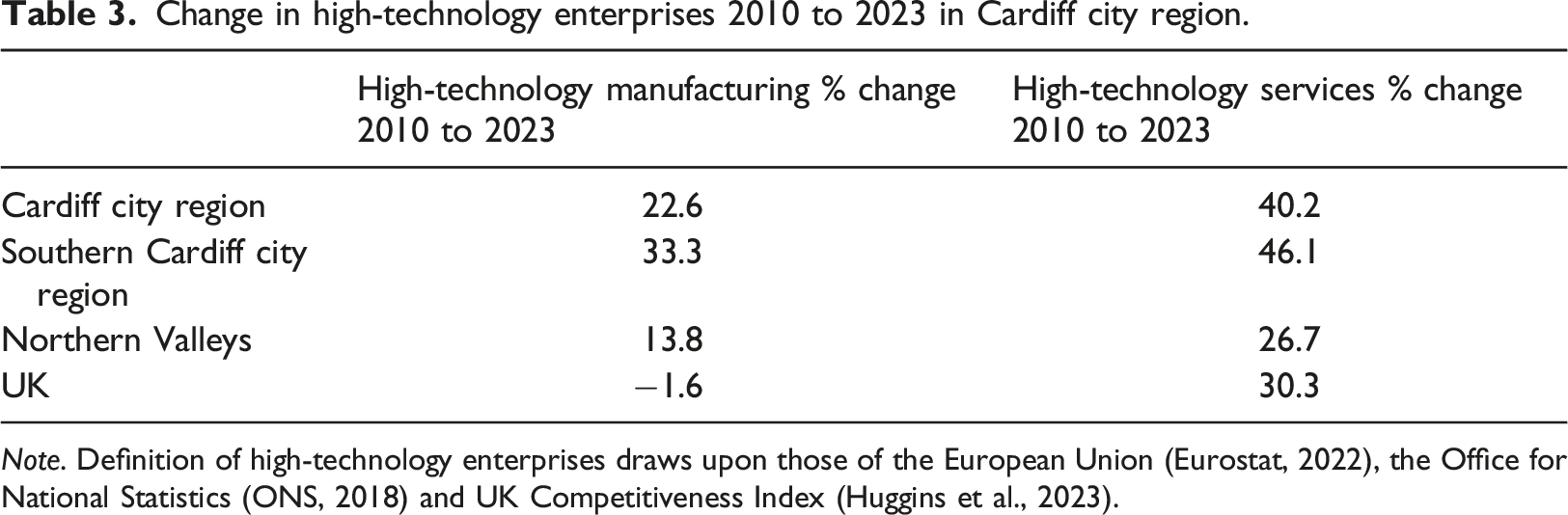
Note. Definition of high-technology enterprises draws upon those of the European Union (Eurostat, 2022), the Office for National Statistics (ONS, 2018) and UK Competitiveness Index (Huggins et al., 2023).
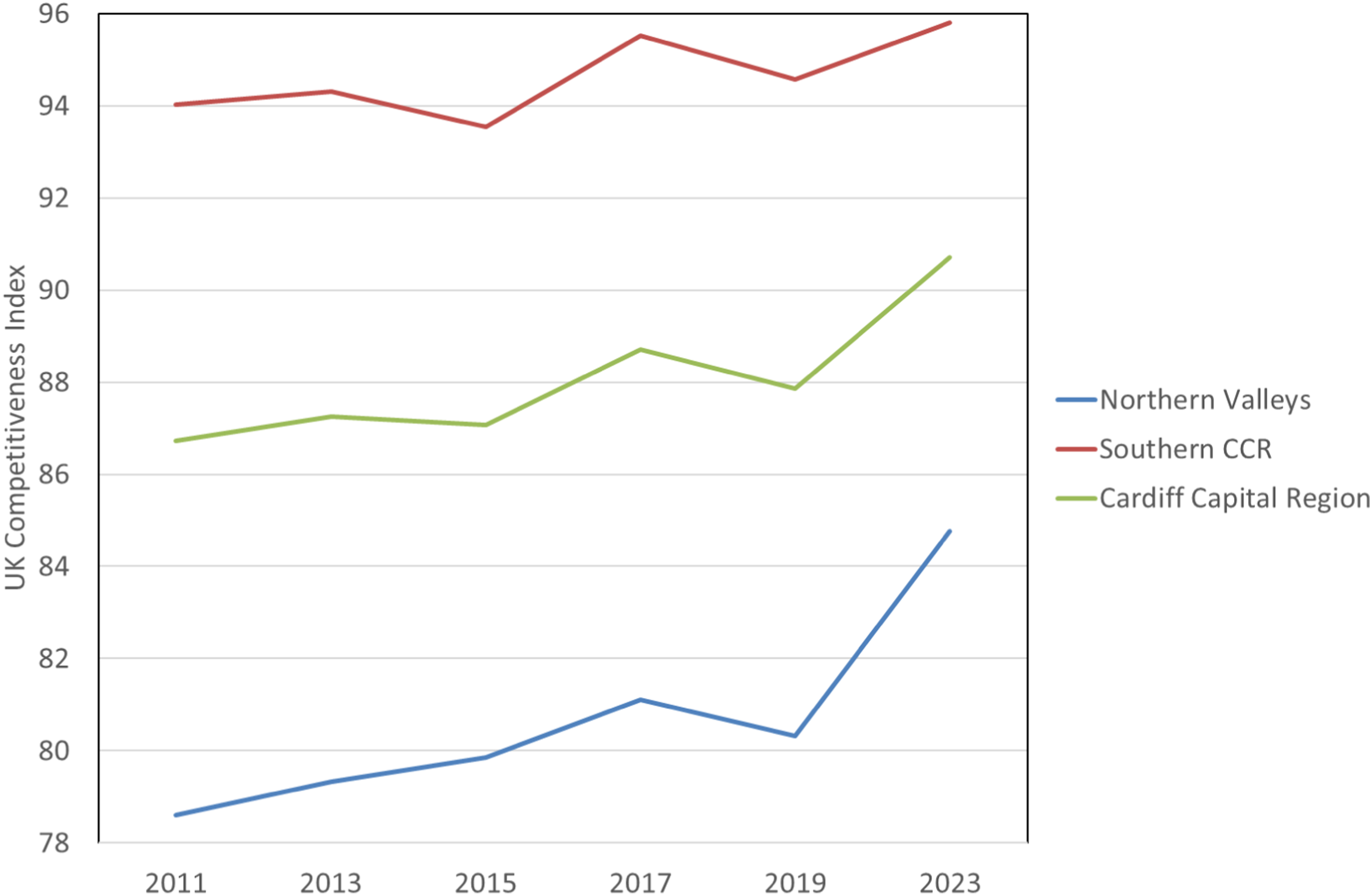
As well as the growth in high-tech enterprises, there are a number of other positive indicators. For example, an independent survey of cities across the UK found that Cardiff was the most improved city between 2017 and 2020 for ‘good growth’, which is a composite measure of performance covering the availability of opportunity and levels of prosperity and well-being (PwC, 2022). Also, data for 2021 indicated that it was a record year for equity investment for small firms, with Cardiff being ranked the 10th highest equity investment hub in the UK, with the software sector having the largest number of deals (British Business Bank, 2022). Measures of productivity per hour worked also highlight how these new development paths have positioned the city region as one of the most improved after 2010 (Figure 3). Among the city regions that host the larger cities of Great Britain, only Edinburgh and Newcastle have seen a markedly stronger relative improvement than the Cardiff city region between 2010 and 2021. Finally, the UK Competitiveness Index (UKCI), shown in Figure 4, suggests that much of the improvement relative to the UK over the period 2010 to 2023 is attributable to the growing performance of the Northern Valleys of the city region (Huggins et al., 2023). Productivity (gross value added per hour worked) for city region areas with larger cities in Great Britain. Source: ONS Subregional Productivity June 2023 (ONS, 2023). UK Competitiveness Index (UKCI) for the Cardiff city region. Notes: UK average UKCI = 100; UKCI values for 2011–2019 utilise drawn from the year they represent, the 2023 uses the latest available data. Source: Huggins et al. (2023).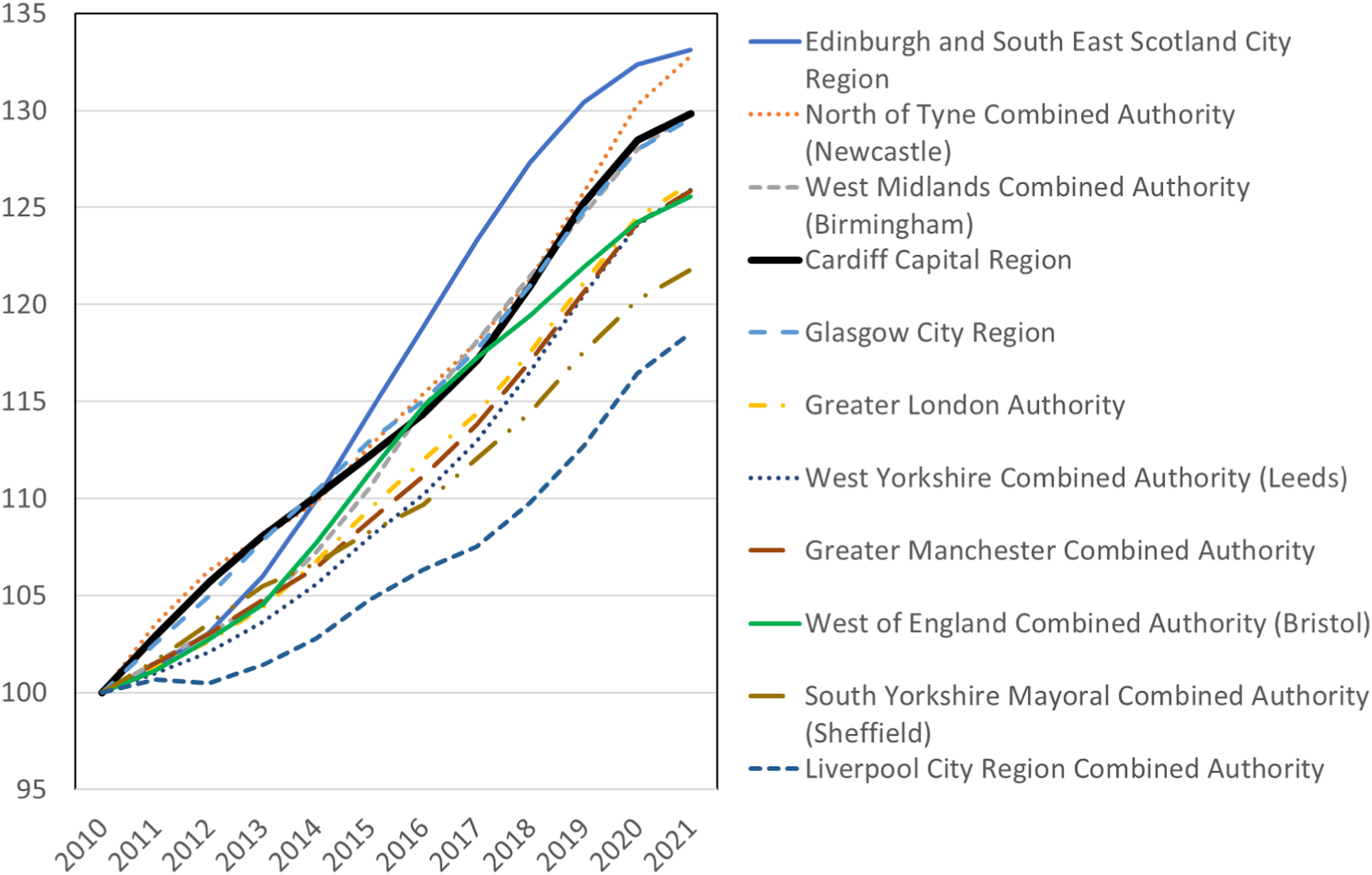
Drawing on the findings of the interviews in combination with the insights from the literature covered in the second section, Figure 5 extends the model of regional development outlined in Figure 1. The extended model expands the role of agency to highlight the importance of the different forms of agency and the mechanisms of change through which they operate. The indicators of change that are described in this section, and the forms that the development has taken place in the city region, illustrate the progress that has been made and the means through which it has been achieved. Furthermore, Figure 5 illustrates that each of the mechanisms of change are not isolated, but influence and are influenced by one another through the process of emergence. A model of the agency-based approach to regional development in the Cardiff city region.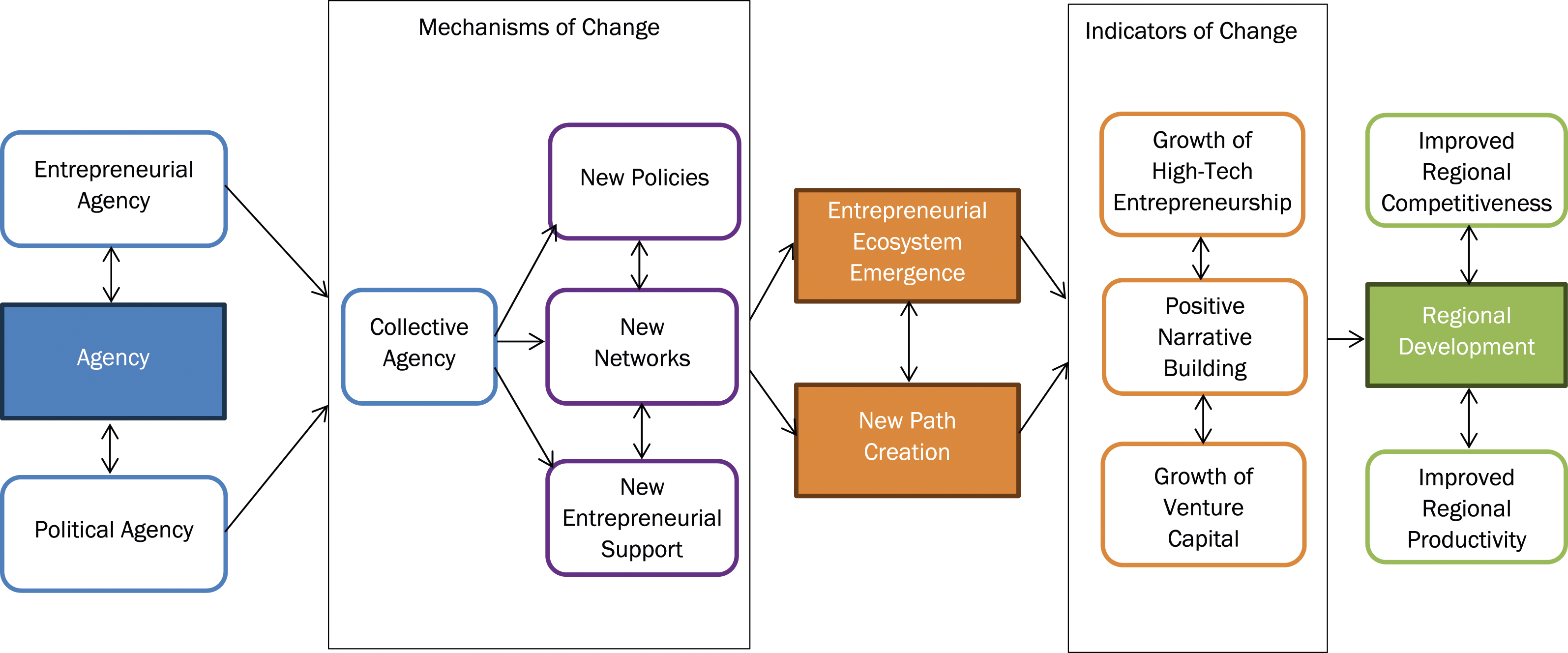
Discussion and conclusion
The analysis presented above provides some important lessons as to the role of the emergence of entrepreneurial ecosystems as a catalyst for new path creation and economic development in a lagging regional environment. It further connects the literature concerning entrepreneurial ecosystems with the contemporary literature on regional development, especially that focused on the role of human agency within the processes and mechanisms of path creation (Carvalho and Vale, 2018; Grillitsch et al., 2021, 2022a, 2022b). The analysis indicates that lagging regions can begin to revitalise themselves through an entrepreneurial approach, but this process is likely to be contingent and dependent on a number of important components, all of which relate to the notion of a place-based entrepreneurial ecosystem. In this respect, these key components consist of (1) access to potential entrepreneurial agency, (2) the engagement of ‘enlightened’ local political agency and (3) the formation of a collective agency across entrepreneurial and political agents as well as other relevant stakeholders. It is the harnessing of this agency that allows a broader recrafting of the economic development narrative of a region by the fostering of entrepreneurship in a range of high-tech and more productive industries through new path creation. In this sense, the process of collective agency formation is a vital manifestation of the emergence of an entrepreneurial ecosystem.
Conceptually, it is instructive to consider the extent to which this emergence relates to the three-order typology outlined earlier (Deacon, 2006; Martin and Sunley, 2012). Clearly, developments in the Cardiff city region indicate signs of first-order emergence whereby heightened interaction facilitated the establishment of collective agency. As illustrated by Figure 5, this collective agency led to mechanisms of change in the form of new policies, networks and entrepreneurial support. Second-order emergence largely manifests itsef in the emergence of macro-configurational structures and to an extent this started to appear in the region whereby a more defined high-tech industry beyond the originating catalysing elements within particular sub-sectors is being formed. Finally, third-order emergence refers to the emergence of new developmental states. In the case of the Cardiff city region, this remains at an early stage but it is showing signs of positive evolution through the new industrial paths that are being established as are improved economic conditions within the region.
Within any lagging or under-developed region, the emergence of economic revitalisation is likely to lie with the capability to engage existing entrepreneurs in the process of development. Furthermore, these entrepreneurs will require the necessary agency in the form of the influence, power and leadership to stimulate behavioural change within a region. The Cardiff city region case study illustrates that these agents are likely to be most effective when they have a potential ‘stake’ in ecosystem formation through the growth of markets and opportunities within the industries they operate. It is logical to assume that the more economically weak a region is, the less likely it is to have a significant pool of relevant entrepreneurs to access, especially those located within the region. Therefore, ecosystem emergence may involve entrepreneurs both within and outside a region provided they have some form of social, cultural and/or economic connectivity with the focus region.
As this study has shown, the actual number of entrepreneurs initially involved can be quite limited as long as they possess the necessary agency to effectively form new networks and engage with local political agents. Indeed, perhaps the most critical part of entrepreneurial ecosystem emergence in weak regions will be the capability and capacity for entrepreneurial and political agents to interact in a meaningful manner. It is this understanding and awareness that allow the formation of a collective agency whereby an intersection of common goals and visions emerges. This collective agency begins to extend beyond the initial entrepreneurs and policymakers to a wider community of agents consisting of additional entrepreneurs, firms, financiers, universities and others that create the networks underpinning the emergence of an ecosystem.
From a theoretical perspective, it can be argued that adopting an agency-based approach to analysing such emergence highlights the importance of key human actors in this process alongside the role of particular resources, capital and institutions (Stam and Van de Ven, 2021; Korber et al., 2022; Wurth et al., 2022). In general, the idea of collective agency emerging across often disparate sources of individual human agency provides a means for better understanding how change is fostered and tolerated, as well as how this change provides the impetus for the concrete programmes and initiatives that lead to ecosystem emergence.
After many of years of structural theories of regional development, regional studies have more recently taken an ‘agentic turn’ with new theorisations addressing the role of particular forms of agency in catalysing the industrial path creation from which regional development stems (Grillitsch and Sotarauta, 2020; Grillitsch et al., 2022a, 2022b; Huggins and Thompson, 2022). Much of this thinking originates from ideas within evolutionary economics (Nelson and Winter, 1982), and this now forms part of the growing field of evolutionary economic geography (Boschma and Martin, 2007), and the more nascent field of behavioural economic geography (Huggins and Thompson, 2021). It would appear that much of this thinking can be applied to the field of entrepreneurship.
Evolutionary theories of entrepreneurship have generally stuttered their way forward for a number of years (Malerba and McKelvey, 2020), with none fully grasping a comprehensive understanding as to how entrepreneurs play a role in the evolution of regions nor the role of place in influencing entrepreneurial forms. As the ‘entrepreneurial ecosystem’ idea continues to advance from a useful metaphor to a more fully fledged conceptual lens, it can act as a framework for encompassing evolutionary entrepreneurial thinking.
In conclusion, this paper has shown that lagging regions can trigger a process of development through new path creation stemming from the emergence of an entrepreneurial ecosystem. This process may initially be underpinned by a relatively small pool of human agents, but as success begins to emerge the associated networks expand and cascade to a larger pool of agents, in particular new entrepreneurs.
In the case examined here, these processes led to new path creation through a deliberate and strategic focus on catalysing new entrepreneurship across a range of high-technology industries. Therefore, the emergence of an entrepreneurial ecosystem started to change the economic trajectory and future evolution of the region. Finally, it should be noted that this study is limited to a single case study and as regions around the world seek to establish their own entrepreneurial ecosystems it will be important to map the variety in the processes, mechanisms and agency across these regions. This paper provides one means by which to frame a comparative analysis that can inform both scholars and policymakers as to potential routes towards an entrepreneurship-focused approach to regional development.
Footnotes
Declaration of conflicting interests
The author(s) declared no potential conflicts of interest with respect to the research, authorship, and/or publication of this article.
Funding
The author(s) received no financial support for the research, authorship, and/or publication of this article.
