




Abstract
Digital transformation (DT) offers organizations the opportunity for operational and strategic innovation, leading to increased efficiencies and transformative changes. However, successfully implementing DT initiatives requires collaboration among diverse stakeholders with varying perspectives, motivations, and capabilities. This study explores how stakeholders frame the DT process to achieve alignment and implement DT initiatives. Drawing upon the concepts of frames and frame alignment mechanisms, the study examines how stakeholders strategically influence each other’s interpretations through frame alignment mechanisms. A case study of a council-wide DT initiative in an Australian city council was conducted to analyze stakeholders' strategic alignment efforts. The findings reveal differing interpretations of the DT process among stakeholders and the strategic efforts to align the various interpretations through a frame transformation of planning, implementation, and communication frames. Based on the findings, a process model for achieving alignment in DT initiatives is proposed, capturing the dynamic nature of frames and their interactions. This study contributes to the understanding of stakeholder dynamics and strategic framing in the context of DT initiatives.
Keywords
Introduction
Digital transformation (DT), defined as “the process that aims to improve an entity by triggering significant changes to its properties through combinations of information, computing, communication, and connectivity technologies” (Vial, 2019), offers new opportunities for operational and strategic innovation with increased efficiencies of scale and speed to transform organizations (Bharadwaj et al., 2013). Undergoing DT entails fundamental reconfiguration of established practices and processes across the organization since it is not a mere localized technological change but a large-scale transformation (Solberg et al., 2020) impacting several organizational stakeholders within and beyond organizational boundaries. Successful implementation of DT initiatives often involve collaboration among interrelated stakeholders with diverse perspectives, motivations, goals, and capabilities (Guinan et al., 2019; Kozanoglu and Abedin, 2020; Solberg et al., 2020). For such collaborations to be effective and yield intended outcomes, stakeholders' interpretations of the DT process may need to be aligned with a shared understanding of the changes being introduced. However, the requirements imposed by DT, as with the introduction of any technological-driven change, are not always realized autonomously and sometimes need to be framed strategically by involved stakeholders through active influence (see Sandeep and Ravishankar, 2016). If stakeholders’ interpretations are not managed strategically, it can increase the likelihood of failure of the DT process (Wimelius et al., 2021). Therefore, in this study, we ask “How do stakeholders frame the digital transformation process to achieve alignment and implement digital transformation initiatives?”
To answer our research question, we turn to the concepts of frames and frame alignment mechanisms developed by Erving Goffman and further extended to the study of organizations by Benford and Snow (2000). A frame is a “schemata of interpretation,” and by invoking frames, people can make sense of and give meaning to events and occurrences transpiring around them (Goffman, 1974). As such, frames can be employed strategically to convey specific meanings and influence audiences. The act of strategically employing frames is termed “framing,” and actors may use “frame alignment mechanisms” to achieve their strategic objectives. We borrow these concepts to unpack how stakeholders use frames and frame alignment mechanism to strategically influence the interpretations of the DT process and achieve alignment. Frames and frame alignment mechanisms have been employed to study various information systems (IS) phenomena. For example, studies have employed a framing perspective to understand how IT-outsourcing organizations influence local communities that they seek to impact (Sandeep and Ravishankar, 2016), how users interpret and evaluate technologies differently through the use of contrasting frames of interpretation (Soliman and Tuunainen, 2021), and how IT business units with status differentials frame the same actions differently (Brooks et al., 2022). Similarly, in this study, we use the concept of frames and frame transformation to understand how stakeholders within and beyond organizational boundaries interpret the DT process and embark on strategically influencing each other’s perspectives.
We studied a council-wide DT initiative in one of Australia’s largest city councils in Sydney, to investigate our research question. Delta City Council (anonymized name) embarked on a DT initiative to transform its waste management system, impacting various stakeholders, including council staff across many organizational units, council service providers and council residents. We found that stakeholders held different views around planning, implementation, and communication activities implied in the initiative. To overcome the differences and create a shared understanding, they set about to transform the planning, implementation and communication frames of interpretation underpinning the respective activities. Specifically, stakeholders engaged in transforming the process, object, and subject of those activities. Building on these findings, we develop a process model that captures how stakeholder alignment is achieved in DT initiatives, highlighting the dynamic and recursive nature of the process by conceptualizing the interactions between various frames.
Digital transformation and stakeholder alignment
The rapid advancement of technology in recent years has compelled organizations to embrace new technologies to enhance operational efficiencies and maintain competitiveness in a highly challenging landscape (Kraus et al., 2021). However, reaping the benefits derived from these technologies necessitates a holistic DT process that involves collaborative engagement with organizational stakeholders (White, 2012). DT catalyzes organizational transformation, leveraging technological innovations to redefine the value proposition, and gain a sustainable competitive advantage (Wessel et al., 2021; Prügl and Spitzley, 2021). While digital disruptions and evolving competitive environments typically trigger transformation initiatives, organizations undertake comprehensive strategic planning to develop digital business and transformation strategies, followed by implementing operational processes and project activities (Vial, 2019). Unlike traditional IT-enabled organizational transformations that primarily focus on enhancing offerings or operational efficiency through the adoption of new technology systems, DT fundamentally alters the organizational value proposition (Wessel et al., 2021).
Wessel et al. (2021) distinguish between the practices associated with implementing DT and IT-enabled transformations. The scope and scale of the transformation initiatives introduce substantial changes that reshape the organization's identity, leading to a more pronounced impact on a broader base of stakeholders (Guinan et al., 2019; Kozanoglu and Abedin, 2020). By deploying new processes, systems, and technology products, DT initiatives alter operational processes, transcending the organizational boundaries and transforming the organization's identity, influencing stakeholders both within and outside the organization (Wessel et al., 2021). The impact of DT extends beyond individual organizations, influencing society at large. This amplifies the magnitude, scope, and pace of transformations, involving a diverse range of stakeholders who seek meaning in these change initiatives and share aligned interests and objectives (Bharadwaj et al., 2013). Scholars highlight that DT is more than a mere technological upgrade; it encompasses the exploration and exploitation of organizational context, including resources and people as critical change stakeholders (Hess et al., 2016). Hence, the successful execution of DT relies on support from the entire workforce, and their interpretation and response to change play a pivotal role in shaping its outcome. Nevertheless, there remain gaps in our comprehension of how stakeholders interpret and exert influence on the change process (Vial, 2019; Carroll, 2020; Rowe, 2018).
Given the multifunctional and cross-departmental nature of DT strategies, effective teamwork and coordination are crucial for successful implementation. Team dynamics, including the alignment or misalignment of motivations, objectives, and perceptions, can significantly impact interactions among team members (De Mol et al., 2015). Disagreements and conflicts within teams pose challenges to decision-making, while an environment fostering idea exchange, reflective actions, and intense interactions can stimulate creativity. Thus, achieving alignment among stakeholders' interpretations plays a critical role in driving successful outcomes within the DT process. This necessitates a deeper understanding of how stakeholders align their interpretations and implement DT initiatives, for which, we turn to the concepts of frames and frame alignment mechanisms discussed in the next section.
Frames and frame transformation
The concept of a frame, initially introduced by Erving Goffman in his seminal work “Frame Analysis” (1974), has gained widespread usage among scholars across various disciplines. It serves to describe how individuals and organizations, including individuals, teams, and political movements, share information and negotiate their interpretations of reality. Actors employ or activate a schema of interpretation to derive meaning and understand social situations and events (Goffman, 1974). Frames function as filters through which gathered information is interpreted, creating meaning and subsequent actions. These frames are contextually constructed (Chandler and Vargo, 2011) and can be employed to interpret or manipulate realities, persuading the audience to engage in an activity associated with an alternative reality (Klandermans, 1984). While frames primarily provide meaning and motivations for action, they also shape the response of the target actors by mobilizing action (Klandermans, 1984).
Frames are crucial in decision-making processes, such as when creating system designs. They are often established before conscious information processing can significantly impact subsequent actions and decisions (Gray and Donnellon, 1989). Consequently, individuals with varying frames of interpretation find themselves separated by their distinct interests, beliefs, motives, and values. These frames shape their perceptions of reality, both on conscious and pre-conscious levels (Kaufman et al., 2003). When used as a verb, “framing” represents the active process of constructing meaning from reality, implying a sense of agency on the part of the actor (Benford and Snow, 2000). Framing constructs interpretive schemes for individuals, providing them with a means of representing events and strategically influencing others' interpretations (Kaufman and Smith, 1999). In this way, framing serves as a tool to justify personal intentions and self-interest, aiming to persuade others to form coalitions or achieve favorable outcomes. Consequently, numerous factors can influence how individuals frame conflicts or opportunities, which, in turn, shapes the direction of conflict resolution (Elliott et al., 2002) or the creation of opportunities.
Snow et al. (1986) outlined four alignment mechanisms through which stakeholders could reach a consensus: frame bridging, frame extension, frame amplification, and frame transformation; in our study, the frame transformation mechanism is of particular. As an alignment mechanism frame transformation transforms the original frame of interpretation to change the way an idea is presented and perceived, although it maintains its fundamental meaning, the new frame is more likely to support new motivations and actions (Kaufman et al., 2003). Frame transformation, as a frame alignment mechanism, is a necessary condition for participants to engage into the DT process by negotiating their interpretations and aligning on the actions. It happens with various intensities and may take different forms to create continuous interactions to achieve the realization of outcomes (Snow et al., 1986). Framing and frame transformation are an essential part of negotiating new processes when seeking to influence actions and are tied to “information processing, message patterns, linguistic cues, and socially constructed meanings” (Putnam and Holmer, 1992).
Studies in IS have scarcely taken a framing perspective to study digital transformation phenomena. However, several studies in IS have taken this perspective to understand and unpack the dynamics between groups operating with differing interpretations of IS phenomena. For example, Leonardi (2011) examined how engineers from different departments framed a technological artifact—a car crash simulator—differently. These “framing” differences eventually influenced the engineers’ interpretation of what the technological artifact meant and the problems they were supposed to solve. When different users interpret and evaluate the technology differently, using different frames of interpretation, this leads them to make decisions about the adoption or discontinuation of the technology solutions (Soliman and Tuunainen, 2021). Another study by Sandeep and Ravishankar (2016) provides insights into how organizations use different and diverse framing mechanisms to influence the local community via negotiations between socially driven information technology businesses and the local communities they seek to impact. Framing and counter-framing evolve through the interactions between users and designers and their engagement with the implementation process (Azad and Faraj, 2011). In case of frame misalignment between different stakeholders with different power statuses, the frame alignment outcome is influenced by the power status of the individual or group, and the low-status party may accept the conditions of the high-status one to avoid breaking relationships (Brooks et al., 2022).
Extending these concepts to our study of DT process, we argue that frame alignment between stakeholders allows a consensus for interpreting the DT process and may be crucial for system implementation. During the DT process, the diverse interpretations of various stakeholders can potentially lead to conflicts resulting from different approaches to solution development, and this may escalate to serious misalignment beyond simple disagreements. To attain a shared understanding of the DT process, which is crucial for solution development, stakeholders may need to focus on aligning their differing frames of interpretation.
Methodology
Research context
In the Australian context, local government areas (LGA) are governed and managed by city councils, which form one of the three administrative governing layers comprising Local, State, and Federal Governments. Councils face the pressure of providing customer-centric solutions to address the concerns of residents, business owners, and other stakeholders, including funding authorities. This competitive environment among councils encourages them to secure future funding from the federal government and improve their chances of re-election by delivering effective solutions. Implementing DT initiatives can help councils gain publicity, solve customer problems, and meet the expectations of their constituents.
In March 2017, the Australian Federal Government introduced the Smart Cities 1 and Suburbs Program with a funding of $50 million. The program aimed to support urban projects that utilize technology to enhance decision-making based on real data, with a focus on people-centric design. Eligible organizations, including local governments, private industries, and research institutions, were invited to collaborate and deliver projects that enhance the productivity, sustainability, and livability of cities and suburbs.
It is in this context that we study the work of Delta City Council and how they embarked on a digital transformation journey by accessing federal grants through the smart city program. The council set two main objectives: first, to envision and create an extraordinary future for the city, and second, to break down silos and establish partnerships across the organization, fostering strategic collaboration with various business units. In April 2018, the council mayor supported transforming the city into a leading smart city, leveraging technology and data to shape a better future. The focus was on acknowledging the need to adopt alternative approaches, as they believed that the existing mindset that led to problems would not be sufficient to resolve them.
In July 2018, Delta City Council established a dedicated “Smart City” function within its organizational structure, marking the official launch of the smart city roadmap. The endorsed draft roadmap was made available for public review between October and June 2019, with the final approval obtained in September 2019. As a result, the focus shifted from strategy development to the planning and implementation phase. The solution discovery process revolved around identifying the problems using a problem-centric approach. Among the identified projects, the Smart Waste Management System (SWMS, anonymised) was the first project to be implemented under the smart city program.
SWMS background
Delta City Council is an amalgamation of two councils and encompasses a diverse multicultural community with a large representation of new immigrants unfamiliar with council rules around waste segregation and recycling. The council has close to 400,000 residents. As such, waste management poses significant economic and social challenges for the council, accounting for 21% (close to AU$70 million) of the fiscal budget and constituting 30% of residents' inquiries through the council's customer service. The level of recycling waste contamination in the LGA surpasses that of other councils in the state of New South Wales (NSW), with a contamination rate of 25% compared to an average of 10% in other NSW LGAs. This problem was further exacerbated when China imposed restrictions on the import of residential recyclables in 2017, underscoring the importance of waste education and local waste treatment or disposal sustainably.
SWMS’s objectives for the council were threefold. First, to enhance residents' experience with council waste management services and offer a seamless waste service experience by reducing the number of waste inquiries to Customer Service annually. Second, to promote a better understanding of proper recycling practices to achieve improved waste sustainability. And finally, the third aim was to enhance the operational efficiency of rubbish bin collection while ensuring the safety of truck drivers during their daily runs. Delta City Council’s waste management faced critical operational efficiency issues and lacked informed decision-making and effective customer service resolutions.
To overcome these issues, the council embarked on a transformation of its waste management services via the development and implementation of SWMS. The SWMS project was led by the innovation management function of the Council. The innovation management team worked closely with the executive branch of the Council to shape the Smart City Roadmap for the council (henceforth referred to as “the leadership team”). The SWMS project team comprised representatives from waste operations, sustainability, customer service, and information technology teams (henceforth referred to as “the project team”). The council residents were also consulted at various junctures of the project’s lifecycle. In this study, we consider the teams represented by each representative as a “stakeholder group.”. Components of the smart waste management system.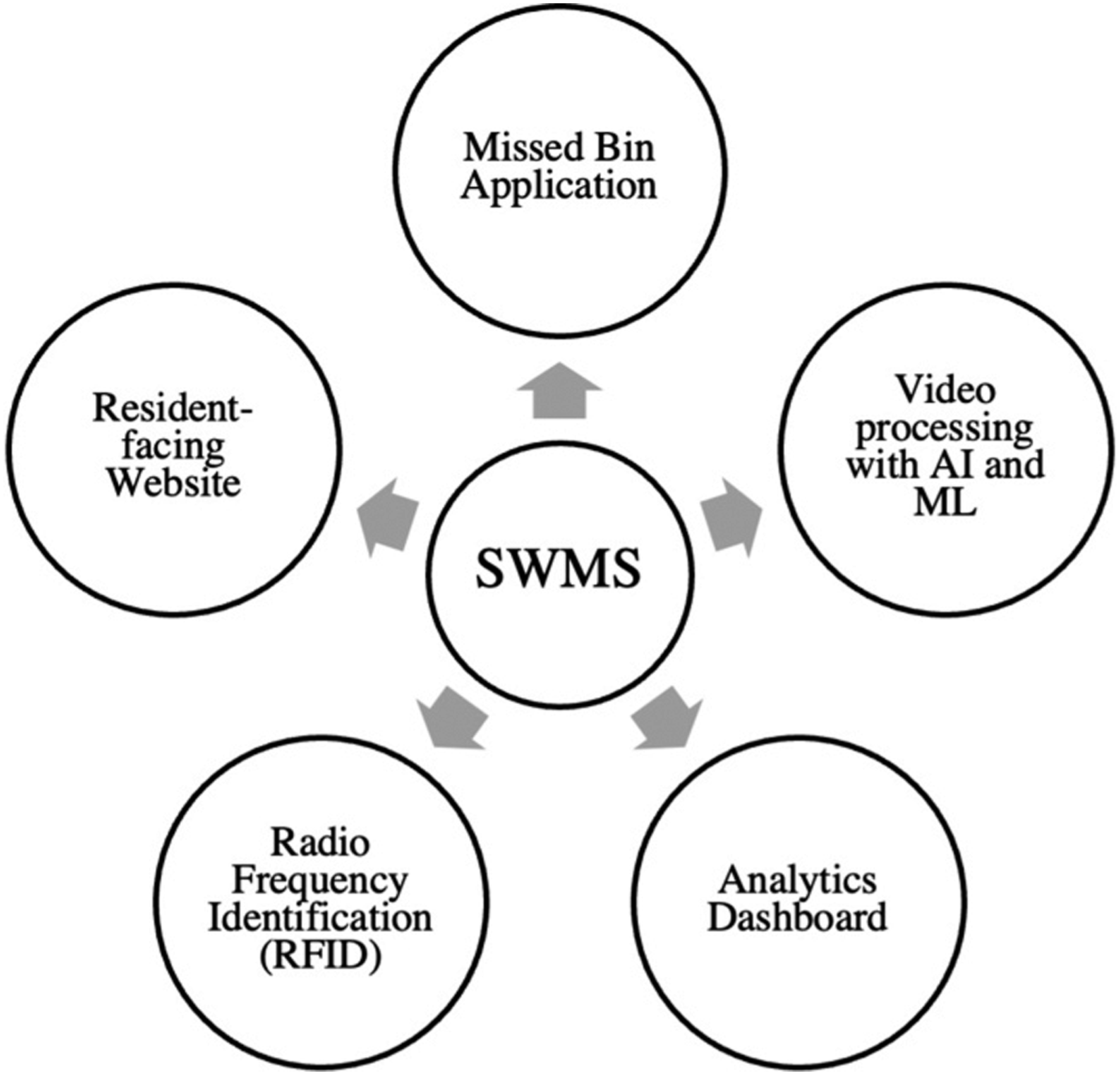
We briefly describe the main components of SWMS depicted in Figure 1 below.
The SWMS has five principal components, discussed below: (a) Radio Frequency Identification (RFID) is fitted to the council residents’ waste bins—this forms the backbone of the SWM system. (b) Missed Bin App—Missed bins are identified and flagged for re-collection. The application was developed in-house by the council’s IT team. (c) Video processing with Artificial Intelligence (AI) and Machine Learning (ML)—trucks are fitted with cameras that monitor the recycling waste; AI and ML algorithms are used to detect contaminants in the recycled waste—contaminated bins are flagged using RFID information; the system was developed in-house by the Council’s IT team. (d) The Analytics dashboard aggregates data about customers, waste services, and waste trucks to provide a real-time view of waste management; the analytics dashboard was developed in-house by the Council’s IT team. (e) Resident-facing website—information portal providing updates on waste collection for residents; the website was developed in-house by the IT Team.
The Delta City Council regards the system as “Smart,” in the sense that it uses data, technology, and connectivity to improve the quality of life for its residents and enhance operational efficiency. At the heart of SWMS is the analytics dashboard that aggregates all information on waste services and serves as the single interface with all project stakeholders.
On a typical waste collection day, truck drivers, along with the operational team, undertake route planning and set about collecting waste from their respective operational areas. Each time a truck picks up and unloads a recycling bin into its collection compartment, cameras track each item flowing through. This video feed is processed centrally in real-time to detect waste contamination using AI/ML image processing algorithms. If contamination is detected, the truck driver flags the bin, and the analytics dashboard reflects the update noting the GPS coordinates and the exact bin. The truck driver can, in this manner, update collection activity using a simple four-button interface fitted on the truck’s physical dashboard, including missed bins, spilled bins, and bin contamination. After the waste collection run, the trucks return to the council yard. Following this, the customer service team uses the information collected and aggregated in the analytics dashboard to take further action, such as responding to resident queries, improving waste collection activities, learning about contamination, and educating residents on recycling behavior.
Research method
To investigate how stakeholders frame the digital transformation process and achieve alignment in implementing digital transformation initiatives, we employed an interpretive case study approach. This choice was motivated by several factors. Firstly, an interpretive case study is well-suited for exploring “how” research questions that have specific implications within particular domains of action (Walsham, 1995). Secondly, the interactions between information processing activities for decision-making during the planning phase and operational agility for implementation actions are complex phenomena deeply embedded within the organizational context (Pentland, 1999). Adopting an interpretive case study approach allows for a comprehensive examination of these intricate interactions, engaging with them in a more involved manner from the researcher's perspective (Walsham, 2006). Thirdly, an interpretive case study method is particularly suited for examining phenomena through the interpretive lens of relevant stakeholders involved in the specific case under investigation (Klein and Myers, 1999).
Data collection
Data access was arranged through negotiations with the city council, facilitated by our existing contacts within the Delta City Council. One of the authors had previously served on the council's advisory team in one of its working committees. Our data collection efforts aimed to investigate the process and interactions involved in the digital transformation of the smart waste management project, specifically focusing on the implementation of the SWMS system. Our objective was to understand the dynamics among various activities observed from individual, organizational, and technological perspectives in order to address our research question. In total, we conducted ten online interviews, each lasting 60-90 minutes, divided into two equal batches of five interviews. A preliminary data analysis was conducted between the two batches.
Interviews and interactions table.
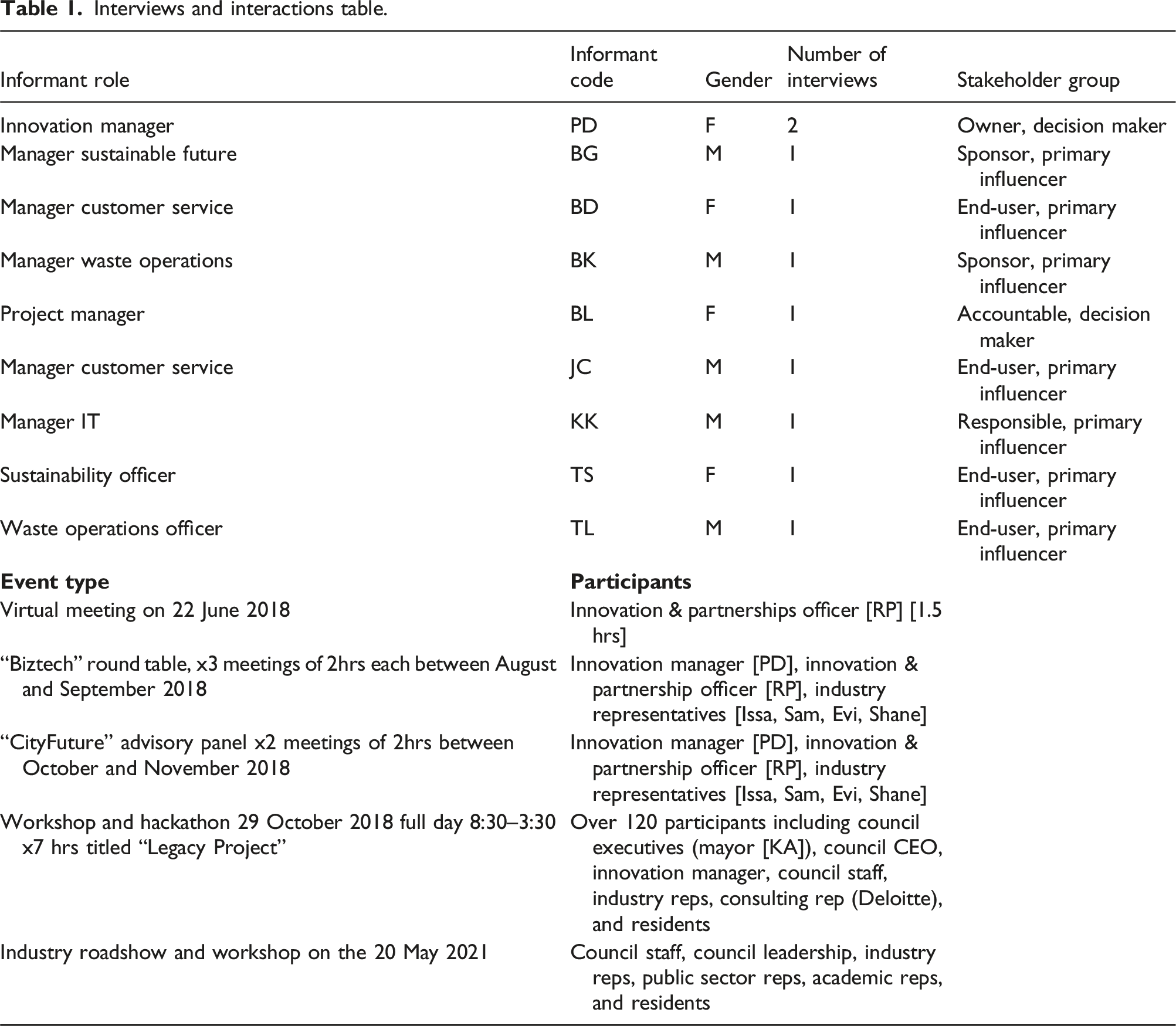
The investigation was conducted between May and August 2021, following the analysis and theory-building process outlined by Pan and Tan (2011) to guide the design and execution of the modelling in this study. Throughout the process, we collected and analyzed a substantial amount of secondary data shared by the council organization, which included interactions with the council over a three-year period. These data were crucial in the conceptualization phase. The secondary data consisted of online documents, websites, reports, and meeting minutes, enhancing the reliability of the study (Yin, 2011). Furthermore, we actively participated in a one-day workshop organized by the council, where we presented the SWMS project and exchanged insights on the process development.
During the analysis phase, we conducted a comprehensive review of relevant literature to establish the connection between the theoretical lens and the phenomenon under investigation. The initial data collection and analysis process provided us with a better understanding of the issues at hand, which guided our literature review and ultimately confirmed our selection of the Framing and Frame transformation theoretical lens and perspective to investigate the phenomenon of interest.
Data analysis
As a result of the initial investigation, we grouped the various work tasks involved in the project into three major types of activities: planning, implementation, and communication activities. Subsequently, we identified different elements during these activities, such as actions, objectives, motivations, and actors partaking in the delivery of the activities. This resulted in developing a preliminary data structure model (Klein and Myers, 1999) as shown in Figure 2 which guided the subsequent analysis and conceptualization process. Initial conceptual model used for coding the data.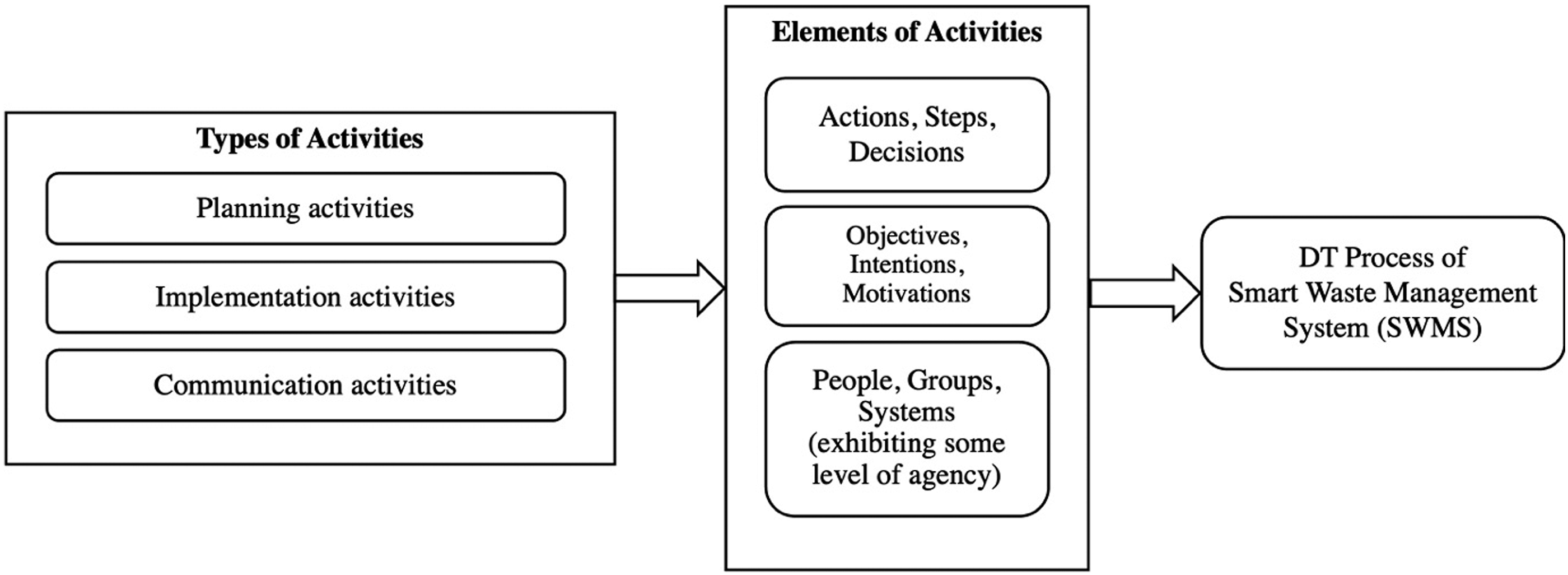
Interview questions were adjusted to reflect the role and engagement of the informant in the project. Each informant was assured of anonymity and data confidentiality provided by them, especially when potentially sensitive information was sought (Walsham, 2006). We used the open coding technique which is normally used in qualitative research studies, alongside other coding techniques such as axial coding and selective coding. The process starts by generating first-order codes that are depicted in the data and are relevant to the topic of investigation. Then this proceeds to place conceptual labels on the data for the second-order codes to capture the various activities involved in the process and focuses on exposing high-level recurrent themes. In the first step, we developed 145 first-order codes that matched the research objectives, and in the second step of data analysis, the open codes were linked to theoretical constructs through axial coding (Strauss and Corbin, 1994; Strauss, 1990).
The first-order codes in Figure 3 have emerged from the accounts of the interviewees and the experience of the researcher to map these accounts into open codes. The researcher’s perspective is framed in the different temporal flows that emerged during the planning and implementation phases of the project. These phases covered about 2 years of activities from the project inception to realization including the engagement with various stakeholders’ groups. During the strategy design period, the team laid the foundations for the initiation stage that guided the entire transformation process. Data structure
2
—adapted from Corley and Gioia (2011).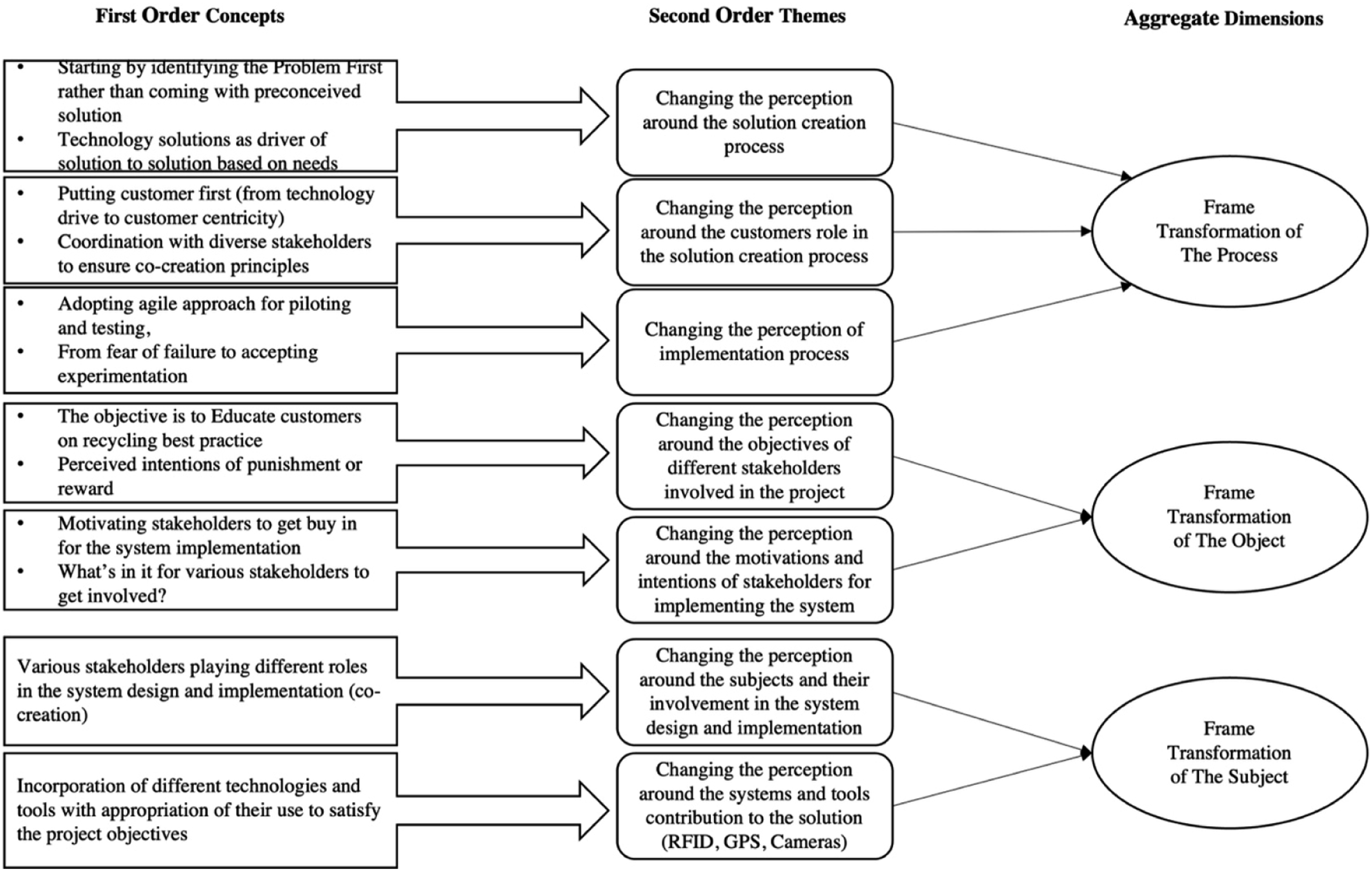
The interviewees’ perspectives are mainly represented by direct extraction from the interviews’ transcriptions. These perspectives illustrate the themes derived from the analyses and are framed around verbatim quotes from the primary stakeholders (the Innovation Manager, the Project manager and the various streams team leads). The accounts from the interviews reveal the interpretations of the influential players who were managing the transformation process. Additional relevant observations and inferences were drawn from the researcher’s own experience, and the secondary data obtained from the archival sources, and the large documentation database (smart city roadmap, minutes of meetings (MoM), website, social media, project reports, etc.).
As a result, we theorized the common underlying theme of these labels as the frame transformation of the process, object and subject elements during the planning, implementation, and communication frames of activities. This axial coding provides a meaningful understanding of the phenomenon under investigation (Strauss and Corbin, 1994; Strauss, 1990).
As a final step, the selective coding technique was used to integrate the theoretical conceptualization and refine the interactions to establish a coherent model of the observed phenomenon (Strauss and Corbin, 1994; Strauss, 1990). Moreover, the frame elements and interactions identified as a result of axial coding were integrated into the model to reflect the dynamic nature of the evolving process. This was achieved by using the hermeneutic process (Myers, 1995) of examining back and forth the interview data, relevant literature, and the emerging model. The emerging model was examined and discussed extensively with the research team, including senior academics, to obtain feedback that helped fine-tune the model. This cycle of fine-tuning lasted several months until reaching theoretical saturation, for which the case study findings were comprehensively challenged and explained to ensure that no additional information could be added or modified to improve the emerging model.
Findings
In this study, we found three frames, namely, the planning, implementation, and communication frame, that played a central role in achieving stakeholder alignment in the DT initiative led by Delta City Council. Further, we found that each one of these frames consisted of three frame elements: the process, object, and subject. Process refers to the series of actions, steps, and decisions necessary to achieve a specific objective. The object represents the focus, target, and purpose of the activity, which are influenced by stakeholders' motivations and intentions to attain the desired outcome. The subject encompasses individuals, groups, or systems of products and tools involved in the activity, including their various motives, intentions, and capabilities to engage with the activity's objective and adapt to the process. These frame elements were the targets of frame transformation efforts by stakeholder groups related to the DT initiative. Moreover, our findings indicate that stakeholders' transformation of the frame elements led to interactions between different frames. A summary of our findings, along with definitions of the three frames and their constituent frame elements, can be found in Appendix 1: Frames and Frame Elements. In the following sections, we discuss how the various stakeholders of the Delta City Council-led DT initiative framed planning, implementation and communication activities, and transformed these frames strategically to achieve alignment.
Planning frame
The planning frame guides people in interpreting events and occurrences during the planning activities, provides meaning for the planning activities, and shapes actors’ planning responses. Figure 4 illustrates the reframing of the elements of the planning frame during the planning activities. Frame transformation of the elements of planning frame.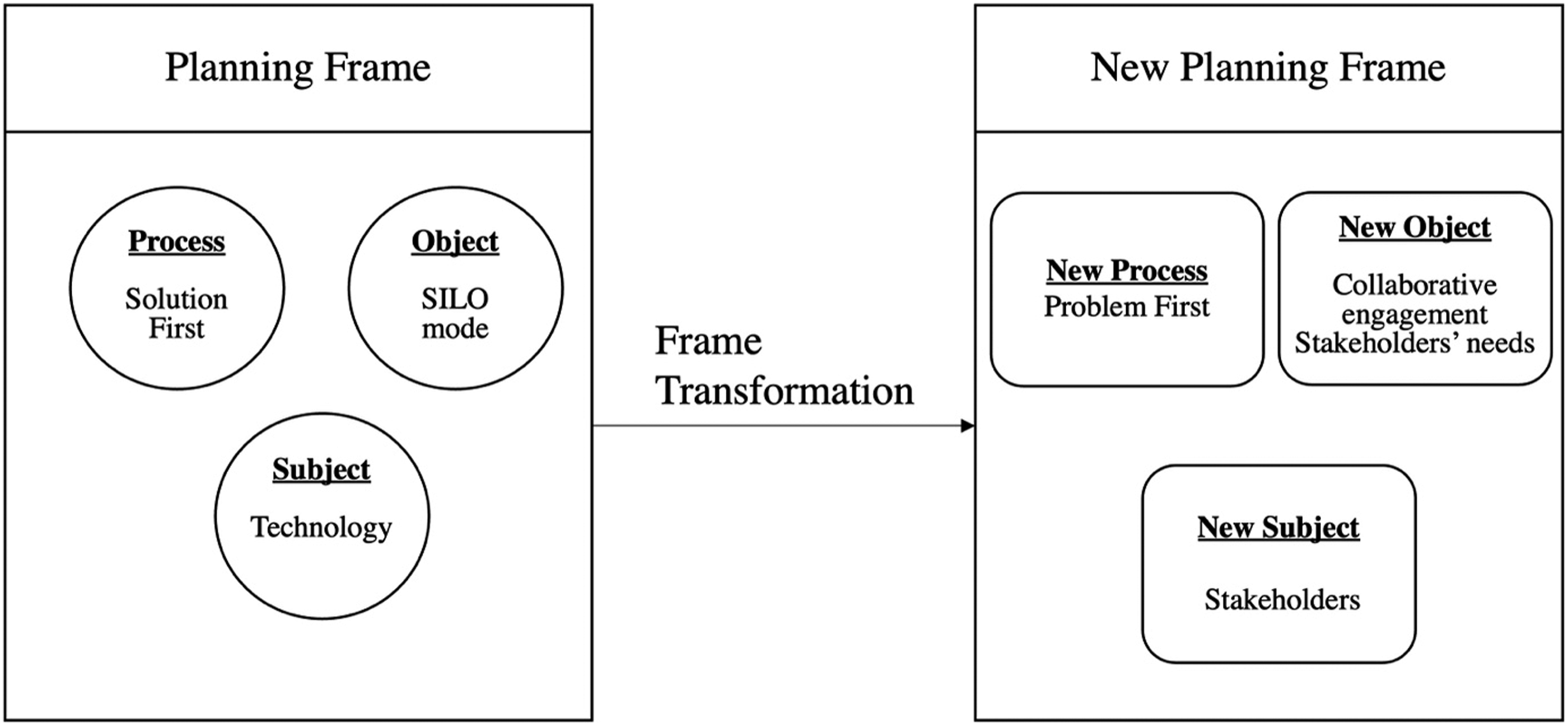
The table in Appendix 2, “Frame Transformation of the Elements of Planning Frame,” summarizes the planning activities and provides examples of frame transformation of the elements of the planning frame.
Frame transformation of the planning process
Historically, different departments within Delta City Council worked in silos, each planning and implementing their own projects in isolation. In a similar vein, the waste operations management team identified the need to capture proof of their service and formulated a video and GPS-based solution, without delving too deep into the precise nature of the problem, or how their solution might interact with other agencies of the council. Their approach was solution-driven. “Well for the waste team, all we wanted was cameras and GPS from the get go.” [TL, End-user, primary influencer]
However, the renewed focus from the newly established leadership team led by the innovation manager in the Council was to encourage and promote collaborative engagement among all departments, and this meant thinking differently and changing the solution planning process. The leadership team worked to identify the problem first before working on the solution. This meant that during the planning phase the team had to come up first with problem statements from each department's perspective. The second step was to come together and converge on a common problem statement. Initially, teams with extensive expertise from different departments thought they knew exactly what they wanted and already had a firm view of the solution. They had investigated some technology products and formed the view that these were the solution. However, that process of discovery was altered because of the new approach to first define the problem and then identify the solution “You would have heard them say that they already had a solution that they wanted and they often got frustrated with the process where we were saying, hang on, we need to research these we need to actually understand what we're doing, because they had this preconceived idea like they thought they already knew the answer, but we made them actually go through and work with stakeholders and deliver it in a really sustainable way.” [PD, Owner and decision maker] “They come to a problem with a preconceived outcome in mind, or a technology in the mind.” [PD, Owner and decision maker]
The principles of the smart city roadmap developed by the council had a key feature of customer centricity and defining the problem first is rooted in identifying customer pain points.
Frame transformation of the planning object
With a large base of stakeholders, the challenge for the project team was to define a common problem statement for all stakeholders, and then continuously refine the problem as per the evolving situation.
Each stakeholder group had to come up with their own problem statement and share it with the team: “Having collaborative meetings and inviting people from all over the organization and city, like procurement, parks and recreation, and others coming together, to sit down and share their problem statements. So areas of concern that they'd like to tackle using technology.” [BL, Accountable, Decision maker]
The objective of the project is a moving target, and the team had to constantly adjust to new requirements as well as feedback from stakeholders. With this collaborative way of working, departments had to accept trade-offs when negotiating prioritization of key issues. Focusing on significant problems first was a key outcome of these negotiations: ”So, you know basically it can become very frustrating because you got a lot of different opinions and trying to bring all those components together. Everyone needs to compromise a little bit. I didn't quite get everything I wanted. But I saw other aspects of it. So we ended up with a system that everyone's using. At the end of the day you got the operations using it, You got the sustainability department using it, you've got the customer service using it.” [BK, Sponsor, primary influencer]
Accepting trade-offs and making compromises required individuals and teams to reinterpret their priorities based on the collective good. The frame transformation of the objective and motivations led to the creation of a value proposition and justification of the solution based on different stakeholders’ needs.
Frame transformation of the planning subject
The subject of the planning activities includes key stakeholder groups involved in the project as well as systems and tools. Stakeholders can be internal to the organization, such as waste collection truck drivers, or external to the organization, such as council residents participating in the project directly or indirectly. Different individuals or groups had their respective motives and varied intentions during the planning activities. Understanding the differential needs per group required different levels of participation and interpretation of their requirements.
The project team needed to transform the frame of interpretations of various subjects’ needs, hesitations, and roles. For example, the waste truck drivers’ resistance to the projects was initially driven by fear of being tracked and monitored. However, involving them directly in the planning of the project and taking their feedback in the planning process demonstrated the real benefit for them like providing evidence of their services (such as missed bins, bins spill, contamination in recycling, and blocked access to bins) as well as evidence from the camera and GPS footage to contest against false insurance claims by residents. “So you start with the sort of champions and we put some systems in their trucks and they gave us feedback about what worked, what didn't. And then they also talked to the other guys what is it like. We're trying to let them know what the benefits of that system are and how it can help them. And that's what we really pushed was that we were here to look after you guys and make your job easier. They eventually came around to get on board once they could see the benefits of it and building the trust and that we weren't just using it to spy on them.”[TL, End-user, primary influencer]
Implementation frame
The implementation frame guides how people interpret events and occurrences during the implementation activities, provides meaning for implementation activities, and shapes actors’ implementation responses. Figure 5 illustrates the frame transformation of the elements of the implementation frame during the implementation activities. Frame transformation of the elements of implementation frame.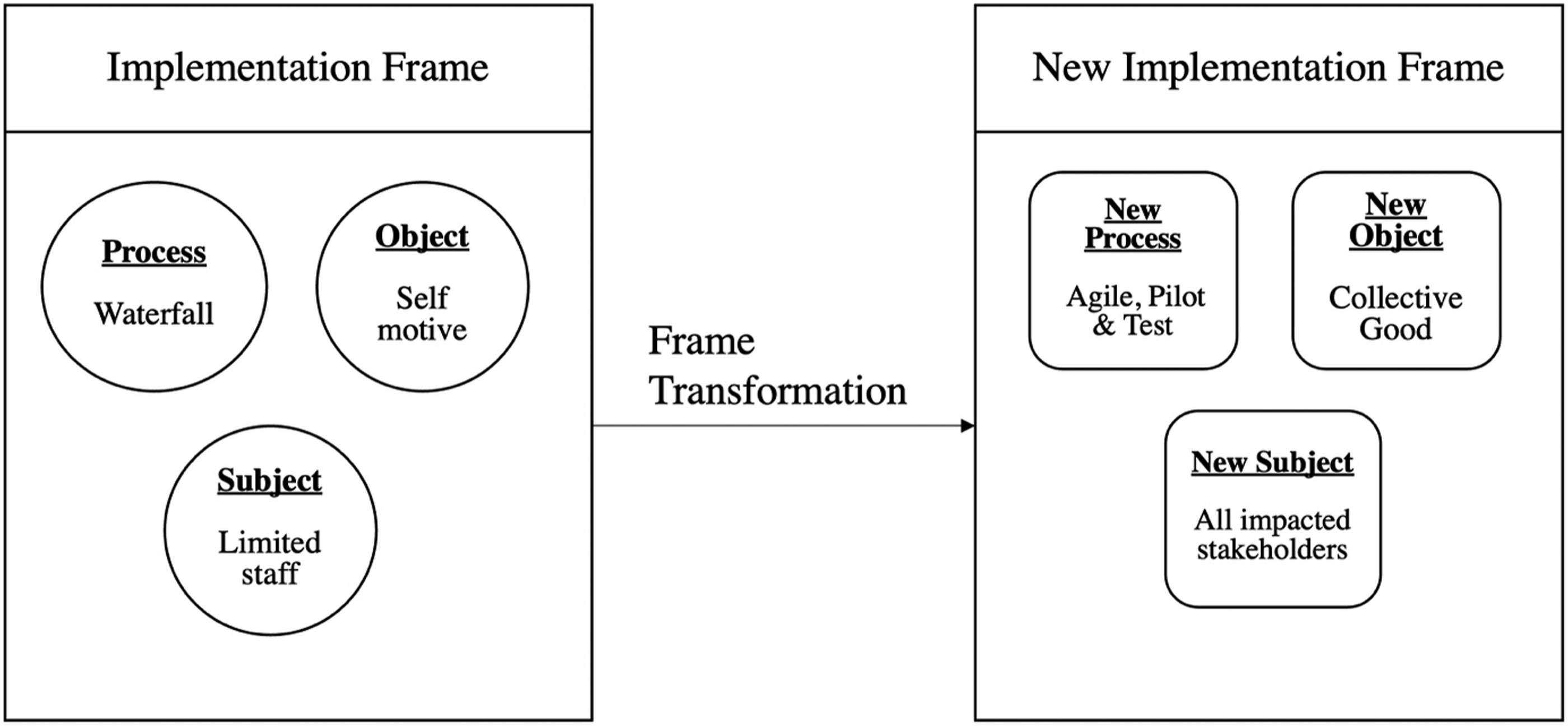
The table in Appendix 3, “Frame Transformation of the Elements of Implementation Frame,” summarizes the implementation activities and provides examples of frame transformation of the elements of the implementation frame.
Frame transformation of the implementation process
The dynamic nature of the project meant that a traditional waterfall approach of project management would not be suitable for fostering innovation. The project team needed to be more agile with emerging challenges. They constantly faced the challenge of breaking out of the traditional mould characteristic of large established public organizations such as the Delta City Council, which our respondent termed as a “Big Beast”: “The whole idea behind that is councils are such a big beast in general, like they deal with changing nappies to planning proposals and constructions to everything in between. It's really easy in that structure to get stuck in the day-to-day and just keep going along the traditional way.” [PD, Owner and decision maker]
The team wanted the SWMS project to be an exemplary innovative project and this required a fundamentally different implementation approach. “You know, the main crux of it was keeping that momentum, keeping that drive for wanting to innovate and challenge the norm and push boundaries in terms of what technology can do.” [BL, Accountable, Decision maker]
The team had to think and act differently about the implementation process to remain dynamic. The old frame of thinking and working was turning to be a key challenge: “Because we had a lot of industry experts operating in this project that had years and years of experience, and they tend to do things the way they have always been done. We had a lot of friction in that regard. We had to challenge deep-seated opinions of what's right and how things should be done.” [BL, Accountable, Decision maker]
The frame transformation of the implementation process happened at all levels of the team: “Stepping into such a complex project, I had to also be comfortable in challenging people, and not taking no for an answer. I had to always question everyone why, why? Why are you pushing back on that? So, you know I had to also reframe my way of working to move away from that whole compliance to challenge the norm, push the envelope. I also had to reframe the way I work to be truly innovative. It requires you to work outside of your comfort zone, not just other people, but yourself as well and to find comfort in the uncomfortable.” [BL, Accountable, Decision maker]
Frame transformation of the implementation object
The success of the project hinged on reinterpreting the results of implementing vital technological solutions, which encountered significant opposition both within the council and among its residents. This resistance stemmed from a lack of understanding of the solution's value in comparison to its cost-benefit. For instance, the discussion about RFID tags met with resistance because introducing RFID to each individual bin carries a substantial cost. The project team had to clearly demonstrate the benefits to justify such an expenditure. The project manager highlighted: “RFID tags was such a key point of contention in this project. Reason being RFID is a very old technology and the pushback was, it’s not innovative, some say we know what it can and can’t do. Why are we investing so much money? And the use cases that were brought to the fore to prevent us from exploring RFID was other mishaps or failings from other local governments that rolled out RFID causing huge uproar in the community, and people were not happy about it, and they spent millions of dollars on it, and the project didn’t get them any more benefit or insights.” [BL, Accountable, Decision maker]
Transforming the frame of interpretation of the objectives of RFID and aligning it with different stakeholders’ motivations led to piloting the old technology in a new way to create new value propositions. “We want to see how long it would take in real-time to collect data, how would these different pieces of technology, that we're seeing currently disparate, would communicate with one another in this pilot to see new potentials from implementing this technology.” [BL, Accountable, Decision maker]
The team reframed the purpose of the RFID to construct a business case that resonated with various stakeholder motivations. They sought buy-in by revisiting the problem statement during the planning phase. As a project team member noted: “My rebuttal in that was, yes, we know what RFID can and can't do? Yes, it's been around for a long time. But for the purpose of what we want, it hasn't been done yet. So, let's use it in a different way and see what comes out of it. The problem statement for RFID was obviously making sure you know the assets out on the field.” [BL, Accountable, Decision maker]
Frame transformation of the implementation subject
The subject of the implementation reflects the focus of planning activities. During implementation, it was crucial for the project team to ensure that the delivered solution aligned with the diverse aspirations of various stakeholders. For instance, when implementing the solution, different stakeholders, such as truck drivers, had distinct concerns. If these drivers resisted the change, they had the potential to disrupt the implementation process.: “A smaller old crew were a bit more sceptical, they were like, we've always done it this way, why do we need this type of thing. And that was expected, I guess. I mean, they're a little bit older too, so they're a bit more averse to technology where the newer guys are a little bit younger, they've possibly used these kinds of things before in other companies.” [TL, End-user, primary influencer]
The subject audience's desires and needs had to be interpreted differently and addressed with special consideration through empathy-building. The project team transformed their interpretation frame and influenced the way the drivers perceived and interacted with the system. “There was even days where I actually went and sat out in the truck with them and went out on the run with them...we ran through the whole thing with them and then what we also did was to show them what it looked like from the outside… on our PC what we could see, just that there was that sort of transparency, you know exactly that they could see and what we can see.” [TL, End-user, primary influencer]
Similarly, the project team actively engaged with council residents (the “implementation subject”) to address their concerns about potential privacy issues associated with RFID technology. They emphasized the advantages of this technology to the residents, including its ability to provide precise information in response to their inquiries and retrieve lost assets, leading to a more efficient council.
Communication frame
The communication frame guides how people interpret events and occurrences during communication activities, provides meaning for the communication activities, and shapes actors’ communication responses. Figure 6 illustrates the frame transformation of the elements of the planning frame during the planning activities. Frame transformation of the elements of communication frame.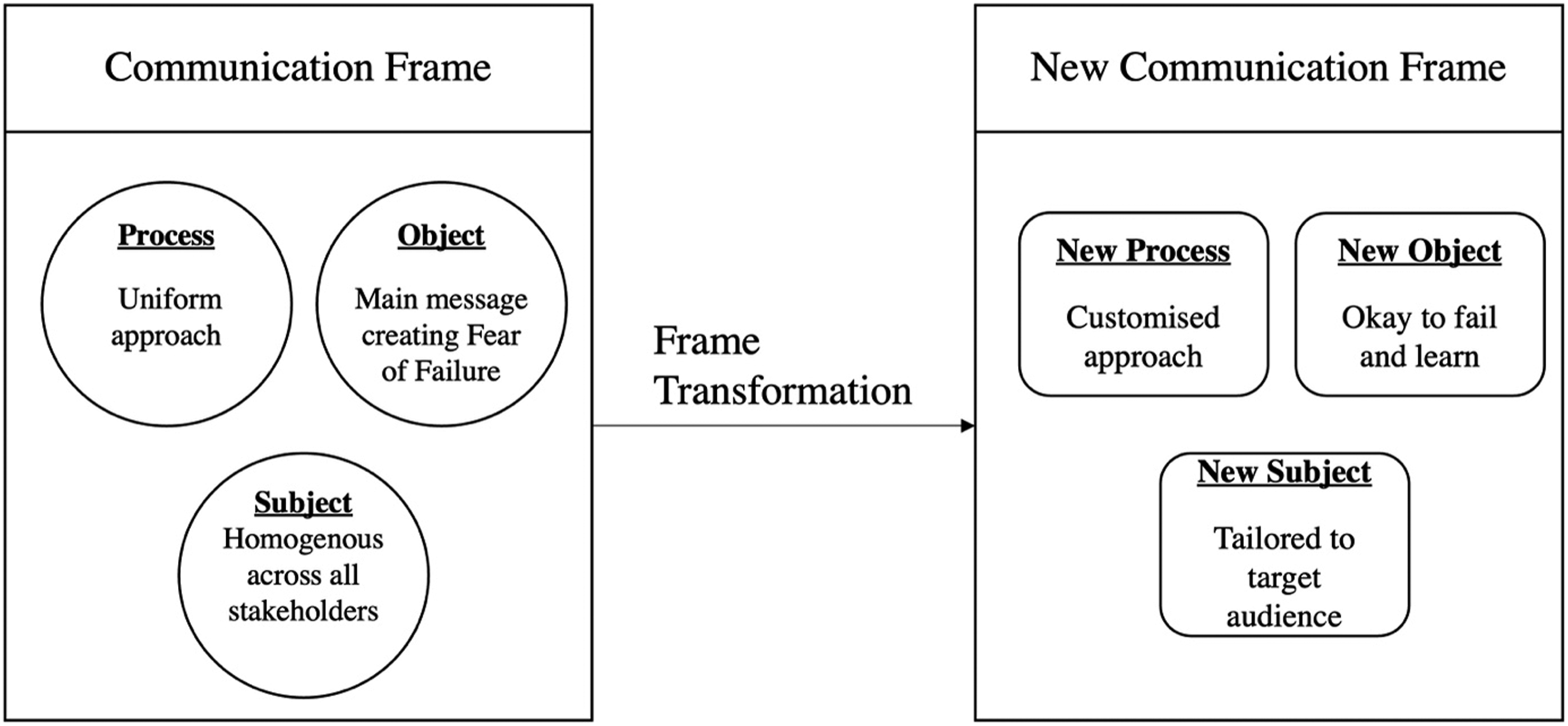
The table in Appendix 4, “Frame Transformation of the Elements of the Communication Frame,” summarizes the communication activities and provides examples of frame transformation of the elements of the communication frame.
Frame transformation of the communication process
The process for communicating with the diverse stakeholders took into account the different behavioral profiles of the stakeholders. For instance, to enhance recycling behavior, the message to residents was centred on the “recycle right” program, aiming to educate them about recycling best practices and promote a behavioral shift towards improved recycling. Personalizing the message for individuals by reinforcing positive practices and placing personalized “good behaviour” stickers on bins for public display proved effective. “So, someone did something well we would actually attach a sticker to the bin and they went into the drawer with $100. So there was that positive reinforcement for recycling correctly.” [TS, End-user, primary influencer]
Simultaneously, the communication process for “recycling offenders” aimed to avoid publicly displaying poor recycling habits. Instead, the team privately communicated with residents who had contaminated items in their bins. This tailored communication approach for the “offenders” drove behavioral change by educating them through leaflet drops and personalized letters, emphasizing correct recycling practices.
The revised process for communicating with residents incorporated a mixed communication method, which included door-knocking, sending letters, and broadcasting general messages to educate individuals about recycling. “Our whole thing is more behaviour change, right, rather than punishment, but we can then use this technology (SWMS) to go back and identify if that street is still the same, then we take corrective actions... It's not really about holding people accountable, it's more about the right way to do things. The main focus is education.” [TS, End-user, primary influencer]
The method used to communicate with truck drivers was distinct. It involved actively engaging the truck drivers in the design of the artifact, which aimed to alter their perceptions about the system's benefits and utility.
Frame transformation of the communication object
The communication objective of the project team changed based on the understanding of the needs, motivations, and goals of various stakeholder groups. For residents, the objective of behavioral change was achieved by emphasizing positive recycling habits and tailoring messages, rather than immediately penalizing poor practices.
Grasping the target customers' needs and discerning what drives them to act was crucial in choosing the right tools and systems for conveying the message: “But if we're looking at this from a behaviour change point of view, we need to have the appropriate tools to be able to communicate in as close to real-time as possible with that household and to personalize the message. That's what the science says has the best behavioural change outcomes.” [BG, Sponsor, primary influencer]
The objectives and motivations varied from residents to internal team perspectives. The use of RFID was to inform residents about waste management proactively: “The other point of contention was being able to proactively notify residents when their bin was going to be collected. So like a reminder, like a text message reminder or something to the likes of that to enable that omni channel of communication between the council and the customer.” [BL, Accountable, Decision maker]
As for the recycling team, the objective was to provide a targeted education program from the data collected by RFID linking bins to residents’ addresses “So the train of thinking around that was RFID would be able to identify which bin belongs to which household so you can have more targeted education programs with that resident.” [BL, Accountable, Decision maker]
Customer centricity was a fundamental principle of the roadmap, and it necessitated continuous communication and engagement with both internal and external stakeholders. Altering the residents' perspective on the system and how they understood its functions was essential for gaining acceptance. “There was a big risk that residents would perceive this technology as a big brother…”you're watching us, you're watching what's going into our bin”. For us, from a communicationss and marketing perspective, it was how can we get ahead of the curve? …So, keeping a communication channel open through animation videos on our social media pages, or posts was crucial.” [BL, Accountable, Decision maker]
Frame transformation of the Communication Subject
The communication targeted a variety of stakeholders, aiming to keep them well-informed and engaged to achieve customer centricity. This entailed employing suitable systems and tools across multiple platforms, each with distinct functionalities, to convey the value and results of the solution. “the way that we do things is not by rolling out big archaic system…we think about what benefit or improvement we can provide to the customer and keeping that customer at the forefront.” [PD, Owner and decision maker]
For instance, the value derived from the SWMS project needed to be communicated to residents, emphasizing the benefits of recycling correctly. The goal was to enhance recycling and effect behavioral change.
The team engaged in a pilot test using the street sweeping services during the implementation activities. This test aimed to gauge residents' reactions and their willingness to receive information from the council about the service. It also explored the most effective means of communicating with the residents: “We had a pilot with selected members of the community. And we were engaging them on the street sweeping trial. So we had three different pilots [exploring three different methods]…The level of interaction that we had with the residents was really surprising, we found that there was an appetite in the community for more digitized services. So, the project was welcomed by the community.” [BL, Accountable, Decision maker]
For the truck drivers, the communication centered on obtaining their buy-in as system operators. Their perceptions and interactions with the system underwent a transformation to recognize its benefits, which was a vital part of the DT process. For the customer service team, this system facilitated their communication with residents, enabling them to address call inquiries and resolve issues. Meanwhile, for the recycling team, the system automated a previously exhaustive manual process. This allowed them to communicate with residents about recycling contamination in a timely manner, using a balanced combination of personalized and general messages to educate customers and effect behavioral change.
Discussion
Throughout the DT process, various stakeholder groups interacted during activities related to planning, implementation, and communication. Initially, stakeholders adopted three frames of interpretation to engage with one another and the SWMS implementation process. Subsequently, stakeholders negotiated to align their respective frames of interpretation, achieving frame alignment (Goffman, 1974; Snow et al., 1986) by transforming the process, object, and subject elements within each frame. These transformations led to dynamic interactions between the three frames. Figure 7 presents a process model depicting the frames, and their interactions, and captures the impact of frame transformation on the elements within each frame. In Table 2, we summarise the key elements of the process model. A process model of achieving stakeholder alignment in digital transformation initiatives. Key blocks of the model: Frames, Frames elements, and Interactions.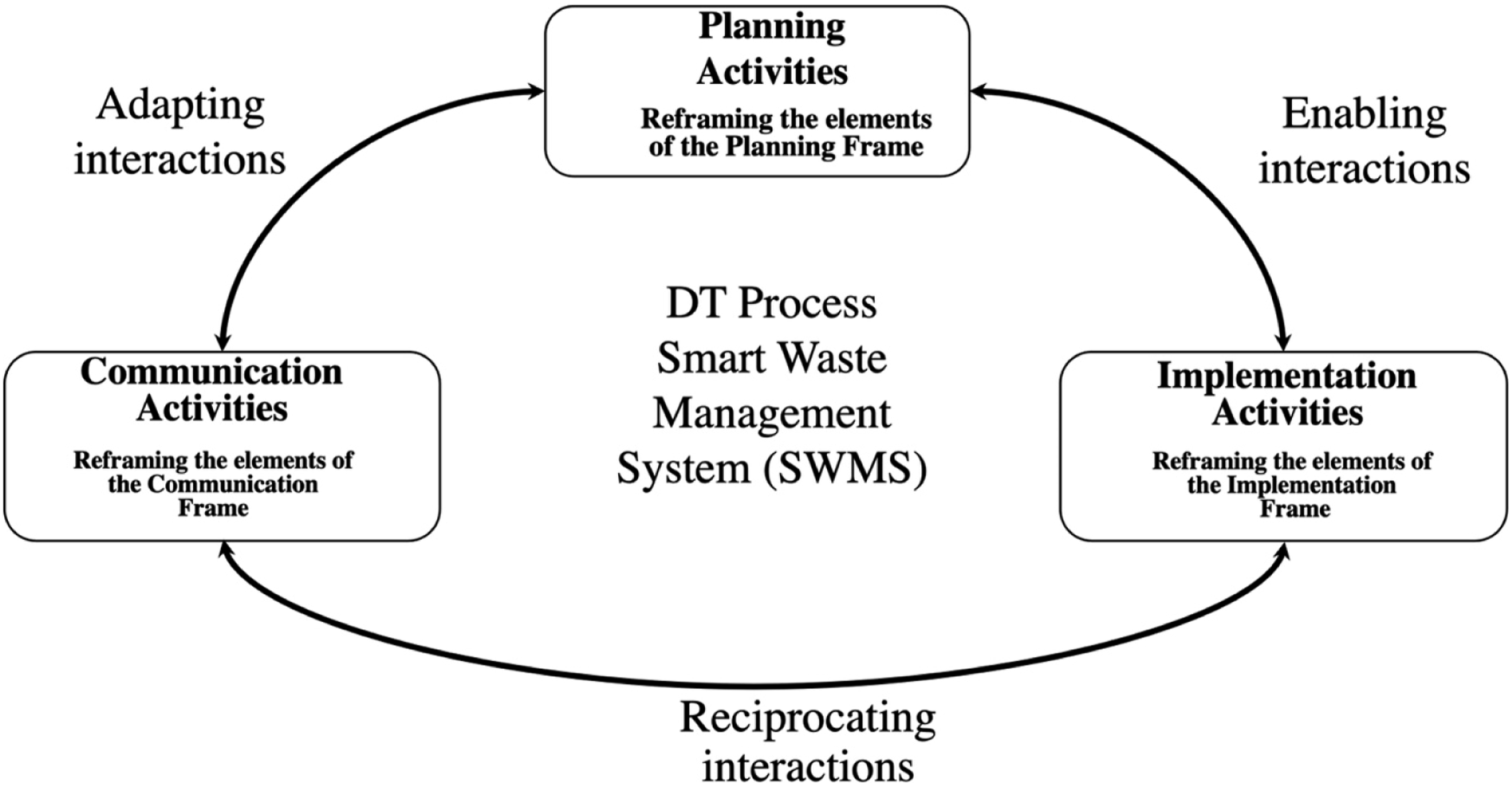

The process model depicted in Figure 7 provides an overview of the key activities and interactions involved in the implementation of the SWMS. Naturally, the planning activities take place prior to the implementation activities in a sequential and temporal manner. However, through the frame transformation of the process, object, and subject (POS) elements, the process becomes more iterative and recursive. The stakeholders' transformation of the POS elements generates fresh perspectives for the activities within each frame. These new perspectives prompt stakeholders to reassess their initial motivations and actions, leading to the refinement of activities and cumulative improvements in outcomes. With each emergence of a new perspective from the transformed interpretations, the transition between activities is iteratively fine-tuned with updated motivations and actions. This iterative refinement aligns with the new perspective, highlighting the recursive nature of the process. Additionally, the communication activities occur concurrently with both the planning and implementation stages, reflecting the active engagement of stakeholders throughout the process.
Frame interactions
Each frame transformation instance creates a new interaction opportunity between the different activities. Transforming the frame of interpretation of the process evolves through adopting new frames of thinking to transform the team’s understanding of the process and execution of actions. Frame interactions cumulatively improve the outcome by refining the activities in each step. This contributes to shaping the dynamic organizational response through the refinement and cumulative improvement of the process activities.
Enabling interaction (between planning and implementation frames)
An enabling interaction (Figure 7) plays a crucial role in initiating and establishing the foundation for the operation of an activity. This entails providing inspiration to act and facilitating access to the necessary tools and methods for effective action. To effectively address customer problems, it is essential to gain a comprehensive understanding of the needs and challenges faced by the target customers. This process challenges the preexisting deep-rooted associations between objectives/motivations and the subjects of interest. The presence of diverse needs or problems further exacerbates the ambiguity and potential contradictions. Consequently, the planning of solutions is often hindered by long-held assumptions about the problem and misinterpretations of potential remedies (Goffman, 1974). Subsequently, active participation in the planning and subsequent implementation activities relies on the willingness to challenge and transform these assumptions and interpretations. Through frame transformation, outdated and misguided beliefs can be reframed (Goffman, 1974).
By adopting a new frame of interpretation and thinking that centers around customer-centricity and problem-solving, teams become better equipped and prepared to navigate the inherent ambiguity of the project. This approach allows for greater agility and adaptability. The process of piloting, testing, and learning is facilitated by the frame transformation of the process, object, and subject during the planning activities. This empowers the team to embrace ambiguity through the new process (Hertzum et al., 2012). Similarly, during implementation, piloting and testing enable the refinement of planning activities through a feedback loop mechanism, employing an iterative rollout approach that promotes continuous improvement based on ongoing feedback (Brosseau et al., 2019). The interaction between the planning and implementation frames is fostered through the continuous enablement of each other's activities, resulting from stakeholders' frame transformation of the process, object, and subject elements within each frame. This enabling interaction between planning and implementation ensures alignment between stakeholders' frames of interpretation, promoting motivation during planning and mobilization of action during implementation (Klandermans, 1984).
Reciprocating interaction (between implementation and communication frames)
A reciprocating interaction (Figure 7) refers to a mutual exchange of activities that follow the same pattern and direction, with a proportional intensity of reaction. In the context of implementation and communication, this interaction entails a reciprocal relationship where the actions taken in one area align with and complement those in the other. During implementation activities, creating a safe space for experimentation, trial, and error is essential. Piloting and testing new technology solutions allow for assessing outcomes against the objectives and motivations of various target stakeholders. This process establishes a “framing effect” as the reciprocation between implementation and communication activities aligns the frames between these two areas (Borah, 2011). The implementation and communication processes are intertwined, as the actions and steps taken during implementation necessitate specific communication approaches and actions tailored to the target audience and the objectives and motivations of the stakeholders involved.
The reciprocation between implementation and communication activities is aimed at achieving alignment and minimizing conflict. This reciprocating interaction can be seen as positively reinforcing or negatively prohibiting. The objectives of both implementation and communication activities are contingent upon the objectives, motivations, and intentions of the target audience. For instance, positive implementation actions such as promoting good recycling behavior result in corresponding positive communication messages to reinforce and encourage this behavior. The content, systems, and tools used to convey the communication messages, such as personalization or generalization of the message, informing or educating for behavioral change, are responses to the specific implementation actions, tailored to the corresponding communication needs. The reciprocating interaction between the implementation and communication frames ensures the correct interpretation of different activities by stakeholders, fostering buy-in and contributing to the successful implementation of the system.
Adapting interaction (between communication and planning frames)
An adapting interaction (Figure 7 above) represents a dynamic response to change that seeks to maintain a balance between actions and reactions during activities. These interactions involve adjusting the direction and intensity of reactions in response to actions, although not necessarily in the same direction, intensity, or following the same pattern.
In the context of communication activities, transforming the frame of interpretation of the process, object, and subject (POS) elements allows for the adaptation of communication activities to align with the planning activities. Frames provide a better understanding and perception of “everyday reality” (Tuchman, 1978) and greatly influence how stakeholders communicate new interpretations. Through frame transformation, unfolding events are imbued with new meanings through alternative interpretations (Gamson and Modigliani, 1983), resulting in revised problem definitions and issues (Shah et al., 2002). This, in turn, leads to adjusted rhetoric and discourse between interacting parties.
Each frame within communication activities is linked to a specific issue, event, or actor/agent. It is important to note that the same issue or event can invoke alternative frames from the same actor at different times (Chong and Druckman, 2007). The impact of an interpretive frame on discourse depends on various factors, such as timing and the routines and practices that resonate with values, motives, and intentions (Borah, 2011). Adapting interactions facilitate the creation of a local flavor in the solution, aligning it with the target audience's preferences and effectively conveying the benefits of the system during planning and communication. The adaptation process encompasses the alignment between organizational and ideological factors (Silcock, 2002) and the cultural fit (Benson and Saguy, 2005), which can influence different interpretations and impact the alignment between communication and planning activities (Borah, 2011).
Theoretical contributions
The DT process has a profound impact on organizations, extending beyond operational changes to encompass transformations in their business models, value proposition, and even identity. This distinguishes DT from IT-enabled transformation, emphasizing its comprehensive influence on the entire organization (Wessel et al., 2021). Consequently, a broader range of stakeholders, including internal staff and external customers such as end users, are affected by the organization-wide changes brought about by DT initiatives (Nadeem et al., 2018; Murawski and Bick, 2017). Organizations embarking on DT aim to be purposeful in their transformation journey, seeking to accommodate the diverse interests of stakeholders (Bordeleau et al., 2021). To gain buy-in and support from stakeholders, DT emphasizes the inclusion of a larger stakeholder base and their active involvement in the change process. This places increased pressure on the transformation process, necessitating broad participation and engagement from all stakeholders. As stakeholders play a central role in the DT process, they influence its outcomes by transforming their interpretations of events and reinterpreting activities in response to the ongoing changes. In addressing our research question on how stakeholders frame the DT process to achieve alignment and implement DT initiatives, our study contributes to the literature on Digital Transformation and Frame Alignment in several ways.
Our study contributes to the understanding of the DT process in the following ways: Firstly, it explains how stakeholders align their diverse approaches during DT activities. Our findings reveal that when multiple stakeholders with different interests and motivations are involved in the DT process, they tend to interpret the change process from distinct perspectives, drawing from their own experiences and motivations. The alignment of stakeholders' interpretations plays a crucial role in the success of DT, and this is achieved through the adoption of a new mindset that transforms their interpretations (Kraus et al., 2021). The study explores the specific steps, decisions, and actions taken by stakeholders to achieve a common objective by transforming their interpretations and mitigating the risk of DT failure. Additionally, the study underscores the significance of stakeholders' interpretations of events as they negotiate their positions and make compromises to reach a consensus when transitioning between different activities.
Secondly, our study uncovers recursive interactions among the three frames of activities in the DT process: planning, implementation, and communication. Previous research has acknowledged the dynamic nature of the DT process and its impact on users' adoption or discontinuation of technology (Soliman and Tuunainen, 2021). Our findings demonstrate that the recursive interactions within the dynamic DT process arise from stakeholders' transformation of their interpretations of the activities. This study contributes to the understanding of how the DT process unfolds through the dynamic interactions between stakeholders (Vial, 2019) as they continually revise their interpretations within each initial frame. This understanding is crucial for comprehending the evolving nature of the DT process and the subsequent actions resulting from stakeholders' changing interpretations. These interactions enhance our comprehension of DT as a process characterized by dynamic relationships, moving beyond simplistic “cause-and-effect” hypotheses (Currie et al., 2022).
Thirdly, our study enhances the understanding of how stakeholders actively shape the change process (Vial, 2019; Carroll, 2020; Rowe, 2018) through their interpretations and reinterpretations of various activities. We discovered that transforming stakeholders' interpretations involves negotiating their motivations, ultimately leading to aligned actions. The study highlights how stakeholders, who may share common objectives but employ different approaches to achieve them, transform their interpretations and align their diverse approaches during implementation. This aspect is crucial for the DT process to ensure consistent actions that align with stakeholders' varied motivations and intentions. Understanding the influence of stakeholders on the DT process contributes to a broader comprehension of the phenomenon, transcending specific industries and favoring a more inclusive perspective over organization-centric approaches (Currie et al., 2022).
Our study also contributes to the existing literature on frame alignment in the following ways: Firstly, we identify three distinct frames of activities. By conceptualizing these frames, we enhance the understanding of how stakeholders interpret the DT process. Initially, these frames help stakeholders construct their understanding and make sense of the events unfolding around them (Goffman, 1974). However, different stakeholders may interpret the same activities differently, leading to potential misalignment of targets and objectives. Our study specifically examines these frames within the context of the SWMS initiative and explores how they shape stakeholders' mindsets.
Secondly, our study uncovers the three elements of each frame that stakeholders reinterpret during the DT process as part of the frame transformation process. Stakeholders' frame transformation, involving the reinterpretation of events, is a critical mechanism for achieving frame alignment (Benford and Snow, 2000) and ensuring the success of the DT process (Azad and Faraj, 2011). We contribute to the frame alignment mechanism by highlighting the significance of transforming the three elements of the frame. This transformation is essential for stakeholders to adopt new frames of interpretation for the process, object, and subject (POS). Our study emphasizes the importance of aligning stakeholders' interpretations across all three elements of the frame as a condition for achieving alignment. This approach offers a fresh perspective on understanding the DT process and how it evolves through the interactions and engagement between stakeholders, both with each other and with the system. It underscores the fact that stakeholders are not only motivated by their new interpretations but also take action based on the frame transformation of the POS. The team members work together to establish a consensus on the new process, such as prioritizing problem definition before proposing solutions. Subsequently, they take the necessary actions to implement the new process, utilizing empathy during planning activities to refine the problem definition and employing piloting and testing during implementation activities. The initial step fosters collective agreement, while the second step drives active implementation of the new frames through newly developed actions resulting from the transformation of the process, object, and subject frames (Klandermans, 1984). The dynamic engagement and influence of stakeholders on each other's perceptions and interpretations of the system are integral to the complex process of recursive interactions between the different frames mentioned earlier.
Practical contributions
The study contributes practical insights by highlighting key characteristics of project teams involved in the DT process. Specifically, it emphasizes their ability to adapt their interpretations and adopt a new mindset when engaging with the system and collaborating with each other. This understanding can guide organizations in structuring their DT teams with the necessary skills and guidance to achieve successful DT outcomes. Additionally, organizations can utilize our findings to assess the progress of their DT projects, identify potential misalignment in stakeholders' perceptions, and take corrective actions to mitigate the risk of failure.
In the context of smart city initiatives, organizations can benefit from our research by implementing policies that acknowledge the interactive nature of the frames and focus on how stakeholders engage with the change process based on their interpretations of the POS elements. Change managers within organizations play a crucial role in influencing and motivating stakeholders to align their interpretations across all elements of the DT process. While having a common objective is important, success also hinges on aligning the process, object, and subject of change within the frames. By leveraging the dynamic interactions within the process, organizations can foster an agile and resilient culture of leadership not only within the project team but also across the entire organization, embracing the broader scope of DT.
Conclusions
Digital transformation has garnered significant attention from academics, entrepreneurs, and both private and public organizations, necessitating a deeper understanding of the DT process and the impact of stakeholders' interpretations, particularly in the realm of innovation. In light of this, our research aims to contribute to this discourse by exploring how stakeholders align their interpretations and influence the implementation of the DT process.
Addressing this question is crucial for guiding the DT process to fulfill its promise of enabling organizations to maintain sustainability and gain a competitive edge by involving a broad range of stakeholders. As active participants in the DT process, stakeholders play a pivotal role in shaping its outcome through their interpretations of events and their transformative approach to the process, object, and subject (POS) elements. This alignment of stakeholders' interpretations and actions is critical for the success of the DT process.
Furthermore, comprehending stakeholders' frame transformation provides valuable insights into the unfolding nature of the DT process and opens up new possibilities for the project team to explore innovative avenues for future system developments. The emergence of unintended consequences stemming from these transformed frames can present opportunities for project upscaling, such as incorporating additional features like road condition inspection for maintenance or localized street view monitoring of nature strips within the SWMS initiative.
The case study focused on an organization that embraced the DT process in response to the strategic direction set by its leadership team. However, the involvement of a diverse range of stakeholders adds complexity to the alignment of perceptions throughout the process. Expanding the study to include a broader stakeholder base, such as business owners and transient visitors, would enhance our understanding of how interpretations are influenced by the input of these new stakeholders. Additionally, future research could explore the integration process between multiple projects at a program level, providing valuable insights into the larger-scale implementation of DT initiatives.
Supplemental Material
Supplemental Material - Achieving stakeholder alignment in digital transformation: A frame transformation perspective
Supplemental Material for Achieving stakeholder alignment in digital transformation: A frame transformation perspective by Nizar Hoblos, MS Sandeep, and Shan L Pan in Journal of Information Technology
Footnotes
Declaration of conflicting interests
The author(s) declared no potential conflicts of interest with respect to the research, authorship, and/or publication of this article.
Funding
The author(s) received no financial support for the research, authorship, and/or publication of this article.

Supplemental Material
Supplemental material for this article is available online.
Notes
Author biographies
References
Supplementary Material
Please find the following supplemental material available below.
For Open Access articles published under a Creative Commons License, all supplemental material carries the same license as the article it is associated with.
For non-Open Access articles published, all supplemental material carries a non-exclusive license, and permission requests for re-use of supplemental material or any part of supplemental material shall be sent directly to the copyright owner as specified in the copyright notice associated with the article.
