



Abstract
This study examines knowledge mobilization practices in centers of research excellence (CoREs) in South Africa, Kenya, and Nigeria. This article is an excerpt from a larger project that adopts a pragmatic paradigm and a mixed-methods approach, using content analysis to address the subject by analysing policy documents and annual reports obtained from 40 Centers of Excellence (CoREs). South Africa's CoREs, distributed across various universities, cover a broad range of research areas, including biology, materials science, health, and biodiversity. In contrast, Nigeria's CoREs focus primarily on applied research, with emphases on materials, petroleum, and energy, while Kenya's CoREs concentrate on climate change and development. Besides focusing diverse areas, the CoREs also have diversity of partnerships, varied funding mechanisms, and robust KMb efforts which reflect how they endeavour to leverage research for development. Altogether the CoREs are aimed at addressing the overarching aim of advancing research, capacity building, knowledge dissemination, and development. However, the reliance on external funding and the need for more international collaborations in Nigeria and Kenya highlight areas for improvement. As these countries continue to invest in research excellence, the lessons from their CoREs can inform broader efforts to harness research for sustainable development across Africa and beyond. While there are notable strengths in the collaborative efforts and diverse research outputs, challenges related to funding, IT support, and evolving strategies need to be addressed.
Keywords
Introduction
Knowledge mobilisation, knowledge translation or knowledge engagement (henceforth knowledge mobilisation) is concerned with making information developed from research available, useable, and accessible to various users, particularly public sector and industry policymakers, through collaboration (Eljiz et al. 2020, Murphy et al. 2024, Nutley et al., 2007). At its most basic outlook, it involves the process of connecting research to non-academic decision-makers so that research is used to inform decisions about public policy and professional practice (Cooper and Levin, 2011). Phipps et al. (2016:31) emphasize that KMb allows knowledge to flow beyond academia, promoting its use in real-world contexts. The Phipps and Shapson (2009) model identifies four core elements of KMb: producer push, that is, efforts by researchers to disseminate knowledge, user pull, that is, demand from users for knowledge, knowledge exchange (mutual sharing of information, and collaborative creation of knowledge between researchers and users. The Social Sciences and Humanities Research Council (SSHRC) (2018) defines KMb as an umbrella term encompassing knowledge synthesis, transfer, exchange, and co-creation. This dynamic, interactive process is often used interchangeably with related concepts such as knowledge dissemination or knowledge translation, highlighting its role in transforming research into actionable insights for societal benefit (Delgado et al., 2005).
KMb enhances the societal relevance and utility of research by emphasizing engagement and collaboration among multiple stakeholders. It fosters linkages between theory and practice across sectors such as health (Lemieux-Charles and Champagne, 2004), public policy (Nutley et al., 2007), education (Malik, 2016), and information science (Keen, 2006). KMb ensures that research is not merely produced but applied, potentially transforming policies, practices, and societal outcomes. Nutley et al. (2007) explore how evidence-based decision-making can shape research use, enhance impact, and improve policy formulation. However, barriers such as organizational capacity, strategic misalignment, and poor dissemination mechanisms inhibit effective KMb (Malik, 2016). These challenges underscore the importance of a robust KMb process, particularly in environments that lack access to research and collaborative networks.
In Africa, significant barriers impede the impact of research on society. As McKay (2011) stresses, access to research can be life-saving, although scholarly research are often inaccessible to those who need it most. Collaborative research is hindered by poor research linkages, insufficient information flow, and limited coordination with development donors (Spilsbury et al., 1999). Stewart (2015) identifies additional barriers, including inadequate capacity to access and utilize research, mutual mistrust, and high staff turnover. Addressing these challenges requires targeted interventions to enhance research accessibility, strengthen education-research linkages, and foster a culture of evidence-based decision-making. Initiatives that promote co-produced research, capacity-building, and inclusive knowledge exchange can significantly enhance the role of KMb in achieving research excellence in Africa.
However, African governments recognise that the use of scientific knowledge is essential in addressing societal challenges (Trotter et al., 2014). For example, the AU's Science, Technology and Innovation for Africa 2014 Report states that clear communication and knowledge sharing between all innovation stakeholders serves to facilitate utilisation of scientific and technological knowledge to address societal challenges through innovative products, services, processes, business models and policies. The AU has further acknowledged that while individual scientists, technologists, and their host institutions have a responsibility to promote and explain their work, the national, regional and continental bodies should also distil and make available the continent's current levels of knowledge and their realistic potential for utility.
At the national level in South Africa, the National Research Foundation (NRF) considers a scientifically literate and engaged society as one of the strategic outcomes in its Strategy 2020. The Government of South Africa through its Department of Science and Technology (DST), acknowledges that a society that is aware of the value of science and uses the processes of science in their daily lives as well as engages in scientific debates, is a prerequisite for a successful national system of innovation (NSI). Evidence of this kind of consciousness abound in various countries in Africa. In South African Gazette Notice of 2018, the Department of Science and Technology (DST) proposed several policy intents to expand research outputs and transform the research institutional landscape; expand internationalisation and science diplomacy and support a science-literate and science-aware society (see Annual Report 2018/2019).
In the case of Nigeria, the national science, technology and innovation (ST&I) policy of 2012 addresses, among other aspects, the following KMb-associated issues in its ST&I policy strategies: ST&I promotion, capacity building in ST&I, technology transfer and diffusion and ST&I information management system. The Nigerian government acknowledges that there is need to popularise and inculcate ST&I culture in Nigerians for rapid socio-economic transformation and, as a result, aims at creating awareness in the society on the relevance of ST&I culture for improvement of quality of life and sustainable economic development. In Kenya, the government's ST&I policy document spells out several strategic policy issues, including encouraging and supporting collaborative, multi-disciplinary scientific research in and among research communities and policy makers for national development and security; supporting the application of research for ST&I in the formal and informal sectors and supporting public communication and advocacy for ST&I by facilitating development mechanisms of communicating ST&I results/findings to increase knowledge and understanding for adoption and utilisation.
With respect to knowledge mobilization, in Nigeria, Uneke et al. (2015) describe the establishment of a Health Policy Advisory Committee that fosters collaboration among researchers, policymakers, and stakeholders to ensure evidence-informed health policies. Their subsequent work (Uneke et al., 2017) highlights capacity-building initiatives aimed at improving knowledge translation in maternal and child health by equipping implementation teams and policymakers with the necessary skills to apply research evidence. Lansang and Dennis (2004) further emphasize the importance of capacity building for health research in developing countries like Nigeria, advocating for local engagement and tailored strategies to enhance the uptake of research findings.
In South Africa, integrated knowledge translation (IKT) has been instrumental in bridging the gap between research and policy, particularly in addressing non-communicable diseases (NCDs). Jessani et al. (2021) documented a phased IKT approach, utilizing the Exploration, Preparation, Implementation, and Sustainment (EPIS) framework to facilitate continuous engagement between researchers and policymakers, thereby enhancing evidence-informed decision-making. Similarly, the Western Cape Health Policy and Systems Research Journal Club (2022) has served as a collaborative platform, fostering co-production of knowledge among academics, health system managers, and policymakers to inform health system development. Additionally, the MobiSAM project exemplifies digital citizen engagement, where collaborative efforts between local universities, civil society, residents, and local government have utilized mobile technology to improve service delivery and accountability in municipalities (Khene et al. 2021). These initiatives underscore the commitment of these countries to leveraging collaborative frameworks and digital tools to enhance knowledge mobilisation, translation, and engagement across various sectors.
Why do we address the subject of knowledge mobilisation and research impact from the perspective of centers of research excellence (CoREs)? CoREs have become new organisational components in the national science and innovation systems worldwide. Their emergence has been propelled by aspirations to use available resources to upgrade the science and higher education systems, and there have been a flurry of CoREs in Africa in the last two decades. These centers are mainly organisations that are funded or supported by local organisations and agencies international agencies and science councils. CoREs have become institutionalised as publicly funded institutions whose mandate includes the production of quality and impactful research. Their most important outcome includes formulating and carrying out research in that inform policies in new ways, developing professionalisation in the academic workforce and enabling organisations such as universities to set their own priorities and engage in professional research governance.
Statement of the problem
Knowledge mobilization is critical in Sub-Saharan Africa as they serve as the linchpin for transforming research into actionable insights that drive policy-making and practical interventions. In a region marked by diverse socio-economic challenges and rapid development needs, the effective dissemination and application of research findings are essential for informed decision-making and sustainable progress. By bridging the gap between research and practice, robust knowledge mobilization strategies ensure that evidence-based solutions reach stakeholders, from policymakers to community leaders, fostering innovation, improving public services, and enhancing overall societal well-being. Strengthening these processes is not just beneficial but indispensable for addressing the unique and pressing issues faced by Sub-Saharan African countries, ultimately leading to more resilient and adaptive societies.
Despite the establishment of Centers of Research Excellence (CoREs) in South Africa, Kenya, and Nigeria to bolster research capabilities and impact, there remains a significant gap in the effective mobilization and utilization of research knowledge to inform policy-making and practice. This inadequacy hinders the potential societal, policy, and research benefits that these centers could achieve. The problem is compounded by variations in the establishment, focus areas, and operational frameworks of CoREs across these countries, as well as challenges related to partnerships, funding mechanisms, and organizational capacities. Therefore, it is imperative to conduct a study of these aspects to propose a robust framework that enhances the effectiveness of knowledge mobilization efforts within CoREs, thereby maximizing their impact on policy and practice in South Africa, Kenya, and Nigeria.
Overall aim of the study
This paper is an excerpt from a project whose aim of the study is to investigate knowledge mobilization practices in Centers of Research Excellence in South Africa, Kenya, and Nigeria, and proposing a framework to enhance the utilization of research for maximizing its impact on policy-making and practice within these countries.
Objectives of the Study based on the Content Analysis
The study addressed the following objectives:
To conduct a comparative analysis of CoREs establishment and focus, analyze and compare the establishment, focus areas, and operational frameworks of CoREs across South Africa, Nigeria, and Kenya. To assess partnerships and funding mechanisms, aiming to examine the role of partnerships and funding mechanisms in enhancing the research capabilities, outreach, and sustainability of CoREs. To evaluate knowledge mobilisation efforts, assess the effectiveness of knowledge mobilisation efforts within CoREs, focusing on the dissemination of research findings, engagement with stakeholders, and translation of knowledge into policy and practice. To identify challenges and recommendations for improvement, and identify the key challenges faced by CoREs, such as budget constraints, limited IT support, and organizational capacity issues, and to provide recommendations for addressing these challenges. To assess societal, policy, and research implications, aiming to analyze the broader societal, policy, and research implications of CoREs in South Africa, Nigeria, and Kenya.
Potential impact of the research
Through the study's findings, stakeholders, including scientists, policymakers, and research consumers, are poised to gain a deeper comprehension of Knowledge Mobilization (KMb). This understanding extends to aspects such as collaborative knowledge production, effective dissemination strategies, and the assessment of research impact. Research users will particularly benefit from insights into pulling research evidence and engaging in productive collaborations with scientists. Implementation of the KMb framework promises both short and long-term economic advantages. Institutions, governments, and research funders stand to witness substantial returns on their investments in Centers of Research Excellence (CoREs). By maximizing the impact of research across various sectors, the framework ensures efficient resource utilization, thus minimizing wastage and unnecessary costs. Effective KMb activities can drive national economic development by leveraging research outputs to address societal needs.
The study is poised to exert immediate influence on policy domains by raising awareness about the necessity for clear and actionable guidelines on KMb. Post-study, the framework's adoption is likely to spur the enactment or amendment of policies related to research evidence utilization, knowledge mobilization strategies, university-community research partnerships, and key performance areas for research institutions and government agencies. Such policy actions align with regional and continental agendas, including those set forth by the African Union, emphasizing the importance of making scientific knowledge widely accessible for policy formulation. The KMb framework serves as a catalyst for capacity building among stakeholders involved in research, policy, and practice. By imparting essential skills for effective knowledge translation, the framework enhances human and social capital, paving the way for future benefits in research production and consumption. Globally, its implementation aligns with the objectives of sustainable development, supporting initiatives such as the Sustainable Development Goals (SDGs), Global Agenda 2030, and the African Union's Agenda 2063. Additionally, it bolsters the implementation of national development plans, particularly in advancing science and technology diffusion and utilization.
Review of empirical literature review
Research is one of the key drivers of economic development, policy formulation, and societal change (Chen and Dahlman, 2004; Kaur and Singh, 2016). According to Kothari (2004), one of the fundamental motivations for researchers to engage in research is their desire to address unsolved societal problems. In essence, researchers strive to benefit society, among other stakeholders. Similarly, Roberts et al. (2013); Harnad et al. (2001), Beamish (2006), and Suthaharan et al. (2010) argue that researchers publish their findings for research impact, defined as the measurable good that research accomplishes in the world (Derrick, 2018). The UK's Research Councils (2011) broaden this notion, describing research impact as the demonstrable contribution of excellent research to society and the economy, which can manifest as academic or non-academic (societal/external) impacts (Barnes, 2015; Bornmann, 2013; LSE Public Policy Group, 2011). Reed (2016) further categorizes these impacts into more specific outcomes.
For research to achieve its intended impact on societal advancement, it must be of high quality, user-oriented, and effectively communicated (McLean and Sen, 2019). Research relevance and usability are equally crucial. Reed (2018) and Sudsawad (2007) identify three types of research use: instrumental, conceptual, and symbolic. This relationship between research use and impact is well-articulated in the co-produced pathway to impact framework developed by Phipps et al. (2016), which highlights research uptake as critical for achieving impact. As Nutley et al. (2007) argue, research utilization depends on various factors, emphasizing the need for effective mechanisms to maximize its impact beyond academia.
Utilizing research to enhance societal outcomes involves concerted efforts among stakeholders, including researchers and knowledge users. Knowledge mobilization (KMb) provides a pathway for research-intensive institutions, including Centers of Research Excellence (CoREs), to amplify the impact of their work and justify funding from governments and donors. However, the KMb literature lacks consensus on its definition, with many scholars focusing on describing its processes and objectives. Phipps and Shapson (2009), for instance, define KMb as enabling access to academic research for non-academic audiences. Their model highlights four key components of KMb: producer push, user pull, knowledge exchange, and co-production. Similarly, Canada's Social Sciences and Humanities Research Council (SSHRC, 2019) views KMb as an umbrella term encompassing knowledge synthesis, dissemination, transfer, exchange, and co-creation.
From a social relevance perspective, KMb aims to make knowledge actionable and increase its utility (Naidorf, 2014). This utility is realized through collaboration among multiple stakeholders, linking theory to practice and generating value through knowledge creation, sharing, and application (Bennet and Bennet, 2007). KMb spans the entire research cycle, from conceptualization to utilization and impact (Phipps et al., 2016). It has been successfully applied across disciplines, including environmental assessment (Delgado et al., 2005), health (Lemieux-Charles and Champagne, 2004), public policy (Lavis, 2006; Nutley et al., 2007), education (Cooper, 2010; Malik, 2016), and science and technology (Bernier, 2007). Additionally, its relevance extends to humanities, social sciences, and librarianship (Keen, 2006).
Despite its potential, barriers to research utilization remain prominent, particularly in Africa. Accessibility to scholarly research is a significant constraint, impeding societal impact (McKay, 2011). McKay underscores the critical importance of access to research findings, stating, “… access to the latest research findings can mean the difference between morbidity and mortality” (2011: 251). Other challenges include insufficient collaborative research, weak research-development linkages, inadequate information flow, poor education-research integration, and lack of donor coordination (Spilsbury et al., 1999). Stewart (2015) highlights additional barriers at the individual (e.g., lack of experience and mutual mistrust) and organizational levels (e.g., unsupportive cultures and staff turnover). Frameworks for KMb have been instrumental in addressing these challenges. Nutley et al. (2007) provide a discussion on using evidence, identifying factors shaping research use and models to improve research utilization across contexts. Cooper (2010) suggests measures to increase research use and impact, while Malik (2016) identifies organizational challenges such as misalignment of strategic goals and limited dissemination capacity.
Globally, KMb strategies have demonstrated varying levels of success. For instance, Urajnik et al. (2022) found that a knowledge translation (KT) program improved the frequency of outcome measure use among Japanese physical therapists. Jones et al. (2022) proposed a framework for translational research in education, emphasizing collaboration between teachers and researchers. Mercieca-Bebber et al. (2022) examined the CONSORT-PRO Extension, highlighting inconsistencies in its application that affect knowledge translation. Similarly, Zarin et al. (2022) introduced Canada's SPOR Evidence Alliance, facilitating collaboration and evidence-informed policymaking in healthcare.
In public health, Powell and Coward (2022) demonstrated the role of co-creative research in bridging research-practice gaps, while Giroux et al. (2022) developed tools to enhance virtual healthcare access in rural Canada through equity-informed KT. Wright et al. (2022) addressed harassment of researchers, emphasizing policies to safeguard academic freedom and security. Meanwhile, Godbout-Parent et al. (2022) explored cannabis use for chronic pain management in Canada, underscoring the role of KT in generating evidence to inform healthcare practices. Altogether, these studies underline the critical role of KMb in synthesizing research, bridging gaps between research and practice, and driving societal change. However, significant gaps remain in the African context, where systemic barriers impede research utilization and impact. Addressing these challenges will require context-specific strategies, robust collaboration, and enhanced accessibility to research outputs.
Methodology
Research design
This paper is an excerpt from a larger ongoing report that adopts a mixed-method approach to examine research mobilization in South Africa, Nigeria and Kenya. While the broader study utilizes a mix of content analysis, interviews, and questionnaires, this present paper focuses solely on the data collected through content analysis. South Africa, Nigeria and Kenya rank highest in the region in publication output, according to the Scimago Country Ranking system, with South Africa in first place, followed by Nigeria and Kenya in third (SCImago Journal and Country Rank 2025). Despite their strong regional standings in research productivity, the three countries differ significantly in terms of research output, infrastructure, economic size, and research excellence.
Most research on impact and excellence often relies on the instrumental approach of bibliometric analysis, focusing on publications in “… peer-reviewed international scientific journals or academic books as a mark of international-level research performance, especially in the case of ‘highly cited’ journals of international reputation or prestigious book series” (Tijssen and Winnink, 2022:371). However, citation metrics and other bibliometric quality measurement criteria often fail to capture how local African research information flows between centers of excellence and the organizations or individuals that benefit from this research. Additionally, visibility and impact measured through journals and other publications may not adequately reflect local institutional and individual information use. Furthermore, the study of knowledge mobilization - a subject with relatively recent origins - is recognized as a complex process (Naidorf, 2014). As such, it may not be sufficiently addressed using bibliometric methods alone.
The study utilised the pragmatism paradigm to investigate the KMb practices in the CoREs. Pragmatism is the most suited paradigm within which to situate the current study as “[pragmatism] opens the door to multiple methods, different worldviews, and different assumptions, as well as different forms of data collection and analysis” to “provide the best understanding of a research problem” (Creswell and Creswell, 2018:64). Consequently, a mixed methods research approach was applied to conduct the study. A survey design that encompasses (i) content analysis (ii) in-depth interviews and iii) a questionnaire survey was adopted. Each of these components constitute a phase in the study. The report in this paper focuses on phase one namely the content analysis.
The study targeted a total of 40 CoREs in the three countries, comprising nine government-and or agency-supported and public university-affiliated CoREs in Kenya, 16 public university-hosted CoREs in Nigeria, and 15 National Research Foundation (NRF)-supported CoREs in South Africa. The reference to government-supported CoREs is deliberate as they are supported through public resources and are therefore accountable to the public through their respective host institutions and governments.
For the content analysis, the researchers embarked on the collection of vital documents such as annual reports and organisational policies through physical visits to the organisations and retrieval from their websites. Features were extracted from the documents and categorized into different themes and sub-themes using a content analysis guide. The derived themes from these documents were then amalgamated to form compound words without altering their original forms, ensuring accuracy in data handling and analysis. The analysis was carried using NVivo, a leading qualitative analysis software.
Findings
What follows is the presentation of the findings. Availability and space economy determined the visual illustrations used.
Background information about the CoREs
South Africa (SA) has 15 centers of research excellence (CoREs), affiliated to private and public universities. The earliest CoREs were Center of Excellence for Biomedical TB Research (CBTBR), Center for Invasion Biology, Center of Excellence in Catalysis, Center of Excellence in Birds as Keys to Biodiversity Conservation, Center of Excellence in Strong Materials, Center for tree Health Biotechnology which were in established in 2004 at the Stellenbosch University (SU), University of Witwatersrand (WITS), University of Cape Town, University of Pretoria. The Center of Excellence in Human Development and Center of Excellence in HIV prevention were the youngest having been established in 2015. Most of the CoREs were establised in the University of the Witwatersrand (817.78%), while more than 50% of the Institutions had more than one COREs established in them.
The focus of the CoREs in SA ranges widely from Tuberculosis, invasion biology, ecology, conversation biology, biogeography, traditional medicine, biodiversity, food security, environmental, climate change, and mineral and energy resources, hetero-engineering, homo-engineering, bioengineering, and evolutionary ecology (see Figure 1). Others are conservation biology, food politics and cultures (Humanities), food symbols and values, policies and rights, safety and control, nutrition, consumer behavior, value chains and livelihoods, markets and prices human development, health, and social development. Yet other areas of focus include Basic Education, HIV/AIDs, Industrial Mathematics, Algebra, Topology, Statistical Theory and Applied Statistics, Operator Algebras and Functional Analysis, Number Theory, Life science, Mathematical Physics, Mathematics Education, Machine Intelligence and Learning, Symmetries, Mechanics, Numerical and Applied Mathematics, Paleosciences, strong materials, Carbon Nanotubes and Strong Composites, Ceramics, Hard metals, New Ultrahard Materials, Strong Metallic Alloys, Diamond and Thin Hard Films, Biotechology, native tree, pathogen, tree health, epidemiology, immunology, malaria, Trypanosomiasis, African horse sickness and other diseases.
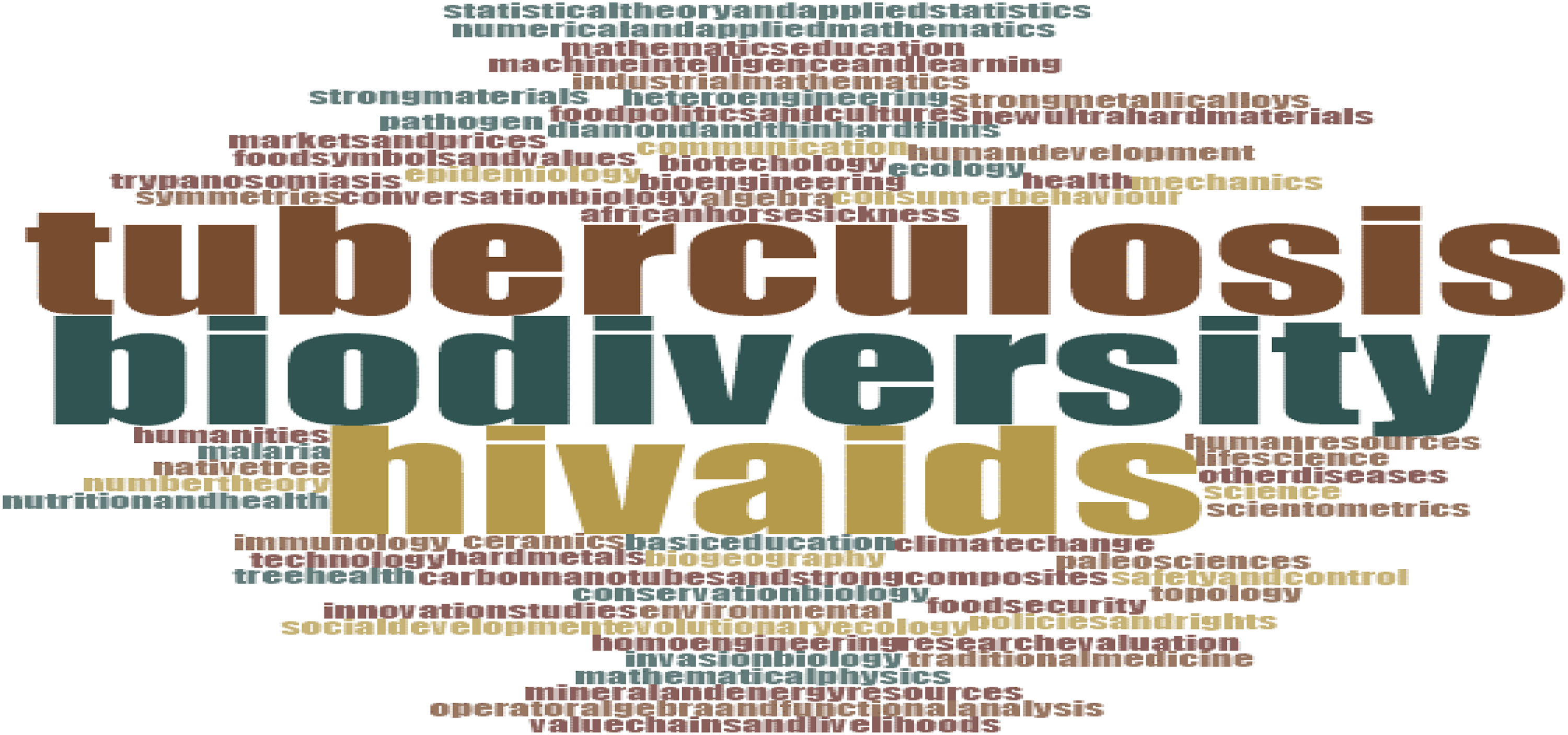
Word cloud of focus of the CoREs in SA.
Altogether there are about 28 CoREs in Nigeria. These centers are in three categories, according to their funding sources: (i) AFRICA Higher Education Centres of Execellence for Development Impact (ACE Impact) (ii) Tertiary Education Trust Fund (TETFUND) Centers of Excellence (iii) National Universities Commission (NUC) Centers of Excellence. The various centers have different focuses but address important aspects of national life (see Figure 2). The National Universities Commission acts as the clearing house for the ACE.
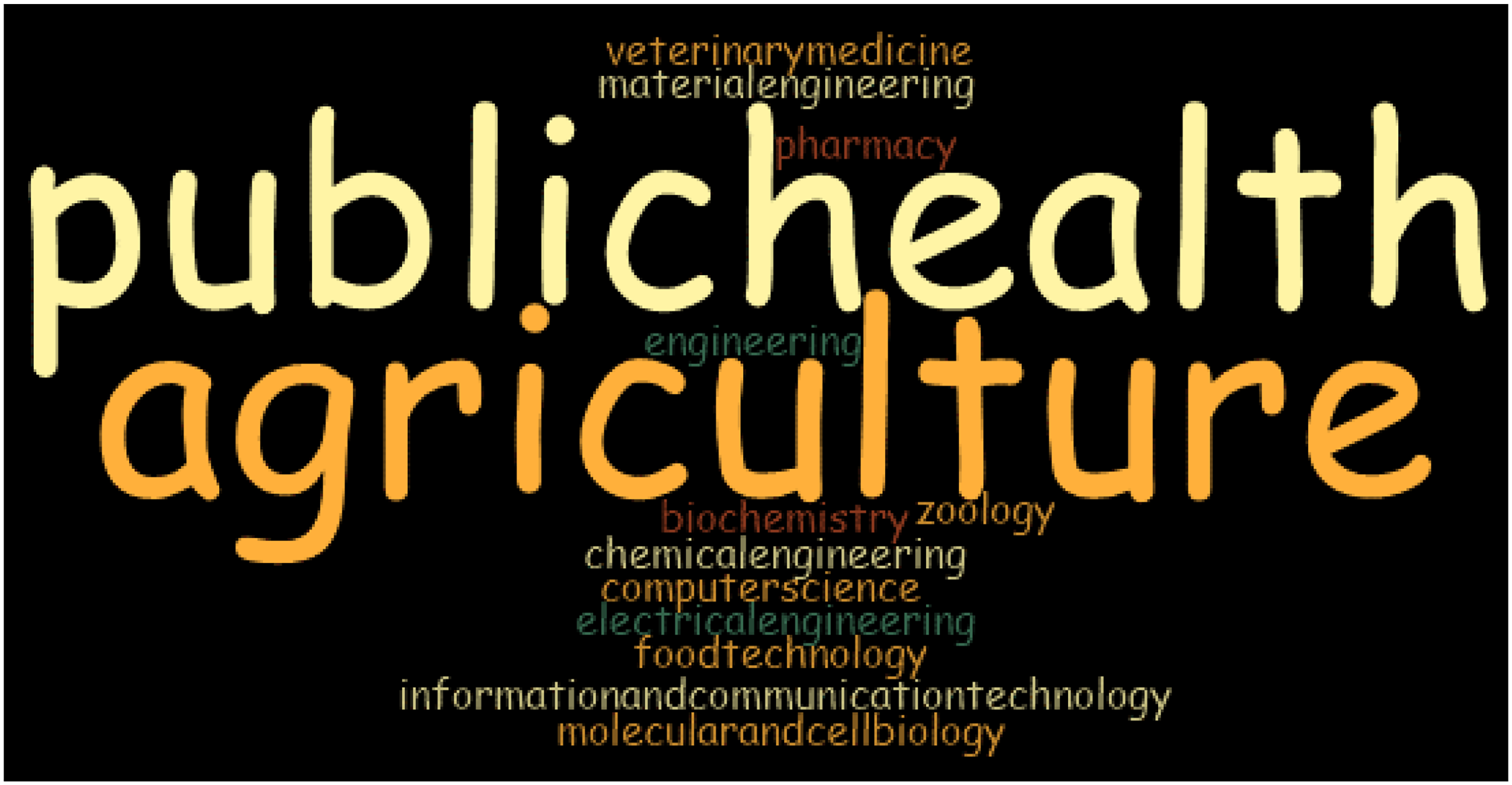
Primary host disciplines of Nigerian CoREs.
Some Nigerian CoREs have reported notable successes in their respective areas of mandate. For instance, Redeemers University Genomics of Infectious Diseases accurately diagnosed the first Ebola cases in Sierra Leone and Nigeria during the 2014 Ebola outbreak and developed a rapid diagnostic test capable of detecting the disease within ten minutes. Similarly, the Neglected Tropical Diseases and Biotechnology Project at Ahmadu Bello University established both a core and specialized biotechnology research facility and formed a consortium of academic and research institutions to address neglected tropical diseases, while the Phytomedicine Research and Development center at the University of Jos set up an herbal farm for treating common tropical diseases, conducted research on medicinal plants for bioactive compounds, anti-snake venom vaccines (GpMuc), and antifungal products (Scabiplus), and sponsored faculty and students to present their findings at conferences and workshops. Additionally, Obafemi Awolowo University's ICT Driven Knowledge Parks has established six postgraduate laboratories for cutting-edge research in collaboration with industry partners.
Kenya has eight centers of research excellence (CoREs) included in this study, all of which are affiliated with public universities. The earliest of these is the African Research Universities Alliance (ARUA) Center of Excellence in Climate and Development, established at the University of Nairobi in 2011—possibly as a response to the extreme effects of global warming experienced during that period (Boykoff, 2011). In contrast, the Center for Research in Emerging Infectious Diseases is the most recent, established in 2020 to support responses to outbreaks of emerging infectious diseases such as COVID-19 (Paul G Allen School for Global Health, 2020). The CoREs in Kenya cover a broad range of focus areas, including agribusiness, open data, textile management, research methodologies, environmental resource management, and climate change and disease management.
Cores partnerships
The SA CoREs have forged collaborations with a diverse range of institutions—locally, regionally within Africa, and internationally—to bolster their research activities. Many of these partnerships involve universities that run both advanced and outreach programs, thereby promoting knowledge sharing and enhancing skills among students and CoRE staff. For example, the University of the Western Cape and the University of Pretoria have partnered with institutions such as Ghent University (Belgium), the University of Minnesota (USA), the University of Wollongong (Australia), and several South African institutions including the Human Sciences Research Council, the University of Fort Hare, the University of Johannesburg, the University of Limpopo, the University of Missouri, and the University of South Africa through their Center of Excellence on Food Security.
In Nigeria
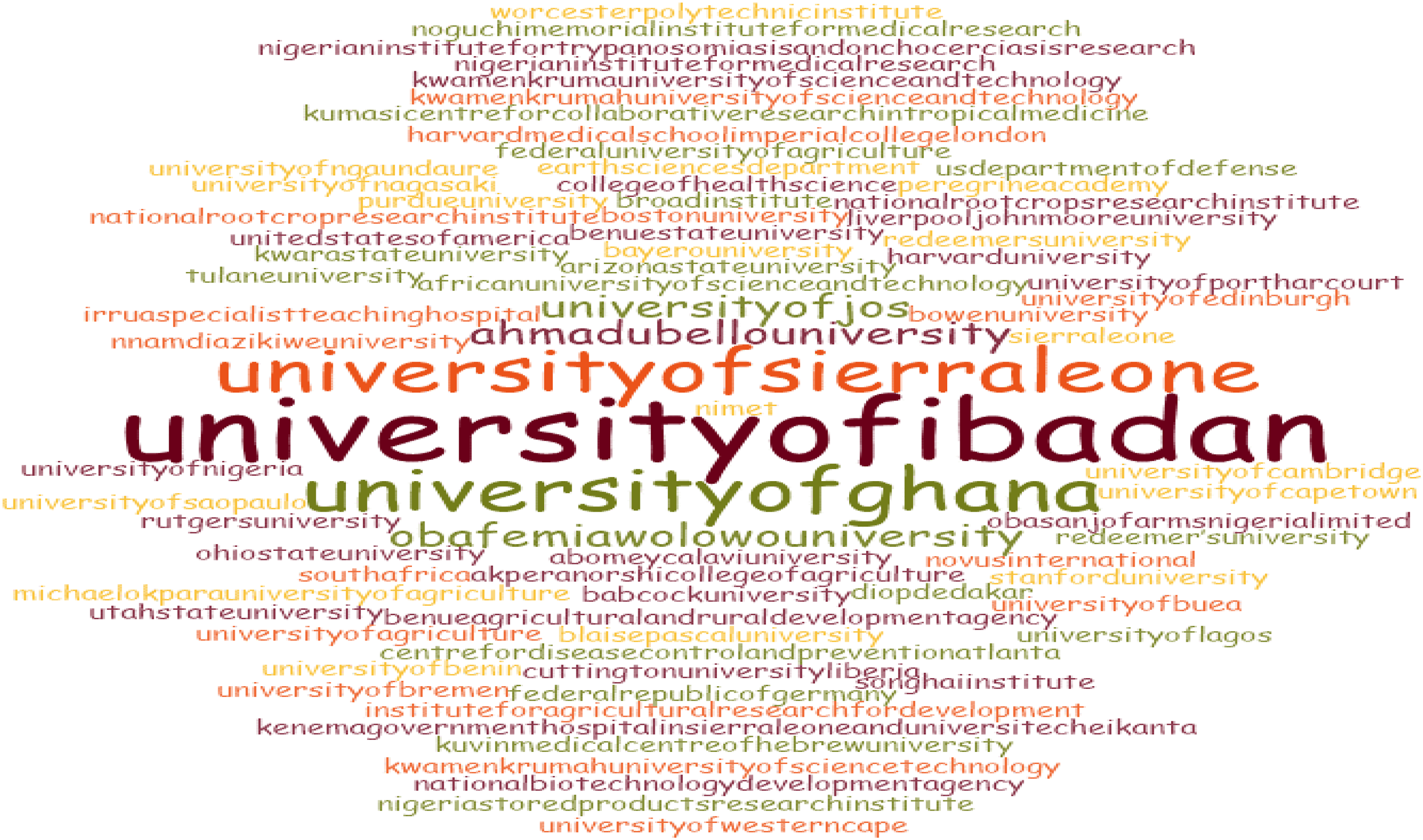
Partnerships of CoREs in Nigeria.
The CoREs in Kenya collaborate with a range of institutions at local, regional, and international levels to support their research activities. Many partnerships are formed with universities that benefit from student and staff exchange programs, facilitating the sharing of knowledge and the development of skills. For example, the University of Nairobi has established strong links with Washington State University (USA), Emory University (USA), and Charité-Universitätsmedizin (Germany) through its Center for Research in Emerging Infectious Diseases (CREID).
Cores funders
The CoREs in South Africa relied on external sponsors/funding agencies to enhance and meet their research input and activities. But the sponsorships were channeled through the Department of Science and Technology (DST), and National Research Foundation (NRF), and the Department of Mineral Resources and the Department of Energy. In Nigeria, ten or 62.5% of the CoREs are sponsored by the World Bank while 31.25% were sponsored by MacArthur Foundation. An important aspect of the funding of CoREs in Nigeria is the emergence of home-grown and home-supported (NUC) CoREs, about 7%. Funders for CoREs in Kenya include local (County governments), regional (African Union) and International (World Bank). But their major funders are external. Even though some of the CoREs create products, they are not self-sustaining.
Types of documents produced by the coREs analysed
On SA, documents analysed are reviews (8, 53%) of the report generated by the CoREs, evaluation reports (5, 34%) and annual reports (2, 13%) of the CoREs Figure 4.
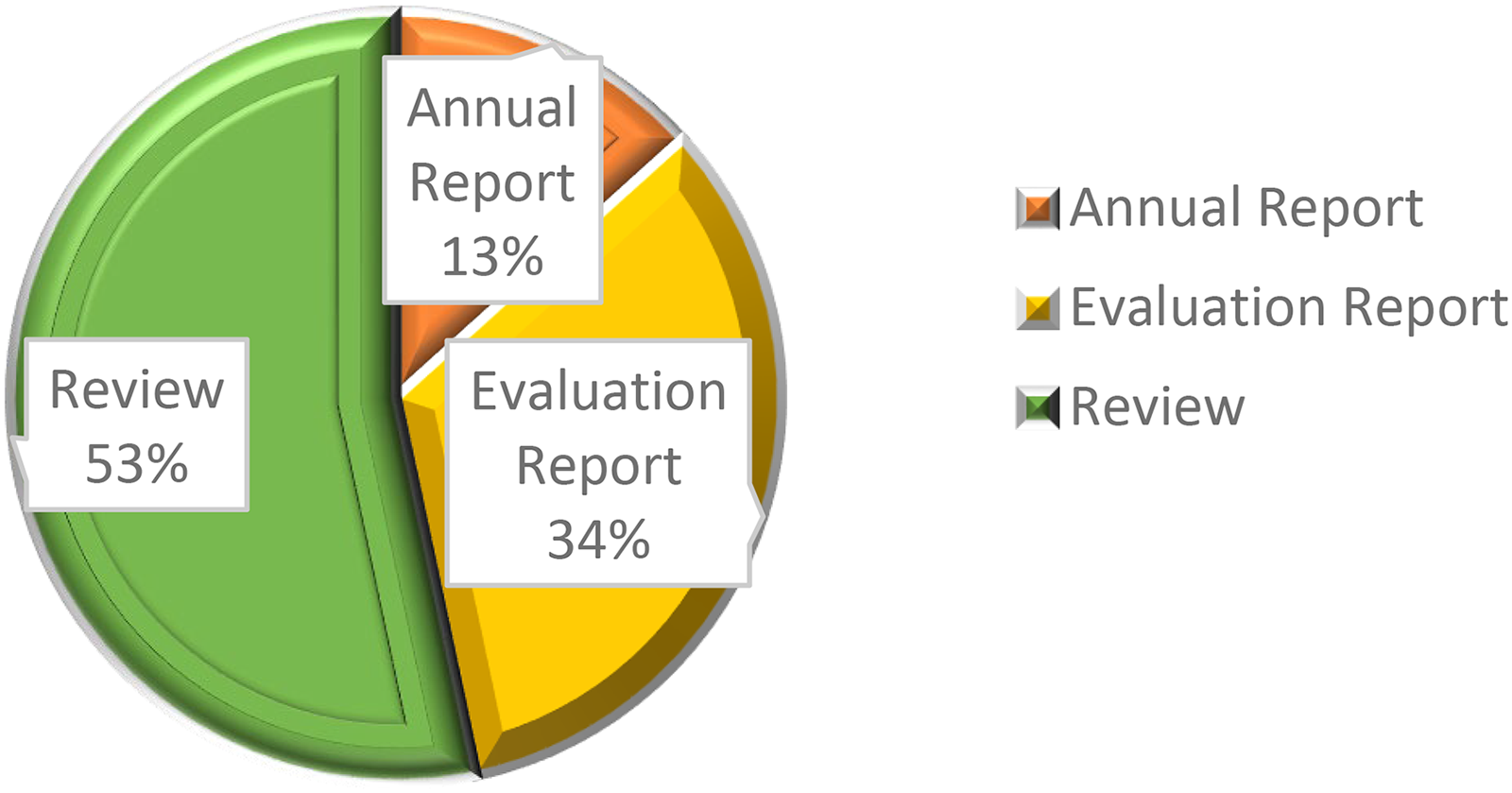
CoREs documents analysed from SA.
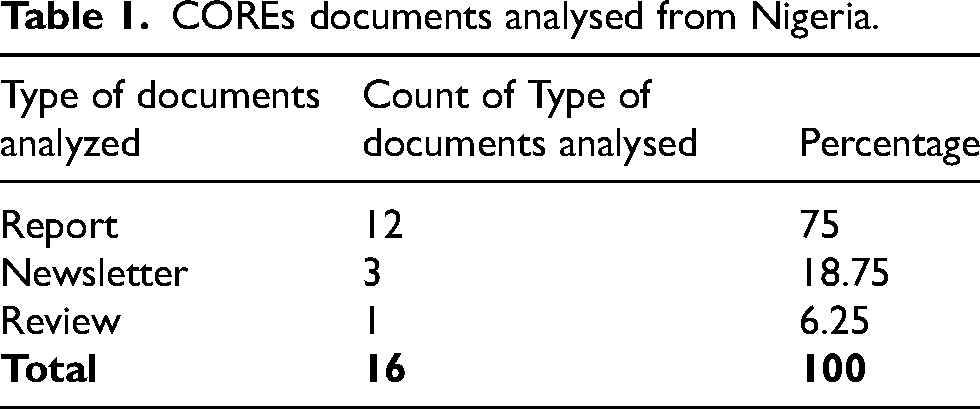
Out of the 16 CoREs from Nigeria, the documents analyzed were 75% (Reports), consisting annual reports and other reports, while 18.75% were newsletters and 6.25% were Reviews between 2004 and 2020 (Table 1).
COREs documents analysed from Nigeria.
In Kenya, the most common documents produced by CoREs are reports; 4 (50%) of the centers generated reports. Some of the reports reviewed include financial reports as well as annual reports. Other documents include electronic newsletters to which members subscribed as well as policy briefs. In the case of publications, conference papers, posters and journal articles were the main types of publications produced by the CoREs Figure 5.
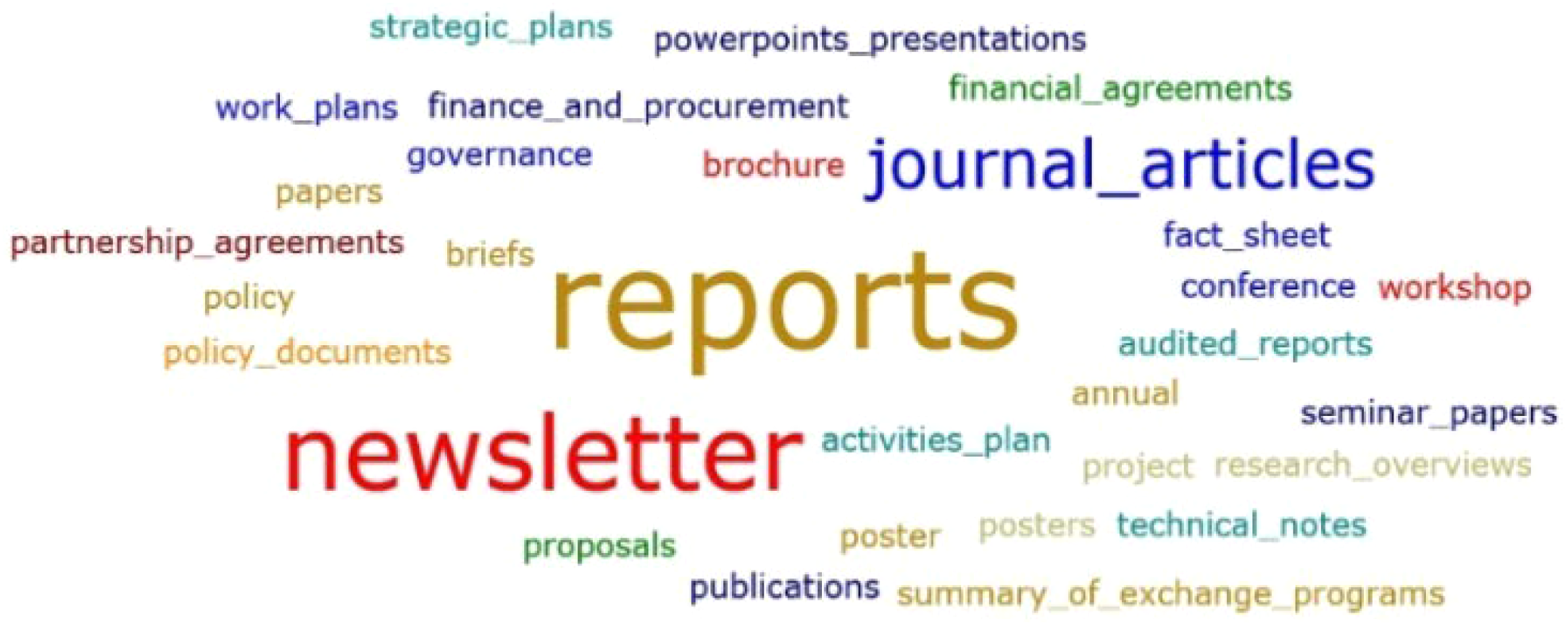
Core documents analysed from Kenya.
Purpose, vision and mission of the organisation and KMb work in CoREs
In South Africa, CoREs share a core value centered on disseminating knowledge, experience, and tools. This commitment is reflected in their extensive use of advanced training and outreach programs, likely influenced by uniform funding from a common sponsor with a primary focus on knowledge sharing. The dominant theme across SA CoREs is “sharing knowledge, experience, or tools,” which is evident in both their KMb purposes (17.24% weighted) and their institutional mandates and strategic objectives (24.59% weighted) (see Figure 6).
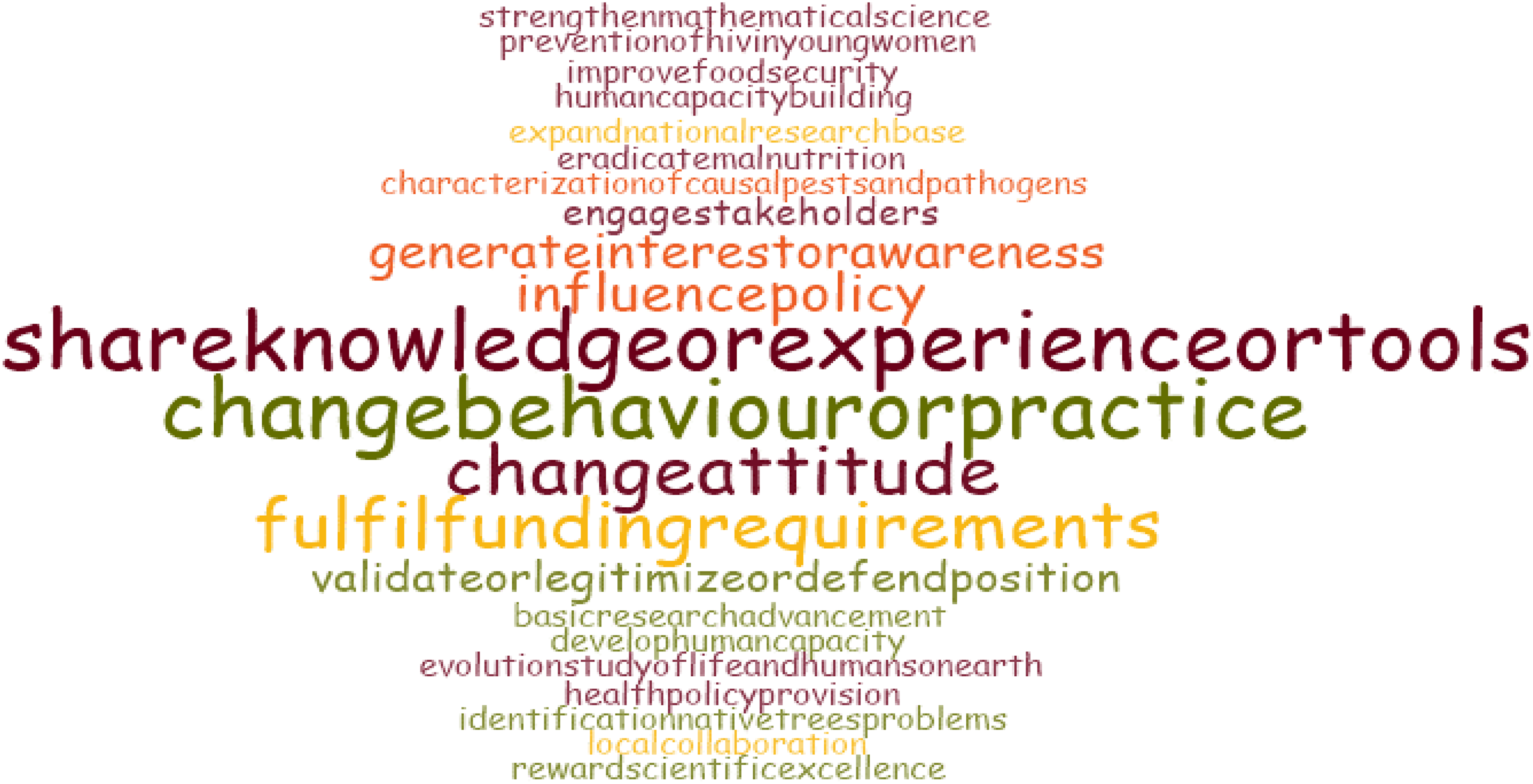
Purpose, vision and mission of the organisation and KMb work in CoREs in SA.
In addition to this central theme, the CoREs also aim to change attitudes, engage stakeholders, fulfill funding requirements, generate interest, and influence policy. More granular objectives—such as advancing basic research, characterizing causal pests and pathogens, developing human capacity, eradicating malnutrition, studying evolutionary trends, expanding the national research base, and improving food security—further illustrate their multifaceted approach to enhancing knowledge mobilisation. Notably, the policies and guidelines for KMb work at these centers are mainly self-initiated (86.7%) rather than mandated (13.3%).
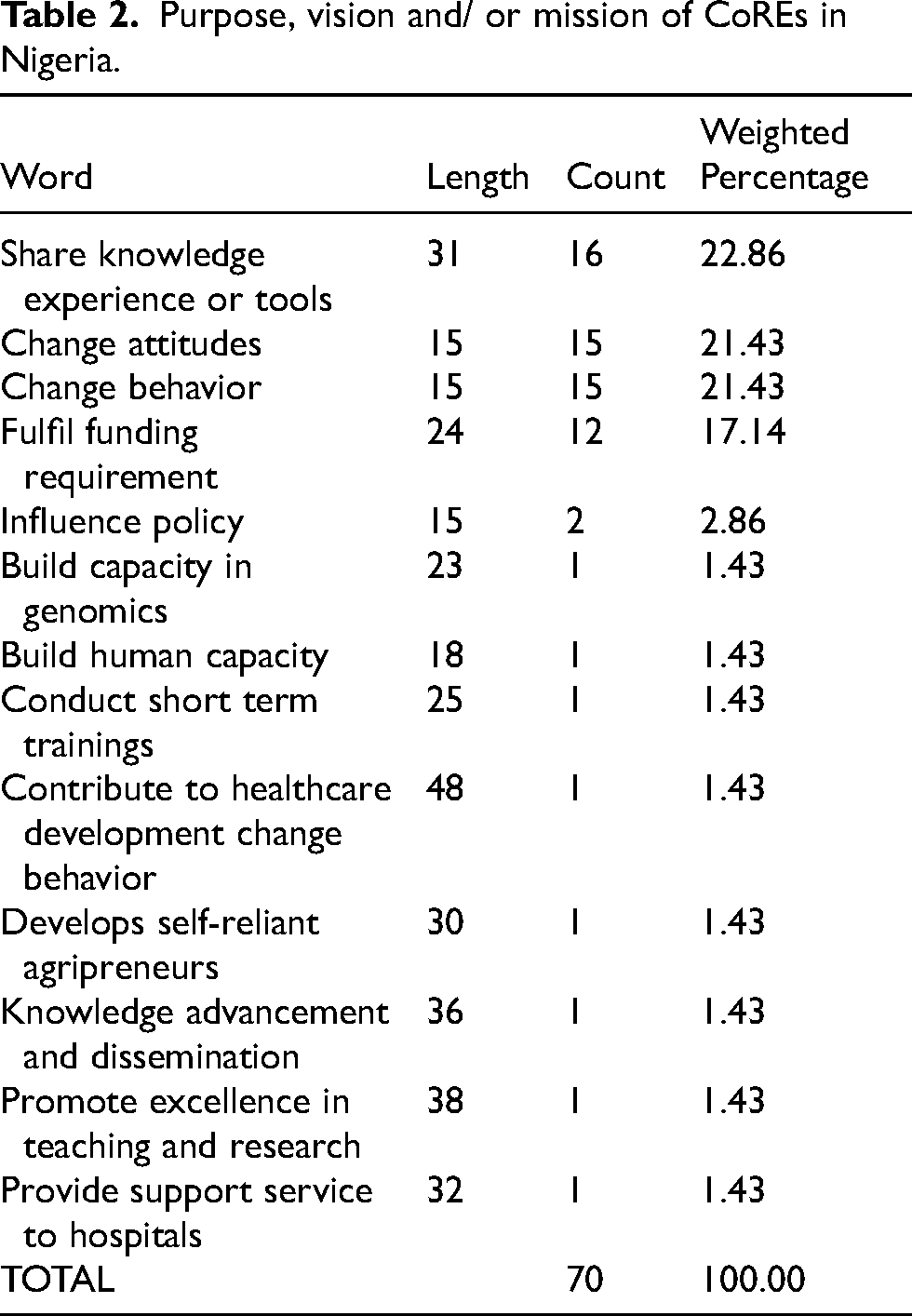
In Nigeria, CoREs focus on changing behavior and attitudes, sharing knowledge, experiences, and tools, and meeting funding requirements. Additional purposes include providing support services to hospitals, advancing and disseminating knowledge, conducting short trainings, and developing self-reliant agripreneurs. As detailed in Table 2, the theme of sharing knowledge, experience, or tools is prominent (22.86% weighted) and aligns with the institutional mandates (16.84% weighted). The individuals involved in these KMb efforts typically include center administrators (mostly professors and directors), researchers, and policy makers.
Purpose, vision and/ or mission of CoREs in Nigeria.
Similarly, the CoREs in Kenya, despite their diverse specialisations, serve similar purposes. All the centers aim to disseminate the knowledge generated by their research—a core mandate of the institutions. Four of the eight CoREs (50%) are dedicated to changing behavior and practice in the communities they serve by training postgraduate students and community members, while six (75%) actively engage stakeholders such as implementation partners, funders, and the general public. Only two (25%) specifically aim to change community attitudes; for example, the Africa Center of Excellence in Sustainable Use of Insects and Food and Feeds seeks to shift perceptions regarding the use of insects as food, and the ICT Center of Excellence and Open Data (iCEOD) focuses on altering attitudes toward data exploitation, use, and security—iCEOD being unique in including the fulfillment of funding requirements as a core objective (see Table 3).
Purpose vision and mission of CoREs and KMb work in CoREs in Kenya.
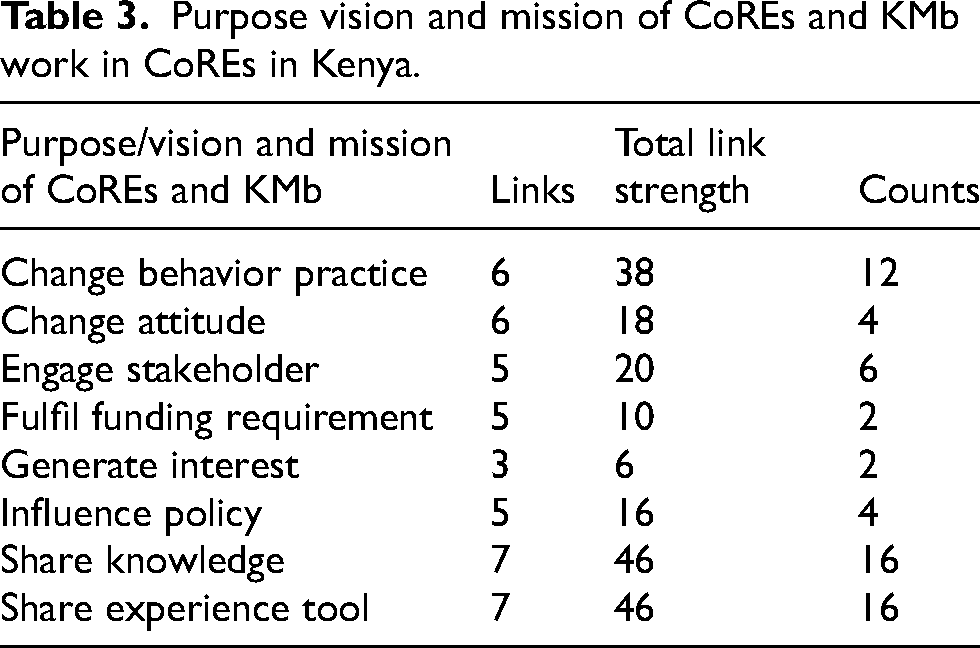
Generally, 62.5% of the Kenyan CoREs have aligned their KMb efforts with their organisations’ strategic approaches, while 25% have not fully integrated these initiatives. These findings underscore that the primary purpose of KMb work across South Africa, Nigeria, and Kenya is to enhance knowledge mobilisation in a manner that aligns with each center's institutional mandates and strategic objectives.
Person(s) involved in knowledge mobilisation efforts in the institution
In South Africa, knowledge mobilisation efforts involve a diverse group that includes CoRE administrators, researchers, and policy makers. The administrators—predominantly professors—serve as principal investigators and directors, while researchers range from students at various levels to other staff within the centers and their host faculties. Policy makers also contribute, particularly in the development of policies. In Kenya, the primary actors are the researchers and CoRE administrators, with policy makers participating in 37.5% of the centers. Similarly, in Nigeria, the teams engaged in knowledge mobilisation comprise mostly of CoRE administrators (again, primarily professors and directors), researchers, and policy makers.
Types and quality of research produced at the cores
In SA, 13 research types were identified in the study. These were dominated by medical, geoscientific, biological and biomedical research (Figure 5). Other research types carried out by the Centers were on indigenous knowledge, ecological, geoscientific, catalysis, food security, social science, mathematical science, statistical science engineering and scientometrics Figure 7.
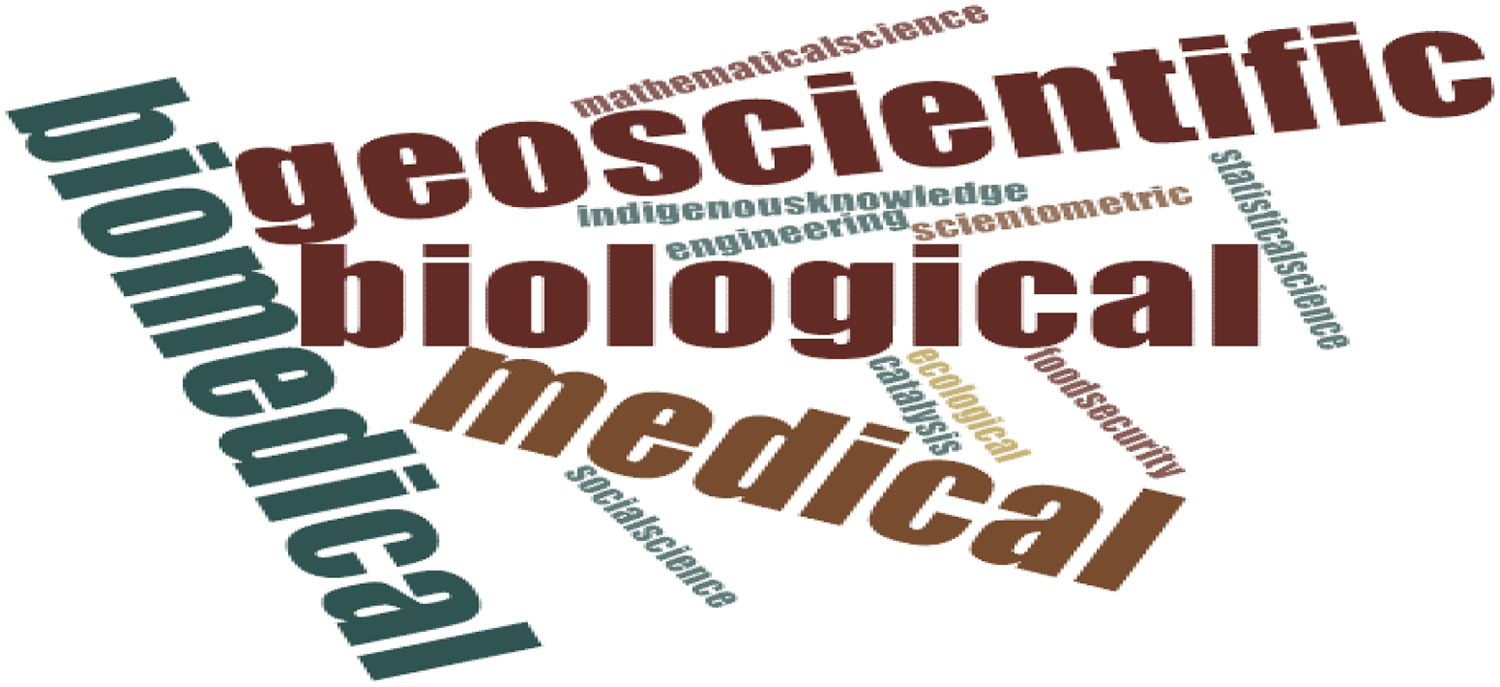
Types of Research in SA CoREs.
In Nigeria, Twenty two research types were identified in the study. Table 4 provides a simplified overview of the research fields represented in the CoREs in Nigeria. It shows that Biomedical research is the most prominent category, with a count of 3, accounting for 11.54% of the total. Agricultural Science and Public Health follow, each with a count of 2 (7.69% each).
Types of research in SA cores.
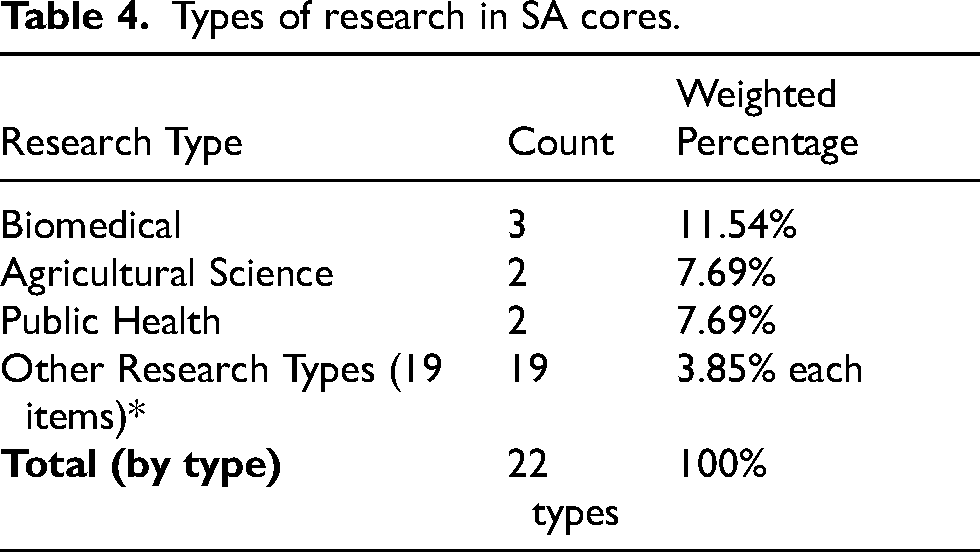
The remaining 19 research types, which include fields such as Agricultural Engineering, Animal Science, Biological Science, and others, are grouped together as Other Research Types, with each category contributing 3.85% to the overall distribution. In total, there are 22 distinct research types, which collectively represent 100% of the research fields assessed.
Knowledge mobilisation processes, channels and tools
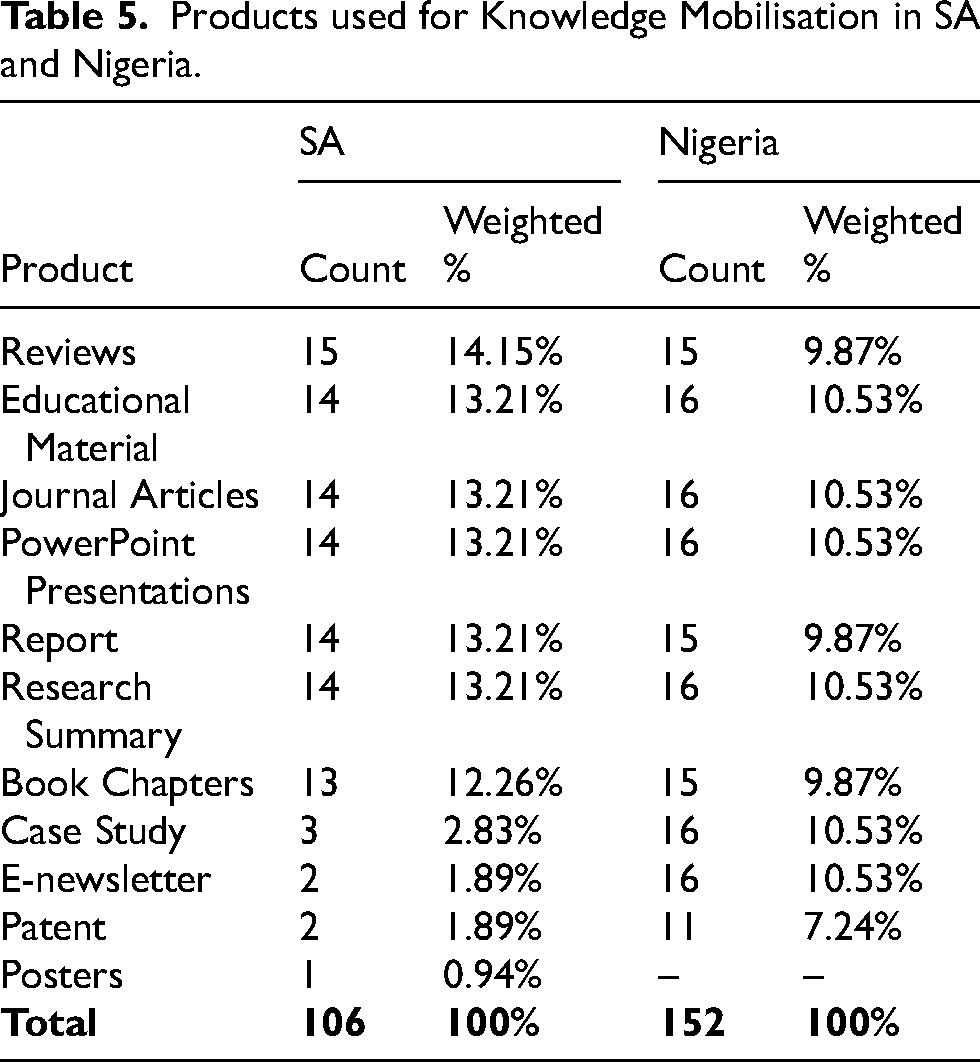
Table 5 illustrates that the SA CoREs employ a diverse range of channels to mobilise knowledge. These include hosting events, producing and distributing various products, conducting capacity-building workshops, and establishing networks. Notably, all 15 SA CoREs used reviews as a primary product, while other frequently utilised products were educational materials, journal articles, PowerPoint presentations, reports, and research summaries. In addition, thirteen centers also used book chapters, and further products such as e-newsletters, case studies, patents, and posters were part of their knowledge mobilisation efforts.
Products used for Knowledge Mobilisation in SA and Nigeria.
SA CoREs organised events such as annual meetings, conferences, and training sessions to mobilise knowledge. Other events included symposiums, interactive workshops, and presentations. See Figure 8(i).
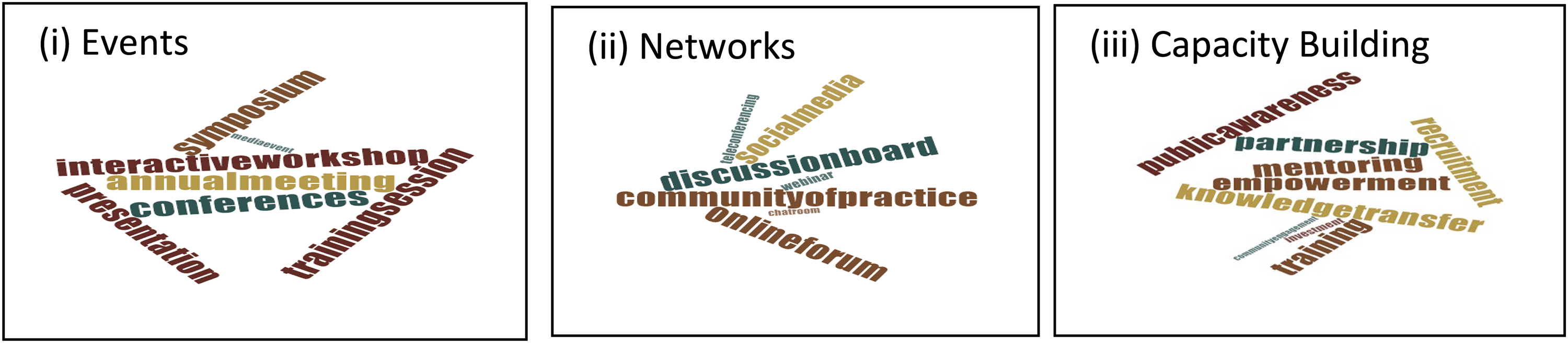
(i) Events, (ii) Networks and (iii) Capaicty buikding of SA CoREs.
The CoREs in SA used various networks for knowledge mobilisation, including communities of practice, online forums, and discussion boards. More than half of the centers (85%) also utilised teleconferencing, social media, webinars, and chat rooms to connect with colleagues. See Figure 8(ii). The CoREs facilitated capacity building through knowledge transfer, mentoring, training, partnerships, public awareness campaigns, and empowerment. They also engaged in investment, recruitment, and community engagement initiatives. See Figure 8(iii)
On KMb products in Nigeria, Table 5 shows that case studies, educational materials, e-newsletter, journal articles PowerPoint presentations and research summaries had the highest and same weights (10.53%) and same counts (16); they were the highest used processes and channels. Patents were the least KMb channels used by the CoREs with a weight of (7.24%) and the least count of 11. Powerpoint presentations and Educational materials have the highest length 22 and 19 respectively. Reviews, Reports and Book Chapters have weights of 9.87% and count of 15 each while Patents (6) and Report (6) have the shortest lengths respectively.
Table 6 shows the KMb events in Nigeria. The weightiest were annual meeting, conferences, interactive workshops, presentations and training sessions (15.69% each).
Kmb events in Nigeria.
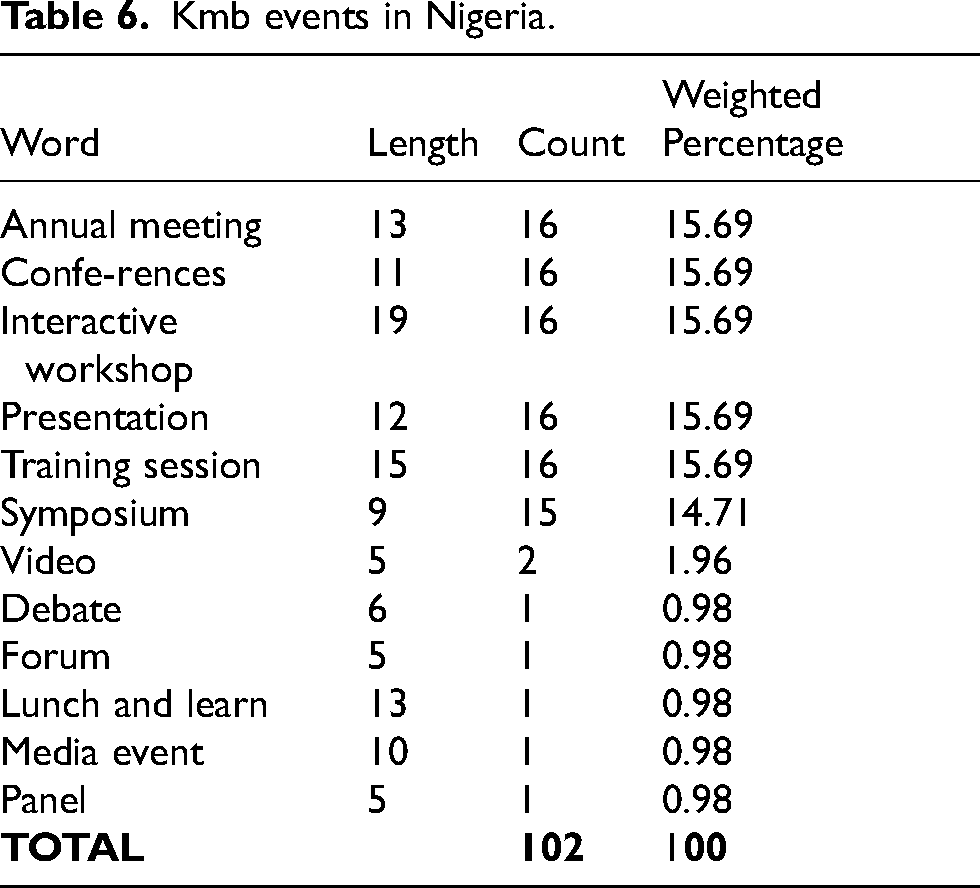
Debates, Forums, Lunch and Learn, Media event ad Panel had the least weight (0.98%) as well as the least count (1). Symposium and Video had weights of 14.97%.
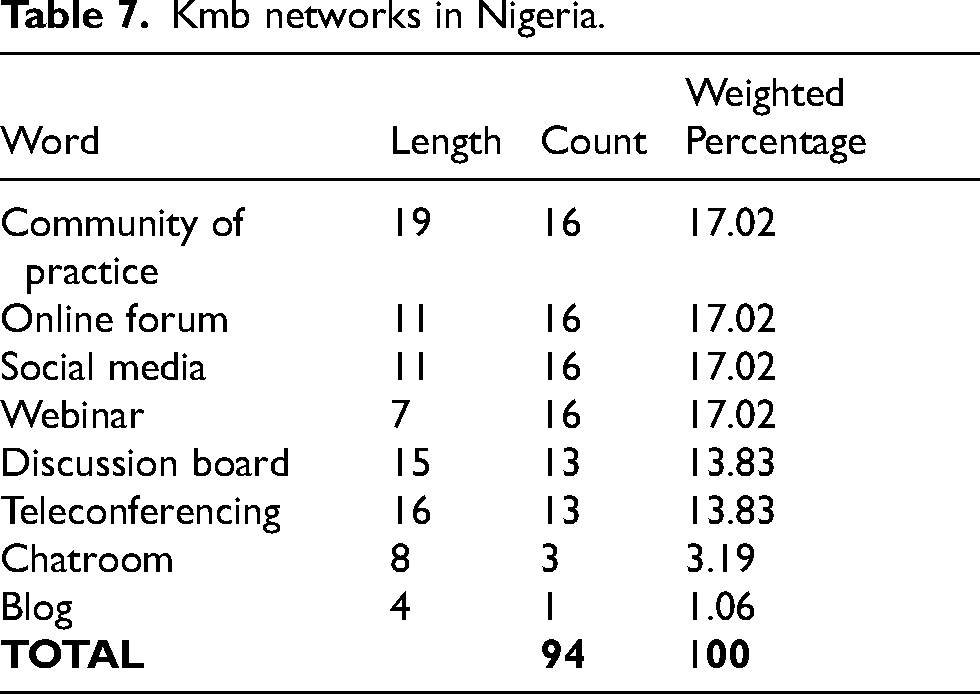
Regarding KMb networks, Table 7 shows that community of practice, Online Forum, Social media, and Webinar weighted the highest (17.02% each) while Discussion boards and teleconferencing weighted 13.83% apiece and Chat room and Blogs weighted the least (3.19% and 1.06% apiece) Figure 9.
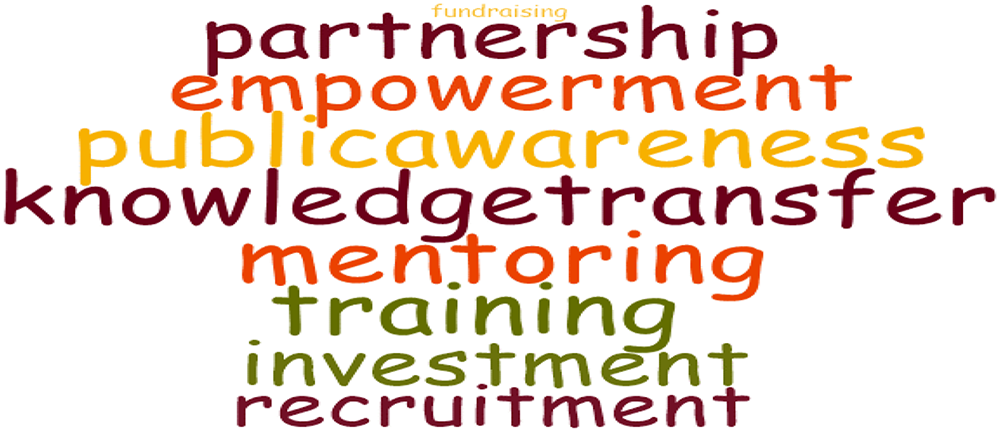
KMb capacity building in Nigeria.
Kmb networks in Nigeria.
In respect of capacity building, knowledge transfer, mentoring, public awareness and training have the highest weights (12.80% each) as well as counts (16 each) are very signifcant. Knowledge transfer also has the highest length (17). Empowerment and partnership have lower weights (12) and also lower lengths and counts, but fundraising has the lowest weights (3.20%) and counts (4). All CoREs in Nigeria maintain social media presence with links on their websites. Half of them use web conferencing to hold virtual meetings and webinars, while chats and discussion boards are less frequently used.
In Kenya, the CoREs use various channels and tools to mobilise knowledge, including hosting events, creating and distributing products, and building networks. All the CoREs in Kenya use websites and website content as products for knowledge mobilisation. Seven centers also use e-newsletters, while five use posters and journal articles. Additional products include promotional materials, brochures, videos, webinars, newspaper articles, research summaries, handbooks, blogs, and FAQs (See Figure 10).

Products used for knowledge mobilisation in Kenya.
A majority (7) of the CoREs in Kenya use training sessions as their primary events for knowledge mobilisation. Conferences and symposiums are also common, with most presenters being CoRE researchers or postgraduate students involved in affiliated research. Only three of the CoREs hold annual stakeholder meetings, and only two organise award ceremonies.
Methods of monitoring impacts of KMb strategies
Reach indicators of knowledge mobilisation
Reach is defined as the extent to which knowledge management outputs—whether in print or electronic format—are distributed and saturated. SA CoREs assess their reach by tracking metrics such as the number of viewers, followers, and subscribers on their websites and e-newsletters, as well as through presentations at conferences and workshops. Meanwhile, Nigerian CoREs gauge their reach by tracking the total number of documents distributed, monitoring requests for additional information, and recording downloads or hits on digital resources, in addition to assessing media exposure across various channels. In Kenya, CoREs similarly monitor reach via e-newsletter subscriber counts and boost dissemination through media exposure on social platforms and in newspapers.
Usefulness indicators of KMb
Usefulness indicator, as defined by Lin and Wei (2005), assesses both user-specific and overall experiences with knowledge mobilisation outputs by evaluating interest levels and the extent to which expectations are met. In South Africa, CoREs enhance user knowledge through sharing experiences and tools, while advanced programmes enable researchers to develop essential research skills and effectively use equipment. In Nigeria, usefulness is evaluated by monitoring how frequently materials are read and browsed, which establishes a baseline for audience engagement, and by assessing satisfaction levels and the perceived effectiveness of the resources in meeting user needs, ultimately determining whether the project has helped stakeholders gain new knowledge and shift their perspectives. In Kenya, all CoREs support knowledge acquisition via training and sharing of experiences and tools—allowing postgraduate students to both learn and conduct research—although only two centers specifically focus on changing users’ views.
Use indicators of knowledge mobilisation
The entire CoREs in SA channelled the knowledge they created for research, training and learning since the primary goal of their host institution was to educate and conduct research. Kenyan CoREs reported that the knowledge created from the research findings of the CoREs have added value to knowledge of the masses, thus improving practice and performance. All the CoREs use the knowledge they generate for training, research and learning. This is especially so because each of the centers is affiliated to or hosted by an institution of higher learning whose mandates are to educate and conduct research. The knowledge generated by the CoREs is used to improve practice and performance by applying research findings in the community. Only two of the CoREs have used the knowledge they generate to inform policy at institutional and national level Figure 11.
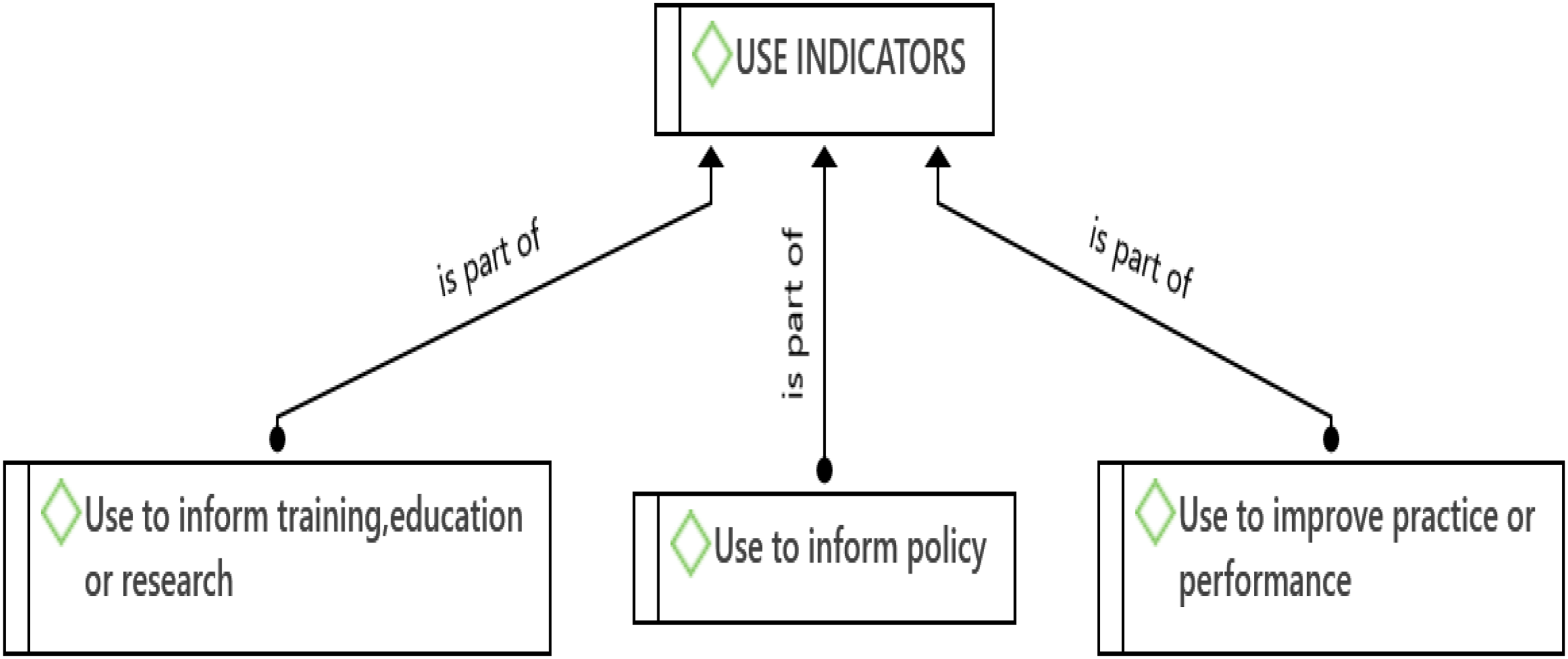
Use indicators of Knowledge Mobilisation in Kenya.
In Nigeria, a significant number of individuals not only intend to use the information but are actively adapting it to their specific needs, demonstrating that the resources are both relevant and adaptable. These materials are being used to inform policy discussions, strengthen advocacy efforts, and enhance programs, training sessions, education, and research initiatives, as well as to improve practice and performance. Collectively, these findings underscore the project's tangible impact in shaping practices and driving positive change across various sectors.
Partnerships and collaboration indicators of kmb
The SA CoREs mostly deployed their partnership and collaborative strategies for sharing of knowledge, experience and skills, disseminating research output, capacity building and social network growth. See Figure 12. In Kenya, Three of CoREs rely on partnerships to produce and disseminate research outputs. All the CoREs have collaborations with different partners which are mostly affiliated to institutions of higher learning and industry players with whom they share knowledge and skills. Five of the CoREs involve their partners in capacity building efforts through the sharing of knowledge, experience and tools. Only one CoRE used the partnerships and collaboration for growing social networks.
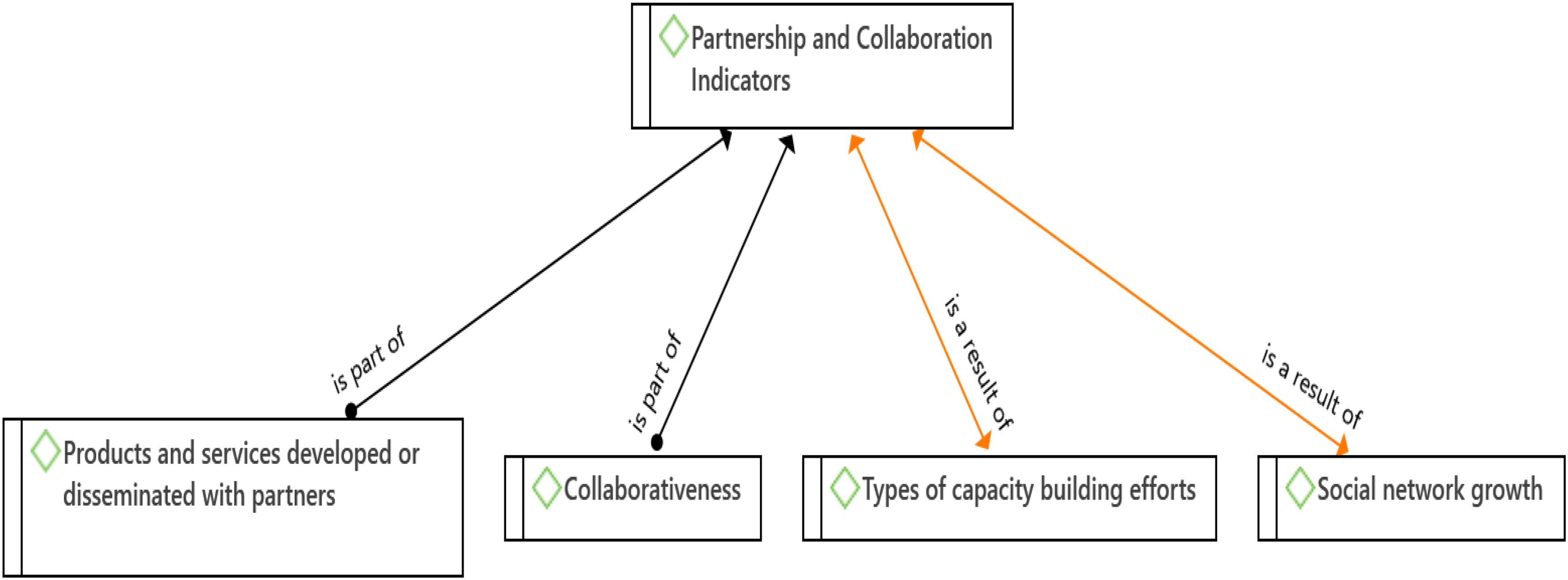
Partnership and collaboration indicators in SA.
Partnership and collaborative indicators among CoREs in Nigeria are assessed by the number of products and services developed or disseminated in collaboration with external partners, which reflects the practical outcomes of these partnerships. Additionally, the range and type of capacity building efforts undertaken, along with measures of social network growth and overall collaborativeness, provide insight into how these collaborations enhance the centers’ capabilities and influence. These indicators underscore the strategic importance of partnerships in fostering innovation, expanding research impact, and driving positive change within the sector.
Practice change indicators of KMb
The entire SA CoREs had intention of changing the practice of the community and the institutions they were affiliated to base on vision and mission statements and guides their KMb strategies. There was evidence of observed and reported change from the entire CoREs through creation of summary reports and reviews of programmes in their institutions. Most (4) CoREs showed intent to change practice of the community and the institutions they are affiliated to. This intent is expressed in their vision and mission statements and guides their KMb strategies. The other four (4) showed evidence of observed and reported change exemplified through the creation of summary reports and reviews of programmes being run by the institutions.
Most CoREs in Kenya showed intent to change practice of the community and the institutions they are affiliated to. This intent is expressed in their vison and mission statements and guides their KMb strategies. The other four (4) showed evidence of observed and reported change exemplified through the creation of summary reports and reviews of programmes being run by the institutions.
In Nigeria, practice change indicators focus on the intention or commitment to change, which reflects the willingness of individuals or organizations to adopt new practices. The CoREs also consider observed changes, providing tangible evidence of ongoing transformation as a result of the initiatives. Reported change gauges the extent to which individuals or entities acknowledge and communicate the shifts in practice, highlighting the effectiveness and impact of the interventions. Practice change indicators also capture the extent to which stakeholders are committed to altering their behaviors or practices, reflecting their intent to change. They also measure tangible, observable shifts in practice over time, providing evidence of actual change. In addition, self-reported changes by participants offer valuable insight into the perceived impact of these initiatives, collectively painting a picture of the project's influence on practice.
Programme or service indicators of KMb
The SA CoREs have documentation about their programmes. This includes their past events, key performance area (KPA) as well as their future goals and ambition. There was documentation on the performance of the center, for instance the number of postgraduate students enrolled in the center, their research output, the affiliations of the centers and their progress, and other outreach programmes organised by the center. There was little or no provision of feedback to the centers from their host institution. In Kenya, Most 7(87.5%) CoREs have documentation about their programmes and how they are run. This documentation includes the milestones achieved over time and projections for future goals. They also kept documentation on the outcomes of their programmes indicating statistics such as the number of postgraduate students, researchers affiliated in the centers and their progress, as well as the number of students and staff exchanged, among others. There was little documentation on feedback from the communities that the centers served.
In Nigeria, the task of evaluating the CoREs use key service indicators and yielded clear outcomes that confirmed that the initiative met its objectives, while documentation provided objective evidence of the activities and progress achieved. Additionally, process measures verified the efficient implementation of our service, and feedback from stakeholders underscored high levels of satisfaction and relevance, collectively affirming the program's success and guiding continuous improvement efforts.
KMb policy indicators
The CoREs in SA did not have any indications of policy influencing their knowledge mobilisation work. Only 2 (25%) of the CoREs in Kenya had clear policies on KMb and documentation on the same. The rest did not have any indications of policy influencing their KMb activities. In Nigeria, the evaluation of policy indicators yielded valuable insights into the policy framework of the CoREs. A review of the documentation confirmed that the policies are clearly articulated and accessible, while feedback from stakeholders highlighted their practical relevance. Additionally, the process measures demonstrated that policy implementation is efficient, collectively affirming the strength of our current approach and identifying areas for future enhancement.
Knowledge change, attitude change and system changes indicators of KMb
SA CoREs had both quantitative and qualitative measures of knowledge change, system change, and attitude change. This was so because they deployed both qualitative and quantitative data to discuss the impact of research done in their various centers in summary reports and annual reports. In Kenya, The majority 7(87.5%) of the CoREs has both quantitative and qualitative measures of knowledge change, attitude change and system change. This was indicated through the presentation of both qualitative and quantitative research data in journals articles, discussions in newsletters, summary reports and annual reports using both qualitative and quantitative data to discuss impact of research done by the centers. In Nigeria, the CoREs only reported that they us quantitative and qualitative indicators to gauge knowledge, attitude and systems changes.
ICT tools used by the CoREs
The SA COREs deployed various ICT tools for knowledge mobility. The most commonly used ICT tools were laptops and the network (15, 14.39). Other ICT tools that were been used for KMb work in SA CoREs were included desktop computers, digital cameras, interactive whiteboard, and projectors. Kenya reported digital cameras and microphones. Other ICT tools used included desktop computers, laptops, photocopiers, microphones, projectors, scanners, printers, software and networks
Nigeria reported that they use web boards, interactive white boards, tables, microphones and scanners, DVDs, digital camera, IPODs, photocopiers, projectors, audiobooks, flash disks, videograms and pen drive were also mentioned.
Scientists, partners, and research users of cores profiles and needs
In South Africa, the CoREs’ scientists were the CoREs administartors and the researchers. The CoRE adminstrators were knowledge managers as they manage the KMb activities at the Centers, they were also knowledge users. The researchers were only the knowldege users. These researchers include the faculty members in the related departments and faculties of the university as well as students at various levels. The CoREs’ research users were dorminated by the policy makers and the media (10, 16.39%). The summary is indicated in the Table 8 below.
Profile of the CoREs’ research users in Nigeria.
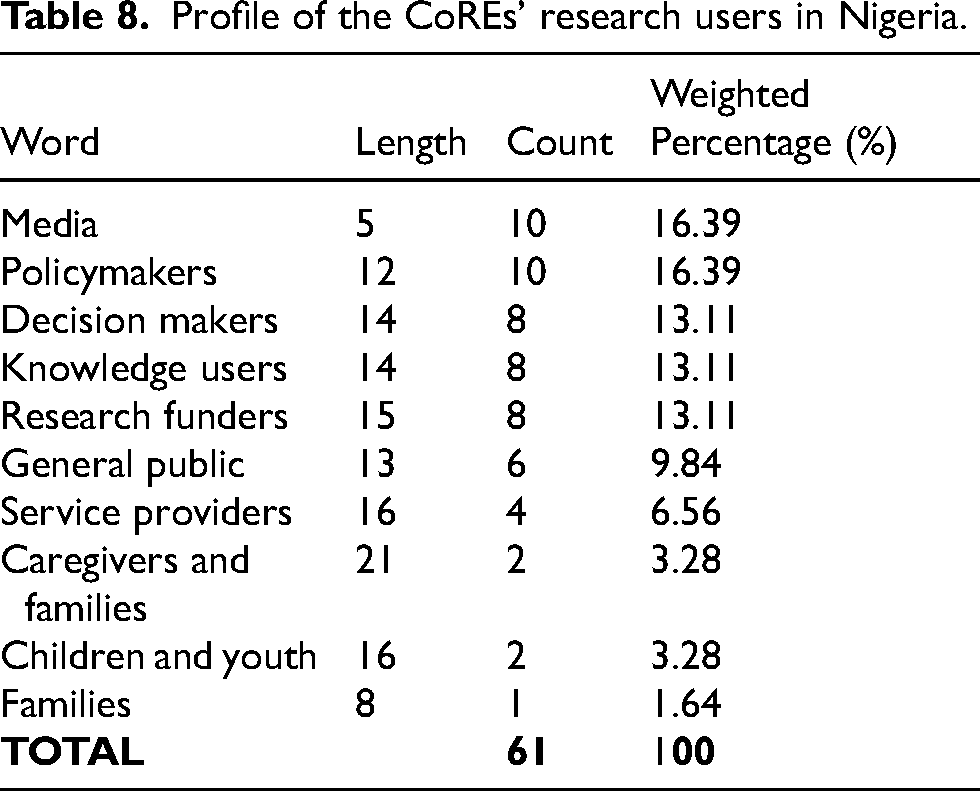
Other CoREs’ research users include the decision makers, knowledge users, research funders, the general public, service providers, caregivers, families, children and youths. These CoREs research users were across the globe including local (national), regional (African), international (outside of Africa) users. The CoREs’ KMb partners were mostly the research funders of national, regional, international agencies/organizations, and the policy makers.
For Kenya, the main partners of the CoREs in Kenya are research funders who include local governments as well as regional and international organisations. The general public, policy makers and service providers are only partners in two of the CoREs. Given that all the CoREs are affiliated with universities, researchers in the centers are often faculty members in related departments of the universities. Center administrators are charged with the task of managing KMb activities with only two CoREs involving knowledge users in the KMb activities. All the CoREs serve users locally, regionally and internationally.
Nigerian CoREs list the following as their scientists, partners, and research users, researchers, caregivers and families/children and youth, decision makers/policy makers, decision makers / general public, decision makers/general public, media / service providers, media / policy makers. Knowledge users, media/policy makers, KMb managers, research funders, center administrators, research funders/service providers, research funders/service providers, knowledge users
Factors Enhancing and/or Inhibiting Successful KMb Practices in the CoREs
The knowledge mobility practices in SA CoREs were majorly influenced by organizational capacity and resources of the CoREs which include budget, human resources and information technology support. Other factors that affect the organizational capacity and resources include traveling for conferences, workshop,giving honoraria for best performances among students and their staff, voluntary activities in the host and affiliated institutions. However, the factors that contributed to the success of KMb efforts in SA CoREs were dedicated leadership, organizational culture, and interactive strategies, while barriers to KMb efforts in SA CoREs were capacity, resources and organizational supports (Table 9).
Factors with respect to existence of organizational capacity and resources in SA.
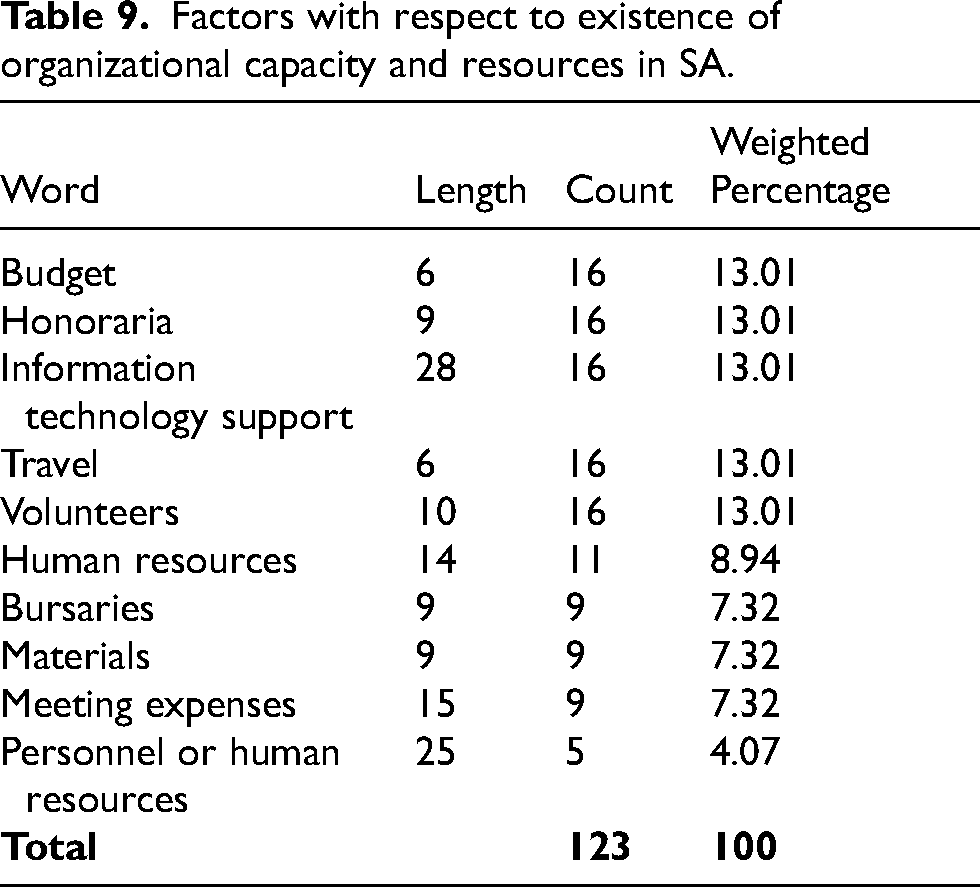
Bursaries, materials and meeting expenses also consist of inhibiting factors with weights of at least 7 and counts of 9 and less.
In Nigeria, the key contributors to successful KMb efforts include dedicated leadership, a robust and supportive organizational culture, and the use of interactive strategies that actively engage stakeholders. In addition to these success factors, the presence of specific organizational capacities and resources plays a crucial role. This includes having an adequate budget, sufficient personnel, and the provision of honoraria, as well as reliable information technology support. Other necessary resources involve travel funds, essential materials, volunteers, meeting expenses, and bursaries that support ongoing initiatives. Despite these strengths, barriers remain that hinder KMb efforts, notably limitations in capacity, a lack of sufficient resources, and inadequate organizational support. These challenges must be addressed to fully realise the potential of knowledge mobilisation across institutions.
Discussion
The study on Knowledge Mobilisation (KMb) in Centers of Research Excellence (CoREs) in South Africa, Nigeria, and Kenya presents an insightful overview of the establishment, focus, partnerships, funding, and outputs of these CoREs. The findings reveal distinct and overlapping characteristics across the three countries, each contributing to the broader objective of advancing research, capacity building, knowledge dissemination, and development for maximised research impact.
The establishment of CoREs in these countries underscores a strategic investment in research capacity building, problem solving and specialization. South Africa, with its 15 CoREs, reflects a diversified focus ranging from biomedical research to climate change and strong materials. Nigeria's 28 CoREs are supported through African Higher Education Centers of Excellence sponsored by the World Bank, Tertiary Education Trust Fund Centers, and National Universities Commission Centers, addressing both national and regional challenges. Kenya, with its 8 CoREs, focuses on areas such as climate development and infectious diseases.
The breadth of research areas covered by CoREs in these countries is noteworthy. In South Africa, the focus extends to both natural and social sciences, indicating a holistic approach to addressing complex societal issues. Nigeria's CoREs are heavily influenced by the World Bank's ACE initiative, emphasizing regional collaboration and skill development. Kenya's CoREs, though fewer, are strategically aligned with pressing issues like climate change and emerging infectious diseases. This diversity in focus areas highlights the countries’ recognition of the multifaceted nature of development challenges.
Partnerships play a crucial role in enhancing the research capabilities and outreach of CoREs. South Africa's CoREs exhibit extensive collaborations with both local and international institutions, facilitating knowledge sharing and capacity building. These partnerships are pivotal for advancing research quality and ensuring the applicability of research outcomes. In Nigeria, regional collaboration is a key feature of the ACE program, fostering specialization and addressing regional development challenges. However, the study indicates that most partnerships are within Nigeria, with notable exceptions like collaborations with the University of Ghana and University Sierra Leone. This suggests a potential area for expanding international partnerships to further enrich research quality and impact. Kenya's CoREs also engage in substantial local and international collaborations, exemplified by the University of Nairobi's links with Washington State University and Emory University. Such partnerships are essential for knowledge exchange and capacity building, particularly in addressing global challenges like infectious diseases.
The funding mechanisms for CoREs reveal significant reliance on external sources. South Africa's CoREs are supported through national bodies like the Department of Science and Technology and the National Research Foundation, supplemented by international funding. Nigeria's CoREs receive substantial funding from the World Bank and MacArthur Foundation, with a small percentage being home-grown. In Kenya, external funding from local, regional, and international sources is critical for sustaining research activities.
The dependency on external funding underscores the need for sustainable financial strategies. Developing home-grown funding mechanisms could enhance the autonomy and long-term viability of CoREs. Additionally, fostering public-private partnerships might provide alternative funding avenues and enhance the practical application of research outcomes. KMb efforts are central to the mission of CoREs, aiming to translate research into practice. The study highlights that the primary purpose of KMb across the CoREs in these countries is to share knowledge, experiences, and tools. This aligns with the institutional mandates and strategic objectives of the CoREs, emphasizing the importance of knowledge dissemination in achieving research impact.
In South Africa, the emphasis on sharing knowledge is complemented by aims such as changing behavior, fulfilling funding requirements, and influencing policy. These multifaceted objectives reflect a approach to KMb, ensuring that research not only advances academic knowledge but also contributes to societal development. Nigeria's CoREs similarly prioritize sharing knowledge and changing behavior, with additional goals like providing support services to hospitals and developing self-reliant agripreneurs. These objectives highlight the practical implications of research, particularly in health and agriculture, crucial sectors for national development. Kenya's CoREs focus on generating new knowledge and changing behavior and practice within communities. The engagement of stakeholders, including funders, implementation partners, and the public, is crucial for effective KMb. The alignment of KMb efforts with organizational strategies in most CoREs suggests a strategic approach to maximizing research impact.
In South Africa, knowledge mobilization is driven by a collaborative effort involving CoRE administrators, researchers, and policymakers. The administrators, often professors, act as principal investigators and directors, ensuring the alignment of research goals with broader academic and policy objectives. Researchers, including students and staff from host faculties, contribute to the research output and its dissemination. Policymakers play a crucial role, especially in translating research findings into actionable policies. In Kenya, the primary actors are researchers and CoRE administrators. While policymakers are involved in some CoREs (37.5%), their participation is less pervasive compared to South Africa. This indicates a potential gap in integrating research findings into policy-making processes, which could limit the practical application of research outcomes. Similar to South Africa, Nigerian CoREs involve administrators, researchers, and policymakers. This inclusive approach suggests a robust framework for integrating research into policy and practice, potentially enhancing the societal impact of the research conducted.
The research conducted in these CoREs spans a wide range of disciplines. In South Africa, research is dominated by medical, geoscientific, biological, and biomedical fields. Nigeria exhibits a broader spectrum with 22 identified research types, including biomedical, agricultural, public health, and various engineering disciplines. This diversity reflects the research agendas tailored to address local and regional challenges. SA CoREs employ multiple channels for knowledge mobilization, including events, educational materials, journal articles, and interactive workshops. They leverage various products like reviews, book chapters, and e-newsletters, indicating a well-rounded approach to disseminating research findings. The use of ICT tools such as laptops, digital cameras, and interactive whiteboards underscores the role of technology in facilitating knowledge exchange.
Kenyan CoREs also utilize diverse channels, focusing on training sessions, conferences, and symposiums. They emphasize creating networks and using social media for broader dissemination. However, only a few CoREs have evolved their strategies over time, highlighting a potential area for improvement in dynamic knowledge mobilization practices. Nigerian CoREs appear to face significant challenges, particularly related to budget constraints, IT support, and travel. Despite these challenges, they maintain a diverse research portfolio and engage in various knowledge mobilization activities, similar to their South African counterparts.
Conclusions
The study on CoREs in South Africa, Nigeria, and Kenya underscores the strategic importance of research excellence in addressing national and regional challenges. The diverse focus areas, extensive partnerships, varied funding mechanisms, and robust KMb efforts reflect a concerted effort to leverage research for development. However, the reliance on external funding and the need for more international collaborations in Nigeria and Kenya highlight areas for improvement. Strengthening home-grown funding sources, expanding international partnerships, and enhancing the practical application of research through effective KMb strategies will be crucial for the sustained impact of CoREs. As these countries continue to invest in research excellence, the lessons from their CoREs can inform broader efforts to harness research for sustainable development across Africa and beyond.
The study on knowledge mobilization in Centers of Excellence (CoREs) in South Africa, Nigeria, and Kenya reveals insights into the processes, strategies, and challenges faced by these institutions. The study highlights the critical role of CoREs in knowledge mobilization across South Africa, Nigeria, and Kenya. While there are notable strengths in the collaborative efforts and diverse research outputs, challenges related to funding, IT support, and evolving strategies need to be addressed. By focusing on these areas, CoREs can enhance their impact on policy, practice, and societal well-being.
Policy Implications
Strategic Investment in Research: The establishment of CoREs in South Africa, Nigeria, and Kenya underscores the importance of strategic investment in research capacity and specialization. Policymakers should continue to support and expand these initiatives to enhance national and regional research capabilities. Sustainable Funding Mechanisms: The reliance on external funding indicates a need for developing sustainable, home-grown funding mechanisms. Policies should encourage the establishment of public-private partnerships and alternative funding sources to ensure the long-term viability of CoREs. Integration of Research and Policy: Effective integration of research findings into policy-making is crucial. Policymakers should be more actively involved in CoRE activities to ensure that research outcomes are translated into actionable policies, particularly in Kenya where this integration is less pronounced. Regional and International Collaboration: Enhancing regional and international collaborations can improve research quality and impact. Policies promoting cross-border partnerships can facilitate knowledge sharing and address regional development challenges more effectively.
Societal Implications
Addressing Societal Challenges: The diverse research areas covered by CoREs, such as health, agriculture, climate change, and social sciences, highlight their role in addressing complex societal issues. Societal support for these research efforts is vital for tackling pressing problems and achieving sustainable development. Behavioral and Practice Change: Knowledge mobilization efforts aimed at changing behavior and practices within communities can lead to significant societal benefits. Engaging stakeholders, including the public, in KMb activities ensures that research findings are widely disseminated and adopted, leading to improved health outcomes, agricultural practices, and environmental sustainability. Capacity Building and Skill Development: The focus on capacity building and skill development, particularly in Nigeria under the ACE initiative, has broader societal implications. Enhancing the skills of researchers and practitioners contributes to a more knowledgeable and capable workforce, driving innovation and economic growth.
Research Implications
Holistic Research Approach: The holistic approach to research, encompassing both natural and social sciences, reflects the recognition of the multifaceted nature of development challenges. Researchers should continue to adopt interdisciplinary approaches to address complex problems Knowledge Dissemination: The diverse channels and tools used for knowledge dissemination, such as events, educational materials, journal articles, and ICT tools, indicate the importance of effective communication of research findings. Researchers should be encouraged to adopt and innovate in their KMb strategies to maximize research impact. Monitoring and Evaluation: The use of various indicators to measure the impact of knowledge mobilization, such as reach, usefulness, use, partnerships, and practice change, provides valuable insights for improving research practices. Regular monitoring and evaluation of KMb efforts can help in refining strategies and enhancing the effectiveness of research dissemination.
Limitations of the study
The study provides valuable insights, but it also has several limitations that should be considered. These limitations could impact the generalizability and applicability of the findings. The report relies on qualitative data collected from interviews, surveys, and self-reported information from CoREs, which introduces potential biases. The accuracy of the findings is dependent on the honesty and accuracy of the respondents. Additionally, if the study sample is not large or representative enough, the findings may not be generalizable to all CoREs in the three countries. A limited sample size could skew the results and overlook variations within and between countries. Moreover, the study may not account for changes over time, such as shifts in funding, policy changes, or evolving research priorities. Longitudinal data would be necessary to understand the dynamic nature of CoREs and their knowledge mobilization activities.
Country-specific factors, such as the unique political, economic, and social contexts of South Africa, Nigeria, and Kenya, could influence the operations and effectiveness of CoREs. Therefore, findings from these countries may not be applicable to CoREs in other regions with different contexts. The study highlights the reliance on external funding but might not fully explore the implications of this dependency. The variability in funding sources and their impact on research agendas and sustainability could be examined more deeply. The study covers various aspects of CoREs’ operations, it might not delve deeply into specific challenges or successes of individual CoREs. A more granular analysis could provide richer insights into what works and what doesn’t in knowledge mobilization (KMb) practices. The indicators used to measure the impact of KMb, such as reach, usefulness, and practice change, might not capture the full extent of CoREs’ influence. Developing impact assessment tools could enhance the understanding of their effectiveness.
The study acknowledges challenges related to IT support and infrastructure, particularly in Nigeria. However, it may not fully address how these limitations affect KMb activities and outcomes or explore potential solutions in detail. While the involvement of policymakers is noted, the study might not provide sufficient strategies for improving this integration. Understanding the barriers to effective policy engagement and developing targeted interventions would be beneficial. The focus on three specific countries limits the ability to generalize findings to other regions. Different countries with diverse research environments and policy frameworks may experience different challenges and successes in KMb. Additionally, the broad range of research areas covered by CoREs, from biomedical to social sciences, means that specific findings might be more relevant to certain disciplines than others. A sector-specific analysis could provide more actionable insights.
Recommendations
Increasing budget allocations for CoREs, particularly in Nigerian CoREs, can address challenges related to IT support, travel, and human resources. Greater involvement of policymakers, especially in Kenya, is essential to ensure effective translation of research findings into actionable policies. Encouraging CoREs to regularly update and evolve their knowledge mobilization strategies is crucial for more effective dissemination and application of research. Investing in capacity-building initiatives, including training, mentoring, and partnerships, is vital for strengthening the overall impact of CoREs in addressing societal challenges. The study on knowledge mobilization in CoREs in South Africa, Nigeria, and Kenya underscores the critical role of strategic investment, sustainable funding, policy integration, and effective knowledge dissemination in advancing research and development. Addressing these implications through targeted policies and initiatives can significantly enhance the societal impact of research and contribute to the sustainable development of these countries.
Footnotes
Acknowledgments
The authors are grateful to the National Research Foundation, South Africa for providing the funds required to carry out this multi-country study. We are also grateful to the officers that executed the data collection and analysis in the different countries. This article is part of the reports resulting from funding number 0000-0002-9232-4939 from National Research Foundation, South Africa in 2020.
Funding
The author(s) disclosed receipt of the following financial support for the research, authorship, and/or publication of this article: This research was funded by National Research Foundation, South Africa in 2020, number 0000-0002-9232-4939.
