



Abstract
This study contributes to the extant literature on the nexus between information and communication technologies (ICTs) and agriculture. Despite increasing attention on the subject, existing studies are sparse on the channels through which ICTs affect the agricultural sector. We use a stochastic impact model extended to the population, affluence and technology regression model to assess both the impact and transmission of ICTs on agriculture in 18 sub-Saharan African countries. The empirical results show that ICT use measured by the internet, mobile and fixed-line telephone penetration boosts the agricultural sector enormously. In addition, the mediation analysis reveals that ICTs not only have a direct positive effect on agriculture but also a positive indirect effect through their impact on financial development and trade openness and a negative indirect effect through energy consumption. However, the total effect is positive and shows that ICTs are supporting the development of the agricultural sector in sub-Saharan Africa. To enhance the positive effects of ICTs on agriculture, governments should design policies to improve access to credit for the private sector, promote liberalization, and provide financial incentives for the development of green and less expensive agricultural technologies. This study contributes to the extant literature by assessing the effect of ICT on the agricultural sector with particular emphasis on transmissions mechanisms.
Introduction
The holistic application of Information and Communication Technologies (ICTs) to agricultural and sustainable development is receiving increasing attention (Saud et al., 2024; Wei et al., 2024). Indeed, the agricultural sector has always been characterized by a strong demand for information and communication (Cash, 2001; McNamara et al., 2011). Three facts justify this growing demand. Firstly, the adoption of ICTs can improve the productivity and efficiency of agriculture. Indeed, the rapid diffusion of ICTs has led to a substantial interest in developing applications that allow farmers to access markets, services and inputs, as well as support decision-making processes and the management of farms (Khan et al., 2021). Secondly, ICTs have the potential to enable farmers to overtake the challenges of agricultural production (Binswanger and Rosenzweig 1986; Chandio et al., 2024; Khan et al., 2021; Uduji et al., 2019a). These challenges consist mainly of risks that are exacerbated by climate change. These risks include: seasonality and spatial dispersion of agriculture, high transaction costs, asymmetric information and the need for very specific management knowledge. Thus, information, communication and knowledge are key factors that can enable the acceleration of agricultural development by means of production planning, marketing management, effective post-harvest and adoption of farming practices (Bertolini, 2004; Kalusopa, 2005; Kizilaslan, 2006; Lio and Liu, 2006; Palaskas et al. 1997; Poole and Kenny, 2003; Sarahelen and Sonka, 1997; Streeter et al. 1991; Uduji et al., 2019b). Thirdly, information asymmetry in the agricultural sector generates inefficiencies throughout the production chain (Eggleston et al., 2001; Asongu and Odhiambo, 2022a; Ravallion, 1986). Such information asymmetry is the major problem facing farmers in developing countries (Adhiguru and Mruthyunjaya, 2004; Gollakota, 2008; Rao, 2006; Ssozi et al., 2019).
Moreover, there seems to be unanimity both in theory and practice on the effects of ICTs on agriculture. Overall, the authors highlighted in the previous paragraph found only beneficial effects of ICTs on agriculture. The estimation technique adopted can partially explain this unanimity in the literature, the variables used to capture agriculture and ICT, the periodicity and the sample of countries chosen for the study. However, existing work has ignored the role and importance of the mechanisms by which ICTs can affect agriculture. This could however be useful in identifying the key factors on which policies could operate to lead to food security and sustainability. To fill this gap, we analyze the effects of ICT adoption on the agricultural sector in Sub-Saharan Africa (SSA) with a focus on transmission mechanisms. Specifically, the purpose of the study is to provide answers to the following questions: Does ICT adoption impact the agricultural sector in SSA? If so, what are the transmission channels for the impact of ICTs on agriculture? By extension, what are the corresponding implications for food security and sustainability? The underlying positioning and attendant questions depart from the extant SSA-centric literature on the nexus between ICT and agriculture which has assessed the effects but not the transmission channels (Hudson et al., 2017; Kabbiri et al., 2018; Mapiye et al., 2021; Oyelami et al., 2022).
This study is important for at least four reasons. First, agriculture in SSA is a vector for growth. Indeed, agriculture is the engine of overall growth for most countries in the region and is indispensable for poverty reduction and food security. Second, inadequate extension services and infrastructure are the key causes of low agricultural output in SSA compared to other regions. This results in low use of irrigation, fertilizers, improved seeds and pesticides (Bilali and Allahyari, 2018). Third, agricultural development and poverty reduction in SSA are closely linked to the evolution of small-scale agriculture (FAO, 2009). Indeed, the development of ICTs has turned food systems into globally integrated and capital-intensive chains. Thus, the differential related to the adoption of unknown technologies and the diffusion of knowledge can cause the crowding out of smallholders by large farmers. Fourth, SSA is on the verge of a digital revolution (ITU, 2019). Indeed, most SSA countries are increasingly relying on ICTs to ensure the market competitiveness of their economies through technical innovation and global entrepreneurship.
The positioning of the underlying study also departs from a strand of contemporary literature on the importance of information technologies in economic development prospects, inter alia: (i) understanding the relevance of innovations in the mobile phone in idiosyncratic shocks (Koomson et al., 2021); drivers of financial technology (FinTech) services use in corporations that are of small and medium sized (Coffie et al., 2021) determinants of innovations in the use of mobile money (Asongu and Odhiambo, 2022b, 2022c; Lashitew et al., 2019); the importance of inclusive financial prospects in development outcomes in rural areas (Serbeh et al., 2022); mining of digital currencies and consensus-building on the attendant fees (Easley et al., 2019; Huberman et al., 2021); digital currency pricing (Biais et al., 2020; Choi and Rocheteau, 2021; Schilling and Uhlig, 2019) and the importance of optimising digital platforms (Biais et al., 2019; Chiu and Koeppl, 2019; Eyal and Sirer, 2014; Saleh, 2021).
After this introductory part, we structure the rest of the paper as follows. Section 2 presents the literature review. Section 3 describes the data and the econometric approach. Section 4 presents and discusses the main empirical results. Section 5 concludes with implications and future research directions.
Literature review
ICT and agriculture: evaluating the direct effect
The sublimation capacity of virtually all sectors of activity offered by ICTs is the subject of a plethora of studies (Caputo et al., 2018; Dao et al., 2011; Oyelami et al., 2022). However, in this synthesis of the literature, we focus on work related to the influence of ICTs on agriculture. Indeed, several authors have shown that ICTs can improve the resource efficiency of the agricultural sector and the productivity of food systems (Berti and Mulligan, 2015; Svenfelt and Zapico, 2016). In this way, ICTs can be applied throughout the agricultural chain. We can use them to better manage basic production factors (soil, capital, labour and land), to access services and inputs, including services that are extended, and to facilitate marketing and processing. In other words, ICTs are more conducive to the development of precision agriculture. For Balafoutis et al. (2017), precision agriculture technologies (PAT) include variable rate irrigation, variable rate nutrient application, variable rate pesticide application, precision physical weeding technology, variable rate plantation/seeding, machine guidance (driver help or self-steering), traffic-controlled agriculture (a system that confines all machine loads to permanent traffic lanes).
According to Lehmann et al. (2012), ICTs can help reduce the use of agricultural inputs (fertilizers, energy, pesticides and water) and environmental externalities. This justifies the growing interest that many farms around the world may have in using ICTs. These farms are using extensive data and data analysis to improve the productivity of their farming practices (Bilali and Allahyari, 2018). For example, ICTs make it possible to adapt the quantities of inputs to the genuine needs of crops and according to land area, and to reduce energy consumption and the ecological footprint of the agricultural sector. This reduction in using inputs has positive effects on the environment (Balafoutis et al., 2017; Bora et al., 2012; Mutchek and Williams, 2010; Saidi, 2013; Schrijver et al., 2016) and on the economy (Balafoutis et al., 2017; Batte and Ehsani, 2006; Tekin, 2010). In a similar vein, Hedley (2015) argues that ICT-based decision support systems enable farmers to minimize production costs and the ecological footprint of their activities while maximizing production efficiency. However, the adoption of ICTs by farmers depends on the margin they can make on the sales of their products (Berti and Mulligan, 2015). This idea is further supported by Mintert et al. (2016), who show that widespread adoption of ICTs in agriculture is a function of the additional profitability gain that farmers can derive from such adoption.
The influence of ICTs on agriculture is useful for ensuring food security. Indeed, this has led to a burgeoning literature on the relationship between ICTs and food security (Kolshus et al., 2015). Conway (2016) attests that the first Green Revolution in Africa was a failure because of low ICT adoption rates. Similarly, infoDev (2009) assumes that the current mobile revolution on the continent offers genuine hope for different outcomes. In addition, ICT can improve rural livelihoods as well as empower small scale farmers in developing countries by improving connectivity (McLaren et al., 2009; Sylvester, 2015) and increasing the access and usage of agricultural and market information (infoDev, 2009). As a result, ICTs contribute to empowering farmers as innovators, enabling them to respond to opportunities and threats. Such empowerment can be achieved by improving their access to information leading to innovation (UNCTAD, 2008). In addition, ICTs, especially mobile phones, enable farmers, even in developing countries, to access needed financial services at low cost (Kolshus et al., 2015; World Bank, 2017).
Chowhan and Ghosh (2020) conducted an in-depth analysis of secondary data sources to investigate the current characteristics and future prospects of ICTs in the context of agricultural communication in selected districts of Bangladesh. Their analysis revealed that most farmers and extension agents have limited access, use and knowledge of ICT tools and media. For them, the level of use of ICT-based services by agricultural agents is lower. They suggest ICT training and easy access and availability of ICT tools and services at a reasonable price as solutions to improve the situation. For them, the integration of advanced technologies, such as Internet bandwidth, electricity, reduced data costs, a center and database for agricultural data, an encyclopaedia, GIS, RS, GPS, radio technologies and online farm management systems, is now an urgent issue for the future development of agriculture and maintaining production in a rapidly changing world.
The use of ICTs has facilitated the creation of numerous initiatives, products and services with the aim of revitalizing agricultural extension in developing countries, as Spielman et al. (2021) assert. In their research, they look at various approaches to ICT-based agricultural extension in these countries, examining their impact on behaviors, preferences, gender dynamics within households, as well as the effects on public agents in terms of spillovers and incentives. In addition, they explore the potential offered by ICT to enhance methodological rigor and obtain more accurate results. The findings and empirical evidence presented by Spielman et al. (2021) serve as a basis for future research into the effective use of ICTs in agricultural extension in developing countries, providing valuable information for policy-making.
Finally, ICTs are also needed for food processing, distribution and consumption. ICTs are involved in the transport and storage of agricultural products (Harris et al., 2015; Kolshus et al., 2015). They reduce the number of middlemen and therefore contribute to reducing transaction costs in the food chain (Berti and Mulligan, 2015; Conway, 2016; FAO, 2013; FAO, 2017; Sylvester, 2015). We also need ICTs to reduce information asymmetry along the production chain and ensure food traceability (Caputo et al., 2018; Del Giudice et al., 2017; Kaloxylos et al., 2013; Wognum and Bremmers, 2009; Wognum et al., 2011).
In the light of these findings, it is relevant to engage new research on the incidence of ICT penetration on agriculture. Considering that countries from SSA are still at the primary stages of adopting ICT, the following hypothesis is tested:
Hypothesis 1: ICT penetration affects the agricultural sector in SSA countries.
The role of transmission channels
Although there has been a growing strand of empirical works on the effect of ICT on agriculture, the extant studies have failed to empirically identify the mechanisms via which ICT impedes or improves the agricultural activities. From the attendant literature, which is engaged in the subsequent paragraphs of this section, energy consumption, financial development and trade openness are potential channels.
The first is the energy consumption mechanism. Accordingly, there is a large bulk of literature on the impact of energy consumption on agriculture (Jones, 1989; Leach, 1975; Stanhill, 2012), and most of these studies conclude on a favourable contribution of energy consumption to increasing agricultural activities. In this context, ICT could increase the agricultural sector if it contributes to improve energy efficiency. Conversely, ICTs can contribute to a reduction in agricultural activities if their adoption is accompanied by a high demand for energy. The empirical literature on the effects of ICT on energy consumption is far from unanimous. For example, Yu et al. (2020) have demonstrated the usefulness of ICTs in reducing energy demand. Conversely, employing ICT users; the imports percentage of ICT goods in total imports and mobile phone subscribers as proxies for ICT, Afzal and Gow (2016) establish that energy consumption is positively linked to the penetration of ICT in 11 emerging economies. This finding is consistent with the results obtained by Dabbous (2018) over the 1995–2014 period in Middle East and North Africa (MENA) countries.
Trade openness denotes the second mechanism from ICT to the agricultural sector. The corresponding indirect impact of ICT on the agriculture sector can be elicited by the fact that ICT mitigates the constraints and the costs linked to agricultural trading activities. Moreover, information is made available by the internet on the location of factors of production and such information can be leveraged upon to improve international trade in goods. For example, Choi (2010) assessed the impact of internet usage on trade services in 151 countries during the period 1990–2006 and the corresponding result indicates that a 1% positive change in internet usage leads to an increase in trade services between 0.023% and 0.042%. Yushkova (2014) examines the incidence of ICT on trade in nations which have various technology categories (Low, High, High-medium and Medium-low technology industries, including Manufactures). The findings show that the use of ICT stimulates exports both in importing and exporting countries contingent on the technology category. Ozcan (2018) has examined the impact of ICT on international trade involving Turkey and its partners in trade. Using an extended gravity model, the author found that ICT penetration substantially boosts the volumes of Turkish trade in terms of imports and exports.
The third mechanism considered is financial development. In essence, access to finance has been well established as a major obstacle to the prosperity of many sectors of the economy, including the agricultural sector (Asongu, 2020; Ssozi et al., 2019). From a theoretical angle, Asongu et al. (2016) have argued that ICT (i) improves financial sector development via improvements in the availability of credit to both households and firms; (ii) reduces asymmetric information between lenders and borrowers and (iii) boosts competition between financial sectors (i.e., the formal and informal sectors). In the process of enhancing financial intermediation and consolidating financial transactions, ICT can improve long term economic growth (Tchamyou et al., 2019) by means of better allocation of productive investments, and hence, increases agricultural sector development. Edo et al. (2019) establish that internet adoption has both a positive and a significant effect on financial development during the period 2000–2016 in Kenya and Nigeria. In the light of the preceding arguments and corresponding findings, we propose the following testable hypothesis:
Hypothesis 2: The effect of ICT on the agricultural sector operates through energy consumption, trade openness and financial development.
The schematic framework in Figure 1 illustrates how ICT affects agriculture (Hypothesis 1) through energy, trade and finance channels (Hypothesis 2). The corresponding hypotheses are tested in the empirical section of the study.
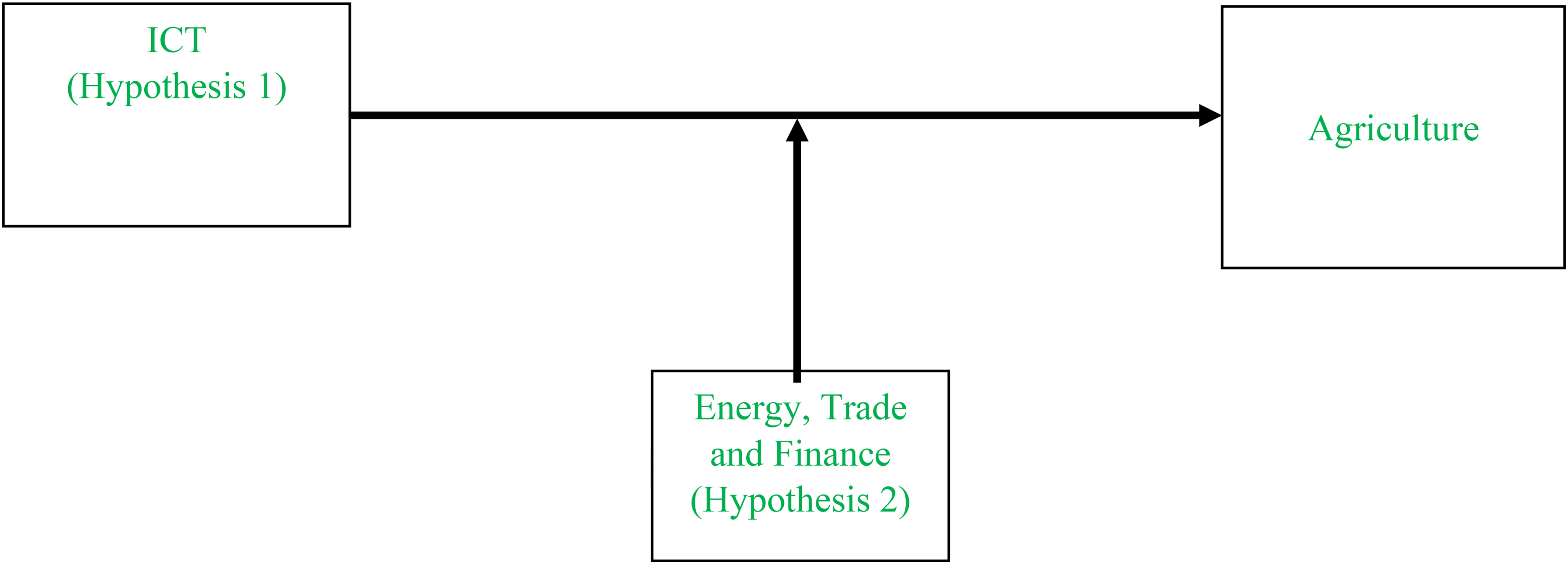
Schematic framework.
Model, variables and data
Empirical model
Given the very close link between agriculture and the environment, we propose to use one of the models employed to capture the effects of anthropogenic activities on the environment. Shahbaz et al. (2017) and Yu et al. (2020) also made this adaptation for the estimation of the ICT-energy demand link. In the present study, a STIRPAT (Stochastic Impact by Regression on Population, Affluence and Technology) model proposed by Dietz and Rosa (1994) is thus used. The basic STIRPAT model for our study is Equation (1):

Where agriculture (I) is a function of population size (P), wealth (A) and technology (T); a is a constant term while superscripts b, c and d are parameters linked to P, A and T respectively and ε is the error term. The indices i and t represent country and time, respectively.
To take into account other variables, we extend the basic STIRPAT model as follows in Equation (2):

Where Z represents other exogenous variables that can influence the agricultural sector and e, the parameter associated with Z. Z is a vector of transmission channels. The linear model is obtained by introducing log into Equation (2). This results in Equation (3):

Where
To analyse the effects of ICTs on agriculture in SSA, Equation (3) has been reworded to Equation (4) as follows:

Where Agri is the agricultural sector, ICT is information and communication technology which can also be used as a proxy for population because of its unit of measurement, GDP is per capita income. Z is the matrix of control variables and also the transmission channels which includes financial development (fidev), energy consumption (Energy), foreign direct investment (FDI) and trade openness (Trade).
In order to verify whether some of our control variables have a mediating effect the agricultural sector, causal mediation analysis is employed (Baron and Kenny, 1986; Zhao et al., 2010). The attendant procedure is useful for understanding if and to what extent the incidence on agriculture by ICTs is mediated by modulating variables. However, it is worthwhile to note that the mediation analysis supposes that ICT adoption predates the transmission mechanisms.
Relaxing the underlying assumption could either underestimate or overestimate the indirect impact. Therefore, the results will provide insights into simple policy-making guidelines. The attendant analysis comes after the method of Papyrakis and Gerlagh (2004), who have studied the transmission channels surrounding the resource curse hypothesis. A mediation analysis has also been used by Yogo and Mallaye (2015) to study the transmission mechanisms of health aid. To our knowledge, no previous attempts have focused on channels ranging from ICTs to agriculture.
The analysis of mediation is established by estimating the following model in Equation (5):

Where Zj is the jthchannel. β1 is the effect of ICT on the transmission channel, β0 is the constant and

Variable specification
Dependent variable
The dependent variable for our empirical model represents agriculture productivity dynamics such as agricultural production, total agricultural factor productivity and land use. We use three different indicators of the agricultural sector in this study. The first-two proxies represent output while the last one measures an agricultural input. (i) Total value of crop and livestock production (output), (ii) total agricultural factor productivity (TFP) growth, (iii) total agricultural land in hectares equivalent of rainfed cropland (Land Use). These variables have been used in the empirical literature to capture agriculture (Adelaja and George, 2019; Balafoutis et al., 2017; Plant et al., 2000).
Independent variable of interest
For this study, we selected information and communication technologies (ICT) as an independent variable of interest. We use three proxy variables to capture it, namely: Internet use, fixed and mobile phone subscription rates. We measure Internet use as the proportion of the population with access. The number of fixed telephone subscriptions is understood as the sum of the number of fixed wireless local loop, active analogue fixed telephone lines and Voice over IP (VoIP) subscriptions. Cellular mobile telephone subscriptions represent subscriptions to a public mobile telephone service which provides PSTN using cellular technology access. This indicator encompasses the number of postpaid subscriptions as well as the number of prepaid accounts that are active (i.e., used within a period of three months).
Control variables
To avoid data omission bias and in accordance with the extant agriculture literature (Lio and Liu, 2008; Musayev, 2016; Shahbaz et al., 2013; Wallin and Segerström, 1994; Zakaria et al., 2019), we include five control variables in this paper. The first is income per capita (GDP). This variable is used to capture national development. Income per capita could have an important positive impact on the agricultural sector through scale effects (Sadorsky, 2013). Second, we monitor the role of foreign direct investment (FDI) on agriculture. The fact justifying the choice of this variable is that foreign investment in SSA mostly focuses on the agricultural sector (Claassen et al., 2012; Cotton and Ramachandran, 2001; Dupasquier and Osakwe, 2006). We use the share of FDI in GDP as an indicator of FDI. Third, the impact of financial development (fidev) is controlled through domestic credit to the private sector as a % of GDP (Kolshus et al., 2015; World Bank, 2017). Fourth, energy consumption is per GDP purchasing power parity (Energy). It is useful for operating tractors and other agricultural machinery (Lehmann et al., 2012). It articulates the use of primary energy prior to transformation into alternative fuels for end-use, which is equivalent to domestic production plus stock changes and imports, minus exports and fuels supplied to aircraft and ships involved in international transport. Fifth, trade openness, enables farmers to sell their products and increase market share (Börjesson et al., 2014). Trade openness represents the sum of exports and imports of goods and services measured as a share of GDP.
Data
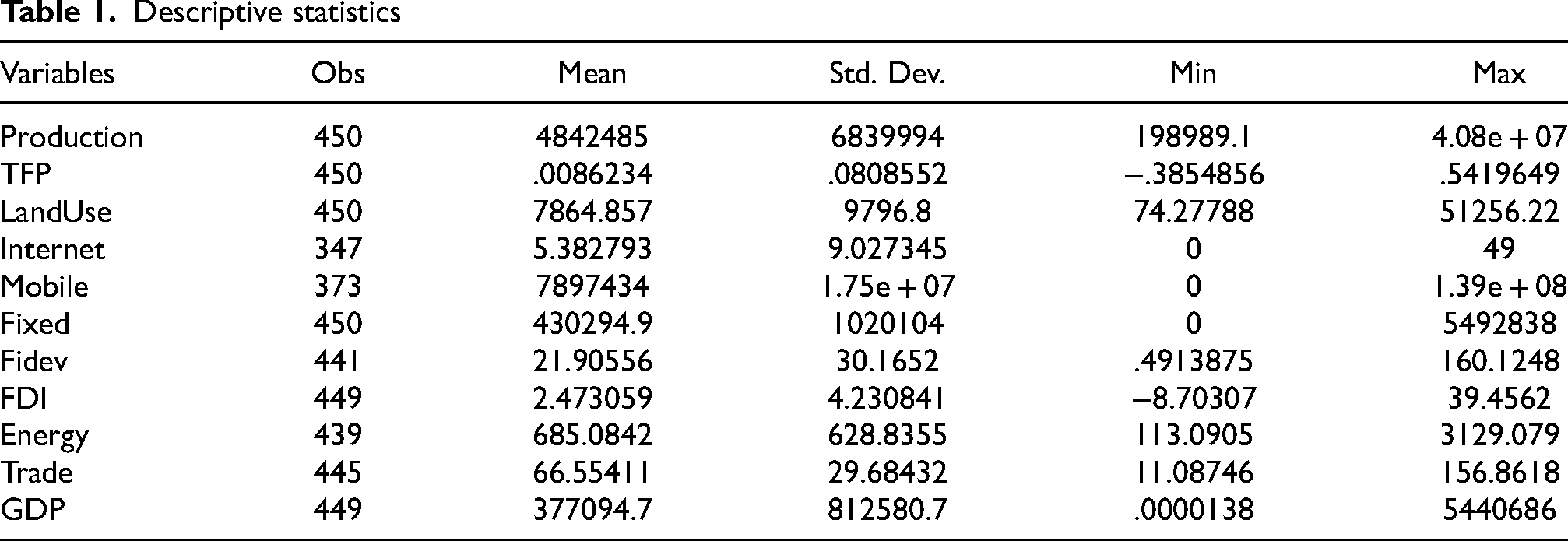
Our sample is a panel of 18 countries in Sub-Saharan Africa over the period 1990–2014. Benin; Botswana; Cameroon; Congo, Dem, Republic; Congo; Ivory Coast; Gabon; Ghana; Kenya; Mauritius; Mozambique; Niger; Nigeria; Senegal; South Africa; Sudan; Tanzania; Zimbabwe. Other countries (Burkina Faso; Burundi; Cape Verde; Central African Republic; Chad; Equatorial Guinea; Ethiopia; Gambia; Guinea; Guinea-Bissau; Lesotho; Liberia; Madagascar; Malawi; Mali; Mauritania; Namibia; Rwanda; Sao Tome and Principe; Seychelles; Sierra Leone; Swaziland; Uganda; Zambia) are excluded because of data availability (Land Use; Production; Mobile; Internet) constraints at the time of study. Data are from the World Bank database. The descriptive statistics and the correlation matrix between the variables are presented in Tables 1 and 2, respectively. Looking at all the correlation coefficients, we can see that they all have values below 0.7. Accordingly, this threshold has been identified in the literature as the information criterion (Asongu et al., 2020, 2021; Kennedy, 2008). Hence, we can say that there is no multicollinearity problem. The difference in the number of observations is because of missing data.
Descriptive statistics
Correlation matrix
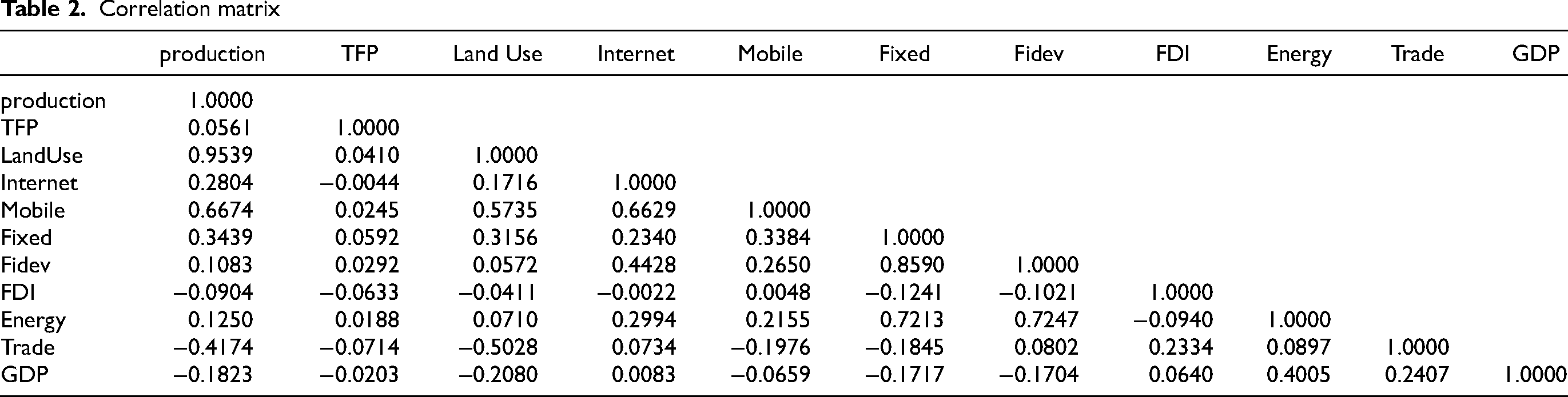
Both Figure 2 and Table 2 suggest a similar trend between the agricultural sector indicators and the ICT indicators selected for this study.
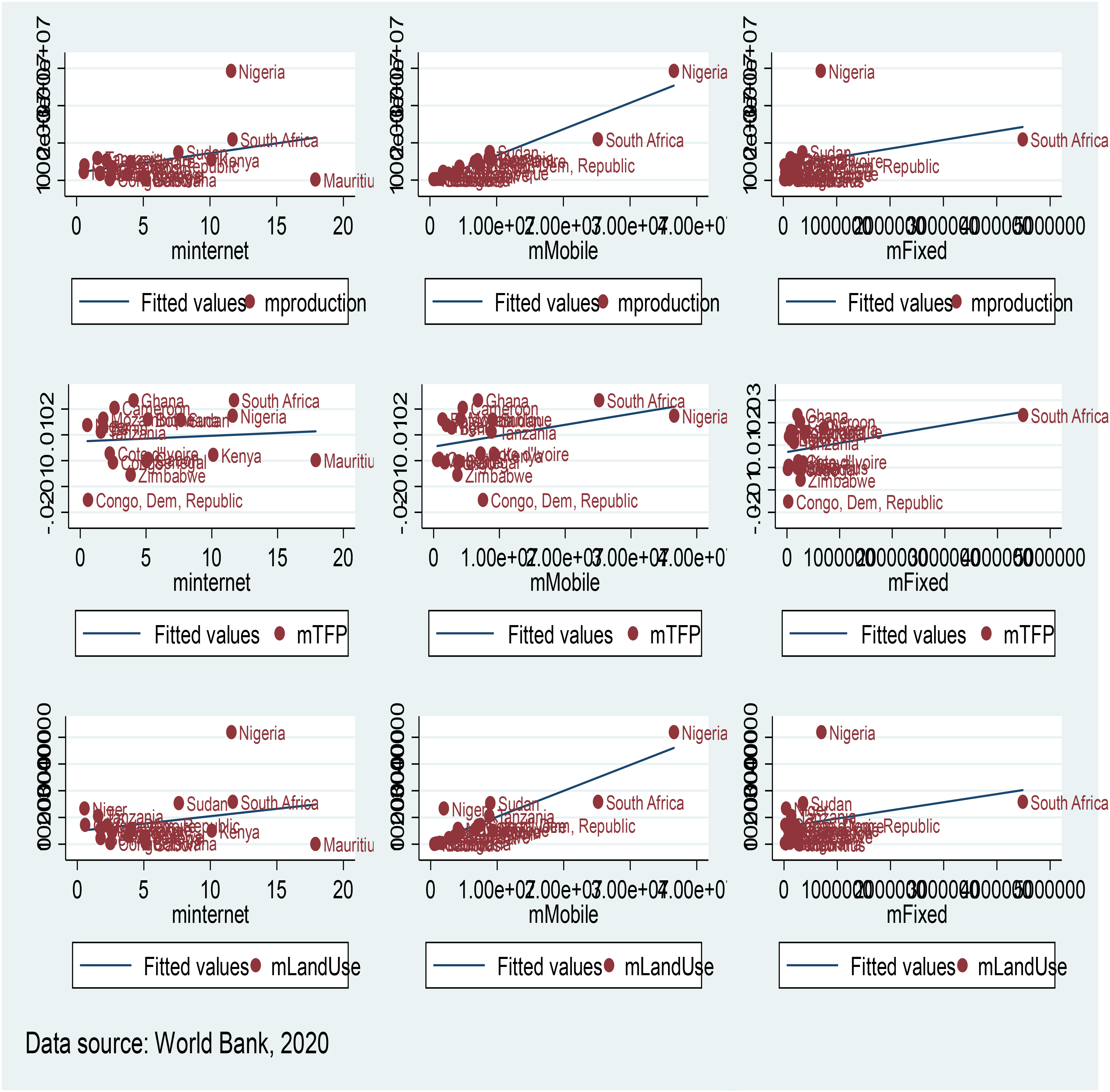
Agriculture and ICTs.
Results and discussions
Preliminary analyses
Cross-sectional dependency test results
An enormous part of the literature on panel data has shown that models using panel data are likely to be subject to cross-sectional dependence in error terms. This cross-sectional dependency may be because of, inter alia, common shocks, common unobserved factors and spatial dependence (De Hoyos and Sarafidis, 2006). Failure to account for cross-sectional dependence in a panel study has many consequences, including the problem of endogenous and serial correlation.
Table 3 presents the results of the cross-sectional dependence test. The coefficient shows that the null hypothesis of the non-existence of cross-sectional dependence is rejected at 1%, confirming the existence of a spatial effect between the countries in our panel. The results of the dependency test further imply that second generation stationarity tests are the most appropriate.
Result of the cross-sectional dependency test
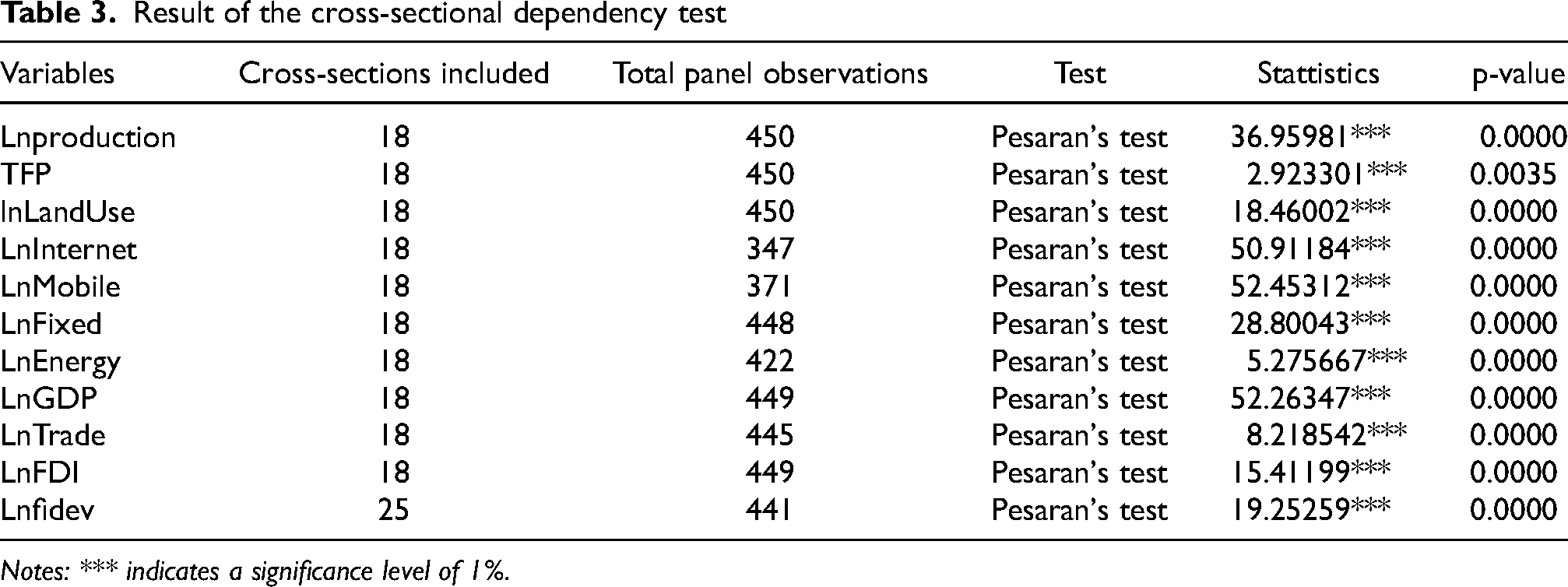
Notes: *** indicates a significance level of 1%.
Unit root test results
The results in Table 3 showed us the existence of cross-sectional dependence. Thus, the first-generation unit root tests (Levin, Lin and Chin, Im, Pesaran and Shin, the panel unit root tests of Augmented Dickey Fuller and Phillips-Perron) are no longer appropriate. We therefore use the second-generation panel unit root tests developed by Pesaran (2007). These are the Pesaran cross-sectionally augmented Dickey-Fuller (CADF) and the Pesaran cross-sectionally augmented Im, Pesaran and Shin (CIPS) tests. Both tests are compatible with the existence of cross-sectional dependence. The results are reported in Table 4. From this table it can be seen that all variables are integrated of order 1 or 0 with the CADF Pesaran test. It then becomes necessary to carry out a cointegration test to analyse the existence of a long-term relationship between the variables.
Unit root test results
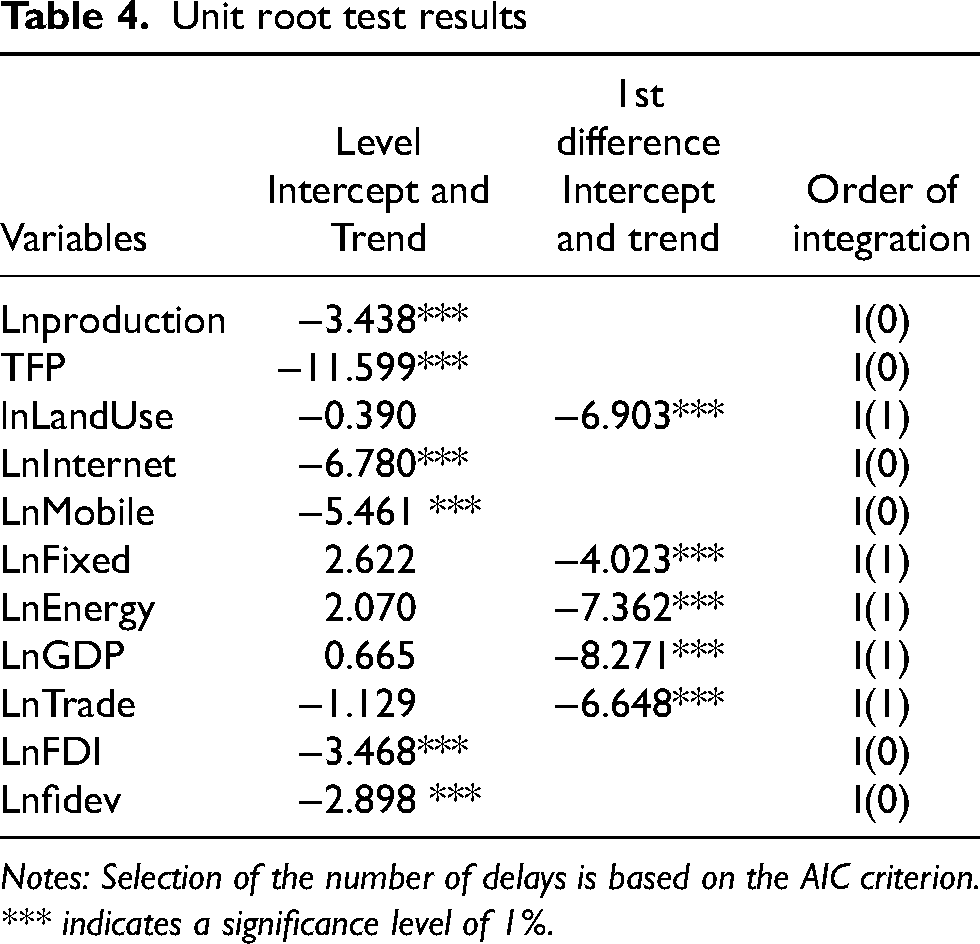
Notes: Selection of the number of delays is based on the AIC criterion. *** indicates a significance level of 1%.
Westerlund co-integration test results
In Table 5, the cointegration test performed is the Westerlund co-integration test which takes into account the existence of cross-sectional dependence, unlike Pedroni and Kao's cointegration tests. The coefficients obtained lead us to reject the null hypothesis of non-cointegration between the variables. Thus, the estimation of our model will be carried out by the co-integration relation estimation methods.
Westerlund co-integration test results
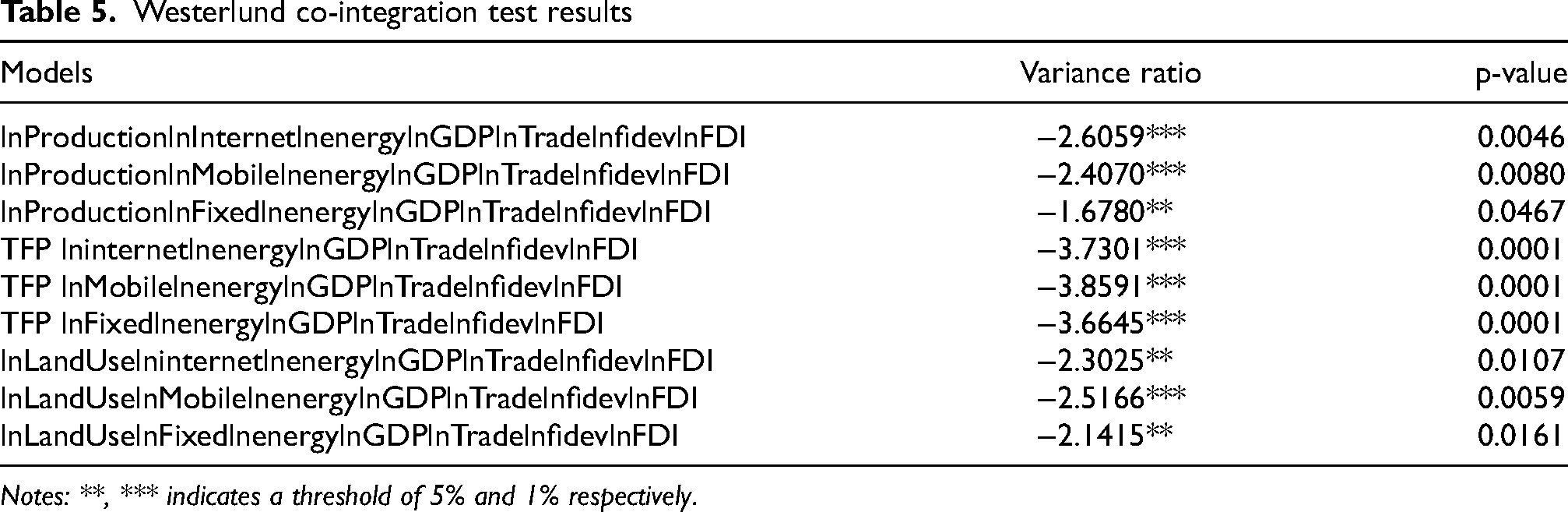
Notes: **, *** indicates a threshold of 5% and 1% respectively.
The existence of a co-integrating relationship between the variables makes it necessary to use an appropriate estimation technique to calculate the model parameters. In our study, we use Fully Modified Ordinary Least Squares (FMOLS).
Baseline estimate
The results of the estimates using FMOLS co-integration methods are reported in Tables 6, 7 and 8. It is shown that this analytical technique developed by Pedroni (2001, 2004) is more efficient than the Ordinary Least Squares (OLS) method because it corrects the problems of endogeneity and serial correlation.
Agricultural production and ICTs
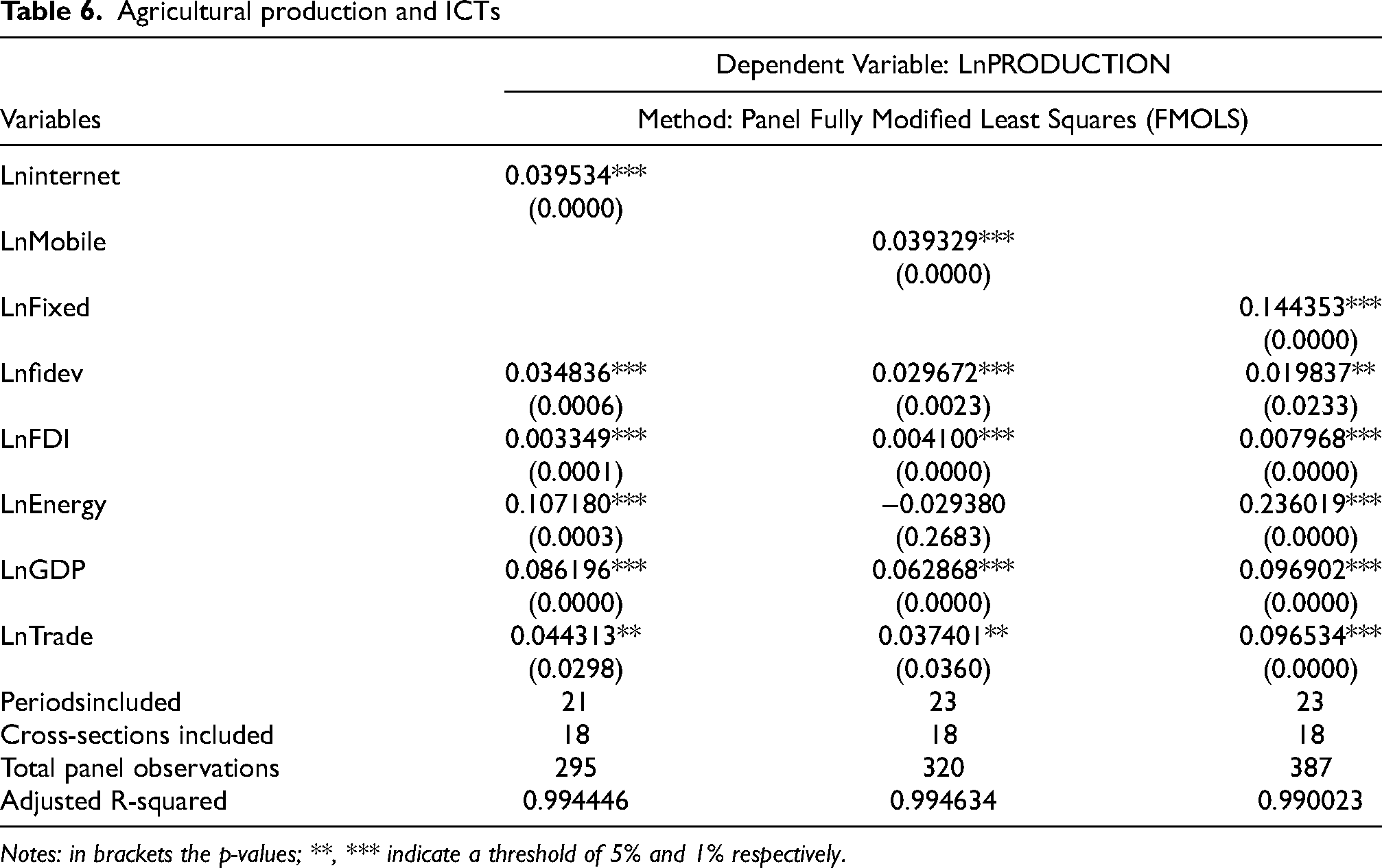
Notes: in brackets the p-values; **, *** indicate a threshold of 5% and 1% respectively.
Total agricultural factor productivity and ICTs
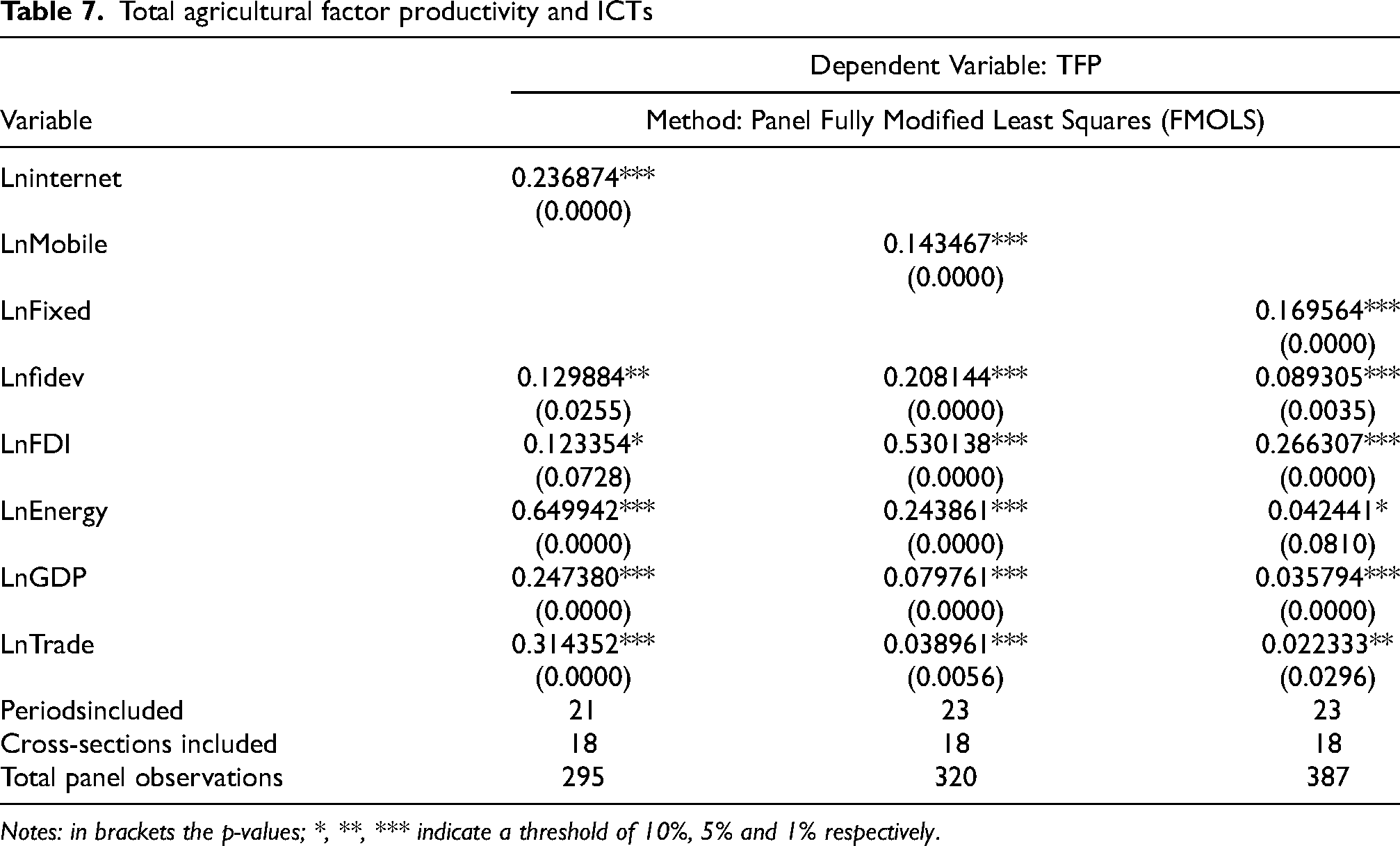
Notes: in brackets the p-values; *, **, *** indicate a threshold of 10%, 5% and 1% respectively.
Land use and ICTs
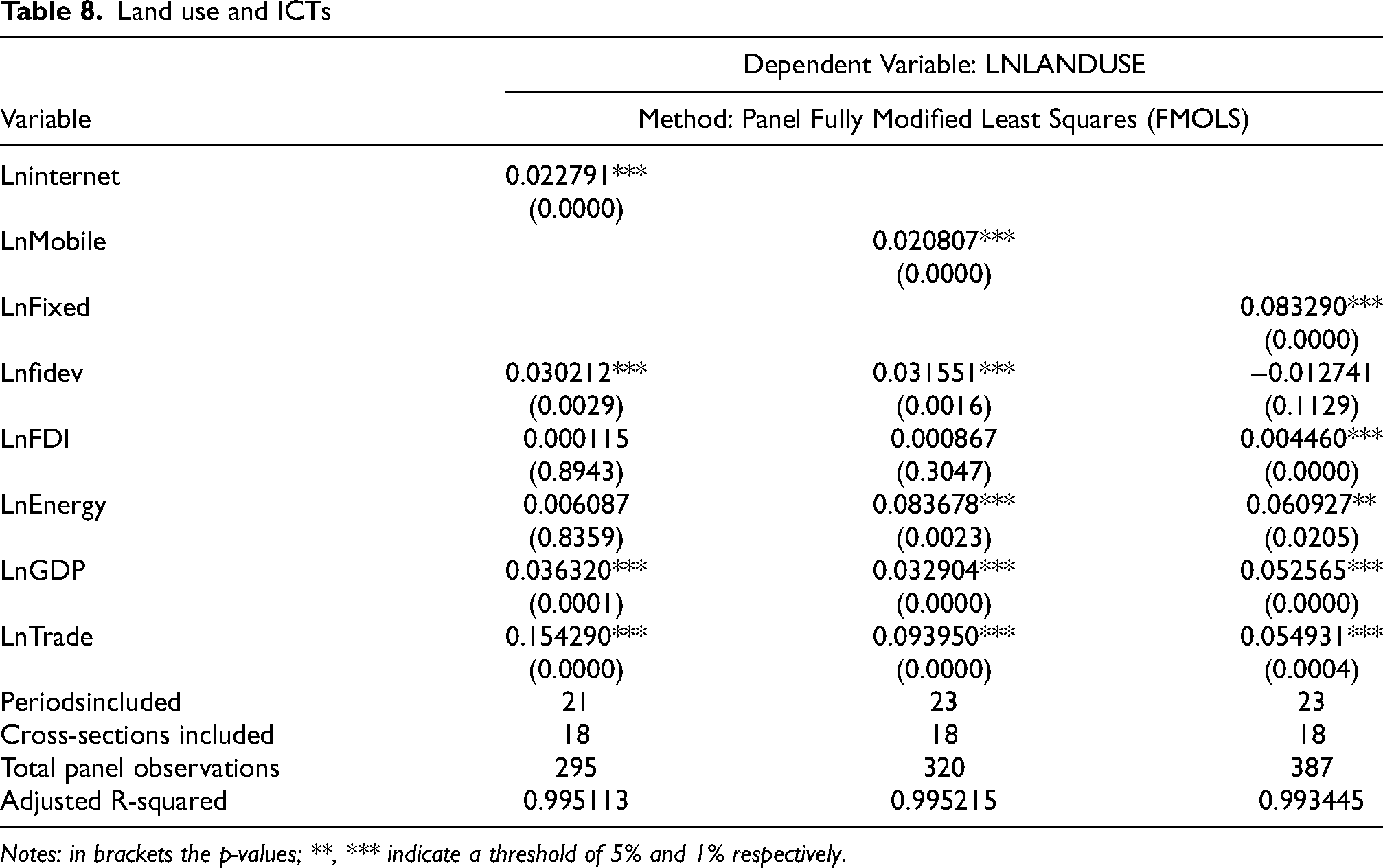
Notes: in brackets the p-values; **, *** indicate a threshold of 5% and 1% respectively.
The results presented in Table 6 show that ICTs are boosting agricultural production in Sub-Saharan Africa. This can be justified by the fact that ICTs in SSA play a key role in reversing the decline of the rural agricultural population and also in facilitating access to market information, which gives farmers the opportunity to acquire quality agricultural inputs at competitive prices, promote their products in different markets and negotiate prices. In this way, ICTs enable farmers to sell their products at decent prices and thus increase production. They also enable farmers to better respond to market demands. Indeed, by mapping markets for different products, ICTs could help farmers to decide where it is best for them to market their products and to have information on barriers to entry in some foreign markets. This result confirms those of Conway (2016).
Finally, it is useful for increasing the productive power of workers in this sector. This result is consistent with the work of Smith (1776) who stated: “Whatever the soil, climate, or size of a nation's territory, the abundance or poverty of its resources depends on the productive power of its labour'’.
By connecting farmers to the resources and services they need, ICTs enable farmers to improve their productivity. This is the meaning of the positive signs of all the parameters associated with the different ICT indicators in Table 7. Indeed, smallholder farmers in SSA countries regularly use mobile and internet applications to obtain accurate information about the next agricultural season and to access market information without depending on intermediaries. This is useful for reducing their transaction costs and enabling them to access inputs at lower costs, thus improving their productivity. Thus, greater application of ICTs in agriculture will eliminate inefficiencies, save money and improve farmers’ earnings (Hasan and Isaac 2008).
ICTs also have a beneficial effect on land use in SSA (Table 8). Certainly, ICTs can provide information on the agricultural potential of a piece of land and whether it is suitable for the production of a specific crop and livestock. ICT applications can also help to facilitate farmers’ access to land through its actions on land market activities and land reforms and increase transparency (Kummu et al., 2012; McLaren and Stanley, 2017). This result is also similar to that of Bertot et al. (2010), who estimate that the computerization of land registers in India has saved farmers 1.32 million labour days through improved processing and 806 million rand in bribes due to lower levels of corruption.
In general, the transformation of agriculture in Sub-Saharan Africa relies on a greater appropriation of digital platforms by smallholders that will enable them to improve access to information on agronomic practices and markets.
In summary, on the basis of these econometric calculations, the use of ICTs, measured by internet access and the use of mobile and fixed telephones, has a positive impact on agriculture. More specifically, it improves agricultural production, increases the productivity of production factors and improves the use of agricultural land. The integration of ICT thus offers farmers valuable opportunities to modernize their practices and optimize the use of resources. By taking advantage of ICT, farmers can improve their access to information, closely monitor market conditions and make informed decisions. These technologies also facilitate connections between farmers, extension services, markets and buyers, enabling them to optimize the use of inputs. In addition, ICT enables farmers to coordinate their activities effectively, leading to greater efficiency in the use of agricultural land.
Our control variables all have a positive and for the most part, significant effect on the agricultural indicators used in this study. There is a positive effect of access to credit on agriculture. Thus, the development of the financial system enhances the development of the agricultural sector in SSA countries. However, the rural population in SSA remains largely underserved or even excluded from the formal financial sector. The provision of financial services needs special attention from governments to ensure that farmers have easy access to them. Similarly, foreign direct investment (FDI) is improving agriculture in SSA. Stimulating FDI is therefore of strategic importance for the agricultural sector in SSA. SSA countries therefore need to formulate integrated strategic policies and a regulatory framework for FDI in the agricultural sector, including infrastructure development, competition, trade and research and development. Second, energy consumption is beneficial for agriculture. Indeed, the agricultural activities mobilises energy for animal feed, the operation of machinery and farm buildings. Nevertheless, reducing energy consumption is an important issue for farms because of its economic and environmental stakes. Indeed, in view of the depletion of fossil fuels and their supply at increasingly high prices, energy savings offer real opportunities for reducing the burden on farms (Akinwale et al., 2013; Cascailh et al., 2012; Chebbi and Boujelbere, 2008).
Trade openness creates incentives that are likely to make agriculture an economically viable sector in SSA. Indeed, trade openness allows for better remuneration of agricultural labour through increased market shares. This result reflects the usefulness of trade liberalization for improving the efficiency of agricultural resource allocation. These results are similar to those of Tokarick (2003); Cline (2004) and World Bank (2004). Our results also confirm that the economic well-being of individuals and agriculture are closely linked. Certainly, improving people's purchasing power leads to an increase in global food demand, which is a fundamental stimulus to agricultural growth and progress.
Figure 2 suggests that the results in Tables 6, 7 and 8 are driven by Nigeria and South Africa. For this reason, we decide to exclude them from the analysis to reassure ourselves that the positive effect of ICTs on agriculture in SSA is only driven by them. The results in Table 9 show that the influence of ICT on production, factor productivity and land use remained similar in sign to the results found previously. However, we can see the reduction in the magnitude and significance of the parameters associated with ICT. Thus, while these results do not invalidate the previous results, they do confirm the importance of Nigeria and South Africa in explaining the dynamics of the ICT-agriculture relationship in SSA.
Analysis of ICT effects on agriculture excluding some countries
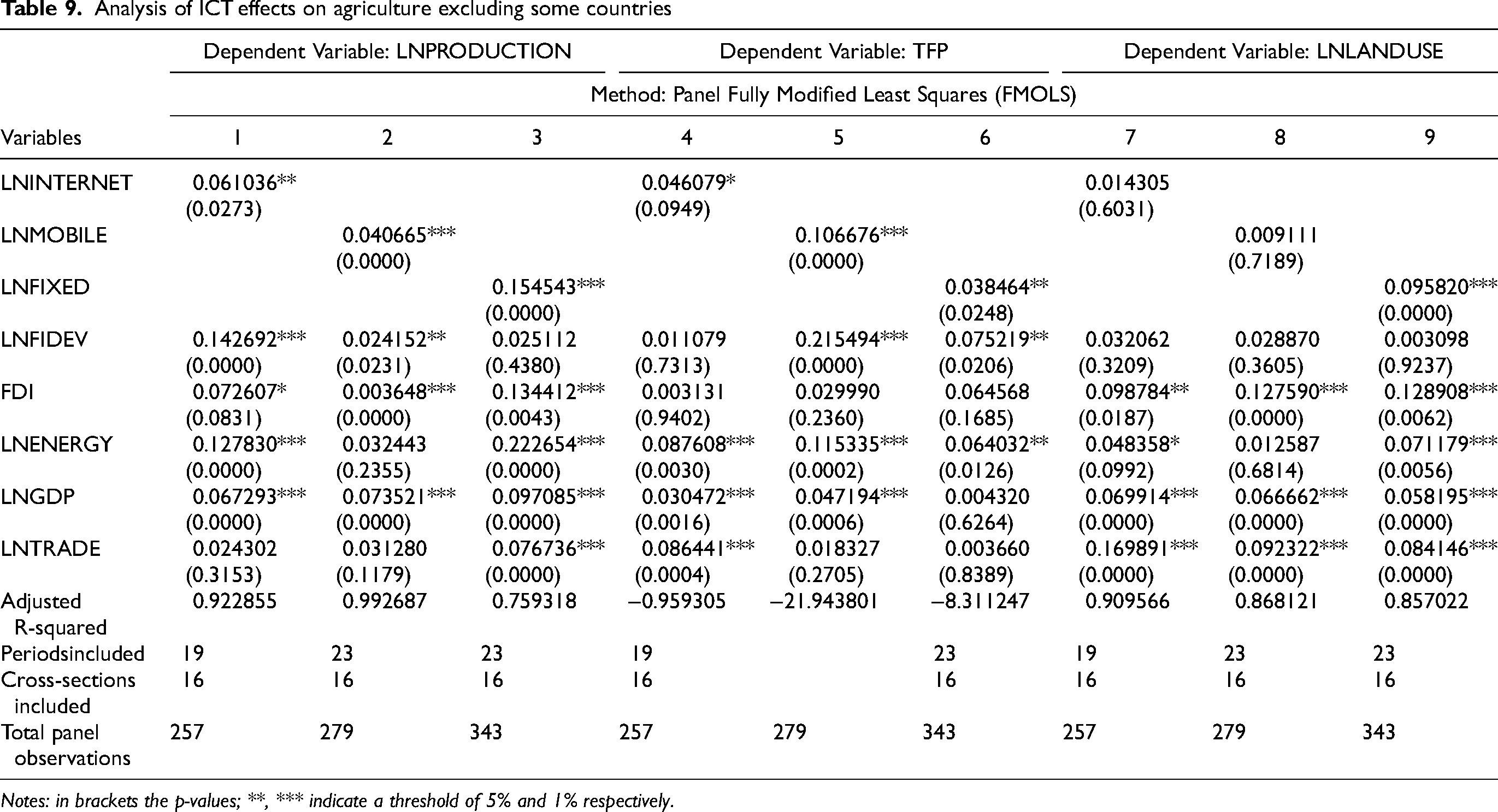
Notes: in brackets the p-values; **, *** indicate a threshold of 5% and 1% respectively.
Evaluating the importance and significance of the transmission channels
The above estimates are quite interesting as they provide insights into useful information on how ICT development is affecting the agricultural sector in SSA. However, the estimates do not indicate the relevance and significance of the channels from ICTs to agriculture. In this study, we look at the channels through which ICTs affect agricultural production. For this purpose, we use causal mediation analysis. The effect of ICTs on each transmission channel is shown in Table 10.
Results of the structural model
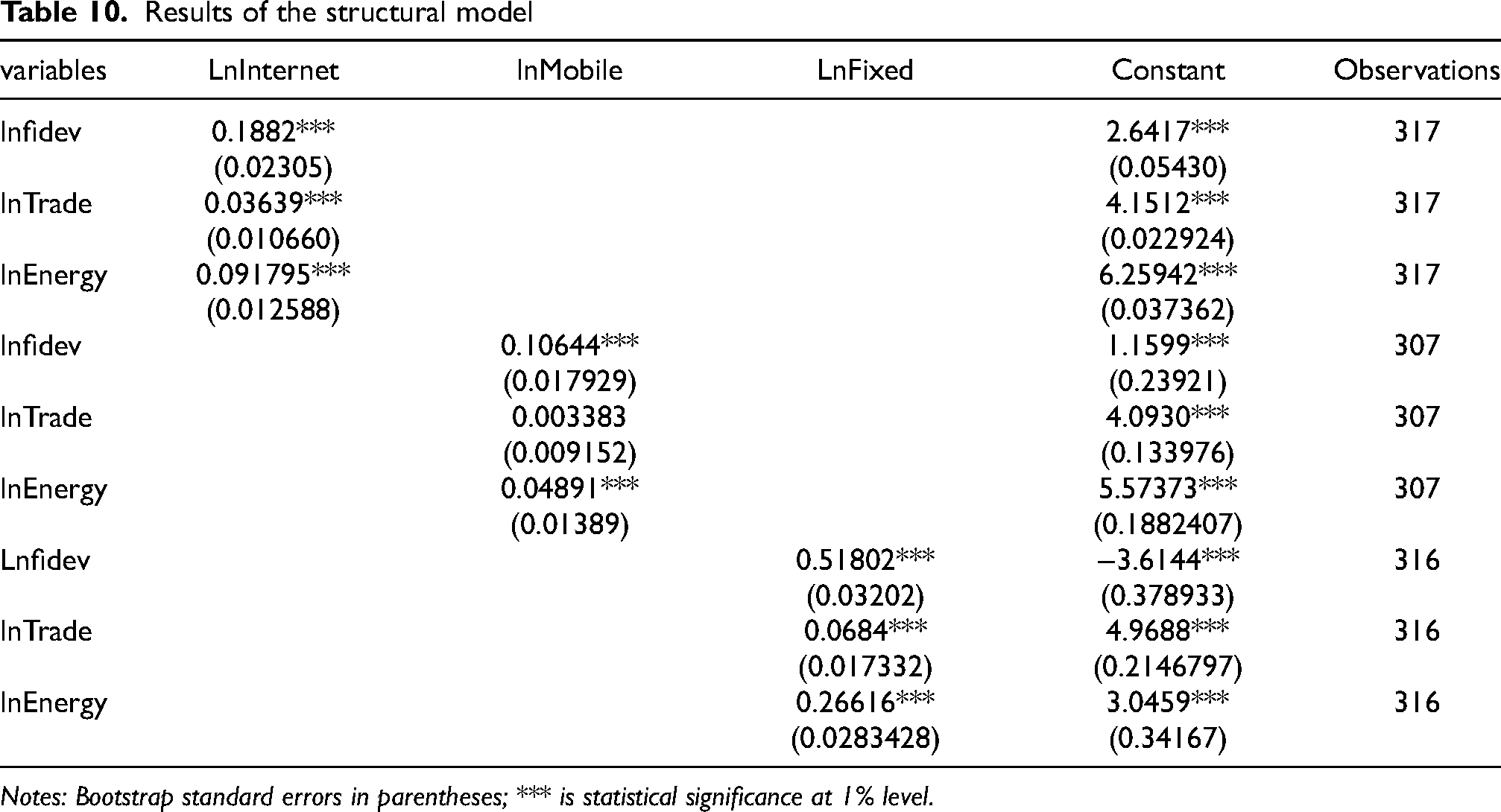
Notes: Bootstrap standard errors in parentheses; *** is statistical significance at 1% level.
The results show that the adoption of internet, fixed and mobile telephony have a positive and significant effect on the chosen channels. All other things being equal, an increase in the adoption of ICTs significantly stimulates financial development, trade openness and energy consumption. In fact, a 1% increase in the rate of Internet use leads to a significant increase in credit to the private sector, trade openness and energy consumption of 18.2%, 3.639% and 9.1795%, respectively. Similarly, a 1% increase in the mobile phone penetration rate significantly increases credit to the private sector, trade openness and energy consumption by 10.644%, 0.3383% and 4.891%, respectively. Finally, an additional 1% increase in the fixed telephone adoption rate leads to an increase in financial development, trade openness and energy consumption of 51.802%, 6.84% and 26.616%, respectively. The positive effect of ICTs (internet, fixed and mobile telephony) on financial development is consistent with the study of Edo et al. (2019) who have concluded that an improvement in ICT adoption significantly increases financial development in Nigeria and Kenya. On the other hand, Choi (2010) and Yushkova (2014) establish that ICT penetration boosts trade flows in many countries, hence its positive effect on trade openness. The positive effect of ICT on energy consumption has also been highlighted by Yu et al. (2020) who conclude that ICT development is accompanied by an increase in energy consumption.
Since variation in the transmission mechanism is partially traceable to ICT penetration, we calculate the direct and indirect effects of ICT on agricultural production. The estimated coefficients in Equation (7) are provided in Table 6 and the ICT coefficient includes both the direct and indirect impacts. In addition to the total effect of ICT, we calculated its indirect effects using the product-of-the-Sobel coefficients approach. Standard errors are corrected by means of the bootstrap procedure. The results are presented in Table 11.
Indirect effects of ICT on agricultural production
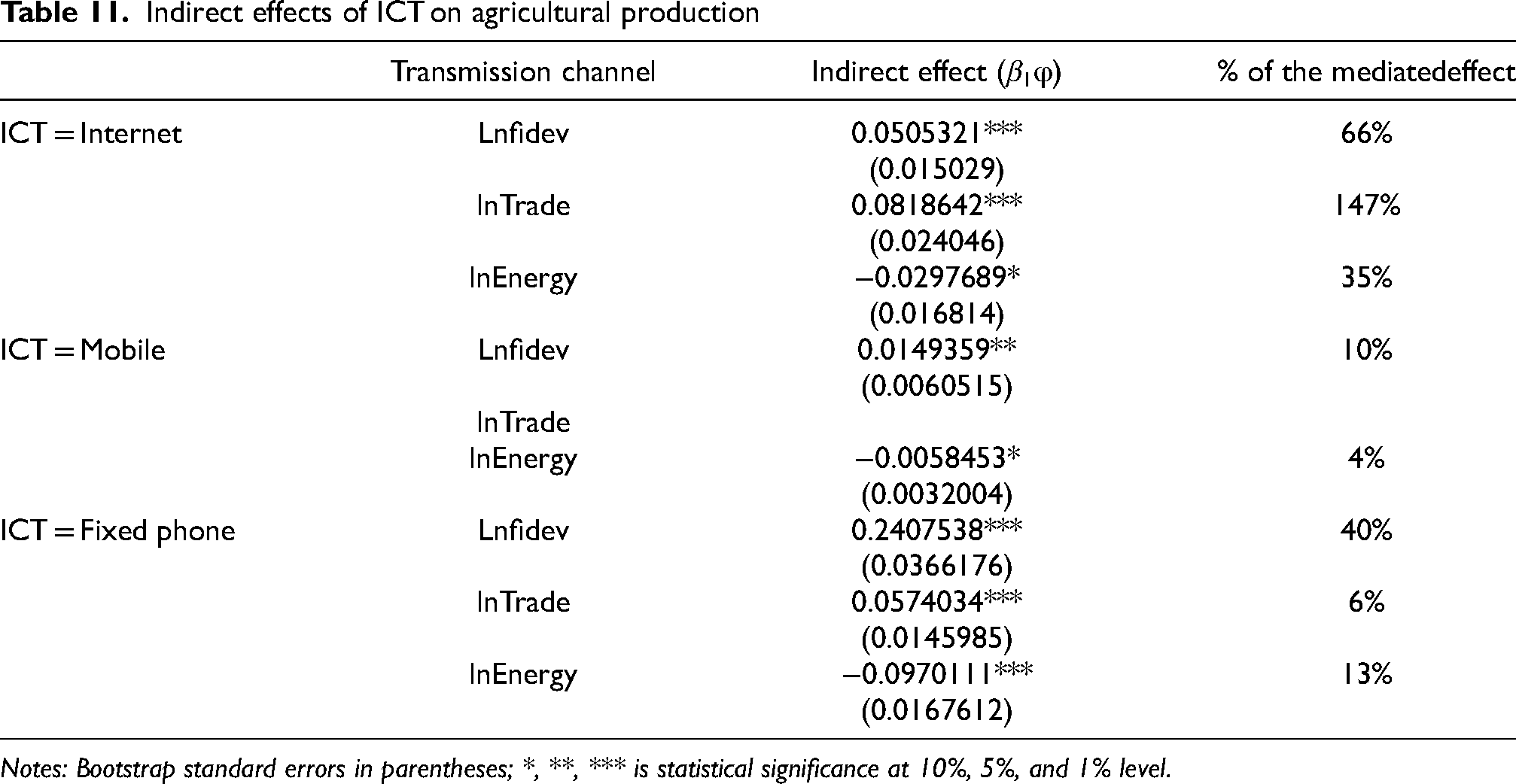
Notes: Bootstrap standard errors in parentheses; *, **, *** is statistical significance at 10%, 5%, and 1% level.
The first observation that can be made from Table 11 is that all three mechanisms have mediated the impacts of ICTs on agricultural production. Over the study period, ICTs have indirectly increased agricultural production through financial development and trade openness. On the other hand, it has indirectly reduced production through energy consumption, probably owing to inter alia, comparative energy inefficient infrastructure for production purposes in the sampled countries. We also try to calculate the contribution of each mechanism to the total impact of ICTs on agricultural production using the formula
The indirect positive effect of ICTs on agricultural production can be explained by the fact that ICTs contribute to improving the financial system by mitigating transaction costs and information asymmetry, in particular by improving the information flow on investment opportunities, engender more financial integration. In addition, ICTs allow farmers to access a larger share of markets, which leads to increased demand and therefore increased production. The indirect negative effect of ICTs on agricultural production could be explained by the fact that farmers still predominantly use energy-intensive hardware. Indeed, many farmers still use, for example, the desktop at the expense of the laptop or netbook for cost-related reasons and especially because they are difficult to steal. Thus, the green revolution in SSA needs to be driven largely by ICT innovations to ensure that smallholder farmers have access to adequate information on weather, agricultural inputs and markets. It is difficult to directly compare our results with existing research because previous studies have not highlighted the role and importance of transmission channels.
Conclusion and policy implications
In recent years, Sub-Saharan African countries have experienced a rapid growth in ICTs, in terms of internet penetration, number of fixed and mobile phone users. This increase in ICT penetration offers real advantages for the development of other sectors of activity. One of the central challenges of ICTs is their contribution to achieving a true green revolution.
This study estimates the impact of ICT adoption on agriculture in Sub-Saharan Africa. Specifically, we study the direct and indirect aspects of the effects of internet, fixed and mobile phone penetration on production, factor productivity and agricultural land in a sample of 18 sub-Saharan African countries over the period 1990–2014. The results of the static panel show that increasing ICT penetration has a positive and significant effect on the agriculture indicators selected for this study.
As a complement to the previous analysis, we use causal mediation analysis to articulate the role and relevance of mechanisms from ICTs to agriculture. Overall, the results show that financial development, trade openness and energy consumption are the mechanisms through which ICT penetration affects agriculture in sub-Saharan Africa. More specifically, ICTs have an indirect impact on the agricultural sector in sub-Saharan Africa. A beneficial indirect impact on agricultural production through its impact on financial development and trade openness and an inhibiting indirect impact on agricultural production through its effects on energy consumption.
Overall, this study showed that there are agricultural benefits associated with increased ICT penetration in the sub-region. From a policy standpoint, the following measures could be adopted to achieve a true agricultural revolution in SSA. Indeed, technologies to boost the agricultural sector are eagerly awaited. Thus, because of the food insecurity and low financial resources of rural populations associated with low production, policies aimed at improving agricultural efficiency through the use of ICTs could contribute to the underlying. Firstly, of all, it is important that farmers have easy access to ICTs, including broadband Internet and cell phones. Governments can help to ensure affordable broadband access, particularly in rural areas where farmers are often isolated. In addition, farmers need to be trained in the use of ICTs to improve their productivity and profitability. Governments and non-governmental organizations can work together to provide training on ICTs, how to use them and how to integrate them into farming activities. In addition, farmers can benefit from using collaborative platforms to share farming knowledge and techniques with their peers. Governments can encourage and subsidize these collaborative platforms, and initiate the creation of a farmer communication network.
Secondly, in terms of how government can improve the effectiveness of ICT and its transmission, possible options include the following.
Increased investment in infrastructure: the government needs to invest in the creation and improvement of ICT infrastructure, particularly in rural areas where farmers need reliable and affordable access to the internet, cell phones, computers, inter alia. The development of policies to encourage the use of ICT: the government can develop policies to encourage the use of ICT in agriculture, and ensure that farmers get easy and affordable access to ICT. For example, they can support ICT providers who offer affordable services to small farmers. Raising farmers’ awareness of the benefits of ICT in this sector: the government can promote and raise farmers’ awareness of the use of ICT in agriculture, and facilitate access to training and subsidy programs for the purchase of technology.
In short, it is essential that governments and farmers work together to accelerate the adoption of ICT in subsistence agriculture in Sub-Saharan Africa.
Thirdly, governments need to open their economies more and more, while at the same time strengthen legislation on the protection of small farmers and on energy-intensive agricultural equipment. This includes developing green solutions, reducing constraints on financing cost environment respectful technologies and projects. These incentives should be provided in terms of green subsidies for the adoption and/or development of technologies. Moreover, the standard could improve with respect to the transfer of ICT equipment. Finally, campaigns that are designed to improve public awareness in terms of agricultural benefits linked to the increasing penetration of ICTs in the sub-region could be encouraged.
One of the drawbacks of this study is that the conclusions and corresponding policy recommendations do not take into account the specificities of each country. Accordingly, there are some disparities in the growth patterns of ICT in African countries. Hence, it is relevant to extend this study to country-specific cases in order to obtain additional insights of the impact of these policies. It is therefore worthwhile for future research to extend this study by identifying additional transmission channels. Moreover, future studies should also consider other developing regions such as the Middle East and North Africa (MENA).
Footnotes
Acknowledgements
The authors are indebted to the editor and reviewers for constructive comments.
Availability of data and materials
The data for this paper is available upon request.
Consent to Publish
Not applicable.
Declaration of conflicting interests
The author(s) declared no potential conflicts of interest with respect to the research, authorship, and/or publication of this article.
Ethical approval and consent to participate
This article does not contain any studies with human participants or animals performed by the authors.
Funding
The author(s) received no financial support for the research, authorship, and/or publication of this article.
