



Abstract
This article investigates attitudes towards the adoption of artificial intelligence (AI) technology in the public academic libraries of South Africa. It employed the mixed method research approach and the concurrent mixed method research design. The study's target population was 2565 library staff members (library managers, systems librarians, and general librarians), and policy documents from 26 public academic libraries in South Africa. A sample of 555 participants was selected, comprising 26 library managers and 26 systems librarians chosen through purposive sampling, while 503 librarians were sampled using proportional stratified random sampling. Data collection tools used comprised questionnaires, interviews, and content analysis. Data were analysed using thematic and descriptive statistical data analysis. Based on the findings, public academic libraries in South Africa generally have a positive attitude towards the adoption of AI technology, with only a few having a negative attitude. Furthermore, some employees were afraid that this technology would make them redundant by taking over their work. The major contributory factors to attitudes towards the adoption of AI include self-perception of AI knowledge, optimism and enthusiasm about AI, and concerns about job security. The article recommends that a positive outlook and optimistic attitude regarding the adoption of AI should be maintained. Additionally, AI training sessions and workshops to educate librarians who hold negative attitudes must be implemented to facilitate a shift in their perceptions towards the acceptance of AI.
Introduction
The advent of artificial intelligence (AI) has transformed numerous disciplines, and AI technologies have come to play a crucial role in the operation of public academic libraries (Cox, 2021). By embracing AI technologies and adopting a proactive approach, librarians can play a pivotal role in shaping the future of libraries in the digital age. Velarde (2020) agrees that AI could revolutionise everything in the Fourth Industrial Revolution (4IR), which entails several emerging technologies. Omame and Alex-Nmecha (2020) add that in public academic libraries, AI is a relatively new computing technology with a wide range of applications, including the automation of administrative tasks. AI is a technological paradigm that is transforming computing services and resources, including human tasks in public academic libraries. This involves the incorporation of intelligence into the technologies that are used to improve service quality and provide users with access to information.
There are AI components that enhance library activities and functions such as cataloguing, information services and information retrieval for the provision of effective library services. Components of AI provide massive competitive advantages to academic libraries for improved service delivery; for instance, in cataloguing, as AI makes it possible to provide consistent, and accurate library materials records in good time. First among the advantages of AI that Mogali (2015) lists is the ability to handle stressful and complex work, such as cataloguing and classification, which humans struggle to accomplish. Second is AI's ability to complete tasks faster than humans. Despite AI's positive influence in public academic libraries, there are also some disadvantages, which include the loss of librarian positions and the loss of contact between librarians and library users (Vijayakumar and Sheshadri, 2019). Consequently, librarians’ perception of the opportunities and challenges presented by AI, their concerns about job security and the level of support and training provided by academic public libraries influence librarians’ attitude towards the adoption of AI.
The adoption of AI by public academic libraries in South Africa seems to be slow, which arguably delays the enhancement and provision of quality services (University of Pretoria, 2020). Low AI adoption will affect users of academic libraries negatively as their information needs and information seeking behaviour will not benefit from the affordances of AI. For instance, the user population is growing very fast, with most users staying very far from their library. Queuing for information sources may affect user time management and other plans. This article focuses on the transformative potential of AI in public academic libraries, particularly in South Africa. It highlights AI's ability to revolutionise library operations by automating complex tasks such as cataloguing and information retrieval, thereby improving service quality and efficiency. The article underscores the importance of AI in enhancing library functions, reducing human errors, and managing growing user demands.
Objective
The core objective of the study is to investigate attitudes towards the adoption of AI technology in public academic libraries in South Africa. The other objective of the article was:
To establish the attitudes towards the adoption of AI in public academic libraries in South Africa.
Literature review
Librarians’ attitudes have a significant impact on the status of AI in libraries. A positive attitude on the part of librarians is essential to the successful adoption and use of Information and Communication Technologies (ICTs) in libraries because, if these are not adequately vetted, they may have a negative impact on library processes (Ramzan et al., 2021), since librarians’ feelings, behaviours and beliefs contribute towards the adoption of AI libraries or lack thereof.
Beliefs about AI in public academic libraries
The literature suggests that while many librarians are enthusiastic about the adoption of AI, libraries are likely to experience some difficulties. Librarians’ beliefs about AI adoption can be based on the outcome of this technology. Yoon et al. (2022) conducted a study on public librarians’ perceptions regarding the adoption of AI and related technologies in libraries. They found that librarians’ perceptions of these technologies were more positive. Wood and Evans (2018) investigated librarians’ perceptions of AI. The results showed that most of the respondents believed that AI would play a major role in libraries within the next three decades, with resource discovery and reference being the most likely areas to benefit. Azimi et al. (2022) sought to understand the level of knowledge on the part of and use of AI technology by librarians at university libraries. The findings of their study showed that most librarians believed AI to have the potential to improve the quality of library services. However, Hervieux and Wheatley (2021) found that only a small percentage of librarians opined that AI was actively used in their libraries. There is a paucity of studies focusing on librarians’ attitudes towards libraries’ adoption of AI.
Feelings about AI in public academic libraries
Librarians’ feelings influence the adoption of AI in libraries. Pinfield et al. (2017) investigated thought leaders’ perspectives on AI and libraries. In general, the interviewees were optimistic about the future of AI in libraries, precisely in areas such as information discovery tools and machine-readable collections, research creation and scholarly communication, and teaching and learning support. Lund et al. (2020) investigated the attitudes of academic library personnel regarding AI and how they aligned with the Diffusion of Innovations’ Adopter Categories. Respondents in the study were enthusiastic about AI and its potential usage in libraries. In their investigation of librarians’ perceptions regarding AI, Wood and Evans (2018) placed a considerable emphasis on the use of supercomputers (such as IBM's Watson) in libraries, asking respondents to specify which library areas would use this technology and when they would anticipate its use. The findings were convincing, with most respondents anticipating that AI would have a significant impact on libraries during the subsequent three decades, with resource discovery and reference being the most likely applications. The foregoing findings show that some librarians are hopeful and confident about the adoption and impacts of AI in libraries.
Other studies, however, showed librarians to be very apprehensive about the adoption of AI. Hussain (2020) asserts that librarians around the globe are afraid that 4IR will have a negative effect on their jobs, with machines likely to replace humans, which may lead to an increase in unemployment. Lichtenthaler (2018) proffers that some people believe that AI has the capacity to replace human labour, while others think that it will not be able to replicate the originality and inventiveness of humans. Harisanty et al. (2023) claim that some facets of research, such as the insight of researchers and their creativity in deriving research findings, can never be replaced by AI, and that AI can only help in the exploration of multiple data sources, mapping of knowledge, connecting of concepts, data analysis, and prediction recommendations based on results. According to Jabur (2019), librarians must accept that in the 4IR environment, there will be no distinction between cyber and physical worlds, and that such changes will inevitably affect not only their current practices but also their existence as professional librarians, which in most cases causes librarians anxiety. According to Fernandez (2016), the use of AI in library searches is anticipated to cause major changes in both the way that material is retrieved from libraries and in the professional information abilities of individuals. Consequently, librarians’ behaviour will be affected, and this will have an impact on the adoption of AI in libraries.
Response to AI in public academic libraries
Librarians’ attitudes toward AI play a pivotal role in determining whether public academic libraries successfully adopt these technologies. Studies such as those by Akparobore et al. (2020) and Andrews et al. (2021) demonstrate that positive attitudes facilitate the integration of AI, improve service delivery, and enhance libraries’ ability to adapt to 4IR technologies. However, the adoption of AI can be hindered by negative feelings and beliefs. Brosnan (2002) discusses how technophobia, or fear of technology, often leads to resistance, particularly when librarians feel AI could devalue their professional identity or replace traditional roles. Ramzan et al. (2021) similarly found that while there are positive attitudes toward IT adoption, librarians may still feel apprehensive due to concerns over job displacement and ethical issues such as data privacy and algorithmic bias (Phillips 2017). These negative emotions may prevent librarians from fully engaging with AI or embracing the necessary changes to integrate it into their workflows. As a result, decision-making around AI adoption can become more cautious or even resistant, thus limiting the potential of AI from improving information management, classification, and retrieval. Addressing these emotional and cognitive barriers through comprehensive AI training, clear ethical frameworks, and transparent communication about AI's role in libraries is essential in overcoming resistance and achieving successful implementation. Ultimately, this balanced approach to managing both positive and negative attitudes will enable a more effective and thoughtful transition toward AI-driven library services.
Methodology
The Theory of Planned Behaviour (TPB) and Technological Acceptance Model (TAM) provided a valuable framework for understanding librarians’ attitudes towards the adoption of AI technology in public academic libraries. The TPB was employed to focus solely on the subjective norms, and perceived behavioural control of the librarians. TAM was adopted to focus on attitudes of the librarians. The study proposed that positive attitudes and institutional support would promote AI adoption, while negative beliefs, such as technophobia, could hinder it. This approach offered a comprehensive understanding of AI adoption dynamics, allowing for more informed strategies to address barriers (Creswell and Plano-Clark 2017; Saunders et al. 2019). This study used a mixed-methods approach to explore these factors, combining quantitative data from questionnaires to assess attitudes and social influences with qualitative insights from interviews to understand personal experiences and challenges. The questionnaire included dimensions on general attitudes, which were measured using a combination of Likert scales, multiple-choice questions, and open-ended responses to gather quantitative data.
Data were collected online from 26 library managers, and 26 system librarians selected using purposive sampling, and 503 librarians who were selected using proportional stratified random sampling, making up a sample size of 555 participants. Thematic data analysis with the assistance of Atlas.ti version 23.3.4 software, and descriptive statistical data analysis with assistance of IBM Statistical Package for the Social Sciences (SPSS) for Windows (version 29) software were used to analyse the data collected. Ensuring the study's results are trustworthy and accurately represent the factors influencing AI adoption in public academic libraries, the reliability of the questionnaire was assessed through internal consistency, using Cronbach's alpha to verify that the Likert scales. Other quantitative measures consistently captured librarians’ attitudes, subjective norms, and perceived behavioural control across participants (Creswell and Plano-Clark 2017). Validity was tested by correlating questionnaire results with qualitative data from interviews to confirm that both methods captured the same underlying attitudes, beliefs, and institutional factors influencing AI adoption.
Results and discussion
Qualitative data from library managers and system librarians, and quantitative data from librarians are presented below.
Qualitative findings from library mangers
In terms of the objective of the study, qualitative data were collected from library managers. Figure 1 below depicts two themes that emerged from the objective of the study, with the findings presented below in accordance with the study question.
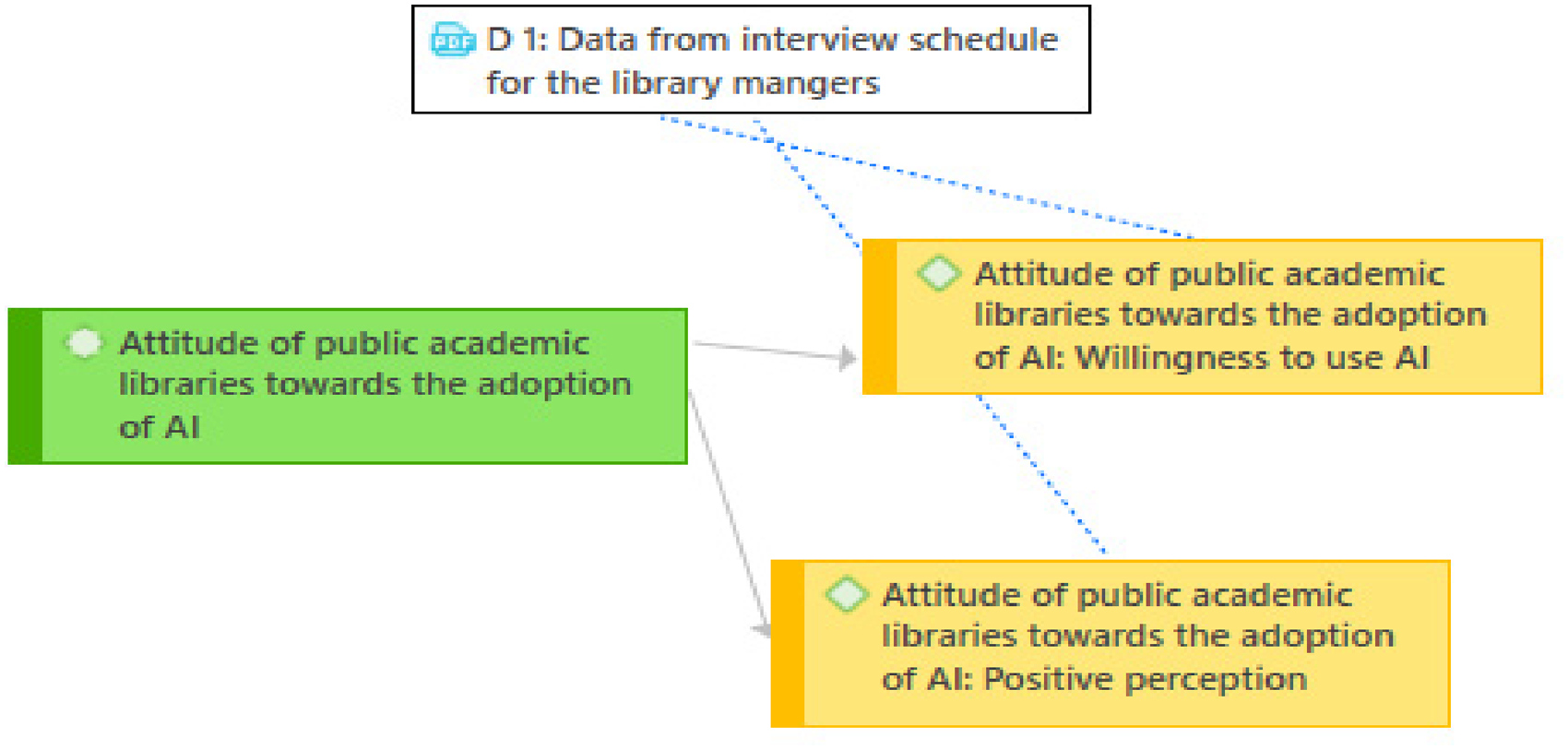
Network view illustrating the two themes under attitude of public academic libraries.
The researcher intended to ascertain whether librarians were willing to adopt AI. The responses from the library managers indicated that librarians were keen to see public academic libraries in South Africa adopting AI. A selection of participants’ responses is given below. Participant A: “Yes – that is the future of the libraries. Smart Libraries need smart librarians, smart technologies, smart spaces, and smart resources. Artificial intelligence and other 4IR technologies will shape much of the future smart libraries”. Participant B: “Librarians do portray willingness towards the adoption of any form of technology that will advance our services and support to library users and make our work more efficient”.
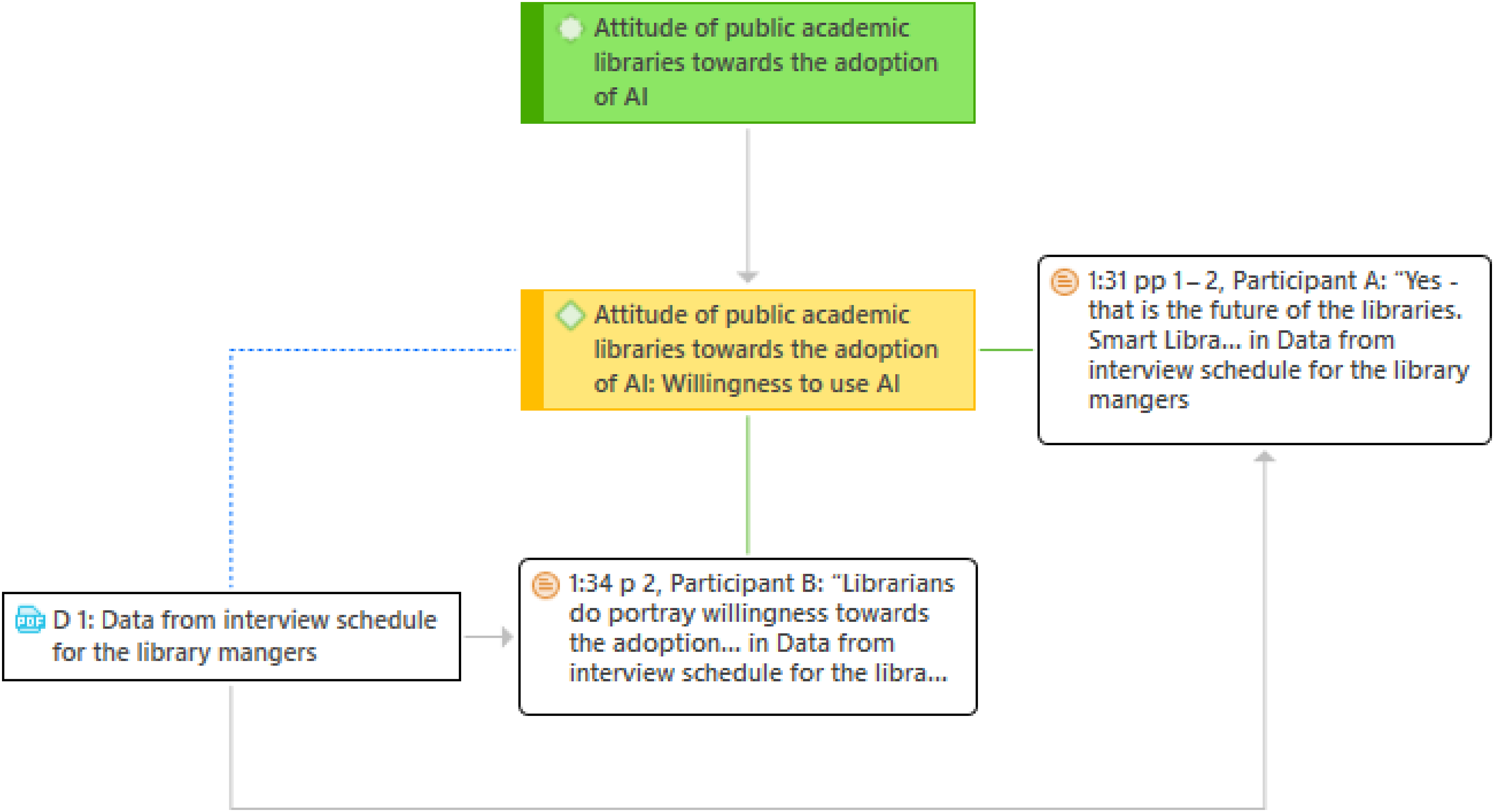
Network view illustrating emergence of willingness to use AI as a theme.
Positive perception
Library managers were asked to describe librarians’ perceptions regarding the adoption of AI. The results indicate that the librarians were positive in this regard, as reflected in the responses quoted below: Participant A: “Some are positive about the adoption of AI and some fears that AI technologies will replace them and their skills”. Participant K: “Librarians are positive, and I believe that the more they see value it is the more they will highly appreciate it”.
Qualitative findings from system librarians
Figure 4 presents the network view illustrating the two themes under the attitude of public academic libraries, and the emergence of positive and enthusiastic attitudes, and positive recognition as themes.
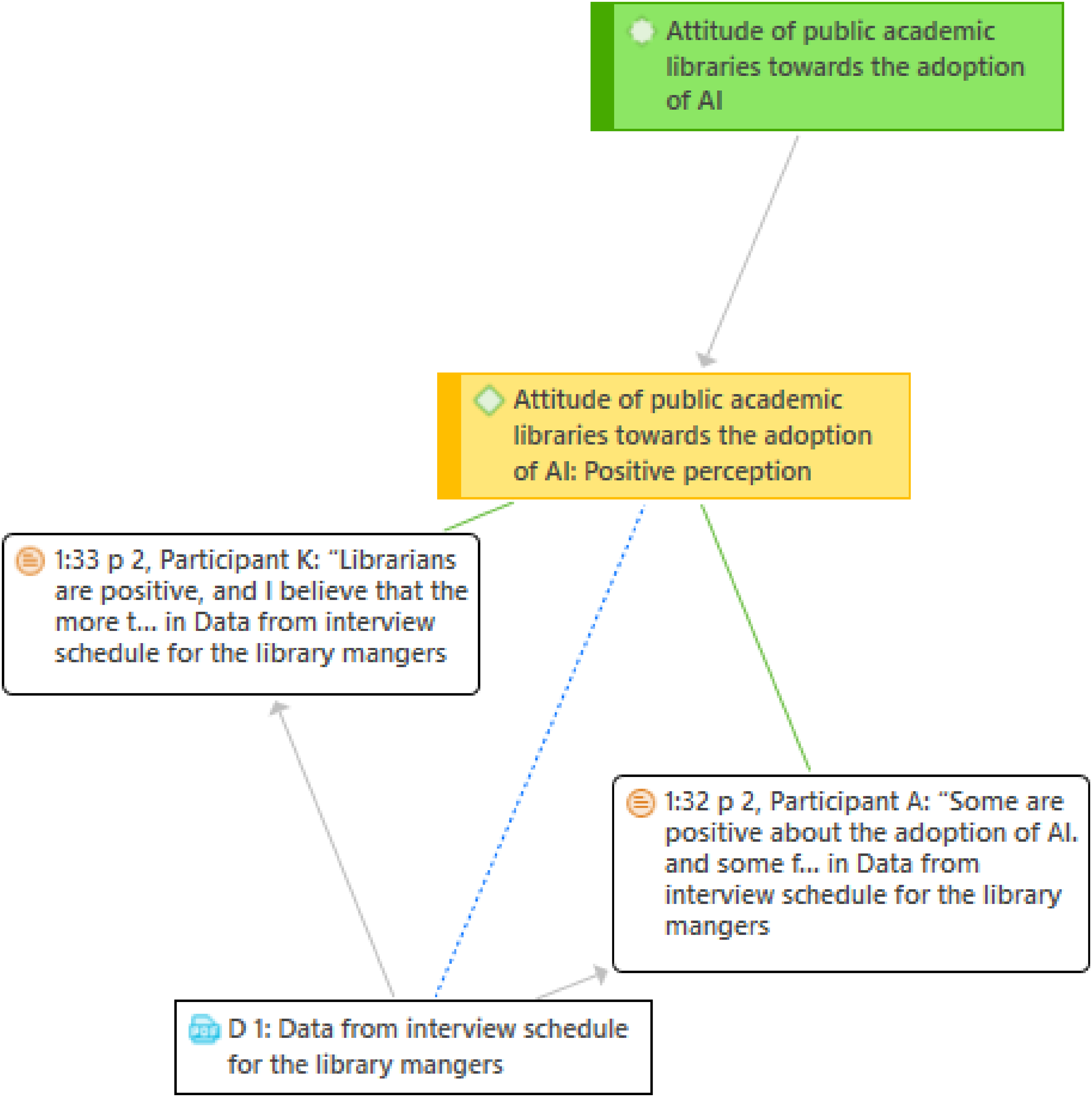
Network view illustrating emergence of positive perception as a theme.
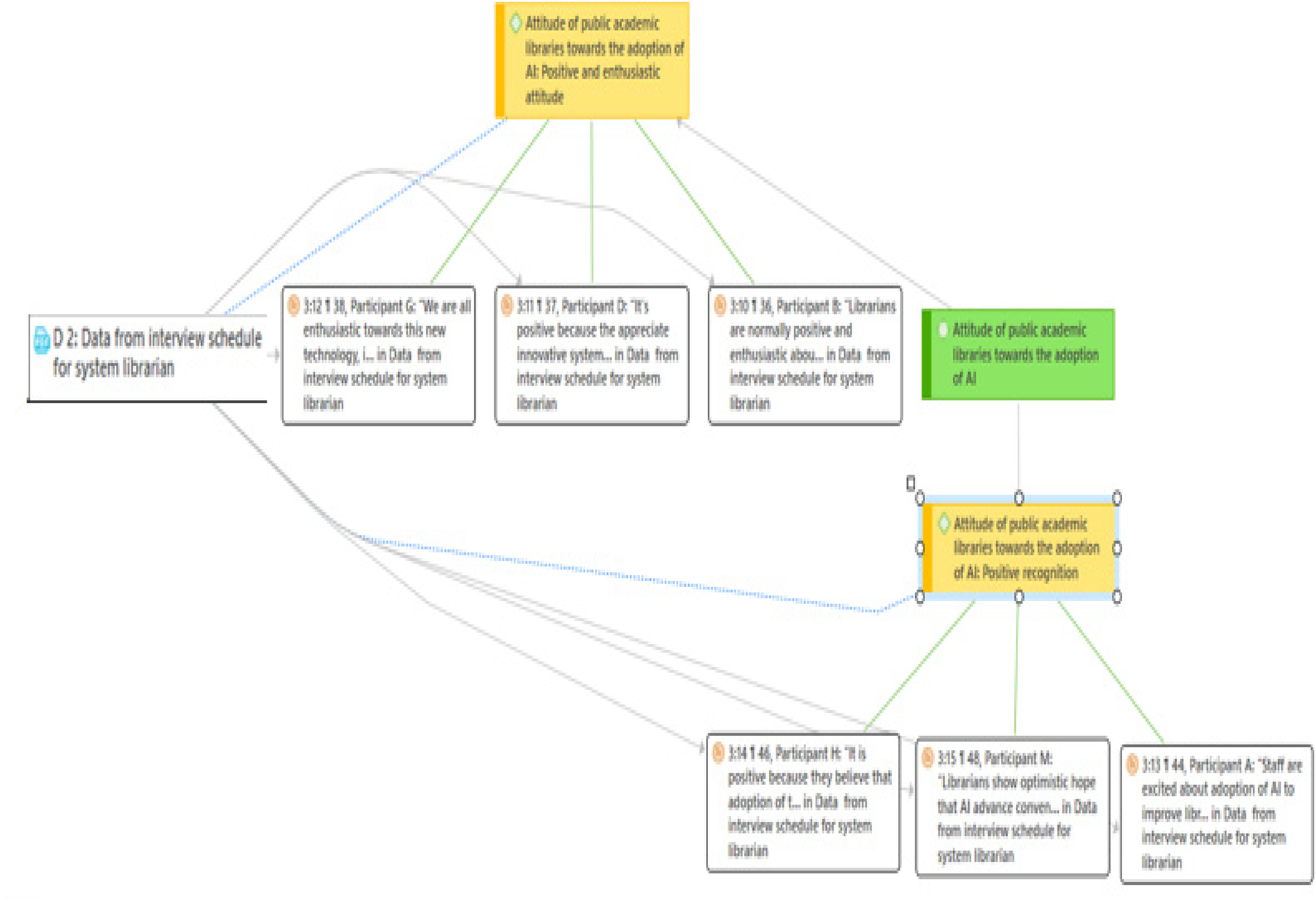
Network view illustrating the emergence of two themes under attitude of public academic libraries.
Positive and enthusiastic attitude
System librarians were asked about the attitude of librarians towards library system and AI technologies, and their responses showed that they had a positive attitude and were enthusiastic about the library system and AI technologies. This can be seen from the responses quoted below: Participant B: “Librarians are normally positive and enthusiastic about technology”. Participant D: “It's positive because the appreciate innovative system ideas and they give inputs when there is a new system being introduced”. Participant G: “We are all enthusiastic towards this new technology, it gives us positive minds that library services will be on high level”.
Positive recognition
The researcher sought to know the general perception of librarians towards the adoption of AI. The study revealed that librarians at public academic libraries in South Africa were positive towards and optimistic about the adoption of AI. A selection of responses to this effect is presented below: Participant A: “Staff are excited about adoption of AI to improve library services and simplify some of their tasks”. Participant H: “It is positive because they believe that adoption of technology would simplify their daily expected service delivery”. Participant M: “Librarians show optimistic hope that AI advance conveniency of library services”.
Impact of AI on libraries
The researcher asked the respondents to state their personal beliefs regarding the impact of AI on libraries. The large majority of respondents (213, or 71%) agreed, 61 (20%) strongly agreed, 19 (6%) were undecided, 8 (3%) disagreed, and 0 (0%) disagreed that AI helps libraries provide specific information that would not otherwise be available. 179 (59%) strongly agreed, 99 (33%) agreed, 19 (6%) were undecided, 4 (2%) disagreed, and 0 (0%) strongly disagreed that AI can help people make quick and correct decisions. 142 (47%) agreed, 132 (44%) strongly agreed, 20 (7%) were undecided, 7 (2%) disagreed, and 0 (0%) strongly disagreed that AI provides solutions to pressing problems facing libraries. 191 (63%) agreed, 86 (29%) strongly agreed, 23 (8%) were undecided, 1 (0%) disagreed, and 0 (0%) strongly disagreed that AI helps librarians to analyse big data, create metadata, and improve search translation. 204 (67%) agreed, 77 (26%) strongly agreed, 18 (6%) were undecided, 2 (1%) disagreed, and 0 (0%) strongly disagreed that AI helps library users search for information with ease and helps retrieve information across various collections. The findings are presented in Table 1.
Personal beliefs regarding the impact of AI on libraries.
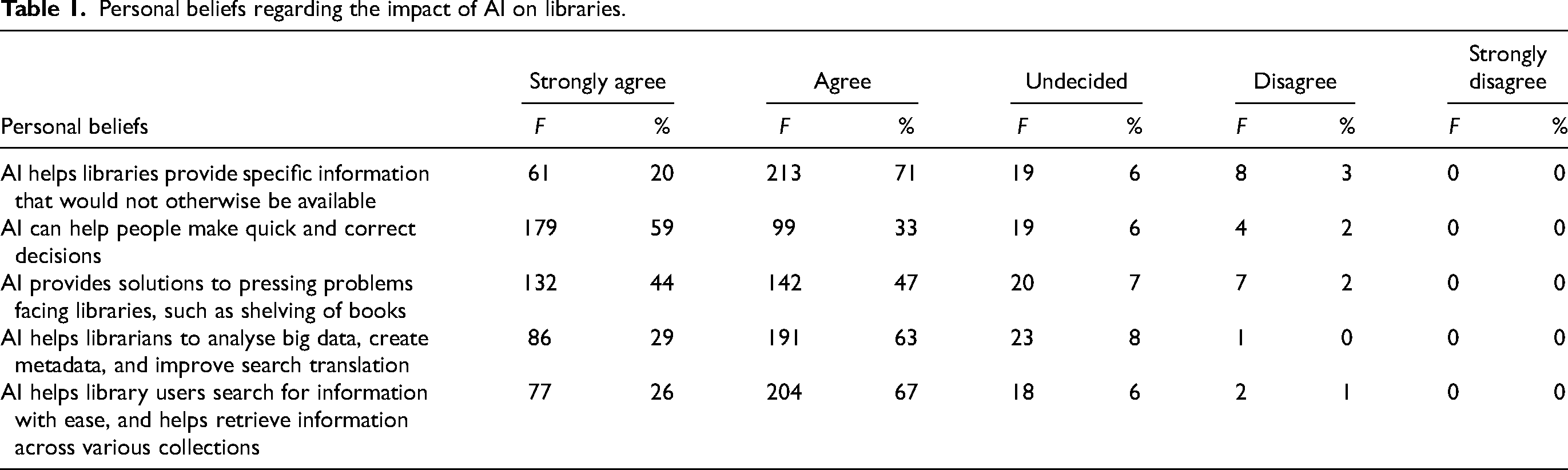
The findings show that librarians at public academic libraries believed that AI helps libraries provide specific information that would not otherwise be available in the library collection, helps library users search for information with ease, and helps with the retrieval of information across a number of collections.
General attitude towards AI
Respondents were asked to give their views concerning their general attitude towards AI. Data collected showed 158 (52%) respondents to be positive, 126 (42%) very positive, 9 (3%) very negative, and 8 (3%) negative. These findings are presented in Figure 5.
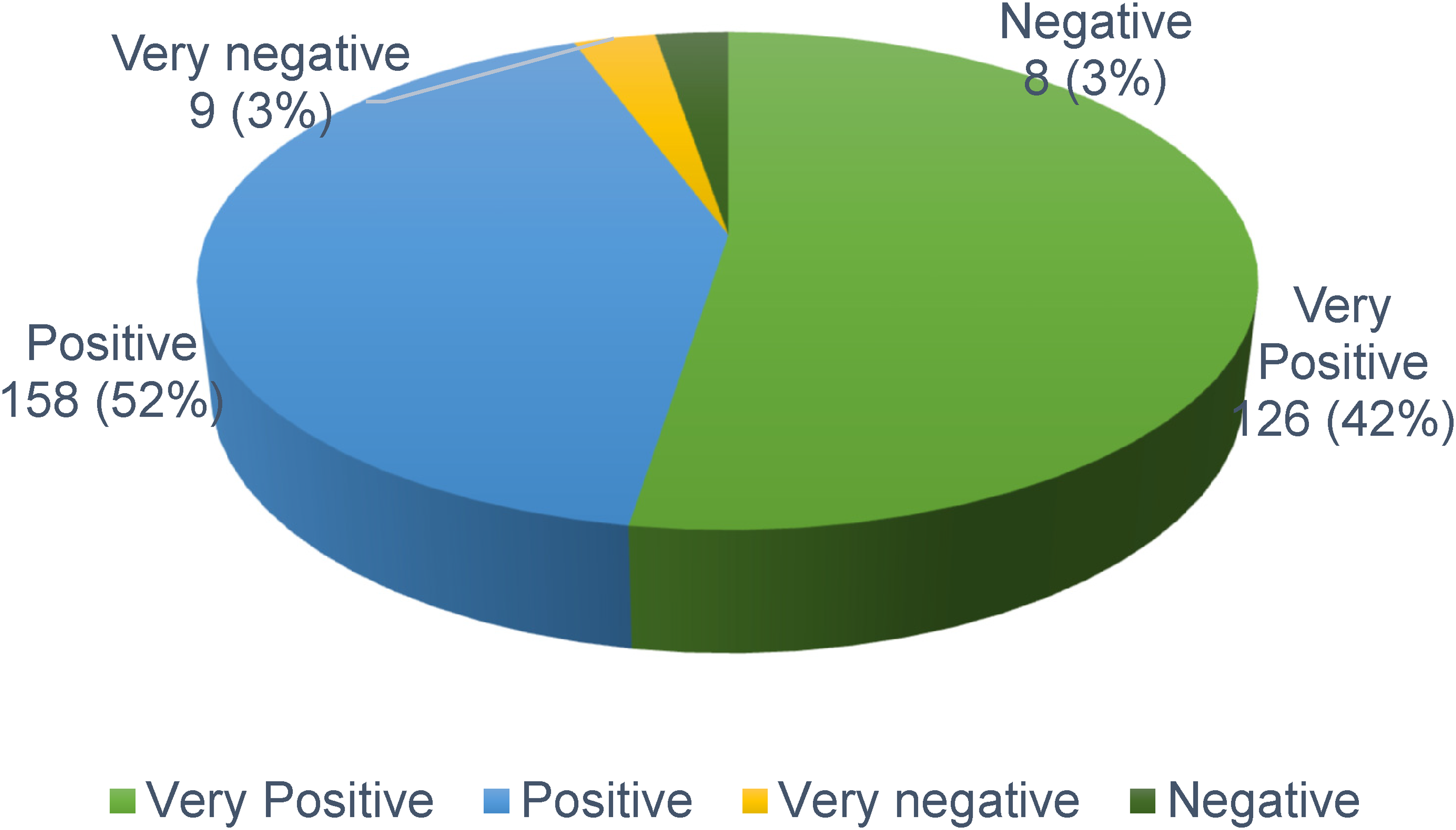
General attitude of librarians towards AI.
The findings of the study show that the general attitude of public academic libraries towards AI was poitive. However, very few were negative towards the adoption. These librarians may fear that AI will automate tasks currently handled by humans, leading to concerns about job displacement. This fear often stems from the perception that AI will replace rather than assist in roles such as cataloguing and reference services.
Discussion of the findings
This section provides a discussion of the findings from the research objectives, which were intended to ascertain the attitudes of the staff of public academic libraries towards the adoption of AI in South Africa.
Perceptions regarding the adoption of AI in public academic libraries in South Africa
There should be a close relationship among the self-perception of knowledge of AI, optimism about AI, and adopters of AI. The findings reveal that librarians at public academic libraries were slightly positive in their attitudes towards the adoption of AI. Similarly, the findings from library managers, system librarians and librarians revealed a positive perception within public academic libraries towards the adoption of AI. Library managers expressed a slightly positive perception towards information technology. Similarly, system librarians expressed a positive perception and were enthusiastic about AI adoption. Furthermore, librarians revealed themselves to have a positive perception of and optimism regarding the adoption of AI. These findings suggest a recognition of the potential benefits of AI for their work, such as improving search algorithms, enhancing data organisation, and providing patrons with recommendations such as relevant resources based on patrons’ interests and preferences, and providing virtual assistance in response to common queries. Librarians’ positive attitude towards AI adoption reflected a willingness to embrace change, leverage technology to its fullest potential, and strive for continuous improvement within public academic libraries. This indicated librarians’ eagerness to learn how to use AI tools effectively and to remain abreast of advancements in the field. Research shows that attitudes toward the use of AI and related technologies had a marked effect on librarians’ intention to adopt AI and related technologies (Andrews et al. 2021; Zainab et al. 2018).
Despite the positive attitude expressed by librarians towards the adoption of AI within public academic libraries in South Africa, there was nevertheless a contrary finding in that some librarians had a negative attitude towards the adoption of AI within public academic libraries in the country. They were fearful that they would lose their jobs to AI. This offers empirical support to the idea that attitude is connected to the perception of self and self-efficacy in relation to the adoption of AI, as stipulated in the Theory of Reasoned Action (TRA). This finding suggests that librarians may fear that AI technologies will automate tasks traditionally performed by humans, potentially leading to job losses for human staff. This fear may well be based on a lack of a clear understanding of how AI technologies work and their potential benefits for library services, as it was discovered during the study that no AI training had been offered to the sampled librarians. Empirical studies confirm that automation, including AI technologies, poses significant concerns for job displacement in various sectors, including roles traditionally filled by librarians. For example, a comprehensive review by the OECD found that AI's rapid advancements in non-routine cognitive tasks are raising concerns about job loss, particularly in administrative and information-related fields, such as those in libraries. While AI can increase productivity, it also leads to potential job displacement, especially where routine tasks are automated. Lichtenthaler (2018) and Hussain (2020) assert that librarians believe that AI can replace human work, while others opine that it will not be able to replicate human uniqueness and creativity. Others were afraid that 4IR would have a negative effect on their jobs, with machines replacing humans, resulting in a concomitant increase in unemployment. Emphasising the complementary role of AI alongside human expertise and promoting a culture of innovation and adaptation can help reduce resistance to AI adoption and foster a more positive and inclusive approach to integrating these technologies into library practices.
Impact of AI in the public academic libraries in South Africa
AI is a crucial development that is transforming library operations and changing the library services provided (Yoon et al. 2022). Omame et al. (2020) anticipate that most academic librarians are in favour of incorporating emerging technologies into library services. Significantly, the findings show that librarians at public academic libraries in South Africa are of the view that AI assists libraries in providing specific information that would not otherwise be available in the library collection, helps library users search for information with ease, and assists in the retrieval of information across various collections. The findings highlight the transformative potential of AI in enhancing information access, user experiences, and research outcomes within public academic libraries in South Africa. Libraries have the potential to offer useful services and resources that satisfy the evolving demands of their patrons and encourage the pursuit of academic excellence and research in the digital age through a well-considered utilisation of AI technologies. This is because AI technologies have the potential to augment traditional library collections by accessing and analysing vast amounts of digital information beyond what is physically available in the library. As a result, library patrons will have access to a wider range of resources, including content and information that might not be found in the physical collections of the library. Libraries will also provide a more comprehensive and holistic information retrieval experience. Pinfield et al. (2017) found librarians to be optimistic about the future of AI in libraries, specifically in areas such as information discovery tools and machine-readable collections, research creation and scholarly communication, and teaching and learning support. The study by Omame et al. (2020) revealed that librarians were enthusiastic about AI and its potential use in libraries.
Moreover, the study provided an indication that librarians at public academic libraries in South Africa were of the view that AI has the capacity to help people make quick and correct decisions, provide solutions to pressing problems facing libraries, and help librarians to analyse big data, create metadata, and improve search translation. The finding implies that public academic libraries may meet the changing requirements of library patrons in the digital age and optimise operations by strategically adopting AI technology. These technologies include automation, analytics, and natural language processing; when adopted, they could improve search translation by analysing user queries, understanding their intent, and generating more accurate and relevant search results. Natural language processing algorithms can parse user queries, identify key terms and concepts, and match them to relevant resources in the library catalogue, databases, or digital repositories, enhancing the precision and effectiveness of information retrieval. This correlates with the findings of a study by Wood and Evans (2018), in which a majority of respondents anticipated that AI would have a significant impact on libraries during the subsequent three decades, with resource discovery and reference being the most likely applications. Yoon et al. (2022) explain that AI equips libraries to harness the power of data analytics for better decision-making by examining usage patterns.
Attitude towards adoption of AI in public academic libraries in South Africa
There is a popular belief that librarians in underdeveloped nations tend to be resistant to change (Ramzan et al. 2021). Choi et al. (2019) observed that if librarians adopt negative feelings or beliefs, they can cause a bottleneck in library innovation, and as a consequence, slow down progress. The findings of the present study, however, show the general attitude of the staff of public academic libraries towards AI to be positive. Similarly, the responses from the library managers revealed librarians to be keen for South African public academic libraries to adopt AI. The interest in AI adoption reflects a willingness to embrace technological advancements. This might be because most of the librarians were in the middle stage of their careers, typically having accumulated significant experience in their respective fields. Their experience provides a solid foundation for understanding the potential benefits of AI adoption, while their adaptability allows them to embrace new technologies and integrate them into their work practice.
Positive attitudes towards AI indicate a willingness to engage in strategic planning for its adoption. Although the study found the strategic planning of public academic libraries not to include the adoption of AI, librarians may be proactive in assessing the needs of their libraries, setting objectives, and formulating strategic plans for the effective adoption of AI technologies. This suggests an anticipation of future trends and a readiness to adapt to technological advancements. Librarians who view AI in a positive light are more likely to stay informed about emerging technologies and their potential applications in libraries. They are also likely to assume a proactive stance towards technology adoption and a commitment to leveraging AI for the benefit of library users and the broader library community.
Previous studies, too, found librarians’ attitude to be positive. Akparobore et al. (2020) found that if librarians exhibit a positive attitude towards implementation of the technological advancements of the 4IR era, they will be able to adapt to changing technologies associated with 4IR and accept the shift from conventional service delivery to WWW based service delivery, among other things. Andrews et al. (2021) explored the intention of academic and public librarians to adopt various AI and related technologies, with the model developed showing that the attitude towards the use of AI and related technologies had a significant effect on librarians’ intention to adopt AI and related technologies.
Conclusion
The attitude of a majority of librarians at public academic libraries was positive. For instance, librarians were keen for South African public academic libraries to adopt AI. System librarians confirmed that librarians demonstrated a positive attitude and were enthusiastic about AI adoption. Moreover, the perception of most librarians regarding the adoption of AI was positive and revealed optimism and hope. Librarians were of the view that AI can help organisation to make quick and correct decisions, provide solutions to pressing problems facing libraries, and help librarians to analyse big data, create metadata, and improve search translation. It is hoped that the findings of this study will make the adoption and implementation of AI technologies in libraries easy and yield a beneficial outcome.
Recommendation
A recommendation emanating from the study is that librarians’ positive attitude and optimism in relation to AI adoption must be maintained, and librarians must be assured that a full adoption of AI will never lead to the replacement of workers and job content substitutions. Policy frameworks should be developed that clearly outline how AI technologies will be integrated into public academic libraries without leading to job losses or significant changes in job content. Library managers should further inculcate in librarians a positive attitude and hope for enhanced library service provision. Overcoming negative attitudes towards AI adoption in public academic libraries in South Africa will require retraining and collaboration. Library managers should organise collaborative platforms where case studies and best practices from successful AI integrations in academic libraries are shared. Additionally, they should pilot small-scale AI projects tailored to specific library needs to demonstrate AI's value and mitigate fears of job displacement. Librarians should be given opportunities to learn about AI technologies, explore their potential applications in library services, and engage in discussions about the ethical, social, and practical considerations involved. Training and workshops must be held to enable librarians from learning how to use AI technology in the public academic libraries to reshape the mindset of the small number of librarians who are negative towards adoption of AI technology. Institutional policy should mandate ongoing training and professional development for librarians, ensuring they stay current with AI advancements. This could include structured training programs, workshops, and access to online courses focused on AI tools relevant to library services This will help in changing negative attitudes, since it will bring about a feeling of ownership and eagerness to see the rollout.
Footnotes
Declaration of conflicting interests
The authors declared no potential conflicts of interest with respect to the research, authorship, and/or publication of this article.
Funding
The authors received no financial support for the research, authorship, and/or publication of this article.
