



Abstract
Deprived communities in India experience a range of health challenges as the result of a mixture of lack of access to information technologies, and difficulties in accessing health information and provision. This article reports on an intervention centred on the use of the social media platform, WhatsApp, in order to promote eye health communication. The case study based research was conducted in the village of Chowbaga, close to Kolkata, in West Bengal, with women participants who had low levels of education and high levels of unemployment. The women were invited to participate in a WhatsApp intervention that comprised five educational sessions. Participants were recruited through the local school that their children attended. Shortly after the conclusion of the intervention, focus groups were conducted with the participants in order to develop an understanding of participants views of the beneficial characteristics of such a social media based intervention, and, more specifically, the benefits of WhatsApp in increasing awareness of eye problems within their community. This research demonstrates and summarises the benefits of WhatsApp as a communications medium for deprived communities, as well as its potential for increasing awareness of eye problems. In particular, participants were of the view that future access to WhatsApp and other mobile-based platforms empowered them to take better care of their own and their family’s health.
Introduction
Whilst health behaviour can be influenced through traditional channels, such as radio, television, and print media (Finkelstein et al., 2012), social media, particularly when accessed through mobile technologies, offers significant potential for two-way communication with a wider audience, including members of disadvantaged groups (O-Adewuyi, 2016). Used amongst such groups social media can educate and empower (Whitehead and Seaton, 2016). More specifically, social media can be used to identify the need for information, to monitor public response to health issues, and to communicate health messages to targeted communities. However, existing research into the use of social media in healthcare focusses on platforms such as Skype, Twitter and Facebook (Moorhead et al., 2013; Weng Marc Lim, 2016).
This study focusses on the use of WhatsApp for eye health education. Eye health is a major global problem, with 285 million people suffering from visual impairment, 90% of whom reside in the developing world (WHO, n.d.). According to the World Health Organisation, 80% of this blindness is preventable. India hosts almost a quarter of the global burden of vision impairment, posing a major challenge for India’s healthcare agenda (Nair, 2015). The policy of the Government of India, in public-private-partnership with non-government organisations, is to provide eye care services and to raise awareness of these services through hospitals and mobile dispensing services. However, for a variety of sociocultural reasons, members of deprived communities do not access these services, suggesting that it is important to reach out to these communities using an alternative means of communication. One option is social media, which can be exceptionally useful in educating people using their own language (Whitehead and Seaton, 2016). Social media can be used in health education, disease surveillance, tracking and monitoring of disease outbreaks, and providing cost-effective and rapid communication (O-Adewuyi, 2016), but the focus of this research is on its use in health communication that is designed to promote health education and literacy.
This study, then, seeks to answer the research question:
What are the potential benefits associated with the use of WhatsApp as a tool for enhancing eye health education and literacy in deprived semi-urban settings in India?
Literature Review
Health communication
Health communication is ‘the study and use of communication strategies to inform and influence decisions and actions to improve health’ (Health Communication Basics | Gateway to Health Communication | CDC, 2020). Health communication can significantly and positively impact on health-related attitudes, beliefs and behaviours, and is an important tool in public health campaigns and communicable diseases prevention programmes (European Centre for Disease Prevention and Control, 2020). Health communication includes health advocacy, health education, health literacy, risk communication, outbreak and crisis communication, and social marketing. The focus in this study is on health education and health literacy. Social media, in general, and WhatsApp, more specifically, are particularly effective in supporting health education and health literacy, and have the potential to reach-out to remote communities. Health education was achieved by providing simple and easy to understand information on common eye problems, preventative aspects of eye care, and available eye care services, to members of the deprived community. Health literacy was developed by empowering deprived community members with the resources to enable them to develop knowledge and adequate understanding to improve their own eye health, and to give them confidence in accessing eye care services. This article takes as its focus health education and health literacy, because they are the areas of health communication in which the use of social media is likely to be the most beneficial.
Social media in health communication
The access and appeal of social media in the developing world has increased exponentially with the availability of affordable mobile technology and cheaper data costs (O-Adewuyi, 2016). Social media can be used to educate and empower communities through the transfer of information from the healthcare provider to the target population (Whitehead and Seaton, 2016). Social media is perceived to have a greater potential to influence members of the public and decisions makers than traditional media (Côté and Darling, 2018). Existing research into the use of social media in health communication has been restricted to the major social media platforms, Facebook, Twitter and YouTube (Moorhead et al., 2013; Weng Marc Lim, 2016), with Twitter being the most widely used social media tool for communication relating to health care (Cevik et al., 2019). No research has been undertaken on WhatsApp in health communication, despite its widespread availability in the Indian sub-continent and in other countries.
There is a significant body of research into the use of social media by health care providers to increase health education and health literacy. This includes:
Social media as a health information seeking tool. Social media is well established as a source of information for patients and members of the general public. An early study found that adults with type 2 diabetes frequently visited and discussed health information on social networking sites (Shaw and Johnson, 2011). A number of studies have focussed on cancer patients, and their exchange of information and sharing of experiences (Park and Park, 2014; Tsuya et al., 2014). Other studies have explored the social media use of different demographic groups (Lumpkins et al., 2017; Zucco et al., 2018).
Social media use in information and opinion sharing. Several studies have reported on the sharing of information on medical issues, and specifically on rare conditions. These ‘communities’ include: parents with very low birth weight infants (Gabbert et al., 2013); and, those with rare health conditions (Albright et al., 2016). There is also evidence that targeted social media campaigns launched by health promotion campaigners, can sometimes be effective in promoting information sharing processes (Noar et al., 2018). However campaigns with pharmaceutical company involvement can generate mistrust and negative publicity (DeAndrea and Vendemia, 2016).
Social media use in two-way communication between end users and healthcare providers. In keeping with the negative response to pharmaceutical company involvement noted above, early research into two-way communication between end users and healthcare providers suggested that individuals were more likely to consume information than to contribute to a two-way exchange (Ramanadhan et al., 2013; Thackeray et al., 2013). However, other studies have demonstrated enhanced two-way communication through social media channels, with physicians (Van de Belt et al., 2013), and health care providers (Russell et al., 2016), and between public health entities and their target audiences (Rabarison et al., 2017).
WhatsApp in health communication, clinical decision making and patient care
A number of studies have examined the role of WhatsApp in clinical decision making and patient care (Kamel Boulos et al., 2016). For example, amongst surgeons, WhatsApp was found to be useful in facilitating clinical communications, enhancing learning, and improving patient care whilst preserving privacy (Johnston et al., 2015; Nardo et al., 2016). WhatsApp has also been effective in supporting communication between patients and dermatologists (Kaliyadan et al., 2016), in supporting intradepartmental communication on patient-related awareness, communication and handovers among orthopaedic residents (Khanna et al., 2015), and in clinical oral medicine and dentistry (Petruzzi and De Benedittis, 2016).
More specifically, in resource poor, rural and remote settings, WhatsApp has been found to be an effective communication tool in linking to tertiary centres for cardiology (Astarcioglu et al., 2015; Thota and Divatia, 2015), orthopaedic fractures (Giordano et al., 2015), and maxillofacial trauma (Kelahmetoglu and Firinciogullari, 2015). Previous research has also demonstrated the value of WhatsApp in supporting learning for various groups including nursing students (Willemse, 2015), first-year undergraduate radiography students (Robinson et al., 2015) and self-help patient groups with hypertension and diabetes (Ramirez, 2015). On the other hand, a descriptive scoping review of the literature of WhatsApp in clinical medicine concluded that, despite the use of WhatsApp in group chats and doctor-to-doctor telemedicine, there was a lack of understanding of how information is transmitted and stored, and issues surrounding patient confidentiality and data security (Mars and Scott, 2016). Nevertheless, the authors concluded that WhatsApp had a role to play, particularly in the developing world, as it is freely available and widely-used outside of medicine.
Social media in eye health communication
Very little research has been conducted specifically on the use of social media to support eye health. In an early study, Aleo et al. (2014) used a questionnaire survey to collect information from patients attending an urban eye care centre on their digital technology use and engagement with social media platforms. This study sought to assess the preferred channel for receiving health reminders. Two other studies used social media as an epidemiological tool. In a study of conjunctivitis, social media posts were analysed by machine learning methods and compared with clinical records from a large tertiary hospital (Deiner et al., 2018). The authors conclude that social media posts broadly track the seasonal occurrence of conjunctivitis, and may supplement routine epidemiologic monitoring. These findings are consistent with those from an earlier study which demonstrated that weekly analysis of Twitter data on allergic conjunctivitis symptoms and antihistamine usage correlated with the level of pollen counts (Gesualdo et al., 2015).
Only one previous study has explored the potential of social media as an interventional tool in the context of eye health. Sanguansak et al., (2017) explored the feasibility and efficacy of a two-way social media messaging to deliver reminders and educational information about post-op care to cataract patients. Messages were delivered via a mobile social media platform using standardised content that included messages on hand and face hygiene, medication and post-op visit attendance. Medication adherence in the early post-op stages, and adherence to scheduled clinic visits were high in the message groups.
Summary
In recent years, a significant number of studies have been conducted into the use of social media in a wide variety of health contexts. Such studies can be divided into two main groups: healthcare providers’ uses of social media to communicate with and support their patients remotely; and, studies of end user use, attitudes, beliefs and expectations of social media in health care communication. However, this body of research has two important limitations. First, no previous studies have investigated the potential impact of a social media based intervention for disadvantaged communities. Secondly, there has been very limited research in the context of the use of social media in eye health. This study redresses this situation by reporting on an intervention based on eye health in an under-privileged community living in a semi-urban location in India.
Research methodology
Research context
The research was conducted in the village of Chowbaga, close to the city of Kolkata, the capital of the eastern Indian state of West Bengal. We define this village as a ‘deprived community’ since its members had gross family earnings below the poverty line (BPL). In other words, their income was less than £0.32 a day (Rangarajan, 2014). Most of the community were resident in rented dwellings that were thatched or tile roofed houses or semi-permanent makeshift settlements. In addition, education levels were low and unemployment high. The male members of the community were mostly employed in low pay temporary jobs, typically in the construction sector; this often involved families making frequent moves. Although electricity was available in homes, drinking water was sourced from outside the house. Overcrowding was common and toilets were shared. Vehicle ownership was low and mainly restricted to bicycles. Public transportation links and the road infrastructure were very poor. Smart phone ownership and access was low, especially amongst the women. Information gathering on health topics was through television, radio and wall-posters. There was a high burden of eye disease, mainly in the form of unaddressed refractive errors, untreated cataracts, infection and injury. Although a village medical unit provided basic medical care, the nearest specialist eye unit was based in the city of Kolkata, almost five miles away (an hour by bus). The tertiary eye hospital, Susrut Eye Hospital, was located eight miles away.
Rationale for the choice of WhatsApp for this study
WhatsApp was chosen as the social media platform for the intervention in this study on account of its features and its high level of use in India. WhatsApp is a freeware that allows cross-platform messaging and Voice over IP (VoIP) services. WhatsApp allows users to send text messages and voice messages, make voice and video calls, and share images, documents, user locations, and other media (WhatsApp.com, 2020). Although primarily accessed through mobile devices, WhatsApp also provides accessibility via a desktop provided that the user’s mobile device remains connected to the Internet whilst they use the desktop app. WhatsApp’s popularity has grown significantly in India over the last few years. India has the highest number of WhatsApp users, estimated to be 340 million, (WhatsApp.com, 2019). Almost 30% of WhatsApp users report using it on a daily basis and estimates suggest that its penetration level is 28% of the population. Significantly, 39.1% of WhatsApp users in the rural communities, spend between one and two hours on a daily basis (2018 estimates) thereby making it a popular social media in these communities. In particular, its audio-visual message carrying capabilities and its ability to support textual, telephonic and video consultations, makes it a suitable platform of choice for eye care information.
Research design
This study used a qualitative research methodology using a single, embedded case study research design (Eisenhardt, 1989; Yin, 2017). Using a case study approach supports the development of a deep understanding and a rich description of the research context (Dyer and Wilkins, 1991). Yin (2017) defines a case study as an empirical enquiry that investigates a contemporary phenomenon within its real life context, especially when the boundaries between the phenomenon and context are not clearly evident (Yin, 2017). Yin (2017) suggests that a case study approach is useful when a ‘how’ or ‘why’ question is being asked about a contemporary set of events over which the investigator has no little or no control; this was the case in this study. In addition, single case studies are useful when little previous research has been conducted on a topic, as is the case for this study (Rowley, 2002).
Case description and selection
Access to the community, and specifically, the participants from the community, was facilitated through contacts associated with a local charitable school (Surya Kiran School). The participants’ children attended this school, and all of the interventions were held in the school. In the event, all of the participants were women. Women have a pivotal role in health care within their family; men were not able to attend due to their heavy work commitments. Their familiarity with, and the proximity of the location to their homes helped the women to feel more relaxed and confident. Nevertheless, given that most of the women had received very little formal education, and were typically expected to spend most of their time in the home, caring for their children, husband, and their husband’s elderly relatives, it was anticipated that particular care was necessary in designing the intervention. At the outset, it was evident that many members of the community were illiterate, socio-economically isolated, research naïve, and nervous of the research process. However, as they became more familiar with the learning materials, and started to appreciate the importance of managing their families’ eye health, they became less reticent and more enthusiastic about the intervention.
Participants and the Intervention
The study population constituted thirty parents whose children attended Surya Kiran School. First, through pre-arranged sessions, the researcher explained in simple and local language, the study’s aims and objectives, the duration of the study and the required commitment. The researcher also ran one-to-one sessions to ensure that the participants fully understood the reason for the study, and the study process. Once the researcher was convinced that the participants’ understood and were willing to participate, written and verbal consent was obtained.
Participants were invited to participate in an intervention that comprised five educational sessions. These were prepared by specialist eye doctors working at Susrut Eye Hospitals. Information provided in these sessions covered routine preventative eye care, common eye diseases, eye donation, and suggestions regarding managing eye related emergencies. The sessions were delivered using a variety of learning materials including pictures, videos, audio clips and more direct interactive communication, all of which were shared using WhatsApp. Storytelling was used as a pedagogic method. Care was taken to ensure that the learning materials were designed to suit the needs and understanding of the deprived community. The language used was colloquial Bengali.
Five educational sessions (each on a different eye health topic) were organised by Susrut Eye Hospitals. These sessions were facilitated by the research and two local neo-literate women. None of the women owned a mobile phone, but the neo-literate facilitators both owned a smartphone, and were experienced in its use. Sessions were held in a large classroom in a local school. Four smartphones were made available to the women so that they could access eye health information via WhatsApp. These smartphones were shared amongst the women; their use was facilitated by the neo-literate women. Participants sat in groups whilst accessing the multi-media content. Each session lasted for around 30 minutes. Participants were actively encouraged to ask questions using WhatsApp; Susrut eye care specialists responded to the questions.
Evaluation of participants’ experiences and learning as a result of the WhatsApp intervention
Subsequent to the intervention, the women were invited to participate in one of six focus groups. All participants contributed to the focus group discussion. Appendix 1 lists the questions that were used to prompt discussion of their experiences with the WhatsApp based intervention.
Data analysis and coding
Thematic analysis of the participants’ responses to the questions in Appendix 1 was used to generate insights into the extent to which the intervention had influenced participants’ views on, and approach to, eye healthcare. Thematic analysis is a ‘method for identifying, analysing and reporting patterns (themes) within data’ (Braun and Clarke, 2006). This research adopts an inductive approach to thematic analysis. An inductive analysis is driven by the data, such that it may not fit a pre-existing coding frame, or, align with the specific questions asked of the participants. This approach was adopted in order to cultivate an understanding of the broad range of factors behind the use of WhatsApp communication from the perspective of the women who participated in the intervention. The thematic analysis process followed the six-phase process suggested by Braun and Clarke (2006): familiarizing yourself with the data; generating initial codes; searching for themes; reviewing themes; defining and naming themes; and, producing the report.
Ethics
In order to ensure that the participants understood the commitment that they were making, they were given the Participant Information Sheet. This included the rationale behind the study, the researcher’s academic affiliation and the names of the members of the other facilitators. It also outlined the potential advantages and risks of participation, the audio-visual nature of the data collected and stored, the voluntary nature of participation, the confidentiality and security arrangements, and the non-commercial nature of the study. In order to ensure that the participants understood the printed documents, the researcher explained the study simply in their native language, whilst also encouraging them to ask questions. This ensured that every participant had the opportunity to reflect on their involvement before providing their informed consent (verbal, finger print or signed). Informed consent forms were then signed; one copy was retained by the researcher, and the other copy was given to each participant. When all focus groups had been conducted, all empirical data collected was secured in a password protected folder that was only accessible to the researcher. At the commencement of the focus group interviews, participants were asked to give their consent and permission for the recording and storing of their comments interviews using both audio and visual media. Participants right to withdraw at any time, and the confidential nature of their responses were also emphasised (Fritz, 2008; King and Horrocks, 2010).
Findings
Participants’ views on the beneficial characteristics of the WhatsApp-based intervention.
Figure 1 summarises the participants’ views on the important facets of the experience of using WhatsApp as a platform for exploring eye health. All participants in the intervention were extremely positive about the experience and the extent to which it had improved their awareness of how to manage their own eye health, and that of their families.
Participants reported that this study was the first intervention of its kind to bring easy to understand and relevant information to their ‘door step’. They were enthusiastic with regard to a number of benefits of the WhatsApp-based intervention.
Participants particularly appreciated that WhatsApp meant that they could access information ‘on their doorstep’
CSP1: ‘…I am very grateful that I was considered for this project…I had a lot of questions to ask, but I found no-one to answer them…also, I was worried that asking too many questions may invite a lot of criticism…even though I may not remember everything, I now know something…most importantly I know that if eye conditions are treated soon, eye sight can be restored…’ CS2: ‘…these sessions were an eye opener…I am illiterate and have always been frightened of people from the higher societies coming over and talking to us…during these sessions, I never felt intimidated and I was never frightened to ask questions…I learnt so much…it means a lot for poor people like us…’
More specifically, participants were positive about a number of aspects of this intervention, as identified below and represented in Figure 1:
– Dispelling misinformation:
CSP1: ‘…we are mostly provided with the wrong type of information…spread by people with vested interests. This project cut out the middle-men…we got all the right information…’
CSP3: ‘…we have village quacks and also a number of other people in our communities, who act as touts for some big healthcare institutions in the city…they can rob us of our few possessions if we go there for treatment. During these sessions, I felt that the information was accurate and that I could trust it…it took a big responsibility off my shoulders…’
– Two-way communication:
CSP7: ‘…you can get information from the radio or television, but there is no way that we can ask questions. From these sessions, I learnt that I can ask questions of the information provider…it seems so easy to post a query, and I have received answers so fast’
CSP 8: ‘…I have asked questions and I have received answers fast…I have benefitted from this immensely as I utilised that information to get my parents treated locally’
– Pedagogic style:
CSP4: ‘…all in my own language and in my own time…I like those dramas…as if they were happening in my own home…’
CSP6: ‘…it is like watching a TV in a phone…I could stop and play it in my own time…I can also share with someone else…’
– Increase in confidence
CSP7: ‘…some of us were even able to record ourselves whilst these sessions were taking place…it looks so easy and I felt so confident about this…’
CSP9: ‘…I was worried that this would be very complicated for me…it has now all changed…I am fairly confident…and I am hopeful to use it on my phone one day…when I get one…’
CSP10: ‘…nobody used to pay any attention to my concerns or advice in the past…with the information that I have gathered over the past few session…my family and my relatives now ask me for help and advice…this is really a nice feeling…’
CSP24: ‘…my importance in the neighbourhood has certainly gone up…my words are being listened to with a bit of respect.’
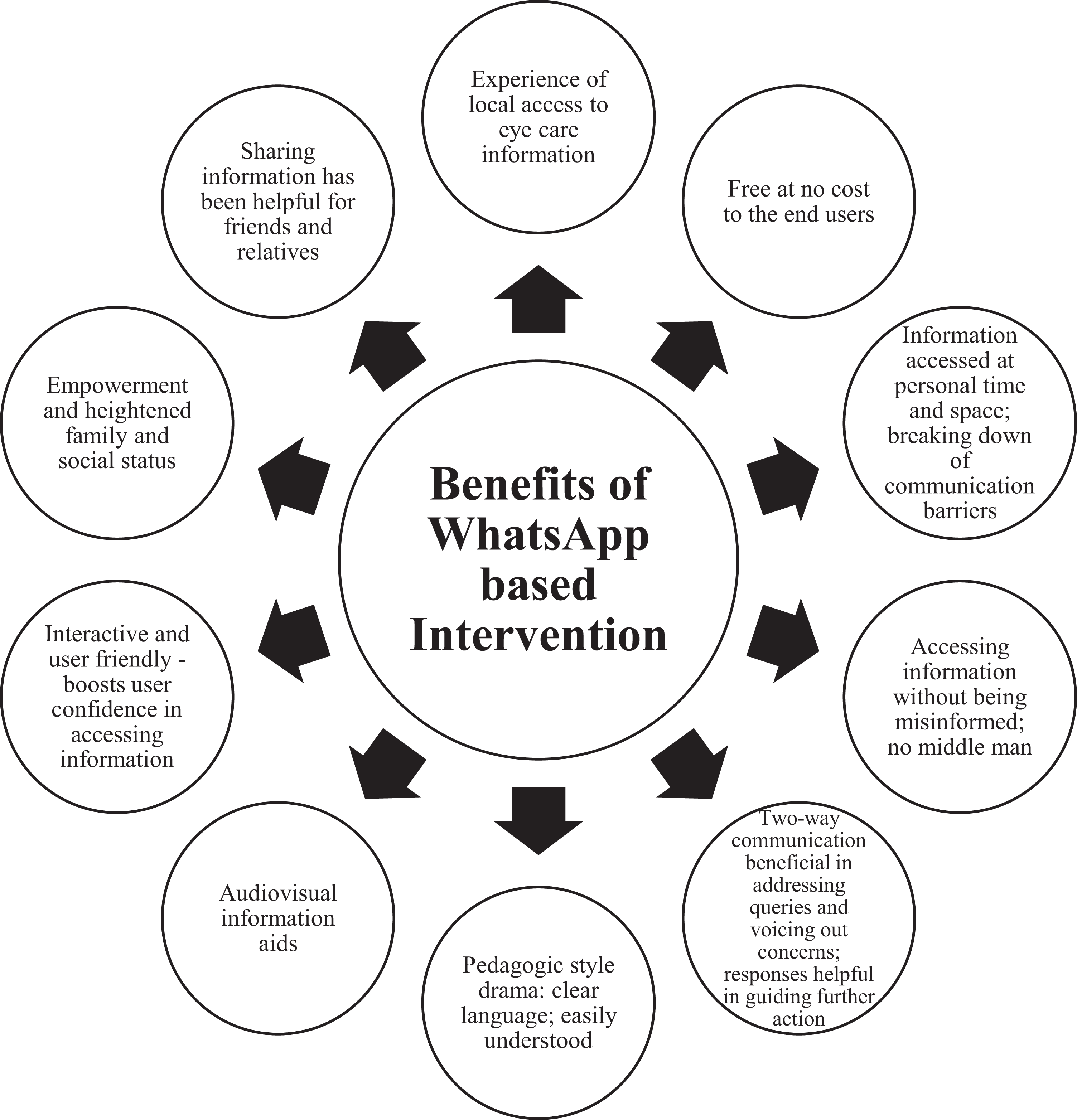
Participants’ views on the beneficial characteristics of the WhatsApp-based intervention.
Participants views on the benefits of WhatsApp in increasing awareness of eye problems in the deprived community
Participants were surprised to learn about the many different factors that could affect eye health:
CSP14: ‘…we never knew that playing in dust and dirt may lead to eye problems…often our children go and play in the mud…we will be more cautious next time…’ CSP22: ‘…I learnt that worms and TB can affect eyes too…I thought they affected the tummy and lungs…’ CSP30: ‘…no one in the family would believe that eye problems can affect anyone…at any age…even little babies can be born with cataracts…we need to be aware and act fast…’
Participants also learnt the importance of simple precautionary measures in protecting eyesight:
CSP18: ‘…since we saw those videos and pictures, I have been removing many dangers in my home to make sure it is safe for my child…previously, my relatives might have kept a bottle of acid or a pair of scissors within easy reach of my child…not any more…’ CSP25: ‘…I have learnt that poor lighting conditions in workplaces can affect eyesight…I would rather ask my husband to earn less than lose his vision…’ CSP18: ‘…we are expected to apply kohl to our new-born baby’s eyes soon after birth…I have now learnt that wearing kohl is not good…I am worried that my family will not accept this…’
Participants also learnt the importance of routine eye check-ups in detecting early eye diseases that result in better overall disease outcome.
CSP 21: “…I learnt that loss of eye sight can be gradual…without us knowing…regular eye check-ups are beneficial in picking up signs before damage has happened…I had the idea that eye checks are only to be done if there is something wrong with your eyes…I have now learnt that this may be leaving things too long and the damage is beyond repair…” CSP 20:“…I have learnt that treating illnesses early is the right way forward…treating early can restore eyesight…however, if things are left too late, there are chances that the damage is permanent and vision could be lost…”
Participants also reported that they now understood the role of good nutrition and antenatal care:
CSP16: ‘…I now know that poor nutrition and a lack of vitamins can also affect eyesight…’ CSP15: ‘…I now know that country liquor can result in blindness…I have talked to my husband about this, but I am not sure that he listens to me…after all he may not be able to afford a proper drink…’
Participants had previously regarded affordability as an impediment to good eye care, but now had a better understanding of the availability and affordability or eye care:
CSP17: ‘…through these educational sessions, I have learnt that eye treatment exists for all…irrespective of whether they are rich or poor…for all religions and castes…for both men and women…’ CSP14: ‘…we were told that getting treatment was not within the reach of our simple means…however, it seems now that some options do exist…the hospital can offer affordable care if I have a BPL card…I feel confident to go to those hospitals for help if I need it…’.
Finally, participants highlighted that these education sessions helped to increase their awareness of eye donation, and its importance.
CSP 14: “…I knew wrong things about eye donation…I understood that this was sin and will affect my afterlife…I feel that there is a need for everyone to know the benefits of eye donation…” CSP 30: “…there is so much bad information about eye donation…no one talks about the good things about it…” CSP 25: “…I cried when watching the video on eye donation…it was so powerful…I came to know that eye donation can have such profound effect…I now feel so positive about eye donation…”
Discussion
Overall, this study demonstrated the influence of the social media based intervention in changing user engagement and health behaviour. By increasing awareness of eye health and challenging the prevailing prejudiced sociocultural environment, members of the deprived community should be in a position to seek help with eye health problems when they arise. Previous research has demonstrated the importance of awareness creation in managing a variety of medical conditions and situations, including dengue education (Lwin et al., 2016), childhood vaccinations (Glanz et al., 2017), and diabetic awareness (Gabarron et al., 2018). A heightened awareness was also evident in this study where participants reported a significantly improved understanding of the preventative and treatment aspects of eye care after the intervention. Other studies have also explored behaviour change associated with social media interventions. For example, in post-op cataract patients, social media based information dissemination was associated with improved patient satisfaction towards health care provision over a standard approach (Sanguansak et al., 2017), whilst behaviour change leading to improved health outcomes was reported in other studies (Gabarron et al., 2018; Glanz et al., 2017; Taggart et al., 2015).
The characteristics of an intervention to enhance awareness of health care issues are critical determinants of the users’ engagement with, and the success of an intervention. In this study, WhatsApp was a new medium for these communities, which stimulated curiosity. This novelty, coupled with the extant lack of relevant, current, accurate and unbiased information, contributed to motivating participants to engage in the project. The desire to become better informed and to self-manage the simpler eye health issues echoes findings in other studies (Alhuwail and Abdulsalam, 2019; Li et al., 2014).
Other potential determinants of user engagement with social media based access to health information include health literacy, ethnicity and socioeconomic status. Previous studies have shown that eHealth literates have enhanced engagement with social media (Curry et al., 2014; Li et al., 2014) and digital technology use (Manganello et al., 2017). In contrast, despite this lack of health literacy, members of the community exhibited a strong interest in digital health communication through WhatsApp. This may have been triggered by a variety of factors, including the innate curiosity of the population studied, awareness of the consequences of poor eye health, and the opportunity to gain some respect within their community.
Conclusion
Summary
Visual impairment and blindness are important and often preventable public health problems impacting on the global population, but a disproportionally large number of these cases are in India. Health communication in respect of eye care is an important aspect of programmes associated with the mitigation of disease. Inexpensive and widely available, social media is a popular means through which to share information and ideas, and is available in both developing and developed countries. Furthermore, the audio-visual capabilities of social media platforms and their horizontal information sharing capabilities have transformed a monologue into a dialogue and rendered it attractive for health communication, especially for populations resident in rural or semi-urban areas, with limited digital and/or communications infrastructure. Social media has been used extensively in health communication across a wide range of topics. However, there is very limited research on its use in eye health, particularly in developing countries. In particular, this study is unique in systematically evaluating the use of WhatsApp in promoting eye health in India in a deprived population. Members of the deprived community found the intervention to be beneficial by enhancing awareness of eye problems and affordable eye care, which, in the long term, can lead to reductions in levels of visual impairment and blindness. The multi-media nature of WhatsApp supported the transfer of complex audio-visual information, as well as the use of storytelling. These factors helped to enhance engagement with a group of informal learners, most of whom were illiterate.
Contribution
This article contributes to theory, knowledge and practice. Its contribution to theory is the development and evaluation of two theoretical models, relating, respectively to ‘Participants’ views on the benefits of the WhatsApp-based intervention’ (Figure 1); and, ‘Participants’ views on the benefits of WhatsApp in increasing awareness of eye problems in the deprived community’ (Figure 2). Figure 1 summarises the benefits that members of the deprived community associated with the use of WhatsApp in health communication. For these users the use of WhatsApp was a new experience. Other important facets were that WhatsApp was free, supported two-way communication, involved no middle-men, included images, and had an easy-to-use interface. Figure 2 summarises the participants’ views on the benefits of the use of WhatsApp in increasing their awareness of eye health problems. As a result of the intervention reported in this article, participants had an increased awareness of eye health problems, including common eye problems and hazards, precautionary and preventative measures to protect eye health, the importance of good nutrition and antenatal care, the role of routine eye check-ups, access to affordable eye care, access to financial assistance, and eye donation.
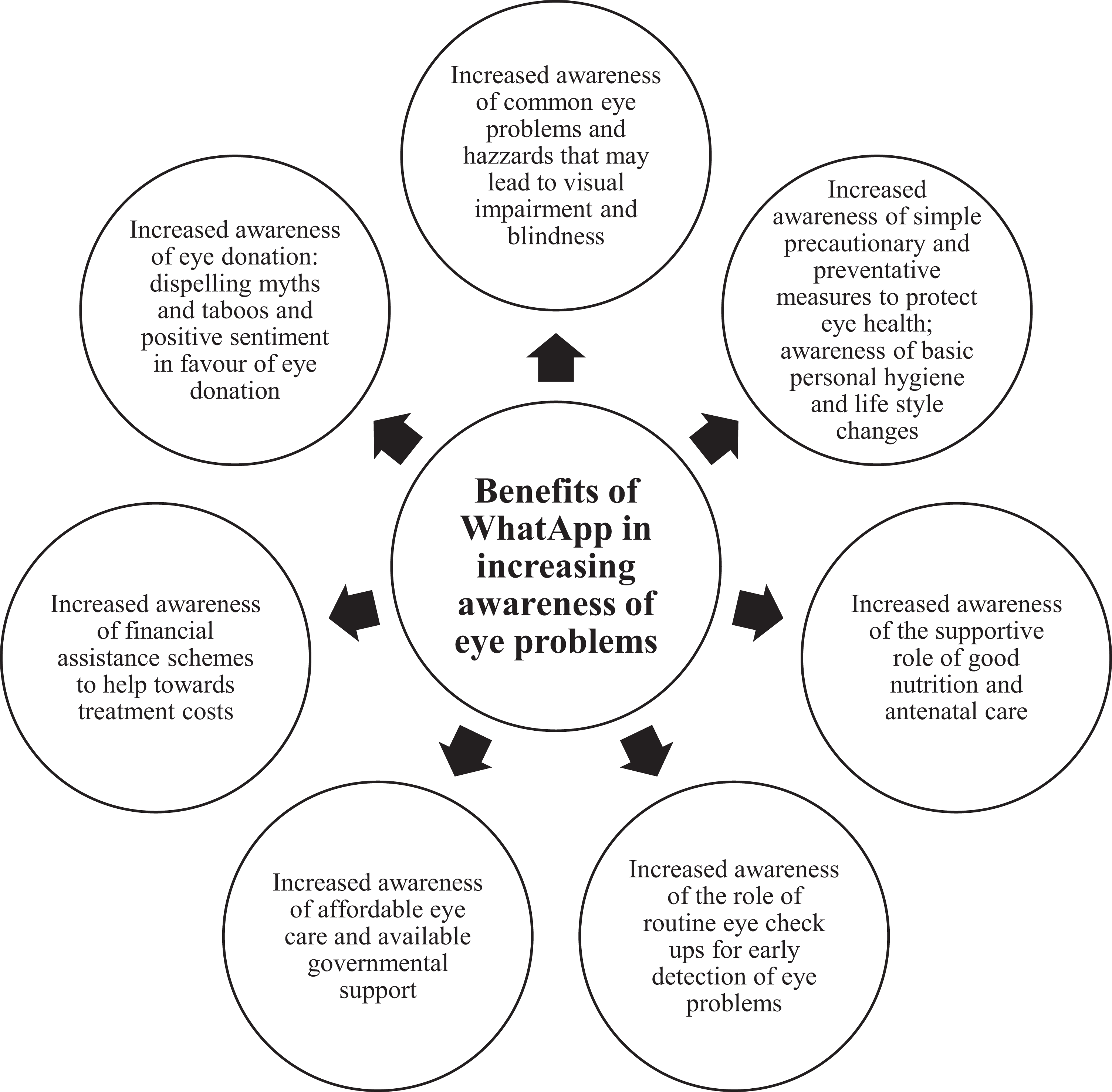
Participants views on the benefits of WhatsApp in increasing awareness of eye problems in the deprived community.
The study also has important messages for practitioners, including policy makers, and health care providers. Policy makers should consider the potential of WhatsApp health care communication for reaching remote and underprivileged communities. This study demonstrates that WhatsApp can provide a unique medium that requires a minimal skill-set for effective use, utilizes a low cost infrastructure and has a wide penetration into the disadvantaged ‘hard to reach’ population, where the eye disease burden is disproportionality high. Its simplicity, multimedia capacity and two-way communicability is particularly valuable in this context. In addition, this study showed that appropriate and carefully designed information provision via WhatsApp can contribute to the transformation of naïve and shy individuals into confident proponents of eye health within their community. As WhatsApp is simple to use, requires low-cost infrastructures and appears to be easily implementable without major financial investment, it could be invaluable in seeking to address eye health inequalities. Through the widespread use of WhatsApp, a healthcare provider can achieve a wide reach and the basis for the development of responsive and resource efficient services.
Study limitations and directions for further research
Notwithstanding the important contribution of this study, it has a number of limitations:
It is difficult to judge the potential contribution of interventions such as the one described in this article, in the wider policy context, due to the absence of information on the level and nature of current eye care provision in India. Further research into the extent and nature of health care provision in India would be useful.
The focus of this study is on women. Whilst acknowledging that women are pivotal in managing family health issues, a wider intervention that included men, and other family members, such as grandparents, would be useful.
This study is based on one deprived community in India. Whilst an adequate cohort was recruited, other members of the community were prevented from participating as a result of shyness, family pressure and other disincentives. A policy agenda to support the development of a greater awareness of approaches to the management of eye health within local communities in India would be useful. Such an agenda should embrace both rural and urban communities.
Traditionally, communication on eye care has been achieved through a variety of media. In future, a formal comparative study could develop deeper insights into the efficiency, acceptability, and reach of the various media.
Whilst this study focussed on WhatsApp as an information provision tool, there is scope for exploring the effectiveness of WhatsApp as an information gathering tool, to inform healthcare providers about the specific health care needs of society, as a basis for developing responsive and resource efficient services.
