



Abstract
Opportunity recognition is a core concept in entrepreneurship research. However, the mechanisms by which passion influences opportunity recognition, as well as the conditions under which this relationship occurs, are not well understood. This study analyses time-lagged data from 258 entrepreneurs to explore how, when and which aspects of entrepreneurial passion influence opportunity recognition through entrepreneurial alertness. The results indicate that all three types of entrepreneurial passion – passion for inventing, passion for founding and passion for developing – enhance opportunity recognition by increasing entrepreneurial alertness. Yet, only passion for inventing and passion for developing have a direct impact on opportunity recognition. Additionally, passion for inventing and passion for founding boost entrepreneurial alertness, but only in highly dynamic environments. Conversely, the effect of passion for developing alertness remains consistent regardless of environmental conditions. Further analysis reveals that each of the three passion domains affects opportunity recognition through different dimensions of entrepreneurial alertness.
Keywords
Introduction
“Passion is one of the most effective motivators when it comes to launching a business – and often one of the strongest predictors of whether an idea will lead to success.” – Richard Branson, Founder of Virgin Group
Opportunity recognition, defined as the ability to identify unexploited ideas with the potential to generate economic value (Baron, 2006), is widely recognised as a fundamental and distinctive entrepreneurial behaviour (Kirzner, 1979; Shane and Venkataraman, 2000; Tumasjan and Braun, 2012). This ability is crucial as it fuels innovation (O’Connor and Rice, 2001; Park, 2005) and enhances organisational performance (Guo et al., 2017), both of which are indispensable for a firm’s long-term success (Audretsch, 1995). Given its centrality in entrepreneurship, scholars have long sought to understand why some individuals are able to consistently recognise high-quality opportunities, while others are not (Baron, 2004). To deepen this understanding, researchers have examined a range of antecedents to opportunity recognition, including environmental, organisational and personal factors such as cognitive abilities, social networks and prior knowledge (Dyer et al., 2008; Filser et al., 2023; George et al., 2016; Krueger and Dickson, 1994). While these studies have provided valuable insights, more recent research has increasingly highlighted the critical role of affect – particularly emotions – in shaping individual attention and information processing – both integral to opportunity recognition (Baron, 2008). However, much of the existing literature remains largely conceptual, focusing on broad emotional states such as positive and negative affect (Baron, 2008; Hayton and Cholakova, 2012) and affective activation (Foo et al., 2015), with limited exploration of specific emotions. Notably, entrepreneurial passion has emerged as a significant emotional-cognitive state that plays a key role in opportunity recognition. Entrepreneurial passion is defined as an affective-cognitive state involving intense positive emotions and a strong identification with specific entrepreneurial activities (Cardon et al., 2009, 2013). This dual aspect of passion not only fuels the emotional drive necessary for entrepreneurship but also shapes cognitive processes by focusing attention on identity-relevant tasks. These combined affective and cognitive dimensions influence how entrepreneurs identify and act upon opportunities making passion a critical driver of entrepreneurial behaviour. Insights from this emerging research indicate that passion has a positive effect on opportunity recognition (Araujo et al., 2023; Bao et al., 2017; Costa et al., 2018).
Despite these valuable insights, two critical gaps remain in the literature. First, there is a lack of empirical evidence on whether and how entrepreneurial passion manifests cognitively to facilitate opportunity recognition. This shortcoming is surprising given the emphasis in previous research on the affective and cognitive aspects of entrepreneurial passion. For instance, Chen et al. (2009) define entrepreneurial passion as ‘an entrepreneur’s intense affective state accompanied by cognitive and behavioural manifestations of high personal value’ (p. 199). Similarly, Cardon et al. (2009) describe entrepreneurial passion as ‘consciously accessible intense positive feelings experienced by engagement in entrepreneurial activities associated with roles that are meaningful and salient to the entrepreneur’s self-identity’ (p. 517). Second, existing opportunity recognition research has not adequately explored how positive feelings and identity centrality operate within the three specific domains of entrepreneurial passion: passion for founding, passion for inventing and passion for developing (Cardon et al., 2009, 2013). This oversight is noteworthy, as previous studies have shown that these three passion domains exert distinct influences on entrepreneurial actions and outcomes (Adomako and Ahsan, 2022; Ahsan et al., 2023). Building on the prior conceptualisation of passion for founding, passion for inventing and passion for developing (Cardon et al., 2009) and the development of the entrepreneurial passion scale (Cardon et al., 2013), our study examines how these three passion domains influence opportunity recognition through the specific cognitive mechanism of entrepreneurial alertness. Entrepreneurial passion enhances an entrepreneur’s ability to engage with their environment through entrepreneurial alertness, a cognitive framework that facilitates the perception and evaluation of opportunities (Gaglio and Katz, 2001; Tang et al., 2012). Entrepreneurial alertness comprises of three interrelated cognitive processes: scanning and search, association and connection and evaluation and judgement. These dimensions provide a more targeted mechanism for interpreting new information and recognising viable opportunities. Unlike other cognitive constructs, entrepreneurial alertness offers a structured and systematic process that helps entrepreneurs align their passion with opportunity identification, making it particularly effective in mediating this relationship. In addition, the effect of passion on entrepreneurial behaviours and outcomes has been found to be contingent on other factors (Adomako and Ahsan, 2022; Adomako et al., 2023).
It is argued therefore, that opportunity recognition does not occur in a vacuum but is likely to be shaped by the environment (Dimov, 2007; George et al., 2016). Thus, in this study, we also examine whether entrepreneurial passion might enhance opportunity recognition through entrepreneurial alertness in certain environments. We particularly focus on the role of environmental dynamism; this refers to the rate of change and degree of unpredictability in a specific environment (Miller and Friesen, 1983). In dynamic environments, the demand for heightened cognitive and emotional responses becomes more pronounced as entrepreneurs navigate constant shifts in market conditions and technology (Baron and Tang, 2011). Such conditions intensify the role of entrepreneurial passion in enhancing alertness, as dynamic environments compel entrepreneurs to engage more frequently in scanning, associating information and rapidly evaluating opportunities. This increased need for information acquisition and assessment strengthens the relationship between passion and alertness, positioning environmental dynamism as a critical boundary condition in this process.
We test our research framework (see Figure 1) using a time-lagged survey of 258 entrepreneurs. We offer two key contributions to the literature. First, we advance opportunity recognition research. Although recent studies (Araujo et al., 2023; Bao et al., 2017; Costa et al., 2018) suggest that entrepreneurial passion can influence opportunity recognition, this area of research remains limited. Specifically, there is limited understanding of the mechanisms through which passion exerts its influence and the conditions under which entrepreneurial passion enhances opportunity recognition. We address these gaps by theorising and empirically testing how and which domains of entrepreneurial passion affect opportunity recognition through the mediating role of entrepreneurial alertness, and when this effect is most pronounced, particularly in dynamic environments. Second, we contribute to the research on entrepreneurial passion. While there is a general belief that entrepreneurial passion positively affects entrepreneurial outcomes (Breugst et al., 2012; Cardon and Kirk, 2015; Drnovsek et al., 2016), a growing body of work reveals that the effects of different passion domains vary. For example, only passion domains that align with entrepreneurial activities tend to be beneficial, influencing outcomes such as the affective commitment of employees, entrepreneurial persistence, innovation and performance (Adomako and Ahsan, 2022; Ahsan et al., 2023; Breugst et al., 2012; Cardon and Kirk, 2015). Our study echoes and extends this research by highlighting that not all passion domains are directly related to opportunity recognition. Furthermore, we show that these domains do not consistently facilitate opportunity recognition and that they influence it through different dimensions of entrepreneurial alertness.
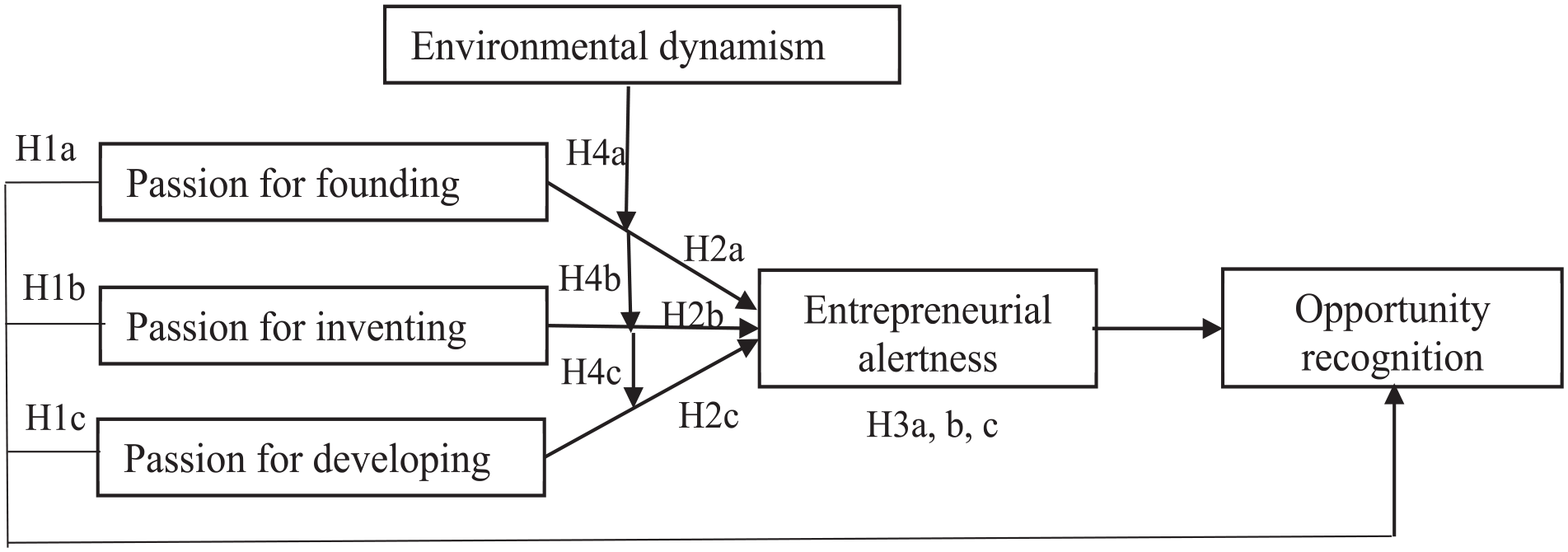
Conceptual model.
Theoretical background and hypotheses development
Affective and cognitive aspects of entrepreneurship
In line with Cardon et al. (2009, 2013), we view cognitive and behavioural manifestations as outcomes of entrepreneurial passion, rather than intrinsic components of the passion itself. Entrepreneurial passion manifests in both emotional intensity (affective) and a deep identification with entrepreneurial roles (cognitive), positioning it as a crucial affective-cognitive driver of behaviour (Cardon et al., 2009). These affective and cognitive components of passion enhance an entrepreneur’s ability to remain focused on tasks central to their entrepreneurial identity, thereby influencing both opportunity recognition and decision-making processes. Cardon et al. (2009, 2013) conceptualise entrepreneurial passion as intense positive emotions derived from engagement in activities that are meaningful and salient to an entrepreneur’s identity – namely, the roles of inventor, founder and developer. While entrepreneurs may experience these roles differently, they are consistently fundamental to the entrepreneurial process. Accordingly, entrepreneurs can develop a passion for inventing, founding and developing. Furthermore, it has been suggested that the specific activities a founder undertakes are influenced by the particular domain of entrepreneurial passion that is activated (Cardon et al., 2009, 2013). For example, founders with a passion for developing experience positive emotions when engaging in growing and expanding their venture, as these activities resonate with their self-identity. This conceptualisation of entrepreneurial passion suggests that individuals are more likely to regulate their attention and behaviour in ways that align with their passion. This view aligns with attention-based literature, which indicates that founders direct their focus toward specific objectives, leading them to prioritise certain activities over others (Srivastava et al., 2021). In essence, entrepreneurial passion drives cognitive and behavioural engagement in activities that reflect the intensity of these positive emotions (Cardon et al., 2009).
In a study of founders in China, Bao et al. (2017) found that the relationship between the intensity of positive feelings and identity centrality – two key dimensions of entrepreneurial passion – and entrepreneurial behaviours are partially mediated by opportunity recognition. Similarly, in an experimental study conducted with a sample from a German university, Costa et al. (2018) found that individuals scoring highly on the entrepreneurial passion dimension related to intense positive feelings exhibited greater accuracy in identifying the prototypical viability of business opportunities. However, their findings also suggest that the identity centrality dimension of entrepreneurial passion does not necessarily enhance the positive relationship between training and the accurate identification of viable business opportunities. More recently, findings from a meta-analysis indicate that entrepreneurial alertness is influenced by entrepreneurial passion and, in turn, affects opportunity recognition (Araujo et al., 2023). Building on Kirzner’s (1979) concept of entrepreneurial alertness, scholars have emphasised its crucial role in the entrepreneurial process, particularly in opportunity recognition (Lanivich et al., 2022). Entrepreneurial alertness is characterised by a distinctive set of perceptual and cognitive processing abilities (Gaglio and Katz, 2001), which encompass three interrelated yet, distinct cognitive dimensions: (1) scanning and search, involving the monitoring of the environment and seeking out new information, changes and shifts that others may overlook; (2) association and connection, which refers to synthesising disparate pieces of information and constructing them into coherent alternatives; and (3) evaluation and judgement, which entails assessing changes, shifts or information to determine whether they reflect a business opportunity with profit potential (Tang et al., 2012). Gaglio and Katz (2001) argue that highly alert individuals possess complex and adaptive mental schemas related to their environment, enabling them to view situations from unique perspectives and recognise novel opportunities (Araujo et al., 2023; Hajizadeh and Zali, 2016).
Drawing on insights from these streams of literature, we propose a model that integrates affective and cognitive components by examining the impact of the three domains of entrepreneurial passion on opportunity recognition through the mediating role of entrepreneurial alertness, which serves as a cognitive framework for processing environmental stimuli. Additionally, recognising that the environment can potentially influence these relationships (Dimov, 2007; George et al., 2016; Lanivich et al., 2022), we also examine the moderating effect of environmental dynamism.
Entrepreneurial passion and opportunity recognition
Entrepreneurial passion, defined as intense positive feelings directed towards activities that are meaningful and central to an entrepreneur’s identity, is widely recognised as a critical driver of entrepreneurial behaviour and outcomes (Cardon et al., 2009, 2013). This passion manifests in three distinct domains – founding, inventing and developing – each corresponding to different stages and aspects of the entrepreneurial process. These domains not only reflect the specific activities that entrepreneurs find most engaging and identity-affirming but also shape their cognitive processes. It is theorised that entrepreneurial passion influences outcomes by mobilising self-regulatory processes aimed at achieving goals that validate an entrepreneur’s salient identity, such as that of a founder, inventor or developer (Cardon et al., 2009, 2013). The intense positive emotions stemming from engagement in identity-relevant activities enhance entrepreneurial effectiveness by shaping goal-directed cognition and reinforcing identity-aligned behaviours. To sustain these positive feelings, entrepreneurs are likely to continue engaging in such activities, thereby reinforcing their commitment to their ventures (Pham, 2004). The three passion domains not only reflect the specific activities entrepreneurs find most engaging and identity-affirming but also shape entrepreneurial behaviours and outcomes, including opportunity recognition (Araujo et al., 2023; Bao et al., 2017; Costa et al., 2018). Opportunity recognition, the process of identifying ideas with the potential to generate economic value that has not yet been exploited, is a core entrepreneurial behaviour (Baron, 2006; Shane and Venkataraman, 2000). The literature suggests that opportunity recognition is influenced by cognitive factors, prior knowledge and experience, which are, in turn, shaped by the entrepreneur’s passion (Baron, 2008; Cardon et al., 2009). Entrepreneurial passion drives goal-directed cognition, focusing attention and effort on activities that are consistent with an entrepreneur’s salient identity. This alignment between passion and cognition enhances the entrepreneur’s ability to recognise opportunities that others might overlook (Ahsan et al., 2023; Cardon et al., 2009; Pham, 2004).
Entrepreneurs with a passion for founding are driven by a deep-seated desire to establish new ventures, which becomes a core aspect of their identity. This passion compels them to assemble the necessary financial, human and social resources required to create a new organisation (Cardon et al., 2009). The intense positive emotions associated with founding, such as the satisfaction of bringing a new venture to life, reinforcing their commitment to this role. As the act of founding is central to their self-concept, these entrepreneurs are inherently motivated to recognise and seize opportunities that align with their goal of establishing new businesses. The identity salience of the founder role, coupled with the intrinsic rewards it provides, ensures that these entrepreneurs remain vigilant for opportunities that enable them to fulfil their entrepreneurial aspirations (Shane, 2003). Similarly, passion for inventing is characterised by intense enthusiasm for creating novel products, services or technologies. Entrepreneurs with this passion are deeply motivated to explore new ideas and bring innovative solutions to the market (Cardon et al., 2009). The importance of inventing to their identity means that they derive significant personal fulfilment from these activities. This intrinsic motivation drives them to actively seek out and recognise opportunities that allow them to develop and implement their inventive ideas. The positive emotions associated with inventing, such as excitement and curiosity, enhance their ability to identify opportunities that involve technological advancements or innovative applications, further reinforcing their role as inventors in the entrepreneurial process (Ahsan et al., 2023). Passion for developing, conversely, is rooted in a strong commitment to growing and expanding an existing venture. Entrepreneurs who are passionate about development are motivated by the desire to see their organisation thrive beyond its initial success (Cardon et al., 2009). This passion is closely tied to their identity as developers of businesses, and the positive feelings associated with growth – such as a sense of accomplishment and satisfaction – drive them to continuously seek opportunities that can enhance their firm’s performance. The identity centrality of the developer role ensures that these entrepreneurs are particularly attuned to recognising opportunities that align with their goal of sustaining and expanding their ventures (Baum and Locke, 2004).
In summary, entrepreneurial passion for founding, inventing and developing each uniquely contributes to opportunity recognition by directly linking the intense positive emotions and identity centrality associated with these passions to the recognition of opportunities. Therefore, we hypothesise that:
Hypothesis 1: Entrepreneurial passion for (a) founding, (b) inventing and (c) developing is positively related to opportunity recognition.
Entrepreneurial passion and entrepreneurial alertness
Entrepreneurial alertness, conceptualised as a cognitive framework that enables entrepreneurs to detect and interpret change-related stimuli, is fundamental to navigating complex and dynamic business environments (Gaglio and Winter, 2009; Valliere, 2013). Entrepreneurs exhibiting high levels of alertness actively challenge their existing mental models when confronted with new information, integrating or reassessing it to refine their understanding and strategic responses (Gaglio and Katz, 2001). This cognitive adaptability is significantly influenced by entrepreneurial passion, which channels attention and cognitive resources through the framework of entrepreneurial alertness, towards activities closely aligned with an entrepreneur’s salient role identity – whether as a founder, inventor or developer (Cardon et al., 2009).
Entrepreneurs who strongly identify with the role of a founder are driven by a desire to create and launch new ventures. This identity-specific passion systematically directs their attention, rendering them highly vigilant in scanning and searching for information pertinent to the founding process (Adomako and Ahsan, 2022). The positive emotions associated with founding – such as excitement and commitment – serve to broaden their attentional focus, enabling them to be more perceptive of diverse information streams and environmental cues critical to initiating new ventures (Forgas, 1995; Isen, 2002). Moreover, passion for founding enhances the ability to associate and connect disparate pieces of information. Founders, fuelled by their enthusiasm for starting new businesses, are adept at integrating various sources of information, allowing them to identify connections between seemingly unrelated data points (Baron, 2006). This associative thinking is integral to the formation of comprehensive mental models that underpin their entrepreneurial alertness. Furthermore, this passion sharpens their evaluation and judgement, enabling them to swiftly and efficiently assess the implications of new information, thereby ensuring that their decisions align with their founding objectives (Grimes, 2018). Similarly, entrepreneurs with strong identification as inventors are particularly focused on the creation of novel solutions, products or technologies. Their passion for inventing channels their cognitive resources towards scanning and searching for technical breakthroughs and innovations. The positive emotions linked to the inventing role – such as curiosity and the thrill of discovery – broaden their attentional scope, enabling them to perceive and process a wide array of information that may contribute to their inventive endeavours (Schutte and Malouff, 2020). This expanded attentional capacity facilitates the creative association of seemingly unrelated concepts, fostering innovative connections central to the inventor’s cognitive schema (Baron and Ensley, 2006). The ability to associate and connect with diverse ideas further enhances their entrepreneurial alertness, enabling them to construct mental models responsive to emerging technological trends and market needs. Moreover, the intense drive to invent refines their evaluation and judgement abilities, allowing them to rapidly assess the potential of new information and seamlessly integrate it into their ongoing inventive activities (Levasseur et al., 2022).
Likewise, entrepreneurs who identify with the role of a developer exhibit a deep commitment to the growth and enhancement of existing ventures. This passion drives them to be exceptionally vigilant in scanning and searching for information that can support the sustained development of their business. The positive emotions associated with developing – such as satisfaction from growth and a sense of responsibility – expand their attentional focus, making them more attuned to details that could contribute to business improvement (Drnovsek et al., 2016). Their ability to associate and connect new information with existing business structures is a key element of their entrepreneurial alertness. Developers are particularly skilled at integrating new data into their strategic frameworks, recognising how different trends or technologies can be leveraged to support long-term growth (Baron, 2006). Additionally, their passion for developing enhances their evaluation and judgement, as they meticulously assess how new information aligns with their strategic goals and existing resources. This comprehensive evaluation process ensures that their decisions contribute to the steady and sustainable growth of their ventures (Gruber et al., 2015).
In summary, the passion associated with specific entrepreneurial roles – whether founding, inventing or developing – enhances entrepreneurial alertness by focusing attention, fostering creative associations and refining evaluative judgements. This alignment of passion with cognitive processes enables entrepreneurs to effectively engage with their environments and continually adapt their mental models. Accordingly, we hypothesise that:
Hypothesis 2: Entrepreneurial passion for (a) founding, (b) inventing and (c) developing is positively related to entrepreneurial alertness.
Mediating role of entrepreneurial alertness
Building on the foundations of Hypotheses 1 and 2, we propose that entrepreneurial alertness serves as a critical mediating mechanism through which entrepreneurial passion translates into opportunity recognition. Entrepreneurial alertness, defined as the ability to notice and interpret relevant information in dynamic environments, enhances an entrepreneur’s ability to detect and evaluate potential opportunities (Tang et al., 2012). This cognitive framework strengthens the connection between entrepreneurial passion and opportunity recognition by sharpening key processes such as scanning, association and evaluation. Entrepreneurs with a passion for founding experience heightened alertness, driving them to actively scan for emerging prospects, associate disparate pieces of information and quickly assess the feasibility of new ventures (Baron, 2006). The positive emotions linked to founding – such as excitement and commitment – further focus their attention on opportunities that align with their founder identity, thus, enhancing their ability to recognise and act on potential ventures (Forgas, 1995; Isen, 2002). Similarly, passion for inventing, characterised by a strong drive for innovation, enhances alertness by encouraging continuous scanning for novel ideas and fostering the creative association of unrelated concepts (Cardon et al., 2009). Entrepreneurs driven by a passion for inventing are more attuned to identifying innovative solutions that address unmet market needs. Their heightened alertness across the dimensions of scanning, association and evaluation enables them to effectively translate their passion into the recognition of new and original opportunities (Baron and Ensley, 2006; Gielnik et al., 2012). Likewise, passion for developing, focused on growing and sustaining ventures, strengthens alertness by keeping entrepreneurs vigilant for expansion opportunities and improvements. Their ability to seamlessly integrate new information with existing business frameworks allows for continuous growth, while their refined evaluative judgement ensures that the opportunities pursued are aligned with long-term strategic objectives (Baum and Locke, 2004; Gruber et al., 2015). This solidifies the connection between passion for developing and successful opportunity recognition (Drnovsek et al., 2016).
In summary, entrepreneurial alertness acts as a mediating mechanism across all three domains of entrepreneurial passion – founding, inventing and developing – by focusing attention, fostering information integration and refining evaluative judgement. This ensures that the positive emotions and motivation derived from passion are effectively converted into successful opportunity recognition. Accordingly, we hypothesise that:
Hypothesis 3: Entrepreneurial alertness mediates the relationships of (a) passion for founding, (b) passion for inventing and (c) passion for developing with opportunity recognition.
Moderating role of environmental dynamism
Entrepreneurship is inherently shaped by the environment in which it unfolds, with environmental dynamism playing a particularly critical role in moderating how entrepreneurial passion influences entrepreneurial alertness. Environmental dynamism, characterised by rapid and unpredictable changes in technology, customer preferences and market conditions (Miller and Friesen, 1983), can significantly amplify or attenuate the impact of entrepreneurial passion on the different dimensions of entrepreneurial alertness, namely scanning and search, association and connection and evaluation and judgement. For entrepreneurs with a strong passion for founding, environmental dynamism heightens the need for entrepreneurial alertness by amplifying the complexities associated with venture creation. In rapidly changing environments, entrepreneurs with a passion for founding face constant challenges in assembling the necessary resources and building networks under unpredictable conditions. This forces them to continuously scan for emerging opportunities or threats, as they need to quickly secure external resources (e.g. financial, human and technological) in a volatile marketplace. Dynamism enhances the relationship between passion for founding and alertness by creating an urgency to identify and act on fleeting opportunities that could be critical for the venture’s early success (Baron, 2006). Founders in dynamic environments are required to rapidly adjust their strategies, which also increases their cognitive flexibility, enabling them to connect seemingly unrelated information in real time. Furthermore, the pace of change in dynamic settings forces entrepreneurs to make swift evaluations, as they must assess how shifting market trends or competitive pressures affect the viability of their venture (Eisenhardt, 1989). Conversely, in stable environments, where changes are gradual, the urgency to remain vigilant is lower and the relationship between passion for founding and alertness weakens, as founders can afford to take a more measured approach to venture creation.
Similarly, environmental dynamism acts as a powerful moderator in the relationship between passion for inventing and entrepreneurial alertness. Entrepreneurs with a passion for inventing thrive in dynamic environments because the constant evolution of technology and market demands presents numerous opportunities for innovation. In these environments, entrepreneurs with a passion for inventing must continuously scan for technological breakthroughs and trends that can fuel their inventive pursuits (Eisenhardt and Martin, 2000). The rapid pace of change increases the need for alertness, as these entrepreneurs must remain vigilant to identify novel solutions or creative applications of emerging technologies. The variability and complexity in dynamic environments foster greater associative thinking, enabling entrepreneurs with a passion for inventing to link diverse information sources and generate innovative ideas (Baron and Ensley, 2006). Additionally, the heightened uncertainty in these environments forces the entrepreneurs to refine their evaluation and judgement processes, as they must quickly determine the feasibility of new ideas and adjust their inventive activities accordingly (Baum and Wally, 2003). In contrast, stable environments, characterised by slower technological change, provide fewer stimuli for inventive alertness, leading to a weaker connection between passion for inventing and entrepreneurial alertness.
For entrepreneurs with a passion for developing, who focus on the growth and enhancement of existing ventures, environmental dynamism magnifies the need for entrepreneurial alertness by presenting both challenges and opportunities for sustained venture development. In dynamic environments, entrepreneurs with a passion for developing must be highly vigilant in identifying external shifts that could affect the long-term trajectory of their venture (Jansen et al., 2006). The constant changes in customer preferences, competitive dynamics and technological advancements necessitate continuous scanning for new data that can be integrated into the business’s strategic framework. The unpredictability of dynamic environments forces these entrepreneurs to make faster and more frequent adjustments to their growth strategies, heightening their need for associative alertness as they link emerging trends with the firm’s existing resources (Lew et al., 2023). Moreover, the fluid nature of these environments requires sharper evaluation and judgement, as entrepreneurs with a passion for developing must carefully assess how new information can be leveraged to sustain competitive advantage and ensure long-term growth (Hayward et al., 2006). In stable environments, however, where growth challenges are fewer and more predictable, the need for intense alertness is diminished, weakening the relationship between passion for developing and entrepreneurial alertness.
In summary, environmental dynamism plays a crucial role in amplifying the effects of entrepreneurial passion on the dimensions of entrepreneurial alertness. In dynamic environments, the rapid pace of change and the constant emergence of new stimuli heighten the need for alertness, making entrepreneurs more responsive to external changes that align with their passions. In contrast, in stable environments, where changes are less frequent and external triggers for alertness are weaker, the relationship between passion and alertness is less pronounced. Therefore, we hypothesise that:
Hypothesis 4: Environmental dynamism moderates the relationship between passion for (a) founding, (b) inventing and (c) developing and entrepreneurial alertness such that the relationships become stronger when environmental dynamism is high than when it is low.
Methods
Study setting
We selected entrepreneurs in Ghana to test our hypotheses because the country is recognised among the very few developing economies that managed to significantly minimise poverty through entrepreneurial activities (Boso et al., 2013; Ghana Statistical Service, 2018). For instance, Ghana’s economy has experienced GDP growth for several decades (World Bank, 2018) through the attraction of FDI, making Ghana the number one investment destination in West Africa (World Bank, 2019). Also, Ghana’s government has been supporting entrepreneurs through several policy initiatives such as the Entrepreneurship and Innovation Programme (NEIP, 2021).
Sample and data collection
The sample was derived from Ghana’s Company Register (GRA) database, which is a comprehensive database containing all legally registered businesses in the country. We randomly selected 2015 ventures from this database. We then applied several criteria to select 700 new manufacturing ventures to seek their participation in the study; those selected met the following criteria: (1) firms privately owned and controlled by entrepreneurs who were also founders or co-founders, (2) for-profit ventures that were aged eight years or less at the time of the survey to capture various stages of a firm’s development, such as the identification of new opportunities, the start-up process and the growth stage, (3) firms that employed fewer than 50 employees to ensure consistency in what constitutes a small firm in Ghana (Ghana Statistical Service, 2000) and (4) firms in the manufacturing industries as they are the focus of the Ghanaian government’s entrepreneurship agenda (Robson et al., 2012).
The participants were approached in person with data collected in two waves approximately 12 months between the end of our first survey wave (T1) and the start of the second survey wave (T2). Due to the challenges of collecting data in a developing country (Hoskisson et al., 2000), each wave took approximately four months. During data collection, the entrepreneurs were approached by going door-to-door in four big cities in Ghana where entrepreneurs are concentrated. We employed 22 research assistants who were trained in data collection activities in Ghana; they delivered the questionnaires to the founders of each manufacturing firm to capture our independent variable (i.e. entrepreneurial passion), mediator (i.e. entrepreneurial alertness) and moderator (i.e. perceived environmental dynamism). In the first wave (T1), we received 287 responses.
To increase our ability to identify the direction of the relationship between the independent variables and the dependent variable (Podsakoff et al., 2003), and to reduce common method bias, we collected information on our dependent variable (i.e. opportunity recognition) at T2 using the same data collection method. The 287 respondents from T1 were re-contacted in T2, generating 267 usable questionnaires. After inspection, nine incomplete questionnaires were discarded, resulting in a final sample of 258 complete responses to be used in the analyses. This represents a 36.8% response rate. We tested for non-response bias by comparing respondents and non-respondents on such variables as gender, industry type and entrepreneur’s age (Rogelberg and Stanton, 2007). Results from t-test comparisons indicate no significant difference between respondents and non-respondents (p > 0.10). Further, we performed t-test comparisons between early respondents (i.e. who returned the surveys before they were contacted a second time) and late respondents (i.e. who received a reminder before the surveys were returned). This comparison showed no statistical differences (p > 0.10) between these two groups related to firm age, firm size and entrepreneurs’ age. Thus, our analysis indicates that our sample is representative of the population of small, young manufacturing ventures in Ghana.
Finally, respondent competence was assessed using three key areas: (1) knowledge about the question asked, (2) accuracy of information provided and (3) confidence in providing answers. Using a 7-point Likert scale (1 = ‘strongly disagree’ and 7 = ‘strongly agree’), we obtained a minimum mean score of 6.39. This suggests that the entrepreneurs who provided answers to the questionnaire were highly knowledgeable about the issues under examination and had strong confidence in the accuracy of their answers.
Measures
Well-established scales were used to measure the constructs in this research. Table 1 presents the specific items, their factor loadings and validity and reliability assessment.
Measures and results of validity tests of multi-item.
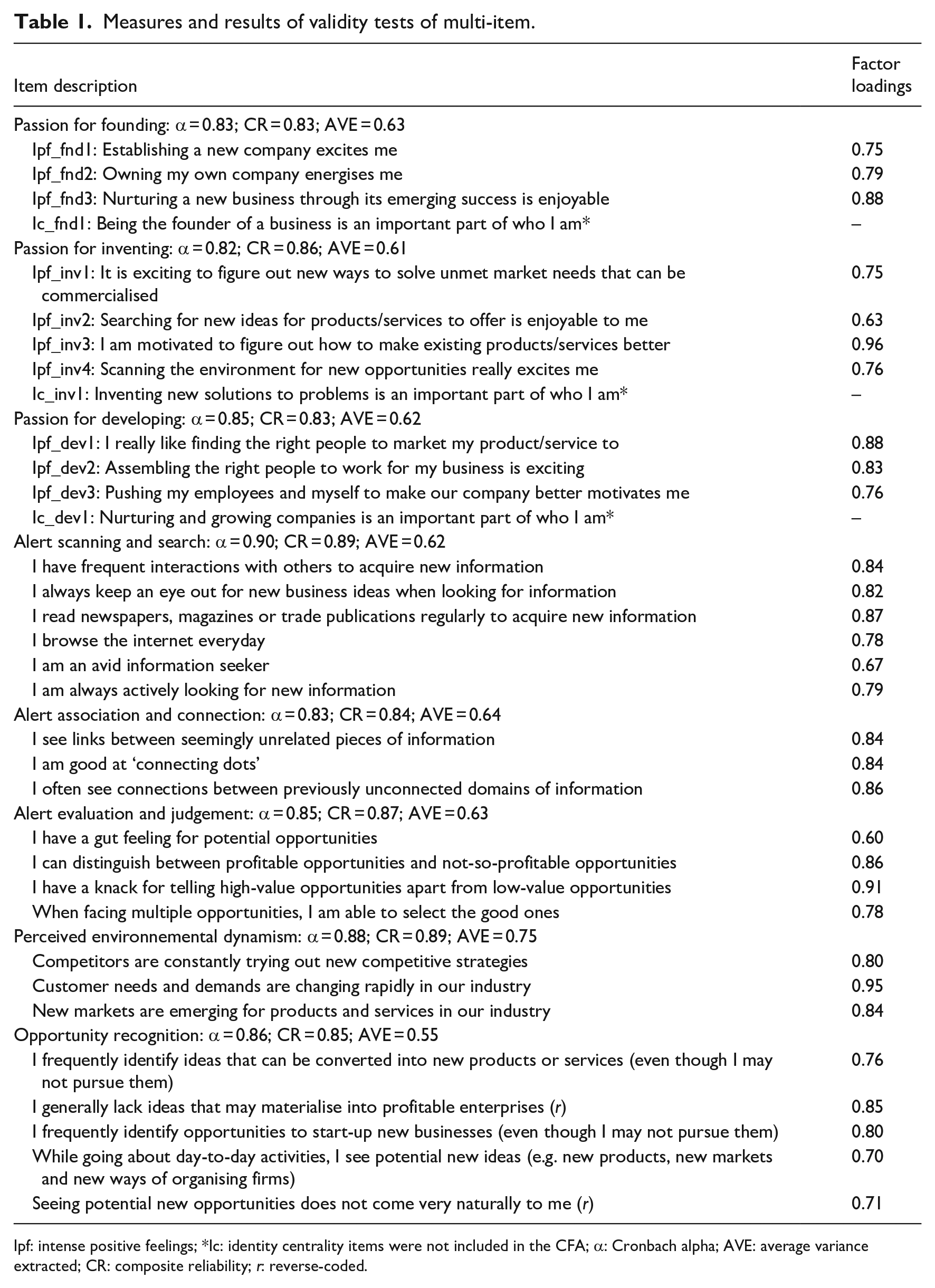
Ipf: intense positive feelings; *Ic: identity centrality items were not included in the CFA; α: Cronbach alpha; AVE: average variance extracted; CR: composite reliability; r: reverse-coded.
Dependent variable
The dependent variable, opportunity recognition, was measured using three items from Shane and Nicolaou (2015) and two items from Ma et al. (2011) on a seven-point Likert scale ranging from 1 = ‘not at all’ to 7 = ‘to an extreme extent’.
Independent variable
The independent variable, entrepreneurial passion, was measured using Cardon et al.’s (2013) scale, which disaggregates passion into passion for founding (four items), passion for inventing (five items) and passion for developing (four items). Each passion type captures two sub-scales: intense positive feelings for a particular activity and identity centrality for the entrepreneurial role. The feelings items for each passion type were captured as follows: passion for founding (three items), passion for inventing (four items) and passion for developing (three items). One item from each passion type measured the identity centrality of entrepreneurial activity. To arrive at the overall score for each type of passion, the relevant items were averaged to form a single composite score, which was then multiplied by the identity centrality score (Cardon et al., 2013; Cardon and Kirk, 2015).
Mediator
The mediator, entrepreneurial alertness, was measured using the 13-item scale developed by Tang et al. (2012) and employed in other studies (Uy et al., 2015). Specifically, six items measure scanning and search, three items tap association and connection and four items capture evaluation and judgement. We averaged the three dimensions and used the combined mean for the entrepreneurial alertness variable (Uy et al., 2015).
Moderator
The moderator, environmental dynamism, was measured by three items derived from extant research. Specifically, these items measure changes in competition, customer demands and products/services (Miller and Friesen, 1983; Simsek et al., 2010).
Control variables
The following variables were included as controls: firm size, firm age, entrepreneur’s age, gender, education, founding experience and industry type. Firm size is a significant control variable because larger firms often possess more resources, including financial capital, human resources and established networks, which can influence the extent to which entrepreneurial alertness is exercised and opportunities are recognised. Firm size was measured by the number of full-time employees. Similarly, firm age is essential to control as older firms may have more established routines and processes which can either hinder or enhance entrepreneur alertness. Older firms might be more rigid, reducing entrepreneurial alertness or they might benefit from accumulated knowledge that enhances opportunity recognition. Firm age was captured as the number of years since the firm’s inception. Entrepreneur age can also affect opportunity recognition through entrepreneurial alertness as it relates to experience, risk tolerance and cognitive processes. Younger entrepreneurs may be more innovative and willing to take risks while older entrepreneurs might leverage greater experience and knowledge affecting their alertness and opportunity recognition. Age was measured as the participant’s self-reported age. Additionally, gender can influence entrepreneurial behaviour and outcomes, including opportunity recognition. Research has shown that men and women may differ in their risk perception, social networks and access to resources, all of which can affect how entrepreneurial alertness translates into opportunity recognition. Gender was coded as 0 = male and 1 = female.
We also controlled for the founder’s education level, as it can influence an entrepreneur’s ability to recognise opportunities by shaping their knowledge and ability to process information. Higher levels of education may enhance the ability to identify and evaluate new opportunities through improved alertness. Following Hmieleski and Baron (2009), the founder’s education was measured by their highest educational attainment (1 = high school, 2 = higher national diploma, 3 = bachelor’s degree, 4 = master’s degree and 5 = doctoral degree). Similarly, prior founding experience can enhance knowledge, skills and networks, enabling greater entrepreneurial alertness; experienced entrepreneurs are likely to be more adept at recognising opportunities due to their familiarity with the process and market dynamics. Founding experience was measured by asking respondents to indicate the number of ventures founded before the current ventures (Hmieleski et al., 2013; Stuart and Abetti, 1990).
The descriptive statistics are presented in Table 2. The majority of firms are relatively young, with 62.67% being between three and eight years old, and 38.37% being less than three years old. In terms of firm size, the sample is diverse, with 26.74% of firms having fewer than five employees, 19.38% having between five and 20 employees and 14.73% employing more than 20 individuals. Notably, 18.99% of firms have fewer than 30 employees, and 20.16% have between 30 and 50 employees. The educational background of the entrepreneurs shows that more than half (51.16%) have a bachelor’s degree, while 22.87% hold a Higher National Diploma. A smaller percentage have attained a master’s degree (7.76%) or a Doctoral degree (2.71%), while 15.50% have completed only high school education. In terms of the age distribution, the majority (54.26%) fall within the 36–45 age range, followed by 27.14% in the 46–55 age range. Younger entrepreneurs (26–35 years old) represent 13.95% of the sample, and those aged 55 and above make up 4.65%.
Descriptive statistics and correlations.
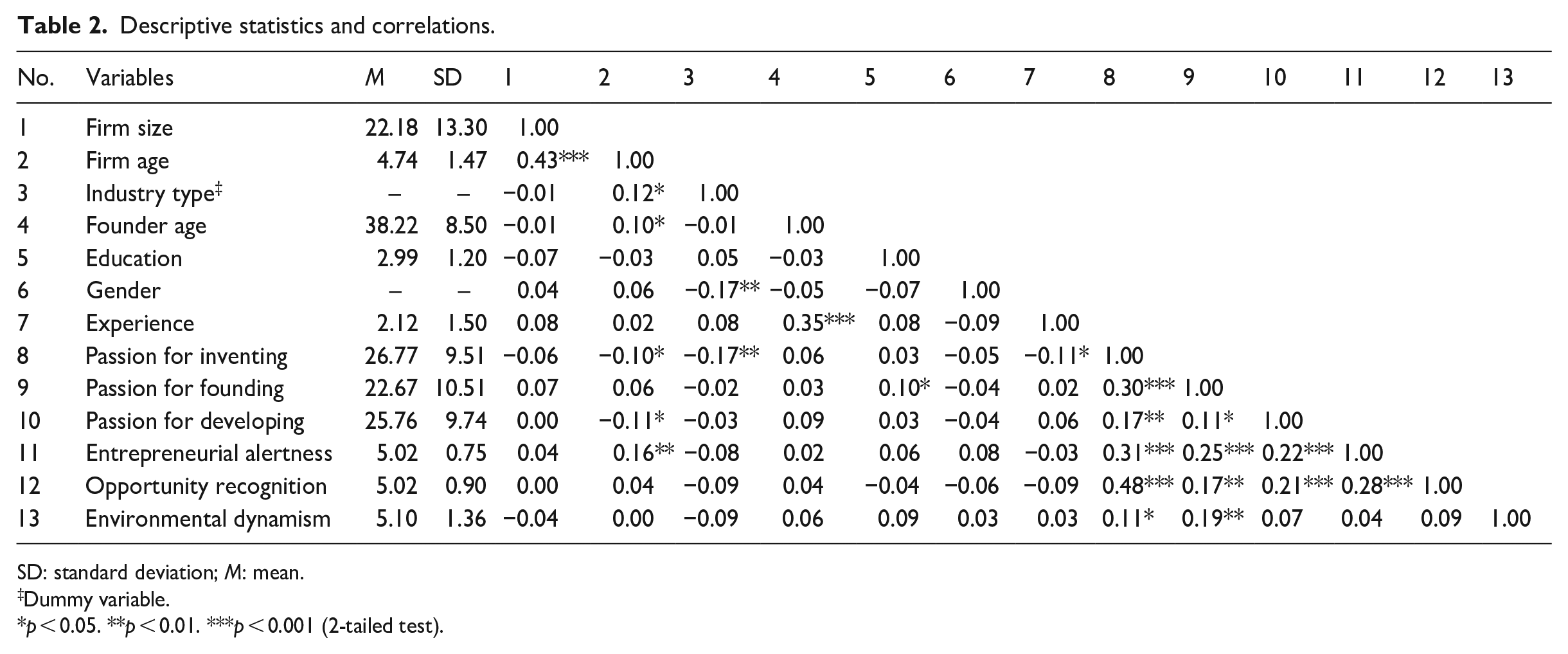
SD: standard deviation; M: mean.
Dummy variable.
p < 0.05. **p < 0.01. ***p < 0.001 (2-tailed test).
Regarding entrepreneurial experience, most participants (73.26%) have founded fewer than three firms, while 26.74% have founded between three and eight firms. Gender distribution is relatively balanced, with 55.81% of the sample being male and 44.19% female. Finally, the manufacturing industry type indicates that 68.21% of firms are involved in low-tech industries, while 31.79% operate in high-tech industries. This distribution reflects a broad representation of different firm characteristics and entrepreneurial backgrounds within the sample.
Analyses
Test for potential biases
In addition to separating the collection data relating to the predictor and criterion variables, we attempted to control for common method variance in our data by conducting a pilot study to establish whether the items were ambiguous. We also promised to protect respondents’ anonymity in the introduction to the survey to reduce social desirability bias.
Moreover, we utilised statistical procedures to examine whether common method variance influences our data. First, we employed Harman’s (1976) one-factor test to assess the potential impact of common method variance. An exploratory factor analysis (EFA) with direct oblimin rotation of the items included in the multi-item measures revealed eight factors with eigenvalues surpassing one. The choice of oblimin rotation allowed individual items to freely load on multiple factors, capturing their true influence across all factors (Samiee and Chabowski, 2012). The EFA shows that all the items loading on eight factors (with eigenvalue greater than one) account for 84.28% of the total variance. The first factor explained approximately 27.11% of the variance. All loadings were greater than 0.40. This outcome suggests that common method variance is not anticipated to be a substantial factor influencing the associations between the dependent and independent variables in this study. Second, we used the approach recommended by Lindell and Whitney (2001) and identified a marker variable. The marker variable was one item variable that was captured with the following statement: ‘I like the blue colour’. This item has no conceptual connection with other variables in the research model. The correlation between the marker variable and other variables in the research model ranges from −0.01 to 0.02. Thus, common method variance could not be considered a problem in our study. Third, we followed the approach suggested by Podsakoff et al. (2012) to include a single common latent factor in our model. Results show that the path coefficients of the main model did not change significantly when the idle factor was integrated (non-common method factor model: χ2/df = (χ2/df = 1.90, RMSEA = 0.05, CFI = 0.95, NNFI = 0.93; SRMR = 0.05), common method factor model: χ2/df = 1.36, RMSEA = 0.05; CFI = 0.94, NNFI = 0.91; SRMR = 0.06). Finally, we found that all the items loaded significantly on their respective constructs. Overall, we concluded that common method variance does not substantially influence our results.
Reliability and validity assessment
To establish the validity and reliability of our multi-item constructs, we performed a confirmatory factor analysis (CFA) for all the multi-item constructs using LISREL 8.71. The measurement model showed adequate fit indices (χ2/df = 1.90, RMSEA = 0.05, CFI = 0.95, NNFI = 93; SRMR = 0.05). In addition, the factor loadings loaded significantly on their respective items and constructs, providing support for the convergent validity of our measures. To assess the reliability of our constructs, we inspected the composite reliability, average variance extracted (AVE), and the Cronbach alpha values of each construct. Table 1 shows all values are above the recommended threshold value, suggesting that our constructs are highly reliable (Bagozzi and Yi, 1988). We also assessed discriminant validity by adopting Fornell and Larcker’s (1981) procedure and inspected squared correlations (i.e. shared variances) between each construct. Since each construct’s AVE is greater than its squared correlations, we achieved good discriminant validity. The means, standard deviations and correlation coefficients are provided in Table 2.
Results
Analytical procedure
We estimated all hypothesised relationships using structural equation modelling (SEM). To prevent multicollinearity, we mean-centred the variables (Aiken and West, 1991) before testing the hypotheses. We employed several analytical procedures in testing the hypothesised relationships. In the first step, the effects of the control variables were estimated. In the second step, we tested the effects of the independent variables (i.e. passion for founding, inventing and developing) on the dependent variable (i.e. opportunity recognition). This allowed us to test H1. In the third step, we tested the effects of the independent variables on the mediator (i.e. entrepreneurial alertness). This allowed us to test H2. Fourth, the mediation hypothesis H3 was tested by using the PROCESS macro, an SPSS-based software (Hayes, 2013; Preacher and Hayes, 2008), which allowed us to estimate the coefficients in a simulated mediation model and provide an estimate for each indirect effect using the bootstrapping approach (Breugst et al., 2012; Oo et al., 2019). Finally, we examined the interaction between environmental dynamism and the three passion domains on entrepreneurial alertness. This allowed us to test H4.
Test of hypotheses
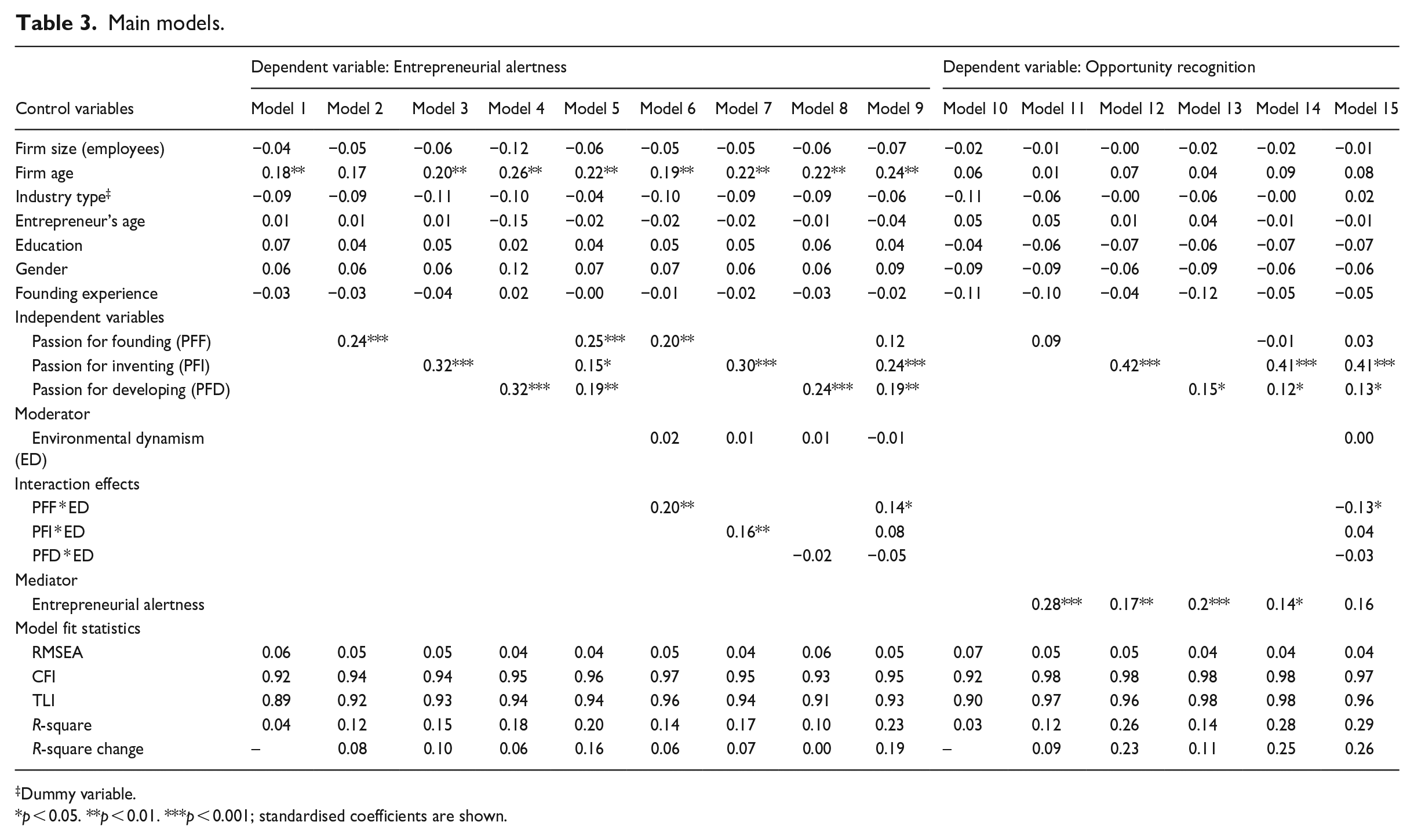
The regression results are presented in Table 3. In Models 1–9, the dependent variable is entrepreneurial alertness, and in Models 10–15, the dependent variable is opportunity recognition. Hypotheses 1a–1c state that the three domains of entrepreneurial passion positively relate to opportunity recognition. Results in Models 11–13 show that passion for founding was not significant (β = 0.09, p > 0.05), whereas passion for inventing (β = 0.42, p < 0.001) and passion for developing (β = 0.15, p < 0.05) are positively related to opportunity recognition.
Main models.
Dummy variable.
p < 0.05. **p < 0.01. ***p < 0.001; standardised coefficients are shown.
Hypotheses 2a–2c propose a positive relationship between the three domains of entrepreneurial passion and entrepreneurial alertness. Results show that passion for founding (β = 0.24, p < 0.001), passion for inventing (β = 0.32, p < 0.001) and passion for developing (β = 0.24, p < 0.001) positively influence entrepreneurial alertness. This provides support for H2a, H2b and H2c. We added an additional path (Model 5) where all three passion domains were tested simultaneously. We found significant relationships for all three domains: founding (β = 0.25, p < 0.001), inventing (β = 0.15, p < 0.05) and developing (β = 0.19, p < 0.01)
To test the mediation hypothesis (H3), we conducted a PROCESS analysis as suggested by Hayes (2013) (for results see Table 4). Results show that the indirect effect of passion for founding on opportunity recognition through entrepreneurial alertness (i.e. passion for founding → alertness→ opportunity recognition) was positive and significant (indirect effect = 0.07, 95% CI = 0.02–0.12). Similarly, we also found support for the indirect effect of passion for inventing (passion for inventing → alertness→ opportunity recognition; indirect effect = 0.05, 95% CI = 0.03–0.09) and passion for developing (i.e. passion for developing→ alertness→ opportunity recognition; indirect effect = 0.05, 95% CI = 0.02–0.10) on opportunity recognition through entrepreneurial alertness, supporting Hypotheses 3a, 3b and 3c.
Mediation analysis with bootstrapped effect estimates.
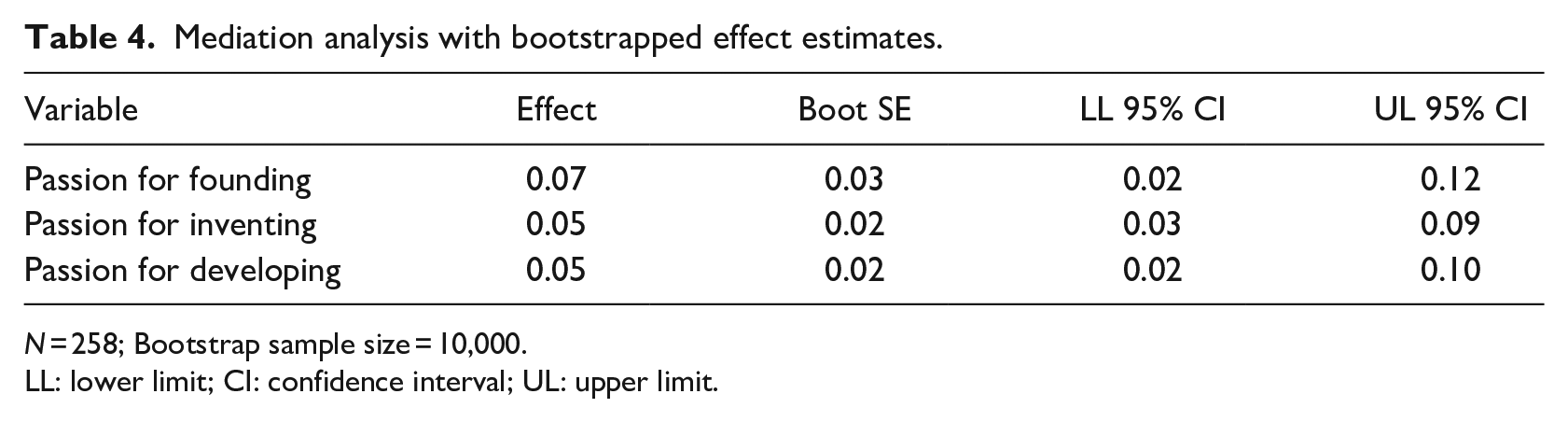
N = 258; Bootstrap sample size = 10,000.
LL: lower limit; CI: confidence interval; UL: upper limit.
In Models 5–7, we added the interaction terms between passion for founding, passion for inventing, passion for developing and the moderator (i.e. environmental dynamism). Specifically, the interaction of environmental dynamism with passion for founding (β = 0.20, p < 0.01) and passion for inventing (β = 0.16, p < 0.01) was significant, providing support for H4a and H4b. However, the interaction of environmental dynamism with passion for developing was not significant (β = −0.02, p > 0.05), failing to support H4c. We further probed this non-significant interaction estimate and found insignificant interaction effect at both 1 standard deviation above (β = 0.04, p > 0.05) and below (β = 0.05, p > 0.05) the mean value of environmental dynamism (see Table 5).
Moderated mediation results in opportunity identification across levels of environmental dynamism.
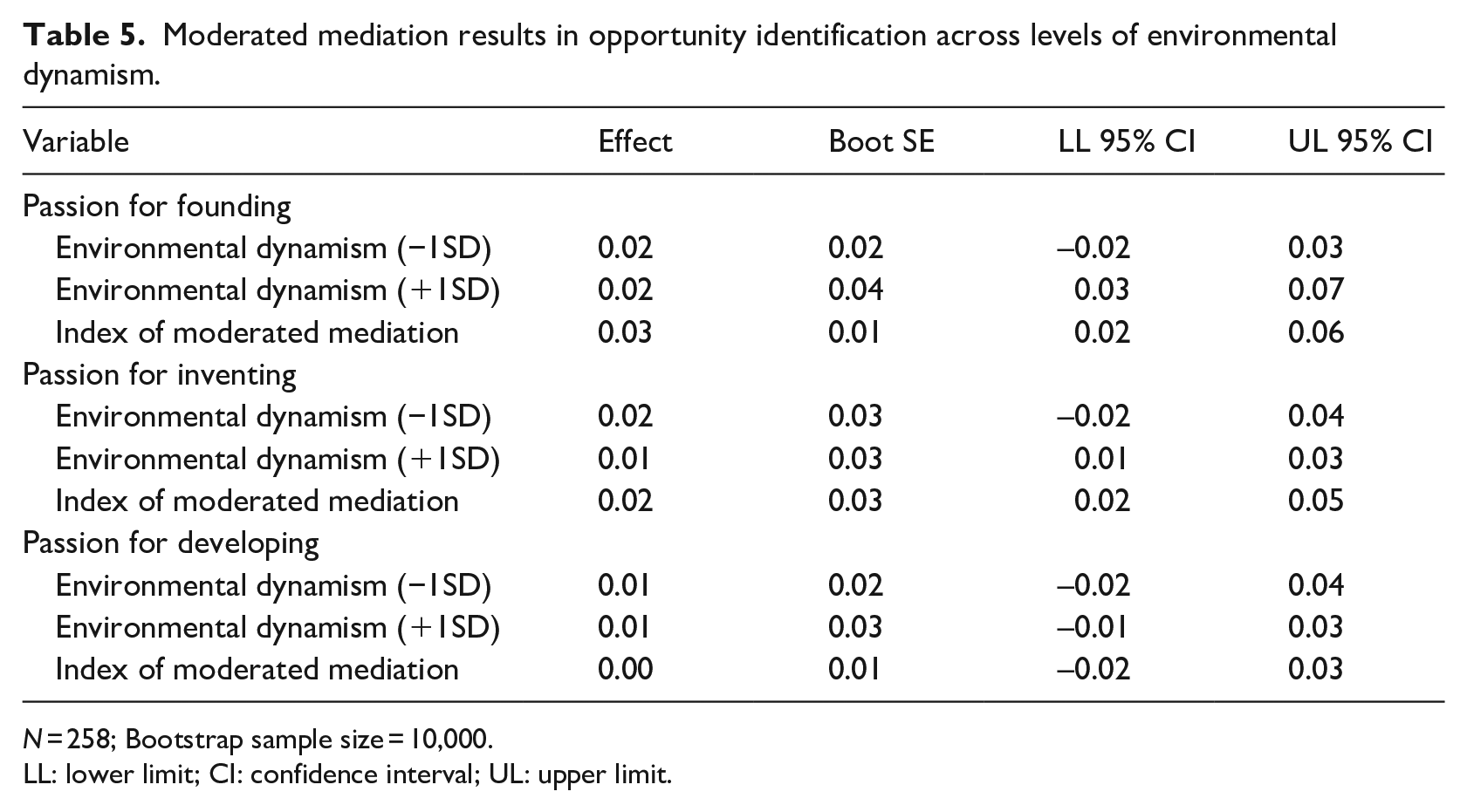
N = 258; Bootstrap sample size = 10,000.
LL: lower limit; CI: confidence interval; UL: upper limit.
To facilitate the interpretation of the significant interactions, we created interaction plots at one standard deviation above and below the mean score of environmental dynamism, following the procedure suggested by Aiken and West (1991) and conducted a simple slope test. Results show that the relationship between passion for founding and entrepreneurial alertness is significant when environmental dynamism is high (β = 0.20, p < 0.05), but is non-significant when environmental dynamism is low (β = 0.02, p > 0.05). This interaction is plotted in Figure 2, which shows that the positive effect of passion for founding on entrepreneurial alertness is stronger when environmental dynamism is high than when it is low. In addition, the positive effect of passion for inventing on entrepreneurial alertness is amplified when environmental dynamism is high (β = 0.19, p < 0.05), and is weaker when environmental dynamism is low (β = 0.03, p > 0.05). This interaction is plotted in Figure 3.
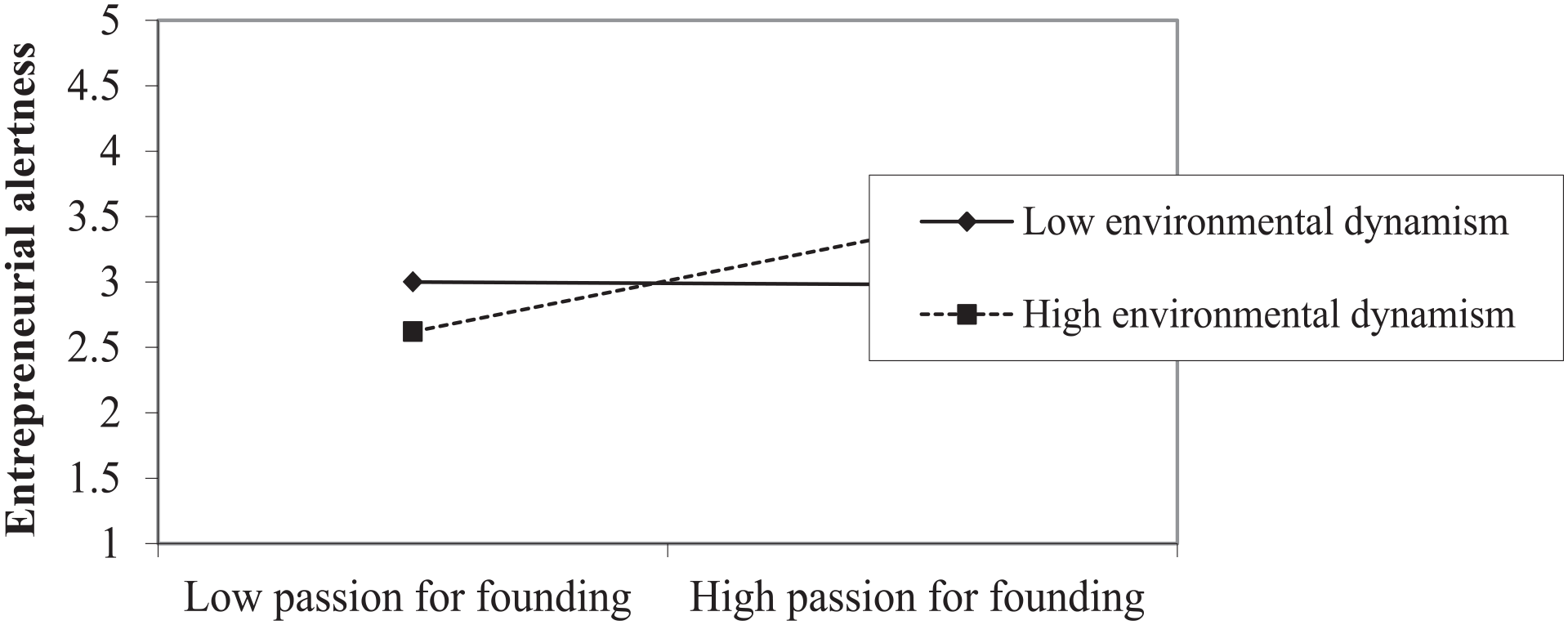
Interaction of passion for founding and environmental dynamism on entrepreneurial alertness.
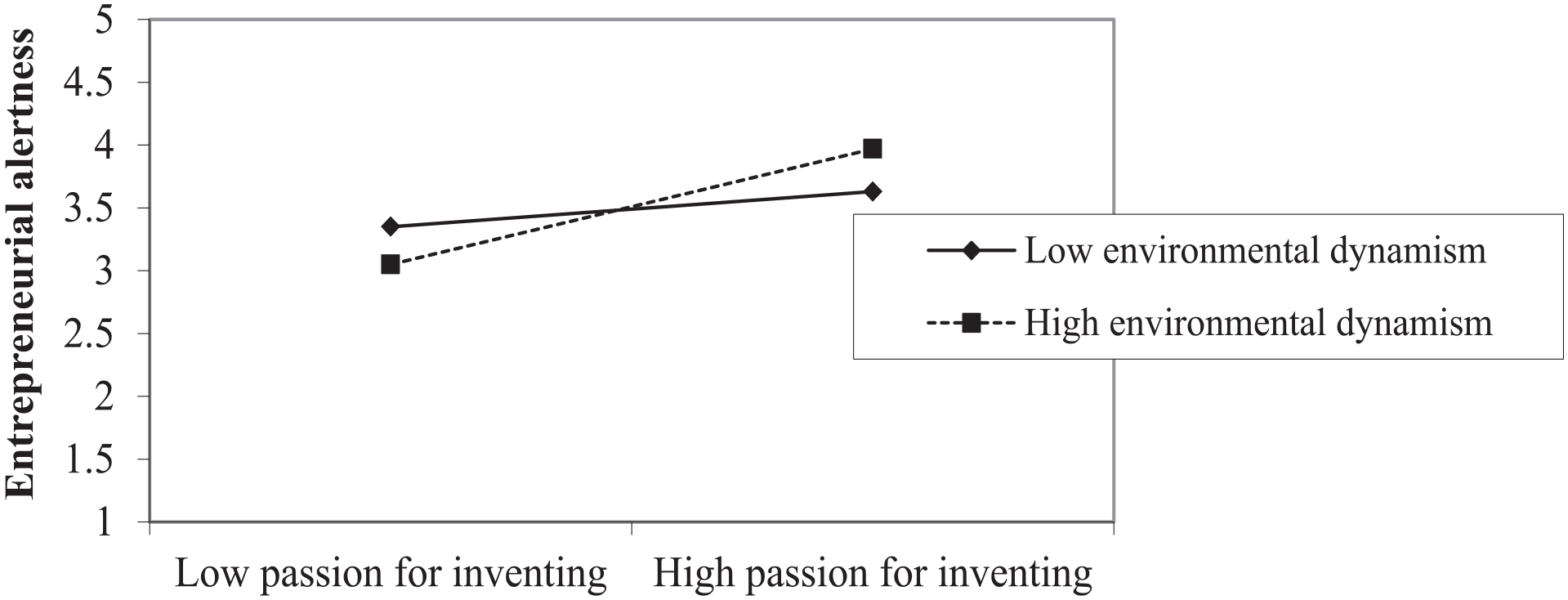
Interaction of passion for inventing and environmental dynamism on entrepreneurial alertness.
Post hoc analyses
In a post hoc analysis, we tested an alternative model by adding additional control variables including environmental threat and access to finance to our model. Results were consistent with our initial findings indicating that the results presented are robust to alternative explanations (Adomako, 2021; Stam, 2010). Since we propose a first-stage moderated mediation model, we also investigated the conditional indirect effect of the three domains of passion on opportunity recognition through alertness at two levels of environmental dynamism, using an SPSS macro process (Preacher et al., 2007). High and low levels of environmental dynamism were set at one standard deviation above and below the mean score of environmental dynamism. The results of the conditional indirect effect analysis are presented in Table 6 and indicate that the indirect effect of passion for founding on opportunity recognition through entrepreneurial alertness was significant at high levels of environmental dynamism (CI for index of moderated mediation ranged from 0.02 to 0.06). Similarly, the conditional indirect effect of passion for inventing on opportunity recognition through alertness was significant at high levels of environmental dynamism (CI for index of moderated mediation ranged from 0.02 to 0.05). However, the conditional indirect effect of passion for developing opportunity recognition through entrepreneurial alertness was non-significant (CI for index of moderated mediation ranged from −0.02 to 0.03).
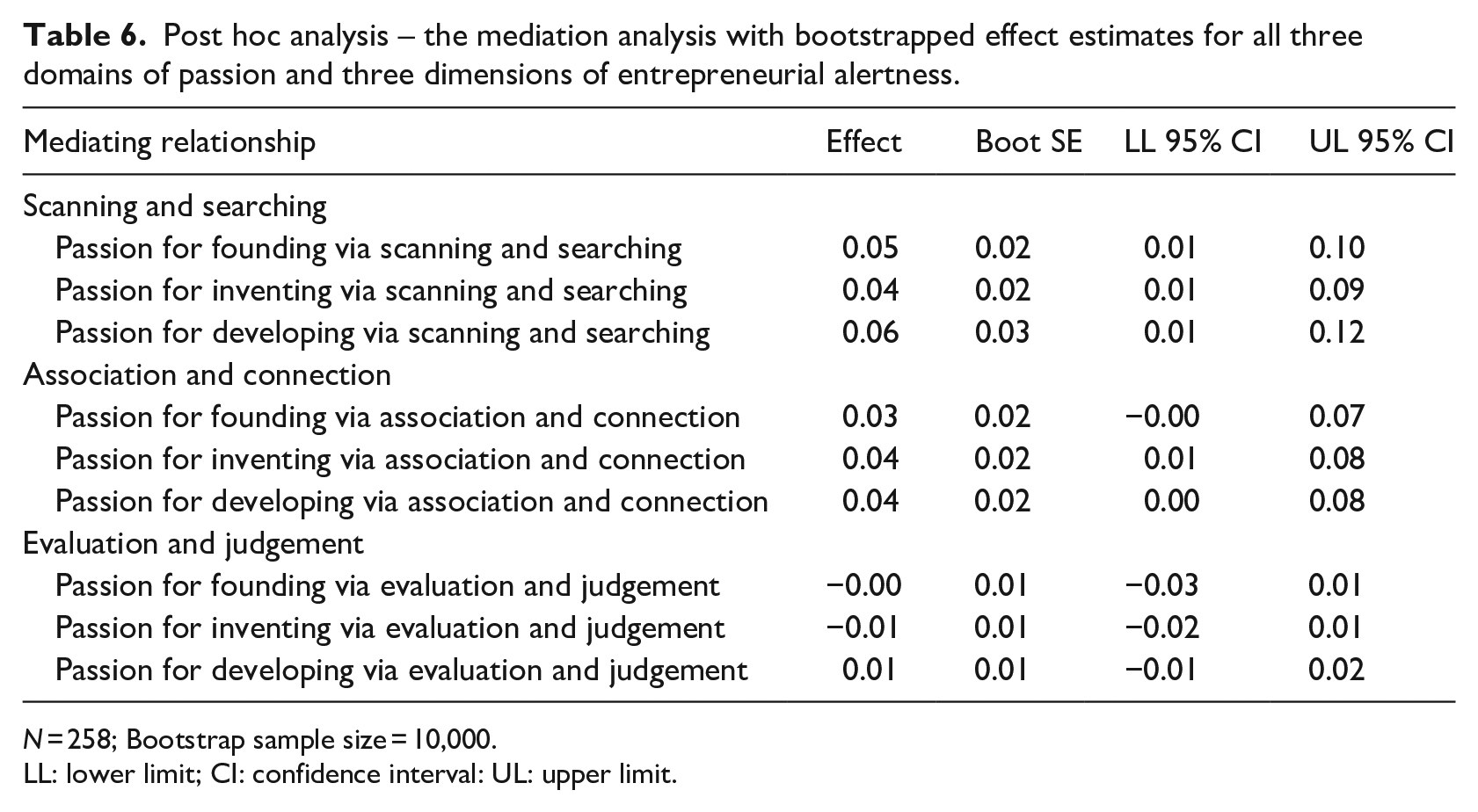
Post hoc analysis – the mediation analysis with bootstrapped effect estimates for all three domains of passion and three dimensions of entrepreneurial alertness.
N = 258; Bootstrap sample size = 10,000.
LL: lower limit; CI: confidence interval: UL: upper limit.
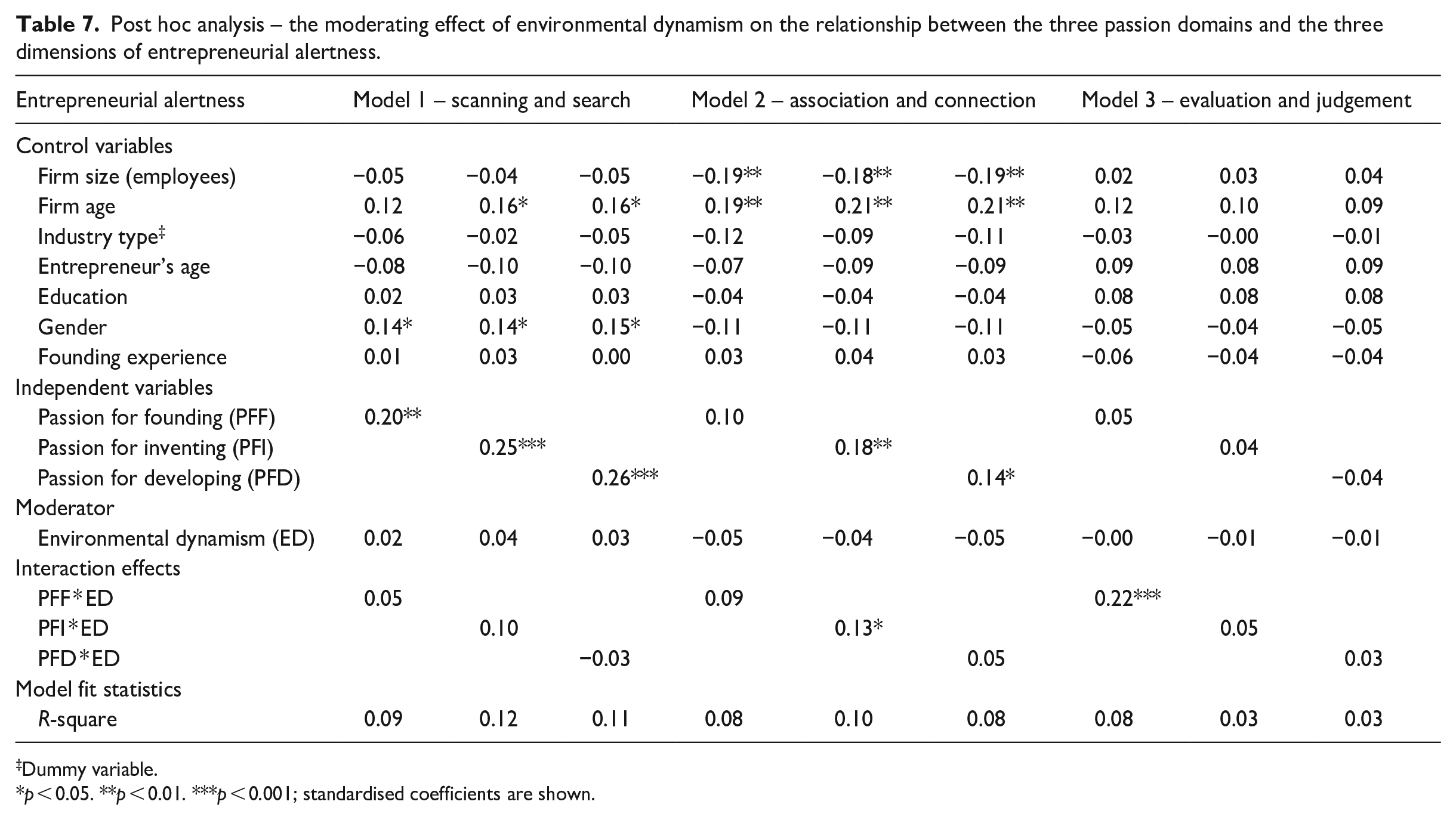
Finally, to further explore the potential differences in the effects of the three passion domains, we also examined whether these passion domains influence opportunity recognition through different dimensions of entrepreneurial alertness (see Table 7). Results show that the relationship between passion for inventing and opportunity recognition is mediated by both scanning and search dimensions of alertness (indirect effect = 0.004, 95% CI = 0.001–0.01) and the association and connection dimension of alertness (indirect effect = 0.004, 95% CI = 0.0004–0.01). Similarly, the relationship between passion for developing and opportunity recognition is also mediated by the scanning and search dimension of alertness (indirect effect = 0.01, 95% CI = 0.001–0.01) and the association and connection dimension of alertness (indirect effect = 0.003, 95% CI = 0.0003–0.08). The relationship between passion for founding and opportunity recognition, however, is mediated only by the search and scanning dimension of alertness (indirect effect = 0.004, 95% CI = 0.001–0.01). Interestingly, the evaluation and judgement dimension of alertness is not a statistically significant outcome of any domain of entrepreneurial passion (p > 0.1), nor is it related to opportunity recognition (p > 0.1). As a result, it does not mediate the relationship between any domain of passion and opportunity recognition.
Post hoc analysis – the moderating effect of environmental dynamism on the relationship between the three passion domains and the three dimensions of entrepreneurial alertness.
Dummy variable.
p < 0.05. **p < 0.01. ***p < 0.001; standardised coefficients are shown.
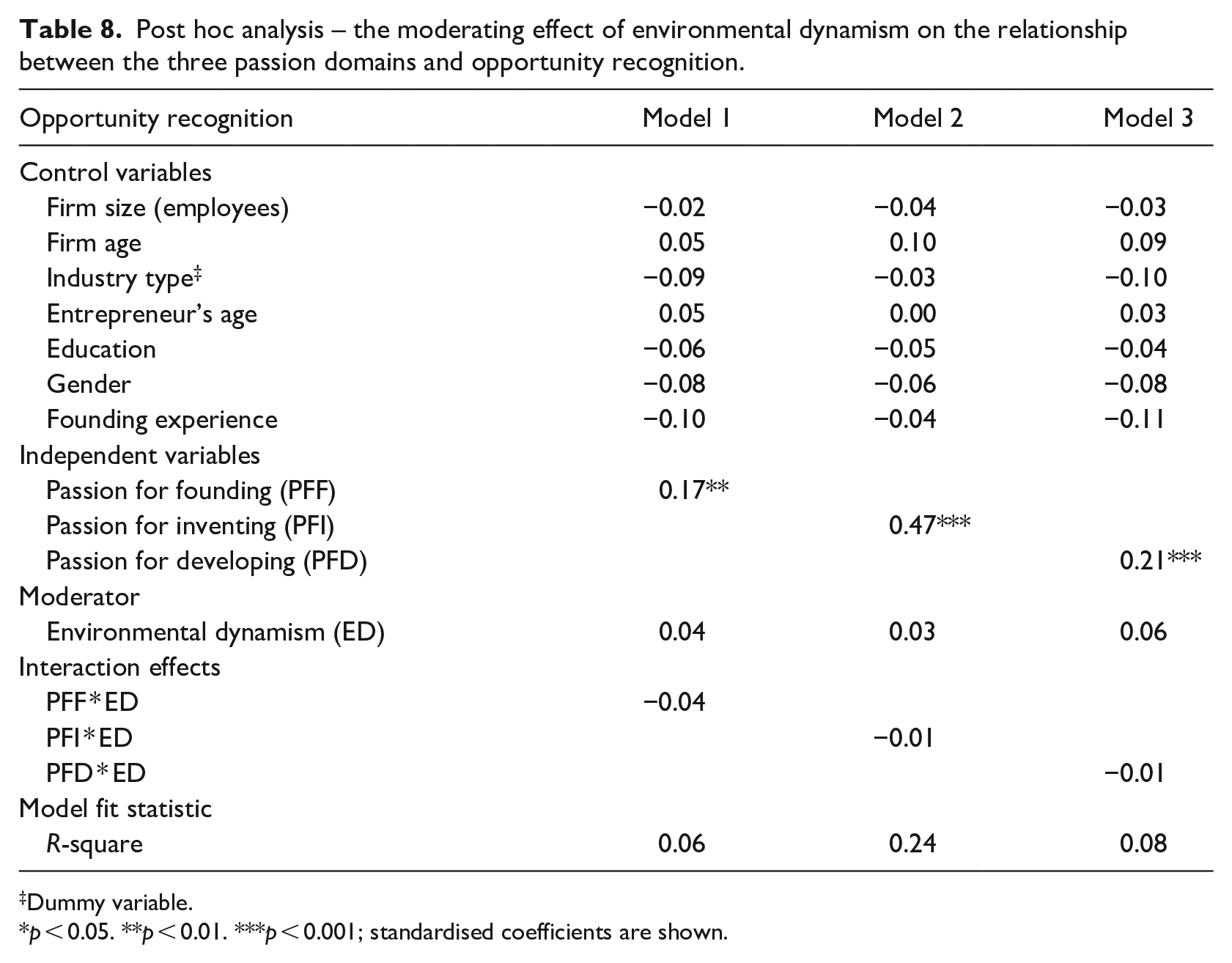
Regarding the moderating role of environmental dynamism, it moderates the relationship between passion for inventing and the association and connection dimension of alertness (β = 0.13, p < 0.05). It also moderates the relationship between passion for founding and the evaluation and judgement dimension of alertness (β = 0.22, p < 0.01). Finally, although we did not hypothesise the moderating role of environmental dynamism in the relationship between passion and opportunity recognition, we found that this moderation relationship is not supported for any domain of entrepreneurial passion (p > 0.1) as shown in Table 8.
Post hoc analysis – the moderating effect of environmental dynamism on the relationship between the three passion domains and opportunity recognition.
Dummy variable.
p < 0.05. **p < 0.01. ***p < 0.001; standardised coefficients are shown.
Discussion and implications
Opportunity recognition is regarded as one of the most distinctive and fundamental entrepreneurial behaviours (Kirzner, 1979; Tumasjan and Braun, 2012) and remains a central construct in entrepreneurship research. In this study, we examine how, when and which domains of entrepreneurial passion influence opportunity recognition through entrepreneurial alertness. Our findings reveal that all three domains of passion increase opportunity recognition via entrepreneurial alertness. Specifically, we find that the relationship between passion for founding and opportunity recognition is fully mediated by entrepreneurial alertness. In contrast, the relationships between the other two passion domains – developing and inventing – and opportunity recognition are only partially mediated by entrepreneurial alertness. Moreover, our findings indicate that passion for inventing and passion for founding enhance entrepreneurial alertness only in conditions of high environmental dynamism. Interestingly, passion for developing fosters opportunity recognition in both dynamic and stable environments. Post hoc analysis also reveals that different passion domains influence opportunity recognition through various dimensions of alertness. We next discuss our contributions to the literature and the practical implications of our study.
Implications for theory
Our research makes several key contributions to the field of opportunity recognition. First, it extends understanding of how affect and cognition influence opportunity recognition, a topic that has received limited empirical attention (Araujo et al., 2023). Specifically, our findings demonstrate that all three passion domains – passion for inventing, founding and developing – affect opportunity recognition through the mediating role of entrepreneurial alertness. Additionally, we identify environmental dynamism as a critical boundary condition for this relationship. The mediating role of entrepreneurial alertness supports both Fredrickson’s (2001) broaden-and-build theory and Isen’s (2002) perspective, which suggests that positive affect not only broadens individuals’ thought-action repertoires but also enhances cognitive flexibility, creativity and holistic thinking. According to Fredrickson (2001), positive emotions such as joy and interest expand an individual’s scope of attention and cognitive processes, allowing entrepreneurs to explore a wider range of possibilities and identify novel opportunities. This broadened mindset helps entrepreneurs accumulate long-term resources, including knowledge and social networks, which are crucial for sustained opportunity recognition. Similarly, Isen’s (2002) work highlights how positive affect promotes integrative thinking and the ability to connect disparate pieces of information, thereby fostering innovative problem-solving and more adaptive responses to changing environmental conditions. Together, these perspectives underline how entrepreneurial alertness, fuelled by positive affect, enables entrepreneurs to more effectively recognise and evaluate emerging opportunities in dynamic contexts.
Interestingly, only passion for inventing and passion for developing directly influence opportunity recognition. This may be because, for entrepreneurs with these passions, identifying new opportunities directly validates their self-identity. Entrepreneurs passionate about inventing are driven to identify opportunities for developing new products or services, as these activities are central to their self-concept. Similarly, those with a passion for developing are motivated to recognise growth opportunities, as nurturing and expanding their ventures aligns closely with their identity. In contrast, while entrepreneurs passionate about founding are indeed driven by their desire to create new ventures, their identity may be more strongly tied to activities such as raising capital and starting their venture rather than to opportunity recognition. Our findings suggest that their ability to recognise opportunities is heavily reliant on entrepreneurial alertness. The direct relationship between passion for founding and opportunity recognition is not significant; rather, it is the effect of passion for founding on entrepreneurial alertness that facilitates opportunity recognition. This emphasises the important role of alertness in enabling founders to identify and capitalise on new opportunities (Araujo et al., 2023), suggesting that without heightened alertness, passion for founding alone may not lead to opportunity recognition. We also contribute to the entrepreneurial passion literature by providing nuanced insights into the relationship between the three domains of entrepreneurial passion and opportunity recognition through entrepreneurial alertness. Previous studies have shown that the relevance of different passion domains to entrepreneurial outcomes can vary significantly. For instance, Breugst et al. (2012) found that different types of entrepreneurial passion differentially influence an employee’s positive affect, goal clarity and affective commitment. Similarly, Cardon and Kirk (2015) demonstrated that passion for inventing and founding, but not for developing, mediate the relationship between entrepreneurial self-efficacy and persistence. The findings align with this body of work and respond to Newman et al.’s (2021) call for further exploration of how different forms of entrepreneurial passion predict various outcomes.
The unequal influence of the three passion domains is evident in two key aspects of this research. First, different passion domains affect different dimensions of entrepreneurial alertness. Our post hoc analyses reveal that passion for inventing and passion for developing influence opportunity recognition through both the scanning and search dimension and the association and connection dimension of alertness. These perceptual and cognitive processing skills require high creativity and are well-suited to the goals of inventing new solutions and growing a business through new opportunities. However, the evaluation and judgement dimension of alertness, which involves a more analytical assessment of feasibility and market viability, does not significantly mediate the relationship between these passions and opportunity recognition. This may be because inventors and developers are more focused on the creative aspects of launching and developing their ventures and less on critically evaluating these opportunities (Baron, 2006; Gielnik et al., 2012). Second and in contrast, passion for founding influences opportunity recognition primarily through the scanning and search dimension of alertness. Entrepreneurs are often driven by the excitement of creating new ventures, which heightens their vigilance in identifying market gaps and emerging trends (Cardon et al., 2009; Shane and Venkataraman, 2000). The evaluation and judgement dimension becomes significant only in highly dynamic environments, where the need for critical decision-making and risk assessment is heightened (Grégoire et al., 2010). In more stable environments, founders may overlook potential risks in their eagerness to launch new ventures, resulting in a non-significant relationship with the evaluation and judgement dimension of entrepreneurial alertness. The findings provide a nuanced understanding of the relationship between entrepreneurial alertness and opportunity recognition, extending the insights from Hajizadeh and Zali’s (2016) study. Additionally, these findings reveal a discrepancy with Campos (2017), who found that passion for developing enhances all three domains of entrepreneurial alertness. These inconsistent elements suggest that further research is needed to explore the varying effects of different passion domains on alertness across different contexts.
Our research also highlight the importance of considering contextual boundary conditions in passion research. Environmental dynamism, for instance, significantly moderates the relationship between entrepreneurial passion and alertness, particularly for passion for inventing and founding. Previous studies have shown that factors such as environmental dynamism, political connections and resource availability act as boundary conditions for the effects of entrepreneurial passion on outcomes such as venture performance (Adomako and Ahsan, 2022; Adomako et al., 2023). This article contributes to this growing body of literature by providing empirical evidence that environmental dynamism enhances the effectiveness of passion for inventing and founding in influencing entrepreneurial alertness, but not passion for developing. We believe that in stable environments, where changes in consumer demand, regulation and technology are minimal, the need for inventing new solutions or founding new businesses is low, as existing products and services continue to generate profit. In contrast, dynamic environments present ample opportunities for entrepreneurs to search for new information and reframe their mental models, serving as a source of activation for quick, creative responses to environmental changes (Baron and Tang, 2011). Thus, passion for inventing and founding becomes more advantageous in dynamic environments. However, entrepreneurs passionate about developing their ventures are likely to pursue a broader set of opportunities available in both stable and dynamic environments, such as improving organisational efficiency, forming new relationships and exploring new business models. As a result, the impact of passion for developing is less contingent on environmental dynamism.
Implications for practice
Our study provides valuable insights for entrepreneurs, advisors and educators, emphasising the importance of aligning entrepreneurial strategies with cognitive, emotional and environmental factors that influence opportunity recognition. As different domains of entrepreneurial passion foster opportunity recognition through distinct dimensions of alertness, entrepreneurs should consider the diversity of passions within their founding teams. Forming teams with co-founders who have complementary passions – such as inventing, founding and developing – can ensure a more holistic approach to identifying business opportunities. Engaging in activities aligned with each team member’s passion nurtures their enthusiasm, enhancing both venture creation and development. Our findings indicate that passion for founding and inventing is particularly effective in dynamic environments, where rapid changes demand heightened alertness. Entrepreneurs in such settings should strategically leverage these passions to remain competitive. However, it is equally crucial for these entrepreneurs to ensure their teams possess a range of alertness dimensions, enabling them to identify opportunities in both stable and dynamic environments. Partnering with individuals passionate about aspects like business growth and development can enable teams to recognise and capitalise on opportunities regardless of environmental conditions.
Entrepreneurship training programmes should focus on enhancing the cognitive skills associated with alertness, particularly scanning, searching and connecting information. Given that passion for founding translates into opportunity recognition primarily through alertness, training that develops these cognitive processes can significantly improve entrepreneurs’ ability to identify and act on opportunities. Educators should highlight the different effects of passion domains on alertness and opportunity recognition and the contexts where these passions are most effective. Incorporating opportunity recognition tools, such as those developed by Cohen et al. (2021), into entrepreneurship courses will provide students with practical experience in identifying and evaluating opportunities, equipping them with the necessary skills to succeed in varied entrepreneurial environments. For advisors, it is important to help entrepreneurs understand the strengths and limitations of their passion domains. While high entrepreneurial passion can enhance opportunity recognition, advisors should caution entrepreneurs who focus solely on inventing or founding, as their effectiveness may be limited in stable environments. Advisors can encourage partnerships with individuals passionate about developing and improving the team’s overall opportunity recognition in less dynamic settings. Encouraging collaboration among entrepreneurs with diverse passions introduces alternative perspectives and methodologies, strengthening the team’s ability to recognise and act on profitable opportunities.
Finally, understanding environmental dynamism is critical for both entrepreneurs and their advisors. In dynamic environments, the rapid pace of change and frequent emergence of opportunities heighten the value of passions for inventing and founding. Entrepreneurs in these contexts should continuously adapt and scan for new opportunities. In contrast, those with a passion for developing can thrive in both stable and dynamic settings, as their focus on growth enables them to capitalise on a broader range of opportunities, such as improving organisational efficiency or exploring new business models.
Limitations and future research
Our study provides valuable insights into the relationship between entrepreneurial passion, alertness and opportunity recognition, but it is important to acknowledge its limitations. First, as we collected data from entrepreneurs in only one country (Ghana), our results may not be generalisable to other contexts. Future research should test the applicability of our conceptual model in different countries. Additionally, our data was collected from ventures in a single industry – manufacturing. Entrepreneurs in capital-intensive manufacturing industries may place greater importance on, and react more actively to rapid environmental changes because the cost of failure is much higher. As a result, they may benefit more from entrepreneurial passion. Future research could, therefore, collect data from multiple industries to provide a more comprehensive picture.
Second, we adopted Cardon et al.’s (2009) conceptualisation of entrepreneurial passion and focused on three passion domains in this study. However, an alternative framework identifies six dimensions: passion for growth, passion for people, passion for the product or service, passion for inventing, passion for competition and passion for a social cause (Cardon et al., 2017). These dimensions may be closely tied to an entrepreneur’s varied motivations and goals for starting their ventures and could, therefore, affect opportunity recognition. Future research could investigate how these different forms of entrepreneurial passion influence opportunity recognition, offering a richer understanding of this relationship. Moreover, subsequent studies could examine the role of other emotions in opportunity recognition and entrepreneurial outcomes, further expanding our knowledge of how affect shapes entrepreneurial processes.
Third, we examined only one environmental boundary condition – environmental dynamism – in the relationship between entrepreneurial passion and entrepreneurial alertness. Future research should consider other environmental factors, such as environmental hostility and environmental munificence, as these may be more pertinent in other contexts. For example, Tang (2008) found a strong relationship between environmental munificence and entrepreneurial alertness in a sample of U.S. entrepreneurs. Future research could use samples from different contexts to further explore the moderating role these factors may play in the relationship between entrepreneurial passion and entrepreneurial alertness.
Fourth, we focused on the influence of entrepreneurial passion on opportunity recognition through entrepreneurial alertness. However, given that entrepreneurial passion can change and develop, future research could also examine whether and when entrepreneurial alertness or opportunity recognition might influence passion. Finally, we used only primary data from our survey for analysis. Future research should attempt to use secondary data to further validate our findings. Additionally, while there are advantages to using SEM for data analysis, our approach focuses on identifying factors that have a statistically significant impact on outcomes. This approach may potentially overlook the necessary conditions or combinations of conditions that are critical for achieving high levels of opportunity recognition. To address these limitations and provide a more nuanced understanding of the factors that enhance opportunity recognition, future research could adopt Necessary Condition Analysis (NCA) and Qualitative Comparative Analysis (QCA). This would provide a more holistic understanding of the diverse pathways through which opportunity recognition can be achieved, offering entrepreneurs more flexible strategies tailored to their specific contexts.
Conclusion
Identifying opportunities is arguably the first step in the entrepreneurial process; it is crucial for business creation and growth, particularly in dynamic environments. Our study explores how, when and which domains of entrepreneurial passion influence opportunity recognition through entrepreneurial alertness. The findings indicate that all three domains of entrepreneurial passion enhance opportunity recognition through entrepreneurial alertness, but only passion for inventing and passion for developing have a direct impact on opportunity recognition. Additionally, passion for inventing and passion for founding amplify entrepreneurial alertness only in highly dynamic environments.
Footnotes
Funding
The author(s) received no financial support for the research, authorship and/or publication of this article.
