




Abstract
This article analyses the contingent factors which influence the relationship between entrepreneurial passion and venture profit. While research on entrepreneurial passion is burgeoning, studies that analyse contingent factors and boundary conditions surrounding entrepreneurial passion theory are sparse. Moreover, we know very little about how the influence of entrepreneurial passion on venture outcomes might vary in emerging markets, typically characterised by higher levels of bureaucratic involvement and institutional deficiencies. We extend entrepreneurial passion theory by testing a contingent model that evaluates the influence of political connections and environmental dynamism on the relationship between entrepreneurial passion and venture profit. More specifically, we examine the role of passion on venture profit and the moderating impact of political connections and perceived environmental dynamism. Using time-lagged data from 231 small businesses in Ghana, we find that political connections amplify the potency of passion as a driver of venture profit. In addition, we find that this interaction is conditioned by environmental dynamism; specifically, the moderating effect of political connections on the relationship between entrepreneurial passion and venture profit is stronger when dynamism is high. Our fine-grained analysis increases the conceptual scope and generalisability of entrepreneurial passion to non-Western contexts.
Introduction
Passion is the ‘fire’ that makes the improbable possible in entrepreneurship (Smilor, 1997: 342). Extant research indicates that entrepreneurial passion – defined as intense positive feelings experienced by engagement in entrepreneurial activities associated with roles that are meaningful to the entrepreneur (Cardon et al., 2009) – stimulates key processes including motivation (Brännback et al., 2006; De Clercq et al., 2013) and perseverance (Cardon and Kirk, 2015). Although we have witnessed a substantial increase in research aimed towards understanding entrepreneurial passion (Newman et al., 2021; Thorgren and Wincent, 2015), research has tended to focus more on intrapersonal effects and overlook how contextual conditions, such as those prevalent in emerging markets, might facilitate or hinder passion’s influence on desired organisational outcomes (Forest et al., 2012; McAllister et al., 2017). By overlooking context, extant passion theory makes the implicit assumption that entrepreneurial passion operates uniformly, notwithstanding the surrounding environment. We know this is unlikely in practice given that research demonstrates the powerful effects that context can exert on a variety of constructs and relationships (Hofstede, 1993; Welter, 2011). In this article, we extend our understanding of entrepreneurial passion by investigating its influence on venture performance in the emerging market of Ghana, a sub-Saharan economy.
As an emerging market, Ghana is characterised by high levels of market deficiencies, the absence of supportive institutions and few contract-enforcing mechanisms (Khanna and Palepu, 2006). These various shortcomings lead to increased incidences of bureaucratic entanglements and regulatory meddling by political authorities (Acquaah and Eshun, 2010). This is important because entrepreneurial passion theory (Cardon et al., 2009) has been developed and tested primarily in the Western world (Cardon and Murnieks, 2020; Curran et al., 2015), where institutional forces tend to be more stable. As such, we know very little about how the impact of entrepreneurial passion might be affected when various political and market forces are more dynamic and subject to change. We do not know whether these forces are so strong that they dampen the influence of an entrepreneur’s passion, or if passion might become more influential because it catalyses greater determination and persistence in emerging markets. It is plausible that difficulties encountered in emerging markets like Ghana elevate the importance of the motivational fire inherent in entrepreneurial passion (Appienti and Chen, 2020). To analyse how the emerging market context might affect the operation of entrepreneurial passion, we look at the moderating influence of political connections. We theorise that higher levels of political connections may play a complementary role in facilitating the operation of passion. In order to develop a more nuanced understanding of how political connections and entrepreneurial passion interact in an emerging market, we also investigate how their relationship is conditioned by environmental dynamism.
Emerging markets are often riddled with dynamic conditions; change is rapid and markets are turbulent (Boso et al., 2012; Li and Liu, 2014); those such as the sub-Saharan economies, tend to be volatile as businesses frequently encounter commodity price swings, high competition and changing customer preferences (Amoako and Lyon, 2014). Thus, entrepreneurs in emerging markets must deal with heightened uncertainty and the risk that manifests from increased dynamism (Baron and Tang, 2011). Political connections can help assuage these tempestuous conditions (Acquaah, 2007). We argue that as dynamism increases, the more entrepreneurial passion will benefit from political connections. Extant research indicates that both political connections and environmental dynamism exert significant effects on firms in emerging economies (Acquaah and Eshun, 2010; Chen et al., 2012), and that greater turbulence in dynamic environments enhances the benefits of political connections. We test our theoretical model through a temporally lagged design with 231 entrepreneurs in Ghana.
This article contributes to the entrepreneurship literature by taking a contingent approach to examine the boundary conditions surrounding entrepreneurial passion theory. Political connections and environmental dynamism represent two contextual variables that can vary greatly, and have not been considered in the development of this theory (Cardon et al., 2009; Zahra, 2007). In so doing, this article extends extant knowledge by increasing the conceptual scope and generalisability of entrepreneurial passion theory (Cardon and Murnieks, 2020). We also offers a significant contribution by focusing specifically on the linkage between entrepreneurial passion and venture profit. While some studies have examined the effects of passion on firm-level variables such as venture survival and growth (Drnovsek et al., 2016; Stenholm and Renko, 2016) there is little analysis of venture profits, which are a critical component of overall performance (McLaughlin and Lydecker, 2016). We seek a finer-grained analysis which explains specifically how passion may drive venture profit necessary for both subsequent growth and overall performance. In emerging markets, where external capital is not readily available from banks or equity investors, internally generated profits are of added importance compared to more developed economies (Austin et al., 1996; Julian and Ofori-Dankwa, 2013). Ghana offers a rich opportunity to develop and test theory that redresses these research gaps.
Our article proceeds as follows. In the next section, we theorise a contingent model linking entrepreneurial passion and firm profit, moderated by political connections and environmental dynamism. Following this, we describe our methods and offer our empirical results. Finally, we discuss the theoretical and practical implications of our study.
Theoretical background and hypotheses
Theoretical perspectives
Entrepreneurial passion (Cardon et al., 2009), involves both intense positive feelings and identity centrality around the object of those feelings. We note that the intense positive feelings characteristic of entrepreneurial passion is aimed at a specific object, which separates the construct of passion from other affective constructs such as mood (Mueller et al., 2017; Vallerand, 2015). In this particular case, the specific object is activities associated with being an entrepreneur. Identity centrality refers to the self-ascribed importance of a given role identity within an individual’s self-concept. Role identities are cognitive schemas containing behavioural prescriptions that inform what it means to ‘be’ a certain type of person (Stryker and Burke, 2000). For example, the role identity of an entrepreneur may involve behaviours and activities related to inventing products, founding new companies or growing businesses (Cardon et al., 2009; Dalborg and Wincent, 2014).
Based on Cardon et al.’s (2009) theory of entrepreneurial passion, these entrepreneurial role identities increase engagement in entrepreneurial activities associated with each of these roles. As such, the inventor identity is theorised to influence effectiveness at opportunity recognition, the founder identity is theorised to influence venture creation activities and the developer identity is theorised to influence activities that contribute to firm performance and venture growth (i.e. sales/profit growth and firm profitability) (Cardon et al., 2009). Although there are sources of passion that are not specific to these three roles, such as passion for a social mission or passion for a specific product (Cardon et al., 2017), extant research has primarily focused on these three roles, ‘Consistently found at the heart of the entrepreneurial process’; they have been empirically validated as separate dimensions of entrepreneurial passion and distinguished not only from each other, but also from other cognitive and affective variables commonly examined in entrepreneurship (Cardon et al., 2013: 376). As we investigate the relationship between entrepreneurial passion and venture profit, we concentrate on passion aimed at activities that are associated with the developer role identity – the role that is passionate about activities related to nurturing, growing and expanding the business after it has been founded and established (Drnovsek et al., 2016).
Entrepreneurial passion and venture performance
We contend that entrepreneurial passion targeted at developing activities can boost venture profit. In reviewing extant literature it is evident that passion can provide different possible benefits. For example, recent meta-analyses have shown that passion at work is significantly related to consequential outcomes such as intraindividual performance, innovation, motivation and effort (Curran et al., 2015; Pollack et al., 2020). Specific to entrepreneurship, entrepreneurial passion has been linked to venture growth (Baum and Locke, 2004; Drnovsek et al., 2016) and overall venture performance (Mueller et al., 2017). In addition, entrepreneurial passion demonstrates efficacy in attracting important resources to ventures which support venture development (Murnieks et al., 2016; Warnick et al., 2018). These studies show that entrepreneurial passion can stimulate different behaviours and reactions which benefit ventures (Cardon and Murnieks, 2020).
According to Cardon et al. (2009), entrepreneurial passion catalyses increased absorption and persistence aimed at venture-related activities. We argue this will influence venture profit for a variety of reasons. First, passion for developing activities encourages the experience of absorption among entrepreneurs as they feel elevated levels of excitement resulting from engaging in their venture (Cardon et al., 2009). As a result, they are likely to perceive that the time spent on developing their ventures feels less like ‘work’ and more like an extended experience of ‘flow’ (Schindehutte et al., 2006). Flow represents a state where individuals become fully immersed in a particular activity, often losing track of time (Csikszentmihalyi, 1990). In addition to promoting absorption, the positive feelings associated with entrepreneurial passion can help entrepreneurs identify a broader range of strategies and potential solutions to problems. This occurs because these positive emotional components activate broader thought–action repertoires that enhance individual physical and intellectual capabilities to deal with the challenges associated with operating firms profitably (Baron, 2008; Drnovsek et al., 2016).
Second, entrepreneurial passion facilitates growth and performance as passion promotes elevated attentional focus through absorption in venture tasks and continued output of effort through persistence (Cardon et al., 2009; Hsu et al., 2014). This persistence manifests from the identity centrality component of entrepreneurial passion. We know that entrepreneurs possess entrepreneurial role identities and align their behaviours accordingly (Hoang and Gimeno, 2010); moreover, these identities influence how they operate the firm (Powell and Baker, 2014). Personally significant emotions aligned with central identities inspire greater perseverance and behaviour toward maintaining those identities (Izard, 2009; Stryker, 2004). In other words, entrepreneurs who view their entrepreneurship activities as an important part of their identity are more likely to be passionate about growing profits and are more likely to persevere through challenges as failing to do so would compromise their identity (Cardon et al., 2005).
Third, besides the intrapersonal effects noted above, potent interpersonal effects are also likely to be present. Interpersonally, entrepreneurial passion may increase venture profitability through contagion effects that spread passion beyond the focal entrepreneur (Cardon, et al., 2013; Murnieks et al., 2016). Entrepreneurial passion is likely to infuse key stakeholders and employees of the firm and inspire them to devote more effort to overcoming challenges or roadblocks. For example, recent findings indicate that the contagion of entrepreneurial passion from entrepreneurs to their employees results in increased effort and goal commitment providing ‘an enhanced understanding of the reasons why entrepreneurial passion contributes to firm performance’ (Hubner et al., 2020: 1130–1131). Entrepreneurial passion for developing activities specifically entails displaying positive affect for actions related to finding customers, developing new markets and optimising organisational processes (Cardon et al., 2009). Employees are likely to notice the importance of these activities and embrace the notion that such activities also benefit them as venture success expands opportunities for career advancement and prosperity (Breugst et al., 2012). As such, employee commitment to the venture is likely to increase when entrepreneurs demonstrate passion; this should also enhance profitability, which should also amplify venture profit.
Extant research indicates that the characteristics of leaders can shape firm performance (Hambrick 2007). While we acknowledge that intervening variables exist which could mediate the relationship between an entrepreneur and venture profits, a number of studies demonstrate that individual characteristics can have a direct effect on firm performance. For example, core self-evaluation (Simsek et al., 2010), narcissism (Chatterjee and Hambrick, 2007) and positive affect (Isen and Means, 1983) have all demonstrated significant direct influences on performance outcomes. Moreover, founder characteristics such as psychological capital (which consists of hope, optimism, self-efficacy and resilience) influence venture creation and growth in emerging economies (Newman et al., 2014). In the emerging market context of Ghana, entrepreneur characteristics have been associated with resources, strategy and growth (Obeng et al., 2014). We argue that, similar to the manner in which these other founder characteristics can affect firm outcomes, entrepreneurial passion is likely to have a marked influence on venture profit.
Unfortunately, challenges from underdeveloped institutions, heightened information asymmetry, adverse selection and a lack of entrepreneurial ecosystems all impede profitability in the sub-Saharan context (Bu and Cuervo-Cazurra, 2020; Julian and Ofori-Dankwa, 2013). The absence of supportive systems and structures raises uncertainty (Agyapong et al., 2020; Hoskisson et al., 2000) and puts more emphasis on the individual entrepreneur to overcome these impediments (Foo et al., 2020). In such situations, passion is critical as it simultaneously drives perseverance in the face of challenges and also provides positive affect that works to counteract the anxiety arising from uncertainty (Cardon et al., 2013; Vallerand et al., 2003). Contagion effects from passion can help the entrepreneur acquire resources through informal channels (Cardon, 2008) which can serve as a useful substitute for the lack of formal support systems in emerging markets (De Lange, 2016; Foo et al., 2020). In short, we argue that entrepreneurial passion may serve as an important catalyst that enables entrepreneurs to develop solutions to replace institutional mechanisms which would normally be in place in more developed markets.
Based on this logic, we posit that entrepreneurs who are passionate about developing their businesses are more likely to be driven to grow their firms and increase venture profit. As such, we hypothesise
Entrepreneurial passion is positively related to venture profit.
The moderating effect of political connections
We further analyse the performance benefits of entrepreneurial passion by examining whether its influence is conditioned by different levels of political connections. For the purposes of this article, we define political connections as relationships with government and bureaucratic officials (Zhou, 2013, 2014). We posit political connections may affect the influence of passion for a number of reasons. First, social networks associated with political connections serve as pipelines for opportunities, resources and information that can all benefit the passion-to-performance relationship (Stam et al., 2014), especially in less-developed economies where political connections provide entrepreneurial firms with access to opportunities and key resources (Zhou, 2013). By providing more opportunities, political connections allow entrepreneurial passion more openings and occasions to manifest itself. Passionate entrepreneurs still need opportunities to exercise their passion; a passionate entrepreneur with no viable opportunity can be likened to a motivated chef with no ingredients and no kitchen in which to cook. Political connections can provide those fruitful opportunities, those key pieces of information or key openings for business development that might not otherwise be noticed (Li et al., 2014; Zhou, 2013). Valuable information received ahead of one’s competition, or valuable referrals and endorsements received from influential people could facilitate more promising occasions where willing entrepreneurs can effectively exercise their passion (Fang et al., 2015).
Second, political connections can facilitate or lubricate the mechanisms through which entrepreneurial passion works to increase venture profits. By providing government approvals or endorsements (Li et al., 2014; Zhou, 2013), political connections ease the regulatory restrictions which might otherwise hinder an entrepreneur’s efforts (Faccio, 2006). This allows entrepreneurs to focus their efforts more tightly on the business problems at the core of their venture, and more fully exercise their passion for developing the business. Being able to avoid these other distractions facilitates the entrepreneur’s absorption into their business models, which – in addition to enhancing their experience of developer passion – further elevates their chances of improving venture profitability (Cardon et al., 2009).
Political connections are particularly important in emerging markets such as Ghana, where weaker market mechanisms tend to be supplanted by stronger government and political actors who wield considerable power over providing important certifications and access to valuable resources (Acquaah, 2007). Entrepreneurs in these types of markets need to rely more heavily on networking through political connections to increase profits and grow their firms, as access to financing and other valuable resources is facilitated through these networks (Li et al., 2017; Peng and Luo, 2000). For example, senior executive’s political connections, in the form of political leaders and bureaucratic officials, have a positive influence on organisational performance among manufacturing and service firms in Ghana (Acquaah, 2007). Furthermore, meta-analysis evidence suggests that political connections often act as a moderator on a number of relationships involving firm performance (Tihanyi et al., 2019). Thus, we hypothesise:
The effect of entrepreneurial passion on venture profit is strengthened by political connections.
The moderating role of environmental dynamism
Environmental dynamism refers to the extent to which the business environment is characterised by flux and unpredictability, making it uncertain and volatile (Dess and Beard, 1984; Hmieleski and Baron, 2009). Environmental dynamism plays a powerful role as a moderator of relationships involving entrepreneurs venture performance in a variety of contexts (Hmieleski and Baron, 2008; Yu et al., 2019). Indeed, the combination of political connections and aspects of environmental dynamism in developing economies has been shown to have a positive relationship with an entrepreneur’s ability to see opportunities for growth (Ge et al., 2017), develop competitive advantage of firms (Li and Liu, 2014) and enhance the performance of new technology ventures (Li and Atuahene-Gima, 2001).
As mentioned above, sub-Saharan economies are characterised by a number of market deficiencies and a lack of supportive ecosystems that facilitate venture development (Acquaah and Eshun, 2010; De Lange, 2016). Countries like Ghana have tried to address these concerns through different reforms, including privatisation and deregulation (Adomako et al., 2019). Some manifestations of these actions include substantial increases in competition between firms and changes in customer preferences (Osei et al., 2018). Unfortunately, the institutional voids that exist in sub-Saharan economies have not yet evolved to the point where firms are uniformly equipped to deal with these changes in their environment (Du and Kim, 2021). As a result, the underdeveloped context of these economies makes dealing with rapidly changing customer preferences and competition more uncertain, thus contributing to the perceived environmental dynamism (Amoako and Lyon, 2014; Miller, 2007).
This high uncertainty is likely to increase the amount of information processing required by the entrepreneur to make sense of the environment and to formulate competitive strategies (Markman et al., 2005). Higher levels of political connections can prove especially beneficial in these types of environments because they alleviate the elevated information processing burdens by improving the flow of news and knowledge (Acquaah, 2007). Further, political connections can mitigate the uncertainty arising from dynamism because those connections can help to generate opportunities and transactions that might not occur otherwise and can facilitate access to key resources that might otherwise be unavailable (Ge et al., 2017; Tihanyi et al., 2019). This reduces the information processing and cognitive burdens faced by the focal entrepreneur, while also providing access to additional knowledge, resources and opportunities – all of which work to improve venture profit.
Additional knowledge and opportunities from political connections may benefit entrepreneurs in dynamic markets. In markets with lower levels of dynamism, changes in market conditions and customer preferences are likely to occur more slowly; whereas in dynamic markets, these changes occur rapidly (Gonzalez-Benito et al., 2014). As such, in dynamic environments, entrepreneurs have smaller windows to act and must be able to react more quickly if they want to take advantage of the opportunities that arise from these changes (Engelen et al., 2014). Political connections can facilitate speed in these types of conditions because they remove the regulatory and administrative barriers that might normally obstruct rapid action.
In this sense, political connections can provide valuable early mover advantages to entrepreneurs in highly dynamic markets (Engelen et al., 2014) such that the results of a passionate entrepreneur’s drive and persistence are maximised. In emerging markets characterised by a lack of entrepreneurial ecosystems, entrepreneurs do not have the market intermediaries that they might normally call upon as they would in more developed economies (De Lange, 2016; Foo et al., 2020). Here, political connections can serve as a viable substitute for those intermediaries and deliver the information and resources that are needed in dynamic and turbulent environments. In less dynamic environments, greater stability in customer preferences make rapid adaptation to change less critical (Jaworski and Kohli, 1993), which renders the advantages conveyed by political connections less important. Nimbleness and speed are less important because change is not as prevalent. In less dynamic conditions, the ability of political connections to serve as a substitute for other intermediaries is not as valuable. As such, we posit that the ability of political connections to magnify the power of passion will be amplified in highly dynamic environments:
The moderation of political connections on the relationship between entrepreneurial passion and venture profit is stronger when environmental dynamism is high than when it is low.
Research method
Study setting and data collection
To test the hypotheses, a sample of small manufacturing firms in Ghana was used. We developed the sampling frame from Ghana Business Directory database. Previous research in Ghana has concluded that the source used in this study represents the most comprehensive and reliable source of business information available in Ghana for research purposes (Acquaah, 2007). The sample met three primary study conditions: First, our sample consisted of firms employing a maximum of 50 full-time employees. Small firms were chosen over large firms as they are less likely to have reached the point of financial stability (Morse et al., 2007). Second, manufacturers of physical products in productive activities were chosen because the Ghanaian economy relies largely on the manufacturing industry (Kastner, 2005). Further, calls from Ghana’s developing partners have suggested that to achieve higher economic growth, the government of Ghana must make its manufacturing sector the prime focus of its socio-economic development agenda (World Bank, 2017). Third, firms located in the eight regional capitals and some selected small towns classified by Ghana Statistical Service as major manufacturing regions in Ghana (Ghana Statistical Service, 2000).
We collected data in two waves with approximately 12 months between the end of our first survey wave (T1) and the start of the second survey wave (T2). Due to the challenges of collecting data in a developing country (Hoskisson et al., 2000), each wave took us approximately 4 months. Of the initial sample, 753 of the firms were operated by individuals classified as founders/owners. To focus our study on entrepreneurs, only those classified as founders/owners were allowed to complete the survey instrument. Following previous studies in the current study research setting (Adomako et al., 2018; Ahsan et al., 2021), we collected data by using a team of field researchers who had been trained in data collection techniques and led by the first author of this article. Given the difficulty in identifying entrepreneurs, resorting to a team of field researchers with the needed experience, expertise and access is considered an effective and efficient way to collect data in Ghana.
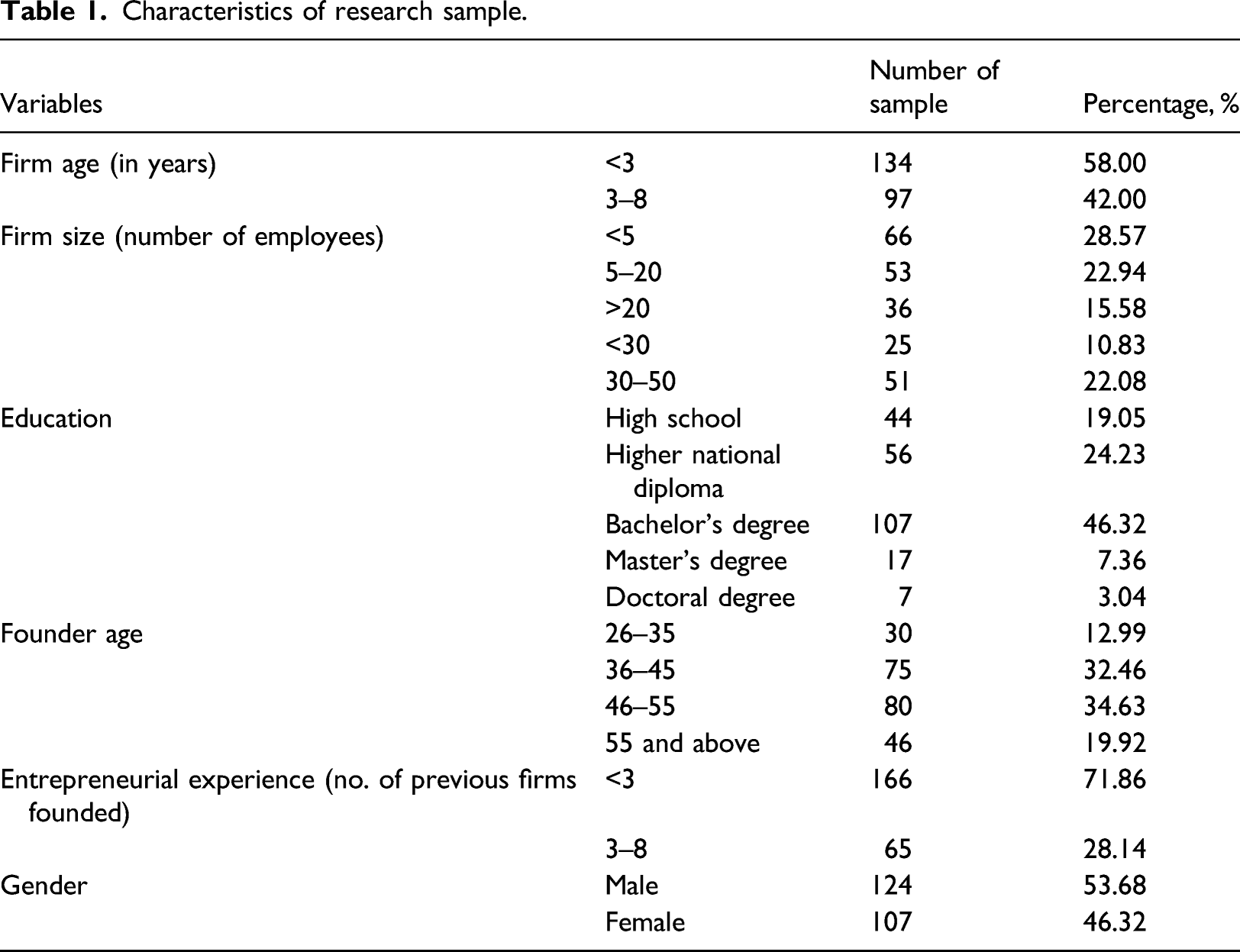
In May 2014, respondents were approached by going door-to-door in four major cities where entrepreneurs are concentrated including business parks and incubators. At the end of the survey, the entrepreneur was asked to add his or her contact details such as name, address and phone number. Following the first survey, we searched the companies online and made calls to the founders to verify the sample credibility. Returned questionnaires were then double-checked and respondents were phoned to confirm whether each respondent is an entrepreneur. Following this data verification procedure, we have a final sample of 342 useable responses, representing a 45.41% response rate.
To increase our ability to draw causal inferences, we collected information on venture profit at T2 (i.e. approximately 12 months later). By separating the collection of predictor and criterion variables, we sought to increase the robustness of the empirical design (Podsakoff et al., 2003), and reduce the risk of contamination from factors such as common method bias. Accordingly, using the same data collection method as in the first survey, a questionnaire designed to capture venture profit was administered in May 2015 to the finance managers of the 342 firms. After three reminders, we received a total of 243 responses. The 99 firms that did not respond to our survey had no finance managers. After the survey responses were received, we verified firm existence and validity through online searches, and eliminated cases where errors were spotted. Accordingly, all returned questionnaires were cross-checked and respondents were called to ensure their status as an entrepreneur. We deleted 12 respondents due to missing values. The results of the verification analysis indicated that key informants in the firms completed the questionnaire.
Characteristics of research sample.
Measures
All measurement scales were adapted from validated scales used in previous research studies. Unless otherwise mentioned, all constructs were assessed using five-point Likert scales. The complete list of items and factor loadings are provided in Appendix 1. Entrepreneurial passion was assessed by using Cardon et al.’s (2013) passion scale, which has been widely used (Breugst et al., 2012; Cardon et al., 2013; Drnovsek et al., 2016). Further, our sample consists primarily of established businesses in which developing activities are more relevant, as compared to founder and inventor roles which are more salient to nascent ventures. This scale incorporates two dimensions: (1) intense positive feelings for developing activities and (2) the identity centrality of the developer role. The feeling dimension consists of three items (α = 0.95), whereas the identity centrality dimension uses a single item. To arrive at a composite score for entrepreneurial passion for developing activities, we followed the procedure recommended by Cardon et al. (2013) and multiplied the average of the intense positive feeling dimension by the identity centrality dimension.
Political connections were assessed using a four-item scale (α = 0.85) taken from Acquaah (2007) that measures network relationships with government officials and politicians. This scale asked respondents to indicate how extensive (or how little) their ties were to different types and levels of government officials. Perceived environmental dynamism (Dess and Beard, 1984) was assessed using a three-item scale (α = 0.95) from Miller and Friesen (1982) that reflects the conditions of volatility and unpredictability in the business environment. Venture profit was measured using a three-item scale (α = 0.93) compiled from previous research studies, and modified to focus specifically on the profitability of the focal venture (Anderson and Eshima, 2013; Luk et al., 2008). Respondents compared their firm’s profit with their competitors on four items: profit margin, return on investment and growth in profit levels. To mitigate concerns about reverse causality and common method bias, firm profit data was collected one year after entrepreneurial passion was assessed (Podsakoff et al., 2003).
In addition to the measures listed above, we included seven control variables in our analyses to account for variance: gender, age, education, founder’s entrepreneurial experience, firm age, firm size and prior firm growth. Controls for gender, age, education and entrepreneurial experience were included because studies of passion indicate these are important sources of variation (Murnieks et al., 2020). Gender (female = 0; male = 1) and education were assessed categorically (e.g. 1 = ‘high school’, 2 = ‘higher national diploma’, 3 = ‘bachelor’s degree’, 4 = ‘master’s degree’ and 5 = ‘doctoral degree’). Entrepreneurial experience was measured using the number of previous firms founded by the entrepreneur (Hmieleski et al., 2013). Extant research on venture performance recommends controlling for firm size, firm age and past growth when evaluating venture performance (Baum et al., 2001; Drnovsek et al., 2016). Firm age was measured using the number of years the firm has operated since its inception and firm size was measured using the number of employees (Sheng et al., 2011). We included one item to account for the variance of prior venture growth by calculating the percentage change in employment between 2016 and 2017 [(2017/2016) – 1.0] (Baum and Locke, 2004).
Common method variance, validity and reliability assessment
In addition to separating the collection of predictor and criterion variables, we attempted to control for common method variance in our data by using the marker test suggested by Lindell and Whitney (2001). According to this test, the marker variable should be theoretically unrelated to the dependent variable. Hence, we used the item: ‘Many things in my company need improvement’ as our marker, which is a measure of dissatisfaction with the status quo. Our results demonstrate that dissatisfaction with the status quo had a non-significant correlation of 0.02 with firm performance. A 95% sensitivity analysis shows that even after accounting for the effect of common methods, partial correlations between our hypothesised constructs were still significant. Thus, it does not appear that common method variance materially affected our study.
Results of confirmatory factor analysis.

The results of the reliability tests showed that Cronbach’s alpha for all constructs exceeds the threshold of 0.70, indicating adequate reliability (Cronbach, 1951; Nunnally, 1978). In addition, the composite reliability (CR) and average variance extracted (AVE) values in Appendix 1 are all above 0.60 and 0.50, respectively, suggesting sufficient reliability of the measures. Item loadings (Appendix 1) were as hypothesised and were positive and significant, confirming convergent validity. We obtained indices that exceed the suggested cut-off criteria of 0.70, 0.60 and 0.50, respectively (Bagozzi and Yi, 2012) and each factor loading exceeded the minimum threshold value of 0.40 (p < .001). This affirms convergent validity of the measures. To assess discriminant validity, the average variances extracted (AVE) were compared with the shared variances between constructs (Appendix 1). Each construct’s AVE was greater than the shared variance; this affirms discriminant validity (Fornell and Larcker, 1981).
Endogeneity bias
In this study, we followed Zaefarian et al. (2017) and employed a two-stage least squares (2SLS) estimation approach to account for endogeneity in the data. First, passion was regressed on profit and the unstandardised residuals were saved. Second, these residuals were included as the independent variable relative to firm profit. The results show that the effect of passion residual on firm profit is not significantly different from our initial results (Table 4), suggesting that endogeneity between passion and firm profit is unlikely (Hamilton et al., 2003). Additionally, the measurement of passion (independent variable) was separated from firm profit (dependent variable) by 12 months (time-lagged). This helps to mitigate concerns of reverse causality between passion and firm profit (Antonakis, et al., 2010). Overall, we conclude that issues of endogeneity and reverse causality do not undermine the credibility of our findings.
Model estimation and results
Descriptive statistics and correlations. a
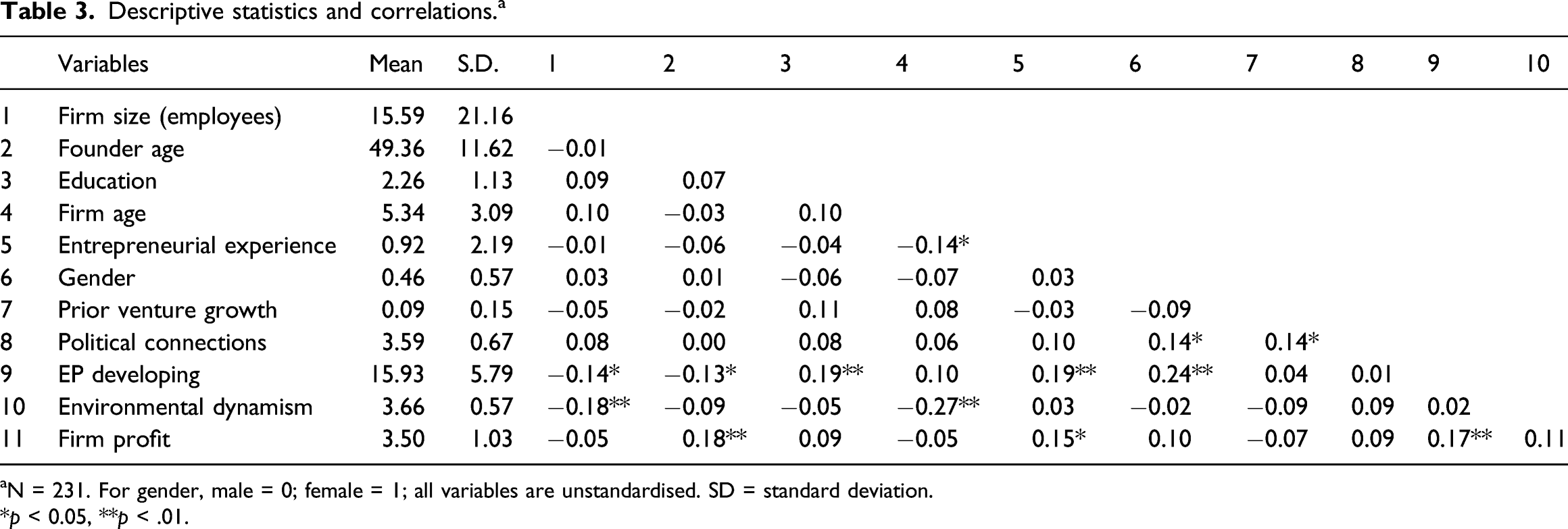
aN = 231. For gender, male = 0; female = 1; all variables are unstandardised. SD = standard deviation.
*p < 0.05, **p < .01.
Regression results of firm profit.
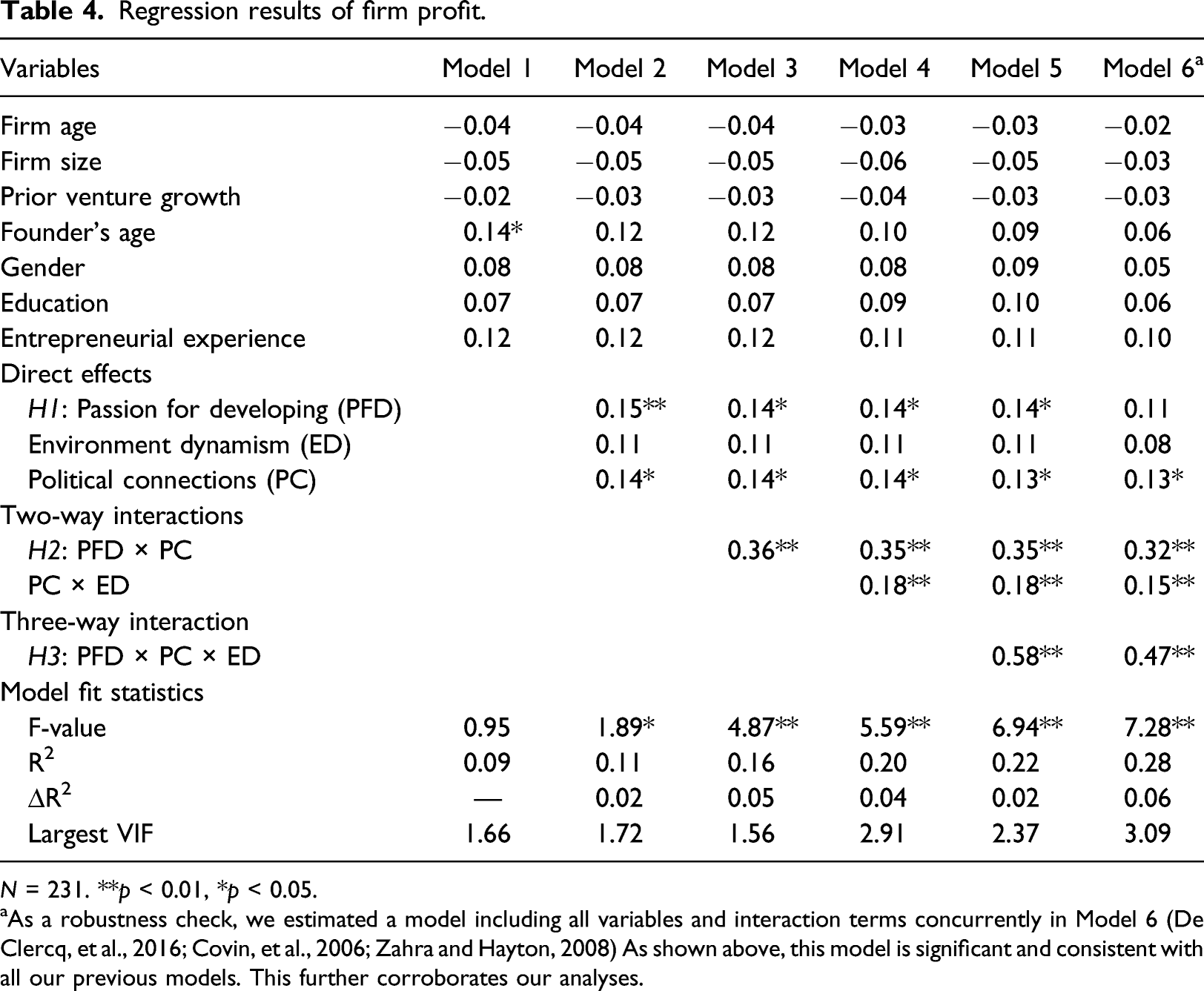
N = 231. **p < 0.01, *p < 0.05.
aAs a robustness check, we estimated a model including all variables and interaction terms concurrently in Model 6 (De Clercq, et al., 2016; Covin, et al., 2006; Zahra and Hayton, 2008) As shown above, this model is significant and consistent with all our previous models. This further corroborates our analyses.
Hypothesis 2 predicted that the relationship between entrepreneurial passion and venture profit would be strengthened by political connections. As shown in Model 3 of Table 4, political connections significantly moderate the relationship between entrepreneurial passion and venture profit (β = .36, p < .01), such that the linkage is stronger for entrepreneurs who cultivate stronger political connections.
As depicted in Figure 1, the relationship between entrepreneurial passion and venture profit is stronger for individuals with more extensive ties to government officials and politicians. Simple slope analyses reveal that the relationship between entrepreneurial passion and venture profit is significant when political connections are high (t = 2.92, p < 0.01) but not when they are low (t = 0.42, ns). These results support H2. Interaction between passion and political connections on firm profit.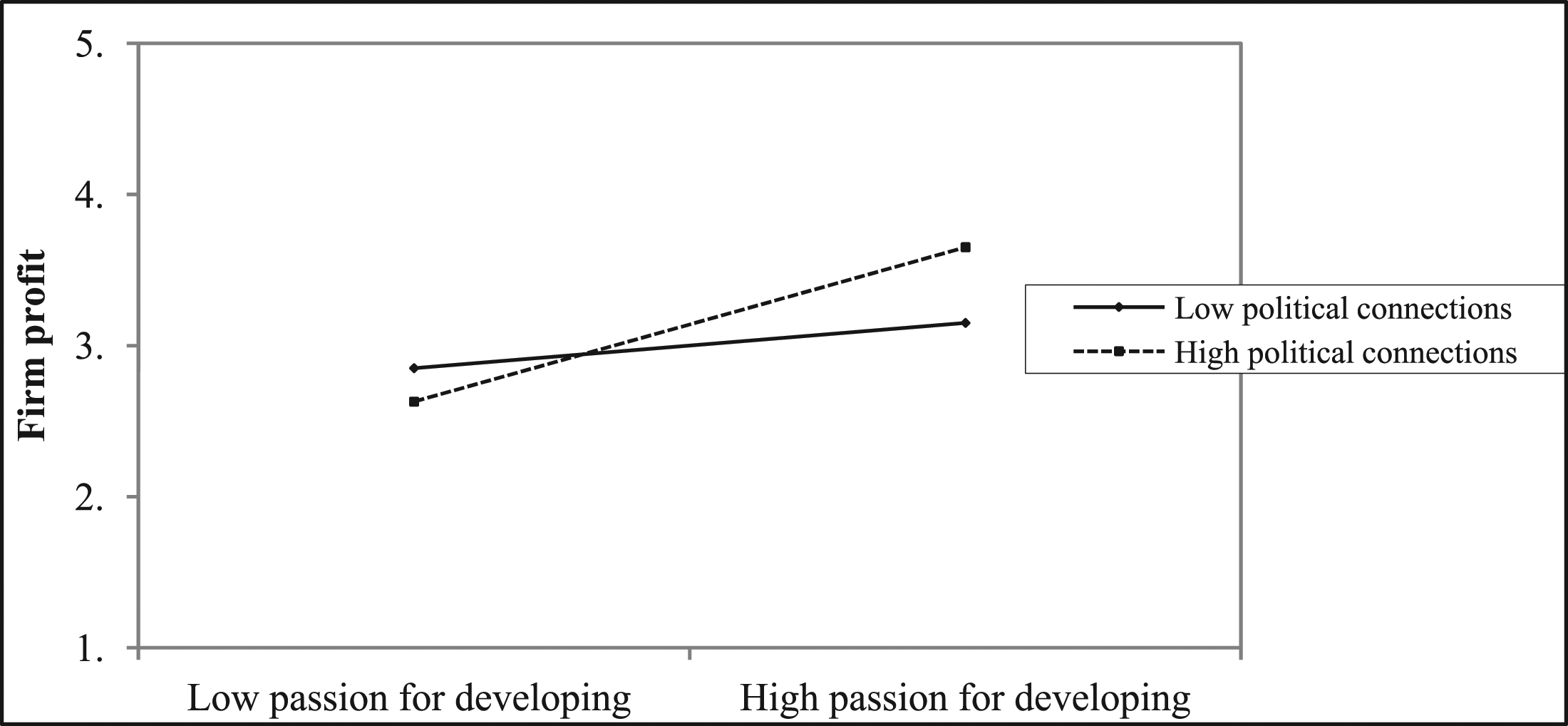
In Model 4, we included the lower-order interaction between political connections and environmental dynamism (β = 0.18; p < 0.01). Hypothesis 3 predicted that environmental dynamism would moderate the interaction between political connections and entrepreneurial passion on venture profit. As shown in Model 6 of Table 4, this interaction is significant and positive (β = 0.58; p < 0.01). Furthermore, as shown in Figure 2, the relationship between entrepreneurial passion and venture profit is strongest when both political connections and environmental dynamism are high (t = 3.55, p < 0.01). This supports H3. Data points for plotting Figures 1 and 2 were computed using +/− 1SD for entrepreneurial passion, political connections and environmental dynamism. Interaction between passion, political connections and environmental dynamism on firm profit.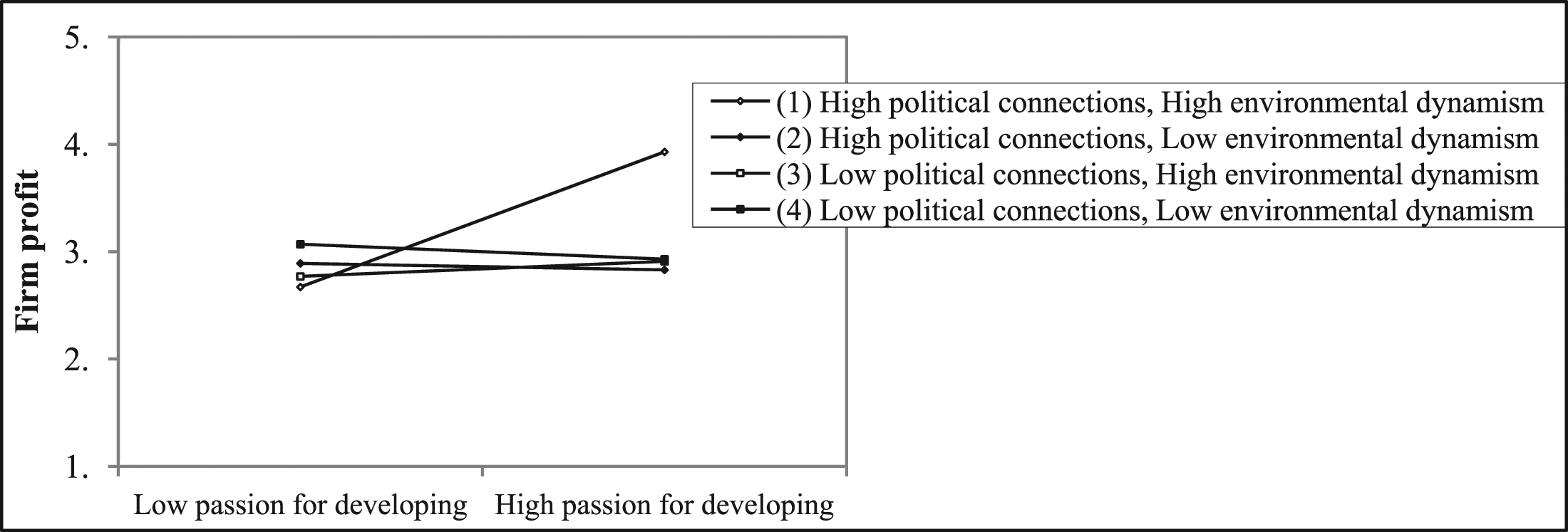
Robustness tests
We ran additional tests to confirm the robustness of our findings. First, we obtained employment growth data between 2015 and 2017 (N = 114) by contacting the finance managers of the firms we surveyed. We measured firm growth by the change in the number of employees from 2015 to 2017. We followed previous studies (Brouwer et al., 1993; Robson and Obeng, 2008) and estimated annualised rates of growth for these firms. The mean rate of employment growth was 3.4% per annum over the period 2015–2017.
Regression results of employment growth.
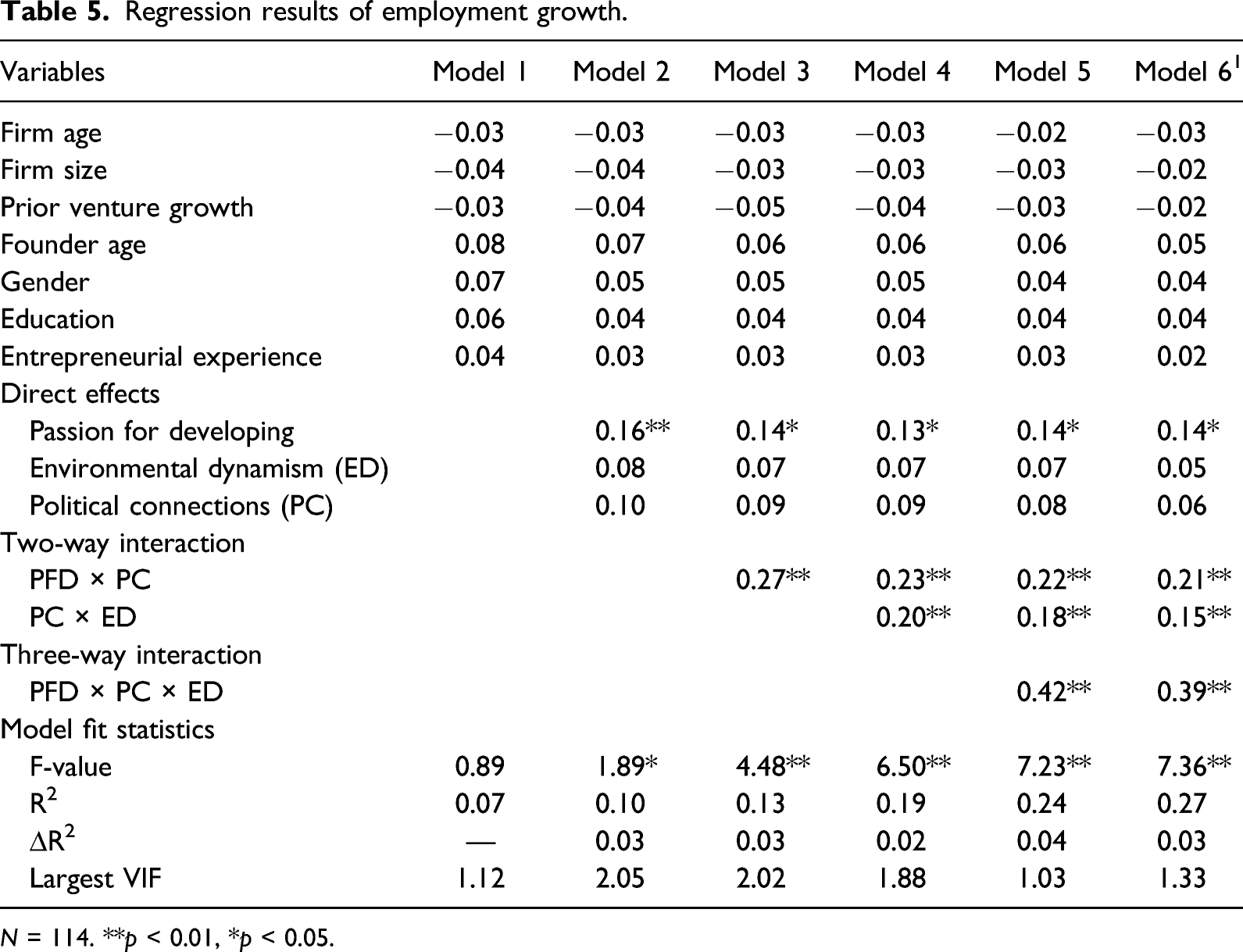
N = 114. **p < 0.01, *p < 0.05.
Regression results of firm performance.
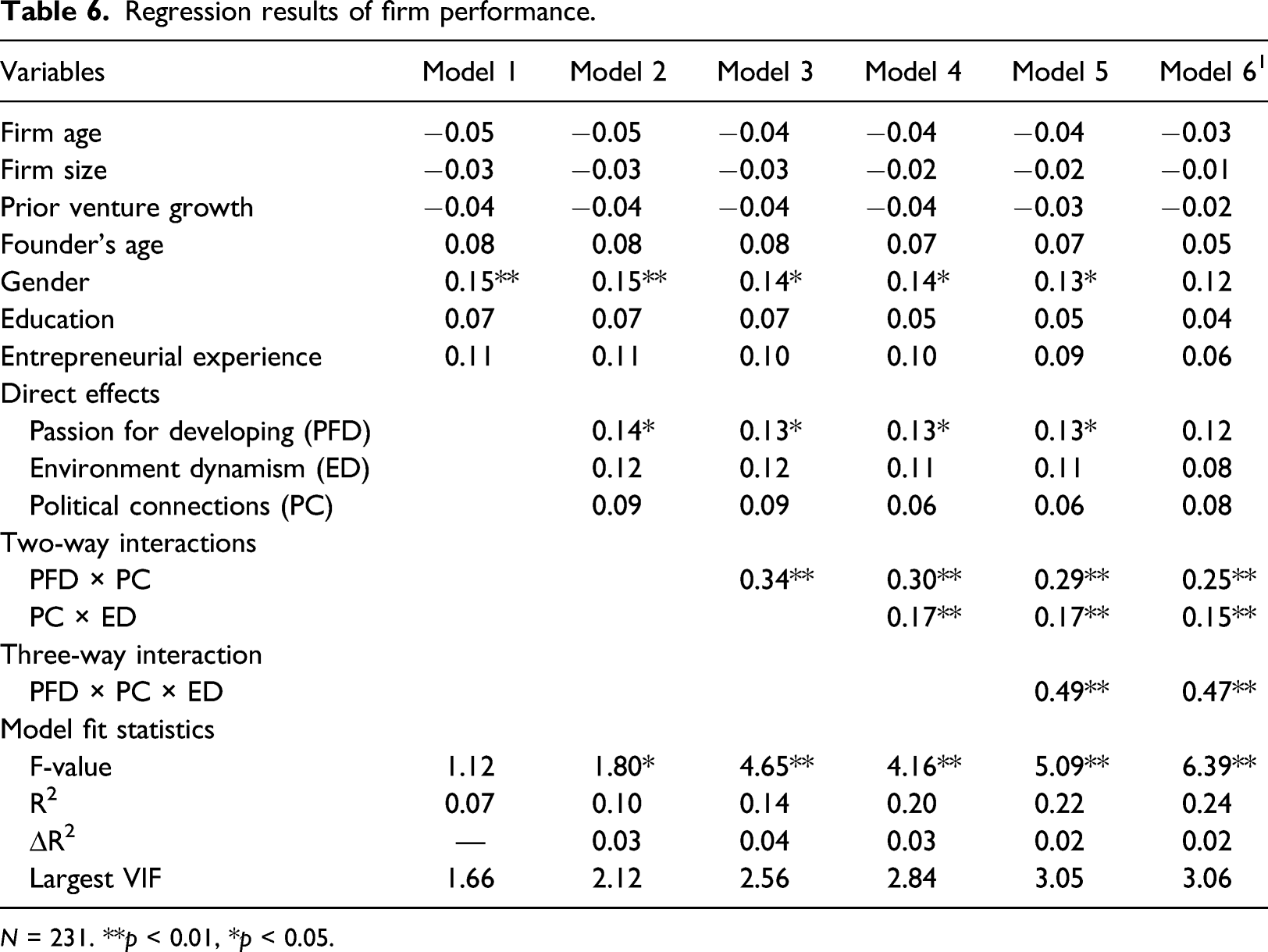
N = 231. **p < 0.01, *p < 0.05.
Discussion and implications
Since Cardon et al.’s (2009) seminal work on the development of the entrepreneurial passion construct, extant research has examined a number of important relationships within the entrepreneurial passion process, establishing the theory more firmly within entrepreneurship literature. While early tests of a theory are often focused on analysing the validity of the core propositions, as a theory becomes more established, it is important to examine potential moderators and contextual contingencies that build on those core theoretical relationships and expand the theory into processes that were not part of the original formulation (Colquitt and Zapata-Phelan, 2007: 1282). The literature around entrepreneurial passion continues to grow, but to date, the majority of this work focuses on the direct effects of entrepreneurial passion on individual outcomes (Cardon and Kirk, 2015; Huyghe et al., 2016), and much remains to be discovered about the boundary conditions of this theory (Cardon et al., 2009). We address this by analysing how the relationship between entrepreneurial passion and venture profit is contingent upon the degree of political connections and environmental dynamism. This is important because the contextual conditions in which entrepreneurship occurs can play a critical role in how individual-level constructs such as entrepreneurial passion influence firm-level outcomes such as venture profit (McKelvie et al., 2018; Powell and Baker, 2014). As such, this study has several implications.
Theoretical implications
First, our findings further establish one of the core propositions of entrepreneurial passion theory by verifying a significant relationship between entrepreneurial passion and venture profit. This confirms and extends the theoretical (Cardon et al., 2009) and empirical (Drnovsek et al., 2016) work of passion scholars. We provide empirical support that goes beyond the examination of entrepreneurial passion’s influence on individual-level and interpersonal factors by demonstrating that entrepreneurial passion also has a positive impact on organisational-level outcomes. This is important because it simultaneously broadens and specifies entrepreneurial passion theory. It broadens it by demonstrating that entrepreneurial passion exerts powerful effects on firms. Extant literature shows the influence that entrepreneurial passion can have on people, including the focal entrepreneur (Pollack et al., 2020), and important stakeholders (Breugst et al., 2012; Warnick et al., 2018). Our work demonstrates that the effect of passion can extend beyond that of individuals; namely, it significantly shapes the financial prosperity of the venture itself.
This study further specifies the impact of entrepreneurial passion on ventures. Previous work has argued that entrepreneurial passion can drive overall venture performance (Cardon et al., 2009; Mueller et al., 2017). However, we also offer an empirical analysis of the specific relationship between entrepreneurial passion and venture profit. Profit is one of the most important constituent elements of firm performance, but to date, relationships between entrepreneurial passion and profit have been obscured by scales that take a multivariate approach to performance. Moreover, firm profit may have implications for other firm goals that might not be directly tied to most empirical performance measures, but that require an increase in firm profit. For example, financially relevant firm goals may include improving the quality of life for employees, increasing the ability to obtain additional financial capital, enhancing the firm’s reputation and financing innovation – goals that may be particularly relevant for firms in developing and emerging economies (Brahmana et al., 2020; Chakravarty, 2021). Future research may investigate non-financial firm goals that are not tied to performance, but that are facilitated by venture profit.
Although we concentrate on venture profit as the primary dependent variable, we are mindful of the need for future research to consider other outcomes. As we articulated earlier, extant entrepreneurial passion work tends to focus on effects at the individual- or intraindividual-level (Newman et al., 2021). Our attempt to extend this stream of work to profits illuminates only one corner of a wide expanse around which the impact of passion needs to be investigated. Emerging studies indicate that passion plays a role in socially (Yitshaki and Kropp, 2016) and environmentally conscious firms as well (De Bernardi and Pedrini, 2020). This is one indication that passion has much wider impacts than profits. It is likely to operate by motivating individuals to make an impact (Yitshaki and Kropp, 2016) and then radiates across corporate, social and environmental outcomes (Curran et al., 2015; Pollack et al., 2020). Future research should explore these various outcomes and uncover the mechanisms through which entrepreneurial passion drives these diverse effects.
While we note the positive effect of entrepreneurial passion on venture profit, we are mindful of the possibility of the negative ramifications of passion. Indeed, it is possible that passion could lead to feelings of burnout and role overload among individual entrepreneurs (De Mol et al., 2020; Thorgren and Wincent, 2013). The strong feelings associated with passion could lead entrepreneurs to become more rigid in their mindset and fail to pivot their ventures when needed (Ho and Pollack, 2014; Mitteness et al., 2012). Despite the fact that entrepreneurial passion promises many benefits (Cardon et al., 2009), a dark side exists. More research is needed on how unchecked or unbridled entrepreneurial passion might harm, instead of help, venture growth and development (Cardon and Murnieks, 2020).
Our analysis of the moderating effect of political connections finds that the relationship between entrepreneurial passion and venture profit is amplified when the focal entrepreneur cultivates stronger ties with government and public officials, both local and national. Studies linking relationships involving entrepreneurial passion and networks are surprisingly rare. In one example, Ho and Pollack (2014) show that different types of entrepreneurial passion (harmonious vs obsessive) relate to different levels of network centrality and also the likelihood that these networks themselves will generate referral income for the entrepreneur. Ho and Pollack (2014) focused specifically on networks comprised of peer entrepreneurs, and we expand upon their work by examining how a different type of network – one involving political connections – plays a key role in the relationship between entrepreneurial passion and firm performance.
Interestingly, the moderating effect of political connections indicates that ties to government officials might have the ability to magnify the power of entrepreneurial passion, possibly by removing barriers and reducing transaction costs. This is an important finding because much of the extant work on entrepreneurial passion rests on the notion that it inspires founders to persist through and overcome obstacles hindering firm performance (Cardon et al., 2013; Murnieks et al., 2016). Our finding that the relationship between entrepreneurial passion and venture profit is not significant in conditions of low political connections indicates a powerful boundary condition. In developing economies such as Ghana, perhaps entrepreneurial passion alone is not sufficient to influence firm performance. Perhaps opportunities and information derived from political connections are needed to facilitate the operation of entrepreneurial passion for venture outcomes. It would be interesting to test the influence of political connections in future research, particularly in developed markets to see if these effects are robust in other contexts Furthermore, these findings suggest that the combination of entrepreneurial passion and political connections can serve as a valuable resource for entrepreneurs. Scholars theorise that powerful positive emotions such as passion could help acquire important resources from key stakeholders (Baron, 2008). Indeed, a review of entrepreneurship research on emerging economies found that individual-level characteristics (e.g. self-efficacy, leadership desire and self-commitment) are important for overcoming resource constraints, particularly in areas such as sub-Saharan Africa (Kiss et al., 2012: 277). Although we examine the interaction between political connections and entrepreneurial passion, questions still exist concerning the direct effect of passion on building social networks. Future research could examine the degree to which entrepreneurial passion plays a role in helping to acquire political connections or develop influential social networks (Ho and Pollack, 2014). The development of passion as a facilitating mechanism might offer interesting insights in this arena.
Additionally, there is still much to learn about the relationship between political connections and performance. It has been suggested that future research should examine processes by which various social capital variables contribute to venture level outcomes (Stam et al., 2014). By examining the moderating relationships of political connections and environmental dynamism, we identify important factors that influence the political connections-to-venture performance relationship, and a different means by which this relationship manifests. Further, we extend extant entrepreneurial passion theory through evidence of a three-way interaction between entrepreneurial passion, political connections and environmental dynamism. Figure 2 shows that when environmental dynamism is high, high levels of political connections exert a significantly greater effect on the passion-to-profit relationship than when dynamism is low. This reiterates the importance of integrating a knowledge of the surrounding context with theory on passion (Cardon and Murnieks, 2020). Entrepreneurial passion, although powerful, does not operate in a vacuum; it is surrounded by a milieu of social and environmental factors that condition its performance. This three-way interaction shows that in highly dynamic environments, additional resources from political connections are needed to catalyse entrepreneurial passion’s powers.
Also, we extend the reach of theorising on entrepreneurial passion to the context of emerging economies. Research studies exploring passion and its outcomes from an emerging country perspective are lacking (Smallbone et al., 2014). This study contends that in entrepreneurship theory development, context plays a crucial role (Welter, 2011; Zahra, 2007). Therefore, we broaden scholarly understanding of the entrepreneurial passion concept by investigating the conditions under which passion is more or less effective in driving venture success using data from a developing country. Studies undertaken in the institutionally stable and resource-rich context of North America and other equally developed countries, which are the predominant venues for research on entrepreneurial passion (Baum et al., 2001; Baum and Locke, 2004), are fundamentally different from turbulent and resource-constrained environments such as sub-Saharan Africa, which is where our study takes place. Addressing this omission is important given that passion could serve as a powerful stimulant that enables entrepreneurs to overcome institutional and resource handicaps that require, for example, perseverance and grit. Extant passion studies have left this potentially rich research context underexplored. More broadly, this study fills an important gap by providing more analysis of psychological mechanisms at work in emerging markets. To date, the majority of the studies in emerging markets tend to adopt a strategic perspective, avoiding psychology or organisational behaviour approaches (Bruton et al., 2008); we redress this imbalance.
Institutional voids and the scarcity of entrepreneurial ecosystems present challenges for entrepreneurial ventures in emerging markets (Foo et al., 2020). Whereas advisors, accelerators and financiers all support entrepreneurs in more developed economies, the dearth of these entities forces entrepreneurs to acquire resources through more informal and personal avenues in emerging markets (Bu and Cuervo-Cazurra, 2020; Story et al., 2015). In addition, tighter capital constraints in these markets put a greater premium on internally generated profits (Julian and Ofori-Dankwa, 2013); since formal external capital is harder to obtain, there is a significant advantage for firms that find ways to generate profit organically. Our study highlights that passion may be an effective catalyst that helps entrepreneurs obtain valuable profits despite these impediments. It also displays the instrumental influence of political connections, which may serve as an effective substitute to the institutions and traditional ecosystems in developed economies. It is important to remember that entrepreneurs in emerging economies often do not spend their time lamenting institutional voids; rather, they use the resources they do have at their disposal to find ways to develop nontraditional, but effective, pathways to success (Story et al., 2015). Our study highlights the roles of both entrepreneurial passion and political connections in this context.
Practical implications
In addition to these theoretical contributions, this study has important practical implications for small business investors. More specifically, venture investors in emerging economies should assess the level of entrepreneurial passion during their due diligence, given its influence on venture profit. To do so, practitioners could make use of Cardon et al.’s (2013) scale on entrepreneurial passion as a tool for assessing an individual’s passion for developing the business. This could be examined at multiple points, both when screening prospective entrepreneurs initially as well as when new venture team members are added to the firm as well as the political connections possessed among prospective entrepreneurial investees.
Additionally, considering the influence of political connections in the entrepreneurial passion-to-profit relationship, it is advisable for entrepreneurs in developing economies to be aware of who is in their social network, and the positions their social connections occupy (Newman et al., 2014). Given our findings, they need to cultivate ties to key political and government officials, especially in more dynamic environments. Entrepreneurs in this context should be advised to strategically develop their social network to include connections with those individuals and organisations who have political power, or those with the ability to connect the entrepreneurs with government and bureaucratic officials who have access to important resources that can help entrepreneurs overcome institutional deficiencies. Prospective investors should be aware of these findings as well. When screening entrepreneurs for investments, political connections need to be considered. Investors looking at opportunities in more dynamic environments need to be ready to use their own clout and social networks to aid entrepreneurs make ties with these valuable government and political contacts.
Moreover, this work contributes to the growing literature in the popular press about the importance of passion. Many books and magazine articles tout the importance of passion to entrepreneurs starting their businesses (Cardon and Murnieks, 2020). These periodicals often claim that passion drives individuals to work harder and to persist longer (Cardon et al., 2005). Indeed, passion is important because it can drive both entrepreneurs and their employees to pull together and to work harder (Hsieh, 2010). We add to this work by showing that not only does entrepreneurial passion help motivate individuals, but it can also contribute directly to the bottom line of the company’s financial statements.
Limitations and future research
There are some limitations in this study that should be considered when interpreting the findings. First, our sample was based in Ghana and therefore, our results may not be generalisable to other cultures. We have discussed the importance of studying entrepreneurial passion in developing economies, but we are mindful of the fact that this sampling context might limit the generalisability of these relationships to more established countries. Empirical evidence investigating entrepreneurial passion in varying economies is growing (Clarysse et al., 2015), and we encourage more comparative work in this area.
Second, firm profit was measured using a subjective assessment, completed by finance managers of the firms. While finance managers are the most likely source of accurate information pertaining to firm profit, future studies may supplement findings by also using objective performance measures when possible. Likewise, the data on environmental dynamism was subjectively reported. We acknowledge that environmental dynamism for a particular industry can be obtained from objective industry data in more well-developed economies. However, obtaining this type of data in emerging market economies can be very challenging, and it may not be possible to collect sufficient objective data to determine the environmental dynamism of a particular industry. In such cases, perceived environmental dynamism must be relied on as the primary source of data, and we utilised a well-established measure (Miller and Friesen, 1982) to assess this construct.
Also, political connections were measured using a scale that asked respondents to indicate the extensiveness of their ties to politicians and government officials. Social capital variables have been operationalised and measured in a wide variety of ways including tie-based measures, scale items, network measures, relational measures and social resources (Payne et al., 2011: 499). Future research investigating the relationship of political ties in the entrepreneurial passion-to-performance relationship may benefit from using multiple measures so as to obtain more comprehensive data. For example, it would be informative to know the number of and strength of the political ties, frequency of interaction and level of trust and to distinguish between bridging and bonding political ties within the entrepreneur’s social network. Each of these aspects of social capital can provide a more nuanced examination of the role of political connections in the entrepreneurial passion-to-performance relationship.
Future research should also examine additional boundary and contextual conditions that might influence the entrepreneurial passion-to-performance relationship. For example, the gender composition within our sample suggests that potential influences of gender – particularly in less-developed contexts such as Ghana, or contexts in which traditional family roles are (or are not) culturally emphasised – should be further examined. Thus, more research is needed on gender effects, especially considering that female entrepreneurs in emerging economies face a number of unique challenges (Lenz et al., 2021).
It would also be interesting to examine potential temporal concerns – such as do the benefits derived from political connections in the passion-to-performance relationship degrade over time? Also, what are the factors that might cause political connections to attenuate the passion-to-performance relationship, or that inhibit or contribute to lower levels of entrepreneurial passion? Additionally, it would be interesting to discover if these relationships vary based on whether the types of political connections are derived from strong ties versus weak ties. Finally, the use of self-reported measure and perceptual measure of venture profit can potentially introduce respondent bias to the sample. While we used well-established and validated measure of venture profit (Anderson and Eshima, 2013; Luk et al., 2008), we encourage additional research to make use of secondary sources of financial information to capture venture profitability.
Conclusion
The study of entrepreneurial passion is expanding rapidly. As this research gains momentum, we argue that the time has come to broaden our analysis of effects to include boundary conditions and environmental factors. In this article, we present a contingent model of entrepreneurial passion that includes considerations of political connections and environmental dynamism. Additionally, we show how the notion of passion is as theoretically valid in sub-Saharan Africa as it is in the Western context. We hope this article initiates further inquiry and conversation regarding how entrepreneurial passion shapes firm performance.
Footnotes
Funding
The author(s) received no financial support for the research, authorship, and/or publication of this article.

Author biographies
Constructs,measurement items and reliability and validity tests
Note. Ipf = intense positive feelings; Ic = identity centrality; dev = developing. Following methodological prescriptions of Cardon and Kirk (2015), we excluded the item measuring identity centrality from the CFA model.
Item description
Loadings (t-values)
Passion for developing (Cardon et al., 2013): α = 0.86; CR = 0.86; AVE = 0.68
Ipf_dev1: I really like finding the right people to market my product/service to
0.72 (1.00)
Ipf_dev2: Assembling the right people to work for my business is exciting
0.96 (13.71)
Ipf_dev3: Pushing my employees and myself to make our company better motivates me
0.79 (11.28)
Ic_dev1: Nurturing and growing companies is an important part of who I am
—
Political connections (Acquaah, 2007): α = 0.91; CR = 0.92; AVE = 0.74
Political leaders in various levels of the government (e.g. Ministers of State)
0.84 (1.00)
Officials in regulatory and supporting institutions (e.g. Ghana Standards Board and Internal Revenue Service)
0.90 (10.00)
Metropolitan/municipal/district chief executives
0.97 (10.77)
Regional and national government politicians (e.g. regional or national party chairman/chairperson)
0.73 (9.12)
Environmental dynamism (Miller and Friesen, 1982): α = 0.83; CR = 0.84; AVE = 0.64
Competitors are constantly trying out new competitive strategies
0.69 (1.00)
Demand and consumer tastes are fairly easy to forecast (r)
0.88 (9.77)
New markets are emerging for products and services in our industry
0.83 (11.85)
Firm profit (Anderson and Eshima, 2013; Luk et al., 2008): α = 0.80; CR = 0.81; AVE = 0.59
Overall profit growth
0.82 (1.00)
Profit margins
0.78 (9.45)
Return on investment
0.70 (8.99)