




Abstract
Australia's population is rich in cultural and linguistic diversity. Given the steady growth of migrant populations, English as an additional language or dialect (EAL/D) is common throughout all Australian schools. This scoping review seeks to explore the existing international literature regarding effective support for EAL/D students in classrooms with developmental language disorder (DLD). Due to the high prevalence of both EAL/D and DLD in the Australian context, and the expected intersectionality between EAL/D and DLD, the findings of this review represent an important contribution to existing scholarship as they identify and explicitly define 11 instructional practices that can be implemented within the classroom to support the English language development of the target population. The aim of the review, therefore, was to identify and analyse available literature specifically reporting on effective strategies and instructional practices to support EAL/D students with DLD from January 2008 to May 2025. The JBI System for the Unified Management, Assessment and Review of Information was used to support the scoping methodology, and 14 articles were reported on in full after a thorough screening process. Qualitative content analysis was employed and led to the inductive development of categories and themes that provided information on clear classroom support strategies for the target population. These strategies included implicit and explicit teaching, push-in and pull-out models, curriculum alignment, recasting, multiple exposure and language domain-specific instruction. The analysis suggests that future research is needed in this important and growing area. These findings have implications for teachers and teacher educators and their practice in contemporary classrooms.
Keywords
Introduction
Globally, population movements are on the increase. International migration has increased steadily over the past 50 years, and in 2020, approximately 3.6 percent of the world's population were international migrants (McAuliffe and Oucha, 2024). Communities are increasingly diverse, fuelled by drivers related to globalisation, migration due to climate change and economic factors. As cultural diversity becomes more prevalent, so too does the complexity of educating and supporting diverse students. Students who are learning English as an additional language or dialect (EAL/D) often have high needs (Hammond, 2006) and may require additional support to access the curriculum. This must be balanced with intellectually challenging learning opportunities. These students offer positive cultural and linguistic repertoires in their classrooms, enriching other learners in the environment. However, the language needs within a classroom setting are often intensified when they intersect with disability. Whilst strategies exist to support EAL/D students and students with disability, the intersection can be challenging to support in school settings.
This scoping review study is significant, as it brings together in one paper, effective instructional strategies to support EAL/D students with DLD as identified within relevant literature. Furthermore, these strategies are tangible strategies that can be implemented by teachers in contemporary classrooms. It is important to note that this study incorporates a synthesis of the existing international literature with the specific aim of being applicable to the Australian context. To situate the gravity of this review, further explanation of DLD and EAL/D in the Australian context is provided below.
Developmental language disorder
Developmental Language Disorder (DLD) is an early-onset, lifelong neurodevelopmental condition that is associated with significant and persistent language impairment without the presence of any other biomedical condition or disability and impacts receptive and/or expressive language abilities (Calder et al., 2022; Clegg et al., 2005; Gillam et al., 2021; Kim et al., 2023; Ziegenfusz et al., 2022). The presence of DLD will cause a typically developing child to fail in achieving the language milestones in their first language, expected at their chronological age (Giannikas et al., 2021). It can lead to functional difficulties in communication, also affecting academic progress and social interaction (Calder et al., 2022; Kohnert, 2010; Norbury et al., 2016).
In Australia, it is estimated that DLD has a prevalence estimated at 6.4 percent (Calder et al., 2022), making the disorder more prevalent than other well-known neurodevelopmental disorders like autism spectrum disorder (1.1 percent) (Australian Bureau of Statistics, 2022b). Yet, despite its high prevalence and severe implications, a paucity of research on DLD in Australia has led to low public awareness and limited guidance in developing specific education support for DLD in the Australian context (Calder et al., 2022; Kim et al., 2023).
In the past, children who have difficulty understanding and expressing language without the presence of any cognitive, sensory, environmental or emotional deficit have been referred to as having a language impairment, language disorder, primary language disorder (PLI), language delay, language-based learning disability, specific language disorder (SLI) or a language learning disability (Archibald, 2024; Clegg et al., 2005; Gillam et al., 2021; Kohnert, 2010; Nair et al., 2022; Risueno et al., 2024; Tribushinina et al., 2023; Ziegenfusz et al., 2022). However, in 2017, the Australian professional association and body governing speech-language pathologists, Speech Pathology Australia, officially endorsed the use of the term DLD as the diagnostic label to refer to language difficulties without a known cause (Kim et al., 2023). Therefore, in this article, the term DLD will be used to label the disorder, but for the purpose of this review, all known terms associated with this disorder (as indicated above) have been used as search terms to enhance the scope of the search for relevant literature. To facilitate consistency, when discussing the articles included in this review, the term DLD will be used rather than the original synonymous terms used by the authors.
In a bilingual child with DLD, both languages are impacted and learned at a slower pace (Castilla-Earls and Owen Van Horne, 2023; Kohnert, 2010). According to Castilla-Earls and Owen Van Horne (2023), there are considerable limitations to our knowledge on how to support bilingual students with DLD in an educational setting. However, the importance of early intervention to prevent and overcome academic difficulties cannot be denied. In addition, Kohnert (2010) emphasised clear practitioner understanding of both bilingualism and DLD will best serve EAL/D students with DLD. This leads to the conclusion that to effectively support bilingual students with DLD in their classrooms, teachers need to understand how to support both EAL/D students and students with DLD.
English as an additional language or dialect in the Australian context
Australia's recent history (of the last 250 years) has been characterised and shaped by waves of migration bringing a range of different languages and dialects to its shores. At the time of white colonisation, Australia possessed over 250 indigenous languages, including 800 dialects (Australian Institute of Aboriginal and Torres Strait Islander Studies [AIATSIS], 2024). In 2016, only half of these (120) were still spoken throughout Australia (AIATSIS, 2024). According to the Australian Bureau of Statistics in 2021, 5.6 million people (or approximately 22 percent of the Australian population) reported using a language other than English at home (ABS, 2022a). This represents an increase since 2016, when 4.8 million people reported using a language other than English at home (ABS, 2022a).
Interestingly, there is no requirement nationally to publicly record the number of students in Australia who study English as an Additional Language or Dialect (EAL/D). As a result of this, the Australian Council of TESOL Associations (ACTA) evaluated the number of EAL/D school students who were enrolled in Government and Catholic schools across Australia in 2018–19. As part of this data set, it was determined that there were over 600,000 EAL/D learners and that the student numbers are continuing to grow (Fenn, 2021). The study also revealed significant gaps in the publicly available data, including the lack of data from independent schools. It is likely that the prevalence of EAL/D learners in Australian classrooms is under-reported (Fenn, 2021).
A range of terminology has been used over the years to describe the learning of English as a non-primary language, including terms such as English as an additional language or dialect (EAL/D), English as a Second Language (ESL), emergent bilingualism, English language learning (ELL), English as a foreign language (EFL) (Moloney et al., 2024). EAL/D students include overseas and Australian-born students whose first language is not English and Aboriginal and Torres Strait Islander students whose first language is an Indigenous language (and this may include dialects, creole or Aboriginal English) (Australian Curriculum Assessment and Reporting Authority [ACARA], 2014).
As the Australian Institute for Teaching and School Leadership notes, many EAL/D learners may be learning English as their third or fourth language, hence the move away from the previous terminology of English as a Second Language (ESL) (Saleh, 2021). Given the use of the term EAL/D throughout Australia's schooling systems, this is the term that will be used throughout the paper.
Rationale for a scoping review
A preliminary search of the classroom strategies used to support EAL/D students with DLD was conducted, and there were no current or proceeding systematic reviews or scoping reviews on the topic. However, previous literature has identified DLD's prevalence (approximately 1 in 14 globally) (Norbury et al., 2016). In addition, the lack of research focus on DLD's impact generally, and in education, has been cited in various studies (Kim et al., 2023; Norbury et al., 2016). These impacts are compounded when learners are learning English as an additional language.
Both scoping and systematic reviews follow a structured and systematic process when answering research questions (Munn et al., 2018). However, a scoping review differs from that of a systematic review. As Khalil et al. (2021) describe, a scoping review seeks to answer research questions such as ‘What does the literature say?’ regarding a particular topic. In contrast, a systematic review utilises questions that are more focused, and the results of the systematic review may be used to make conclusions about current approaches and results in studies (Munn et al., 2018). In short, a scoping review focuses more on what literature is available concerning a topic. Given the researchers’ desire to understand further the existing material available, a scoping review was deemed most appropriate to capture all current applicable studies, as the authors were seeking to locate what research had already been undertaken in this area.
Considering the clear importance of effectively supporting EAL/D students with DLD within the classroom, the aim of this scoping review is to map the body of evidence of relevant instructional practices to specifically support this target population, as can be found in the literature. The methods used during this scoping review, as well as the findings, are discussed, followed by recommendations for future research. The following research question will address the aim of this review:
What classroom strategies are effective to support English as an additional language or dialect in students with a developmental language disorder, as mentioned in the literature?
Methods
Having defined in the previous section the necessity to determine teaching strategies that will effectively support EAL/D students with DLD in the classroom, a scoping review methodology was followed to identify available literature that will contribute to answering the research question.
Eligibility criteria of the scoping review
The following eligibility and inclusion criteria were adhered to during the search for the relevant literature:
Eligibility criteria
Peer-reviewed articles published in English between January 2008 and May 2025. We tested multiple date ranges to ensure that enough articles
Primary and secondary school-aged EAL/D learners with DLD. Terms synonymous with EAL/D and DLD, as indicated in the introduction section of this article, were also included. In Australia, compulsory schooling starts in the year the student turns 6 and extends until the age of 17.
If studies met the eligibilitycriteria, they were then investigated further to determine if they met the following inclusion criteria:
The additional language learned must be English. No other disability is to co-occur with a developmental language disorder. A firm diagnosis of DLD, in other words, students must not be classified as at risk of having DLD. Studies must specifically refer to DLD (synonymous terms included) rather than a broad reference to language disabilities.
Search strategy
This scoping review considered articles on quantitative, qualitative and mixed methods study designs as well as literature reviews, scoping reviews and systematic reviews related to the topic and meeting the inclusion criteria. The search strategy aimed to locate published, peer-reviewed articles to be utilised in this scoping review firstly involved an initial limited search of the keywords in the research question and their synonyms through the databases Scopus and ProQuest. This search delivered no relevant results, and the search terms were further refined. Additional refinement in subsequent searches was enacted, leading to the delivery of the results used in this study, which were obtained in the fourth iteration of the search. The search terms as well as the truncations used in this fourth and final iteration of the search are listed in Table 1. The keywords used in the search were present in the titles and abstracts of the articles, which were then selected to form part of the first screening process of the review.
Search terms used during the fourth iteration of the search.
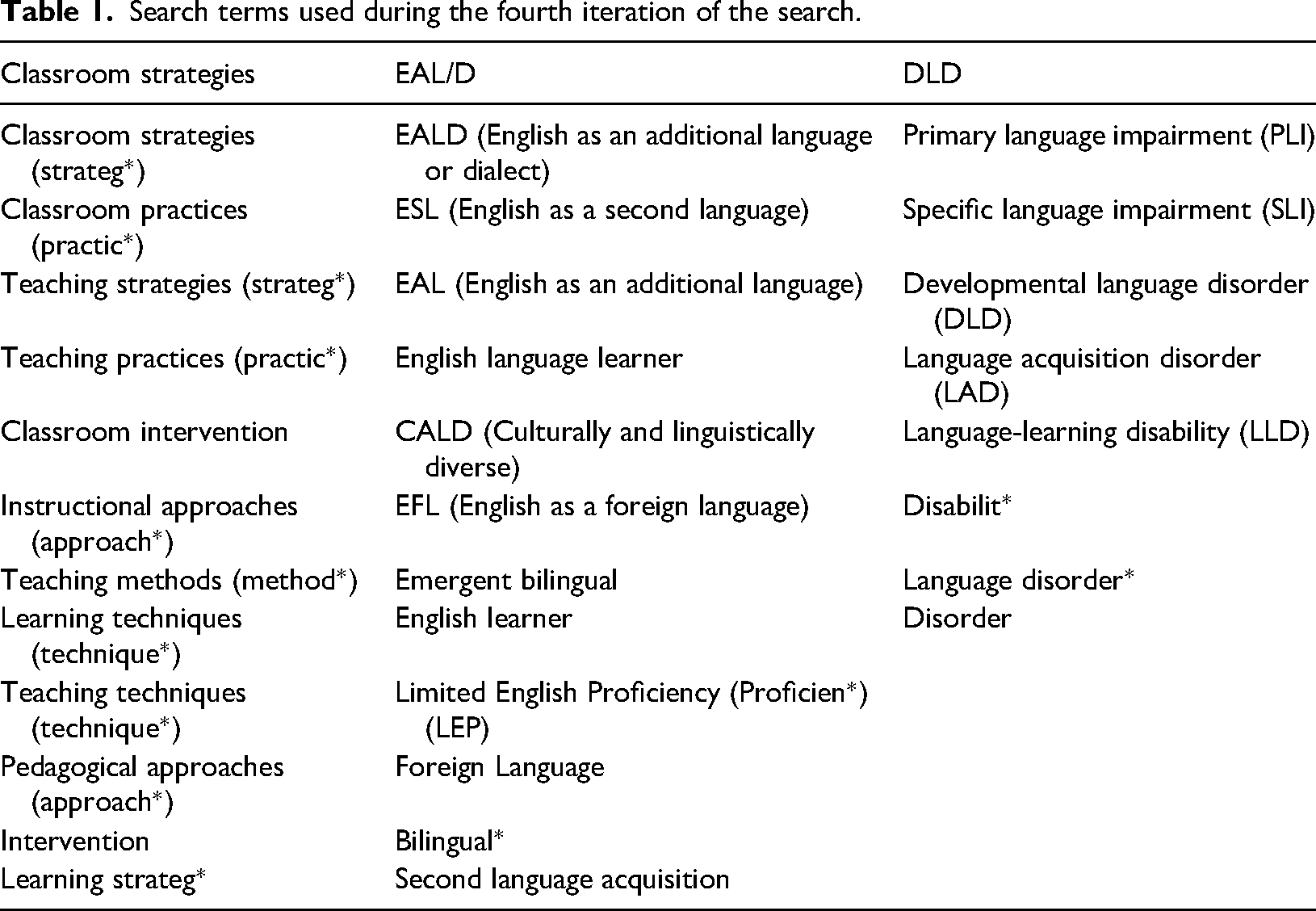
The search terms in Table 1 were then combined into search strings using the Boolean operators OR and AND: (“Classroom strateg*” OR “Classroom practic*” OR “Teaching strateg*” OR “Teaching practic*” OR “Classroom intervention” OR “Instructional approach*” OR “Teaching method*” OR “Learning technique*” OR “Teaching technique*” OR “Pedagogical approach*” OR intervention OR “Learning strateg*”) AND (“English as an additional language or dialect” OR “English as a second language” OR “English as an additional language” OR “English language learner” OR “Culturally and linguistically diverse” OR “English as a foreign language” OR “EAL/D” OR “English learner” OR “Limited English Proficien*” OR “Foreign Language” OR Bilingual* OR “Second language acquisition”) AND (“Primary language impairment” OR “Specific language impairment” OR “Developmental language disorder” OR “Language acquisition disorder” OR “Language-learning disability” OR Disabilit* OR “Language disorder*” OR Disorder)
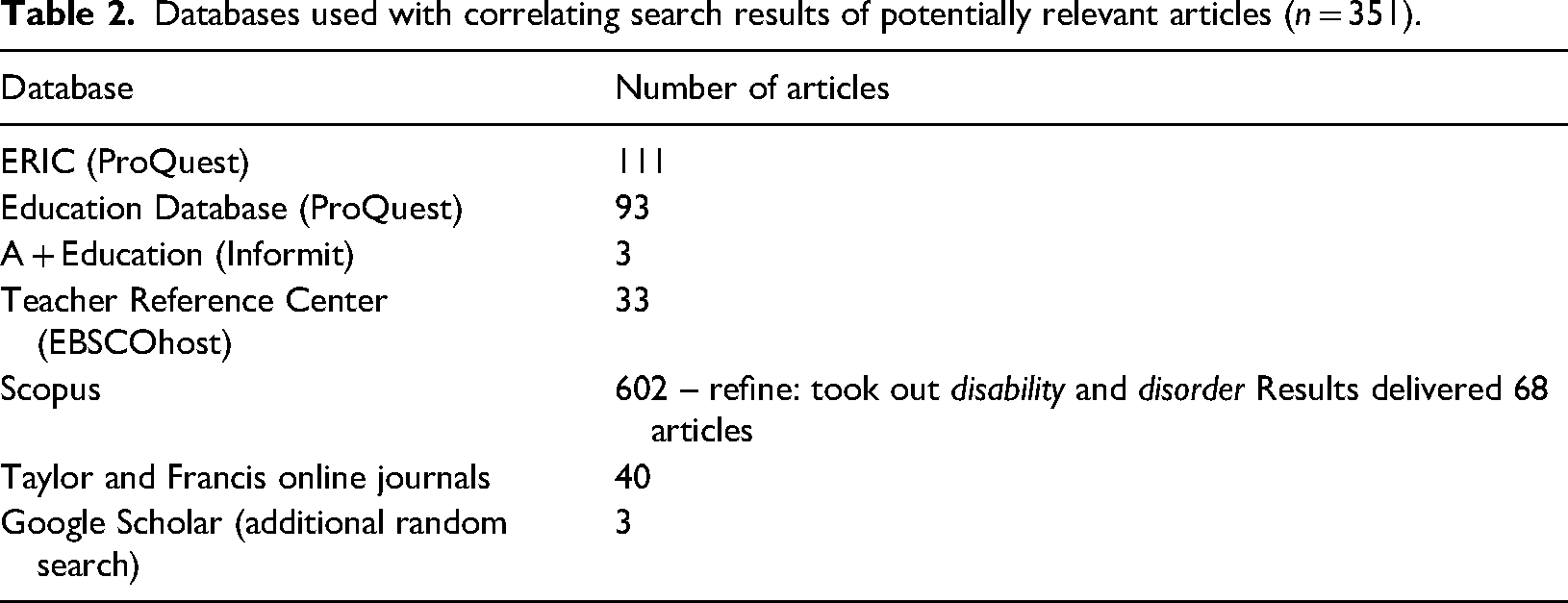
Databases used with correlating search results of potentially relevant articles (n = 351).
Study selection
Following the search, all identified articles (n = 351) were uploaded to EndNote 21, and duplicates (n = 97) were removed, followed by the removal of articles due to other reasons (n = 12). The remaining articles’ (n = 242) citation details were imported into the JBI System for the Unified Management, Assessment and Review of Information (JBI SUMARI) (Munn et al., 2019) and the titles and abstracts of the articles were screened by two independent reviewers for assessment against the inclusion and exclusion criteria for the review. Potentially relevant articles (n = 31) were then retrieved in full, and the full text of selected citations was assessed in detail against the inclusion and exclusion criteria by the two independent reviewers. Reasons for the exclusion of articles at full text that did not meet the criteria were recorded and reported in the scoping review. Any screening conflicts that arose between the reviewers at each stage of the selection process were resolved through discussion. The results of the search and the study inclusion process resulted in 14 studies that are reported on in full in the final scoping review and presented in the PRISMA flow diagram (Page et al., 2021), depicted in Figure 1.
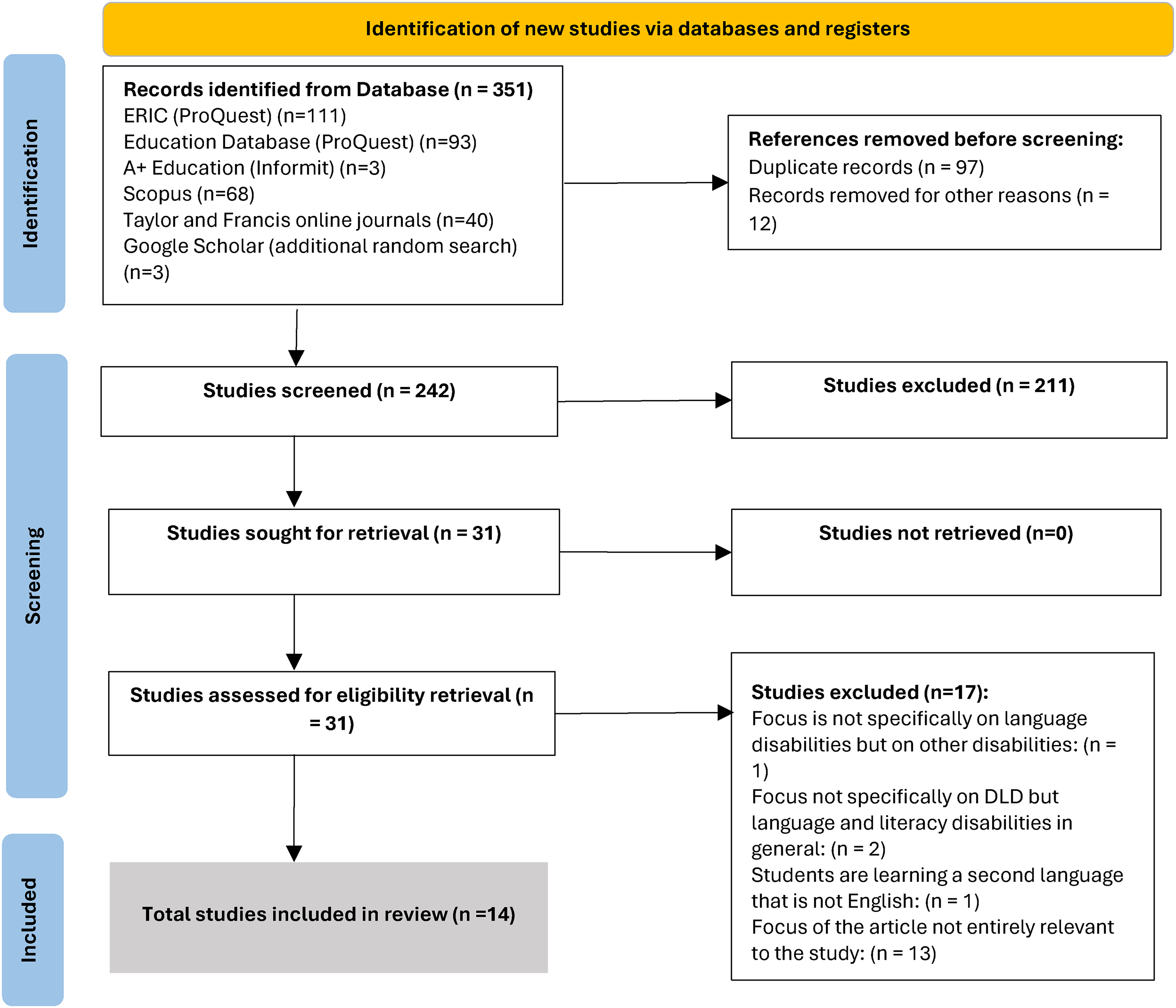
PRISMA flow diagram of the article screening and selection process for the scoping review.
Data extraction and analysis
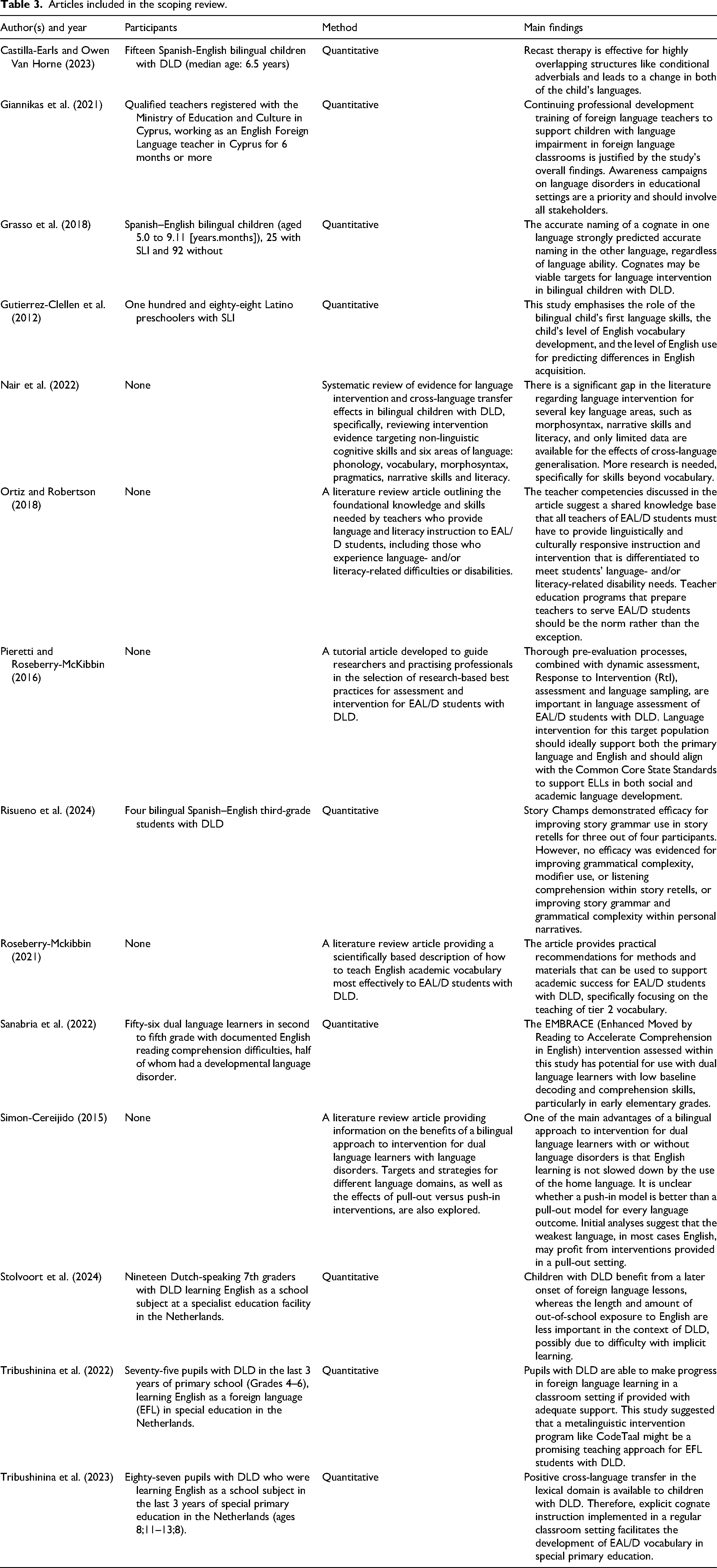
Data was extracted from the 14 articles included in the scoping review by two independent reviewers using NVivo Qualitative Software. The data extracted included specific details about the participants, study methods and main findings relevant to the aim of this study and is outlined in Table 3.
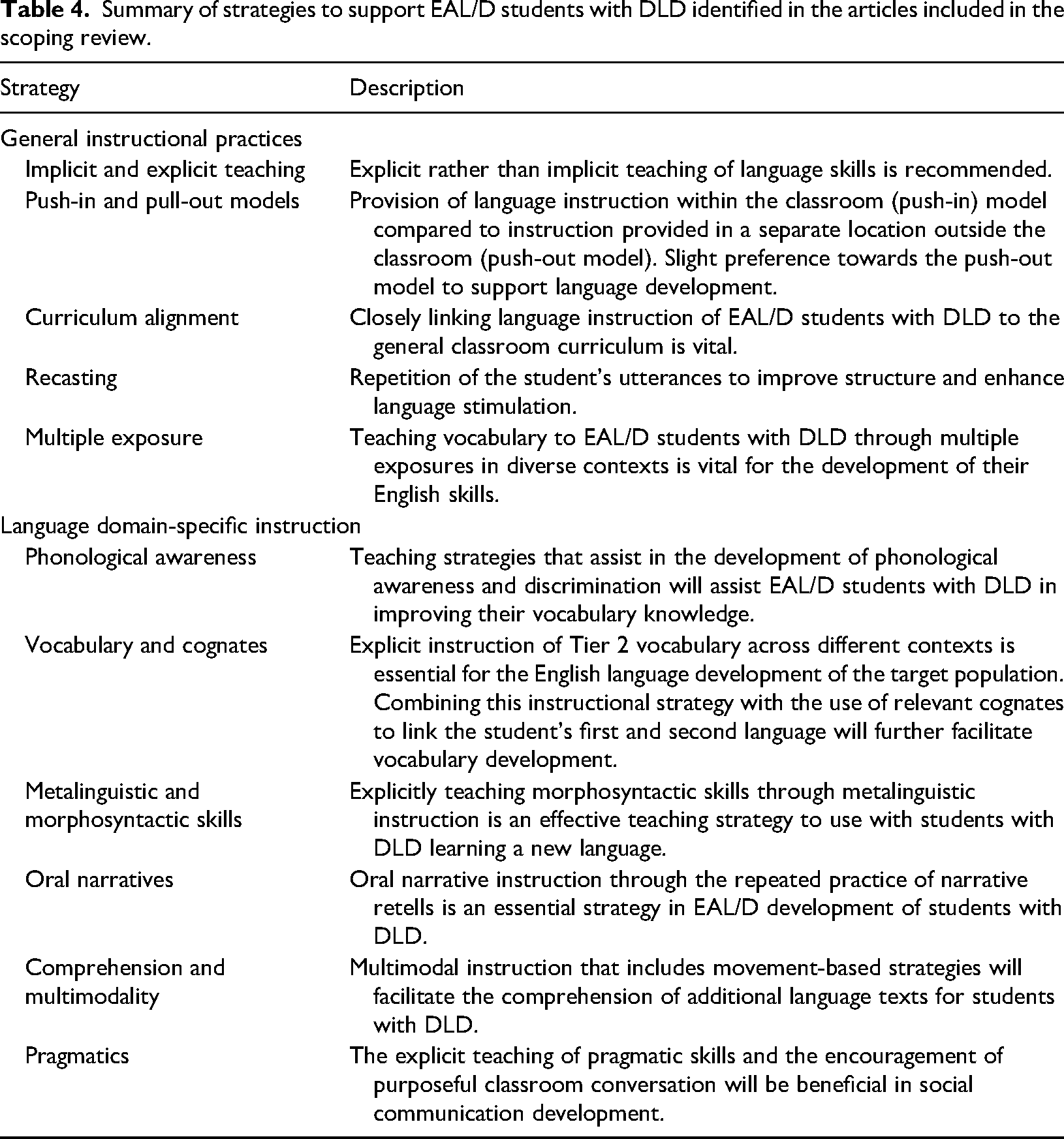
The articles were analysed using an inductive coding process where the coding choices are emergent and data-driven (Saldaña, 2016). Themes were identified that provided information regarding strategies that can be used to support EAL/D students with DLD. The strategies identified in the scoping review are summarised in Table 4 and further elaborated on within the Results section.
Articles included in the scoping review.
Summary of strategies to support EAL/D students with DLD identified in the articles included in the scoping review.
Results
To answer the research question of this scoping review, the data were coded into categories and ultimately grouped into two broad themes (Saldaña, 2016). These two themes of General Instructional Practices and Language Domain-Specific Instruction provide details on classroom support strategies for EAL/D students with DLD and are presented below.
General instructional practices
Implicit and explicit teaching
The use of implicit and explicit teaching to support EAL/D students with DLD in language learning was mentioned by Stolvoort et al. (2024) and Tribushinina et al. (2022). Explicit teaching is an intentional process and occurs when students learn the rules of a subject area deliberately through specific information that the teacher provides (Altun and Dincer, 2020). Typically, in explicit teaching, rules are presented to the students, followed by the illustration of examples. On the other hand, during implicit teaching, the focus is on the communicative process and the meaning of the task rather than the predetermined structures and rules (Altun and Dincer, 2020). With implicit teaching of language, students are more reliant on metalinguistic awareness to deduce rules from examples given. In a study mentioned in Stolvoort et al. (2024), it was noted that EAL/D students with DLD made no progress in foreign language proficiency after 4 months of implicit English teaching. It was suggested that this lack of progress could be attributed to the implicit teaching approach followed. This deduction is reinforced by Tribushinina et al. (2022), who alluded to growing evidence that students with DLD show difficulty with implicit learning. Both Tribushinina et al. (2022) and Stolvoort et al. (2024) are of the opinion that evidence is in support of explicit language instruction for EAL/D students with DLD in real-life settings, as it enhances the development of implicit language knowledge by raising the students’ metalinguistic and cross-linguistic awareness.
Push-in and pull-out models
Push-in and pull-out classroom intervention models have been identified by Ortiz and Robertson (2018) and Simon-Cereijido (2015) as strategies that can be implemented to support EAL/D students with DLD. During the push-in model, intervention is typically provided within the classroom during naturalistic routines like small groups and circle time and through participation of peers as conversational models (Simon-Cereijido, 2015). On the other hand, during the pull-out model, language instruction is provided to the student in a separate room outside of the classroom. Although there is still uncertainty over the superiority of one model over the other concerning language learning, it is suggested that the pull-out model may be more conducive for a DLD student to learn an additional language, as it may have a less distracting environment (Simon-Cereijido, 2015).
Curriculum alignment
Pieretti and Roseberry-McKibbin (2016) and Roseberry-Mckibbin (2021) emphasised the importance of closely linking language instruction of EAL/D students with DLD to the general classroom curriculum. Although both these authors refer to this instruction within the context of intervention by a speech-language pathologist, it is easy to transfer this specific instructional focus to a classroom strategy that can be implemented by the teacher. This can be done by particularly focusing on teaching subject-specific Tier 2 vocabulary to the students (Roseberry-Mckibbin, 2021), ensuring their increased participation in curriculum tasks.
Recasting
The effectiveness of recast therapy in supporting the language development of bilingual students with DLD is underscored by Castilla-Earls and Owen Van Horne (2023), Nair et al. (2022) and Simon-Cereijido (2015). During recasting, the adult repeats the student's own utterance to include improved structure of the utterance and enhance language stimulation (Castilla-Earls and Owen Van Horne, 2023; Nair et al., 2022). Although the interventions referred to in the contexts of the named literature were conducted by speech-language pathologists during therapy sessions with bilingual students with DLD, it is an easy strategy for a teacher to use within the classroom setting. Recasting will lead to overall language gains for the students, especially with the development of syntax (Castilla-Earls and Owen Van Horne, 2023).
Multiple exposure
Gutierrez-Clellen et al. (2012), Nair et al. (2022), Roseberry-Mckibbin (2021) and Stolvoort et al. (2024) found multiple exposure to vocabulary through active engagement and academic enrichment within different contexts to be beneficial for the development of English for EAL/D students with DLD. A child's level of exposure to English in a classroom is seen as one of the predictors of growth differences in the acquisition of English as an additional language, and studies show a correlation between the amount of English a student is exposed to and their own mean length of utterance (Gutierrez-Clellen et al., 2012). For EAL/D students with DLD, it is important to teach targeted vocabulary through multiple exposures to these words, ideally allowing for a suggested 36 exposures to a new word, which will accommodate working memory deficits in students with DLD (Roseberry-Mckibbin, 2021). Stolvoort and colleagues supported this notion by stating ‘for input to become uptake, language learners with DLD need greater amounts of linguistic input than learners with typical language development…’ (2024: 12).
Language domain-specific instruction
Phonological awareness
Phonological awareness refers to the ability to consider and intentionally manipulate the sound system of a language and is associated with spelling, reading and writing attainment (Roseberry-Mckibbin, 2021). Due to the dependent relationship between phonological awareness and vocabulary, both Nair et al. (2022) and Roseberry-Mckibbin (2021) recognised the importance of supporting the development of phonological awareness and discrimination in EAL/D students with DLD, as this will assist in building vocabulary knowledge. Teaching strategies that can help improve phonological awareness should assist this population of students to perform more successfully in the classroom (Roseberry-Mckibbin, 2021).
Vocabulary and cognates
EAL/D students with DLD who have weak vocabulary skills are at risk not only for difficulties in accessing the English language curriculum, but this barrier may impact every academic area (Roseberry-Mckibbin, 2021). Nair et al. (2022) and Roseberry-Mckibbin (2021) suggest that explicit instruction of functional and academic vocabulary within meaningful context is essential for EAL/D students with DLD, especially when considering Tier 2 vocabulary. Tier 2 vocabulary is high-frequency words that can be found across different subject areas (Roseberry-Mckibbin, 2021) and will assist the students in accessing multiple parts of the curriculum. Studies investigating the development of lesson plans followed by hands-on curriculum-based activities targeting specific vocabulary were reported to show improvement in vocabulary gains (Nair et al., 2022).
Another strategy that has proven successful is the teaching of content area cognates to link the student's first language (L1) and second language (L2). Cognates are ‘translation equivalents that overlap in semantic meaning and phonological form (e.g. telephone in English and teléfono in Spanish)’, and EAL/D students with DLD generally perform better on cognate-based tasks due to the ‘cognate facilitation effect’ (Grasso et al., 2018: 619). Essentially, this means that students can use the knowledge of their L1 to understand and learn vocabulary in their L2, and teachers may therefore use cognate pairs within the classroom to facilitate the learning of target vocabulary (Grasso et al., 2018). As cognates are translation pairs with similar phonological and semantic structures in L1 and L2, they should have a facilitative effect on the learning of L2 vocabulary. Consequently, using cognate awareness as an instructional strategy with EAL/D students with DLD in the classroom should be beneficial to promoting improved language skills and word learning (Grasso et al., 2018; Nair et al., 2022; Simon-Cereijido, 2015; Tribushinina et al., 2023).
Metalinguistic and morphosyntactic skills
Metalinguistic skills encompass the understanding of the rules used to govern language, for example, discussing, examining, and thinking about language, grammar and reading comprehension (Betti, 2022). Morphosyntax, on the other hand, refers to the use of morphemes that indicate tense and agreement (e.g. plurals and verb tenses), and has been cited as a specific area of weakness for children with DLD (Gillam et al., 2021). Metalinguistic intervention, where morphosyntax is explicitly taught, in other words, instruction where students’ attention has been specifically drawn to morphosyntactic consistencies, has proven to be an effective strategy in supporting EAL/D students with DLD (Tribushinina et al., 2023, 2022). During metalinguistic intervention, which has been found effective with small groups of students or within a whole class setting, students are taught linguistic terminology and are provided with explicit grammar instruction (Tribushinina et al., 2022). This strategy supports the explicit language instruction for EAL/D students with DLD, as advocated for by Tribushinina et al. (2022) and Stolvoorts et al. (2024) mentioned earlier.
Oral narratives
There is a critical relationship between oral language development and the successful attainment of reading and writing skills (Pieretti and Roseberry-McKibbin, 2016). Language-rich, high-quality oral narratives, contextualised within a classroom environment, can be an essential element for academic enhancement by closing the gap towards academic English, increasing curriculum participation and improving reading (Pieretti and Roseberry-McKibbin, 2016; Risueno et al., 2024). EAL/D students with DLD present with difficulties in oral narrative skills because it tasks them with retelling and creating stories in their additional language (Risueno et al., 2024). Oral narrative language instructional techniques, like the repeated practice of narrative retells and personal narratives, can be advantageous for the improvement of oral language skills in this target population (Risueno et al., 2024) and are activities that can be implemented by the teacher in the classroom.
Comprehension and multimodality
In order for dual language learners with weak language skills to learn comprehension strategies and improve their overall comprehension of text, Sanabria et al. (2022) suggested a comprehension program where the students simulate the meaning of the text while reading, as this type of activity activates motor and sensory systems. With this movement-based strategy, where the student physically manipulates pictures when reading to illustrate the meaning, the students should be able to derive meaning from the text because meaning is partly based on action (Sanabria et al., 2022). This strategy supports the use of multimodal instruction consisting of visual, auditory and kinaesthetic interactions that are important in supporting the learning of students with DLD (Tribushinina et al., 2022).
Pragmatics
Pragmatics is the capacity to convey purpose and manage conversations with others (Brinton et al., 2021). It refers to skills such as getting the attention of your conversational partner, conversational repair, turn-taking and managing topic change and drift, and is therefore very important to successful social communication (Brinton et al., 2021; Cummings, 2021). Simon-Cereijido (2015) identified that pragmatic skills might have to be taught explicitly to EAL/D students with DLD, as some students with DLD have limited social skills and are less susceptible to pragmatic and linguistic teaching. This may be due to the student refraining from participating in conversations due to possible shyness and anxiety that the learning of a new language can provoke; therefore, classroom conversations will encourage the development of pragmatic skills in this target student population (Simon-Cereijido, 2015).
Pre-service and in-service teacher knowledge
According to Giannikas et al. (2021), English foreign language teachers are not well equipped to deliver language instruction in an environment where special needs, like DLD, are present. Together with encouraged collaboration with allied health professionals (e.g. speech-language pathologists), pre-service and in-service teachers’ confidence, attitudes and knowledge towards creating a positive, inclusive environment need to be enhanced (Giannikas et al., 2021). Although this may not be seen as a specific classroom strategy to support EAL/D students with DLD, it was considered necessary to include within this review, as a better understanding of DLD and the possible barriers EAL/D students with DLD may face will empower teachers to incorporate effective practices for these students in the classroom. Ortiz and Robertson (2018) and Giannikas et al. (2021) further found that not all teachers were aware of childhood language impairment and had inadequate knowledge of normal milestones of language development. This reinforces the suggestion that initial teacher education (ITE) programs need to assist teachers in developing the skills they need to support EAL/D students, as well as how to promote positive speech, language and communication strategies in every subject (Giannikas et al., 2021; Ortiz and Robertson, 2018).
Discussion
The primary objective of this scoping review was to identify within relevant literature classroom strategies to support EAL/D students with DLD. The results of this review found reference to 11 specific strategies mentioned in the applicable articles. These strategies ranged from individual interventions to classroom strategies; however, they can all be incorporated into classroom teaching practices to support the target population. These 11 strategies were divided into two core themes related to general instructional practices within the classroom and language domain-specific instruction.
Looking at general instructional practices, it was evident in the literature that explicit teaching (Stolvoort et al., 2024; Tribushinina et al., 2022) of language skills that readily align with curriculum content (Pieretti and Roseberry-McKibbin, 2016; Roseberry-Mckibbin, 2021) is essential in the support of EAL/D students with DLD. This teaching can be administered in a push-in or pull-out model (Ortiz and Robertson, 2018; Simon-Cereijido, 2015) with a slight preference for a pull-out model of instruction. It is, however, important that the students receive multiple exposure (Gutierrez-Clellen et al., 2012; Nair et al., 2022; Roseberry-Mckibbin, 2021; Stolvoort et al., 2024) to the targeted language learning focus. Throughout language instruction, recasting is an effective teaching strategy as it can be used to improve the students’ mean length of utterances (Castilla-Earls and Owen Van Horne, 2023; Nair et al., 2022; Simon-Cereijido, 2015).
In addition, language domain-specific instruction that develops phonological awareness (Nair et al., 2022; Roseberry-Mckibbin, 2021) and explicitly teaches vocabulary while incorporating cognates (Grasso et al., 2018; Nair et al., 2022; Roseberry-Mckibbin, 2021; Simon-Cereijido, 2015; Tribushinina et al., 2023) will support the language development of the target population. Repeated practice of oral narratives (Pieretti and Roseberry-McKibbin, 2016; Risueno et al., 2024) and the metalinguistic instruction of morphosyntax (Tribushinina et al., 2023, 2022) should further boost language learning. Utilising multimodality (Tribushinina et al., 2022) within instruction will aid the development of comprehension skills (Sanabria et al., 2022), and the students will further benefit by explicitly teaching pragmatic skills (Simon-Cereijido, 2015) and social communication rules.
The implications of this study are multifaceted. On a practical level, it provides strategies for teachers that can be implemented in the classroom to support the English language development of the target population. This can further be incorporated into programs of ITE providers to better prepare pre-service teachers within this space (Giannikas et al., 2021; Ortiz and Robertson, 2018). Additionally, this research consolidates the identified research available on the support of EAL/D students with DLD, making it an easily accessible resource for scholars. Societally, this review aspires to heighten awareness of the prevalence and indication of DLD.
It is important to note that while the review delivered promising results, there are inherent limitations to this study. Foremost among them is the paucity of literature available on the topic, which may have been exacerbated by the different terms used to describe EAL/D and DLD. Additionally, the complexity of the search string, which needed to be developed, resulted in multiple iterations of searches, and therefore some studies utilising different terminology may not have been captured. A scoping review also doesn’t lend itself to an in-depth study of a topic but is designed to prioritise breadth of report.
A follow-up study is planned to utilise the results of the scoping review to see whether these strategies are implemented in Australian classrooms and their effectiveness.
Conclusion
Both language and disability intersect in Australian classrooms and can lead to additional challenges for teachers and poorer outcomes for students if not effectively supported. The scoping review described within this paper aimed to determine classroom strategies within selected literature to support EAL/D students with DLD, and several strategies were identified. However, this review also highlighted a lack of research focusing specifically on this topic. Future studies might consider conducting research within local mainstream schools or Education Support settings where this target population have been identified. This could lead to the determination of additional classroom practices used within these settings to support the target population within the Australian context, as well as improved awareness of EAL/D students with DLD among teachers, teacher educators and other education professionals. Having diversity in the classroom from cultural, linguistic and disability perspectives enriches the overall learning environment for all students, and it is important that students with EAL/D and DLD are not problematised but are appropriately supported and included in their schools and classrooms.
Footnotes
Data availability statement
All data generated or analysed during this study are included in this published article (and its supplementary information files).
Declaration of conflicting interests
The authors declared no potential conflicts of interest with respect to the research, authorship, and/or publication of this article.
Ethical considerations
No ethics approval was required for this project.
Funding
The authors received no financial support for the research, authorship, and/or publication of this article.
Statements and declarations
We confirm that this work is original and has not been published elsewhere, nor is it currently under consideration for publication elsewhere.
