




Abstract
Many children with developmental language disorder (DLD) have a vocabulary deficit. One of the most effective interventions for increasing children's lexicon size is the semantic and phonological approach, an approach that has been used mainly with adolescents. The goals of our study are (1) to test whether the semantic-phonological approach coupled with rich vocabulary instruction is effective with younger children with DLD on words learned during the training and (2) to check whether the gains can be maintained over the long term. A group of eight French-speaking children (aged 6 to 10), with a diagnosis of DLD, underwent a phonological-semantic group intervention over 5 months. Four lists (vegetables, animals, school materials, and sports) of words were trained, each category involving 3-hour sessions. Five-word lists (L1, L2, L3, L4, and L5) corresponded to the four trained categories and one served as control. When L1 words were trained, L2 served as the control list; then when L2 words were trained, L3 was the control list, and so on. The group results indicated significant improvement on the four trained lists once intervention was introduced, and no improvement on the control lists. All effects were maintained over the long term at the delayed posttest. Individual outcomes were dependent on children's cognitive and language profiles. Vocabulary training thus allowed young French-speaking children with DLD to enrich their vocabulary on specific measures. The implications of the results are discussed at the group and individual level.
Introduction
Developmental language disorder (DLD) is a persistent disorder that affects both expressive and receptive language and interferes with communication in daily life (Bishop et al., 2016). People with DLD are a heterogeneous group with difficulties that may vary from one individual to another. For this reason, the CATALISE report (Bishop et al., 2017) advises that different domains of language (phonology, the lexicon, syntax, pragmatics, and discourse) should be assessed to develop a clear profile of the disorder. Specifically, children with DLD are described as having an early lexical deficit (Leonard, 2014). This delay in lexical development is one of the markers of a possible diagnosis of DLD in young children (Bishop et al., 2017). This lexical deficit has been reported to persist from kindergarten through to adolescence and adulthood (McGregor et al., 2013, 2020). For this reason, we conducted an intervention program to enrich the lexicons of a group of children with DLD aged 6 to 12.
Oral and written word learning
Learning words is essential for the construction of thought, for sharing experiences as well as for oral comprehension (Beck and McKeown, 2007). Word learning is mainly based on implicit learning strategies, through exposure to language (Cain et al., 2003). In the beginning, children learn to associate a word's oral form (phonological) with its meaning (semantic), which corresponds to fast mapping: after very few exposures the child encodes a map with partial information about the word (Chiat, 2001). Then, with encounters of the word in many contexts, more defined representations are formed in long-term memory, which corresponds to slow mapping (Carey, 2010). It is only later, when children learn to read, that they associate the phonological and semantic form of a word with its orthographic form (Perfetti and Hart, 2002). The lexical quality hypothesis of Perfetti and Hart established that to obtain a high-quality representation of a word in memory, all three elements must be present: phonological, semantic, and orthographic knowledge. For example, in a picture-naming task, semantic information will be activated, leading to the activation of the phonological output lexicon in response. In the opposite task of forced-choice picture-word matching, phonological information is triggered and the expected response leads to the output of the semantic lexicon.
Vocabulary acquisition in children with DLD is much more challenging than for typically developing (TD) children because individuals with DLD are less effective at exploiting information from their linguistic environment to form new lexical representations (Sheng and McGregor, 2010). Several studies have found that children with DLD have a smaller and less rich lexicon than TD children of the same age (Dosi and Gavriilidou, 2020; Jones and Brandt, 2018) and that they also have greater difficulty in learning new words (Kan and Windsor, 2010). Both receptive and expressive vocabulary can be affected, but expressive vocabulary tests are more sensitive in identifying DLD than receptive, and difficulties at the receptive level may resolve more easily (McGregor et al., 2012). The lexical deficits in DLD correspond to a temporal delay in acquisition, since the lexical performance of children with DLD is equivalent to that of younger TD children matched on language abilities (Nash and Donaldson, 2005). Studies have suggested several possible explanations for the difficulties experienced by children with DLD. McGregor et al. (2022) suggested a problem with word encoding since children with DLD increase their performance in retaining new words when multiple word repetitions are provided. Another explanation is that children with DLD have more difficulty inferring the meaning of a word from the context, that is, their implicit learning may be insufficient (Cain et al., 2003). All these difficulties lead to the hypothesis that DLD children may have less precise semantic representations and have impairments in accessing phonological output forms, due to less dense and less connected semantic networks (Sheng and McGregor, 2010). One solution to compensate for this weakness in vocabulary is then to offer explicit lexical skills training to these children (Steele and Mills, 2011).
Vocabulary intervention
The number of intervention studies is growing in the field of language disorders, especially in the area of lexicon expansion. However, there are some weaknesses in these intervention studies, particularly in terms of their effectiveness. The meta-analysis of Law et al. (2003) on the effectiveness of interventions in several language domains in children with language delay or disorder reported seven studies on expressive vocabulary training. In these studies, an effect was found when the control group did not receive intervention (N = 45; SMD 1 = 0.20) but this effect disappeared when lexical training was compared to control sessions of cognitive therapy (e.g. general play sessions) or to sessions of speech-language intervention in areas other than the target area of lexical enrichment. Moreover, only one study employed receptive vocabulary tests to measure progress in intervention, which is insufficient to draw conclusions about effectiveness. A narrative review (Cirrin and Gillam, 2008) examined the most effective interventions across all language domains in school-aged children with DLD. A total of 21 studies were identified with six studies on vocabulary (N = 65 participants). The authors reported better effects for different conditions of training, which included providing a slow presentation rate for vocabulary items, collaborating with the teacher, using an interactive conversational reading strategy, and giving direct instruction in analogical thinking. In a more recent review, Rinaldi et al. (2021) focused on children with DLD from kindergarten through to 8 years. They reported the results of 27 studies, including one study on expressive vocabulary, six studies on general language skills, and no study on receptive vocabulary. They concluded that, in the area of lexical intervention, there were very limited effects on the expressive lexicon.
In adolescents, a systematic review by Lowe et al. (2018), including 13 studies, focused on vocabulary interventions conducted among participants with DLD aged 11 to 16 years. This review aimed to identify the most effective intervention approach in adolescents with DLD: a semantic approach, a phonological approach, or a combination of both. More precisely, the studies with a semantic approach aimed to make participants aware of the function, location, attribute, category, and similarities and differences of the target words, but also to help them know how to define the target words and relate them to words of the same morphological family. The studies using a phonological approach focused on the phonological awareness of phonemes, syllables, and rhymes of the learned words. The combined approach was a mix of the two previous approaches with an emphasis on the link between the two types of information (phonological and semantic). The authors conclude that the phonological-semantic approach showed the greatest effectiveness, regardless of whether the delivery model was individual, in small or large groups. This meta-analysis confirmed the results of several empirical studies in elementary-aged children with DLD or learning a second language (Best et al., 2021; Bragard et al., 2012; St John and Vance, 2014) in showing that approaches which provide both semantic and phonological information about words yield the greatest effect sizes in intervention. In addition, four of the seven studies that combined the two approaches found generalization effects in the form of gains on standardized tests, such as picture naming, sentence completion, word finding following a definition, category naming, or forced-choice picture-word matching.
Finally, to maintain semantic knowledge over the long term, the instruction of a rich vocabulary method has proven to be effective. The aim of Rich Vocabulary Instruction (RVI), a specific approach, is to supply children with tools to become active and independent in learning words in their daily lives (Becket al., 2013). In this approach, phonological and morphological information is added to semantic information, as in the phonological-semantic approach previously described (Joffeet al., 2019; Spencer et al., 2017; Wright et al., 2018). The difference is that, in RVI, words are contextualized, linked to personal experiences, and presented repeatedly in different contexts. The randomized controlled trial conducted by Motsch and Marks (2015) showed positive effects on standardized tests (=transfer effect) of RVI-like therapy in 6-to-9-year-old German-speaking children (N = 157) with lexical deficits. The self-learning strategy thus seems to be a good way to achieve transfer effects on untrained vocabulary words.
Aims of the current study
Children with DLD are known to have lexical deficits and have more difficulty learning words incidentally. Narrative and systematic reviews underscore the lack of effectiveness of studies on vocabulary training with elementary-aged children with DLD (Cirrin and Gillam, 2008; Law et al., 2003; Rinaldi et al., 2021; Steele and Mills, 2011), and very few of these studies concern French-speaking children (Bragard and Maillart, 2005; Bragard et al., 2012). The combined phonological-semantic approach appears to be effective in adolescents with DLD (Lowe et al., 2018) but the evidence is still limited in elementary school children, for example St John and Vance (2014) combined children with poor language development and children learning English as a second language. Finally, vocabulary interventions have been shown to be effective for a small number of words (between three and 10 per study) and mostly on words taught during training, which therefore consists of direct effects (Joffe et al., 2019; Spencer et al., 2017; Wright et al., 2018).
Here, we conduct an intervention study on French-speaking school-aged children with DLD. The intervention strategy chosen was an explicit phonological-semantic approach coupled with an RVI approach since it has been shown to be effective in learning new words (Motsch and Marks, 2015). Given our experimental design, we predict: (1) a specific and direct effect of the intervention on trained words and (2) maintenance of gains over the long term.
Method
Participants
Our sample consisted of eight French-speaking children aged between 6 and 10 years (M = 8;2). The first part of the intervention was delivered to the whole group, which was divided into three subgroups containing each 2–3 participants for the second part of the intervention. The children were enrolled in a clinical institution specialized in DLDs in which they attended a language therapy session one morning per week. The vocabulary intervention took place during these language classes. In order to be part of this clinical institution, the children had to have a prior diagnosis of DLD certified by a speech and language therapist, a neuropsychologist (using an IQ test, IQ > 80) and a neuropediatrician. In addition, all children completed two key tests that supported their diagnosis of DLD (Conti-Ramsden, 2003), a pseudoword repetition test from the evaluation of written and oral language (EVALEO) battery (Launay et al., 2018), which is a standardized tool commonly used in clinical practice with French-speaking children, and a sentence repetition task (CELF-5, Wiig et al., 2019). All children performed below average on these tests (equal or lower than 9 percentile), By contrast, all of them obtained scores within the normal range for nonverbal abilities (Raven et al., 1998). Only one of the children had an additional diagnosis of attention deficit hyperactivity disorder but had been on medication for several years. All the children were attending a mainstream school. All of them had a semantic representation deficit affecting expressive vocabulary, with standardized scores on accuracy below −2 SD on the subtest of naming from the EVALEO battery and some of them had deficits in receptive vocabulary: three children obtained Z scores below −2 SD on a forced-choice picture-word matching test from the same EVALEO battery. These different results are presented in Table 1. All parents gave their written consent for their child to participate in the study and oral consent was obtained from the children to ensure that they were willing to participate. Children were also informed that they could withdraw from the study at any time.
Raw scores and Z-scores (or percentiles when specified) obtained by the participants on the standardized tests for each participant
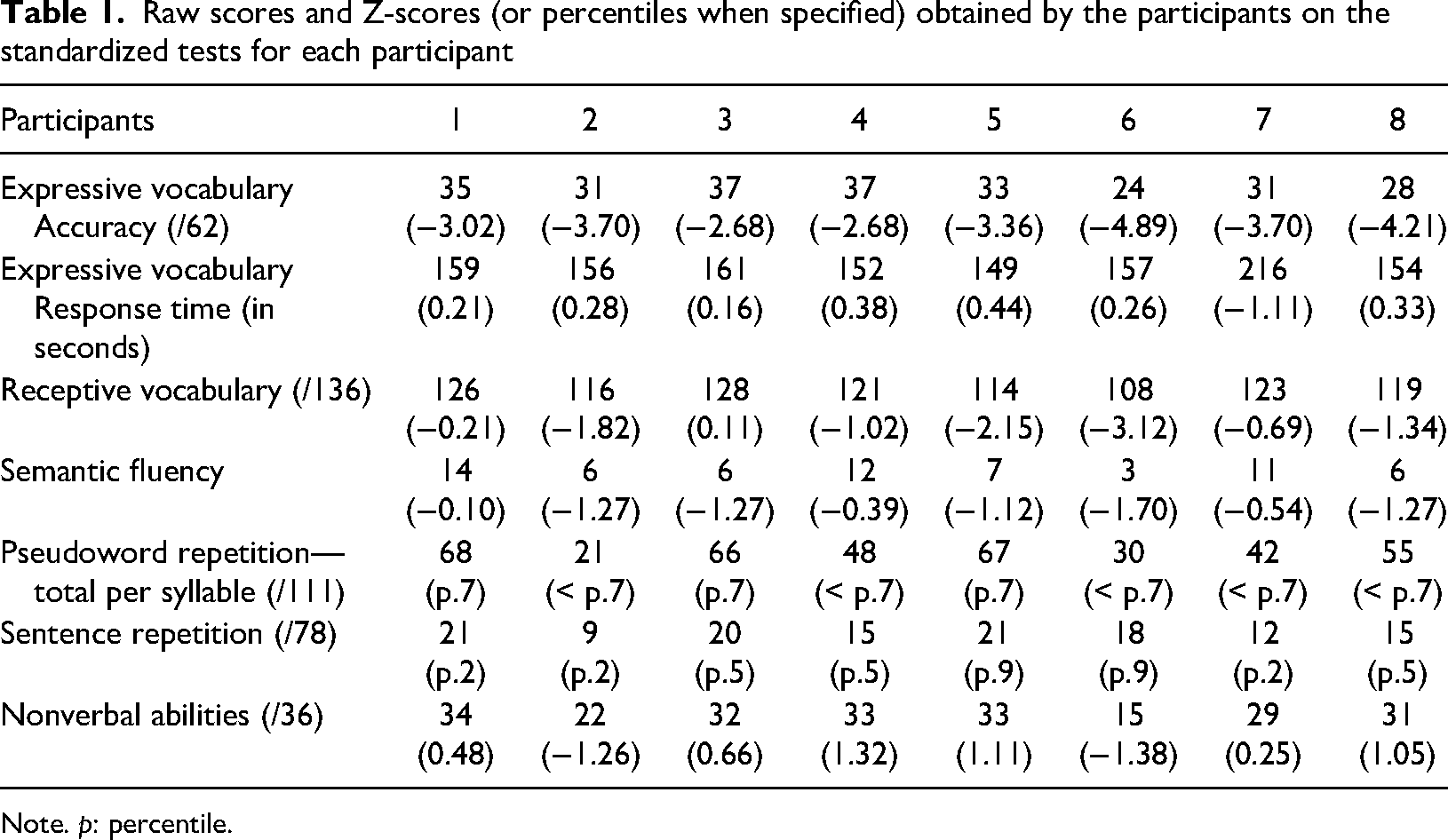
Note. p: percentile.
Materials
Procedure
The children were administered the standardized tests as a pretest, 2 weeks before the beginning of the intervention. We created a baseline that consisted of a picture-naming test of five lists of trained and untrained words (L1, L2, L3, and L4 corresponding to the four trained categories and L5 corresponding to the control list). Children were administered this baseline: different target and control lists depending on the list trained during the training period. When L1 words were trained, L2 served as the control list; then when L2 words were trained, L3 was the control list, and so on, as proposed in the Bragard and Maillart (2005) case study. Consequently, there were three or four measures for each word list (control measure, pretest, posttest, and delayed posttest) as illustrated in Figure 1. The standardized tests were conducted by the first author and the baseline, by a trained educational psychologist.
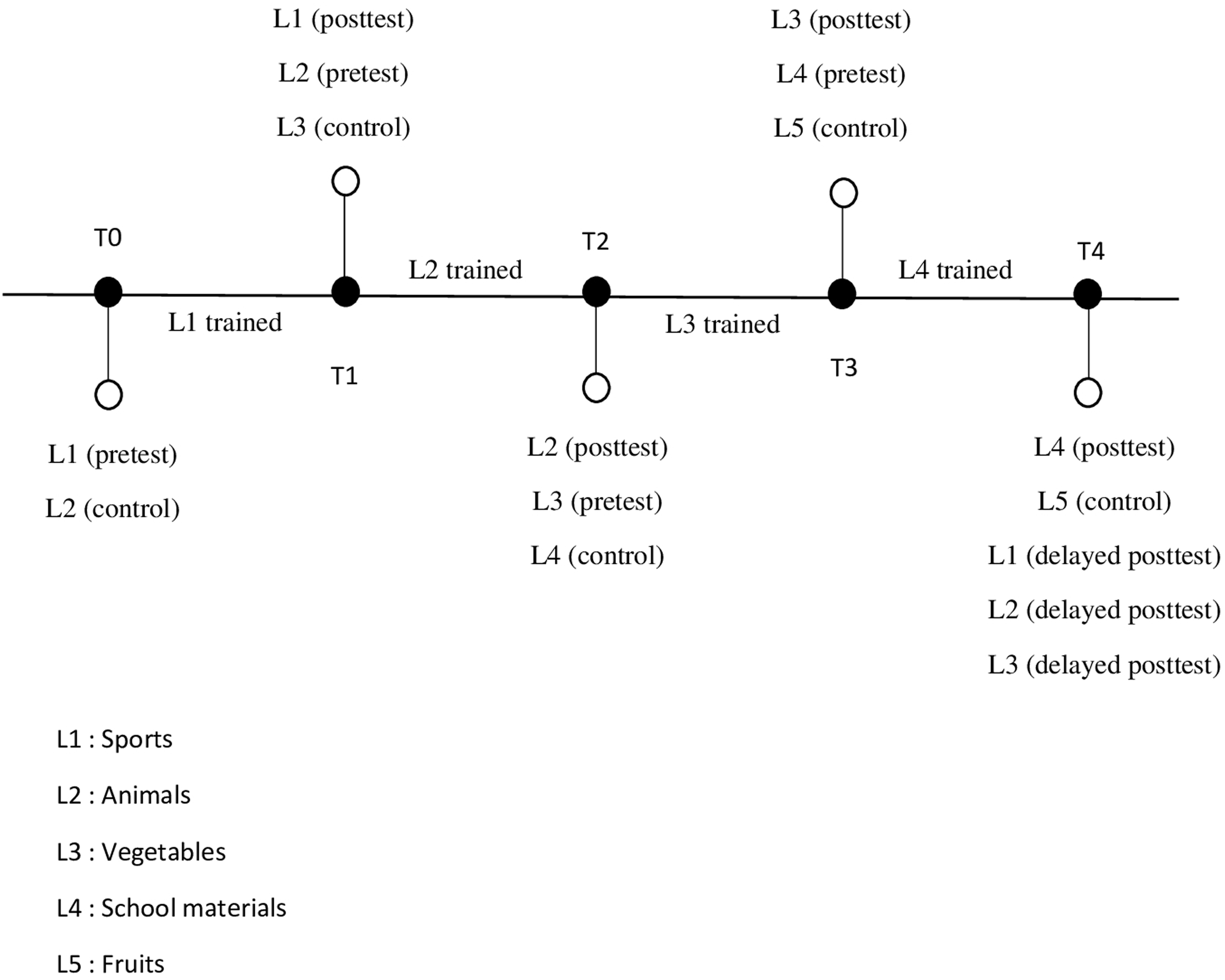
Timeline of the baseline.
Standardized tasks
Expressive vocabulary
We tested children's expressive vocabulary using the EVALEO battery (Launay et al., 2018), a computerized standardized picture naming test. Children were asked to name pictures that appear one after the other on the screen. The length of the words was controlled so that there were equal numbers of short (one syllable), medium (two syllables), and long (three or four syllables) words. The words were selected, according to the test manual, for children from Grade 1 to Grade 3. A total of 31 pictures (15 nouns, four adjectives, and 12 verbs) were presented. The test results include a score for accuracy (max = 62) as well as a mean response time. The Cronbach's alpha provided by the test is
Receptive vocabulary
Children were asked to recognize words in a forced-choice picture-word matching test using the standardized EVALEO battery (Launay et al., 2018). They had to choose which image corresponded to the word they heard from an array of four images. The other three responses were semantic distracters. The clarity of the images and the length of the words were controlled. The children had to recognize 34 items (20 nouns, three adjectives, and 11 verbs; max score = 136). Cronbach alpha (
Semantic fluency
This test was also part of the EVALEO battery (Launay et al., 2018). It consisted of the children saying as many words as possible related to food. Duplicate words were not counted. This task resulted in a score representing the number of words said in one minute.
Baseline
We created a specific baseline consisting of five-word lists (see Appendix A), each with 15 words (L1, L2, L3, L4 corresponding to the four trained categories: sports, animals, vegetables, and school materials; L5 being the control list: fruit). Figure 1 shows the timeline of the different baseline measures. The lists were matched on frequency (M = 5.2 per million in a child corpus), number of syllables (M = 2.1), and number of phonemes (M = 5.3) using the Manulex database (Lété et al., 2004). We selected one picture for each word of the lists to create a picture-naming test, using the website langageecrit.com. These pictures represent the words of the different lists and they had been perfectly named by two adults from the clinical institution to check the relevance of the drawings. Each word list gave a maximum of 15 points.
Intervention
Procedure
The training took place over 5 months, with one 45-minute session per week. The training consisted of four sessions on four different themes (sports, animals, vegetables, and school materials). Each category involved approximately three and a half hours of vocabulary training. The intervention was carried out by semantic category to ensure that the new words acquired were related to the previous ones (Bragard and Maillart, 2005). We chose the vocabulary themes for training based on what would be most useful to the children in our group in their daily lives. For example, we chose to teach the children school materials because they encountered them every day at school. All words used in the training were concrete. The first session consisted of learning five words, the second session consisted of learning five new words and reviewing the previous five words, and the third session consisted of learning the last five words with the review of the previous 10 words. The last two sessions were used to review all 15 words. Each new word was repeated about 10 times per learning session, about 40 times in total, spaced out between each session (Leonard et al., 2021; Storkel et al., 2017, 2019).
The training was conducted by the first author, assisted by two trained educational psychologists. The first author carried out the learning of the words with the children (first 20 to 25 minutes). The other experimenters during this time kept track of children's speaking time to check that all the children had the same opportunity to participate and they intervened to restore the balance if some children were less engaged. For the subgroup activities, the children were two or three per group with an adult who could ensure that everyone had an equal opportunity to speak. The answers were spoken out loud by the children and the experimenter wrote them on the board in order to facilitate their encoding by the children according to the lexical quality hypothesis of Perfetti and Hart (2002). Finally, the experimenters followed a checklist for word encoding that was always the same and followed the different steps that are described below: the five steps that combine the RVI and semantic approaches and adding a final step, the phonological approach. The learning of each word took a few minutes, divided equally between the three approaches. The two additional experimenters verified the fidelity of the protocol by ensuring that all steps were followed by checking off the different steps on the checklist.
Lexical training
We conducted the group intervention using the phonological-semantic approach (Lowe et al., 2018) combined with RVI (Beck et al., 2013) and recommendations from the literature to enhance the intervention (Steele and Mills, 2011). The RVI, semantic, and phonological approaches overlapped because the RVI approach also involved the use of phonological and semantic information. The RVI approach added contextualization information with personal experiences and presented words in different contexts. However, our intervention was not totally RVI-like, since it would require word discovery through word reading and the creation of word mappings and a more complex trained word choice. Our intervention consisted of providing semantic elements to encode the new words: (1) establish links between words/concepts at the superordinate and subordinate levels (e.g. At the superordinate level, all animals are living beings, but only some of them are aquatic or terrestrial animals), (2) build word definitions from the group's knowledge and provide an age-appropriate friendly definition for children (as in Beck et al., 2013), (3) emphasize the distinguishing characteristics of the words by answering specific questions (e.g. What kind of animal? What are the differences and similarities between the animals? Where is its habitat? What does it eat? as in Graves, 2006), (4) make connections to personal experiences of the children in the group (e.g. any personal encounters/anecdotes with a “toad”? (Steele and Mills, 2011) and finally, (5) create a real-life (where possible) or virtual experience (e.g. visit a vivarium, taste vegetables, see the real school objects and see videos of sports matches). As for the phonological approach, links with phonology and orthography (as the word was written on the board) were made by answering several questions, as recommended in the systematic review of Colenbrander et al. (2019), such as: Can you count the number of syllables/sounds in the word? Can you find other words that rhyme with it or that begin or end with the same sound? The five steps of the semantic part and the phonological part were systematically used, with target words, so as to become a routine for the children enabling them to apply the same process to learning novel words. Learning new words took about 25 to 30 minutes per group session. Afterward, the group was divided into three subgroups for various activities for 10 minutes. The objective here was to review the words already introduced in different motivating contexts during a series of playful activities, as suggested by Steele and Mills, (2011): a Dobble game, a domino game, a memory game, associations of different pictures of the same word (for form variability, as advised by Aguilar et al., 2018), as well as a promoting aphasia communication effectiveness; Pulvermüller and Roth, 1991) type game where children had to make their partners guess the pictures corresponding to the words. Finally, a review activity was conducted in the large group during the last 5 minutes of the session.
Results
Baseline results are presented in Tables 2 and 3 and standardized test scores in Table 4. Because of our small sample size, we chose to use nonparametric tests: repeated measures analyses for the baseline were conducted with Friedman's nonparametric analysis of variance (ANOVA) and Wilcoxon signed-rank post hoc tests were used to test for differences between time points when Friedman tests were significant. The effect size was calculated by dividing the Z score by the square root of the number of participants (Tomczak and Tomczak, 2014). As a reminder, an effect size r of 0.10 to 0.30 corresponds to a small effect, between 0.30 and 0.50, a medium effect, and above 0.50, a large effect.
Means (standard deviations) of raw baseline scores at the five time points (T0–T4).
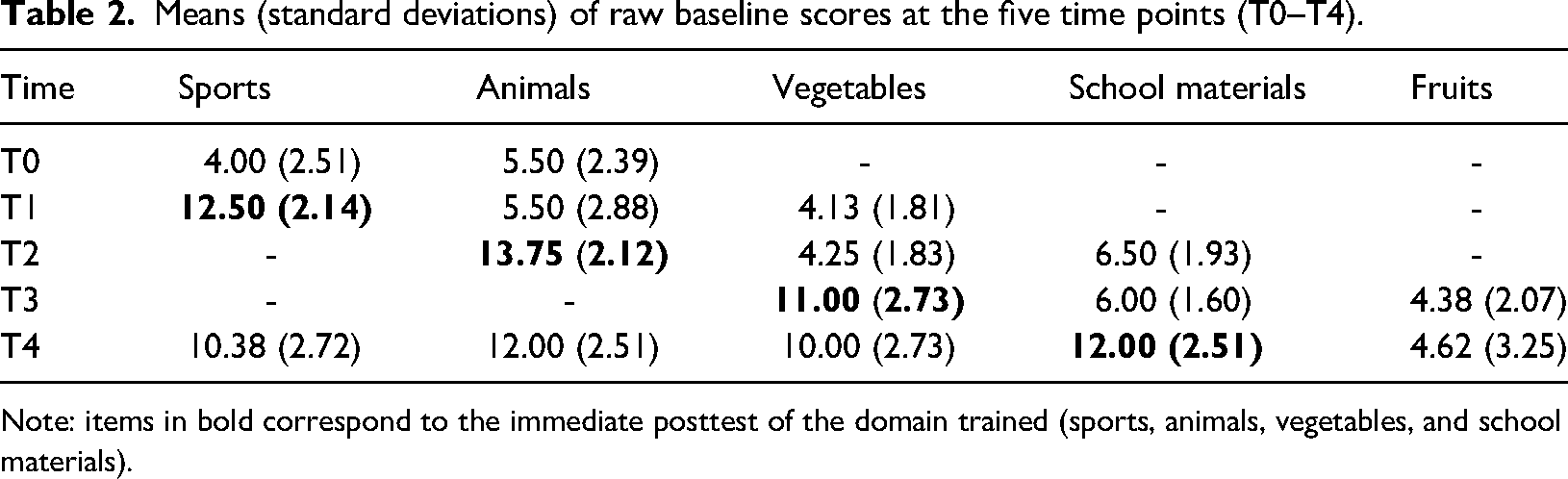
Note: items in bold correspond to the immediate posttest of the domain trained (sports, animals, vegetables, and school materials).
Individual pre- and immediate posttest scores from list of trained words and McNemar test results.
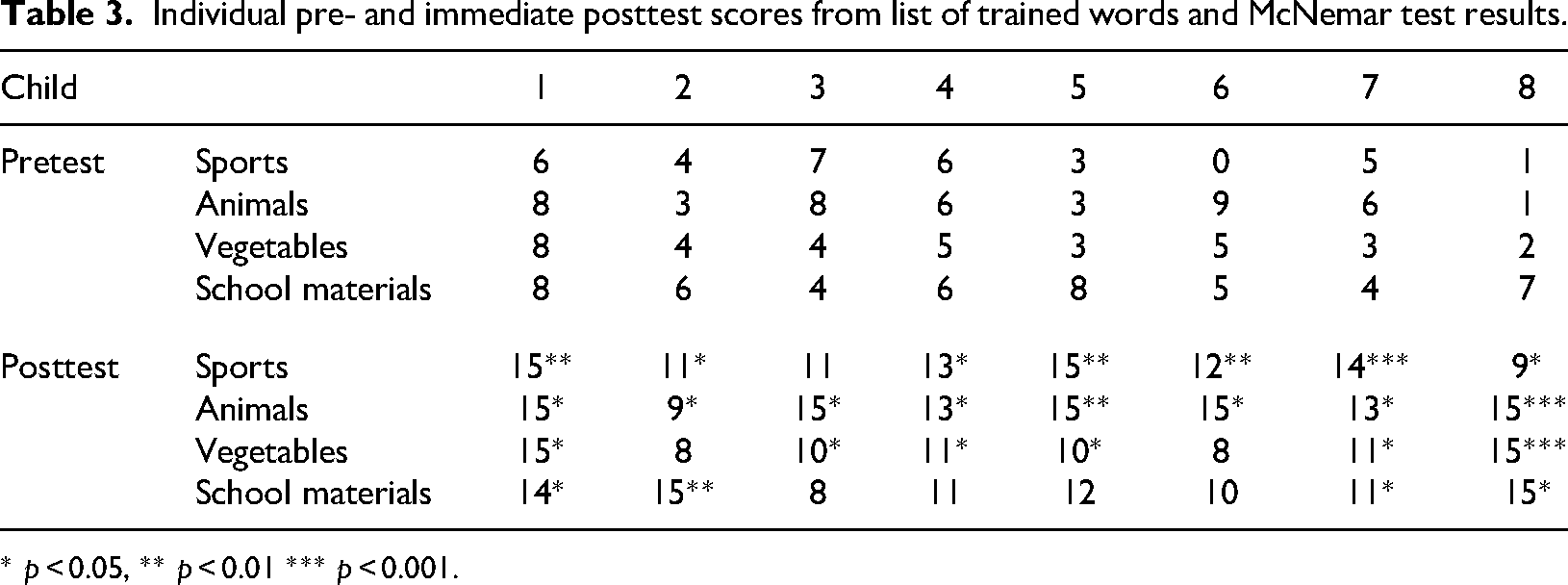
* p < 0.05, ** p < 0.01 *** p < 0.001.
Individual pre- and immediate posttest scores from control list of untrained words and McNemar test results.
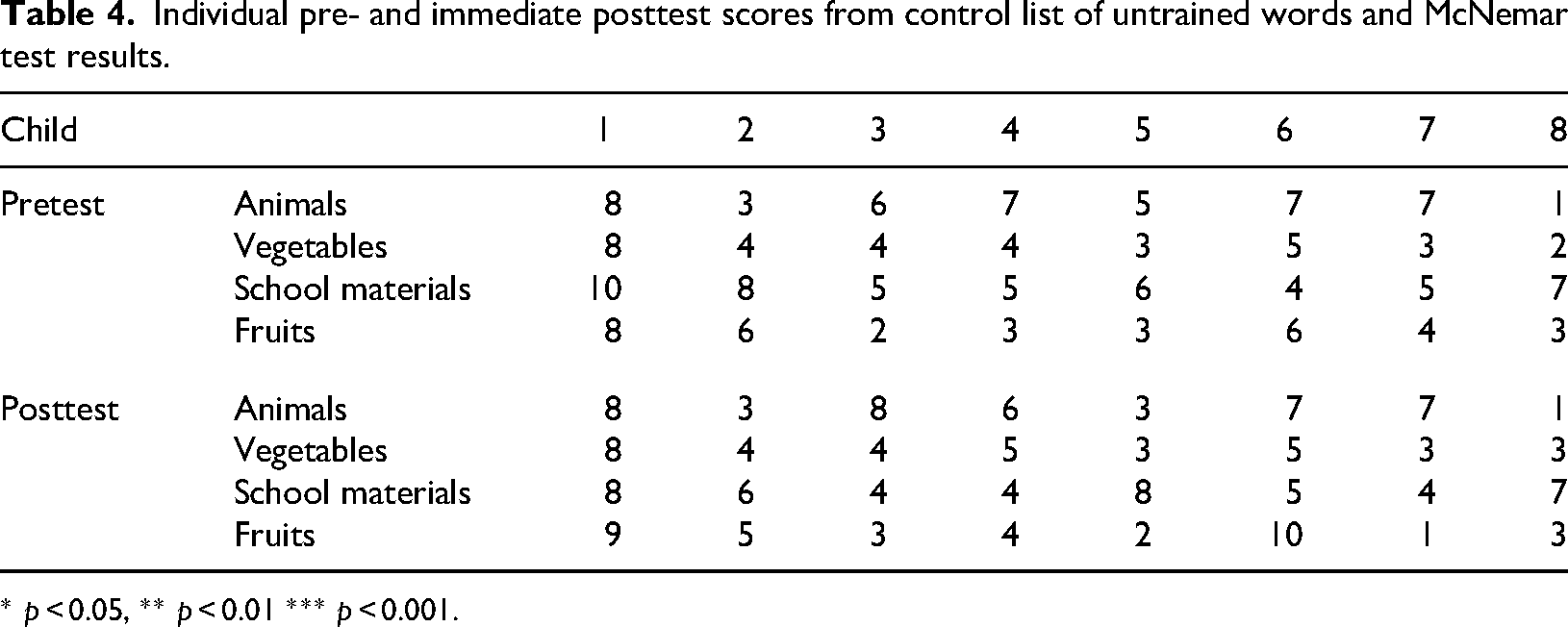
* p < 0.05, ** p < 0.01 *** p < 0.001.
Baseline
The means and standard deviations are reported in Table 2. Figure 2 shows a summary of the baseline results at all time points of the intervention (from T0 to T4). The difference between the sports list and the animals list (control list) was not significantly different at T0, Z = 1.69, p = 0.09. Analysis with Friedman's ANOVA (time by list) showed a significant effect, χ2 (3) = 17.17, p < 0.001. The intervention was introduced at T0. Post hoc comparison of the Wilcoxon test indicated a significant difference in T1, Z = 2.52, p = 0.01, r = 0.89, in favor of the trained sports word list. The average number of words learned was 8.5 between the pre- and immediate posttest, that is, between T0 and T1.
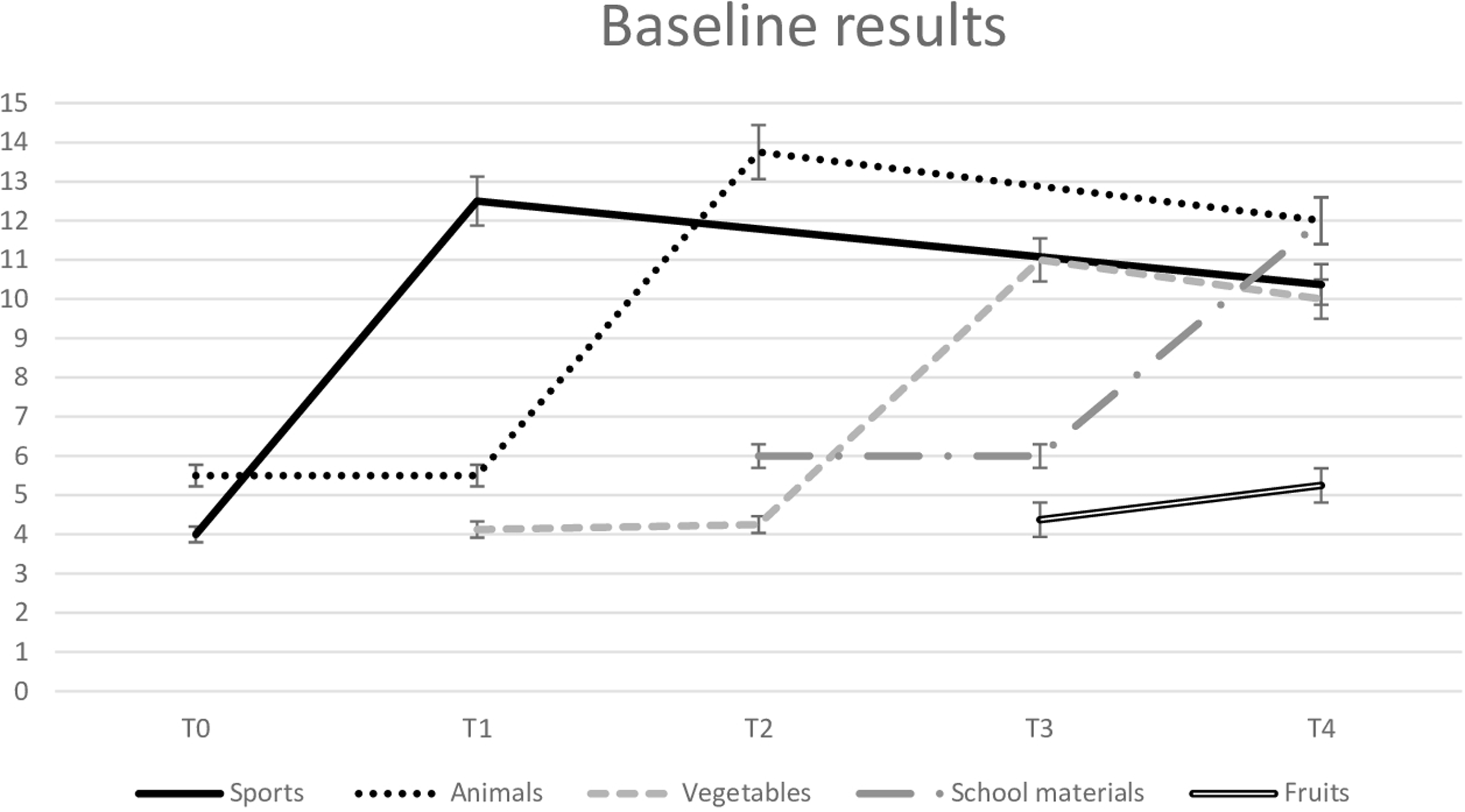
Group results for each vocabulary list as a function of time (T0–T4).
Regarding the animals’ list, we had four different measures (T0, T1, T2, and T4). The intervention began at T1. We compared the trained list of animals (T1 vs T2) to the vegetables list (control list). No significant difference was found at T1 between the two lists, Z = 0.41, p = 0.68. Analysis with the Friedman test (time by list) indicated a significant effect, χ2 (3) = 17.78, p < 0.001. Post hoc comparison revealed significant differences in T2, Z = 2.52, p = 0.01, r = 0.89, in favor of the trained animals’ word list. Children learned an average of 8.3 words during this intervention between the pre- (T1) and immediate posttest (T2).
With respect to the vegetables list, we had measures at 4 different times (T1, T2, T3, and T4). The intervention started at T2. We compared the trained word list of vegetables to the list of school materials. The Wilcoxon signed-rank test indicated a difference at T2 between the two lists, Z = 2.31, p = 0.02, in favor of the school materials list (control list) which was more accurate for the children. The results of Friedman's ANOVA (time by list) indicated a significant effect in the children's scores, χ2 (3) = 18.60, p < 0.001. Post hoc Wilcoxon tests indicated that a significant difference was found at T3, Z = 2.52, p = 0.01, r = 0.89, in favor of the vegetables trained list. The average number of words learned was 6.7 between the immediate pre- (T2) and immediate posttest (T3).
On the school material list, we had 3 different measures (T2, T3, and T4) without delayed posttest and with a beginning of intervention at T3. No significant difference was found on the Wilcoxon test before the intervention was introduced, that is in T3, Z = 1.75, p = 0.08. The results of the Friedman's ANOVA test (time by list) showed a significant effect, χ2 (3) = 15.48, p = 0.001. The post hoc revealed a significant difference at T4, Z = 2.37, p = 0.02, r = 0.84, with a greater improvement for the word list trained on the school material. During this intervention, children learned an average of six words between the immediate pre- (T3) and posttest (T4).
Individual results
At the individual level, all children made progress between pre- and posttest. To test whether their progress was significant, we performed McNemar tests for each participant because it is an increasingly recommended approach to assess the effect of an intervention on a single case study for interventions with a pre- and posttest (Caronni and Sciumè, 2017; Pembury Smith and Ruxton, 2020). Table 3 reports the data at trained word lists for each child and the McNemar test results. Table 4 shows the data for the control lists of untrained words for each child and the McNemar test results.
For the trained sports list, results showed significant progress at the individual level (p < 0.05) for seven out of eight children with an improvement in scores ranging from 8 to 12 points. Only child 3 (pretest = 7/15; posttest = 11/15) did not display significant progress (p = 0.37). In contrast, for the control list of animals, the McNemar test showed no significant progression on this control list for any of the children (p > 0.48). For the trained animals list, results indicated that all individual gains were significant (p < 0.05) with gains ranging from 6 to 14 points. In comparison, for the control list of vegetables, the McNemar test did not show significant progression (p = 1) between the pre and posttest for any of the children. Then, for the trained vegetables list, six out of eight children showed a significant difference between pre- and posttest (p < 0.05) with gains ranging from 6 to 13 points. Child 2 (pretest = 4/15; posttest = 8/15) and 6 (pretest = 5/15; posttest = 8/15) did not show any difference (p = 0.13, and p = 1, respectively). For the control list of school materials, the McNemar test showed no significant progression on this control list for any of the children (p > 0.48). Finally, for the trained school materials list, the performance of four out of eight children significantly improved between pre- and posttest (p < 0.05) with gains ranging from 6 to 9 points. Child 3 (pretest = 4/15; posttest = 8/15), 4 (pretest = 6/15; posttest = 11/15), 5 (pretest = 8/15; posttest = 12/15), and 6 (pretest = 5/15; posttest = 10/15) did not display significant gains (p = 0.13, p = 0.07, p = 0.13, and p = 0.07 respectively). In addition, for the control list of fruits, McNemar test results did not show significant progression for any of the children (p > .13).
Long-term effect
We performed an analysis with Friedman's ANOVA to verify the sustainability of gains over time by comparing the children's scores between the pretest and delayed posttest. We had delayed posttest (T4) results for only three word lists: sports, animals, and vegetables. For the sports words list, Friedman's ANOVA showed a significant change over time, χ2 (2) = 15.55, p < 0.001. Post hoc comparisons of Wilcoxon tests indicated an improvement between T0 and T4, Z = 2.52, p = 0.01, r = 0.88 but a decrease between immediate and delayed posttest, Z = 2.37, p = 0.02. For animals words list, analysis with the Friedman test indicated that children's scores changed significantly over time, χ2 (3) = 20.31, p < 0.001. Post hoc comparisons revealed significant differences between T1 and T4, Z = 2.36, p = 0.02, r = 0.83, but no difference between immediate and delayed posttest, Z = 1.89, p = 0.06. Finally, for the vegetables word list, the results of Friedman's ANOVA test also showed a significant effect of time measurement, χ2 (2) = 12.97, p = 0.002. Post-hoc Wilcoxon tests indicated a significant difference between T2 and T4, Z = 2.52, p = 0.01, r = 0.88, but no significant difference between immediate and delayed posttest, Z = 1.36, p = 17.
Discussion
The aim of our study was to investigate the effect of an explicit lexical intervention on the vocabulary development of French-speaking children with DLD aged 6 to 10 years, both at the group and individual levels. The intervention used a phonological-semantic approach in combination with RVI. Our main findings revealed a significant improvement at the group level of trained vocabulary, no significant improvement on the untrained (control) vocabulary lists as well as a tendency to maintain gains in delayed posttests. At the individual level, improvement was not systematic across all children, although significant differences were observed in 78.1% of cases (25/32): improvement depended upon the semantic category addressed and on the children's profile.
Direct effect
We predicted a direct and specific effect of training on the trained vocabulary of the baseline. Results on word lists trained during intervention improved whereas no significant effect was found on the control list: this suggests the specificity of our intervention. We expected this direct learning effect since it is widely described in the literature (Cirrin and Gillam, 2008; Frizelle et al., 2021; Law et al., 2003). However, we increased the number of words learned during the intervention, compared to other intervention studies. To achieve this, we introduced 15 words per semantic category, which was higher than in most studies (Joffe et al., 2019; Spencer et al., 2017; Wright et al., 2018), and presented them at a higher intensity (40 presentations per word) and over a longer period of time (5 months). We obtained an average of thirty words learned per child (six to eight words learned per semantic category for 3 hours of training), in addition to those already known before the training. For example, in Wright et al. study, participants learned about four words (out of a total of 10 trained words) for 3.5 hours of intervention. In Spencer et al.’s study, adolescents learned approximately 2.5 words (out of a total of 10 trained words) for 10 hours of intervention. Finally, the study by Joffe et al. showed a progression between one and four words depending on the test for 13.5 to 18 hours of intervention. Our results seem to show that offering a larger number of words during the intervention does not seem to prevent their memorization. Moreover, it is important to remember that the vocabulary chosen for the intervention was simple, concrete, frequent, and that the words were all nouns, which allowed for better retention (Kan and Windsor, 2010). The phonological-semantic approach thus seemed to be effective for the learning of these types of words in a group of children with DLD, a finding also confirmed by the large effect sizes we obtained (between 0.83 and 0.88).
Individual level
At the individual level, the results were more mixed. All the children had results that went in the right direction but not all displayed significant progress. For the sports list, only Child 3 did not exhibit significant progress (with only four words learned), as was also the case for the school materials list. One possible explanation was that this child had an attention deficit hyperactivity disorder (under treatment) and, in addition, a very marked word-finding difficulty. Another reason to account for the results of Child 6, who displayed no difference between pre- and posttest for the school materials and vegetables lists, was that s/he was the youngest child of the class (6 years old), the most deficient in the language (including phonology) and the least proficient in reading. Thus, this child may not have benefited from the orthographic and phonological cues because of his/her severe phonological difficulties As Best et al. (2021) suggested, outcomes are dependent on the degree of children's deficits. For example, children with phonological deficits will have more difficulty using phonological cues to construct vocabulary. Finally, the choice of the theme of the words may also have been a motivating factor. Indeed, all the children liked the sports and animal themes but were probably less passionate about the words in the vegetables and school materials category. This could explain the lower individual scores in the latter two categories.
Long-term effect
Overall, improvements were maintained over the long term between the immediate and delayed posttest. Nonetheless, a significant decrease in performance between the posttest and delayed posttest was noted for the sports words list, which was the delayed posttest that was the most distant from the end of training (4.5 months after training compared to 3 months for animals and 1.5 months for vegetables), although the difference remained significant between the pre- and the delayed posttest. This result shows the importance of reactivating children's lexical knowledge of a subject so that they retain it in their memory.
Limitations
A major limitation of our study was that our sample was small, with only eight children. The results thus would need to be replicated on a larger sample to validate the effects found in the current study. Also, our sample contained children with quite different ages, between 6 and 10 years, whereas we know that cognitive functioning can be very different during childhood (Fischer and Bullock, 1984). Then, the fact that the experimenters who administered the tests are also the ones who conducted the intervention is another limitation. Finally, to improve the experimental standard of our study, we could also have added a control group that received another intervention.
Conclusion
Our study confirms the effectiveness of a phonological-semantic intervention for the learning of new words in school-age children with DLD. Results show an effect at the level of trained words (= direct effect), but also at the level of untrained words in expressive and receptive modalities (= generalization effect). These findings should encourage researchers to systematically include tasks that assess the generalization of the intervention not only for expressive but also for receptive vocabulary, a domain that has been little explored to date. In terms of clinical implications, it is interesting to observe that it is possible to propose a motivating and effective intervention over time with quantifiable effects at the individual level, while keeping in mind the importance of adapting the intervention according to the unique profiles of each child.
Footnotes
Declaration of conflicting interests
The author(s) declared no potential conflicts of interest with respect to the research, authorship, and/or publication of this article.
Funding
The author(s) received no financial support for the research, authorship, and/or publication of this article.
